

- Market Size (2026)
- USD 1.24 Bn
- Forecast (2036)
- USD 2 Bn
- CAGR (2026 to 2036)
- 5.0%
Regional Turboprop Engine MRO Services Market Size, Forecast, and Outlook By FMI
Summary of the Regional Turboprop Engine MRO Services Market
- Demand and Growth Drivers
- Regional airlines need scheduled engine support as short sectors create frequent cycles and tighter dispatch pressure. Engine repair demand expands as older turboprop fleets serve routes with limited aircraft backup.
- Parts support is gaining importance as operators need exchange material and repairable components to reduce downtime. Regional air connectivity programs support MRO spending where turboprops serve smaller airports and short runways.
- Product and Segment View
- Scheduled overhaul leads service type demand through life-limited engine work and planned shop visits.
- PW100 dominates engine family demand due to its large active fleet across ATR and Dash 8 aircraft.
- Seventy-seat turboprops hold the leading aircraft type position as they serve dense regional routes.
- OEM networks are expected to account for the leading provider position through manuals and warranty support.
- Geography and Competitive Outlook
- India is projected to record the fastest growth as regional air links expand. China and Brazil are expected to grow above the global average due to regional connectivity needs and fleet activity.
- Pratt & Whitney Canada and GE Aerospace define the main competitive structure. Independent MRO providers build their position through faster turnaround and cost control.
- Analyst Opinion
- Nikhil Kaitwade, Associate Vice President at FMI says, “I view regional turboprop engine MRO as a service market driven by flight cycles more than fleet size. Operators buy engine support to protect route reliability on thin regional networks. One grounded turboprop can affect several towns in one day.”
- Regional Turboprop Engine MRO Services Market Value Analysis
- The regional turboprop engine MRO services market is evolving from routine engine repair into a defined route reliability service category.
- Adoption is being driven by scheduled overhaul needs across regional airlines operating short and cycle-heavy routes.
- The market is benefiting from PW100 engine service demand across ATR and Dash 8 aircraft fleets.
- Demand is further supported by the need for certified parts and dependable shop visit planning.
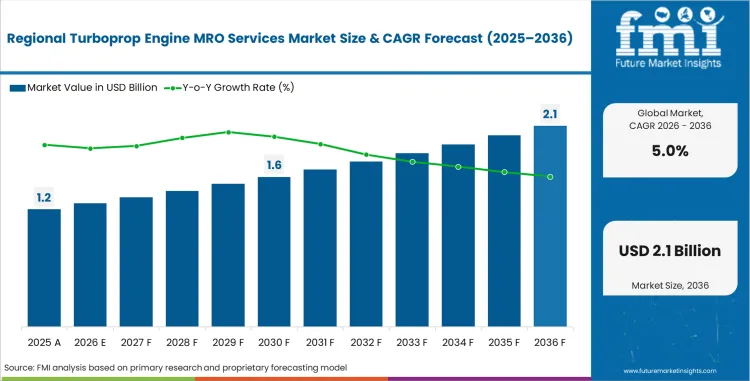
Key Takeaways, Market Size, and Forecast
- The regional turboprop engine MRO services market was valued at USD 1.2 billion in 2025.
- By 2036, the market is expected to reach USD 2 billion.
- From 2026 to 2036, the market is projected to expand at 5.0% CAGR.
- The market is expected to create an incremental opportunity of USD 0.8 billion between 2026 and 2036.
- Scheduled overhaul is projected to account for 46.0% of service type demand in 2026.
- PW100 is estimated to hold 68.0% of engine family demand in 2026.
- India (6.7% CAGR) and China (5.8% CAGR) are projected to be the top two countries through 2036, supported by regional route expansion, domestic aviation links, and turboprop fleet use.
Strategic Pointers: Regional Turboprop Engine MRO Services Market
Pratt & Whitney’s PW127XT-M data points to longer overhaul cycles and lifecycle support in Regional Turboprop Engine MRO Services. Pratt & Whitney Canada says the PW127XT-M extends time on wing by 40% to 20,000 hours and reduces maintenance cost by 20%. This moves MRO providers toward uptime contracts and away from overhaul based billing. CAMP and Pratt & Whitney Canada extended engine health monitoring services through 2040 across P&WC engine programs. Use the official Pratt & Whitney Canada or CAMP Systems source before keeping the 25,000 engine figure. RTX’s November 2024 HyADES update points to PW127XT fuel nozzle and combustor rig testing for hydrogen. This supports future demand for hot section inspection and repair capability. The FAA’s AD 2015-20-03 on PW120 and PW127 series engines supports continuing compliance work. The directive required fuel nozzle and fuel manifold flow adapter replacement after fuel leak and engine fire reports. MRO providers with certified shop capability and engine health data use can build service packages that reduce total cost of ownership for regional operators.
Regional Turboprop Engine MRO Services Market Definition
The regional turboprop engine MRO services market includes maintenance, repair, overhaul, testing, parts support, and field service for turboprop engines used on regional aircraft. Scope includes PW100, PW150, PT6A, AE2100, and GE Catalyst family services when used on passenger, cargo, utility, or government aircraft.
Regional Turboprop Engine MRO Services Market Inclusions
Market scope includes scheduled overhaul, engine repair, parts support, line maintenance, engine leasing, regional airline fleets, charter operators, cargo operators, government aircraft, and major regional aviation markets.
Regional Turboprop Engine MRO Services Market Exclusions
The scope excludes airframe heavy checks, avionics retrofits, propeller-only service, piston aircraft engine repair, helicopter turboshaft work and narrowbody turbofan shop visits.
Regional Turboprop Engine MRO Services Market Research Methodology
- Primary Research: FMI analysts reviewed airline maintenance planning, engine shop capacity, fleet use, and provider portfolios. Interviews covered regional airlines, engine MRO shops and parts channel participants.
- Desk Research: Desk research used aviation authority data, fleet forecasts, safety reviews, and official company releases. FMI related pages were used only as internal interlinks and not as external statistical sources.
- Market Sizing and Forecasting: The model combined active aircraft counts, engine family mix and work scope pricing. Country forecasts were adjusted for route density, airport access and local shop approvals.
- Data Validation: Forecasts were checked against carrier activity, engine population evidence and capacity signals from MRO providers. Confidence is medium since agencies do not publish turboprop-only engine MRO values.
Why is the Regional Turboprop Engine MRO Services Market Growing?
- Regional airlines need engine shop plans that protect dispatch reliability on short routes with limited spare aircraft.
- Cycle-heavy turboprop use pushes hot section inspections and module work ahead of calendar-based maintenance plans.
- Parts shortages raise the value of repairable component pools managed near operator bases.
- Newer PW127XT support capacity broadens service options for ATR operators as newer engines enter service.
- Government-backed regional air connectivity programs add flight activity on sectors suited to turboprop aircraft.
Regional turboprop engines follow a service pattern where cycles drive shop planning. Short routes create frequent takeoffs and landings. Shop visit timing becomes critical for regional operators. Cycle patterns support engine service planning across changing regional aviation fleets. Shops improve utilization when they turn cycle based removals into planned work packages with reliable parts flow. Operators benefit when engine status is known early enough to avoid cancellations and expensive spare engine moves.
Engine family concentration gives this service market clear boundaries compared with the aircraft maintenance sector. PW100 engines form a sizable service base across ATR and Dash 8 fleets. PW100 fleet scale gives service providers a recurring base of overhaul and repair work. The concentration raises operator dependence on shops with approved manuals and test capability.
Market Segmentation Analysis
- Scheduled overhaul is projected to account for 46.0% share in 2026 as engine life limits decide major shop visit timing.
- PW100 is estimated to hold 68.0% share in 2026, backed by its wide use across ATR and Dash 8 fleets.
- 70 seat turboprops are anticipated to represent 54.0% share during the forecast period as regional carriers use them on short sectors.
- OEM networks are expected to account for 58.0% share, helped by technical data access and certified parts channels.
- Regional airlines are projected to hold 63.0% share in 2026 as frequent flight cycles increase engine service needs.
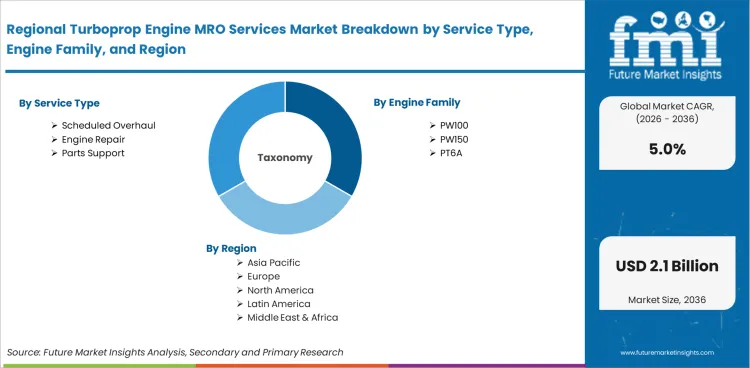
The market is segmented by service type, engine family, aircraft type, provider type, end user, and region. Service type includes scheduled overhaul, engine repair, parts support, line maintenance, and engine leasing. Engine family includes PW100, PW150, PT6A, AE2100, and GE Catalyst. Aircraft type includes 70 seat turboprops, utility turboprops, cargo turboprops, and special mission aircraft. Provider type includes OEM networks, independent MRO providers, and airline shops. End user includes regional airlines, charter operators, cargo operators, and government fleets. Region includes North America, Latin America, Western Europe, Eastern Europe, East Asia, South Asia and Pacific, and Middle East and Africa.
Insights into the Scheduled Overhaul Service Type Segment
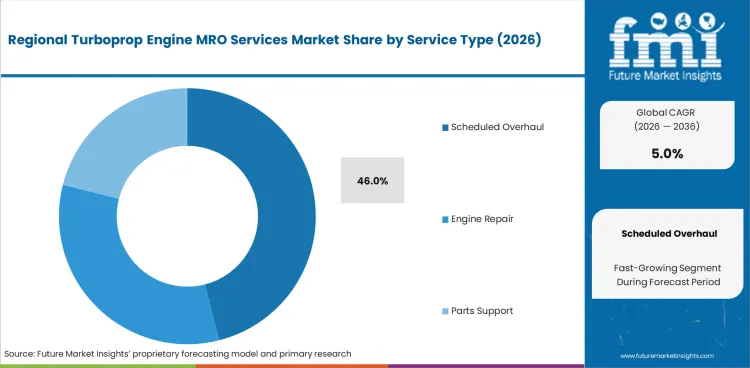
- Scheduled overhaul is projected to account for 46.0% of service type demand in 2026 as major work scopes follow engine life limits and lease return standards.
- Engine shops with calibrated test cells can package inspection and module repair into one event, which reduces repeat removals for regional operators.
Insights into the PW100 Engine Family Segment
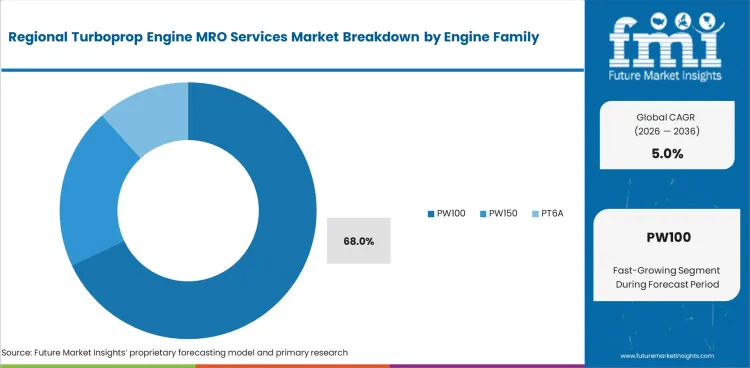
- In 2026, PW100 is estimated to hold 68.0% of engine family demand, as ATR and Dash 8 fleets from the active service base.
- PW100 service depth is difficult to replace since family-specific tooling and work scope history affect quote accuracy.
Insights into the 70 Seat Turboprops Aircraft Type Segment
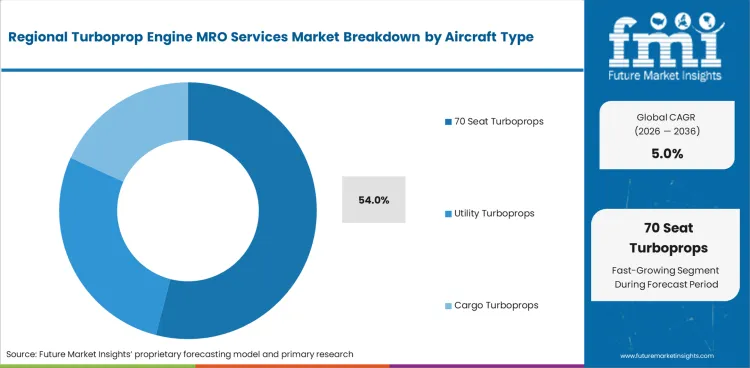
- 70 seat turboprops are anticipated to represent 54.0% of aircraft type demand in 2026 with dense regional routes supporting high cycle use.
- ATR 72 and Dash 8-400 aircraft often serve airports with short runway needs, which keeps turboprops useful in mixed fleets.
Insights into the OEM Networks Provider Type Segment
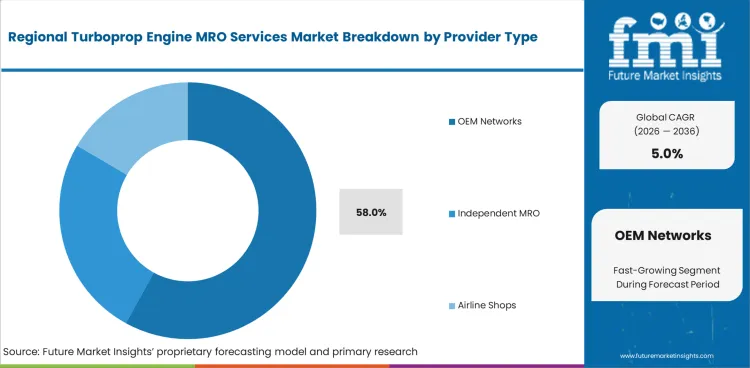
- In 2026, OEM networks are expected to account for 58.0% of provider type demand through service bulletins and repair manuals.
- Independent shops can win repeat work when regional approvals and exchange stock shorten aircraft downtime.
Insights into the Regional Airlines End User Segment
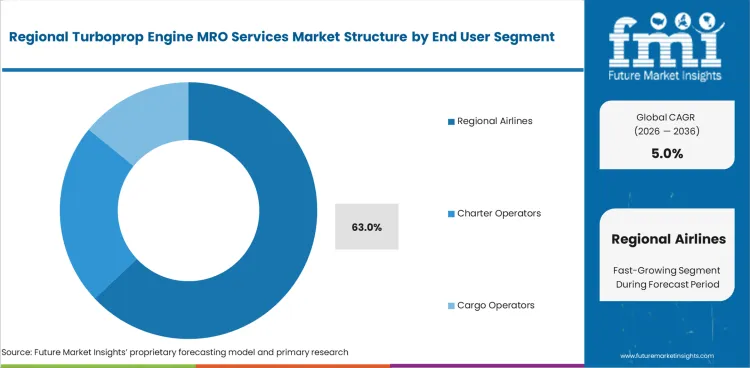
- Regional airlines are projected to hold 63.0% of end user demand in 2026 as scheduled sectors create recurring engine cycles.
- Small fleet operators often use long-term engine support contracts to smooth cash flow and reduce surprise shop visit exposure.
Regional Turboprop Engine MRO Services Market Drivers, Restraints, and Opportunities
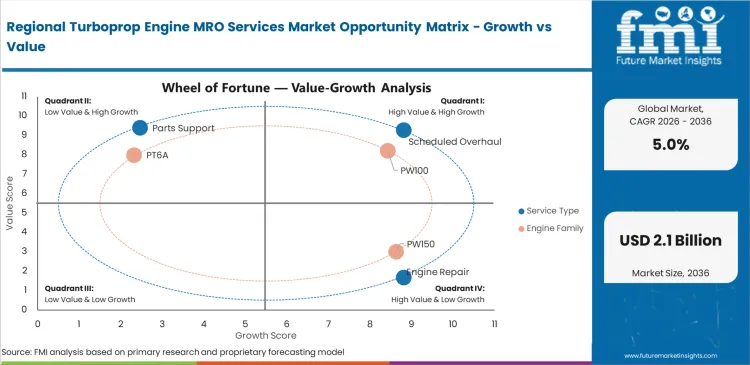
- Flight cycle intensity drives engine shop events as short sectors raise hot section stress and inspection frequency.
- Parts access can limit turnaround time when repairable component pools do not match engine family needs.
- Digital engine health tracking creates an opportunity for shops that convert alerts into planned removals.
- Regional route growth supports spare engine planning as operators add flights with limited backup aircraft.
- Fuel cost pressure favors better engine condition control across older regional turboprop fleets.
Cycle-Based Shop Visits
Regional turboprop service demand starts with the way these aircraft fly. Short routes create frequent takeoffs and landings, which means engine components face cycle stress even when total hours look modest. That operating pressure supports maintenance planning for aircraft that keep regional routes open. Shops with early inspection data can turn removals into planned events instead of emergency work. The practical result is a market that rewards accurate forecasting and fast shop turn time.
Parts Pool Bottlenecks
Parts availability can slow the best planned engine visit. A turboprop overhaul depends on certified repair parts and exchange modules that must match the engine family. StandardAero said in June 2025 that its Summerside turboprop engine center reached its 20,000th engine induction. That milestone shows how repeat engine family work creates learning depth and parts planning routines. Operators prefer providers that can confirm material availability before the aircraft is taken out of service. Better pool control raises confidence for small carriers with few spare aircraft.
Analysis of Regional Turboprop Engine MRO Services Market by Key Countries
.webp "Top Country Growth Comparison Regional Turboprop Engine Mro Services Market Cagr (2026 2036)")
| Country | CAGR |
|---|---|
| India | 6.7% |
| China | 5.8% |
| Brazil | 5.6% |
| US | 4.9% |
| UK | 4.6% |
| Germany | 4.4% |
| France | 4.3% |
| Japan | 3.9% |
Source: FMI analysis based on primary research and proprietary forecasting model.
Regional Turboprop Engine MRO Services Market CAGR Analysis By Country
- India is projected to record 6.7% CAGR by 2036. Regional connectivity programs and ATR fleet activity support faster growth.
- Domestic aviation links support regional aircraft use in China. The country is expected to expand at 5.8% CAGR by 2036.
- Brazil’s Amazon routes and interior air services need turboprop service access. Growth is forecast at 5.6% CAGR by 2036.
- The USA is expected to advance at 4.9% CAGR by 2036. Regional fleets require certified engine support.
- Global demand is forecast to expand at 5.0% CAGR between 2026 and 2036. Planned overhaul cycles and regional fleet service needs support steady growth.
Demand Outlook for Regional Turboprop Engine MRO Services Market in India
India is forecast to record 6.7% CAGR through 2036. Regional aviation creates a clear growth case in this study because UDAN routes and new regional airline activity support demand. Pratt & Whitney Canada’s engine services agreement with FLY91 for PW127M engines gives India a direct service base around ATR aircraft. Such contracts help regional operators secure certified engine support before route expansion. Suppliers with local shop access and parts planning can serve carriers adding turboprop aircraft across regional routes
- Goa-based FLY91 uses ATR 72-600 aircraft, giving India a direct PW127M service demand base.
- UDAN routes support smaller city connections, making turboprops useful on sectors where narrowbody jets are less practical.
- MRO suppliers near Delhi and Bengaluru benefit from growing aviation service depth.
Sales Analysis of Regional Turboprop Engine MRO Services Market in China
China’s regional aviation needs come from broad geography and continued airport development. Short provincial routes and western region links support turboprop use across low density sectors. The country is forecast to expand at 5.8% CAGR through 2036. Domestic MRO demand improves when operators can access engine service inside China and reduce overseas engine movement. Major aviation clusters near Shanghai and Chengdu can support repair capability as regional fleets age.
- Western China routes need aircraft that can serve thinner traffic and more varied airport conditions.
- Chengdu and Xi’an aviation clusters support repair skill development for regional aircraft service.
- Provincial air links create a base for parts support and scheduled engine work.
Demand Analysis of Regional Turboprop Engine MRO Services Market in Brazil
Brazil’s Amazon routes and interior air services create a clear need for turboprop engine support. Growth is forecast at 5.6% CAGR through 2036. Long interior networks depend on aircraft suited to short runways and variable field conditions. Frequent sectors and demanding operating environments create distinct engine wear patterns. Shops supporting PT6A and PW100 work near active regional routes can reduce aircraft downtime outside the São Paulo aviation hub.
- Amazon regional routes support turboprop use where road access is limited and runway length can restrict aircraft choice.
- Azul Conecta and other regional operators create recurring demand for small aircraft engine support.
- São Paulo remains important for aviation services while northern routes need more distributed support.
Demand Outlook for Regional Turboprop Engine MRO Services Market in the USA
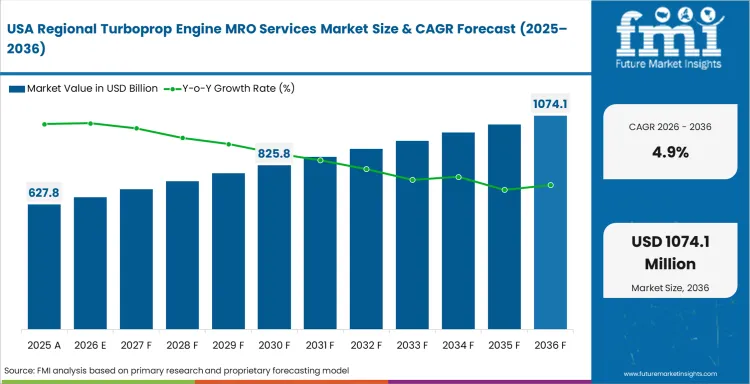
The USA market has a broad aviation base, but turboprop regional airline use is more selective. Regional fleets require certified engine support across cargo feeder routes and special mission aircraft. The market is expected to advance at 4.9% CAGR by 2036. Operators need providers with FAA approvals and fast parts access across widely spread bases. Alaska and Pacific Northwest routes add a practical need for aircraft suited to terrain and weather constraints.
- Alaska and Pacific Northwest routes support turboprop use where terrain and weather affect aircraft choice.
- FedEx feeder networks create demand for reliable small-aircraft engine service across regional cargo routes.
- FAA repair station approvals are central for providers serving commercial and government aircraft.
Future Outlook for Regional Turboprop Engine MRO Services Market in the UK
Island routes and short domestic sectors support service demand in the UK Growth is projected at 4.6% CAGR by 2036. Scotland, Northern Ireland, and Channel Island links keep turboprop aircraft relevant for thin routes. Regional engine MRO demand is smaller in volume, though aircraft availability is critical when fleet backup is limited. Shops with CAA approvals and access to European parts channels can support steady engine service work.
- Scottish Highlands and Islands routes create aircraft availability needs that favor planned engine support.
- Loganair operations provide a clear base for UK turboprop maintenance planning.
- UK CAA oversight makes certification and documentation central to engine service decisions.
Opportunity Analysis of Regional Turboprop Engine MRO Services Market in Germany
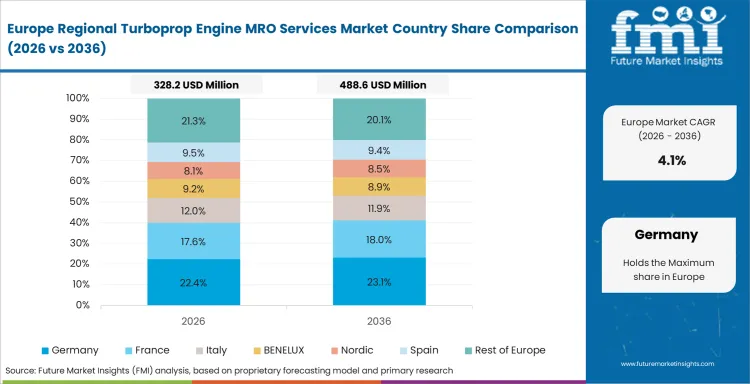
Germany’s opportunity lies in certified repair depth and European MRO standards. Operators and service providers value structured maintenance control, which supports a 4.4% CAGR by 2036. Germany has fewer thin regional turboprop routes than India or Brazil, yet its engineering depth supports specialist repair and component work. Hamburg and Munich aviation clusters help maintain skilled labor access. MRO providers with EASA approval and strong documentation can serve operators beyond Germany’s domestic aircraft base.
- Hamburg and Munich aviation clusters support skilled labor access for aircraft maintenance services.
- EASA standards make documentation depth a core requirement for German engine service work.
- German operators often value reliability and traceability over lowest shop visit cost.
In-depth Analysis of Regional Turboprop Engine MRO Services Market in France
France is expected to post 4.3% CAGR by 2036. Its role is tied to ATR’s presence and the wider turboprop engineering base around Toulouse. ATR and Pratt & Whitney Canada’s collaboration on advanced propulsion technology supports future service planning for newer regional aircraft engines. France benefits from engineering proximity even with slower end-user growth than India or Brazil. French overseas routes add niche demand for turboprop support across island and remote services.
- Toulouse provides France with a direct link to ATR engineering and supplier activity.
- French overseas territories create niche turboprop route needs across island and remote services.
- EASA rule alignment supports certified maintenance practices for French and European operators.
In-depth Analysis of Regional Turboprop Engine MRO Services Market in Japan
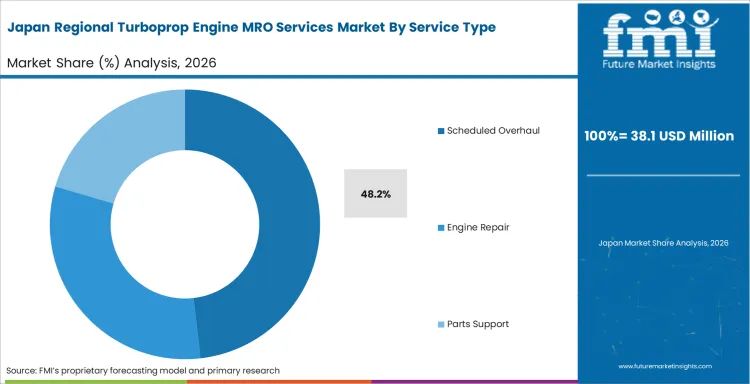
Japan’s turboprop MRO demand is tied to island connectivity and high reliability expectations. Regional aviation supports communities across Hokkaido, Kyushu, and remote islands. The market is projected to grow at 3.9% CAGR by 2036. Safety attention and strict maintenance culture keep documentation and repeatable service quality central to supplier selection. Operators need predictable turnaround times because remote routes have limited aircraft backup and few practical alternatives.
- Hokkaido routes need aircraft reliability due to weather exposure and longer diversion planning.
- Okinawa and island services support turboprop use where route length and airport access fit smaller aircraft.
- Japanese maintenance culture places high value on documented work scope and repeatable service quality.
Competitive Landscape and Strategic Positioning
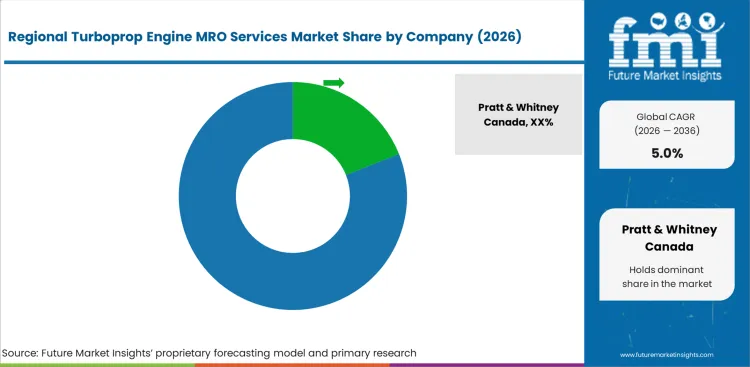
- The market is moderately concentrated around engine OEM networks and specialist turboprop overhaul providers.
- Leading companies compete on engine family approvals, test cell access and certified parts channels.
- Smaller providers win local work when they offer fast support near regional airline bases.
- Entry barriers are high since engine manuals, trained labor, and approvals take time to build.
Competition in this market depends on engine family depth. Pratt & Whitney Canada holds a central position through PW100 and PW127XT support. StandardAero has scale in PT6A and PW100 engine work. Pratt & Whitney Canada’s Singapore service launch improves support access for Asia Pacific operators. Buyers evaluate whether a provider can handle the work scope, supply certified parts, and return the engine on time.
Specialist independent providers build their position through repeat turboprop work and shorter turnaround promises. Experience helps providers price work more accurately and plan material earlier. Independent shops gain when operators need cost control and practical access outside OEM centers. They lose ground when warranty status or complex service bulletins require OEM involvement.
New engine programs add a long-term service layer. GE Aerospace’s Catalyst turboprop engine certification creates future MRO potential as it enters aircraft programs and builds flight history. Newer engines take time to create large overhaul demand. Early support planning can decide which providers capture later service work. Providers with test capability and digital service tools are better placed as new turboprop platforms enter regional use.
Key Companies in the Regional Turboprop Engine MRO Services Market
Key companies build their position through engine approvals, shop capacity, and regional service access.
- OEM and Engine-Network Providers: Pratt & Whitney Canada and GE Aerospace anchor the OEM side of the market through engine design authority, service documents, and approved repair networks.
- Independent Engine MRO Providers: StandardAero, MTU Maintenance, Lufthansa Technik, and SIA Engineering Company are positioned around certified shop capability and regional access and regional access. StandardAero holds clear turboprop depth through PT6A and PW100 work.
- Regional Support Providers: ExecuJet MRO Services and airline shops serve operators that need local access and practical downtime control. These providers are important where aircraft are spread across smaller bases.
Competitive Benchmarking: Regional Turboprop Engine MRO Services Market
| Company | Engine Family Depth | Overhaul Scope | Approval Coverage | Geographic Footprint |
|---|---|---|---|---|
| Pratt & Whitney Canada | High | High | Strong | Global |
| StandardAero | High | High | Strong | Global |
| GE Aerospace | Medium | Medium | Strong | Global |
| MTU Maintenance | Medium | High | Strong | Europe and North America |
| Lufthansa Technik | Medium | Strong | Strong | Global |
| SIA Engineering Company | Medium | Medium | High | Asia Pacific |
| ExecuJet MRO Services | Low | Medium | Strong | Africa, Middle East, Asia |
| Airline Shops | Low | Moderate | Local | Country specific |
Source: Future Market Insights competitive analysis, 2026.
Key Developments in Regional Turboprop Engine MRO Services Market
- In April 2026, Pratt & Whitney Canada launched PT6C-67C and PW127XT MRO services at its Singapore facility. The launch improves support access for Asia Pacific turboprop operators.
- In February 2025, GE Aerospace announced FAA certification for the Catalyst turboprop engine. The certification prepares a new engine family for future support needs.
Key Players in the Regional Turboprop Engine MRO Services Market
OEM and Engine-Network Providers
- Pratt & Whitney Canada
- GE Aerospace
Independent Engine MRO Providers
- StandardAero
- MTU Maintenance
- Lufthansa Technik
- SIA Engineering Company
Regional Support Providers
- ExecuJet MRO Services
- Airline Shops
Report Scope and Coverage
| Parameter | Details |
|---|---|
| Quantitative Units | USD 1.2 billion to USD 2 billion, at a CAGR of 5.0% |
| Market Definition | Maintenance, repair, overhaul, testing, parts support, and field service for regional turboprop aircraft engines. |
| Regions Covered | North America, Latin America, Western Europe, Eastern Europe, East Asia, South Asia and Pacific, Middle East and Africa |
| Countries Covered | UK, USA, Japan, China, India, Germany, France, Brazil, and 30+ countries |
| Key Companies Profiled | Pratt & Whitney Canada, StandardAero, GE Aerospace, MTU Maintenance, Lufthansa Technik, SIA Engineering Company, ExecuJet MRO Services |
| Forecast Period | 2026 to 2036 |
| Approach | Hybrid bottom-up and top-down method using fleet population, shop visit cycles, work scope, and country route activity. |
Regional Turboprop Engine MRO Services Market by Segments
Regional Turboprop Engine MRO Services Market Segmented by Service Type:
- Scheduled Overhaul
- Engine Repair
- Parts Support
- Line Maintenance
- Engine Leasing
Regional Turboprop Engine MRO Services Market Segmented by Engine Family:
- PW100
- PW150
- PT6A
- AE2100
- GE Catalyst
Regional Turboprop Engine MRO Services Market Segmented by Aircraft Type:
- 70 Seat Turboprops
- Utility Turboprops
- Cargo Turboprops
- Special Mission
Regional Turboprop Engine MRO Services Market Segmented by Provider Type:
- OEM Networks
- Independent MRO
- Airline Shops
Regional Turboprop Engine MRO Services Market Segmented by End User:
- Regional Airlines
- Charter Operators
- Cargo Operators
- Government Fleets
Regional Turboprop Engine MRO Services Market by Region:
- North America
- USA
- Canada
- Mexico
- Latin America
- Brazil
- Chile
- Rest of Latin America
- Western Europe
- Germany
- UK
- Italy
- Spain
- France
- Nordic
- BENELUX
- Rest of Western Europe
- Eastern Europe
- Russia
- Poland
- Hungary
- Balkan & Baltic
- Rest of Eastern Europe
- East Asia
- China
- Japan
- South Korea
- South Asia and Pacific
- India
- ASEAN
- Australia & New Zealand
- Rest of South Asia and Pacific
- Middle East & Africa
- Kingdom of Saudi Arabia
- Other GCC Countries
- Turkiye
- South Africa
- Other African Union
- Rest of Middle East & Africa
Research Sources and Bibliography
- Pratt & Whitney Canada. (2026, April 17). RTX’s Pratt & Whitney Canada launches PT6C-67C and PW127XT MRO services in Singapore. RTX.
- GE Aerospace. (2025, February 27). Catalyst turboprop engine achieves FAA certification.
- StandardAero. (2025, June 25). StandardAero’s Center of Excellence (COE) for turboprop engine MRO in Summerside, PE, Canada celebrates its 20,000th engine induction.
- International Air Transport Association. (2026, January 29). Strong 2025 passenger demand masks ongoing capacity constraints. IATA.
- European Union Aviation Safety Agency. (2025, August 26). Annual safety review 2025. EASA.
This Report Answers
- What is the estimated 2026 value for regional turboprop engine MRO services worldwide?
- How much revenue is projected by 2036 for regional turboprop engine MRO services?
- What CAGR is expected for the market from 2026 to 2036?
- Which service type is projected to account for the largest share in 2026?
- · Which engine family is estimated to hold the leading service share in 2026?
- Why do regional airlines account for the largest end user share?
- Which countries are expected to grow faster than the global average through 2036?
- Which companies define the leading competitive structure in turboprop engine MRO?
- What services and engine families are included within the market definition?
- How does FMI size the market using fleet activity and shop visit assumptions?
Frequently Asked Questions
What is the global market demand for regional turboprop engine MRO services in 2026?
In 2026, the global market is expected to be worth USD 1.24 billion, with scheduled overhaul forming the largest service base.
What will the market be worth by 2036?
The market is projected to reach USD 2 billion by 2036, supported by engine shop visits across active regional turboprop fleets.
What CAGR is projected from 2026 to 2036?
The market is forecast to grow at 5.0% CAGR from 2026 to 2036 through route use and engine family service cycles.
Which service type is expected to lead in 2026?
Scheduled overhaul is projected to account for 46.0% share in 2026 as major work scopes follow engine life limits.
Which engine family is expected to hold the top share?
PW100 is estimated to hold 68.0% share in 2026 due to its wide use across ATR and Dash 8 aircraft.
Which country is projected to grow fastest?
India is projected to record 6.7% CAGR through 2036 as regional air connectivity and ATR fleet use support service demand.
What is included in the market definition?
The market includes overhaul, repair, testing, parts support, field service, and leasing support for regional turboprop aircraft engines.
How is the forecast calculated?
The forecast combines fleet counts, engine family mix, shop visit timing and country-level route activity assumptions.
Preview the report firsthand - request a free sample
Get SampleGet the brochure for pricing and purchase details.
Get PDFTable of Content
- Executive Summary
- Global Market Outlook
- Demand-side Trends
- Supply-side Trends
- Technology Roadmap Analysis
- Analysis and Recommendations
- Market Overview
- Market Coverage / Taxonomy
- Market Definition / Scope / Limitations
- Research Methodology
- Chapter Orientation
- Analytical Lens and Working Hypotheses
- Market Structure, Signals, and Trend Drivers
- Benchmarking and Cross-market Comparability
- Market Sizing, Forecasting, and Opportunity Mapping
- Research Design and Evidence Framework
- Desk Research Programme (Secondary Evidence)
- Company Annual and Sustainability Reports
- Peer-reviewed Journals and Academic Literature
- Corporate Websites, Product Literature, and Technical Notes
- Earnings Decks and Investor Briefings
- Statutory Filings and Regulatory Disclosures
- Technical White Papers and Standards Notes
- Trade Journals, Industry Magazines, and Analyst Briefs
- Conference Proceedings, Webinars, and Seminar Materials
- Government Statistics Portals and Public Data Releases
- Press Releases and Reputable Media Coverage
- Specialist Newsletters and Curated Briefings
- Sector Databases and Reference Repositories
- FMI Internal Proprietary Databases and Historical Market Datasets
- Subscription Datasets and Paid Sources
- Social Channels, Communities, and Digital Listening Inputs
- Additional Desk Sources
- Expert Input and Fieldwork (Primary Evidence)
- Primary Modes
- Qualitative Interviews and Expert Elicitation
- Quantitative Surveys and Structured Data Capture
- Blended Approach
- Why Primary Evidence is Used
- Field Techniques
- Interviews
- Surveys
- Focus Groups
- Observational and In-context Research
- Social and Community Interactions
- Stakeholder Universe Engaged
- C-suite Leaders
- Board Members
- Presidents and Vice Presidents
- R&D and Innovation Heads
- Technical Specialists
- Domain Subject-matter Experts
- Scientists
- Physicians and Other Healthcare Professionals
- Governance, Ethics, and Data Stewardship
- Research Ethics
- Data Integrity and Handling
- Primary Modes
- Tooling, Models, and Reference Databases
- Desk Research Programme (Secondary Evidence)
- Data Engineering and Model Build
- Data Acquisition and Ingestion
- Cleaning, Normalisation, and Verification
- Synthesis, Triangulation, and Analysis
- Quality Assurance and Audit Trail
- Market Background
- Market Dynamics
- Drivers
- Restraints
- Opportunity
- Trends
- Scenario Forecast
- Demand in Optimistic Scenario
- Demand in Likely Scenario
- Demand in Conservative Scenario
- Opportunity Map Analysis
- Product Life Cycle Analysis
- Supply Chain Analysis
- Investment Feasibility Matrix
- Value Chain Analysis
- PESTLE and Porter’s Analysis
- Regulatory Landscape
- Regional Parent Market Outlook
- Production and Consumption Statistics
- Import and Export Statistics
- Market Dynamics
- Global Market Analysis 2021 to 2025 and Forecast, 2026 to 2036
- Historical Market Size Value (USD Million) Analysis, 2021 to 2025
- Current and Future Market Size Value (USD Million) Projections, 2026 to 2036
- Y-o-Y Growth Trend Analysis
- Absolute $ Opportunity Analysis
- Global Market Pricing Analysis 2021 to 2025 and Forecast 2026 to 2036
- Global Market Analysis 2021 to 2025 and Forecast 2026 to 2036, By Service Type
- Introduction / Key Findings
- Historical Market Size Value (USD Million) Analysis By Service Type , 2021 to 2025
- Current and Future Market Size Value (USD Million) Analysis and Forecast By Service Type , 2026 to 2036
- Scheduled Overhaul
- Engine Repair
- Parts Support
- Scheduled Overhaul
- Y-o-Y Growth Trend Analysis By Service Type , 2021 to 2025
- Absolute $ Opportunity Analysis By Service Type , 2026 to 2036
- Global Market Analysis 2021 to 2025 and Forecast 2026 to 2036, By Engine Family
- Introduction / Key Findings
- Historical Market Size Value (USD Million) Analysis By Engine Family, 2021 to 2025
- Current and Future Market Size Value (USD Million) Analysis and Forecast By Engine Family, 2026 to 2036
- PW100
- PW150
- PT6A
- PW100
- Y-o-Y Growth Trend Analysis By Engine Family, 2021 to 2025
- Absolute $ Opportunity Analysis By Engine Family, 2026 to 2036
- Global Market Analysis 2021 to 2025 and Forecast 2026 to 2036, By Aircraft Type
- Introduction / Key Findings
- Historical Market Size Value (USD Million) Analysis By Aircraft Type, 2021 to 2025
- Current and Future Market Size Value (USD Million) Analysis and Forecast By Aircraft Type, 2026 to 2036
- 70 Seat Turboprops
- Utility Turboprops
- Cargo Turboprops
- 70 Seat Turboprops
- Y-o-Y Growth Trend Analysis By Aircraft Type, 2021 to 2025
- Absolute $ Opportunity Analysis By Aircraft Type, 2026 to 2036
- Global Market Analysis 2021 to 2025 and Forecast 2026 to 2036, By Provider Type
- Introduction / Key Findings
- Historical Market Size Value (USD Million) Analysis By Provider Type, 2021 to 2025
- Current and Future Market Size Value (USD Million) Analysis and Forecast By Provider Type, 2026 to 2036
- OEM Networks
- Independent MRO
- Airline Shops
- OEM Networks
- Y-o-Y Growth Trend Analysis By Provider Type, 2021 to 2025
- Absolute $ Opportunity Analysis By Provider Type, 2026 to 2036
- Global Market Analysis 2021 to 2025 and Forecast 2026 to 2036, By End User
- Introduction / Key Findings
- Historical Market Size Value (USD Million) Analysis By End User, 2021 to 2025
- Current and Future Market Size Value (USD Million) Analysis and Forecast By End User, 2026 to 2036
- Regional Airlines
- Charter Operators
- Cargo Operators
- Regional Airlines
- Y-o-Y Growth Trend Analysis By End User, 2021 to 2025
- Absolute $ Opportunity Analysis By End User, 2026 to 2036
- Global Market Analysis 2021 to 2025 and Forecast 2026 to 2036, By Region
- Introduction
- Historical Market Size Value (USD Million) Analysis By Region, 2021 to 2025
- Current Market Size Value (USD Million) Analysis and Forecast By Region, 2026 to 2036
- North America
- Latin America
- Western Europe
- Eastern Europe
- East Asia
- South Asia and Pacific
- Middle East & Africa
- Market Attractiveness Analysis By Region
- North America Market Analysis 2021 to 2025 and Forecast 2026 to 2036, By Country
- Historical Market Size Value (USD Million) Trend Analysis By Market Taxonomy, 2021 to 2025
- Market Size Value (USD Million) Forecast By Market Taxonomy, 2026 to 2036
- By Country
- USA
- Canada
- Mexico
- By Service Type
- By Engine Family
- By Aircraft Type
- By Provider Type
- By End User
- By Country
- Market Attractiveness Analysis
- By Country
- By Service Type
- By Engine Family
- By Aircraft Type
- By Provider Type
- By End User
- Key Takeaways
- Latin America Market Analysis 2021 to 2025 and Forecast 2026 to 2036, By Country
- Historical Market Size Value (USD Million) Trend Analysis By Market Taxonomy, 2021 to 2025
- Market Size Value (USD Million) Forecast By Market Taxonomy, 2026 to 2036
- By Country
- Brazil
- Chile
- Rest of Latin America
- By Service Type
- By Engine Family
- By Aircraft Type
- By Provider Type
- By End User
- By Country
- Market Attractiveness Analysis
- By Country
- By Service Type
- By Engine Family
- By Aircraft Type
- By Provider Type
- By End User
- Key Takeaways
- Western Europe Market Analysis 2021 to 2025 and Forecast 2026 to 2036, By Country
- Historical Market Size Value (USD Million) Trend Analysis By Market Taxonomy, 2021 to 2025
- Market Size Value (USD Million) Forecast By Market Taxonomy, 2026 to 2036
- By Country
- Germany
- UK
- Italy
- Spain
- France
- Nordic
- BENELUX
- Rest of Western Europe
- By Service Type
- By Engine Family
- By Aircraft Type
- By Provider Type
- By End User
- By Country
- Market Attractiveness Analysis
- By Country
- By Service Type
- By Engine Family
- By Aircraft Type
- By Provider Type
- By End User
- Key Takeaways
- Eastern Europe Market Analysis 2021 to 2025 and Forecast 2026 to 2036, By Country
- Historical Market Size Value (USD Million) Trend Analysis By Market Taxonomy, 2021 to 2025
- Market Size Value (USD Million) Forecast By Market Taxonomy, 2026 to 2036
- By Country
- Russia
- Poland
- Hungary
- Balkan & Baltic
- Rest of Eastern Europe
- By Service Type
- By Engine Family
- By Aircraft Type
- By Provider Type
- By End User
- By Country
- Market Attractiveness Analysis
- By Country
- By Service Type
- By Engine Family
- By Aircraft Type
- By Provider Type
- By End User
- Key Takeaways
- East Asia Market Analysis 2021 to 2025 and Forecast 2026 to 2036, By Country
- Historical Market Size Value (USD Million) Trend Analysis By Market Taxonomy, 2021 to 2025
- Market Size Value (USD Million) Forecast By Market Taxonomy, 2026 to 2036
- By Country
- China
- Japan
- South Korea
- By Service Type
- By Engine Family
- By Aircraft Type
- By Provider Type
- By End User
- By Country
- Market Attractiveness Analysis
- By Country
- By Service Type
- By Engine Family
- By Aircraft Type
- By Provider Type
- By End User
- Key Takeaways
- South Asia and Pacific Market Analysis 2021 to 2025 and Forecast 2026 to 2036, By Country
- Historical Market Size Value (USD Million) Trend Analysis By Market Taxonomy, 2021 to 2025
- Market Size Value (USD Million) Forecast By Market Taxonomy, 2026 to 2036
- By Country
- India
- ASEAN
- Australia & New Zealand
- Rest of South Asia and Pacific
- By Service Type
- By Engine Family
- By Aircraft Type
- By Provider Type
- By End User
- By Country
- Market Attractiveness Analysis
- By Country
- By Service Type
- By Engine Family
- By Aircraft Type
- By Provider Type
- By End User
- Key Takeaways
- Middle East & Africa Market Analysis 2021 to 2025 and Forecast 2026 to 2036, By Country
- Historical Market Size Value (USD Million) Trend Analysis By Market Taxonomy, 2021 to 2025
- Market Size Value (USD Million) Forecast By Market Taxonomy, 2026 to 2036
- By Country
- Kingdom of Saudi Arabia
- Other GCC Countries
- Turkiye
- South Africa
- Other African Union
- Rest of Middle East & Africa
- By Service Type
- By Engine Family
- By Aircraft Type
- By Provider Type
- By End User
- By Country
- Market Attractiveness Analysis
- By Country
- By Service Type
- By Engine Family
- By Aircraft Type
- By Provider Type
- By End User
- Key Takeaways
- Key Countries Market Analysis
- USA
- Pricing Analysis
- Market Share Analysis, 2025
- By Service Type
- By Engine Family
- By Aircraft Type
- By Provider Type
- By End User
- Canada
- Pricing Analysis
- Market Share Analysis, 2025
- By Service Type
- By Engine Family
- By Aircraft Type
- By Provider Type
- By End User
- Mexico
- Pricing Analysis
- Market Share Analysis, 2025
- By Service Type
- By Engine Family
- By Aircraft Type
- By Provider Type
- By End User
- Brazil
- Pricing Analysis
- Market Share Analysis, 2025
- By Service Type
- By Engine Family
- By Aircraft Type
- By Provider Type
- By End User
- Chile
- Pricing Analysis
- Market Share Analysis, 2025
- By Service Type
- By Engine Family
- By Aircraft Type
- By Provider Type
- By End User
- Germany
- Pricing Analysis
- Market Share Analysis, 2025
- By Service Type
- By Engine Family
- By Aircraft Type
- By Provider Type
- By End User
- UK
- Pricing Analysis
- Market Share Analysis, 2025
- By Service Type
- By Engine Family
- By Aircraft Type
- By Provider Type
- By End User
- Italy
- Pricing Analysis
- Market Share Analysis, 2025
- By Service Type
- By Engine Family
- By Aircraft Type
- By Provider Type
- By End User
- Spain
- Pricing Analysis
- Market Share Analysis, 2025
- By Service Type
- By Engine Family
- By Aircraft Type
- By Provider Type
- By End User
- France
- Pricing Analysis
- Market Share Analysis, 2025
- By Service Type
- By Engine Family
- By Aircraft Type
- By Provider Type
- By End User
- India
- Pricing Analysis
- Market Share Analysis, 2025
- By Service Type
- By Engine Family
- By Aircraft Type
- By Provider Type
- By End User
- ASEAN
- Pricing Analysis
- Market Share Analysis, 2025
- By Service Type
- By Engine Family
- By Aircraft Type
- By Provider Type
- By End User
- Australia & New Zealand
- Pricing Analysis
- Market Share Analysis, 2025
- By Service Type
- By Engine Family
- By Aircraft Type
- By Provider Type
- By End User
- China
- Pricing Analysis
- Market Share Analysis, 2025
- By Service Type
- By Engine Family
- By Aircraft Type
- By Provider Type
- By End User
- Japan
- Pricing Analysis
- Market Share Analysis, 2025
- By Service Type
- By Engine Family
- By Aircraft Type
- By Provider Type
- By End User
- South Korea
- Pricing Analysis
- Market Share Analysis, 2025
- By Service Type
- By Engine Family
- By Aircraft Type
- By Provider Type
- By End User
- Russia
- Pricing Analysis
- Market Share Analysis, 2025
- By Service Type
- By Engine Family
- By Aircraft Type
- By Provider Type
- By End User
- Poland
- Pricing Analysis
- Market Share Analysis, 2025
- By Service Type
- By Engine Family
- By Aircraft Type
- By Provider Type
- By End User
- Hungary
- Pricing Analysis
- Market Share Analysis, 2025
- By Service Type
- By Engine Family
- By Aircraft Type
- By Provider Type
- By End User
- Kingdom of Saudi Arabia
- Pricing Analysis
- Market Share Analysis, 2025
- By Service Type
- By Engine Family
- By Aircraft Type
- By Provider Type
- By End User
- Turkiye
- Pricing Analysis
- Market Share Analysis, 2025
- By Service Type
- By Engine Family
- By Aircraft Type
- By Provider Type
- By End User
- South Africa
- Pricing Analysis
- Market Share Analysis, 2025
- By Service Type
- By Engine Family
- By Aircraft Type
- By Provider Type
- By End User
- USA
- Market Structure Analysis
- Competition Dashboard
- Competition Benchmarking
- Market Share Analysis of Top Players
- By Regional
- By Service Type
- By Engine Family
- By Aircraft Type
- By Provider Type
- By End User
- Competition Analysis
- Competition Deep Dive
- Pratt & Whitney Canada
- Overview
- Product Portfolio
- Profitability by Market Segments (Product/Age /Sales Channel/Region)
- Sales Footprint
- Strategy Overview
- Marketing Strategy
- Product Strategy
- Channel Strategy
- GE Aerospace
- StandardAero
- MTU Maintenance
- Lufthansa Technik
- SIA Engineering Company
- Pratt & Whitney Canada
- Competition Deep Dive
- Assumptions & Acronyms Used


