

- Industry Size (2026)
- USD 940 Mn
- Forecast (2036)
- USD 3350 Mn
- CAGR (2026 to 2036)
- 13.20%
Regional Cross-Dock Network Optimization Services Market Forecast and Outlook (2026 to 2036)
The market for regional cross-dock network optimization services is expected to grow from USD 940 million in 2026 to USD 3,350 million by 2036, reflecting a compound annual growth rate (CAGR) of 13.2%. Cross-docking is an efficient logistics practice that helps companies optimize their supply chains by reducing handling times and minimizing storage costs. Regional cross-dock network optimization services help businesses design and manage cross-docking systems that streamline the movement of goods from inbound transportation directly to outbound shipments, reducing delays and costs while improving overall supply chain efficiency. With the growing demand for faster and more reliable delivery times, particularly driven by e-commerce growth, cross-docking is becoming an increasingly popular method for logistics companies.
This market’s growth is also supported by the expansion of regional distribution centers, increased adoption of automation in logistics, and the need for real-time tracking and data-driven decision-making. As companies look to improve operational efficiency and reduce transportation costs, regional cross-docking and its optimization services are expected to become a critical part of the supply chain strategy, enabling businesses to meet the demands of modern logistics.
Quick Stats for Regional Cross-Dock Network Optimization Services Market
- Regional Cross-Dock Network Optimization Services Market Value (2026): USD 940 million
- Regional Cross-Dock Network Optimization Services Market Forecast Value (2036): USD 3,350 million
- Regional Cross-Dock Network Optimization Services Market Global Forecast CAGR (2026 to 2036): 13.20%
- Top End Use Industry by Share in Regional Cross-Dock Network Optimization Services Market: E-Commerce & Retail Logistics (46%)
- Key Growth Regions in Regional Cross-Dock Network Optimization Services Market: India, China, USA, Brazil, Germany
- Top Players in Regional Cross-Dock Network Optimization Services Market: Blue Yonder, Manhattan Associates, Oracle Transportation & Global Trade, Descartes Systems Group, JDA
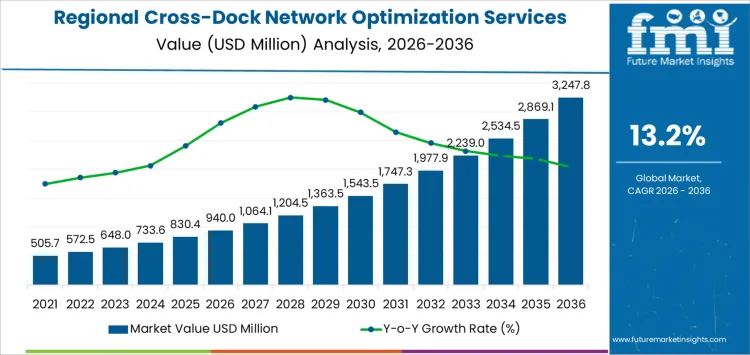
What is the Growth Forecast for the Regional Cross-Dock Network Optimization Services Market through 2036?
The growth rate volatility index for the regional cross-dock network optimization services market indicates consistent, steady growth with some variability in the middle years. Starting at USD 940 million in 2026, the market increases to USD 1,064.82 million in 2027 and USD 1,204.51 million in 2028. The early phase shows stable growth, reflecting the increasing adoption of cross-dock optimization services as companies strive to improve their regional distribution efficiency.
From 2028 to 2030, the market experiences more pronounced growth, reaching USD 1,360.97 million in 2029 and USD 1,535.18 million in 2030. This period indicates a more rapid adoption of regional cross-docking optimization services, driven by the increased demand for faster deliveries and greater supply chain visibility. As industries such as e-commerce and retail scale up their operations, the market for these services grows significantly. By 2035, the market is projected to reach USD 2,728.90 million, with a noticeable acceleration in growth during these years. By 2036, the market will reach USD 3,350 million, showing that while the growth rate may stabilize towards the end of the period, the overall demand for cross-dock optimization services remains strong. The growth rate volatility index reveals that while the market grows steadily, there is a slight acceleration in the mid to late stages as industries continue to invest in optimizing their regional distribution networks and meeting rising consumer expectations for quicker and more reliable deliveries.
Regional Cross-Dock Network Optimization Services Market Key Takeaways
| Metric | Value |
|---|---|
| Industry Sales Value (2026) | USD 940 million |
| Industry Forecast Value (2036) | USD 3,350 million |
| Industry Forecast CAGR (2026-2036) | 13.2% |
What Is Driving the Demand for Regional Cross Dock Network Optimization Services Globally?
The demand for regional cross dock network optimization services is driven by the need to improve efficiency, reduce costs, and accelerate throughput in logistics networks. Cross docking consolidates inbound shipments at a regional hub, sorts them by destination, and dispatches them outbound with minimal storage time. This reduces inventory holding costs, shortens delivery cycles, and enhances flow through distribution networks. As e-commerce growth and omni channel fulfilment continue worldwide, shippers and third party logistics providers face pressure to streamline operations and meet tighter delivery windows. Regional optimization services apply data analytics, routing algorithms, and real time visibility to match shipments with appropriate hubs, balance loads, and minimise dwell times. By adjusting network configurations and prioritising movements based on demand patterns, these services help companies reduce transport costs and improve on time performance. The increasing complexity of supply chains, with more SKUs and varied order profiles, has highlighted the operational value of cross dock optimization in regions such as North America, Europe, and Asia Pacific.
Future demand for regional cross dock network optimization services is expected to grow as supply chains seek greater agility and responsiveness. Continued expansion of same day and next day delivery expectations will reinforce the need for efficient cross dock operations that reduce latency in transfer points. Advances in logistics software, machine learning, and real time tracking will enhance optimization capabilities, enabling faster decisions about routing, consolidation, and resource allocation. Growth in regional manufacturing, reshoring, and near shoring trends may also support demand, as companies adjust networks to manage shorter lead times and volatile demand. The pace of adoption will depend on integration with transportation management systems, visibility into inventory and shipments, and the ability of optimization services to demonstrate cost savings and improved service levels. As global logistics networks continue to evolve, regional cross dock network optimization services will play a central role in enhancing efficiency and competitiveness.
What Are the Key Segments in Regional Cross-Dock Network Optimization Services Market?
The regional cross-dock network optimization services market is segmented by service type and end-use industry. Cross-dock network planning & modeling leads the service type segment with 38% of the market share, offering businesses the tools to optimize their cross-dock operations. E-commerce & retail logistics dominate the end-use industry segment with 46%, driven by the increasing demand for efficient logistics in the rapidly growing e-commerce sector. The market is expanding as companies seek to streamline their supply chains and enhance operational efficiency.
Which Service Type Drives Regional Cross-Dock Network Optimization Services Market Demand Globally?
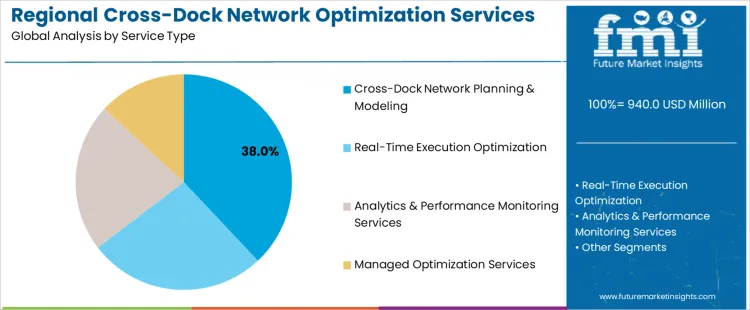
Cross-dock network planning & modeling leads the service type segment with 38% of the market share. This service allows businesses to design and model optimized cross-docking processes, improving efficiency by ensuring that goods are transferred quickly and cost-effectively between transport modes without long-term storage. By creating a strategic plan for cross-docking, businesses can reduce handling times, lower transportation costs, and minimize the need for warehousing, which is particularly valuable in industries with high turnover rates and fast-moving goods. The demand for cross-dock network planning & modeling services is growing as companies focus on improving supply chain efficiency, enhancing inventory management, and responding more rapidly to consumer demand. This service is especially critical for industries with complex logistics operations, such as e-commerce and retail, where optimizing delivery speed and cost is essential.
Which End-Use Industry Drives Regional Cross-Dock Network Optimization Services Market Demand Globally?
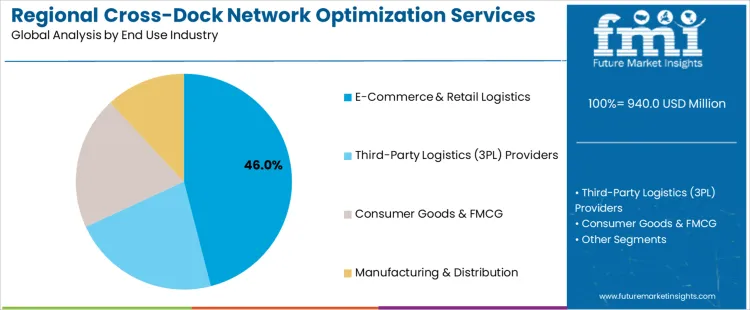
E-commerce & retail logistics leads the end-use industry segment with 46% of the market share. The e-commerce industry relies heavily on efficient logistics to meet consumer expectations for fast, reliable deliveries. Cross-docking is particularly valuable in this sector because it allows for the quick transfer of goods between transportation modes, reducing delays and storage times. As e-commerce continues to grow, optimizing cross-dock networks has become critical for reducing costs and improving delivery speed. The demand for cross-dock network optimization services is driven by the need for enhanced operational efficiency, cost savings, and faster fulfillment in the e-commerce and retail logistics sectors. While third-party logistics (3PL) providers, consumer goods & FMCG, and manufacturing & distribution also contribute to the market, the e-commerce sector remains the largest due to its scale and the increasing need for optimized logistics solutions that can handle high volumes of goods and ensure timely deliveries.
What are the Key Dynamics of the Global Regional Cross Dock Network Optimization Services Market?
The global regional cross dock network optimization services market is growing as logistics providers and supply chain managers seek to streamline flow of goods across distribution networks. Cross dock optimization services help coordinate receipt, sorting and transfer of freight at intermediate hubs to minimise storage time and speed delivery to end destinations. Growth is supported by rising e commerce volumes, need for rapid fulfilment, and focus on reducing operating cost through improved route planning and asset utilisation. Adoption spans third party logistics firms, retailers and manufacturers that prioritise efficient regional distribution.
What are the Key Drivers for the Global Regional Cross Dock Network Optimization Services Market?
A key driver is rising pressure on supply chains to reduce transit times and lower distribution cost while maintaining service quality. Growth in parcel and pallet volumes from e commerce and omni channel fulfilment requires efficient throughput at nodes between origin and last mile delivery. Cross dock network optimisation services use analytics to balance flows, reduce dwell time and improve coordination between inbound and outbound transportation. Advances in cloud computing, real time tracking and algorithmic planning help providers deliver tailored optimisation that increases throughput and reduces delays. Interest in collaborative logistics and shared infrastructure further supports use of optimisation services at regional hubs.
What are the Restraints for the Global Regional Cross Dock Network Optimization Services Market?
One restraint is the complexity of integrating optimisation services with existing transportation management, warehouse management and enterprise systems that vary across organisations. Differences in data quality and formats can limit visibility and predictive accuracy, which affects planning performance. Some logistics providers and carriers may hesitate due to cost required for implementation and ongoing support of advanced optimisation platforms. Regulatory and operational variations across regions can add complexity to standardised planning approaches. Reluctance to share operational data among partners and concerns about interoperability across legacy systems may also slow adoption in certain supply chain environments.
What is the Key Trends in the Global Regional Cross Dock Network Optimization Services Market?
A key trend is integration of artificial intelligence and machine learning into optimisation platforms to support predictive planning, scenario analysis and dynamic routing recommendations based on real time conditions. Providers are incorporating data from telematics, traffic feeds and order systems to refine planning suggestions and reduce bottlenecks. Cloud based and modular services are enabling scalable deployment and easier integration with partner systems. Greater emphasis on sustainability and reduction of empty miles encourages use of optimisation to lower fuel use and emissions. Collaboration between optimisation service providers, carriers and logistics partners is rising to create shared ecosystems that enhance visibility and coordination across regional cross dock networks.
What is the Country-Wise Outlook for Regional Cross-Dock Network Optimization Services?
The regional cross-dock network optimization services market is growing rapidly, driven by rising demand for faster, more efficient logistics solutions across regions. Cross-docking, which involves unloading products from incoming transport vehicles and directly loading them onto outbound vehicles, allows for faster transit times and reduced inventory costs. As industries seek to optimize their supply chain operations and improve delivery speed, regional optimization services are becoming essential. Countries such as India, China, and the USA are leading this growth, driven by the expansion of e-commerce, the need for cost-effective solutions, and the push for more efficient distribution networks. This market is expected to see continued expansion as businesses increasingly focus on logistics optimization.
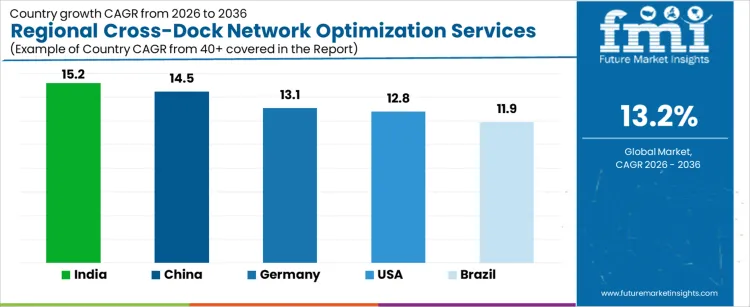
| Country | CAGR (2026–2036) |
|---|---|
| India | 15.2% |
| China | 14.5% |
| USA | 12.8% |
| Brazil | 11.9% |
| Germany | 13.1% |
What is Driving the Growth of Regional Cross-Dock Network Optimization Services in India?
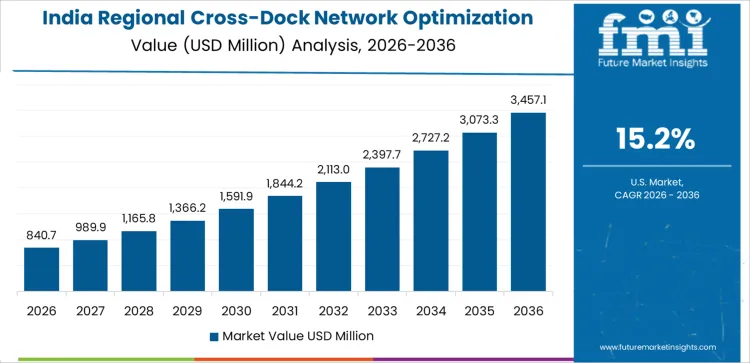
India’s Regional Cross-Dock Network Optimization Services market is projected to grow at a CAGR of 15.2%. The rapid growth of e-commerce and the increasing demand for quicker deliveries are key drivers of this market. India’s logistics sector is undergoing a transformation, with businesses seeking more efficient ways to move goods across regions. Cross-docking allows companies to reduce warehousing costs and improve transit times, making it an essential part of the logistics strategy. Additionally, India’s push towards modernizing its supply chain infrastructure, combined with the rise in demand for real-time inventory management and faster deliveries, is expected to significantly contribute to the market’s growth.
What is Contributing to the Growth of Regional Cross-Dock Network Optimization Services in China?
China’s Regional Cross-Dock Network Optimization Services market is expected to grow at a CAGR of 14.5%. As one of the largest e-commerce markets in the world, China’s logistics industry is rapidly expanding. Cross-docking, which reduces the need for long storage times and allows for faster deliveries, is becoming increasingly popular as companies look to streamline their supply chains. With the rise in demand for quick deliveries and the growing importance of logistics efficiency in China’s fast-paced market, the need for optimized regional cross-docking services is on the rise. Additionally, the Chinese government’s efforts to improve logistics infrastructure and reduce transit times further support the growth of this market.
What is Driving the Regional Cross-Dock Network Optimization Services Market Growth in the USA?
The USA’s Regional Cross-Dock Network Optimization Services market is projected to grow at a CAGR of 12.8%. As the e-commerce sector continues to grow and demand for faster delivery times increases, the need for efficient logistics solutions, including cross-docking, is becoming more pronounced. Cross-docking helps businesses optimize their supply chains by reducing storage costs and transit times, which is essential for meeting the rising expectations of consumers. The USA’s focus on supply chain optimization, particularly in response to challenges posed by COVID-19 and the subsequent boom in online shopping, is driving the demand for regional cross-dock network optimization services. This trend is expected to continue, contributing to market growth.
What is Influencing the Growth of Regional Cross-Dock Network Optimization Services in Brazil?
Brazil’s Regional Cross-Dock Network Optimization Services market is projected to grow at a CAGR of 11.9%. The country’s growing e-commerce industry and the increasing need for efficient logistics networks are driving the adoption of cross-docking services. Cross-docking helps businesses in Brazil optimize their regional distribution networks by reducing the need for long storage times and improving transportation efficiency. With Brazil’s large geographical area and a rapidly expanding consumer base, the demand for faster, more cost-effective logistics solutions is increasing. As businesses look to improve their supply chain operations, regional cross-dock network optimization services are expected to play an important role in driving market growth.
What is Contributing to the Growth of Regional Cross-Dock Network Optimization Services in Germany?
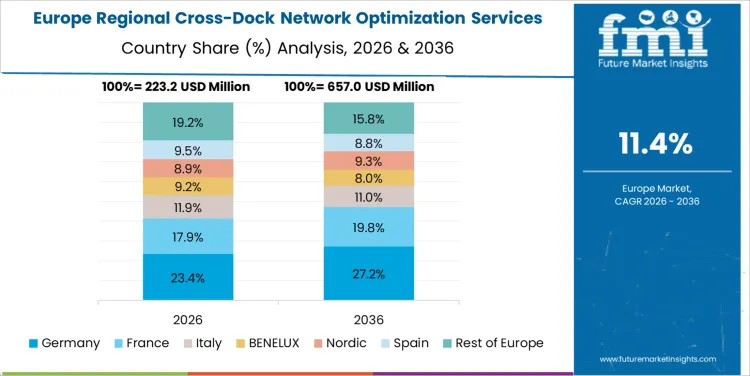
Germany’s Regional Cross-Dock Network Optimization Services market is expected to grow at a CAGR of 13.1%. As Europe’s leading logistics hub, Germany is seeing increasing demand for more efficient supply chain solutions. Cross-docking plays a crucial role in improving transit times and reducing storage costs, making it an attractive solution for businesses looking to streamline operations. With the rise in e-commerce and increasing pressure to meet tight delivery windows, companies in Germany are increasingly adopting cross-docking to improve efficiency. The country’s advanced infrastructure and focus on supply chain innovation further contribute to the growing adoption of regional cross-dock network optimization services, driving continued market growth.
What is the Competitive Landscape for the Regional Cross Dock Network Optimization Services Market?
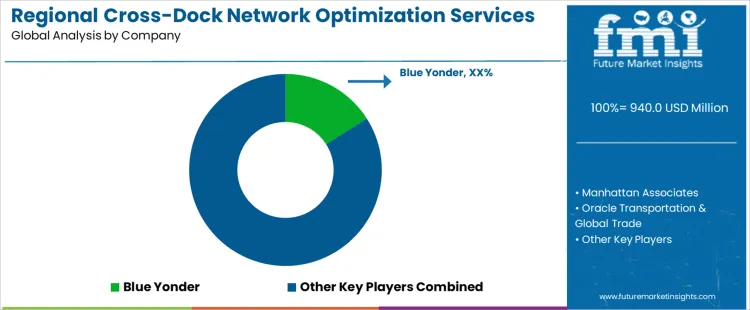
Global demand for regional cross dock network optimization services is rising as companies seek to improve supply chain efficiency, reduce transportation costs, and accelerate order fulfilment. Cross docking enables goods to move quickly from inbound to outbound transport with minimal storage, making it attractive for retail, grocery, e commerce, third party logistics and fast moving consumer goods sectors. As consumer expectations shift toward faster delivery windows and tighter inventory turns, supply chain teams prioritise optimization of regional hubs and distribution nodes to reduce dwell time, cut handling costs and improve asset utilisation. Growth in omnichannel fulfilment strategies and the need to balance cost with responsiveness in regional transport linkages further drives investment in services that use advanced algorithms, real time data and analytics to plan and coordinate cross dock flows. Sustainability goals also support adoption, since optimized routing and staging at regional levels can reduce unnecessary movements and lower emissions.
On the supply side, a set of established logistics software and services companies compete to lead this specialized market. Blue Yonder is recognised as a leading player with strong capabilities in network planning, predictive analytics and optimization services tailored to regional cross dock operations. Other competitors include Manhattan Associates, Oracle Transportation & Global Trade, Descartes Systems Group and JDA (now part of Blue Yonder’s broader portfolio). These firms offer platforms and professional services that integrate transportation management, warehouse execution, real time visibility and advanced optimization engines. Competition among them focuses on the depth of analytics, ease of integration with existing enterprise systems, ability to support multi modal and multi location operations, and strength of customer support. Providers offering flexible, scalable optimization solutions with strong data integration and actionable insights are best positioned to capture growth as shippers and logistics partners intensify focus on efficient regional cross dock networks worldwide.
Key Players of the Regional Cross-Dock Network Optimization Services Market
- Blue Yonder
- Manhattan Associates
- Oracle Transportation & Global Trade
- Descartes Systems Group
- JDA
Scope of the Report
| Items | Values |
|---|---|
| Quantitative Units (2026) | USD Million |
| Service Type | Cross-Dock Network Planning & Modeling, Real-Time Execution Optimization, Analytics & Performance Monitoring Services, Managed Optimization Services |
| End Use Industry | E-Commerce & Retail Logistics, Third-Party Logistics (3PL) Providers, Consumer Goods & FMCG, Manufacturing & Distribution |
| Companies | Blue Yonder, Manhattan Associates, Oracle Transportation & Global Trade, Descartes Systems Group, JDA |
| Regions Covered | North America, Latin America, Western Europe, Eastern Europe, South Asia and Pacific, East Asia, Middle East & Africa |
| Countries Covered | United States, Canada, Mexico, Brazil, Argentina, Germany, France, United Kingdom, Italy, Spain, Netherlands, China, India, Japan, South Korea, ANZ, GCC Countries, South Africa |
| Additional Attributes | Dollar by sales by service type, end-use industry, and region. Includes market trends in regional cross-dock network optimization services, performance in logistics and supply chain optimization for various industries, demand for real-time execution and performance monitoring, cost-effectiveness, sustainability practices, regulatory compliance, market share and competitive positioning of key companies, and the role of cross-dock optimization in improving efficiency, reducing costs, and enhancing operational agility across the logistics and distribution sectors. |
Key Segments in the Regional Cross-Dock Network Optimization Services Market
Service Type:
- Cross Dock Network Planning & Modeling
- Real Time Execution Optimization
- Analytics & Performance Monitoring Services
- Managed Optimization Services
End Use Industry:
- E Commerce & Retail Logistics
- Third Party Logistics (3PL) Providers
- Consumer Goods & FMCG
- Manufacturing & Distribution
Region:
- Asia Pacific
- China
- India
- Japan
- South Korea
- ASEAN
- Rest of Asia Pacific
- Europe
- Germany
- United Kingdom
- France
- Italy
- Spain
- Nordic
- BENELUX
- Rest of Europe
- North America
- United States
- Canada
- Mexico
- Latin America
- Brazil
- Chile
- Rest of Latin America
- Middle East & Africa
- Kingdom of Saudi Arabia
- Other GCC Countries
- Turkey
- South Africa
- Other African Union
- Rest of Middle East & Africa
Frequently Asked Questions
How big is the regional cross-dock network optimization services market in 2026?
The global regional cross-dock network optimization services market is estimated to be valued at USD 940.0 million in 2026.
What will be the size of regional cross-dock network optimization services market in 2036?
The market size for the regional cross-dock network optimization services market is projected to reach USD 3,247.8 million by 2036.
How much will be the regional cross-dock network optimization services market growth between 2026 and 2036?
The regional cross-dock network optimization services market is expected to grow at a 13.2% CAGR between 2026 and 2036.
What are the key product types in the regional cross-dock network optimization services market?
The key product types in regional cross-dock network optimization services market are cross‑dock network planning & modeling, real‑time execution optimization, analytics & performance monitoring services and managed optimization services.
Which end use industry segment to contribute significant share in the regional cross-dock network optimization services market in 2026?
In terms of end use industry, e‑commerce & retail logistics segment to command 46.0% share in the regional cross-dock network optimization services market in 2026.
Preview the report firsthand - request a free sample
Get SampleGet the brochure for pricing and purchase details.
Get PDFTable of Content
- Executive Summary
- Global Market Outlook
- Demand-side Trends
- Supply-side Trends
- Technology Roadmap Analysis
- Analysis and Recommendations
- Market Overview
- Market Coverage / Taxonomy
- Market Definition / Scope / Limitations
- Market Background
- Market Dynamics
- Drivers
- Restraints
- Opportunity
- Trends
- Scenario Forecast
- Demand in Optimistic Scenario
- Demand in Likely Scenario
- Demand in Conservative Scenario
- Opportunity Map Analysis
- Product Life Cycle Analysis
- Supply Chain Analysis
- Investment Feasibility Matrix
- Value Chain Analysis
- PESTLE and Porter’s Analysis
- Regulatory Landscape
- Regional Parent Market Outlook
- Production and Consumption Statistics
- Import and Export Statistics
- Market Dynamics
- Global Market Analysis 2021 to 2025 and Forecast, 2026 to 2036
- Historical Market Size Value (USD Million) Analysis, 2021 to 2025
- Current and Future Market Size Value (USD Million) Projections, 2026 to 2036
- Y-o-Y Growth Trend Analysis
- Absolute $ Opportunity Analysis
- Global Market Pricing Analysis 2021 to 2025 and Forecast 2026 to 2036
- Global Market Analysis 2021 to 2025 and Forecast 2026 to 2036, By Service Type
- Introduction / Key Findings
- Historical Market Size Value (USD Million) Analysis By Service Type , 2021 to 2025
- Current and Future Market Size Value (USD Million) Analysis and Forecast By Service Type , 2026 to 2036
- Cross‑Dock Network Planning & Modeling
- Real‑Time Execution Optimization
- Analytics & Performance Monitoring Services
- Managed Optimization Services
- Y-o-Y Growth Trend Analysis By Service Type , 2021 to 2025
- Absolute $ Opportunity Analysis By Service Type , 2026 to 2036
- Global Market Analysis 2021 to 2025 and Forecast 2026 to 2036, By End Use Industry
- Introduction / Key Findings
- Historical Market Size Value (USD Million) Analysis By End Use Industry, 2021 to 2025
- Current and Future Market Size Value (USD Million) Analysis and Forecast By End Use Industry, 2026 to 2036
- E‑Commerce & Retail Logistics
- Third‑Party Logistics (3PL) Providers
- Consumer Goods & FMCG
- Manufacturing & Distribution
- Y-o-Y Growth Trend Analysis By End Use Industry, 2021 to 2025
- Absolute $ Opportunity Analysis By End Use Industry, 2026 to 2036
- Global Market Analysis 2021 to 2025 and Forecast 2026 to 2036, By Region
- Introduction
- Historical Market Size Value (USD Million) Analysis By Region, 2021 to 2025
- Current Market Size Value (USD Million) Analysis and Forecast By Region, 2026 to 2036
- North America
- Latin America
- Western Europe
- Eastern Europe
- East Asia
- South Asia and Pacific
- Middle East & Africa
- Market Attractiveness Analysis By Region
- North America Market Analysis 2021 to 2025 and Forecast 2026 to 2036, By Country
- Historical Market Size Value (USD Million) Trend Analysis By Market Taxonomy, 2021 to 2025
- Market Size Value (USD Million) Forecast By Market Taxonomy, 2026 to 2036
- By Country
- USA
- Canada
- Mexico
- By Service Type
- By End Use Industry
- By Country
- Market Attractiveness Analysis
- By Country
- By Service Type
- By End Use Industry
- Key Takeaways
- Latin America Market Analysis 2021 to 2025 and Forecast 2026 to 2036, By Country
- Historical Market Size Value (USD Million) Trend Analysis By Market Taxonomy, 2021 to 2025
- Market Size Value (USD Million) Forecast By Market Taxonomy, 2026 to 2036
- By Country
- Brazil
- Chile
- Rest of Latin America
- By Service Type
- By End Use Industry
- By Country
- Market Attractiveness Analysis
- By Country
- By Service Type
- By End Use Industry
- Key Takeaways
- Western Europe Market Analysis 2021 to 2025 and Forecast 2026 to 2036, By Country
- Historical Market Size Value (USD Million) Trend Analysis By Market Taxonomy, 2021 to 2025
- Market Size Value (USD Million) Forecast By Market Taxonomy, 2026 to 2036
- By Country
- Germany
- UK
- Italy
- Spain
- France
- Nordic
- BENELUX
- Rest of Western Europe
- By Service Type
- By End Use Industry
- By Country
- Market Attractiveness Analysis
- By Country
- By Service Type
- By End Use Industry
- Key Takeaways
- Eastern Europe Market Analysis 2021 to 2025 and Forecast 2026 to 2036, By Country
- Historical Market Size Value (USD Million) Trend Analysis By Market Taxonomy, 2021 to 2025
- Market Size Value (USD Million) Forecast By Market Taxonomy, 2026 to 2036
- By Country
- Russia
- Poland
- Hungary
- Balkan & Baltic
- Rest of Eastern Europe
- By Service Type
- By End Use Industry
- By Country
- Market Attractiveness Analysis
- By Country
- By Service Type
- By End Use Industry
- Key Takeaways
- East Asia Market Analysis 2021 to 2025 and Forecast 2026 to 2036, By Country
- Historical Market Size Value (USD Million) Trend Analysis By Market Taxonomy, 2021 to 2025
- Market Size Value (USD Million) Forecast By Market Taxonomy, 2026 to 2036
- By Country
- China
- Japan
- South Korea
- By Service Type
- By End Use Industry
- By Country
- Market Attractiveness Analysis
- By Country
- By Service Type
- By End Use Industry
- Key Takeaways
- South Asia and Pacific Market Analysis 2021 to 2025 and Forecast 2026 to 2036, By Country
- Historical Market Size Value (USD Million) Trend Analysis By Market Taxonomy, 2021 to 2025
- Market Size Value (USD Million) Forecast By Market Taxonomy, 2026 to 2036
- By Country
- India
- ASEAN
- Australia & New Zealand
- Rest of South Asia and Pacific
- By Service Type
- By End Use Industry
- By Country
- Market Attractiveness Analysis
- By Country
- By Service Type
- By End Use Industry
- Key Takeaways
- Middle East & Africa Market Analysis 2021 to 2025 and Forecast 2026 to 2036, By Country
- Historical Market Size Value (USD Million) Trend Analysis By Market Taxonomy, 2021 to 2025
- Market Size Value (USD Million) Forecast By Market Taxonomy, 2026 to 2036
- By Country
- Kingdom of Saudi Arabia
- Other GCC Countries
- Turkiye
- South Africa
- Other African Union
- Rest of Middle East & Africa
- By Service Type
- By End Use Industry
- By Country
- Market Attractiveness Analysis
- By Country
- By Service Type
- By End Use Industry
- Key Takeaways
- Key Countries Market Analysis
- USA
- Pricing Analysis
- Market Share Analysis, 2025
- By Service Type
- By End Use Industry
- Canada
- Pricing Analysis
- Market Share Analysis, 2025
- By Service Type
- By End Use Industry
- Mexico
- Pricing Analysis
- Market Share Analysis, 2025
- By Service Type
- By End Use Industry
- Brazil
- Pricing Analysis
- Market Share Analysis, 2025
- By Service Type
- By End Use Industry
- Chile
- Pricing Analysis
- Market Share Analysis, 2025
- By Service Type
- By End Use Industry
- Germany
- Pricing Analysis
- Market Share Analysis, 2025
- By Service Type
- By End Use Industry
- UK
- Pricing Analysis
- Market Share Analysis, 2025
- By Service Type
- By End Use Industry
- Italy
- Pricing Analysis
- Market Share Analysis, 2025
- By Service Type
- By End Use Industry
- Spain
- Pricing Analysis
- Market Share Analysis, 2025
- By Service Type
- By End Use Industry
- France
- Pricing Analysis
- Market Share Analysis, 2025
- By Service Type
- By End Use Industry
- India
- Pricing Analysis
- Market Share Analysis, 2025
- By Service Type
- By End Use Industry
- ASEAN
- Pricing Analysis
- Market Share Analysis, 2025
- By Service Type
- By End Use Industry
- Australia & New Zealand
- Pricing Analysis
- Market Share Analysis, 2025
- By Service Type
- By End Use Industry
- China
- Pricing Analysis
- Market Share Analysis, 2025
- By Service Type
- By End Use Industry
- Japan
- Pricing Analysis
- Market Share Analysis, 2025
- By Service Type
- By End Use Industry
- South Korea
- Pricing Analysis
- Market Share Analysis, 2025
- By Service Type
- By End Use Industry
- Russia
- Pricing Analysis
- Market Share Analysis, 2025
- By Service Type
- By End Use Industry
- Poland
- Pricing Analysis
- Market Share Analysis, 2025
- By Service Type
- By End Use Industry
- Hungary
- Pricing Analysis
- Market Share Analysis, 2025
- By Service Type
- By End Use Industry
- Kingdom of Saudi Arabia
- Pricing Analysis
- Market Share Analysis, 2025
- By Service Type
- By End Use Industry
- Turkiye
- Pricing Analysis
- Market Share Analysis, 2025
- By Service Type
- By End Use Industry
- South Africa
- Pricing Analysis
- Market Share Analysis, 2025
- By Service Type
- By End Use Industry
- USA
- Market Structure Analysis
- Competition Dashboard
- Competition Benchmarking
- Market Share Analysis of Top Players
- By Regional
- By Service Type
- By End Use Industry
- Competition Analysis
- Competition Deep Dive
- Blue Yonder
- Overview
- Product Portfolio
- Profitability by Market Segments (Product/Age /Sales Channel/Region)
- Sales Footprint
- Strategy Overview
- Marketing Strategy
- Product Strategy
- Channel Strategy
- Manhattan Associates
- Oracle Transportation & Global Trade
- Descartes Systems Group
- JDA
- Blue Yonder
- Competition Deep Dive
- Assumptions & Acronyms Used
- Research Methodology


