

- Industry Size (2025)
- USD 28.7 Bn
- Forecast (2035)
- USD 48.2 Bn
- CAGR (2025 to 2035)
- 5.3%
Demand for Bamboo Products in USA Forecast and Outlook 2025 to 2035
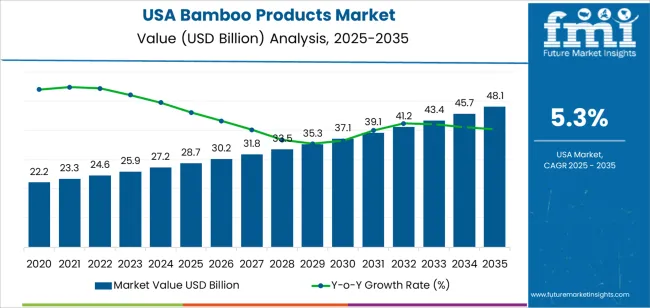
The demand for bamboo products in the USA is projected to grow from USD 28.7 billion in 2025 to USD 48.2 billion by 2035, reflecting a CAGR of 5.3%. The increasing shift towards eco-friendly and eco-friendly alternatives is one of the primary drivers of this growth. As consumers become more conscious of environmental impacts, bamboo products, known for their biodegradability and low carbon footprint, are gaining popularity across various sectors, including home goods, textiles, and construction materials. The rising interest in eco-friendly living, combined with bamboo’s versatility and durability, contributes significantly to the growing demand.
Innovations in bamboo processing and product development are expanding the range of applications for bamboo-based products. This includes advancements in bamboo composites for construction, as well as its use in personal care items, clothing, and furniture. The affordability of bamboo products, along with growing regulatory support for environmentally friendly materials, is further encouraging adoption. As demand increases, manufacturers are also focused on improving the efficiency of bamboo cultivation and processing to meet rising consumer expectations.
Quick Stats of the Demand for Bamboo Products in USA
- Demand for Bamboo Products in USA Value (2025): USD 28.7 billion
- Demand for Bamboo Products in USA Forecast Value (2035): USD 48.2 billion
- Demand for Bamboo Products in USA Forecast CAGR (2025-2035): 5.3%
- Demand for Bamboo Products in USA Leading Product Type: Lifestyle Products
- Demand for Bamboo Products in USA Key Growth Regions: West USA, South USA, Northeast USA, Midwest USA
- Demand for Bamboo Products in USA Top Players: MOSO International B.V., Bamboo Village Company Limited, Smith & Fong Co. (Plyboo), EcoPlanet Bamboo Group, The Bamboo Company
What is the Growth Forecast for the Demand for Bamboo Products in USA through 2035?
From 2025 to 2030, demand is expected to grow from USD 28.7 billion to USD 39.2 billion, adding USD 10.5 billion in value. This phase will make a substantial contribution to overall growth, driven by increasing consumer awareness of durability issues and the growing popularity of bamboo as a natural alternative to plastic and other non-renewable materials. As more industries adopt bamboo, particularly in home goods, textiles, and construction, this period will witness significant product innovation and increased availability. The rising trend of eco-consciousness, particularly among millennials and Gen Z, will play a pivotal role in this rapid growth phase.
From 2030 to 2035, the demand for bamboo products will increase from USD 39.2 billion to USD 48.2 billion, contributing USD 9.0 billion in value. While growth will continue, the pace will slow as the sector matures. This phase will be marked by greater industry penetration, with most early adopters already integrated into the bamboo product ecosystem. However, demand will remain strong due to sustained interest in eco-friendly living, improvements in product design, and the expansion of bamboo applications. The industry’s focus will shift towards optimizing production processes and increasing product diversification, ensuring continued growth despite a maturing phase.
Demand for Bamboo Products in USA Key Takeaways
| Metric | Value |
|---|---|
| Demand for Bamboo Products in USA Value (2025) | USD 28.7 billion |
| Demand for Bamboo Products in USA Forecast Value (2035) | USD 48.2 billion |
| Demand for Bamboo Products in USA Forecast CAGR (2025 to 2035) | 5.3% |
Why is the Demand for Bamboo Products in USA Growing?
The demand for bamboo products in the USA is growing due to the increasing consumer preference for eco-friendly, eco-friendly alternatives to traditional materials. Bamboo is a highly renewable resource that is used in a wide range of products, including furniture, flooring, textiles, kitchenware, and personal care items. As consumers become more environmentally conscious, bamboo is gaining popularity as a versatile and eco-friendly option for everyday products, contributing to the growth of the industry.
A major driver of this growth is the rising demand for environmentally friendly products across multiple industries. Bamboo’s fast growth rate, minimal water USAge, and natural biodegradability make it an attractive material for consumers and manufacturers looking to reduce their environmental impact. Bamboo’s durability, strength, and natural aesthetic appeal are key factors driving its use in the furniture and construction industries, where it is used as an alternative to wood.
The growing focus on durability and the shift toward eco-conscious living is contributing to the rising popularity of bamboo-based products in the USA. As the demand for green building materials, biodegradable packaging, and natural home goods increases, bamboo is becoming a go-to material for manufacturers and consumers alike. With continued innovation and the development of new bamboo-based products, the demand for bamboo products in the USA is expected to grow steadily through 2035.
What is the Segment-Wise Analysis of Demand for Bamboo Products in the USA?
Demand for bamboo products in the USA is segmented by product type, end user, and region. By product type, demand is divided into lifestyle products, furniture, home décor items, kitchenware & cutlery, and personal accessories, with lifestyle products holding the largest share at 28%. The demand is also segmented by end user, including personal and residential, commercial, and industrial and infrastructure, with personal and residential leading at 50%. Regionally, demand is distributed across West USA, South USA, Northeast USA, and Midwest USA.
Why Do Lifestyle Products Lead the Demand for Bamboo Products?
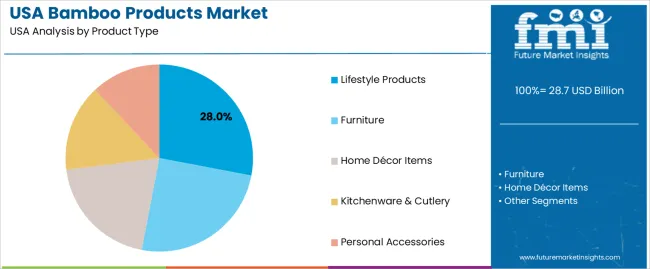
Lifestyle products account for 28% of the demand for bamboo products in the USA, driven by the increasing preference for eco-friendly and eco-friendly alternatives. Bamboo is a renewable resource, and consumers are becoming more aware of its environmental benefits, leading to its adoption in various lifestyle products such as bags, clothing, and accessories. Bamboo lifestyle products offer a combination of style, durability, and environmental responsibility, which appeals to the growing segment of eco-conscious consumers.
The versatility of bamboo allows it to be used in a wide range of products, from clothing to tech accessories, further expanding its appeal. As durability continues to be a key driver in consumer purchasing decisions, bamboo lifestyle products are expected to remain in high demand, providing an eco-friendly yet fashionable solution to modern living.
Why Does the Personal and Residential End User Lead the Demand for Bamboo Products?
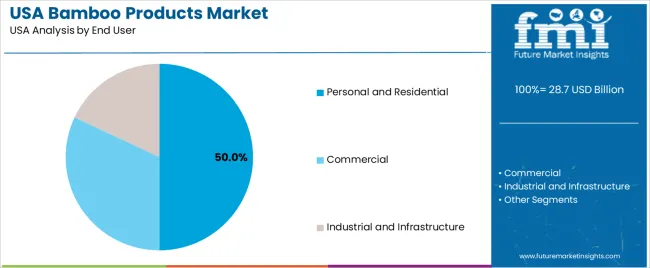
The personal and residential segment leads the demand for bamboo products in the USA, accounting for 50% of the total industry share. This is primarily driven by the growing awareness of the environmental benefits of bamboo, as well as a desire for eco-friendly, stylish, and functional products for the home. Consumers increasingly choose bamboo for furniture, kitchenware, home décor items, and personal accessories due to its natural aesthetic, durability, and eco-friendly nature.
Bamboo’s ability to be used in various forms, such as flooring, cutting boards, and towels, makes it a popular choice for both home improvement and daily living. As consumers continue to prioritize durability in their purchasing decisions, the demand for bamboo products in personal and residential settings is expected to grow, especially as more households seek to adopt eco-conscious practices without sacrificing style or functionality.
What are the Key Trends, Drivers, and Restraints in Demand for Bamboo Products in USA?
Demand for bamboo products in the USA is growing as consumers and businesses increasingly opt for eco-friendly, renewable, and versatile alternatives to traditional materials like wood and plastic. Bamboo, known for its fast growth and durability, is being used in a wide range of products, including furniture, flooring, textiles, packaging, and household goods. Rising environmental awareness, coupled with the shift towards eco‑friendly products, drives demand for bamboo-based solutions. The growing popularity of biodegradable and low-impact materials also supports this trend. Challenges such as limited domestic production infrastructure, high import costs, and competition from traditional materials may impact broader adoption.
Why is Demand for Bamboo Products Growing in USA?
Demand for bamboo products in USA is growing because many consumers and businesses increasingly value materials that are renewable, versatile, and less resource‑intensive than traditional wood or plastic. Bamboo grows much faster than hardwood trees and can be harvested repeatedly, making it a more resource‑efficient option. Its natural properties such as strength, durability, and resistance to pests make bamboo suitable for furniture, flooring, household items, textiles, and packaging. Rising consumer awareness of environmental impact and preference for biodegradable or low‑impact materials encourages adoption of bamboo goods. The expanding trend of eco‑conscious living and interest in alternatives to conventional materials supports continued growth of bamboo USAge.
How are Technological & Industry Innovations Driving Bamboo Products Demand in USA?
Advances in processing and manufacturing methods have broadened the applications of bamboo in the USA, improving both quality and affordability. Enhanced treatments and finishing techniques yield bamboo flooring, furniture, panels, textiles, and even packaging that rival traditional wood and synthetic products in durability and aesthetics. Bamboo fibers processed into soft, breathable, hypoallergenic fabrics are gaining popularity for clothing, bedding, towels, and other textiles. Modern bamboo‑based packaging and household items offer biodegradable, compostable alternatives to plastic. As supply chains and mass manufacturing adapt to bamboo raw materials, a greater variety of bamboo‑derived products become available at competitive prices, making them accessible to a broader consumer base.
What are the Key Challenges and Risks That Could Limit Bamboo Products Demand in USA?
One challenge is limited domestic production infrastructure means much bamboo still originates from imports, which can raise costs and affect supply stability. Dependence on imported raw material may also lead to variable delivery times and quality inconsistency. Some bamboo‑based products face competition from traditional wood, plastics, or other materials that are cheaper or more entrenched in consumer preferences. Regulatory and certification requirements for building materials or wood‑substitutes (like formaldehyde‑free adhesives for plywood or flooring) can increase production costs, reducing competitiveness. Consumer awareness and demand remain uneven across regions and demographic segments, which may slow widespread adoption despite growing interest.
What is the Regional Demand Outlook for Pea Grits in USA?
| Region | CAGR (%) |
|---|---|
| West USA | 6.1% |
| South USA | 5.5% |
| Northeast USA | 4.9% |
| Midwest USA | 4.3% |
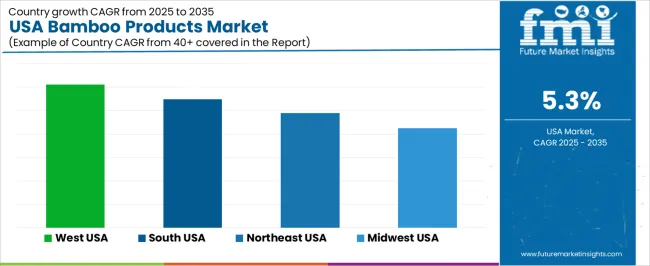
Demand for bamboo products in the USA is growing steadily, with West USA leading at a 6.1% CAGR, driven by the region’s strong focus on durability and eco-friendly materials. South USA follows with a 5.5% CAGR, fueled by the increasing adoption of bamboo in construction, home decor, and textiles, driven by growing consumer awareness of its environmental benefits. Northeast USA shows a 4.9% CAGR, supported by urban consumers seeking eco-friendly alternatives in home furnishings and building materials. Midwest USA experiences a 4.3% CAGR, with steady demand driven by practical adoption in residential and commercial sectors. As consumer interest in eco-friendly and renewable materials continues to rise, the demand for bamboo products is expected to grow across all regions, with bamboo being increasingly recognized for its strength, versatility, and minimal environmental impact.
How is Demand for Bamboo Products Growing in West USA?
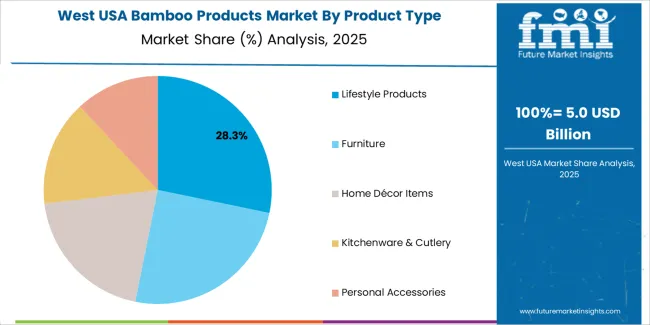
West USA leads the demand for bamboo products, growing at a 6.1% CAGR. The region’s strong focus on durability, eco-friendly materials, and green building practices contributes significantly to the growing popularity of bamboo products. States like California, Oregon, and Washington are at the forefront of adopting bamboo for a variety of products, from furniture and flooring to textiles and kitchenware. The increasing consumer preference for renewable, biodegradable, and non-toxic materials supports this trend. The rise of the wellness and eco-conscious lifestyle in West USA, combined with bamboo’s reputation as a durable and versatile material, continues to drive demand. As more consumers prioritize environmental responsibility, West USA remains the largest and fastest-growing industry for bamboo products in the USA.
Why is Demand for Bamboo Products Rising in South USA?
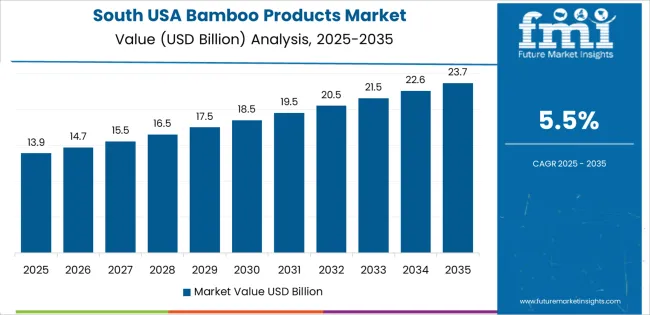
South USA is experiencing strong demand for bamboo products, with a 5.5% CAGR. The region’s growing interest in eco-friendly living and environmentally-friendly materials is boosting the adoption of bamboo in various product categories, including flooring, furniture, and bedding. Bamboo’s eco-friendly nature and strength make it an attractive alternative to traditional wood and synthetic materials, especially in industries like construction, home decor, and textiles. States like Texas, Florida, and Georgia are seeing increased interest from both residential and commercial sectors in incorporating bamboo products due to their durability and minimal environmental impact. The rise in consumer awareness of the benefits of bamboo, such as its fast-growing nature and versatility, is driving adoption in the South. As eco-friendly building materials and eco-conscious consumer products gain traction, bamboo products are expected to see continued growth in South USA.
How is Demand for Bamboo Products Expanding in Northeast USA?
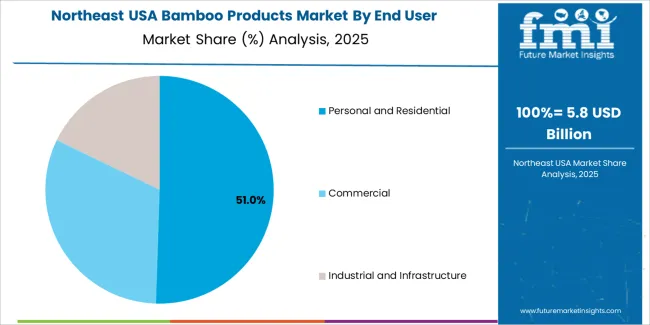
Northeast USA is seeing steady growth in demand for bamboo products, with a 4.9% CAGR. The region’s strong focus on durability, along with an increasing demand for eco-friendly materials in construction, textiles, and home decor, is fueling this growth. The Northeast’s urban centers, particularly New York and Boston, are home to a growing number of environmentally-conscious consumers who are opting for bamboo as an alternative to traditional materials. Bamboo products such as flooring, furniture, and textiles are gaining popularity in homes and businesses alike. The growing trend of eco-friendly building practices and green renovations in commercial and residential properties is contributing to the rise in bamboo adoption. As more people become aware of bamboo’s environmental benefits, such as its renewability and strength, the demand for bamboo products in Northeast USA is expected to continue rising.
Why is Demand for Bamboo Products Growing in Midwest USA?
Midwest USA is experiencing moderate growth in demand for bamboo products, with a 4.3% CAGR. The region’s growing interest in eco-friendly living and environmentally-friendly construction materials is supporting the rise of bamboo in various industries. Bamboo is increasingly being used in home construction, flooring, furniture, and textiles due to its eco-friendly properties and strength. The Midwest’s practical approach to building and renovation projects makes bamboo an attractive choice, particularly as more consumers seek renewable alternatives to traditional wood and plastic products. As awareness of bamboo’s durability grows, demand is rising in both residential and commercial sectors. While growth in the Midwest is slower compared to coastal regions, the steady adoption of bamboo products is expected to continue, driven by a focus on eco-friendly home products, green building practices, and eco-conscious consumer choices.
What is the Competitive Landscape of Bamboo Products Demand in USA?
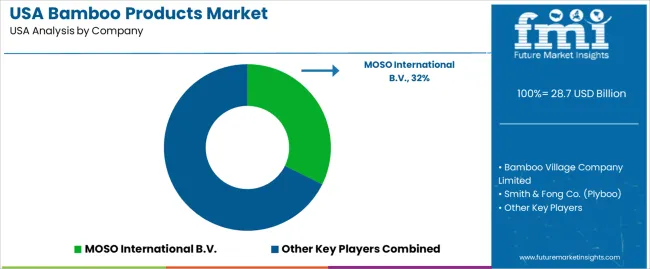
The demand for bamboo products in the USA is steadily increasing as consumers and industries prioritize durability and eco-friendly alternatives to traditional materials. Bamboo is recognized for its fast growth, renewability, and versatility, making it an ideal material for a variety of products, including furniture, flooring, kitchenware, textiles, and even construction materials. As environmental awareness continues to grow, there is rising interest in bamboo-based solutions that offer durability, aesthetic appeal, and minimal environmental impact. The demand is also driven by the shift towards green building practices and eco-friendly consumer products across sectors like home goods, construction, and packaging.
Leading companies in the bamboo products industry in the USA include MOSO International B.V., Bamboo Village Company Limited, Smith & Fong Co. (Plyboo), EcoPlanet Bamboo Group, and The Bamboo Company. MOSO International B.V. holds the largest industry share of 32.3%, offering a wide range of bamboo products for various applications, from flooring and panels to eco-friendly building materials. Bamboo Village Company Limited provides eco-friendly bamboo products, specializing in textiles and kitchenware. Smith & Fong Co. (Plyboo) is known for its premium bamboo plywood and eco-friendly material solutions used in furniture and interior design. EcoPlanet Bamboo Group focuses on large-scale bamboo plantations and the development of high-quality, environmentally eco-friendly bamboo products for various industries.
Competition in the bamboo products industry is driven by factors such as durability, product innovation, and the growing demand for environmentally friendly alternatives. Companies compete by offering bamboo products that meet high standards of durability, design, and durability. The rising preference for green building materials and eco-conscious consumer goods is pushing manufacturers to develop new, innovative bamboo solutions.
Key Players in USA Bamboo Products Demand
- MOSO International B.V.
- Bamboo Village Company Limited
- Smith & Fong Co. (Plyboo)
- EcoPlanet Bamboo Group
- The Bamboo Company
Scope of Report
| Items | Values |
|---|---|
| Quantitative Units (2025) | USD billion |
| Product Type | Lifestyle Products, Furniture, Home Décor Items, Kitchenware & Cutlery, Personal Accessories |
| End User | Personal and Residential, Commercial, Industrial and Infrastructure |
| Sales Channel | Offline, Online |
| Region | West USA, South USA, Northeast USA, Midwest USA |
| Countries Covered | USA |
| Key Companies Profiled | MOSO International B.V., Bamboo Village Company Limited, Smith & Fong Co. (Plyboo), EcoPlanet Bamboo Group, The Bamboo Company |
| Additional Attributes | Dollar sales by product type, end user, and sales channel; regional CAGR and adoption trends; demand trends in bamboo products; growth in personal, commercial, and industrial sectors; technology adoption in eco-friendly and eco-friendly bamboo products; vendor offerings including furniture, kitchenware, and accessories; regulatory influences and industry standards |
USA Bamboo Products Demand by Key Segments
Product Type:
- Lifestyle Products
- Furniture
- Home Décor Items
- Kitchenware & Cutlery
- Personal Accessories
End User:
- Personal and Residential
- Commercial
- Industrial and Infrastructure
Sales Channel:
- Offline
- Online
Region:
- West USA
- South USA
- Northeast USA
- Midwest USA
Frequently Asked Questions
How big is the demand for bamboo products in USA in 2025?
The demand for bamboo products in USA is estimated to be valued at USD 28.7 billion in 2025.
What will be the size of bamboo products in USA in 2035?
The market size for the bamboo products in USA is projected to reach USD 48.1 billion by 2035.
How much will be the demand for bamboo products in USA growth between 2025 and 2035?
The demand for bamboo products in USA is expected to grow at a 5.3% CAGR between 2025 and 2035.
What are the key product types in the bamboo products in USA?
The key product types in bamboo products in USA are lifestyle products, furniture, home décor items, kitchenware & cutlery and personal accessories.
Which end user segment is expected to contribute significant share in the bamboo products in USA in 2025?
In terms of end user, personal and residential segment is expected to command 50.0% share in the bamboo products in USA in 2025.
Preview the report firsthand - request a free sample
Get SampleGet the brochure for pricing and purchase details.
Get PDFTable of Content
- Executive Summary
- USA Market Outlook
- Demand-side Trends
- Supply-side Trends
- Technology Roadmap Analysis
- Analysis and Recommendations
- Market Overview
- Market Coverage / Taxonomy
- Market Definition / Scope / Limitations
- Market Background
- Market Dynamics
- Drivers
- Restraints
- Opportunity
- Trends
- Scenario Forecast
- Demand in Optimistic Scenario
- Demand in Likely Scenario
- Demand in Conservative Scenario
- Opportunity Map Analysis
- Product Life Cycle Analysis
- Supply Chain Analysis
- Investment Feasibility Matrix
- Value Chain Analysis
- PESTLE and Porter’s Analysis
- Regulatory Landscape
- Regional Parent Market Outlook
- Production and Consumption Statistics
- Import and Export Statistics
- Market Dynamics
- USA Market Analysis 2020 to 2024 and Forecast, 2025 to 2035
- Historical Market Size Value (USD Million) Analysis, 2020 to 2024
- Current and Future Market Size Value (USD Million) Projections, 2025 to 2035
- Y-o-Y Growth Trend Analysis
- Absolute $ Opportunity Analysis
- USA Market Pricing Analysis 2020 to 2024 and Forecast 2025 to 2035
- USA Market Analysis 2020 to 2024 and Forecast 2025 to 2035, By Product Type
- Introduction / Key Findings
- Historical Market Size Value (USD Million) Analysis By Product Type , 2020 to 2024
- Current and Future Market Size Value (USD Million) Analysis and Forecast By Product Type , 2025 to 2035
- Lifestyle Products
- Furniture
- Home Décor Items
- Kitchenware & Cutlery
- Personal Accessories
- Y-o-Y Growth Trend Analysis By Product Type , 2020 to 2024
- Absolute $ Opportunity Analysis By Product Type , 2025 to 2035
- USA Market Analysis 2020 to 2024 and Forecast 2025 to 2035, By End User
- Introduction / Key Findings
- Historical Market Size Value (USD Million) Analysis By End User, 2020 to 2024
- Current and Future Market Size Value (USD Million) Analysis and Forecast By End User, 2025 to 2035
- Personal and Residential
- Commercial
- Industrial and Infrastructure
- Y-o-Y Growth Trend Analysis By End User, 2020 to 2024
- Absolute $ Opportunity Analysis By End User, 2025 to 2035
- USA Market Analysis 2020 to 2024 and Forecast 2025 to 2035, By Sales Channel
- Introduction / Key Findings
- Historical Market Size Value (USD Million) Analysis By Sales Channel, 2020 to 2024
- Current and Future Market Size Value (USD Million) Analysis and Forecast By Sales Channel, 2025 to 2035
- Offline
- Online
- Y-o-Y Growth Trend Analysis By Sales Channel, 2020 to 2024
- Absolute $ Opportunity Analysis By Sales Channel, 2025 to 2035
- Market Structure Analysis
- Competition Dashboard
- Competition Benchmarking
- Market Share Analysis of Top Players
- By Regional
- By Product Type
- By End User
- By Sales Channel
- Competition Analysis
- Competition Deep Dive
- MOSO International B.V.
- Overview
- Product Portfolio
- Profitability by Market Segments (Product/Age /Sales Channel/Region)
- Sales Footprint
- Strategy Overview
- Marketing Strategy
- Product Strategy
- Channel Strategy
- Bamboo Village Company Limited
- Smith & Fong Co. (Plyboo)
- EcoPlanet Bamboo Group
- The Bamboo Company
- MOSO International B.V.
- Competition Deep Dive
- Assumptions & Acronyms Used
- Research Methodology


