

- Industry Size (2025)
- USD 5.7 Bn
- Forecast (2035)
- USD 8.9 Bn
- CAGR (2025 to 2035)
- 4.5%
Demand for Dried Spent Grain in USA Forecast and Outlook 2025 to 2035
The demand for dried spent grain in the USA is expected to grow steadily from USD 5.7 billion in 2025 to USD 8.9 billion in 2035, with a CAGR of 4.50%. From 2025 to 2027, demand increases gradually from USD 5.7 billion to USD 6.0 billion, reflecting steady consumption of dried spent grain in sectors such as animal feed and food production. As the agriculture and brewing industries continue to focus on utilizing byproducts more efficiently, dried spent grain has become an essential component in sustainable feed solutions. The steady growth in the early years demonstrates the reliable demand for this byproduct, driven by its cost-effectiveness and nutritional value for livestock. A slight dip in demand occurs between 2028 and 2030, with a peak of USD 6.8 billion in 2030 before falling to USD 6.5 billion. This deceleration is likely a result of industry saturation, temporary disruptions in supply chains, or shifts toward alternative feed sources as other ingredients gain traction.
Quick Stats of the Demand for Dried Spent Grain in USA
- Demand for Dried Spent Grain in USA Value (2025): USD 5.7 billion
- Demand for Dried Spent Grain in USA Forecast Value (2035): USD 8.9 billion
- Demand for Dried Spent Grain in USA Forecast CAGR (2025-2035): 4.5%
- Demand for Dried Spent Grain in USA Leading Nature: Organic
- Demand for Dried Spent Grain in USA Leading Source: Wheat
- Demand for Dried Spent Grain in USA Leading End-use: Food & Beverages
- Demand for Dried Spent Grain in USA Key Growth Regions: West USA, South USA, Northeast USA, Midwest USA
- Demand for Dried Spent Grain in USA Top Players: Grain Processing Corporation, AB InBev, Malteurop Group, Brewers Grain Ltd., EverGrain Ingredients
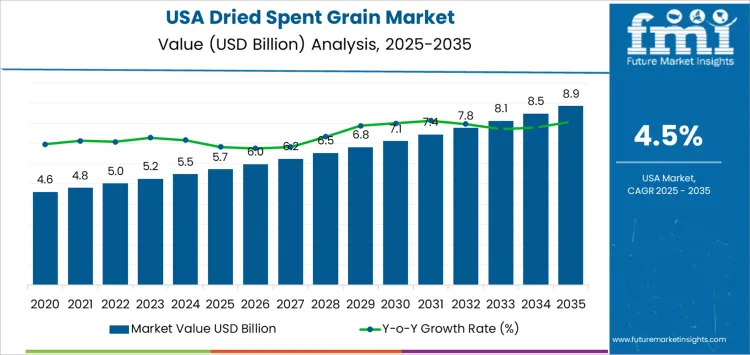
From 2031 onwards, the industry resumes growth, with demand rising to USD 8.5 billion by 2033, driven by increased adoption in industries beyond livestock feed, including biofuels, bioplastics, and other sustainable product applications. The expansion of processing technologies for dried spent grain is a key factor in this recovery, as new techniques improve the material’s versatility and cost-effectiveness. By 2035, the demand is projected to reach USD 8.9 billion, marking a return to steady growth. This recovery indicates the continued maturation of the dried spent grain industry as innovations open up new uses and industrys for the product. The demand surge toward the end of the forecast period highlights the growing recognition of dried spent grain’s potential across diverse industries, ensuring long-term industry growth despite short-term fluctuations.
Demand for Dried Spent Grain in USA Key Takeaways
| Metric | Value |
|---|---|
| Demand for Dried Spent Grain in USA Value (2025) | USD 5.7 billion |
| Demand for Dried Spent Grain in USA Forecast Value (2035) | USD 8.9 billion |
| Demand for Dried Spent Grain in USA Forecast CAGR (2025-2035) | 4.5% |
Why is the Demand for Dried Spent Grain in USA Growing?
The demand for dried spent grain in the USA is growing due to its increasing use as a sustainable, cost-effective ingredient in animal feed and as a key byproduct of the brewing industry. Dried spent grain, a product derived from the process of brewing beer, is rich in fiber, protein, and other essential nutrients, making it a highly valued supplement in livestock and poultry feed. As the global demand for animal protein continues to rise, the need for affordable and nutritious animal feed ingredients is pushing up the demand for dried spent grain. The growing awareness of the benefits of utilizing byproducts in food production and agriculture is driving this trend.
Key drivers for this growth include the increasing demand for sustainable agricultural practices, as dried spent grain serves as an eco-friendly alternative to traditional feed sources. The use of spent grain in animal feed also supports the circular economy model, where byproducts are repurposed rather than discarded. Furthermore, the rising number of craft breweries and the growing trend toward sustainable brewing practices are increasing the supply of dried spent grain, further boosting its availability and demand.
The demand for dried spent grain is also being fueled by the ongoing shift toward more sustainable food production and reducing waste in various industries. Challenges such as fluctuations in supply due to the variability in brewing production and the need for specialized drying equipment may limit broader adoption. Despite these challenges, the continued focus on sustainability and cost-effective feed solutions is expected to drive steady growth in the demand for dried spent grain in the USA through 2035.
What is the Segment-Wise Analysis of Demand for Dried Spent Grain in USA?
Demand for dried spent grain in the USA is segmented by nature, end-use, source, and region. By nature, organic dried spent grain leads with 60% of the demand, followed by conventional dried spent grain. In terms of end-use, food and beverages account for 30% of the demand, with bakery, confectionery, dairy products, and health drinks making up the remaining share. Regarding source, wheat, rice, barley, sorghum, and millet are the primary grains used. Regionally, demand is distributed across West USA, South USA, Northeast USA, and Midwest USA.
How Does Organic Nature Lead the Demand for Dried Spent Grain in USA?
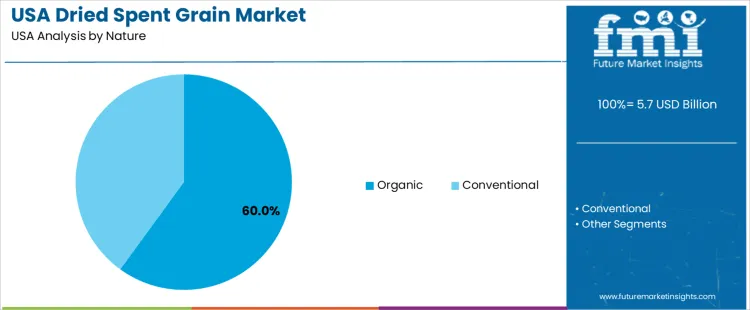
Organic dried spent grain accounts for 60% of the demand for dried spent grain in the USA, driven by the increasing consumer preference for natural, eco-friendly, and sustainable products. Organic grains, being free from synthetic pesticides and fertilizers, are highly appealing to health-conscious consumers who are seeking cleaner ingredients for their food products. The rising awareness of the health benefits of organic foods, such as higher nutritional content and fewer chemicals, is further fueling the demand for organic dried spent grain. This grain is especially popular in the food and beverage industry, where products like health drinks, bakery items, and dairy products value natural ingredients. As the trend toward organic and sustainable food continues to grow, the demand for organic dried spent grain is expected to increase. With sustainability at the forefront of consumer choices, organic dried spent grain is expected to maintain its dominant position in the industry.
How Does Food & Beverages End-Use Lead the Demand for Dried Spent Grain in USA?
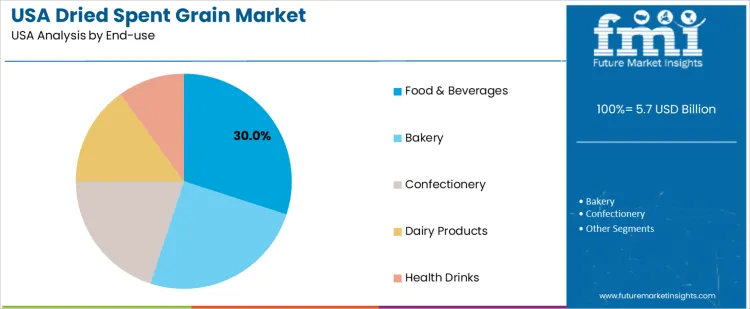
The food and beverages sector accounts for 30% of the demand for dried spent grain in the USA, driven by the growing use of this ingredient in various food products. Dried spent grain is valued for its high fiber, protein, and nutritional benefits, making it a preferred choice in health drinks, bakery items, and dairy products. The versatility of this by-product allows it to be used as a functional ingredient in food manufacturing, improving texture, flavor, and nutritional value. With consumers increasingly prioritizing healthy, sustainable, and natural ingredients, the demand for dried spent grain remains strong. Furthermore, its role in promoting the circular economy by repurposing brewery by-products contributes to its appeal. As the food industry continues to focus on reducing waste and incorporating more sustainable ingredients, the demand for dried spent grain is expected to rise, further cementing its position as a key ingredient in the food and beverage sector.
What are the Key Trends, Drivers and Restraints in Demand for Dried Spent Grain in USA?
DSG offers a blend of protein and fiber, making it attractive as sustainable animal feed for cattle, pigs, poultry and fish. The expansion of breweries and distilleries especially craft beer producers generate large quantities of spent grain, providing a stable supply of raw material for drying and reuse. The growing emphasis on circular economy practices and waste valorization encourages conversion of spent grain from waste to valuable feed or other uses. DSG is gaining traction as a raw material in food, functional ingredients, and bio based products, broadening its application beyond feed. Challenges remain: moisture management, drying and storage costs, transportation logistics, and variability in nutrient content can limit wider adoption.
Why is Demand for Dried Spent Grain Growing in USA?
Demand for dried spent grain in the USA is increasing because it delivers a cost efficient, nutrient dense alternative to conventional feed and raw materials. With rising feed costs, livestock and poultry producers appreciate DSG’s high protein and fiber content as an economical feed supplement. The steady output of wet spent grain from breweries ensures a continuous supply for drying and reuse. Breweries and distilleries are increasingly embracing circular economy models, turning by products into valuable commodities rather than waste. Simultaneously, food and supplement manufacturers recognize the potential of DSG derived ingredients for high fiber and plant protein products. Growth of craft brewing, organic farming, and sustainable food trends supports increased demand for DSG. As more stakeholders from feed mills to food processors adopt DSG, overall demand expands across multiple sectors in the USA.
How are Technological and Industry Innovations Driving Dried Spent Grain Demand in USA
Technological improvements in drying, preservation and processing are boosting demand for dried spent grain in the USA. Advanced drying systems reduce moisture content efficiently, converting wet spent grain (which spoils quickly) into stable, transportable feedstock with long shelf life enabling distribution beyond local brewery farms. Improved processing allows DSG to be milled, fractionated or integrated into feed blends, functional food ingredients, or even bio materials. Innovations also support upcycled food product development, using DSG in high fiber flours, protein bars, bakery items, or plant based foods. Growing interest in sustainable ingredients and circular waste to value initiatives encourages breweries, feed companies and food manufacturers to invest in DSG processing infrastructure. As supply chain, logistics and processing technologies improve, DSG becomes more commercially viable reinforcing demand and broadening applications across feed, food, agriculture and bio economy sectors.
What are the Key Challenges and Risks That Could Limit Dried Spent Grain Demand in USA?
First, drying and preservation require investment in energy and equipment; high processing costs may deter small breweries or processors. Maintaining consistent moisture and nutrient levels is critical variability can reduce feed quality or cause spoilage. Transportation and logistics of bulky material can be inefficient or costly if not near processing or end use sites. For food grade or human consumption applications, regulatory constraints, safety, and quality standards may pose additional barriers. Competition from conventional feed ingredients or alternative sustainable feed options may limit DSG uptake. Upstream supply depends on brewery output fluctuations in beer production or shifts in industry practices could influence the supply stability of spent grain, impacting long term demand.
What is the Regional Demand Outlook for Dried Spent Grain in USA?
| Region | CAGR (%) |
|---|---|
| West USA | 5.1% |
| South USA | 4.6% |
| Northeast USA | 4.1% |
| Midwest USA | 3.6% |
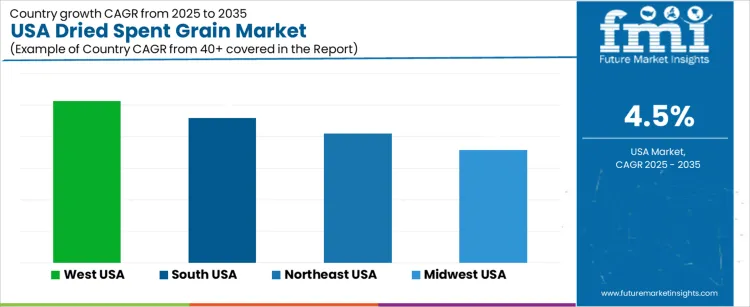
Demand for dried spent grain in the USA is steadily growing, with West USA leading at a 5.1% CAGR, driven by its strong agricultural industry and focus on sustainability. South USA follows with a 4.6% CAGR, supported by the region's expanding agricultural and livestock sectors. Northeast USA experiences a 4.1% CAGR, fueled by a focus on sustainable agricultural practices and innovative uses in food products. Midwest USA shows a 3.6% CAGR, with steady growth driven by its large-scale livestock farming and strong brewing industry. As demand for eco-friendly, cost-effective resources rises, the use of dried spent grain will continue to expand across all regions.
How is Demand for Dried Spent Grain Growing in West USA?
West USA leads the demand for dried spent grain, growing at a 5.1% CAGR. The region’s strong agricultural base and focus on sustainable practices contribute to this growth. States like California, Oregon, and Washington are actively using dried spent grain in animal feed, biofuels, and as a key ingredient in food products. The growing trend towards eco-friendly and waste-reducing agricultural practices is driving the demand for this byproduct, as it is increasingly being repurposed to minimize environmental impact. Furthermore, the West’s innovative food and beverage industries are finding new applications for dried spent grain, such as in plant-based protein products and energy bars. As the region continues to lead in sustainability and green initiatives, the use of dried spent grain will expand, particularly in sectors focused on resource efficiency and reducing agricultural waste. With the rising awareness of environmental concerns and the need for alternative feed solutions, demand for dried spent grain in West USA will continue to grow steadily.
Why is Demand for Dried Spent Grain Rising in South USA?
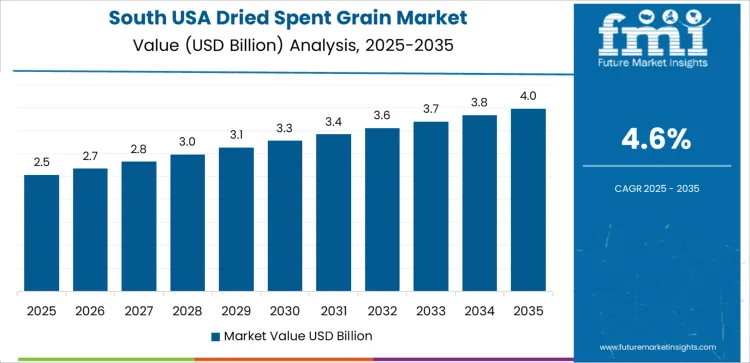
South USA is experiencing steady demand for dried spent grain, with a 4.6% CAGR. The region’s large agricultural sector, particularly in states like Texas, Florida, and Georgia, is driving the growth in demand. Dried spent grain is increasingly used in animal feed, especially for livestock such as cattle and poultry. As the agricultural and livestock industries continue to grow, the demand for sustainable, cost-effective feed ingredients like dried spent grain is rising. Furthermore, South USA’s strong brewing industry contributes to the availability of spent grain, which is being used more widely in agriculture. The region is seeing a growing interest in sustainable practices, with farmers adopting alternative feed sources to reduce costs and environmental impact. The increasing adoption of biofuels and composting applications in the South is also contributing to the demand for dried spent grain. As the region prioritizes environmental sustainability, demand for dried spent grain in South USA is expected to continue rising steadily, benefiting from both agricultural and industrial growth.
How is Demand for Dried Spent Grain Expanding in Northeast USA?
Northeast USA is seeing steady demand for dried spent grain, with a 4.1% CAGR. The region’s established agricultural industry, particularly in states like New York and Pennsylvania, is driving the demand for this byproduct. Dried spent grain is increasingly being used in animal feed, particularly in dairy and poultry farming, where it provides a sustainable and cost-effective feed option. The growing interest in sustainability and waste reduction is encouraging industries, including breweries, to find new ways to repurpose spent grain, making it a valuable resource in agriculture. The food industry in the Northeast is exploring innovative uses for dried spent grain, such as in the production of health-oriented products like energy bars and baked goods. As the region’s agricultural focus shifts toward more sustainable and eco-friendly practices, demand for dried spent grain will rise. The growing number of biofuel and composting initiatives also supports the expansion of its use, contributing to a steady growth trajectory for dried spent grain in the Northeast USA.
Why is Demand for Dried Spent Grain Growing in Midwest USA?
Midwest USA is experiencing moderate demand for dried spent grain, with a 3.6% CAGR. The region’s significant agricultural industry, particularly in states like Iowa, Illinois, and Wisconsin, is contributing to this growth, as dried spent grain is widely used in animal feed for cattle, pigs, and poultry. The region’s large-scale livestock farming operations seek cost-effective and sustainable feed alternatives, making dried spent grain a popular choice. As the demand for eco-friendlier agricultural practices increases, dried spent grain is seen as a resource to reduce waste and promote sustainability. Furthermore, the Midwest’s strong brewing industry provides a steady supply of spent grain, which is being repurposed for feed and other agricultural applications. The increasing adoption of sustainable farming practices and resource efficiency is driving demand for this byproduct. With a growing focus on reducing environmental impact and cost-efficiency, demand for dried spent grain in Midwest USA is expected to continue to rise, especially in the agricultural and biofuel sectors.
What is the Competitive Landscape of Dried Spent Grain Demand in USA?
Demand for dried spent grain (DSG) in the USA is increasing as industries look for sustainable ways to repurpose byproducts from brewing and distilling processes. DSG, a byproduct of beer production, is used in animal feed, biofuel production, and as a raw material in various food products due to its high nutritional content. As consumers and businesses prioritize sustainability and resource efficiency, the demand for dried spent grain is rising, particularly in the animal feed sector and among food manufacturers seeking natural ingredients. The company’s strategy focuses on offering consistent, reliable products that support sustainability and provide value across multiple sectors. Grain Processing Corporation's strong industry position is driven by its focus on quality control, operational efficiency, and long-term partnerships with breweries and distilleries across the USA. Other key players in the industry include AB InBev, Malteurop Group, Brewers Grain Ltd., and EverGrain Ingredients. AB InBev, a major global brewer, capitalizes on its vast production capabilities and strong supply chain to offer large quantities of dried spent grain. Malteurop Group specializes in malt production and utilizes DSG in both animal feed and other value-added applications. Brewers Grain Ltd. focuses on providing high-quality spent grain for animal feed, while EverGrain Ingredients explores innovative ways to incorporate DSG into food ingredients, further expanding its applications. As competition grows, these companies continue to innovate in product offerings, sustainable practices, and expanding the value of dried spent
Key Players in USA Dried Spent Grain Demand
- Grain Processing Corporation
- AB InBev
- Malteurop Group
- Brewers Grain Ltd.
- EverGrain Ingredients
Scope of Report
| Items | Values |
|---|---|
| Qualititative Units (2025) | USD million |
| Nature | Organic, Conventional |
| Source | Wheat, Rice, Barley, Sorghum, Millet |
| End-use | Food & Beverages, Bakery, Confectionery, Dairy Products, Health Drinks |
| Regions Covered | West USA, South USA, Northeast USA, Midwest USA |
| Countries Covered | USA |
| Key Companies Profiled | Grain Processing Corporation, AB InBev, Malteurop Group, Brewers Grain Ltd., EverGrain Ingredients |
| Additional Attributes | Dollar sales by source and end-use; regional CAGR and growth trends; increasing demand for organic and wheat-based dried spent grain; applications in health drinks and confectionery. |
USA Dried Spent Grain Demand by Key Segments
Nature
- Organic
- Conventional
Source
- Wheat
- Rice
- Barley
- Sorghum
- Millet
End-use
- Food & Beverages
- Bakery
- Confectionery
- Dairy Products
- Health Drinks
Region
- West USA
- South USA
- Northeast USA
- Midwest USA
Frequently Asked Questions
How big is the demand for dried spent grain in USA in 2025?
The demand for dried spent grain in USA is estimated to be valued at USD 5.7 billion in 2025.
What will be the size of dried spent grain in USA in 2035?
The market size for the dried spent grain in USA is projected to reach USD 8.9 billion by 2035.
How much will be the demand for dried spent grain in USA growth between 2025 and 2035?
The demand for dried spent grain in USA is expected to grow at a 4.5% CAGR between 2025 and 2035.
What are the key product types in the dried spent grain in USA?
The key product types in dried spent grain in USA are organic and conventional.
Which source segment is expected to contribute significant share in the dried spent grain in USA in 2025?
In terms of source, wheat segment is expected to command 35.0% share in the dried spent grain in USA in 2025.
Preview the report firsthand - request a free sample
Get SampleGet the brochure for pricing and purchase details.
Get PDFTable of Content
- Executive Summary
- USA Market Outlook
- Demand-side Trends
- Supply-side Trends
- Technology Roadmap Analysis
- Analysis and Recommendations
- Market Overview
- Market Coverage / Taxonomy
- Market Definition / Scope / Limitations
- Market Background
- Market Dynamics
- Drivers
- Restraints
- Opportunity
- Trends
- Scenario Forecast
- Demand in Optimistic Scenario
- Demand in Likely Scenario
- Demand in Conservative Scenario
- Opportunity Map Analysis
- Product Life Cycle Analysis
- Supply Chain Analysis
- Investment Feasibility Matrix
- Value Chain Analysis
- PESTLE and Porter’s Analysis
- Regulatory Landscape
- Regional Parent Market Outlook
- Production and Consumption Statistics
- Import and Export Statistics
- Market Dynamics
- USA Market Analysis 2020 to 2024 and Forecast, 2025 to 2035
- Historical Market Size Value (USD Million) Analysis, 2020 to 2024
- Current and Future Market Size Value (USD Million) Projections, 2025 to 2035
- Y-o-Y Growth Trend Analysis
- Absolute $ Opportunity Analysis
- USA Market Pricing Analysis 2020 to 2024 and Forecast 2025 to 2035
- USA Market Analysis 2020 to 2024 and Forecast 2025 to 2035, By Nature
- Introduction / Key Findings
- Historical Market Size Value (USD Million) Analysis By Nature , 2020 to 2024
- Current and Future Market Size Value (USD Million) Analysis and Forecast By Nature , 2025 to 2035
- Organic
- Conventional
- Y-o-Y Growth Trend Analysis By Nature , 2020 to 2024
- Absolute $ Opportunity Analysis By Nature , 2025 to 2035
- USA Market Analysis 2020 to 2024 and Forecast 2025 to 2035, By Source
- Introduction / Key Findings
- Historical Market Size Value (USD Million) Analysis By Source, 2020 to 2024
- Current and Future Market Size Value (USD Million) Analysis and Forecast By Source, 2025 to 2035
- Wheat
- Rice
- Barley
- Sorghum
- Millet
- Y-o-Y Growth Trend Analysis By Source, 2020 to 2024
- Absolute $ Opportunity Analysis By Source, 2025 to 2035
- USA Market Analysis 2020 to 2024 and Forecast 2025 to 2035, By End-use
- Introduction / Key Findings
- Historical Market Size Value (USD Million) Analysis By End-use, 2020 to 2024
- Current and Future Market Size Value (USD Million) Analysis and Forecast By End-use, 2025 to 2035
- Food & Beverages
- Bakery
- Confectionery
- Dairy Products
- Health Drinks
- Y-o-Y Growth Trend Analysis By End-use, 2020 to 2024
- Absolute $ Opportunity Analysis By End-use, 2025 to 2035
- Market Structure Analysis
- Competition Dashboard
- Competition Benchmarking
- Market Share Analysis of Top Players
- By Regional
- By Nature
- By Source
- By End-use
- Competition Analysis
- Competition Deep Dive
- Grain Processing Corporation
- Overview
- Product Portfolio
- Profitability by Market Segments (Product/Age /Sales Channel/Region)
- Sales Footprint
- Strategy Overview
- Marketing Strategy
- Product Strategy
- Channel Strategy
- AB InBev
- Malteurop Group
- Brewers Grain Ltd.
- EverGrain Ingredients
- Grain Processing Corporation
- Competition Deep Dive
- Assumptions & Acronyms Used
- Research Methodology


