

- Industry Size (2026)
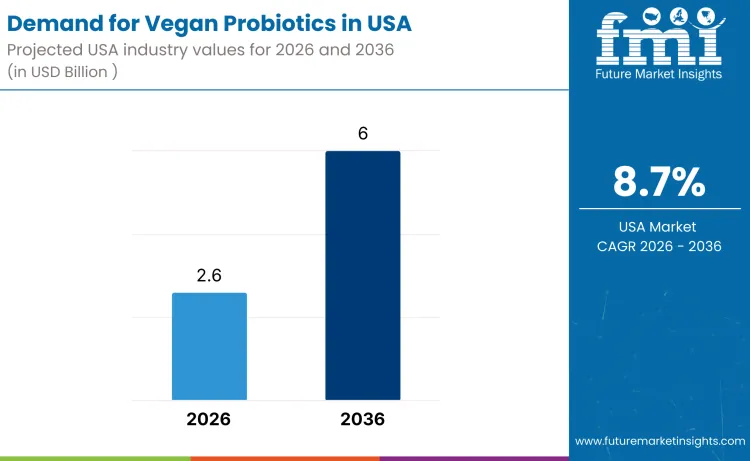
- USD 2.6 Bn
- Forecast (2036)
- USD 6.0 Bn
- CAGR (2026 to 2036)
- 8.7%
Demand for Vegan Probiotics in USA 2026 to 2036
Demand for vegan probiotics in USA is valued at USD 2.6 billion in 2026 and is projected to reach USD 6.0 billion by 2036, reflecting a CAGR of 8.7%. Demand expands as consumers prioritize plant-based digestive health solutions aligned with vegan, lactose-free, and allergen-conscious diets. Rising awareness of gut-immune linkage, clean-label expectations, and daily wellness routines supports sustained adoption across supplements and functional foods.
Coconut kefir leads product-type usage because it provides a dairy-free fermentation base with favorable taste, natural electrolytes, and compatibility with multiple probiotic strains. Manufacturers leverage coconut substrates to deliver live cultures while maintaining stability and palatability. Shelf-stable and refrigerated formats improve accessibility across retail and direct-to-consumer channels.
Quick Stats for Demand for Vegan Probiotics in USA
- USA Vegan Probiotics Sales Value (2026): USD 2.6 billion
- USA Vegan Probiotics Forecast Value (2036): USD 6.0 billion
- USA Vegan Probiotics Forecast CAGR (2026 to 2036): 8.7%
- Leading Product Type in USA Demand: Coconut Kefir
- Key Growth Regions in USA Demand: West USA, South USA, Northeast USA, Midwest USA
- Top Players in USA Demand: Danone North America, Culturelle, Garden of Life, NOW Foods, Ritual
West USA, South USA, Northeast USA, and Midwest USA represent key growth regions supported by strong plant-based consumption trends, health-focused retail penetration, and expanding wellness communities. Danone North America, Culturelle, Garden of Life, NOW Foods, and Ritual anchor competitive activity through strain-specific formulations, transparent labeling, and diversified vegan probiotic portfolios aligned with digestive health, immunity, and daily nutrition preferences across the United States.
USA Vegan Probiotics Key Takeaways
| Metric | Value |
|---|---|
| USA Vegan Probiotics Sales Value (2026) | USD 2.6 billion |
| USA Vegan Probiotics Forecast Value (2036) | USD 6.0 billion |
| USA Vegan Probiotics Forecast CAGR (2026 to 2036) | 8.7% |
How Are the Segments Classified in the Demand for Vegan Probiotics in the USA?
Demand for vegan probiotics in the USA is shaped by plant-based diet adoption, digestive health awareness, and avoidance of dairy-derived cultures. Buyers evaluate microbial viability, fermentation stability, ingredient transparency, and compatibility with vegan-certified formulations. Adoption patterns reflect incorporation into functional foods, beverages, and wellness products, supported by consumer preference for gut-health solutions aligned with ethical and dietary considerations.
Which Product Type Accounts for the Largest Share of Demand in the USA?
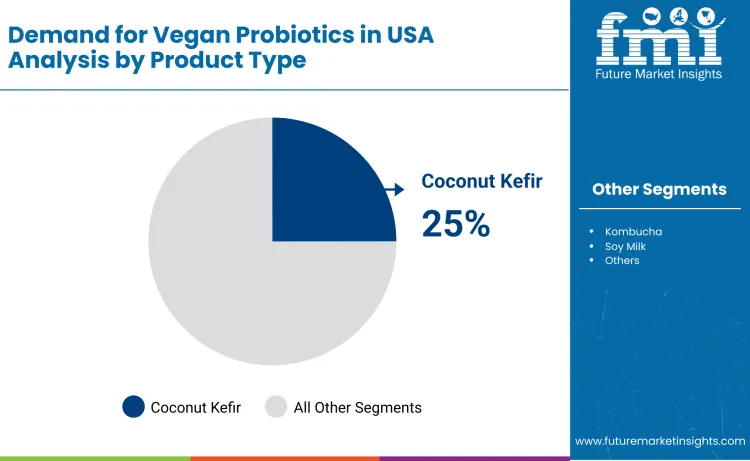
Coconut kefir holds 25.0%, making it the leading product-type segment in the USA. Coconut kefir provides a dairy-free fermented format with broad probiotic strain compatibility and favorable taste acceptance. Soy milk holds 22.7%, supporting probiotic delivery with established plant-protein content. Kombucha accounts for 22.3%, driven by beverage-oriented consumption and fermentation familiarity. Coconut yogurt holds 20.0%, offering spoonable probiotic formats for daily intake. Miso accounts for 10.0%, serving traditional and culinary-focused consumption. Product-type distribution reflects preference for coconut-based fermented carriers due to texture, flavor, and vegan compatibility.
Key Points:
- Coconut kefir leads due to fermentation suitability and taste acceptance.
- Soy milk and kombucha support beverage-based probiotic intake.
- Miso serves niche culinary and traditional consumption.
Which Enzyme Source Accounts for the Largest Share of Demand in the USA?
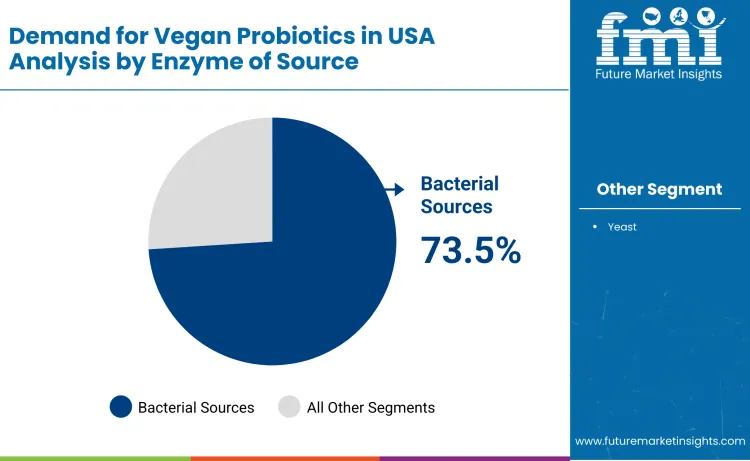
Bacterial sources hold 73.5%, making them the dominant enzyme-source segment in the USA. Bacteria-based probiotics provide well-documented strains with established digestive and immune-support functions. These strains demonstrate stability across food and supplement formulations. Yeast sources hold 26.5%, supporting niche applications and strain diversity in selected products. Enzyme-source distribution reflects stronger clinical familiarity, regulatory clarity, and formulation reliability associated with bacterial probiotic strains.
Key Points:
- Bacterial strains dominate due to documented efficacy.
- Stability supports wide formulation use.
- Yeast strains serve specialized probiotic needs.
Which End-Use Industry Accounts for the Largest Share of Demand in the USA?
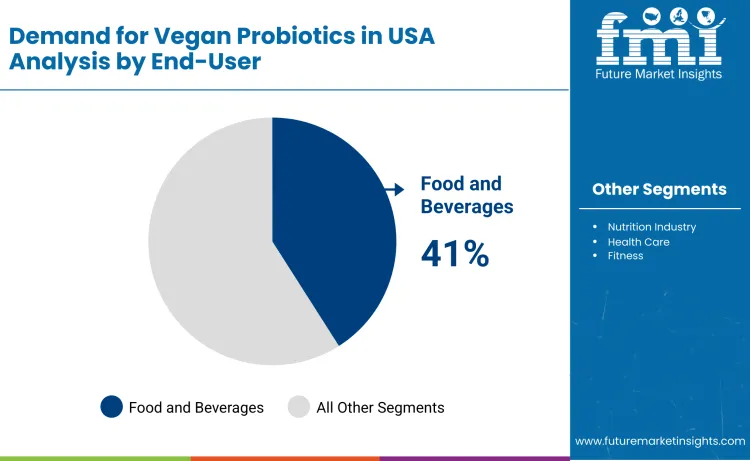
Food and beverages hold 41.0%, making them the leading end-use industry segment in the USA. Vegan probiotics are incorporated into fermented drinks, dairy alternatives, and functional foods for daily consumption. Nutrition industry applications include fortified products and dietary supplements. Health care uses focus on gut-health management and supportive dietary interventions. Fitness-related products apply probiotics for digestion and recovery support. End-use distribution reflects strongest demand from mainstream food and beverage integration within USA retail channels.
Key Points:
- Food and beverages drive primary probiotic consumption.
- Nutrition products support targeted wellness positioning.
- Health and fitness segments represent complementary demand.
What are the Key Dynamics in the Vegan Probiotics Industry in USA?
Demand increases as consumers in USA adopt plant-based nutrition, digestive health routines, and allergen-aware supplementation. Vegan probiotics exclude dairy-derived cultures and animal-based excipients, aligning with vegan, lactose-intolerant, and clean-label preferences. Usage expands across dietary supplements, functional foods, and beverages. Retail availability through pharmacies, e-commerce, and natural product stores supports penetration across health-focused consumer segments.
How do plant-based diets and digestive health awareness drive demand in USA?
USA consumers increasingly follow vegan, flexitarian, and dairy-free diets, creating demand for probiotics compatible with plant-based lifestyles. Digestive wellness, immune support, and gut-brain health remain priority health areas, supporting regular probiotic intake. Manufacturers use fermentation media derived from plant sources and encapsulate strains without gelatin. Healthcare practitioners recommend vegan probiotics for patients with lactose sensitivity or milk protein allergies. Functional food brands incorporate vegan strains into kombucha, plant-based yogurts, and nutrition bars. E-commerce platforms enable education-driven purchasing, allowing consumers to compare strains, CFU counts, and formulation transparency.
How do formulation complexity, regulatory oversight, and market competition affect demand stability?
Vegan probiotic formulation requires careful strain selection, stability control, and moisture protection to maintain viability without dairy carriers. Shelf-life validation and cold-chain management increase production cost. FDA dietary supplement regulations require accurate labeling and substantiation of structure-function claims. Competition from conventional probiotics and synbiotic products intensifies pricing pressure. Consumer skepticism around efficacy affects repeat purchase behavior. Raw material sourcing for certified vegan excipients influences supply consistency. Demand remains stable among health-conscious and plant-based consumers, while growth depends on clinical validation, strain differentiation, and cost management within USA supplement and functional food channels.
How Is Demand for Vegan Probiotics in USA Evolving by Region?
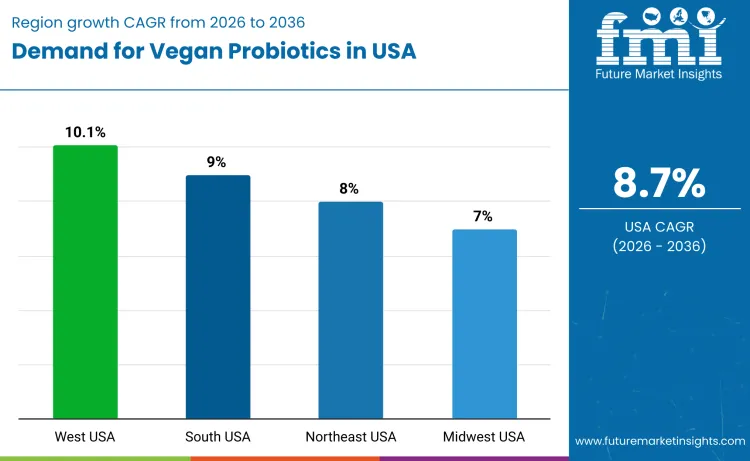
Demand for vegan probiotics in the USA is increasing due to plant-based diet adoption, digestive health awareness, and preference for allergen-free supplement formulations. West USA leads with a 10.1% CAGR, supported by wellness-focused consumers, specialty nutrition brands, and innovation-led product launches. South USA follows at 9.0%, driven by expanding supplement retail, online sales penetration, and affordability-oriented probiotic offerings. Northeast USA records an 8.0% CAGR, shaped by clinical nutrition awareness, pharmacy-led distribution, and regulated health claims. Midwest USA posts a 7.0% CAGR, reflecting steady uptake through mainstream supplements, private-label products, and value-focused purchasing. Regional variation reflects consumer health priorities, retail channel strength, and formulation awareness across the USA.
| Region | CAGR (2026-2036) |
|---|---|
| West USA | 10.1% |
| South USA | 9.0% |
| Northeast USA | 8.0% |
| Midwest USA | 7.0% |
How is West USA driving demand for Vegan Probiotics?
West USA demand is driven by strong alignment with plant-based lifestyles, preventive health practices, and personalized nutrition trends. The region’s CAGR of 10.1% reflects high consumption of vegan probiotics in capsules, gummies, and functional beverage formats. Consumers prioritize non-dairy strains, clean-label positioning, and clinically documented benefits related to gut health, immunity, and metabolic support. Specialty supplement brands concentrate launches in this region due to early adopter behavior. Online direct-to-consumer channels and specialty wellness retailers support rapid product adoption. Demand favors multi-strain formulations with transparent sourcing and shelf-stable delivery technologies.
- Strong plant-based and wellness-oriented consumer base
- High adoption of clean-label, non-dairy formulations
- Concentration of innovation-led supplement brands
- Robust online and specialty retail distribution
How is South USA driving demand for Vegan Probiotics?
South USA demand is expanding through broader consumer awareness and increased accessibility of plant-based supplements. The region’s CAGR of 9.0% reflects growing use of vegan probiotics among lactose-intolerant populations and health-conscious households. Mass-market retailers and pharmacy chains expand shelf space for vegan-certified probiotic products. Manufacturers emphasize affordability, shelf stability, and daily-use formulations to attract repeat consumers. Powdered sachets and capsule formats dominate due to ease of storage and distribution. Demand growth remains volume-driven, supported by rising acceptance of preventive digestive health solutions.
- Expanding mass-market and pharmacy distribution
- Adoption among lactose-intolerant consumers
- Focus on affordable, daily-use formulations
- Growth in shelf-stable probiotic formats
How is Northeast USA driving demand for Vegan Probiotics?
Northeast USA demand reflects higher clinical awareness, regulatory sensitivity, and institutional influence. The region’s CAGR of 8.0% is supported by use of vegan probiotics recommended through wellness clinics, nutritionists, and pharmacy networks. Consumers prioritize evidence-backed strains, dosage transparency, and third-party certifications. Hospital-adjacent retail and academic health systems influence purchasing behavior. Product formats emphasize capsules and delayed-release technologies supporting targeted delivery. Demand growth aligns with professional endorsement and structured supplement regimens rather than impulse purchasing.
- Clinical and nutritionist-influenced consumption
- Preference for evidence-backed probiotic strains
- Pharmacy-led and institutional distribution channels
- Emphasis on certification and dosage transparency
How is Midwest USA driving demand for Vegan Probiotics?
Midwest USA demand is steady and value-oriented, reflecting mainstream supplement adoption and private-label expansion. The region’s CAGR of 7.0% reflects use of vegan probiotics as part of general wellness routines rather than specialized dietary regimens. Consumers prioritize affordability, brand familiarity, and availability through grocery-linked supplement sections. Private-label and store-brand offerings gain traction due to price sensitivity. Capsule and tablet formats dominate purchasing decisions. Growth remains incremental, supported by increasing awareness of digestive health benefits and broader acceptance of plant-based supplements.
- Mainstream wellness and digestive health usage
- Private-label and store-brand product growth
- Price-sensitive purchasing behavior
- Gradual adoption through grocery and retail channels
What is the competitive landscape of demand for vegan probiotics in the USA?
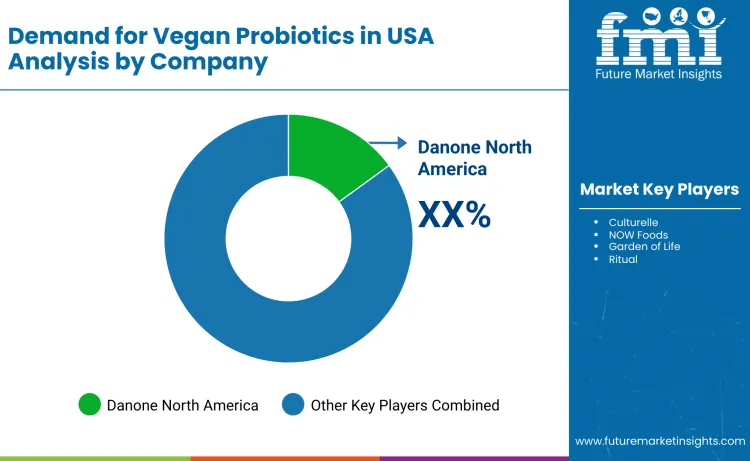
Demand for vegan probiotics in the USA is driven by growth in plant-based diets, dairy-free nutrition preferences, and rising awareness of gut health management. Applications span dietary supplements, functional foods, beverages, and medical nutrition products requiring non-animal fermentation substrates. Buyers evaluate strain stability, colony-forming unit viability, shelf-life performance, and compatibility with vegan certification standards. Procurement teams prioritize documented strain efficacy, clean-label compliance, allergen control, and adherence to USA dietary supplement regulations. Trend in the USA market reflects increased consumer scrutiny of ingredient sourcing, demand for clinically studied strains, and expansion of plant-based supplement portfolios across retail and direct-to-consumer channels.
Danone North America maintains a strong presence through probiotic formulations integrated into plant-based nutrition platforms and functional food offerings. Culturelle, operated by i-Health under DSM-Firmenich partnerships, supports USA demand with probiotic strains suitable for vegan supplement formats. Garden of Life participates through certified vegan probiotic products distributed widely across natural and mainstream retail channels. NOW Foods maintains visibility with shelf-stable vegan probiotic supplements supported by in-house manufacturing and testing capabilities. Ritual contributes through science-backed vegan probiotic formulations marketed through subscription-based and digital retail models. Competitive positioning in the USA reflects strain validation, vegan certification credibility, formulation transparency, and distribution reach across health-focused consumer segments.
Key Players in USA Vegan Probiotics Demand
- Danone North America
- Culturelle
- Garden of Life
- NOW Foods
- Ritual
Scope of the Report
| Items | Values |
|---|---|
| Quantitative Units | USD billion |
| Product Type | Kombucha; Soy Milk; Coconut Kefir; Coconut Yogurt; Miso |
| Source of Enzyme | Bacteria; Yeast |
| End Use Industry | Food & Beverages; Nutrition Industry; Health Care; Fitness; Others |
| Regions Covered | West USA; South USA; Northeast USA; Midwest USA |
| Key Companies Profiled | Danone North America; Culturelle; Garden of Life; NOW Foods; Ritual |
| Additional Attributes | Dollar sales by product type and enzyme source; regional adoption patterns across USA wellness-focused consumers; demand supported by plant-based diets and gut-health awareness; growth across functional foods and supplements; product differentiation based on strain selection, clean-label positioning, and vegan certification. |
USA Vegan Probiotics Demand by Segments
Product Type:
- Kombucha
- Soy Milk
- Coconut Kefir
- Coconut Yogurt
- Miso
Source of Enzyme:
- Bacteria
- Yeast
End Use Industry:
- Food & Beverages
- Nutrition Industry
- Health Care
- Fitness
- Others
Region:
- West USA
- South USA
- Northeast USA
- Midwest USA
Frequently Asked Questions
How big is the demand for vegan probiotics in USA in 2026?
The demand for vegan probiotics in USA is estimated to be valued at USD 2.6 billion in 2026.
What will be the size of vegan probiotics demand in USA in 2036?
The demand size for vegan probiotics in USA is projected to reach USD 6.0 billion by 2036.
How much will the demand for vegan probiotics in USA grow between 2026 and 2036?
The demand for vegan probiotics in USA is expected to grow at an 8.7% CAGR between 2026 and 2036.
What are the key product types in the vegan probiotics demand in USA?
The key product types in vegan probiotics demand in USA include kombucha, vegan probiotic supplements, and plant-based fermented foods.
Which enzyme-source segment is expected to contribute a significant share in the vegan probiotics demand in USA in 2026?
In terms of enzyme source, bacteria-based probiotics are expected to command 73.5% share in the vegan probiotics demand in USA in 2026.
Preview the report firsthand - request a free sample
Get SampleGet the brochure for pricing and purchase details.
Get PDFTable of Content
- Executive Summary
- USA Market Outlook
- Demand-side Trends
- Supply-side Trends
- Technology Roadmap Analysis
- Analysis and Recommendations
- Market Overview
- Market Coverage / Taxonomy
- Market Definition / Scope / Limitations
- Market Background
- Market Dynamics
- Drivers
- Restraints
- Opportunity
- Trends
- Scenario Forecast
- Demand in Optimistic Scenario
- Demand in Likely Scenario
- Demand in Conservative Scenario
- Opportunity Map Analysis
- Product Life Cycle Analysis
- Supply Chain Analysis
- Investment Feasibility Matrix
- Value Chain Analysis
- PESTLE and Porter’s Analysis
- Regulatory Landscape
- Regional Parent Market Outlook
- Production and Consumption Statistics
- Import and Export Statistics
- USA Vegan Probiotics Demand Analysis 2020 to 2024 and Forecast, 2025 to 2035
- Historical Market Size Value (USD Billion) Analysis, 2020 to 2024
- Current and Future Market Size Value (USD Billion) Projections, 2025 to 2035
- Y-o-Y Growth Trend Analysis
- Absolute $ Opportunity Analysis
- USA Vegan Probiotics Demand Pricing Analysis 2020 to 2024 and Forecast 2025 to 2035
- USA Vegan Probiotics Demand Analysis 2020 to 2024 and Forecast 2025 to 2035, By Product Type
- Introduction / Key Findings
- Historical Market Size Value (USD Billion) Analysis By Product Type, 2020 to 2024
- Current and Future Market Size Value (USD Billion) Analysis and Forecast By Product Type, 2025 to 2035
- Kombucha
- Soy Milk
- Coconut Kefir
- Coconut Yogurt
- Miso
- Y-o-Y Growth Trend Analysis By Product Type, 2020 to 2024
- Absolute $ Opportunity Analysis By Product Type, 2025 to 2035
- USA Vegan Probiotics Demand Analysis 2020 to 2024 and Forecast 2025 to 2035, By Source of Enzyme
- Introduction / Key Findings
- Historical Market Size Value (USD Billion) Analysis By Source of Enzyme, 2020 to 2024
- Current and Future Market Size Value (USD Billion) Analysis and Forecast By Source of Enzyme, 2025 to 2035
- Bacteria
- Yeast
- Y-o-Y Growth Trend Analysis By Source of Enzyme, 2020 to 2024
- Absolute $ Opportunity Analysis By Source of Enzyme, 2025 to 2035
- USA Vegan Probiotics Demand Analysis 2020 to 2024 and Forecast 2025 to 2035, By End Use Industry
- Introduction / Key Findings
- Historical Market Size Value (USD Billion) Analysis By End Use Industry, 2020 to 2024
- Current and Future Market Size Value (USD Billion) Analysis and Forecast By End Use Industry, 2025 to 2035
- Food & Beverages
- Nutrition Industry
- Health Care
- Fitness
- Others
- Y-o-Y Growth Trend Analysis By End Use Industry, 2020 to 2024
- Absolute $ Opportunity Analysis By End Use Industry, 2025 to 2035
- Market Structure Analysis
- Competition Dashboard
- Competition Benchmarking
- Market Share Analysis of Top Players
- By Regional
- By Product Type
- By Source of Enzyme
- By End Use Industry
- Competition Analysis
- Competition Deep Dive
- Danone North America
- Overview
- Product Portfolio
- Profitability by Market Segments (Product / Sales Channel / Region)
- Sales Footprint
- Strategy Overview
- Marketing Strategy
- Product Strategy
- Channel Strategy
- Culturelle
- Garden of Life
- NOW Foods
- Ritual
- Danone North America
- Assumptions & Acronyms Used
- Research Methodology


