

- Industry Size (2025)
- USD 116.2 Mn
- Forecast (2035)
- USD 176.6 Mn
- CAGR (2025 to 2035)
- 4.3%
Demand for Vegan Tuna in USA 2025 to 2035
The demand for vegan tuna is valued at USD 116.2 million in 2025 and is projected to reach USD 176.6 million by 2035, recording a CAGR of 4.3%. Adoption is supported by growth in flexitarian eating habits, increasing visibility of plant-based seafood options in mainstream retail, and consumer concerns about mercury exposure, overfishing, and habitat loss associated with conventional tuna production. Manufacturers focus on delivering products that replicate the taste, shredded texture, and nutritional profile of traditional tuna, particularly in sandwich fillings, salads, sushi, and ready-to-eat meal kits.
Soy-based protein leads usage due to established processing techniques, strong protein density, and the ability to maintain structural integrity in cold and ambient applications. Pea protein and blended protein formulations are gaining interest as companies target cleaner-label positioning and allergen reduction, though soy remains the most cost-effective base. Stable pricing and diversified supply chains also contribute to ongoing commercial preference for soy within the category.
Demand is strongest in the West, South, and Northeast, driven by retail chains, coastal consumption patterns, and active regional distribution networks for alternative proteins. Key suppliers include Good Catch Plant-Based Tuna, Sophie’s Kitchen Plant-Based Toona, Loma Linda TUNO, Vegan ZeaStar’s Tuna, and Worthington Meatless Tuna. Their strategies emphasize flavor development, ready-meal integration, and partnerships with foodservice operators to expand access beyond niche vegan channels.
Quick Stats for USA Vegan Tuna Demand
- USA Vegan Tuna Sales Value (2025): USD 116.2 million
- USA Vegan Tuna Forecast Value (2035): USD 176.6 million
- USA Vegan Tuna Forecast CAGR (2025-2035): 4.3%
- Leading Source in USA Vegan Tuna Demand: Soy-Based Protein
- Key Growth Regions in USA Vegan Tuna Demand: West USA, South USA, Northeast USA
- Top Players in USA Vegan Tuna Demand: Good Catch Plant-Based Tuna, Sophie’s Kitchen Plant-Based Toona, Loma Linda TUNO, Vegan ZeaStar’s Tuna, Worthington Meatless Tuna
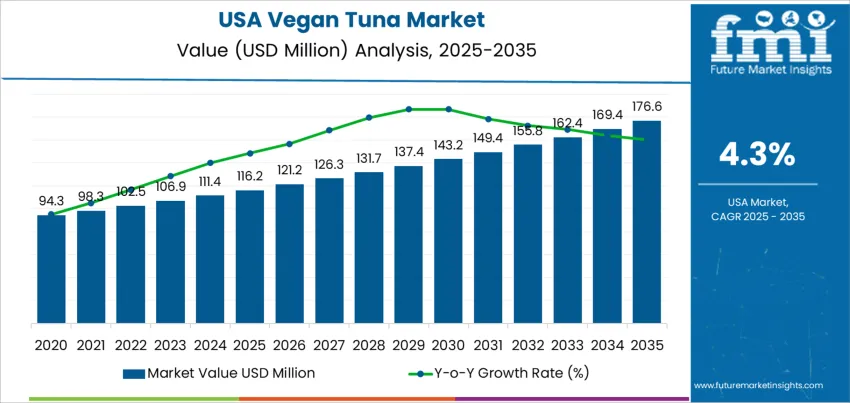
What is the Growth Forecast for Vegan Tuna Industry in USA through 2035?
Demand for vegan tuna in the United States contributes moderately to the overall expansion of the plant-based seafood category. Its growth impact is driven by dietary shifts among health-conscious consumers and rising concerns about overfishing and mercury exposure in conventional tuna. Contribution is strongest in retail channels where canned and pouch formats align with familiar tuna use cases such as sandwiches and salads. Menu innovation in fast-casual dining adds incremental contribution, especially in coastal metropolitan regions with higher vegan and flexitarian populations.
Growth contribution weakens when evaluated against the broader alternative protein sector. Vegan tuna remains a niche product with limited brand availability and higher pricing than conventional tuna. Texture replication, realistic flavor profiles, and clean-label formulations are under development, which temporarily reduces its share contribution. Distribution is concentrated in specialty and natural supermarkets, creatinga slower contribution from mainstream grocery.
Future contribution improves as manufacturing scales and messaging highlights sustainability and protein equivalence. The index remains positive because plant-based seafood options diversify rapidly within US retail assortments. Stronger contribution emerges as consumers adopt vegan tuna not only as a dietary substitute but also as a convenience product that matches established tuna consumption habits.
USA Vegan Tuna Key Takeaways
| Metric | Value |
|---|---|
| USA Vegan Tuna Sales Value (2025) | USD 116.2 million |
| USA Vegan Tuna Forecast Value (2035) | USD 176.6 million |
| USA Vegan Tuna Forecast CAGR (2025-2035) | 4.3% |
Why is the Demand for Vegan Tuna in the USA Growing?
Demand for vegan tuna in the USA is increasing because more consumers seek plant-based and sustainable alternatives to traditional seafood. Dietary shifts driven by concerns over overfishing, marine ecosystem health and personal wellbeing encourage adoption of vegan substitutes that mimic tuna texture and taste without involving fish. Vegan tuna products appeal to flexitarians, vegetarians and environmentally conscious consumers seeking lower-emission protein sources.
Retail expansion of plant-based seafood alternatives supports availability of vegan tuna in supermarkets and health-food stores. Interest in ready-to-eat meal solutions, such as salads, sandwiches and wraps, strengthens demand for shelf-stable or chilled vegan tuna. Foodservice concepts and fast-casual restaurants also explore vegan seafood in menu items to appeal to customers with dietary restrictions or ethical preferences.
Manufacturers invest in ingredient development and formulation technologies to deliver realistic texture and flavor. Advances in plant protein processing, seasoning blends and packaging extend shelf life and improve convenience, which helps increase repeat purchases. Constraints include higher cost compared with conventional tuna, particularly in premium versions with specialty ingredients. Some consumers may resist changes in taste or texture compared with seafood. Supply chain costs, raw-material sourcing and regulatory labelling requirements for plant-based seafood alternatives may influence industry growth.
Which Sources, Applications, and Distribution Channels Lead Demand for Vegan Tuna in the USA?
Demand for vegan tuna in the United States is driven by the shift toward plant-based seafood alternatives and concerns related to mercury, overfishing, and sustainability. Consumers look for tuna substitutes that offer similar texture, protein content, and convenience across ready-to-eat meals. Growth is reinforced by flexitarian adoption, improved formulations that mimic traditional tuna, and strong traction in major retail chains. Brands emphasize allergen-friendly options, ocean-safe ingredient sourcing, and clean labels to support purchasing decisions in both retail and foodservice environments.
By Source, Soy-Based Protein Leads Consumption
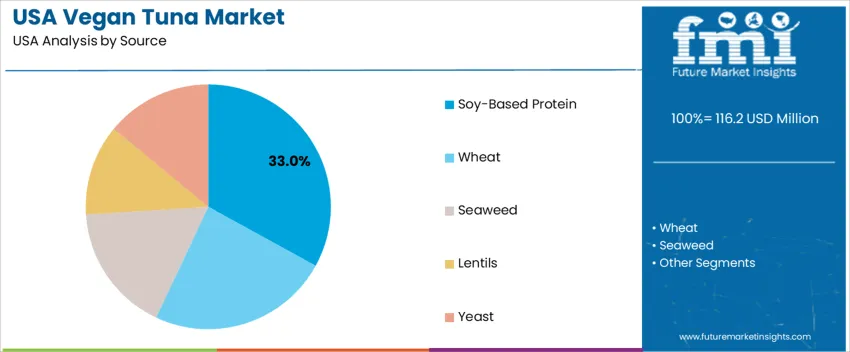
Soy-based protein accounts for 33.0%, supported by its high protein digestibility, neutral taste, and cost-efficient scaling across U.S. manufacturing. Wheat holds 24.0%, serving consumers who prefer familiar textures yet limiting gluten-free appeal. Seaweed represents 17.0%, valued for ocean-like flavor, omega content, and natural umami used in premium formulations. Yeast (14.0%) and lentils (12.0%) supply allergen-alternative protein bases but remain niche due to processing challenges and mouthfeel limitations. Ingredient demand reflects nutritional expectations, affordability, and the ability to replicate the fibrous flake structure of canned tuna.
Key Points:
- Soy-based formats dominate due to protein strength and scalability
- Seaweed improves flavor authenticity in premium SKUs
- Lentil and yeast formats cater to allergen-restricted consumers
By Application, Other Ready Meal Uses Hold the Largest Share
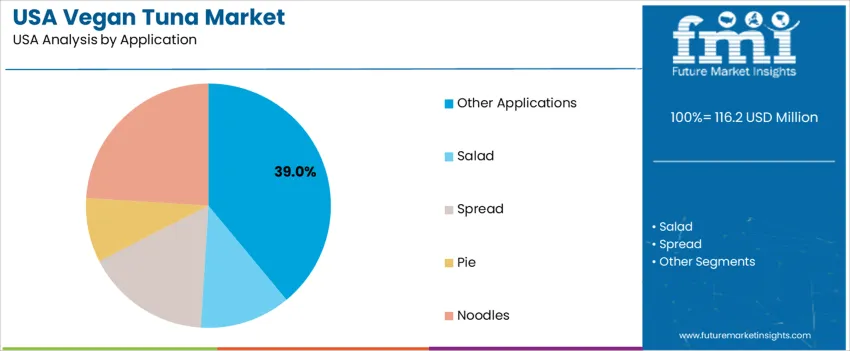
Other applications account for 39.0%, including wraps, burritos, sushi rolls, and foodservice recipes tapping versatility and speed of preparation. Noodles represent 24.0%, used in Asian-inspired dishes and ready bowls popular in U.S. retail. Spreads contribute 16.5%, driven by sandwich fillings and lunchbox convenience. Salads hold 12.0%, consistent with tuna’s traditional usage but sensitive to texture quality. Pies represent 8.5%, concentrated in seasonal or specialty product lines. Application demand links to convenience-driven consumption and integration into familiar tuna-based meal formats.
Key Points:
- Versatile prepared foods drive widespread adoption
- Noodle formats benefit from strong ready-meal growth
- Spread and salad usage replicate traditional canned tuna consumption
By Distribution Channel, Supermarkets Lead Sales
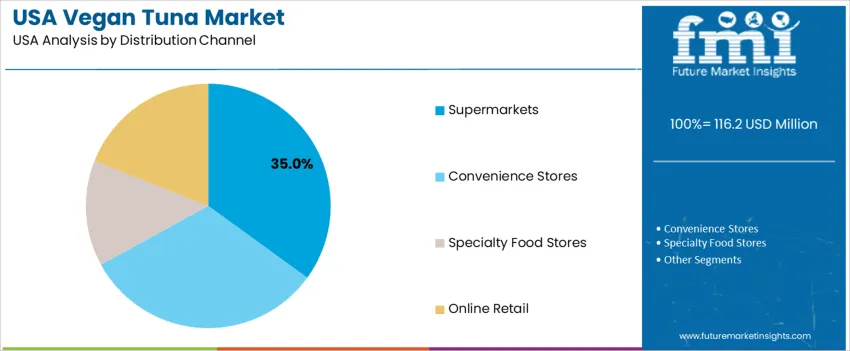
Supermarkets account for 35.0%, reflecting large assortment placement and promotion toward flexitarian shoppers. Convenience stores hold 32.0%, associated with grab-and-go meals and single-serve packaging. Online retail represents 19.0%, supported by direct-to-consumer brand launches and recurring subscription models. Specialty food stores retain 14.0%, focused on allergen-free and premium SKUs targeting health-oriented buyers. Channel dynamics align with impulse purchasing, cold chain logistics, and product discovery tied to emerging plant-based categories in the USA.
Key Points:
- Grocery retail enables broad mainstream accessibility
- Convenience formats fuel portable meal consumption
- E-commerce supports recurring and trial-based purchases
What are the Drivers, Restraints, and Key Trends of the Demand for Vegan Tuna in the USA?
Growth of plant-based eating, increased focus on mercury-free seafood alternatives and wider retail access drive demand.
In the United States, vegan tuna appeals to consumers who are reducing their seafood intake due to sustainability concerns, dietary preferences, or taste experimentation. Households seeking convenient protein options are adopting canned and ready-to-eat plant-based tuna for sandwiches, salads and wraps. Retailers expand shelf space for seafood alternatives near traditional tuna products, improving visibility for first-time buyers. Foodservice operators add plant-based tuna bowls and wraps to provide allergen-friendly and vegetarian choices that match fast-casual menu formats. EPA advisories about mercury levels in certain fish species reinforce interest in tuna substitutes that maintain protein content with fewer dietary risks. These factors support steady demand from health-conscious consumers and flexitarian shoppers.
Premium pricing, texture and flavor expectations and limited mainstream familiarity restrain demand.
Plant-based tuna remains more expensive than conventional canned tuna, reducing purchase frequency for budget-focused households. Achieving a flaky texture and ocean-like flavor takes advanced formulation, and some consumers remain unconvinced after early product trials. Awareness of vegan seafood options lags behind plant-based meat and dairy, slowing crossover from broader alternative-protein segments. Traditional canned tuna retains strong value positioning and long-standing household loyalty, creating high competitive pressure for vegan formats. These factors limit widespread penetration into everyday grocery routines.
Shift toward clean-label pea- and algae-based formulations, increased adoption in refrigerated and foodservice formats and rising emphasis on sustainable sourcing define key trends.
Manufacturers use recognizable proteins such as peas, chickpeas and fava beans, along with marine-derived algae oils, to improve nutritional profile and flavor authenticity. Refrigerated spreads and ready-made meal components support usage beyond sandwiches, improving versatility for quick lunches. Foodservice partnerships in universities and workplace cafés help introduce vegan tuna to younger and sustainability-driven consumers. Packaging highlights ocean conservation and reduced fishing pressure as part of product positioning. These developments indicate a growing, environmentally motivated demand for vegan tuna across the United States, driven by protein diversification and sustainable-eating behavior.
Analysis of the Demand for Vegan Tuna in the USA by Region
Demand for vegan tuna in the United States is rising as consumers shift toward plant-based seafood alternatives influenced by sustainability awareness, mercury-free nutrition preferences, and animal-welfare considerations. Foodservice and retail channels are expanding listings of canned, pouched, and ready-to-eat plant-protein seafood formats that replicate tuna taste and texture. Innovations using pea, soy, chickpea, and algal protein enhance clean-label requirements and nutritional positioning. Shelf-stable product development supports broader distribution, including e-commerce adoption. West USA leads growth at 4.9% CAGR, followed by South USA at 4.4%, Northeast USA at 3.9%, and Midwest USA at 3.4%, reflecting varying levels of plant-protein consumption and grocery assortment strategies.
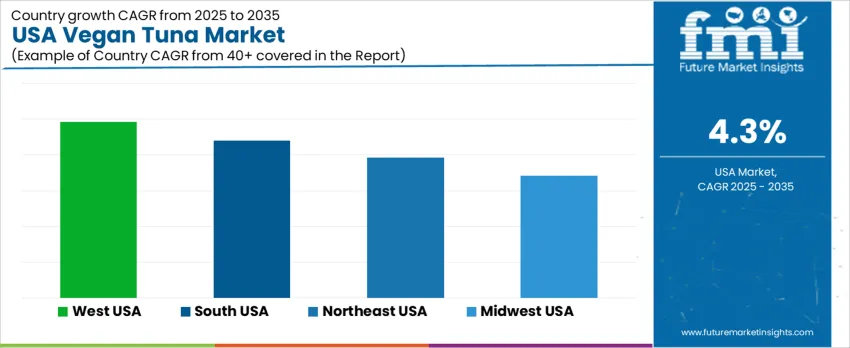
| Region | CAGR (2025-2035) |
|---|---|
| West USA | 4.9% |
| South USA | 4.4% |
| Northeast USA | 3.9% |
| Midwest USA | 3.4% |
How is the West USA driving demand for vegan tuna?
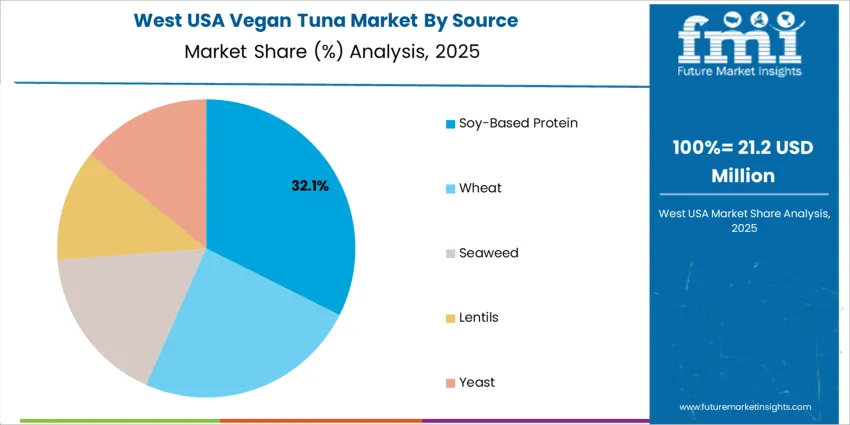
West USA grows at 4.9% CAGR, supported by strong plant-based food uptake in California, Washington, and Oregon. Retail assortments favor sustainability-oriented seafood alternatives, reinforcing consumer transition away from wild-caught tuna. Coastal metro populations show higher trial of plant-protein seafood options available in natural grocery chains and premium retailers. Rapid food-innovation ecosystems collaborate with startups to refine tuna-like textures using algae-derived omega-3s for nutritional parity. Quick-service restaurants and grab-and-go outlets introduce vegan sushi and tuna salad formats, accelerating volume movement. Procurement preferences focus on clean-label ingredients and versatility in sandwiches, sushi rolls, and prepared meals.
- Coastal consumer base driving early adoption
- Natural grocers expanding seafood-alternative offerings
- Innovation clusters optimizing sensory performance
- Foodservice applications supporting recurring demand
How is the South USA shaping consumption expansion?
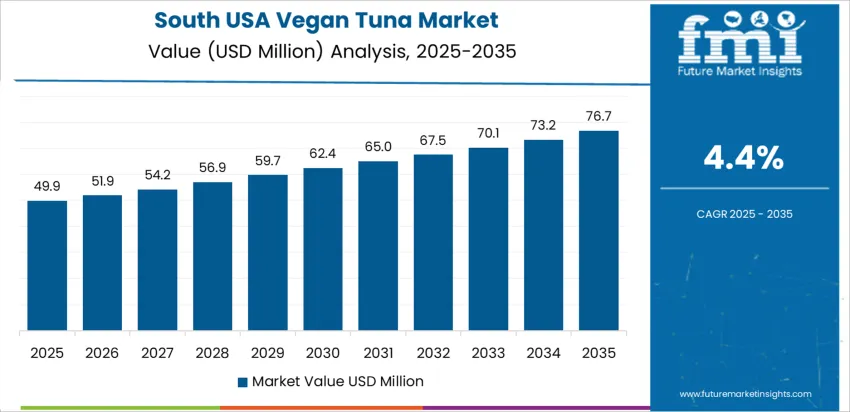
South USA reports 4.4% CAGR, influenced by increasing flexitarian populations in Texas and Florida. Growth in cold chain retail infrastructure supports wider availability of refrigerated and frozen vegan seafood. Health-focused suburban shoppers purchase plant-based proteins for weight-management and cardiovascular wellness. Regional distributors encourage private-label tuna-alternative lines to compete with national brands. Foodservice operators adopt shelf-stable SKUs for workplace cafeterias and college dining, filling allergy-friendly and non-seafood menu gaps. Supply decisions emphasize affordability and broad-taste familiarity to support mainstream acceptance.
- Flexitarian dietary trends expanding trial rates
- Private-label offerings improving affordability
- Foodservice adoption widening exposure
- Infrastructure upgrades enabling refrigerated delivery
How is the Northeast USA influencing procurement patterns?
Northeast USA advances at 3.9% CAGR, supported by dense retail networks and strong interest in sustainable protein innovation in New York, New Jersey, and Massachusetts. Younger, urban consumers contribute to high rotation of canned and ready-meal formats. Retailers focus on traceability, CO₂-impact transparency, and non-GMO formulations. Universities and hospitals integrate vegan tuna SKUs into wellness-aligned food programs. Smaller-footprint stores prioritize compact, shelf-stable formats for convenience purchases. Procurement emphasizes trusted certifications and recognizable ingredients over unfamiliar protein sources.
- Urban retail density reinforcing category visibility
- Institutional dining accelerating everyday exposure
- Clean-label and sustainability claims shaping listings
- Shelf-stable SKUs suited for compact retail formats
How is the Midwest USA maintaining baseline demand?
Midwest USA grows at 3.4% CAGR, driven by gradual adoption in mainstream grocery channels serving family-oriented consumers. Producers increase distribution of familiar sandwich-ready SKUs to align with regional food preferences. Private-label expansion gives cost-sensitive buyers accessible entry points into seafood alternatives. Retail category placement adjacent to canned tuna supports impulse trial. Long-haul logistics linking manufacturing hubs in Illinois and Ohio preserve product quality and inventory consistency. Buyers prioritize versatility for lunch kits and convenience meals.
- Family meal suitability guiding product selection
- Cost-sensitive purchasing aided by private-label growth
- Grocery placement enabling trial and switching
- Logistics networks supporting stable supply
How is competitive positioning structured among suppliers of vegan tuna in the United States, and who leads demand currently?
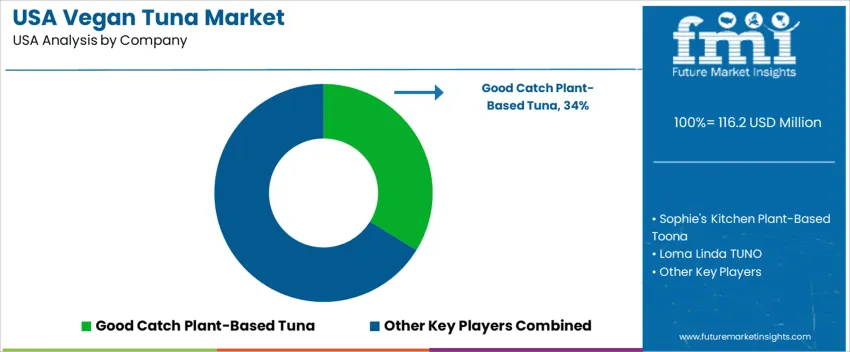
In the United States vegan-tuna segment, competitive strength depends on product taste fidelity, texture quality, ingredient transparency, shelf-life stability, and distribution reach across retail and direct-to-consumer channels. Good Catch Plant-Based Tuna leads with an estimated 33.8% share, supported by strong brand visibility, varied flavor lines, and national placement across grocery chains and natural-food stores. Its industry presence benefits from early industry entry and consistent investment in product refinement.
Sophie's Kitchen Plant-Based Toona competes by offering a range of vegan seafood alternatives including canned and pouch formats targeting vegetarian and flexitarian consumers seeking familiar flavors in sushi-style or sandwich-ready applications. Its adoption is driven by product variety and alignment with seafood-alternative niche demand. Loma Linda’s TUNO leverages legacy reputation in plant-based products and strong distribution history in health-food retail, appealing to established vegetarian segments. Worthington Meatless Tuna contributes through price-competitive formats aimed at budget-conscious consumers transitioning to meatless alternatives, with supply through discount and value-oriented chains. ZeaStar (or similar brands) serves smaller-scale industries emphasizing allergen-conscious formulations and environmentally positioned branding, appealing to niche consumer segments.
Competitive advantage depends on sensory performance (flavor and texture), clean-label ingredient sourcing, consistent manufacturing standards, and effective cold-chain or shelf-stable packaging. Suppliers combining strong retail coverage, innovation in taste and texture, and transparent sustainability credentials are best positioned to expand share in the U.S. vegan-tuna category.
Key Players in USA Vegan Tuna Demand
- Good Catch Plant-Based Tuna
- Sophie's Kitchen Plant-Based Toona
- Loma Linda TUNO
- Vegan ZeaStar's Tuna
- Worthington Meatless Tuna
Scope of the Report
| Items | Values |
|---|---|
| Quantitative Units | USD million |
| Source | Soy-Based Protein, Wheat, Seaweed, Lentils, Yeast |
| Application | Salad, Spread, Pie, Noodles, Other Applications |
| Distribution Channel | Supermarkets, Convenience Stores, Specialty Food Stores, Online Retail |
| Regions Covered | West USA, South USA, Northeast USA, Midwest USA |
| Key Companies Profiled | Good Catch Plant-Based Tuna, Sophie’s Kitchen Plant-Based Toona, Loma Linda TUNO, Vegan ZeaStar’s Tuna, Worthington Meatless Tuna |
| Additional Attributes | Dollar sales by source and application segments; rising adoption across online and supermarket channels; consumer shift toward sustainable seafood alternatives; flavor and textural innovation for tuna-like mouthfeel; growth driven by pescatarian and flexitarian diets; regulatory compliance for clean-label, allergen-free formulations; competitive focus on ready-to-eat and canned/pack-style formats. |
USA Vegan Tuna Demand by Segments
Source:
- Soy-Based Protein
- Wheat
- Seaweed
- Lentils
- Yeast
Application:
- Other Applications
- Salad
- Spread
- Pie
- Noodles
Distribution Channel:
- Supermarkets
- Convenience Stores
- Specialty Food Stores
- Online Retail
Region:
- West USA
- South USA
- Northeast USA
- Midwest USA
Frequently Asked Questions
How big is the demand for vegan tuna in USA in 2025?
The demand for vegan tuna in USA is estimated to be valued at USD 116.2 million in 2025.
What will be the size of vegan tuna in USA in 2035?
The market size for the vegan tuna in USA is projected to reach USD 176.6 million by 2035.
How much will be the demand for vegan tuna in USA growth between 2025 and 2035?
The demand for vegan tuna in USA is expected to grow at a 4.3% CAGR between 2025 and 2035.
What are the key product types in the vegan tuna in USA?
The key product types in vegan tuna in USA are soy-based protein, wheat, seaweed, lentils and yeast.
Which application segment is expected to contribute significant share in the vegan tuna in USA in 2025?
In terms of application, other applications segment is expected to command 39.0% share in the vegan tuna in USA in 2025.
Preview the report firsthand - request a free sample
Get SampleGet the brochure for pricing and purchase details.
Get PDFTable of Content
- Executive Summary
- USA Market Outlook
- Demand-side Trends
- Supply-side Trends
- Technology Roadmap Analysis
- Analysis and Recommendations
- Market Overview
- Market Coverage / Taxonomy
- Market Definition / Scope / Limitations
- Market Background
- Market Dynamics
- Drivers
- Restraints
- Opportunity
- Trends
- Scenario Forecast
- Demand in Optimistic Scenario
- Demand in Likely Scenario
- Demand in Conservative Scenario
- Opportunity Map Analysis
- Product Life Cycle Analysis
- Supply Chain Analysis
- Investment Feasibility Matrix
- Value Chain Analysis
- PESTLE and Porter’s Analysis
- Regulatory Landscape
- Regional Parent Market Outlook
- Production and Consumption Statistics
- Import and Export Statistics
- Market Dynamics
- USA Market Analysis 2020 to 2024 and Forecast, 2025 to 2035
- Historical Market Size Value (USD Million) Analysis, 2020 to 2024
- Current and Future Market Size Value (USD Million) Projections, 2025 to 2035
- Y-o-Y Growth Trend Analysis
- Absolute $ Opportunity Analysis
- USA Market Pricing Analysis 2020 to 2024 and Forecast 2025 to 2035
- USA Market Analysis 2020 to 2024 and Forecast 2025 to 2035, By Source
- Introduction / Key Findings
- Historical Market Size Value (USD Million) Analysis By Source , 2020 to 2024
- Current and Future Market Size Value (USD Million) Analysis and Forecast By Source , 2025 to 2035
- Soy-Based Protein
- Wheat
- Seaweed
- Lentils
- Yeast
- Y-o-Y Growth Trend Analysis By Source , 2020 to 2024
- Absolute $ Opportunity Analysis By Source , 2025 to 2035
- USA Market Analysis 2020 to 2024 and Forecast 2025 to 2035, By Application
- Introduction / Key Findings
- Historical Market Size Value (USD Million) Analysis By Application, 2020 to 2024
- Current and Future Market Size Value (USD Million) Analysis and Forecast By Application, 2025 to 2035
- Other Applications
- Salad
- Spread
- Pie
- Noodles
- Y-o-Y Growth Trend Analysis By Application, 2020 to 2024
- Absolute $ Opportunity Analysis By Application, 2025 to 2035
- USA Market Analysis 2020 to 2024 and Forecast 2025 to 2035, By Distribution Channel
- Introduction / Key Findings
- Historical Market Size Value (USD Million) Analysis By Distribution Channel, 2020 to 2024
- Current and Future Market Size Value (USD Million) Analysis and Forecast By Distribution Channel, 2025 to 2035
- Supermarkets
- Convenience Stores
- Specialty Food Stores
- Online Retail
- Y-o-Y Growth Trend Analysis By Distribution Channel, 2020 to 2024
- Absolute $ Opportunity Analysis By Distribution Channel, 2025 to 2035
- Market Structure Analysis
- Competition Dashboard
- Competition Benchmarking
- Market Share Analysis of Top Players
- By Regional
- By Source
- By Application
- By Distribution Channel
- Competition Analysis
- Competition Deep Dive
- Good Catch Plant-Based Tuna
- Overview
- Product Portfolio
- Profitability by Market Segments (Product/Age /Sales Channel/Region)
- Sales Footprint
- Strategy Overview
- Marketing Strategy
- Product Strategy
- Channel Strategy
- Sophie's Kitchen Plant-Based Toona
- Loma Linda TUNO
- Vegan ZeaStar's Tuna
- Worthington Meatless Tuna
- Good Catch Plant-Based Tuna
- Competition Deep Dive
- Assumptions & Acronyms Used
- Research Methodology


