

- Industry Size (2026)
- USD 347.5 Mn
- Forecast (2036)
- USD 676.3 Mn
- CAGR (2026 to 2036)
- 6.9%
Demand for Vegan Probiotics in Japan 2026 to 2036
Demand for vegan probiotics in Japan is valued at USD 347.5 million in 2026 and is projected to reach USD 676.3 million by 2036, reflecting a CAGR of 6.9%. Demand expands as consumers increasingly favor plant-based digestive health solutions aligned with lactose avoidance, clean-label preferences, and preventive wellness routines. Rising interest in gut health, immunity support, and daily functional nutrition sustains steady adoption across supplements and fermented beverage categories.
Coconut kefir leads product-type usage because dairy-free fermentation supports diverse probiotic strains while offering mild taste and good gastrointestinal tolerance. Manufacturers leverage coconut substrates to deliver stable live cultures suitable for vegan and allergen-conscious consumers. Refrigerated and shelf-stable innovations improve accessibility across retail and direct channels.
Kyushu & Okinawa, Kanto, Kansai, Chubu, and Tohoku represent key growth regions supported by strong health awareness, mature functional food retail, and urban consumption density. Yakult Honsha Co., Ltd., Meiji Holdings, Morinaga Milk Industry Co., Ltd., FANCL Corporation, and Asahi Group Holdings anchor competitive activity through fermentation expertise, clinical positioning, and trusted brands aligned with Japan’s preventive healthcare and nutrition standards.
Quick Stats for Demand for Vegan Probiotics in Japan
- Japan Vegan Probiotics Sales Value (2026): USD 347.5 million
- Japan Vegan Probiotics Forecast Value (2036): USD 676.3 million
- Japan Vegan Probiotics Forecast CAGR (2026 to 2036): 6.9%
- Leading Product Type in Japan: Coconut Kefir
- Key Growth Regions in Japan: Kyushu & Okinawa, Kanto, Kansai, Chubu, Tohoku
- Top Players in Japan: Yakult Honsha Co., Ltd., Meiji Holdings, Morinaga Milk Industry Co., Ltd., FANCL Corporation, Asahi Group Holdings
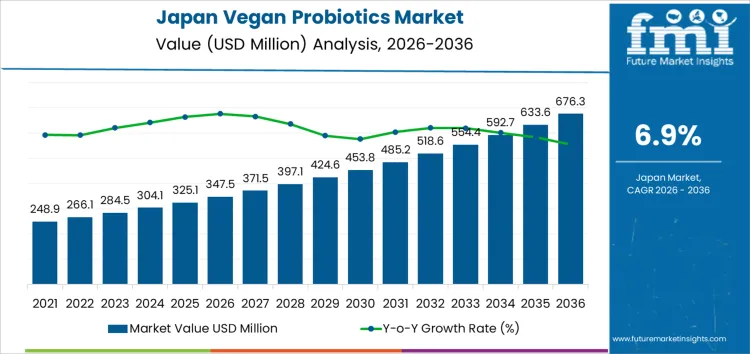
Japan Vegan Probiotics Key Takeaways
| Metric | Value |
|---|---|
| Japan Vegan Probiotics Sales Value (2026) | USD 347.5 million |
| Japan Vegan Probiotics Forecast Value (2036) | USD 676.3 million |
| Japan Vegan Probiotics Forecast CAGR (2026 to 2036) | 6.9% |
Why is the Demand for Vegan Probiotics in Japan Growing?
Demand for vegan probiotics in Japan grows due to changing dietary habits, health management priorities, and sensitivity toward ingredient sourcing. Consumers increasingly seek probiotics derived from plant based fermentation to align with vegetarian, flexitarian, and allergen aware diets. Lactose intolerance awareness supports interest in non-dairy probiotic formats suitable for daily consumption. Aging population dynamics increase focus on digestive health, immune balance, and gut related wellness, which sustains regular intake of probiotic supplements and functional foods. Japanese consumers value clean labeling and traceable ingredients, which strengthens preference for formulations free from animal origin components.
Expansion of functional food categories within pharmacies and convenience stores improves access to vegan probiotic products. Fermented plant foods have strong cultural acceptance, which supports trust in plant based microbial strains. Innovation in encapsulation and strain stability improves shelf life and efficacy, encouraging wider adoption. Healthcare professionals recommend probiotics for digestive balance during antibiotic use and lifestyle related stress, reinforcing consumption across age groups. Domestic manufacturers leverage advanced fermentation technology to develop strains suited to local dietary patterns. E commerce channels expand product visibility among health focused consumers across urban and regional areas.
How Are the Segments Classified in the Demand for Vegan Probiotics in Japan?
Demand for vegan probiotics in Japan is shaped by fermented food heritage, digestive health awareness, and preference for plant-based formulations. Buyers assess strain viability, fermentation stability, flavor balance, and compatibility with traditional and modern consumption formats. Adoption patterns reflect integration into beverages, fermented foods, and functional nutrition products, supported by Japan’s familiarity with cultured ingredients and regulated food quality standards.
By Product Type, Does Coconut Kefir Account for the Largest Share of Demand in Japan?
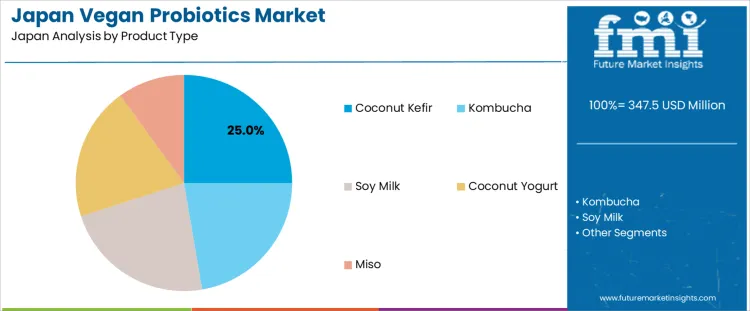
Coconut kefir holds 25.0%, making it the leading product-type segment in Japan. Coconut kefir provides a dairy-free fermented base with favorable mouthfeel and broad strain compatibility. Kombucha holds 22.3%, supported by beverage-oriented consumption and established fermentation acceptance. Soy milk holds 22.7%, aligning with long-standing soy consumption and neutral formulation flexibility. Coconut yogurt holds 20.0%, offering spoonable or drinkable textures for routine intake. Miso holds 10.0%, serving culinary and traditional applications. Product-type distribution reflects preference for coconut-based carriers and beverages that balance taste, functionality, and vegan compliance.
Key Points:
- Coconut kefir leads due to fermentation suitability and texture acceptance.
- Kombucha and soy milk support beverage-based probiotic intake.
- Miso serves culinary and traditional usage contexts.
By Source of Enzyme, Do Bacterial Strains Represent the Largest Share of Demand in Japan?
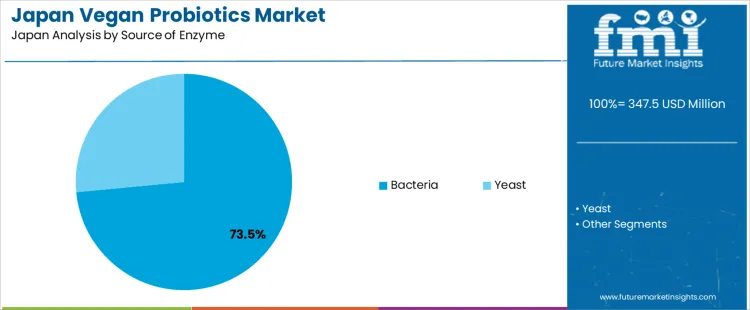
Bacterial sources hold 73.5%, making them the dominant enzyme-source segment in Japan. Bacterial strains offer documented stability, predictable fermentation behavior, and compatibility with food and beverage matrices. These characteristics support consistent dosing and quality control under Japanese standards. Yeast sources hold 26.5%, enabling strain diversity and niche functional positioning in selected products. Source distribution reflects stronger reliance on bacterial probiotics due to established efficacy profiles and formulation reliability across fermented foods and functional beverages.
Key Points:
- Bacterial strains dominate due to stability and consistency.
- Established efficacy supports regulated food applications.
- Yeast strains address niche functional requirements.
By End Use Industry, Does Food and Beverages Account for the Largest Share of Demand in Japan?
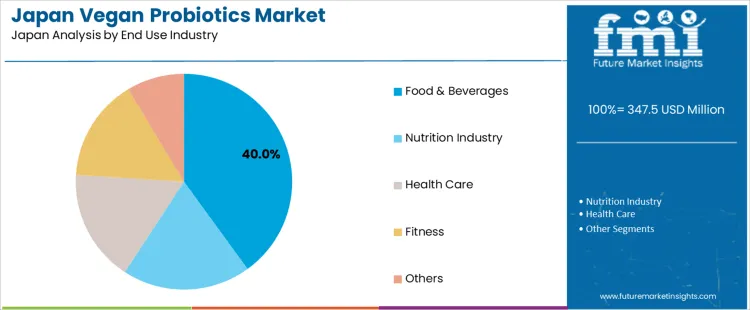
Food and beverages hold 40.0%, making them the leading end-use industry segment in Japan. Vegan probiotics are incorporated into fermented drinks, plant-based dairy alternatives, and functional foods consumed daily. Nutrition industry applications include fortified products and supplements targeting digestive balance. Health care uses support dietary management and wellness routines. Fitness applications focus on digestion and recovery support. End-use distribution reflects strongest demand from mainstream food and beverage integration aligned with Japan’s consumption habits.
Key Points:
- Food and beverages drive primary probiotic consumption.
- Nutrition products support targeted functional positioning.
- Health and fitness represent complementary demand segments.
What are the Key Dynamics in the Vegan Probiotics Industry in Japan?
Demand increases gradually as health-conscious consumers in Japan adopt plant-based, allergen-aware supplements aligned with digestive wellness. Vegan probiotics exclude dairy carriers and animal-derived excipients, fitting lactose avoidance and ethical preferences. Usage expands across supplements, functional beverages, and fermented foods. Distribution relies on pharmacies, drugstores, e-commerce, and specialty health retailers. Adoption remains selective, shaped by scientific credibility, product quality, and trust in domestic brands.
How do digestive health priorities and plant-based nutrition trends drive demand in Japan?
Japanese consumers place strong emphasis on gut health, regularity, and overall wellness, supporting steady interest in probiotics. Lactose intolerance prevalence encourages demand for non-dairy formulations. Vegan probiotics align with growing flexitarian diets and interest in plant-based foods. Manufacturers leverage strains compatible with plant fermentation and avoid gelatin capsules. Functional beverage makers integrate vegan probiotics into drinks positioned for daily consumption. Healthcare professionals influence adoption through evidence-based recommendations. Domestic companies emphasize safety testing and stability suited to Japan’s climate and logistics. Convenience-oriented packaging supports routine use among working adults and older consumers focused on preventive health.
How do formulation challenges, regulatory oversight, and consumer skepticism influence demand stability?
Maintaining strain viability without dairy carriers requires advanced encapsulation and moisture control, increasing production cost. Japan’s regulatory framework for foods with functional claims demands rigorous documentation, extending approval timelines. Consumers show cautious evaluation of efficacy claims, favoring brands with clinical backing. Competition from traditional fermented foods such as yogurt and natto limits substitution. Price sensitivity affects repeat purchases in a mature supplement landscape. Cold-chain requirements constrain distribution efficiency. Demand remains stable within informed consumer segments, while broader growth depends on clinical validation, clear communication, and trusted brand positioning within Japan.
How Is Demand for Vegan Probiotics in Japan Evolving by Region?
Demand for vegan probiotics in Japan is increasing due to digestive health awareness, plant-based nutrition adoption, and preference for allergen-free supplements. Kyushu and Okinawa lead with an 8.6% CAGR, supported by wellness retail penetration and lifestyle-driven consumption. Kanto follows at 7.9%, driven by urban health awareness, clinical influence, and e-commerce access. Kansai records a 7.0% CAGR, shaped by balanced wellness adoption and pharmacy distribution. Chubu posts 6.1%, reflecting household supplement use and private-label growth. Tohoku shows 5.4%, supported by aging population needs. Rest of Japan records 5.1%, reflecting stable replacement-driven consumption. Regional variation reflects health literacy, retail structure, and supplement adoption intensity across Japan.
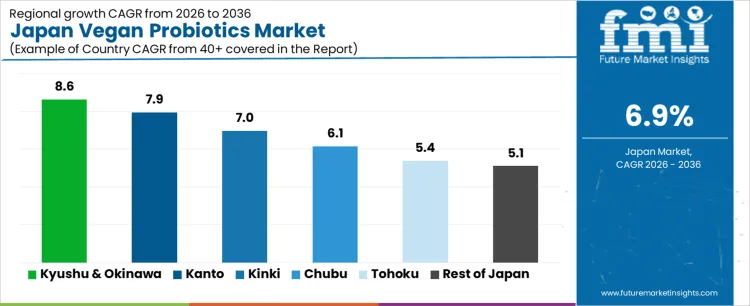
| Region | CAGR (2026-2036) |
|---|---|
| Kyushu & Okinawa | 8.6% |
| Kanto | 7.9% |
| Kansai | 7.0% |
| Chubu | 6.1% |
| Tohoku | 5.4% |
| Rest of Japan | 5.1% |
How is Kyushu and Okinawa driving demand for Vegan Probiotics in Japan?
Kyushu and Okinawa drive demand through wellness-oriented consumption, dietary sensitivity awareness, and strong retail accessibility. Region’s CAGR of 8.6% reflects rising use of vegan probiotics among consumers seeking dairy-free digestive support and immunity-related benefits. Warm climate supports year-round consumption of supplements and functional nutrition products. Pharmacies and specialty health stores promote plant-based probiotic formulations aligned with allergen avoidance. Consumers favor capsule and powder formats offering shelf stability and ease of daily use. Demand emphasizes multi-strain formulations with clear labeling and quality assurance. Growth remains consumption-led, supported by lifestyle-driven health routines and expanding wellness retail presence.
- Wellness and digestive health-focused consumption
- Strong pharmacy and specialty retail access
- Preference for dairy-free and allergen-free formats
- Demand for shelf-stable probiotic products
How is Kanto driving demand for Vegan Probiotics in Japan?
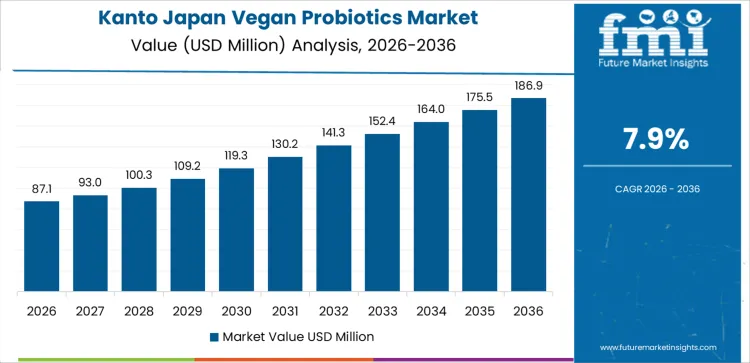
Kanto demand is shaped by urban health awareness, clinical influence, and digital commerce penetration. Region’s CAGR of 7.9% reflects high adoption of vegan probiotics among working professionals and elderly consumers. Nutritionists, clinics, and pharmacies influence purchasing decisions through evidence-based recommendations. E-commerce platforms support access to specialized and imported formulations. Consumers prioritize strain transparency, dosage clarity, and third-party quality validation. Demand favors capsules with controlled release and daily-use positioning. Growth aligns with preventive healthcare practices and structured supplement routines rather than impulse buying.
- Urban and preventive health-driven consumption
- Clinical and pharmacy-led product influence
- Strong e-commerce distribution channels
- Emphasis on strain transparency and certification
How is Kansai driving demand for Vegan Probiotics in Japan?
Kansai demand reflects balanced wellness adoption, household supplement use, and trusted retail channels. Region’s CAGR of 7.0% is supported by consumption of vegan probiotics for digestive comfort and general wellness maintenance. Consumers value familiar brands, moderate pricing, and reliable performance. Pharmacies and supermarkets serve as primary distribution points. Powdered sachets and capsule formats dominate due to convenience and storage ease. Demand growth remains steady, aligned with routine wellness habits and gradual acceptance of plant-based supplements.
- Household-oriented wellness supplement usage
- Strong pharmacy and supermarket distribution
- Preference for familiar and trusted brands
- Steady adoption through routine health practices
How is Chubu driving demand for Vegan Probiotics in Japan?
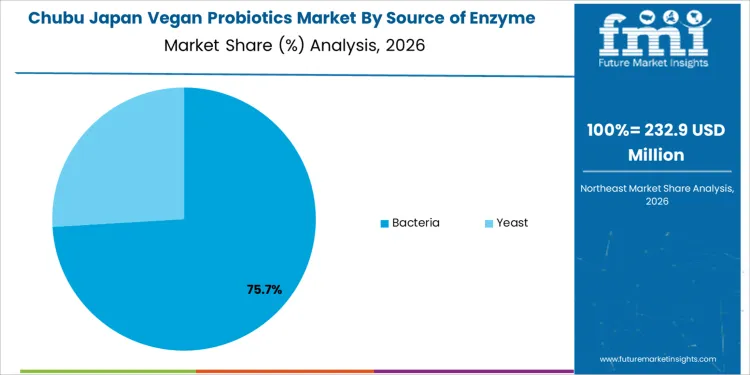
Chubu demand is anchored in mainstream supplement consumption and value-focused purchasing behavior. Region’s CAGR of 6.1% reflects use of vegan probiotics as part of daily health maintenance rather than targeted therapy. Consumers prioritize affordability, consistent availability, and simple formulations. Private-label products gain traction through regional retail chains. Capsules and tablets remain preferred formats due to ease of use. Demand growth remains moderate, supported by stable household consumption and predictable purchasing cycles.
- Mainstream and value-oriented supplement consumption
- Growth of private-label probiotic offerings
- Preference for simple daily-use formulations
- Stable household purchasing patterns
How is Tohoku driving demand for Vegan Probiotics in Japan?
Tohoku demand is influenced by aging demographics, digestive health needs, and conservative supplement adoption. Region’s CAGR of 5.4% reflects steady use of vegan probiotics for gut health support and dietary balance. Consumers favor shelf-stable products with clear usage instructions. Pharmacies serve as trusted points of purchase. Demand growth remains cautious and necessity-driven, aligned with health maintenance rather than wellness experimentation.
- Aging population-driven digestive health demand
- Preference for shelf-stable probiotic products
- Pharmacy-led purchasing behavior
- Conservative and necessity-focused adoption
How is Rest of Japan driving demand for Vegan Probiotics in Japan?
Rest of Japan shows stable demand driven by routine supplement use and replacement purchasing. Region’s CAGR of 5.1% reflects continued consumption of vegan probiotics as part of general wellness routines. Buyers prioritize cost efficiency, product reliability, and availability. Demand remains maintenance-oriented with limited exposure to innovation-led adoption. Growth aligns with steady health awareness and continuation of established supplement habits.
- Routine wellness supplement consumption
- Cost-sensitive purchasing priorities
- Replacement-driven demand behavior
- Stable adoption without rapid expansion
What is the competitive landscape of demand for vegan probiotics in Japan?
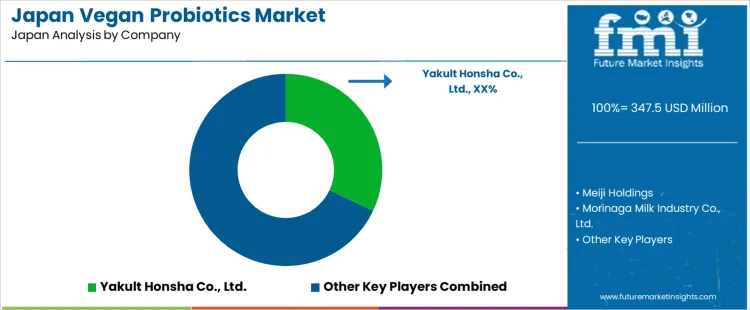
Demand for vegan probiotics in Japan is supported by rising interest in gut health, aging population wellness trends, and growth of plant-based diets among health-oriented consumers. Usage spans dietary supplements, functional foods, beverages, and yogurt-alternative products requiring non-animal fermentation substrates. Buyers evaluate strain stability, viability through gastrointestinal transit, allergen-free formulation, and compatibility with Japan’s Food for Specified Health Uses (FOSHU) and labeling regulations. Procurement teams prioritize suppliers with proven strain efficacy, certified vegan credentials, and distribution networks reaching pharmacies, health food retailers, and online channels. Trend in the Japan market reflects expansion of probiotic categories beyond traditional dairy formats and broader inclusion of synbiotic combinations tailored to localized consumer preferences.
Yakult Honsha Co., Ltd. holds a leading position through extensive domestic research, product development, and strong brand recognition in probiotic beverages and supplements, including vegan-friendly formulations aligned with local demand. Meiji Holdings supports demand with probiotic products extended into plant-based platforms and fortified functional foods distributed nationwide. Morinaga Milk Industry Co., Ltd. participates through probiotic supplement offerings and strategic partnerships focused on expanding vegan and non-dairy variants. FANCL Corporation maintains visibility with health supplement lines incorporating probiotic strains and prebiotic systems marketed to wellness consumers. Asahi Group Holdings contributes through beverage innovations that integrate probiotic cultures with plant-derived bases adapted to Japanese taste profiles. Competitive positioning in Japan reflects strain validation, regulatory compliance, flavor adaptation to local preferences, and distribution penetration across retail and health-oriented channels.
Key Players in Japan Vegan Probiotics Demand
- Yakult Honsha Co., Ltd.
- Meiji Holdings
- Morinaga Milk Industry Co., Ltd.
- FANCL Corporation
- Asahi Group Holdings
Scope of the Report
| Items | Values |
|---|---|
| Quantitative Units | USD million |
| Product Type | Coconut Kefir; Kombucha; Soy Milk; Coconut Yogurt; Miso |
| Source of Enzyme | Bacteria; Yeast |
| End Use Industry | Food & Beverages; Nutrition Industry; Health Care; Fitness; Others |
| Sales Channel | Online Channel; Modern Trade; Franchised Outlets; Specialty Store; Others |
| Regions Covered | Kyushu & Okinawa; Kanto; Kansai; Chubu; Tohoku; Rest of Japan |
| Key Companies Profiled | Yakult Honsha Co., Ltd.; Meiji Holdings; Morinaga Milk Industry Co., Ltd.; FANCL Corporation; Asahi Group Holdings |
| Additional Attributes | Dollar sales by product type, enzyme source, and end-use; regional CAGR variation with stronger growth in Kanto and Kansai; rising demand for plant-based gut health solutions; increasing online and specialty store penetration; clean-label positioning and functional nutrition trends influencing product adoption across Japan. |
Japan Vegan Probiotics Demand by Segments
By Product Type:
- Coconut Kefir
- Kombucha
- Soy Milk
- Coconut Yogurt
- Miso
By Source of Enzyme:
- Bacteria
- Yeast
By End Use Industry:
- Food & Beverages
- Nutrition Industry
- Health Care
- Fitness
- Others
Sales Channel:
- Online Channel
- Modern Trade
- Franchised Outlets
- Specialty Store
- Others
By Region:
- Kyushu & Okinawa
- Kanto
- Kansai
- Chubu
- Tohoku
- Rest of Japan
Frequently Asked Questions
How big is the demand for vegan probiotics in Japan in 2026?
The demand for vegan probiotics in Japan is estimated to be valued at USD 347.5 million in 2026.
What will be the size of vegan probiotics in Japan in 2036?
The market size for the vegan probiotics in Japan is projected to reach USD 676.3 million by 2036.
How much will be the demand for vegan probiotics in Japan growth between 2026 and 2036?
The demand for vegan probiotics in Japan is expected to grow at a 6.9% CAGR between 2026 and 2036.
What are the key product types in the vegan probiotics in Japan?
The key product types in vegan probiotics in Japan are coconut kefir, kombucha , soy milk, coconut yogurt and miso.
Which source of enzyme segment is expected to contribute significant share in the vegan probiotics in Japan in 2026?
In terms of source of enzyme, bacteria segment is expected to command 73.5% share in the vegan probiotics in Japan in 2026.
Preview the report firsthand - request a free sample
Get SampleGet the brochure for pricing and purchase details.
Get PDFTable of Content
- Executive Summary
- Japan Market Outlook
- Demand-side Trends
- Supply-side Trends
- Technology Roadmap Analysis
- Analysis and Recommendations
- Market Overview
- Market Coverage / Taxonomy
- Market Definition / Scope / Limitations
- Market Background
- Market Dynamics
- Drivers
- Restraints
- Opportunity
- Trends
- Scenario Forecast
- Demand in Optimistic Scenario
- Demand in Likely Scenario
- Demand in Conservative Scenario
- Opportunity Map Analysis
- Product Life Cycle Analysis
- Supply Chain Analysis
- Investment Feasibility Matrix
- Value Chain Analysis
- PESTLE and Porter’s Analysis
- Regulatory Landscape
- Regional Parent Market Outlook
- Production and Consumption Statistics
- Import and Export Statistics
- Market Dynamics
- Japan Market Analysis 2021 to 2025 and Forecast, 2026 to 2036
- Historical Market Size Value (USD Million) Analysis, 2021 to 2025
- Current and Future Market Size Value (USD Million) Projections, 2026 to 2036
- Y-o-Y Growth Trend Analysis
- Absolute $ Opportunity Analysis
- Japan Market Pricing Analysis 2021 to 2025 and Forecast 2026 to 2036
- Japan Market Analysis 2021 to 2025 and Forecast 2026 to 2036, By Product Type
- Introduction / Key Findings
- Historical Market Size Value (USD Million) Analysis By Product Type , 2021 to 2025
- Current and Future Market Size Value (USD Million) Analysis and Forecast By Product Type , 2026 to 2036
- Coconut Kefir
- Kombucha
- Soy Milk
- Coconut Yogurt
- Miso
- Coconut Kefir
- Y-o-Y Growth Trend Analysis By Product Type , 2021 to 2025
- Absolute $ Opportunity Analysis By Product Type , 2026 to 2036
- Japan Market Analysis 2021 to 2025 and Forecast 2026 to 2036, By Source of Enzyme
- Introduction / Key Findings
- Historical Market Size Value (USD Million) Analysis By Source of Enzyme, 2021 to 2025
- Current and Future Market Size Value (USD Million) Analysis and Forecast By Source of Enzyme, 2026 to 2036
- Bacteria
- Yeast
- Bacteria
- Y-o-Y Growth Trend Analysis By Source of Enzyme, 2021 to 2025
- Absolute $ Opportunity Analysis By Source of Enzyme, 2026 to 2036
- Japan Market Analysis 2021 to 2025 and Forecast 2026 to 2036, By End Use Industry
- Introduction / Key Findings
- Historical Market Size Value (USD Million) Analysis By End Use Industry, 2021 to 2025
- Current and Future Market Size Value (USD Million) Analysis and Forecast By End Use Industry, 2026 to 2036
- Food & Beverages
- Nutrition Industry
- Health Care
- Fitness
- Others
- Food & Beverages
- Y-o-Y Growth Trend Analysis By End Use Industry, 2021 to 2025
- Absolute $ Opportunity Analysis By End Use Industry, 2026 to 2036
- Japan Market Analysis 2021 to 2025 and Forecast 2026 to 2036, By Sales Channel
- Introduction / Key Findings
- Historical Market Size Value (USD Million) Analysis By Sales Channel, 2021 to 2025
- Current and Future Market Size Value (USD Million) Analysis and Forecast By Sales Channel, 2026 to 2036
- Online Channel
- Modern Trade
- Franchised Outlets
- Specialty Store
- Others
- Online Channel
- Y-o-Y Growth Trend Analysis By Sales Channel, 2021 to 2025
- Absolute $ Opportunity Analysis By Sales Channel, 2026 to 2036
- Market Structure Analysis
- Competition Dashboard
- Competition Benchmarking
- Market Share Analysis of Top Players
- By Regional
- By Product Type
- By Source of Enzyme
- By End Use Industry
- By Sales Channel
- Competition Analysis
- Competition Deep Dive
- Yakult Honsha Co., Ltd.
- Overview
- Product Portfolio
- Profitability by Market Segments (Product/Age /Sales Channel/Region)
- Sales Footprint
- Strategy Overview
- Marketing Strategy
- Product Strategy
- Channel Strategy
- Meiji Holdings
- Morinaga Milk Industry Co., Ltd.
- FANCL Corporation
- Asahi Group Holdings
- Yakult Honsha Co., Ltd.
- Competition Deep Dive
- Assumptions & Acronyms Used
- Research Methodology


