

- Industry Size (2026)
- USD 3.62 Bn
- Forecast (2036)
- USD 6.73 Bn
- CAGR (2026 to 2036)
- 6.4%
A2 Yogurt Market Size, Market Forecast and Outlook By FMI
The A2 yogurt market was valued at USD 3.40 billion in 2025, projected to reach USD 3.62 billion in 2026, and is forecast to expand to USD 6.73 billion by 2036 at a 6.4% CAGR. Consumer awareness of A2 beta-casein protein as a digestive comfort alternative to conventional A1 dairy is creating a premium yogurt sub-category that captures consumers experiencing dairy sensitivity who do not wish to abandon dairy products entirely. The A2 protein positioning fills a market gap between conventional dairy yogurt and plant-based dairy alternatives, retaining dairy nutrition while addressing the digestive discomfort associated with A1 beta-casein.
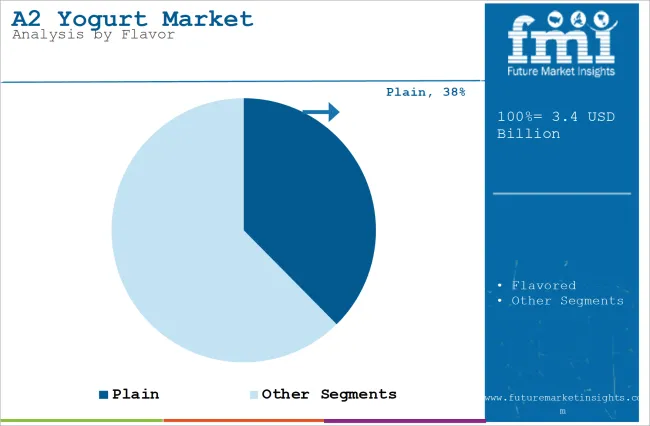
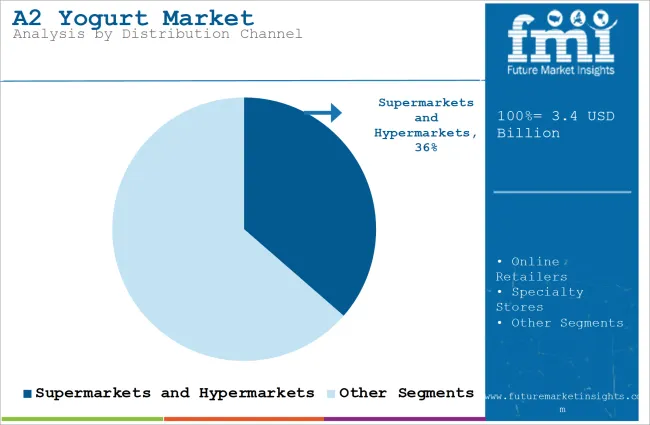
As per FMI, plain flavour holds 37.6% share because health-conscious consumers purchasing A2 yogurt for digestive reasons prefer unsweetened, unflavoured formats that serve as cooking ingredients and meal accompaniments. Supermarkets and hypermarkets command 36.4% of distribution share as A2 yogurt achieves permanent shelf placement in the dairy aisle of mainstream grocery retail formats. The category benefits from established A2 milk brand equity, with consumers who already purchase A2 milk extending their A2 dairy purchasing into yogurt products.
Summary of A2 Yogurt Market
- A2 Yogurt Market Definition
- A2 yogurt is a dairy yogurt product manufactured exclusively from milk containing the A2 type of beta-casein protein, sourced from cows genetically tested to produce only A2 beta-casein rather than the A1 variant. The product is positioned as a digestive-friendly dairy option for consumers who experience discomfort with conventional dairy products containing A1 beta-casein protein.
- Demand Drivers in the Market
- Dairy sensitivity consumer retention: A2 yogurt captures consumers who experience digestive discomfort with conventional dairy but prefer dairy nutrition over plant-based alternatives. FMI analysts note that A2 yogurt retains dairy sector revenue that would otherwise migrate to plant-based yogurt categories, making it a defensive product strategy for dairy companies facing plant-based competition.
- A2 milk brand equity extension: Based on FMI's report, consumers who already purchase A2 milk for digestive comfort extend their purchasing into A2 yogurt as a natural category adjacency. The established A2 brand awareness and consumer trust built through liquid milk sales reduce the marketing investment required to launch A2 yogurt products.
- Premium dairy positioning: As per FMI, A2 yogurt commands a 30% to 50% price premium over conventional yogurt, reflecting both the higher raw material cost of A2-certified milk and the premium health positioning that digestive wellness consumers are willing to pay. This premium pricing supports dairy farmer participation in A2 herd programmes.
- Key Segments Analyzed in the FMI Report
- Plain flavour health positioning: Plain holds 37.6% share in 2026. Health-motivated A2 yogurt purchasers prefer plain, unsweetened formats that serve as versatile cooking ingredients, breakfast accompaniments, and smoothie bases without added sugar that would undermine the health-conscious purchase motivation.
- Supermarket mainstream access: Supermarkets and Hypermarkets commands 36.4% share in 2026. Mainstream grocery distribution normalizes A2 yogurt as a standard dairy aisle option rather than a specialty health product, enabling impulse trial by conventional yogurt shoppers browsing the dairy section.
- Flavoured variant trial conversion: Flavored yogurt captures consumers who enter the A2 category through taste-driven rather than health-driven purchase motivations, broadening the consumer base beyond dairy sensitivity sufferers to include general premium yogurt shoppers.
- Analyst Opinion at FMI
- Nandini Roy Choudhury, Principal Consultant for Food & Beverage analysts observe that the A2 yogurt market benefits from a positioning sweet spot between conventional dairy and plant-based alternatives that captures consumers unwilling to abandon dairy entirely. The category's growth depends on continued consumer education about A2 versus A1 beta-casein differences and on A2 herd development that expands the certified milk supply base. Dairy companies that invest in both A2 genetic testing programmes and consumer awareness marketing will capture the largest share of this premium dairy sub-category.
- Strategic Implications / Executive Takeaways
- Dairy companies should invest in A2 herd genetic testing and certification programmes to secure the A2-certified milk supply required for yogurt production expansion.
- Retail buyers should position A2 yogurt within the main dairy yogurt fixture rather than in specialty health food sections to maximize cross-shopping exposure among conventional yogurt purchasers.
- Marketing teams should develop consumer education campaigns explaining the A2 beta-casein difference in digestive health terms rather than technical genetic terminology to broaden the appeal beyond health-food enthusiasts.
- Methodology
- Primary Research: FMI conducted technical interviews with procurement specialists and operations directors across 40 countries to validate adoption timelines.
- Desk Research: Analysts aggregated public regulatory documentation, industry standards, and corporate disclosure filings.
- Market-Sizing and Forecasting: Forecasting models apply hybrid methodology starting with global production metrics and projecting adoption conversion rates.
- Data Validation and Update Cycle: Segment forecasts undergo cross-validation against quarterly and annual industry production volumes.
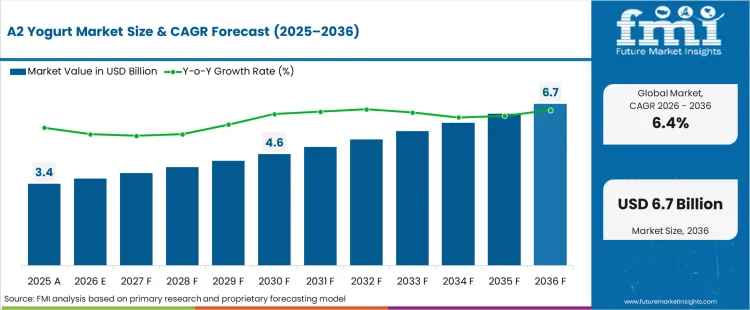
A2 Yogurt Market Key Takeaways
| Metric | Details |
|---|---|
| Industry Size (2026) | USD 3.62 Billion |
| Industry Value (2036) | USD 6.73 Billion |
| CAGR (2026-2036) | 6.4% |
Source: Future Market Insights, 2026
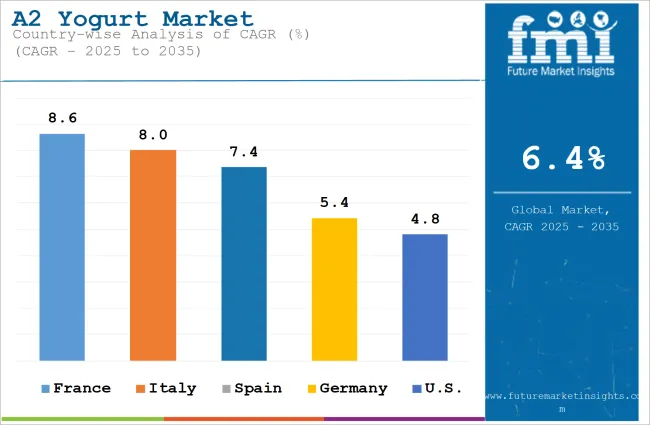
Canada leads with a 7.4% CAGR, driven by the multicultural consumer base with high dairy sensitivity prevalence and the strong organic dairy retail channel. China follows at 6.1% as A2 protein awareness grows in the premium dairy segment and domestic A2 milk producers extend into yogurt product lines. UK registers a 6.0% pace anchored by the established A2 Milk Company brand presence and supermarket private-label A2 yogurt development. USA tracks at 5.9% driven by the growing digestive wellness category and mainstream retail adoption. Germany registers a 4.8% pace reflecting the European premium yogurt market and the health-food retail channel.
A2 Yogurt Market Definition
A2 yogurt is a dairy yogurt product manufactured exclusively from milk containing the A2 type of beta-casein protein, sourced from cows genetically tested to produce only A2 beta-casein rather than the A1 variant. The product is positioned as a digestive-friendly dairy option for consumers who experience discomfort with conventional dairy products containing A1 beta-casein protein.
A2 Yogurt Market Inclusions
Market scope includes plain and flavoured A2 yogurt products distributed through supermarkets, online retail, specialty stores, and food service channels. The report covers global and regional market sizes from 2026 to 2036, segmented by flavour, distribution channel, and geography.
A2 Yogurt Market Exclusions
Conventional dairy yogurt containing A1 beta-casein protein is excluded. A2 milk sold in liquid form without yogurt culturing falls outside scope. Plant-based yogurt alternatives are excluded from the valuation.
A2 Yogurt Market Research Methodology
- Primary Research: Analysts engaged with procurement specialists, production managers, and supply chain directors to map purchasing cycles and supplier qualification requirements.
- Desk Research: Data collection aggregated regulatory filings, industry standards, trade association publications, and public company disclosures.
- Market-Sizing and Forecasting: Baseline values derive from hybrid top-down and bottom-up methodology, applying region-specific adoption curves through 2036.
- Data Validation and Update Cycle: Projections tested against publicly reported production volumes, trade data, and industry benchmarks with annual recalibration.
A2 Yogurt Industry Analysis by Top Investment Segments
Plain A2 Yogurt hold highest share in global market
| Segment | Plain (By Flavor) |
|---|---|
| Value Share (2026) | 37.6% |
The simple portion of the A2 yogurt market is fast gaining ground from the health benefits and uses it promotes. Made using A2 milk, plain yogurt has got no artificial colors, flavors, and additives that are often found in flavored varieties. This kind of segment is at its best in the food service industry, improving flavor and texture into different dishes.
Health-enthusiasts buy plain A2 yogurt because it's high in protein and, since there's no added sugar, it helps in better digestion. This has been supported by the raising awareness of A2 milk nutritional advantages. The growing trend for clean-label products corresponds with the increasing consumer desire to know about transparency in food sourcing and production.
Routine product innovations such as introducing high-protein variants and fortified product lines will soon pave the way toward market growth. The plain A2 yogurt segment is a large segment of the market globally and is expected to grow at a good CAGR as the consumer continues to look for natural and nutrients-rich food alternatives.
Influence of Supermarkets and Hypermarkets on A2 Yogurt demand
| Segment | Supermarkets and Hypermarkets (By Distribution Channel) |
|---|---|
| Value Share (2026) | 36.4% |
Top A2 Yogurt Market Dynamics and Industry Trends
Navigating the A2 Dairy Production Landscape: Opportunities and Challenges for Processors
In many ways, A2/A2 dairy production is receiving increasing interest because of consumer demand for health benefits, providing both opportunities and challenges for dairy processors. A2 milk is thought to provide benefits such as less digestive discomfort for some individuals because it contains only A2 beta-casein protein.
There are differences in the way structure influences A1 and A2 protein's effect on casein micelle stability, which creates challenges in processing that include problems with acid gelation and heat stability.
In light of the increasing demand for A2-dairy products, processors must modify their procedures to overcome these hurdles. It is of utmost importance to investigate the behavior of A2-milk during various processing conditions. Processing methods can be adapted and also the possibility of the addition of other ingredients with a view to high quality A2-dairy products.
However, modification could demand more precision in control and could increase production costs. Nevertheless, the rapidly growing A2 dairy product market presents unique opportunities. Companies that successfully negotiate a path around challenges can place themselves in a favorable position for this expanding segment, as consumers increasingly want their dairy minimally processed and health-friendly.
Ultimately, consistent high-quality A2-dairy product production depends on how effectively companies can blend these observations into dairy processing.
Increased Consumption and Production of A2 Milk: Fueling the Growth of the A2 Yogurt Market
With strong consumption and production growth for A2 milk, already popular with health-conscious consumers, its market for A2 yogurt is likely to double. The increased awareness of the health benefits of A2 milk has propelled the balanced manufacturers to focus on A2/A2 milk production for the comfort of the consumers. This shift in focus is mainly because A2 milk reduces digestive discomfort pertaining to regular A1 milk, and hence, it is juicy for those who are sensitive.
The successful commercialization of A2 milk began in New Zealand with the establishment of The A2 Milk Company in 2003. The company's fame has since spread rapidly across continents, with A2 milk capturing nearly 10% of the Australian milk market in the span of less than a decade, showing that the product is quite popular with consumers.
This trend has also made its way to North America and Europe, where the dairy farmers are increasingly adopting A2 genetics to cater to consumer demand. The production of A2 milk requires particular attention to avoid contamination with A1 protein, thus necessitating separate facilities for processing.
With all the troubles surrounding A2 production, the economics of A2 production are sound, judging by the premium consumers are willing to pay for certain shadowy and vague health benefits. The increased consumption and production of A2 milk are therefore likely to provide major fillups to market the expected growth of A2 yogurt in the years ahead.
Harnessing Opportunities in Emerging Markets: The Growth Potential of A2 Yogurt
A2 yogurt stands to benefit from increased disposable income and rising health consciousness in emerging markets. In nations such as India, where milk has belonged to the food basket for centuries, A2 milk and its products are becoming more widely acknowledged. Health-conscious consumers are now looking for nutritious dairy staples of sorts in accordance with their dietary preferences.
India, while having a big population and a rich heritage in dairy, is beginning to sway toward A2 milk production. India, the world leader in milk production, produces approximately 176.3 million tonnes of milk a year, according to the esteemed National Academy of Agricultural Sciences. Given the increasing awareness regarding the probable benefits of A2 milk, many farmer groups are coping with the growing demand for A2 yogurt and live A2 cattle.
This change is being further reinforced by the growing supply of A2 dairy products in urban areas, where the consumer will pay a premium for perceived health benefits. Developing countries endorse natural and organic food. Consumers increasingly prefer products without the addition of preservatives. This surging demand for a healthier dairy option puts A2 yogurt on a good pedestal and will most likely see healthy growth in emerging markets from 2025 to 2035.
Comparison of Historical vs Future Outlook on Changing Consumer Trends for A2 Yogurt Industry
2021 to 2025 Global A2 Yogurt Sales Analysis
From 2021 to 2025, the market for A2 yogurt has grown at immense rates, significantly due to the rise in health consciousness among consumers. The demand for dairy products perceived to be healthier alternatives soared, with A2 yogurt being ingested for its digestibility and nutritional benefits.
In the years that followed, companies such as The A2 Milk Company and Nestlé took advantage of the rise, creating more products and raising anti-A2 industry awareness through targeted marketing campaigns. Respondents to the COVID-19 pandemic heightened the urgency for consumers seeking immune-boosting food, further boosting sales during that timeframe.
Demand Forecasts for 2026 to 2036
The A2 yogurt industry analysis indicates that the market is set to provide a new push with the fed advancements in dairy processing technologies and increased impacts on personalized nutrition during the years 2026 to 2036. Innovations in product formulation will prove more appealing to A2 yogurt, bringing it closer to being a mainstay of health-conscious diets. Moreover, the growing disposable income in upcoming economies enables the consumer to go for premium dairy products.
Directly therefore, Amul and Lactalis are expected to continue expanding their presence in these markets for functional foods among the lucrative crowd. These are among the many factors that determine the significant increment of the A2 yogurt market over the last decade
Key A2 Yogurt Market Players and Concentration
Mostly, market share leadership in A2 yogurt sector goes by Tier 1 companies such as The A2 Milk Company, Danone, and Nestlé. On the other hand, The A2 Milk Company has invested heavily, including buying a 75% stake in Mataura Valley Milk, which has come to complement its income through better-endowed nutritional products.
Tier 2 companies, such as Lactalis and Arla Foods, concentrate on particular regions and specialized products, working together to develop appealing offerings. As an example, Lactalis collaborates with local dairies to deliver distinctive A2 yogurt lines targeted at health-minded consumers.
Tier 3 companies like Highland Farms and Alexandre Family Farm emphasize quality and local demands rather than sheer volume. By cultivating robust connections within their communities, these businesses promote A2 yogurt brands and shape the competitive environment through partnerships, mergers, and acquisitions.
Country-wise Analysis
The presence of A2 yogurt in supermarkets and hypermarkets significantly contributes to the positive A2 yogurt industry outlook. They contribute the largest revenue share during 2021 with respect to the convenience and number of products sold through this channel.
Supermarkets and hypermarkets maintain controlled temperature shelves for their dairy products, which is essential for perishable items like the A2 yogurt. A consumer is looking for availability as such retail formats have made it more accessible for consumers who seek A2 yogurt for meeting their increasing demand for health-conscious dairy products.
One-stop shopping also allows a consumer to buy A2 yogurt with other necessary items, thus encouraging trial purchases and repeat purchases. These stores further provide competitive pricing strategies, which will make A2 yogurt more eye-catching for price-sensitive consumers.
Besides, the continuous development of online shopping will complement the traditional retailing, as consumers resort more to the comfort of home delivery. The A2 yogurt industry outlook indicates that the expansion of supermarkets and hypermarkets, coupled with the growth of online platforms, is expected to boost the A2 yogurt market significantly in the coming years.
The following table shows the estimated growth rates of the top three territories. China and USA are set to exhibit high consumption, recording CAGRs of 6.1% and 5.9%, respectively, through 2036.
.webp "Top Country Growth Comparison A2 Yogurt Market Cagr (2026 2036)")
| Countries | CAGR |
|---|---|
| USA | 5.9% |
| Canada | 7.4% |
| Germany | 4.8% |
| UK | 6.0% |
| China | 6.1% |
The A2 yogurt industry analysis indicates that the A2 yogurt sector in Australia and New Zealand has been moulded mainly by The A2 Milk Company, which endeavours much into the representations of the A2 protein. Since its establishment, the company has persuaded the farmers to join herd improvement programs that will enable them to select cows that produce milk containing predominantly A2 beta-casein.
The launch of products in New Zealand by A2 Milk was met with fierceness not only from Fonterra but also faced other initial challenges. A2 Milk commenced selling its products in New Zealand in 2003.
Meanwhile, recent years have seen an evident market competition and innovation in A2 yogurt as the most significant players-Danone and Nestlé-broke into the segment by forming strategic alliances and newly launched products. One of the examples is the move where Danone considered improving its portfolio by adding A2 yogurts since they are popularly taken on the basis of loving very digestible dairy products.
This, as far as liquid milk consumption is concerned, has created an event where A2 is leading among the Fresh Liquid Milk category in the Australian market. Continued effort on R&D and the possibility of mergers and acquisitions put the company in an appropriate position to tap the health consciousness popularity of the consumers. The A2 yogurt sector in the area continues to be bright due to better awareness of the A2 products.
Unlocking Opportunities: The Rapid Growth of the A2 Yogurt Market in China
The A2 yogurt industry outlook in China is growing rapidly owing to the increasing demand for dairy products. The growth of the dairy market in the country is predicted to be enormous, as evidenced by projections indicating that the overall market will grow by about 10%, while the milk formula markets are expected to grow an impressive 25% from over the period of 2021 to 2025.
Rising affluence, evolving consumers' tastes, and enhanced marketing channels have been responsible for this increased access. Even as domestic demand continues to outpace supply, international exporters import New Zealand, Australia, Europe, and the United States in order to fill the gap. According to the New Zealand dairy market research, Chinese dairy companies are currently investing abroad to secure resources "crucial" to their offering, including powdered milk and cheese.
Raising awareness of the health benefits associated with A2 protein is another reason for the consumption of A2 yogurt in China. As more people become aware of the benefits of health consciousness and easier digestion, so too is their demand for A2 yogurt likely to increase. This bright market landscape and changing consumer inclination mean that A2 yogurt in China is positioned for significant growth and opportunities for local and international players.
Growth Prospects for the A2 Yogurt Market in Europe
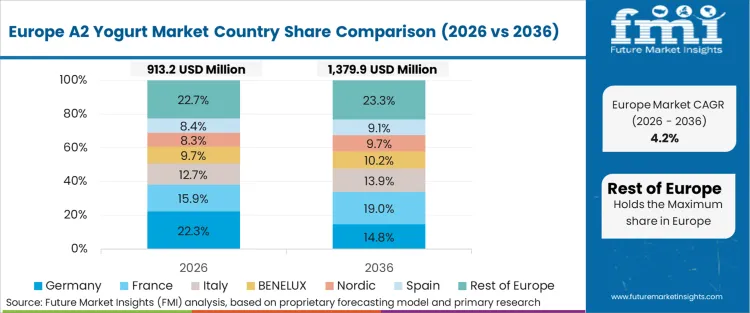
This market is highly suitable for growth because of a highly developed dairy industry, coupled with increase in consumer knowledge of health benefits. The increasing demand for A2 milk is coming from countries like Germany, the UK, and France, especially in bakery and confectionery products. Another reason for the increasing popularity of A2 yogurt would be the fact that Europeans suffer from lactose-intolerance so much that many of them have learned to seek alternatives which would be easier to digest.
Continuous research and development with innovations in the dairy sector introduce more products into the market. Danone and Nestlé, for instance, invest significantly in launching A2 Yogurts targeted at health-conscious consumers. The A2 yogurt industry analysis is also well-defined in terms of diversity in distribution preferred to supermarkets along with the upcoming online platforms to catch the attention of potential clients.
This trend seems to be maturing, as people will have more focus on the quality of ingredients and nutrition. This makes the future bright for the European A2 yogurt industry for several years to come, really booming as health-conscious minded consumers are turning increasingly towards products that comply with their dietary needs.
Leading Suppliers of A2 Yogurt
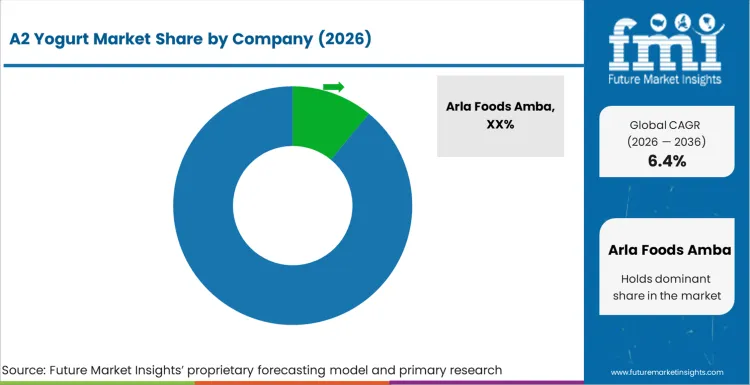
The competition scenario in the A2 yogurt industry oulook is significantly inflating with well-established and emerging brands. Danone, Nestlé, and Chobini are a few of the major companies where their strong competitive strategies include the widest distribution networks, brand recognition, and large market coverage in leading innovative A2 yogurt offerings.
These companies engage in continuing product launches and strategic partnerships to boost their A2 yogurt offers. A good example is Danone, which has added innovative A2 yogurt products for health-conscious consumers.
On the other hand, Arla Foods and Lactalis have taken a big leap in regional markets and niche product categories. Their collaboration with local dairy farmers secures high-quality A2 milk, which ensures constant product quality. Smaller players such as Highland Farms and Alexandre Family Farm also add into the market by addressing local tastes and emphasizing on sustainability. In short, members of such companies are mergers, acquisitions, or strategic alliances that shape up a competitive environment healthy for innovative growth in A2 yogurt.
For instance
- Health and Wellness Focus: Growing product demands for the digestive health effect without any artificial ingredients has made it further advanced into customers' minds. The expansive A2 yogurt lines by companies like Chobani and Danone further demonstrate their focus in marketing natural ingredients and probiotic utility to health-minded audiences.
- Regional Market Growth: Significant growth within the regions for the A2 yogurt segment is being recorded, including emerging portions of Asia and North America. Nestlé and Lactalis are investing in marketing efforts to educate consumers about the benefits of A2 milk, tapping into the rising trend of lactose intolerance awareness.
Leading A2 Yogurt Producers by Market Share
- Arla Foods Amba
- Britannia industries limited
- Chobani, Llc
- Danone
- General Mills, Inc.
- Gujarat Cooperative Milk Marketing Federation (Amul)
- Lactalis Corporation
- Nestle S.A.
- Saputo Inc
- Schreiber Foods Inc.
- Highland Farms
- Alexandre Family Farm
- Miller’s Bio Farm
- Others
Scope of the Report
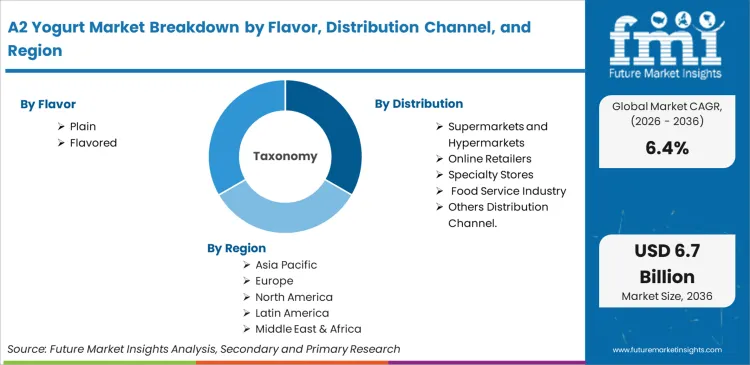
| Metric | Value |
|---|---|
| Quantitative Units | USD 3.62 Billion to USD 6.73 Billion, at a CAGR of 6.4% |
| Market Definition | A2 yogurt is a dairy yogurt product manufactured exclusively from milk containing the A2 type of beta-casein protein, sourced from cows genetically tested to produce only A2 beta-casein rather than the A1 variant. The product is positioned as a digestive-friendly dairy option for consumers who experience discomfort with conventional dairy products containing A1 beta-casein protein. |
| Flavor Segmentation | Plain, Flavored |
| Distribution Channel Segmentation | Supermarkets and Hypermarkets, Online Retailers, Specialty Stores, Food Service Industry, Others |
| Regions Covered | North America, Latin America, Europe, East Asia, South Asia, Oceania, Middle East & Africa |
| Countries Covered | Canada, China, UK, USA, Germany, and 40 plus countries |
| Key Companies Profiled | Arla Foods Amba, Britannia Industries Limited, Chobani LLC, Danone, General Mills Inc., Gujarat Cooperative Milk Marketing Federation (Amul), Lactalis Corporation, Nestle S.A., Saputo Inc, Schreiber Foods Inc., Highland Farms, Alexandre Family Farm, Miller's Bio Farm |
| Forecast Period | 2026 to 2036 |
| Approach | Hybrid top-down and bottom-up modelling anchored by primary interviews and public data benchmarking |
Top Segments Studied in the A2 Yogurt Market Report
By Product Type:
As per product type, the industry has been categorized into Greek Yogurt, Yogurt Drinks and Frozen Yogurt.
By Flavor:
As per Flavor, the industry has been categorized into Plain and Flavored.
By Distribution Channel:
This segment is further categorized into Supermarkets and Hypermarkets, Online Retailers, Specialty Stores, Food Service Industry and Others Distribution Channel.
By Source Type:
As per Source Type, the industry has been categorized into Conventional and Organic.
By Region:
Industry analysis has been carried out in key countries of North America, Latin America, Europe, East Asia, South Asia, Oceania, and the Middle East & Africa.
Bibliography
- European Food Safety Authority. (2024). Scientific Opinion on A1 and A2 Beta-Casein Milk Proteins: Health Effects Review. EFSA Journal.
- Food Standards Australia New Zealand. (2024). A2 Protein Milk and Dairy Products: Regulatory Classification. FSANZ.
- International Dairy Federation. (2024). World Dairy Situation Report 2024. IDF.
- Codex Alimentarius Commission. (2024). Standard for Fermented Milks (CODEX STAN 243-2003, revised). FAO/WHO.
- United States Department of Agriculture. (2024). Economic Research Service: Specialty Dairy Product Market Trends. USDA ERS.
This bibliography is provided for reader reference. The full FMI report contains the complete reference list with primary research documentation.
Frequently Asked Questions
How large is the demand for A2 Yogurt in the global market in 2026?
Demand for A2 Yogurt in the global market is estimated to be valued at USD 3.62 Billion in 2026.
What will be the market size of A2 Yogurt in the global market by 2036?
Market size for A2 Yogurt is projected to reach USD 6.73 Billion by 2036.
What is the expected demand growth for A2 Yogurt in the global market between 2026 and 2036?
Demand for A2 Yogurt is expected to grow at a CAGR of 6.4% between 2026 and 2036.
Which Flavor is poised to lead global sales by 2026?
Plain accounts for 37.6% share in 2026.
How significant is the role of Supermarkets and Hypermarkets in Distribution Channel?
Supermarkets and Hypermarkets commands 36.4% of the distribution channel segment in 2026.
What is the growth outlook for Canada?
Canada is projected to grow at a CAGR of 7.4% during 2026 to 2036.
What is the growth rate for China in this market?
China is projected to expand at a CAGR of 6.1% during 2026 to 2036.
What is A2 Yogurt and what is it mainly used for?
A2 yogurt is a dairy yogurt product manufactured exclusively from milk containing the A2 type of beta-casein protein, sourced from cows genetically tested to produce only A2 beta-casein rather than the A1 variant. The product is positioned as a digestive-friendly dairy option for consumers who experience discomfort with conventional dairy products containing A1 beta-casein protein.
What is included in the scope of this A2 Yogurt report?
Market scope includes plain and flavoured A2 yogurt products distributed through supermarkets, online retail, specialty stores, and food service channels. The report covers global and regional market sizes from 2026 to 2036, segmented by flavour, distribution channel, and geography.
What is excluded from the scope of this report?
Conventional dairy yogurt containing A1 beta-casein protein is excluded. A2 milk sold in liquid form without yogurt culturing falls outside scope.
What does market forecast mean on this page?
The market forecast represents a model-based projection built on defined industry and supply chain assumptions for strategic planning purposes.
How does FMI build and validate the A2 Yogurt forecast?
Forecasting models apply a hybrid top-down and bottom-up methodology and cross-validate projections against publicly available industry data and primary research inputs.
What does zero reliance on speculative third-party market research mean here?
Primary interviews, verified public regulatory documentation, and official industry standards registries are used instead of unverified syndicated estimates.
Preview the report firsthand - request a free sample
Get SampleGet the brochure for pricing and purchase details.
Get PDFTable of Content
- Executive Summary
- Global Market Outlook
- Demand-side Trends
- Supply-side Trends
- Technology Roadmap Analysis
- Analysis and Recommendations
- Market Overview
- Market Coverage / Taxonomy
- Market Definition / Scope / Limitations
- Research Methodology
- Chapter Orientation
- Analytical Lens and Working Hypotheses
- Market Structure, Signals, and Trend Drivers
- Benchmarking and Cross-market Comparability
- Market Sizing, Forecasting, and Opportunity Mapping
- Research Design and Evidence Framework
- Desk Research Programme (Secondary Evidence)
- Company Annual and Sustainability Reports
- Peer-reviewed Journals and Academic Literature
- Corporate Websites, Product Literature, and Technical Notes
- Earnings Decks and Investor Briefings
- Statutory Filings and Regulatory Disclosures
- Technical White Papers and Standards Notes
- Trade Journals, Industry Magazines, and Analyst Briefs
- Conference Proceedings, Webinars, and Seminar Materials
- Government Statistics Portals and Public Data Releases
- Press Releases and Reputable Media Coverage
- Specialist Newsletters and Curated Briefings
- Sector Databases and Reference Repositories
- FMI Internal Proprietary Databases and Historical Market Datasets
- Subscription Datasets and Paid Sources
- Social Channels, Communities, and Digital Listening Inputs
- Additional Desk Sources
- Expert Input and Fieldwork (Primary Evidence)
- Primary Modes
- Qualitative Interviews and Expert Elicitation
- Quantitative Surveys and Structured Data Capture
- Blended Approach
- Why Primary Evidence is Used
- Field Techniques
- Interviews
- Surveys
- Focus Groups
- Observational and In-context Research
- Social and Community Interactions
- Stakeholder Universe Engaged
- C-suite Leaders
- Board Members
- Presidents and Vice Presidents
- R&D and Innovation Heads
- Technical Specialists
- Domain Subject-matter Experts
- Scientists
- Physicians and Other Healthcare Professionals
- Governance, Ethics, and Data Stewardship
- Research Ethics
- Data Integrity and Handling
- Primary Modes
- Tooling, Models, and Reference Databases
- Desk Research Programme (Secondary Evidence)
- Data Engineering and Model Build
- Data Acquisition and Ingestion
- Cleaning, Normalisation, and Verification
- Synthesis, Triangulation, and Analysis
- Quality Assurance and Audit Trail
- Market Background
- Market Dynamics
- Drivers
- Restraints
- Opportunity
- Trends
- Scenario Forecast
- Demand in Optimistic Scenario
- Demand in Likely Scenario
- Demand in Conservative Scenario
- Opportunity Map Analysis
- Product Life Cycle Analysis
- Supply Chain Analysis
- Investment Feasibility Matrix
- Value Chain Analysis
- PESTLE and Porter’s Analysis
- Regulatory Landscape
- Regional Parent Market Outlook
- Production and Consumption Statistics
- Import and Export Statistics
- Market Dynamics
- Global Market Analysis 2021 to 2025 and Forecast, 2026 to 2036
- Historical Market Size Value (USD Million) Analysis, 2021 to 2025
- Current and Future Market Size Value (USD Million) Projections, 2026 to 2036
- Y-o-Y Growth Trend Analysis
- Absolute $ Opportunity Analysis
- Global Market Pricing Analysis 2021 to 2025 and Forecast 2026 to 2036
- Global Market Analysis 2021 to 2025 and Forecast 2026 to 2036, By Flavor
- Introduction / Key Findings
- Historical Market Size Value (USD Million) Analysis By Flavor , 2021 to 2025
- Current and Future Market Size Value (USD Million) Analysis and Forecast By Flavor , 2026 to 2036
- Plain
- Flavored
- Plain
- Y-o-Y Growth Trend Analysis By Flavor , 2021 to 2025
- Absolute $ Opportunity Analysis By Flavor , 2026 to 2036
- Global Market Analysis 2021 to 2025 and Forecast 2026 to 2036, By Distribution Channel
- Introduction / Key Findings
- Historical Market Size Value (USD Million) Analysis By Distribution Channel, 2021 to 2025
- Current and Future Market Size Value (USD Million) Analysis and Forecast By Distribution Channel, 2026 to 2036
- Supermarkets and Hypermarkets
- Online Retailers
- Specialty Stores
- Food Service Industry
- Others Distribution Channel.
- Supermarkets and Hypermarkets
- Y-o-Y Growth Trend Analysis By Distribution Channel, 2021 to 2025
- Absolute $ Opportunity Analysis By Distribution Channel, 2026 to 2036
- Global Market Analysis 2021 to 2025 and Forecast 2026 to 2036, By Region
- Introduction
- Historical Market Size Value (USD Million) Analysis By Region, 2021 to 2025
- Current Market Size Value (USD Million) Analysis and Forecast By Region, 2026 to 2036
- North America
- Latin America
- Western Europe
- Eastern Europe
- East Asia
- South Asia and Pacific
- Middle East & Africa
- Market Attractiveness Analysis By Region
- North America Market Analysis 2021 to 2025 and Forecast 2026 to 2036, By Country
- Historical Market Size Value (USD Million) Trend Analysis By Market Taxonomy, 2021 to 2025
- Market Size Value (USD Million) Forecast By Market Taxonomy, 2026 to 2036
- By Country
- USA
- Canada
- Mexico
- By Flavor
- By Distribution Channel
- By Country
- Market Attractiveness Analysis
- By Country
- By Flavor
- By Distribution Channel
- Key Takeaways
- Latin America Market Analysis 2021 to 2025 and Forecast 2026 to 2036, By Country
- Historical Market Size Value (USD Million) Trend Analysis By Market Taxonomy, 2021 to 2025
- Market Size Value (USD Million) Forecast By Market Taxonomy, 2026 to 2036
- By Country
- Brazil
- Chile
- Rest of Latin America
- By Flavor
- By Distribution Channel
- By Country
- Market Attractiveness Analysis
- By Country
- By Flavor
- By Distribution Channel
- Key Takeaways
- Western Europe Market Analysis 2021 to 2025 and Forecast 2026 to 2036, By Country
- Historical Market Size Value (USD Million) Trend Analysis By Market Taxonomy, 2021 to 2025
- Market Size Value (USD Million) Forecast By Market Taxonomy, 2026 to 2036
- By Country
- Germany
- UK
- Italy
- Spain
- France
- Nordic
- BENELUX
- Rest of Western Europe
- By Flavor
- By Distribution Channel
- By Country
- Market Attractiveness Analysis
- By Country
- By Flavor
- By Distribution Channel
- Key Takeaways
- Eastern Europe Market Analysis 2021 to 2025 and Forecast 2026 to 2036, By Country
- Historical Market Size Value (USD Million) Trend Analysis By Market Taxonomy, 2021 to 2025
- Market Size Value (USD Million) Forecast By Market Taxonomy, 2026 to 2036
- By Country
- Russia
- Poland
- Hungary
- Balkan & Baltic
- Rest of Eastern Europe
- By Flavor
- By Distribution Channel
- By Country
- Market Attractiveness Analysis
- By Country
- By Flavor
- By Distribution Channel
- Key Takeaways
- East Asia Market Analysis 2021 to 2025 and Forecast 2026 to 2036, By Country
- Historical Market Size Value (USD Million) Trend Analysis By Market Taxonomy, 2021 to 2025
- Market Size Value (USD Million) Forecast By Market Taxonomy, 2026 to 2036
- By Country
- China
- Japan
- South Korea
- By Flavor
- By Distribution Channel
- By Country
- Market Attractiveness Analysis
- By Country
- By Flavor
- By Distribution Channel
- Key Takeaways
- South Asia and Pacific Market Analysis 2021 to 2025 and Forecast 2026 to 2036, By Country
- Historical Market Size Value (USD Million) Trend Analysis By Market Taxonomy, 2021 to 2025
- Market Size Value (USD Million) Forecast By Market Taxonomy, 2026 to 2036
- By Country
- India
- ASEAN
- Australia & New Zealand
- Rest of South Asia and Pacific
- By Flavor
- By Distribution Channel
- By Country
- Market Attractiveness Analysis
- By Country
- By Flavor
- By Distribution Channel
- Key Takeaways
- Middle East & Africa Market Analysis 2021 to 2025 and Forecast 2026 to 2036, By Country
- Historical Market Size Value (USD Million) Trend Analysis By Market Taxonomy, 2021 to 2025
- Market Size Value (USD Million) Forecast By Market Taxonomy, 2026 to 2036
- By Country
- Kingdom of Saudi Arabia
- Other GCC Countries
- Turkiye
- South Africa
- Other African Union
- Rest of Middle East & Africa
- By Flavor
- By Distribution Channel
- By Country
- Market Attractiveness Analysis
- By Country
- By Flavor
- By Distribution Channel
- Key Takeaways
- Key Countries Market Analysis
- USA
- Pricing Analysis
- Market Share Analysis, 2025
- By Flavor
- By Distribution Channel
- Canada
- Pricing Analysis
- Market Share Analysis, 2025
- By Flavor
- By Distribution Channel
- Mexico
- Pricing Analysis
- Market Share Analysis, 2025
- By Flavor
- By Distribution Channel
- Brazil
- Pricing Analysis
- Market Share Analysis, 2025
- By Flavor
- By Distribution Channel
- Chile
- Pricing Analysis
- Market Share Analysis, 2025
- By Flavor
- By Distribution Channel
- Germany
- Pricing Analysis
- Market Share Analysis, 2025
- By Flavor
- By Distribution Channel
- UK
- Pricing Analysis
- Market Share Analysis, 2025
- By Flavor
- By Distribution Channel
- Italy
- Pricing Analysis
- Market Share Analysis, 2025
- By Flavor
- By Distribution Channel
- Spain
- Pricing Analysis
- Market Share Analysis, 2025
- By Flavor
- By Distribution Channel
- France
- Pricing Analysis
- Market Share Analysis, 2025
- By Flavor
- By Distribution Channel
- India
- Pricing Analysis
- Market Share Analysis, 2025
- By Flavor
- By Distribution Channel
- ASEAN
- Pricing Analysis
- Market Share Analysis, 2025
- By Flavor
- By Distribution Channel
- Australia & New Zealand
- Pricing Analysis
- Market Share Analysis, 2025
- By Flavor
- By Distribution Channel
- China
- Pricing Analysis
- Market Share Analysis, 2025
- By Flavor
- By Distribution Channel
- Japan
- Pricing Analysis
- Market Share Analysis, 2025
- By Flavor
- By Distribution Channel
- South Korea
- Pricing Analysis
- Market Share Analysis, 2025
- By Flavor
- By Distribution Channel
- Russia
- Pricing Analysis
- Market Share Analysis, 2025
- By Flavor
- By Distribution Channel
- Poland
- Pricing Analysis
- Market Share Analysis, 2025
- By Flavor
- By Distribution Channel
- Hungary
- Pricing Analysis
- Market Share Analysis, 2025
- By Flavor
- By Distribution Channel
- Kingdom of Saudi Arabia
- Pricing Analysis
- Market Share Analysis, 2025
- By Flavor
- By Distribution Channel
- Turkiye
- Pricing Analysis
- Market Share Analysis, 2025
- By Flavor
- By Distribution Channel
- South Africa
- Pricing Analysis
- Market Share Analysis, 2025
- By Flavor
- By Distribution Channel
- USA
- Market Structure Analysis
- Competition Dashboard
- Competition Benchmarking
- Market Share Analysis of Top Players
- By Regional
- By Flavor
- By Distribution Channel
- Competition Analysis
- Competition Deep Dive
- Arla Foods Amba
- Overview
- Product Portfolio
- Profitability by Market Segments (Product/Age /Sales Channel/Region)
- Sales Footprint
- Strategy Overview
- Marketing Strategy
- Product Strategy
- Channel Strategy
- Britannia industries limited
- Chobani, Llc
- Danone
- General Mills, Inc.
- Gujarat Cooperative Milk Marketing Federation (Amul)
- Lactalis Corporation
- Nestle S.A.
- Saputo Inc
- Schreiber Foods Inc.
- Highland Farms
- Alexandre Family Farm
- Miller’s Bio Farm
- Others
- Arla Foods Amba
- Competition Deep Dive
- Assumptions & Acronyms Used


