

- Industry Size (2025)
- USD 4154.6 Mn
- Forecast (2035)
- USD 6209.3 Mn
- CAGR (2025 to 2035)
- 4.1%
Automotive Tape Market Outlook from 2025 to 2035
The Automotive Tape Market is estimated to be valued at USD 4154.6 million in 2025 and is projected to reach USD 6209.3 million by 2035, registering a compound annual growth rate (CAGR) of 4.1% over the forecast period.
Quick Stats for Automotive Tape Market
- Automotive Tape Market Industry Value (2025): USD 4154.6 million
- Automotive Tape Market Forecast Value (2035): USD 6209.3 million
- Automotive Tape Market Forecast CAGR: 4.1%
- Leading Segment in Automotive Tape Market in 2025: Wire Harnessing Tapes (27.9%)
- Key Growth Region in Automotive Tape Market: North America, Asia-Pacific, Europe
- Top Key Players in Automotive Tape Market: 3M Company, Shurtape Technologies LLC, TESA SE, Saint-Gobain Tape Solutions, Nitto Denko Corporation, PPM Industries SPA, Intertape Polymer Group Inc., Berry Global Inc., Folsen Tapes, Fabo SPA, PPI Adhesive Products Ltd., Avery Dennison Corp., Scapa Industrial, H.B. Fuller Company
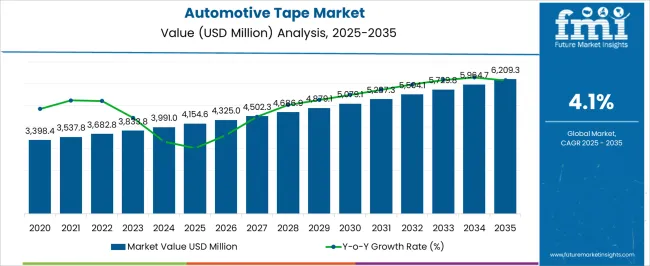
| Metric | Value |
|---|---|
| Automotive Tape Market Estimated Value in (2025 E) | USD 4154.6 million |
| Automotive Tape Market Forecast Value in (2035 F) | USD 6209.3 million |
| Forecast CAGR (2025 to 2035) | 4.1% |
Rationale for Segmental Growth in the Automotive Tape Market
The automotive tape market is experiencing consistent growth, driven by the rising complexity of vehicle manufacturing, demand for lightweight materials, and the transition toward electric vehicles. Automotive tapes provide multifunctional benefits including insulation, bonding, vibration damping, and weight reduction, which are critical in modern vehicle design.
Regulatory emphasis on fuel efficiency and safety has further accelerated the adoption of specialized tapes that replace traditional fasteners. The current market is supported by robust production in both passenger and commercial vehicles, with manufacturers seeking cost-effective and durable solutions for assembly and component integration.
Growth opportunities are also emerging from the expansion of electric and hybrid vehicles, where tapes play a vital role in battery insulation and cable management. Looking forward, technological advancements in adhesives and eco-friendly materials are expected to further strengthen market adoption across global automotive supply chains.
Segmental Analysis
Insights into the Wire Harnessing Tapes Segment
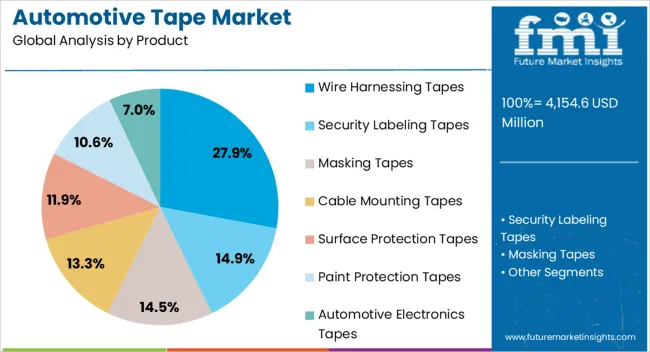
The wire harnessing tapes segment holds approximately 27.9% share in the product category, reflecting its critical role in managing complex vehicle wiring systems. These tapes provide insulation, abrasion resistance, and organizational benefits, ensuring long-term reliability and safety in electrical systems.
The segment benefits from the increasing integration of advanced electronics in vehicles, which has significantly expanded wiring complexity and density. Demand is reinforced by electric vehicle growth, where high-voltage cable management requires specialized harnessing solutions.
With ongoing innovation in heat-resistant and noise-damping materials, the wire harnessing tapes segment is expected to retain its leadership in the forecast period.
Insights into the Polyvinyl Chloride Segment
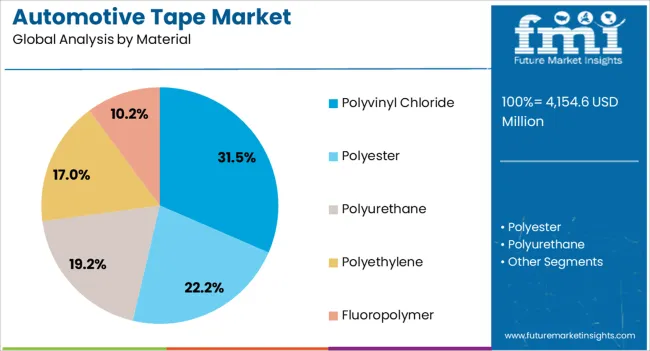
The polyvinyl chloride (PVC) segment dominates the material category with approximately 31.5% share, supported by its flexibility, cost-effectiveness, and proven performance in automotive applications. PVC tapes offer excellent electrical insulation, flame resistance, and durability, making them the preferred material for harnessing, sealing, and surface protection.
Their adaptability across temperature variations and mechanical stress conditions has further reinforced widespread adoption. Continued reliance on PVC in both ICE and EV vehicle platforms ensures consistent demand.
Despite rising interest in eco-friendly alternatives, the PVC segment is expected to maintain its leadership due to its established manufacturing infrastructure and cost advantages.
Insights into the Interior Segment
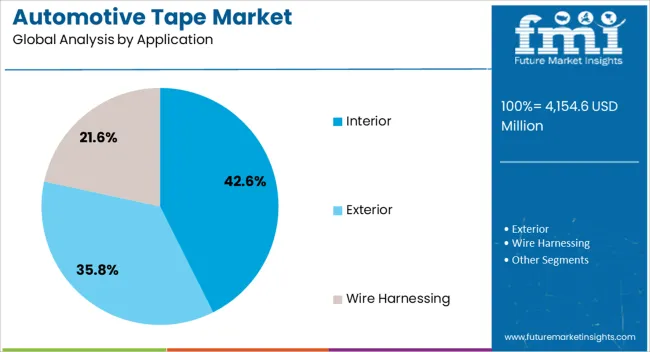
The interior segment leads the application category with approximately 42.6% share, reflecting the growing use of tapes in bonding, noise reduction, and component fastening within vehicle cabins. Automotive interior designs increasingly demand lightweight and durable solutions to support comfort, aesthetics, and acoustic performance.
Tapes have replaced mechanical fasteners in many areas, reducing weight and improving assembly efficiency. The segment also benefits from the demand for premium interiors in passenger vehicles, where advanced adhesive technologies enable customization and enhanced durability.
With continued emphasis on fuel efficiency, EV-friendly design, and consumer comfort, the interior segment is projected to sustain its dominant position in the automotive tape market.
Global Automotive Tape Market Trends
- Rapid transition towards electric and hybrid vehicles
- Development and adoption of eco-friendly tapes
- Widening automotive tape applications due to the integration of advanced technologies in vehicles, including sensors
- Introduction of technologically advanced automotive adhesive tapes, including optically clear adhesive tapes (OCAs), electrically conductive tapes (ECTs), and barrier tapes
- Rise of car customization trend
- Increasing demand for automotive adhesion tapes in electric vehicle battery manufacturing
- Growing importance of reflective tapes for cars
Historical Performance Vs. Automotive Tape Market Future Forecast
Global automotive tape sales recorded a CAGR of 2.1% during the historical period. Total market valuation at the end of 2025 reached around USD 3,845.7 million. Over the assessment period, the global automotive tape industry is set to expand at a 4.1% CAGR.
The future of vehicle manufacturing is security by sustainability and efficiency, and in this context, the adoption of adhesion tapes, among other things, plays a significant role. They are used for several applications in vehicles.
Automotive tapes are expected to witness steady demand during the forecast period. This is due to their usage as an effective and efficient bonding solution in lean assembly procedures in the automotive industry.
Automotive tapes are quicker and simpler to use than conventional fastening techniques like screws, welds, and rivets. They are more successful at bonding modern materials. High adhesive strength and superior material attachment are expected to fuel the demand for automotive tapes in interior applications.
The automotive sector is embracing lightweight and affordable materials more and more. This will likely uplift demand for automotive tapes during the forecast period.
Automotive tapes are used in the automotive industry for a variety of tasks. These include masking, mirror assembly, mounting parts inside, covering holes, and wire harnessing. High usage in these applications will likely fuel sales of automotive tapes through 2035.
Automobile adhesive tapes are anticipated to have a significant future influence on the automotive industry. This is because they can hold and unite a variety of substrates utilized in lightweight vehicles.
In most regions, however, the use of VOC-containing products can hinder market growth due to government regulations on non-recyclable plastics. To comply with these regulations, manufacturers are required to develop environmentally friendly tapes.
Understanding Crucial Drivers/Trends Impacting Global Automotive Tape Market
High Demand for Vehicles
The demand for vehicles is increasing globally, leading to the growing need for automotive tapes for various applications. The application of tapes in the automotive industry is huge as they are being used in bonding, vibration damping, noise reduction, and increasing the vehicle's overall performance.
Tapes were traditionally used in automobile manufacturing for the attachment of emblems and molding. However, they are now also used in batteries and other parts to reduce the vehicle's overall weight and improve fuel efficiency.
The evolution of electric vehicles has further expanded the automotive tape applications. Advancements in automobile manufacturing require specialized adhesive solutions for various components, including sensors, wires, and batteries. The demand for automotive tapes is envisioned to grow at a steady rate, driven by continued innovation and transformation of the automobile industry.
Growing Need for Corrosion-Resistant Tapes to Meet Rigorous Standards
The need for corrosion-resistant tapes is uplifting the demand for specialized tapes in the industry. Corrosion-resistant tapes provide long-term protection, which is an important factor in the automotive manufacturing industry because of exposure to various environmental factors such as moisture, salt, and chemicals.
Anti-corrosive tapes ensure the structural integrity and longevity of automotive components by effectively preventing corrosion and contributing to vehicle safety and reliability. Stringent requirements for corrosion resistance in automobile manufacturing in critical areas such as body panels, chassis, and underbody components will positively impact the market.
Corrosion-resistant tapes are made using special materials and coatings that aid in offering superior protection against rust and degradation in harsh conditions. These tapes are specially engineered to withstand temperature variations and mechanical stresses, which enhances reliability in automotive applications.
Usage of Sustainable and Eco-friendly Tapes
The increased emphasis on environmental sustainability and the adoption of sustainable practices is prompting manufacturers to develop eco-friendly automotive tapes. As a result, companies are using bio-based materials, recyclable tapes, and adhesives with less volatile organic compounds.
Growing eco-consciousness in manufacturers as well as consumers is expected to uplift demand for automotive tapes throughout the forecast period. Similarly, the rising innovation and investment in developing sustainable automotive tapes will benefit the market.
Semi-annual Market Update
| Particular | Value CAGR |
|---|---|
| H1 | 4.2% (2025 to 2035) |
| H2 | 3.7% (2025 to 2035) |
| H1 | 3.9% (2025 to 2035) |
| H2 | 2.6% (2025 to 2035) |
Country-wise Insights
North America, spearheaded by the United States, is anticipated to remain the leading consumer of automotive tapes during the forecast period. This is attributable to the booming automotive sector and the growing adoption of electric & autonomous vehicles. As per the latest analysis, North America’s automotive tape market will likely attain a valuation of USD 1,234.4 million in 2035.
East Asia and South Asia & Pacific are emerging as highly lucrative markets for automotive tape manufacturers. This can be attributed to rising vehicle production and growing demand for automotive masking tapes and other solutions. As per the report, the East Asia automotive tape market will likely expand at 6.2% CAGR, While the South Asia & Pacific automotive tape industry is set to exhibit a CAGR of 7.0% through 2035.
| Countries | Value (CAGR) |
|---|---|
| United States | 2.6% |
| Canada | 3.6% |
| Brazil | 2.8% |
| Mexico | 3.7% |
| Germany | 1.3% |
| France | 2.2% |
| United Kingdom | 1.9% |
| China | 6.2% |
| India | 7.7% |
| Japan | 5.6% |
| GCC countries | 3.7% |
| South Africa | 6.4% |
Germany to Remain Leading Consumer of Automotive Tapes in Western Europe
Despite a sluggish CAGR of 1.3%, Germany is expected to remain the leading consumer of automotive tapes across Europe during the forecast period. By 2035, Germany’s automotive tape market value is set to total USD 199.2 million. It will likely hold 19.8% of the Western Europe automotive tape market share, driven by factors like:
- Increasing production of vehicles
- Growing light-weighting trend in the automotive sector
- Rising electric vehicle boom, which necessitates the use of specialized tapes
- Increasing adoption of masking tapes in the automotive sector
- Development of eco-friendly adhesive tapes for vehicles
Booming Automobile Industry Propelling Automotive Tape Demand in India
India’s automotive tape market size is anticipated to expand from USD 4154.6 million in 2025 to USD 438.0 million by 2035. Over the forecast period, demand for automotive tapes in India will likely rise at 7.7% CAGR, making it a highly lucrative market for automotive tape manufacturers. This is due to factors like:
- Flourishing the automotive industry
- Growing popularity of electric vehicles
- Favorable government support
- Increasing number of automotive manufacturers entering India
- Growing need for specialty tapes for automobiles
Category-wise Insights
The below section shows the security labeling tapes segment dominating the market. It is estimated to account for a value share of 30.1% in 2035. Based on material, the polyester segment is expected to hold a market share of 28.9% in 2035.
Security Labeling Tapes Remain Highly Sought-after Products in the Market
| Product | Value CAGR (2025 to 2035) |
|---|---|
| Security Labeling Tapes | 2.7% |
| Auto Masking Tapes | 3.6% |
As per the latest analysis, security tapes are expected to generate significant revenue in the market. Increased focus on safety, quality control, and compliance with industry standards is driving the demand for security labeling tapes.
The security labeling tapes segment is expected to grow at a 2.7% CAGR during the assessment period, totaling USD 1,721.4 million in 2035. It will likely contribute a revenue share of 30.1% by the end of 2035.
Security labeling tapes are widely used in the automotive industry for different applications, including:
- Component marking
- Theft Prevention
- Quality control and traceability
- Safety and compliance
Security labeling tapes are specially designed to ensure the integrity of automotive parts and components. A high emphasis on quality control and ensuring the components meet the specific standards is essential in automobile manufacturing. For this purpose, manufacturers use security labeling tapes.
Key Players Prefer Polyester for Manufacturing Automotive Tapes
| Material | Value CAGR (2025 to 2035) |
|---|---|
| Polyester | 3.0% |
| Polyethylene | 5.1% |
Several materials are used for making automotive tapes, including polyurethane, fluoropolymer, polyester, and polyurethane. Among these, automotive tape manufacturers prefer polyester owing to its properties like:
- High-strength and durability
- Flexibility
- Temperature and chemical resistance
- Moisture resistance and cost-effectiveness
Polyester can withstand high temperatures and maintain its physical integrity, which makes it suitable for the automotive industry. Polyester tapes offer resistance against solvents and chemicals such as oils, grease, and other automotive fluids, making them ideal for these automotive applications.
Automotive manufacturers are also showing a keen inclination towards using polyester tapes, owing to their several advantages. For instance, they are easy to apply and remove, flexible, and can withstand a wide range of temperatures. This will prompt companies to expand their polyester tape portfolio.
As per the latest report, the polyester segment is poised to exhibit a CAGR of 3.0% during the forecast period. It will likely total USD 1,651.9 million in 2035, holding 28.9% of the automotive tape market share.
Glimpse of Competition Scenario Molding Global Automotive Tape Market
Leading manufacturers of automotive tapes are concentrating on developing innovative products from sustainable and eco-friendly materials. This will not only help them boost sales in the automotive sector but also comply with stringent environmental regulations.
Companies are constantly introducing new tapes with enhanced features like improved strength, chemical resistance, and heat resistance to cater to the diverse needs of different automotive applications. New 3m automotive double-sided tapes are gaining traction.
Several automotive tape manufacturing companies are also using other strategies to expand their presence and boost revenues. These strategies include partnerships, distribution agreements, acquisitions, mergers, collaborations, facility expansions, and alliances.
Recent Developments in the Automotive Tape Market
- In November 2025, Saint-Gobain Tape Solutions launched new tape technologies to enhance automotive assembly. The new products, including the Norbond Z2000 acrylic tapes series, are designed to ensure long-lasting adhesion for automotive exterior bonding on complicated surfaces.
- In January 2025, a new adhesive tape portfolio of low-emission bonding in vehicle interiors was introduced by Lohmann.
- In April 2025, the new tesa L-tape 869x was introduced by Tesa SE. This high-performance adhesive tape is activated by light.
- In June 2025, H.B. Fuller Company completed acquisition of XCHEM International and Adhezion Biomedical as a part of its growth strategy.
- In April 2025, IRPLAST introduced a new generation of high-performance and eco-friendly adhesive tapes made from 50% recycled materials.
Key Players in the Automotive Tape Market
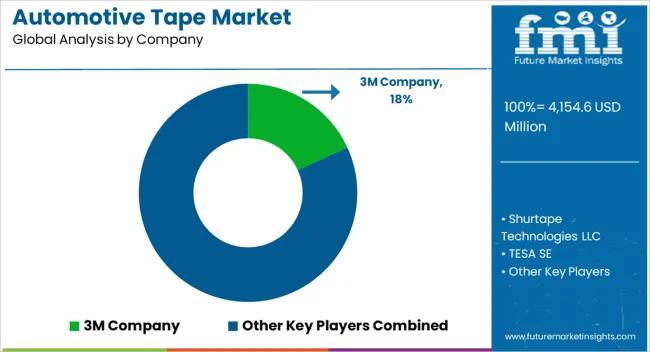
- 3M Company
- Shurtape Technologies LLC
- TESA SE
- Saint-Gobain Tape Solutions
- Nitto Denko Corporation
- PPM Industries SPA
- Intertape Polymer Group Inc.
- Berry Global Inc.
- Folsen Tapes
- Fabo SPA
- PPI Adhesive Products Ltd.
- Avery Dennison Corp.
- Scapa Industrial
- H.B. Fuller Company
- Coroplast Group
- Can-Do National Tape
- Certoplast
- Atlas Tapes S.A
- Kruse Adhesive Tape, Inc.
- NADCO Tapes & Labels, Inc.
Global Automotive Tape Market by Category
By Product:
- Security Labeling Tapes
- Masking Tapes
- Cable Mounting Tapes
- Surface Protection Tapes
- Wire Harnessing Tapes
- Paint Protection Tapes
- Automotive Electronics Tapes
By Material:
- Polyester
- Polyurethane
- Polyvinyl Chloride
- Polyethylene
- Fluoropolymer
By Application:
- Interior
- Exterior
- Wire Harnessing
By Side:
- Double Sided
- Single Sided
By Adhesive:
- Rubber-based Adhesive
- Acrylic-based Adhesives
- Silicon-based Adhesive
- Hot Melt Adhesive
By Region:
- North America
- Latin America
- East Asia
- South Asia & Pacific
- Western Europe
- Eastern Europe
- Central Asia
- Russia & Belarus
- Balkan & Baltic Countries
- Middle East & Africa
Frequently Asked Questions
How big is the automotive tape market in 2025?
The global automotive tape market is estimated to be valued at USD 4,154.6 million in 2025.
What will be the size of automotive tape market in 2035?
The market size for the automotive tape market is projected to reach USD 6,209.3 million by 2035.
How much will be the automotive tape market growth between 2025 and 2035?
The automotive tape market is expected to grow at a 4.1% CAGR between 2025 and 2035.
What are the key product types in the automotive tape market?
The key product types in automotive tape market are wire harnessing tapes, security labeling tapes, masking tapes, cable mounting tapes, surface protection tapes, paint protection tapes and automotive electronics tapes.
Which material segment to contribute significant share in the automotive tape market in 2025?
In terms of material, polyvinyl chloride segment to command 31.5% share in the automotive tape market in 2025.
Preview the report firsthand - request a free sample
Get SampleGet the brochure for pricing and purchase details.
Get PDFTable of Content
- Executive Summary
- Global Market Outlook
- Demand-side Trends
- Supply-side Trends
- Technology Roadmap Analysis
- Analysis and Recommendations
- Market Overview
- Market Coverage / Taxonomy
- Market Definition / Scope / Limitations
- Market Background
- Market Dynamics
- Drivers
- Restraints
- Opportunity
- Trends
- Scenario Forecast
- Demand in Optimistic Scenario
- Demand in Likely Scenario
- Demand in Conservative Scenario
- Opportunity Map Analysis
- Product Life Cycle Analysis
- Supply Chain Analysis
- Investment Feasibility Matrix
- Value Chain Analysis
- PESTLE and Porter’s Analysis
- Regulatory Landscape
- Regional Parent Market Outlook
- Production and Consumption Statistics
- Import and Export Statistics
- Market Dynamics
- Global Market Analysis 2020 to 2024 and Forecast, 2025 to 2035
- Historical Market Size Value (USD Million) Analysis, 2020 to 2024
- Current and Future Market Size Value (USD Million) Projections, 2025 to 2035
- Y-o-Y Growth Trend Analysis
- Absolute $ Opportunity Analysis
- Global Market Pricing Analysis 2020 to 2024 and Forecast 2025 to 2035
- Global Market Analysis 2020 to 2024 and Forecast 2025 to 2035, By Product
- Introduction / Key Findings
- Historical Market Size Value (USD Million) Analysis By Product , 2020 to 2024
- Current and Future Market Size Value (USD Million) Analysis and Forecast By Product , 2025 to 2035
- Wire Harnessing Tapes
- Security Labeling Tapes
- Masking Tapes
- Cable Mounting Tapes
- Surface Protection Tapes
- Paint Protection Tapes
- Automotive Electronics Tapes
- Y-o-Y Growth Trend Analysis By Product , 2020 to 2024
- Absolute $ Opportunity Analysis By Product , 2025 to 2035
- Global Market Analysis 2020 to 2024 and Forecast 2025 to 2035, By Material
- Introduction / Key Findings
- Historical Market Size Value (USD Million) Analysis By Material, 2020 to 2024
- Current and Future Market Size Value (USD Million) Analysis and Forecast By Material, 2025 to 2035
- Polyvinyl Chloride
- Polyester
- Polyurethane
- Polyethylene
- Fluoropolymer
- Y-o-Y Growth Trend Analysis By Material, 2020 to 2024
- Absolute $ Opportunity Analysis By Material, 2025 to 2035
- Global Market Analysis 2020 to 2024 and Forecast 2025 to 2035, By Application
- Introduction / Key Findings
- Historical Market Size Value (USD Million) Analysis By Application, 2020 to 2024
- Current and Future Market Size Value (USD Million) Analysis and Forecast By Application, 2025 to 2035
- Interior
- Exterior
- Wire Harnessing
- Y-o-Y Growth Trend Analysis By Application, 2020 to 2024
- Absolute $ Opportunity Analysis By Application, 2025 to 2035
- Global Market Analysis 2020 to 2024 and Forecast 2025 to 2035, By Side
- Introduction / Key Findings
- Historical Market Size Value (USD Million) Analysis By Side, 2020 to 2024
- Current and Future Market Size Value (USD Million) Analysis and Forecast By Side, 2025 to 2035
- Single Sided
- Double Sided
- Y-o-Y Growth Trend Analysis By Side, 2020 to 2024
- Absolute $ Opportunity Analysis By Side, 2025 to 2035
- Global Market Analysis 2020 to 2024 and Forecast 2025 to 2035, By Adhesive
- Introduction / Key Findings
- Historical Market Size Value (USD Million) Analysis By Adhesive, 2020 to 2024
- Current and Future Market Size Value (USD Million) Analysis and Forecast By Adhesive, 2025 to 2035
- Acrylic-Based Adhesives
- Rubber-Based Adhesive
- Silicon-Based Adhesive
- Hot Melt Adhesive
- Y-o-Y Growth Trend Analysis By Adhesive, 2020 to 2024
- Absolute $ Opportunity Analysis By Adhesive, 2025 to 2035
- Global Market Analysis 2020 to 2024 and Forecast 2025 to 2035, By Region
- Introduction
- Historical Market Size Value (USD Million) Analysis By Region, 2020 to 2024
- Current Market Size Value (USD Million) Analysis and Forecast By Region, 2025 to 2035
- North America
- Latin America
- Western Europe
- Eastern Europe
- East Asia
- South Asia and Pacific
- Middle East & Africa
- Market Attractiveness Analysis By Region
- North America Market Analysis 2020 to 2024 and Forecast 2025 to 2035, By Country
- Historical Market Size Value (USD Million) Trend Analysis By Market Taxonomy, 2020 to 2024
- Market Size Value (USD Million) Forecast By Market Taxonomy, 2025 to 2035
- By Country
- USA
- Canada
- Mexico
- By Product
- By Material
- By Application
- By Side
- By Adhesive
- By Country
- Market Attractiveness Analysis
- By Country
- By Product
- By Material
- By Application
- By Side
- By Adhesive
- Key Takeaways
- Latin America Market Analysis 2020 to 2024 and Forecast 2025 to 2035, By Country
- Historical Market Size Value (USD Million) Trend Analysis By Market Taxonomy, 2020 to 2024
- Market Size Value (USD Million) Forecast By Market Taxonomy, 2025 to 2035
- By Country
- Brazil
- Chile
- Rest of Latin America
- By Product
- By Material
- By Application
- By Side
- By Adhesive
- By Country
- Market Attractiveness Analysis
- By Country
- By Product
- By Material
- By Application
- By Side
- By Adhesive
- Key Takeaways
- Western Europe Market Analysis 2020 to 2024 and Forecast 2025 to 2035, By Country
- Historical Market Size Value (USD Million) Trend Analysis By Market Taxonomy, 2020 to 2024
- Market Size Value (USD Million) Forecast By Market Taxonomy, 2025 to 2035
- By Country
- Germany
- UK
- Italy
- Spain
- France
- Nordic
- BENELUX
- Rest of Western Europe
- By Product
- By Material
- By Application
- By Side
- By Adhesive
- By Country
- Market Attractiveness Analysis
- By Country
- By Product
- By Material
- By Application
- By Side
- By Adhesive
- Key Takeaways
- Eastern Europe Market Analysis 2020 to 2024 and Forecast 2025 to 2035, By Country
- Historical Market Size Value (USD Million) Trend Analysis By Market Taxonomy, 2020 to 2024
- Market Size Value (USD Million) Forecast By Market Taxonomy, 2025 to 2035
- By Country
- Russia
- Poland
- Hungary
- Balkan & Baltic
- Rest of Eastern Europe
- By Product
- By Material
- By Application
- By Side
- By Adhesive
- By Country
- Market Attractiveness Analysis
- By Country
- By Product
- By Material
- By Application
- By Side
- By Adhesive
- Key Takeaways
- East Asia Market Analysis 2020 to 2024 and Forecast 2025 to 2035, By Country
- Historical Market Size Value (USD Million) Trend Analysis By Market Taxonomy, 2020 to 2024
- Market Size Value (USD Million) Forecast By Market Taxonomy, 2025 to 2035
- By Country
- China
- Japan
- South Korea
- By Product
- By Material
- By Application
- By Side
- By Adhesive
- By Country
- Market Attractiveness Analysis
- By Country
- By Product
- By Material
- By Application
- By Side
- By Adhesive
- Key Takeaways
- South Asia and Pacific Market Analysis 2020 to 2024 and Forecast 2025 to 2035, By Country
- Historical Market Size Value (USD Million) Trend Analysis By Market Taxonomy, 2020 to 2024
- Market Size Value (USD Million) Forecast By Market Taxonomy, 2025 to 2035
- By Country
- India
- ASEAN
- Australia & New Zealand
- Rest of South Asia and Pacific
- By Product
- By Material
- By Application
- By Side
- By Adhesive
- By Country
- Market Attractiveness Analysis
- By Country
- By Product
- By Material
- By Application
- By Side
- By Adhesive
- Key Takeaways
- Middle East & Africa Market Analysis 2020 to 2024 and Forecast 2025 to 2035, By Country
- Historical Market Size Value (USD Million) Trend Analysis By Market Taxonomy, 2020 to 2024
- Market Size Value (USD Million) Forecast By Market Taxonomy, 2025 to 2035
- By Country
- Kingdom of Saudi Arabia
- Other GCC Countries
- Turkiye
- South Africa
- Other African Union
- Rest of Middle East & Africa
- By Product
- By Material
- By Application
- By Side
- By Adhesive
- By Country
- Market Attractiveness Analysis
- By Country
- By Product
- By Material
- By Application
- By Side
- By Adhesive
- Key Takeaways
- Key Countries Market Analysis
- USA
- Pricing Analysis
- Market Share Analysis, 2024
- By Product
- By Material
- By Application
- By Side
- By Adhesive
- Canada
- Pricing Analysis
- Market Share Analysis, 2024
- By Product
- By Material
- By Application
- By Side
- By Adhesive
- Mexico
- Pricing Analysis
- Market Share Analysis, 2024
- By Product
- By Material
- By Application
- By Side
- By Adhesive
- Brazil
- Pricing Analysis
- Market Share Analysis, 2024
- By Product
- By Material
- By Application
- By Side
- By Adhesive
- Chile
- Pricing Analysis
- Market Share Analysis, 2024
- By Product
- By Material
- By Application
- By Side
- By Adhesive
- Germany
- Pricing Analysis
- Market Share Analysis, 2024
- By Product
- By Material
- By Application
- By Side
- By Adhesive
- UK
- Pricing Analysis
- Market Share Analysis, 2024
- By Product
- By Material
- By Application
- By Side
- By Adhesive
- Italy
- Pricing Analysis
- Market Share Analysis, 2024
- By Product
- By Material
- By Application
- By Side
- By Adhesive
- Spain
- Pricing Analysis
- Market Share Analysis, 2024
- By Product
- By Material
- By Application
- By Side
- By Adhesive
- France
- Pricing Analysis
- Market Share Analysis, 2024
- By Product
- By Material
- By Application
- By Side
- By Adhesive
- India
- Pricing Analysis
- Market Share Analysis, 2024
- By Product
- By Material
- By Application
- By Side
- By Adhesive
- ASEAN
- Pricing Analysis
- Market Share Analysis, 2024
- By Product
- By Material
- By Application
- By Side
- By Adhesive
- Australia & New Zealand
- Pricing Analysis
- Market Share Analysis, 2024
- By Product
- By Material
- By Application
- By Side
- By Adhesive
- China
- Pricing Analysis
- Market Share Analysis, 2024
- By Product
- By Material
- By Application
- By Side
- By Adhesive
- Japan
- Pricing Analysis
- Market Share Analysis, 2024
- By Product
- By Material
- By Application
- By Side
- By Adhesive
- South Korea
- Pricing Analysis
- Market Share Analysis, 2024
- By Product
- By Material
- By Application
- By Side
- By Adhesive
- Russia
- Pricing Analysis
- Market Share Analysis, 2024
- By Product
- By Material
- By Application
- By Side
- By Adhesive
- Poland
- Pricing Analysis
- Market Share Analysis, 2024
- By Product
- By Material
- By Application
- By Side
- By Adhesive
- Hungary
- Pricing Analysis
- Market Share Analysis, 2024
- By Product
- By Material
- By Application
- By Side
- By Adhesive
- Kingdom of Saudi Arabia
- Pricing Analysis
- Market Share Analysis, 2024
- By Product
- By Material
- By Application
- By Side
- By Adhesive
- Turkiye
- Pricing Analysis
- Market Share Analysis, 2024
- By Product
- By Material
- By Application
- By Side
- By Adhesive
- South Africa
- Pricing Analysis
- Market Share Analysis, 2024
- By Product
- By Material
- By Application
- By Side
- By Adhesive
- USA
- Market Structure Analysis
- Competition Dashboard
- Competition Benchmarking
- Market Share Analysis of Top Players
- By Regional
- By Product
- By Material
- By Application
- By Side
- By Adhesive
- Competition Analysis
- Competition Deep Dive
- 3M Company
- Overview
- Product Portfolio
- Profitability by Market Segments (Product/Age /Sales Channel/Region)
- Sales Footprint
- Strategy Overview
- Marketing Strategy
- Product Strategy
- Channel Strategy
- Shurtape Technologies LLC
- TESA SE
- Saint-Gobain Tape Solutions
- Nitto Denko Corporation
- PPM Industries SPA
- Intertape Polymer Group Inc.
- Berry Global Inc.
- Folsen Tapes
- Fabo SPA
- PPI Adhesive Products Ltd.
- Avery Dennison Corp.
- Scapa Industrial
- H.B. Fuller Company
- 3M Company
- Competition Deep Dive
- Assumptions & Acronyms Used
- Research Methodology


