

- Industry Size (2026)
- USD 6.3 Bn
- Forecast (2036)
- USD 11.4 Bn
- CAGR (2026 to 2036)
- 6.1%
BioSignal Serums Market Forecast and Outlook 2026 to 2036
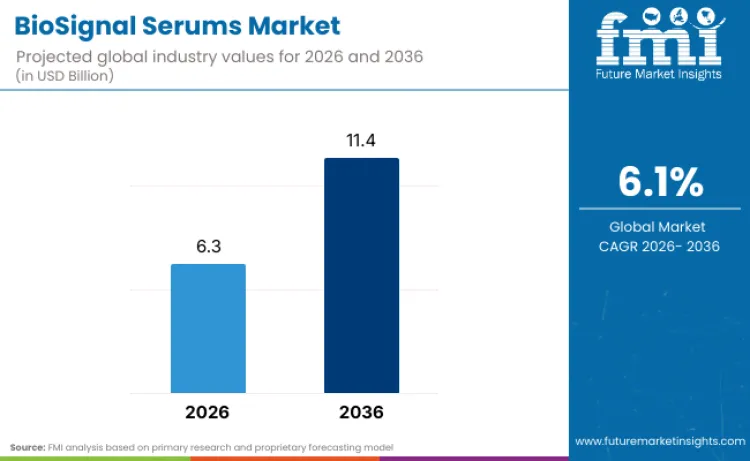
The global BioSignal Serums market is projected to reach a valuation of USD 6.3 billion in 2026 and expand to USD 11.4 billion by 2036, advancing at a 6.1% CAGR. Demand for BioSignal Serums, as per Future Market Insights, is being driven by a transition from ingredient focused skincare toward biomarker guided personalization, where formulations respond to measurable cellular signals rather than surface symptoms. This shift is supported by advances in microfluidics, skin diagnostics, and lab on chip technologies that allow consumers and clinicians to understand skin behavior at a biological level.
Barbara Lavernos, Deputy CEO in charge of Research, Innovation and Technology at L’Oréal Groupe, emphasized this direction by stating: “At L'Oréal, we're always looking toward the future of beauty, blending cutting-edge discoveries with our long-standing beauty expertise. With skin being the largest organ, and a key part of people's wellbeing, we are thrilled to unveil Cell BioPrint, an exclusive microfluidic lab-on-a-chip technology coupled with our century-long skin science leadership. With the Cell BioPrint device, we offer people the ability to discover deeper insights about their skin through specific biomarkers and to proactively address the beauty and longevity of their skin.”
Enhanced diagnostic capabilities are enabling brands to move beyond visual assessment toward biomarker driven serum development. Manufacturers are responding to this shift by aligning formulation science with measurable skin data, positioning BioSignal Serums as precision tools within advanced skincare routines rather than traditional cosmetic products.
Summary of the BioSignal Serums Market
What Is Growth Outlook for BioSignal Serums Market as per Future Market Insights Projection?
Future Market Insights projects the BioSignal Serums market to grow at a 6.1% CAGR, from USD 6.3 Billion in 2026 to USD 11.4 Billion by 2036.
FMI Research Approach: Forecasting based on biomarker-responsive skincare and regenerative peptide platform expansion.
How Do FMI Analysts Perceive BioSignal Serums Market to Evolve?
FMI sees the market shifting toward evidence-based regenerative skincare, with AI-personalization, peptide signaling, and diagnostic-linked performance becoming standard.
FMI Research Approach: Clinical peptide validation and AI-driven formulation benchmarks.
Which Country Holds Largest Share in Global BioSignal Serums Market?
China leads global market share, driven by biotech-backed ingredient regulation and national R&D funding in skin science.
FMI Research Approach: Country-level CAGR modeling aligned with biotech innovation under the 14th Five-Year Plan.
How Large Will BioSignal Serums Market Be by 2036?
The market is projected to reach USD 11.4 Billion by 2036.
FMI Research Approach: Long-term forecast modeled on regenerative formulation demand and personalized skincare adoption.
What Is Definition of BioSignal Serums Market?
The market includes bioactive serums using peptides, growth factors, and exosomes that stimulate skin regeneration at the cellular level.
FMI Research Approach: Defined by measurable dermal signaling, not surface-level cosmetic effects.
What Are Globally Unique Trends Shaping BioSignal Serums Market?
Key trends include AI-personalized biosignal diagnostics, peptide-driven regeneration, and bioactive transparency mandates.
FMI Research Approach: Analysis of global bioactive regulation, AI diagnostic tools, and peptide innovation pipelines.
BioSignal Serums Market Key Takeaways
| Metric | Details |
|---|---|
| Industry Size (2026) | USD 6.3 Billion |
| Industry Value (2036) | USD 11.4 Billion |
| CAGR (2026-2036) | 6.1% |
Source: Future Market Insights (FMI) analysis, based on proprietary forecasting model and primary research
Which Factors Drive BioSignal Serums Adoption?
Clinics and diagnostic centers are currently facing limitations in relying solely on genetic sequencing and behavioral screening, creating an urgent need for objective molecular verification that can reduce unnecessary invasive testing without compromising diagnostic confidence. Researchers from the University of Melbourne highlighted in May 2025 that even with advanced genome sequencing, “this test is only successful for half of all cases,” leaving many patients to undergo “unnecessary and invasive testing such as muscle biopsies.” This diagnostic gap is pushing clinicians toward serum biomarkers that provide immediate evidence of “neuronal, axonal and astrocyte pathologies.”
Studies published in early 2026 in Clinical Psychopharmacology and Neuroscience validated this direction by identifying the protein S100B as a high precision indicator, determining that “the cut-off value of S100B was 48.085 pg/ml (sensitivity: 74.4%, specificity: 80.5%)” for identifying children with autism. The integration of such serum based biomarkers allows clinicians to make faster, evidence driven decisions, ensuring that specialist time is focused on confirmed cases rather than prolonged preliminary screening.
How is the BioSignal Serums Market Segmented?
The BioSignal Serums market is segmented by product type, ingredients, application, end user, and region to reflect the diverse pathways through which biomarker driven skincare is adopted. By product type, the market includes anti aging serums, skin brightening serums, hydrating serums, anti acne serums, peptide or active biosignal serums, and other specialized formats that serve as the primary functional interface for skin correction and maintenance.
By ingredient type, formulations include peptides, hyaluronic acid, vitamin C and its derivatives, retinol, alpha hydroxy acids, botanical bioactives, and other bioactive molecules that are selected for measurable cellular interaction. By application, demand spans anti aging and wrinkle reduction, daily skincare and hydration, pigmentation treatment, acne treatment, and professional dermatology use. By end user, adoption is led by e commerce retailers, individual consumers, dermatology clinics and spas, beauty and personal care specialists, and brick and mortar retailers and pharmacies. FMI analysis suggests that while advanced ingredients are gaining visibility, the market structure remains anchored in familiar skincare routines. This segmentation highlights a dual track market where traditional serum formats provide continuity while bio signal positioning provides enhanced functional credibility.
Why do Anti-Aging Serums hold a Dominant Share?
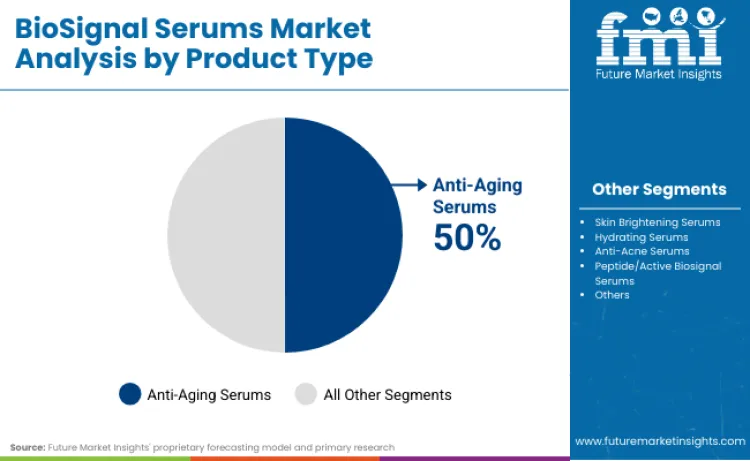
Anti-aging serums hold a dominant 50% because they represent a shift toward regenerative cosmetics that move beyond simple hydration into measurable cellular signaling. These serums are positioned as a cell free alternative to invasive regenerative procedures by using conditioned media, a byproduct of cell cultivation that is rich in growth factors and bioactive molecules. This positioning allows anti-aging BioSignal serums to bridge cosmetic skincare and clinical regeneration without requiring medical intervention.
Peer reviewed research confirms this transition. “The emergence of bioserum derived from fetal cells is revolutionizing regenerative cosmetics by providing a bioactive, cell-free alternative to traditional anti-aging and skin repair treatments.” Further scientific validation describes the composition of these BioSignals: “This mixture encompasses various biologically significant components, including growth factors such as EGF, FGF, and TGF beta, cytokines, interleukins, collagen modulating enzymes, antioxidant enzymes, proteins, and extracellular vesicles, notably exosomes.” This evidence driven credibility protects the segment from displacement by conventional hydration based serums.
Why do Peptides hold a Dominant Share?
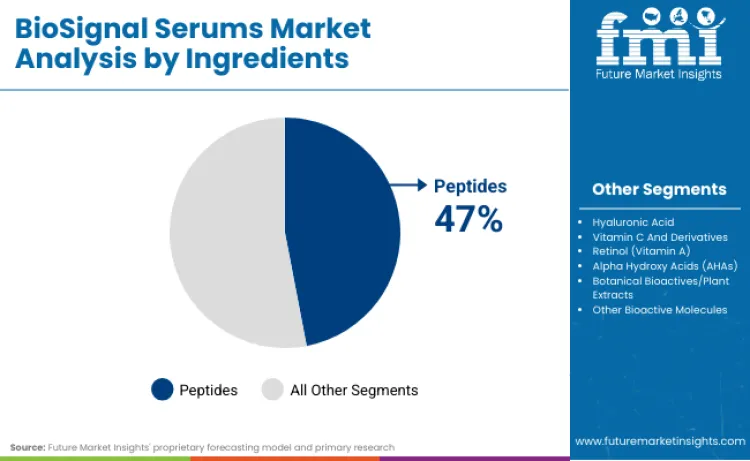
Peptides hold a dominant 47% because they act as measurable BioSignals that move skincare from passive hydration toward active cellular communication. These molecules function as signaling agents that instruct skin cells to repair, regenerate, and reorganize structural proteins, making them central to the concept of regenerative cosmetics. Their role goes beyond topical nourishment and into directing biological response at the dermal level.
Clinical validation reinforces this position. “Clinical evaluations showed statistically significant reductions in fine wrinkles and coarse wrinkles and improvements in skin texture, tone and radiance starting at week 4 with continued improvements at weeks 8 and 12.” This visible improvement links peptide serums directly to evidence based outcomes rather than cosmetic claims. Further scientific framing explains the importance of biosignals: “Biosignals are electrical, chemical, optical or mechanical signals that come from the human body. They carry important information about how our body is working and offer real time, objective data.” This credibility protects peptide based serums from displacement by conventional ingredient formats.
Why Is AI-Driven BioSignal Analysis Reshaping Wellness?
Artificial intelligence is fundamentally reshaping wellness assessment by replacing subjective observation with quantifiable physiological data derived from biosignals. A recent clinical study demonstrated that “an AI-enabled algorithm was able to identify patients with atrial fibrillation although their ECG signals were in sinus rhythm,” proving that machines can detect latent health markers before symptoms become visible. This technology allows continuous, real-time monitoring to be integrated into consumer wellness products, effectively relieving the dependence on delayed symptom-based evaluation. It enables earlier intervention, which is critical for long term outcomes, effectively functioning as a form of AI-powered health guidance by identifying hidden biological patterns far earlier than conventional methods.
How Is Physiological BioSignal Commercialization Changing Clinical Practice?
The wellness and skincare sector is pivoting aggressively from relying solely on visual assessment to incorporating objective biosignal evidence that can be measured and interpreted digitally. Advanced biosignal tools are now being used to capture electrical, chemical, and optical data from the human body without invasive procedures. This shift moves wellness closer to the precision of digital biomarkers by providing a measurable biological indicator of skin and body function. It reduces the prolonged trial and error approach in product usage, allowing individuals to adopt targeted solutions based on real time physiological feedback rather than generalized routines.
What Role Does Regulatory Maturation Play in Serum Innovation?
Increased regulatory clarity is stabilizing the investment landscape for biosignal and digital wellness technologies, allowing for more confident research and development spending. On January 6, 2026, the FDA released revised guidance that recalibrates regulatory lines for low risk wellness products and clinical decision support software, removing major compliance uncertainties. This regulatory adjustment lowers the barrier for specialized labs and technology developers to introduce innovative bio active assays without facing the immediate burden of device level clearance. It fosters an environment where niche diagnostic and biosignal based solutions can enter the market faster, directly supporting advancements in personalized wellness and precision skincare innovation.
What is BioSignal Serums Market Regional Outlook?
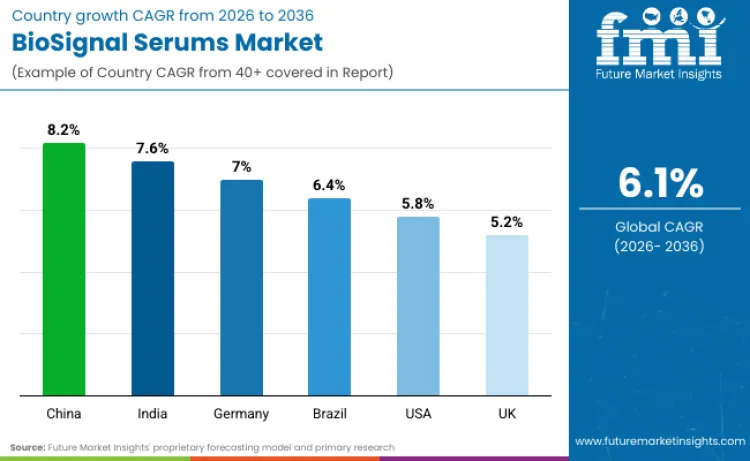
Sales in emerging markets are outpacing the global average as consumers and clinics shift from traditional cosmetic serums toward biomarker responsive skincare solutions. While the global market expands at a steady pace, developing nations are advancing faster by integrating regenerative skincare concepts, peptide based formulations, and bioactive ingredient science into everyday routines. China leads this growth with an 8.2% CAGR, followed by India at 7.6% and Germany at 7.0%, creating a strong axis of demand where science backed skincare gains wider consumer trust.
In contrast, markets such as Brazil at 6.4%, the United States at 5.8%, and the United Kingdom at 5.2% are experiencing structured adoption driven by dermatology practices, ingredient awareness, and retail channel maturity rather than rapid volume expansion. FMI analysis indicates that future growth will be supported by rising awareness of bioactive ingredients and increased comfort with serum based daily skincare across both professional and consumer environments.
| Country | CAGR (2026 to 2036) |
|---|---|
| China | 8.2% |
| India | 7.6% |
| Germany | 7.0% |
| Brazil | 6.4% |
| United States | 5.8% |
| United Kingdom | 5.2% |
Source: FMI historical analysis and forecast data.
Why is China shifting toward biotech led cosmetic innovation?
China is expanding at an 8.2% CAGR as the beauty industry transitions from trend driven consumption to research anchored biotechnology adoption. Regulatory direction from the National Medical Products Administration and the 14th Five Year Plan for Cosmetics Industry Development is accelerating funding for skin microbiome science, green biomanufacturing, and new cosmetic ingredient filings. This environment encourages brands to move beyond aesthetic claims and invest in bioactive compounds supported by dermatology and laboratory validation. The shift is reinforced by multi omics research that studies microbiome behavior, transcriptomics, and epigenetics to understand skin tone and barrier function at a biological level. FMI predicts that China’s growth will be supported by this integration of biotechnology with cosmetic transparency. The core driver remains the country’s objective to build value density through measurable ingredient performance, regulatory clarity, and large scale R&D investment that positions skincare as a science led industry rather than an influencer led market.
Why is India focusing on cellular longevity and bioactive transparency?
India is growing at a 7.6% CAGR as consumers move toward high efficacy serums focused on barrier repair and cellular resilience rather than multi step cosmetic routines. This Skinimalism shift is supported by regulatory mandates that require disclosure of excipients and promote phytopharmaceutical ingredients standardized with multiple bioactive markers under the Indian Pharmacopoeia framework. These reforms are pushing the market away from loosely defined herbal claims toward structured bioactive validation. FMI predicts that Indian consumers will increasingly demand science backed transparency and formulations that prioritize longevity and internal skin strength. The core driver remains the alignment between regulatory transparency and consumer interest in evidence based skincare. This combination is encouraging domestic brands and international players to adopt bioactive standardization and ingredient clarity as central pillars of product development across the country.
Why is Germany integrating preventive health with scientific skincare?
Germany is expanding at a 7.0% CAGR as biotechnology and digital health integration influence premium skincare innovation. Government initiatives such as the Science Year focused on Medicine of the Future and the Hospital Transformation Fund are modernizing healthcare infrastructure and promoting the use of biotechnology and artificial intelligence in preventive care. This environment supports skincare categories aligned with well ageing, barrier integrity, and biologically informed treatments. FMI predicts that German consumers will continue to trust products positioned on scientific credibility and preventive health principles. The core driver remains the integration of healthcare modernization with consumer wellness trends. As hospitals and research institutions adopt advanced technologies, this culture of scientific rigor translates into the skincare market, encouraging brands to develop serums and treatments backed by measurable biological mechanisms rather than cosmetic positioning.
Why is Brazil accelerating clinical validation for dermal products?
Brazil is growing at a 6.4% CAGR as regulatory reforms accelerate clinical validation for dermal and biologically active products. Research Ethics Committees and ANVISA have reduced approval timelines for products used in aesthetic procedures with dermal action, allowing faster testing and commercialization. This regulatory efficiency positions Brazil as a favorable destination for clinical research collaboration and validation of bioactive skincare technologies. FMI predicts that international brands will increasingly utilize Brazil as a testing ground for serums and treatments requiring measurable biological evidence. The core driver remains modernization of clinical assessment pathways that encourage evidence based development. This shift supports consumer trust in products that demonstrate visible improvement through clinical testing rather than relying on marketing narratives.
Why is the United States strengthening safety substantiation in cosmetics?
The United States is expanding at a 5.8% CAGR as the Modernization of Cosmetics Regulation Act shifts the market from marketing claims toward documented safety substantiation. The FDA now requires qualified scientific evaluation of cosmetic ingredients and enforces stronger oversight of manufacturing practices, including assessment of substances such as PFAS. This regulatory clarity encourages brands to prioritize validated bioactive ingredients and robust safety documentation. FMI predicts that American consumers will increasingly value serums supported by clinical data and transparent ingredient science. The core driver remains the establishment of a regulatory framework where scientific evaluation determines credibility. This environment favors BioSignal serums and peptide based formulations that can demonstrate measurable interaction with skin biology.
Why is the United Kingdom promoting preventive skincare and ingredient transparency?
The United Kingdom is growing at a 5.2% CAGR as consumers and regulators emphasize preventive health, ingredient safety, and scientific credibility in skincare. Public health initiatives and regulatory scrutiny are encouraging brands to adopt transparent formulations and evidence based positioning. This environment supports serums and treatments aligned with barrier repair, hydration science, and biologically active ingredients. FMI predicts that UK consumers will continue to move toward products that combine simplicity with measurable performance. The core driver remains the shift from cosmetic enhancement toward functional skincare supported by clinical validation and ingredient transparency. This trend encourages the adoption of BioSignal serums within both retail and professional dermatology settings.
How is the Competition in the BioSignal Serums Market?
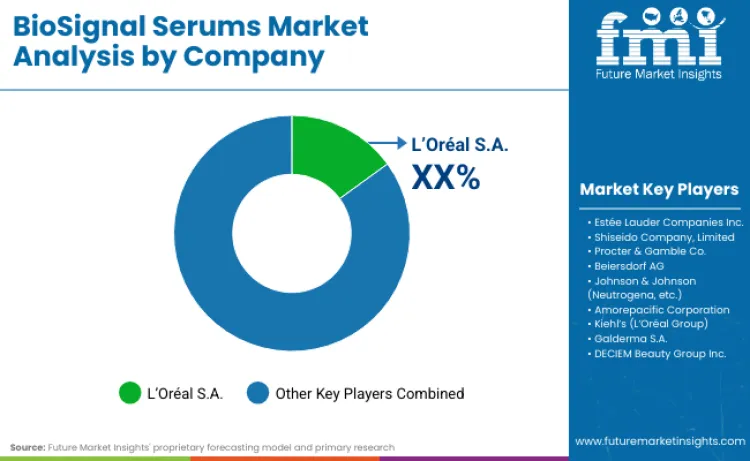
Established leaders like L’Oréal Groupe protect their market share through deep research infrastructure and a shift toward Green Sciences supported by large scale facilities. Their 250,000 square foot scientific research center in Clark, New Jersey employs hundreds of scientists and researchers to maintain a dominant edge in formulation technology. Major players also secure loyalty by integrating with professional networks. Galderma maintains a specialized salesforce that engages with thousands of healthcare professionals who act as primary gatekeepers for dermatological product adoption.
Startups are challenging this dominance by utilizing advanced biomanufacturing to create high purity ingredients that traditional methods cannot easily replicate. Joshua Britton, CEO of Debut, described this shift: “Debut creates bio-identical and novel active ingredients through advanced biotechnologies, such as bio-fermentation and cell-free technology. These processes allow for the sustainable production of ingredients that are indistinguishable from those found in nature, but without the environmental impact associated with traditional methods.” Strategic partnerships are further defining the landscape as skincare intersects with longevity science. OneSkin has pioneered a skin specific molecular clock called MolClock to predict biological age and partnered with GlycanAge to measure whole body biological ageing, moving competition into the domain of measurable age tracking.
Recent Developments:
- In January 2026, Shiseido developed its first AI-formulated mist-type suncare using the VOYAGER platform, integrating fragrance, color tone, and SPF benefits. Built with Accenture, the product will launch in summer 2026 under the fibona initiative.
- In January 2026, Galderma presented findings from a global survey of peri- and post-menopausal women at IMCAS World Congress 2026 in Paris, revealing major knowledge gaps around menopause-related skin changes, with over half learning through personal experience and many wishing for earlier education.
Key Players in BioSignal Serums Market
- L’Oréal S.A.
- Estée Lauder Companies Inc.
- Shiseido Company, Limited
- Procter & Gamble Co.
- Beiersdorf AG
- Johnson & Johnson (Neutrogena, etc.)
- Amorepacific Corporation
- Kiehl’s (L’Oréal Group)
- Galderma S.A.
- DECIEM Beauty Group Inc.
Market Definition
The BioSignal Serums Market refers to skincare formulations designed to influence skin behavior through measurable biological signaling rather than simple surface hydration. These serums use bioactive molecules such as peptides, growth factors, cytokines, extracellular vesicles, and conditioned media that interact with skin cells at a molecular level. The focus is on regenerative cosmetics where ingredients function as communication agents that stimulate repair, collagen organization, barrier restoration, and cellular renewal. This market is supported by clinical research, biomarker analysis, and laboratory validated evidence showing visible improvements in texture, tone, elasticity, and wrinkle reduction. BioSignal serums bridge cosmetic skincare and dermatological science by offering non invasive alternatives to regenerative treatments through topical application backed by measurable physiological interaction within the epidermis and dermis.
Market Inclusion
The market includes serums formulated with peptides, growth factors, cytokines, extracellular vesicles, exosomes, hyaluronic acid, vitamin derivatives, retinoids, and other bioactive molecules that function as cellular signaling agents. Products positioned on regenerative, biomarker responsive, or cell communication principles are included. Clinical grade anti aging, hydrating, brightening, and anti acne serums that demonstrate measurable interaction with skin biology fall within scope. Formulations using conditioned media, bio fermentation derived actives, or phytopharmaceutical bioactive markers are also included. Products sold through dermatology clinics, professional skincare channels, e commerce platforms, and pharmacies are covered when supported by scientific validation. AI enabled skin analysis tools used to recommend or personalize BioSignal serums are considered part of the ecosystem.
Market Exclusion
The market excludes conventional cosmetic serums that rely only on hydration, fragrance, or sensory appeal without biological signaling claims. Herbal oils, basic moisturizers, and traditional beauty oils without standardized bioactive validation are excluded. Decorative cosmetics, sunscreens, cleansers, and masks are not included unless positioned on BioSignal or regenerative principles. Products marketed using vague anti aging language without clinical evidence or biomarker linkage are excluded. Devices, injectables, and medical procedures that require clinical intervention fall outside scope. Supplements and ingestible beauty products are also excluded. Any skincare product that does not demonstrate measurable cellular interaction, regenerative positioning, or bioactive communication through validated ingredients does not qualify for inclusion in this market definition.
Scope of Report
| Items | Values |
|---|---|
| Quantitative Units | USD billion |
| Product Type | Anti-Aging Serums; Skin Brightening Serums; Hydrating Serums; Anti-Acne Serums; Peptide & Active BioSignal Serums; Others |
| Ingredient Type | Peptides; Hyaluronic Acid; Vitamin C & Derivatives; Retinol (Vitamin A); Alpha Hydroxy Acids (AHAs); Botanical Bioactives & Plant Extracts; Other Bioactive Molecules |
| Application | Anti-Aging & Wrinkle Reduction; Daily Skincare & Hydration; Pigmentation Treatment; Acne Treatment; Professional Dermatology Use |
| End User | E-Commerce Retailers; Individual Consumers; Dermatology Clinics & Spas; Beauty & Personal Care Specialists; Brick-and-Mortar Retailers & Pharmacies |
| Formulation & Technology Focus | Regenerative BioSignal Serums; Biomarker-Responsive Skincare Formulations; Peptide Signaling Platforms; Conditioned Media & Bio-Fermentation Derived Actives; AI-Guided Serum Personalization Systems |
| Regions Covered | North America, Europe, Asia Pacific, Latin America, Middle East & Africa |
| Countries Covered | China, India, Germany, Brazil, United States, United Kingdom, Japan, South Korea, France, and 40+ countries |
| Key Companies Profiled | L’Oréal S.A.; Estée Lauder Companies Inc.; Shiseido Company Limited; Procter & Gamble Co.; Beiersdorf AG; Johnson & Johnson; Amorepacific Corporation; Galderma S.A.; DECIEM Beauty Group; Others |
| Additional Attributes | Dollar sales by product type, ingredient category, application, and end user; performance benchmarking across cellular regeneration, wrinkle reduction, hydration efficacy, and biomarker responsiveness; adoption trends for regenerative cosmetics and peptide signaling technologies; impact on routine simplification, clinical credibility, and personalization-driven skincare; regulatory influence on bioactive ingredient validation and serum safety substantiation; distribution dynamics across digital platforms, dermatology networks, and premium retail channels |
BioSignal Serums Market by Segments
By Product Type:
- Anti-Aging Serums
- Skin Brightening Serums
- Hydrating Serums
- Anti-Acne Serums
- Peptide & Active BioSignal Serums
- Others
By Ingredient Type:
- Peptides
- Hyaluronic Acid
- Vitamin C & Derivatives
- Retinol (Vitamin A)
- Alpha Hydroxy Acids (AHAs)
- Botanical Bioactives & Plant Extracts
- Other Bioactive Molecules
By Application:
- Anti-Aging & Wrinkle Reduction
- Daily Skincare & Hydration
- Pigmentation Treatment
- Acne Treatment
- Professional Dermatology Use
By End User:
- E-Commerce Retailers
- Individual Consumers
- Dermatology Clinics & Spas
- Beauty & Personal Care Specialists
- Brick-and-Mortar Retailers & Pharmacies
By Region:
- North America
- Europe
- East Asia
- South Asia
- Latin America
- Middle East & Africa
Bibliography
- American Academy of Dermatology. (2024). Guidelines of care for the management of atopic dermatitis and barrier repair therapy.
- International Society of Aesthetic Plastic Surgery. (2024). Global survey on minimally invasive aesthetic procedures and collagen stimulation trends.
- American Society for Dermatologic Surgery. (2025). Energy-based devices, collagen stimulation, and regenerative aesthetic treatments.
Frequently Asked Questions
What is the current global market size for BioSignal Serums?
The global BioSignal Serums market is valued at USD 6.3 billion in 2026.
What is the projected CAGR for the BioSignal Serums market?
The market is projected to grow at a 6.1% CAGR from 2026 to 2036.
Which segment currently dominates the industry?
Anti-aging serums lead with about 50% share while peptide-based BioSignal formulations dominate ingredients with roughly 47%.
What are the primary drivers for adoption in high-growth regions?
Adoption is driven by rising demand for biomarker-responsive skincare, regulatory support for bioactive transparency, and integration of regenerative cosmetic science in China, India, and Germany.
Who are the leading players in the BioSignal Serums space?
Leading companies include L’Oréal S.A., Estée Lauder Companies Inc., Shiseido Company Limited, Procter & Gamble Co., Beiersdorf AG, Johnson & Johnson, Amorepacific Corporation, Galderma S.A., and DECIEM Beauty Group.
Preview the report firsthand - request a free sample
Get SampleGet the brochure for pricing and purchase details.
Get PDFTable of Content
- Executive Summary
- Global Market Outlook
- Demand Side Trends
- Supply Side Trends
- Technology Roadmap Analysis
- Analysis and Recommendations
- Market Overview
- Market Coverage / Taxonomy
- Market Definition / Scope / Limitations
- Research Methodology
- Chapter Orientation
- Analytical Lens and Working Hypotheses
- Market Structure, Signals, and Trend Drivers
- Benchmarking and Cross-market Comparability
- Market Sizing, Forecasting, and Opportunity Mapping
- Research Design and Evidence Framework
- Desk Research Programme (Secondary Evidence)
- Company Annual and Sustainability Reports
- Peer-reviewed Journals and Academic Literature
- Corporate Websites, Product Literature, and Technical Notes
- Earnings Decks and Investor Briefings
- Statutory Filings and Regulatory Disclosures
- Technical White Papers and Standards Notes
- Trade Journals, Industry Magazines, and Analyst Briefs
- Conference Proceedings, Webinars, and Seminar Materials
- Government Statistics Portals and Public Data Releases
- Press Releases and Reputable Media Coverage
- Specialist Newsletters and Curated Briefings
- Sector Databases and Reference Repositories
- FMI Internal Knowledge Base and Historical Datasets
- Subscription Datasets and Paid Sources
- Social Channels, Communities, and Digital Listening Inputs
- Additional Desk Sources
- Expert Input and Fieldwork (Primary Evidence)
- Primary Modes
- Qualitative Interviews and Expert Elicitation
- Quantitative Surveys and Structured Data Capture
- Blended Approach
- Why Primary Evidence is Used
- Field Techniques
- Interviews
- Surveys
- Focus Groups
- Observational and In-context Research
- Social and Community Interactions
- Stakeholder Universe Engaged
- C-suite Leaders
- Board Members
- Presidents and Vice Presidents
- R&D and Innovation Heads
- Technical Specialists
- Domain Subject-matter Experts
- Scientists
- Physicians and Other Healthcare Professionals
- Governance, Ethics, and Data Stewardship
- Research Ethics
- Data Integrity and Handling
- Primary Modes
- Tooling, Models, and Reference Databases
- Desk Research Programme (Secondary Evidence)
- Data Engineering and Model Build
- Data Acquisition and Ingestion
- Cleaning, Normalisation, and Verification
- Synthesis, Triangulation, and Analysis
- Quality Assurance and Audit Trail
- Market Background
- Market Dynamics
- Drivers
- Restraints
- Opportunity
- Trends
- Scenario Forecast
- Demand in Optimistic Scenario
- Demand in Likely Scenario
- Demand in Conservative Scenario
- Opportunity Map Analysis
- Product Life Cycle Analysis
- Supply Chain Analysis
- Investment Feasibility Matrix
- Value Chain Analysis
- PESTLE and Porter's Analysis
- Regulatory Landscape
- Regional Parent Market Outlook
- Production and Consumption Statistics
- Import and Export Statistics
- Market Dynamics
- Global Market Analysis 2021 to 2025 and Forecast, 2026 to 2036
- Historical Market Size Value (USD Billion) Analysis, 2021 to 2025
- Current and Future Market Size Value (USD Billion) Projections, 2026 to 2036
- Y-o-Y Growth Trend Analysis
- Absolute $ Opportunity Analysis
- Global Market Pricing Analysis 2021 to 2025 and Forecast 2026 to 2036
- Y-o-Y Growth Trend Analysis 2021 to 2025
- Absolute $ Opportunity Analysis 2026 to 2036
- Global Market Analysis 2021 to 2025 and Forecast 2026 to 2036, By Product Type
- Introduction / Key Findings
- Historical Market Size Value (USD Billion) Analysis By Product Type, 2021 to 2025
- Current and Future Market Size Value (USD Billion) Analysis and Forecast By Product Type, 2026 to 2036
- Anti-Aging Serums
- Skin Brightening Serums
- Hydrating Serums
- Anti-Acne Serums
- Peptide & Active BioSignal Serums
- Others
- Y-o-Y Growth Trend Analysis By Product Type, 2021 to 2025
- Absolute $ Opportunity Analysis By Product Type, 2026 to 2036
- Global Market Analysis 2021 to 2025 and Forecast 2026 to 2036, By Ingredient Type
- Introduction / Key Findings
- Historical Market Size Value (USD Billion) Analysis By Ingredient Type, 2021 to 2025
- Current and Future Market Size Value (USD Billion) Analysis and Forecast By Ingredient Type, 2026 to 2036
- Peptides
- Hyaluronic Acid
- Vitamin C & Derivatives
- Retinol (Vitamin A)
- Alpha Hydroxy Acids (AHAs)
- Botanical Bioactives & Plant Extracts
- Other Bioactive Molecules
- Y-o-Y Growth Trend Analysis By Ingredient Type, 2021 to 2025
- Absolute $ Opportunity Analysis By Ingredient Type, 2026 to 2036
- Global Market Analysis 2021 to 2025 and Forecast 2026 to 2036, By Application
- Introduction / Key Findings
- Historical Market Size Value (USD Billion) Analysis By Application, 2021 to 2025
- Current and Future Market Size Value (USD Billion) Analysis and Forecast By Application, 2026 to 2036
- Anti-Aging & Wrinkle Reduction
- Daily Skincare & Hydration
- Pigmentation Treatment
- Acne Treatment
- Professional Dermatology Use
- Y-o-Y Growth Trend Analysis By Application, 2021 to 2025
- Absolute $ Opportunity Analysis By Application, 2026 to 2036
- Global Market Analysis 2021 to 2025 and Forecast 2026 to 2036, By End User
- Introduction / Key Findings
- Historical Market Size Value (USD Billion) Analysis By End User, 2021 to 2025
- Current and Future Market Size Value (USD Billion) Analysis and Forecast By End User, 2026 to 2036
- E-Commerce Retailers
- Individual Consumers
- Dermatology Clinics & Spas
- Beauty & Personal Care Specialists
- Brick-and-Mortar Retailers & Pharmacies
- Y-o-Y Growth Trend Analysis By End User, 2021 to 2025
- Absolute $ Opportunity Analysis By End User, 2026 to 2036
- Global Market Analysis 2021 to 2025 and Forecast 2026 to 2036, By Region
- Introduction
- Historical Market Size Value (USD Billion) Analysis By Region, 2021 to 2025
- Current Market Size Value (USD Billion) Analysis and Forecast By Region, 2026 to 2036
- North America
- Latin America
- Western Europe
- Eastern Europe
- East Asia
- South Asia and Pacific
- Middle East & Africa
- Market Attractiveness Analysis By Region
- North America Market Analysis 2021 to 2025 and Forecast 2026 to 2036, By Country
- Historical Market Size Value (USD Billion) Trend Analysis By Market Taxonomy, 2021 to 2025
- Market Size Value (USD Billion) Forecast By Market Taxonomy, 2026 to 2036
- By Country
- USA
- Canada
- Mexico
- By Product Type
- By Ingredient Type
- By Application
- By End User
- By Country
- Market Attractiveness Analysis
- By Country
- By Product Type
- By Ingredient Type
- By Application
- By End User
- Key Takeaways
- Latin America Market Analysis 2021 to 2025 and Forecast 2026 to 2036, By Country
- Historical Market Size Value (USD Billion) Trend Analysis By Market Taxonomy, 2021 to 2025
- Market Size Value (USD Billion) Forecast By Market Taxonomy, 2026 to 2036
- By Country
- Brazil
- Chile
- Rest of Latin America
- By Product Type
- By Ingredient Type
- By Application
- By End User
- By Country
- Market Attractiveness Analysis
- By Country
- By Product Type
- By Ingredient Type
- By Application
- By End User
- Key Takeaways
- Western Europe Market Analysis 2021 to 2025 and Forecast 2026 to 2036, By Country
- Historical Market Size Value (USD Billion) Trend Analysis By Market Taxonomy, 2021 to 2025
- Market Size Value (USD Billion) Forecast By Market Taxonomy, 2026 to 2036
- By Country
- Germany
- UK
- Italy
- Spain
- France
- Nordic
- BENELUX
- Rest of Western Europe
- By Product Type
- By Ingredient Type
- By Application
- By End User
- By Country
- Market Attractiveness Analysis
- By Country
- By Product Type
- By Ingredient Type
- By Application
- By End User
- Key Takeaways
- Eastern Europe Market Analysis 2021 to 2025 and Forecast 2026 to 2036, By Country
- Historical Market Size Value (USD Billion) Trend Analysis By Market Taxonomy, 2021 to 2025
- Market Size Value (USD Billion) Forecast By Market Taxonomy, 2026 to 2036
- By Country
- Russia
- Poland
- Hungary
- Balkan & Baltic
- Rest of Eastern Europe
- By Product Type
- By Ingredient Type
- By Application
- By End User
- By Country
- Market Attractiveness Analysis
- By Country
- By Product Type
- By Ingredient Type
- By Application
- By End User
- Key Takeaways
- East Asia Market Analysis 2021 to 2025 and Forecast 2026 to 2036, By Country
- Historical Market Size Value (USD Billion) Trend Analysis By Market Taxonomy, 2021 to 2025
- Market Size Value (USD Billion) Forecast By Market Taxonomy, 2026 to 2036
- By Country
- China
- Japan
- South Korea
- By Product Type
- By Ingredient Type
- By Application
- By End User
- By Country
- Market Attractiveness Analysis
- By Country
- By Product Type
- By Ingredient Type
- By Application
- By End User
- Key Takeaways
- South Asia and Pacific Market Analysis 2021 to 2025 and Forecast 2026 to 2036, By Country
- Historical Market Size Value (USD Billion) Trend Analysis By Market Taxonomy, 2021 to 2025
- Market Size Value (USD Billion) Forecast By Market Taxonomy, 2026 to 2036
- By Country
- India
- ASEAN
- Australia & New Zealand
- Rest of South Asia and Pacific
- By Product Type
- By Ingredient Type
- By Application
- By End User
- By Country
- Market Attractiveness Analysis
- By Country
- By Product Type
- By Ingredient Type
- By Application
- By End User
- Key Takeaways
- Middle East & Africa Market Analysis 2021 to 2025 and Forecast 2026 to 2036, By Country
- Historical Market Size Value (USD Billion) Trend Analysis By Market Taxonomy, 2021 to 2025
- Market Size Value (USD Billion) Forecast By Market Taxonomy, 2026 to 2036
- By Country
- Kingdom of Saudi Arabia
- Other GCC Countries
- Turkiye
- South Africa
- Other African Union
- Rest of Middle East & Africa
- By Product Type
- By Ingredient Type
- By Application
- By End User
- By Country
- Market Attractiveness Analysis
- By Country
- By Product Type
- By Ingredient Type
- By Application
- By End User
- Key Takeaways
- Key Countries Market Analysis
- USA
- Pricing Analysis
- Market Share Analysis, 2025
- By Product Type
- By Ingredient Type
- By Application
- By End User
- Canada
- Pricing Analysis
- Market Share Analysis, 2025
- By Product Type
- By Ingredient Type
- By Application
- By End User
- Mexico
- Pricing Analysis
- Market Share Analysis, 2025
- By Product Type
- By Ingredient Type
- By Application
- By End User
- Brazil
- Pricing Analysis
- Market Share Analysis, 2025
- By Product Type
- By Ingredient Type
- By Application
- By End User
- Chile
- Pricing Analysis
- Market Share Analysis, 2025
- By Product Type
- By Ingredient Type
- By Application
- By End User
- Germany
- Pricing Analysis
- Market Share Analysis, 2025
- By Product Type
- By Ingredient Type
- By Application
- By End User
- UK
- Pricing Analysis
- Market Share Analysis, 2025
- By Product Type
- By Ingredient Type
- By Application
- By End User
- Italy
- Pricing Analysis
- Market Share Analysis, 2025
- By Product Type
- By Ingredient Type
- By Application
- By End User
- Spain
- Pricing Analysis
- Market Share Analysis, 2025
- By Product Type
- By Ingredient Type
- By Application
- By End User
- France
- Pricing Analysis
- Market Share Analysis, 2025
- By Product Type
- By Ingredient Type
- By Application
- By End User
- India
- Pricing Analysis
- Market Share Analysis, 2025
- By Product Type
- By Ingredient Type
- By Application
- By End User
- ASEAN
- Pricing Analysis
- Market Share Analysis, 2025
- By Product Type
- By Ingredient Type
- By Application
- By End User
- Australia & New Zealand
- Pricing Analysis
- Market Share Analysis, 2025
- By Product Type
- By Ingredient Type
- By Application
- By End User
- China
- Pricing Analysis
- Market Share Analysis, 2025
- By Product Type
- By Ingredient Type
- By Application
- By End User
- Japan
- Pricing Analysis
- Market Share Analysis, 2025
- By Product Type
- By Ingredient Type
- By Application
- By End User
- South Korea
- Pricing Analysis
- Market Share Analysis, 2025
- By Product Type
- By Ingredient Type
- By Application
- By End User
- Russia
- Pricing Analysis
- Market Share Analysis, 2025
- By Product Type
- By Ingredient Type
- By Application
- By End User
- Poland
- Pricing Analysis
- Market Share Analysis, 2025
- By Product Type
- By Ingredient Type
- By Application
- By End User
- Hungary
- Pricing Analysis
- Market Share Analysis, 2025
- By Product Type
- By Ingredient Type
- By Application
- By End User
- Kingdom of Saudi Arabia
- Pricing Analysis
- Market Share Analysis, 2025
- By Product Type
- By Ingredient Type
- By Application
- By End User
- Turkiye
- Pricing Analysis
- Market Share Analysis, 2025
- By Product Type
- By Ingredient Type
- By Application
- By End User
- South Africa
- Pricing Analysis
- Market Share Analysis, 2025
- By Product Type
- By Ingredient Type
- By Application
- By End User
- USA
- Market Structure Analysis
- Competition Dashboard
- Competition Benchmarking
- Market Share Analysis of Top Players
- By Regional
- By Product Type
- By Ingredient Type
- By Application
- By End User
- Competition Analysis
- Competition Deep Dive
- L’Oréal S.A.
- Estée Lauder Companies Inc.
- Shiseido Company, Limited
- Procter & Gamble Co.
- Beiersdorf AG
- Johnson & Johnson
- Amorepacific Corporation
- Galderma S.A.
- DECIEM Beauty Group Inc.
- Competition Deep Dive
- Assumptions & Acronyms Used


