

- Market Size (2026)
- USD 783.6 Mn
- Forecast (2036)
- USD 1182.4 Mn
- CAGR (2026 to 2036)
- 4.2%
Clary Sage Oil Market Size, Market Forecast and Outlook By FMI
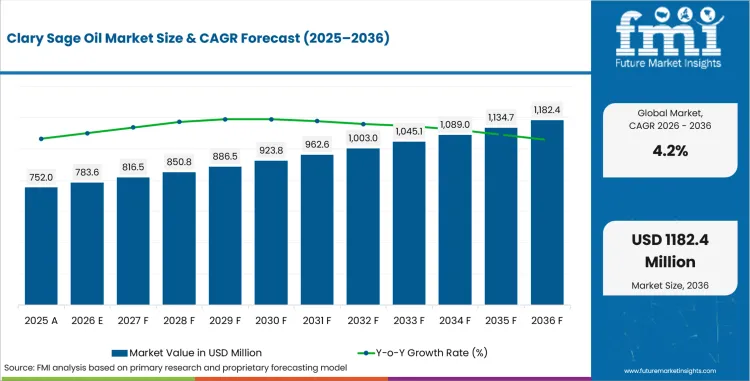
The clary sage oil market was valued at USD 752.0 million in 2025. The market is set to reach USD 783.6 million by 2026-end and grow at a CAGR of 4.2% between 2026-2036 to reach USD 1,182.4 million by 2036. Pure Clary Sage Oil will dominate with a 60.0% share, while Aromatherapy will lead with a 40.0% share.
Key Takeaways, Market Size, and Forecast
- 2026 Market Size: USD 783.6 million
- 2036 Market Size: USD 1182.4 million
- Compound Annual Growth Rate (CAGR): 4.2% from 2026 to 2036
- Absolute $ Opportunity: USD 398.8 million between 2026 and 2036
- Leading Product Segment: Pure Clary Sage Oil
- Pure Clary Sage Oil Share in 2026: 60.0%
- Fastest-growing Country: Germany
- Germany CAGR: 5.2% through 2036
| Parameter | Details |
|---|---|
| Market Size in 2026 (Value) | USD 783.6 million |
| Market Forecast in 2036 (Value) | USD 1182.4 million |
| Compound Annual Growth Rate (CAGR) | 4.2% from 2026 to 2036 |
| Years Considered | 2021 to 2036 |
| Base Year | 2025 |
| Forecast Period | 2026 to 2036 |
| Units Considered | Value (USD Million) |
| Leading Sub-Region | Germany |
Summary of the Clary Sage Oil Market
- Demand and Growth Drivers
- Consumer demand for natural essential oils in aromatherapy, personal care, and wellness applications is expected to sustain growth for clary sage oil through 2036 as the ingredient gains recognition for its calming and skin health properties.
- Expansion of natural and organic personal care formulations is likely to support demand for clary sage oil as a functional botanical ingredient during the forecast period.
- Aromatherapy channel growth, including spa services, home diffusion, and clinical wellness programs, is anticipated to increase the addressable market for pure clary sage oil.
- Product and Segment View
- Pure clary sage oil is likely to account for 60.0% of the product segment in 2026, supported by demand from aromatherapy practitioners, personal care formulators, and natural fragrance blenders.
- Aromatherapy applications are expected to represent 40.0% of total demand, with therapeutic, relaxation, and stress management use cases as the primary consumption drivers.
- Steam distillation holds 65.0% of the extraction method segment, reflecting its established position as the standard commercial method for producing therapeutic-grade clary sage oil.
- Geography and Competitive Outlook
- Germany is projected to lead with a 5.2% CAGR through 2036, driven by strong natural cosmetics manufacturing, established essential oil trade infrastructure, and consumer demand for botanical wellness products.
- Japan at 5.0% reflects growing adoption of aromatherapy and natural personal care products in a market with established quality standards and consumer willingness to pay for therapeutic-grade oils.
- Companies with reliable clary sage cultivation sourcing, steam distillation capabilities, and quality certifications for aromatherapy and personal care applications are likely to strengthen supply positions during the forecast period.
- Analyst Opinion
- Nandini Roy Choudhury, Principal Consultant at FMI says, 'Essential oil suppliers that can guarantee batch-to-batch consistency, organic certification, and GC-MS verified purity for clary sage oil are likely to secure stronger positions with personal care formulators and aromatherapy distributors through 2036.'
- The clary sage oil market is maturing from a niche aromatherapy ingredient into a specified botanical active with defined roles in personal care, natural fragrance, and wellness product formulations.
- Adoption is increasing due to consumer preference for plant-derived ingredients, the expansion of aromatherapy into mainstream wellness practice, and growing demand for natural alternatives to synthetic fragrance compounds.
- Supply-side quality differentiation through GC-MS analysis, organic certification, and origin traceability is becoming a procurement requirement for premium personal care and aromatherapy distributors.
- Clary sage oil cultivation is concentrated in France, Bulgaria, and Russia, creating supply concentration risks that influence pricing and procurement strategy for downstream buyers.
Clary Sage Oil Market Definition
The clary sage oil market encompasses commercially traded essential oil extracted from Salvia sclarea, including pure clary sage oil, clary sage oil blends, and clary sage oleoresin. These products serve aromatherapy, personal care, fragrance, pharmaceutical, and food and beverage applications.
Clary Sage Oil Market Inclusions
Market scope covers all commercially traded clary sage oil products categorized by product (pure clary sage oil, clary sage oil blends, clary sage oleoresin), application (aromatherapy, personal care, fragrance, pharmaceutical, food and beverage), end use (individual consumers, cosmetic manufacturers, pharmaceutical companies), extraction method (steam distillation, solvent extraction, CO2 extraction), nature (natural, organic), and distribution channel (distributor network, direct sales, retail channel, online channel). Revenue coverage spans 2026 to 2036.
Clary Sage Oil Market Exclusions
The scope does not include dried clary sage herb sold for culinary use, clary sage supplements in capsule or tablet form, or synthetic sclareol produced from non-botanical sources.
Clary Sage Oil Market Research Methodology
- Primary Research: FMI analysts conducted interviews with essential oil distillers, clary sage cultivators, aromatherapy product manufacturers, and personal care formulators in key markets.
- Desk Research: Combined data from essential oil trade databases, aromatherapy industry reports, and personal care ingredient sourcing publications.
- Market Sizing and Forecasting: Bottom-up aggregation from aromatherapy, personal care, fragrance, and pharmaceutical application volumes across regional adoption curves.
- Data Validation: Cross-checked quarterly against essential oil trade data, cultivation area statistics, and manufacturer procurement reports.
Why is the Clary Sage Oil Market Growing?
- Demand for natural essential oils in aromatherapy and personal care is sustaining market growth, with clary sage oil projected to reach USD 1,182.4 million by 2036.
- Germany leads at 5.2% CAGR, driven by natural cosmetics manufacturing strength, established essential oil trade channels, and consumer preference for botanical wellness products.
- Pure clary sage oil at 60.0% of the product segment reflects the premium placed on therapeutic-grade, single-origin essential oils in aromatherapy and natural personal care formulations.
The clary sage oil market is estimated at USD 783.6 million in 2026 and is projected to reach USD 1,182.4 million by 2036, expanding at a CAGR of 4.2%. Demand is shaped by the expansion of natural and botanical ingredient usage in aromatherapy, personal care, and fragrance applications. Clary sage oil, valued for its calming, skin-balancing, and natural fragrance properties, is gaining specification-grade adoption in product categories that prioritize plant-derived functional ingredients.
Pure clary sage oil accounts for 60.0% of the product segment, with therapeutic and cosmetic grades as the primary commercial variants. Aromatherapy represents 40.0% of application demand. Steam distillation holds 65.0% of the extraction method segment. Individual consumers represent 45.0% of end-use demand through retail and online essential oil purchases.
Growth reflects the mainstreaming of aromatherapy practices, regulatory support for natural cosmetic ingredients in the EU and Japan, and the premiumization of personal care products with botanical actives. The natural product segment holds 50.0% share, while distributor networks account for 35.0% of sales.
Market Segmentation Analysis
- Pure clary sage oil holds 60.0% of the product segment in 2026, supported by demand for therapeutic-grade essential oils from aromatherapy practitioners and personal care formulators.
- Aromatherapy accounts for 40.0% of application demand, with therapeutic relaxation, stress management, and skin care as the primary use cases.
- Steam distillation holds 65.0% of the extraction method segment, reflecting its position as the standard commercial method for producing therapeutic-grade clary sage oil.
The clary sage oil market is segmented by product (pure clary sage oil, clary sage oil blends, clary sage oleoresin), application (aromatherapy, personal care, fragrance, pharmaceutical, food and beverage), end use (individual consumers, cosmetic manufacturers, pharmaceutical companies), extraction method (steam distillation, solvent extraction, CO2 extraction), nature (natural, organic), and distribution channel (distributor network, direct sales, retail channel, online channel).
Insights into the Pure Clary Sage Oil Product Segment
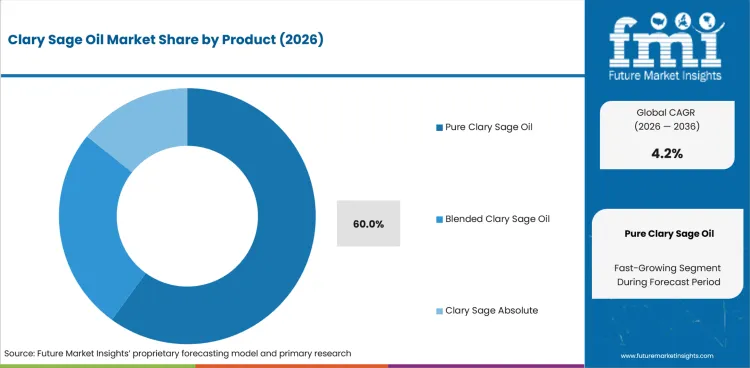
In 2026, pure clary sage oil accounts for 60.0% of the product segment. Therapeutic-grade pure oil serves aromatherapy and clinical wellness applications, while cosmetic-grade variants supply personal care and natural fragrance formulators. Quality differentiation through GC-MS analysis and origin certification is a key procurement criterion.
Clary sage oil blends, combining clary sage with complementary essential oils such as lavender and geranium, serve the retail aromatherapy market. Clary sage oleoresin provides a concentrated form for fragrance and pharmaceutical applications requiring standardized sclareol content.
Insights into the Aromatherapy Application Segment
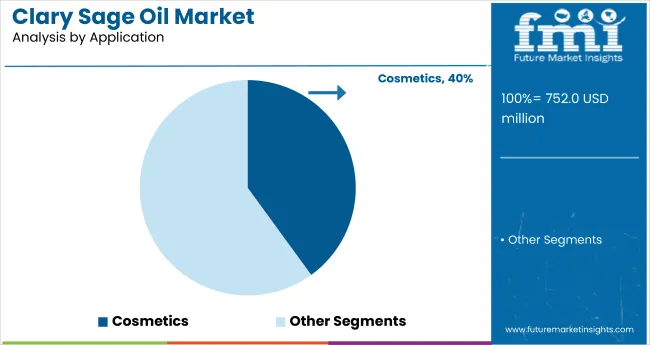
Aromatherapy accounts for 40.0% of application demand in 2026. Therapeutic uses, including stress reduction, hormonal balance support, and sleep improvement, represent the core demand driver. Spa and wellness center procurement provides a commercial channel, while home diffusion and self-care practices generate individual consumer demand.
Personal care applications, including skincare, haircare, and body care products, represent the second-largest demand segment. Natural fragrance formulation and pharmaceutical applications provide additional demand channels for standardized and high-purity clary sage oil grades.
Clary Sage Oil Market Drivers, Restraints, and Opportunities
- Consumer demand for natural, plant-derived ingredients in aromatherapy, personal care, and fragrance applications is creating consistent procurement volumes for clary sage oil.
- Cultivation concentration in limited geographic regions and sensitivity to weather and harvest variability constrain supply predictability and influence year-to-year pricing.
- Premiumization of personal care and wellness products with botanical actives is expanding the addressable market for specification-grade clary sage oil.
The clary sage oil market expands on the basis of natural ingredient demand, aromatherapy category growth, and personal care premiumization. Constraints include cultivation supply concentration, harvest variability, and the need for quality certification to access premium distribution channels.
Natural Ingredient Demand in Aromatherapy and Personal Care
Demand is shaped by consumer preference for plant-derived, minimally processed ingredients in wellness and personal care products. Clary sage oil benefits from its documented calming properties, skin health applications, and natural fragrance character that align with clean-label and botanical positioning strategies.
Supply Concentration and Harvest Variability
Adoption is constrained by the geographic concentration of clary sage cultivation in France, Bulgaria, and Russia. Weather variability, harvest timing, and cultivation area fluctuations affect annual oil output, creating pricing instability and supply risk for downstream manufacturers requiring consistent procurement.
Personal Care and Wellness Premiumization
Growth is supported by the incorporation of clary sage oil as a specified botanical active in premium skincare, haircare, and wellness product formulations. EU natural cosmetics regulation and Japanese ingredient safety standards support certified clary sage oil usage in compliant product lines.
Analysis of Clary Sage Oil Market By Key Countries
.webp "Top Country Growth Comparison Clary Sage Oil Market Cagr (2026 2036)")
| Country | CAGR |
|---|---|
| Germany | 5.2% |
| Japan | 5.0% |
| USA | 4.8% |
| France | 4.6% |
| UK | 4.5% |
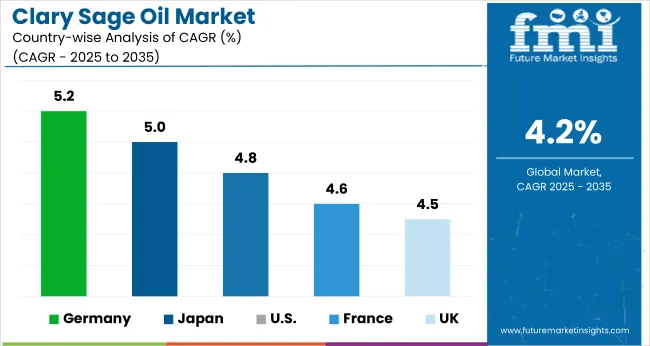
- Germany at 5.2% leads growth, driven by natural cosmetics manufacturing infrastructure, established essential oil trade channels, and strong consumer demand for botanical wellness products.
- Japan at 5.0% reflects expanding aromatherapy adoption and natural personal care growth in a market with high quality standards and consumer willingness to pay for certified oils.
- The USA at 4.8% sustains demand through retail aromatherapy, natural personal care manufacturing, and e-commerce distribution of essential oil products.
- France (4.6%) and UK (4.5%) maintain growth through established essential oil trade, natural cosmetics manufacturing, and proximity to European clary sage cultivation sources.
The global clary sage oil market is projected to expand at a CAGR of 4.2% from 2026 to 2036. The study covers more than 30 countries, and the primary markets are analyzed below.
Demand Outlook for Clary Sage Oil Market in Germany
Germany is projected to lead with a 5.2% CAGR through 2036. Natural cosmetics manufacturing strength, EU cosmetics regulation compliance, and established essential oil procurement infrastructure drive specification-grade demand for clary sage oil.
- German natural cosmetics manufacturers, including BDIH-certified producers, procure therapeutic-grade clary sage oil for skincare, haircare, and body care formulations.
- EU Cosmetics Regulation ingredient safety standards support certified and traceable essential oil sourcing for compliant product development.
- Hamburg and Cologne serve as essential oil trade hubs with established distributor networks connecting European cultivators with German and international formulators.
Future Outlook for Clary Sage Oil Market in Japan
Japan is expected to grow at 5.0% through 2036. Expanding aromatherapy practice, natural personal care adoption, and established functional ingredient regulatory frameworks support clary sage oil demand in a quality-driven market.
- Japanese aromatherapy associations and certification programs support professional-grade essential oil procurement standards that favor documented purity and origin traceability.
- Natural personal care brands in Japan incorporate clary sage oil as a botanical active in anti-stress and skin-balancing product formulations.
- Long supplier qualification cycles and quality-driven procurement relationships support stable demand from qualified essential oil suppliers.
Opportunity Analysis of Clary Sage Oil Market in the United States
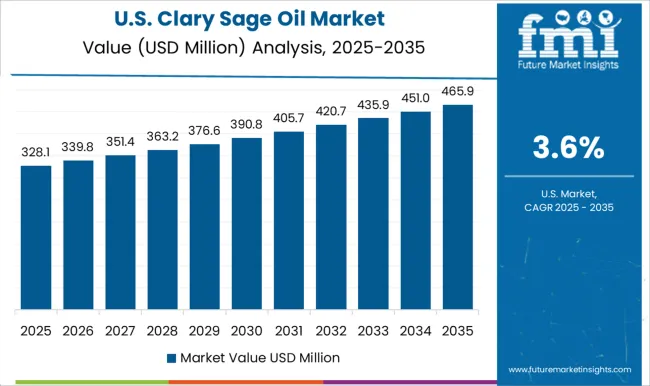
The USA is projected to expand at 4.8% through 2036. Retail aromatherapy growth, natural personal care manufacturing, and e-commerce essential oil sales drive demand across consumer and formulator segments.
- E-commerce platforms and direct-to-consumer essential oil brands provide broad consumer access to pure clary sage oil products across the USA.
- Natural personal care manufacturers source GC-MS verified clary sage oil for skincare and haircare formulations meeting clean beauty standards.
- Spa and wellness center expansion in urban markets creates commercial procurement demand for therapeutic-grade essential oils including clary sage.
In-depth Analysis of Clary Sage Oil Market in France
France is projected to grow at 4.6% through 2036. Proximity to European clary sage cultivation, established perfumery and natural cosmetics industries, and strong essential oil trade infrastructure support both supply and demand for clary sage oil.
- French perfumery and natural fragrance houses procure high-quality clary sage oil for luxury and artisanal fragrance formulations.
- Provence and Southern France clary sage cultivation provides regional supply with shorter logistics chains for French and European formulators.
- Natural cosmetics manufacturing in France incorporates clary sage oil as a specified botanical active in EU-compliant skincare and wellness product lines.
Sales Analysis of Clary Sage Oil Market in the United Kingdom
The UK is projected to grow at 4.5% through 2036. Aromatherapy practice, natural personal care demand, and established essential oil retail distribution support steady adoption of clary sage oil.
- UK aromatherapy associations and practitioner networks create structured demand for therapeutic-grade clary sage oil through professional and retail channels.
- Natural and organic personal care brands in the UK incorporate clary sage oil in product lines targeting stress relief and skin health.
- Online retail and subscription-based essential oil services expand consumer access to pure clary sage oil products beyond traditional health food stores.
Competitive Landscape and Strategic Positioning
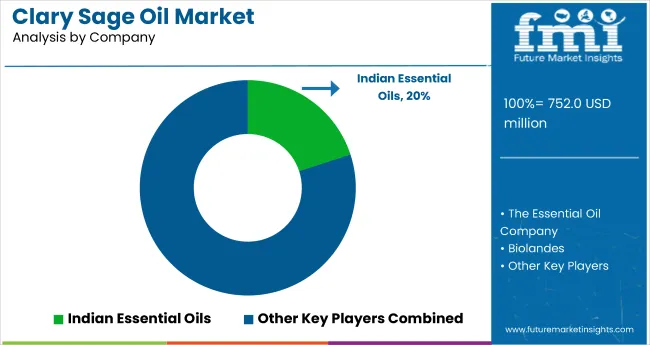
- Indian Essential Oils and The Essential Oil Company maintain market presence through diversified essential oil portfolios and established aromatherapy and personal care distribution channels.
- Biolandes and Bontoux S.A. hold strong positions in European essential oil supply through proximity to French and Mediterranean cultivation regions and established perfumery customer relationships.
- Augustus Oils Ltd and M&U International LLC serve mid-market segments with quality-verified essential oils for aromatherapy and personal care formulators.
Indian Essential Oils and The Essential Oil Company maintain market positions through diversified essential oil portfolios that serve aromatherapy, personal care, and fragrance customers. Biolandes and Bontoux S.A. leverage proximity to French and Bulgarian cultivation regions.
Augustus Oils Ltd provides quality-verified essential oils to UK and European markets. M&U International LLC serves North American distribution. Niche producers focus on organic and single-origin clary sage oil for premium aromatherapy channels.
Barriers include cultivation sourcing relationships, distillation infrastructure, quality certification requirements (GC-MS, organic), and the need for established distribution relationships with personal care and aromatherapy buyers. Strategic priorities center on supply reliability, quality documentation, and organic certification.
Key Companies in the Clary Sage Oil Market
Key global companies leading the clary sage oil market include:
- Indian Essential Oils (India), The Essential Oil Company (USA), Biolandes (France), and Bontoux S.A. (France) maintain diversified essential oil portfolios with established aromatherapy, personal care, and fragrance distribution channels across multiple regions.
- Augustus Oils Ltd (UK) and M&U International LLC (USA) hold mid-market positions through quality-verified essential oil supply and distribution relationships with formulators and aromatherapy retailers.
- Niche and emerging producers focus on organic, single-origin, and GC-MS certified clary sage oil products for premium aromatherapy and natural personal care market segments.
Competitive Benchmarking: Clary Sage Oil Market
| Company | Oil Portfolio | Cultivation Sourcing | Quality Certification | Geographic Footprint |
|---|---|---|---|---|
| Indian Essential Oils | High | High | Medium | South Asia, Global |
| The Essential Oil Company | High | Medium | High | N. America |
| Biolandes | High | High | High | Europe, Global |
| Bontoux S.A. | High | High | High | Europe |
| Augustus Oils Ltd | Medium | Medium | High | Europe |
| M&U International LLC | Medium | Medium | Medium | N. America |
Source: Future Market Insights competitive analysis, 2026.
Key Developments in Clary Sage Oil Market
- In 2025, Biolandes expanded its clary sage cultivation sourcing agreements in Southern France to secure consistent supply for growing European personal care and fragrance demand.
- In 2025, The Essential Oil Company launched a new GC-MS certified organic clary sage oil product line for the US aromatherapy and natural personal care market.
Key Players in the Clary Sage Oil Market
Major Global Players
- Indian Essential Oils
- The Essential Oil Company
- Biolandes
- Bontoux S.A.
- Augustus Oils Ltd
- M&U International LLC
Emerging Players/Startups
- Conagen
- Essancia
- Ffern
Report Scope and Coverage
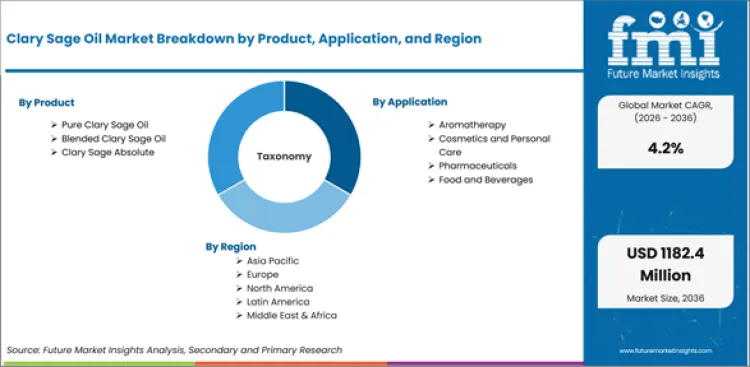
| Parameter | Details |
|---|---|
| Market size by 2036 | USD 1,182.4 million |
| Growth rate | 4.2% CAGR (2026 to 2036) |
| Forecast period | 2026 to 2036 |
| Base year value (2025) | USD 752.0 million |
| Key Segment Covered | Product, Application, End Use, Extraction Method, Nature, Distribution Channel. |
| Regions covered | North America, Latin America, Europe, East Asia, South Asia and Pacific, Middle East and Africa |
| Countries covered | Germany, Japan, USA, France, UK, 30 plus countries |
| Key companies profiled | Indian Essential Oils, The Essential Oil Company, Biolandes, Bontoux S.A., Augustus Oils Ltd, M&U International LLC |
| Approach | Hybrid bottom-up and top-down methodology starting with verified essential oil trade and cultivation data, projecting adoption velocity across applications and regions. |
Market Segmentation Analysis
Clary Sage Oil Market Segmented by Product:
- Pure Clary Sage Oil
- Standard Essential Oil
- Steam Distilled Oil
- Conventional Grade
- Organic Essential Oil
- Certified Organic Oil
- Therapeutic Grade
- Standard Essential Oil
- Blended Clary Sage Oil
- Aromatherapy Blends
- Relaxation Blends
- Sleep Support Blends
- Cosmetic Blends
- Skin Care Blends
- Hair Care Blends
- Aromatherapy Blends
- Clary Sage Absolute
- Standard Absolute
- Solvent Extracted
- High Concentration
- Premium Absolute
- High Purity Extract
- Perfumery Grade
- Standard Absolute
Clary Sage Oil Market Segmented by Application:
- Aromatherapy
- Relaxation
- Stress Relief
- Mood Enhancement
- Sleep Support
- Insomnia Relief
- Calming Effects
- Relaxation
- Cosmetics and Personal Care
- Skin Care
- Anti Aging
- Acne Treatment
- Hair Care
- Hair Growth
- Scalp Treatment
- Skin Care
- Pharmaceuticals
- Therapeutic Use
- Hormonal Balance
- Pain Relief
- Herbal Medicine
- Natural Remedies
- Therapeutic Use
- Food and Beverages
- Flavoring Agent
- Herbal Flavoring
- Functional Beverages
- Flavoring Agent
Clary Sage Oil Market Segmented by End Use:
- Individual Consumers
- Personal Use
- Home Aromatherapy
- Wellness Use
- Personal Use
- Commercial Users
- Spas and Wellness Centers
- Massage Therapy
- Aromatherapy Services
- Cosmetic Manufacturers
- Skin Care Brands
- Hair Care Brands
- Spas and Wellness Centers
- Pharmaceutical Industry
- Herbal Product Manufacturers
- Natural Medicine
- Supplement Production
- Herbal Product Manufacturers
Clary Sage Oil Market Segmented by Extraction Method:
- Steam Distillation
- Traditional Distillation
- Large Scale Production
- Solvent Extraction
- Absolute Extraction
- High Yield Systems
- Carbon Dioxide Extraction
- Supercritical Extraction
- High Purity Oil
Clary Sage Oil Market Segmented by Nature:
- Natural
- Plant Derived Oil
- Pure Extract
- Minimal Processing
- Plant Derived Oil
- Organic
- Certified Organic Oil
- Chemical Free Cultivation
- Eco Certified Products
- Certified Organic Oil
- Conventional
- Standard Oil
- Blended Oils
- Cost Optimized Products
- Standard Oil
Clary Sage Oil Market Segmented by Distribution Channel:
- Distributor Network
- Essential Oil Distributors
- Regional Distributors
- Global Suppliers
- Essential Oil Distributors
- Direct Sales
- Brand Owned Channels
- Direct Consumer Sales
- Brand Owned Channels
- Retail Channel
- Health and Wellness Stores
- Specialty Stores
- Health and Wellness Stores
- Online Channel
- E-commerce Platforms
- Direct to Consumer
- E-commerce Platforms
Clary Sage Oil Market by Region:
- North America
- USA
- Canada
- Mexico
- Latin America
- Brazil
- Chile
- Rest of Latin America
- Western Europe
- Germany
- UK
- Italy
- Spain
- France
- Nordic
- BENELUX
- Rest of Western Europe
- Eastern Europe
- Russia
- Poland
- Hungary
- Balkan & Baltic
- Rest of Eastern Europe
- East Asia
- China
- Japan
- South Korea
- South Asia and Pacific
- India
- ASEAN
- Australia & New Zealand
- Rest of South Asia and Pacific
- Middle East & Africa
- Kingdom of Saudi Arabia
- Other GCC Countries
- Türkiye
- South Africa
- Other African Union
- Rest of Middle East & Africa
Research Sources and Bibliography
- 1. European Commission. (2025). EU Cosmetics Regulation: Ingredient Safety Standards and Natural Ingredient Documentation Requirements. EC.
- 2. International Organization for Standardization. (2025). ISO 4719: Essential Oil of Clary Sage, Quality Standards and Testing Methods. ISO.
- 3. International Federation of Essential Oils and Aroma Trades. (2025). IFEAT Annual Report: Global Essential Oil Production and Trade Statistics. IFEAT.
- 4. USA Food and Drug Administration. (2025). FDA GRAS Status: Essential Oils for Food and Cosmetic Use. FDA.
- 5. World Health Organization. (2025). WHO Monographs on Selected Medicinal Plants: Salvia sclarea. WHO.
This bibliography is provided for reader reference.
This Report Answers
- Estimating the size of the clary sage oil market and projected revenue from 2026 to 2036.
- Segmenting by product, application, end use, extraction method, nature, and distribution channel.
- Regional and country-level insights across more than 30 markets.
- Analysis of steam distillation, solvent extraction, and CO2 extraction technologies.
- Assessment of the competitive landscape and company benchmarking.
- Identifying investment opportunities in aromatherapy, personal care, and natural fragrance applications.
- Tracking supply chain dynamics from cultivation to essential oil distribution.
- Delivery of data in PDF and Excel formats.
Frequently Asked Questions
How big is the clary sage oil market in 2026?
The global clary sage oil market is estimated to be valued at USD 783.6 million in 2026.
What will be the size of clary sage oil market in 2036?
The market size for the clary sage oil market is projected to reach USD 1,182.4 million by 2036.
How much will be the clary sage oil market growth between 2026 and 2036?
The clary sage oil market is expected to grow at a 4.2% CAGR between 2026 and 2036.
What are the key products in the clary sage oil market?
The key products in the clary sage oil market are Pure Clary Sage Oil, Blended Clary Sage Oil and Clary Sage Absolute.
Which application segment is expected to contribute significant share in the clary sage oil market in 2026?
In terms of application, aromatherapy segment is expected to command 40.0% share in the clary sage oil market in 2026.
Preview the report firsthand - request a free sample
Get SampleGet the brochure for pricing and purchase details.
Get PDFTable of Content
- Key Takeaways
- Market Size and CAGR
- Top Growth Driver
- Fastest Growing Segment
- Leading Region
- Key Companies
- Emerging Opportunities
- Executive Summary
- Global Market Outlook
- Demand-side Trends
- Supply-side Trends
- Technology Roadmap Analysis
- Analysis and Recommendations
- Analyst Perspective (What is happening? Why now? What should investors know?)
- Key Questions Answered
- How large is the market?
- What is the CAGR?
- What are key trends?
- Which region dominates?
- Who are the leaders?
- Market Overview
- Market Coverage / Taxonomy
- Market Definition / Scope / Limitations
- Research Methodology
- Chapter Orientation
- Analytical Lens and Working Hypotheses
- Market Structure, Signals, and Trend Drivers
- Benchmarking and Cross-market Comparability
- Market Sizing, Forecasting, and Opportunity Mapping
- Research Design and Evidence Framework
- Desk Research Programme (Secondary Evidence)
- Expert Input and Fieldwork (Primary Evidence)
- Tooling, Models, and Reference Databases
- Data Engineering and Model Build
- Quality Assurance and Audit Trail
- Market Background
- Market Dynamics (Drivers, Restraints, Opportunity, Trends)
- Scenario Forecast (Optimistic, Likely, Conservative)
- Impact Analysis
- AI Impact
- Sustainability Impact
- Regulatory Impact
- Technology Impact
- Consumer / Buyer Analysis
- Purchase Drivers
- Adoption Barriers
- Buyer Journey
- Opportunity Map Analysis
- Product Life Cycle Analysis
- Supply Chain Analysis
- Investment Feasibility Matrix
- Value Chain Analysis
- PESTLE and Porter's Analysis
- Regulatory Landscape
- Regional Parent Market Outlook
- Production and Consumption Statistics
- Import and Export Statistics
- Global Market Analysis and Forecast, 2021 to 2036
- Historical Market Size Value (USD Million) Analysis, 2021 to 2025
- Current and Future Market Size Value (USD Million) Projections, 2026 to 2036
- Y-o-Y Growth Trend Analysis
- Absolute $ Opportunity Analysis
- Global Market Pricing Analysis, 2021 to 2036
- Global Market Analysis and Forecast, By Product, 2021 to 2036
- Introduction / Key Findings
- Historical Market Size Value (USD Million) Analysis By Product, 2021 to 2025
- Current and Future Market Size Value (USD Million) Analysis and Forecast By Product, 2026 to 2036
- Pure Clary Sage Oil
- Standard Essential Oil
- Organic Essential Oil
- Blended Clary Sage Oil
- Aromatherapy Blends
- Cosmetic Blends
- Clary Sage Absolute
- Standard Absolute
- Premium Absolute
- Pure Clary Sage Oil
- Y-o-Y Growth Trend Analysis By Product, 2021 to 2025
- Absolute $ Opportunity Analysis By Product, 2026 to 2036
- Global Market Analysis and Forecast, By Application, 2021 to 2036
- Introduction / Key Findings
- Historical Market Size Value (USD Million) Analysis By Application, 2021 to 2025
- Current and Future Market Size Value (USD Million) Analysis and Forecast By Application, 2026 to 2036
- Aromatherapy
- Relaxation
- Sleep Support
- Cosmetics and Personal Care
- Skin Care
- Hair Care
- Pharmaceuticals
- Therapeutic Use
- Herbal Medicine
- Food and Beverages
- Flavoring Agent
- Aromatherapy
- Y-o-Y Growth Trend Analysis By Application, 2021 to 2025
- Absolute $ Opportunity Analysis By Application, 2026 to 2036
- Global Market Analysis and Forecast, By End Use, 2021 to 2036
- Introduction / Key Findings
- Historical Market Size Value (USD Million) Analysis By End Use, 2021 to 2025
- Current and Future Market Size Value (USD Million) Analysis and Forecast By End Use, 2026 to 2036
- Individual Consumers
- Personal Use
- Commercial Users
- Spas and Wellness Centers
- Cosmetic Manufacturers
- Pharmaceutical Industry
- Herbal Product Manufacturers
- Individual Consumers
- Y-o-Y Growth Trend Analysis By End Use, 2021 to 2025
- Absolute $ Opportunity Analysis By End Use, 2026 to 2036
- Global Market Analysis and Forecast, By Extraction Method, 2021 to 2036
- Introduction / Key Findings
- Historical Market Size Value (USD Million) Analysis By Extraction Method, 2021 to 2025
- Current and Future Market Size Value (USD Million) Analysis and Forecast By Extraction Method, 2026 to 2036
- Steam Distillation
- Traditional Distillation
- Large Scale Production
- Solvent Extraction
- Absolute Extraction
- High Yield Systems
- Carbon Dioxide Extraction
- Supercritical Extraction
- High Purity Oil
- Steam Distillation
- Y-o-Y Growth Trend Analysis By Extraction Method, 2021 to 2025
- Absolute $ Opportunity Analysis By Extraction Method, 2026 to 2036
- Global Market Analysis and Forecast, By Nature, 2021 to 2036
- Introduction / Key Findings
- Historical Market Size Value (USD Million) Analysis By Nature, 2021 to 2025
- Current and Future Market Size Value (USD Million) Analysis and Forecast By Nature, 2026 to 2036
- Natural
- Plant Derived Oil
- Organic
- Certified Organic Oil
- Conventional
- Standard Oil
- Natural
- Y-o-Y Growth Trend Analysis By Nature, 2021 to 2025
- Absolute $ Opportunity Analysis By Nature, 2026 to 2036
- Global Market Analysis and Forecast, By Distribution Channel
- Introduction / Key Findings
- Historical Market Size Value (USD Million) Analysis By Distribution Channel, 2021 to 2025
- Current and Future Market Size Value (USD Million) Analysis and Forecast By Distribution Channel, 2026 to 2036
- Distributor Network
- Essential Oil Distributors
- Direct Sales
- Brand Owned Channels
- Retail Channel
- Health and Wellness Stores
- Online Channel
- E-commerce Platforms
- Distributor Network
- Y-o-Y Growth Trend Analysis By Distribution Channel, 2021 to 2025
- Absolute $ Opportunity Analysis By Distribution Channel, 2026 to 2036
- Global Market Analysis and Forecast, By Region, 2021 to 2036
- Introduction
- Historical Market Size Value (USD Million) Analysis By Region, 2021 to 2025
- Current Market Size Value (USD Million) Analysis and Forecast By Region, 2026 to 2036
- North America
- Latin America
- Western Europe
- Eastern Europe
- East Asia
- South Asia and Pacific
- Middle East & Africa
- Market Attractiveness Analysis By Region
- North America Market Analysis and Forecast, By Country, 2021 to 2036
- Historical Market Size Value (USD Million) Trend Analysis By Market Taxonomy, 2021 to 2025
- Market Size Value (USD Million) Forecast By Market Taxonomy, 2026 to 2036
- By Country
- USA
- Canada
- Mexico
- By Product
- By Application
- By End Use
- By Extraction Method
- By Nature
- By Distribution Channel
- By Country
- Market Attractiveness Analysis
- By Country
- By Product
- By Application
- By End Use
- By Extraction Method
- By Nature
- By Distribution Channel
- Key Takeaways
- Latin America Market Analysis and Forecast, By Country
- Historical Market Size Value (USD Million) Trend Analysis By Market Taxonomy, 2021 to 2025
- Market Size Value (USD Million) Forecast By Market Taxonomy, 2026 to 2036
- By Country
- Brazil
- Chile
- Rest of Latin America
- By Product
- By Application
- By End Use
- By Extraction Method
- By Nature
- By Distribution Channel
- By Country
- Market Attractiveness Analysis
- By Country
- By Product
- By Application
- By End Use
- By Extraction Method
- By Nature
- By Distribution Channel
- Key Takeaways
- Western Europe Market Analysis and Forecast, By Country
- Historical Market Size Value (USD Million) Trend Analysis By Market Taxonomy, 2021 to 2025
- Market Size Value (USD Million) Forecast By Market Taxonomy, 2026 to 2036
- By Country
- Germany
- UK
- Italy
- Spain
- France
- Nordic
- BENELUX
- Rest of Western Europe
- By Product
- By Application
- By End Use
- By Extraction Method
- By Nature
- By Distribution Channel
- By Country
- Market Attractiveness Analysis
- By Country
- By Product
- By Application
- By End Use
- By Extraction Method
- By Nature
- By Distribution Channel
- Key Takeaways
- Eastern Europe Market Analysis and Forecast, By Country
- Historical Market Size Value (USD Million) Trend Analysis By Market Taxonomy, 2021 to 2025
- Market Size Value (USD Million) Forecast By Market Taxonomy, 2026 to 2036
- By Country
- Russia
- Poland
- Hungary
- Balkan & Baltic
- Rest of Eastern Europe
- By Product
- By Application
- By End Use
- By Extraction Method
- By Nature
- By Distribution Channel
- By Country
- Market Attractiveness Analysis
- By Country
- By Product
- By Application
- By End Use
- By Extraction Method
- By Nature
- By Distribution Channel
- Key Takeaways
- East Asia Market Analysis and Forecast, By Country
- Historical Market Size Value (USD Million) Trend Analysis By Market Taxonomy, 2021 to 2025
- Market Size Value (USD Million) Forecast By Market Taxonomy, 2026 to 2036
- By Country
- China
- Japan
- South Korea
- By Product
- By Application
- By End Use
- By Extraction Method
- By Nature
- By Distribution Channel
- By Country
- Market Attractiveness Analysis
- By Country
- By Product
- By Application
- By End Use
- By Extraction Method
- By Nature
- By Distribution Channel
- Key Takeaways
- South Asia and Pacific Market Analysis and Forecast, By Country
- Historical Market Size Value (USD Million) Trend Analysis By Market Taxonomy, 2021 to 2025
- Market Size Value (USD Million) Forecast By Market Taxonomy, 2026 to 2036
- By Country
- India
- ASEAN
- Australia & New Zealand
- Rest of South Asia and Pacific
- By Product
- By Application
- By End Use
- By Extraction Method
- By Nature
- By Distribution Channel
- By Country
- Market Attractiveness Analysis
- By Country
- By Product
- By Application
- By End Use
- By Extraction Method
- By Nature
- By Distribution Channel
- Key Takeaways
- Middle East & Africa Market Analysis and Forecast, By Country
- Historical Market Size Value (USD Million) Trend Analysis By Market Taxonomy, 2021 to 2025
- Market Size Value (USD Million) Forecast By Market Taxonomy, 2026 to 2036
- By Country
- Kingdom of Saudi Arabia
- Other GCC Countries
- Türkiye
- South Africa
- Other African Union
- Rest of Middle East & Africa
- By Product
- By Application
- By End Use
- By Extraction Method
- By Nature
- By Distribution Channel
- By Country
- Market Attractiveness Analysis
- By Country
- By Product
- By Application
- By End Use
- By Extraction Method
- By Nature
- By Distribution Channel
- Key Takeaways
- Key Countries Market Analysis
- USA
- Pricing Analysis
- Market Share Analysis, 2025
- By Product
- By Application
- By End Use
- By Extraction Method
- By Nature
- By Distribution Channel
- Canada
- Pricing Analysis
- Market Share Analysis, 2025
- By Product
- By Application
- By End Use
- By Extraction Method
- By Nature
- By Distribution Channel
- Mexico
- Pricing Analysis
- Market Share Analysis, 2025
- By Product
- By Application
- By End Use
- By Extraction Method
- By Nature
- By Distribution Channel
- Brazil
- Pricing Analysis
- Market Share Analysis, 2025
- By Product
- By Application
- By End Use
- By Extraction Method
- By Nature
- By Distribution Channel
- Chile
- Pricing Analysis
- Market Share Analysis, 2025
- By Product
- By Application
- By End Use
- By Extraction Method
- By Nature
- By Distribution Channel
- Germany
- Pricing Analysis
- Market Share Analysis, 2025
- By Product
- By Application
- By End Use
- By Extraction Method
- By Nature
- By Distribution Channel
- UK
- Pricing Analysis
- Market Share Analysis, 2025
- By Product
- By Application
- By End Use
- By Extraction Method
- By Nature
- By Distribution Channel
- Italy
- Pricing Analysis
- Market Share Analysis, 2025
- By Product
- By Application
- By End Use
- By Extraction Method
- By Nature
- By Distribution Channel
- Spain
- Pricing Analysis
- Market Share Analysis, 2025
- By Product
- By Application
- By End Use
- By Extraction Method
- By Nature
- By Distribution Channel
- France
- Pricing Analysis
- Market Share Analysis, 2025
- By Product
- By Application
- By End Use
- By Extraction Method
- By Nature
- By Distribution Channel
- India
- Pricing Analysis
- Market Share Analysis, 2025
- By Product
- By Application
- By End Use
- By Extraction Method
- By Nature
- By Distribution Channel
- ASEAN
- Pricing Analysis
- Market Share Analysis, 2025
- By Product
- By Application
- By End Use
- By Extraction Method
- By Nature
- By Distribution Channel
- Australia & New Zealand
- Pricing Analysis
- Market Share Analysis, 2025
- By Product
- By Application
- By End Use
- By Extraction Method
- By Nature
- By Distribution Channel
- China
- Pricing Analysis
- Market Share Analysis, 2025
- By Product
- By Application
- By End Use
- By Extraction Method
- By Nature
- By Distribution Channel
- Japan
- Pricing Analysis
- Market Share Analysis, 2025
- By Product
- By Application
- By End Use
- By Extraction Method
- By Nature
- By Distribution Channel
- South Korea
- Pricing Analysis
- Market Share Analysis, 2025
- By Product
- By Application
- By End Use
- By Extraction Method
- By Nature
- By Distribution Channel
- Russia
- Pricing Analysis
- Market Share Analysis, 2025
- By Product
- By Application
- By End Use
- By Extraction Method
- By Nature
- By Distribution Channel
- Poland
- Pricing Analysis
- Market Share Analysis, 2025
- By Product
- By Application
- By End Use
- By Extraction Method
- By Nature
- By Distribution Channel
- Hungary
- Pricing Analysis
- Market Share Analysis, 2025
- By Product
- By Application
- By End Use
- By Extraction Method
- By Nature
- By Distribution Channel
- Kingdom of Saudi Arabia
- Pricing Analysis
- Market Share Analysis, 2025
- By Product
- By Application
- By End Use
- By Extraction Method
- By Nature
- By Distribution Channel
- Türkiye
- Pricing Analysis
- Market Share Analysis, 2025
- By Product
- By Application
- By End Use
- By Extraction Method
- By Nature
- By Distribution Channel
- South Africa
- Pricing Analysis
- Market Share Analysis, 2025
- By Product
- By Application
- By End Use
- By Extraction Method
- By Nature
- By Distribution Channel
- USA
- Market Structure Analysis
- Competition Dashboard
- Competition Benchmarking
- Market Share Analysis of Top Players
- By Regional
- By Product
- By Application
- By End Use
- By Extraction Method
- By Nature
- By Distribution Channel
- Emerging Startups
- Innovation Benchmarking
- Competition Analysis
- Competition Deep Dive
- Indian Essential Oils
- Overview
- Product Portfolio
- Profitability by Market Segments (Product/Region/Sales Channel)
- Sales Footprint
- Strategy Overview
- Marketing Strategy
- Product Strategy
- Channel Strategy
- The Essential Oil Company
- Biolandes
- Bontoux S.A.
- Augustus Oils Ltd
- M&U International LLC
- Avoca Inc.
- Lluch Essence S.L.
- Lansdowne Chemicals
- Taytonn PTE Ltd.
- Indian Essential Oils
- Case Studies
- Success Stories
- Recent Developments
- Competition Deep Dive
- Assumptions & Acronyms Used


