

- Industry Size (2026)
- USD 656 Mn
- Forecast (2036)
- USD 1817 Mn
- CAGR (2026 to 2036)
- 10.7%
Cold-Shutdown Perishables Pack Market Forecast and Outlook 2026 to 2036
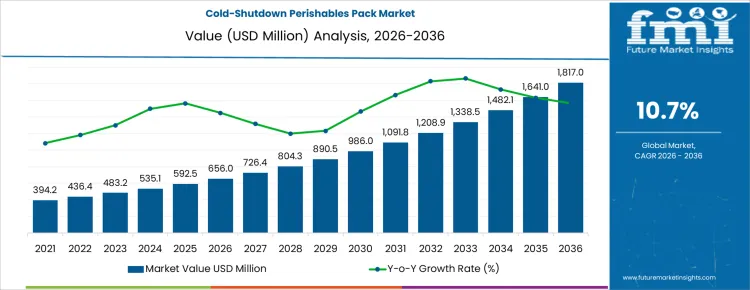
The Cold-Shutdown Perishables Pack market is projected to expand from USD 656 million in 2026 to USD 1,817 million by 2036, registering a CAGR of 10.7%. Growth is largely fueled by rising demand for temperature-sensitive packaging in fresh meat, seafood, dairy, chilled foods, and e-commerce perishable shipments. Innovative temperature-activated shut down barriers, phase-change materials, and smart thermal buffering are increasingly adopted to maintain cold-chain integrity across transportation and last-mile delivery.
Insulated cartons, liners, and reusable cold packs dominate the market, particularly in fresh meat, seafood, and dairy segments. Materials such as paperboard with insulation, expanded polypropylene, molded fiber, and corrugated liners are widely used to balance cost and performance. The market benefits from the growth of global protein exports, online grocery platforms, and fruits and vegetables distribution, which drive the need for reliable cold-shutdown systems. Key players focus on integrating advanced thermal solutions while meeting environmental and regulatory requirements.
Quick Stats of the Cold-Shutdown Perishables Pack Market
- Cold-Shutdown Perishables Pack Market Value (2026): USD 656 million
- Cold-Shutdown Perishables Pack Forecast Value (2036): USD 1,817 million
- Cold-Shutdown Perishables Pack Market Forecast CAGR (2026 to 2036): 10.7%
- Leading Packaging Format in the Market: Insulated Cartons & Liners (45%)
- Key Growth Regions in the Market: India, China, USA, Brazil, Germany
- Top Players in the Market: Sealed Air, Storopack, SF Packaging, ColdStar, Local Cold-Chain OEMs, Daifuku, Sonoco
What is the Growth Forecast for the Cold-Shutdown Perishables Pack Market through 2036?
From 2026 to 2031, the cold-shutdown perishables pack market grows from USD 656 million to approximately USD 943 million, representing the early adoption phase. Annual value additions increase from USD 48 million in 2026 to USD 70 million in 2031. Growth is driven by adoption in cold-chain logistics for perishable food, pharmaceuticals, and temperature-sensitive consumer goods, where maintaining precise thermal control and shelf-life extension is critical. Uptake is concentrated in North America and Europe, accounting for around 60% of early adoption, with pilot programs validating insulation performance, material durability, and supply chain integration.
Between 2031 and 2036, the market expands from roughly USD 943 million to USD 1,817 million, illustrating the late adoption phase characterized by broad commercialization and structural penetration. Annual increments rise from USD 70 million to USD 155 million, driven by portfolio-wide deployment, higher per-unit usage, and multi-region adoption across retail, foodservice, and pharmaceutical sectors. Growth is reinforced by regulatory support for cold-chain standards, repeat procurement, and integration into automated packaging and logistics systems. Early growth relied on selective high-value projects, while later expansion reflects normalized adoption and scale-up across global cold-chain operations.
Cold Shutdown Perishables Pack Market Key Takeaways
| Metric | Value |
|---|---|
| Market Value (2026) | USD 656 million |
| Forecast Value (2036) | USD 1,817 million |
| Forecast CAGR (2026 to 2036) | 10.7% |
Why Are Cold Shutdown Packs Redefining How Perishables Are Protected in Transit?
Cold shutdown packs emerged from repeated failures at handover points, not from innovation roadmaps. Products arrived within target ranges for most of the journey, then failed after short exposure during loading bays, customs hold, or vehicle changeovers. Traditional insulated packaging slowed temperature rise but could not arrest it. In response, cold shutdown packs were deployed to rapidly absorb thermal spikes and stabilise contents without power. Early demand came from exporters of seafood, biologics, and premium produce who traced losses to brief, uncontrolled events. Adoption was narrow and evidence driven, shaped by post-shipment audits rather than packaging strategy.
Future demand reflects a shift in how cold chain risk is managed. Temperature excursions are now treated as predictable events rather than exceptions. Cold shutdown packs are specified to protect products during known vulnerability windows, not entire journeys. This reframes their role from insulation to interruption control. Logistics contracts increasingly define acceptable exposure durations, making rapid thermal buffering a requirement. Growth follows formalisation of these risk models, where preventing short failures delivers more value than extending baseline cooling performance.
What Factors Are Affecting the Demand for Cold Shutdown Perishables Pack Market in Terms of Packaging Format and Material?
Demand for cold shutdown perishables packs is structured around packaging format and material choice used during planned or unplanned cold chain interruptions. Insulated cartons and liners account for about 45% of total demand, making them the leading packaging format. Reusable cold packs, cold chain boxes, insulated crates, and other formats represent additional categories without disclosed share splits.
These formats differ in thermal retention duration, handling flexibility, and deployment speed. Material segmentation reflects insulation efficiency and disposal requirements. Paperboard combined with insulation accounts for about 50% of demand, followed by EPP and molded fibre, corrugated with liners, PP and fiber combinations, and other materials. Together, these segments explain demand formation shaped by thermal protection needs and emergency handling requirements rather than routine distribution volumes.
What Drives Demand by Packaging Format in the Cold Shutdown Perishables Pack Market?
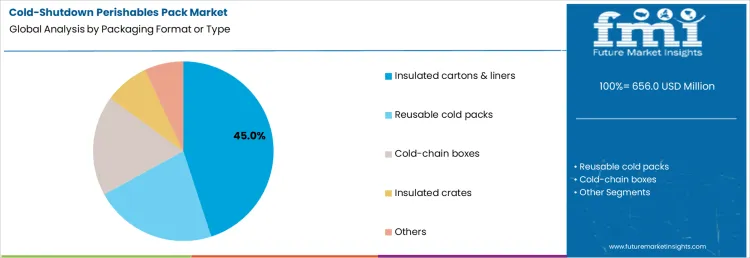
Insulated cartons and liners lead demand with a 45% share because they can be rapidly deployed during cold storage shutdowns and transport delays. These formats provide short to medium duration temperature control without reliance on powered refrigeration. Reusable cold packs are applied where repeated shutdown risk exists and retrieval logistics are manageable. Cold chain boxes are used for higher value perishables requiring extended protection. Insulated crates support bulk handling during warehouse level disruptions. Format selection reflects response speed, payload value, and handling constraints. Demand therefore aligns with contingency planning practices rather than standard cold chain packaging usage.
Packaging format demand remains stable because shutdown response protocols are predefined. Cartons and liners are stocked for immediate use. Reusable systems are planned where reverse logistics are established. Boxes and crates are reserved for higher value goods. These patterns limit frequent format substitution. Packaging format segmentation highlights reliance on flexible, rapidly deployable solutions rather than optimized long haul cold chain designs.
How Does Material Choice Shape Demand for Cold Shutdown Perishables Pack Market?
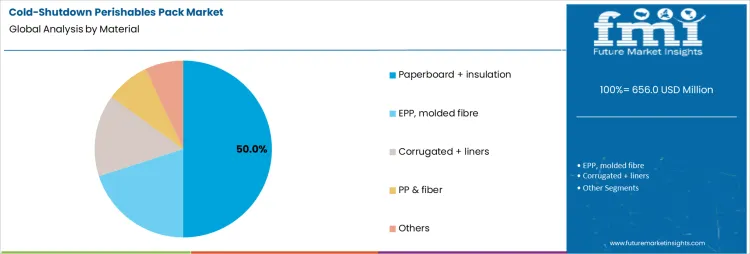
Paperboard with insulation accounts for about 50% of total demand, making it the leading material category. Its dominance reflects availability, cost control, and compatibility with emergency packing operations. EPP and molded fibre materials are used where durability and reuse are prioritized. Corrugated with liners supports scalable deployment for mixed perishables. PP and fiber combinations are applied in insulated crates requiring mechanical strength. Other materials address niche thermal or regulatory needs. Material selection depends on insulation performance, disposal method, and supply availability during disruptions. Demand follows practicality under shutdown conditions rather than optimized lifecycle efficiency.
Paperboard based systems maintain leadership due to rapid sourcing and ease of disposal. Reusable materials scale where infrastructure allows recovery. Corrugated solutions remain flexible for varied payloads. Durable polymers are confined to controlled logistics environments. Operators avoid altering material strategies during shutdown events. This stabilizes material driven demand. Material segmentation therefore reinforces concentration in readily available insulated paper based systems.
How Are Cold-Shutdown Perishables Packs Being Applied Across Food Logistics and Retail?
Use appears in temperature-sensitive supply chains where rapid cooling and maintenance of near-zero temperatures prevent spoilage in fresh produce, seafood, dairy, and prepared meals. Cold-shutdown packs combine insulation, phase-change materials, and active cooling elements to extend shelf life during transport and last-mile delivery. Retailers, meal kit providers, and e-commerce grocers adopt these packs to ensure product quality upon arrival while reducing waste. These applications reflect operational and preservation priorities rather than decorative objectives, with adoption driven by temperature control, food safety, and logistics efficiency.
What Operational and Material Conditions Support Adoption of Cold-Shutdown Perishables Packs?
Selection aligns with transport and storage systems that require compact, reusable, or single-use temperature-controlled packaging. Engineers optimize phase-change material properties and pack design to maintain target temperature for required durations under variable ambient conditions. Distribution operations rely on predictable thermal performance and ease of handling. Packaging teams integrate packs with existing palletization, stacking, and conveyor workflows. These conditions emerge from operational efficiency, cold chain integrity, and food quality priorities in structured perishables logistics.
Which Practical Considerations Limit Wider Use of Cold-Shutdown Perishables Packs?
High material and production costs influence adoption for low-margin or high-volume products. Thermal performance can degrade if packs are mishandled, stacked incorrectly, or exposed to extreme conditions. Weight, bulk, and storage requirements can affect transport efficiency. Reusability introduces cleaning and logistics complexity, while single-use versions generate waste. These factors lead to selective deployment where spoilage prevention, cold chain reliability, and product integrity justify incremental cost and operational management.
What is the Demand for Cold Shutdown Perishables Pack by Country?
| Country | CAGR (%) |
|---|---|
| USA | 8.8% |
| Germany | 7.4% |
| China | 11.0% |
| India | 12.2% |
| Brazil | 8.1% |
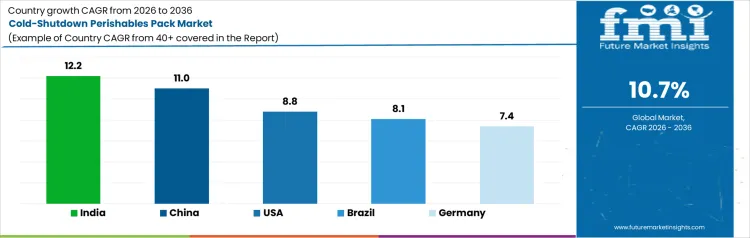
The demand for cold shutdown perishables packs varies across countries, driven by cold chain expansion, perishable food distribution, and food safety requirements. India leads with a 12.2% CAGR, supported by growing processed food and fresh produce sectors, increasing refrigerated transport, and adoption of advanced packaging solutions. China follows at 11.0%, driven by large scale food production, logistics modernization, and regulatory compliance for perishable goods. The USA grows at 8.8%, reflecting adoption in retail, foodservice, and industrial cold chain operations. Brazil records 8.1%, shaped by expansion in refrigerated transport and organized retail. Germany posts 7.4%, supported by mature cold chain infrastructure and strict food safety standards.
How Is Cold-Shutdown Technology Driving Growth in Perishables Packaging in the United States?
In the United States, revenue from the Cold-Shutdown Perishables Pack Market is expanding at a CAGR of 8.8% through 2036, driven by adoption of packaging solutions that temporarily reduce product temperature to extend shelf life during transport and storage. Manufacturers are integrating cold-shutdown packs in food, pharmaceutical, and perishable goods logistics to maintain freshness and prevent spoilage. Demand is concentrated in foodservice, retail distribution, and pharmaceutical supply chains. Domestic suppliers provide high-performance, temperature-stable packaging solutions compatible with cold-chain logistics systems. Growth in perishables transportation, regulatory standards, and recurring cold-chain operations are sustaining predictable procurement nationwide.
- Foodservice, retail, and pharmaceutical logistics drive adoption
- Packaging maintains freshness and prevents spoilage during transport
- Domestic suppliers provide temperature-stable, high-performance solutions
- Recurring cold-chain operations sustain predictable procurement
How Are Cold-Chain Standards Supporting Growth in Germany?
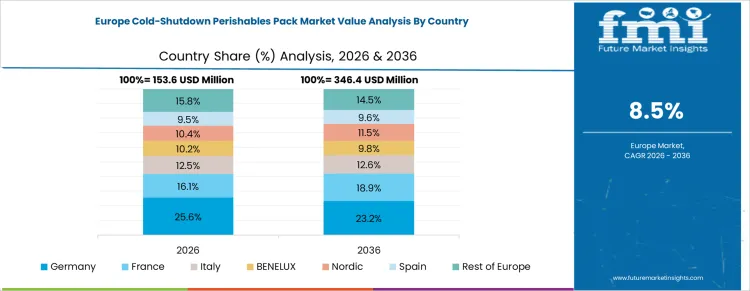
Germany continues to record steady growth in the Cold-Shutdown Perishables Pack Market at a CAGR of 7.4% through 2036, supported by strict cold-chain standards and food safety regulations. Manufacturers are adopting cold-shutdown packs to maintain quality, freshness, and safety of perishable goods during transport and storage. Demand is concentrated in food distribution, retail logistics, and pharmaceutical supply chains. Domestic suppliers provide packaging solutions compatible with existing cold-chain systems and temperature-sensitive materials. Compliance with food safety standards and recurring cold-chain operations are sustaining measured adoption nationwide.
- Food distribution, retail logistics, and pharmaceutical supply chains anchor demand
- Packaging preserves quality, freshness, and safety of perishables
- Domestic suppliers provide cold-chain-compatible, high-performance solutions
- Recurring operations sustain steady adoption
How Is Industrial and Retail Cold-Chain Expansion Accelerating Adoption in China?
In China, revenue from the Cold-Shutdown Perishables Pack Market is growing at a CAGR of 11% through 2036, driven by rapid expansion of cold-chain infrastructure for food, pharmaceutical, and perishable goods. Manufacturers are integrating cold-shutdown packs to extend shelf life, reduce spoilage, and maintain product quality. Demand is strong across foodservice, retail distribution, and pharmaceutical logistics. Domestic suppliers are scaling production of high-performance, temperature-stable packaging solutions compatible with automated cold-chain systems. Expanding cold-chain infrastructure and recurring logistics operations are sustaining rapid adoption nationwide.
- Foodservice, retail distribution, and pharmaceutical logistics drive adoption
- Packaging extends shelf life and reduces spoilage
- Domestic suppliers scale high-performance, temperature-stable solutions
- Recurring logistics operations sustain consistent adoption
How Is Perishables Handling and Industrial Packaging Supporting Growth in India?
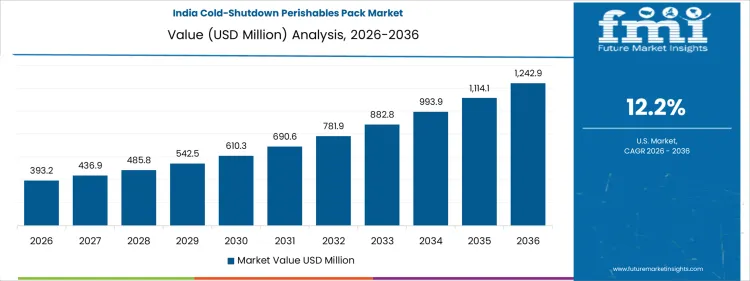
In India, revenue from the Cold-Shutdown Perishables Pack Market is expanding at a CAGR of 12.2% through 2036, supported by growth in cold-chain logistics and packaging for food, pharmaceuticals, and temperature-sensitive goods. Manufacturers are adopting cold-shutdown packs to maintain product integrity, prevent spoilage, and improve supply chain efficiency. Demand is concentrated in foodservice, retail distribution, and pharmaceutical logistics. Domestic suppliers provide high-performance, temperature-stable packaging solutions compatible with cold-chain systems. Expansion of cold-chain infrastructure, regulatory standards, and recurring logistics operations are sustaining robust adoption nationwide.
- Foodservice, retail distribution, and pharmaceutical logistics drive adoption
- Packaging maintains product integrity and prevents spoilage
- Domestic suppliers provide high-performance, temperature-stable solutions
- Recurring cold-chain operations sustain robust adoption
How Is Cold-Chain Packaging Expansion Supporting Adoption in Brazil?
Brazil is seeing strong growth in the Cold-Shutdown Perishables Pack Market at a CAGR of 8.1% through 2036, supported by increasing adoption of cold-chain solutions for food, pharmaceutical, and perishable goods transport. Manufacturers are integrating cold-shutdown packs to extend shelf life, maintain freshness, and prevent spoilage. Demand is concentrated in foodservice, retail logistics, and pharmaceutical supply chains. Domestic suppliers are expanding production of high-performance, temperature-stable packaging solutions compatible with cold-chain systems. Growth in cold-chain infrastructure and recurring logistics operations are sustaining robust procurement nationwide.
- Foodservice, retail logistics, and pharmaceutical supply chains drive adoption
- Packaging extends shelf life and maintains freshness
- Domestic suppliers expand temperature-stable, high-performance solutions
- Recurring cold-chain operations sustain robust procurement
Which Companies Compete in The Cold Shutdown Perishables Pack Market Based On Emergency Handling and Recovery Behavior?
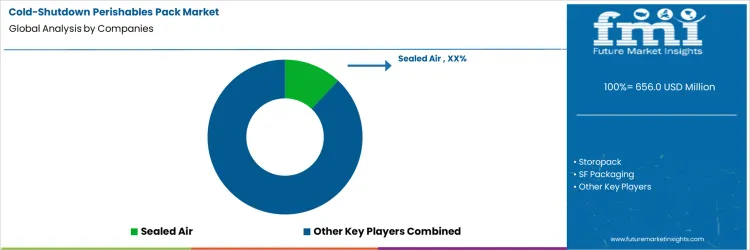
Cold shutdown perishables packs are chosen for how they behave during disruption, not for routine cold chain efficiency. In power loss scenarios, packaging must tolerate manual handling, rapid relocation, and uneven temperature gradients while limiting product loss. Sealed Air and Storopack are assessed on insulation behavior during uncontrolled dwell times and on how packs respond when refrigeration is restored. Sonoco participates where rigid and semi rigid formats provide structural protection during emergency movement of goods. These solutions are often tested during contingency drills rather than standard distribution trials. Acceptance depends on whether packaging maintains integrity when stacked, moved, or temporarily staged outside controlled environments, where condensation and compression become failure risks.
Market outcomes are shaped by operational ownership rather than packaging specification alone. ColdStar and SF Packaging operate closer to contingency planning, supplying packs designed around shutdown protocols defined by cold storage operators. Local cold chain OEMs influence pack design by imposing constraints linked to forklifts, racking, and manual handling during outages. Daifuku affects adoption indirectly where automated cold storage systems require packs to transition smoothly between automated and manual workflows during shutdown events. In this market, packaging that simplifies recovery procedures often outperforms technically superior insulation. Competitive positioning depends on ease of deployment under stress, compatibility with restart operations, and predictability during abnormal handling rather than thermal metrics measured under controlled conditions.
Key Players in the Cold Shutdown Perishables Pack Market
- Sealed Air
- Storopack
- SF Packaging
- ColdStar
- Local cold-chain OEMs
- Daifuku
- Sonoco
Scope of the Report
| Items | Values |
|---|---|
| Quantitative Units (2026) | USD million |
| End-use / Application | Fresh meat & seafood, Dairy & chilled foods, Fresh e-commerce, Fruits & vegetables, Protein exports, Premium perishables |
| Packaging Format / Type | Insulated cartons & liners, Reusable cold packs, Cold-chain boxes, Insulated crates, Others |
| Material | Paperboard insulation, EPP & molded fibre, Corrugated liners, PP & fiber combinations, Others |
| Technology | Temperature-activated shut down barriers, Phase-change materials, Smart thermal buffering, Low-cost cooling tech, Others |
| Region | Asia Pacific (China, Japan, South Korea, India, Australia & New Zealand, ASEAN, Rest of Asia Pacific), Europe (Germany, United Kingdom, France, Italy, Spain, Nordic, BENELUX, Rest of Europe), North America (United States, Canada, Mexico), Latin America (Brazil, Chile, Rest of Latin America), Middle East & Africa (KSA, Other GCC Countries, Turkey, South Africa, Other African Union, Rest of Middle East & Africa) |
| Key Companies Profiled | Sealed Air, Storopack, SF Packaging, ColdStar, Local cold-chain OEMs, Daifuku, Sonoco |
| Additional Attributes | Dollar by sales by end-use application, Dollar by sales by packaging format, Dollar by sales by material, Dollar by sales by technology, Dollar by sales by region, Thermal performance under shutdown conditions, Rapid deployment and recovery handling, Integration with cold-chain logistics systems, Regulatory compliance and safety assurance, Reusability and environmental considerations |
Cold Shutdown Perishables Pack Market Segmentation
By End-use / Application:
- Fresh meat & seafood
- Dairy & chilled foods
- Fresh e-commerce
- Fruits & vegetables
- Protein exports
- Premium perishables
By Packaging Format / Type:
- Insulated cartons & liners
- Reusable cold packs
- Cold-chain boxes
- Insulated crates
- Others
By Material:
- Paperboard insulation
- EPP, molded fibre
- Corrugated liners
- PP & fiber
- Others
By Technology:
- Temperature-activated shut down barriers
- Phase-change materials
- Smart thermal buffering
- Low-cost cooling tech
- Others
By Region:
- Asia Pacific
- China
- Japan
- South Korea
- India
- Australia & New Zealand
- ASEAN
- Rest of Asia Pacific
- Europe
- Germany
- United Kingdom
- France
- Italy
- Spain
- Nordic
- BENELUX
- Rest of Europe
- North America
- United States
- Canada
- Mexico
- Latin America
- Brazil
- Chile
- Rest of Latin America
- Middle East & Africa
- Kingdom of Saudi Arabia
- Other GCC Countries
- Turkey
- South Africa
- Other African Union
- Rest of Middle East & Africa
Frequently Asked Questions
How big is the cold-shutdown perishables pack market in 2026?
The global cold-shutdown perishables pack market is estimated to be valued at USD 656.0 million in 2026.
What will be the size of cold-shutdown perishables pack market in 2036?
The market size for the cold-shutdown perishables pack market is projected to reach USD 1,817.0 million by 2036.
How much will be the cold-shutdown perishables pack market growth between 2026 and 2036?
The cold-shutdown perishables pack market is expected to grow at a 10.7% CAGR between 2026 and 2036.
What are the key end-use applications in the cold-shutdown perishables pack market?
The key product types in cold-shutdown perishables pack market are fresh meat & seafood, dairy & chilled foods, fresh e-commerce, fruits & vegetables, protein exports and premium perishables.
Which packaging format or type segment to contribute significant share in the cold-shutdown perishables pack market in 2026?
In terms of packaging format or type, insulated cartons & liners segment to command 45.0% share in the cold-shutdown perishables pack market in 2026.
Preview the report firsthand - request a free sample
Get SampleGet the brochure for pricing and purchase details.
Get PDFTable of Content
- Executive Summary
- Global Market Outlook
- Demand-side Trends
- Supply-side Trends
- Technology Roadmap Analysis
- Analysis and Recommendations
- Market Overview
- Market Coverage / Taxonomy
- Market Definition / Scope / Limitations
- Market Background
- Market Dynamics
- Drivers
- Restraints
- Opportunity
- Trends
- Scenario Forecast
- Demand in Optimistic Scenario
- Demand in Likely Scenario
- Demand in Conservative Scenario
- Opportunity Map Analysis
- Product Life Cycle Analysis
- Supply Chain Analysis
- Investment Feasibility Matrix
- Value Chain Analysis
- PESTLE and Porter’s Analysis
- Regulatory Landscape
- Regional Parent Market Outlook
- Production and Consumption Statistics
- Import and Export Statistics
- Market Dynamics
- Global Market Analysis 2021 to 2025 and Forecast, 2026 to 2036
- Historical Market Size Value (USD Million) Analysis, 2021 to 2025
- Current and Future Market Size Value (USD Million) Projections, 2026 to 2036
- Y-o-Y Growth Trend Analysis
- Absolute $ Opportunity Analysis
- Global Market Pricing Analysis 2021 to 2025 and Forecast 2026 to 2036
- Global Market Analysis 2021 to 2025 and Forecast 2026 to 2036, By End-use
- Introduction / Key Findings
- Historical Market Size Value (USD Million) Analysis By End-use , 2021 to 2025
- Current and Future Market Size Value (USD Million) Analysis and Forecast By End-use , 2026 to 2036
- Fresh meat & seafood
- Dairy & chilled foods
- Fresh e-commerce
- Fruits & vegetables
- Protein exports
- Premium perishables
- Y-o-Y Growth Trend Analysis By End-use , 2021 to 2025
- Absolute $ Opportunity Analysis By End-use , 2026 to 2036
- Global Market Analysis 2021 to 2025 and Forecast 2026 to 2036, By Packaging Format or Type
- Introduction / Key Findings
- Historical Market Size Value (USD Million) Analysis By Packaging Format or Type, 2021 to 2025
- Current and Future Market Size Value (USD Million) Analysis and Forecast By Packaging Format or Type, 2026 to 2036
- Insulated cartons & liners
- Reusable cold packs
- Cold-chain boxes
- Insulated crates
- Others
- Y-o-Y Growth Trend Analysis By Packaging Format or Type, 2021 to 2025
- Absolute $ Opportunity Analysis By Packaging Format or Type, 2026 to 2036
- Global Market Analysis 2021 to 2025 and Forecast 2026 to 2036, By Material
- Introduction / Key Findings
- Historical Market Size Value (USD Million) Analysis By Material, 2021 to 2025
- Current and Future Market Size Value (USD Million) Analysis and Forecast By Material, 2026 to 2036
- Paperboard + insulation
- EPP, molded fibre
- Corrugated + liners
- PP & fiber
- Others
- Y-o-Y Growth Trend Analysis By Material, 2021 to 2025
- Absolute $ Opportunity Analysis By Material, 2026 to 2036
- Global Market Analysis 2021 to 2025 and Forecast 2026 to 2036, By Technology
- Introduction / Key Findings
- Historical Market Size Value (USD Million) Analysis By Technology, 2021 to 2025
- Current and Future Market Size Value (USD Million) Analysis and Forecast By Technology, 2026 to 2036
- Temperature-activated shutdown barriers
- Phase-change materials
- Smart thermal buffering
- Low-cost cooling tech
- Others
- Y-o-Y Growth Trend Analysis By Technology, 2021 to 2025
- Absolute $ Opportunity Analysis By Technology, 2026 to 2036
- Global Market Analysis 2021 to 2025 and Forecast 2026 to 2036, By Region
- Introduction
- Historical Market Size Value (USD Million) Analysis By Region, 2021 to 2025
- Current Market Size Value (USD Million) Analysis and Forecast By Region, 2026 to 2036
- North America
- Latin America
- Western Europe
- Eastern Europe
- East Asia
- South Asia and Pacific
- Middle East & Africa
- Market Attractiveness Analysis By Region
- North America Market Analysis 2021 to 2025 and Forecast 2026 to 2036, By Country
- Historical Market Size Value (USD Million) Trend Analysis By Market Taxonomy, 2021 to 2025
- Market Size Value (USD Million) Forecast By Market Taxonomy, 2026 to 2036
- By Country
- USA
- Canada
- Mexico
- By End-use
- By Packaging Format or Type
- By Material
- By Technology
- By Country
- Market Attractiveness Analysis
- By Country
- By End-use
- By Packaging Format or Type
- By Material
- By Technology
- Key Takeaways
- Latin America Market Analysis 2021 to 2025 and Forecast 2026 to 2036, By Country
- Historical Market Size Value (USD Million) Trend Analysis By Market Taxonomy, 2021 to 2025
- Market Size Value (USD Million) Forecast By Market Taxonomy, 2026 to 2036
- By Country
- Brazil
- Chile
- Rest of Latin America
- By End-use
- By Packaging Format or Type
- By Material
- By Technology
- By Country
- Market Attractiveness Analysis
- By Country
- By End-use
- By Packaging Format or Type
- By Material
- By Technology
- Key Takeaways
- Western Europe Market Analysis 2021 to 2025 and Forecast 2026 to 2036, By Country
- Historical Market Size Value (USD Million) Trend Analysis By Market Taxonomy, 2021 to 2025
- Market Size Value (USD Million) Forecast By Market Taxonomy, 2026 to 2036
- By Country
- Germany
- UK
- Italy
- Spain
- France
- Nordic
- BENELUX
- Rest of Western Europe
- By End-use
- By Packaging Format or Type
- By Material
- By Technology
- By Country
- Market Attractiveness Analysis
- By Country
- By End-use
- By Packaging Format or Type
- By Material
- By Technology
- Key Takeaways
- Eastern Europe Market Analysis 2021 to 2025 and Forecast 2026 to 2036, By Country
- Historical Market Size Value (USD Million) Trend Analysis By Market Taxonomy, 2021 to 2025
- Market Size Value (USD Million) Forecast By Market Taxonomy, 2026 to 2036
- By Country
- Russia
- Poland
- Hungary
- Balkan & Baltic
- Rest of Eastern Europe
- By End-use
- By Packaging Format or Type
- By Material
- By Technology
- By Country
- Market Attractiveness Analysis
- By Country
- By End-use
- By Packaging Format or Type
- By Material
- By Technology
- Key Takeaways
- East Asia Market Analysis 2021 to 2025 and Forecast 2026 to 2036, By Country
- Historical Market Size Value (USD Million) Trend Analysis By Market Taxonomy, 2021 to 2025
- Market Size Value (USD Million) Forecast By Market Taxonomy, 2026 to 2036
- By Country
- China
- Japan
- South Korea
- By End-use
- By Packaging Format or Type
- By Material
- By Technology
- By Country
- Market Attractiveness Analysis
- By Country
- By End-use
- By Packaging Format or Type
- By Material
- By Technology
- Key Takeaways
- South Asia and Pacific Market Analysis 2021 to 2025 and Forecast 2026 to 2036, By Country
- Historical Market Size Value (USD Million) Trend Analysis By Market Taxonomy, 2021 to 2025
- Market Size Value (USD Million) Forecast By Market Taxonomy, 2026 to 2036
- By Country
- India
- ASEAN
- Australia & New Zealand
- Rest of South Asia and Pacific
- By End-use
- By Packaging Format or Type
- By Material
- By Technology
- By Country
- Market Attractiveness Analysis
- By Country
- By End-use
- By Packaging Format or Type
- By Material
- By Technology
- Key Takeaways
- Middle East & Africa Market Analysis 2021 to 2025 and Forecast 2026 to 2036, By Country
- Historical Market Size Value (USD Million) Trend Analysis By Market Taxonomy, 2021 to 2025
- Market Size Value (USD Million) Forecast By Market Taxonomy, 2026 to 2036
- By Country
- Kingdom of Saudi Arabia
- Other GCC Countries
- Turkiye
- South Africa
- Other African Union
- Rest of Middle East & Africa
- By End-use
- By Packaging Format or Type
- By Material
- By Technology
- By Country
- Market Attractiveness Analysis
- By Country
- By End-use
- By Packaging Format or Type
- By Material
- By Technology
- Key Takeaways
- Key Countries Market Analysis
- USA
- Pricing Analysis
- Market Share Analysis, 2025
- By End-use
- By Packaging Format or Type
- By Material
- By Technology
- Canada
- Pricing Analysis
- Market Share Analysis, 2025
- By End-use
- By Packaging Format or Type
- By Material
- By Technology
- Mexico
- Pricing Analysis
- Market Share Analysis, 2025
- By End-use
- By Packaging Format or Type
- By Material
- By Technology
- Brazil
- Pricing Analysis
- Market Share Analysis, 2025
- By End-use
- By Packaging Format or Type
- By Material
- By Technology
- Chile
- Pricing Analysis
- Market Share Analysis, 2025
- By End-use
- By Packaging Format or Type
- By Material
- By Technology
- Germany
- Pricing Analysis
- Market Share Analysis, 2025
- By End-use
- By Packaging Format or Type
- By Material
- By Technology
- UK
- Pricing Analysis
- Market Share Analysis, 2025
- By End-use
- By Packaging Format or Type
- By Material
- By Technology
- Italy
- Pricing Analysis
- Market Share Analysis, 2025
- By End-use
- By Packaging Format or Type
- By Material
- By Technology
- Spain
- Pricing Analysis
- Market Share Analysis, 2025
- By End-use
- By Packaging Format or Type
- By Material
- By Technology
- France
- Pricing Analysis
- Market Share Analysis, 2025
- By End-use
- By Packaging Format or Type
- By Material
- By Technology
- India
- Pricing Analysis
- Market Share Analysis, 2025
- By End-use
- By Packaging Format or Type
- By Material
- By Technology
- ASEAN
- Pricing Analysis
- Market Share Analysis, 2025
- By End-use
- By Packaging Format or Type
- By Material
- By Technology
- Australia & New Zealand
- Pricing Analysis
- Market Share Analysis, 2025
- By End-use
- By Packaging Format or Type
- By Material
- By Technology
- China
- Pricing Analysis
- Market Share Analysis, 2025
- By End-use
- By Packaging Format or Type
- By Material
- By Technology
- Japan
- Pricing Analysis
- Market Share Analysis, 2025
- By End-use
- By Packaging Format or Type
- By Material
- By Technology
- South Korea
- Pricing Analysis
- Market Share Analysis, 2025
- By End-use
- By Packaging Format or Type
- By Material
- By Technology
- Russia
- Pricing Analysis
- Market Share Analysis, 2025
- By End-use
- By Packaging Format or Type
- By Material
- By Technology
- Poland
- Pricing Analysis
- Market Share Analysis, 2025
- By End-use
- By Packaging Format or Type
- By Material
- By Technology
- Hungary
- Pricing Analysis
- Market Share Analysis, 2025
- By End-use
- By Packaging Format or Type
- By Material
- By Technology
- Kingdom of Saudi Arabia
- Pricing Analysis
- Market Share Analysis, 2025
- By End-use
- By Packaging Format or Type
- By Material
- By Technology
- Turkiye
- Pricing Analysis
- Market Share Analysis, 2025
- By End-use
- By Packaging Format or Type
- By Material
- By Technology
- South Africa
- Pricing Analysis
- Market Share Analysis, 2025
- By End-use
- By Packaging Format or Type
- By Material
- By Technology
- USA
- Market Structure Analysis
- Competition Dashboard
- Competition Benchmarking
- Market Share Analysis of Top Players
- By Regional
- By End-use
- By Packaging Format or Type
- By Material
- By Technology
- Competition Analysis
- Competition Deep Dive
- Sealed Air
- Overview
- Product Portfolio
- Profitability by Market Segments (Product/Age /Sales Channel/Region)
- Sales Footprint
- Strategy Overview
- Marketing Strategy
- Product Strategy
- Channel Strategy
- Storopack
- SF Packaging
- ColdStar
- Local cold-chain OEMs
- Daifuku
- Sonoco
- Sealed Air
- Competition Deep Dive
- Assumptions & Acronyms Used
- Research Methodology


