

- Industry Size (2026)
- USD 256.0 Mn
- Forecast (2036)
- USD 537.5 Mn
- CAGR (2026 to 2036)
- 7.7%
Composite Flap Track Fairing Systems for Drag Reduction Market Size, Market Forecast and Outlook by FMI
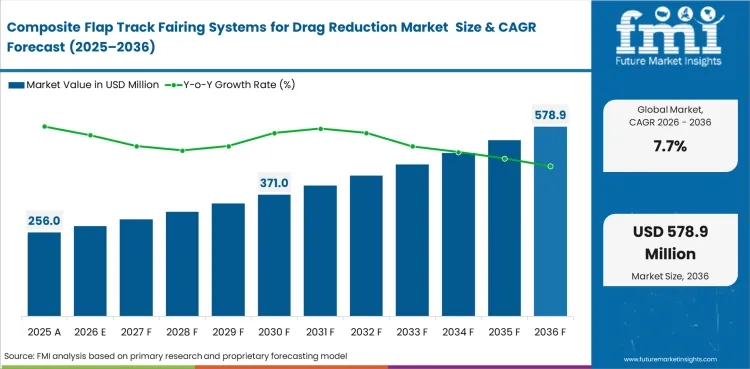
The composite flap track fairing systems for drag reduction market was valued at USD 237.7 million in 2025 and is expected to reach USD 256.0 million in 2026. Market value is projected to rise to USD 537.5 million by 2036, and register a CAGR of 7.7% from 2026 to 2036. Incremental opportunity across the forecast period is estimated at USD 281.5 million.
Summary of Composite Flap Track Fairing Systems for Drag Reduction Market
- The market is forecast to reach USD 537.5 Million by 2036.
- The market is expected to grow at a CAGR of 7.7% from 2026 to 2036.
- The market was estimated at USD 237.7 Million in 2025.
- The forecast period represents an incremental opportunity of USD 281.5 Million.
- Narrowbody aircraft are expected to lead with 44.0% share in 2026 due to larger fleet presence and stronger retrofit potential.
- Carbon fiber is estimated to hold 61.0% share in 2026 because low weight and high stiffness are important in certified exterior parts.
- OEM line-fit represents 57.0% of the fitment type segment in 2026, reflecting stronger demand continuity across long aircraft production programs.
- Full fairings contribute 39.0% of the fairing scope segment in 2026, supported by broader airflow coverage and higher drag-reduction value.
- Prepreg layup captures 36.0% of the manufacturing process segment in 2026, owing to established aerospace qualification and process familiarity.
- OEMs account for 41.0% of the end user segment in 2026, indicating demand concentration around line-fit program integration.
- Program contracts hold 52.0% of the sales channel segment in 2026, supported by structured aerospace sourcing and approved supplier arrangements.
Key Takeaways, Market Size, and Forecast
- Composite Flap Track Fairing Systems for Drag Reduction Market is projected to grow from USD 256.0 million in 2026 to USD 537.5 million by 2036, at a CAGR of 7.7%.
- The composite flap track fairing systems for drag reduction market was valued at USD 237.7 million in 2025.
- By 2036, the Composite Flap Track Fairing Systems for Drag Reduction Market is expected to be worth USD 537.5 million.
- From 2026 to 2036, the market is projected to expand at a CAGR of 7.7%.
- The market is projected to create an incremental opportunity of USD 281.5 million between 2026 and 2036.
- In 2026, Narrowbody aircraft is expected to account for 44.0% of the aircraft platform segment.
- India (9.5%) and China (9.2%) are two of the fastest growing markets.
Composite Flap Track Fairing Systems for Drag Reduction Market Key Takeaways
| Parameter | Details |
|---|---|
| Market value (2026) | USD 256.0 million |
| Forecast value (2036) | USD 537.5 million |
| CAGR (2026 to 2036) | 7.7% |
| Estimated market value (2025) | USD 237.7 million |
| Incremental opportunity | USD 281.5 million |
| Leading aircraft platform | Narrowbody aircraft (44.0% of aircraft platform segment) |
| Leading material type | Carbon fiber (61.0% of material type segment) |
| Leading fitment type | OEM line-fit (57.0% of fitment type segment) |
| Leading fairing scope | Full fairings (39.0% of fairing scope segment) |
| Leading manufacturing process | Prepreg layup (36.0% of manufacturing process segment) |
| Leading end use | OEMs (41.0% of end user segment) |
| Leading sales channel | Program contracts (52.0% of sales channel segment) |
| Key players | FACC AG, Spirit AeroSystems, Saab AB, SABCA, Strata Manufacturing PJSC, Korean Air Aerospace Division, ShinMaywa Industries |
Source: Future Market Insights, 2026
Demand from adjacent aerodynamic-upgrade categories such as the aircraft flap track fairing retrofit kits market is supporting replacement and modification activity. Fuel cost pressure is raising interest in composite flap track fairing systems because small drag gains can influence operating economics across large aircraft fleets. Composite fairings are used in an application where low weight, precise shape, and consistent structural performance carry more than simple part replacement.
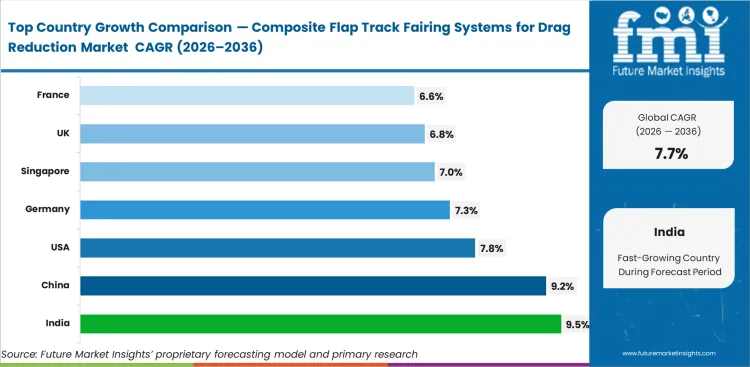
India is expected to post 9.5% CAGR through 2036, followed by China at 9.2%, the United States at 7.8%, Germany at 7.3%, Singapore at 7.0%, the United Kingdom at 6.8%, and France at 6.6%. Faster growth in India and China comes from fleet expansion and broader aerospace build-up. Mature Western markets remain relevant because line-fit programs, installed base support, and engineering depth keep demand visible. Growth rates differ because some countries create demand through aircraft use while others create it through manufacturing and long-service support.
Composite Flap Track Fairing Systems for Drag Reduction Market Definition
Composite flap track fairing systems are exterior aerodynamic parts placed around flap-track or flap-support areas on aircraft wings. Their role is to reduce drag, smooth airflow, and lower the aerodynamic loss caused by exposed high-lift hardware. This market covers composite fairing assemblies used in commercial, regional, business, and selected defense aircraft where drag reduction and lower structural weight create clear operating value.
Composite Flap Track Fairing Systems for Drag Reduction Market Inclusions
This market includes full flap-track fairings, support fairings, tip sections, access-related fairing covers, and related composite replacement or retrofit parts used for drag reduction. It covers carbon fiber, glass fiber, thermoplastic, hybrid laminate, and sandwich-based exterior fairing systems supplied through OEM line-fit, retrofit, spare replacement, and repair demand. It also includes program-contract supply, direct supply, spare sales, and service-linked fairing demand.
Composite Flap Track Fairing Systems for Drag Reduction Market Exclusions
This market does not include complete flap mechanisms, primary wing structures, generic winglets, non-aerodynamic protective covers, cabin or interior composites, or exterior hardware with no drag-reduction role near flap-track areas. It also excludes full aircraft wing redesign programs and software-based aerodynamic tools. Broad aerostructure revenue is not counted unless it is directly linked to composite flap-track or flap-support fairing systems.
Composite Flap Track Fairing Systems for Drag Reduction Market Research Methodology
- Primary Research: Interviews with aerospace supply-chain participants, maintenance-side contacts, and industry specialists were used to test fitment logic, platform demand, and supplier relevance.
- Desk Research: Public aircraft-fleet data, aerospace outlook reports, supplier disclosures, and non-commercial technical material were used to build the market view.
- Market-Sizing and Forecasting: Hybrid bottom-up and top-down methodology using verified demand and adoption modeling, supported by parent-market comparison and program-based reasoning.
- Data Validation and Update Cycle: Estimates were checked against adjacent fairing, composite airframe, and aerodynamic-upgrade categories and refreshed against current market direction.
Why is the Composite Flap Track Fairing Systems for Drag Reduction Market Growing?
- Fuel savings remain a clear buying reason for exterior drag-reduction parts.
- Composite materials suit weight-sensitive aircraft programs better than many metal parts.
- Large narrowbody fleets keep line-fit and replacement demand active over a long period.
Fuel efficiency supports demand because flap-track areas create drag that aircraft manufacturers and airlines try to reduce without redesigning the full wing design. Composite fairings fit this requirement because they reduce weight and help maintain accurate external contours after approval. Demand strengthens when a small exterior part change can improve fuel performace across a large fleet.
Aircraft production and long service life also support market growth. Line-fit demand stays active when aircraft programs hold at steady production rates. Retrofit and spare demand continuous when older fleets need drag-reduction upgrades or fairing replacement. Buyers do not usually view these systems as simple standard parts. Supplier approval depends on contour accuracy, certification fit, and stable program execution, and this can also be observed in adjacent exterior-efficiency categories such as the composite winglet and sharklet structures market.
Exterior aerodynamic parts near high-lift systems must meet strict design, structural, and service performance standards. Qualification becomes harder when a supplier lacks platform experience, process control, or approval history. Operating cost matters more than quoted part price when requalification risk can delay supply or affect platform acceptance.
Segmental Analysis
- Narrowbody aircraft and carbon fiber remain the leading combination, with estimated shares of 44.0% and 61.0% in 2026, because high fleet depth and lightweight contour control fit long-cycle commercial programs better.
- OEM line-fit is projected to contribute 57.0% share in 2026, supported by qualified program demand and steadier production visibility across active aircraft platforms.
- Full fairings and prepreg layup are expected to account for 39.0% and 36.0% share in 2026, owing to complete airflow management needs and established aerospace fabrication routes.
- OEMs, program contracts, and direct platform-linked supply remain commercially stronger than discretionary channels, with OEMs estimated at 41.0% share and program contracts at 52.0% in 2026 because approval timing and supply continuity matter more here.
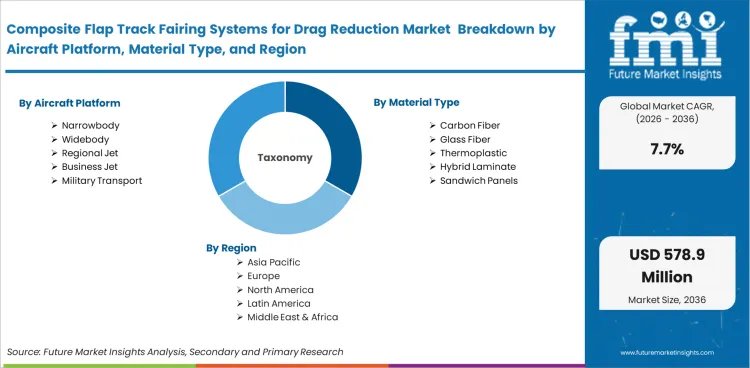
The Composite Flap Track Fairing Systems for Drag Reduction market is segmented by aircraft platform, material type, fitment type, fairing scope, manufacturing process, end user, sales channel, and geographic region. By aircraft platform, the market is divided into narrowbody aircraft, widebody aircraft, regional aircraft, business jets, and defense aircraft. By material type, the market is classified into carbon fiber, glass fiber, thermoplastic composites, hybrid laminates, and sandwich composites. By fitment type, the market is segmented into OEM line-fit and retrofit.
Insights into the Aircraft Platform
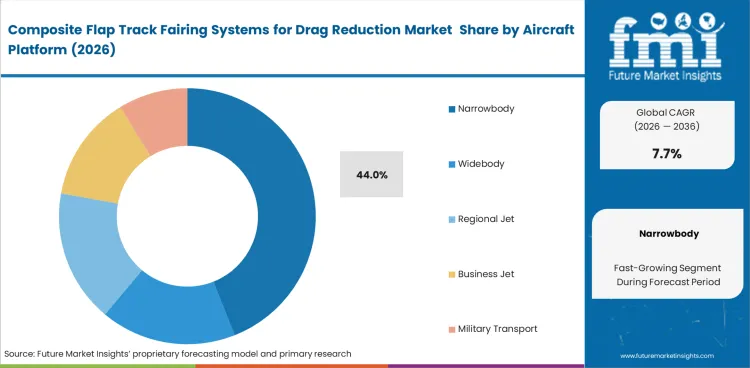
Aircraft platform shapes demand through fleet size, replacement cycles, and upgrade timing. In 2026, narrowbody aircraft are projected to contribute 44.0% of total market share, supported by large fleet size and stronger retrofit potential. Retrofit demand in this aircraft class is also related to the aircraft winglet retrofit kits for narrow body fleets market.
Insights into the Material Type
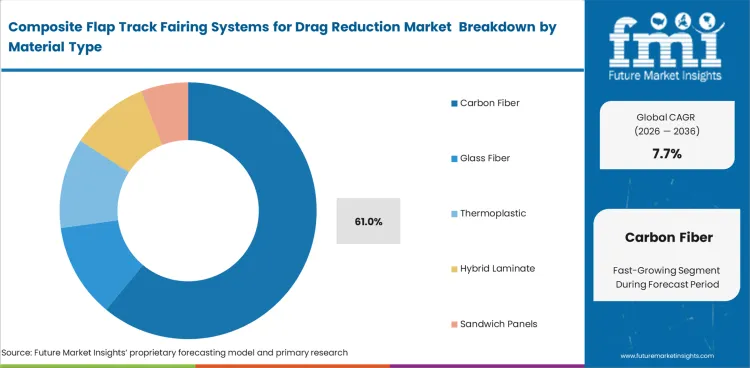
Material choice affects performance and approval confidence. Carbon fiber is expected to account for 61.0% share in 2026, supported by lower weight and higher rigidity. This material helps maintain contour stability in exterior parts without adding excess mass. Market adoption improves when the material fits existing aerospace production and repair practices, which also supports demand in the high-performance composites market.
Insights into the Fitment Type
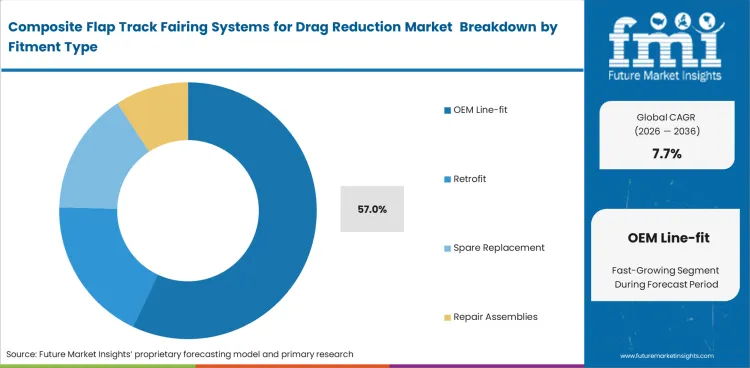
Fitment type reflects demand comes from new aircraft production, fleet upgrades, and replacement activity. OEM line-fit holds the leading position because approved fairing systems stay within longer aircraft programs after qualification. OEM line-fit is expected to represent 57.0% of the market in 2026, due to program continuity and approval carryover. Retrofit demand continues in older fleets, though operating conditions are more constrained.
Insights into the Fairing Scope
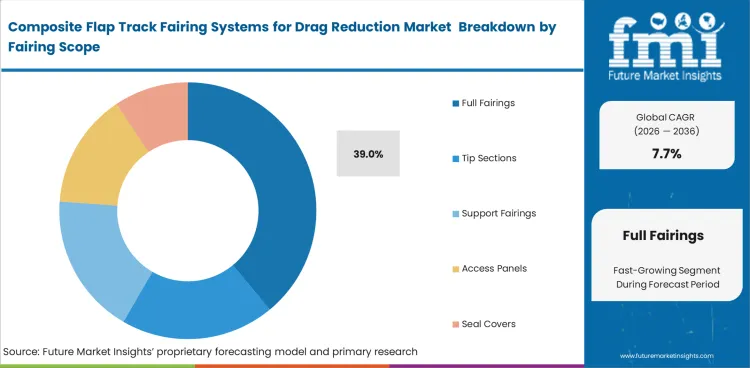
Fairing scope affects how much drag reduction can be achieved from one installation package. Full fairings hold the leading position because they cover more exposed geometry than smaller partial parts. Similar noise and drag-reduction needs appear in the low-noise landing gear fairing composite designs market. Share contribution from full fairings is expected to reach 39.0% in 2026, supported by broader coverage and better airflow control. Aircraft manufacturers usually prefer solutions that reduce work across nearby surfaces.
Insights into the Manufacturing Process
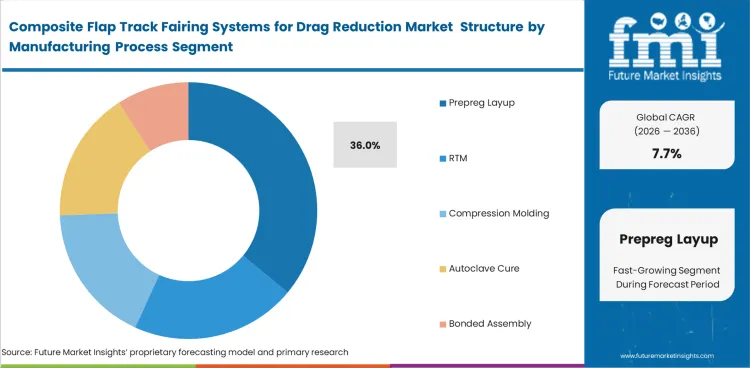
Manufacturing process matters because aerospace exterior parts need repeatable production, shape accuracy, and structural reliability. Prepreg layup remains widely used because it is a familiar and approved process for composite fairings. Prepreg layup is likely to secure 36.0% share in 2026, due to stronger process familiarity and qualification depth. Other methods such as RTM and compression molding are used in selected applications.
Insights into the End User
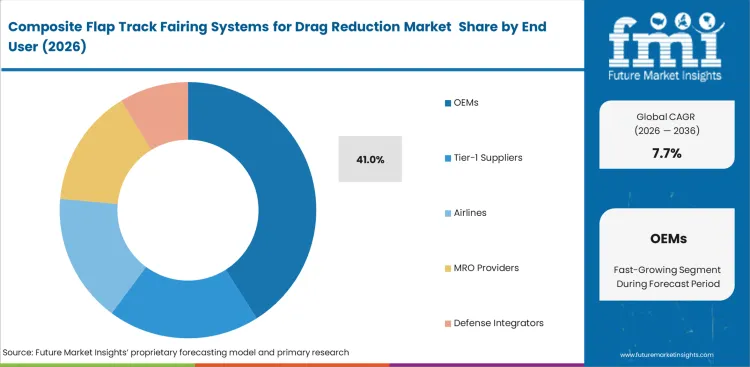
End-user mix reflects where demand is strongest and where approval decisions carry the most weight. OEMs lead because drag-reduction parts gain scale faster when installed during aircraft production. OEMs are anticipated to secure for 41.0% share in 2026, supported by line-fit control and program planning. Airlines and MRO providers still support replacement and retrofit demand, though volumes are more selective.
Insights into the Sales Channel
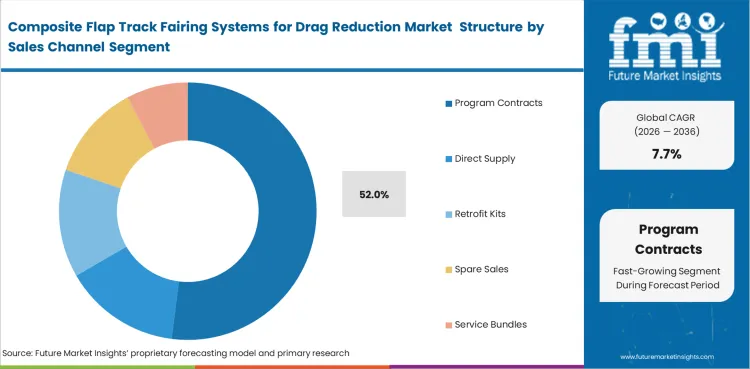
Sales channels in this market are closely tied to aircraft programs and approved supplier networks. Program contracts lead because most fairing demand comes through structured aerospace supply agreements instead of open-market buying. By 2026, program contracts are expected to contribute 52.0% of total market share, due to long-cycle supply terms and approval discipline. Spare sales and service bundles are active in the installed fleet, though they usually depend on existing platform access.
What are the Drivers, Restraints, and Key Trends of the Composite Flap Track Fairing Systems for Drag Reduction Market?
- Fuel-burn reduction drives demand because airlines and aircraft manufacturers want lower drag and lower operating cost without changing the full wing.
- Certification is the main restraint because fairing systems near high-lift structures must pass strict design, structural, and service checks before approval.
- Carbon fiber use and OEM line-fit demand define current market direction because airlines and aircraft manufacturers want fairing systems that reduce drag without adding extra weight.
The composite flap track fairing systems for drag reduction market grows because fuel efficiency matters in aircraft design and airline operations. These fairing systems help improve airflow around flap-track areas and reduce drag. Composite materials work well in this application because they keep weight low and help maintain the required outer shape. Narrowbody aircraft account for a large share of demand because fleet size is high and production programs run for many years. Growth slows when approval takes longer or when retrofit savings look too small. Suppliers perform better when they provide approved parts and reliable delivery.
Certification Timing Is Shaping Commercial Value
Certification timing matters almost as much as part performance in this market. A fairing system may show aerodynamic benefit, though commercial value weakens if qualification arrives after program decisions are already fixed. Exterior components near high-lift structures face a conservative approval environment. Aircraft manufacturers are selective because late approval can delay integration and raise validation cost. Stronger suppliers usually are the ones that align engineering readiness with aircraft program timing. Process-readiness direction in related structures aligns with trends observed in the composite airframes market.
Retrofit Economics Will Decide Real Scale
Retrofit demand can support market expansion, though adoption differs across fleets. Airlines need a practical payback case before adding or replacing drag-reduction hardware outside standard production flow. Installation downtime, certification burden, and maintenance scheduling shape that decision. Older fleets create fairing demand where replacement need is real or fuel-cost pressure stays high. Market scale depends on whether retrofit value value stays attractive after installation and compliance costs. This relates to nearby retrofit categories such as the aircraft pylon and strut fairing retrofit kits market.
Analysis of Composite Flap Track Fairing Systems for Drag Reduction Market By Key Countries
Key Facts About Country
- India shows the fastest growth at 9.5% because fleet expansion and local aerospace build-up are improving addressable demand.
- China follows at 9.2%, supported by commercial aviation growth and broader industrial capacity.
- United States remains a large commercial base and is expected to grow at 7.8% through 2036.
- Germany is projected at 7.3% because Airbus-linked manufacturing depth keeps demand visible.
- Singapore reaches 7.0%, with MRO relevance supporting fairing replacement and modification activity.
- United Kingdom stands at 6.8% and France at 6.6%, reflecting steady but more mature aerospace demand conditions.
- Faster-growth countries are led more by fleet expansion, while mature European markets rely more on established supply programs.
.webp "Top Country Growth Comparison Composite Flap Track Fairing Systems For Drag Reduction Market Cagr (2026 2036)")
| Country | CAGR |
|---|---|
| India | 9.5% |
| China | 9.2% |
| United States | 7.8% |
| Germany | 7.3% |
| Singapore | 7.0% |
| United Kingdom | 6.8% |
| France | 6.6% |
Demand Outlook for Composite Flap Track Fairing Systems for Drag Reduction in India
India is becoming more important in aircraft-related demand because airline growth and aerospace capacity expansion are moving together. Commercial fleets are expanding, which creates a larger base for exterior aerodynamic parts linked to fuel savings and replacement demand. Demand for composite flap track fairing systems in India is anticipated to rise at a CAGR of 9.5% through 2036, driven by fleet expansion and local aerospace build-up. Growth here also reflects a market that is still building capacity instead of serving only mature installed fleets. Supplier relevance improves when local participation matches aircraft support and component manufacturing plans.
- Airline fleet growth increases the installed base for fairing demand.
- Local aerospace expansion can support long-term supplier access.
- Market growth remains linked to commercial aviation momentum and program participation.
Sales Analysis of Composite Flap Track Fairing Systems for Drag Reduction in China
China holds a strong position because aircraft demand and aerospace investment are growing together. Fairing systems gain importance in markets where fleet growth is large enough to support both new-build and service demand. Sales of composite flap track fairing systems in China are expected to increase at a CAGR of 9.2% during the forecast period, supported by commercial aviation growth and manufacturing scale. Country demand also benefits from a broad industrial base that supports composite processing and aerospace component production. Commercial value remains stronger where local capacity connects with civil aviation growth.
- Broad aviation demand supports long-term market visibility.
- Industrial scale supports the country’s position in aerospace components.
- Supplier entry depends on approval fit and platform alignment.
Opportunity Analysis of Composite Flap Track Fairing Systems for Drag Reduction in the United States
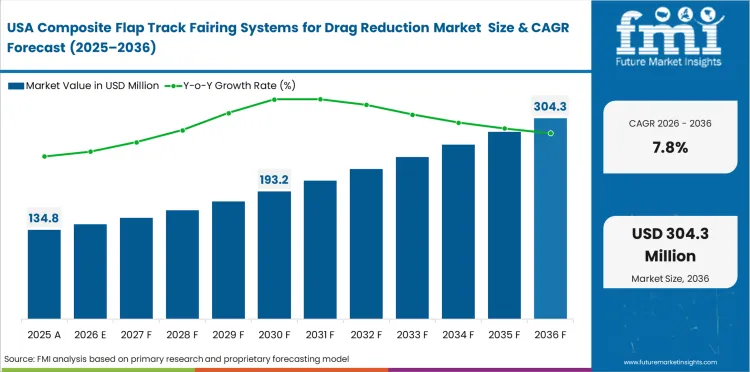
United States stands out as a strong commercial markets for this category because fleet depth and retrofit activity are already well established. Large numbers of active aircraft create more room for fairing replacement and upgrade demand than in smaller aviation markets. Market growth for composite flap track fairing systems in the United States is expected to rise at a CAGR of 7.8% during the forecast period, owing to large fleet depth and stronger retrofit economics. Country demand is supported by long service life and strong MRO capability. Suppliers with approved program access can find steady demand even without the fastest percentage growth.
- Installed narrowbody fleets support replacement and retrofit demand.
- MRO depth improhes aftermarket visibility for approved suppliers.
- Market behavior reflects operating scale more than new-country expansion.
Future Outlook for Composite Flap Track Fairing Systems for Drag Reduction in Germany
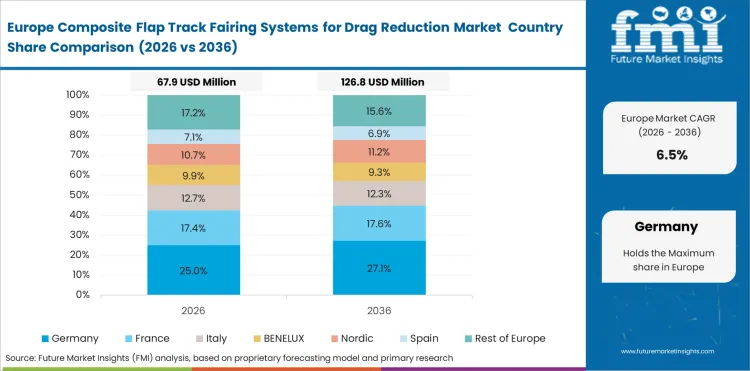
Germany holds commercially important because aerospace manufacturing capability is closely linked to European airframe programs. Fairing demand here is driven less by airline expansion and more by participation in long-cycle supply programs. Germany is projected to record a CAGR of 7.3% in composite flap track fairing systems during the forecast period, driven by Airbus-linked manufacturing and engineering depth. Country demand benefits from structured aerospace supply chains and a disciplined industrial base.
- Aircraft manufacturing links support stable component demand.
- Engineering capability helps maintain supplier relevance.
- Growth remains tied to participation in European aerospace programs.
In-depth Analysis of Composite Flap Track Fairing Systems for Drag Reduction in Singapore
Singapore plays a different role from larger manufacturing countries because its value comes from aviation support and maintenance strength. Exterior fairing systems stay relevant where aircraft service and modification work remain active. A CAGR of 7.0% is expected for composite flap track fairing systems in Singapore through 2036, because MRO depth and regional aviation support stay strong. Country demand comes from fleet servicing not from major airframe production. Suppliers that match maintenance-linked demand can find steady commercial scope in this market.
- MRO activity supports replacement and service-linked fairing demand.
- Regional aviation support provides steady but selective demand visibility.
- Market strength comes more from service capability than from aircraft assembly.
Market Outlook for Composite Flap Track Fairing Systems for Drag Reduction in the United Kingdom
United Kingdom holds important because aerospace engineering capability and aircraft program participation support demand. Country growth is slower than in expanding Asian aviation markets, while commercial value stays firm. Composite flap track fairing systems demand across the United Kingdom is set to rise at 6.8% CAGR through 2036, supported by composite know-how and aerospace supply depth. Demand here reflects industrial importance more than a rapid aviation expansion. Suppliers with certified capability hold value where structured aerospace relationships are already established.
- Composite engineering depth supports the country’s supplier position.
- Program-linked aerospace activity keeps demand visible.
- Growth remains moderate because the market is already mature.
Sales Outlook for Composite Flap Track Fairing Systems for Drag Reduction in France
France holds central position in this market because it is closely tied to aircraft assembly and aerostructure supply activity. Through 2036, composite flap track fairing systems sales in France are expected to grow at a rate of 6.6%, driven by Airbus proximity and supply-chain continuity. Country demand is shaped by established aerospace programs and structural manufacturing importance. Supplier value remains stronger where long-cycle platform access is already in place.
Aircraft assembly links keep component demand steady.
Mature aerospace supply chains support program-based visibility.
Market relevance comes from platform continuity more than fast local expansion.
Competitive Landscape of Composite Flap Track Fairing Systems for Drag Reduction
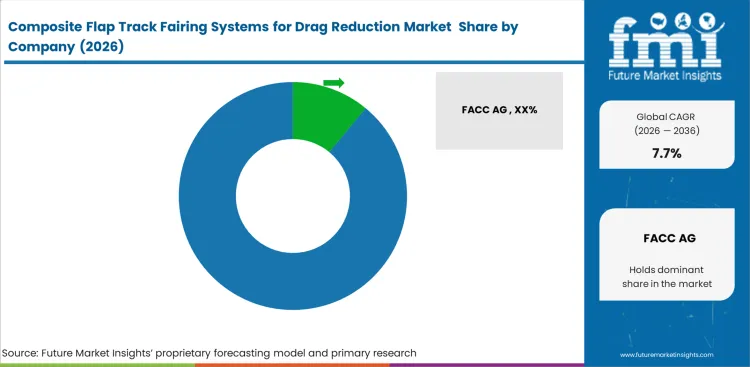
- Leading suppliers include specialist aerostructure companies such as FACC AG, Spirit AeroSystems, Strata Manufacturing PJSC, Saab AB, and SABCA that already work in composite exterior structures or fairing-related programs.
- Market structure remains fragmented to moderate because platform-linked supply is divided across several qualified suppliers instead of one dominant company.
- Competition depends on certification readiness, contour accuracy, program continuity, composite process control, and the ability to support long aircraft cycles.
Market activity in this category favors suppliers that already understand certified aerospace structures and exterior aerodynamic parts. Companies with existing aircraft-program exposure have a clearer path to demand because qualification history reduces approval barriers. Aircraft manufacturer preference reflects continuity and approval confidence more than aggressive pricing. Commercial success depends on whether a supplier stays reliable across long production runs and replacement cycles.
A second supplier group holds value through regional manufacturing strength and platform-specific work. Competitive value in this group often comes from fit within one aircraft platform or one part area, notbroad market control. Aircraft manufacturers stays selective because exterior fairings near high-lift systems need repeatable dimensional quality and stable service performance. Supplier approval depends on process consistency as much as design capability.
Major Industry Players
Key global companies leading the Composite Flap Track Fairing Systems for Drag Reduction market include:
- Global player cluster: FACC AG, Spirit AeroSystems, and Saab AB form the strongest global group in this market because each has broad aerostructure capability, established work on commercial aircraft programs, and direct relevance in fairings, flap-support structures, or adjacent exterior composite assemblies.
- Regional player cluster: SABCA, Strata Manufacturing PJSC, and Korean Air Aerospace Division hold strong regional positions because their relevance comes from program-linked aerostructure work not to broad catalog scale. SABCA has stated responsibility for flap track fairings on several aircraft, Strata began its aerospace journey with Airbus A330 flap track fairings, and Korean Air Aerospace lists flap support fairings across multiple Boeing platforms.
- Specialized player cluster: ShinMaywa Industries remains relevant as a specialized aerospace structure supplier with fairing-related activity in large commercial aircraft programs. Position in this market comes more from aircraft component integration and exterior structure competence than from broad global fairing breadth.
Competitive Benchmarking: Composite Flap Track Fairing Systems for Drag Reduction Market
| Company | Composite Aerostructure Depth | Flap/Fairing Relevance | Commercial Program Exposure | Geographic Footprint |
|---|---|---|---|---|
| FACC AG | High | Strong | Strong | Global |
| Spirit AeroSystems | High | Moderate | Strong | Global |
| Saab AB | High | Strong | Strong | Europe, North America |
| SABCA | Medium | Strong | Moderate | Europe |
| Strata Manufacturing PJSC | Medium | Strong | Moderate | Middle East, Europe-linked |
| Korean Air Aerospace Division | Medium | Strong | Moderate | Asia-Pacific, North America-linked |
| ShinMaywa Industries | Medium | Moderate | Moderate | Asia-Pacific |
Source: Future Market Insights competitive analysis, 2026. Ratings reflect relative positioning based on direct fairing or flap-support relevance, composite aerostructure capability, aircraft-program exposure, and operating reach. Supporting evidence comes from official company and aerospace program sources.
Key Developments in Composite Flap Track Fairing Systems for Drag Reduction Market
- In March 2026, FACC advanced next-generation aircraft component processes toward series-production readiness through an affiliated research facility, strengthening future capability in certified composite exterior structures.
- May 2025: Strata, part of Mubadala, produced and delivered 100,000 aerostructure components, reflecting the UAE’s vision for industrial growth and Strata’s role in the global aerospace supply chain.
- December 2025: Saab and Airbus agreed on a new multi-year contract for continued production of ailerons for the Airbus A320 Family, extending their long-running manufacturing agreement.
Key Players in the Composite Flap Track Fairing Systems for Drag Reduction Market
Major Global Players
- FACC AG
- Spirit AeroSystems
- Saab AB
Regional and Specialized Players
- SABCA
- Strata Manufacturing PJSC
- Korean Air Aerospace Division
- ShinMaywa Industries
Scope of the Report
| Metric | Value |
|---|---|
| Quantitative Units | USD 237.7 million (2025) to USD 537.5 million (2036), at a CAGR of 7.7% |
| Market Definition | Composite flap track fairing systems for drag reduction are exterior aerodynamic structures installed around flap-track and flap-support zones on aircraft wings to reduce drag, smooth airflow, and lower the aerodynamic penalty created by exposed high-lift hardware. Market scope covers composite-based fairing assemblies used on commercial, regional, business, and selected defense aircraft where drag reduction and structural weight control create operating value. |
| Segmentation |
|
| Regions Covered | North America, Latin America, Western Europe, Eastern Europe, East Asia, South Asia Pacific, Middle East and Africa |
| Countries Covered | India, China, United States, Germany, Singapore, United Kingdom, France, and 30 plus countries |
| Key Companies Profiled | FACC AG, Spirit AeroSystems, Strata Manufacturing PJSC, Saab AB, SABCA, Korean Air Aerospace Division, ShinMaywa Industries, and other regional suppliers |
| Forecast Period | 2026 to 2036 |
| Approach | Hybrid bottom-up and top-down methodology using verified demand and adoption modeling, supported by parent-market comparison, aircraft platform analysis, supplier mapping, primary interviews, and secondary aerospace industry data |
Composite Flap Track Fairing Systems for Drag Reduction Market by Segments
Composite Flap Track Fairing Systems for Drag Reduction Market by Aircraft Platform
- Narrowbody
- Widebody
- Regional Jet
- Business Jet
- Military Transport
Composite Flap Track Fairing Systems for Drag Reduction Market by Material Type
- Carbon Fiber
- Glass Fiber
- Thermoplastic
- Hybrid Laminate
- Sandwich Panels
Composite Flap Track Fairing Systems for Drag Reduction Market by Fitment Type
- OEM Line-fit
- Retrofit
- Spare Replacement
- Repair Assemblies
Composite Flap Track Fairing Systems for Drag Reduction Market by Fairing Scope
- Full Fairings
- Tip Sections
- Support Fairings
- Access Panels
- Seal Covers
Composite Flap Track Fairing Systems for Drag Reduction Market by Manufacturing Process
- Prepreg Layup
- RTM
- Compression Molding
- Autoclave Cure
- Bonded Assembly
Composite Flap Track Fairing Systems for Drag Reduction Market by End User
- OEMs
- Tier-1 Suppliers
- Airlines
- MRO Providers
- Defense Integrators
Composite Flap Track Fairing Systems for Drag Reduction Market by Sales Channel
- Program Contracts
- Direct Supply
- Retrofit Kits
- Spare Sales
- Service Bundles
Composite Flap Track Fairing Systems for Drag Reduction Market by Country or Region
- North America
- USA
- Canada
- Mexico
- Latin America
- Brazil
- Chile
- Rest of Latin America
- Western Europe
- Germany
- UK
- Italy
- Spain
- France
- Nordic
- BENELUX
- Rest of Western Europe
- Eastern Europe
- Russia
- Poland
- Hungary
- Balkan & Baltic
- Rest of Eastern Europe
- East Asia
- China
- Japan
- South Korea
- South Asia and Pacific
- India
- ASEAN
- Australia & New Zealand
- Rest of South Asia and Pacific
- Middle East & Africa
- Kingdom of Saudi Arabia
- Other GCC Countries
- Turkiye
- South Africa
- Other African Union
- Rest of Middle East & Africa
Bibliography
- FACC AG. (2026, March 17). FACC with record revenue and earnings increase in the 2025 financial year.
- Abu Dhabi Media Office. (2025, May 19). Strata, part of Mubadala, produces and delivers 100,000 aerostructure components.
- Saab. (2025, December 17). Extended agreement for the manufacturing of Airbus 320 ailerons.
- Transport Airplane Metallic and Composite Structures Working Group. (2024, June). Transport Airplane Metallic and Composite Structures Working Group - Recommendation Report to FAA.
- European Union Aviation Safety Agency. (2025, March). Composite Initiatives involving EASA and Introduction to CMH17 updates.
This Report Addresses
- Market size and forecast outlook from 2025 to 2036
- Commercial role of composite fairings in drag reduction
- Leading aircraft platform, material, fitment, and sales channel segments
- Country-level growth outlook across seven key markets
- Supplier structure and competitive positioning logic
- Market scope, inclusions, and exclusions
- Operational issues affecting adoption and scale
- Segment taxonomy for report use and internal planning
Frequently Asked Questions
What is the estimated market value in 2025?
Market value in 2025 is estimated at USD 237.7 million.
What is the projected market value in 2026?
Projected market value in 2026 is USD 256.0 million.
What is the forecast value by 2036?
Market value is projected to reach USD 537.5 million by 2036.
What is the forecast CAGR from 2026 to 2036?
Demand is expected to expand at a CAGR of 7.7% over the forecast period.
Which aircraft platform leads the market?
Narrowbody aircraft are estimated to lead with 44.0% share in 2026.
Which countries are growing the fastest?
India and China show the fastest forecast growth among the listed countries.
Who are the main companies in this market?
FACC AG, Spirit AeroSystems, Strata Manufacturing PJSC, Saab AB, SABCA, Korean Air Aerospace Division, and ShinMaywa Industries form the main named supplier group.
Preview the report firsthand - request a free sample
Get SampleGet the brochure for pricing and purchase details.
Get PDFTable of Content
- Executive Summary
- Global Market Outlook
- Demand-side Trends
- Supply-side Trends
- Technology Roadmap Analysis
- Analysis and Recommendations
- Market Overview
- Market Coverage / Taxonomy
- Market Definition / Scope / Limitations
- Research Methodology
- Chapter Orientation
- Analytical Lens and Working Hypotheses
- Market Structure, Signals, and Trend Drivers
- Benchmarking and Cross-market Comparability
- Market Sizing, Forecasting, and Opportunity Mapping
- Research Design and Evidence Framework
- Desk Research Programme (Secondary Evidence)
- Company Annual and Sustainability Reports
- Peer-reviewed Journals and Academic Literature
- Corporate Websites, Product Literature, and Technical Notes
- Earnings Decks and Investor Briefings
- Statutory Filings and Regulatory Disclosures
- Technical White Papers and Standards Notes
- Trade Journals, Industry Magazines, and Analyst Briefs
- Conference Proceedings, Webinars, and Seminar Materials
- Government Statistics Portals and Public Data Releases
- Press Releases and Reputable Media Coverage
- Specialist Newsletters and Curated Briefings
- Sector Databases and Reference Repositories
- FMI Internal Proprietary Databases and Historical Market Datasets
- Subscription Datasets and Paid Sources
- Social Channels, Communities, and Digital Listening Inputs
- Additional Desk Sources
- Expert Input and Fieldwork (Primary Evidence)
- Primary Modes
- Qualitative Interviews and Expert Elicitation
- Quantitative Surveys and Structured Data Capture
- Blended Approach
- Why Primary Evidence is Used
- Field Techniques
- Interviews
- Surveys
- Focus Groups
- Observational and In-context Research
- Social and Community Interactions
- Stakeholder Universe Engaged
- C-suite Leaders
- Board Members
- Presidents and Vice Presidents
- R&D and Innovation Heads
- Technical Specialists
- Domain Subject-matter Experts
- Scientists
- Physicians and Other Healthcare Professionals
- Governance, Ethics, and Data Stewardship
- Research Ethics
- Data Integrity and Handling
- Primary Modes
- Tooling, Models, and Reference Databases
- Desk Research Programme (Secondary Evidence)
- Data Engineering and Model Build
- Data Acquisition and Ingestion
- Cleaning, Normalisation, and Verification
- Synthesis, Triangulation, and Analysis
- Quality Assurance and Audit Trail
- Market Background
- Market Dynamics
- Drivers
- Restraints
- Opportunity
- Trends
- Scenario Forecast
- Demand in Optimistic Scenario
- Demand in Likely Scenario
- Demand in Conservative Scenario
- Opportunity Map Analysis
- Product Life Cycle Analysis
- Supply Chain Analysis
- Investment Feasibility Matrix
- Value Chain Analysis
- PESTLE and Porter’s Analysis
- Regulatory Landscape
- Regional Parent Market Outlook
- Production and Consumption Statistics
- Import and Export Statistics
- Market Dynamics
- Global Market Analysis 2021 to 2025 and Forecast, 2026 to 2036
- Historical Market Size Value (USD Million) Analysis, 2021 to 2025
- Current and Future Market Size Value (USD Million) Projections, 2026 to 2036
- Y-o-Y Growth Trend Analysis
- Absolute $ Opportunity Analysis
- Global Market Pricing Analysis 2021 to 2025 and Forecast 2026 to 2036
- Global Market Analysis 2021 to 2025 and Forecast 2026 to 2036, By Aircraft Platform
- Introduction / Key Findings
- Historical Market Size Value (USD Million) Analysis By Aircraft Platform , 2021 to 2025
- Current and Future Market Size Value (USD Million) Analysis and Forecast By Aircraft Platform , 2026 to 2036
- Narrowbody
- Widebody
- Regional Jet
- Business Jet
- Military Transport
- Narrowbody
- Y-o-Y Growth Trend Analysis By Aircraft Platform , 2021 to 2025
- Absolute $ Opportunity Analysis By Aircraft Platform , 2026 to 2036
- Global Market Analysis 2021 to 2025 and Forecast 2026 to 2036, By Material Type
- Introduction / Key Findings
- Historical Market Size Value (USD Million) Analysis By Material Type, 2021 to 2025
- Current and Future Market Size Value (USD Million) Analysis and Forecast By Material Type, 2026 to 2036
- Carbon Fiber
- Glass Fiber
- Thermoplastic
- Hybrid Laminate
- Sandwich Panels
- Carbon Fiber
- Y-o-Y Growth Trend Analysis By Material Type, 2021 to 2025
- Absolute $ Opportunity Analysis By Material Type, 2026 to 2036
- Global Market Analysis 2021 to 2025 and Forecast 2026 to 2036, By Fitment Type
- Introduction / Key Findings
- Historical Market Size Value (USD Million) Analysis By Fitment Type, 2021 to 2025
- Current and Future Market Size Value (USD Million) Analysis and Forecast By Fitment Type, 2026 to 2036
- OEM Line-fit
- Retrofit
- Spare Replacement
- Repair Assemblies
- OEM Line-fit
- Y-o-Y Growth Trend Analysis By Fitment Type, 2021 to 2025
- Absolute $ Opportunity Analysis By Fitment Type, 2026 to 2036
- Global Market Analysis 2021 to 2025 and Forecast 2026 to 2036, By Fairing Scope
- Introduction / Key Findings
- Historical Market Size Value (USD Million) Analysis By Fairing Scope, 2021 to 2025
- Current and Future Market Size Value (USD Million) Analysis and Forecast By Fairing Scope, 2026 to 2036
- Full Fairings
- Tip Sections
- Support Fairings
- Access Panels
- Seal Covers
- Full Fairings
- Y-o-Y Growth Trend Analysis By Fairing Scope, 2021 to 2025
- Absolute $ Opportunity Analysis By Fairing Scope, 2026 to 2036
- Global Market Analysis 2021 to 2025 and Forecast 2026 to 2036, By Manufacturing Process
- Introduction / Key Findings
- Historical Market Size Value (USD Million) Analysis By Manufacturing Process, 2021 to 2025
- Current and Future Market Size Value (USD Million) Analysis and Forecast By Manufacturing Process, 2026 to 2036
- Prepreg Layup
- RTM
- Compression Molding
- Autoclave Cure
- Bonded Assembly
- Prepreg Layup
- Y-o-Y Growth Trend Analysis By Manufacturing Process, 2021 to 2025
- Absolute $ Opportunity Analysis By Manufacturing Process, 2026 to 2036
- Global Market Analysis 2021 to 2025 and Forecast 2026 to 2036, By End User
- Introduction / Key Findings
- Historical Market Size Value (USD Million) Analysis By End User, 2021 to 2025
- Current and Future Market Size Value (USD Million) Analysis and Forecast By End User, 2026 to 2036
- OEMs
- Tier-1 Suppliers
- Airlines
- MRO Providers
- Defense Integrators
- OEMs
- Y-o-Y Growth Trend Analysis By End User, 2021 to 2025
- Absolute $ Opportunity Analysis By End User, 2026 to 2036
- Global Market Analysis 2021 to 2025 and Forecast 2026 to 2036, By Sales Channel
- Introduction / Key Findings
- Historical Market Size Value (USD Million) Analysis By Sales Channel, 2021 to 2025
- Current and Future Market Size Value (USD Million) Analysis and Forecast By Sales Channel, 2026 to 2036
- Program Contracts
- Direct Supply
- Retrofit Kits
- Spare Sales
- Service Bundles
- Program Contracts
- Y-o-Y Growth Trend Analysis By Sales Channel, 2021 to 2025
- Absolute $ Opportunity Analysis By Sales Channel, 2026 to 2036
- Global Market Analysis 2021 to 2025 and Forecast 2026 to 2036, By Region
- Introduction
- Historical Market Size Value (USD Million) Analysis By Region, 2021 to 2025
- Current Market Size Value (USD Million) Analysis and Forecast By Region, 2026 to 2036
- North America
- Latin America
- Western Europe
- Eastern Europe
- East Asia
- South Asia and Pacific
- Middle East & Africa
- Market Attractiveness Analysis By Region
- North America Market Analysis 2021 to 2025 and Forecast 2026 to 2036, By Country
- Historical Market Size Value (USD Million) Trend Analysis By Market Taxonomy, 2021 to 2025
- Market Size Value (USD Million) Forecast By Market Taxonomy, 2026 to 2036
- By Country
- USA
- Canada
- Mexico
- By Aircraft Platform
- By Material Type
- By Fitment Type
- By Fairing Scope
- By Manufacturing Process
- By End User
- By Sales Channel
- By Country
- Market Attractiveness Analysis
- By Country
- By Aircraft Platform
- By Material Type
- By Fitment Type
- By Fairing Scope
- By Manufacturing Process
- By End User
- By Sales Channel
- Key Takeaways
- Latin America Market Analysis 2021 to 2025 and Forecast 2026 to 2036, By Country
- Historical Market Size Value (USD Million) Trend Analysis By Market Taxonomy, 2021 to 2025
- Market Size Value (USD Million) Forecast By Market Taxonomy, 2026 to 2036
- By Country
- Brazil
- Chile
- Rest of Latin America
- By Aircraft Platform
- By Material Type
- By Fitment Type
- By Fairing Scope
- By Manufacturing Process
- By End User
- By Sales Channel
- By Country
- Market Attractiveness Analysis
- By Country
- By Aircraft Platform
- By Material Type
- By Fitment Type
- By Fairing Scope
- By Manufacturing Process
- By End User
- By Sales Channel
- Key Takeaways
- Western Europe Market Analysis 2021 to 2025 and Forecast 2026 to 2036, By Country
- Historical Market Size Value (USD Million) Trend Analysis By Market Taxonomy, 2021 to 2025
- Market Size Value (USD Million) Forecast By Market Taxonomy, 2026 to 2036
- By Country
- Germany
- UK
- Italy
- Spain
- France
- Nordic
- BENELUX
- Rest of Western Europe
- By Aircraft Platform
- By Material Type
- By Fitment Type
- By Fairing Scope
- By Manufacturing Process
- By End User
- By Sales Channel
- By Country
- Market Attractiveness Analysis
- By Country
- By Aircraft Platform
- By Material Type
- By Fitment Type
- By Fairing Scope
- By Manufacturing Process
- By End User
- By Sales Channel
- Key Takeaways
- Eastern Europe Market Analysis 2021 to 2025 and Forecast 2026 to 2036, By Country
- Historical Market Size Value (USD Million) Trend Analysis By Market Taxonomy, 2021 to 2025
- Market Size Value (USD Million) Forecast By Market Taxonomy, 2026 to 2036
- By Country
- Russia
- Poland
- Hungary
- Balkan & Baltic
- Rest of Eastern Europe
- By Aircraft Platform
- By Material Type
- By Fitment Type
- By Fairing Scope
- By Manufacturing Process
- By End User
- By Sales Channel
- By Country
- Market Attractiveness Analysis
- By Country
- By Aircraft Platform
- By Material Type
- By Fitment Type
- By Fairing Scope
- By Manufacturing Process
- By End User
- By Sales Channel
- Key Takeaways
- East Asia Market Analysis 2021 to 2025 and Forecast 2026 to 2036, By Country
- Historical Market Size Value (USD Million) Trend Analysis By Market Taxonomy, 2021 to 2025
- Market Size Value (USD Million) Forecast By Market Taxonomy, 2026 to 2036
- By Country
- China
- Japan
- South Korea
- By Aircraft Platform
- By Material Type
- By Fitment Type
- By Fairing Scope
- By Manufacturing Process
- By End User
- By Sales Channel
- By Country
- Market Attractiveness Analysis
- By Country
- By Aircraft Platform
- By Material Type
- By Fitment Type
- By Fairing Scope
- By Manufacturing Process
- By End User
- By Sales Channel
- Key Takeaways
- South Asia and Pacific Market Analysis 2021 to 2025 and Forecast 2026 to 2036, By Country
- Historical Market Size Value (USD Million) Trend Analysis By Market Taxonomy, 2021 to 2025
- Market Size Value (USD Million) Forecast By Market Taxonomy, 2026 to 2036
- By Country
- India
- ASEAN
- Australia & New Zealand
- Rest of South Asia and Pacific
- By Aircraft Platform
- By Material Type
- By Fitment Type
- By Fairing Scope
- By Manufacturing Process
- By End User
- By Sales Channel
- By Country
- Market Attractiveness Analysis
- By Country
- By Aircraft Platform
- By Material Type
- By Fitment Type
- By Fairing Scope
- By Manufacturing Process
- By End User
- By Sales Channel
- Key Takeaways
- Middle East & Africa Market Analysis 2021 to 2025 and Forecast 2026 to 2036, By Country
- Historical Market Size Value (USD Million) Trend Analysis By Market Taxonomy, 2021 to 2025
- Market Size Value (USD Million) Forecast By Market Taxonomy, 2026 to 2036
- By Country
- Kingdom of Saudi Arabia
- Other GCC Countries
- Turkiye
- South Africa
- Other African Union
- Rest of Middle East & Africa
- By Aircraft Platform
- By Material Type
- By Fitment Type
- By Fairing Scope
- By Manufacturing Process
- By End User
- By Sales Channel
- By Country
- Market Attractiveness Analysis
- By Country
- By Aircraft Platform
- By Material Type
- By Fitment Type
- By Fairing Scope
- By Manufacturing Process
- By End User
- By Sales Channel
- Key Takeaways
- Key Countries Market Analysis
- USA
- Pricing Analysis
- Market Share Analysis, 2025
- By Aircraft Platform
- By Material Type
- By Fitment Type
- By Fairing Scope
- By Manufacturing Process
- By End User
- By Sales Channel
- Canada
- Pricing Analysis
- Market Share Analysis, 2025
- By Aircraft Platform
- By Material Type
- By Fitment Type
- By Fairing Scope
- By Manufacturing Process
- By End User
- By Sales Channel
- Mexico
- Pricing Analysis
- Market Share Analysis, 2025
- By Aircraft Platform
- By Material Type
- By Fitment Type
- By Fairing Scope
- By Manufacturing Process
- By End User
- By Sales Channel
- Brazil
- Pricing Analysis
- Market Share Analysis, 2025
- By Aircraft Platform
- By Material Type
- By Fitment Type
- By Fairing Scope
- By Manufacturing Process
- By End User
- By Sales Channel
- Chile
- Pricing Analysis
- Market Share Analysis, 2025
- By Aircraft Platform
- By Material Type
- By Fitment Type
- By Fairing Scope
- By Manufacturing Process
- By End User
- By Sales Channel
- Germany
- Pricing Analysis
- Market Share Analysis, 2025
- By Aircraft Platform
- By Material Type
- By Fitment Type
- By Fairing Scope
- By Manufacturing Process
- By End User
- By Sales Channel
- UK
- Pricing Analysis
- Market Share Analysis, 2025
- By Aircraft Platform
- By Material Type
- By Fitment Type
- By Fairing Scope
- By Manufacturing Process
- By End User
- By Sales Channel
- Italy
- Pricing Analysis
- Market Share Analysis, 2025
- By Aircraft Platform
- By Material Type
- By Fitment Type
- By Fairing Scope
- By Manufacturing Process
- By End User
- By Sales Channel
- Spain
- Pricing Analysis
- Market Share Analysis, 2025
- By Aircraft Platform
- By Material Type
- By Fitment Type
- By Fairing Scope
- By Manufacturing Process
- By End User
- By Sales Channel
- France
- Pricing Analysis
- Market Share Analysis, 2025
- By Aircraft Platform
- By Material Type
- By Fitment Type
- By Fairing Scope
- By Manufacturing Process
- By End User
- By Sales Channel
- India
- Pricing Analysis
- Market Share Analysis, 2025
- By Aircraft Platform
- By Material Type
- By Fitment Type
- By Fairing Scope
- By Manufacturing Process
- By End User
- By Sales Channel
- ASEAN
- Pricing Analysis
- Market Share Analysis, 2025
- By Aircraft Platform
- By Material Type
- By Fitment Type
- By Fairing Scope
- By Manufacturing Process
- By End User
- By Sales Channel
- Australia & New Zealand
- Pricing Analysis
- Market Share Analysis, 2025
- By Aircraft Platform
- By Material Type
- By Fitment Type
- By Fairing Scope
- By Manufacturing Process
- By End User
- By Sales Channel
- China
- Pricing Analysis
- Market Share Analysis, 2025
- By Aircraft Platform
- By Material Type
- By Fitment Type
- By Fairing Scope
- By Manufacturing Process
- By End User
- By Sales Channel
- Japan
- Pricing Analysis
- Market Share Analysis, 2025
- By Aircraft Platform
- By Material Type
- By Fitment Type
- By Fairing Scope
- By Manufacturing Process
- By End User
- By Sales Channel
- South Korea
- Pricing Analysis
- Market Share Analysis, 2025
- By Aircraft Platform
- By Material Type
- By Fitment Type
- By Fairing Scope
- By Manufacturing Process
- By End User
- By Sales Channel
- Russia
- Pricing Analysis
- Market Share Analysis, 2025
- By Aircraft Platform
- By Material Type
- By Fitment Type
- By Fairing Scope
- By Manufacturing Process
- By End User
- By Sales Channel
- Poland
- Pricing Analysis
- Market Share Analysis, 2025
- By Aircraft Platform
- By Material Type
- By Fitment Type
- By Fairing Scope
- By Manufacturing Process
- By End User
- By Sales Channel
- Hungary
- Pricing Analysis
- Market Share Analysis, 2025
- By Aircraft Platform
- By Material Type
- By Fitment Type
- By Fairing Scope
- By Manufacturing Process
- By End User
- By Sales Channel
- Kingdom of Saudi Arabia
- Pricing Analysis
- Market Share Analysis, 2025
- By Aircraft Platform
- By Material Type
- By Fitment Type
- By Fairing Scope
- By Manufacturing Process
- By End User
- By Sales Channel
- Turkiye
- Pricing Analysis
- Market Share Analysis, 2025
- By Aircraft Platform
- By Material Type
- By Fitment Type
- By Fairing Scope
- By Manufacturing Process
- By End User
- By Sales Channel
- South Africa
- Pricing Analysis
- Market Share Analysis, 2025
- By Aircraft Platform
- By Material Type
- By Fitment Type
- By Fairing Scope
- By Manufacturing Process
- By End User
- By Sales Channel
- USA
- Market Structure Analysis
- Competition Dashboard
- Competition Benchmarking
- Market Share Analysis of Top Players
- By Regional
- By Aircraft Platform
- By Material Type
- By Fitment Type
- By Fairing Scope
- By Manufacturing Process
- By End User
- By Sales Channel
- Competition Analysis
- Competition Deep Dive
- FACC AG
- Overview
- Product Portfolio
- Profitability by Market Segments (Product/Age /Sales Channel/Region)
- Sales Footprint
- Strategy Overview
- Marketing Strategy
- Product Strategy
- Channel Strategy
- Spirit AeroSystems
- Saab AB
- SABCA
- Strata Manufacturing PJSC
- Korean Air Aerospace Division
- ShinMaywa Industries
- FACC AG
- Competition Deep Dive
- Assumptions & Acronyms Used


