

- Industry Size (2025)
- USD 174.8 Mn
- Forecast (2035)
- USD 301.6 Mn
- CAGR (2025 to 2035)
- 5.6%
Demand for Guacamole in USA Forecast Outlook 2025 to 2035
The USA guacamole demand is valued at USD 174.8 million in 2025 and is expected to reach USD 301.6 million by 2035, recording a CAGR of 5.6%. Demand rises with expanding avocado consumption, preference for clean-label dips, and higher USAge of ready-to-serve condiments in meals and snacking. Refrigerated cases in grocery retail and foodservice channels support continuous turnover. Stability improvements in cold-chain handling and packaging extend shelf life while retaining texture and flavor.
Conventional guacamole products lead due to broader sourcing scale, price accessibility, and strong penetration in family-sized tubs and foodservice pouches. Formulations prioritize ripe Hass avocados with sodium-managed seasoning and minimal additives. Single-serve packs and resealable formats support portion control and reduce food waste. Demand is concentrated in the West, South, and Northeast, where fast-casual chains, Tex-Mex dining, and fresh-food retail formats are widely established. Growth includes adoption in breakfast menus, meal kits, and prepared entrées. Calavo Growers, Hormel Foods Corporation, Fresh Del Monte Produce, and Sabra operate as key suppliers focusing on supply chain consistency, controlled ripening processes, and expanded distribution through regional and national grocers.
Quick Stats for USA Guacamole Demand
- USA Guacamole Sales Value (2025): USD 174.8 million
- USA Guacamole Forecast Value (2035): USD 301.6 million
- USA Guacamole Forecast CAGR (2025 to 2035): 5.6%
- Leading Nature Type in USA Guacamole Demand: Conventional
- Key Growth Regions in USA Guacamole Demand: West USA, South USA, Northeast USA
- Top Players in USA Guacamole Demand: Calavo Growers, Hormel Foods Corporation (incl. Wholly® Guacamole / MegaMex Foods), Fresh Del Monte Produce, Sabra
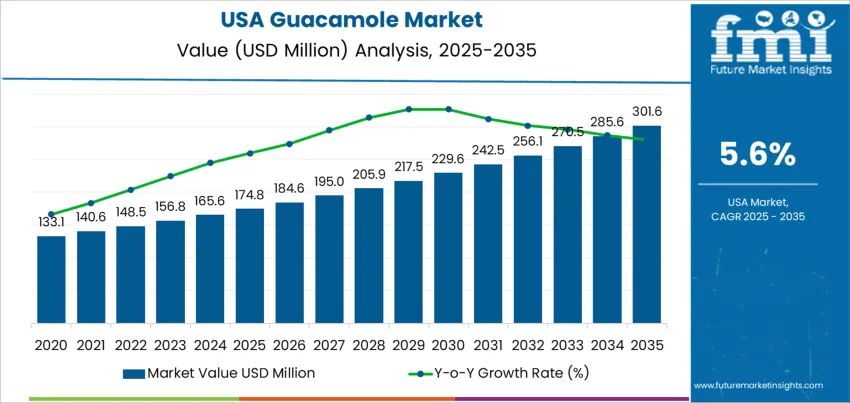
What is the Growth Forecast for Guacamole Industry in USA through 2035?
Demand for guacamole in the United States shows an early acceleration phase driven by rising consumer focus on healthier snacking, plant-based eating, and clean-label ingredients. Increased avocado availability, growth in Tex-Mex cuisine, and expansion of refrigerated dip assortments in mainstream retail contribute to rapid adoption. Food-service outlets promote guacamole as a staple accompaniment, strengthening early demand momentum and encouraging trial across broader demographics.
As penetration expands, the growth curve transitions into a more moderate trajectory. Pricing volatility related to avocado supply can temporarily restrict expansion and create deceleration periods, particularly when cost-sensitive consumers shift to alternative dips. Category maturity increases, leading to slower gains from first-time buyers. Growth becomes more dependent on flavor innovation, packaging convenience, and positioning guacamole beyond traditional pairing occasions such as burgers, breakfast items, and salad toppings.
The category ultimately stabilizes at a positive but less accelerated pace. Continued health alignment ensures relevance, while convenience-focused formats like single-serve cups support ongoing engagement. The overall pattern reflects strong initial acceleration followed by steady, moderate growth as the guacamole segment reaches higher household penetration levels in the United States.
USA Guacamole Key Takeaways
| Metric | Value |
|---|---|
| USA Guacamole Sales Value (2025) | USD 174.8 million |
| USA Guacamole Forecast Value (2035) | USD 301.6 million |
| USA Guacamole Forecast CAGR (2025-2035) | 5.6% |
Why is the Demand for Guacamole Growing in the USA?
Demand for guacamole in the USA is increasing because consumers appreciate convenient, ready-to-eat or ready-to-serve foods that fit busy lifestyles and social gatherings. Avocado-based products meet demand for healthy fats, fiber and plant-based nutrition, which appeal to health-conscious buyers, vegetarians and flexitarians. Retailers stock fresh, refrigerated guacamole tubs and packaged snack-size portions to cater to single-person households and consumers seeking quick meal additions. Growth in casual dining, deli counters and restaurant-to-home meal delivery supports regular use of guacamole as a topping, dip or sandwich spread. Hispanic cuisine popularity and fusion menus also drive restaurant demand. Consumers often pair guacamole with fresh produce, tortilla chips, wraps and salads, which encourages volume USAge beyond traditional meal occasions.
Foodservice channels value shelf-stable or frozen guacamole mixes because they reduce waste and storage constraints while offering flexible USAge in high-volume kitchens. Private label and premium brands alike include guacamole in product portfolios to meet varying price and quality expectations. Constraints include perishability of fresh guacamole, which may limit purchase size and frequency for some buyers. Price fluctuations in avocado supply can impact retail cost and reduce consumption during supply shortfalls. Some consumers avoid guacamole if they are sensitive to avocado taste or fat content.
Which Nature Types and End Users Lead Demand for Guacamole in the USA?
Demand for guacamole in the United States is influenced by strong household consumption of Mexican and Tex-Mex cuisine, increasing preference for clean-label dips, and rising availability of ready-to-eat avocado products. Consumers seek freshness retention, preservative-free formulations, and convenient packaging suitable for snacking and meal accompaniment. Growth is reinforced by rising adoption of avocado-based health trends, including high fiber and healthy fat content, supported further by foodservice menu expansion and retail promotions.
By Nature, Conventional Guacamole Holds the Largest Share
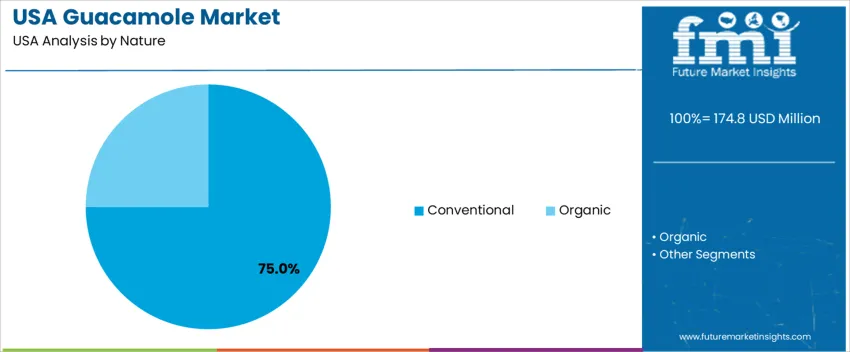
Conventional guacamole dominates with 75.0%, driven by higher affordability, abundant avocado sourcing, and widespread presence in mass-market retail and foodservice menus. Major brands offer conventional variants in multiple flavor profiles, including spicy, chunky, and lime-enhanced formulations, aligning with mainstream snacking patterns. Organic guacamole holds 25.0%, supported by clean-ingredient awareness, non-GMO preferences, and premium positioning in urban retail aisles. Organic adoption strengthens through nutrition-focused consumers and expanded distribution in refrigerated deli sections. Nature preferences reflect price sensitivity, freshness expectations, and the role of guacamole as a frequent-use condiment in USA households and quick-service restaurants.
Key Points:
- Conventional options dominate due to price competitiveness and wider distribution
- Organic share grows via label transparency and health-conscious consumers
- Innovation focuses on preservative-free and extended fresh-life packaging
By End User, the Food Processing Industry Leads Demand
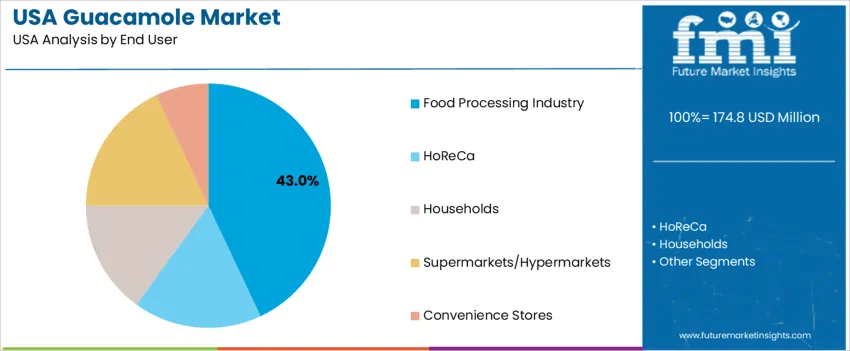
The food processing industry holds 43.0%, using guacamole as an ingredient in wraps, sandwiches, burritos, and packaged meal solutions that target convenience-driven USA consumers. Supermarkets/hypermarkets contribute 18.0%, supported by broad SKU variety and impulse refrigerated purchases. HoReCa (hotels, restaurants, cafés) accounts for 17.0%, driven by strong menu presence in casual dining and fast-casual chains. Households represent 15.0%, showcasing growth through home snacking and party-size packs. Convenience stores make up 7.0%, focused on grab-and-go dips paired with tortilla chips and fresh snacks. End-use distribution highlights consistent nationwide consumption across meal preparation and on premise dining occasions.
Key Points:
- Food processors drive ingredient-based integration in packaged foods
- Retail aisle placement and refrigeration visibility sustain supermarket sales
- Foodservice maintains strong penetration through Tex-Mex and snacking menus
What are the Drivers, Restraints, and Key Trends of the Demand for Guacamole in the USA?
Growth of snacking culture, increased interest in Mexican cuisine and rising preference for fresh, plant-based dips drive demand.
In the United States, guacamole consumption continues to rise as consumers seek flavorful snack options that pair well with chips, vegetables and casual meal occasions. Mexican and Tex-Mex dining remains a strong influence in both restaurant and home-cooking trends, supporting sales of ready-to-eat guacamole in grocery and foodservice channels. Plant-forward eating and interest in natural fats encourage purchase of avocado-based products positioned as nutritious alternatives to cream- or cheese-based dips. Retailers highlight guacamole near produce and deli sections to capture impulse demand for convenient appetizers and party foods. Seasonal events including sporting gatherings sustain recurring consumption throughout the year.
Price volatility in avocado supply, limited shelf life and competition from alternative dips restrain demand.
Avocado pricing fluctuates due to crop conditions and import dependency, which can lead to noticeable shifts in retail pricing for guacamole products. Short shelf life and sensitivity to oxidation add logistical and packaging challenges for both retailers and consumers. Alternative dips such as hummus, salsa and yogurt-based blends offer similar convenience with longer storage stability, creating strong category competition. Some consumers view guacamole as an occasional indulgence rather than a weekly staple, which tempers volume growth across all regions and demographics.
Shift toward single-serve packaging, increased adoption in meal components and rising demand for clean-label and reduced-additive recipes define key trends.
Manufacturers are expanding single-portion cups designed for lunchboxes, office snacking and take-along convenience, reducing waste and improving freshness. Meal-prep and quick-service restaurants incorporate guacamole in bowls, wraps and breakfast menus to attract customers seeking premium and customizable flavors. Clean-label development focuses on simplified ingredient lists with minimal preservatives while packaging innovations improve oxygen control for extended freshness. Retail innovation includes spicy variants and blends with vegetables or herbs to cater to flavor exploration among younger consumers. These developments indicate steady, flavor- and wellness-motivated demand for guacamole across the United States retail and foodservice sectors.
Analysis of the Demand for Guacamole in the USA by Region
Demand for guacamole in the United States continues to increase as consumers embrace healthier snacking, plant-based diets, and clean-label ingredients. Growth is supported by rising household purchases of ready-to-eat dips, increased Hispanic cuisine adoption, and strong retail placement in chilled deli sections. Avocado-based products gain traction in both food-service and grocery environments, particularly through fast-casual chains incorporating guacamole into core menus. West USA leads at 6.4% CAGR, followed by South USA at 5.8%, Northeast USA at 5.2%, and Midwest USA at 4.5%. Cold-chain logistics improvements and innovative flavor variants influence continued consumption nationwide.
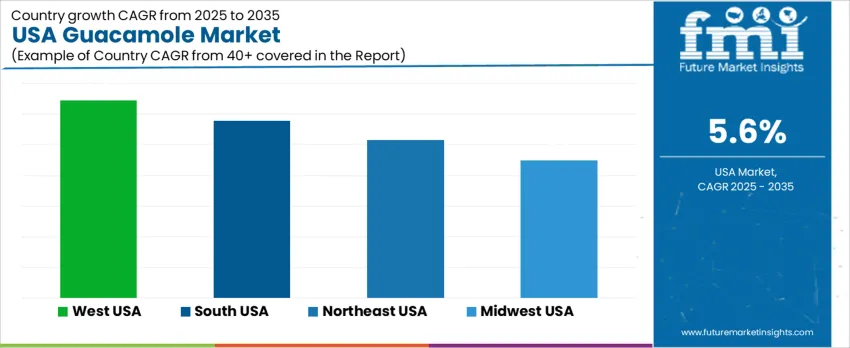
| Region | CAGR (2025-2035) |
|---|---|
| West USA | 6.4% |
| South USA | 5.8% |
| Northeast USA | 5.2% |
| Midwest USA | 4.5% |
How is the West USA driving demand for guacamole?
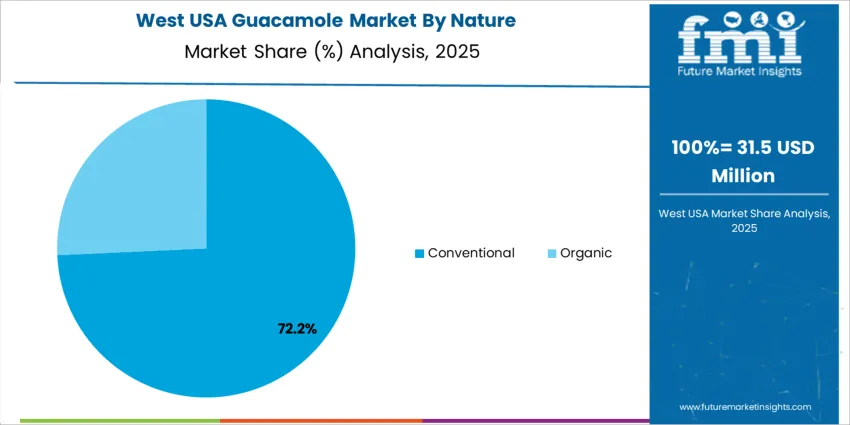
West USA expands at 6.4% CAGR, led by California as the primary source of domestic avocados and a major hub for fresh-pack processing. Local consumers show strong affinity for Mexican and fusion cuisine, supporting frequent guacamole purchases in retail and food-service environments. High USAge in snack pairing and meal topping formats creates recurring demand. Organic and preservative-free variants scale due to clean-label preferences. Tourism and hospitality businesses maintain volume through restaurant and catering channels. Grocery chains introduce larger family tubs and single-serve packs, aligning with diverse consumption occasions. Cross-border trade with Mexico ensures consistent fruit supply.
- Proximity to avocado sourcing supporting strong supply continuity
- High adoption of Mexican cuisine shaping consumption frequency
- Premium organic and fresh-pack segments expanding shelf share
- Retail and food-service channels maintaining year-round volume
How is the South USA shaping demand for guacamole?
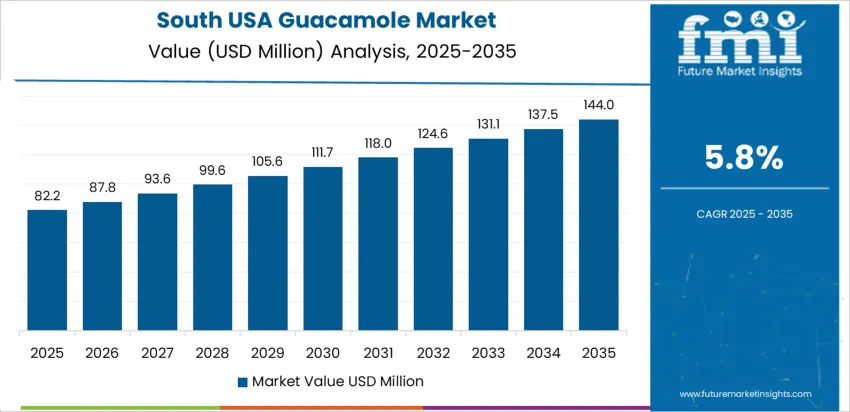
South USA records 5.8% CAGR, supported by strong Hispanic population influence and widespread availability in Tex-Mex and fast-casual restaurants. Florida and Texas drive high consumption through dining and retail deli portfolios. Snack trends reinforce single-serve guacamole cups paired with chips and vegetables. Food-service distributors expand bulk formats for quick-service kitchens targeting labor-efficient menu builds. Supermarkets grow private-label offerings that compete with branded portfolios based on value and freshness. Supply chains connected to Gulf Coast logistics help ensure stability in avocado deliveries sourced from Mexico.
- Tex-Mex cuisine integration sustaining menu placements
- Snack-focused formats gaining traction in convenience retail
- Private labels supporting value-oriented consumer segments
- Strong food-service consumption through QSR operators
How is the Northeast USA influencing demand for guacamole?
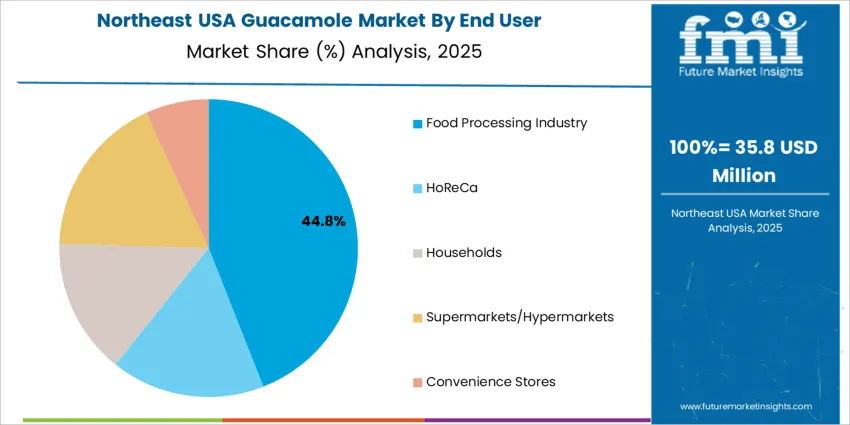
Northeast USA grows at 5.2% CAGR, shaped by urban convenience-driven purchasing and growing attention to nutritional snack options. High commuter populations drive demand for resealable and portion-controlled packaging. Retailers position fresh guacamole alongside premium chips and vegetable snack kits to increase impulse sales. Restaurants feature guacamole as an add-on item for bowls, salads, and sandwiches, introducing new eating occasions beyond traditional dips. Cold-chain capabilities allow broad distribution of ripe-mash products across dense metro industries.
- Convenience packaging encouraging on-the-go consumption
- Premium snacking categories influencing cross-merchandising
- Menu diversification expanding use beyond dipping
- Efficient logistics enabling wide refrigerated distribution
How is the Midwest USA contributing to growth momentum?
Midwest USA reports 4.5% CAGR, supported by rising awareness of avocado-based health benefits including “good fats” and clean-ingredient credibility. Retailers encourage basket growth with bundled deli promotions, increasing household trial. Frozen guacamole formats gain share by ensuring year-round availability despite produce-price fluctuations. Family-size servings support gatherings and sports-event snacking patterns common across the region. Buyers focus on consistent texture and longer shelf-life aided by high-pressure processing to reduce food waste.
- Nutrition-focused messaging accelerating trial and repeat purchase
- Household gatherings boosting large-pack volume
- Frozen formats balancing seasonal supply variability
- Shelf-life stability influencing procurement decisions
How is competitive positioning structured among leading guacamole suppliers in the United States, and which strategic capabilities shape share concentration?
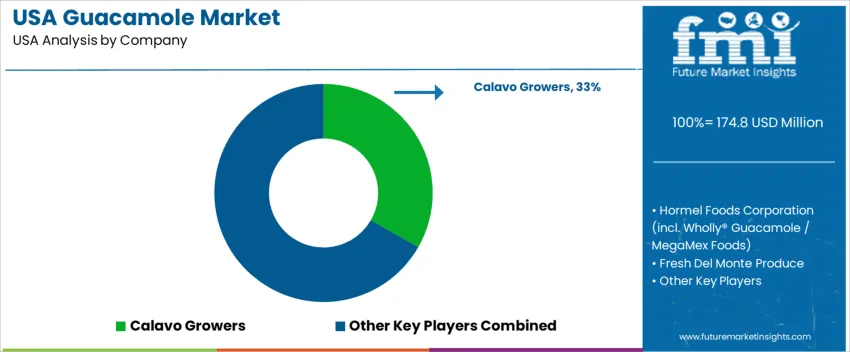
Competitive positioning in the United States guacamole segment reflects specialization in fresh-produce sourcing, cold-chain logistics, and branded retail distribution. Calavo Growers holds an estimated 33.3%, driven by its vertically integrated avocado supply network, established retail partnerships, and broad availability across refrigerated formats. Brand recognition in produce sections supports consistent volume across both grocery and foodservice channels.
Hormel Foods Corporation maintains a strong role through its Wholly® Guacamole platform. Investment in high-pressure processing enhances shelf stability while retaining fresh sensory attributes, supporting reach into convenience-driven snacking and club-store distribution. MegaMex Foods (a joint venture between Hormel and Herdez) strengthens this presence with complementary Mexican-inspired categories.
Fresh Del Monte extends its regional capacity through produce-aligned cold-chain operations, enabling supply security into major coastal consumption hubs. Sabra remains relevant through brand familiarity and adjacent dips, though product portfolio restructuring continues to influence placement and SKU prioritization. Price sensitivity, avocado sourcing volatility, and retailer preference for year-round consistency influence competitive outcomes. Participants securing diversified supplier bases and expanding single-serve or meal-kit formats are expected to capture incremental household penetration.
Key Players in USA Guacamole Demand
- Calavo Growers
- Hormel Foods Corporation (incl. Wholly® Guacamole / MegaMex Foods)
- Fresh Del Monte Produce
- Sabra
Scope of the Report
| Items | Values |
|---|---|
| Quantitative Units | USD million |
| Nature | Conventional, Organic |
| End User | Food Processing Industry, HoReCa, Households, Supermarkets/Hypermarkets, Convenience Stores |
| Regions Covered | West USA, South USA, Northeast USA, Midwest USA |
| Key Companies Profiled | Calavo Growers, Hormel Foods Corporation (Wholly® Guacamole / MegaMex Foods), Fresh Del Monte Produce, Sabra |
| Additional Attributes | Dollar sales by nature and end-user segments; regional demand trends driven by avocado availability and cold-chain distribution; increased retail penetration in fresh-pack tubs and single-serve formats; product innovations including clean-label formulations and longer shelf-life technologies; growth supported by HoReCa expansion and rising consumption of Mexican-style dips in households across the USA. |
USA Guacamole Demand by Segments
Nature:
- Conventional
- Organic
End User:
- Food Processing Industry
- HoReCa
- Households
- Supermarkets/Hypermarkets
- Convenience Stores
Region:
- West USA
- South USA
- Northeast USA
- Midwest USA
Frequently Asked Questions
How big is the demand for guacamole in USA in 2025?
The demand for guacamole in USA is estimated to be valued at USD 174.8 million in 2025.
What will be the size of guacamole in USA in 2035?
The market size for the guacamole in USA is projected to reach USD 301.6 million by 2035.
How much will be the demand for guacamole in USA growth between 2025 and 2035?
The demand for guacamole in USA is expected to grow at a 5.6% CAGR between 2025 and 2035.
What are the key product types in the guacamole in USA?
The key product types in guacamole in USA are conventional and organic.
Which end user segment is expected to contribute significant share in the guacamole in USA in 2025?
In terms of end user, food processing industry segment is expected to command 43.0% share in the guacamole in USA in 2025.
Preview the report firsthand - request a free sample
Get SampleGet the brochure for pricing and purchase details.
Get PDFTable of Content
- Executive Summary
- USA Market Outlook
- Demand-side Trends
- Supply-side Trends
- Technology Roadmap Analysis
- Analysis and Recommendations
- Market Overview
- Market Coverage / Taxonomy
- Market Definition / Scope / Limitations
- Market Background
- Market Dynamics
- Drivers
- Restraints
- Opportunity
- Trends
- Scenario Forecast
- Demand in Optimistic Scenario
- Demand in Likely Scenario
- Demand in Conservative Scenario
- Opportunity Map Analysis
- Product Life Cycle Analysis
- Supply Chain Analysis
- Investment Feasibility Matrix
- Value Chain Analysis
- PESTLE and Porter’s Analysis
- Regulatory Landscape
- Regional Parent Market Outlook
- Production and Consumption Statistics
- Import and Export Statistics
- Market Dynamics
- USA Market Analysis 2020 to 2024 and Forecast, 2025 to 2035
- Historical Market Size Value (USD Million) Analysis, 2020 to 2024
- Current and Future Market Size Value (USD Million) Projections, 2025 to 2035
- Y-o-Y Growth Trend Analysis
- Absolute $ Opportunity Analysis
- USA Market Pricing Analysis 2020 to 2024 and Forecast 2025 to 2035
- USA Market Analysis 2020 to 2024 and Forecast 2025 to 2035, By Nature
- Introduction / Key Findings
- Historical Market Size Value (USD Million) Analysis By Nature , 2020 to 2024
- Current and Future Market Size Value (USD Million) Analysis and Forecast By Nature , 2025 to 2035
- Conventional
- Organic
- Y-o-Y Growth Trend Analysis By Nature , 2020 to 2024
- Absolute $ Opportunity Analysis By Nature , 2025 to 2035
- USA Market Analysis 2020 to 2024 and Forecast 2025 to 2035, By End User
- Introduction / Key Findings
- Historical Market Size Value (USD Million) Analysis By End User, 2020 to 2024
- Current and Future Market Size Value (USD Million) Analysis and Forecast By End User, 2025 to 2035
- Food Processing Industry
- HoReCa
- Households
- Supermarkets/Hypermarkets
- Convenience Stores
- Y-o-Y Growth Trend Analysis By End User, 2020 to 2024
- Absolute $ Opportunity Analysis By End User, 2025 to 2035
- Market Structure Analysis
- Competition Dashboard
- Competition Benchmarking
- Market Share Analysis of Top Players
- By Regional
- By Nature
- By End User
- Competition Analysis
- Competition Deep Dive
- Calavo Growers
- Overview
- Product Portfolio
- Profitability by Market Segments (Product/Age /Sales Channel/Region)
- Sales Footprint
- Strategy Overview
- Marketing Strategy
- Product Strategy
- Channel Strategy
- Hormel Foods Corporation (incl. Wholly® Guacamole / MegaMex Foods)
- Fresh Del Monte Produce
- Sabra
- Calavo Growers
- Competition Deep Dive
- Assumptions & Acronyms Used
- Research Methodology


