

- Industry Size (2026)
- USD 2.28 Bn
- Forecast (2036)
- USD 8.14 Bn
- CAGR (2026 to 2036)
- 14.7%
DIY Reconstitution Skincare Kits Market Forecast and Outlook 2026 to 2036
DIY reconstitution skincare kits market value is forecast to reach USD 2.28 billion in 2026 and climb to USD 8.14 billion by 2036, expanding at a 14.7% CAGR. Demand is being pulled by consumers who want actives delivered closer to the point of use, especially when oxidation, hydrolysis, or pH drift can reduce performance in pre mixed formats. This is why kit designs that separate anhydrous or powder actives from water based carriers are gaining traction, particularly in hydration and barrier support where routine, frequent application increases repeat purchase potential and where formula freshness is part of the value proposition.
On the supply side, the category is being built around specific stabilization and delivery choices, not just customization. Brands are using freeze drying and encapsulation to protect moisture sensitive inputs, then pairing them with controlled reconstitution steps that limit exposure to humidity, light, and oxygen. Packaging is becoming a core cost and differentiation lever because dosing accuracy and contamination control directly affect perceived efficacy and returns.
As a result, developers are prioritizing moisture barrier primary packs, unit dose ampoules or dual chamber formats, and closures that reduce backflow and air ingress during mixing. The strongest commercial use case remains the face area, where higher consumer scrutiny and higher willingness to pay support premium pricing and frequent replenishment. Vitamin C systems are a clear driver because separating L ascorbic acid from aqueous phases helps manage oxidation, while peptide and botanical concentrates benefit from controlled concentration delivery after activation.
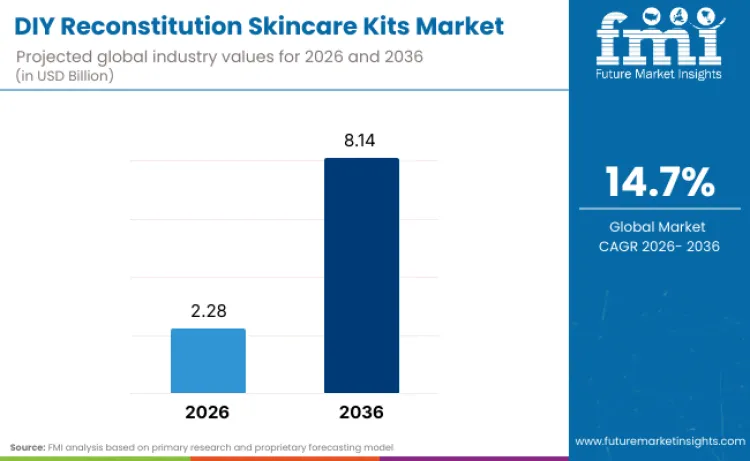
DIY Reconstitution Skincare Kits Market Key Takeaways
| Metric | Value |
|---|---|
| Industry Size (2026) | USD 2.28 Billion |
| Industry Value (2036) | USD 8.14 Billion |
| CAGR (2026-2036) | 14.7% |
Source: Future Market Insights analysis, supported by a proprietary forecasting model and primary research
What Product and Formulation Forces Are Driving Demand for Hydration and Barrier Support Reconstitution Kits?
Hydration and barrier support is accelerating in DIY reconstitution kits because the format directly addresses stability and performance tradeoffs that appear in water based, ready to use systems. Delaying hydration until activation helps protect moisture sensitive components and lets brands push higher active loading without the same shelf life drift in viscosity, odor, or efficacy. Barrier first routines have become a primary purchase filter, so consumers are scrutinizing ceramide presence, lipid replenishment logic, and irritation mitigation outcomes. Reconstitution therefore functions as both a technical solution and a premium positioning lever for freshness and potency.
Ceramide powder technology is a strong catalyst because it enables defined lipid delivery in a dry state, then dispersion into the base at point of use, which reduces degradation risk and improves batch consistency. Hyaluronic acid is another growth driver, especially in multi molecular weight designs engineered for surface hydration plus longer lasting homestay, while the kit structure prevents polymer hydration related texture shifts during storage. Niacinamide also fits the model since powder delivery can support higher concentration options with fewer long term stability penalties, which is attractive when brands want barrier support plus tone and redness claims in one routine.
Dermatology aligned education continues to strengthen demand by framing barrier dysfunction as a root trigger for sensitivity and dehydration cycles, including post procedure recovery. Environmental stressor messaging further reinforces repeat purchase, since barrier support is daily use and reconstitution kits create a built in refill path that supports higher lifetime value in the face segment.
How Is the DIY Reconstitution Skincare Kits Market Segmented Across Key Categories?
Global landscape is intricately segmented to address diverse requirements of the personalized skincare industry, categorizing sector by product category, skin area, consumer positioning, and distribution channel. Structural division allows stakeholders to identify specific formulation targets, such as rising demand for vitamin C systems in anti-aging applications or preference for peptide complexes in specialized treatment protocols.
By analyzing these segments, manufacturers can tailor production lines to meet distinct needs of professional formulators versus direct-to-consumer brands. Segmentation also highlights shift from generic skincare approaches to targeted reconstitution interventions. As industry matures, granular segmentation becomes essential for understanding formulation pathways and regulatory compliance, ensuring product development aligns with evolving beauty standards.
What Formulation and Claim Substantiation Factors Keep Hydration and Barrier Support at 47.3% Share?
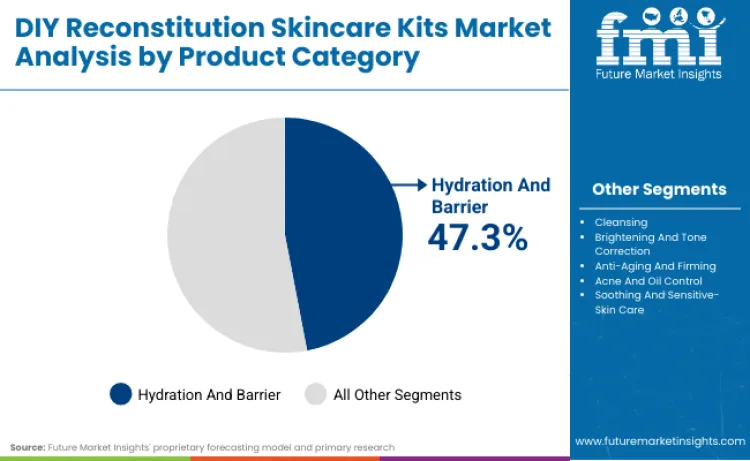
Hydration and barrier support leads at 47.3% in 2026 because reconstitution directly solves the stability and delivery constraints that show up in water-based, ready-to-use “barrier” products. Separating the aqueous phase keeps humectant systems from pre-hydrating and drifting in viscosity, and it reduces degradation risk for lipid barrier components. On the lipid side, kits increasingly use lamellar-repair logic that mirrors dermatology-led barrier narratives, typically built around ceramide NP/AP/EOP type blends paired with cholesterol and free fatty acids to support barrier recovery claims.
On the water-binding side, brands are engineering hyaluronic systems by selecting sodium hyaluronate vs hydrolyzed HA and balancing high-MW film formers with lower-MW fractions for immediate feel plus persistence. This segment also has the cleanest pathway to substantiation, since brands can anchor claims in TEWL reduction, corneometry hydration lift, and irritation recovery panels, which fits “medical-grade” positioning in reconstitution formats.
- Lipid architecture increasingly mirrors lamellar repair (ceramide NP/AP/EOP plus cholesterol plus free fatty acids)
- HA choices are engineered by polymer type and MW distribution (sodium hyaluronate, hydrolyzed HA, crosslinked options)
- Reconstitution reduces water-driven viscosity drift and protects moisture-sensitive systems until activation
- Claim packs often lean on TEWL, corneometry, and recovery panels that resonate in sensitive-skin and post-procedure use cases
What Format and Economics Drivers Make Face Treatments the Primary Area at 42.1% Share?
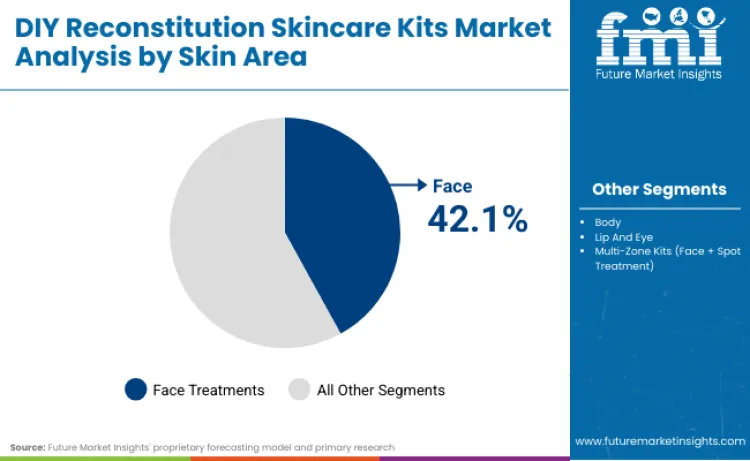
Face treatments hold 42.1% share because the face category supports higher active intensity, higher consumer scrutiny, and faster repurchase cycles tied to visible outcome windows. Reconstitution is structurally advantaged for facial actives that are unstable in aqueous storage, especially L-ascorbic acid systems, certain retinoid derivatives, and peptide blends that can lose performance with prolonged water exposure.
That is why face kits frequently adopt dual-chamber vials, twist-to-activate caps, snap-ampoule boosters, and desiccant-integrated closures to protect powders from humidity and to lock dosing precision. Brands also design face-first routines around “stacking,” where a hydration and barrier base is paired with an activated booster, which increases basket size and supports subscription-like replenishment behavior.
- Face economics justify higher active load and more complex pack architecture
- Dry storage protects oxidation-prone systems, especially vitamin C and certain peptide blends
- Packaging differentiation is specific and functional (dual-chamber, twist-to-activate, snap-ampoule, desiccant caps)
- Routine stacking expands usage frequency and drives higher refill and booster attachment rates
What Channel and Product Architecture Mechanics Keep Premium Positioning at 38.5% Share?
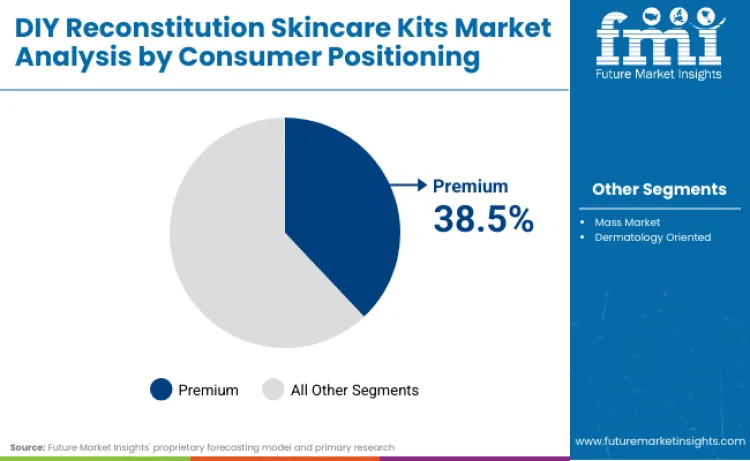
Premium positioning captures break la janar asla tr mail karun ja share because reconstitution kits align with channels that reward verification, education, and regimen discipline. In premium, brands are not only selling “customization,” they are selling controlled activation, precise dosing, and claim defensibility. That pushes investment into substantiation packages like stability after reconstitution across a defined use window, microbial risk control testing for the activated phase, and packaging compatibility assessments that minimize oxygen ingress and humidity pickup.
Premium is also where “ecosystem” economics are strongest: a base activator plus rotating boosters creates a refill pod or cartridge model that increases lifetime value and locks compatibility. Ingredient strategy is similarly specific, with premium kits leaning into defined peptide complexes, high-purity vitamin derivatives, and tighter provenance controls that support professional recommendation pathways.
- Premium channels reward validated claims, guided routines, and repeatable dosing behavior
- Substantiation is more technical (post-activation stability window, microbial control after activation, pack interaction checks)
- Refill ecosystems drive LTV (base plus booster cartridges, pods, and controlled replenishment cycles)
- Premium ingredient strategy is built around defined peptide systems and high-sensitivity actives that benefit from point-of-use activation
Market Dynamics
How Will Digital Beauty Education Change Sales Conversion for DIY Reconstitution Skincare Kits?
Digital beauty education is changing sales conversion by making ingredient literacy a purchase requirement rather than an add on. As consumers learn why oxidation, hydrolysis, and pH drift reduce performance in premixed formats, reconstitution kits gain a clearer technical advantage because they keep sensitive components dry until activation.
Influencer content is also moving from routine demos to mechanism led education, which increases demand for kits that explain concentration logic, compatibility rules, and step order with low failure risk. Brands that do not provide structured onboarding, dosing guidance, and protocol style routines risk losing visibility to players that bundle education with the product. Tutorials, activation instructions, and regimen builders also increase booster and refill attachment, improving repeat purchase and average basket size.
How Will Ingredient Transparency Reshape Product Choice and Retention?
Ingredient transparency is reshaping consumer behavior by shifting trust from marketing claims to sourcing disclosure, concentration clarity, and compatibility logic. When brands provide traceability on origin, processing method, and quality documentation, consumers are more likely to select products based on verified inputs rather than brand halo.
In DIY reconstitution kits, transparency reinforces the category promise of formulation control because buyers can see why certain actives are separated, how purity grades differ, and what recommended concentration ranges imply for tolerance and results. E commerce strengthens this effect by presenting ingredient dictionaries, compatibility tools, and formulation rationale at purchase. Post purchase, mobile ingredient analysis and compatibility checking increase engagement and regimen adherence, improving retention when users can connect outcomes to a repeatable protocol.
How Will Regulatory and Testing Requirements Influence Market Growth?
Regulatory tightening is likely to raise entry barriers while strengthening category credibility for compliant brands. Stricter safety expectations around allergens, restricted substances, and labeling push manufacturers to invest in controlled formulation design and stronger documentation. For reconstitution kits, the key pressure point is proof that the product remains safe and stable after activation, which elevates the role of post activation stability work, microbial risk control planning, packaging compatibility testing, and clear use window instructions.
Greater alignment of cosmetic rules across regions can support international expansion for brands that build validation into development early. Compliance driven innovation will increasingly concentrate in packaging design, dosing control, and verification workflows, which can reinforce adoption among retailer programs and buyers that prioritize risk managed product performance.
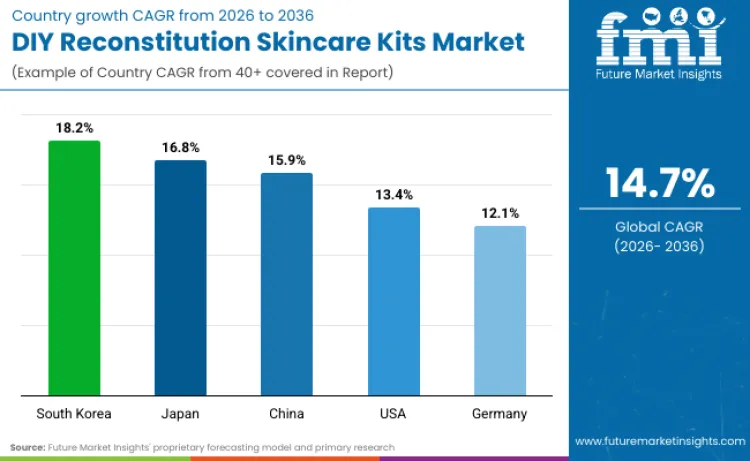
How Will the DIY Reconstitution Skincare Kits Industry Evolve in Major Nations?
Global landscape for DIY reconstitution skincare is characterized by diverse beauty cultures, influenced by skincare routines and ingredient preferences. Established markets prioritize science-based formulations and dermatologist-approved ingredients, whereas emerging economies focus on accessible pricing and basic skincare education. Asia-Pacific is emerging as rapid growth hub due to increasing K-beauty influence and expanding skincare awareness. Conversely, North American sectors pivot towards clinical-grade formulations and professional-quality systems. Government initiatives in developing nations supporting cosmetic safety standards ensure sustained demand for regulated formulation products across all demographics.
| Country | CAGR (2026 to 2036) |
|---|---|
| South Korea | 18.2% |
| Japan | 16.8% |
| China | 15.9% |
| USA | 13.4% |
| Germany | 12.1% |
Source: Future Market Insights’ proprietary forecasting model and primary research
Why is the DIY Reconstitution Skincare Kits Industry in South Korea Growing?
Sales of DIY reconstitution skincare products in South Korea are set to grow at 18.2% CAGR through 2036, supported by a commercialization engine that rapidly converts lab concepts into retail ready K beauty formats and then scales them internationally. Growth is reinforced by MFDS oversight that distinguishes cosmetics categories, including functional cosmetics, with defined evaluation and reporting routes. This pushes brands toward controlled, repeatable activation systems that are easier to validate than open ended mixing. Export performance is also a strong proxy for product cycle speed and global demand resonance, with recent Korea trade reporting showing continued momentum for cosmetics shipments.
Why is the DIY Reconstitution Skincare Kits Sector in Japan Expanding?
Demand for personalized skincare solutions in Japan is projected to rise at 16.8% CAGR during the assessment period, with expansion linked to anti aging intensity in an aging society and high consumer acceptance of precision led routines. Japan’s population aging dynamics typically increase demand for targeted, regimen based skincare solutions, which fits freshly activated actives and dose like personalization.
Regulatory discipline around products closer to active benefit territory also shapes the pathway, encouraging brands to invest in stabilization, packaging integrity, and controlled activation designs that support reliable performance claims. FMI is of the opinion that Japan’s precision and stability focus will keep pushing global formulation standards for reconstitution ready actives.
Why is the DIY Reconstitution Skincare Kits Industry in China Showing Potential?
DIY reconstitution skincare industry in China is poised to expand at 15.9% CAGR, driven by scale economics and fast conversion of ingredient trends through digital retail, alongside rising reliance on compliance signals for trust building. Regulatory supervision provisions emphasize stronger manufacturing and marketing oversight and corrective actions where products are nonconforming.
This tends to increase demand for formats that demonstrate controlled preparation, consistent dosing, and traceable components. Sealed plus activate systems that separate sensitive actives until point of use align well with consumer confidence building and compliance oriented product development.
Why is the DIY Reconstitution Skincare Kits Industry in USA Growing?
Sales of DIY reconstitution skincare products in the USA are set to grow at 13.4% CAGR, shaped by consumer preference for clinical framing, ingredient transparency, and higher expectations for safety substantiation. Expanded cosmetics oversight and new compliance expectations tend to reward brands that document formulation integrity and control how actives are combined. FMI is of the opinion that the USA will keep steering the category toward clinically positioned DIY systems where activation steps, storage stability, and labeling discipline are central to commercialization success.
Why is the DIY Reconstitution Skincare Kits Sector in Germany Expanding?
Revenue from DIY reconstitution skincare products in Germany is set to grow at 12.1% CAGR, with adoption anchored in evidence oriented consumer behavior and strict safety led commercialization. The EU cosmetics framework provides the core compliance baseline, reinforcing requirements for safety assessment before products are placed on the market. This often slows trend only launches but strengthens trust for systems designed around controlled activation and documented stability. National monitoring and compliance culture reinforce a quality first operating environment.
What is the Competitive Outlook for the DIY Reconstitution Skincare Kits Market
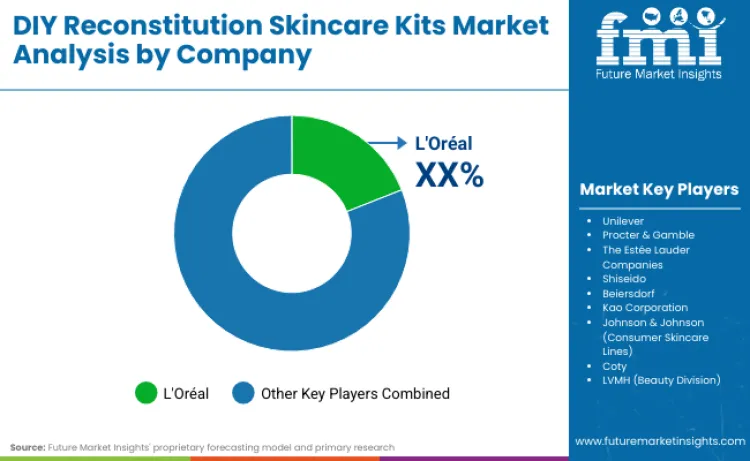
Competition in DIY reconstitution skincare kits is increasingly about execution, not just a clever “fresh-mix” concept. The brands that win are the ones that can make the routine feel effortless, clean dosing, consistent texture, and predictable results, while keeping sensitive actives stable across storage and repeated use. That’s why product teams are putting as much weight on delivery format and packaging design as they do on the ingredient story.
Across these key players, the biggest pressure points are similar, that is proving performance without overpromising, reducing friction in the mixing step, and turning one-time curiosity purchases into repeat routines. Prestige-heavy groups tend to push reconstitution as a premium, science-led experience (often supported by high-end positioning and selective channels), while broader FMCG portfolios are more likely to scale through accessibility and distribution strength, using simpler formats, clearer benefits, and faster retail adoption.
Portfolio differences are also becoming clearer. Some players will compete through “hero” active systems (vitamin C, retinoids, peptide boosters), while others will differentiate through skin-type personalization, regimen modularity (base + booster approach), and sustainable refill-style packaging narratives. FMI is of the opinion that long-term advantage will come from combining ingredient credibility + packaging engineering + a repeatable go-to-market model, because reconstitution products don’t survive on novelty alone.
Key Players in DIY Reconstitution Skincare Kits Market
- L'Oréal
- Unilever
- Procter & Gamble
- The Estée Lauder Companies
- Shiseido
- Beiersdorf
- Kao Corporation
- Johnson & Johnson (Consumer Skincare Lines)
- Coty
- LVMH (Beauty Division)
Scope of Report
| Items | Values |
|---|---|
| Quantitative Units | USD Billion |
| Product Category Segments | Hydration And Barrier Support; Cleansing; Brightening And Tone Correction; Anti-Aging And Firming; Acne And Oil Control; Soothing And Sensitive-Skin Care |
| Skin Area Categories | Face; Body; Lip And Eye; Multi-Zone Kits (Face + Spot Treatment) |
| Consumer Positioning Categories | Premium; Mass Market; Dermatology Oriented |
| Distribution Channel Types | Direct-To-Consumer Online; Marketplaces And E-Commerce; Specialty Beauty Retail; Pharmacy Or Drugstore; Subscription And Refill Programs |
| Regions Covered | North America, Europe, Asia-Pacific, Latin America, Middle East & Africa |
| Key Countries | South Korea, Japan, China, USA, Germany |
| Key Companies Profiled | L'Oréal; Unilever; Procter & Gamble; The Estée Lauder Companies; Shiseido; Beiersdorf; Kao Corporation; Johnson & Johnson (Consumer Skincare Lines); Coty; LVMH (Beauty Division) |
| Additional Attributes | Dollar sales measured for DIY reconstitution skincare kits used in personalized beauty and skincare customization applications, specified by product category (hydration, anti-aging, brightening), skin area focus, consumer positioning preference, distribution model (online vs. offline), and compliance alignment with evolving cosmetic safety standards and ingredient transparency regulations. |
DIY Reconstitution Skincare Kits Market by Segments
Product Category
- Hydration And Barrier Support
- Cleansing
- Brightening And Tone Correction
- Anti-Aging And Firming
- Acne And Oil Control
- Soothing And Sensitive-Skin Care
Skin Area
- Face
- Body
- Lip And Eye
- Multi-Zone Kits (Face + Spot Treatment)
Consumer Positioning
- Premium
- Mass Market
- Dermatology Oriented
Distribution Channel
- Direct-To-Consumer Online
- Marketplaces And E-Commerce
- Specialty Beauty Retail
- Pharmacy Or Drugstore
- Subscription And Refill Programs
Bibliography
- European Commission. (2023). Regulation (EC) No 1223/2009 on cosmetic products. European Union.
- International Organization for Standardization. (2023). ISO 22716: Cosmetics - Good Manufacturing Practices (GMP) — Guidelines on Good Manufacturing Practices. ISO.
- Cosmetic Ingredient Review Expert Panel. (2024). Safety assessment of cosmetic ingredients and formulation practices. CIR.
- International Society of Dermatology. (2024). Evidence‑based skincare formulation: barrier function, hydration, and active stability. International Journal of Dermatology.
Frequently Asked Questions
How big is the global DIY reconstitution skincare kits market?
The global DIY reconstitution skincare kits market is valued at USD 2.28 billion in 2026.
What is the growth outlook for the DIY reconstitution skincare kits market over the next 10 years?
The market is projected to grow at a strong CAGR of 14.7% from 2026 to 2036, reaching USD 8.14 billion by 2036.
Which applications or end uses drive demand for DIY reconstitution skincare kits?
Demand is primarily driven by hydration and barrier support applications and face treatments, where stability-sensitive actives and frequent usage favor point-of-use reconstitution.
What are the main risks and constraints affecting this market?
Key constraints include complex packaging costs, post-activation stability and safety requirements, consumer misuse risk, and higher validation and education burdens.
How do regulations and standards impact the DIY reconstitution skincare kits market?
Cosmetic safety regulations and GMP standards strongly influence product design by requiring proof of stability, microbial safety, and clear usage instructions after activation.
Preview the report firsthand - request a free sample
Get SampleGet the brochure for pricing and purchase details.
Get PDFTable of Content
- Executive Summary
- Global Market Outlook
- Demand Side Trends
- Supply Side Trends
- Technology Roadmap Analysis
- Analysis and Recommendations
- Market Overview
- Market Coverage / Taxonomy
- Market Definition / Scope / Limitations
- Research Methodology
- Chapter Orientation
- Analytical Lens and Working Hypotheses
- Market Structure, Signals, and Trend Drivers
- Benchmarking and Cross-market Comparability
- Market Sizing, Forecasting, and Opportunity Mapping
- Research Design and Evidence Framework
- Desk Research Programme (Secondary Evidence)
- Company Annual and Sustainability Reports
- Peer-reviewed Journals and Academic Literature
- Corporate Websites, Product Literature, and Technical Notes
- Earnings Decks and Investor Briefings
- Statutory Filings and Regulatory Disclosures
- Technical White Papers and Standards Notes
- Trade Journals, Industry Magazines, and Analyst Briefs
- Conference Proceedings, Webinars, and Seminar Materials
- Government Statistics Portals and Public Data Releases
- Press Releases and Reputable Media Coverage
- Specialist Newsletters and Curated Briefings
- Sector Databases and Reference Repositories
- FMI Internal Knowledge Base and Historical Datasets
- Subscription Datasets and Paid Sources
- Social Channels, Communities, and Digital Listening Inputs
- Additional Desk Sources
- Expert Input and Fieldwork (Primary Evidence)
- Primary Modes
- Qualitative Interviews and Expert Elicitation
- Quantitative Surveys and Structured Data Capture
- Blended Approach
- Why Primary Evidence is Used
- Field Techniques
- Interviews
- Surveys
- Focus Groups
- Observational and In-context Research
- Social and Community Interactions
- Stakeholder Universe Engaged
- C-suite Leaders
- Board Members
- Presidents and Vice Presidents
- R&D and Innovation Heads
- Technical Specialists
- Domain Subject-matter Experts
- Scientists
- Physicians and Other Healthcare Professionals
- Governance, Ethics, and Data Stewardship
- Research Ethics
- Data Integrity and Handling
- Primary Modes
- Tooling, Models, and Reference Databases
- Desk Research Programme (Secondary Evidence)
- Data Engineering and Model Build
- Data Acquisition and Ingestion
- Cleaning, Normalisation, and Verification
- Synthesis, Triangulation, and Analysis
- Quality Assurance and Audit Trail
- Market Background
- Market Dynamics
- Drivers
- Restraints
- Opportunity
- Trends
- Scenario Forecast
- Demand in Optimistic Scenario
- Demand in Likely Scenario
- Demand in Conservative Scenario
- Opportunity Map Analysis
- Product Life Cycle Analysis
- Supply Chain Analysis
- Investment Feasibility Matrix
- Value Chain Analysis
- PESTLE and Porter's Analysis
- Regulatory Landscape
- Regional Parent Market Outlook
- Production and Consumption Statistics
- Import and Export Statistics
- Market Dynamics
- Global Market Analysis 2021 to 2025 and Forecast, 2026 to 2036
- Historical Market Size Value (USD Billion) Analysis, 2021 to 2025
- Current and Future Market Size Value (USD Billion) Projections, 2026 to 2036
- Y-o-Y Growth Trend Analysis
- Absolute $ Opportunity Analysis
- Global Market Pricing Analysis 2021 to 2025 and Forecast 2026 to 2036
- Y-o-Y Growth Trend Analysis 2021 to 2025
- Absolute $ Opportunity Analysis 2026 to 2036
- Global Market Analysis 2021 to 2025 and Forecast 2026 to 2036, By Product Category
- Introduction / Key Findings
- Historical Market Size Value (USD Billion) Analysis By Product Category, 2021 to 2025
- Current and Future Market Size Value (USD Billion) Analysis and Forecast By Product Category, 2026 to 2036
- Hydration And Barrier Support
- Cleansing
- Brightening And Tone Correction
- Anti-Aging And Firming
- Acne And Oil Control
- Soothing And Sensitive-Skin Care
- Y-o-Y Growth Trend Analysis By Product Category, 2021 to 2025
- Absolute $ Opportunity Analysis By Product Category, 2026 to 2036
- Global Market Analysis 2021 to 2025 and Forecast 2026 to 2036, By Skin Area
- Introduction / Key Findings
- Historical Market Size Value (USD Billion) Analysis By Skin Area, 2021 to 2025
- Current and Future Market Size Value (USD Billion) Analysis and Forecast By Skin Area, 2026 to 2036
- Face
- Body
- Lip And Eye
- Multi-Zone Kits (Face + Spot Treatment)
- Y-o-Y Growth Trend Analysis By Skin Area, 2021 to 2025
- Absolute $ Opportunity Analysis By Skin Area, 2026 to 2036
- Global Market Analysis 2021 to 2025 and Forecast 2026 to 2036, By Consumer Positioning
- Introduction / Key Findings
- Historical Market Size Value (USD Billion) Analysis By Consumer Positioning, 2021 to 2025
- Current and Future Market Size Value (USD Billion) Analysis and Forecast By Consumer Positioning, 2026 to 2036
- Premium
- Mass Market
- Dermatology Oriented
- Y-o-Y Growth Trend Analysis By Consumer Positioning, 2021 to 2025
- Absolute $ Opportunity Analysis By Consumer Positioning, 2026 to 2036
- Global Market Analysis 2021 to 2025 and Forecast 2026 to 2036, By Region
- Introduction
- Historical Market Size Value (USD Billion) Analysis By Region, 2021 to 2025
- Current Market Size Value (USD Billion) Analysis and Forecast By Region, 2026 to 2036
- North America
- Latin America
- Western Europe
- Eastern Europe
- East Asia
- South Asia and Pacific
- Middle East & Africa
- Market Attractiveness Analysis By Region
- North America Market Analysis 2021 to 2025 and Forecast 2026 to 2036, By Country
- Historical Market Size Value (USD Billion) Trend Analysis By Market Taxonomy, 2021 to 2025
- Market Size Value (USD Billion) Forecast By Market Taxonomy, 2026 to 2036
- By Country
- USA
- Canada
- Mexico
- By Product Category
- By Skin Area
- By Consumer Positioning
- By Country
- Market Attractiveness Analysis
- By Country
- By Product Category
- By Skin Area
- By Consumer Positioning
- Key Takeaways
- Latin America Market Analysis 2021 to 2025 and Forecast 2026 to 2036, By Country
- Historical Market Size Value (USD Billion) Trend Analysis By Market Taxonomy, 2021 to 2025
- Market Size Value (USD Billion) Forecast By Market Taxonomy, 2026 to 2036
- By Country
- Brazil
- Chile
- Rest of Latin America
- By Product Category
- By Skin Area
- By Consumer Positioning
- By Country
- Market Attractiveness Analysis
- By Country
- By Product Category
- By Skin Area
- By Consumer Positioning
- Key Takeaways
- Western Europe Market Analysis 2021 to 2025 and Forecast 2026 to 2036, By Country
- Historical Market Size Value (USD Billion) Trend Analysis By Market Taxonomy, 2021 to 2025
- Market Size Value (USD Billion) Forecast By Market Taxonomy, 2026 to 2036
- By Country
- Germany
- UK
- Italy
- Spain
- France
- Nordic
- BENELUX
- Rest of Western Europe
- By Product Category
- By Skin Area
- By Consumer Positioning
- By Country
- Market Attractiveness Analysis
- By Country
- By Product Category
- By Skin Area
- By Consumer Positioning
- Key Takeaways
- Eastern Europe Market Analysis 2021 to 2025 and Forecast 2026 to 2036, By Country
- Historical Market Size Value (USD Billion) Trend Analysis By Market Taxonomy, 2021 to 2025
- Market Size Value (USD Billion) Forecast By Market Taxonomy, 2026 to 2036
- By Country
- Russia
- Poland
- Hungary
- Balkan & Baltic
- Rest of Eastern Europe
- By Product Category
- By Skin Area
- By Consumer Positioning
- By Country
- Market Attractiveness Analysis
- By Country
- By Product Category
- By Skin Area
- By Consumer Positioning
- Key Takeaways
- East Asia Market Analysis 2021 to 2025 and Forecast 2026 to 2036, By Country
- Historical Market Size Value (USD Billion) Trend Analysis By Market Taxonomy, 2021 to 2025
- Market Size Value (USD Billion) Forecast By Market Taxonomy, 2026 to 2036
- By Country
- China
- Japan
- South Korea
- By Product Category
- By Skin Area
- By Consumer Positioning
- By Country
- Market Attractiveness Analysis
- By Country
- By Product Category
- By Skin Area
- By Consumer Positioning
- Key Takeaways
- South Asia and Pacific Market Analysis 2021 to 2025 and Forecast 2026 to 2036, By Country
- Historical Market Size Value (USD Billion) Trend Analysis By Market Taxonomy, 2021 to 2025
- Market Size Value (USD Billion) Forecast By Market Taxonomy, 2026 to 2036
- By Country
- India
- ASEAN
- Australia & New Zealand
- Rest of South Asia and Pacific
- By Product Category
- By Skin Area
- By Consumer Positioning
- By Country
- Market Attractiveness Analysis
- By Country
- By Product Category
- By Skin Area
- By Consumer Positioning
- Key Takeaways
- Middle East & Africa Market Analysis 2021 to 2025 and Forecast 2026 to 2036, By Country
- Historical Market Size Value (USD Billion) Trend Analysis By Market Taxonomy, 2021 to 2025
- Market Size Value (USD Billion) Forecast By Market Taxonomy, 2026 to 2036
- By Country
- Kingdom of Saudi Arabia
- Other GCC Countries
- Turkiye
- South Africa
- Other African Union
- Rest of Middle East & Africa
- By Product Category
- By Skin Area
- By Consumer Positioning
- By Country
- Market Attractiveness Analysis
- By Country
- By Product Category
- By Skin Area
- By Consumer Positioning
- Key Takeaways
- Key Countries Market Analysis
- USA
- Pricing Analysis
- Market Share Analysis, 2025
- By Product Category
- By Skin Area
- By Consumer Positioning
- Canada
- Pricing Analysis
- Market Share Analysis, 2025
- By Product Category
- By Skin Area
- By Consumer Positioning
- Mexico
- Pricing Analysis
- Market Share Analysis, 2025
- By Product Category
- By Skin Area
- By Consumer Positioning
- Brazil
- Pricing Analysis
- Market Share Analysis, 2025
- By Product Category
- By Skin Area
- By Consumer Positioning
- Chile
- Pricing Analysis
- Market Share Analysis, 2025
- By Product Category
- By Skin Area
- By Consumer Positioning
- Germany
- Pricing Analysis
- Market Share Analysis, 2025
- By Product Category
- By Skin Area
- By Consumer Positioning
- UK
- Pricing Analysis
- Market Share Analysis, 2025
- By Product Category
- By Skin Area
- By Consumer Positioning
- Italy
- Pricing Analysis
- Market Share Analysis, 2025
- By Product Category
- By Skin Area
- By Consumer Positioning
- Spain
- Pricing Analysis
- Market Share Analysis, 2025
- By Product Category
- By Skin Area
- By Consumer Positioning
- France
- Pricing Analysis
- Market Share Analysis, 2025
- By Product Category
- By Skin Area
- By Consumer Positioning
- India
- Pricing Analysis
- Market Share Analysis, 2025
- By Product Category
- By Skin Area
- By Consumer Positioning
- ASEAN
- Pricing Analysis
- Market Share Analysis, 2025
- By Product Category
- By Skin Area
- By Consumer Positioning
- Australia & New Zealand
- Pricing Analysis
- Market Share Analysis, 2025
- By Product Category
- By Skin Area
- By Consumer Positioning
- China
- Pricing Analysis
- Market Share Analysis, 2025
- By Product Category
- By Skin Area
- By Consumer Positioning
- Japan
- Pricing Analysis
- Market Share Analysis, 2025
- By Product Category
- By Skin Area
- By Consumer Positioning
- South Korea
- Pricing Analysis
- Market Share Analysis, 2025
- By Product Category
- By Skin Area
- By Consumer Positioning
- Russia
- Pricing Analysis
- Market Share Analysis, 2025
- By Product Category
- By Skin Area
- By Consumer Positioning
- Poland
- Pricing Analysis
- Market Share Analysis, 2025
- By Product Category
- By Skin Area
- By Consumer Positioning
- Hungary
- Pricing Analysis
- Market Share Analysis, 2025
- By Product Category
- By Skin Area
- By Consumer Positioning
- Kingdom of Saudi Arabia
- Pricing Analysis
- Market Share Analysis, 2025
- By Product Category
- By Skin Area
- By Consumer Positioning
- Turkiye
- Pricing Analysis
- Market Share Analysis, 2025
- By Product Category
- By Skin Area
- By Consumer Positioning
- South Africa
- Pricing Analysis
- Market Share Analysis, 2025
- By Product Category
- By Skin Area
- By Consumer Positioning
- USA
- Market Structure Analysis
- Competition Dashboard
- Competition Benchmarking
- Market Share Analysis of Top Players
- By Regional
- By Product Category
- By Skin Area
- By Consumer Positioning
- Competition Analysis
- Competition Deep Dive
- L'Oréal
- Unilever
- Procter & Gamble
- The Estée Lauder Companies
- Shiseido
- Beiersdorf
- Kao Corporation
- Johnson & Johnson (Consumer Skincare Lines)
- Coty
- LVMH (Beauty Division)
- Competition Deep Dive
- Assumptions & Acronyms Used


