

- Industry Size (2025)
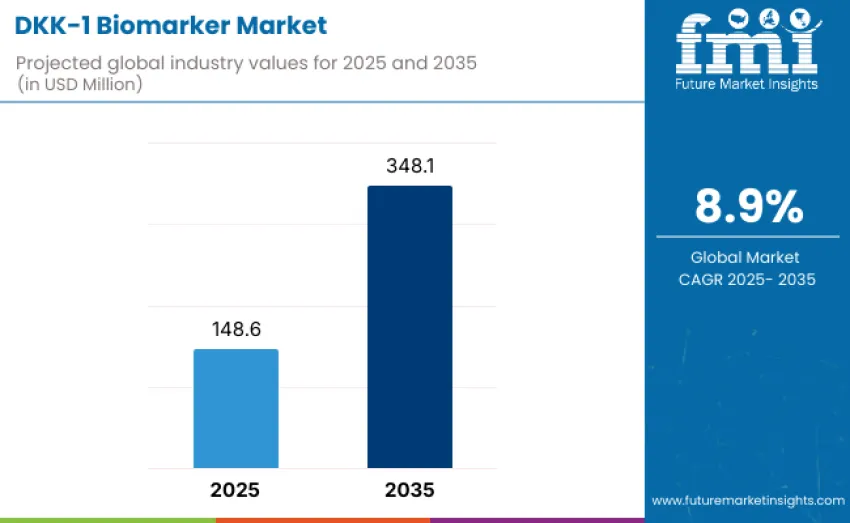
- USD 148.6 Mn
- Forecast (2035)
- USD 348.1 Mn
- CAGR (2025 to 2035)
- 8.9%
DKK-1 Biomarker Market Size, Market Forecast and Outlook By FMI
The DKK-1 biomarker market is projected to reach USD 348.1 million by 2035, recording an absolute increase of USD 199.5 million over the forecast period. Value stands at USD 148.6 million in 2025 and is set to rise at a CAGR of 8.9% during the forecast period 2025-2035. Growth is driven by increasing adoption of DKK-1 as a diagnostic and prognostic biomarker across oncology, bone-related disorders, and metabolic disease research, as well as rising clinical and research demand for high-sensitivity assays capable of detecting early-stage disease and monitoring treatment response.
Summary of DKK-1 Biomarker Market
- Market Snapshot
- The DKK-1 Biomarker Market is valued at USD 148.6 million in 2025.
- The DKK-1 Biomarker Market is projected to reach USD 348.1 million by 2035.
- The market is expected to expand at a CAGR of 8.9% during 2025-2035.
- Demand and Growth Drivers
- Adoption of DKK-1 assays improves diagnostic sensitivity and prognostic accuracy by 30-50% compared to conventional biomarkers.
- High-throughput assay platforms deliver 40-60% improvement in data throughput and diagnostic confidence.
- The market gains traction from increasing use of DKK-1 biomarkers in oncology, including multiple myeloma and hepatocellular carcinoma.
- Product and Segment View
- Serum DKK-1 assays account for 38.4% of the market share in 2025 due to non-invasive sampling advantages.
- Oncology diagnosis holds 29.4% share, making it the leading application segment in 2025.
- Multiplex DKK-1 proteomic panels represent 21.9% share, supporting multi-marker analysis and patient stratification.
- Geography and Competitive Outlook
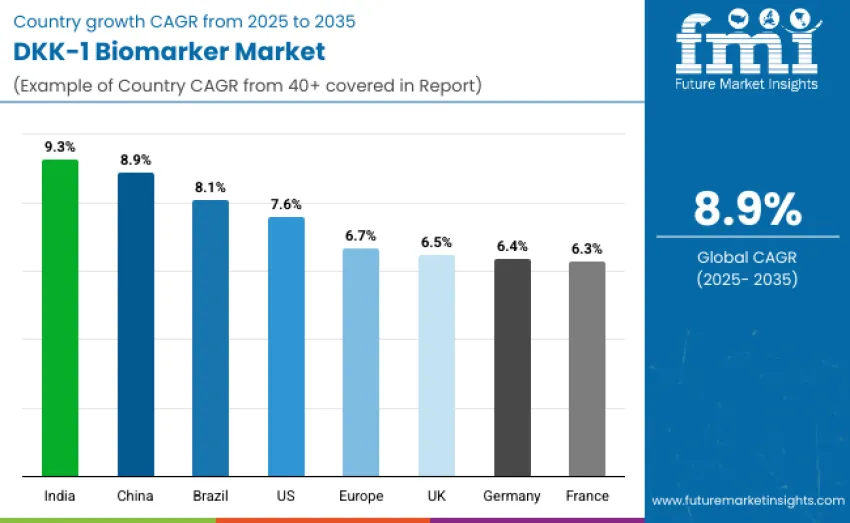
- India leads growth with a CAGR of 9.3% between 2025 and 2035.
- The top three companies collectively hold 55-60% of global market revenue.
- Thermo Fisher leads the competitive landscape with an estimated 22% market share.
Expansion reflects growing emphasis on precision medicine and targeted therapy development. DKK-1 biomarker assays including ELISA, multiplex immunoassays, electrochemiluminescence-based panels, and high-throughput protein arrays enable quantitative detection of DKK-1 levels in serum, plasma, and urine. These panels provide superior analytical sensitivity and reproducibility compared with traditional single-marker tests, often delivering 40-60 percent improvements in data throughput and diagnostic confidence.
Technological advancements are shaping DKK-1 biomarker landscape. Improvements in recombinant protein engineering, assay chemistries, microplate and bead-based formats, and detection platforms enhance assay precision, reduce background interference, and enable reliable inter-laboratory performance. Integration with automated sample preparation systems, high-throughput analyzers, and data analytics software supports scalable, reproducible workflows for research laboratories, clinical diagnostics, and pharmaceutical development pipelines.
DKK-1 Biomarker Market Year-over-Year Forecast (2025 to 2035)
Between 2025 and 2030, DKK-1 biomarker market is projected to expand from USD 148.6 million to USD 227.4 million, resulting in a value increase of USD 78.8 million, representing 39.5% of total forecast growth for the decade. Growth during this period is expected to be driven by increasing adoption of DKK-1 as a diagnostic and prognostic biomarker in oncology, particularly in cancers such as multiple myeloma and hepatocellular carcinoma.
From 2030 to 2035, growth continues from USD 227.4 million to USD 348.1 million, adding another USD 120.7 million, constituting 60.5% of overall ten-year expansion. Growth in this period is expected to be characterized by development of more specialized DKK-1 biomarker assays tailored for precision oncology, early detection, and patient stratification applications.
DKK-1 Biomarker Market Key Takeaways
| Metric | Value |
|---|---|
| Market Value (2025) | USD 148.6 million |
| Market Forecast Value (2035) | USD 348.1 million |
| Forecast CAGR (2025 to 2035) | 8.9% |
Why Is the DKK-1 Biomarker Market Growing Worldwide?
DKK-1 biomarker market grows by enabling clinical researchers and diagnostic laboratories to achieve higher precision in detecting bone-related malignancies, inflammatory conditions, and cancer progression. Healthcare systems face increasing pressure to deliver early and accurate disease detection, with DKK-1 biomarker assays typically improving diagnostic sensitivity and prognostic evaluation by 30-50% compared with conventional markers. This makes DKK-1 detection essential for oncology research, multiple myeloma monitoring, and bone metastasis assessment, where timely and reliable biomarker measurement informs treatment decisions.
Expansion of precision medicine and targeted therapeutics continues to stimulate demand for DKK-1 biomarker assays that provide reproducible insights into Wntsignaling pathway dysregulation. These assays are increasingly adopted in academic research centers, clinical laboratories, and pharmaceutical R&D programs, where they directly influence patient stratification, therapeutic monitoring, and clinical trial design for bone and solid tumor-related disorders. Government and institutional initiatives promoting cancer diagnostics, biomarker-driven clinical research, and translational medicine accelerate adoption.
How Are the DKK-1 Biomarker Market Segmented by Biomarker Type, Application, and Region?
DKK-1 biomarker market is segmented by biomarker type, application, and region. By biomarker type, it is divided into serum DKK-1 assays, tissue DKK-1 panels, multiplex DKK-1 proteomic panels, and liquid biopsy DKK-1 panels. Based on application, it is categorized into oncology diagnosis, prognosis and risk stratification, therapy monitoring, and bone & metabolic disease. Regionally, it is divided into Asia Pacific, Europe, North America, Latin America, and Middle East & Africa. Each segment demonstrates distinct growth patterns driven by clinical requirements, technology adoption rates, and research infrastructure development across diverse biomarker environments worldwide. (118 words)
By Biomarker Type, Serum DKK-1 Assays Lead with 38.4% Share
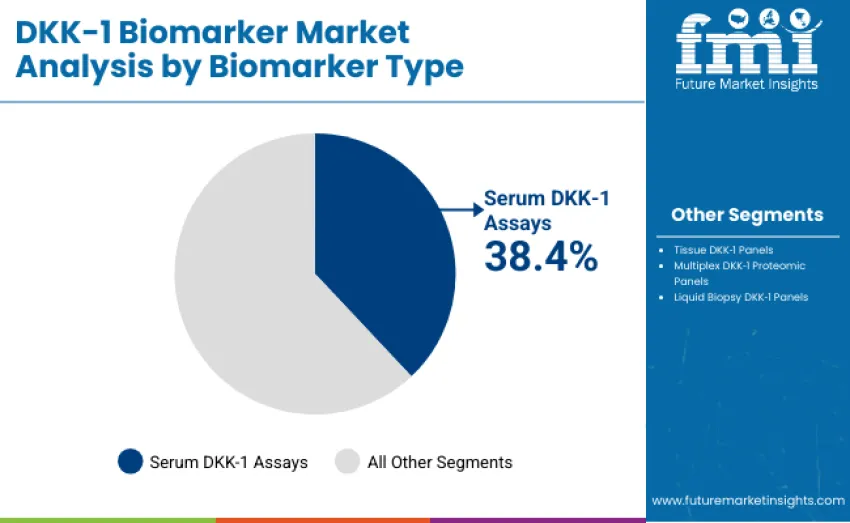
Serum DKK-1 assays lead the market with a 38.4% share in 2025, driven by non-invasive sampling, fast turnaround time, and validated performance for circulating DKK-1 detection. Tissue DKK-1 panels hold 26.7%, supporting tumor microenvironment profiling and spatial biomarker localization. Multiplex proteomic panels represent 21.9%, enabling multi-marker evaluation for research and patient stratification. Liquid biopsy panels account for 13.0%, reflecting rising demand for minimally invasive diagnostics. Growth is supported by advances in high-sensitivity detection, proteomic multiplexing, liquid biopsy adoption, and expanding assay validation across research and clinical laboratories.
Key advantages driving the biomarker type segment include:
- The expansion of high-sensitivity assay technology is supporting the adoption of serum DKK1 assays for early detection and monitoring of circulating biomarkers.
- Advancements in multiplex proteomic platforms are encouraging the development and use of tissue-based and multi-marker DKK1 panels for comprehensive profiling.
- The rising focus on minimally invasive diagnostics is increasing demand for liquid biopsy DKK1 panels in clinical and translational research settings.
By Application, Oncology Diagnosis Leads with 29.4% Share
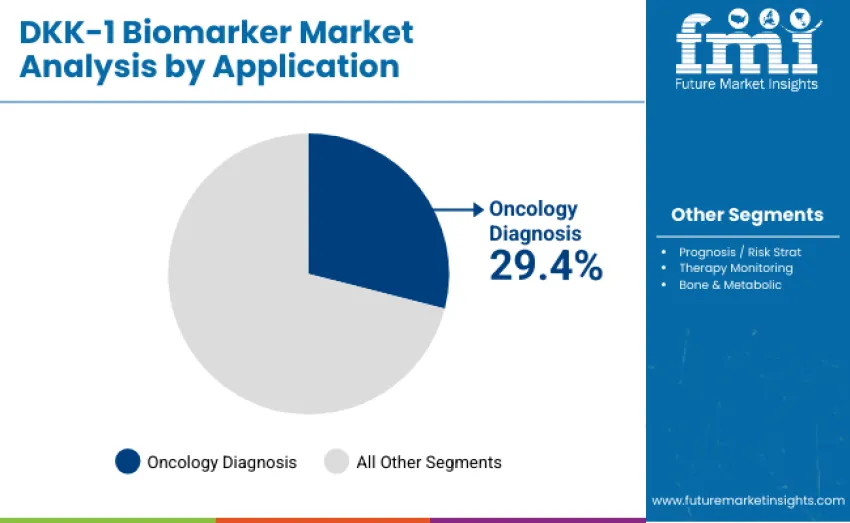
Oncology diagnosis leads with a 29.4% share in 2025, supported by rising use of DKK-1 assays for early detection and tumor characterization. Prognosis and risk stratification follow at 27.8%, driven by need to assess disease progression and patient outcomes. Therapy monitoring contributes 24.6%, reflecting growing use of DKK-1 biomarkers to evaluate treatment response and guide personalized therapy. Bone and metabolic applications hold 18.2%, linked to research on DKK-1’s role in skeletal and metabolic disorders. Precision oncology demand, standardized clinical workflows, and increased funding support continued adoption across diagnostic settings.
Key market dynamics supporting application preferences include:
- Rising demand for precision oncology solutions is accelerating the use of DKK1 assays in oncology diagnosis and patient risk stratification.
- The increasing need for treatment monitoring is driving laboratories and clinics to integrate DKK1 assays into therapy evaluation workflows.
- Collaborative initiatives between hospitals, research institutes, and diagnostic service providers are improving the standardization and reliability of clinical application protocols.
What Are the Major Drivers, Restraints, and Emerging Trends Influencing the DKK-1 Biomarker Market?
Market growth is driven by expanding oncology research, increasing need for early diagnostic and prognostic biomarkers, and growing adoption of DKK-1 assays in cancers such as multiple myeloma, hepatocellular carcinoma, and lung cancer. Integration of DKK-1 into ELISA platforms, multiplex immunoassays, and proteomic workflows strengthens demand. Rising investment in biomarker discovery and translational research further accelerates adoption, as DKK-1 plays a key role in Wntsignaling and therapeutic response evaluation. Clinical research in oncology and bone metabolism continues to expand, reinforcing widespread adoption of DKK-1 across diagnostic and research environments.
What Are the Key Restraints Affecting Adoption in the DKK-1 Biomarker Market?
Key restraints include variability in assay standardization, limited availability of validated reference materials, and need for skilled laboratory personnel to ensure reproducibility across platforms. High cost of assay development, optimization, and clinical validation increases entry barriers for laboratories. Regulatory requirements for biomarker qualification during clinical trials add complexity and extend timelines. Workflow inconsistencies between laboratories and dependence on specialized detection technologies limit broad adoption. These challenges particularly affect settings with constrained budgets or limited technical capacity, slowing transition from research use to broader clinical implementation.
What Key Trends Are Shaping the Future of the DKK-1 Biomarker Market?
Key trends include rapid development of multiplex panels combining DKK-1 with cytokines and protein biomarkers to improve diagnostic specificity and predictive accuracy. Growing emphasis on high-sensitivity detection platforms, including electrochemiluminescence assays and digital immunoassays, enhances early detection and low-abundance protein measurement. Expansion of proteomic profiling and translational research is strengthening multi-analyte panel adoption. Increased use of DKK-1 in studies evaluating Wnt pathway modulation supports patient selection and therapeutic monitoring. Rising investment in precision medicine and targeted therapy development further accelerates clinical integration of DKK-1-based biomarker strategies.
How Are Leading Countries Driving Growth in the DKK-1 Biomarker Market?
| Country/Region | CAGR (2025 to 2035) |
|---|---|
| India | 9.3% |
| China | 8.9% |
| Brazil | 8.1% |
| United States | 7.6% |
| Europe | 6.7% |
| United Kingdom | 6.5% |
| Germany | 6.4% |
| France | 6.3% |
India leads the DKK-1 biomarker market with a 9.3% CAGR, driven by expanding oncology research and strong molecular diagnostics initiatives. China follows at 8.9%, supported by precision medicine investments and large clinical study adoption. Brazil grows at 8.1% as hospitals integrate DKK-1 testing for screening and monitoring. The United States advances at 7.6% with a mature biomarker ecosystem and high adoption of advanced platforms. Europe grows at 6.7%, with the UK at 6.5%, Germany at 6.4%, and France at 6.3%, supported by strong diagnostics infrastructure and research-driven clinical integration.
How Are Oncology Research Initiatives and Government Programs Driving Growth in China?
China's DKK-1 biomarker market is projected to grow at a CAGR of 8.9% through 2035, fueled by nationwide cancer screening campaigns and multi-center clinical studies assessing DKK-1 for hepatocellular carcinoma (HCC) detection in high-risk populations. Hospitals in Beijing, Shanghai, and Guangzhou have incorporated DKK-1 assays into translational research programs, complementing alpha-fetoprotein (AFP) measurements for improved diagnostic precision. Domestic biotechnology companies have developed high-throughput ELISA kits optimized for large-scale laboratory testing. Collaborative initiatives between universities and manufacturers provide training, quality assurance, and multi-site validation programs.
Why Are Clinical Trial Networks and Oncology Infrastructure Supporting Growth in India?
India's DKK-1 biomarker market is projected to grow at a CAGR of 9.3% through 2035, driven by expansion of specialized oncology laboratories and translational research networks in metropolitan centers such as Bengaluru, Hyderabad, and Mumbai. Hospitals are implementing DKK-1 assays for gastrointestinal and hepatocellular cancer diagnostics, supported by government programs promoting biomarker-based patient stratification and precision medicine. Partnerships between domestic diagnostic firms and international suppliers enable assay standardization, technical support, and training. Population-specific studies define reference thresholds for DKK-1, improving prognostic and predictive utility.
How Are Regulatory Standards and Precision Medicine Programs Driving Growth in Germany?
Germany's DKK-1 biomarker market is projected to grow at a CAGR of 6.4% through 2035, reinforced by stringent IVDR compliance and rigorous laboratory accreditation. University hospitals in Berlin, Munich, and Frankfurt integrate DKK-1 assays into early detection and prognostic protocols for gastrointestinal and liver cancers. Biotech firms supply standardized ELISA panels optimized for reproducibility, multi-center validation, and automated workflow integration. Precision medicine programs encourage combining DKK-1 with genomic and immunological profiling, enabling personalized patient assessment. Research networks facilitate protocol standardization, assay validation, and workflow optimization, enhancing adoption across clinical and academic laboratories.
Why Are Academic Hospitals and Public Health Programs Supporting Growth in Brazil?
Brazil's DKK-1 biomarker market is projected to grow at a CAGR of 8.1% through 2035, driven by integration of DKK-1 testing into academic hospitals and public health oncology programs in São Paulo, Rio de Janeiro, and Brasília. Local diagnostic companies supply cost-effective ELISA kits and automated platforms, improving access for regional laboratories. Ministry of Health initiatives fund clinical validation studies and population-specific research to establish reference ranges for DKK-1, enhancing diagnostic reliability. Collaborative networks of hospitals and research centers focus on implementing DKK-1 assays in early detection programs for hepatocellular and gastrointestinal cancers. Investments in laboratory infrastructure and oncology capacity building support adoption in public and private healthcare facilities nationwide.
How Are Clinical Trials and Translational Research Driving Growth in United States?
United States DKK-1 biomarker market is projected to grow at a CAGR of 7.6% through 2035, supported by extensive early-phase clinical trials evaluating DKK-1-targeted therapies, including DKN 01, for hepatocellular and gastrointestinal cancers. Leading cancer centers in Boston, New York, and San Francisco integrate multiplex biomarker panels combining DKK-1 with genomic and immune markers to support patient stratification. Commercial diagnostic providers offer validated kits, standardized protocols, and training resources for multi-site laboratory adoption. Collaborative initiatives between hospitals, pharmaceutical companies, and research institutes optimize workflow integration and real-world data collection. Robust research funding accelerates clinical validation and facilitates precision oncology applications.
Why Are NHS Programs and Academic Hospitals Promoting Growth in United Kingdom?
United Kingdom's DKK-1 biomarker market is projected to grow at a CAGR of 6.5% through 2035, driven by adoption in academic hospitals and NHS-supported research networks in London, Manchester, Bristol, and Edinburgh. Multiplex panels incorporating DKK-1 are applied in gastrointestinal and hepatocellular cancer studies to support patient stratification and prognostic evaluation. Partnerships with domestic and European assay developers enable standardized protocols, assay validation, and technical training. Government-funded translational programs support multi-center clinical trials and integration of automated laboratory workflows, ensuring reproducibility and operational efficiency. Academic hospitals integrate DKK-1 panels into prognostic workflows and patient stratification programs.
How Are Precision Oncology Labs and Domestic Biotech Driving Growth in Japan?
Japan's DKK-1 biomarker market is projected to grow at a CAGR of 9.2% through 2035, with precision oncology laboratories in Tokyo, Osaka, and Kyoto utilizing multiplex panels including DKK-1 for early detection and prognostic evaluation of hepatocellular and gastrointestinal cancers. Domestic biotech companies supply workflow-optimized assay kits with high analytical sensitivity, reducing reliance on imports. Academic-hospital collaborations provide training, quality assurance, and multi-site validation programs to standardize DKK-1 deployment. Early-phase clinical trials increasingly employ DKK-1 for patient stratification, supporting evidence-based precision oncology initiatives.
How Are Standardized Diagnostics and Cross-Border Research Frameworks Supporting Growth in Europe?
Europe’s DKK-1 biomarker market is projected to grow at a 6.7% CAGR through 2035, driven by expansion of oncology diagnostics, integration of biomarker-based testing in hospital laboratories, and adherence to EU IVD regulatory frameworks. Leading research hubs across Germany, France, the UK, and the Netherlands are incorporating DKK-1 assays into liver, lung, and gastrointestinal cancer evaluation workflows. EU-funded clinical research networks support multi-center validation, while adoption of automated ELISA and multiplex platforms enhances reproducibility, throughput, and diagnostic precision. Digital pathology and LIMS integration further strengthen cross-country standardization.
Why Are Academic Networks and Diagnostic Modernization Advancing Growth in France?
France’s DKK-1 biomarker market is projected to grow at a 6.3% CAGR through 2035, supported by modernization of oncology diagnostics in Paris, Lyon, and Marseille, where hospitals are integrating DKK-1 assays for HCC, multiple myeloma, and gastrointestinal cancer assessment. National health agencies and academic consortia facilitate assay validation, workforce training, and multi-site reproducibility programs. Expansion of automated immunoassay systems in public hospitals strengthens diagnostic efficiency, while collaborations between research institutes and manufacturers enhance biomarker panel development. Growing adoption of precision oncology workflows continues to drive clinical integration of DKK-1 testing.
How Competitive Is the Global DKK-1 Biomarker Market and What Defines Its Structure?
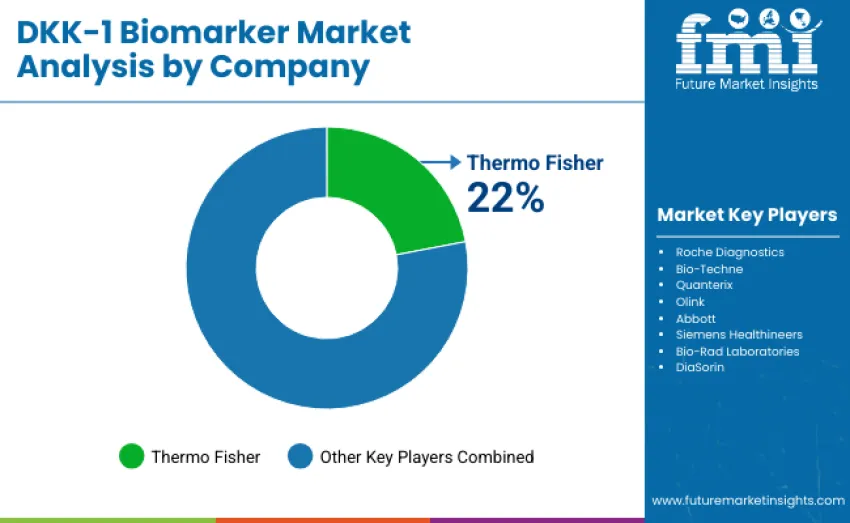
The global DKK-1 biomarker market is moderately concentrated, with 10-12 players and the top three companies controlling an estimated 55-60% of global revenue through established assay portfolios, automation capabilities, and validated clinical adoption. Thermo Fisher Scientific now leads with a strengthened 22% share, supported by its automated DKK-1 ELISA platforms, broad reagent availability, and extensive global deployment across oncology research centers and diagnostic laboratories. Thermo Fisher, Roche Diagnostics, and Bio-Techne maintain strong competitive positions through validated assay performance, compatibility with automated laboratory instruments, and broad reagent menus that support translational research, early cancer detection, and therapeutic monitoring.
These leaders continue to invest in automation, high-throughput assay formats, digital detection enhancements, and regulatory alignment to defend their market share while expanding into precision oncology applications. Challenger companies such as Quanterix and Olink compete through ultra-sensitive digital immunoassay technologies and high-plex proximity extension assays, enabling detection of low-abundance DKK-1 levels and supporting multi-marker biomarker discovery programs. Emerging competitors focus on specialized kits, workflow customization, and region-specific diagnostic integration.
Key Players in the DKK-1 Biomarker Market
- Thermo Fisher
- Roche Diagnostics
- Bio-Techne
- Quanterix
- Olink
- Abbott
- Siemens Healthineers
- Bio-Rad Laboratories
- DiaSorin
Scope of the Report
| Item | Value |
|---|---|
| Quantitative Units | USD 148.6 million |
| Biomarker Type | Serum DKK-1 Assays, Tissue DKK-1 Panels, Multiplex DKK-1 Proteomic Panels, Liquid Biopsy DKK-1 Panels |
| Application | Oncology Diagnosis, Prognosis/Risk Strat, Therapy Monitoring, Bone & Metabolic |
| Regions Covered | Asia Pacific, Europe, North America, Latin America, Middle East & Africa |
| Country Covered | USA, Brazil, China, India, Europe, Germany, France, UK, Japan |
| Key Companies Profiled | Thermo Fisher, Roche Diagnostics, Bio- Techne , Quanterix , Olink , Abbott, Siemens Healthineers , Bio-Rad Laboratories, DiaSorin , and others |
| Additional Attributes | Dollar sales vary by biomarker type and application, shaped by adoption across Asia Pacific, Europe, and North America. Competition centers on DKK-1 assay developers, distribution networks, technical performance, diagnostics integration, improved sensitivity, reproducibility, multiplexing, and development of clinically validated biomarker panels with high analytical precision and prognostic value |
DKK-1 Biomarker Market by Segments
By Biomarker Type:
- Serum DKK1 Assays
- Tissue DKK1 Panels
- Multiplex DKK1 Proteomic Panels
- Liquid Biopsy DKK1 Panels
By Application:
- Oncology Diagnosis
- Prognosis / Risk Strat
- Therapy Monitoring
- Bone & Metabolic
By Region:
- Asia Pacific
- China
- India
- Japan
- South Korea
- Vietnam
- Australia & New Zealand
- ASEAN
- Rest of Asia Pacific
- Europe
- Germany
- United Kingdom
- France
- Italy
- Spain
- Netherlands
- Nordic
- BENELUX
- Rest of Europe
- North America
- United States
- Canada
- Mexico
- Latin America
- Brazil
- Argentina
- Rest of Latin America
- Middle East & Africa
- Kingdom of Saudi Arabia
- Other GCC Countries
- Turkey
- South Africa
- Other African Union
- Rest of Middle East & Africa
Bibliography
- Thermo Fisher Scientific. (2023). DKK-1 ELISA and multiplex immunoassay solutions for oncology and bone disease research. Thermo Fisher Scientific Technical and Application Publications.
- Roche Diagnostics. (2023). Protein biomarker assays for cancer diagnosis, prognosis, and therapy monitoring including DKK-1. Roche Diagnostics Scientific White Papers.
- Bio-Techne. (2023). Quantitative immunoassays and proteomic panels for DKK-1 detection in translational and clinical research. Bio-Techne Research and Product Documentation.
- Quanterix. (2023). Ultra-sensitive digital immunoassay platforms for low-abundance biomarkers including DKK-1. Quanterix Technology and Clinical Research Reports.
Frequently Asked Questions
How big is the DKK-1 biomarker market in 2025?
The global DKK-1 biomarker market is valued at USD 148.6 million in 2025.
What will be the size of the DKK-1 biomarker market in 2035?
The DKK-1 biomarker market is projected to reach USD 348.1 million by 2035.
How much will the DKK-1 biomarker market grow between 2025 and 2035?
The DKK-1 biomarker market will grow at a CAGR of 8.9% from 2025 to 2035.
Which biomarker type dominates the DKK-1 biomarker market in 2025?
Serum DKK-1 assays lead the market with a 38.4% share in 2025.
Who are the major players in the DKK-1 biomarker market?
Key players include Thermo Fisher, Roche Diagnostics, Bio-Techne, Quanterix, and Olink.
Preview the report firsthand - request a free sample
Get SampleGet the brochure for pricing and purchase details.
Get PDFTable of Content
- Executive Summary
- Regional Level Market Outlook
- Demand-side Trends
- Supply-side Trends
- Technology Roadmap Analysis
- Analysis and Recommendations
- Market Overview
- Market Coverage / Taxonomy
- Market Definition / Scope / Limitations
- Market Background
- Market Dynamics
- Drivers
- Restraints
- Opportunity
- Trends
- Scenario Forecast
- Demand in Optimistic Scenario
- Demand in Likely Scenario
- Demand in Conservative Scenario
- Opportunity Map Analysis
- Technological Innovation
- Investment Feasibility Matrix
- PESTLE and Porter’s Analysis
- Regulatory Landscape
- By Key Regions
- By Key Countries
- Regional Parent Market Outlook
- Market Dynamics
- Regional Level Market Analysis 2020 to 2024 and Forecast, 2025 to 2035
- Historical Market Size USD Million Analysis, 2020 to 2024
- Current and Future Market Size USD Million Projections, 2025 to 2035
- Y-o-Y Growth Trend Analysis
- Absolute $ Opportunity Analysis
- Regional Level Market Analysis 2020 to 2024 and Forecast 2025 to 2035, By Biomarker Type
- Introduction / Key Findings
- Historical Market Size USD Million Analysis By Biomarker Type, 2020 to 2024
- Current and Future Market Size USD Million Analysis and Forecast By Biomarker Type, 2025 to 2035
- Serum DKK 1 Assays
- Tissue DKK 1 Panels
- Multiplex DKK 1 Proteomic Panels
- Liquid Biopsy DKK 1 Panels
- Y-o-Y Growth Trend Analysis By Biomarker Type, 2020 to 2024
- Absolute $ Opportunity Analysis By Biomarker Type, 2025 to 2035
- Regional Level Market Analysis 2020 to 2024 and Forecast 2025 to 2035, By Application
- Introduction / Key Findings
- Historical Market Size USD Million Analysis By Application, 2020 to 2024
- Current and Future Market Size USD Million Analysis and Forecast By Application, 2025 to 2035
- Oncology Diagnosis
- Prognosis / Risk Strat
- Therapy Monitoring
- Bone & Metabolic
- Y-o-Y Growth Trend Analysis By Application, 2020 to 2024
- Absolute $ Opportunity Analysis By Application, 2025 to 2035
- Regional Level Market Analysis 2020 to 2024 and Forecast 2025 to 2035, By Technology
- Introduction / Key Findings
- Historical Market Size USD Million Analysis By Technology, 2020 to 2024
- Current and Future Market Size USD Million Analysis and Forecast By Technology, 2025 to 2035
- ELISA / CLIA
- Multiplex Bead
- ECL / MSD
- Digital IA
- Proteomics
- Y-o-Y Growth Trend Analysis By Technology, 2020 to 2024
- Absolute $ Opportunity Analysis By Technology, 2025 to 2035
- Regional Level Market Analysis 2020 to 2024 and Forecast 2025 to 2035, By End User
- Introduction / Key Findings
- Historical Market Size USD Million Analysis By End User, 2020 to 2024
- Current and Future Market Size USD Million Analysis and Forecast By End User, 2025 to 2035
- Oncology Labs
- Hospital Labs
- Reference Labs
- Biopharma
- Academic
- Y-o-Y Growth Trend Analysis By End User, 2020 to 2024
- Absolute $ Opportunity Analysis By End User, 2025 to 2035
- Regional Level Market Analysis 2020 to 2024 and Forecast 2025 to 2035, By Region
- Introduction
- Historical Market Size USD Million Analysis By Region, 2020 to 2024
- Current Market Size USD Million Analysis and Forecast By Region, 2025 to 2035
- North America
- Latin America
- East Asia
- South Asia
- Western Europe
- Eastern Europe
- Middle East & Africa
- Market Attractiveness Analysis By Region
- North America Market Analysis 2020 to 2024 and Forecast 2025 to 2035, By Country
- Historical Market Size USD Million Trend Analysis By Market Taxonomy, 2020 to 2024
- Market Size USD Million Forecast By Market Taxonomy, 2025 to 2035
- By Country
- USA
- Canada
- Mexico
- By Biomarker Type
- By Application
- By Technology
- By End User
- By Country
- Market Attractiveness Analysis
- By Country
- By Biomarker Type
- By Application
- By Technology
- By End User
- Key Takeaways
- Latin America Market Analysis 2020 to 2024 and Forecast 2025 to 2035, By Country
- Historical Market Size USD Million Trend Analysis By Market Taxonomy, 2020 to 2024
- Market Size USD Million Forecast By Market Taxonomy, 2025 to 2035
- By Country
- Brazil
- Argentina
- Rest of Latin America
- By Biomarker Type
- By Application
- By Technology
- By End User
- By Country
- Market Attractiveness Analysis
- By Country
- By Biomarker Type
- By Application
- By Technology
- By End User
- Key Takeaways
- East Asia Market Analysis 2020 to 2024 and Forecast 2025 to 2035, By Country
- Historical Market Size USD Million Trend Analysis By Market Taxonomy, 2020 to 2024
- Market Size USD Million Forecast By Market Taxonomy, 2025 to 2035
- By Country
- China
- Japan
- South Korea
- By Biomarker Type
- By Application
- By Technology
- By End User
- By Country
- Market Attractiveness Analysis
- By Country
- By Biomarker Type
- By Application
- By Technology
- By End User
- Key Takeaways
- South Asia Market Analysis 2020 to 2024 and Forecast 2025 to 2035, By Country
- Historical Market Size USD Million Trend Analysis By Market Taxonomy, 2020 to 2024
- Market Size USD Million Forecast By Market Taxonomy, 2025 to 2035
- By Country
- India
- ASEAN Countries
- Australia & New Zealand
- Rest of South Asia
- By Biomarker Type
- By Application
- By Technology
- By End User
- By Country
- Market Attractiveness Analysis
- By Country
- By Biomarker Type
- By Application
- By Technology
- By End User
- Key Takeaways
- Western Europe Market Analysis 2020 to 2024 and Forecast 2025 to 2035, By Country
- Historical Market Size USD Million Trend Analysis By Market Taxonomy, 2020 to 2024
- Market Size USD Million Forecast By Market Taxonomy, 2025 to 2035
- By Country
- Germany
- UK
- France
- Italy
- Spain
- BENELUX
- Nordic Countries
- Rest of Western Europe
- By Biomarker Type
- By Application
- By Technology
- By End User
- By Country
- Market Attractiveness Analysis
- By Country
- By Biomarker Type
- By Application
- By Technology
- By End User
- Key Takeaways
- Eastern Europe Market Analysis 2020 to 2024 and Forecast 2025 to 2035, By Country
- Historical Market Size USD Million Trend Analysis By Market Taxonomy, 2020 to 2024
- Market Size USD Million Forecast By Market Taxonomy, 2025 to 2035
- By Country
- Russia
- Hungary
- Poland
- Rest of Eastern Europe
- By Biomarker Type
- By Application
- By Technology
- By End User
- By Country
- Market Attractiveness Analysis
- By Country
- By Biomarker Type
- By Application
- By Technology
- By End User
- Key Takeaways
- Middle East & Africa Market Analysis 2020 to 2024 and Forecast 2025 to 2035, By Country
- Historical Market Size USD Million Trend Analysis By Market Taxonomy, 2020 to 2024
- Market Size USD Million Forecast By Market Taxonomy, 2025 to 2035
- By Country
- Saudi Arabia
- Other GCC Countries
- Türkiye
- South Africa
- Rest of MEA
- By Biomarker Type
- By Application
- By Technology
- By End User
- By Country
- Market Attractiveness Analysis
- By Country
- By Biomarker Type
- By Application
- By Technology
- By End User
- Key Takeaways
- Market Structure Analysis
- Competition Dashboard
- Competition Benchmarking
- Market Share Analysis of Top Players
- By Regional
- By Biomarker Type
- By Application
- By Technology
- By End User
- Competition Analysis
- Competition Deep Dive
- Stryker Corporation
- Overview
- Product Portfolio
- Profitability by Market Segments (Product/Age /Sales Channel/Region)
- Sales Footprint
- Strategy Overview
- Marketing Strategy
- Product Strategy
- Channel Strategy
- Hill-Rom Holdings, Inc
- Overview
- Product Portfolio
- Profitability by Market Segments (Product/Age /Sales Channel/Region)
- Sales Footprint
- Strategy Overview
- Marketing Strategy
- Product Strategy
- Channel Strategy
- Getinge AB
- Overview
- Product Portfolio
- Profitability by Market Segments (Product/Age /Sales Channel/Region)
- Sales Footprint
- Strategy Overview
- Marketing Strategy
- Product Strategy
- Channel Strategy
- Invacare Corporation
- Overview
- Product Portfolio
- Profitability by Market Segments (Product/Age /Sales Channel/Region)
- Sales Footprint
- Strategy Overview
- Marketing Strategy
- Product Strategy
- Channel Strategy
- Amico Corporation
- Overview
- Product Portfolio
- Profitability by Market Segments (Product/Age /Sales Channel/Region)
- Sales Footprint
- Strategy Overview
- Marketing Strategy
- Product Strategy
- Channel Strategy
- Stryker Corporation
- Competition Deep Dive
- Assumptions & Acronyms Used
- Research Methodology


