

- Market Size (2026)
- USD 573.9 Mn
- Forecast (2036)
- USD 1087.4 Mn
- CAGR (2026 to 2036)
- 6.6%
How big is Eyelash Serums Market in 2026?
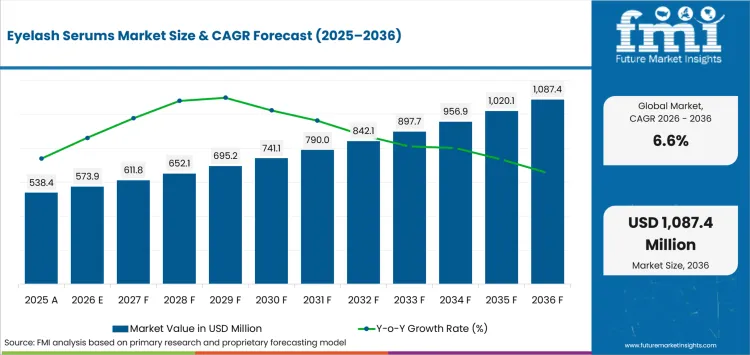
USD 573.9 million in 2026 and USD 1,087.4 million by 2036 at a 6.6% CAGR.
The eyelash serums market is projected to rise from USD 573.9 million in 2026 to USD 1,087.4 million by 2036 at a 6.6% CAGR. Repeat use makes routine completion commercially important because visible conditioning depends on sustained application across several weeks. RevitaLash Cosmetics reported in April 2026 that more than 14 million eyelash conditioners had been sold since 2006. That installed consumer base supports recurring treatment demand and helps explain why the forecast adds USD 513.5 million during the ten-year interval.
Ingredient scrutiny now separates markets that tolerate strong growth wording from markets requiring more conservative cosmetic positioning. The Danish Environmental Protection Agency reported in May 2025 that 14 of 58 surveyed lash and brow serums contained prostaglandins or analogues. That 25% finding raises the cost of ingredient review for European launches and increases the commercial value of transparent formulas. Brands entering stricter jurisdictions need claims that remain clearly cosmetic and formulations suited to repeated eye-area use.
Key Takeaways of Eyelash Serums Market
- Natural-lash conditioning is widening the category beyond decorative eye makeup because multi-week routines create repeat demand for easy daily application.
- By product type, concentrate serums are projected to account for 38.0% in 2026 due to focused leave-on dosing and compact treatment packs.
- In 2026, conventional is expected to lead nature with 57.0% share because formulators can work across the wider permitted cosmetic ingredient palette.
- Cream & balm is projected to hold 33.0% of format revenue in 2026 owing to controlled placement and a conditioning-focused sensory profile.
- Prostaglandin safety scrutiny slows trial because eye-area formulas face closer ingredient review and narrower tolerance for pharmacological-sounding cosmetic claims.
- Some of the key players in this market include RevitaLash Cosmetics, Shiseido Company, Limited, Tropic Skincare Limited, UKLASH, Babe Original, RapidLash, Glow For It Ltd, and Sweed Beauty.
Analyst Perspective
"Eyelash-serum margins depend less on aggressive growth language than on keeping users comfortable enough to finish a multi-week routine. Brands that pair conservative eye-area claims with precise applicators and reliable replenishment have a clearer path from first purchase to repeat revenue."
- Rahul Pandita, Principal Consultant, Future Market Insights
How is the Eyelash Serums Market segmented?
The market is segmented by Product Type, Nature, Format, Price Positioning, and Sales Channel.
Product type includes concentrate serums, ampoule formats, booster drops, and pressed / balm serums. Nature covers conventional, vegan & cruelty-free, natural & organic, dermocosmetic / clinical, and fragrance-free & sensitive. Format includes cream & balm, liquid & serum, stick & solid, spray & mist, sheet & patch, and powder. Price positioning covers mass, masstige, premium, and professional. Sales channels include e-commerce & DTC, specialty beauty retail, pharmacies & drugstores, supermarkets & hypermarkets, and salons & spas.
How does E-commerce & DTC shape the Sales Channel category?
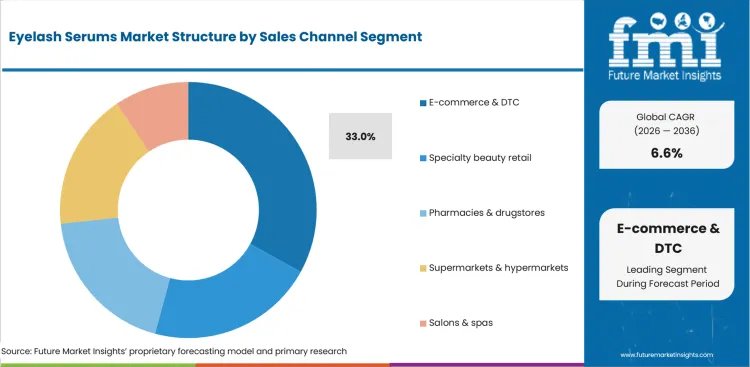
Online channels give ingredient-sensitive shoppers more room to compare routines across vegan cosmetics and broader treatment offers before committing to repeat use. Direct brands can also keep warning language and application instructions consistent while scheduling replenishment without depending on shelf space. Digital order histories also help brands time reminders around likely depletion instead of arbitrary promotional calendars.
- By sales channel, e-commerce & DTC is forecast to represent 33.0% in 2026 driven by ingredient comparison and recurring reorder behavior.
- Eurostat reported in February 2026 that 78% of EU internet users bought or ordered goods and services online during 2025, supporting repeat beauty purchases.
What makes Concentrate serums central to the Product Type category?
Concentrate serums fit skincare routines that place a measured leave-on treatment along the upper lash line during nightly care. Precise brushes control dose placement and separate conditioning from decorative color, which lets brands vary applicators without changing the routine. Compact packs also fit trial-friendly price points and support consistent handling during travel or nightly routines.
- By product type, concentrate serums are estimated to hold 38.0% in 2026 owing to focused dosing and familiar daily treatment behavior.
- RevitaLash Cosmetics reported in October 2025 that an eight-week study of 157 participants found 94% saw improved lash appearance with daily RevitaLash Advanced use.
Why does Conventional lead the Nature category?
Conventional formulas give cosmetic chemists broad latitude to balance preservation and eye-area tolerance across several price tiers. That flexibility matters when disputed actives must be removed without changing cosmetic ingredients or applicator compatibility. The conditioning proposition can remain stable across those changes. Brands can therefore adjust sensory feel without tying every formula to a narrower natural-content standard.
- In 2026, conventional is expected to lead nature with 57.0% share because brands can work across the wider permitted cosmetic ingredient palette.
- The European Commission's SCCS concluded in February 2026 that three assessed prostaglandin analogues could not be considered safe in cosmetic eyelash and eyebrow growth products.
What supports Mass leadership within the Price Positioning category?
Mass pricing lowers the cost of completing a multi-week regimen and keeps lash treatment close to familiar color cosmetics in high-traffic retail. Affordable replenishment also reduces the financial penalty if consumers need more than one tube before judging visible results. Mass retailers also give first-time users a familiar place to compare applicators and routine length.
- Mass is projected to hold 38.0% share in 2026 owing to lower trial cost and less expensive replenishment across routine beauty channels.
- The UK Office for National Statistics reported in April 2026 that cosmetics and toiletries stores recorded strong sales volumes across all three months of the first quarter.
What are the drivers, restraints and opportunities in the Eyelash Serums Market?
Repeat-use routines sustain demand while eye-area ingredient controls restrict claims and digital reorder tools improve completion of multi-week treatment cycles.
- Driver: Digital replenishment helps consumers continue a multi-week lash routine without waiting for another beauty-store visit.
- Restraint: Eye-area ingredient restrictions can force reformulation or narrower claims before retailers accept repeated lash-line use.
- Opportunity: Subscription and reminder programs can reduce treatment gaps while preserving a clear cosmetic positioning around conditioning.
Digital replenishment makes a multi-week lash routine easier to continue after the first tube is purchased within the broader cosmetics category. The USA Census Bureau reported in August 2026 that e-commerce represented 17.1% of second-quarter retail sales, giving direct brands a substantial route for scheduled reorders. Eyelash-serum companies can use that access to reduce gaps between treatment cycles and protect recurring treatment revenue.
Repeated dosing close to the eye makes ingredient restrictions commercially material because a tolerated cosmetic chemical may not suit lash-line exposure. Health Canada amended its Cosmetic Ingredient Hotlist in February 2025 to add eyelash and eyebrow conditions for peroxide-generating compounds due to eye irritation concerns. Formulators therefore need eye-area safety review before stronger performance claims reach retailers with conservative compliance standards.
Online replenishment becomes more useful when natural cosmetics positioning is paired with a reorder schedule that matches the time consumers need to judge a lash-conditioning routine. The UK Office for National Statistics reported in December 2025 that online sales represented 28.6% of total retail spending in November. Subscription and reminder programs can reduce regimen interruption while keeping the offer within a clear cosmetic positioning.
Which country CAGRs are profiled in the Eyelash Serums Market?
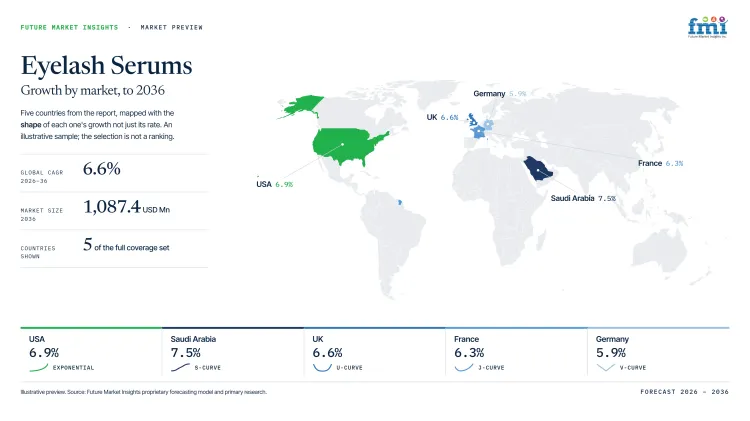
| Country | CAGR |
|---|---|
| Saudi Arabia | 7.5% |
| South Korea | 7.2% |
| USA | 6.9% |
| France | 6.3% |
| Germany | 5.9% |
How do country-level CAGRs compare in the Eyelash Serums Market?
The 1.6-point spread places Saudi Arabia and South Korea in a faster upper group while the USA forms a middle case between Gulf and European profiles. France and Germany advance more slowly as product-information controls and ingredient scrutiny carry greater commercial weight. The spacing reflects different launch conditions instead of a simple ranking of current market size.
- Saudi Arabia pairs expanding beauty retail with SFDA importer controls.
- South Korea couples record cosmetics output with rapid formula renewal.
- The USA combines broad DTC access with MoCRA registration duties.
- France requires complete product files before wider pharmacy and specialty ranging.
- Germany places heavier commercial weight on prostaglandin screening near the eye.
Similar growth rates still produce different entry economics because channel access and compliance costs vary by jurisdiction. The full report provides country-level CAGR analysis across North America, Latin America, Europe, East Asia, South Asia, Oceania and the Middle East and Africa.
Country-wise Analysis
- Saudi beauty chains range imported lash treatments beside organic cosmetics in pharmacies and malls, making notification and Arabic product information part of launch planning across national assortments. Eyelash serum demand in Saudi Arabia is forecast to rise at 7.5% CAGR through 2036 due to broader premium and digital beauty access. SFDA announced in December 2025 that its digital transformation program was extending into cosmetics, reinforcing electronic oversight across product-safety and registration work nationwide. Local distributors can use that infrastructure to move compliant launches faster, but incomplete ingredient records or importer coordination can delay repeat retail assortment outside major city channels.
- South Korean brands work inside short K-beauty product cycles that reward rapid formula renewal and mobile-first education across domestic and export channels at commercial scale today. MFDS reported in May 2025 that 2024 cosmetics production and export values both reached record highs, giving lash-care launches a deep manufacturing base. Eyelash serums in South Korea are projected to grow at 7.2% CAGR through 2036 owing to fast commercialization and strong export capability. Frequent launches still require disciplined labels and safety review, so companies that coordinate documentation with fast applicator testing are better placed for regional expansion across neighboring Asian beauty markets.
- American lash-serum brands sell through DTC sites and mass beauty chains while eye cosmetic packaging and MoCRA records shape national launch execution across consumer channels at commercial scale. The USA is estimated to post 6.9% CAGR over the forecast period as digital access supports trial and recurring purchase across price tiers. FDA reported in February 2026 that more than 14,000 cosmetic product facilities were registered as its Cosmetics Direct portal added biennial renewal functions. Broad channel access therefore lowers discovery friction, but brands still need current ingredient records and claims that remain clearly separated from prescription eyelash-growth positioning across major retail formats.
- French lash-serum offers move through pharmacies and specialty beauty chains where product information files influence retailer confidence before national ranging decisions nationwide. DGCCRF reported in February 2026 that its 2025 controls covered 147 cosmetics establishments and more than 200 product information files. France is projected to grow at 6.3% CAGR during the assessment period, attributable to broad treatment access across pharmacy and digital channels. Detailed documentation gives compliant brands a workable entry route across established pharmacy and specialty beauty channels. Smaller entrants face higher preparation costs when eye-area safety files or cosmetic claims require correction before retail placement across several channel formats.
- German beauty retailers sell lash serums through established drugstore and digital channels while prostaglandin concerns receive unusually visible laboratory scrutiny at commercial scale today. The German eyelash serums sector is forecast to expand at 5.9% CAGR through 2036 because everyday conditioning keeps a clear cosmetic use case. CVUA Karlsruhe reported in August 2026 that 38 of 71 eyelash and eyebrow serums examined since 2019 were assessed as unsafe after prostaglandin analogues were detected. Retail access therefore remains broad, but new launches need transparent ingredient lists and conservative claims that can withstand closer authority and retailer review across nationwide drugstore networks.
Who are the notable companies in the Eyelash Serums Market?
RevitaLash Cosmetics, Shiseido Company, Limited, Tropic Skincare Limited, UKLASH, Babe Original, RapidLash, Glow For It Ltd, and Sweed Beauty are the notable companies serving this market.
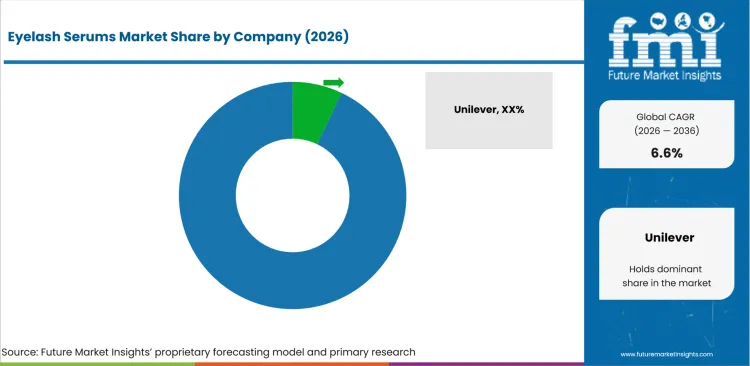
Competition is fragmented across specialist lash-treatment brands and broader beauty groups because repeat revenue depends on formula credibility as much as distribution. Entry barriers rise around eye-area substantiation and routine adherence, although digital channels let focused brands build replenishment without national store networks.
- RevitaLash Cosmetics, UKLASH, Babe Original, RapidLash, and Glow For It Ltd concentrate on dedicated lash-treatment routines and direct consumer education.
- Shiseido Company, Limited and Sweed Beauty place eyelash treatment beside wider eye-makeup portfolios that support cross-category merchandising and established beauty retail.
- Tropic Skincare Limited uses a community-led beauty model that places lash treatment inside a broader routine with ambassador-supported product education.
Competitive Benchmarking: Eyelash Serums Market
| Company | 2025-2026 Market Activity | Lash-Treatment Breadth | Channel Access | Geographic Reach |
|---|---|---|---|---|
| RevitaLash Cosmetics | High | High | High | Global |
| Shiseido Company, Limited | Medium | Medium | High | Japan and international |
| Tropic Skincare Limited | Medium | Low | Medium | United Kingdom and selected international |
| UKLASH | High | High | High | United Kingdom, USA and international DTC |
| Babe Original | Medium | Medium | Medium | North America and international DTC |
| RapidLash | Low | High | Medium | North America and international e-commerce |
| Glow For It Ltd | High | Low | High | United Kingdom and selected international |
| Sweed Beauty | Medium | Low | High | North America, Europe and selected international |
Key Developments in the Eyelash Serums Market
- In June 2026, Shiseido Company, Limited announced the renewed Majolica Majorca Lash Jelly Drop Long series for a July launch with basic and premium formulas.
- In September 2025, UKLASH launched Tubing Mascara and supported the release with London and New York pop-ups that extended its lash-serum routine into makeup.
- In April 2025, Glow For It Ltd launched the Lash + Glow collection that paired its Lash Growth Serum with a choice of Glow Stick highlighter.
Key Players in the Eyelash Serums Market
Established Lash-Treatment Brands
- RevitaLash Cosmetics
- Shiseido Company, Limited
Direct and Specialist Lash Platforms
- Tropic Skincare Limited
- UKLASH
- Babe Original
- RapidLash
- Glow For It Ltd
Premium Eye-Beauty Platform
- Sweed Beauty
Eyelash Serums Market - Report Scope
| Coverage field | Report scope |
|---|---|
| Market breakdown | By product type, nature, format, price positioning, sales channel and region. |
| Quantitative Units | Revenue in USD million and CAGR in %. |
| Market Definition | Cosmetic leave-on products applied to eyelashes or the upper lash line to condition or improve the visible appearance of natural lashes. |
| Regions Covered | North America, Latin America, Europe, East Asia, South Asia and Pacific, and Middle East and Africa. |
| Countries Covered | Saudi Arabia, South Korea, USA, France, Germany, and 20+ countries included in the full report. |
| Key Companies Profiled | RevitaLash Cosmetics, Shiseido Company, Limited, Tropic Skincare Limited, UKLASH, Babe Original, RapidLash, Glow For It Ltd, and Sweed Beauty. |
| Forecast Period | 2026 to 2036. |
| Approach | Primary and secondary research with market triangulation. |
Eyelash Serums Market - Research Methodology
| Method | Approach |
|---|---|
| Primary Research | FMI analysts gathered input from manufacturers, service providers, technology developers, distributors, end users, procurement teams, and subject-matter experts. Interviews examined purchasing decisions, product or service evaluation, adoption barriers, approval requirements, pricing considerations, and expectations for technical or commercial support. Respondents were also asked what evidence is required before a trial, pilot, or initial order develops into regular purchasing. |
| Desk Research | Desk research covered government statistics, regulatory publications, trade data, industry associations, technical literature, standards, company filings, product information, and official corporate announcements. Sources were reviewed for relevance, publication date, geographic coverage, and consistency with the defined market scope. Claims relating to performance, applications, approvals, capacity, investment, and commercial activity were retained only when supported by credible public evidence. |
| Market Sizing and Forecasting | The market model combined the baseline value with historical performance, segment structure, pricing and volume indicators, adoption levels, company participation, and country-level demand conditions. Forecast assumptions considered economic activity, investment trends, regulatory developments, technology adoption, purchasing cycles, supply availability, and barriers to wider market use. Segment and regional estimates were reconciled before the final market total was calculated. |
| Data Validation | Estimates were checked against multiple independent indicators, including public data, company activity, trade patterns, industry developments, and findings from primary interviews. Validation also tested whether products, services, applications, and company revenues fell within the defined market boundaries. Adjacent categories, unsupported claims, overlapping revenues, and activities without direct market relevance were excluded to reduce double counting and maintain consistency across segments and countries. |
Eyelash Serums Market by Segments
Eyelash Serums Market segmented by Product Type:
- Concentrate serums
- Ampoule formats
- Booster drops
- Pressed / balm serums
Eyelash Serums Market segmented by Nature:
- Conventional
- Vegan & cruelty-free
- Natural & organic
- Dermocosmetic / clinical
- Fragrance-free & sensitive
Eyelash Serums Market segmented by Format:
- Cream & balm
- Liquid & serum
- Stick & solid
- Spray & mist
- Sheet & patch
- Powder
Eyelash Serums Market segmented by Price Positioning:
- Mass
- Masstige
- Premium
- Professional
Eyelash Serums Market segmented by Sales Channel:
- E-commerce & DTC
- Specialty beauty retail
- Pharmacies & drugstores
- Supermarkets & hypermarkets
- Salons & spas
Eyelash Serums Market by Region:
- North America
- United States
- Canada
- Latin America
- Brazil
- Mexico
- Chile
- Rest of Latin America
- Western Europe
- Germany
- United Kingdom
- Italy
- Spain
- France
- Nordics
- Benelux
- Rest of Western Europe
- Eastern Europe
- Russia
- Poland
- Hungary
- Balkan and Baltic States
- Rest of Eastern Europe
- East Asia
- China
- Japan
- South Korea
- South Asia and Pacific
- India
- ASEAN
- Australia and New Zealand
- Rest of South Asia and Pacific
- Middle East and Africa
- Kingdom of Saudi Arabia
- Other GCC Countries
- Türkiye
- South Africa
- Other African Union Countries
- Rest of Middle East and Africa
Research Sources and Bibliography
- RevitaLash Cosmetics. (2026, April 16). RevitaLash Cosmetics at 20: Our defining moments.
- Danish Environmental Protection Agency. (2025, May 7). Survey and risk assessment of active ingredients in eyelash and eyebrow serums.
- RevitaLash Cosmetics. (2025, October 16). Lash or Brow Serum Not Working Like It Used To? This May Be Why.
- European Commission, Scientific Committee on Consumer Safety. (2026, February 10). SCCS - Prostaglandin Analogues: Methylamido-Dihydro-Noralfaprostal (MDN), Isopropyl Cloprostenate (IPCP), Dechloro Dihydroxy Difluoro Ethylcloprostenolamide (DDDE).
- Office for National Statistics. (2026, April 24). Retail sales, Great Britain: March 2026.
- Eurostat. (2026, February 25). E-commerce statistics for individuals.
- USA Census Bureau. (2026, August 18). Quarterly retail e-commerce sales: Second quarter 2026.
- Health Canada. (2025, February). Cosmetic Ingredient Hotlist: Prohibited and restricted ingredients.
- Office for National Statistics. (2025, December 19). Retail sales, Great Britain: November 2025.
- Saudi Food and Drug Authority. (2025, December 14). SFDA leads digital transformation in drug and cosmetic safety regulation.
- Ministry of Food and Drug Safety, Republic of Korea. (2025, May 27). 2024 cosmetics production and export values both reach record highs.
- USA Food and Drug Administration. (2026, February 11). FDA updates web portal and informational materials to help cosmetic facilities prepare for biennial registration renewal.
- Direction générale de la concurrence, de la consommation et de la répression des fraudes. (2026, February 2). Cosmétiques : des TPE nouvelles dans le secteur qui méconnaissent trop souvent la réglementation.
- Chemisches und Veterinäruntersuchungsamt Karlsruhe. (2026, August 3). Zwischen Schönheitsideal und Gesundheitsrisiko: Prostaglandine in Wimpernwachstumsmitteln.
- Shiseido Company, Limited. (2026, June 3). Majolica Majorca eyelash serum renewed: Lash Jelly Drop Long series.
- UKLASH. (2025, October 16). We went viral! Looking back at September with UKLASH, from launching Tubing Mascara to hosting global beauty events.
- Glow For It Ltd. (2025, April). Glow For It April recap.
- RapidLash. (2025, July 18). Summer-ready lashes start with these RapidLash essentials.
- Babe Original. (2025, April 25). A gentle peptide lash serum that actually works.
- ZM Beauty Supply. (2025, June 11). Introducing our UK team: Face-to-face support for beauty brands in Europe.
- Skin Balm Apothecary. (2025, September 22). Exposing the risks behind conventional lash serums.
- BBB London. (2025, August 8). Your Lashes Are Probably Ageing You - Until Now.
- Glow For It Ltd. (2025, March). Glow For It March Recap.
- Sweed Beauty. (2025, November 10). Credo Launch.
- UKLASH. (2025, October 6). Beauty Advent Calendar 2025 Guide: Top 4 Picks from Selfridges, Sephora & More.
- Tropic Skincare Limited. (2026, July 20). Meet the lash serum set to transform your lash routine.
This bibliography is provided for reader reference and is not exhaustive. The full report contains the complete reference list and detailed citations
This Report Answers
- How large is the eyelash serums market in 2026 and what valuation is projected for 2036?
- What recurring-purchase mechanism supports a 6.6% market CAGR between 2026 and 2036?
- Why do concentrate serums hold the largest product type share in 2026?
- How does conventional formulation latitude shape competition within the nature category?
- Why does mass pricing support trial and replenishment across multi-week lash routines?
- How do e-commerce and DTC channels affect ingredient comparison and scheduled reorders?
- Which country conditions separate faster Gulf and South Korean growth from European profiles?
- How does eye-area ingredient scrutiny change formulation and claim strategy?
- Which companies are most active across dedicated lash treatment and broader eye-beauty platforms?
Frequently Asked Questions
How big is the Eyelash Serums Market in 2026?
The eyelash serums market is valued at USD 573.9 million in 2026 and is projected to reach USD 1,087.4 million by 2036. Multi-week conditioning routines support growth by creating recurring product use across digital and beauty retail channels.
What is the CAGR of the Eyelash Serums Market from 2026 to 2036?
The eyelash serums market is projected to grow at a CAGR of 6.6% between 2026 and 2036. Expansion is supported by repeat treatment routines and wider access across digital and beauty retail channels.
Which product type leads the Eyelash Serums Market?
The concentrate serums segment is expected to hold 38.0% of the eyelash serums market in 2026, driven by focused leave-on dosing and familiar daily application. Compact packs also support consistent handling across mass and premium price points during repeated nightly routines.
Which nature segment leads the Eyelash Serums Market?
The conventional segment is expected to hold 57.0% of the eyelash serums market in 2026, supported by broad formulation latitude across price tiers. Brands can adjust preservation and eye-area tolerance during daily use without changing the core treatment format.
How much value will the Eyelash Serums Market add between 2026 and 2036?
The eyelash serums market is expected to add USD 513.5 million in value between 2026 and 2036. Recurring treatment routines and wider channel access account for the additional modeled revenue across the forecast period.
Which countries are projected to record the highest growth in the Eyelash Serums Market?
Saudi Arabia is projected to grow at 7.5% CAGR, followed by South Korea at 7.2% and the USA at 6.9% through 2036. Strong beauty channels and active cosmetics production commercially support faster expansion across these profiled markets.
Which companies are active in the Eyelash Serums Market?
Key companies operating in the market include RevitaLash Cosmetics, Shiseido Company, Limited, Tropic Skincare Limited, UKLASH, Babe Original, RapidLash, Glow For It Ltd, and Sweed Beauty. These companies compete through formula evidence, lash-care specialization, and channel reach across multiple price tiers.
Preview the report firsthand - request a free sample
Get SampleGet the brochure for pricing and purchase details.
Get PDFTable of Content
- Key Takeaways
- Market Size and CAGR
- Top Growth Driver
- Fastest Growing Segment
- Leading Region
- Key Companies
- Emerging Opportunities
- Executive Summary
- Global Market Outlook
- Demand-side Trends
- Supply-side Trends
- Technology Roadmap Analysis
- Analysis and Recommendations
- Analyst Perspective (What is happening? Why now? What should investors know?)
- Key Questions Answered
- How large is the market?
- What is the CAGR?
- What are key trends?
- Which region dominates?
- Who are the leaders?
- Market Overview
- Market Coverage / Taxonomy
- Market Definition / Scope / Limitations
- Research Methodology
- Chapter Orientation
- Analytical Lens and Working Hypotheses
- Market Structure, Signals, and Trend Drivers
- Benchmarking and Cross-market Comparability
- Market Sizing, Forecasting, and Opportunity Mapping
- Research Design and Evidence Framework
- Desk Research Programme (Secondary Evidence)
- Expert Input and Fieldwork (Primary Evidence)
- Tooling, Models, and Reference Databases
- Data Engineering and Model Build
- Quality Assurance and Audit Trail
- Market Background
- Market Dynamics (Drivers, Restraints, Opportunity, Trends)
- Scenario Forecast (Optimistic, Likely, Conservative)
- Impact Analysis
- AI Impact
- Sustainability Impact
- Regulatory Impact
- Technology Impact
- Consumer / Buyer Analysis
- Purchase Drivers
- Adoption Barriers
- Buyer Journey
- Opportunity Map Analysis
- Product Life Cycle Analysis
- Supply Chain Analysis
- Investment Feasibility Matrix
- Value Chain Analysis
- PESTLE and Porter's Analysis
- Regulatory Landscape
- Regional Parent Market Outlook
- Production and Consumption Statistics
- Import and Export Statistics
- Global Market Analysis and Forecast, 2021 to 2036
- Historical Market Size Value (USD Million) Analysis, 2021 to 2025
- Current and Future Market Size Value (USD Million) Projections, 2026 to 2036
- Y-o-Y Growth Trend Analysis
- Absolute $ Opportunity Analysis
- Global Market Pricing Analysis, 2021 to 2036
- Global Market Analysis and Forecast, By Product Type, 2021 to 2036
- Introduction / Key Findings
- Historical Market Size Value (USD Million) Analysis By Product Type, 2021 to 2025
- Current and Future Market Size Value (USD Million) Analysis and Forecast By Product Type, 2026 to 2036
- Concentrate serums
- Ampoule formats
- Booster drops
- Pressed / balm serums
- Concentrate serums
- Y-o-Y Growth Trend Analysis By Product Type, 2021 to 2025
- Absolute $ Opportunity Analysis By Product Type, 2026 to 2036
- Global Market Analysis and Forecast, By Nature, 2021 to 2036
- Introduction / Key Findings
- Historical Market Size Value (USD Million) Analysis By Nature, 2021 to 2025
- Current and Future Market Size Value (USD Million) Analysis and Forecast By Nature, 2026 to 2036
- Conventional
- Vegan & cruelty-free
- Natural & organic
- Dermocosmetic / clinical
- Fragrance-free & sensitive
- Conventional
- Y-o-Y Growth Trend Analysis By Nature, 2021 to 2025
- Absolute $ Opportunity Analysis By Nature, 2026 to 2036
- Global Market Analysis and Forecast, By Format, 2021 to 2036
- Introduction / Key Findings
- Historical Market Size Value (USD Million) Analysis By Format, 2021 to 2025
- Current and Future Market Size Value (USD Million) Analysis and Forecast By Format, 2026 to 2036
- Cream & balm
- Liquid & serum
- Stick & solid
- Spray & mist
- Sheet & patch
- Powder
- Cream & balm
- Y-o-Y Growth Trend Analysis By Format, 2021 to 2025
- Absolute $ Opportunity Analysis By Format, 2026 to 2036
- Global Market Analysis and Forecast, By Price Positioning, 2021 to 2036
- Introduction / Key Findings
- Historical Market Size Value (USD Million) Analysis By Price Positioning, 2021 to 2025
- Current and Future Market Size Value (USD Million) Analysis and Forecast By Price Positioning, 2026 to 2036
- Mass
- Masstige
- Premium
- Professional
- Mass
- Y-o-Y Growth Trend Analysis By Price Positioning, 2021 to 2025
- Absolute $ Opportunity Analysis By Price Positioning, 2026 to 2036
- Global Market Analysis and Forecast, By Sales Channel, 2021 to 2036
- Introduction / Key Findings
- Historical Market Size Value (USD Million) Analysis By Sales Channel, 2021 to 2025
- Current and Future Market Size Value (USD Million) Analysis and Forecast By Sales Channel, 2026 to 2036
- E-commerce & DTC
- Specialty beauty retail
- Pharmacies & drugstores
- Supermarkets & hypermarkets
- Salons & spas
- E-commerce & DTC
- Y-o-Y Growth Trend Analysis By Sales Channel, 2021 to 2025
- Absolute $ Opportunity Analysis By Sales Channel, 2026 to 2036
- Global Market Analysis and Forecast, By Region, 2021 to 2036
- Introduction
- Historical Market Size Value (USD Million) Analysis By Region, 2021 to 2025
- Current Market Size Value (USD Million) Analysis and Forecast By Region, 2026 to 2036
- North America
- Latin America
- Western Europe
- Eastern Europe
- East Asia
- South Asia and Pacific
- Middle East & Africa
- Market Attractiveness Analysis By Region
- North America Market Analysis and Forecast, By Country, 2021 to 2036
- Historical Market Size Value (USD Million) Trend Analysis By Market Taxonomy, 2021 to 2025
- Market Size Value (USD Million) Forecast By Market Taxonomy, 2026 to 2036
- By Country
- USA
- Canada
- By Product Type
- By Nature
- By Format
- By Price Positioning
- By Sales Channel
- By Country
- Market Attractiveness Analysis
- By Country
- By Product Type
- By Nature
- By Format
- By Price Positioning
- By Sales Channel
- Key Takeaways
- Latin America Market Analysis and Forecast, By Country
- Historical Market Size Value (USD Million) Trend Analysis By Market Taxonomy, 2021 to 2025
- Market Size Value (USD Million) Forecast By Market Taxonomy, 2026 to 2036
- By Country
- Brazil
- Mexico
- Chile
- Rest of Latin America
- By Product Type
- By Nature
- By Format
- By Price Positioning
- By Sales Channel
- By Country
- Market Attractiveness Analysis
- By Country
- By Product Type
- By Nature
- By Format
- By Price Positioning
- By Sales Channel
- Key Takeaways
- Western Europe Market Analysis and Forecast, By Country
- Historical Market Size Value (USD Million) Trend Analysis By Market Taxonomy, 2021 to 2025
- Market Size Value (USD Million) Forecast By Market Taxonomy, 2026 to 2036
- By Country
- Germany
- UK
- Italy
- Spain
- France
- Nordic
- BENELUX
- Rest of Western Europe
- By Product Type
- By Nature
- By Format
- By Price Positioning
- By Sales Channel
- By Country
- Market Attractiveness Analysis
- By Country
- By Product Type
- By Nature
- By Format
- By Price Positioning
- By Sales Channel
- Key Takeaways
- Eastern Europe Market Analysis and Forecast, By Country
- Historical Market Size Value (USD Million) Trend Analysis By Market Taxonomy, 2021 to 2025
- Market Size Value (USD Million) Forecast By Market Taxonomy, 2026 to 2036
- By Country
- Russia
- Poland
- Hungary
- Balkan & Baltic
- Rest of Eastern Europe
- By Product Type
- By Nature
- By Format
- By Price Positioning
- By Sales Channel
- By Country
- Market Attractiveness Analysis
- By Country
- By Product Type
- By Nature
- By Format
- By Price Positioning
- By Sales Channel
- Key Takeaways
- East Asia Market Analysis and Forecast, By Country
- Historical Market Size Value (USD Million) Trend Analysis By Market Taxonomy, 2021 to 2025
- Market Size Value (USD Million) Forecast By Market Taxonomy, 2026 to 2036
- By Country
- China
- Japan
- South Korea
- By Product Type
- By Nature
- By Format
- By Price Positioning
- By Sales Channel
- By Country
- Market Attractiveness Analysis
- By Country
- By Product Type
- By Nature
- By Format
- By Price Positioning
- By Sales Channel
- Key Takeaways
- South Asia and Pacific Market Analysis and Forecast, By Country
- Historical Market Size Value (USD Million) Trend Analysis By Market Taxonomy, 2021 to 2025
- Market Size Value (USD Million) Forecast By Market Taxonomy, 2026 to 2036
- By Country
- India
- ASEAN
- Australia & New Zealand
- Rest of South Asia and Pacific
- By Product Type
- By Nature
- By Format
- By Price Positioning
- By Sales Channel
- By Country
- Market Attractiveness Analysis
- By Country
- By Product Type
- By Nature
- By Format
- By Price Positioning
- By Sales Channel
- Key Takeaways
- Middle East & Africa Market Analysis and Forecast, By Country
- Historical Market Size Value (USD Million) Trend Analysis By Market Taxonomy, 2021 to 2025
- Market Size Value (USD Million) Forecast By Market Taxonomy, 2026 to 2036
- By Country
- Kingdom of Saudi Arabia
- Other GCC Countries
- Türkiye
- South Africa
- Other African Union
- Rest of Middle East & Africa
- By Product Type
- By Nature
- By Format
- By Price Positioning
- By Sales Channel
- By Country
- Market Attractiveness Analysis
- By Country
- By Product Type
- By Nature
- By Format
- By Price Positioning
- By Sales Channel
- Key Takeaways
- Key Countries Market Analysis
- USA
- Pricing Analysis
- Market Share Analysis, 2025
- By Product Type
- By Nature
- By Format
- By Price Positioning
- By Sales Channel
- Canada
- Pricing Analysis
- Market Share Analysis, 2025
- By Product Type
- By Nature
- By Format
- By Price Positioning
- By Sales Channel
- Mexico
- Pricing Analysis
- Market Share Analysis, 2025
- By Product Type
- By Nature
- By Format
- By Price Positioning
- By Sales Channel
- Brazil
- Pricing Analysis
- Market Share Analysis, 2025
- By Product Type
- By Nature
- By Format
- By Price Positioning
- By Sales Channel
- Chile
- Pricing Analysis
- Market Share Analysis, 2025
- By Product Type
- By Nature
- By Format
- By Price Positioning
- By Sales Channel
- Germany
- Pricing Analysis
- Market Share Analysis, 2025
- By Product Type
- By Nature
- By Format
- By Price Positioning
- By Sales Channel
- UK
- Pricing Analysis
- Market Share Analysis, 2025
- By Product Type
- By Nature
- By Format
- By Price Positioning
- By Sales Channel
- Italy
- Pricing Analysis
- Market Share Analysis, 2025
- By Product Type
- By Nature
- By Format
- By Price Positioning
- By Sales Channel
- Spain
- Pricing Analysis
- Market Share Analysis, 2025
- By Product Type
- By Nature
- By Format
- By Price Positioning
- By Sales Channel
- France
- Pricing Analysis
- Market Share Analysis, 2025
- By Product Type
- By Nature
- By Format
- By Price Positioning
- By Sales Channel
- India
- Pricing Analysis
- Market Share Analysis, 2025
- By Product Type
- By Nature
- By Format
- By Price Positioning
- By Sales Channel
- ASEAN
- Pricing Analysis
- Market Share Analysis, 2025
- By Product Type
- By Nature
- By Format
- By Price Positioning
- By Sales Channel
- Australia & New Zealand
- Pricing Analysis
- Market Share Analysis, 2025
- By Product Type
- By Nature
- By Format
- By Price Positioning
- By Sales Channel
- China
- Pricing Analysis
- Market Share Analysis, 2025
- By Product Type
- By Nature
- By Format
- By Price Positioning
- By Sales Channel
- Japan
- Pricing Analysis
- Market Share Analysis, 2025
- By Product Type
- By Nature
- By Format
- By Price Positioning
- By Sales Channel
- South Korea
- Pricing Analysis
- Market Share Analysis, 2025
- By Product Type
- By Nature
- By Format
- By Price Positioning
- By Sales Channel
- Russia
- Pricing Analysis
- Market Share Analysis, 2025
- By Product Type
- By Nature
- By Format
- By Price Positioning
- By Sales Channel
- Poland
- Pricing Analysis
- Market Share Analysis, 2025
- By Product Type
- By Nature
- By Format
- By Price Positioning
- By Sales Channel
- Hungary
- Pricing Analysis
- Market Share Analysis, 2025
- By Product Type
- By Nature
- By Format
- By Price Positioning
- By Sales Channel
- Kingdom of Saudi Arabia
- Pricing Analysis
- Market Share Analysis, 2025
- By Product Type
- By Nature
- By Format
- By Price Positioning
- By Sales Channel
- Türkiye
- Pricing Analysis
- Market Share Analysis, 2025
- By Product Type
- By Nature
- By Format
- By Price Positioning
- By Sales Channel
- South Africa
- Pricing Analysis
- Market Share Analysis, 2025
- By Product Type
- By Nature
- By Format
- By Price Positioning
- By Sales Channel
- USA
- Market Structure Analysis
- Competition Dashboard
- Competition Benchmarking
- Market Share Analysis of Top Players
- By Regional
- By Product Type
- By Nature
- By Format
- By Price Positioning
- By Sales Channel
- Emerging Startups
- Innovation Benchmarking
- Competition Analysis
- Competition Deep Dive
- Unilever
- Overview
- Product Portfolio
- Profitability by Market Segments
- Sales Footprint
- Strategy Overview
- Marketing Strategy
- Product Strategy
- Channel Strategy
- e.l.f. Beauty
- Coty
- Estee Lauder Companies
- L'Oreal
- Kao Corporation
- Beiersdorf
- Procter & Gamble
- Amorepacific
- Shiseido
- Unilever
- Case Studies
- Success Stories
- Recent Developments
- Competition Deep Dive
- Assumptions & Acronyms Used


