

- Industry Size (2026)
- USD 9.5 Bn
- Forecast (2036)
- USD 31.7 Bn
- CAGR
- 12.8% (2026 to 2036)
Funding-Backed Bioplastic Innovation Projects for FMCG Packaging Market Forecast and Outlook 2026 to 2036
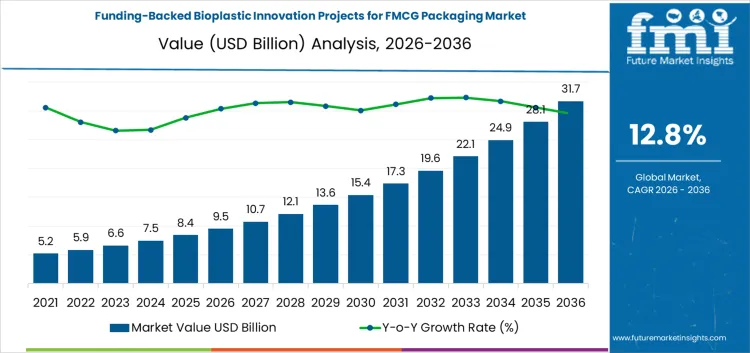
The funding-backed bioplastic innovation projects for FMCG packaging market is projected to grow from USD 9.5 billion in 2026 to USD 31.7 billion by 2036, reflecting a compound annual growth rate (CAGR) of 12.8%. This market is poised to play a pivotal role in the future of consumer goods packaging, where sustainability is no longer a trend but a commercial imperative. Buyers, particularly within FMCG companies, are increasingly driven by the need to meet stringent environmental regulations while aligning with growing consumer demand for eco-friendly products.
Decision-makers will prioritize investments in bioplastic innovations that offer scalability, cost-effectiveness, and regulatory compliance. As funding continues to flow into this space, it will enable rapid advancements, but only those who can execute efficiently will capture long-term value. Companies that leverage funding for strategic R&D while maintaining operational agility will be well-positioned to lead, shaping the future of sustainable packaging in a competitive and ever-evolving market.
Quick Stats of the Funding-Backed Bioplastic Innovation Projects for FMCG Packaging Market
- Funding-Backed Bioplastic Innovation Projects for FMCG Packaging Market Value (2026): USD 9.5 billion
- Funding-Backed Bioplastic Innovation Projects for FMCG Packaging Market Forecast Value (2036): USD 31.7 billion
- Funding-Backed Bioplastic Innovation Projects for FMCG Packaging Market Global Forecast CAGR (2026-2036): 12.8%
- Funding-Backed Bioplastic Innovation Projects for FMCG Packaging Market Leading Segment: Funding Source Type (Government Grants or EU Framework Programmes) 45%
- Key Growth Regions in Funding-Backed Bioplastic Innovation Projects for FMCG Packaging Market: USA
- Top Players in Funding-Backed Bioplastic Innovation Projects for FMCG Packaging Market: European Bioplastics Association, Be-UP Consortium, BioSupPack Consortium, GREEN-LOOP Consortium, UPLIFT Project Consortium, BlockPLA Initiative, National Institute of Standards and Technology, American Chemical Society Green Chemistry Institute, NSF Engineering Research Centers, Fraunhofer Society Biopolymers Divisions
What is the Growth Forecast for the Funding-Backed Bioplastic Innovation Projects for FMCG Packaging Market through 2036?
The rolling CAGR analysis for the funding-backed bioplastic innovation projects for FMCG packaging market demonstrates a steady growth trajectory with slight fluctuations in the rate of expansion over time. From 2026 to 2031, the market will grow from USD 9.5 billion to USD 17.1 billion, reflecting a significant acceleration in adoption. The CAGR during this period will be strong, driven by increased investments in bioplastic innovation and rising consumer demand for sustainable FMCG packaging solutions. The market will benefit from heightened attention to eco-friendly packaging and the regulatory push for reducing plastic usage in the FMCG sector.
From 2031 to 2036, the market will continue to grow from USD 17.1 billion to USD 31.7 billion. The rolling CAGR during this phase will remain consistent, though slightly lower than in the earlier period, as the market matures. This steady growth reflects the increasing integration of bioplastic packaging solutions into mainstream FMCG packaging. Continued investments in R&D, along with advancements in bioplastic production and material performance, will keep the market on a strong growth path. By 2036, the market will be driven by the widespread adoption of sustainable packaging in the FMCG sector, with bioplastics becoming a standard solution.
Funding-Backed Bioplastic Innovation Projects for FMCG Packaging Market Key Takeaways
| Metric | Value |
|---|---|
| Industry Sales Value (2026 | USD 9.5 Billion |
| Industry Forecast Value (2036) | USD 31.7 Billion |
| Industry Forecast CAGR (2026-2036) | 12.8% |
What Is Driving the Demand for Funding-Backed Bioplastic Innovation Projects for FMCG Packaging Market?
Historical demand for funding-backed bioplastic innovation projects in the fast-moving consumer goods (FMCG) packaging sector stems from long-standing reliance on conventional plastics and rising recognition of their environmental impact on waste accumulation and carbon emissions. FMCG companies traditionally used inexpensive fossil-derived polymers for packaging due to performance, durability, and cost advantages. Environmental concerns and regulatory pressure to reduce single-use plastics catalysed research into renewable and biodegradable materials, prompting industry, governments, and research organisations to invest in bioplastic R&D. Collaborative and publicly supported projects have aimed to improve barrier properties, mechanical performance, and scalability of bio-based polymers such as polylactic acid (PLA) and polyhydroxyalkanoates (PHA) for food and consumer packaging. These efforts operated within academic and industrial research networks where funding mechanisms supported innovation and early-stage technology demonstration. Early collaborations addressed limitations in bioplastic performance, processing, and cost relative to conventional plastics, laying groundwork for funded innovation that aligns science and commercial packaging needs.
Future demand for funding-backed bioplastic innovation projects for FMCG packaging is expected to grow as regulatory frameworks, corporate commitments, and market dynamics elevate sustainability requirements in packaging design. The global bioplastic packaging market is projected to expand significantly through the 2030s as companies and regulators intensify efforts to reduce single-use plastic dependence and meet environmental targets. Growth factors include government incentives such as grants, tax breaks, and research subsidies that lower financial barriers for bioplastic development, and structured programmes that support industrial scale-up and commercial adoption. For example, partnerships between bioplastic developers and innovation agencies in Canada and the UK are funded to replace petroleum-derived plastics in consumer goods and packaging applications, with support from national research assistance programmes. These funded initiatives help bridge technology readiness gaps by advancing fermentation-derived materials and other renewable polymers toward industrial use. Continued investment in funded R&D projects will likely accelerate development of high-performance, sustainable alternatives compatible with FMCG packaging requirements, but challenges include aligning scientific outcomes with cost-effective manufacturing and ensuring regulatory compliance across regions.
What are the Leading Segments in the Global Funding-Backed Bioplastic Innovation Projects for FMCG Packaging Market?
The global funding-backed bioplastic innovation projects for FMCG packaging market is segmented by funding source type and FMCG packaging category. Among funding sources, government grants or EU framework programmes lead the market, capturing 45% of the share, followed by public-private consortia, corporate sustainability R&D funding, academic & NGO research grants, and venture or impact investment. Government grants and EU frameworks are favored for their significant financial support and long-term sustainability goals. On the FMCG packaging category side, food & beverage packaging dominates the market, holding 41% of the share, followed by personal care & cosmetics, homecare & cleaning products packaging, pharmaceutical & healthcare packaging, and electronics & specialty FMCG packaging. The food and beverage sector leads due to the high demand for sustainable packaging solutions in response to consumer demand and regulatory pressures.
What Drives the Growth of Government Grants or EU Framework Programmes in the Funding-Backed Bioplastic Innovation Projects for FMCG Packaging Market?
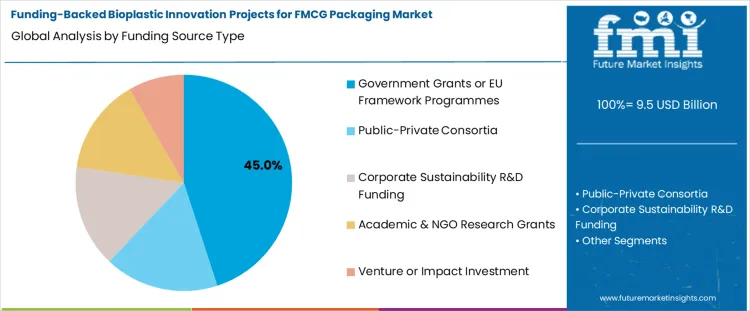
Government grants or EU framework programmes are the leading funding source type in the funding-backed bioplastic innovation projects for FMCG packaging market, holding 45% of the share. This demand is driven by the strong support governments and regional organizations provide to promote sustainability, innovation, and the development of eco-friendly packaging alternatives. Governments, particularly in the EU, recognize the environmental impact of plastic packaging and the need for alternatives to reduce plastic waste and carbon emissions. Funding from government grants and EU frameworks enables businesses, researchers, and innovators to invest in the development of bioplastics and their applications in FMCG packaging. These funding sources are essential for advancing research, developing new materials, and scaling production processes. Additionally, government grants often align with broader sustainability and circular economy initiatives, further promoting the adoption of bioplastics in packaging. As global regulatory frameworks around plastic waste become stricter, government-backed funding will continue to drive innovation in the FMCG packaging sector.
What is Driving the Demand for Food & Beverage Packaging in the Funding-Backed Bioplastic Innovation Projects for FMCG Packaging Market?
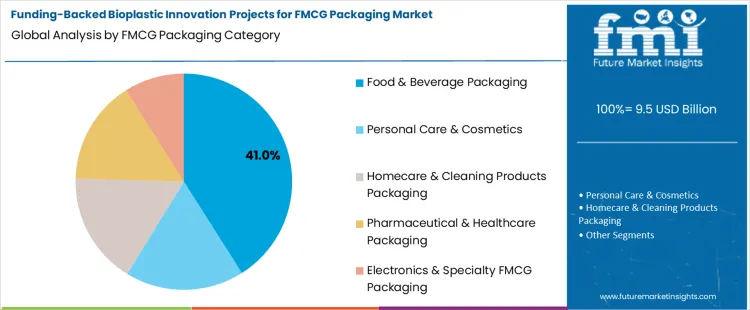
Food & beverage packaging is the leading FMCG packaging category in the funding-backed bioplastic innovation projects for FMCG packaging market, capturing 41% of the share. This demand is driven by the food and beverage industry’s growing commitment to sustainability and the increasing consumer preference for eco-friendly products. Packaging in this sector represents a significant portion of plastic waste, and as a result, there is a strong push toward adopting bioplastics that are biodegradable or recyclable. Food and beverage companies are under pressure from both consumers and regulators to reduce their environmental footprint, and bioplastics offer a viable solution. Bioplastics derived from renewable feedstocks, such as PLA and PHA, provide the necessary functionality to protect food while being environmentally friendly. The increasing emphasis on reducing single-use plastics and the rising demand for sustainable packaging materials will continue to drive the adoption of bioplastics in food and beverage packaging, ensuring that this sector remains the largest end-use category in the market for funding-backed bioplastic innovation projects.
What are the Key Dynamics in the Funding-Backed Bioplastic Innovation Projects for FMCG Packaging Market?
The market for funding-backed bioplastic innovation projects for FMCG packaging is defined by coordinated investment in research, development, and commercialisation of renewable polymer solutions. Projects seek to replace conventional plastics in fast-moving consumer goods packaging with bio-based, compostable, or recyclable alternatives. Stakeholders evaluate initiatives on technological feasibility, scalability of bioplastic formulations, and alignment with packaging performance requirements. Public and private funding mechanisms influence project selection and pace of innovation. Regulatory landscapes governing packaging waste, renewable content targets, and extended producer responsibility shape how funds are allocated and how advancements are adopted across supply chains.
What are the Main Drivers Supporting Growth in This Market?
Growth in this market is driven by regulatory pressure to reduce fossil-based plastic use and enhance recyclability and compostability in packaging. Government grants, subsidies, and innovation funds encourage collaboration between material scientists, biopolymer producers, and consumer goods companies. Fast-moving consumer goods brands are setting targets for bio-based packaging to meet consumer demand for sustainability and to meet corporate environmental commitments. Advances in fermentation, polymer processing, and material compatibility with existing packaging lines enhance technical viability of bioplastic alternatives. Funding bodies prioritise projects that demonstrate potential to improve lifecycle outcomes and reduce packaging waste at scale.
What Restraints Are Limiting Market Expansion?
Market expansion is constrained by economic and technical challenges associated with bioplastic innovation. High research and development costs for novel biopolymer chemistries and manufacturing processes can exceed available funding, limiting project scope. Scale-up from pilot to commercial production often requires further capital investment and can face operational barriers related to feedstock supply and equipment adaptation. Variability in regional regulatory definitions for compostable, biodegradable, or bio-based materials creates complexity for project developers targeting multiple markets. FMCG companies may remain cautious in adoption due to concerns about performance parity with conventional plastics, cost implications, and supply chain integration.
What Emerging Trends Are Shaping the Future of This Market?
Emerging trends include increased integration of multidisciplinary research teams combining material science, industrial engineering, and lifecycle assessment to drive holistic bioplastic solutions. Funding programmes are prioritising projects that demonstrate circular economy principles, such as designing for recyclability and closed-loop material flows. Digital simulation and modelling tools are being used to accelerate development of bioplastic formulations and predict performance in FMCG applications. Partnerships between consumer goods brands, packaging manufacturers, and research institutions are expanding, enabling shared risk and pooled expertise. There is growing emphasis on standardising evaluation metrics for environmental impact, which helps align innovation outcomes with regulatory and market expectations.
What is the Country-Wise Analysis of the Funding-Backed Bioplastic Innovation Projects for FMCG Packaging Market?
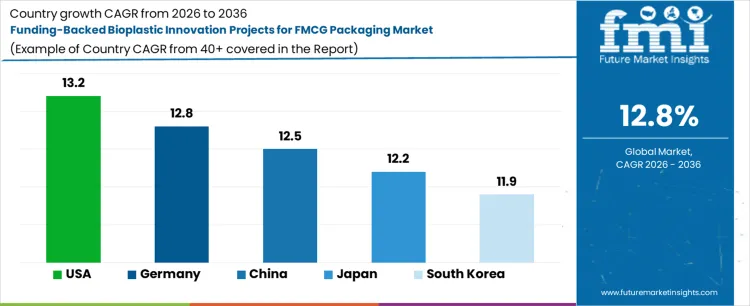
The funding-backed bioplastic innovation projects for FMCG (Fast-Moving Consumer Goods) packaging market is witnessing significant growth as industries increasingly focus on sustainable packaging solutions. Bioplastics, made from renewable resources, are being developed to replace conventional plastics in FMCG packaging, driven by environmental concerns and regulatory pressures. Developed markets such as the USA, Germany, Japan, and South Korea are leading the way in adopting bioplastics, supported by strong government funding and private investments in research and development (R&D). Emerging markets like China are also experiencing growth, driven by large-scale manufacturing, government incentives, and rising consumer demand for sustainable packaging. With increasing investments in bioplastic innovation and a global push toward sustainability, the market for funding-backed bioplastic innovation projects in FMCG packaging is expected to grow substantially.
| Country | CAGR (2026-2036) |
|---|---|
| USA | 13.2% |
| Germany | 12.8% |
| China | 12.5% |
| Japan | 12.2% |
| South Korea | 11.9% |
What is the Growth Outlook for the Funding-Backed Bioplastic Innovation Projects for FMCG Packaging Market in the USA?
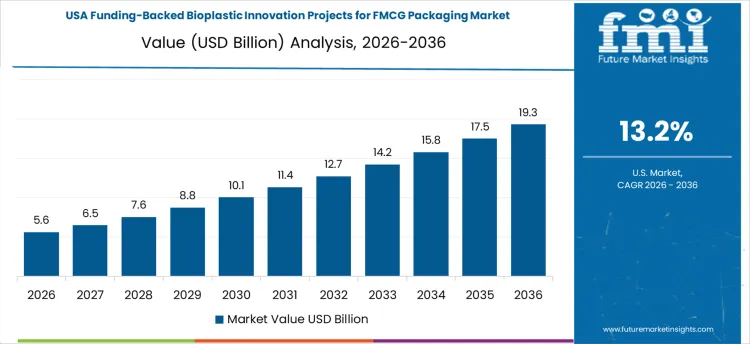
The funding-backed bioplastic innovation projects for FMCG packaging market in the USA is expected to grow steadily, with a projected CAGR of 13.2% from 2026 to 2036. The USA has long been at the forefront of sustainability, with government funding and private-sector investments driving innovations in sustainable packaging solutions. Bioplastics, particularly those used in FMCG packaging, are increasingly seen as a viable alternative to traditional plastics, helping businesses meet both regulatory requirements and consumer demand for environmentally friendly products. The growing awareness of plastic waste, combined with strong support for R&D in green technologies, is driving the demand for funding-backed bioplastic projects in the U.S. As industries like food and beverage, personal care, and household goods continue to adopt sustainable packaging, the market for funding-backed bioplastic innovation projects in FMCG packaging in the USA is expected to experience steady growth.
What is the Market Outlook for the Funding-Backed Bioplastic Innovation Projects for FMCG Packaging Market in Germany?
Germany is expected to see steady growth in the funding-backed bioplastic innovation projects for FMCG packaging market, with a projected CAGR of 12.8% from 2026 to 2036. Germany is a global leader in sustainable manufacturing and packaging, and the demand for bioplastics in FMCG packaging is rising as both businesses and consumers seek eco-friendly alternatives. The German government has introduced policies that promote sustainability and circular economy principles, which further incentivize bioplastic innovation in FMCG packaging. Additionally, funding for R&D projects related to bioplastics is increasing as industries across Germany, particularly in packaging and consumer goods, adopt green materials to reduce their environmental footprint. As consumer demand for sustainable packaging grows and government support strengthens, Germany’s market for funding-backed bioplastic innovation projects is expected to continue to grow steadily.
What is the Growth Forecast for the Funding-Backed Bioplastic Innovation Projects for FMCG Packaging Market in China?
China is projected to experience strong growth in the funding-backed bioplastic innovation projects for FMCG packaging market, with a projected CAGR of 12.5% from 2026 to 2036. As the world’s largest producer and consumer of plastic products, China faces mounting pressure to reduce plastic pollution and improve sustainability in its manufacturing processes. The Chinese government’s push for green development and sustainable manufacturing is accelerating the adoption of bioplastics in FMCG packaging. With increasing investments in R&D and a growing commitment to sustainability, the demand for funding-backed bioplastic innovation projects is expected to rise rapidly in China. As Chinese industries continue to modernize and align with global sustainability standards, the market for bioplastics in FMCG packaging is expected to grow significantly in the coming years.
What is the Market Outlook for the Funding-Backed Bioplastic Innovation Projects for FMCG Packaging Market in Japan?
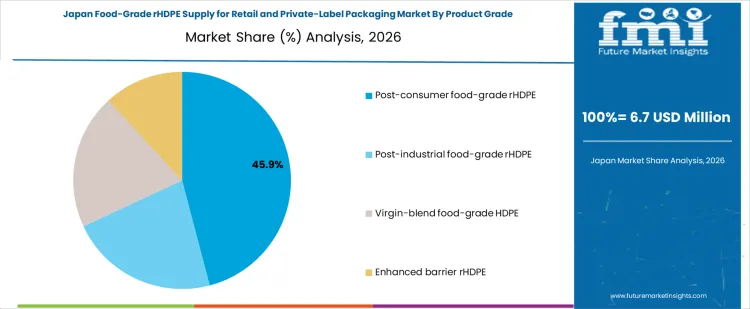
Japan is expected to experience steady growth in the funding-backed bioplastic innovation projects for FMCG packaging market, with a projected CAGR of 12.2% from 2026 to 2036. Japan has a strong tradition of environmental sustainability, and the demand for bioplastics in FMCG packaging is increasing as consumers and businesses seek eco-friendly alternatives to traditional plastic materials. The Japanese government has implemented various initiatives to promote sustainable manufacturing and reduce plastic waste, which is driving investments in bioplastic R&D. Japanese industries, particularly in food packaging, cosmetics, and electronics, are increasingly adopting bioplastics to meet both regulatory requirements and consumer demand for green products. As Japan continues to prioritize sustainability and innovation, the market for funding-backed bioplastic innovation projects in FMCG packaging is expected to grow steadily.
What is the Growth Forecast for the Funding-Backed Bioplastic Innovation Projects for FMCG Packaging Market in South Korea?
South Korea is projected to experience steady growth in the funding-backed bioplastic innovation projects for FMCG packaging market, with a projected CAGR of 11.9% from 2026 to 2036. South Korea is increasingly focusing on sustainable manufacturing and green technologies, with bioplastics gaining traction in FMCG packaging applications. The South Korean government has introduced policies supporting the use of renewable materials in packaging and promoting sustainable production practices. As businesses and consumers demand more eco-friendly packaging options, South Korean industries are adopting bioplastics in packaging solutions for food, beverages, personal care, and household products. With growing support for R&D projects and increasing consumer awareness of environmental issues, the market for funding-backed bioplastic innovation projects in South Korea is expected to expand steadily.
What is the Competitive Landscape for the Funding-Backed Bioplastic Innovation Projects for FMCG Packaging Market?
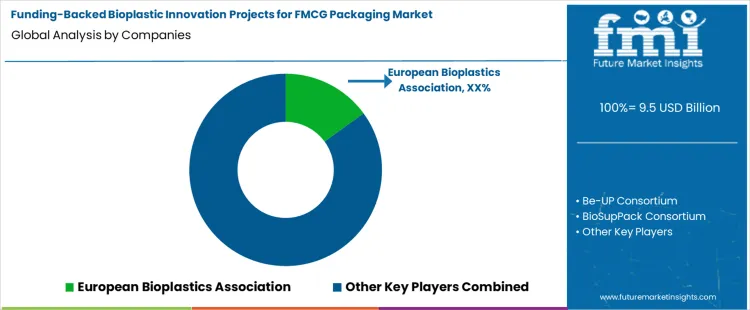
The funding-backed bioplastic innovation projects for FMCG packaging market is evolving rapidly as various consortia, research organizations, and industry groups collaborate to advance sustainable packaging solutions. European Bioplastics Association leads the market by providing a platform for stakeholders in the bioplastics industry to collaborate on advancing bioplastic solutions for packaging, especially in the fast-moving consumer goods (FMCG) sector. Their focus on promoting the use of bioplastics, securing funding for innovation, and advocating for sustainable policies has positioned them as a dominant player in the market. Be-UP Consortium, BioSupPack Consortium, and GREEN-LOOP Consortium are key competitors, each working on innovative bioplastic packaging projects, funded through European initiatives. These consortia focus on developing biodegradable, renewable, and eco-friendly packaging solutions for FMCG, contributing to the growing demand for sustainable packaging alternatives.
UPLIFT Project Consortium, BlockPLA Initiative, and National Institute of Standards and Technology (NIST) further strengthen the competitive landscape by focusing on advancing bioplastic technology for sustainable FMCG packaging. The UPLIFT Project Consortium focuses on developing high-performance, eco-friendly materials, while BlockPLA Initiative works on creating novel bioplastics for durable, sustainable packaging solutions. NIST and American Chemical Society Green Chemistry Institute also provide important research and standards to support the development of bioplastics. NSF Engineering Research Centers and Fraunhofer Society Biopolymers Divisions contribute by driving forward research into next-generation bioplastics and improving material properties for FMCG packaging. These organizations compete by securing funding for R&D, promoting sustainable materials, and driving innovation that meets the needs of both the FMCG sector and environmental regulations. As the market for sustainable packaging solutions continues to grow, the focus on funding-backed innovation projects will expand, fostering further competition and technological advancement.
Key Players of the Funding-Backed Bioplastic Innovation Projects for FMCG Packaging Market
- European Bioplastics Association
- Be‑UP Consortium
- BioSupPack Consortium
- GREEN‑LOOP Consortium
- UPLIFT Project Consortium
- BlockPLA Initiative
- National Institute of Standards and Technology
- American Chemical Society Green Chemistry Institute
- NSF Engineering Research Centers
- Fraunhofer Society Biopolymers Divisions
Scope of the Report
| Items | Values |
|---|---|
| Quantitative Units (2026) | USD Billion |
| Funding Source Type | Government Grants or EU Framework Programmes, Public-Private Consortia, Corporate Sustainability R&D Funding, Academic & NGO Research Grants, Venture or Impact Investment |
| Innovation Focus | New Bio-Polymer Materials (PLA, PHA, PBS, PBAT), Improved Barrier & Functional Properties, Biodegradation & Compostability Performance, Process or Scale-Up Technologies, Circularity & Recycling Integration |
| FMCG Packaging Category | Food & Beverage Packaging, Personal Care & Cosmetics, Homecare & Cleaning Products Packaging, Pharmaceutical & Healthcare Packaging, Electronics & Specialty FMCG Packaging |
| Companies | European Bioplastics Association, Be-UP Consortium, BioSupPack Consortium, GREEN-LOOP Consortium, UPLIFT Project Consortium, BlockPLA Initiative, National Institute of Standards and Technology, American Chemical Society Green Chemistry Institute, NSF Engineering Research Centers, Fraunhofer Society Biopolymers Divisions |
| Regions Covered | North America, Latin America, Western Europe, Eastern Europe, South Asia & Pacific, East Asia, Middle East & Africa |
| Countries Covered | United States, Canada, Mexico, Brazil, Argentina, Germany, France, United Kingdom, Italy, Spain, Netherlands, China, India, Japan, South Korea, ANZ, GCC Countries, South Africa |
| Additional Attributes | Dollar sales by funding source type, innovation focus, FMCG packaging category, and region. Includes analysis of market trends in funding-backed bioplastic innovation projects for FMCG packaging, performance in packaging applications across various FMCG categories, cost and funding model dynamics, regulatory and environmental considerations, collaboration patterns across industries and research bodies, market share and positioning of key funding sources and innovation projects, innovations in bioplastics and packaging technologies, and evaluation of impact on material performance, sustainability, circularity, and consumer acceptance. |
Funding-Backed Bioplastic Innovation Projects for FMCG Packaging Market Segmentation
Funding Source Type
- Government Grants or EU Framework Programmes
- Public-Private Consortia
- Corporate Sustainability R&D Funding
- Academic & NGO Research Grants
- Venture or Impact Investment
Innovation Focus
- New Bio-Polymer Materials (PLA, PHA, PBS, PBAT)
- Improved Barrier & Functional Properties
- Biodegradation & Compostability Performance
- Process or Scale-Up Technologies
- Circularity & Recycling Integration
FMCG Packaging Category
- Food & Beverage Packaging
- Personal Care & Cosmetics
- Homecare & Cleaning Products Packaging
- Pharmaceutical & Healthcare Packaging
- Electronics & Specialty FMCG Packaging
Region
- Asia Pacific
- China
- Japan
- South Korea
- India
- Australia & New Zealand
- ASEAN
- Rest of Asia Pacific
- Europe
- Germany
- United Kingdom
- France
- Italy
- Spain
- Nordic
- BENELUX
- Rest of Europe
- North America
- United States
- Canada
- Mexico
- Latin America
- Brazil
- Chile
- Rest of Latin America
- Middle East & Africa
- Kingdom of Saudi Arabia
- Other GCC Countries
- Turkey
- South Africa
- Other African Union
- Rest of Middle East & Africa
Frequently Asked Questions
What will be the size of funding-backed bioplastic innovation projects for FMCG packaging market in 2036?
The market size for the funding-backed bioplastic innovation projects for FMCG packaging market is projected to reach USD 31.7 billion by 2036.
How much will be the funding-backed bioplastic innovation projects for FMCG packaging market growth between 2026 and 2036?
The funding-backed bioplastic innovation projects for FMCG packaging market is expected to grow at a 12.8% CAGR between 2026 and 2036.
What are the key funding source types in the funding-backed bioplastic innovation projects for FMCG packaging market?
The key funding source types in funding-backed bioplastic innovation projects for FMCG packaging market are government grants or EU framework programs, public-private consortia, corporate sustainability R&D funding, academic & NGO research grants and venture or impact investment.
Which innovation focus segment will contribute significant share in the funding-backed bioplastic innovation projects for FMCG packaging market in 2026?
In terms of innovation focus, new bio‑polymer materials (PLA, PHA, PBS, PBAT) segment to command 36.0% share in the funding-backed bioplastic innovation projects for the FMCG packaging market in 2026.
Preview the report firsthand - request a free sample
Get SampleGet the brochure for pricing and purchase details.
Get PDFTable of Content
- Executive Summary
- Global Market Outlook
- Demand-side Trends
- Supply-side Trends
- Technology Roadmap Analysis
- Analysis and Recommendations
- Market Overview
- Market Coverage / Taxonomy
- Market Definition / Scope / Limitations
- Market Background
- Market Dynamics
- Drivers
- Restraints
- Opportunity
- Trends
- Scenario Forecast
- Demand in Optimistic Scenario
- Demand in Likely Scenario
- Demand in Conservative Scenario
- Opportunity Map Analysis
- Product Life Cycle Analysis
- Supply Chain Analysis
- Investment Feasibility Matrix
- Value Chain Analysis
- PESTLE and Porter’s Analysis
- Regulatory Landscape
- Regional Parent Market Outlook
- Production and Consumption Statistics
- Import and Export Statistics
- Market Dynamics
- Global Market Analysis 2021 to 2025 and Forecast, 2026 to 2036
- Historical Market Size Value (USD Million) Analysis, 2021 to 2025
- Current and Future Market Size Value (USD Million) Projections, 2026 to 2036
- Y-o-Y Growth Trend Analysis
- Absolute $ Opportunity Analysis
- Global Market Pricing Analysis 2021 to 2025 and Forecast 2026 to 2036
- Global Market Analysis 2021 to 2025 and Forecast 2026 to 2036, By Funding Source Type
- Introduction / Key Findings
- Historical Market Size Value (USD Million) Analysis By Funding Source Type , 2021 to 2025
- Current and Future Market Size Value (USD Million) Analysis and Forecast By Funding Source Type , 2026 to 2036
- Government Grants or EU Framework Programmes
- Public‑Private Consortia
- Corporate Sustainability R&D Funding
- Academic & NGO Research Grants
- Venture or Impact Investment
- Government Grants or EU Framework Programmes
- Y-o-Y Growth Trend Analysis By Funding Source Type , 2021 to 2025
- Absolute $ Opportunity Analysis By Funding Source Type , 2026 to 2036
- Global Market Analysis 2021 to 2025 and Forecast 2026 to 2036, By Innovation Focus
- Introduction / Key Findings
- Historical Market Size Value (USD Million) Analysis By Innovation Focus, 2021 to 2025
- Current and Future Market Size Value (USD Million) Analysis and Forecast By Innovation Focus, 2026 to 2036
- New Bio‑Polymer Materials (PLA, PHA, PBS, PBAT)
- Improved Barrier & Functional Properties
- Biodegradation & Compostability Performance
- Process or Scale‑Up Technologies
- Circularity & Recycling Integration
- New Bio‑Polymer Materials (PLA, PHA, PBS, PBAT)
- Y-o-Y Growth Trend Analysis By Innovation Focus, 2021 to 2025
- Absolute $ Opportunity Analysis By Innovation Focus, 2026 to 2036
- Global Market Analysis 2021 to 2025 and Forecast 2026 to 2036, By FMCG Packaging Category
- Introduction / Key Findings
- Historical Market Size Value (USD Million) Analysis By FMCG Packaging Category, 2021 to 2025
- Current and Future Market Size Value (USD Million) Analysis and Forecast By FMCG Packaging Category, 2026 to 2036
- Food & Beverage Packaging
- Personal Care & Cosmetics
- Homecare & Cleaning Products Packaging
- Pharmaceutical & Healthcare Packaging
- Electronics & Specialty FMCG Packaging
- Food & Beverage Packaging
- Y-o-Y Growth Trend Analysis By FMCG Packaging Category, 2021 to 2025
- Absolute $ Opportunity Analysis By FMCG Packaging Category, 2026 to 2036
- Global Market Analysis 2021 to 2025 and Forecast 2026 to 2036, By Region
- Introduction
- Historical Market Size Value (USD Million) Analysis By Region, 2021 to 2025
- Current Market Size Value (USD Million) Analysis and Forecast By Region, 2026 to 2036
- North America
- Latin America
- Western Europe
- Eastern Europe
- East Asia
- South Asia and Pacific
- Middle East & Africa
- Market Attractiveness Analysis By Region
- North America Market Analysis 2021 to 2025 and Forecast 2026 to 2036, By Country
- Historical Market Size Value (USD Million) Trend Analysis By Market Taxonomy, 2021 to 2025
- Market Size Value (USD Million) Forecast By Market Taxonomy, 2026 to 2036
- By Country
- USA
- Canada
- Mexico
- By Funding Source Type
- By Innovation Focus
- By FMCG Packaging Category
- By Country
- Market Attractiveness Analysis
- By Country
- By Funding Source Type
- By Innovation Focus
- By FMCG Packaging Category
- Key Takeaways
- Latin America Market Analysis 2021 to 2025 and Forecast 2026 to 2036, By Country
- Historical Market Size Value (USD Million) Trend Analysis By Market Taxonomy, 2021 to 2025
- Market Size Value (USD Million) Forecast By Market Taxonomy, 2026 to 2036
- By Country
- Brazil
- Chile
- Rest of Latin America
- By Funding Source Type
- By Innovation Focus
- By FMCG Packaging Category
- By Country
- Market Attractiveness Analysis
- By Country
- By Funding Source Type
- By Innovation Focus
- By FMCG Packaging Category
- Key Takeaways
- Western Europe Market Analysis 2021 to 2025 and Forecast 2026 to 2036, By Country
- Historical Market Size Value (USD Million) Trend Analysis By Market Taxonomy, 2021 to 2025
- Market Size Value (USD Million) Forecast By Market Taxonomy, 2026 to 2036
- By Country
- Germany
- UK
- Italy
- Spain
- France
- Nordic
- BENELUX
- Rest of Western Europe
- By Funding Source Type
- By Innovation Focus
- By FMCG Packaging Category
- By Country
- Market Attractiveness Analysis
- By Country
- By Funding Source Type
- By Innovation Focus
- By FMCG Packaging Category
- Key Takeaways
- Eastern Europe Market Analysis 2021 to 2025 and Forecast 2026 to 2036, By Country
- Historical Market Size Value (USD Million) Trend Analysis By Market Taxonomy, 2021 to 2025
- Market Size Value (USD Million) Forecast By Market Taxonomy, 2026 to 2036
- By Country
- Russia
- Poland
- Hungary
- Balkan & Baltic
- Rest of Eastern Europe
- By Funding Source Type
- By Innovation Focus
- By FMCG Packaging Category
- By Country
- Market Attractiveness Analysis
- By Country
- By Funding Source Type
- By Innovation Focus
- By FMCG Packaging Category
- Key Takeaways
- East Asia Market Analysis 2021 to 2025 and Forecast 2026 to 2036, By Country
- Historical Market Size Value (USD Million) Trend Analysis By Market Taxonomy, 2021 to 2025
- Market Size Value (USD Million) Forecast By Market Taxonomy, 2026 to 2036
- By Country
- China
- Japan
- South Korea
- By Funding Source Type
- By Innovation Focus
- By FMCG Packaging Category
- By Country
- Market Attractiveness Analysis
- By Country
- By Funding Source Type
- By Innovation Focus
- By FMCG Packaging Category
- Key Takeaways
- South Asia and Pacific Market Analysis 2021 to 2025 and Forecast 2026 to 2036, By Country
- Historical Market Size Value (USD Million) Trend Analysis By Market Taxonomy, 2021 to 2025
- Market Size Value (USD Million) Forecast By Market Taxonomy, 2026 to 2036
- By Country
- India
- ASEAN
- Australia & New Zealand
- Rest of South Asia and Pacific
- By Funding Source Type
- By Innovation Focus
- By FMCG Packaging Category
- By Country
- Market Attractiveness Analysis
- By Country
- By Funding Source Type
- By Innovation Focus
- By FMCG Packaging Category
- Key Takeaways
- Middle East & Africa Market Analysis 2021 to 2025 and Forecast 2026 to 2036, By Country
- Historical Market Size Value (USD Million) Trend Analysis By Market Taxonomy, 2021 to 2025
- Market Size Value (USD Million) Forecast By Market Taxonomy, 2026 to 2036
- By Country
- Kingdom of Saudi Arabia
- Other GCC Countries
- Turkiye
- South Africa
- Other African Union
- Rest of Middle East & Africa
- By Funding Source Type
- By Innovation Focus
- By FMCG Packaging Category
- By Country
- Market Attractiveness Analysis
- By Country
- By Funding Source Type
- By Innovation Focus
- By FMCG Packaging Category
- Key Takeaways
- Key Countries Market Analysis
- USA
- Pricing Analysis
- Market Share Analysis, 2025
- By Funding Source Type
- By Innovation Focus
- By FMCG Packaging Category
- Canada
- Pricing Analysis
- Market Share Analysis, 2025
- By Funding Source Type
- By Innovation Focus
- By FMCG Packaging Category
- Mexico
- Pricing Analysis
- Market Share Analysis, 2025
- By Funding Source Type
- By Innovation Focus
- By FMCG Packaging Category
- Brazil
- Pricing Analysis
- Market Share Analysis, 2025
- By Funding Source Type
- By Innovation Focus
- By FMCG Packaging Category
- Chile
- Pricing Analysis
- Market Share Analysis, 2025
- By Funding Source Type
- By Innovation Focus
- By FMCG Packaging Category
- Germany
- Pricing Analysis
- Market Share Analysis, 2025
- By Funding Source Type
- By Innovation Focus
- By FMCG Packaging Category
- UK
- Pricing Analysis
- Market Share Analysis, 2025
- By Funding Source Type
- By Innovation Focus
- By FMCG Packaging Category
- Italy
- Pricing Analysis
- Market Share Analysis, 2025
- By Funding Source Type
- By Innovation Focus
- By FMCG Packaging Category
- Spain
- Pricing Analysis
- Market Share Analysis, 2025
- By Funding Source Type
- By Innovation Focus
- By FMCG Packaging Category
- France
- Pricing Analysis
- Market Share Analysis, 2025
- By Funding Source Type
- By Innovation Focus
- By FMCG Packaging Category
- India
- Pricing Analysis
- Market Share Analysis, 2025
- By Funding Source Type
- By Innovation Focus
- By FMCG Packaging Category
- ASEAN
- Pricing Analysis
- Market Share Analysis, 2025
- By Funding Source Type
- By Innovation Focus
- By FMCG Packaging Category
- Australia & New Zealand
- Pricing Analysis
- Market Share Analysis, 2025
- By Funding Source Type
- By Innovation Focus
- By FMCG Packaging Category
- China
- Pricing Analysis
- Market Share Analysis, 2025
- By Funding Source Type
- By Innovation Focus
- By FMCG Packaging Category
- Japan
- Pricing Analysis
- Market Share Analysis, 2025
- By Funding Source Type
- By Innovation Focus
- By FMCG Packaging Category
- South Korea
- Pricing Analysis
- Market Share Analysis, 2025
- By Funding Source Type
- By Innovation Focus
- By FMCG Packaging Category
- Russia
- Pricing Analysis
- Market Share Analysis, 2025
- By Funding Source Type
- By Innovation Focus
- By FMCG Packaging Category
- Poland
- Pricing Analysis
- Market Share Analysis, 2025
- By Funding Source Type
- By Innovation Focus
- By FMCG Packaging Category
- Hungary
- Pricing Analysis
- Market Share Analysis, 2025
- By Funding Source Type
- By Innovation Focus
- By FMCG Packaging Category
- Kingdom of Saudi Arabia
- Pricing Analysis
- Market Share Analysis, 2025
- By Funding Source Type
- By Innovation Focus
- By FMCG Packaging Category
- Turkiye
- Pricing Analysis
- Market Share Analysis, 2025
- By Funding Source Type
- By Innovation Focus
- By FMCG Packaging Category
- South Africa
- Pricing Analysis
- Market Share Analysis, 2025
- By Funding Source Type
- By Innovation Focus
- By FMCG Packaging Category
- USA
- Market Structure Analysis
- Competition Dashboard
- Competition Benchmarking
- Market Share Analysis of Top Players
- By Regional
- By Funding Source Type
- By Innovation Focus
- By FMCG Packaging Category
- Competition Analysis
- Competition Deep Dive
- European Bioplastics Association
- Overview
- Product Portfolio
- Profitability by Market Segments (Product/Age /Sales Channel/Region)
- Sales Footprint
- Strategy Overview
- Marketing Strategy
- Product Strategy
- Channel Strategy
- Be‑UP Consortium
- BioSupPack Consortium
- GREEN‑LOOP Consortium
- UPLIFT Project Consortium
- BlockPLA Initiative
- National Institute of Standards and Technology
- American Chemical Society Green Chemistry Institute
- NSF Engineering Research Centers
- Fraunhofer Society Biopolymers Divisions
- European Bioplastics Association
- Competition Deep Dive
- Assumptions & Acronyms Used
- Research Methodology


