

- Industry Size (2026):
- USD 520 Mn
- Forecast (2036):
- USD 1734.2 Mn
- CAGR (2026 to 2036)
- 12.8%
EFSA-Compliant Food-Grade rHDPE for FMCG Packaging Market Forecast and Outlook 2026 to 2036
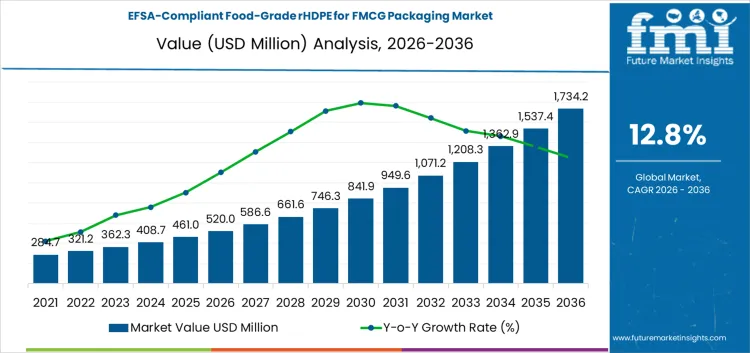
The EFSA-compliant food-grade rHDPE (recycled high-density polyethylene) for FMCG (fast-moving consumer goods) packaging market is projected to experience significant growth from 2026 to 2036. Starting at USD 520 million in 2026, the market is expected to reach USD 1,734.2 million by 2036, reflecting a compound annual growth rate (CAGR) of 12.8%. This growth is driven by the increasing demand for sustainable packaging solutions in the FMCG sector, where there is growing pressure to reduce plastic waste and improve recycling rates. EFSA-compliant rHDPE ensures that recycled materials meet stringent food safety and quality standards, making it ideal for use in packaging food and beverage products.
The market’s expansion is supported by increasing regulatory pressures to adopt circular economy practices and reduce reliance on virgin plastics in packaging. As FMCG brands focus on sustainability and meeting consumer demands for eco-friendly packaging, the adoption of EFSA-compliant rHDPE will grow. Additionally, advancements in recycling technologies are making the production of food-grade rHDPE more efficient and cost-effective. Over the forecast period, the market is expected to continue growing steadily, driven by these trends and the ongoing shift toward sustainable materials in packaging.
Quick Stats of the EFSA-Compliant Food-Grade rHDPE for FMCG Packaging Market
- EFSA-Compliant Food-Grade rHDPE for FMCG Packaging Market Value (2026): USD 520 million
- EFSA-Compliant Food-Grade rHDPE for FMCG Packaging Market Forecast Value (2036): USD 1,734.2 million
- EFSA-Compliant Food-Grade rHDPE for FMCG Packaging Market Global Forecast CAGR (2026-2036): 12.8%
- EFSA-Compliant Food-Grade rHDPE for FMCG Packaging Market Leading Segment: Source Material (Post-Consumer Food Bottles & Jugs) 45%
- Key Growth Regions in EFSA-Compliant Food-Grade rHDPE for FMCG Packaging Market: Germany
- Top Players in EFSA-Compliant Food-Grade rHDPE for FMCG Packaging Market: Schoeller Allibert, Alpla, Biffa Polymers, Morssinkhof Plastics, Veolia, Indorama Ventures, Plastipak Packaging, Suez / Recycling Units, Michelman, Krones AG
What is the Growth Forecast for the EFSA-Compliant Food-Grade rHDPE for FMCG Packaging Market through 2036?
The growth rate volatility index for the EFSA-compliant food-grade rHDPE for FMCG packaging market shows moderate fluctuations in the early years of the forecast period, followed by a more stable and predictable growth pattern as the technology matures. From 2026 to 2031, the market will grow from USD 520 million to USD 1.115 million, reflecting a significant increase of USD 595 million. This period will be characterized by accelerated adoption as FMCG brands increasingly adopt sustainable packaging solutions to meet environmental goals and regulatory requirements. The volatility in this phase will likely be driven by the early-stage adoption of EFSA-compliant rHDPE, with varying rates of implementation as companies optimize their supply chains and production processes.
From 2031 to 2036, the market will continue to grow from USD 1.115 million to USD 1,734.2 million, reflecting an additional USD 765 million in value. However, as the market matures and the adoption of EFSA-compliant rHDPE becomes more standardized across the FMCG packaging industry, the growth rate volatility will decrease. The market will see a more stable expansion driven by steady demand for sustainable packaging, cost reductions due to scaling production, and improvements in recycling technologies. The growth rate volatility index will thus stabilize in the latter years of the forecast period as the material becomes a mainstream solution in FMCG packaging, with less variation in growth rates year-on-year.
EFSA-Compliant Food-Grade rHDPE for FMCG Packaging Market Key Takeaways
| Metric | Value |
|---|---|
| Industry Sales Value (2026) | USD 520 million |
| Industry Forecast Value (2036) | USD 1,734.2 million |
| Industry Forecast CAGR (2026-2036) | 12.8% |
What Is Driving the Demand for EFSA-Compliant Food-Grade rHDPE for FMCG Packaging Market?
Historical demand for recycled high-density polyethylene (rHDPE) in food packaging emerged from the broader expansion of recycled plastics in packaging applications and growing regulatory emphasis on material safety and circularity. rHDPE has been used widely in non-food packaging because of its durability, chemical resistance, and cost-effectiveness relative to virgin resin. Mechanical recycling of HDPE waste supported reuse in rigid packaging, bottles, and industrial products for decades. As regulatory frameworks evolved, authorities such as the European Food Safety Authority (EFSA) began assessing recycling processes to ensure that rHDPE and other recycled plastics can be safely used in food contact materials (FCMs), recognising potential contamination risks and the need for strict safety evaluation. EFSA conducts scientific assessments to determine whether recycling technologies and the resulting plastics pose health concerns when used in food packaging, and compliance with EU food contact regulations, including Good Manufacturing Practices and specific migration limits, is a core prerequisite for training recycled resins for FMCG packaging uses.
Future demand for EFSA-compliant food-grade rHDPE in FMCG packaging is expected to grow as regulatory pressure, sustainability targets, and brand commitments converge to accelerate the adoption of recycled content in food contact applications. EFSA compliance, or similar approval pathways, serves as a critical market enabler because safety assessment and authorisation underpin legal use of recycled plastics in direct food contact, and regulators continue to refine criteria for recycled FCMs in the European Union. Brand owners and packaging designers face increasing requirements under EU directives and food contact materials regulations that encourage recycled content and minimise environmental impact, and a growing number of products and processes seek EFSA recognition or certification to unlock market access. Market analysts project robust growth in the food-grade recycled HDPE segment, with forecasts indicating expansion at double-digit compound annual growth rates driven by demand for sustainable and cost-effective alternatives to virgin resins and by global recycling infrastructure improvements. Consumer demand for sustainable packaging in fast-moving consumer goods (FMCG) further reinforces this trend, with manufacturers prioritising recycled materials that meet stringent food safety standards and support circular economy goals. Growth factors include enhanced sorting and cleaning technologies that improve rHDPE purity and EFSA compliance, regulatory incentives for recycled content, and collaborations among recyclers, resin producers, and FMCG brands to scale adoption. Challenges include the complexity and cost of achieving consistent food-grade quality and meeting evolving regulatory requirements, but continued innovation in recycling processes and certification frameworks is expected to support longer-term uptake of EFSA-compliant rHDPE in FMCG packaging.
What are the Leading Segments in the Global EFSA-Compliant Food-Grade rHDPE for FMCG Packaging Market?
The global EFSA-compliant food-grade rHDPE for FMCG packaging market is segmented by source material and packaging type. Among source materials, post-consumer food bottles & jugs lead the market, capturing 45% of the share, followed by closed-loop crates & containers, post-industrial food HDPE waste, and mixed PCR with enhanced sorting. Post-consumer food bottles & jugs are preferred for their abundant supply and suitability for recycling into high-quality food-grade materials. On the packaging type side, rigid bottles & jugs dominate, holding 42% of the share, followed by closures & lids, crates & pallets, and other food contact rigid packaging. Rigid bottles & jugs represent the largest application due to their widespread use in the food and beverage industry and their need for sustainable, compliant packaging solutions.
What Drives the Growth of Post-Consumer Food Bottles & Jugs in the EFSA-Compliant Food-Grade rHDPE for FMCG Packaging Market?
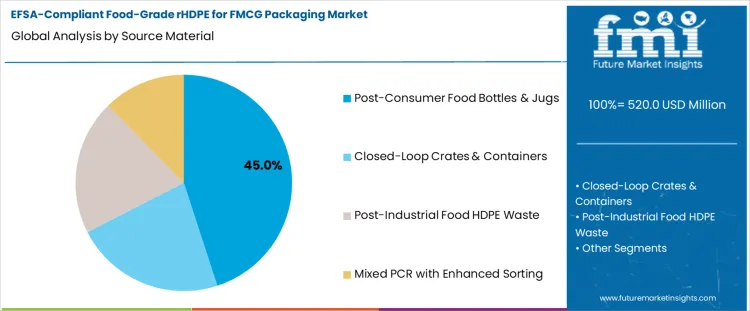
Post-consumer food bottles & jugs are the leading source material in the EFSA-compliant food-grade rHDPE for FMCG packaging market, holding 45% of the share. This growth is driven by the increasing focus on recycling and sustainability within the packaging industry. Post-consumer food bottles and jugs, which are widely used in the food and beverage sector, provide a valuable source of recycled HDPE that can be processed into high-quality food-grade material.
These materials are ideal for use in food packaging due to their compliance with safety standards and their ability to be recycled repeatedly, contributing to the circular economy. As the demand for sustainable packaging solutions continues to grow, driven by both consumer preferences and regulatory pressures, the adoption of recycled HDPE from post-consumer food bottles & jugs is expected to increase. This shift aligns with global efforts to reduce plastic waste and improve the sustainability of food packaging, ensuring that post-consumer food bottles & jugs remain a dominant source material in the market.
What is Driving the Demand for Rigid Bottles & Jugs in the EFSA-Compliant Food-Grade rHDPE for FMCG Packaging Market?
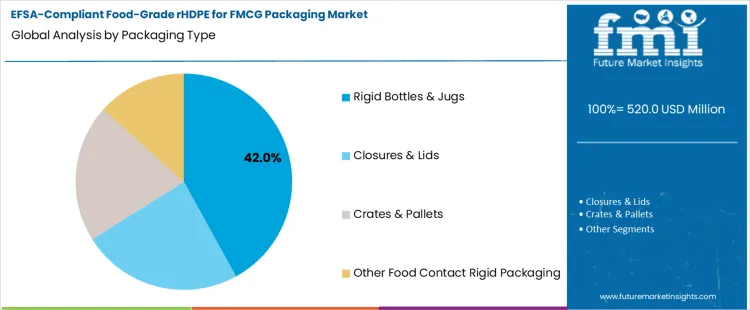
Rigid bottles & jugs are the leading packaging type in the EFSA-compliant food-grade rHDPE for FMCG packaging market, capturing 42% of the share. This demand is primarily driven by the widespread use of rigid plastic packaging in the food and beverage industry. Rigid bottles and jugs are essential for packaging products such as beverages, dairy, sauces, and oils, and their durability and ability to protect contents make them highly favored by manufacturers.
The growing emphasis on sustainability and reducing the environmental impact of single-use plastics has led to increased adoption of recycled materials in rigid packaging. EFSA-compliant food-grade rHDPE ensures that the recycled plastic meets stringent food safety standards, making it a viable alternative to virgin plastics. As the demand for eco-friendly packaging rises, particularly in food and beverage products, the use of rigid bottles & jugs made from recycled rHDPE will continue to grow, solidifying their dominance in the market. This shift is supported by both consumer preferences for sustainable products and regulatory initiatives promoting the use of recycled materials in food packaging.
What are the Key Dynamics in the EFSA Compliant Food Grade rHDPE for FMCG Packaging Market?
The EFSA‑compliant food‑grade rHDPE (recycled high‑density polyethylene) market serves fast‑moving consumer goods (FMCG) packaging segments that require materials meeting European Food Safety Authority standards for food contact. Compliance with safety criteria on contaminants, migration limits, and traceability is central to material acceptance. Brand owners and converters evaluate recycled resin quality, regulatory certification, and supply reliability. Consumer demand for sustainable packaging and legislative requirements for recycled content in food packaging influence market direction. Collection and sorting infrastructure, quality assurance systems, and recycling technology performance determine how post‑consumer HDPE is converted into verified food‑grade rHDPE.
What are the Main Drivers Supporting Growth in This Market?
Growth in the EFSA compliant food grade rHDPE market is driven by regulatory mandates and voluntary commitments to increase recycled content in FMCG packaging. European policies that set targets for recycled polymers in food contact applications encourage adoption of certified rHDPE grades. Consumer preference for sustainable packaging with reduced environmental footprint reinforces brand interest in recycled materials. Advances in recycling processes, including contaminant removal and quality control, help manufacturers achieve compliance with strict safety criteria. Expansion of collection and sorting programmes improves feedstock volume and consistency, supporting scale of food grade rHDPE supply. Lifecycle assessment and corporate sustainability reporting further elevate demand for certified recycled polymer inputs.
What Restraints Are Limiting Market Expansion?
Market expansion is limited by technical, economic, and regulatory barriers. Processing post consumer HDPE into food grade quality can require complex sorting, decontamination, and purification steps, which raise production costs relative to virgin resin. Variability in feedstock quality and presence of non HDPE materials challenge recyclers seeking consistent compliance with EFSA safety thresholds. Investment in advanced recycling technology and certification programmes can be capital intensive, particularly for smaller processors. Differences in regional regulatory approval processes and interpretation of food contact standards add complexity for suppliers targeting multiple markets. Some FMCG brands remain cautious about switching to recycled materials without long term performance validation in specific packaging formats.
What Emerging Trends Are Shaping the Future of This Market?
Emerging trends include increased integration of digital traceability systems that document material provenance, processing history, and compliance with safety standards. Hybrid recycling models that combine mechanical and advanced purification techniques are gaining attention to enhance quality and yield of food grade rHDPE. Collaboration among FMCG brands, recyclers, and certification bodies is expanding to standardise quality benchmarks and reduce time to market for compliant materials. Investment in deposit return and collection schemes is improving feedstock capture rates, which supports consistent supply of rHDPE suitable for EFSA approval. There is growing focus on circular design strategies that facilitate recovery of HDPE packaging at end of use and enable closed loop recycling in food contact applications.
What is the Country-Wise Analysis of the EFSA-Compliant Food-Grade rHDPE for FMCG Packaging Market?
The EFSA-compliant food-grade rHDPE for FMCG (Fast-Moving Consumer Goods) packaging market is growing as the demand for sustainable, food-safe packaging materials rises. rHDPE, a highly durable and recyclable plastic, is increasingly used in the packaging of food and beverages, especially in regions with strict regulatory requirements. EFSA (European Food Safety Authority) compliance ensures that these materials meet stringent safety standards for food contact. Developed markets such as Germany, the UK, and France are at the forefront of adopting EFSA-compliant food-grade rHDPE in FMCG packaging, driven by strong environmental regulations, consumer demand for sustainable products, and a focus on reducing plastic waste. Other European countries like Italy and Spain are also experiencing growth, fueled by government initiatives supporting recycling and sustainable packaging. As the global push for sustainability continues, the market for EFSA-compliant food-grade rHDPE for FMCG packaging is expected to grow substantially.
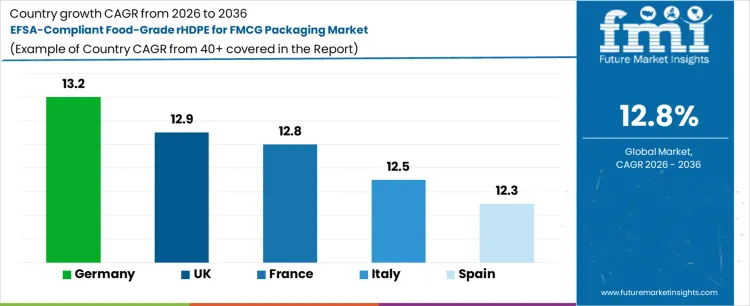
| Country | CAGR (2026-2036) |
|---|---|
| Germany | 13.2% |
| UK | 12.9% |
| France | 12.8% |
| Italy | 12.5% |
| Spain | 12.3% |
What is the Growth Outlook for the EFSA-Compliant Food-Grade rHDPE for FMCG Packaging Market in Germany?
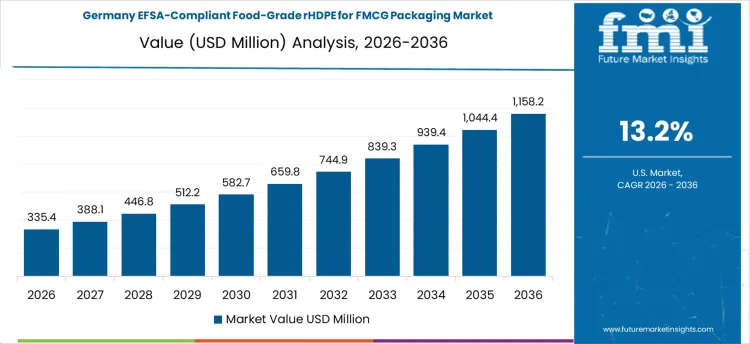
The EFSA-compliant food-grade rHDPE for FMCG packaging market in Germany is projected to grow steadily, with a projected CAGR of 13.2% from 2026 to 2036. Germany is a leader in sustainability and circular economy practices, and the demand for EFSA-compliant rHDPE is increasing as the food packaging industry seeks safer, more sustainable alternatives to traditional plastic materials. The German government’s support for green technologies and recycling initiatives, combined with consumer demand for eco-friendly products, is driving the growth of the market. As the food and beverage industry works to meet sustainability goals and reduce plastic waste, the market for EFSA-compliant food-grade rHDPE in FMCG packaging in Germany is expected to experience steady growth in the coming years.
What is the Market Outlook for the EFSA-Compliant Food-Grade rHDPE for FMCG Packaging Market in the UK?
The UK is expected to see steady growth in the EFSA-compliant food-grade rHDPE for FMCG packaging market, with a projected CAGR of 12.9% from 2026 to 2036. The UK has a strong commitment to sustainability, with stringent regulations on packaging materials and waste management. As the government continues to push for reduced plastic waste and more sustainable packaging solutions, the demand for EFSA-compliant food-grade rHDPE is increasing. The UK’s food and beverage sector is increasingly turning to recyclable, food-safe materials to meet both regulatory requirements and consumer expectations for greener packaging. With ongoing government incentives for sustainable materials and growing awareness among businesses and consumers about the environmental impact of packaging, the market for EFSA-compliant rHDPE in FMCG packaging is expected to grow steadily.
What is the Growth Forecast for the EFSA-Compliant Food-Grade rHDPE for FMCG Packaging Market in France?
France is projected to experience steady growth in the EFSA-compliant food-grade rHDPE for FMCG packaging market, with a projected CAGR of 12.8% from 2026 to 2036. France is increasingly focused on reducing plastic waste and improving the sustainability of its packaging materials. EFSA-compliant food-grade rHDPE is gaining traction in the French FMCG packaging market as manufacturers look for safer, eco-friendlier alternatives to traditional plastic. Government policies promoting recycling and sustainability, coupled with increasing consumer demand for environmentally friendly products, are driving the growth of this market in France. As the food and beverage industry works to meet sustainability goals, the adoption of EFSA-compliant rHDPE in FMCG packaging is expected to rise steadily.
What is the Market Outlook for the EFSA-Compliant Food-Grade rHDPE for FMCG Packaging Market in Italy?
Italy is expected to see steady growth in the EFSA-compliant food-grade rHDPE for FMCG packaging market, with a projected CAGR of 12.5% from 2026 to 2036. Italy has a strong focus on sustainability, and the demand for safe, eco-friendly packaging materials is rising in the FMCG sector. EFSA-compliant rHDPE offers a solution for the food packaging industry, providing a sustainable, recyclable alternative to traditional plastic materials. Italy’s government has introduced several policies aimed at reducing plastic waste and promoting the use of recycled materials in packaging, further driving the adoption of EFSA-compliant rHDPE. As Italy continues to invest in sustainable packaging technologies, the market for EFSA-compliant food-grade rHDPE in FMCG packaging is expected to grow steadily.
What is the Growth Forecast for the EFSA-Compliant Food-Grade rHDPE for FMCG Packaging Market in Spain?
Spain is projected to experience steady growth in the EFSA-compliant food-grade rHDPE for FMCG packaging market, with a projected CAGR of 12.3% from 2026 to 2036. Spain is increasingly focused on sustainability in the packaging industry, with growing awareness of the environmental impact of plastic waste. EFSA-compliant food-grade rHDPE is gaining traction in Spain’s FMCG packaging market as businesses seek safer, more sustainable packaging solutions that meet regulatory requirements. The Spanish government’s focus on circular economy practices and sustainable materials is further driving the demand for rHDPE in food packaging. As Spain continues to prioritize sustainability and reduce plastic waste, the market for EFSA-compliant rHDPE in FMCG packaging is expected to grow steadily.
What is the Competitive Landscape for the EFSA-Compliant Food-Grade rHDPE for FMCG Packaging Market?
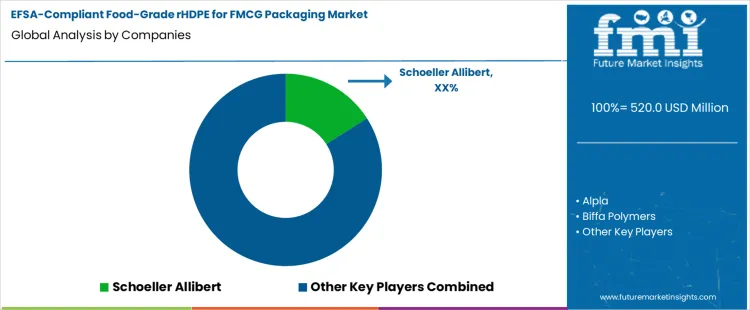
The EFSA-compliant food-grade rHDPE for FMCG packaging market is expanding as the demand for sustainable, safe, and regulatory-compliant packaging solutions increases. Schoeller Allibert leads the market with its innovative EFSA-compliant food-grade recycled high-density polyethylene (rHDPE) products, offering high-performance, eco-friendly solutions for FMCG packaging. Their commitment to sustainability, product safety, and meeting strict regulatory standards has positioned them as a dominant player in this sector.
Alpla, Biffa Polymers, and Morssinkhof Plastics are key competitors, each providing advanced rHDPE packaging solutions that comply with EFSA regulations. Alpla is known for its expertise in creating high-quality recycled plastics for packaging, while Biffa Polymers and Morssinkhof Plastics offer efficient, sustainable rHDPE solutions for food-grade applications.
Veolia, Indorama Ventures, and Plastipak Packaging further contribute to the competitive landscape by offering their own EFSA-compliant food-grade rHDPE packaging materials. Veolia focuses on advanced recycling solutions to produce high-quality rHDPE for the FMCG sector, while Indorama Ventures offers sustainable packaging solutions that meet regulatory standards. Plastipak Packaging specializes in providing food-grade recycled plastics and packaging solutions, with a focus on sustainability and compliance.
Suez / Recycling Units, Michelman, and Krones AG also play a key role in the market by offering innovative technologies and packaging solutions for the FMCG industry. Suez and Michelman emphasize sustainable recycling and functional coatings for rHDPE, while Krones AG provides complete packaging solutions for food-grade materials. These companies compete by focusing on innovation, regulatory compliance, sustainability, and the growing demand for eco-friendly packaging in the FMCG sector. As consumer demand for safer and more sustainable packaging solutions increases, the market for EFSA-compliant food-grade rHDPE for FMCG packaging is expected to grow, encouraging further competition and innovation in the sector.
Key Players of the EFSA-Compliant Food-Grade rHDPE for FMCG Packaging Market
- Schoeller Allibert
- Alpla
- Biffa Polymers
- Morssinkhof Plastics
- Veolia
- Indorama Ventures
- Plastipak Packaging
- Suez / Recycling Units
- Michelman
- Krones AG
Scope of the Report
| Items | Values |
|---|---|
| Quantitative Units (2026) | USD Million |
| Source Material | Post-Consumer Food Bottles & Jugs, Closed-Loop Crates & Containers, Post-Industrial Food HDPE Waste, Mixed PCR with Enhanced Sorting |
| Application Segment | Beverage Bottles & Containers, Closures & Caps, Food Jugs & Cartons, Crates, Trays & Bulk FMCG Pack, Speciality & Custom FMCG Forms |
| Packaging Type | Rigid Bottles & Jugs, Closures & Lids, Crates & Pallets, Other Food Contact Rigid Packaging |
| Companies | Schoeller Allibert, Alpla, Biffa Polymers, Morssinkhof Plastics, Veolia, Indorama Ventures, Plastipak Packaging, Suez / Recycling Units, Michelman, Krones AG |
| Regions Covered | North America, Latin America, Western Europe, Eastern Europe, South Asia & Pacific, East Asia, Middle East & Africa |
| Countries Covered | United States, Canada, Mexico, Brazil, Argentina, Germany, France, United Kingdom, Italy, Spain, Netherlands, China, India, Japan, South Korea, ANZ, GCC Countries, South Africa |
| Additional Attributes | Dollar sales by source material, application segment, packaging type, and region. Includes analysis of market trends in EFSA-compliant food-grade rHDPE for FMCG packaging, evaluation of compliance with EU food contact regulations, performance of recycled HDPE in rigid packaging, cost and supply chain considerations for enhanced PCR sorting and closed-loop systems, recycling infrastructure impact, competitive positioning and market share of key companies, innovations in sorting and purification technologies, and assessment of influence on packaging quality, safety compliance, sustainability outcomes, and adoption in FMCG supply chains. |
EFSA-Compliant Food-Grade rHDPE for FMCG Packaging Market Segmentation
Source Material:
- Post-Consumer Food Bottles & Jugs
- Closed-Loop Crates & Containers
- Post-Industrial Food HDPE Waste
- Mixed PCR with Enhanced Sorting
Application Segment:
- Beverage Bottles & Containers
- Closures & Caps
- Food Jugs & Cartons
- Crates, Trays & Bulk FMCG Pack
- Specialty & Custom FMCG Forms
Packaging Type:
- Rigid Bottles & Jugs
- Closures & Lids
- Crates & Pallets
- Other Food Contact Rigid Packaging
Region:
- Asia Pacific
- China
- Japan
- South Korea
- India
- Australia & New Zealand
- ASEAN
- Rest of Asia Pacific
- Europe
- Germany
- United Kingdom
- France
- Italy
- Spain
- Nordic
- BENELUX
- Rest of Europe
- North America
- United States
- Canada
- Mexico
- Latin America
- Brazil
- Chile
- Rest of Latin America
- Middle East & Africa
- Kingdom of Saudi Arabia
- Other GCC Countries
- Turkey
- South Africa
- Other African Union
- Rest of Middle East & Africa
Frequently Asked Questions
How big is the EFSA-compliant food-grade rHDPE for FMCG packaging market in 2026?
The global EFSA-compliant food-grade rHDPE for FMCG packaging market is estimated to be valued at USD 520.0 million in 2026.
What will be the size of EFSA-compliant food-grade rHDPE for FMCG packaging market in 2036?
The market size for the EFSA-compliant food-grade rHDPE for FMCG packaging market is projected to reach USD 1,734.2 million by 2036.
How much will be the EFSA-compliant food-grade rHDPE for FMCG packaging market growth between 2026 and 2036?
The EFSA-compliant food-grade rHDPE for FMCG packaging market is expected to grow at a 12.8% CAGR between 2026 and 2036.
What are the key source material types in the EFSA-compliant food-grade rHDPE for FMCG packaging market?
The key source material types in EFSA-compliant food-grade rHDPE for FMCG packaging market are post‑consumer food bottles & jugs, closed‑loop crates & containers, post‑industrial food HDPE waste, and mixed PCR with enhanced sorting.
Which application segment to contribute significant share in the EFSA-compliant food-grade rHDPE for FMCG packaging market in 2026?
In terms of application segment, beverage bottles & containers segment to command 38.0% share in the EFSA-compliant food-grade rHDPE for FMCG packaging market in 2026.
Preview the report firsthand - request a free sample
Get SampleGet the brochure for pricing and purchase details.
Get PDFTable of Content
- Executive Summary
- Global Market Outlook
- Demand-side Trends
- Supply-side Trends
- Technology Roadmap Analysis
- Analysis and Recommendations
- Market Overview
- Market Coverage / Taxonomy
- Market Definition / Scope / Limitations
- Market Background
- Market Dynamics
- Drivers
- Restraints
- Opportunity
- Trends
- Scenario Forecast
- Demand in Optimistic Scenario
- Demand in Likely Scenario
- Demand in Conservative Scenario
- Opportunity Map Analysis
- Product Life Cycle Analysis
- Supply Chain Analysis
- Investment Feasibility Matrix
- Value Chain Analysis
- PESTLE and Porter’s Analysis
- Regulatory Landscape
- Regional Parent Market Outlook
- Production and Consumption Statistics
- Import and Export Statistics
- Market Dynamics
- Global Market Analysis 2021 to 2025 and Forecast, 2026 to 2036
- Historical Market Size Value (USD Million) Analysis, 2021 to 2025
- Current and Future Market Size Value (USD Million) Projections, 2026 to 2036
- Y-o-Y Growth Trend Analysis
- Absolute $ Opportunity Analysis
- Global Market Pricing Analysis 2021 to 2025 and Forecast 2026 to 2036
- Global Market Analysis 2021 to 2025 and Forecast 2026 to 2036, By Source Material
- Introduction / Key Findings
- Historical Market Size Value (USD Million) Analysis By Source Material , 2021 to 2025
- Current and Future Market Size Value (USD Million) Analysis and Forecast By Source Material , 2026 to 2036
- Post‑Consumer Food Bottles & Jugs
- Closed‑Loop Crates & Containers
- Post‑Industrial Food HDPE Waste
- Mixed PCR with Enhanced Sorting
- Post‑Consumer Food Bottles & Jugs
- Y-o-Y Growth Trend Analysis By Source Material , 2021 to 2025
- Absolute $ Opportunity Analysis By Source Material , 2026 to 2036
- Global Market Analysis 2021 to 2025 and Forecast 2026 to 2036, By Application Segment
- Introduction / Key Findings
- Historical Market Size Value (USD Million) Analysis By Application Segment, 2021 to 2025
- Current and Future Market Size Value (USD Million) Analysis and Forecast By Application Segment, 2026 to 2036
- Beverage Bottles & Containers
- Closures & Caps
- Food Jugs & Cartons
- Crates, Trays & Bulk FMCG Pack
- Speciality & Custom FMCG Forms
- Beverage Bottles & Containers
- Y-o-Y Growth Trend Analysis By Application Segment, 2021 to 2025
- Absolute $ Opportunity Analysis By Application Segment, 2026 to 2036
- Global Market Analysis 2021 to 2025 and Forecast 2026 to 2036, By Packaging Type
- Introduction / Key Findings
- Historical Market Size Value (USD Million) Analysis By Packaging Type, 2021 to 2025
- Current and Future Market Size Value (USD Million) Analysis and Forecast By Packaging Type, 2026 to 2036
- Rigid Bottles & Jugs
- Closures & Lids
- Crates & Pallets
- Other Food Contact Rigid Packaging
- Rigid Bottles & Jugs
- Y-o-Y Growth Trend Analysis By Packaging Type, 2021 to 2025
- Absolute $ Opportunity Analysis By Packaging Type, 2026 to 2036
- Global Market Analysis 2021 to 2025 and Forecast 2026 to 2036, By Region
- Introduction
- Historical Market Size Value (USD Million) Analysis By Region, 2021 to 2025
- Current Market Size Value (USD Million) Analysis and Forecast By Region, 2026 to 2036
- North America
- Latin America
- Western Europe
- Eastern Europe
- East Asia
- South Asia and Pacific
- Middle East & Africa
- Market Attractiveness Analysis By Region
- North America Market Analysis 2021 to 2025 and Forecast 2026 to 2036, By Country
- Historical Market Size Value (USD Million) Trend Analysis By Market Taxonomy, 2021 to 2025
- Market Size Value (USD Million) Forecast By Market Taxonomy, 2026 to 2036
- By Country
- USA
- Canada
- Mexico
- By Source Material
- By Application Segment
- By Packaging Type
- By Country
- Market Attractiveness Analysis
- By Country
- By Source Material
- By Application Segment
- By Packaging Type
- Key Takeaways
- Latin America Market Analysis 2021 to 2025 and Forecast 2026 to 2036, By Country
- Historical Market Size Value (USD Million) Trend Analysis By Market Taxonomy, 2021 to 2025
- Market Size Value (USD Million) Forecast By Market Taxonomy, 2026 to 2036
- By Country
- Brazil
- Chile
- Rest of Latin America
- By Source Material
- By Application Segment
- By Packaging Type
- By Country
- Market Attractiveness Analysis
- By Country
- By Source Material
- By Application Segment
- By Packaging Type
- Key Takeaways
- Western Europe Market Analysis 2021 to 2025 and Forecast 2026 to 2036, By Country
- Historical Market Size Value (USD Million) Trend Analysis By Market Taxonomy, 2021 to 2025
- Market Size Value (USD Million) Forecast By Market Taxonomy, 2026 to 2036
- By Country
- Germany
- UK
- Italy
- Spain
- France
- Nordic
- BENELUX
- Rest of Western Europe
- By Source Material
- By Application Segment
- By Packaging Type
- By Country
- Market Attractiveness Analysis
- By Country
- By Source Material
- By Application Segment
- By Packaging Type
- Key Takeaways
- Eastern Europe Market Analysis 2021 to 2025 and Forecast 2026 to 2036, By Country
- Historical Market Size Value (USD Million) Trend Analysis By Market Taxonomy, 2021 to 2025
- Market Size Value (USD Million) Forecast By Market Taxonomy, 2026 to 2036
- By Country
- Russia
- Poland
- Hungary
- Balkan & Baltic
- Rest of Eastern Europe
- By Source Material
- By Application Segment
- By Packaging Type
- By Country
- Market Attractiveness Analysis
- By Country
- By Source Material
- By Application Segment
- By Packaging Type
- Key Takeaways
- East Asia Market Analysis 2021 to 2025 and Forecast 2026 to 2036, By Country
- Historical Market Size Value (USD Million) Trend Analysis By Market Taxonomy, 2021 to 2025
- Market Size Value (USD Million) Forecast By Market Taxonomy, 2026 to 2036
- By Country
- China
- Japan
- South Korea
- By Source Material
- By Application Segment
- By Packaging Type
- By Country
- Market Attractiveness Analysis
- By Country
- By Source Material
- By Application Segment
- By Packaging Type
- Key Takeaways
- South Asia and Pacific Market Analysis 2021 to 2025 and Forecast 2026 to 2036, By Country
- Historical Market Size Value (USD Million) Trend Analysis By Market Taxonomy, 2021 to 2025
- Market Size Value (USD Million) Forecast By Market Taxonomy, 2026 to 2036
- By Country
- India
- ASEAN
- Australia & New Zealand
- Rest of South Asia and Pacific
- By Source Material
- By Application Segment
- By Packaging Type
- By Country
- Market Attractiveness Analysis
- By Country
- By Source Material
- By Application Segment
- By Packaging Type
- Key Takeaways
- Middle East & Africa Market Analysis 2021 to 2025 and Forecast 2026 to 2036, By Country
- Historical Market Size Value (USD Million) Trend Analysis By Market Taxonomy, 2021 to 2025
- Market Size Value (USD Million) Forecast By Market Taxonomy, 2026 to 2036
- By Country
- Kingdom of Saudi Arabia
- Other GCC Countries
- Turkiye
- South Africa
- Other African Union
- Rest of Middle East & Africa
- By Source Material
- By Application Segment
- By Packaging Type
- By Country
- Market Attractiveness Analysis
- By Country
- By Source Material
- By Application Segment
- By Packaging Type
- Key Takeaways
- Key Countries Market Analysis
- USA
- Pricing Analysis
- Market Share Analysis, 2025
- By Source Material
- By Application Segment
- By Packaging Type
- Canada
- Pricing Analysis
- Market Share Analysis, 2025
- By Source Material
- By Application Segment
- By Packaging Type
- Mexico
- Pricing Analysis
- Market Share Analysis, 2025
- By Source Material
- By Application Segment
- By Packaging Type
- Brazil
- Pricing Analysis
- Market Share Analysis, 2025
- By Source Material
- By Application Segment
- By Packaging Type
- Chile
- Pricing Analysis
- Market Share Analysis, 2025
- By Source Material
- By Application Segment
- By Packaging Type
- Germany
- Pricing Analysis
- Market Share Analysis, 2025
- By Source Material
- By Application Segment
- By Packaging Type
- UK
- Pricing Analysis
- Market Share Analysis, 2025
- By Source Material
- By Application Segment
- By Packaging Type
- Italy
- Pricing Analysis
- Market Share Analysis, 2025
- By Source Material
- By Application Segment
- By Packaging Type
- Spain
- Pricing Analysis
- Market Share Analysis, 2025
- By Source Material
- By Application Segment
- By Packaging Type
- France
- Pricing Analysis
- Market Share Analysis, 2025
- By Source Material
- By Application Segment
- By Packaging Type
- India
- Pricing Analysis
- Market Share Analysis, 2025
- By Source Material
- By Application Segment
- By Packaging Type
- ASEAN
- Pricing Analysis
- Market Share Analysis, 2025
- By Source Material
- By Application Segment
- By Packaging Type
- Australia & New Zealand
- Pricing Analysis
- Market Share Analysis, 2025
- By Source Material
- By Application Segment
- By Packaging Type
- China
- Pricing Analysis
- Market Share Analysis, 2025
- By Source Material
- By Application Segment
- By Packaging Type
- Japan
- Pricing Analysis
- Market Share Analysis, 2025
- By Source Material
- By Application Segment
- By Packaging Type
- South Korea
- Pricing Analysis
- Market Share Analysis, 2025
- By Source Material
- By Application Segment
- By Packaging Type
- Russia
- Pricing Analysis
- Market Share Analysis, 2025
- By Source Material
- By Application Segment
- By Packaging Type
- Poland
- Pricing Analysis
- Market Share Analysis, 2025
- By Source Material
- By Application Segment
- By Packaging Type
- Hungary
- Pricing Analysis
- Market Share Analysis, 2025
- By Source Material
- By Application Segment
- By Packaging Type
- Kingdom of Saudi Arabia
- Pricing Analysis
- Market Share Analysis, 2025
- By Source Material
- By Application Segment
- By Packaging Type
- Turkiye
- Pricing Analysis
- Market Share Analysis, 2025
- By Source Material
- By Application Segment
- By Packaging Type
- South Africa
- Pricing Analysis
- Market Share Analysis, 2025
- By Source Material
- By Application Segment
- By Packaging Type
- USA
- Market Structure Analysis
- Competition Dashboard
- Competition Benchmarking
- Market Share Analysis of Top Players
- By Regional
- By Source Material
- By Application Segment
- By Packaging Type
- Competition Analysis
- Competition Deep Dive
- Schoeller Allibert
- Overview
- Product Portfolio
- Profitability by Market Segments (Product/Age /Sales Channel/Region)
- Sales Footprint
- Strategy Overview
- Marketing Strategy
- Product Strategy
- Channel Strategy
- Alpla
- Biffa Polymers
- Morssinkhof Plastics
- Veolia
- Indorama Ventures
- Plastipak Packaging
- Suez / Recycling Value (USD Million)s
- Michelman
- Krones AG
- Schoeller Allibert
- Competition Deep Dive
- Assumptions & Acronyms Used
- Research Methodology


