

- Industry Size (2026)
- USD 1315.0 Mn
- Forecast (2036)
- USD 3820.0 Mn
- CAGR (2026 to 2036)
- 10.8%
High-Barrier Metallized Paper Snack Packaging Market Size, Market Forecast and Outlook By FMI
In 2025, the High-Barrier Metallized Paper Snack Packaging market surpassed a valuation of USD 1,240.0 million and is projected to reach USD 1,315.0 million in 2026 and USD 3,820.0 million by 2036, reflecting a CAGR of 10.8% as compliance thresholds reset minimum capability and bring forward material upgrades. Brands reprioritize landfill diversion mandates, shifting specifications toward metallized paper substrates; conversion occurs during annual procurement windows.
Operations teams secure filling-line continuity while achieving required oxygen exclusion. The United States snack food industry reached USD 156 billion in total sales during 2025, creating massive volume requirements for compliant wrappers [1]. Upgrading legacy plastic wrappers to advanced fiber architecture reduces extended landfill exposure and secures premium retail shelf placement.
Summary of High-Barrier Metallized Paper Snack Packaging
- High-Barrier Metallized Paper Snack Packaging Market Definition:
- Engineered fiber-based substrates treated with metallic layers to block moisture and oxygen for dry consumable goods.
- Demand Drivers in the Market:
- Stringent landfill diversion regulations penalize non-recyclable multi-layer plastics.
- Retailers enforce extended shelf-life requirements to optimize inventory rotation.
- Savory food sector expansion multiplies sheer volume of required protective wrappers.
- Key Segments Analyzed in the FMI Report:
- Barrier Technology: Metallized coatings (45%) versus bio-coated layers and polymer-laminated paper.
- Snack Type: Chips & crisps (38% of total volume) versus extruded snacks, nuts & seeds, and baked snacks.
- Geography: High-growth North America and Asia-Pacific (United States 12.2%, China 11.4%, India 11.1%) versus regulation-driven Europe (Germany 11.7%, United Kingdom 10.8%).
- Analyst Opinion at FMI:
- Ismail Sutaria, Principal Consultant for Packaging at Future Market Insights, opines, “In our latest High-Barrier Metallized Paper Snack Packaging Market evaluation, my team and I have identified fiber-based premiumization as the next strategic shift. Brands are no longer viewing metallized paper purely as a sustainability substitute; they are leveraging its tactile appeal and matte aesthetics to elevate shelf differentiation. However, pinhole control, barrier uniformity, and humidity resistance remain engineering priorities. Companies that refine metallization precision while preserving printability and structural rigidity will command long-term snack category partnerships.”
- Strategic Implications/Executive Takeaways:
- Prioritize localized paperboard capacity to shield operations from volatile import disruptions.
- Partner with material science firms to accelerate commercialization of compostable formats.
- Standardize regional procurement to satisfy multinational brand sustainability commitments.
- Methodology:
- Validated through first-hand corporate production and capacity data.
- Zero reliance on speculative third-party market research reports.
- Based on verifiable industrial benchmarks and verified sources.
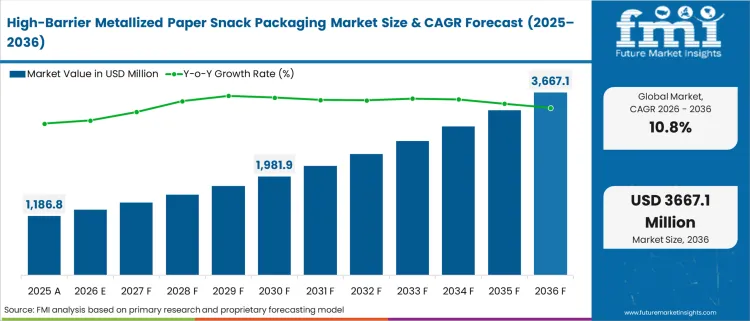
As noted by Hesam Tabatabaei, Chief Technology Officer at ProAmpac, "Supporting the growing Fiberization of Packaging ® movement, and as adoption of fiber-based structures accelerates, it is critical that ProAmpac continues to expand the functional performance envelope of paper-based materials." [2]
Across the United States, Germany, China, India, the United Kingdom, and Brazil, growth is accelerating in regions where waste diversion mandates closely match procurement planning cycles. Expansion remains concentrated in policy-driven corridors, where manufacturers achieve stronger conversion as alternatives to metalized flexible formats gain adoption. Purchasing decisions increasingly revolve around pre-approved substrates, giving preference to suppliers with validated barrier performance and consistent technical reliability.
High-Barrier Metallized Paper Snack Packaging Market Key Takeaways
| Metric | Details |
|---|---|
| Industry Size (2026) | USD 1,315.0 million |
| Industry Value (2036) | USD 3,820.0 million |
| CAGR (2026-2036) | 10.8% |
High-Barrier Metallized Paper Snack Packaging Definition
High-Barrier Metallized Paper Snack Packaging refers to engineered fiber-based substrates treated with vacuum-deposited metallic layers or advanced coatings to block moisture and oxygen. These materials are primarily used by converters to create flexible pouches and wrappers for dry consumable goods. The primary function is to extend product shelf life without relying on non-recyclable plastic laminates, providing an eco-friendly alternative for snack packaging solutions.
High-Barrier Metallized Paper Snack Packaging Inclusions
This includes rollstock coated with ultra-thin aluminum depositions for flow-wrapping machinery, pre-formed paper pouches with integrated polymeric oxygen barriers, and bio-coated structural laminates specifically designed for extruded puff preservation. It also covers metallized folding cartons intended for retail confectionery displays.
High-Barrier Metallized Paper Snack Packaging Exclusions
Exclusions are rigid metallic cans or aluminum tins used for bulk nut storage, standard uncoated kraft bags without moisture exclusion properties, liquid beverage cartons containing liquid-grade aluminum foil inserts, and non-food industrial packaging that uses similar metallization techniques.
High-Barrier Metallized Paper Snack Packaging Market Research Methodology
- Primary Research: Direct interviews conducted with packaging engineers, paper mill operators, and extrusion technology specialists to verify converting capacities.
- Desk Research: Financial filings from publicly traded packaging conglomerates and official trade association production reports cross-referenced for historical benchmarking.
- Market-Sizing and Forecasting: Bottom-up formulation mapping snack volume output against average material density requirements to calculate global substrate demand.
- Data Validation and Update Cycle: Quarterly variance checks comparing anticipated raw material shipments against realized corporate revenue statements.
Segmental Analysis
High-Barrier Metallized Paper Snack Packaging Market Analysis by Barrier Technology
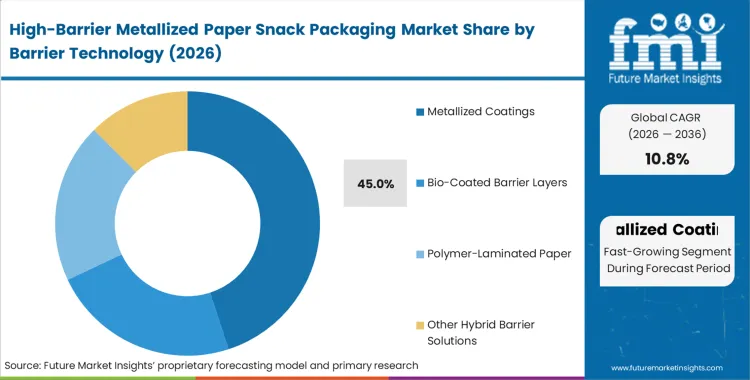
Producers continue to prioritize vacuum-deposited layers to achieve strong oxygen resistance while maintaining compatibility with recycling streams. Extrusion-based coating techniques deliver durable, high-performance substrates designed for demanding applications. Buyers increasingly adopt specialized coated structures to extend product freshness and integrate flexible formats that help them avoid regulatory penalties, positioning metallized coatings to command 45% of total volume in 2026.
- Procurement shift: Brands transition away from conventional aluminum foils to preserve package recyclability while matching historical protection metrics, supported by the United States flexible packaging industry generating USD 151.4 billion in economic output [3].
- Technology upgrade: Next-generation vacuum deposition minimizes metal usage, generating lighter wrappers with superior folding endurance as the packaging papers segment hits 80.7% operating rates [4].
- Performance mandate: Operations managers demand flawless barrier integrity to prevent premature crisp staleness during extended transit, pushing converters toward highly engineered structures to avoid product spoilage.
High-Barrier Metallized Paper Snack Packaging Market Analysis by Snack Type
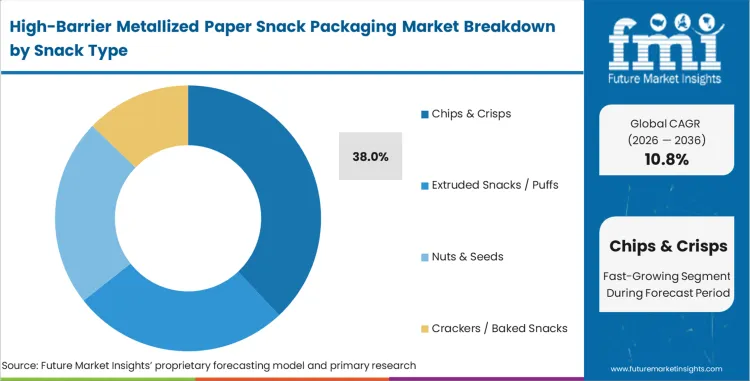
Chips & Crisps command 38% of the market in 2026. As per FMI's projection, robust savory sector growth forces suppliers to develop aggressive moisture defense mechanisms. Potato goods require absolute protection against rancidity. Processors integrate advanced films to capture eco-conscious shoppers. Increased output directly multiplies the requirement for high-performance snack food packaging solutions.
- Category expansion: Savory manufacturers scale production capacity to meet rising global consumption, directly multiplying the requirement for repulpable wrappers as 67% of consumers prefer paper packaging for its composability [5].
- Format transition: Single-serve packet volumes expand rapidly, driving exponential consumption of food packaging substrates following the recovery of 46 million tons of recycled paper [6].
- Shelf-life requirement: Merchants enforce strict guarantees, compelling producers to source supreme barrier materials providing vital lipid oxidation defense to maintain long-term inventory rotation schedules.
High-Barrier Metallized Paper Snack Packaging Market Drivers, Restraints, and Opportunities
Regulatory mandates forcing landfill diversion transform material procurement strategies globally. According to FMI's estimates, government policies dictate increased post-consumer recycled content and strict biodegradability standards. Corporations respond by replacing problematic plastics with sophisticated metallized fiber solutions. Such material transitions align corporate sustainability metrics with legislative frameworks, supporting broad transitions to sustainable alternatives.
Cost volatility regarding specialized barrier papers restricts rapid adoption among smaller snack producers. FMI analysts opine that operational friction slows immediate transition from cheap legacy plastics. Upgrading extrusion equipment to handle delicate fiber webs demands heavy financial investment. Manufacturers mitigate hurdles via phased rollouts and strategic converting partnerships.
- Capacity Expansion: Paperboard producers invest heavily in proprietary coating infrastructure to capture higher margins. Internalizing critical metallization processes shields companies from external supply chain shocks.
- Innovation Acceleration: Corporate accelerators provide crucial funding to scale promising barrier paper technologies rapidly. Early-stage investments unlock access to premium retail segments demanding zero-waste lifecycles.
- Compostable Formats: Material science firms engineer bespoke barrier solutions that align perfectly with existing high-speed filling equipment. Biodegradable configurations allow food processors to bypass incoming municipal waste taxes.
Regional Analysis
Based on the regional analysis, the High-Barrier Metallized Paper Snack Packaging market is segmented into North America, Latin America, Europe, East Asia, South Asia, Oceania and Middle East & Africa across 40+ countries. The full report also offers market attractiveness analysis based on regional trends.
.webp "Top Country Growth Comparison High Barrier Metallized Paper Snack Packaging Market Cagr (2026 2036)")
| Country | CAGR (2026 to 2036) |
|---|---|
| United States | 12.2% |
| Germany | 11.7% |
| China | 11.4% |
| India | 11.1% |
| United Kingdom | 10.8% |
| Brazil | 10.5% |
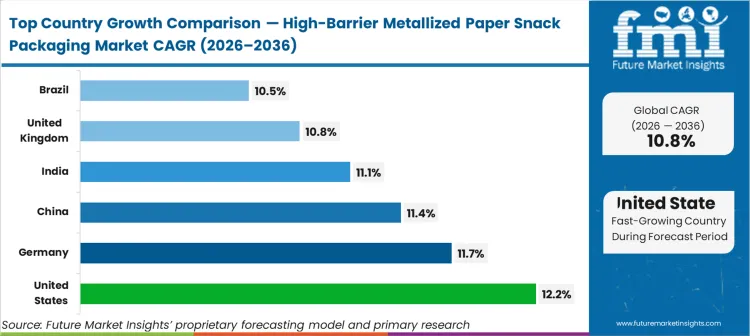
Source: Future Market Insights (FMI) analysis, based on proprietary forecasting model and primary research
North America High-Barrier Metallized Paper Snack Packaging Market Analysis

North America landscape experiences profound transformation fueled by consumer sentiment and state-level legislation. Environmental consciousness shapes corporate procurement decisions across retail sectors, accelerating the integration of barrier coatings for packaging. Processors scale operations to service massive domestic food conglomerates. Brands demand drop-in replacements to avoid interrupting high-speed filling lines, aligning with broad consumer preferences for sustainable materials.
- United States: Demand for High-Barrier Metallized Paper Snack Packaging in United States is set to grow at 12.2% CAGR through 2036, supported by shifting consumer preferences before procurement cycles translate into higher deployment volumes. Packaging processors localize supply networks to shield against volatile import disruptions, securing a 61% weight reduction via recyclable high-barrier paper collaborations [7].
FMI’s report includes detailed geographical coverage across North America. Canada and Mexico present notable expansion opportunities. Processors should monitor evolving cross-border trade agreements impacting raw paperboard exports and flexible packaging paper adoption.
Europe High-Barrier Metallized Paper Snack Packaging Market Analysis
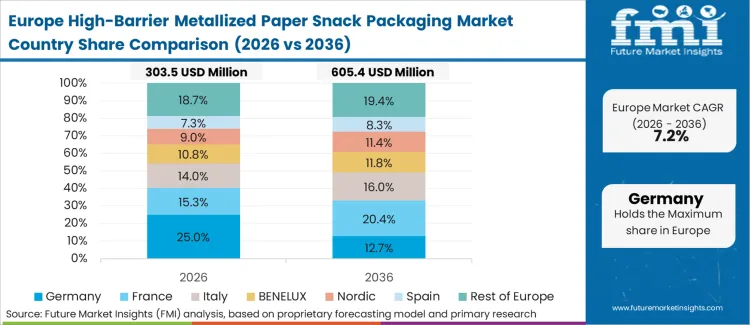
Europe leads global sustainability initiatives through aggressive circular economy directives. Strict extended producer responsibility guidelines penalize brands utilizing unrecyclable multi-layer plastics. Converters deploy immense capital toward novel barrier research. Investments yield sophisticated mono-material structures capable of replacing aluminum laminates, supported by rising consumer demands for eco-friendly wrappers.
- Germany: High-Barrier Metallized Paper Snack Packaging sales in Germany are projected to rise at 11.7% CAGR from 2026 to 2036 as aggressive recycling targets tighten, creating a clearer pathway from policy intent to purchase orders. Government regulations enforce strict landfill diversion metrics, supported by Mondi ramping up FunctionalBarrier Paper Ultimate production to meet growing eco-conscious demand [8].
- United Kingdom: In the United Kingdom, high-barrier metallized paper snack packaging is gaining traction as fiscal measures on virgin plastics push manufacturers to adopt alternative barrier solutions. Brands are accelerating technology upgrades to improve material efficiency and regulatory alignment, with several snack producers transitioning to metallized paper formats to avoid penalty exposure, supporting growth at a 10.8% CAGR from 2026 to 2036.
FMI’s report includes extensive market evaluation across European territories. France, Italy, and Spain show remarkable adoption momentum. Stakeholders must track incoming regional directives governing safety for recycled fibers.
Asia Pacific High-Barrier Metallized Paper Snack Packaging Market Analysis
Asia Pacific represents immense volume potential owing to massive population density and rising disposable incomes. Urbanization drives explosive consumption of convenient packaged foods. Converting infrastructure matures rapidly to support domestic retail expansion. Regional processors seek economical yet reliable moisture barriers to protect merchandise across diverse climate zones, driving the adoption of metalized barrier films.
- China: In China, demand for high-barrier metallized paper snack packaging is strengthening as rising middle-class purchasing power fuels higher consumption of packaged foods. The rapid expansion of domestic retail networks is increasing the need for durable, performance-driven substrates, contributing to a projected USD 53.3 billion increase in regional flexible food packaging, supporting growth at an 11.4% CAGR from 2026 to 2036.
- India: In India, High-Barrier Metallized Paper Snack Packaging market is forecast to grow at 11.1% CAGR through 2036, with growth drive in massive population demographics that convert into measurable budget allocation. Rapid retail formalization pushes brands to ditch unbranded plastics, prompting the global launch of advanced home-compostable metallized films tailored for local confectionery needs [9].
FMI’s report includes granular analysis of Asia Pacific dynamics. Japan, South Korea, and Indonesia offer substantial commercial prospects. Paperboard suppliers should evaluate local waste collection infrastructure to optimize repulpable product designs.
Latin America High-Barrier Metallized Paper Snack Packaging Market Analysis
Latin America sector modernizes progressively as international retail chains standardize regional procurement. Multinational brands export corporate sustainability commitments into developing economies. Changing consumption habits accelerate demand for resilient protective wrappers, expanding the integration of converted flexible packaging. Leading converters evaluate local paper mill acquisitions to secure vital fiber streams.
- Brazil: High-Barrier Metallized Paper Snack Packaging uptake in Brazil is anticipated to climb at 10.5% CAGR over the forecast period as urban retail modernizes, helping suppliers align positioning with local buying triggers. Increased packaged food consumption drives continuous need for reliable substrates, prompting a massive PM2 machine rebuild doubling capacity for sustainable high-quality paperboard [10].
FMI’s report includes comprehensive assessment of Latin America markets. Mexico, Argentina, and Chile highlight promising growth trajectories. Market participants must monitor regional inflationary pressures affecting raw material procurement.
Competitive Aligners for Market Players
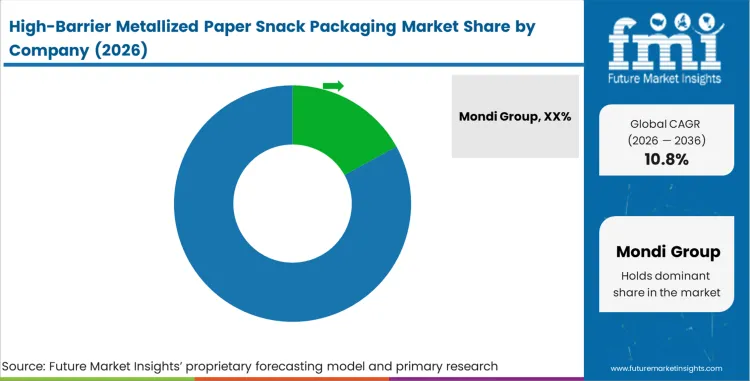
As per FMI's projection, primary packaging converters acquire niche technology firms to accelerate barrier research. Broadening product lines allows manufacturers to act as sole-source suppliers for massive food conglomerates, adapting to shifts toward high recyclability mono material flexible packaging. Expanding domestic footprints limits exposure to volatile international freight rates.
Vertical integration secures raw material continuity during volatile macroeconomic cycles. Paperboard producers invest heavily in proprietary coating infrastructure to capture higher margins. Internalizing critical metallization processes shields companies from external supply chain shocks, ensuring steady delivery of food packaging films to retail partners.
Collaborative innovation accelerates commercialization of complex compostable formats. Material science firms partner directly with global brands to engineer bespoke barrier solutions. Joint development agreements ensure novel architectures align perfectly with existing high-speed filling equipment, ensuring the uninterrupted supply of on the go snack disposable packaging.
Recent Developments:
The report includes full coverage of key trends from competitive benchmarking. Some of the recent developments covered in the reports:
- In July 2025, Lecta expanded its commercial operations by introducing the Metalvac Seal Oxygen Barrier grades tailored for specialized food applications. [11]
- In January 2025, Tetra Pak directed a EUR 60 million pilot plant investment toward paper-based barrier technology replacing conventional aluminum foil structures. [12]
Key Players in High-Barrier Metallized Paper Snack Packaging Market
- Mondi Group
- Amcor plc
- Koehler Paper
- Huhtamäki Oyj
- Uflex Limited
- Constantia Flexibles
Scope of the Report
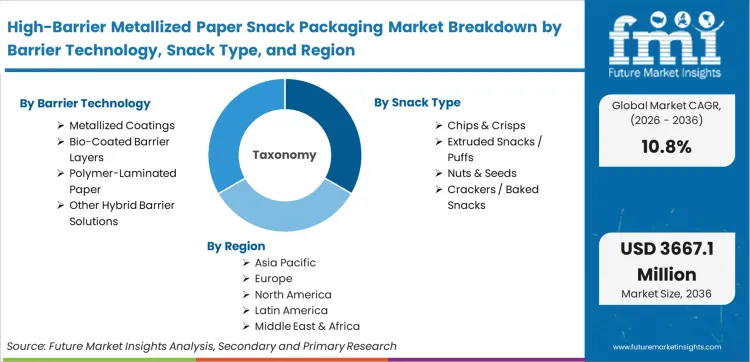
| Metric | Value |
|---|---|
| Quantitative Units | USD 1,315.0 million (2026) to USD 3,820.0 million (2036), at a CAGR of 10.8% |
| Market Definition | High-Barrier Metallized Paper Snack Packaging encompasses engineered fibre-based substrates treated with metallic layers to block moisture and oxygen. |
| Barrier Technology Segmentation | Metallized Coatings, Bio-Coated Barrier Layers, Polymer-Laminated Paper, Other Hybrid Barrier Solutions |
| Snack Type Segmentation | Chips & Crisps, Extruded Snacks / Puffs, Nuts & Seeds, Crackers / Baked Snacks, Other Dry Snacks |
| Regions Covered | North America, Latin America, Europe, East Asia, South Asia, Oceania, Middle East and Africa |
| Countries Covered | United States, Germany, China, India, United Kingdom, Brazil and 40 plus countries |
| Key Companies Profiled | Mondi Group, Amcor plc, Koehler Paper, Huhtamäki Oyj, Uflex Limited, Constantia Flexibles |
| Forecast Period | 2026 to 2036 |
| Approach | Hybrid top-down and bottom-up market modeling, validated through primary interviews with packaging converters and material suppliers, supported by trade data benchmarking and production capacity analysis for sustainable packaging solutions |
High-Barrier Metallized Paper Snack Packaging Market Analysis by Segments
Barrier Technology:
- Metallized Coatings
- Bio-Coated Barrier Layers
- Polymer-Laminated Paper
- Other Hybrid Barrier Solutions
Snack Type:
- Chips & Crisps
- Extruded Snacks / Puffs
- Nuts & Seeds
- Crackers / Baked Snacks
- Other Dry Snacks
Region:
- Asia Pacific
- India
- China
- Japan
- South Korea
- Indonesia
- Australia & New Zealand
- ASEAN
- Rest of Asia Pacific
- Europe
- Germany
- Italy
- France
- United Kingdom
- Spain
- Benelux
- Nordics
- Central & Eastern Europe
- Rest of Europe
- North America
- United States
- Canada
- Mexico
- Latin America
- Brazil
- Argentina
- Chile
- Rest of Latin America
- Middle East & Africa
- Kingdom of Saudi Arabia
- United Arab Emirates
- South Africa
- Turkey
- Rest of Middle East & Africa
Bibliography
- [1] SNAC International. (2025). State of the Industry Report.
- [2] ProAmpac. (2025). High-Barrier Innovation Platform.
- [3] Flexible Packaging Association. (2025). Economic Output Report.
- [4] AF&PA. (2026). January 2026 Packaging Papers Monthly Report.
- [5] Two Sides North America. (2025). Trend Tracker Reveals Consumer Preferences.
- [6] AF&PA. (2025). 2024 U.S. Paper Recycling Rates.
- [7] Amcor. (2025). Partnership with Alter Eco.
- [8] Mondi Group. (2025). FunctionalBarrier Paper Ultimate Ramp-up.
- [9] TIPA. (2025). Global Launch of Compostable Metallized Film.
- [10] Sappi. (2025). PM2 Rebuild for Paperboard.
- [11] Lecta. (2025). Metalvac Seal Oxygen Barrier Launch.
- [12] Tetra Pak. (2025). Pilot Plant Investment.
This bibliography is provided for reader reference and is not exhaustive. The full report contains the complete reference list and detailed citations.
This Report Addresses
- Market intelligence to enable structured strategic decision making across mature and emerging packaging economies
- Market size estimation and 10 year revenue forecasts from 2026 to 2036, supported by validated capacity and trade benchmarks
- Growth opportunity mapping across Metallized Coatings, Bio-Coated Barrier Layers, and Polymer-Laminated structures with emphasis on repulpable transition grades
- Segment and regional revenue forecasts covering Chips & Crisps, Extruded Snacks, Nuts & Seeds, Crackers, and Other Dry Snacks
- Competition strategy assessment including integration models, cost survivability positioning, and compliance capability benchmarking
- Product reformulation and emission compliance tracking including recycling and biodegradability aligned grades
- Regulatory impact analysis covering landfill diversion mandates, extended producer responsibility, and export driven specification upgrades
- Market report delivery in PDF, Excel, PPT, and interactive dashboard formats for executive and operational use
Frequently Asked Questions
How large is the demand for High-Barrier Metallized Paper Snack Packaging in the global market in 2026?
Demand for High-Barrier Metallized Paper Snack Packaging in the global market is estimated to be valued at USD 1,315.0 million in 2026.
What will be the market size of High-Barrier Metallized Paper Snack Packaging in the global market by 2036?
Market size for High-Barrier Metallized Paper Snack Packaging is projected to reach USD 3,820.0 million by 2036.
What is the expected demand growth for High-Barrier Metallized Paper Snack Packaging in the global market between 2026 and 2036?
Demand for High-Barrier Metallized Paper Snack Packaging in the global market is expected to grow at a CAGR of 10.8% between 2026 and 2036.
Which Barrier Technology is poised to lead global sales by 2026?
Metallized Coatings segment is expected to lead global sales by capturing 45% share in 2026 due to superior oxygen exclusion without compromising repulpability.
How significant is the role of Chips & Crisps in driving High-Barrier Metallized Paper Snack Packaging adoption in 2026?
Chips & Crisps represent a critical segment, projected to hold a substantial 38% share in 2026 as savory manufacturers demand aggressive moisture defense mechanisms.
What is driving demand in United States?
Shifting consumer preferences and immense retail volume requirements for compliant single-serve wrappers drive demand.
What compliance standards or regulations are referenced for United States?
Rigorous environmental mandates governing municipal paper recovery and landfill diversion are referenced as key compliance benchmarks.
What is the United States growth outlook in this report?
United States is projected to grow at a CAGR of 12.2% during 2026 to 2036.
Why is Europe described as a priority region in this report?
Growth is prompted by aggressive circular economy directives and strict extended producer responsibility guidelines penalizing unrecyclable plastics.
What type of demand dominates in Europe?
Regulatory-driven replacement demand for sophisticated mono-material structures dominates regional consumption.
What is Germany growth outlook in this report?
Germany is projected to expand at a CAGR of 11.7% during 2026 to 2036.
Does the report cover China in its regional analysis?
China is included within East Asia under the regional scope of analysis.
What are the sources referred to for analyzing China?
Official sustainable packaging statistics and expanding domestic retail network assessments are cited as primary reference sources.
What is the main demand theme linked to China in its region coverage?
Middle-class purchasing power swells tighten the link between operational constraints and adoption-led investment.
Does the report cover India in its regional analysis?
India is included within South Asia under the regional coverage framework.
What is the main India related demand theme in its region coverage?
Rapid retail formalization pushes brands to replace unbranded plastics with high-quality printed paper barriers.
Which product formats or configurations are strategically important for North America supply chains?
Curbside-recyclable fiber innovations designed as drop-in replacements for existing high-speed filling lines are prioritized.
What is High-Barrier Metallized Paper Snack Packaging and what is it mainly used for?
High-Barrier Metallized Paper Snack Packaging encompasses engineered fibre-based substrates treated with metallic layers to block moisture and oxygen, primarily used for extending product shelf life.
What does High-Barrier Metallized Paper Snack Packaging mean in this report?
High-Barrier Metallized Paper Snack Packaging market refers to global production, trade, and consumption of metallized fiber substrates across snack retail channels.
What is included in the scope of this High-Barrier Metallized Paper Snack Packaging report?
Scope covers metallized rollstock, bio-coated structural laminates, pre-formed pouches, and retail confectionery cartons.
What is excluded from the scope of this report?
Rigid metallic cans, standard uncoated kraft bags, liquid beverage cartons, and non-food industrial packaging are excluded.
What does market forecast mean on this page?
Market forecast represents a model based projection built on defined assumptions for strategic planning purposes.
How does FMI build and validate the High-Barrier Metallized Paper Snack Packaging forecast?
Forecast is developed using hybrid top down and bottom up modeling validated through trade data, capacity checks, and industry review.
What does zero reliance on speculative third party market research mean here?
Primary interviews and verifiable public datasets are used instead of unverified syndicated market estimates.
Preview the report firsthand - request a free sample
Get SampleGet the brochure for pricing and purchase details.
Get PDFTable of Content
- Executive Summary
- Global Market Outlook
- Demand-side Trends
- Supply-side Trends
- Technology Roadmap Analysis
- Analysis and Recommendations
- Market Overview
- Market Coverage / Taxonomy
- Market Definition / Scope / Limitations
- Research Methodology
- Chapter Orientation
- Analytical Lens and Working Hypotheses
- Market Structure, Signals, and Trend Drivers
- Benchmarking and Cross-market Comparability
- Market Sizing, Forecasting, and Opportunity Mapping
- Research Design and Evidence Framework
- Desk Research Programme (Secondary Evidence)
- Company Annual and Sustainability Reports
- Peer-reviewed Journals and Academic Literature
- Corporate Websites, Product Literature, and Technical Notes
- Earnings Decks and Investor Briefings
- Statutory Filings and Regulatory Disclosures
- Technical White Papers and Standards Notes
- Trade Journals, Industry Magazines, and Analyst Briefs
- Conference Proceedings, Webinars, and Seminar Materials
- Government Statistics Portals and Public Data Releases
- Press Releases and Reputable Media Coverage
- Specialist Newsletters and Curated Briefings
- Sector Databases and Reference Repositories
- FMI Internal Proprietary Databases and Historical Market Datasets
- Subscription Datasets and Paid Sources
- Social Channels, Communities, and Digital Listening Inputs
- Additional Desk Sources
- Expert Input and Fieldwork (Primary Evidence)
- Primary Modes
- Qualitative Interviews and Expert Elicitation
- Quantitative Surveys and Structured Data Capture
- Blended Approach
- Why Primary Evidence is Used
- Field Techniques
- Interviews
- Surveys
- Focus Groups
- Observational and In-context Research
- Social and Community Interactions
- Stakeholder Universe Engaged
- C-suite Leaders
- Board Members
- Presidents and Vice Presidents
- R&D and Innovation Heads
- Technical Specialists
- Domain Subject-matter Experts
- Scientists
- Physicians and Other Healthcare Professionals
- Governance, Ethics, and Data Stewardship
- Research Ethics
- Data Integrity and Handling
- Primary Modes
- Tooling, Models, and Reference Databases
- Desk Research Programme (Secondary Evidence)
- Data Engineering and Model Build
- Data Acquisition and Ingestion
- Cleaning, Normalisation, and Verification
- Synthesis, Triangulation, and Analysis
- Quality Assurance and Audit Trail
- Market Background
- Market Dynamics
- Drivers
- Restraints
- Opportunity
- Trends
- Scenario Forecast
- Demand in Optimistic Scenario
- Demand in Likely Scenario
- Demand in Conservative Scenario
- Opportunity Map Analysis
- Product Life Cycle Analysis
- Supply Chain Analysis
- Investment Feasibility Matrix
- Value Chain Analysis
- PESTLE and Porter’s Analysis
- Regulatory Landscape
- Regional Parent Market Outlook
- Production and Consumption Statistics
- Import and Export Statistics
- Market Dynamics
- Global Market Analysis 2021 to 2025 and Forecast, 2026 to 2036
- Historical Market Size Value (USD Million) Analysis, 2021 to 2025
- Current and Future Market Size Value (USD Million) Projections, 2026 to 2036
- Y-o-Y Growth Trend Analysis
- Absolute $ Opportunity Analysis
- Global Market Pricing Analysis 2021 to 2025 and Forecast 2026 to 2036
- Global Market Analysis 2021 to 2025 and Forecast 2026 to 2036, By Barrier Technology
- Introduction / Key Findings
- Historical Market Size Value (USD Million) Analysis By Barrier Technology , 2021 to 2025
- Current and Future Market Size Value (USD Million) Analysis and Forecast By Barrier Technology , 2026 to 2036
- Metallized Coatings
- Bio-Coated Barrier Layers
- Polymer-Laminated Paper
- Other Hybrid Barrier Solutions
- Metallized Coatings
- Y-o-Y Growth Trend Analysis By Barrier Technology , 2021 to 2025
- Absolute $ Opportunity Analysis By Barrier Technology , 2026 to 2036
- Global Market Analysis 2021 to 2025 and Forecast 2026 to 2036, By Snack Type
- Introduction / Key Findings
- Historical Market Size Value (USD Million) Analysis By Snack Type, 2021 to 2025
- Current and Future Market Size Value (USD Million) Analysis and Forecast By Snack Type, 2026 to 2036
- Chips & Crisps
- Extruded Snacks / Puffs
- Nuts & Seeds
- Crackers / Baked Snacks
- Chips & Crisps
- Y-o-Y Growth Trend Analysis By Snack Type, 2021 to 2025
- Absolute $ Opportunity Analysis By Snack Type, 2026 to 2036
- Global Market Analysis 2021 to 2025 and Forecast 2026 to 2036, By Region
- Introduction
- Historical Market Size Value (USD Million) Analysis By Region, 2021 to 2025
- Current Market Size Value (USD Million) Analysis and Forecast By Region, 2026 to 2036
- North America
- Latin America
- Western Europe
- Eastern Europe
- East Asia
- South Asia and Pacific
- Middle East & Africa
- Market Attractiveness Analysis By Region
- North America Market Analysis 2021 to 2025 and Forecast 2026 to 2036, By Country
- Historical Market Size Value (USD Million) Trend Analysis By Market Taxonomy, 2021 to 2025
- Market Size Value (USD Million) Forecast By Market Taxonomy, 2026 to 2036
- By Country
- USA
- Canada
- Mexico
- By Barrier Technology
- By Snack Type
- By Country
- Market Attractiveness Analysis
- By Country
- By Barrier Technology
- By Snack Type
- Key Takeaways
- Latin America Market Analysis 2021 to 2025 and Forecast 2026 to 2036, By Country
- Historical Market Size Value (USD Million) Trend Analysis By Market Taxonomy, 2021 to 2025
- Market Size Value (USD Million) Forecast By Market Taxonomy, 2026 to 2036
- By Country
- Brazil
- Chile
- Rest of Latin America
- By Barrier Technology
- By Snack Type
- By Country
- Market Attractiveness Analysis
- By Country
- By Barrier Technology
- By Snack Type
- Key Takeaways
- Western Europe Market Analysis 2021 to 2025 and Forecast 2026 to 2036, By Country
- Historical Market Size Value (USD Million) Trend Analysis By Market Taxonomy, 2021 to 2025
- Market Size Value (USD Million) Forecast By Market Taxonomy, 2026 to 2036
- By Country
- Germany
- UK
- Italy
- Spain
- France
- Nordic
- BENELUX
- Rest of Western Europe
- By Barrier Technology
- By Snack Type
- By Country
- Market Attractiveness Analysis
- By Country
- By Barrier Technology
- By Snack Type
- Key Takeaways
- Eastern Europe Market Analysis 2021 to 2025 and Forecast 2026 to 2036, By Country
- Historical Market Size Value (USD Million) Trend Analysis By Market Taxonomy, 2021 to 2025
- Market Size Value (USD Million) Forecast By Market Taxonomy, 2026 to 2036
- By Country
- Russia
- Poland
- Hungary
- Balkan & Baltic
- Rest of Eastern Europe
- By Barrier Technology
- By Snack Type
- By Country
- Market Attractiveness Analysis
- By Country
- By Barrier Technology
- By Snack Type
- Key Takeaways
- East Asia Market Analysis 2021 to 2025 and Forecast 2026 to 2036, By Country
- Historical Market Size Value (USD Million) Trend Analysis By Market Taxonomy, 2021 to 2025
- Market Size Value (USD Million) Forecast By Market Taxonomy, 2026 to 2036
- By Country
- China
- Japan
- South Korea
- By Barrier Technology
- By Snack Type
- By Country
- Market Attractiveness Analysis
- By Country
- By Barrier Technology
- By Snack Type
- Key Takeaways
- South Asia and Pacific Market Analysis 2021 to 2025 and Forecast 2026 to 2036, By Country
- Historical Market Size Value (USD Million) Trend Analysis By Market Taxonomy, 2021 to 2025
- Market Size Value (USD Million) Forecast By Market Taxonomy, 2026 to 2036
- By Country
- India
- ASEAN
- Australia & New Zealand
- Rest of South Asia and Pacific
- By Barrier Technology
- By Snack Type
- By Country
- Market Attractiveness Analysis
- By Country
- By Barrier Technology
- By Snack Type
- Key Takeaways
- Middle East & Africa Market Analysis 2021 to 2025 and Forecast 2026 to 2036, By Country
- Historical Market Size Value (USD Million) Trend Analysis By Market Taxonomy, 2021 to 2025
- Market Size Value (USD Million) Forecast By Market Taxonomy, 2026 to 2036
- By Country
- Kingdom of Saudi Arabia
- Other GCC Countries
- Turkiye
- South Africa
- Other African Union
- Rest of Middle East & Africa
- By Barrier Technology
- By Snack Type
- By Country
- Market Attractiveness Analysis
- By Country
- By Barrier Technology
- By Snack Type
- Key Takeaways
- Key Countries Market Analysis
- USA
- Pricing Analysis
- Market Share Analysis, 2025
- By Barrier Technology
- By Snack Type
- Canada
- Pricing Analysis
- Market Share Analysis, 2025
- By Barrier Technology
- By Snack Type
- Mexico
- Pricing Analysis
- Market Share Analysis, 2025
- By Barrier Technology
- By Snack Type
- Brazil
- Pricing Analysis
- Market Share Analysis, 2025
- By Barrier Technology
- By Snack Type
- Chile
- Pricing Analysis
- Market Share Analysis, 2025
- By Barrier Technology
- By Snack Type
- Germany
- Pricing Analysis
- Market Share Analysis, 2025
- By Barrier Technology
- By Snack Type
- UK
- Pricing Analysis
- Market Share Analysis, 2025
- By Barrier Technology
- By Snack Type
- Italy
- Pricing Analysis
- Market Share Analysis, 2025
- By Barrier Technology
- By Snack Type
- Spain
- Pricing Analysis
- Market Share Analysis, 2025
- By Barrier Technology
- By Snack Type
- France
- Pricing Analysis
- Market Share Analysis, 2025
- By Barrier Technology
- By Snack Type
- India
- Pricing Analysis
- Market Share Analysis, 2025
- By Barrier Technology
- By Snack Type
- ASEAN
- Pricing Analysis
- Market Share Analysis, 2025
- By Barrier Technology
- By Snack Type
- Australia & New Zealand
- Pricing Analysis
- Market Share Analysis, 2025
- By Barrier Technology
- By Snack Type
- China
- Pricing Analysis
- Market Share Analysis, 2025
- By Barrier Technology
- By Snack Type
- Japan
- Pricing Analysis
- Market Share Analysis, 2025
- By Barrier Technology
- By Snack Type
- South Korea
- Pricing Analysis
- Market Share Analysis, 2025
- By Barrier Technology
- By Snack Type
- Russia
- Pricing Analysis
- Market Share Analysis, 2025
- By Barrier Technology
- By Snack Type
- Poland
- Pricing Analysis
- Market Share Analysis, 2025
- By Barrier Technology
- By Snack Type
- Hungary
- Pricing Analysis
- Market Share Analysis, 2025
- By Barrier Technology
- By Snack Type
- Kingdom of Saudi Arabia
- Pricing Analysis
- Market Share Analysis, 2025
- By Barrier Technology
- By Snack Type
- Turkiye
- Pricing Analysis
- Market Share Analysis, 2025
- By Barrier Technology
- By Snack Type
- South Africa
- Pricing Analysis
- Market Share Analysis, 2025
- By Barrier Technology
- By Snack Type
- USA
- Market Structure Analysis
- Competition Dashboard
- Competition Benchmarking
- Market Share Analysis of Top Players
- By Regional
- By Barrier Technology
- By Snack Type
- Competition Analysis
- Competition Deep Dive
- Mondi Group
- Overview
- Product Portfolio
- Profitability by Market Segments (Product/Age /Sales Channel/Region)
- Sales Footprint
- Strategy Overview
- Marketing Strategy
- Product Strategy
- Channel Strategy
- Amcor plc
- Koehler Paper
- Huhtamäki Oyj
- Uflex Limited
- Constantia Flexibles
- Mondi Group
- Competition Deep Dive
- Assumptions & Acronyms Used


