

- Industry Size (2026)
- USD 1.27 Bn
- Forecast (2036)
- USD 2.25 Bn
- CAGR (2026 to 2036)
- 5.9%
Hot And Cold Therapy Packs Market Size, Market Forecast and Outlook By FMI
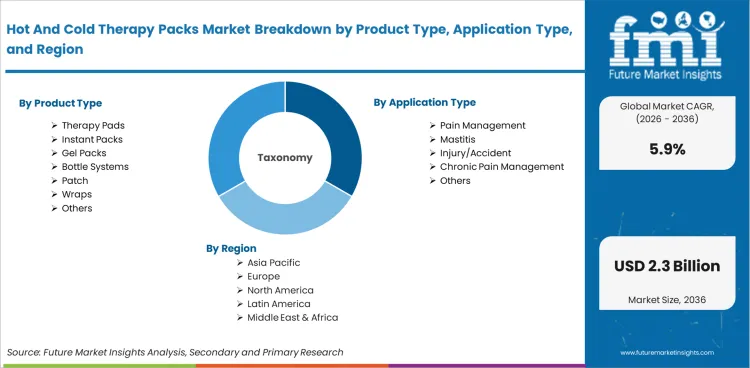
The hot and cold therapy packs market was valued at USD 1.20 billion in 2025, projected to reach USD 1.27 billion in 2026, and is forecast to expand to USD 2.25 billion by 2036 at a 5.9% CAGR. Growing musculoskeletal disorder prevalence, combined with expanding outpatient rehabilitation protocols that prioritize non-pharmacological pain relief, is driving consistent procurement across hospital pharmacies and retail distribution channels. As per FMI, the therapy pads segment holds a 26.3% share in 2026, reflecting clinical preference for reusable, conformable thermal delivery formats in post-surgical and chronic pain management settings.
Summary of Hot And Cold Therapy Packs Market
- The market is forecast to touch USD 2.25 billion by 2036.
- Annual growth of 5.9% is projected across the 2026-2036 forecast horizon.
- In 2025, market value was pegged at USD 1.20 billion.
- The forecast period unlocks an incremental opportunity worth USD 0.98 billion.
- India leads country-level growth at 7.4% CAGR, underpinned by strong domestic demand and favorable policy conditions.
Aging populations in developed economies and rising sports participation rates in emerging markets are creating parallel demand streams for thermal therapy products. Pain management applications account for 35.2% of segment demand in 2026, underpinned by clinical guidelines from orthopedic and physiotherapy associations that recommend alternating heat and cold application for soft tissue injury recovery. Retail pharmacies command 36.9% of distribution share, reflecting consumer self-care purchasing behavior and the availability of over-the-counter therapy packs without prescription requirements. FMI is of the opinion that digital health integration, including app-controlled heating pads with temperature monitoring, will create a premium tier within the otherwise commodity-oriented product landscape.
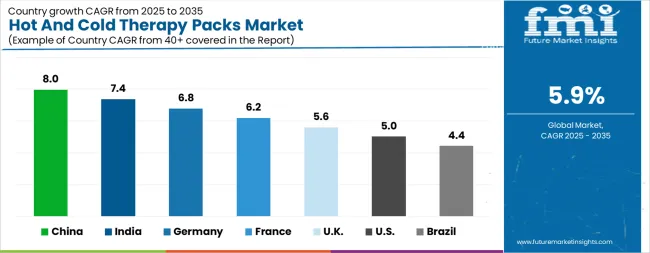
China leads regional demand at 8.0% CAGR, driven by traditional medicine practice integration and expanding physiotherapy clinic networks. India follows at 7.4%, where growing orthopedic surgery volumes generate post-operative therapy pack demand. Germany registers 6.8% growth, supported by statutory health insurance coverage for prescribed thermal therapy in rehabilitation settings. France tracks at 6.2%, the United Kingdom at 5.6%, and the United States at 5.0%, where established retail pharmacy chains maintain deep category penetration. Brazil advances at 4.4% as sports injury treatment awareness rises. Future Market Insights analysis indicates that the shift toward eco-friendly gel formulations and recyclable pack materials will influence product differentiation across mature markets.
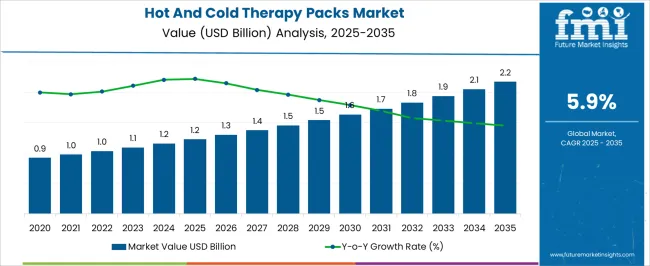
Hot And Cold Therapy Packs Market Key Takeaways
| Metric | Details |
|---|---|
| Industry Size (2026) | USD 1.27 billion |
| Industry Value (2036) | USD 2.25 billion |
| CAGR (2026-2036) | 5.9% |
Source: Future Market Insights, 2026
Hot And Cold Therapy Packs Market Definition
Hot and cold therapy packs are medical devices designed to deliver controlled thermal energy to the body for pain relief, inflammation reduction, and soft tissue recovery. Product categories include reusable gel packs, instant chemical activation packs, electric therapy pads, water bottle systems, adhesive patches, and wrap-style applicators. These devices are used across acute injury treatment, chronic pain management, post-surgical rehabilitation, and mastitis care.
Hot And Cold Therapy Packs Market Inclusions
Market scope includes therapy pads, instant packs, gel packs, bottle systems, patches, wraps, and other thermal delivery formats. The report covers market sizes by product type, application type, and distribution channel for the 2026 to 2036 forecast period, with regional breakdowns across all major geographies.
Hot And Cold Therapy Packs Market Exclusions
The scope excludes electrotherapy and ultrasound-based physiotherapy devices, cryotherapy chambers, and pharmaceutical topical analgesics. Capital equipment such as continuous cold flow machines used in hospital surgical suites is not included in the market valuation.
Hot And Cold Therapy Packs Market Research Methodology
- Primary Research: Analysts conducted interviews with orthopedic rehabilitation directors, hospital pharmacy procurement leads, and retail pharmacy category managers to understand formulary decisions and consumer purchasing behavior.
- Desk Research: Data collection included WHO musculoskeletal condition burden reports, national physiotherapy association treatment guidelines, and retail pharmacy sales data aggregated from public health system procurement records.
- Market-Sizing and Forecasting: Baseline values derive from a bottom-up aggregation of retail and institutional unit volumes, applying category-specific average selling prices and distribution channel mix to project market revenue.
- Data Validation and Update Cycle: Projections are validated against manufacturer shipment disclosures, pharmacy chain sales reports, and cross-referenced with insurance claims data for prescribed thermal therapy products.
Why is the Hot And Cold Therapy Packs Market Growing?
The Hot And Cold Therapy Packs market is experiencing steady growth, driven by the increasing demand for non-invasive pain relief solutions and home healthcare products. Growing awareness of physical wellness, rehabilitation therapies, and sports-related injury management is boosting adoption across various age groups. Advancements in materials and design have improved the safety, durability, and convenience of therapy packs, enabling more effective heat and cold retention and user-friendly application.
The market is further supported by increasing healthcare expenditure, rising prevalence of musculoskeletal disorders, and growing focus on physiotherapy and sports medicine. Distribution channels, including retail pharmacies and e-commerce platforms, are expanding accessibility for consumers, enhancing market penetration.
Product innovation, including reusable and ergonomic packs, and integration with smart technologies for temperature control, is creating additional growth opportunities As consumers increasingly seek convenient, cost-effective, and clinically supported pain management solutions, the Hot And Cold Therapy Packs market is expected to continue its robust growth trajectory, driven by advancements in therapy products and broad adoption across clinical and home settings.
Segmental Analysis
The hot and cold therapy packs market is segmented by product type, application type, distribution channels, and geographic regions. By product type, hot and cold therapy packs market is divided into Therapy Pads, Instant Packs, Gel Packs, Bottle Systems, Patch, Wraps, and Others. In terms of application type, hot and cold therapy packs market is classified into Pain Management, Mastitis, Injury/Accident, Chronic Pain Management, and Others. Based on distribution channels, hot and cold therapy packs market is segmented into Retail Pharmacies, Hospital Pharmacies, and Online Pharmacies. Regionally, the hot and cold therapy packs industry is classified into North America, Latin America, Western Europe, Eastern Europe, Balkan & Baltic Countries, Russia & Belarus, Central Asia, East Asia, South Asia & Pacific, and the Middle East & Africa.
Insights into the Therapy Pads Product Type Segment
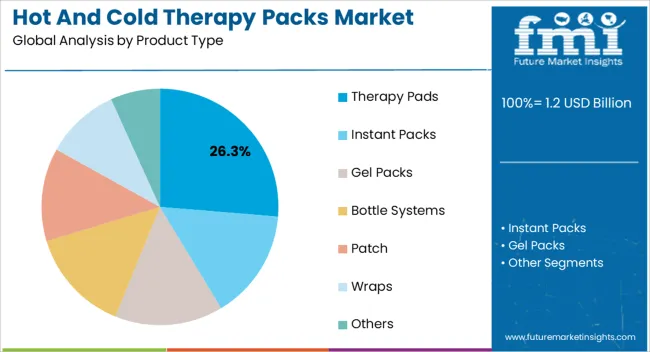
The therapy pads product type segment is projected to hold 26.3% of the market revenue in 2026, establishing it as the leading product type. Growth in this segment is being driven by the wide applicability of therapy pads for targeted heat and cold treatment in both home and clinical settings. Therapy pads provide controlled thermal delivery, improving effectiveness for muscle relaxation, inflammation reduction, and pain management.
Ease of use, portability, and reusability are further enhancing their adoption among consumers seeking convenient non-pharmaceutical therapies. The compatibility of therapy pads with various support accessories and body parts allows for versatile application, which is appealing to healthcare providers, physiotherapists, and sports rehabilitation professionals.
Continuous improvements in material quality and thermal retention are reinforcing reliability and performance As the demand for cost-effective, non-invasive pain management solutions continues to rise, therapy pads are expected to maintain their market-leading position, supported by innovation in design and material science.
Insights into the Pain Management Application Type Segment
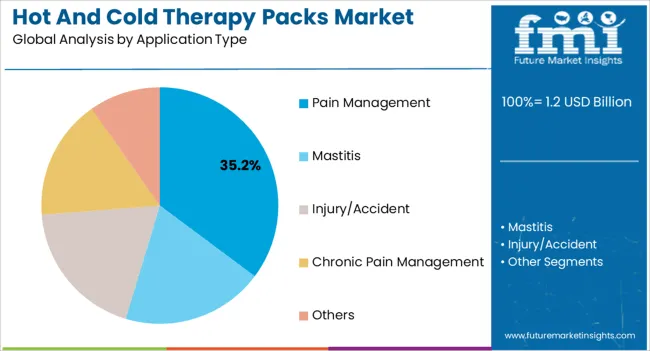
The pain management application type segment is anticipated to account for 35.2% of the market revenue in 2026, making it the leading application area. Growth in this segment is being driven by the rising prevalence of musculoskeletal disorders, arthritis, sports injuries, and post-operative pain management requirements. Hot and cold therapy packs provide safe, non-pharmaceutical solutions to alleviate discomfort and improve recovery outcomes.
The ability to apply heat or cold to specific body areas enhances therapeutic effectiveness, and the availability of user-friendly, ergonomic designs increases adoption among patients. Healthcare providers, physiotherapists, and home-care users are increasingly incorporating these therapy packs into treatment and recovery protocols.
Ongoing awareness campaigns emphasizing non-invasive pain relief methods and preventive care are further supporting adoption As the focus on patient-centered, home-based, and cost-effective therapies grows, the pain management application segment is expected to remain the primary driver of market growth, reinforced by technological improvements and consumer preference for safe, reliable treatment options.
Insights into the Retail Pharmacies Distribution Channels Segment
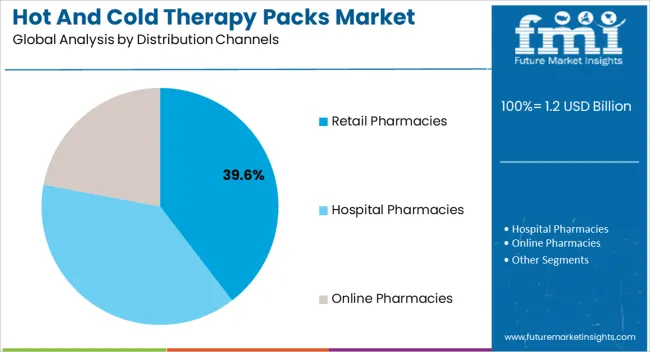
The retail pharmacies distribution channels segment is projected to hold 39.6% of the market revenue in 2026, establishing it as the leading distribution channel. Growth in this segment is being driven by the widespread accessibility and convenience of retail pharmacies, which allow consumers to purchase hot and cold therapy packs with minimal barriers.
Pharmacies provide a trusted point of sale for health and wellness products, and staff guidance enhances consumer confidence in product selection and usage. The segment benefits from integration with loyalty programs, in-store promotions, and product bundling strategies, which encourage repeat purchases.
Retail pharmacy networks, both standalone and chain outlets, are expanding their offerings to include clinically recommended therapy packs, targeting consumers seeking effective non-prescription pain relief solutions As consumer awareness of therapy-based pain management increases and preference for convenient access continues, retail pharmacies are expected to maintain their position as the dominant distribution channel, supported by broad geographic reach, strong brand presence, and consumer trust.
Market Overview
Hot And Cold Therapy Packs Market Overview
Cold and heat are the most common types of non-addictive and non-invasive pain relief therapies for joint pain and muscle. In general, injury causes inflammation and swelling. Ice will decrease the blood flow to the injury by decreasing inflammation and swelling.
Pain can be treated with heat which will bring blood to the area and promote healing. Heat therapy opens up the blood vessels and increase blood flow by supplying oxygen and nutrients in order to relax the muscles, ligaments and tendons. Sources of heat can supply dry or moist warmth. Heat can be applied by electric or microwavable heating pad, gel packs, hot water bottle or hot water baths. Cold therapy slows down the blood supply to the injury section by reducing pain and swelling.
There are many useful reactions taking place when cold therapy is applied such as slow blood circulation, reduction of inflammation, pain and muscle spasm. Cold therapy packs should be used if the area is swollen or bruised. Cold therapy can be taken in the form of ice or gel pack.
Cold therapy packs should be used for 24 to 48 hours after injury. Cold therapy is good for sprains, bumps, strains and bruises that occur in sports or during physical training sessions. According to the Canadian Physiotherapy Association, cold therapy is a good treatment option for many but not indicated for people who are under treatment such as impaired circulation or ischemia, absence of skin sensitivity (anesthesia), vasospasm (Raynaud's disease), open or infected wound, hypersensitivity to cold, acute dermatitis or eczema, and inability to communicate, etc.
Analysis of Hot And Cold Therapy Packs Market By Key Countries
.webp "Top Country Growth Comparison Hot And Cold Therapy Packs Market Cagr (2026 2036)")
| Country | CAGR |
|---|---|
| China | 8.0% |
| India | 7.4% |
| Germany | 6.8% |
| France | 6.2% |
| UK | 5.6% |
| USA | 5.0% |
| Brazil | 4.4% |
Source: FMI analysis based on primary research and proprietary forecasting model
Country-wise Analysis
The Hot And Cold Therapy Packs Market is expected to register a CAGR of 5.9% during the forecast period, exhibiting varied country level momentum. China leads with the highest CAGR of 8.0%, followed by India at 7.4%. Developed markets such as Germany, France, and the UK continue to expand steadily, while the USA is likely to grow at consistent rates. Brazil posts the lowest CAGR at 4.4%, yet still underscores a broadly positive trajectory for the global Hot And Cold Therapy Packs Market. In 2024, Germany held a dominant revenue in the Western Europe market and is expected to grow with a CAGR of 6.8%. The USA Hot And Cold Therapy Packs Market is estimated to be valued at USD 421.8 million in 2026 and is anticipated to reach a valuation of USD 688.1 million by 2036. Sales are projected to rise at a CAGR of 5.0% over the forecast period between 2026 and 2036. While Japan and South Korea markets are estimated to be valued at USD 57.4 million and USD 32.6 million respectively in 2026.
Key Players in the Hot And Cold Therapy Packs Market
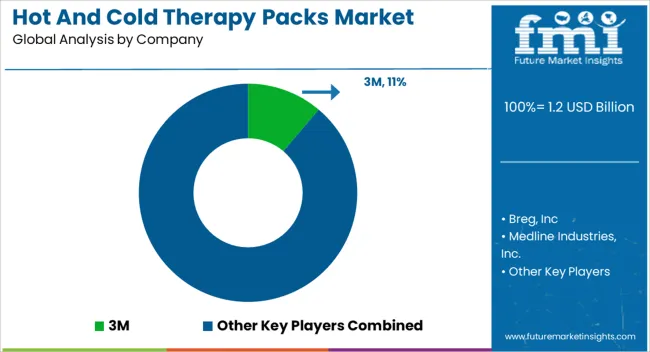
- 3M
- Breg, Inc
- Medline Industries, Inc.
- Cardinal Health Inc.
- Kobayashi Pharmaceutical Co., Ltd.
- Halyards Health Inc.
- Chattanooga International
- B.u.W. Schmidt
- Active Medical
- Handan Wuxin Medical Devices
- Sissel UK
- Sugr Germany GmbH
- Mettler Electronics
- Blunding
- INTCO Medical
- Phyto Performance Italia
- Fysioline
Scope of the Report
| Metric | Value |
|---|---|
| Quantitative Units | USD 1.27 billion to USD 2.25 billion, at a CAGR of 5.9% |
| Market Definition | Hot and cold therapy packs are medical devices designed to deliver controlled thermal energy to the body for pain relief, inflammation reduction, and soft tissue recovery. Product categories include r... |
| Segmentation | Product Type: Therapy Pads, Instant Packs, Gel Packs, Bottle Systems, Patch, Wraps, Others; Application Type: Pain Management, Mastitis, Injury/Accident, Chronic Pain Management, Others; Distribution Channels: Retail Pharmacies, Hospital Pharmacies, Online Pharmacies |
| Regions Covered | North America, Latin America, Europe, East Asia, South Asia, Oceania, Middle East & Africa |
| Countries Covered | China, India, Germany, France, UK, USA, Brazil, and 40 plus countries |
| Key Companies Profiled | 3M, Breg, Inc, Medline Industries, Inc., Cardinal Health Inc., Kobayashi Pharmaceutical Co., Ltd., Halyards Health Inc., Chattanooga International, B.u.W. Schmidt, Active Medical, Handan Wuxin Medical Devices, Sissel UK, Sugr Germany GmbH, Mettler Electronics, Blunding, INTCO Medical, Phyto Performance Italia, Fysioline |
| Forecast Period | 2026 to 2036 |
| Approach | Forecasting models apply a bottom-up methodology starting with installed base metrics and cross-validate projections against publicly reported industry data. |
Hot And Cold Therapy Packs Market by Segments
Product Type:
- Therapy Pads
- Instant Packs
- Gel Packs
- Bottle Systems
- Patch
- Wraps
- Others
Application Type:
- Pain Management
- Mastitis
- Injury/Accident
- Chronic Pain Management
- Others
Distribution Channels:
- Retail Pharmacies
- Hospital Pharmacies
- Online Pharmacies
Region:
- North America
- USA
- Canada
- Mexico
- Latin America
- Brazil
- Chile
- Rest of Latin America
- Western Europe
- Germany
- UK
- Italy
- Spain
- France
- Nordic
- BENELUX
- Rest of Western Europe
- Eastern Europe
- Russia
- Poland
- Hungary
- Balkan & Baltic
- Rest of Eastern Europe
- East Asia
- China
- Japan
- South Korea
- South Asia and Pacific
- India
- ASEAN
- Australia & New Zealand
- Rest of South Asia and Pacific
- Middle East & Africa
- Kingdom of Saudi Arabia
- Other GCC Countries
- Turkiye
- South Africa
- Other African Union
- Rest of Middle East & Africa
Bibliography
- 1. World Health Organization. (2024). Musculoskeletal Health: Global Burden Report. WHO.
- 2. American Physical Therapy Association. (2024). Clinical Practice Guidelines: Thermal Modalities in Rehabilitation. APTA.
- 3. Organisation for Economic Co-operation and Development. (2025). Health at a Glance: Rehabilitation Service Indicators. OECD.
- 4. German Federal Joint Committee (G-BA). (2024). Directive on Prescribed Therapeutic Devices: Thermal Therapy Products. G-BA.
- 5. National Health Service (NHS). (2024). Commissioning Guidance for Musculoskeletal Services. NHS England.
This bibliography is provided for reader reference. The full Future Market Insights report contains the complete reference list with primary research documentation.
Frequently Asked Questions
How large is the hot and cold therapy packs market in 2026?
The hot and cold therapy packs market is estimated to be valued at USD 1.27 billion in 2026.
What will be the market size by 2036?
Market size is projected to reach USD 2.25 billion by 2036.
What is the expected CAGR between 2026 and 2036?
The market is expected to grow at a CAGR of 5.9% between 2026 and 2036.
Which Product Type is poised to lead in 2026?
Therapy Pads is estimated to hold 26.3% share in 2026 by Product Type.
Which region is expected to record the fastest growth?
China is projected to grow at 8% CAGR during 2026 to 2036.
What is included in the scope of this report?
Market scope includes therapy pads, instant packs, gel packs, bottle systems, patches, wraps, and other thermal delivery formats. The report covers market sizes by product type, application type, and distribution channel for the 2026 to 2036 forecast period, with regional breakdowns across all major geographies.
What is excluded from the scope of this report?
The scope excludes electrotherapy and ultrasound-based physiotherapy devices, cryotherapy chambers, and pharmaceutical topical analgesics. Capital equipment such as continuous cold flow machines used in hospital surgical suites is not included in the market valuation.
How does FMI build and validate this forecast?
Forecasting models apply a bottom-up methodology starting with installed base metrics and cross-validate projections against publicly reported industry data and primary research documentation.
Preview the report firsthand - request a free sample
Get SampleGet the brochure for pricing and purchase details.
Get PDFTable of Content
- Executive Summary
- Global Market Outlook
- Demand-side Trends
- Supply-side Trends
- Technology Roadmap Analysis
- Analysis and Recommendations
- Market Overview
- Market Coverage / Taxonomy
- Market Definition / Scope / Limitations
- Research Methodology
- Chapter Orientation
- Analytical Lens and Working Hypotheses
- Market Structure, Signals, and Trend Drivers
- Peer-reviewed Journals and Academic Literature
- Corporate Websites, Product Literature, and Technical Notes
- Earnings Decks and Investor Briefings
- Statutory Filings and Regulatory Disclosures
- Technical White Papers and Standards Notes
- Trade Journals, Industry Magazines, and Analyst Briefs
- Conference Proceedings, Webinars, and Seminar Materials
- Government Statistics Portals and Public Data Releases
- Press Releases and Reputable Media Coverage
- Specialist Newsletters and Curated Briefings
- Sector Databases and Reference Repositories
- FMI Internal Proprietary Databases and Historical Market Datasets
- Subscription Datasets and Paid Sources
- Social Channels, Communities, and Digital Listening Inputs
- Additional Desk Sources
- Expert Input and Fieldwork (Primary Evidence)
- Primary Modes
- Qualitative Interviews and Expert Elicitation
- Quantitative Surveys and Structured Data Capture
- Blended Approach
- Why Primary Evidence is Used
- Field Techniques
- Interviews
- Surveys
- Focus Groups
- Observational and In-context Research
- Social and Community Interactions
- Stakeholder Universe Engaged
- C-suite Leaders
- Opportunity
- Trends
- Scenario Forecast
- Demand in Optimistic Scenario
- Demand in Likely Scenario
- Demand in Conservative Scenario
- Opportunity Map Analysis
- Product Life Cycle Analysis
- Supply Chain Analysis
- Investment Feasibility Matrix
- Value Chain Analysis
- PESTLE and Porter’s Analysis
- Regulatory Landscape
- Regional Parent Market Outlook
- Production and Consumption Statistics
- Import and Export Statistics
- Primary Modes
- Global Market Analysis 2021 to 2025 and Forecast, 2026 to 2036
- Historical Market Size Value (USD Million) Analysis, 2021 to 2025
- Current and Future Market Size Value (USD Million) Projections, 2026 to 2036
- Y-o-Y Growth Trend Analysis
- Absolute $ Opportunity Analysis
- Global Market Pricing Analysis 2021 to 2025 and Forecast 2026 to 2036
- Global Market Analysis 2021 to 2025 and Forecast 2026 to 2036, By Product Type
- Introduction / Key Findings
- Historical Market Size Value (USD Million) Analysis By Product Type , 2021 to 2025
- Current and Future Market Size Value (USD Million) Analysis and Forecast By Product Type , 2026 to 2036
- Therapy Pads
- Instant Packs
- Gel Packs
- Bottle Systems
- Patch
- Wraps
- Others
- Therapy Pads
- Y-o-Y Growth Trend Analysis By Product Type , 2021 to 2025
- Absolute $ Opportunity Analysis By Product Type , 2026 to 2036
- Global Market Analysis 2021 to 2025 and Forecast 2026 to 2036, By Application Type
- Introduction / Key Findings
- Historical Market Size Value (USD Million) Analysis By Application Type, 2021 to 2025
- Current and Future Market Size Value (USD Million) Analysis and Forecast By Application Type, 2026 to 2036
- Pain Management
- Mastitis
- Injury/Accident
- Chronic Pain Management
- Others
- Pain Management
- Y-o-Y Growth Trend Analysis By Application Type, 2021 to 2025
- Absolute $ Opportunity Analysis By Application Type, 2026 to 2036
- Global Market Analysis 2021 to 2025 and Forecast 2026 to 2036, By Distribution Channels
- Introduction / Key Findings
- Historical Market Size Value (USD Million) Analysis By Distribution Channels, 2021 to 2025
- Current and Future Market Size Value (USD Million) Analysis and Forecast By Distribution Channels, 2026 to 2036
- Retail Pharmacies
- Hospital Pharmacies
- Online Pharmacies
- Retail Pharmacies
- Y-o-Y Growth Trend Analysis By Distribution Channels, 2021 to 2025
- Absolute $ Opportunity Analysis By Distribution Channels, 2026 to 2036
- Global Market Analysis 2021 to 2025 and Forecast 2026 to 2036, By Region
- Introduction
- Historical Market Size Value (USD Million) Analysis By Region, 2021 to 2025
- Current Market Size Value (USD Million) Analysis and Forecast By Region, 2026 to 2036
- North America
- Latin America
- Western Europe
- Eastern Europe
- East Asia
- South Asia and Pacific
- Middle East & Africa
- Market Attractiveness Analysis By Region
- North America Market Analysis 2021 to 2025 and Forecast 2026 to 2036, By Country
- Historical Market Size Value (USD Million) Trend Analysis By Market Taxonomy, 2021 to 2025
- Market Size Value (USD Million) Forecast By Market Taxonomy, 2026 to 2036
- By Country
- USA
- Canada
- Mexico
- By Product Type
- By Application Type
- By Distribution Channels
- By Country
- Market Attractiveness Analysis
- By Country
- By Product Type
- By Application Type
- By Distribution Channels
- Key Takeaways
- Latin America Market Analysis 2021 to 2025 and Forecast 2026 to 2036, By Country
- Historical Market Size Value (USD Million) Trend Analysis By Market Taxonomy, 2021 to 2025
- Market Size Value (USD Million) Forecast By Market Taxonomy, 2026 to 2036
- By Country
- Brazil
- Chile
- Rest of Latin America
- By Product Type
- By Application Type
- By Distribution Channels
- By Country
- Market Attractiveness Analysis
- By Country
- By Product Type
- By Application Type
- By Distribution Channels
- Key Takeaways
- Western Europe Market Analysis 2021 to 2025 and Forecast 2026 to 2036, By Country
- Historical Market Size Value (USD Million) Trend Analysis By Market Taxonomy, 2021 to 2025
- Market Size Value (USD Million) Forecast By Market Taxonomy, 2026 to 2036
- By Country
- Germany
- UK
- Italy
- Spain
- France
- Nordic
- BENELUX
- Rest of Western Europe
- By Product Type
- By Application Type
- By Distribution Channels
- By Country
- Market Attractiveness Analysis
- By Country
- By Product Type
- By Application Type
- By Distribution Channels
- Key Takeaways
- Eastern Europe Market Analysis 2021 to 2025 and Forecast 2026 to 2036, By Country
- Historical Market Size Value (USD Million) Trend Analysis By Market Taxonomy, 2021 to 2025
- Market Size Value (USD Million) Forecast By Market Taxonomy, 2026 to 2036
- By Country
- Russia
- Poland
- Hungary
- Balkan & Baltic
- Rest of Eastern Europe
- By Product Type
- By Application Type
- By Distribution Channels
- By Country
- Market Attractiveness Analysis
- By Country
- By Product Type
- By Application Type
- By Distribution Channels
- Key Takeaways
- East Asia Market Analysis 2021 to 2025 and Forecast 2026 to 2036, By Country
- Historical Market Size Value (USD Million) Trend Analysis By Market Taxonomy, 2021 to 2025
- Market Size Value (USD Million) Forecast By Market Taxonomy, 2026 to 2036
- By Country
- China
- Japan
- South Korea
- By Product Type
- By Application Type
- By Distribution Channels
- By Country
- Market Attractiveness Analysis
- By Country
- By Product Type
- By Application Type
- By Distribution Channels
- Key Takeaways
- South Asia and Pacific Market Analysis 2021 to 2025 and Forecast 2026 to 2036, By Country
- Historical Market Size Value (USD Million) Trend Analysis By Market Taxonomy, 2021 to 2025
- Market Size Value (USD Million) Forecast By Market Taxonomy, 2026 to 2036
- By Country
- India
- ASEAN
- Australia & New Zealand
- Rest of South Asia and Pacific
- By Product Type
- By Application Type
- By Distribution Channels
- By Country
- Market Attractiveness Analysis
- By Country
- By Product Type
- By Application Type
- By Distribution Channels
- Key Takeaways
- Middle East & Africa Market Analysis 2021 to 2025 and Forecast 2026 to 2036, By Country
- Historical Market Size Value (USD Million) Trend Analysis By Market Taxonomy, 2021 to 2025
- Market Size Value (USD Million) Forecast By Market Taxonomy, 2026 to 2036
- By Country
- Kingdom of Saudi Arabia
- Other GCC Countries
- Turkiye
- South Africa
- Other African Union
- Rest of Middle East & Africa
- By Product Type
- By Application Type
- By Distribution Channels
- By Country
- Market Attractiveness Analysis
- By Country
- By Product Type
- By Application Type
- By Distribution Channels
- Key Takeaways
- Key Countries Market Analysis
- USA
- Pricing Analysis
- Market Share Analysis, 2025
- By Product Type
- By Application Type
- By Distribution Channels
- Canada
- Pricing Analysis
- Market Share Analysis, 2025
- By Product Type
- By Application Type
- By Distribution Channels
- Mexico
- Pricing Analysis
- Market Share Analysis, 2025
- By Product Type
- By Application Type
- By Distribution Channels
- Brazil
- Pricing Analysis
- Market Share Analysis, 2025
- By Product Type
- By Application Type
- By Distribution Channels
- Chile
- Pricing Analysis
- Market Share Analysis, 2025
- By Product Type
- By Application Type
- By Distribution Channels
- Germany
- Pricing Analysis
- Market Share Analysis, 2025
- By Product Type
- By Application Type
- By Distribution Channels
- UK
- Pricing Analysis
- Market Share Analysis, 2025
- By Product Type
- By Application Type
- By Distribution Channels
- Italy
- Pricing Analysis
- Market Share Analysis, 2025
- By Product Type
- By Application Type
- By Distribution Channels
- Spain
- Pricing Analysis
- Market Share Analysis, 2025
- By Product Type
- By Application Type
- By Distribution Channels
- France
- Pricing Analysis
- Market Share Analysis, 2025
- By Product Type
- By Application Type
- By Distribution Channels
- India
- Pricing Analysis
- Market Share Analysis, 2025
- By Product Type
- By Application Type
- By Distribution Channels
- ASEAN
- Pricing Analysis
- Market Share Analysis, 2025
- By Product Type
- By Application Type
- By Distribution Channels
- Australia & New Zealand
- Pricing Analysis
- Market Share Analysis, 2025
- By Product Type
- By Application Type
- By Distribution Channels
- China
- Pricing Analysis
- Market Share Analysis, 2025
- By Product Type
- By Application Type
- By Distribution Channels
- Japan
- Pricing Analysis
- Market Share Analysis, 2025
- By Product Type
- By Application Type
- By Distribution Channels
- South Korea
- Pricing Analysis
- Market Share Analysis, 2025
- By Product Type
- By Application Type
- By Distribution Channels
- Russia
- Pricing Analysis
- Market Share Analysis, 2025
- By Product Type
- By Application Type
- By Distribution Channels
- Poland
- Pricing Analysis
- Market Share Analysis, 2025
- By Product Type
- By Application Type
- By Distribution Channels
- Hungary
- Pricing Analysis
- Market Share Analysis, 2025
- By Product Type
- By Application Type
- By Distribution Channels
- Kingdom of Saudi Arabia
- Pricing Analysis
- Market Share Analysis, 2025
- By Product Type
- By Application Type
- By Distribution Channels
- Turkiye
- Pricing Analysis
- Market Share Analysis, 2025
- By Product Type
- By Application Type
- By Distribution Channels
- South Africa
- Pricing Analysis
- Market Share Analysis, 2025
- By Product Type
- By Application Type
- By Distribution Channels
- USA
- Market Structure Analysis
- Competition Dashboard
- Competition Benchmarking
- Market Share Analysis of Top Players
- By Regional
- By Product Type
- By Application Type
- By Distribution Channels
- Competition Analysis
- Competition Deep Dive
- 3M
- Overview
- Product Portfolio
- Profitability by Market Segments (Product/Age /Sales Channel/Region)
- Sales Footprint
- Strategy Overview
- Marketing Strategy
- Product Strategy
- Channel Strategy
- Breg, Inc
- Medline Industries, Inc.
- Cardinal Health Inc.
- Kobayashi Pharmaceutical Co., Ltd.
- Halyards Health Inc.
- Chattanooga International
- B.u.W. Schmidt
- Active Medical
- Handan Wuxin Medical Devices
- Sissel UK
- Sugr Germany GmbH
- Mettler Electronics
- Blunding
- INTCO Medical
- Phyto Performance Italia
- Fysioline
- 3M
- Competition Deep Dive
- Assumptions & Acronyms Used


