

- Industry Size (2026)
- USD 30.3 Bn
- Forecast (2036)
- USD 138.3 Bn
- CAGR (2026 to 2036)
- 16.4%
Hydronic Heat Pump Market Forecast and Outlook 2026 to 2036
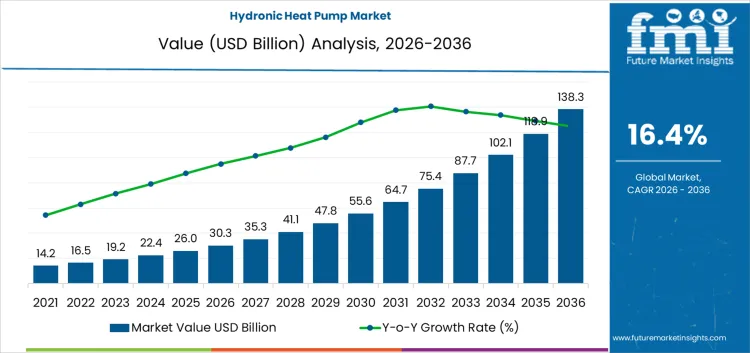
The hydronic heat pump market is projected to reach USD 138.3 billion by 2036, growing at a CAGR of 16.4% from its 2026 size of USD 30.3 billion. Capital intensity will play a key role in the market's expansion, as investments in research, technology development, and manufacturing capacity are necessary to meet growing demand for energy-efficient heating and cooling solutions.
Return timelines are likely to vary depending on regional adoption rates and the pace of building retrofits, with long-term investments in infrastructure expected to yield more predictable returns. Investment selectivity will be crucial, with investors focused on companies with strong R&D capabilities, efficient production processes, and the ability to navigate regulatory environments. As the market matures, the emphasis will shift towards scaling production and securing large contracts, with investors seeking businesses that can balance innovation with cost management while addressing both environmental and energy efficiency goals.
Quick Stats for the Hydronic Heat Pump Market
- Hydronic Heat Pump Market Value (2026): USD 30.3 billion
- Hydronic Heat Pump Market Forecast Value (2036): USD 138.3 billion
- Hydronic Heat Pump Market Global Forecast CAGR (2026 to 2035): 16.4%
- Hydronic Heat Pump Market Leading Segment: Electricity-Driven Systems (62%)
- Key Growth Regions in Hydronic Heat Pump Market: China
- Top Players in Hydronic Heat Pump Market: Daikin Industries, Ltd., Carrier Global Corporation, Johnson Controls International PLC, LG Electronics, Viessmann Group, Samsung HVAC, Chiltrix, Inc., Thermia Heat Pumps, Bosch Thermotechnology, WaterFurnace International, Nordic Heat Pumps, Mestek, Inc., Panasonic Corporation, SpacePak (Mitsubishi Electric)
What is the Acceleration & Deceleration Pattern for the Hydronic Heat Pump Market through 2036?
The hydronic heat pump market will follow an acceleration and deceleration pattern characterized by an initial phase of gradual growth, followed by a period of rapid acceleration, and then a stabilization phase toward the later years of the forecast period. From 2026 to 2028, the market will experience steady growth, with values rising from USD 30.3 billion in 2026 to USD 41.4 billion in 2028. This early phase will be driven by increasing awareness of energy-efficient systems, along with rising demand for hydronic heat pumps in both new construction and retrofit markets.
Between 2028 and 2032, the market will undergo a period of acceleration as technological improvements, cost reductions, and incentives for renewable energy solutions further boost the adoption of hydronic heat pumps. The market will grow from USD 48.5 billion in 2029 to USD 67 billion by 2032. This acceleration will be fueled by the growing emphasis on sustainability, decarbonization efforts, and the increasing integration of heat pumps into both residential and commercial HVAC systems.
From 2032 to 2036, the growth rate will gradually decelerate as the market matures, reaching USD 138.3 billion by 2036. This deceleration reflects the stabilization of adoption rates as hydronic heat pumps become a standard technology in many regions, particularly as regulatory frameworks and technological advancements solidify their role in heating and cooling systems. The overall acceleration and deceleration pattern suggest a fast-growing market driven by the adoption of energy-efficient solutions, which will level off as the technology becomes widely integrated and standardized.
Hydronic Heat Pump Market Key Takeaways
| Metric | Value |
|---|---|
| Industry Sales Value (2026) | USD 30.3 billion |
| Industry Forecast Value (2036) | USD 138.3 billion |
| Industry Forecast CAGR 2026 to 2036 | 16.4% |
What Is Driving the Hydronic Heat Pump Market?
Historically, the hydronic heat pump market expanded from early efforts to improve building thermal comfort and energy efficiency by replacing or augmenting conventional boilers and electric resistance heaters. Traditional hydronic systems relied on combustion‑based boilers or electric heaters circulating hot water through radiators, baseboards, or in‑floor tubing, which delivered warmth but with high fuel costs and emissions. As heat pump technology matured, early hydronic units paired vapor‑compression cycles with water‑to‑water or brine‑to‑water heat exchangers to provide both space heating and domestic hot water with superior coefficient of performance. Initial adoption was most pronounced in regions with moderate climates where moderate seasonal heating loads and existing hydronic infrastructure offered clear energy savings.
Institutional and residential property owners valued the ability of hydronic heat pumps to integrate with established piping networks, reduce fossil fuel dependence, and lower operating costs. Early implementations helped clarify performance parameters for source conditions, refrigerant choices, and control strategies that balanced delivered heat with electrical consumption, setting expectations for future product development and demonstrating material reductions in primary energy use.
Future demand for the hydronic heat pump market is expected to be shaped by broader electrification of building energy, tightening emissions regulations, and commitments to reduce operational carbon in residential and commercial sectors. Growth will be driven by integration with low‑carbon electricity grids, incentives for heat pump deployment, and rising expectations for year‑round efficiency that can deliver space heating, cooling, and hot water from a single system. Advances in compressor, refrigerant, and control technologies will improve performance in colder climates, expanding applicability beyond moderate zones and addressing historic limitations in low‑temperature operation.
Expansion of government rebate programs and building codes that favor low‑emissions HVAC solutions will further stimulate investment by developers and homeowners seeking predictable lifecycle costs and compliance with stricter energy standards. Additional growth factors include the development of modular, scalable hydronic heat pump architectures suited to multi‑family and light commercial applications, and integration with smart building management systems that optimize load shifting and demand response. Barriers include higher upfront costs relative to legacy boiler systems and the need for skilled installers familiar with advanced controls and system integration. Long‑term market growth will depend on demonstrable energy cost savings, regulatory support, and how effectively manufacturers align product performance with diverse climate and building requirements.
What are the Key Segments in the Hydronic Heat Pump Market?
The Hydronic Heat Pump market is segmented by end use and source type. End-use segments include electricity-driven systems, renewable-integrated hydronic heat pumps, natural gas hybrid or low-emission systems, and other fuel or hybrid systems, with electricity-driven systems leading the market at 62%. Source types include air-to-water or hydronic heat pumps, water-to-water hydronic systems, ground-source hydronic heat pumps, and hybrid or integrated heat pump systems, with air-to-water or hydronic heat pumps representing the largest share at 56%. The market is driven by the increasing demand for energy-efficient and sustainable heating and cooling solutions, particularly in residential, commercial, and industrial applications. The growing emphasis on reducing carbon emissions and the need for cost-effective solutions for temperature control are also contributing to the growth of the hydronic heat pump market. Key regions driving the market include North America, Europe, and Asia Pacific, where energy efficiency standards and sustainability initiatives are driving the adoption of hydronic heat pumps.
What is Driving Growth in the Electricity-Driven Systems End-Use Segment?
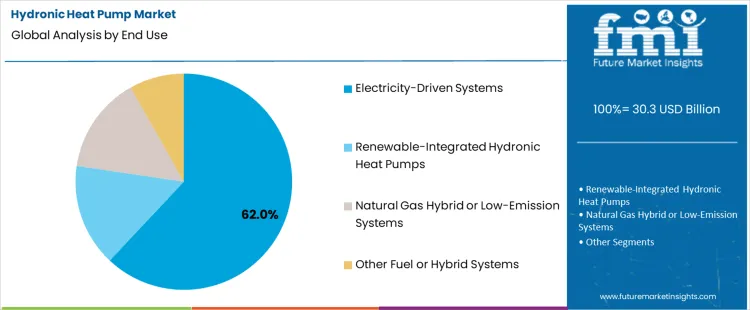
Electricity-driven systems are the dominant end-use segment in the Hydronic Heat Pump market, accounting for 62% of the market share. This growth is primarily driven by the increasing adoption of electric heating and cooling solutions due to their efficiency, sustainability, and lower environmental impact compared to traditional heating methods such as natural gas or oil. Electricity-driven hydronic heat pumps are highly energy-efficient, as they use electricity to move heat from the air or ground to heat or cool spaces, making them a popular choice for both residential and commercial applications. The shift towards electricity-driven systems is also supported by the growing emphasis on decarbonization in the building and construction sectors, particularly in regions like Europe and North America, where policies and incentives are pushing for the adoption of low-carbon technologies. As the demand for energy-efficient, environmentally friendly heating systems continues to rise, particularly in areas with stringent energy efficiency standards, electricity-driven hydronic heat pumps are expected to remain the preferred choice in the market.
What is Driving the Demand for Air-to-Water or Hydronic Heat Pumps in the Source Type Segment?
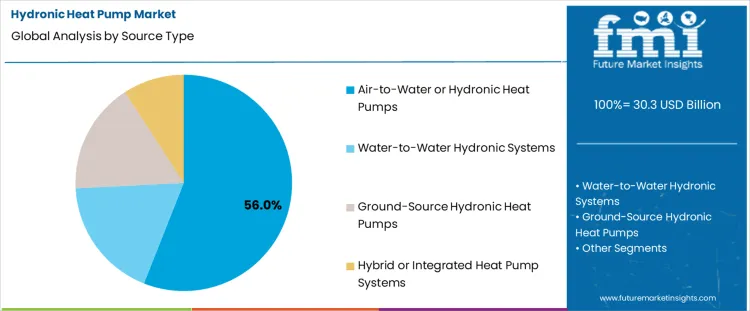
Air-to-water or hydronic heat pumps are the leading source type in the Hydronic Heat Pump market, holding 56% of the market share. This growth is driven by the versatility, cost-effectiveness, and ease of installation of air-to-water systems. These systems extract heat from the outside air and transfer it to a hydronic heating or cooling system, providing an efficient solution for both heating and cooling needs in residential and commercial buildings. Air-to-water heat pumps are especially suitable for regions with moderate climates, as they can operate efficiently even in cooler temperatures. They are widely used for floor heating, radiators, and domestic hot water production, making them a versatile choice for modern heating systems. The growing demand for sustainable building solutions, coupled with the increasing adoption of energy-efficient technologies in the residential and commercial sectors, is driving the popularity of air-to-water hydronic heat pumps. As energy efficiency becomes a higher priority globally, particularly in Europe, North America, and parts of Asia Pacific, the demand for air-to-water or hydronic heat pumps is expected to continue growing, further solidifying their dominant position in the market.
What are the Key Dynamics in the Hydronic Heat Pump Market?
The hydronic heat pump market is expanding due to the growing demand for energy-efficient and sustainable heating and cooling systems in residential, commercial, and industrial applications. Hydronic heat pumps, which use water as a medium to transfer heat, offer an eco-friendly alternative to traditional heating and cooling methods by utilizing renewable energy sources, such as air, water, or the ground. The market is driven by the increasing focus on reducing carbon emissions, improving energy efficiency, and lowering operational costs in buildings. The rise in government incentives for renewable energy solutions and growing awareness of climate change are also key factors contributing to the growth of the hydronic heat pump market. Additionally, advancements in heat pump technology that improve performance and reduce installation costs are further boosting market adoption.
What are the Key Drivers of Growth in the Hydronic Heat Pump Market?
Several factors are driving the growth of the hydronic heat pump market. First, the growing global emphasis on sustainability and the need to reduce greenhouse gas emissions are key drivers, as hydronic heat pumps offer a renewable and energy-efficient alternative to traditional heating and cooling methods. As governments around the world implement stricter energy efficiency standards and offer incentives for renewable energy systems, demand for hydronic heat pumps is increasing. Another important driver is the rising energy costs, which encourage consumers and businesses to seek more cost-effective, long-term heating and cooling solutions. The increasing adoption of green building practices and the rise of smart homes are also contributing to the demand for hydronic heat pumps, as these systems align with the growing trend towards energy-efficient and environmentally friendly solutions. Additionally, the technological advancements in hydronic heat pumps, such as better performance, quieter operation, and improved reliability, are making them more attractive to a wider range of consumers.
What are the Key Restraints in the Hydronic Heat Pump Market?
Despite the promising growth prospects, the hydronic heat pump market faces several challenges. One of the key restraints is the high initial installation cost, as hydronic heat pump systems typically require a significant upfront investment for both the unit and the necessary infrastructure, such as pipes, tanks, and circulation systems. This cost can deter adoption, particularly in regions where budget constraints are a concern or where alternative heating and cooling options are more affordable. Additionally, the installation process can be complex and may require significant modifications to existing building structures, which adds to the cost and time required for setup. Another challenge is the reliance on external environmental conditions for optimal performance. While hydronic heat pumps are energy-efficient, their performance can be affected by extreme temperatures, particularly in regions with very cold winters or hot summers, which may reduce their overall effectiveness. Furthermore, the lack of widespread awareness about the benefits of hydronic heat pumps, especially in regions where traditional heating and cooling methods dominate, may slow down market adoption.
What are the Key Trends in the Hydronic Heat Pump Market?
Several trends are shaping the hydronic heat pump market. One major trend is the growing integration of smart technologies and automation in hydronic heating and cooling systems. Modern hydronic heat pumps are increasingly being equipped with smart thermostats, IoT connectivity, and mobile app control, allowing users to monitor and optimize their system’s performance remotely. Another trend is the growing adoption of hybrid systems that combine hydronic heat pumps with traditional heating methods, such as gas boilers, to provide more flexibility and efficiency, particularly in regions with extreme weather conditions. The focus on sustainable building practices is also driving the adoption of hydronic heat pumps, with increasing demand for energy-efficient systems in both new construction and retrofitting projects. Additionally, the development of low-temperature heat pumps, which can operate efficiently at lower temperatures, is making hydronic heat pumps more viable for a wider range of climates and applications. These trends reflect the ongoing innovation and expansion of the hydronic heat pump market, driven by the need for more efficient, sustainable, and customizable heating and cooling solutions.
What is the Country-Wise Analysis of the Hydronic Heat Pump Market?
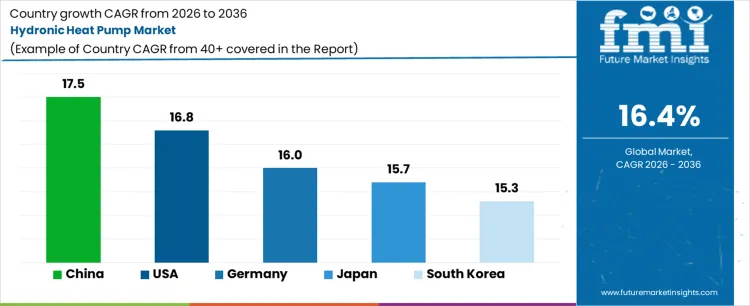
The hydronic heat pump market is growing as demand for energy-efficient and sustainable heating and cooling solutions increases globally. Hydronic heat pumps, which use water as a heat transfer medium, offer energy-efficient alternatives to traditional heating systems and are increasingly being adopted in residential, commercial, and industrial applications. The market is driven by the growing focus on reducing carbon emissions, increasing energy efficiency, and meeting stringent building regulations. Countries like China, the USA, Germany, Japan, and South Korea are leading the way in this market, supported by government incentives, technological advancements, and the rising demand for eco-friendly and cost-effective heating solutions.
| Country | CAGR (%) |
|---|---|
| China | 17.5 |
| USA | 16.8 |
| Germany | 16 |
| Japan | 15.7 |
| South Korea | 15.3 |
What is Driving the Growth of the Hydronic Heat Pump Market in China?
China’s hydronic heat pump market is growing at a CAGR of 17.5%, the highest among the countries analyzed. The growth is largely driven by the country’s focus on improving energy efficiency and reducing carbon emissions. Hydronic heat pumps are becoming a popular choice for residential and commercial heating and cooling, as they offer energy savings and are environmentally friendly. China’s growing demand for sustainable and cost-effective heating solutions, combined with government incentives for energy-efficient technologies, is driving the adoption of hydronic heat pumps. As China continues to expand its building infrastructure and focus on green technologies, the market for hydronic heat pumps is expected to remain strong.
How is the Hydronic Heat Pump Market Performing in the USA?
The USA’s hydronic heat pump market is growing at a CAGR of 16.8%. The market growth is driven by the increasing demand for energy-efficient and environmentally friendly heating and cooling solutions. Hydronic heat pumps, which offer superior energy efficiency compared to traditional systems, are becoming an increasingly popular choice in the residential, commercial, and industrial sectors. The USA’s focus on reducing carbon footprints and improving energy efficiency in buildings is contributing to the growth of the hydronic heat pump market. Government incentives, coupled with rising awareness of the benefits of energy-efficient technologies, are expected to continue supporting the adoption of hydronic heat pumps in the USA.
What Factors are Shaping the Hydronic Heat Pump Market in Germany?
Germany’s hydronic heat pump market is growing at a CAGR of 16%. As one of Europe’s leaders in energy-efficient technologies and environmental sustainability, Germany is experiencing strong demand for hydronic heat pumps. The country’s stringent building regulations, which emphasize energy efficiency and low-carbon technologies, are driving the adoption of hydronic heat pumps for both residential and commercial heating applications. Germany’s commitment to reducing greenhouse gas emissions and increasing energy efficiency in buildings is supporting the growth of this market. As Germany continues to invest in green technologies and sustainable building solutions, the demand for hydronic heat pumps is expected to grow steadily.
How is the Hydronic Heat Pump Market Evolving in Japan?
Japan’s hydronic heat pump market is growing at a CAGR of 15.7%. The market is being driven by Japan’s focus on energy efficiency and sustainability, particularly in the face of rising energy costs and environmental concerns. Hydronic heat pumps, which provide effective heating and cooling solutions with minimal energy consumption, are gaining traction in both residential and commercial applications. The Japanese government’s commitment to reducing energy consumption and promoting eco-friendly technologies is contributing to the adoption of hydronic heat pumps. As Japan continues to prioritize energy-efficient technologies and environmental sustainability, the demand for hydronic heat pumps is expected to grow at a steady pace.
What is Contributing to the Growth of the Hydronic Heat Pump Market in South Korea?
South Korea’s hydronic heat pump market is growing at a CAGR of 15.3%. The growth is largely driven by the country’s strong focus on energy efficiency and sustainability in building technologies. Hydronic heat pumps are becoming a preferred choice for heating and cooling due to their energy savings and environmental benefits. South Korea’s government is actively promoting the adoption of green technologies and energy-efficient systems, which is supporting the demand for hydronic heat pumps. With a growing emphasis on reducing energy consumption and carbon emissions, the hydronic heat pump market in South Korea is expected to continue growing as the country invests in more sustainable and efficient building technologies.
What is the Competitive Landscape for the Hydronic Heat Pump Market?
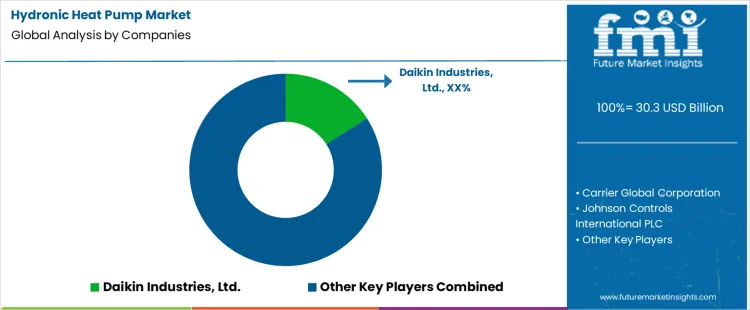
The hydronic heat pump market is growing as the demand for energy-efficient, environmentally friendly heating and cooling systems increases. Daikin Industries, Ltd. leads the market, offering a wide range of hydronic heat pump solutions known for their energy efficiency, reliability, and integration with renewable energy sources. Daikin’s products are widely used in residential, commercial, and industrial applications, positioning it as a dominant player in the market. Carrier Global Corporation is another significant competitor, providing advanced hydronic heat pump systems that focus on sustainability and performance.
Carrier’s solutions integrate innovative technology to optimize energy consumption while maintaining consistent heating and cooling. Johnson Controls International PLC offers high-efficiency heat pumps designed to improve energy use and reduce environmental impact. The company’s hydronic heat pumps cater to both residential and commercial markets. LG Electronics is actively involved in the market, offering energy-efficient hydronic heat pump systems with advanced features like smart controls and seamless integration with home automation systems. Viessmann Group competes with its comprehensive range of hydronic heat pump solutions, which are known for their durability and efficient performance in residential and commercial heating applications.
Samsung HVAC is another major player, providing cutting-edge heat pump systems with advanced technology and energy-saving features. Chiltrix, Inc. specializes in high-efficiency hydronic heat pumps that cater to both residential and commercial applications, focusing on environmental sustainability. Thermia Heat Pumps offers durable, energy-efficient solutions, focusing on sustainability and high performance. Bosch Thermotechnology is expanding its presence with hydronic heat pumps that ensure energy efficiency, ease of use, and low operational costs.
WaterFurnace International offers geothermal hydronic heat pump systems that integrate with renewable energy sources for greater sustainability. Nordic Heat Pumps and Mestek, Inc. provide customizable hydronic heat pump solutions, while Panasonic Corporation and SpacePak (Mitsubishi Electric) focus on integrating innovative technologies to meet the growing demand for efficient heating and cooling solutions.
To remain competitive, companies focus on technological innovation, energy efficiency, and product customization. Daikin Industries continues to lead by enhancing its hydronic heat pump solutions with advanced controls, increased efficiency, and integration with renewable energy sources. Carrier Global Corporation is expanding its portfolio by providing high-performance, eco-friendly heat pump systems with features such as smart home integration and real-time energy monitoring. Johnson Controls International PLC focuses on optimizing energy efficiency and operational flexibility in its heat pump solutions, ensuring they cater to various market needs. LG Electronics is advancing its hydronic heat pump offerings with energy-efficient models that integrate smart technology for greater convenience.
Viessmann Group continues to innovate with energy-efficient products that prioritize sustainability and superior heating and cooling performance. Samsung HVAC is integrating cutting-edge technology into its heat pump solutions to improve energy savings and user experience. Chiltrix, Inc. focuses on providing high-performance hydronic heat pumps with environmentally friendly features and low operating costs. Thermia Heat Pumps and Bosch Thermotechnology are enhancing their offerings with solutions that prioritize energy savings, user-friendliness, and durability.
WaterFurnace International and Nordic Heat Pumps are emphasizing the integration of renewable energy technologies to improve overall system sustainability. Mestek, Inc. continues to innovate with customizable solutions to meet the specific needs of its customers. Panasonic Corporation and SpacePak (Mitsubishi Electric) are refining their hydronic heat pumps with advanced features, ensuring compatibility with modern energy-saving technologies. These strategies, combined with growing demand for sustainable heating and cooling solutions, position these companies to lead in the hydronic heat pump market.
Key Players of the Hydronic Heat Pump Market
- Daikin Industries, Ltd.
- Carrier Global Corporation
- Johnson Controls International PLC
- LG Electronics
- Viessmann Group
- Samsung HVAC
- Chiltrix, Inc.
- Thermia Heat Pumps
- Bosch Thermotechnology
- WaterFurnace International
- Nordic Heat Pumps
- Mestek, Inc.
- Panasonic Corporation
- SpacePak (Mitsubishi Electric)
Scope of the Report
| Items | Values |
|---|---|
| Quantitative Units (2026) | USD Billion |
| Source Type | Air-to-Water or Hydronic Heat Pumps, Water-to-Water Hydronic Systems, Ground-Source Hydronic Heat Pumps, Hybrid or Integrated Heat Pump Systems |
| Application | Residential Buildings, Commercial & Offices, Industrial Facilities, District Heating & Utility Projects, Specialized Infrastructure |
| End Use | Electricity-Driven Systems, Renewable-Integrated Hydronic Heat Pumps, Natural Gas Hybrid or Low-Emission Systems, Other Fuel or Hybrid Systems |
| Companies | Daikin Industries, Ltd., Carrier Global Corporation, Johnson Controls International PLC, LG Electronics, Viessmann Group, Samsung HVAC, Chiltrix, Inc., Thermia Heat Pumps, Bosch Thermotechnology, WaterFurnace International, Nordic Heat Pumps, Mestek, Inc., Panasonic Corporation, SpacePak (Mitsubishi Electric) |
| Regions Covered | North America, Latin America, Western Europe, Eastern Europe, South Asia and Pacific, East Asia, Middle East & Africa |
| Countries Covered | United States, Canada, Mexico, Brazil, Argentina, Germany, France, United Kingdom, Italy, Spain, Netherlands, China, India, Japan, South Korea, ANZ, GCC Countries, South Africa |
| Additional Attributes | Dollar by sales by source type, application, end use, and region. Includes market trends towards energy efficiency, renewable energy integration, cost-effectiveness, and the role of hydronic heat pumps in improving HVAC systems across various industries. |
Hydronic Heat Pump Market Segmentation
By Source Type:
- Air-to-Water or Hydronic Heat Pumps
- Water-to-Water Hydronic Systems
- Ground-Source Hydronic Heat Pumps
- Hybrid or Integrated Heat Pump Systems
By Application:
- Residential Buildings
- Commercial & Offices
- Industrial Facilities
- District Heating & Utility Projects
- Specialized Infrastructure
By End Use:
- Electricity-Driven Systems
- Renewable-Integrated Hydronic Heat Pumps
- Natural Gas Hybrid or Low-Emission Systems
- Other Fuel or Hybrid Systems
By Region:
- Asia Pacific
- China
- Japan
- India
- Australia & New Zealand
- ASEAN
- Rest of Asia Pacific
- Europe
- Germany
- United Kingdom
- France
- Italy
- Spain
- Nordic
- BENELUX
- Rest of Europe
- North America
- United States
- Canada
- Mexico
- Latin America
- Brazil
- Argentina
- Rest of Latin America
- Middle East & Africa
- Kingdom of Saudi Arabia
- Other GCC Countries
- South Africa
- Rest of Middle East & Africa
Bibliography
- International Energy Agency. (2025). Energy innovation needs assessment: Heat and buildings. UK Department for Energy Security and Net Zero.
- USA Department of Energy, Office of Energy Efficiency & Renewable Energy. (2025). Heat pump systems: Technology overview and performance metrics. USA Department of Energy.
- National Renewable Energy Laboratory. (2024). Central hydronic water-to-water geothermal heat pump performance and evaluation. USA Department of Energy, National Renewable Energy Laboratory.
- American Society of Heating, Refrigerating and Air-Conditioning Engineers. (2024). ANSI/ASHRAE/IES Standard 90.1: Energy standard for buildings except low-rise residential buildings. ASHRAE.
- International Renewable Energy Agency. (2022). Renewable solutions in end-uses: Heat pump costs and markets. International Renewable Energy Agency.
Frequently Asked Questions
How big is the hydronic heat pump market in 2026?
The global hydronic heat pump market is estimated to be valued at USD 30.3 billion in 2026.
What will be the size of hydronic heat pump market in 2036?
The market size for the hydronic heat pump market is projected to reach USD 138.3 billion by 2036.
How much will be the hydronic heat pump market growth between 2026 and 2036?
The hydronic heat pump market is expected to grow at a 16.4% CAGR between 2026 and 2036.
What are the key product types in the hydronic heat pump market?
The key product types in hydronic heat pump market are air‑to‑water or hydronic heat pumps, water‑to‑water hydronic systems, ground‑source hydronic heat pumps and hybrid or integrated heat pump systems.
Which application segment to contribute significant share in the hydronic heat pump market in 2026?
In terms of application, residential buildings segment to command 35.0% share in the hydronic heat pump market in 2026.
Preview the report firsthand - request a free sample
Get SampleGet the brochure for pricing and purchase details.
Get PDFTable of Content
- Executive Summary
- Global Market Outlook
- Demand-side Trends
- Supply-side Trends
- Technology Roadmap Analysis
- Analysis and Recommendations
- Market Overview
- Market Coverage / Taxonomy
- Market Definition / Scope / Limitations
- Market Background
- Market Dynamics
- Drivers
- Restraints
- Opportunity
- Trends
- Scenario Forecast
- Demand in Optimistic Scenario
- Demand in Likely Scenario
- Demand in Conservative Scenario
- Opportunity Map Analysis
- Product Life Cycle Analysis
- Supply Chain Analysis
- Investment Feasibility Matrix
- Value Chain Analysis
- PESTLE and Porter’s Analysis
- Regulatory Landscape
- Regional Parent Market Outlook
- Production and Consumption Statistics
- Import and Export Statistics
- Market Dynamics
- Global Market Analysis 2021 to 2025 and Forecast, 2026 to 2036
- Historical Market Size Value (USD Million) Analysis, 2021 to 2025
- Current and Future Market Size Value (USD Million) Projections, 2026 to 2036
- Y-o-Y Growth Trend Analysis
- Absolute $ Opportunity Analysis
- Global Market Pricing Analysis 2021 to 2025 and Forecast 2026 to 2036
- Global Market Analysis 2021 to 2025 and Forecast 2026 to 2036, By Source Type
- Introduction / Key Findings
- Historical Market Size Value (USD Million) Analysis By Source Type, 2021 to 2025
- Current and Future Market Size Value (USD Million) Analysis and Forecast By Source Type, 2026 to 2036
- Air‑to‑Water or Hydronic Heat Pumps
- Water‑to‑Water Hydronic Systems
- Ground‑Source Hydronic Heat Pumps
- Hybrid or Integrated Heat Pump Systems
- Air‑to‑Water or Hydronic Heat Pumps
- Y-o-Y Growth Trend Analysis By Source Type, 2021 to 2025
- Absolute $ Opportunity Analysis By Source Type, 2026 to 2036
- Global Market Analysis 2021 to 2025 and Forecast 2026 to 2036, By Application
- Introduction / Key Findings
- Historical Market Size Value (USD Million) Analysis By Application, 2021 to 2025
- Current and Future Market Size Value (USD Million) Analysis and Forecast By Application, 2026 to 2036
- Residential Buildings
- Commercial & Offices
- Industrial Facilities
- District Heating & Utility Projects
- Specialized Infrastructure
- Residential Buildings
- Y-o-Y Growth Trend Analysis By Application, 2021 to 2025
- Absolute $ Opportunity Analysis By Application, 2026 to 2036
- Global Market Analysis 2021 to 2025 and Forecast 2026 to 2036, By End Use
- Introduction / Key Findings
- Historical Market Size Value (USD Million) Analysis By End Use, 2021 to 2025
- Current and Future Market Size Value (USD Million) Analysis and Forecast By End Use, 2026 to 2036
- Electricity‑Driven Systems
- Renewable‑Integrated Hydronic Heat Pumps
- Natural Gas Hybrid or Low‑Emission Systems
- Other Fuel or Hybrid Systems
- Electricity‑Driven Systems
- Y-o-Y Growth Trend Analysis By End Use, 2021 to 2025
- Absolute $ Opportunity Analysis By End Use, 2026 to 2036
- Global Market Analysis 2021 to 2025 and Forecast 2026 to 2036, By Region
- Introduction
- Historical Market Size Value (USD Million) Analysis By Region, 2021 to 2025
- Current Market Size Value (USD Million) Analysis and Forecast By Region, 2026 to 2036
- North America
- Latin America
- Western Europe
- Eastern Europe
- East Asia
- South Asia and Pacific
- Middle East & Africa
- Market Attractiveness Analysis By Region
- North America Market Analysis 2021 to 2025 and Forecast 2026 to 2036, By Country
- Historical Market Size Value (USD Million) Trend Analysis By Market Taxonomy, 2021 to 2025
- Market Size Value (USD Million) Forecast By Market Taxonomy, 2026 to 2036
- By Country
- USA
- Canada
- Mexico
- By Source Type
- By Application
- By End Use
- By Country
- Market Attractiveness Analysis
- By Country
- By Source Type
- By Application
- By End Use
- Key Takeaways
- Latin America Market Analysis 2021 to 2025 and Forecast 2026 to 2036, By Country
- Historical Market Size Value (USD Million) Trend Analysis By Market Taxonomy, 2021 to 2025
- Market Size Value (USD Million) Forecast By Market Taxonomy, 2026 to 2036
- By Country
- Brazil
- Chile
- Rest of Latin America
- By Source Type
- By Application
- By End Use
- By Country
- Market Attractiveness Analysis
- By Country
- By Source Type
- By Application
- By End Use
- Key Takeaways
- Western Europe Market Analysis 2021 to 2025 and Forecast 2026 to 2036, By Country
- Historical Market Size Value (USD Million) Trend Analysis By Market Taxonomy, 2021 to 2025
- Market Size Value (USD Million) Forecast By Market Taxonomy, 2026 to 2036
- By Country
- Germany
- UK
- Italy
- Spain
- France
- Nordic
- BENELUX
- Rest of Western Europe
- By Source Type
- By Application
- By End Use
- By Country
- Market Attractiveness Analysis
- By Country
- By Source Type
- By Application
- By End Use
- Key Takeaways
- Eastern Europe Market Analysis 2021 to 2025 and Forecast 2026 to 2036, By Country
- Historical Market Size Value (USD Million) Trend Analysis By Market Taxonomy, 2021 to 2025
- Market Size Value (USD Million) Forecast By Market Taxonomy, 2026 to 2036
- By Country
- Russia
- Poland
- Hungary
- Balkan & Baltic
- Rest of Eastern Europe
- By Source Type
- By Application
- By End Use
- By Country
- Market Attractiveness Analysis
- By Country
- By Source Type
- By Application
- By End Use
- Key Takeaways
- East Asia Market Analysis 2021 to 2025 and Forecast 2026 to 2036, By Country
- Historical Market Size Value (USD Million) Trend Analysis By Market Taxonomy, 2021 to 2025
- Market Size Value (USD Million) Forecast By Market Taxonomy, 2026 to 2036
- By Country
- China
- Japan
- South Korea
- By Source Type
- By Application
- By End Use
- By Country
- Market Attractiveness Analysis
- By Country
- By Source Type
- By Application
- By End Use
- Key Takeaways
- South Asia and Pacific Market Analysis 2021 to 2025 and Forecast 2026 to 2036, By Country
- Historical Market Size Value (USD Million) Trend Analysis By Market Taxonomy, 2021 to 2025
- Market Size Value (USD Million) Forecast By Market Taxonomy, 2026 to 2036
- By Country
- India
- ASEAN
- Australia & New Zealand
- Rest of South Asia and Pacific
- By Source Type
- By Application
- By End Use
- By Country
- Market Attractiveness Analysis
- By Country
- By Source Type
- By Application
- By End Use
- Key Takeaways
- Middle East & Africa Market Analysis 2021 to 2025 and Forecast 2026 to 2036, By Country
- Historical Market Size Value (USD Million) Trend Analysis By Market Taxonomy, 2021 to 2025
- Market Size Value (USD Million) Forecast By Market Taxonomy, 2026 to 2036
- By Country
- Kingdom of Saudi Arabia
- Other GCC Countries
- Turkiye
- South Africa
- Other African Union
- Rest of Middle East & Africa
- By Source Type
- By Application
- By End Use
- By Country
- Market Attractiveness Analysis
- By Country
- By Source Type
- By Application
- By End Use
- Key Takeaways
- Key Countries Market Analysis
- USA
- Pricing Analysis
- Market Share Analysis, 2025
- By Source Type
- By Application
- By End Use
- Canada
- Pricing Analysis
- Market Share Analysis, 2025
- By Source Type
- By Application
- By End Use
- Mexico
- Pricing Analysis
- Market Share Analysis, 2025
- By Source Type
- By Application
- By End Use
- Brazil
- Pricing Analysis
- Market Share Analysis, 2025
- By Source Type
- By Application
- By End Use
- Chile
- Pricing Analysis
- Market Share Analysis, 2025
- By Source Type
- By Application
- By End Use
- Germany
- Pricing Analysis
- Market Share Analysis, 2025
- By Source Type
- By Application
- By End Use
- UK
- Pricing Analysis
- Market Share Analysis, 2025
- By Source Type
- By Application
- By End Use
- Italy
- Pricing Analysis
- Market Share Analysis, 2025
- By Source Type
- By Application
- By End Use
- Spain
- Pricing Analysis
- Market Share Analysis, 2025
- By Source Type
- By Application
- By End Use
- France
- Pricing Analysis
- Market Share Analysis, 2025
- By Source Type
- By Application
- By End Use
- India
- Pricing Analysis
- Market Share Analysis, 2025
- By Source Type
- By Application
- By End Use
- ASEAN
- Pricing Analysis
- Market Share Analysis, 2025
- By Source Type
- By Application
- By End Use
- Australia & New Zealand
- Pricing Analysis
- Market Share Analysis, 2025
- By Source Type
- By Application
- By End Use
- China
- Pricing Analysis
- Market Share Analysis, 2025
- By Source Type
- By Application
- By End Use
- Japan
- Pricing Analysis
- Market Share Analysis, 2025
- By Source Type
- By Application
- By End Use
- South Korea
- Pricing Analysis
- Market Share Analysis, 2025
- By Source Type
- By Application
- By End Use
- Russia
- Pricing Analysis
- Market Share Analysis, 2025
- By Source Type
- By Application
- By End Use
- Poland
- Pricing Analysis
- Market Share Analysis, 2025
- By Source Type
- By Application
- By End Use
- Hungary
- Pricing Analysis
- Market Share Analysis, 2025
- By Source Type
- By Application
- By End Use
- Kingdom of Saudi Arabia
- Pricing Analysis
- Market Share Analysis, 2025
- By Source Type
- By Application
- By End Use
- Turkiye
- Pricing Analysis
- Market Share Analysis, 2025
- By Source Type
- By Application
- By End Use
- South Africa
- Pricing Analysis
- Market Share Analysis, 2025
- By Source Type
- By Application
- By End Use
- USA
- Market Structure Analysis
- Competition Dashboard
- Competition Benchmarking
- Market Share Analysis of Top Players
- By Regional
- By Source Type
- By Application
- By End Use
- Competition Analysis
- Competition Deep Dive
- Daikin Industries, Ltd.
- Overview
- Product Portfolio
- Profitability by Market Segments (Product/Age /Sales Channel/Region)
- Sales Footprint
- Strategy Overview
- Marketing Strategy
- Product Strategy
- Channel Strategy
- Carrier Global Corporation
- Johnson Controls International PLC
- LG Electronics
- Viessmann Group
- Samsung HVAC
- Chiltrix, Inc.
- Thermia Heat Pumps
- Bosch Thermotechnology
- WaterFurnace International
- Nordic Heat Pumps
- Mestek, Inc.
- Panasonic Corporation
- SpacePak (Mitsubishi Electric)
- Daikin Industries, Ltd.
- Competition Deep Dive
- Assumptions & Acronyms Used
- Research Methodology


