

- Industry Size (2025)
- USD 5.4 Bn
- Forecast (2035)
- USD 8.4 Bn
- CAGR (2025 to 2035)
- 4.6%
Demand for Frozen Desserts in Japan Forecast and Outlook 2025 to 2035
The demand for frozen desserts in Japan is expected to grow from USD 5.4 billion in 2025 to USD 8.4 billion by 2035, reflecting a CAGR of 4.6%. This growth is largely driven by the rising popularity of frozen desserts across demographics, including younger consumers seeking indulgent yet convenient treats. With Japan's strong culinary culture, the demand for frozen desserts, such as ice cream, sorbet, and frozen yogurt, has steadily risen. As consumer preferences shift towards healthier dessert options, the demand for low-calorie, dairy-free, and organic frozen desserts is also increasing. These factors, combined with growing interest in premium and exotic flavors, contribute to the growth of the frozen dessert industry in Japan.
The rise in the consumption of frozen desserts can also be attributed to the growing demand for convenience foods. As more consumers seek quick and easy dessert options, frozen desserts are becoming a popular choice for busy lifestyles. Innovations in packaging, such as single-serve portions and family-sized options, have made frozen desserts even more accessible and appealing to a broader range of consumers. With advancements in freezing technology, manufacturers can offer more variety and innovative flavors, such as exotic fruits or combinations with health-oriented ingredients like probiotics or superfoods, increasing the appeal of frozen desserts among health-conscious consumers.
Quick Stats of the Demand for Frozen Desserts in Japan
- Demand for Frozen Desserts in Japan Value (2025): USD 5.4 billion
- Demand for Frozen Desserts in Japan Forecast Value (2035): USD 8.4 billion
- Demand for Frozen Desserts in Japan Forecast CAGR (2025-2035): 4.6%
- Demand for Frozen Desserts in Japan Leading Product Type: Ice Cream
- Demand for Frozen Desserts in Japan Key Growth Regions: Kyushu & Okinawa, Kanto, Kansai, Chubu, Tohoku, Rest of Japan
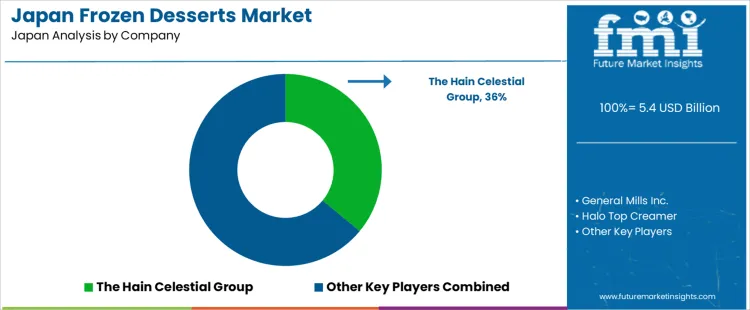
- Demand for Frozen Desserts in Japan Top Players: The Hain Celestial Group, General Mills Inc., Halo Top Creamer, Unilever, Kellogg Company
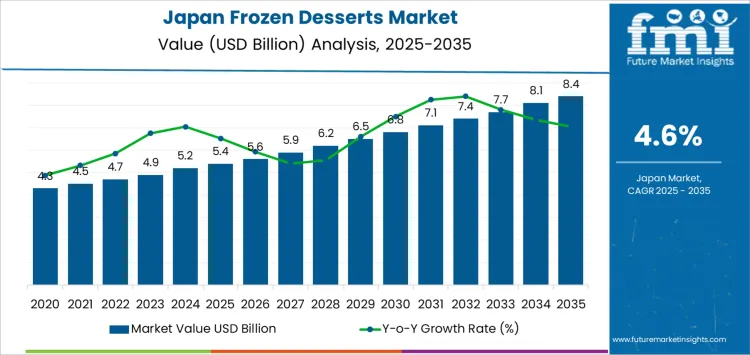
What is the Growth Forecast for the Demand for Frozen Desserts in Japan through 2035?
From 2025 to 2030, the demand for frozen desserts will steadily increase. Starting at USD 5.4 billion in 2025, it is expected to rise to USD 5.6 billion in 2026, driven by a consistent demand for traditional frozen dessert options. The industry will continue to grow steadily, reaching USD 5.9 billion in 2027, USD 6.2 billion in 2028, and USD 6.5 billion in 2029. By 2030, the demand for frozen desserts will reach USD 6.8 billion. This period will see a moderate and stable growth pattern, with demand driven by both traditional and healthier, lower-sugar alternatives. New product offerings with exotic or gourmet ingredients will continue to cater to consumer curiosity, helping maintain steady growth.
From 2030 to 2035, the growth rate will maintain a positive trend, with the demand for frozen desserts reaching USD 8.4 billion by 2035. This period will see gradual acceleration, fueled by a combination of increased consumer interest in healthier dessert options and continuous product innovation. Frozen desserts with novel flavor combinations, such as matcha-infused ice cream or plant-based sorbet, will appeal to Japanese consumers’ adventurous tastes. The growth rate volatility index during this phase will be moderate, driven by the increased industry penetration of new products and the growing number of consumers looking for unique dessert experiences. The continued demand for convenient, on-the-go frozen treats, combined with the focus on sustainability and health, will maintain the positive growth trajectory of frozen desserts in Japan.
Demand for Frozen Desserts in Japan Key Takeaways
| Metric | Value |
|---|---|
| Demand for Frozen Desserts in Japan Value (2025) | USD 5.4 billion |
| Demand for Frozen Desserts in Japan Forecast Value (2035) | USD 8.4 billion |
| Demand for Frozen Desserts in Japan Forecast CAGR (2025-2035) | 4.6% |
Why is the Demand for Frozen Desserts in Japan Growing?
The demand for frozen desserts in Japan is growing as consumer preferences shift toward indulgent yet convenient treats. Frozen desserts, such as ice cream, sorbets, and frozen yogurts, are increasingly popular as they offer a quick, satisfying solution to cravings for sweet treats, especially during Japan's hot summers. The convenience of ready-to-serve frozen desserts, coupled with innovations in flavors and ingredients, has led to an increase in their popularity among consumers seeking both indulgence and variety.
A major driver behind this growth is the growing interest in unique and premium frozen dessert options. As consumers become more adventurous with their taste preferences, manufacturers are responding with a broader range of exotic and gourmet flavors, as well as healthier alternatives, such as low-sugar or dairy-free options. These offerings cater to diverse consumer preferences, from those seeking luxurious, rich flavors to those who are more health-conscious but still enjoy the indulgence of a frozen dessert.
The rising popularity of frozen desserts is fueled by changing lifestyle patterns, particularly in urban areas, where busy consumers seek easy and quick solutions for dessert cravings. Advancements in production technology and the increasing availability of frozen desserts in both shops and convenience stores have made these products more accessible. As consumer interest in premium, health-conscious, and innovative frozen dessert options continues to grow, the demand for frozen desserts in Japan is expected to rise steadily through 2035.
What is the Segment-Wise Analysis of Demand for Frozen Desserts in Japan?
Demand for frozen desserts in Japan is segmented by product type and category. By product type, demand is divided into cakes, ice cream, and yogurts, with cakes leading at 50%. The demand is also segmented by category, including conventional and sugar-free, with conventional frozen desserts leading at 64%. Regionally, demand is divided into Kanto, Kinki, Chubu, Kyushu & Okinawa, Tohoku, and the Rest of Japan.
Why Do Cakes Lead the Demand for Frozen Desserts in Japan?
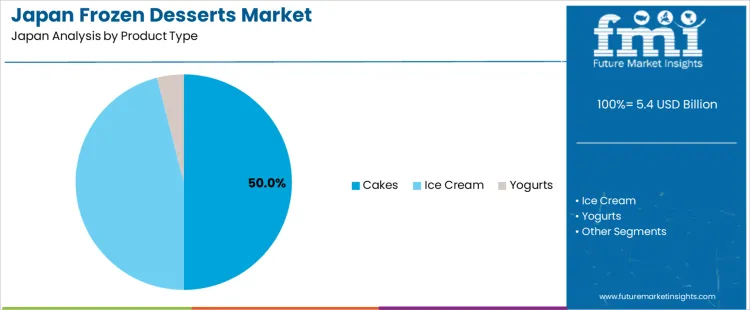
Cakes account for 50% of the demand for frozen desserts in Japan, driven by their versatility, wide appeal, and suitability for various occasions. Frozen cakes are popular due to their rich flavors, often incorporating elements like fruits, cream, and chocolate, which align with the Japanese preference for desserts that combine texture and taste. Cakes are also commonly enjoyed during celebrations, festivals, and holidays, which boosts their demand throughout the year. The variety of frozen cakes available, from traditional Japanese-inspired desserts to more Western-style options, caters to diverse consumer preferences. As convenience continues to be a key factor for consumers, frozen cakes offer an easy, ready-to-serve dessert that maintains its quality and flavor. With its cultural significance and broad consumer appeal, frozen cakes remain the dominant product type in the frozen dessert industry in Japan.
Why Do Conventional Frozen Desserts Lead the Demand in Japan?
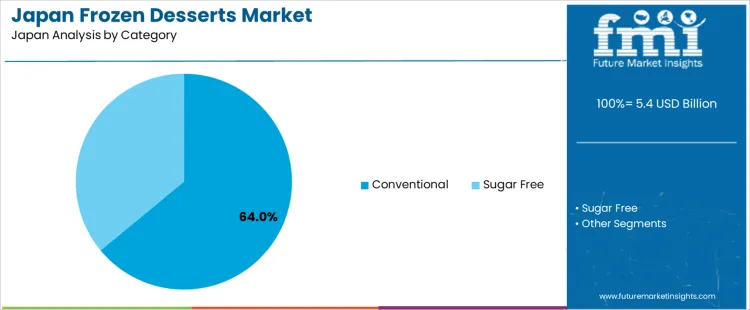
Conventional frozen desserts account for 64% of the demand in Japan, driven by consumer preference for traditional, familiar flavors and textures. Conventional frozen desserts, such as ice cream, cakes, and yogurts, are staples in Japanese dessert culture, offering indulgence and variety. These products provide a wide range of flavors, from matcha and red bean to chocolate and vanilla, making them popular among both young and older generations. The availability of conventional frozen desserts in a variety of formats, including individual servings and family-sized portions, further boosts their demand. While sugar-free options are gaining traction, conventional desserts remain the top choice due to their indulgent nature, high quality, and extensive variety. As Japan continues to appreciate traditional tastes and experiences, conventional frozen desserts will continue to lead the industry, maintaining their position as the preferred choice for frozen treats.
What are the Key Trends, Drivers, and Restraints in Demand for Frozen Desserts in Japan?
Demand for frozen desserts in Japan is steadily growing, driven by changing consumer preferences for convenience and indulgence. As modern lifestyles get busier, more people are turning to ready-to-eat frozen desserts like ice cream, frozen yogurt, and mochi ice cream. These desserts offer a quick, accessible treat that fits into the fast-paced life of urban dwellers. At The trend is shifting towards premium offerings that cater to health-conscious consumers. Products with lower sugar content, plant-based alternatives, and unique flavors are gaining popularity. Challenges remain, particularly with health concerns related to sugar and calorie content in traditional frozen desserts.
Why is Demand for Frozen Desserts Growing in Japan?
The growing demand for frozen desserts in Japan is linked to several key factors, primarily convenience and evolving consumer preferences. As Japan’s population becomes busier, with smaller households and longer working hours, ready-to-eat frozen desserts have become an attractive option for those seeking quick, satisfying treats. Convenience stores, shops, and cafés are increasingly offering a wide range of frozen desserts, making them more accessible to consumers. Japanese consumers are becoming more adventurous with their tastes, seeking unique flavors such as matcha, seasonal fruits, and even international dessert trends, contributing to the popularity of frozen desserts. The growing trend of premiumization, where consumers are willing to pay more for high-quality, artisanal, and healthier options, has also driven demand for frozen desserts.
How are Technological & Industry Innovations Driving Frozen Dessert Demand in Japan?
Technological innovations in frozen dessert production, packaging, and distribution are driving the demand for these products in Japan. Improved processing methods have enhanced the texture, flavor, and freeze-thaw stability of frozen desserts, making them more appealing to consumers. With better ingredient sourcing and formulation, products are now available in healthier variations, including lower-sugar, dairy-free, and plant-based options, catering to the growing health-conscious industry. Innovations in packaging, such as single-serving cups, resealable pouches, and temperature-sensitive designs, have made these products more convenient for consumers while ensuring the product stays fresh. The logistics behind frozen food distribution have also improved with better cold chain management, allowing for more reliable delivery and reducing spoilage.
What are the Key Challenges and Risks That Could Limit Frozen Dessert Demand in Japan?
One of the main challenges is the growing health consciousness among consumers, particularly concerns over sugar, fat, and calorie content. With the increasing popularity of health-focused diets, some consumers may shy away from traditional frozen desserts in favor of healthier alternatives. While premium and artisanal frozen desserts are gaining traction, price remains a key barrier for many consumers, especially those who are more price-sensitive. Logistics also pose challenges, as the cold chain required to maintain the quality and safety of frozen desserts can be expensive and complex, particularly for smaller producers. Competition from other dessert formats, such as fresh pastries, traditional Japanese sweets, and ready-to-eat chilled desserts, could also limit the growth of the frozen dessert industry.
What is the Regional Demand Outlook for Frozen Desserts in Japan?
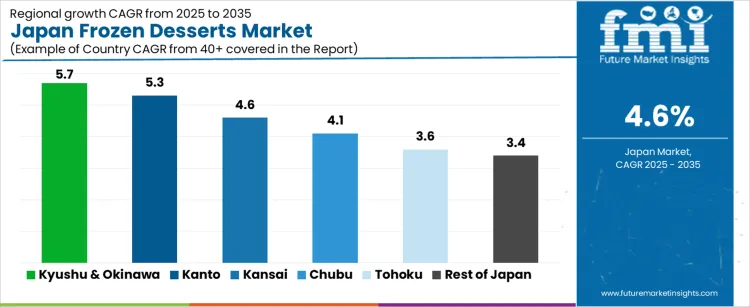
| Region | CAGR (%) |
|---|---|
| Kyushu & Okinawa | 5.7% |
| Kanto | 5.3% |
| Kansai | 4.6% |
| Chubu | 4.1% |
| Tohoku | 3.6% |
| Rest of Japan | 3.4% |
Demand for frozen desserts in Japan is growing across all regions, with Kyushu & Okinawa leading at a 5.7% CAGR, driven by a strong consumer preference for indulgent and refreshing treats. Kanto follows with a 5.3% CAGR, supported by the region’s large urban population and rising demand for convenient, premium dessert options. Kansai shows a 4.6% CAGR, driven by the region’s vibrant food culture and increasing interest in high-quality frozen desserts. Chubu experiences a 4.1% CAGR, with demand rising as urbanization continues and consumers seek new dessert experiences. Tohoku and the Rest of Japan see moderate growth at 3.6% and 3.4%, respectively, as frozen desserts continue to gain popularity among a broader consumer base.
How is Demand for Frozen Desserts Growing in Kyushu & Okinawa?
Kyushu & Okinawa leads the demand for frozen desserts, growing at a 5.7% CAGR. The region’s hot and humid climate, especially in Okinawa, makes frozen treats a popular option, particularly during the summer months. Okinawa, known for its tourism and focus on wellness, has seen a growing demand for both traditional and innovative frozen dessert offerings. Local consumers are becoming more adventurous in trying new flavors, including both international and local specialty desserts. The tourism sector in Okinawa contributes to the demand for high-quality frozen desserts as visitors seek unique culinary experiences. As demand for indulgent yet refreshing treats continues to rise, frozen desserts are becoming increasingly popular in both retail and foodservice sectors in Kyushu & Okinawa, ensuring steady growth in the region.
Why is Demand for Frozen Desserts Rising in Kanto?
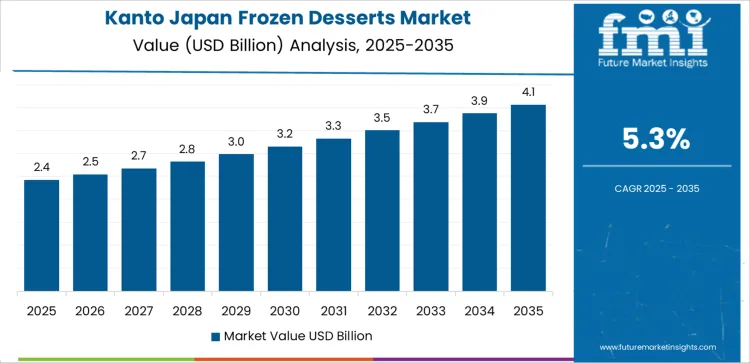
Kanto is experiencing strong demand for frozen desserts, with a 5.3% CAGR. The region’s large urban population, particularly in Tokyo, is a significant driver of this growth. As consumers in Kanto continue to seek convenient, premium dessert options, frozen desserts are becoming a popular choice for indulgence. Busy lifestyles and an increasing number of small households are driving demand for portion-controlled frozen treats. The rise in health-conscious eating in Kanto is leading to more demand for lower-calorie, dairy-free, and plant-based frozen desserts. With many consumers willing to pay a premium for high-quality products, Kanto’s diverse food culture has embraced a variety of frozen desserts, ranging from traditional ice cream to innovative gelatos and sorbets. The availability of frozen desserts through stores, convenience stores, and delivery apps further supports the growing demand in the region.
How is Demand for Frozen Desserts Expanding in Kansai?
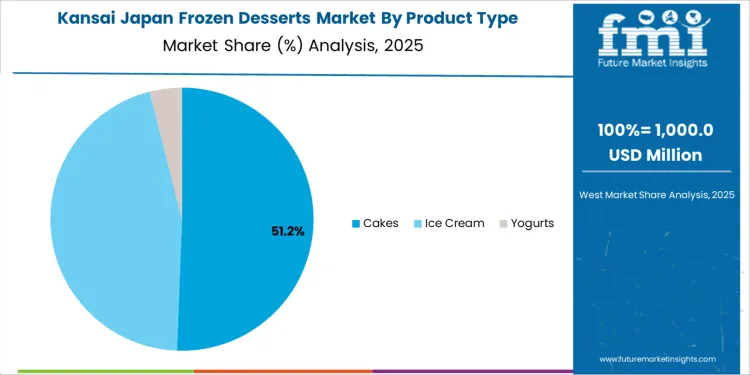
Kansai shows steady demand for frozen desserts, growing at a 4.6% CAGR. The region’s rich culinary culture, particularly in cities like Osaka and Kyoto, has seen increasing demand for high-quality frozen treats. As Kansai’s consumers become more health-conscious, there is a rising preference for frozen desserts made with natural ingredients and fewer artificial additives. The foodservice sector, including restaurants and cafes, is increasingly offering a variety of frozen desserts to complement their menu. Kansai’s vibrant food culture, with an interest in both traditional Japanese desserts and international frozen treats, is fueling this growth. Consumers are also more inclined to explore new flavors and textures, leading to a surge in demand for innovative frozen dessert offerings. As demand continues to grow, Kansai is expected to remain a strong industry for premium and diverse frozen dessert options.
Why is Demand for Frozen Desserts Growing in Chubu?
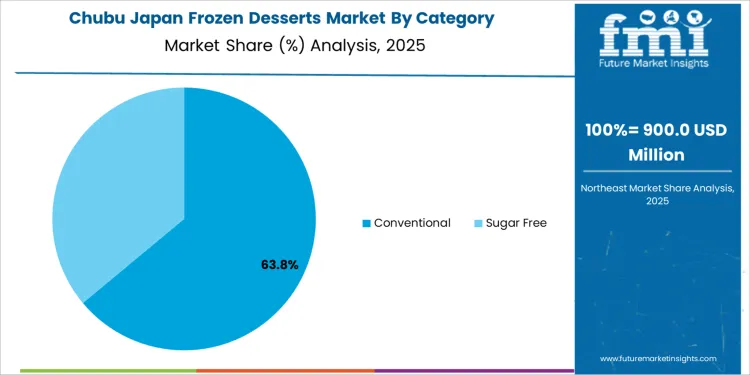
Chubu is witnessing steady demand for frozen desserts, growing at a 4.1% CAGR. The region’s urban centers, especially Nagoya, have seen a rise in the popularity of frozen desserts, with more consumers seeking indulgent yet convenient treats. As Chubu’s population becomes more aware of global food trends, frozen desserts like gelato, sorbet, and innovative frozen snacks are becoming increasingly popular. As consumer preferences shift towards healthier options, the demand for low-sugar, dairy-free, and vegan frozen desserts is growing. Local retailers and foodservice businesses are responding by expanding their frozen dessert offerings to cater to these trends. The growing interest in plant-based and functional desserts also contributes to the rising demand for frozen treats. As Chubu continues to modernize its foodservice and retail offerings, demand for frozen desserts is expected to maintain steady growth.
How is Demand for Frozen Desserts Expanding in Tohoku?
Tohoku is seeing moderate growth in frozen dessert demand, with a 3.6% CAGR. While the region’s pet population and consumer interest in frozen treats are smaller than urban areas, there is a gradual increase in demand as consumers become more interested in indulgent and refreshing products. Tohoku’s cold winters have traditionally slowed the demand for frozen desserts, but with improving distribution channels and a rising number of local foodservice providers offering frozen dessert options, consumption is growing. The increasing awareness of health-conscious eating in Tohoku is driving demand for lower-calorie, plant-based frozen desserts. As more local stores and eateries introduce frozen desserts to their menus, the region’s consumption of these products is expected to increase, albeit at a more moderate rate compared to more urbanized regions.
Why is Demand for Frozen Desserts Steady in the Rest of Japan?
The Rest of Japan is experiencing steady demand for frozen desserts, with a 3.4% CAGR. Although consumption is slower compared to urban centers, frozen desserts are gradually becoming more popular as consumer interest in convenience and indulgence rises. Smaller cities and rural areas are starting to see a rise in demand for frozen desserts, driven by local stores and foodservice providers offering these products. The growing availability of traditional and modern frozen treats in convenience stores, shops, and local eateries helps increase access to frozen desserts. As awareness of diverse dessert options continues to grow, including healthier alternatives like vegan or dairy-free choices, the Rest of Japan is likely to see steady growth in the demand for frozen desserts. This trend is expected to continue as the awareness of indulgent yet convenient treat options increases in smaller communities.
What is Driving the Demand for Frozen Desserts in Japan and Who Are the Key Players Shaping the Industry?
The demand for frozen desserts in Japan is growing as consumers increasingly seek indulgent yet convenient treat options that align with both taste preferences and health-conscious trends. Frozen desserts, including ice creams, sorbets, and frozen yogurt, are popular in Japan, where the hot summers drive a need for refreshing, cooling snacks. At the same time, consumers are becoming more health-conscious, pushing the demand for low-calorie, dairy-free, and plant-based frozen dessert options. Innovations in flavors and ingredients, such as the rise of protein-enriched and sugar-free options, are further fueling the industry. The popularity of global brands and the growing trend toward premium, high-quality frozen desserts have also contributed to the expansion of the industry in Japan.
Key players shaping the frozen desserts industry in Japan include The Hain Celestial Group, General Mills Inc., Halo Top Creamer, Unilever, and Kellogg Company. The Hain Celestial Group leads the industry with a significant share of 36%, offering a range of frozen dessert products, including organic and plant-based options under brands like Dream and So Delicious. These companies are at the forefront of providing a variety of frozen desserts that cater to Japan's evolving consumer preferences, including health-conscious and dietary-specific options. Their innovation in flavor offerings and commitment to high-quality ingredients are helping them capture the growing interest in frozen desserts.
The growth of the frozen dessert industry in Japan is also supported by the increasing demand for premium, gourmet treats as part of a broader trend toward experiential and indulgent eating. As the Japanese population becomes more diverse in its dietary preferences and open to new flavor experiences, frozen desserts are expected to continue thriving in both retail and foodservice settings. With ongoing innovations and a focus on health, the industry for frozen desserts is poised for further growth in Japan.
Key Players in Japan Frozen Desserts Demand
- The Hain Celestial Group
- General Mills Inc.
- Halo Top Creamer
- Unilever
- Kellogg Company
Scope of Report
| Items | Values |
|---|---|
| Quantitative Units (2025) | USD billion |
| Product Type | Cakes, Ice Cream, Yogurts |
| Category | Conventional, Sugar Free |
| Regions Covered | Kyushu & Okinawa, Kanto, Kansai, Chubu, Tohoku, Rest of Japan |
| Countries Covered | Japan |
| Key Companies Profiled | The Hain Celestial Group, General Mills Inc., Halo Top Creamer, Unilever, Kellogg Company |
| Additional Attributes | Dollar sales by product type and category; regional CAGR and growth trends; increasing demand for sugar-free and plant-based frozen desserts; innovations in packaging, flavors, and low-calorie options; shift toward indulgent yet healthier options; consumer preference for premium ice cream; rise in online retail and direct-to-consumer sales; impact of seasonal trends on product demand. |
Japan Frozen Desserts Demand by Key Segments
Product Type
- Cakes
- Ice Cream
- Yogurts
Category
- Conventional
- Sugar Free
Region
- Kyushu & Okinawa
- Kanto
- Kansai
- Chubu
- Tohoku
- Rest of Japan
Frequently Asked Questions
How big is the demand for frozen desserts in Japan in 2025?
The demand for frozen desserts in Japan is estimated to be valued at USD 5.4 billion in 2025.
What will be the size of frozen desserts in Japan in 2035?
The market size for the frozen desserts in Japan is projected to reach USD 8.4 billion by 2035.
How much will be the demand for frozen desserts in Japan growth between 2025 and 2035?
The demand for frozen desserts in Japan is expected to grow at a 4.6% CAGR between 2025 and 2035.
What are the key product types in the frozen desserts in Japan?
The key product types in frozen desserts in Japan are cakes, ice cream and yogurts.
Which category segment is expected to contribute significant share in the frozen desserts in Japan in 2025?
In terms of category, conventional segment is expected to command 64.0% share in the frozen desserts in Japan in 2025.
Preview the report firsthand - request a free sample
Get SampleGet the brochure for pricing and purchase details.
Get PDFTable of Content
- Executive Summary
- Japan Market Outlook
- Demand-side Trends
- Supply-side Trends
- Technology Roadmap Analysis
- Analysis and Recommendations
- Market Overview
- Market Coverage / Taxonomy
- Market Definition / Scope / Limitations
- Market Background
- Market Dynamics
- Drivers
- Restraints
- Opportunity
- Trends
- Scenario Forecast
- Demand in Optimistic Scenario
- Demand in Likely Scenario
- Demand in Conservative Scenario
- Opportunity Map Analysis
- Product Life Cycle Analysis
- Supply Chain Analysis
- Investment Feasibility Matrix
- Value Chain Analysis
- PESTLE and Porter’s Analysis
- Regulatory Landscape
- Regional Parent Market Outlook
- Production and Consumption Statistics
- Import and Export Statistics
- Market Dynamics
- Japan Market Analysis 2020 to 2024 and Forecast, 2025 to 2035
- Historical Market Size Value (USD Million) Analysis, 2020 to 2024
- Current and Future Market Size Value (USD Million) Projections, 2025 to 2035
- Y-o-Y Growth Trend Analysis
- Absolute $ Opportunity Analysis
- Japan Market Pricing Analysis 2020 to 2024 and Forecast 2025 to 2035
- Japan Market Analysis 2020 to 2024 and Forecast 2025 to 2035, By Product Type
- Introduction / Key Findings
- Historical Market Size Value (USD Million) Analysis By Product Type , 2020 to 2024
- Current and Future Market Size Value (USD Million) Analysis and Forecast By Product Type , 2025 to 2035
- Cakes
- Ice Cream
- Yogurts
- Y-o-Y Growth Trend Analysis By Product Type , 2020 to 2024
- Absolute $ Opportunity Analysis By Product Type , 2025 to 2035
- Japan Market Analysis 2020 to 2024 and Forecast 2025 to 2035, By Category
- Introduction / Key Findings
- Historical Market Size Value (USD Million) Analysis By Category, 2020 to 2024
- Current and Future Market Size Value (USD Million) Analysis and Forecast By Category, 2025 to 2035
- Conventional
- Sugar Free
- Y-o-Y Growth Trend Analysis By Category, 2020 to 2024
- Absolute $ Opportunity Analysis By Category, 2025 to 2035
- Market Structure Analysis
- Competition Dashboard
- Competition Benchmarking
- Market Share Analysis of Top Players
- By Regional
- By Product Type
- By Category
- Competition Analysis
- Competition Deep Dive
- The Hain Celestial Group
- Overview
- Product Portfolio
- Profitability by Market Segments (Product/Age /Sales Channel/Region)
- Sales Footprint
- Strategy Overview
- Marketing Strategy
- Product Strategy
- Channel Strategy
- General Mills Inc.
- Halo Top Creamer
- Unilever
- Kellogg Company
- The Hain Celestial Group
- Competition Deep Dive
- Assumptions & Acronyms Used
- Research Methodology


