

- Industry Size (2025)
- USD 42.2 Bn
- Forecast (2035)
- USD 74.1 Bn
- CAGR (2025 to 2035)
- 5.8%
Demand for Frozen Desserts in USA Forecast and Outlook 2025 to 2035
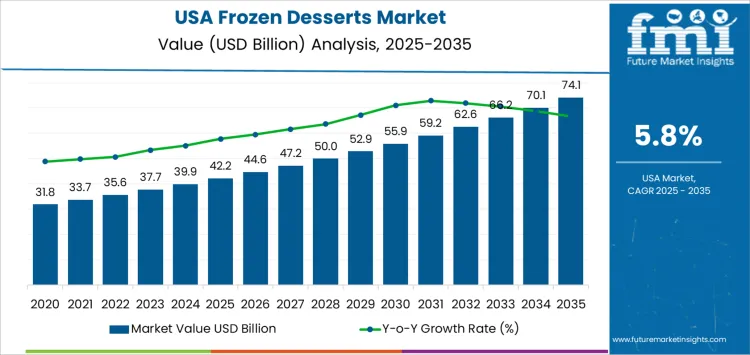
The demand for frozen desserts in the USA is expected to grow from USD 42.2 billion in 2025 to USD 74.1 billion by 2035, reflecting a compound annual growth rate (CAGR) of 5.8%. Frozen desserts, including ice cream, sorbets, frozen yogurt, and other frozen novelties, remain a key segment of the American food industry. Consumers’ increasing preference for indulgent yet convenient treats is driving industry growth, as frozen desserts provide an easy and enjoyable option for satisfying cravings. Innovations in flavors, textures, and ingredients have further boosted the appeal of frozen desserts, especially among younger and more adventurous consumers.
The availability of frozen desserts across multiple retail channels will also help drive industry growth. Supermarkets, convenience stores, and online platforms will continue to offer an expanding range of frozen dessert products, making them more accessible to a wide audience. Furthermore, sustainability trends, such as eco-friendly packaging and ingredient sourcing, will shape consumer preferences and support the growth of this category. As demand for frozen desserts continues to grow, the industry will see further diversification in product offerings, catering to a range of taste preferences, dietary needs, and lifestyle choices throughout the forecast period.
Quick Stats of the Demand for Frozen Desserts in USA
- Demand for Frozen Desserts in USA Value (2025): USD 42.2 billion
- Demand for Frozen Desserts in USA Forecast Value (2035): USD 74.1 billion
- Demand for Frozen Desserts in USA Forecast CAGR (2025 to 2035): 5.8%
- Demand for Frozen Desserts in USA Leading Product Type: Ice Cream
- Demand for Frozen Desserts in USA Key Growth Regions: West USA, South USA, Northeast USA, Midwest USA
- Demand for Frozen Desserts in USA Top Players: The Hain Celestial Group, General Mills Inc., Halo Top Creamer, Unilever, Kellogg Company
What is the Growth Forecast for the Demand for Frozen Desserts in USA through 2035?
From 2025 to 2030, demand for frozen desserts is expected to rise from USD 42.2 billion to USD 55.9 billion, adding USD 13.7 billion in value. This growth is fueled by the increasing variety of products, including those catering to dietary needs such as vegan, gluten-free, and organic options. Health-conscious consumers are increasingly seeking alternatives to traditional dairy-based frozen desserts, driving demand for non-dairy options made from almond, coconut, or oat milk. The growing trend of premium and artisanal frozen desserts is also contributing to the industry's expansion, as more consumers opt for higher-quality, more gourmet offerings at home.
From 2030 to 2035, the demand for frozen desserts will continue to rise from USD 55.9 billion to USD 74.1 billion, contributing USD 18.2 billion in value. This period will be marked by steady growth, largely driven by the continued innovation in the frozen dessert sector. Healthier alternatives, such as reduced-calorie, low-sugar, and high-protein frozen treats, will remain in high demand, as consumers become more focused on managing their health without sacrificing indulgence. These products will appeal to those looking for more balanced dessert options, further expanding the industry for frozen desserts.
Demand for Frozen Desserts in USA Key Takeaways
| Metric | Value |
|---|---|
| Demand for Frozen Desserts in USA Value (2025) | USD 42.2 billion |
| Demand for Frozen Desserts in USA Forecast Value (2035) | USD 74.1 billion |
| Demand for Frozen Desserts in USA Forecast CAGR (2025 to 2035) | 5.8% |
Why is the Demand for Frozen Desserts in USA Growing?
The demand for frozen desserts in the USA is growing due to the increasing preference for convenient, indulgent, and refreshing treat options, especially during warm weather. Frozen desserts, including ice cream, sorbet, frozen yogurt, and novelty items, are increasingly popular among consumers looking for delicious and easy-to-consume desserts. As innovation in flavors, textures, and dietary options continues to expand, the variety of frozen desserts available is driving industry growth.
A major factor contributing to this growth is the rising trend toward indulgence and convenience in food. Frozen desserts are seen as a convenient and quick treat, ideal for busy lifestyles, social gatherings, and as an after-meal dessert. The growing demand for healthier and more diverse alternatives, such as dairy-free, gluten-free, and low-sugar frozen desserts, is attracting a wider consumer base, including health-conscious individuals and those with dietary restrictions.
Innovations in the frozen dessert industry, such as the introduction of premium, artisanal products and exotic flavors, are appealing to consumers seeking more unique and high-quality options. The rise in plant-based eating and growing awareness of environmentally sustainable practices are also influencing the industry, with many frozen dessert manufacturers introducing plant-based and eco-friendly packaging options. As these trends continue to evolve, the demand for frozen desserts in the USA is expected to continue growing steadily through 2035.
What is the Segment-Wise Analysis of Demand for Frozen Desserts in USA?
Demand for frozen desserts in the USA is segmented by product type, category, and region. By product type, demand is divided into cakes, ice cream, and yogurts, with cakes leading at 50%. The demand is also segmented by category, including conventional and sugar-free, with conventional frozen desserts accounting for 64%. Regionally, demand is distributed across West USA, South USA, Northeast USA, and Midwest USA.
Why Do Cakes Lead the Demand for Frozen Desserts in USA?
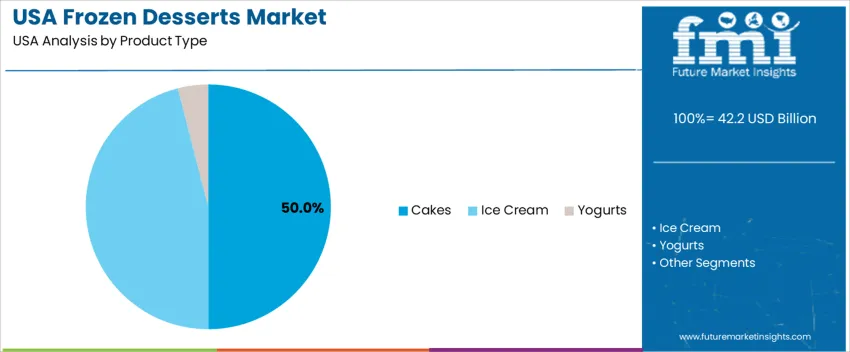
Cakes account for 50% of the demand for frozen desserts in the USA, driven by their popularity in both traditional and modern dessert offerings. Frozen cakes are favored for their versatility, as they are often used for special occasions such as birthdays, holidays, and other celebrations. Their ability to be easily stored and served in various portions further contributes to their widespread appeal. The demand for frozen cakes is also fueled by consumer preferences for indulgent and convenient dessert options. Cakes, especially those with rich flavors or unique designs, are a key part of the frozen dessert industry, especially as consumers seek ready-to-serve products that deliver high-quality taste and texture. As frozen desserts continue to be a part of American culinary traditions, cakes are expected to remain the dominant product type.
Why Does Conventional Frozen Dessert Lead the Demand in USA?
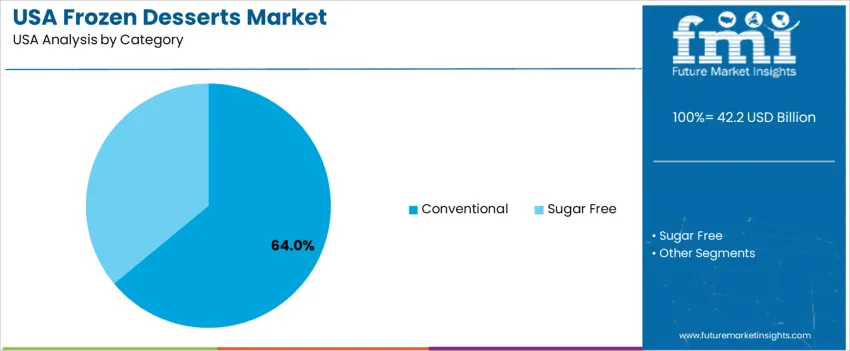
Conventional frozen desserts account for 64% of the demand, driven by the continued preference for traditional, indulgent frozen treats. Conventional frozen desserts, such as ice cream and cakes, are popular for their rich flavors, creamy textures, and wide variety of options. The large selection of flavors and textures available in conventional frozen desserts ensures they meet the tastes and preferences of a wide consumer base. While sugar-free and healthier alternatives are growing in demand, conventional frozen desserts still dominate the industry due to their strong cultural presence and the indulgence they offer. The accessibility, affordability, and enjoyment of traditional frozen desserts continue to drive demand, ensuring that conventional products maintain their lead in the frozen dessert sector in the USA.
What are the Key Trends, Drivers, and Restraints in Demand for Frozen Desserts in USA?
Demand for frozen desserts in the USA is rising, buoyed by strong consumer demand for indulgent and convenient treats such as ice cream, frozen yogurt, gelato, popsicles, and other novelty desserts. The industry benefits from high household penetration of frozen desserts, year-round consumption (not just in summer), and frequent innovation in flavors, formats, and health-category offerings (e.g., dairy-free, lower-sugar, or premium “gourmet” desserts). Health and nutrition concerns especially among consumers wary of sugar, fat, or calories can limit demand growth for traditional frozen desserts.
Why is Demand for Frozen Desserts Growing in USA?
Frozen desserts remain popular because they combine convenience, indulgence, and comfort. Many American consumers view ice cream or frozen treats as affordable “little luxuries” or comfort foods, suitable for daily consumption or social occasions. The expanding variety from classic ice creams to dairy-free, vegan, low-calorie and “better-for-you” versions attracts both traditional dessert lovers and health-conscious buyers. Moreover, retail accessibility (supermarkets, convenience stores, online grocery) and a broad range of product formats (single-serve, family tubs, novelty bars) make frozen desserts easy to purchase and consume at home. Innovations in flavors, textures, and premium-quality desserts fuel interest and repeat purchases, sustaining demand.
How are Technological & Industry Innovations Driving Frozen Dessert Demand in USA?
Industry innovation plays a key role in boosting demand for frozen desserts. Manufacturers are expanding offerings to include premium ice creams, artisanal flavors, plant-based and dairy-free options, and reduced-sugar or “clean-label” products aligning with changing consumer preferences for health and dietary variety. Innovation in packaging (single-serve cups, resealable tubs, portion-controlled novelties) improves convenience, reduces waste, and fits modern on-the-go lifestyles. The rise of direct-to-consumer and e-commerce channels, combined with improved cold-chain logistics, makes frozen desserts more widely available, even beyond major metro areas. All these factors make frozen desserts more accessible, diverse, and attractive, thereby expanding demand.
What are the Key Challenges and Risks That Could Limit Frozen Dessert Demand in USA?
Despite growth, frozen desserts face headwinds from changing consumer health attitudes. Rising awareness of the drawbacks of high-sugar, high-fat diets may push some consumers away from traditional frozen treats toward healthier or non-dessert alternatives. The cost of premium or specialty frozen desserts especially plant-based or artisanal may also deter price-sensitive buyers. Seasonal preference cycles (colder months may reduce casual consumption) and competition from other snacks or desserts (bakery items, fresh fruit, healthier snacks) can also dampen demand. Increased regulatory or societal focus on sugar reduction and nutritional labeling could influence consumption patterns.
What is the Regional Demand Outlook for Frozen Desserts in USA?
| Region | CAGR (%) |
|---|---|
| West USA | 6.7% |
| South USA | 6.0% |
| Northeast USA | 5.3% |
| Midwest USA | 4.6% |
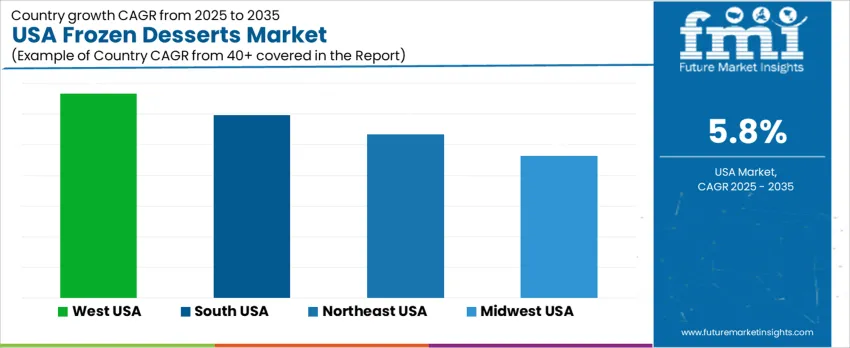
Demand for frozen desserts in the USA is growing steadily, with West USA leading at a 6.7% CAGR, driven by a health-conscious, diverse population and a warm climate. South USA follows with a 6.0% CAGR, supported by a focus on indulgent yet healthier dessert options and year-round demand. Northeast USA shows a 5.3% CAGR, fueled by a growing preference for premium and plant-based frozen desserts. Midwest USA experiences a 4.6% CAGR, with steady growth driven by consumer interest in health-conscious, convenient frozen treat options. As demand for innovative and healthier frozen desserts continues to rise, the industry will keep expanding across the USA.
How is Demand for Frozen Desserts Growing in West USA?
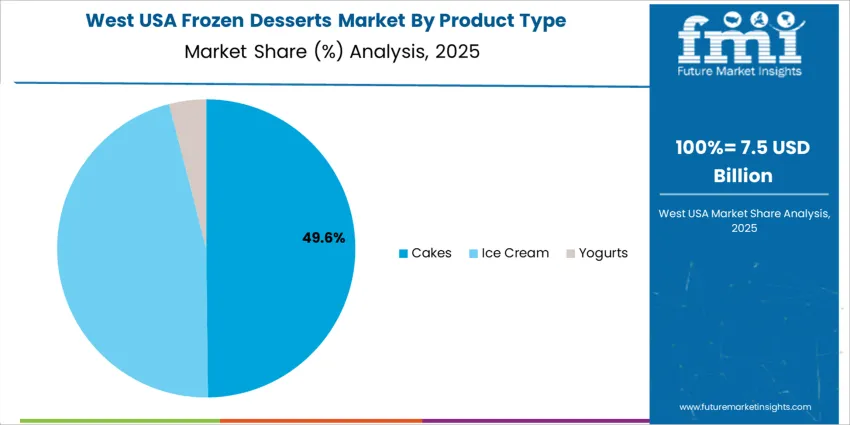
West USA leads the demand for frozen desserts, growing at a 6.7% CAGR. The region’s diverse and health-conscious population, particularly in urban areas like Los Angeles and San Francisco, is driving the increasing popularity of frozen desserts, especially healthier options such as plant-based or low-sugar varieties. The warm climate in much of the region also contributes to year-round demand for frozen treats. West USA’s focus on innovative, artisanal, and premium frozen desserts is boosting the industry, with consumers seeking unique flavors and premium ingredients. The region's thriving food culture, combined with increasing awareness of dietary preferences, further supports growth in frozen desserts. As demand for indulgent yet healthier frozen treats continues to rise, West USA will remain a key driver of the frozen dessert industry, with consumers seeking a balance between indulgence and wellness.
Why is Demand for Frozen Desserts Rising in South USA?
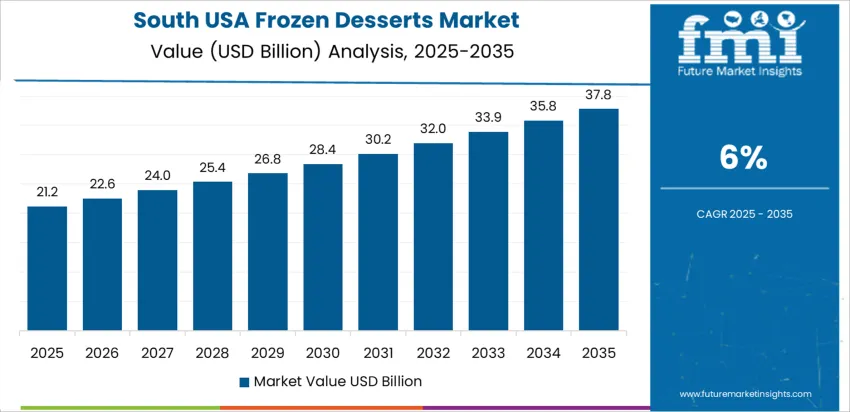
South USA is experiencing steady demand for frozen desserts, with a 6.0% CAGR. The region’s warm climate, especially in states like Texas and Florida, contributes to year-round demand for frozen treats, from traditional ice cream to newer, health-conscious options. The South USA’s increasing interest in plant-based and dairy-free alternatives to traditional frozen desserts is also fueling this growth. As consumers embrace healthier lifestyles, demand for frozen desserts with reduced sugar, organic ingredients, and fewer additives continues to rise. The region’s growing food culture and the popularity of indulgent treats, such as frozen yogurt and sorbets, further drive industry expansion. With strong consumer interest in both traditional and innovative frozen dessert options, demand in South USA is expected to remain strong, driven by diverse consumer preferences and the appeal of frozen treats in the hot climate.
How is Demand for Frozen Desserts Expanding in Northeast USA?
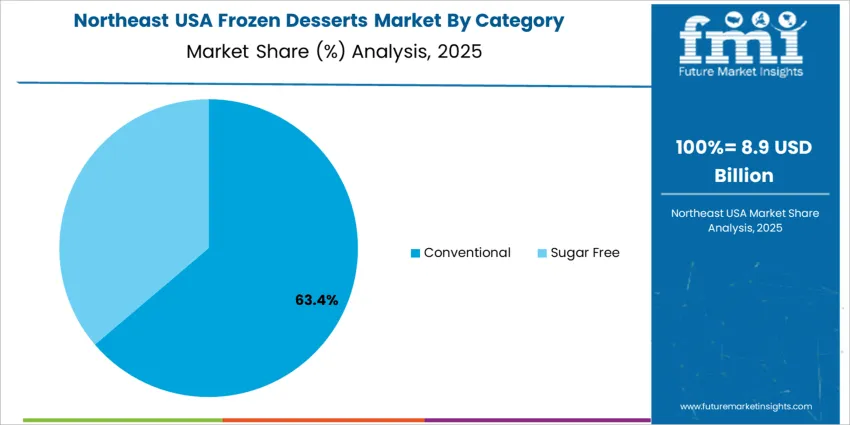
Northeast USA is seeing steady demand for frozen desserts, growing at a 5.3% CAGR. The region’s dense urban population, particularly in cities like New York and Boston, is contributing to the rise in demand for frozen desserts. As more consumers seek healthier dessert options, including low-sugar, dairy-free, and plant-based alternatives, the frozen dessert industry is expanding to meet these needs. The growing trend of indulgence paired with wellness has led to a shift toward frozen treats with functional benefits, such as probiotics in frozen yogurt or added protein in dairy-free options. The Northeast’s strong food culture and focus on premium, artisanal products also support the industry for high-quality frozen desserts. As consumer preferences evolve toward healthier, more sustainable choices, the demand for frozen desserts in Northeast USA will continue to grow steadily, with a focus on variety, quality, and innovation.
How is Demand for Frozen Desserts Growing in Midwest USA?
Midwest USA is experiencing moderate growth in demand for frozen desserts, with a 4.6% CAGR. The region’s diverse population and growing interest in healthier and more indulgent dessert options are contributing to the rising demand for frozen treats. As Midwest consumers increasingly seek healthier alternatives, plant-based, sugar-free, and dairy-free frozen desserts are gaining popularity. The region’s hot summer months also drive a seasonal boost in demand for frozen desserts, such as ice cream, frozen yogurt, and sorbets. The region’s growing focus on wellness and natural ingredients is supporting the demand for products made with organic or fewer artificial additives. With more consumers seeking indulgent yet health-conscious treats, the demand for frozen desserts in Midwest USA is expected to continue its steady growth. The growing variety of options available in grocery stores and eateries across the region also drives this upward trend.
What is the Competitive Landscape of Frozen Dessert Demand in USA?
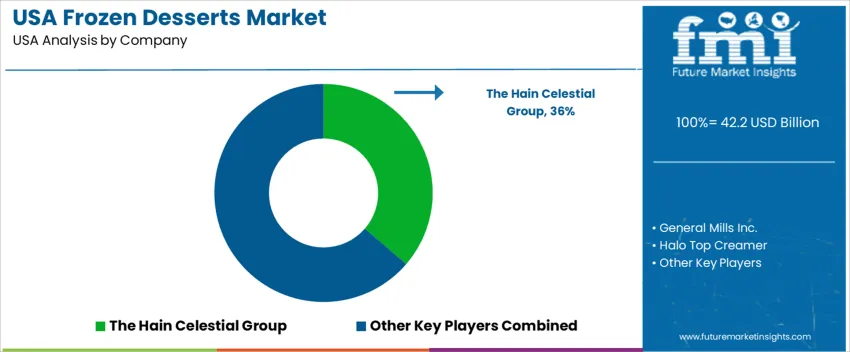
Demand for frozen desserts in the USA continues to grow, driven by consumers’ desire for indulgence, convenience, and variety. The popularity of ice cream, gelato, frozen yogurt, and novelty treats remains strong, as people increasingly look for ready-to-eat desserts and new flavor experiences. At the same time, there is a rising interest in healthier frozen dessert options, including sugar-free, low-calorie, and plant-based choices. As preferences evolve, frozen desserts are becoming an important part of the dessert experience, with new options catering to a wide range of dietary needs.
Leading providers in the USA frozen dessert space include The Hain Celestial Group, General Mills Inc., Halo Top Creamery, Unilever, and Kellogg Company. The Hain Celestial Group holds a significant share, with 36.3% of the demand. Other companies, such as General Mills, Unilever, and Kellogg, offer a variety of products from well-known brands, while Halo Top Creamery has carved out a niche by focusing on health-conscious consumers with low-calorie, high-protein frozen desserts. These companies compete by offering a mix of indulgent and healthier options, catering to a broad spectrum of taste preferences.
The demand for frozen desserts is driven by the continued craving for sweet indulgences, as well as a growing focus on healthier eating habits. As people look for more options to suit their lifestyles, the popularity of plant-based, low-sugar, and portion-controlled frozen desserts is on the rise. New flavor innovations and product formats, such as bars and mini-portions, also contribute to increased variety and appeal. Companies are competing by offering a balance of great taste, convenience, and health-conscious choices, aiming to attract a wide range of consumers from families to fitness enthusiasts.
Key Players in USA Frozen Desserts Demand
- The Hain Celestial Group
- General Mills Inc.
- Halo Top Creamer
- Unilever
- Kellogg Company
Scope of Report
| Items | Values |
|---|---|
| Quantitative Units (2025) | USD billion |
| Product Type | Cakes, Ice Cream, Yogurts |
| Category | Conventional, Sugar Free |
| Region | West USA, South USA, Northeast USA, Midwest USA |
| Countries Covered | USA |
| Key Companies Profiled | The Hain Celestial Group, General Mills Inc., Halo Top Creamer, Unilever, Kellogg Company |
| Additional Attributes | Dollar sales by product type and category; regional trends in demand for sugar-free and conventional frozen desserts; innovations in product formulations and packaging; increasing popularity of plant-based frozen desserts. |
USA Frozen Desserts Demand by Key Segments
Product Type:
- Cakes
- Ice Cream
- Yogurts
Category:
- Conventional
- Sugar Free
Region:
- West USA
- South USA
- Northeast USA
- Midwest USA
Frequently Asked Questions
How big is the demand for frozen desserts in USA in 2025?
The demand for frozen desserts in USA is estimated to be valued at USD 42.2 billion in 2025.
What will be the size of frozen desserts in USA in 2035?
The market size for the frozen desserts in USA is projected to reach USD 74.1 billion by 2035.
How much will be the demand for frozen desserts in USA growth between 2025 and 2035?
The demand for frozen desserts in USA is expected to grow at a 5.8% CAGR between 2025 and 2035.
What are the key product types in the frozen desserts in USA?
The key product types in frozen desserts in USA are cakes, ice cream and yogurts.
Which category segment is expected to contribute significant share in the frozen desserts in USA in 2025?
In terms of category, conventional segment is expected to command 64.0% share in the frozen desserts in USA in 2025.
Preview the report firsthand - request a free sample
Get SampleGet the brochure for pricing and purchase details.
Get PDFTable of Content
- Executive Summary
- USA Market Outlook
- Demand-side Trends
- Supply-side Trends
- Technology Roadmap Analysis
- Analysis and Recommendations
- Market Overview
- Market Coverage / Taxonomy
- Market Definition / Scope / Limitations
- Market Background
- Market Dynamics
- Drivers
- Restraints
- Opportunity
- Trends
- Scenario Forecast
- Demand in Optimistic Scenario
- Demand in Likely Scenario
- Demand in Conservative Scenario
- Opportunity Map Analysis
- Product Life Cycle Analysis
- Supply Chain Analysis
- Investment Feasibility Matrix
- Value Chain Analysis
- PESTLE and Porter’s Analysis
- Regulatory Landscape
- Regional Parent Market Outlook
- Production and Consumption Statistics
- Import and Export Statistics
- Market Dynamics
- USA Market Analysis 2020 to 2024 and Forecast, 2025 to 2035
- Historical Market Size Value (USD Million) Analysis, 2020 to 2024
- Current and Future Market Size Value (USD Million) Projections, 2025 to 2035
- Y-o-Y Growth Trend Analysis
- Absolute $ Opportunity Analysis
- USA Market Pricing Analysis 2020 to 2024 and Forecast 2025 to 2035
- USA Market Analysis 2020 to 2024 and Forecast 2025 to 2035, By Product Type
- Introduction / Key Findings
- Historical Market Size Value (USD Million) Analysis By Product Type , 2020 to 2024
- Current and Future Market Size Value (USD Million) Analysis and Forecast By Product Type , 2025 to 2035
- Cakes
- Ice Cream
- Yogurts
- Y-o-Y Growth Trend Analysis By Product Type , 2020 to 2024
- Absolute $ Opportunity Analysis By Product Type , 2025 to 2035
- USA Market Analysis 2020 to 2024 and Forecast 2025 to 2035, By Category
- Introduction / Key Findings
- Historical Market Size Value (USD Million) Analysis By Category, 2020 to 2024
- Current and Future Market Size Value (USD Million) Analysis and Forecast By Category, 2025 to 2035
- Conventional
- Sugar Free
- Y-o-Y Growth Trend Analysis By Category, 2020 to 2024
- Absolute $ Opportunity Analysis By Category, 2025 to 2035
- Market Structure Analysis
- Competition Dashboard
- Competition Benchmarking
- Market Share Analysis of Top Players
- By Regional
- By Product Type
- By Category
- Competition Analysis
- Competition Deep Dive
- The Hain Celestial Group
- Overview
- Product Portfolio
- Profitability by Market Segments (Product/Age /Sales Channel/Region)
- Sales Footprint
- Strategy Overview
- Marketing Strategy
- Product Strategy
- Channel Strategy
- General Mills Inc.
- Halo Top Creamer
- Unilever
- Kellogg Company
- The Hain Celestial Group
- Competition Deep Dive
- Assumptions & Acronyms Used
- Research Methodology


