

- Industry Size (2025)
- USD 15.2 Mn
- Forecast (2035)
- USD 25.6 Mn
- CAGR (2025 to 2035)
- 5.3%
Demand for Frozen Cooked Ready Meals in USA 2025 to 2035
The demand for frozen cooked ready meals in the USA is valued at USD 15.2 million in 2025 and is projected to reach USD 25.6 million by 2035, reflecting a CAGR of 5.3%. Demand aligns with time-constrained household routines, wider acceptance of frozen entrées as main-meal substitutes, and improvements in taste, nutrition, and packaging. Growth also benefits from the expansion of retail freezer space across supermarkets, club stores, and quick-commerce fulfilment networks. Manufacturers emphasize temperature-stable ingredients, sodium-controlled recipes, and preservative-free labeling to align with evolving dietary preferences.
Non-vegetarian meals hold the leading share due to higher penetration in protein-focused eating patterns and strong representation across meal genres such as poultry, beef, and seafood combinations. Product formats support portion-controlled servings and heat-and-eat convenience, making them suitable for lunch and dinner. Innovation includes premium comfort foods, global cuisines, and allergen-managed SKUs. Demand is strongest in the West, South, and Northeast, where population density, freezer-centric shopping habits, and dual-income households reinforce category rotation. Packaging focuses on reliable cold-chain compatibility and microwave-optimized materials that maintain texture and moisture. Conagra Brands, Nestlé USA, General Mills, Pinnacle Foods, and The Kraft Heinz Company are key suppliers focusing on recipe optimization, production line efficiency, and distribution reach across national grocery and online channels.
Quick Stats for USA Frozen Cooked Ready Meals Demand
- USA Frozen Cooked Ready Meals Sales Value (2025): USD 15.2 million
- USA Frozen Cooked Ready Meals Forecast Value (2035): USD 25.6 million
- USA Frozen Cooked Ready Meals Forecast CAGR (2025 to 2035): 5.3%
- Leading Product Type in USA Frozen Cooked Ready Meals Demand: Non-vegetarian Meals
- Key Growth Regions in USA Frozen Cooked Ready Meals Demand: West USA, South USA, Northeast USA
- Top Players in USA Frozen Cooked Ready Meals Demand: Conagra Brands, Nestlé USA, General Mills, Pinnacle Foods, The Kraft Heinz Company
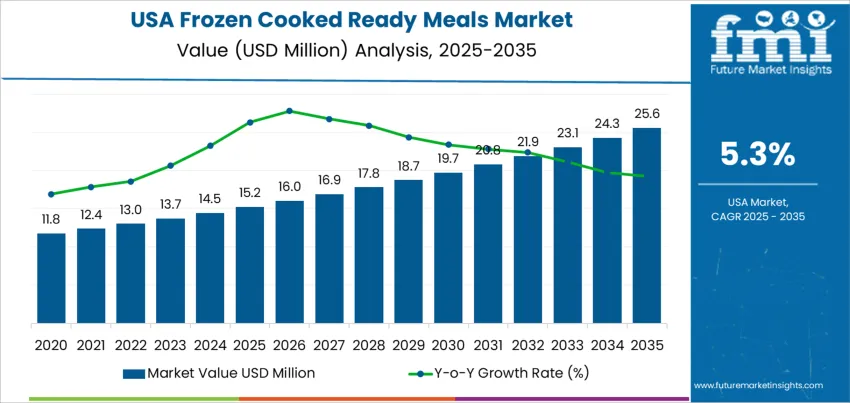
What is the Growth Forecast for Frozen Cooked Ready Meals Industry in USA through 2035?
Demand for frozen cooked ready meals in the United States shows two distinct growth phases across the assessment period. The early phase demonstrates stronger acceleration, supported by convenience-led consumption, wider freezer-aisle assortments, and adoption among working households seeking time-saving meal formats. Innovation in global cuisines, high-protein recipes, and dietary-specific product lines strengthens early uptake. Retail expansion through club stores and online grocery increases accessibility, adding to initial momentum.
The late phase of the timeline indicates steadier and more incremental growth. As penetration becomes higher, expansion depends more on product differentiation than first-time adoption. Health and nutrition expectations rise, creating pressure for improved clean-label formulations, reduced sodium, and premium ingredients. Private-label competition increases, limiting pricing flexibility and moderating revenue acceleration. Although demand remains resilient due to stable reliance on convenience food, the contribution from newly engaged buyers tapers gradually. Early growth reflects rapid behavioral shifts in meal preparation preferences. Later performance relies on value-added innovation and consumer perception of quality improvements to sustain continued gains in the United States frozen cooked ready meals category.
USA Frozen Cooked Ready Meals Key Takeaways
| Metric | Value |
|---|---|
| USA Frozen Cooked Ready Meals Sales Value (2025) | USD 15.2 million |
| USA Frozen Cooked Ready Meals Forecast Value (2035) | USD 25.6 million |
| USA Frozen Cooked Ready Meals Forecast CAGR (2025 to 2035) | 5.3% |
Why is the Demand for Frozen Cooked Ready Meals in the USA Growing?
Demand for frozen cooked ready meals in the USA is increasing because many consumers value convenience, extended shelf life and minimal preparation. Busy households, single workers and students rely on microwavable meals that provide quick, hot food with little effort. This trend accelerates when people live alone or have limited time for cooking. Growth in retail supermarket networks and e commerce grocery delivery expands access to a variety of meal kits including ethnic dishes, comfort foods and healthy balanced options. Manufacturers respond by offering portion-controlled and nutritionally labelled frozen meals to meet demand from busy consumers and health-conscious buyers.
Prepared frozen meals work well for emergency food storage and backup meal planning in households, which maintains baseline demand even during economic fluctuations. Foodservice and institutional buyers such as schools, assisted living facilities and corporate cafeterias also use frozen meals for efficient large-scale meal provision. Constraints include consumer preference for freshness and the perception that frozen meals are less healthy than fresh-cooked food. Packaging waste and environmental concerns influence purchasing behavior for some demographics. Some buyers avoid ready meals when they have dietary restrictions that require customized cooking.
Which Product Types, Packaging, and Distribution Channels Lead Demand for Frozen Cooked Ready Meals in the USA?
Demand for frozen cooked ready meals in the United States is driven by convenience-oriented consumption, dual-income household dependency on quick meal solutions, and expanding freezer capacity in modern kitchens. Consumers prioritize taste, nutrition, portion control, and clean-label formulations. Growth strengthens through innovations in premium entrées, global cuisines, and better-for-you options with reduced sodium and preservatives. Expansion in retail freezer aisles and improvements in cold-chain logistics support consistent product access nationwide.
By Product Type, Non-Vegetarian Meals Hold the Largest Share
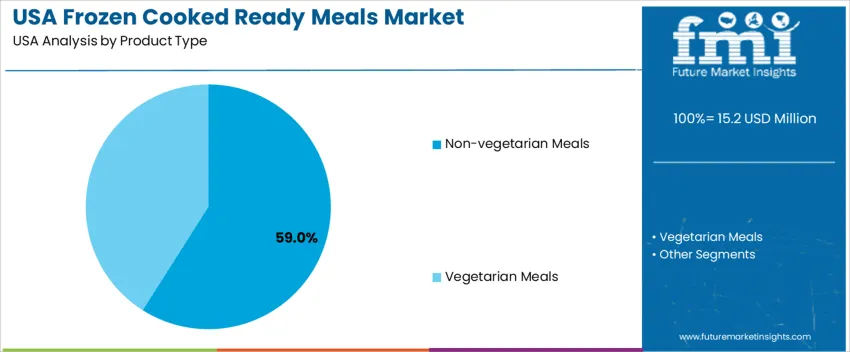
Non-vegetarian frozen meals dominate with 59.0%, reflecting high consumption of poultry, beef, and seafood entrées across USA households. Protein-rich meal kits, comfort foods, and microwave-ready dishes drive repeat purchases across family and single-serve formats. Vegetarian meals account for 41.0%, supported by plant-forward diets, meat-reduction habits, and flexitarian consumer behavior. These items include vegetable pasta, rice bowls, and plant-protein alternatives that strengthen label appeal for younger urban buyers. Product selection reflects affordability, preparation time under five minutes, and strong alignment with weekday dining needs in USA families.
Key Points:
- Non-vegetarian meals dominate due to protein-centric consumption patterns
- Vegetarian options grow through plant-based lifestyle adoption
- Single-serve convenience supports time-pressed household demand
By Packaging, Trays Maintain the Largest Share
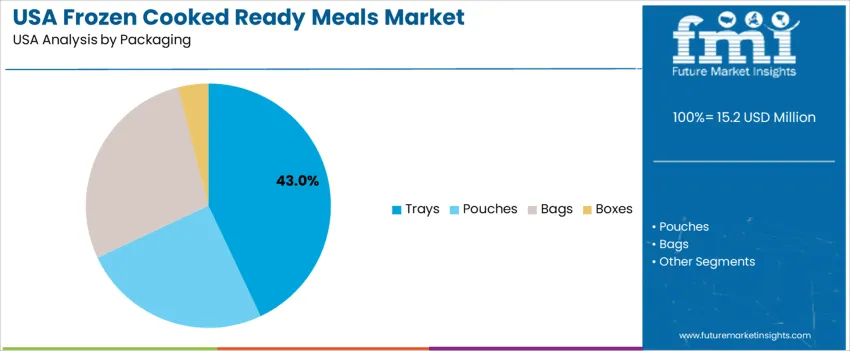
Trays capture 43.0%, benefiting from portion segmentation, structured product presentation, and oven- or microwave-ready USAbility. Bag packaging holds 28.0%, largely for multi-serve frozen entrées and skillet meal kits with reseal options. Pouches account for 25.0%, supporting lightweight distribution and younger consumer appeal in portable formats. Boxes represent 4.0%, mainly used for premium offerings requiring enhanced shelf visual appeal. Packaging choices reflect durability in freezing conditions, space optimization in grocery freezers, and clear cooking instructions suited for fast reheating behavior across USA homes.
Key Points:
- Trays lead due to heat-compatible formats and portion control
- Bags enable bulk purchases and family-sized cooking
- Pouches appeal to on-the-go consumers with compact storage benefits
By Distribution Channel, Convenience Stores Lead
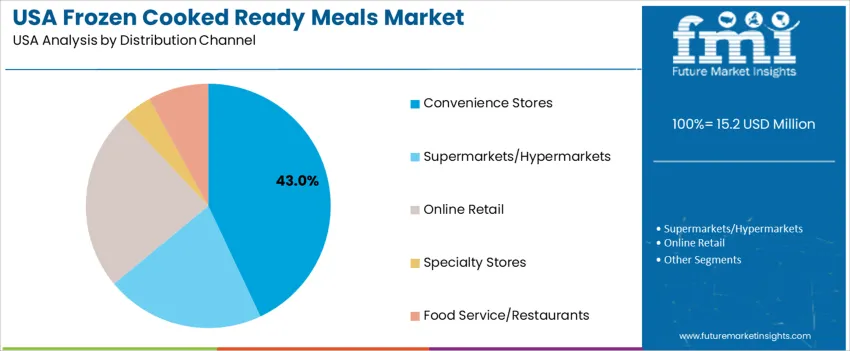
Convenience stores represent 43.0%, supported by immediate-need purchases and widespread geographic accessibility. Online retail holds 24.0%, expanding through home delivery, subscription services, and frozen-friendly logistics. Supermarkets and hypermarkets account for 21.0%, focusing on diverse SKUs and larger basket sizes. Foodservice and restaurant channels hold 8.0%, including retail co-branding with national chains. Specialty stores represent 4.0%, centered on organic and health-focused items. Distribution reflects dynamic USA buying patterns prioritizing speed, impulse decisions, and doorstep accessibility for frozen meal replenishment.
Key Points:
- Convenience stores lead due to grab-and-go shopping behavior
- Online sales grow through delivery-ready cold chain fulfillment
- Grocery retail supports variety and weekly stock replenishment
What are the Drivers, Restraints, and Key Trends of the Demand for Frozen Cooked Ready Meals in the USA?
Growth of busy lifestyles, increasing demand for convenient meal solutions and expansion of frozen meal variety drive demand.
In the United States, frozen cooked ready meals meet consumer needs for quick, affordable meals amid busy work schedules and dual-income households. Retailers stock a wide range of frozen dinners, from ethnic cuisine to balanced protein-and-vegetable plates, which appeal to working adults and students seeking minimal preparation. Growth of single-person and small-family households supports sales of individually-portioned entrees. Foodservice trends and restaurant closures increase interest in at-home dining convenience. Supermarket and club-store private-label lines expand frozen meal assortments to offer value and diversity across price points. These consumption patterns maintain reliable demand for frozen cooked meals across consumer demographics.
Health and nutrition concerns, growing demand for fresh and clean-label foods and negative perception of processed frozen meals restrain demand.
Consumers increasingly associate fresh or minimally processed foods with better nutrition, which reduces preference for frozen ready meals viewed as lacking freshness or containing preservatives. Dietary trends toward whole foods and home-cooked meals influence a portion of the population to limit frozen meal consumption. Sodium content, use of additives and lower perceived quality in traditional frozen meals discourage purchase by health-conscious buyers. These perceptions slow growth among demographics prioritizing nutrition and dietary control.
Shift toward premium and healthy frozen meal offerings, increased inclusion of globally inspired cuisines and rising demand from online grocery and meal-kit channels define key trends.
Manufacturers expand premium frozen meal lines emphasizing natural ingredients, balanced macronutrients and clean-label presentations to appeal to health-oriented consumers. Ethnic and internationally inspired dishes from Asian stir-fries to Mediterranean plates, gain traction among consumers seeking variety without cooking effort. Growth of online grocery shopping and direct-to-consumer meal-kit services boosts distribution of frozen ready meals, especially among urban professionals who value time efficiency. Packaging innovations improve microwave reheating performance and portion control, supporting convenience and waste reduction goals. These developments indicate stable, convenience-driven demand for frozen cooked ready meals across the United States retail and foodservice landscape.
Analysis of the Demand for Frozen Cooked Ready Meals in the USA by Region
Demand for frozen cooked ready meals in the United States continues to rise driven by time-constrained lifestyles, increasing dual-income households, and expanded preference for convenient meal formats with improved nutrition and clean-label features. Manufacturers introduce microwave-ready, portion-controlled, and premium protein meal solutions that appeal to both urban professionals and older consumers. Growth is supported by e-commerce grocery platforms and cold-chain improvements that ensure product freshness at wider distribution reach. West USA leads with 6.1% CAGR, followed by South USA at 5.5%, Northeast USA at 4.9%, and Midwest USA at 4.3%, each reflecting distinct retail dynamics, consumer health priorities, and food-service synergies.
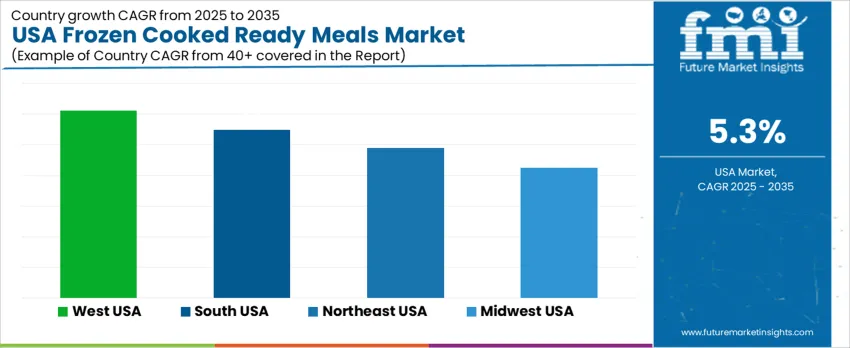
| Region | CAGR (2025-2035) |
|---|---|
| West USA | 6.1% |
| South USA | 5.5% |
| Northeast USA | 4.9% |
| Midwest USA | 4.3% |
How is the West USA driving demand for frozen cooked ready meals?
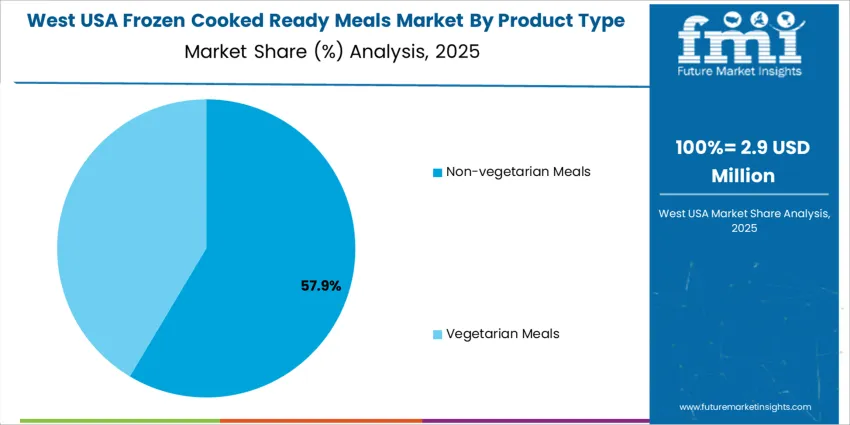
West USA is expanding at 6.1% CAGR, supported by strong consumer adoption of convenience meals in California, Washington, and Oregon where work schedules encourage quick meal solutions. Retailers expand product assortments including plant-forward recipes, global cuisines, and high-protein options. Fitness-oriented buyers demand calorie transparency and macro-balanced frozen meals integrated into diet-tracking applications. Distribution strength through West Coast logistics hubs supports rapid replenishment of freezer sections in major metros. Premium organic frozen categories gain traction among health-focused consumers who prioritize additive-free and minimally processed ingredients. Food-service operators and institutional buyers also incorporate heat-and-serve options for operational efficiency.
- Health-focused convenience products boosting freezer-aisle growth
- Large metro populations driving high turnover rates
- Global and plant-forward meal innovation supporting demand
- Strong cold-chain logistics enabling freshness and reach
How is the South USA shaping demand for frozen cooked ready meals?
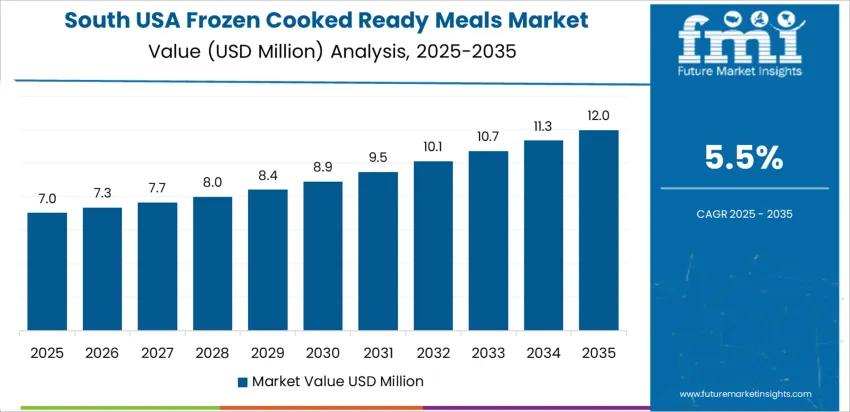
South USA grows at 5.5% CAGR, driven by expanding retail penetration in suburban areas and value-focused purchasing behavior in Texas, Florida, and Georgia. Manufacturers introduce family-size frozen entrées aligned with household-based consumption. Regional food-service distributors supply ready-meals for workplaces and institutional catering where labor-saving formats support cost efficiency. Warmer climate regions rely on frozen storage to maintain food safety and reduce spoilage risk. Retailer private-label innovation helps increase accessible price points while improving meal variety and nutrition profiles. Convenience-store channels experiment with frozen ready-meal microwavable formats near checkout zones supporting grab-and-go behavior.
- Family-size portions supporting suburban and household Usage
- Private-label growth sustaining affordability
- Institutional procurement encouraging steady demand
- Retail assortment expanding across alternative channels
How is the Northeast USA influencing ready-meal adoption?
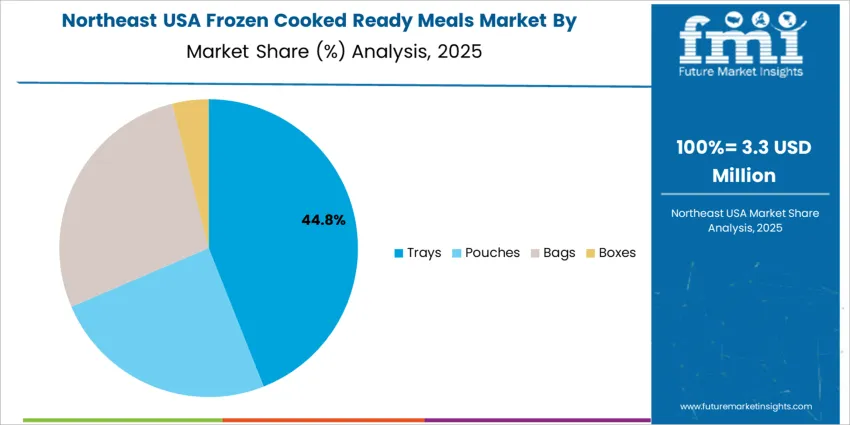
Northeast USA records 4.9% CAGR, influenced by compact living environments and time-efficient cooking habits in New York, New Jersey, and Massachusetts. High commuter populations prefer small-format frozen meals that heat quickly and reduce food waste. Premium health-aligned segments, including gluten-free and high-protein offerings, gain traction in wellness-driven metro industries. Retailers integrate freezer-door digital planograms to optimize product visibility. Cold-chain networks support delivery through online grocery and meal-subscription platforms. Sustainability concerns drive interest in recyclable packaging formats tied to frozen-meal brands.
- Commuter-oriented buying favoring portion-controlled meals
- Premium dietary claims reinforcing value perception
- Growing e-commerce fulfillment shaping distribution
- Packaging sustainability influencing procurement
How is the Midwest USA contributing to demand growth?
Midwest USA sees 4.3% CAGR, reflecting stable freezer-meal consumption tied to predictable meal-planning routines among family households in Illinois, Ohio, and Michigan. The region emphasizes cost-efficiency, favoring mainstream frozen entrées from established brands. Local distribution and processing hubs support widespread availability of ready-meals through supermarkets and discount retailers. Cold climates extend seasonal demand for hearty comfort-style meals, maintaining volume across winter months. Food manufacturers align product development toward shelf-life stability and reliable taste consistency accommodating long-term freezer storage.
- Value-centric consumer behavior reinforcing established brands
- Regional processing supporting efficient supply networks
- Weather-driven seasonality sustaining comfort-meal sales
- Stable family-size purchasing driving baseline volumes
How is competitive positioning distributed among companies supplying frozen cooked ready meals in the United States, and what strategic capabilities determine their share?
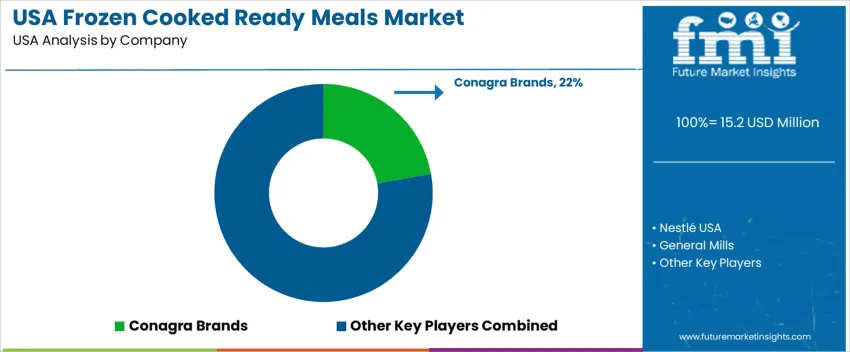
Competitive allocation in the United States frozen cooked ready meals segment is shaped by household meal convenience, brand familiarity, and strength in retail distribution. Conagra Brands leads with 22.2%, supported by a multi-category portfolio that includes widely recognized product lines positioned for affordability and national reach in grocery and mass retail. Broad category participation enables the company to stabilize volumes across shifting taste preferences. Nestlé USA maintains significant influence through strong cold-chain execution and clinical consumer insights that shape brand innovation in premium comfort meals and health-aligned frozen items. General Mills remains a notable participant through selective brand plays, maintaining presence in frozen segments that align with its broader household staples strategy.
Pinnacle Foods contributes through meal brands emphasizing convenience and portion versatility, allowing for continued relevance in both family and individual serving formats. The Kraft Heinz Company retains competitive footing via well-established center-store presence and the integration of frozen SKUs into recognizable food identities. Growth prospects depend on balancing cost pressures with upgraded nutritional positioning and cleaner formulations. Participants that refine production efficiency while adapting to high-protein, global-flavor trends remain best positioned to retain category momentum in the United States.
Key Players in USA Frozen Cooked Ready Meals Demand
- Conagra Brands
- Nestlé USA
- General Mills
- Pinnacle Foods
- The Kraft Heinz Company
Scope of the Report
| Items | Values |
|---|---|
| Quantitative Units | USD million |
| Product Type | Non-vegetarian Meals, Vegetarian Meals |
| Packaging | Trays, Pouches, Bags, Boxes |
| Distribution Channel | Convenience Stores, Supermarkets/Hypermarkets, Online Retail, Specialty Stores, Food Service/Restaurants |
| Regions Covered | West USA, South USA, Northeast USA, Midwest USA |
| Key Companies Profiled | Conagra Brands, Nestlé USA, General Mills, Pinnacle Foods, The Kraft Heinz Company |
| Additional Attributes | Dollar sales by product type, packaging format, and distribution channel; regional consumption and freezer-aisle penetration trends across West, South, Northeast, and Midwest USA; growth influenced by demand for time-saving nutrition, longer shelf-life options, and protein-rich meals; innovation in steam-trays, microwave-safe packaging, and plant-forward recipes; competitive landscape driven by retail private labels and national food processing companies expanding direct-to-consumer distribution. |
USA Frozen Cooked Ready Meals Demand by Segments
Product Type:
- Non-vegetarian Meals
- Vegetarian Meals
Packaging:
- Trays
- Pouches
- Bags
- Boxes
Distribution Channel:
- Convenience Stores
- Supermarkets/Hypermarkets
- Online Retail
- Specialty Stores
- Food Service/Restaurants
Region:
- West USA
- South USA
- Northeast USA
- Midwest USA
Frequently Asked Questions
How big is the demand for frozen cooked ready meals in USA in 2025?
The demand for frozen cooked ready meals in USA is estimated to be valued at USD 15.2 million in 2025.
What will be the size of frozen cooked ready meals in USA in 2035?
The market size for the frozen cooked ready meals in USA is projected to reach USD 25.6 million by 2035.
How much will be the demand for frozen cooked ready meals in USA growth between 2025 and 2035?
The demand for frozen cooked ready meals in USA is expected to grow at a 5.3% CAGR between 2025 and 2035.
What are the key product types in the frozen cooked ready meals in USA?
The key product types in frozen cooked ready meals in USA are non-vegetarian meals and vegetarian meals.
Which packaging segment is expected to contribute significant share in the frozen cooked ready meals in USA in 2025?
In terms of packaging, trays segment is expected to command 43.0% share in the frozen cooked ready meals in USA in 2025.
Preview the report firsthand - request a free sample
Get SampleGet the brochure for pricing and purchase details.
Get PDFTable of Content
- Executive Summary
- USA Market Outlook
- Demand-side Trends
- Supply-side Trends
- Technology Roadmap Analysis
- Analysis and Recommendations
- Market Overview
- Market Coverage / Taxonomy
- Market Definition / Scope / Limitations
- Market Background
- Market Dynamics
- Drivers
- Restraints
- Opportunity
- Trends
- Scenario Forecast
- Demand in Optimistic Scenario
- Demand in Likely Scenario
- Demand in Conservative Scenario
- Opportunity Map Analysis
- Product Life Cycle Analysis
- Supply Chain Analysis
- Investment Feasibility Matrix
- Value Chain Analysis
- PESTLE and Porter’s Analysis
- Regulatory Landscape
- Regional Parent Market Outlook
- Production and Consumption Statistics
- Import and Export Statistics
- Market Dynamics
- USA Market Analysis 2020 to 2024 and Forecast, 2025 to 2035
- Historical Market Size Value (USD Million) Analysis, 2020 to 2024
- Current and Future Market Size Value (USD Million) Projections, 2025 to 2035
- Y-o-Y Growth Trend Analysis
- Absolute $ Opportunity Analysis
- USA Market Pricing Analysis 2020 to 2024 and Forecast 2025 to 2035
- USA Market Analysis 2020 to 2024 and Forecast 2025 to 2035, By Product Type
- Introduction / Key Findings
- Historical Market Size Value (USD Million) Analysis By Product Type , 2020 to 2024
- Current and Future Market Size Value (USD Million) Analysis and Forecast By Product Type , 2025 to 2035
- Non-vegetarian Meals
- Vegetarian Meals
- Y-o-Y Growth Trend Analysis By Product Type , 2020 to 2024
- Absolute $ Opportunity Analysis By Product Type , 2025 to 2035
- USA Market Analysis 2020 to 2024 and Forecast 2025 to 2035, By Packaging
- Introduction / Key Findings
- Historical Market Size Value (USD Million) Analysis By Packaging, 2020 to 2024
- Current and Future Market Size Value (USD Million) Analysis and Forecast By Packaging, 2025 to 2035
- Trays
- Pouches
- Bags
- Boxes
- Y-o-Y Growth Trend Analysis By Packaging, 2020 to 2024
- Absolute $ Opportunity Analysis By Packaging, 2025 to 2035
- USA Market Analysis 2020 to 2024 and Forecast 2025 to 2035, By Distribution Channel
- Introduction / Key Findings
- Historical Market Size Value (USD Million) Analysis By Distribution Channel, 2020 to 2024
- Current and Future Market Size Value (USD Million) Analysis and Forecast By Distribution Channel, 2025 to 2035
- Convenience Stores
- Supermarkets/Hypermarkets
- Online Retail
- Specialty Stores
- Food Service/Restaurants
- Y-o-Y Growth Trend Analysis By Distribution Channel, 2020 to 2024
- Absolute $ Opportunity Analysis By Distribution Channel, 2025 to 2035
- Market Structure Analysis
- Competition Dashboard
- Competition Benchmarking
- Market Share Analysis of Top Players
- By Regional
- By Product Type
- By Packaging
- By Distribution Channel
- Competition Analysis
- Competition Deep Dive
- Conagra Brands
- Overview
- Product Portfolio
- Profitability by Market Segments (Product/Age /Sales Channel/Region)
- Sales Footprint
- Strategy Overview
- Marketing Strategy
- Product Strategy
- Channel Strategy
- Nestlé USA
- General Mills
- Pinnacle Foods
- The Kraft Heinz Company
- Conagra Brands
- Competition Deep Dive
- Assumptions & Acronyms Used
- Research Methodology


