

- Industry Size (2025)
- USD 69.9 Mn
- Forecast (2035)
- USD 130.5 Mn
- CAGR (2025 to 2035)
- 6.5%
Demand for Period Patch in Japan 2025 to 2035
The Japan period patch demand is valued at USD 69.9 million in 2025 and is projected to reach USD 130.5 million by 2035, reflecting a CAGR of 6.5%. Demand is shaped by a rising preference for non-oral menstrual pain relief and increased awareness of self-care products that minimize systemic side effects. Broader adoption in younger consumer groups and expanded retail visibility through pharmacies and e-commerce channels support growth. Improved affordability and frequent product innovations in patch formulations also play a role. Cool patches represent the leading product category. These patches are selected for mild analgesic approaches that provide comfort through cooling sensations targeting abdominal discomfort. Ease of use, discreet application, and compatibility with daily activities contribute to recurring purchases and strong brand loyalty.
Kyushu & Okinawa, Kanto, and Kansai demonstrate the highest adoption levels due to dense retail distribution networks, established healthcare infrastructure, and heightened product visibility in urban markets. Regional consumer health campaigns addressing menstrual wellness contribute to further uptake. Key suppliers include Hisamitsu Pharmaceutical Co., Inc., Kao Corporation, Osaki Medical Co., Ltd., Kobayashi Pharmaceutical Co., Ltd., and Lion Corporation. Competitive priorities emphasize enhanced adhesion systems, skin-safe ingredients, improved cooling duration, and product lines tailored to varying pain-intensity needs.
Quick Stats for Japan Period Patch Demand
- Japan Period Patch Sales Value (2025): USD 69.9 million
- Japan Period Patch Forecast Value (2035): USD 130.5 million
- Japan Period Patch Forecast CAGR (2025–2035): 6.5%
- Leading Product Type in Japan Period Patch Demand: Cool Patch
- Key Growth Regions in Japan Period Patch Demand: Kyushu & Okinawa, Kanto, Kansai
- Top Players in Japan Period Patch Demand: Hisamitsu Pharmaceutical Co., Inc., Kao Corporation, Osaki Medical Co., Ltd., Kobayashi Pharmaceutical Co., Ltd., Lion Corporation
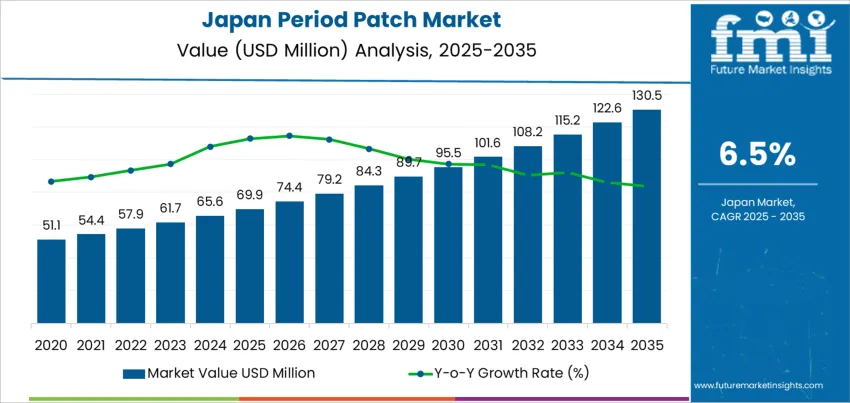
What is the Growth Forecast for Period Patch Industry in Japan through 2035?
Demand for period patches in Japan reflects a contribution structure led by health-conscious consumers seeking non-oral menstrual wellness options. The primary growth contribution comes from younger demographics and working women who favor discreet, heat-based or transdermal comfort solutions. Retail expansion through e-commerce channels increases accessibility, enabling steady incremental gains from convenience-driven purchasing.
A secondary contribution emerges from wellness positioning in drugstores and specialty health outlets. Branding that emphasizes comfort support without systemic medication appeals to users managing mild to moderate pain, adding niche volume. Product education influences adoption levels, and areas with higher awareness deliver stronger contributions compared to traditionally medication-reliant segments.
Medical recommendations contribute minimally but help reinforce credibility among sensitive users. Ecofriendly considerations in adhesive and base materials may also shift contribution over time as brands differentiate through recyclable packaging. The Growth Contribution Index therefore shows a category driven by targeted consumer needs rather than broad household penetration, generating steady, wellness-oriented growth within Japan’s menstrual-care landscape.
Japan Period Patch Key Takeaways
| Metric | Value |
|---|---|
| Japan Period Patch Sales Value (2025) | USD 69.9 million |
| Japan Period Patch Forecast Value (2035) | USD 130.5 million |
| Japan Period Patch Forecast CAGR (2025-2035) | 6.5% |
Why is the Demand for Period Patches in Japan Growing?
Demand for period patches in Japan is increasing because more women seek non-oral and non-invasive options to manage menstrual discomfort without relying solely on medication. Period patches deliver heat or topical active ingredients directly to the lower abdomen or back, which supports relief during daily activities, commuting and work environments common in Japan. Discreet sizing and thin materials allow patches to be worn under clothing with minimal visibility, which appeals to users who prefer practical solutions outside the home.
Pharmacies, convenience stores and e commerce platforms provide easy access to patches with different warming durations and ingredients such as menthol or herbal extracts. Broader awareness of women’s health encourages first time buyers to try supportive products that offer comfort while maintaining mobility. Increasing participation of women in full time employment reinforces demand for solutions that reduce disruption during work hours. Constraints include cost sensitivity for frequent monthly use, variability in perceived effectiveness and limited awareness among older consumers who are accustomed to traditional remedies or oral pain relief. Some users avoid certain formulations due to skin sensitivity or concerns about adhesives during extended wear.
Which Product Types and Sales Channels Lead Demand for Period Patches in Japan?
Demand for period patches in Japan is shaped by the pursuit of non-oral menstrual pain relief options that prioritize comfort, discreet use, and minimal side effects. These patches are increasingly preferred by consumers looking for fast local relief without reliance on traditional analgesics. Growth is reinforced by high awareness of self-care products, strong participation of pharmacy retail chains, and wider online access to wellness brands. Innovation focuses on skin-safe adhesives, long-lasting temperature control, and compatibility with active lifestyles.
By Product Type, Cool Patches Hold the Largest Share
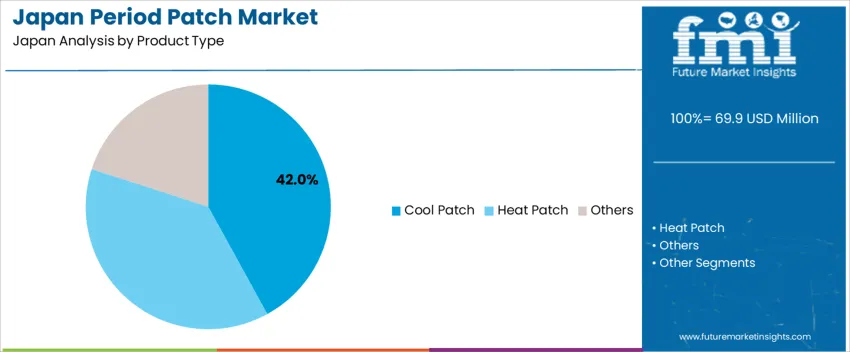
Cool patches account for 42.0%, reflecting widespread use for inflammation control, soothing effects, and suitability for individual’s sensitive to heat-based therapies. They are often preferred during warmer weather and for users experiencing swelling or discomfort without severe cramping. Heat patches follow at 38.0%, valued for relieving muscle constriction and tension, especially during peak pain episodes. These patches remain popular among working women seeking wearable, concealed relief throughout long commute or work hours. The other segment, representing 20.0%, includes aromatherapy patches and medicated variants formulated with herbal extracts tailored for natural wellness positioning. Product adoption aligns with Japan’s preference for topical therapies delivering targeted, residue-free comfort without interrupting daily activities.
Key Points:
- Cool patches widely used for soothing and anti-inflammatory support
- Heat patches preferred for strong cramp relief and mobility comfort
- Natural and medicated patches expand niche self-care appeal
By Sales Channel, Supermarkets and Hypermarkets Lead
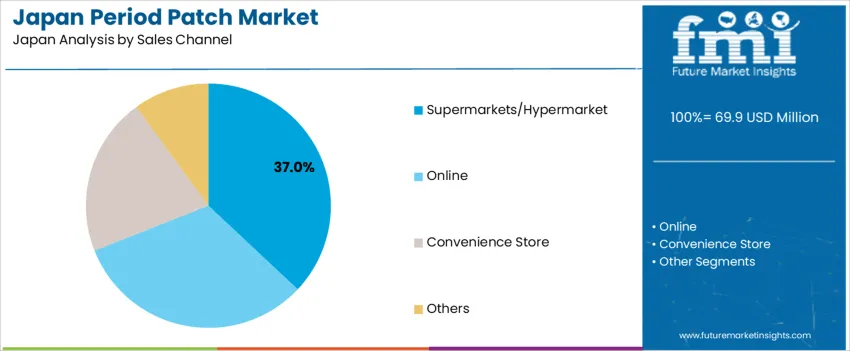
Supermarkets and hypermarkets account for 37.0%, supported by wide distribution, frequent household shopping trips, and familiarity with personal care categories placed in easily accessible aisles. Online sales represent 32.0%, growing due to privacy preference, subscription availability, and influencer-driven product discovery. Convenience stores capture 21.0%, benefiting from Japan’s dense retail network that supports impulse purchases and immediate relief needs. The other channels segment, at 10.0%, includes drugstores and specialty wellness shops where expert recommendations influence purchasing among first-time users. Channel dynamics reflect strong retail penetration, rising digital-first consumer behavior, and demand for easily restocked home-care essentials.
Key Points:
- Mass retail supports fast replenishment and trusted brand presence
- E-commerce benefits from privacy, promotions, and subscription options
- Convenience stores fulfill urgent, on-the-go pain relief requirements
What are the Drivers, Restraints, and Key Trends of the Demand for Period Patches in Japan?
Growth of discreet menstrual pain management, increased workplace participation of women and rising acceptance of non-oral pain relief products are driving demand.
In Japan, period patch adoption grows as many women prefer convenient and discreet heat or herbal patches for menstrual discomfort during work and commuting. Companies encourage productivity and comfort initiatives, particularly in urban offices across Tokyo, Osaka and Nagoya, where long working hours lead to demand for portable relief solutions. Pharmacies and convenience stores near train stations carry a broad selection of menstrual-care products, improving accessibility for consumers seeking fast-purchase pain management. Younger women show increased interest in patches that provide localized relief without medication, supporting steady retail movement. Online beauty and wellness platforms promote subscription-based purchases for monthly supply plans, expanding distribution beyond traditional channels.
Cultural hesitation to discuss menstrual pain, price sensitivity compared with generic oral analgesics and limited consumer familiarity with newer patch types restrain demand.
Menstrual discomfort often remains a private topic in Japan, which may reduce open promotion and education about newer patch products. Oral painkillers remain inexpensive and widely recognized, creating cost comparison challenges for premium-priced patches. Some consumers remain unfamiliar with hydrogel or essential-oil-based patches and their expected duration of relief, delaying trial among first-time users. These cultural and economic factors contribute to selective adoption across age groups.
Shift toward heat-generating patches for commuter use, increased development of skin-friendly materials and rising demand in personalized wellness offerings define key trends.
Heat patches designed to be worn under clothes are gaining popularity among daily commuters who require comfort during travel on crowded rail networks. Manufacturers focus on gentle adhesives and breathable materials that reduce skin irritation during extended wear. Period-care brands are promoting patches as part of holistic wellness kits that include supplements, hygiene products and tracking apps tailored to individual cycle patterns. Retailers are expanding shelf visibility through bundled promotions in drugstores that target students and young professionals. These trends suggest growing but niche demand for period patches within Japan’s evolving feminine wellness industry.
Analysis of the Demand for Period Patches in Japan by Region
Demand for period patches in Japan is linked to consumer awareness of non-oral pain-relief options, product placement in pharmacies and convenience stores, and interest in discreet menstrual-care solutions. Usage expands in working-age and student populations who prefer wearable products with localized warmth or topical support during menstrual cycles. Regional variation reflects retail accessibility, healthcare engagement, and wellness-product adoption. Growth is led by Kyushu & Okinawa (8.1% CAGR), followed by Kanto (7.4%), Kansai (6.5%), Chubu (5.7%), Tohoku (5.0%), and the Rest of Japan (4.8%).
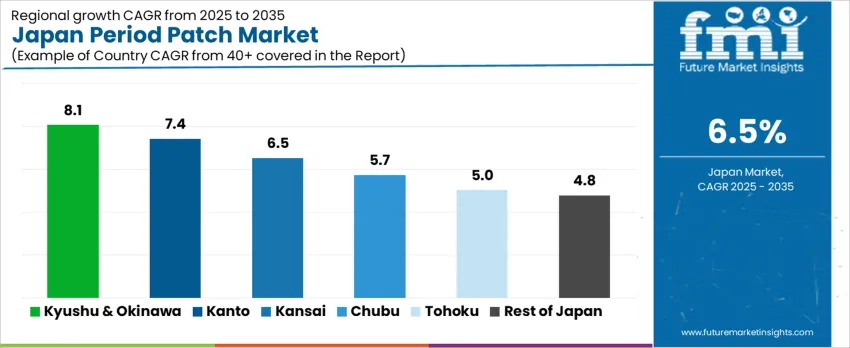
| Region | CAGR (2025-2035) |
|---|---|
| Kyushu & Okinawa | 8.1% |
| Kanto | 7.4% |
| Kansai | 6.5% |
| Chubu | 5.7% |
| Tohoku | 5.0% |
| Rest of Japan | 4.8% |
How are Kyushu & Okinawa driving demand for period patches?
Kyushu & Okinawa record 8.1% CAGR with retail adoption across pharmacies, supermarkets, and convenience channels where menstrual-care products maintain essential shelf space. Product purchasing increases among working women seeking discreet pain-support formats compatible with active daily routines. Tourism-driven commercial zones include wellness sections that reinforce awareness among travelers. Distribution in humid coastal climates encourages interest in breathable patch materials that remain comfortable under lightweight clothing. Consumer selection prioritizes adhesives that remain stable during movement. Regional clinics and women’s health education programs promote non-pharmaceutical relief alternatives, encouraging first-time trials. Retailers rotate pack sizes to support both emergency purchasing and monthly replenishment patterns. Subscription delivery services expand in urban pockets, improving visibility for newer formulations.
- Women’s health outreach increasing trial adoption
- Discreet and portable usage supporting retail velocity
- Adhesive comfort evaluated for active movement
- Tourism-linked exposure expanding brand reach
How is Kanto shaping product uptake?
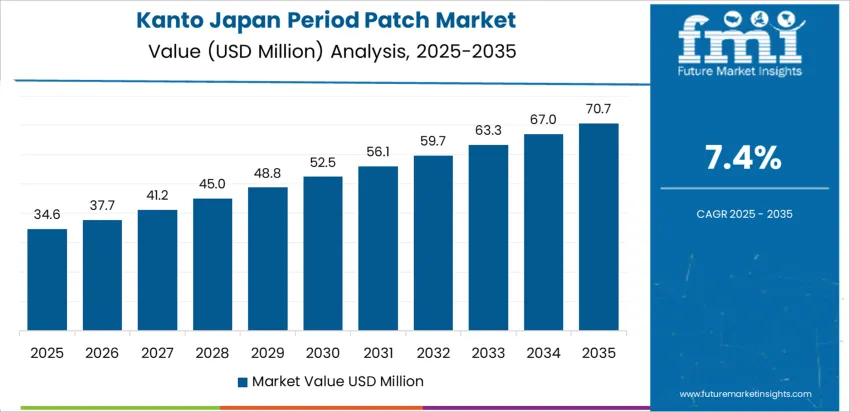
Kanto posts 7.4% CAGR driven by Tokyo’s dense retail landscape, high student populations, and widespread pharmacy networks offering multiple brand tiers. Commuters adopt period patches for flexibility during extended travel and workplace schedules. Corporate wellness initiatives introduce non-ingested menstrual support as part of personal-care education. Convenience stores position patches near analgesics and sanitary pads, enabling spontaneous purchasing when symptoms occur. E-commerce strengthens distribution with auto-reorder functions for routine cycles. Messaging emphasizes odor-free, thin-profile products compatible with fitted clothing worn in metropolitan settings. Consumers evaluate heat consistency, hypoallergenic backing, and reliable adhesion under dynamic temperature conditions in transit environments.
- Metro distribution ensuring broad SKU coverage
- Workplace routines encouraging on-the-go relief
- Online subscriptions reinforcing monthly retention
- Packaging optimized for commuter portability
How is Kansai influencing menstrual-care product preferences?
Kansai grows at 6.5% CAGR with Osaka, Kyoto, and Kobe supporting wellness trends through retail pharmacies and youth-oriented shopping districts. University areas contribute frequent single-pack purchases among students seeking affordable menstrual-support solutions. Tourism exposure enables rising brand recognition for heat-patch variations used during long walking periods. Retailers trial expanded shelf assortments with sensitive-skin materials suitable for frequent movement during cultural and leisure outings. Buyers monitor pricing to align with recurring usage cycles. Clear product instructions and visibility of dermatologist-tested labels influence decision confidence.
- Student populations driving trial-based purchases
- Cultural tourism encouraging on-foot comfort solutions
- Sensitive-skin materials expanding acceptance
- Price-aligned purchasing supporting routine use
How is Chubu contributing to growth patterns?
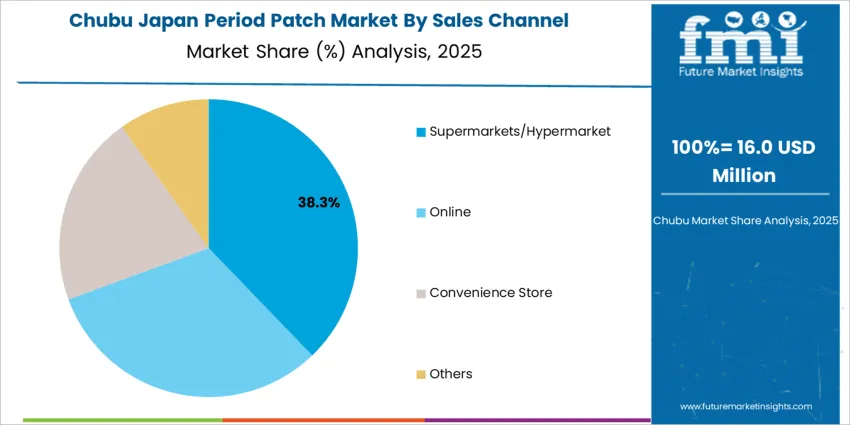
Chubu posts 5.7% CAGR as manufacturing cities maintain stable consumer demand for practical menstrual-support aids. Convenience stores near large workplaces support impulse buying during early symptom onset. Pharmacies distribute brand options featuring adjustable sizes suited for varied comfort preferences. Cold seasonal shifts create interest in warming patches during winter months. Retail planning uses predictable monthly sales patterns to maintain supply, especially near transit points. Marketing focuses on skin-friendly textures for extended wear.
- Workplace-linked demand reinforcing consistent volume
- Seasonal warming needs aiding category expansion
- Skin-comfort features guiding selection
- Retail accessibility near transport hubs sustaining usage
How is Tohoku shaping adoption levels?
Tohoku records 5.0% CAGR with purchasing driven by convenience access in smaller cities and emphasis on warming benefits in colder climates. Consumers favor breathable materials that avoid irritation during layered clothing use. Pharmacies highlight compact packaging suitable for handbags and school bags. Tourism peaks create additional sales through travel-friendly personal-care sections. Budget considerations influence brand rotation across menstrual cycles.
- Climate-aligned warming benefits attracting buyers
- Compact packaging supporting portability
- Local pharmacies guiding product familiarity
- Cost awareness shaping purchasing cycles
How is the Rest of Japan maintaining ongoing demand?
The Rest of Japan grows at 4.8% CAGR with steady usage in suburban and rural communities where pharmacies remain primary procurement channels. Women adopt patches for functional comfort during errands and household responsibilities. Retailers focus on trusted brands with clear labeling to reduce trial hesitation. Distribution aligns with routine stocking cycles associated with menstrual products.
- Pharmacies anchoring product availability
- Functional comfort needs sustaining repeat purchasing
- Label clarity supporting buyer confidence
- Routine stocking schedules maintaining accessibility
What is the competitive landscape of demand for period-pain patches in Japan?
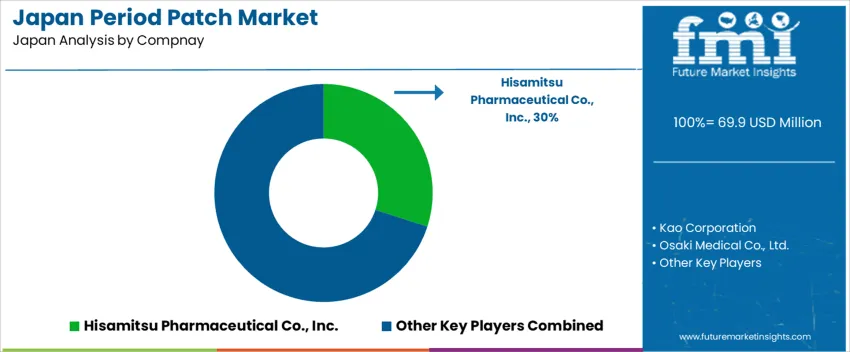
Demand for period-pain patches in Japan is driven by suppliers of heat-therapy and topical support patches used for local cramp relief and muscle relaxation during menstruation. Hisamitsu Pharmaceutical Co., Inc. holds an estimated 30.0% share, supported by controlled adhesive performance, stable heat-delivery profiles, and strong availability throughout pharmacies and convenience stores. Its products maintain consistent skin adherence and predictable warmth duration suited to routine daily activity.
Kao Corporation maintains solid participation with heat patches designed for abdominal comfort and discreet use under clothing. Osaki Medical Co., Ltd. contributes presence in hospital-supply and consumer-retail channels where steady heat dispersion and flexible fabric backing are required. Kobayashi Pharmaceutical Co., Ltd. supports demand through compact patches formulated for persistent warming effects during extended wear. Lion Corporation adds targeted offerings positioned for ease of movement and breathable comfort.
Competition in Japan focuses on adhesive-skin compatibility, heat-retention stability, comfort during movement, and reliable domestic distribution. Demand continues as consumers seek non-oral pain-relief options that provide steady support throughout normal daily routines in Japan’s menstrual-care environment.
Key Players in Japan Period Patch Demand
- Hisamitsu Pharmaceutical Co., Inc.
- Kao Corporation
- Osaki Medical Co., Ltd.
- Kobayashi Pharmaceutical Co., Ltd.
- Lion Corporation
Scope of the Report
| Items | Values |
|---|---|
| Quantitative Units | USD million |
| Product Type | Cool Patch, Heat Patch, Others |
| Sales Channel | Supermarkets/Hypermarket, Online, Convenience Store, Others |
| Regions Covered | Kyushu & Okinawa, Kanto, Kansai, Chubu, Tohoku, Rest of Japan |
| Key Companies Profiled | Hisamitsu Pharmaceutical Co., Inc., Kao Corporation, Osaki Medical Co., Ltd., Kobayashi Pharmaceutical Co., Ltd., Lion Corporation |
| Additional Attributes | Sales by menstrual pain-relief technology including heating and cooling-based products; adoption among working women and younger consumers; regulatory compliance with healthcare and cosmetic classifications; innovation trends including herbal or aromatherapy patches; differentiation by adhesive sensitivity and product wear duration across retail and online distribution in Japan. |
Japan Period Patch Demand by Segments
Product Type:
- Cool Patch
- Heat Patch
- Others
Sales Channel:
- Supermarkets/Hypermarket
- Online
- Convenience Store
- Others
Region:
- Kyushu & Okinawa
- Kanto
- Kansai
- Chubu
- Tohoku
- Rest of Japan
Frequently Asked Questions
How big is the demand for period patch in Japan in 2025?
The demand for period patch in Japan is estimated to be valued at USD 69.9 million in 2025.
What will be the size of period patch in Japan in 2035?
The market size for the period patch in Japan is projected to reach USD 130.5 million by 2035.
How much will be the demand for period patch in Japan growth between 2025 and 2035?
The demand for period patch in Japan is expected to grow at a 6.5% CAGR between 2025 and 2035.
What are the key product types in the period patch in Japan?
The key product types in period patch in Japan are cool patch, heat patch and others.
Which sales channel segment is expected to contribute significant share in the period patch in Japan in 2025?
In terms of sales channel, supermarkets/hypermarket segment is expected to command 37.0% share in the period patch in Japan in 2025.
Preview the report firsthand - request a free sample
Get SampleGet the brochure for pricing and purchase details.
Get PDFTable of Content
- Executive Summary
- Japan Market Outlook
- Demand-side Trends
- Supply-side Trends
- Technology Roadmap Analysis
- Analysis and Recommendations
- Market Overview
- Market Coverage / Taxonomy
- Market Definition / Scope / Limitations
- Market Background
- Market Dynamics
- Drivers
- Restraints
- Opportunity
- Trends
- Scenario Forecast
- Demand in Optimistic Scenario
- Demand in Likely Scenario
- Demand in Conservative Scenario
- Opportunity Map Analysis
- Product Life Cycle Analysis
- Supply Chain Analysis
- Investment Feasibility Matrix
- Value Chain Analysis
- PESTLE and Porter’s Analysis
- Regulatory Landscape
- Regional Parent Market Outlook
- Production and Consumption Statistics
- Import and Export Statistics
- Market Dynamics
- Japan Market Analysis 2020 to 2024 and Forecast, 2025 to 2035
- Historical Market Size Value (USD Million) Analysis, 2020 to 2024
- Current and Future Market Size Value (USD Million) Projections, 2025 to 2035
- Y-o-Y Growth Trend Analysis
- Absolute $ Opportunity Analysis
- Japan Market Pricing Analysis 2020 to 2024 and Forecast 2025 to 2035
- Japan Market Analysis 2020 to 2024 and Forecast 2025 to 2035, By Product Type
- Introduction / Key Findings
- Historical Market Size Value (USD Million) Analysis By Product Type , 2020 to 2024
- Current and Future Market Size Value (USD Million) Analysis and Forecast By Product Type , 2025 to 2035
- Cool Patch
- Heat Patch
- Others
- Y-o-Y Growth Trend Analysis By Product Type , 2020 to 2024
- Absolute $ Opportunity Analysis By Product Type , 2025 to 2035
- Japan Market Analysis 2020 to 2024 and Forecast 2025 to 2035, By Sales Channel
- Introduction / Key Findings
- Historical Market Size Value (USD Million) Analysis By Sales Channel, 2020 to 2024
- Current and Future Market Size Value (USD Million) Analysis and Forecast By Sales Channel, 2025 to 2035
- Supermarkets/Hypermarket
- Online
- Convenience Store
- Others
- Y-o-Y Growth Trend Analysis By Sales Channel, 2020 to 2024
- Absolute $ Opportunity Analysis By Sales Channel, 2025 to 2035
- Market Structure Analysis
- Competition Dashboard
- Competition Benchmarking
- Market Share Analysis of Top Players
- By Regional
- By Product Type
- By Sales Channel
- Competition Analysis
- Competition Deep Dive
- Hisamitsu Pharmaceutical Co., Inc.
- Overview
- Product Portfolio
- Profitability by Market Segments (Product/Age /Sales Channel/Region)
- Sales Footprint
- Strategy Overview
- Marketing Strategy
- Product Strategy
- Channel Strategy
- Kao Corporation
- Osaki Medical Co., Ltd.
- Kobayashi Pharmaceutical Co., Ltd.
- Lion Corporation
- Hisamitsu Pharmaceutical Co., Inc.
- Competition Deep Dive
- Assumptions & Acronyms Used
- Research Methodology


