

- Industry Size (2025)
- USD 149.4 Mn
- Forecast (2035)
- USD 233.6 Mn
- CAGR (2025 to 2035)
- 4.6%
Demand for Temporary Storage Building in Japan Forecast and Outlook 2025 to 2035
The demand for temporary storage buildings in Japan is expected to grow steadily, with a forecasted value of USD 149.4 million in 2025, reaching USD 233.6 million by 2035, reflecting a CAGR of 4.6%. Key trends driving this growth include the increasing need for flexible and cost-effective storage solutions across various industries, particularly in logistics, construction, and retail.
Temporary storage buildings offer businesses a quick, adaptable solution for short-term storage needs, without the long-term commitment of permanent infrastructure. This trend is particularly evident in sectors like e-commerce, manufacturing, and agriculture, which require scalable storage options to manage fluctuating inventory and seasonal demands.
Quick Stats of the Demand for Temporary Storage Building in Japan
- Demand for Temporary Storage Building in Japan Value (2025): USD 149.4 million
- Demand for Temporary Storage Building in Japan Forecast Value (2035): USD 233.6 million
- Demand for Temporary Storage Building in Japan Forecast CAGR (2025-2035): 4.6%
- Demand for Temporary Storage Building in Japan Leading Type: Storage Buildings
- Demand for Temporary Storage Building in Japan Key Growth Regions: Kyushu & Okinawa, Kanto, Kansai, Chubu, Tohoku, Rest of Japan
- Demand for Temporary Storage Building in Japan Top Players: RÖDER HTS HÖCKER GmbH, Shelter Tent Manufacturing Co., Ltd, Spaciotempo, Portable Venues (Group) Ltd, Big Top Manufacturing
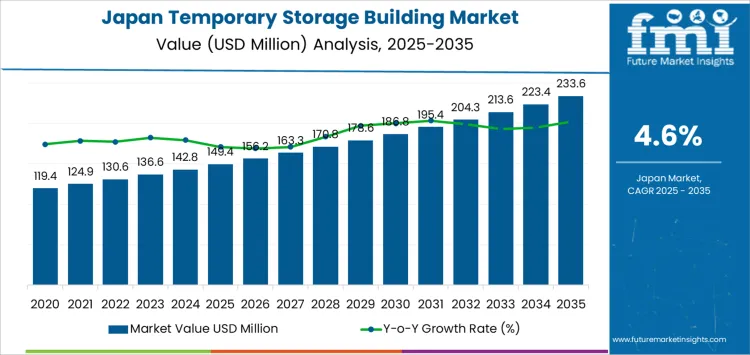
Temporary storage buildings are often designed with eco-friendly materials, and their modular nature makes them reusable and adaptable, aligning with Japan's durability goals. The rise of disaster preparedness initiatives, where temporary structures are used for emergency storage, further contributes to the demand for these buildings. Technological innovations, such as improvements in modular building materials and design, have made temporary storage solutions more robust, weather-resistant, and quicker to deploy. These advancements are increasing the appeal of temporary buildings as an ideal solution for businesses that need flexible, short-term space. As Japan's industrial and logistical sectors continue to evolve, the demand for temporary storage buildings is expected to rise steadily.
Demand for Temporary Storage Building in Japan Key Takeaways
| Metric | Value |
|---|---|
| Demand for Temporary Storage Building in Japan Value (2025) | USD 149.4 million |
| Demand for Temporary Storage Building in Japan Forecast Value (2035) | USD 233.6 million |
| Demand for Temporary Storage Building in Japan Forecast CAGR (2025-2035) | 4.6% |
Why is the Demand for Temporary Storage Building in Japan Growing?
The demand for temporary storage buildings in Japan is growing due to the increasing need for flexible, cost-effective storage solutions across various industries. Temporary storage buildings are used for short-term storage of goods, equipment, and materials, making them ideal for businesses in construction, retail, logistics, and event management. These structures offer a quick and affordable way to create additional space without the need for long-term investment in permanent buildings, making them particularly appealing in a dynamic and fast-paced business environment.
A key driver behind the growth of temporary storage buildings is the rising demand for logistics and warehousing space. As Japan’s e-commerce sector continues to expand and industries like manufacturing and construction require flexible storage solutions, the need for adaptable, scalable buildings has increased. Temporary storage buildings provide a practical solution for companies looking to manage inventory efficiently and adjust to fluctuating storage needs. These structures are easily assembled and dismantled, which offers businesses the ability to quickly adapt to changing market conditions.
The growing trend of durability and resource efficiency is contributing to the adoption of temporary storage buildings. These structures are often designed with eco-friendly materials and are reusable, which aligns with Japan’s focus on reducing waste and environmental impact. With the increased need for flexible storage solutions and the benefits of temporary buildings, the demand for temporary storage buildings in Japan is expected to rise steadily through 2035.
What is the Segment-Wise Analysis of Demand for Temporary Storage Buildings in Japan?
Demand for temporary storage buildings in Japan is segmented by type, structure, and region. By type, demand is divided into storage buildings, retail & showroom buildings, educational buildings, recreational buildings, and public sector buildings, with storage buildings leading at 51%. The demand is also segmented by structure, including industrial canopies, storage protect range, and insulated buildings, with industrial canopies accounting for 40.4%. Regionally, demand spans across Kyushu & Okinawa, Kanto, Kansai, Chubu, Tohoku, and the rest of Japan.
How Do Storage Buildings Lead the Demand for Temporary Storage Buildings in Japan?
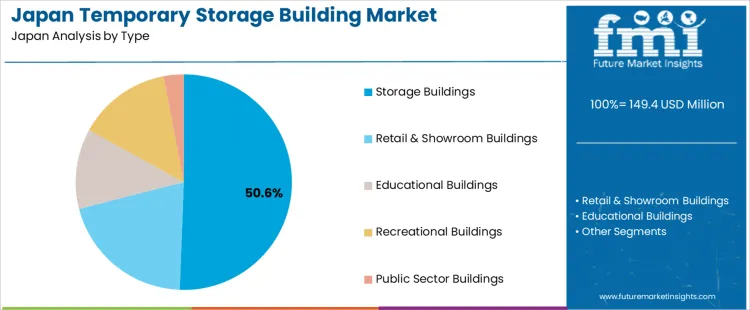
Storage buildings account for 51% of the demand for temporary storage buildings in Japan, driven by their wide range of applications in various industries, including logistics, construction, and retail. Temporary storage buildings are ideal for businesses needing flexible, cost-effective, and easily deployable spaces to store goods or materials. These structures provide immediate storage solutions for businesses facing space constraints, especially in urban areas or during peak seasons.
The demand for storage buildings is particularly high in the logistics and warehousing sectors, as companies require efficient storage for inventory management. As industries continue to grow and the need for flexible and scalable storage solutions rises, storage buildings remain the dominant product type. Their quick setup, cost-effectiveness, and adaptability to various storage needs contribute to their leadership in the temporary storage building market in Japan.
Why Do Industrial Canopies Lead the Structure Demand for Temporary Storage Buildings in Japan?
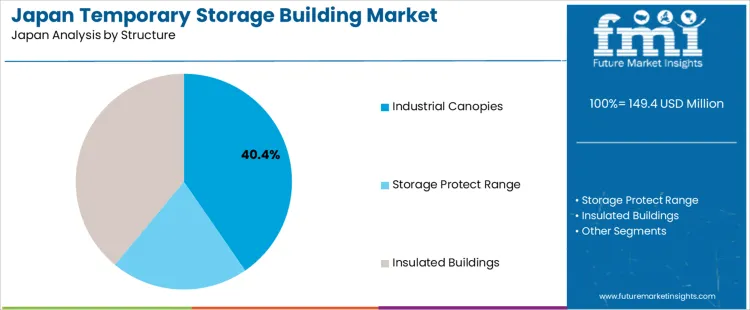
Industrial canopies account for 40.4% of the demand for the structure of temporary storage buildings in Japan, driven by their ability to provide flexible, open, and cost-effective shelter for industrial use. Industrial canopies are widely used in sectors such as manufacturing, logistics, and construction, offering protection from the elements for equipment, raw materials, and finished goods. Their open structure allows for easy access and maneuverability of large machinery or inventory, making them ideal for temporary storage applications that require flexible storage solutions.
The demand for industrial canopies is also fueled by their ease of installation, which allows businesses to quickly set up protective structures without long lead times or high construction costs. As industries continue to seek cost-effective and adaptable solutions for temporary storage and shelter, industrial canopies will remain the dominant structural type for temporary storage buildings in Japan.
What are the Key Trends, Drivers, and Restraints in Demand for Temporary Storage Buildings in Japan?
Demand for temporary storage buildings in Japan is rising as businesses and households increasingly seek flexible, scalable and often short‑ to medium‑term storage solutions. The growth of e‑commerce, rising logistics requirements, seasonal fluctuations in inventory, and the need for rapid, on‑site storage (e.g. at construction sites) are major growth drivers. Temporary buildings, modular, relocatable or fabric/metal structure storage sheds, provide a lower‑commitment alternative to permanent warehouses, allowing firms to expand or contract capacity as needed without large capital outlays.
On the restraint side, challenges include higher per‑unit cost compared to long‑term built warehouses, perception of lower durability or protection (especially for sensitive or long‑stored goods), and seasonal or demand volatility which can make some users prefer permanent facilities over temporary ones.
Why is Demand for Temporary Storage Buildings Growing in Japan?
Several factors fuel growing demand for temporary storage buildings in Japan. As logistics and warehousing needs increase with expanding online retail, businesses (particularly SMEs) increasingly value flexibility temporary buildings allow quick deployment of extra storage during peak periods, or for short‑term projects. Construction, manufacturing, and agriculture often require temporary storage for materials, equipment, or seasonal goods, making modular storage solutions attractive. Demographic changes urban density, smaller living spaces, and mobility drive demand for short‑term self‑storage among individuals (students, people relocating, expatriates). The growing awareness of cost‑efficiency and avoidance of long‑term commitments make temporary storage appealing for both commercial and personal users.
How are Technological & Industry Innovations Driving Temporary Storage Building Demand in Japan?
Advances in modular building technology, materials, and construction have made temporary storage buildings more robust, weather‑resistant, and quick to deploy boosting their appeal in Japan. Modern modular or fabric‑and‑metal storage structures can be erected and dismantled rapidly, tailored in size and layout, and relocated as needed, giving users flexibility. Improvements in design such as better insulation/weatherproofing, modular shelving, and compatibility with logistic and warehousing operations make these buildings more practical for industrial, commercial, or personal use. The ability to meet short‑term or fluctuating storage needs without committing to fixed‑asset construction makes temporary storage an economical and flexible option.
What are the Key Challenges and Risks That Could Limit Temporary Storage Building Demand in Japan?
Despite growing interest, several factors may limit the broader uptake of temporary storage buildings. For high‑value, sensitive, or long‑term storage needs, permanent, climate‑controlled warehouses may remain preferable due to better durability, security, and environmental control. The perceived lower longevity and structural robustness of temporary buildings may deter users storing valuable or delicate items. Zoning, land‑use, and regulatory constraints in urban or densely populated areas can limit the practicality of deploying temporary storage.
Seasonal or demand‑driven nature of many use‑cases means that utilization may fluctuate, making cost‑benefit less attractive for some buyers. Lastly, competition from conventional self‑storage facilities and traditional warehouses means that temporary storage must offer clear advantages (flexibility, cost, speed) to justify its use.
What is the Regional Demand Outlook for Pea Grits in Japan?
| Region | CAGR (%) |
|---|---|
| Kyushu & Okinawa | 5.7% |
| Kanto | 5.3% |
| Kansai | 4.6% |
| Chubu | 4.1% |
| Tohoku | 3.6% |
| Rest of Japan | 3.4% |
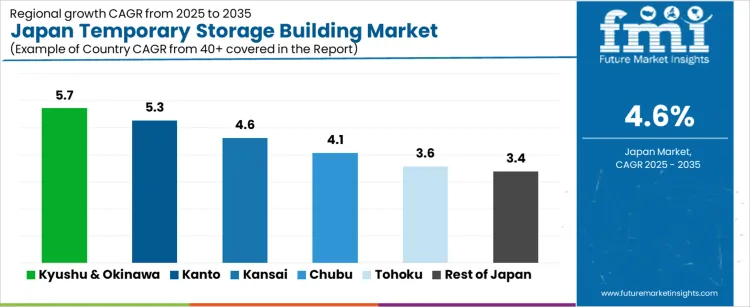
Demand for temporary storage buildings in Japan is growing steadily across all regions, with Kyushu & Okinawa leading at a 5.7% CAGR, driven by the region's increasing industrial and agricultural activities. Kanto follows with a 5.3% CAGR, supported by the region’s large urban population and the growing demand for flexible storage solutions in the retail and logistics sectors. Kansai shows a 4.6% CAGR, fueled by the region’s expanding industrial base and growing need for temporary storage in various sectors. Chubu experiences a 4.1% CAGR, as local businesses seek cost-effective and flexible storage options. Tohoku and the Rest of Japan see moderate growth at 3.6% and 3.4%, respectively, as temporary storage buildings continue to be adopted in both urban and rural areas.
How is Demand for Temporary Storage Buildings Growing in Kyushu & Okinawa?
Kyushu & Okinawa leads demand for temporary storage buildings, growing at a 5.7% CAGR. The region's rapid industrialization, particularly in agriculture, manufacturing, and logistics, is driving this growth. In Okinawa, which is increasingly becoming a hub for tourism and local commerce, the need for flexible and adaptable storage solutions is rising. Temporary storage buildings are often used for seasonal storage of goods, as well as for accommodating the increasing demand for logistics space.
Kyushu's growing infrastructure projects and local businesses in sectors such as retail and distribution are further boosting the demand for temporary storage. These structures offer cost-effective and fast solutions, making them a preferred option in industries where flexibility and quick turnaround times are crucial. As businesses in the region continue to expand, demand for temporary storage buildings is expected to rise steadily in Kyushu & Okinawa.
Why is Demand for Temporary Storage Buildings Rising in Kanto?
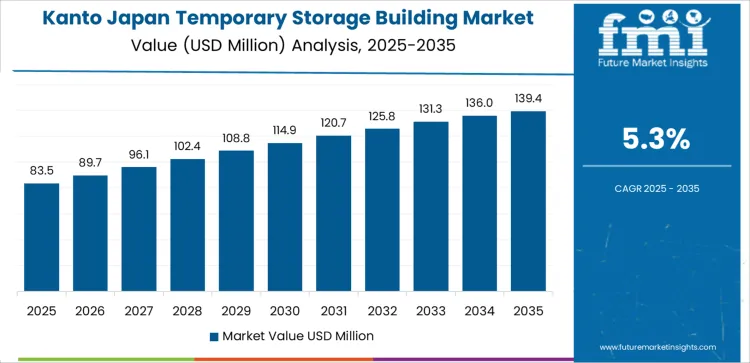
In Kanto, demand for temporary storage buildings is rising at a 5.3% CAGR. The region’s large urban population and its diverse industrial and commercial landscape are key drivers of this growth. Kanto is home to some of Japan's largest logistics hubs, and the demand for storage solutions is increasing due to the region's growing retail, e-commerce, and manufacturing sectors. Temporary storage buildings are particularly useful in the retail and logistics industries, as they offer flexible space to store goods, equipment, and inventory with minimal investment and setup time.
In addition, the region’s increasing focus on infrastructure development and construction projects has also contributed to the rising need for temporary storage solutions. As businesses in Kanto continue to expand and streamline their operations, temporary storage buildings will play a crucial role in meeting the growing demand for versatile, short-term storage solutions, supporting the region’s industrial activities.
How is Demand for Temporary Storage Buildings Expanding in Kansai?
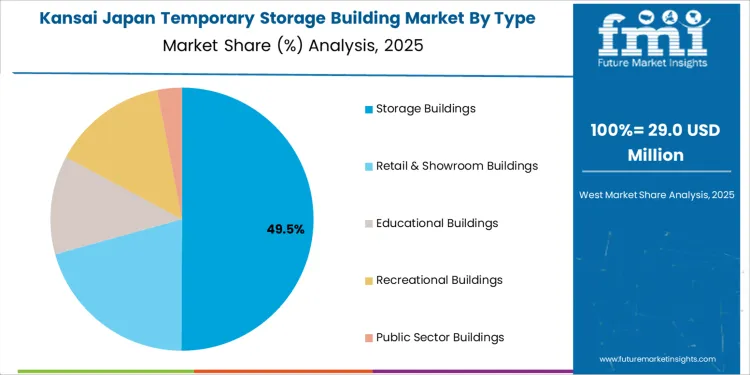
Kansai shows steady demand for temporary storage buildings, growing at a 4.6% CAGR. The region’s robust industrial base, particularly in cities like Osaka and Kyoto, has seen an increasing need for adaptable and cost-efficient storage solutions. Temporary storage buildings are becoming an essential part of operations in sectors such as retail, logistics, and manufacturing, where companies require flexible storage spaces to manage seasonal inventory and streamline operations.
Kansai’s growing logistics infrastructure, along with rising e-commerce activity, has led to an increased demand for temporary storage solutions. The region’s expanding construction and renovation projects further support the need for these structures, which can be set up quickly to store materials and equipment. As Kansai continues to evolve as a commercial and industrial hub, the demand for temporary storage buildings is expected to rise steadily in line with the region’s growing industrial and logistics needs.
Why is Demand for Temporary Storage Buildings Growing in Chubu?
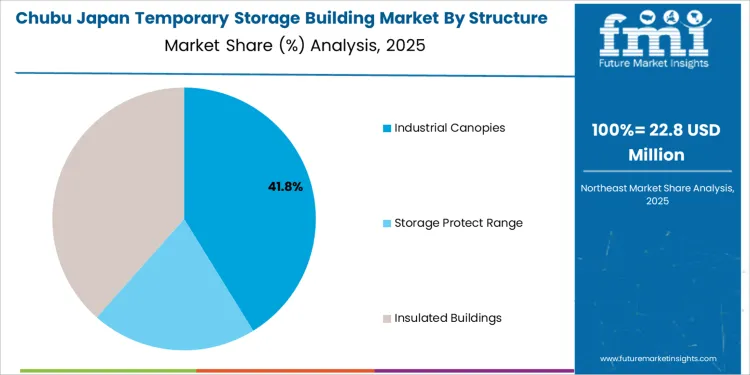
Chubu is experiencing steady demand for temporary storage buildings, growing at a 4.1% CAGR. The region’s growing manufacturing and logistics sectors, particularly in Nagoya, are contributing to the increasing need for flexible and cost-effective storage solutions. Temporary storage buildings provide manufacturers, retailers, and construction companies with quick and convenient options for storing raw materials, goods, and inventory without the need for long-term leases or complex setups.
As Chubu continues to expand its infrastructure and industrial operations, the demand for temporary storage solutions is expected to rise. These buildings are increasingly being used for construction sites, retail inventory storage, and even by e-commerce businesses that require additional space during peak seasons. As Chubu’s industrial activities grow, temporary storage buildings will continue to play a crucial role in providing flexible storage solutions that meet the region’s evolving business needs.
How is Demand for Temporary Storage Buildings Expanding in Tohoku?
Tohoku is seeing moderate growth in temporary storage building demand, with a 3.6% CAGR. While the region's industrial activities are smaller compared to major urban areas, there is a steady increase in demand for flexible storage solutions, particularly in sectors like agriculture, retail, and construction. Tohoku's growing infrastructure projects, coupled with its expanding agriculture industry, have contributed to the rising need for temporary storage buildings.
These structures are ideal for storing agricultural products, construction materials, and seasonal goods. As the region continues to modernize its infrastructure and supply chain capabilities, demand for temporary storage solutions is expected to grow. Local businesses in Tohoku are increasingly adopting these buildings as part of their efforts to improve operational efficiency and reduce costs. As consumer awareness and business needs evolve, the demand for temporary storage buildings in Tohoku is expected to rise steadily.
Why is Demand for Temporary Storage Buildings Steady in the Rest of Japan?
The Rest of Japan is experiencing steady demand for temporary storage buildings, with a 3.4% CAGR. While demand in rural areas and smaller cities is lower compared to urban regions, there is a growing shift toward the use of flexible storage solutions as businesses in these areas modernize and expand. Temporary storage buildings are gaining popularity in agriculture, retail, and construction sectors, where they provide cost-effective, short-term storage solutions for seasonal goods, equipment, and materials.
The increase in local infrastructure projects and small business operations is further driving the adoption of these storage structures. As businesses seek ways to optimize their operations and reduce costs, temporary storage buildings offer a practical solution. With the rising focus on durability and flexible storage needs, the demand for temporary storage buildings in the Rest of Japan is expected to continue to grow at a steady pace.
What Is Driving the Demand for Temporary Storage Buildings in Japan and Who Are the Key Players Shaping the Industry?
The demand for temporary storage buildings in Japan is growing due to the increasing need for flexible, cost-effective, and space-saving solutions across various industries. Temporary storage buildings are ideal for businesses that require additional space for inventory, warehousing, or event storage, but do not want to invest in permanent infrastructure. Japan’s strong manufacturing, logistics, and construction sectors are particularly reliant on such structures to handle seasonal storage needs, project-based demands, or temporary storage during peak periods. The ongoing trend toward disaster preparedness, where temporary structures are used for emergency storage or relief operations, is further driving the demand.
Key players shaping the temporary storage building market in Japan include RÖDER HTS HÖCKER GmbH, Shelter Tent Manufacturing Co., Ltd., Spaciotempo, Portable Venues (Group) Ltd, and Big Top Manufacturing. RÖDER HTS HÖCKER GmbH leads the market with a significant share of 40.0%, offering a wide range of high-quality, customizable temporary storage solutions for industrial, commercial, and event purposes. These companies provide versatile, durable, and easy-to-assemble storage buildings that meet the growing demand for flexible space solutions in Japan’s dynamic business and event environments.
The growth of the temporary storage building market in Japan is also supported by the increasing need for quick, scalable solutions in industries like construction, logistics, and retail. As companies look for more adaptable and sustainable storage options, temporary buildings are becoming an increasingly popular choice due to their ability to be rapidly deployed, cost-efficient, and highly customizable. With the demand for flexible, on-demand storage continuing to rise, temporary storage buildings are expected to remain a key solution in Japan’s ever-evolving infrastructure and industrial sectors.
Key Players in Japan Temporary Storage Building Demand
- RÖDER HTS HÖCKER GmbH
- Shelter Tent Manufacturing Co., Ltd
- Spaciotempo
- Portable Venues (Group) Ltd
- Big Top Manufacturing
Scope of Report
| Items | Values |
|---|---|
| Quantitative Units (2025) | USD million |
| Type | Storage Buildings, Retail & Showroom Buildings, Educational Buildings, Recreational Buildings, Public Sector Buildings |
| Structure | Industrial Canopies, Storage Protect Range, Insulated Buildings |
| Region | Kyushu & Okinawa, Kanto, Kansai, Chubu, Tohoku, Rest of Japan |
| Countries Covered | Japan |
| Key Companies Profiled | RÖDER HTS HÖCKER GmbH, Shelter Tent Manufacturing Co., Ltd, Spaciotempo, Portable Venues (Group) Ltd, Big Top Manufacturing |
| Additional Attributes | Dollar sales by building type and structure; regional CAGR and growth trends; rising demand for temporary solutions in industries and public sectors; innovations in materials used for temporary buildings. |
Japan Temporary Storage Building Demand by Key Segments
Type
- Storage Buildings
- Retail & Showroom Buildings
- Educational Buildings
- Recreational Buildings
- Public Sector Buildings
Structure
- Industrial Canopies
- Storage Protect Range
- Insulated Buildings
Region
- Kyushu & Okinawa
- Kanto
- Kansai
- Chubu
- Tohoku
- Rest of Japan
Frequently Asked Questions
How big is the demand for temporary storage building in Japan in 2025?
The demand for temporary storage building in Japan is estimated to be valued at USD 149.4 million in 2025.
What will be the size of temporary storage building in Japan in 2035?
The market size for the temporary storage building in Japan is projected to reach USD 233.6 million by 2035.
How much will be the demand for temporary storage building in Japan growth between 2025 and 2035?
The demand for temporary storage building in Japan is expected to grow at a 4.6% CAGR between 2025 and 2035.
What are the key product types in the temporary storage building in Japan?
The key product types in temporary storage building in Japan are storage buildings, retail & showroom buildings, educational buildings, recreational buildings and public sector buildings.
Which structure segment is expected to contribute significant share in the temporary storage building in Japan in 2025?
In terms of structure, industrial canopies segment is expected to command 40.4% share in the temporary storage building in Japan in 2025.
Preview the report firsthand - request a free sample
Get SampleGet the brochure for pricing and purchase details.
Get PDFTable of Content
- Executive Summary
- Japan Market Outlook
- Demand-side Trends
- Supply-side Trends
- Technology Roadmap Analysis
- Analysis and Recommendations
- Market Overview
- Market Coverage / Taxonomy
- Market Definition / Scope / Limitations
- Market Background
- Market Dynamics
- Drivers
- Restraints
- Opportunity
- Trends
- Scenario Forecast
- Demand in Optimistic Scenario
- Demand in Likely Scenario
- Demand in Conservative Scenario
- Opportunity Map Analysis
- Product Life Cycle Analysis
- Supply Chain Analysis
- Investment Feasibility Matrix
- Value Chain Analysis
- PESTLE and Porter’s Analysis
- Regulatory Landscape
- Regional Parent Market Outlook
- Production and Consumption Statistics
- Import and Export Statistics
- Market Dynamics
- Japan Market Analysis 2020 to 2024 and Forecast, 2025 to 2035
- Historical Market Size Value (USD Million) Analysis, 2020 to 2024
- Current and Future Market Size Value (USD Million) Projections, 2025 to 2035
- Y-o-Y Growth Trend Analysis
- Absolute $ Opportunity Analysis
- Japan Market Pricing Analysis 2020 to 2024 and Forecast 2025 to 2035
- Japan Market Analysis 2020 to 2024 and Forecast 2025 to 2035, By Type
- Introduction / Key Findings
- Historical Market Size Value (USD Million) Analysis By Type , 2020 to 2024
- Current and Future Market Size Value (USD Million) Analysis and Forecast By Type , 2025 to 2035
- Storage Buildings
- Retail & Showroom Buildings
- Educational Buildings
- Recreational Buildings
- Public Sector Buildings
- Y-o-Y Growth Trend Analysis By Type , 2020 to 2024
- Absolute $ Opportunity Analysis By Type , 2025 to 2035
- Japan Market Analysis 2020 to 2024 and Forecast 2025 to 2035, By Structure
- Introduction / Key Findings
- Historical Market Size Value (USD Million) Analysis By Structure, 2020 to 2024
- Current and Future Market Size Value (USD Million) Analysis and Forecast By Structure, 2025 to 2035
- Industrial Canopies
- Storage Protect Range
- Insulated Buildings
- Y-o-Y Growth Trend Analysis By Structure, 2020 to 2024
- Absolute $ Opportunity Analysis By Structure, 2025 to 2035
- Market Structure Analysis
- Competition Dashboard
- Competition Benchmarking
- Market Share Analysis of Top Players
- By Regional
- By Type
- By Structure
- Competition Analysis
- Competition Deep Dive
- RÖDER HTS HÖCKER GmbH
- Overview
- Product Portfolio
- Profitability by Market Segments (Product/Age /Sales Channel/Region)
- Sales Footprint
- Strategy Overview
- Marketing Strategy
- Product Strategy
- Channel Strategy
- Shelter Tent Manufacturing Co., Ltd
- Spaciotempo
- Portable Venues (Group) Ltd
- Big Top Manufacturing
- RÖDER HTS HÖCKER GmbH
- Competition Deep Dive
- Assumptions & Acronyms Used
- Research Methodology


