

- Industry Size (2025)
- USD 12.4 Mn
- Forecast (2035)
- USD 20.3 Mn
- CAGR (2025 to 2035)
- 5.0%
Demand for Upcycled Cosmetic Ingredients in Japan Forecast and Outlook 2025 to 2035
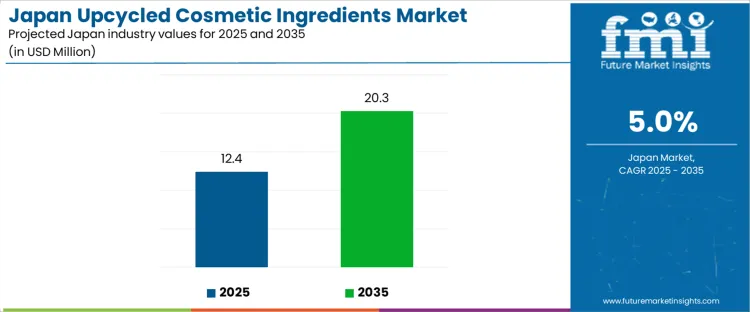
Demand for upcycled cosmetic ingredients in Japan is expected to grow from USD 12.4 million in 2025 to USD 20.3 million by 2035, reflecting a compound annual growth rate (CAGR) of 5%. Rising consumer demand for sustainable and eco-friendly cosmetic products is driving this growth. Upcycled cosmetic ingredients, derived from surplus or discarded materials that would otherwise go to waste, align with the growing trend toward environmental consciousness and the desire for clean, green beauty products. As consumers become more environmentally aware, demand for cosmetics that incorporate upcycled ingredients is expected to increase.
Japan’s strong focus on sustainability and innovation in the beauty industry further supports the market for upcycled cosmetic ingredients. With growing interest in reducing waste and minimizing environmental impact, upcycled ingredients are becoming an attractive alternative for cosmetic manufacturers seeking to meet consumer expectations and regulatory requirements. The ongoing development of novel, high-quality upcycled ingredients is expected to drive continued market expansion throughout the next decade.
Quick Stats of the Demand for Upcycled Cosmetic Ingredients in Japan
- Demand for Upcycled Cosmetic Ingredients in Japan Value (2025): USD 12.4 million
- Demand for Upcycled Cosmetic Ingredients in Japan Forecast Value (2035): USD 20.3 million
- Demand for Upcycled Cosmetic Ingredients in Japan Forecast CAGR (2025-2035): 5.0%
- Demand for Upcycled Cosmetic Ingredients in Japan Leading Source: Food Waste (41%)
- Demand for Upcycled Cosmetic Ingredients in Japan Key Growth Regions: Kyushu & Okinawa, Kanto, Kansai, Chubu, Tohoku, Rest of Japan
- Demand for Upcycled Cosmetic Ingredients in Japan Key Players: L'Oréal, Givaudan, BASF, Symrise, Croda International
What is the Growth Forecast for the Upcycled Cosmetic Ingredients Market through 2035?
The acceleration and deceleration pattern for the upcycled cosmetic ingredients market in Japan shows consistent growth with key moments of acceleration. Starting at USD 12.4 million in 2025, the market increases to USD 13.0 million in 2026 and USD 13.7 million in 2027. This early growth phase is gradual, driven by increasing awareness of sustainability in the beauty industry and the early-stage adoption of upcycled ingredients.
From 2027 onward, the growth rate accelerates, with the market reaching USD 14.4 million in 2028 and USD 15.1 million in 2029. This demand acceleration is driven by the growing popularity of sustainable beauty products and ongoing innovation in upcycled ingredient technologies. Market continues to grow steadily, reaching USD 15.9 million in 2030 and USD 16.7 million in 2031, as more manufacturers incorporate upcycled ingredients into their products. By 2035, the market is expected to reach USD 20.3 million, reflecting the final stage of accelerated growth, as upcycled ingredients become a more common and mainstream component in the cosmetic industry. The deceleration towards the end of the period shows a maturation phase, where growth stabilizes as the market reaches its peak demand.
Key Takeaways of Upcycled Cosmetic Ingredients Industry in Japan
| Metric | Value |
|---|---|
| Industry Sales Value (2025) | USD 12.4 million |
| Industry Forecast Value (2035) | USD 20.3 million |
| Industry Forecast CAGR (2025-2035) | 5% |
What Is Driving the Demand for Upcycled Cosmetic Ingredients in Japan?
Demand for upcycled cosmetic ingredients in Japan has been driven by growing consumer interest in sustainability and natural-ingredient beauty products. The cosmetics sector in Japan has begun to respond to concerns about environmental impact by shifting toward formulations that use botanical or food-industry by-products repurposed into oils, extracts, powders or active agents. Such ingredients appeal to consumers seeking "cleaner" skin- and hair-care formulations and align with rising awareness of resource efficiency and waste reduction. This shift has influenced cosmetic firms operating in Japan and have begun offering products featuring upcycled botanical extracts, reflecting broader demand for eco-conscious ingredients.
Future demand for upcycled cosmetic ingredients in Japan is expected to increase as sustainable beauty practices and regulatory pressure for environmentally mindful production gain traction. Skincare and haircare products containing upcycled oils, seed extracts or plant-waste-derived actives are likely to become more common, supported by rising consumer preference for products that combine efficacy with ethical sourcing. Growth will also depend on how well the industry can ensure consistent ingredient quality, compliance with safety standards, and scalable sourcing of upcycled materials.
What Are the Key Segments in Upcycled Cosmetic Ingredients Market in Japan?
The upcycled cosmetic ingredients market in Japan is segmented by source and ingredient type. Food waste is the leading source, representing 41% of the market share. By ingredient type, oils dominate, accounting for 41% of the market. The growing demand for sustainable and environmentally friendly cosmetic products is driving the adoption of upcycled ingredients, particularly from food and plant waste.
Which Source Drives Demand for Upcycled Cosmetic Ingredients in Japan?
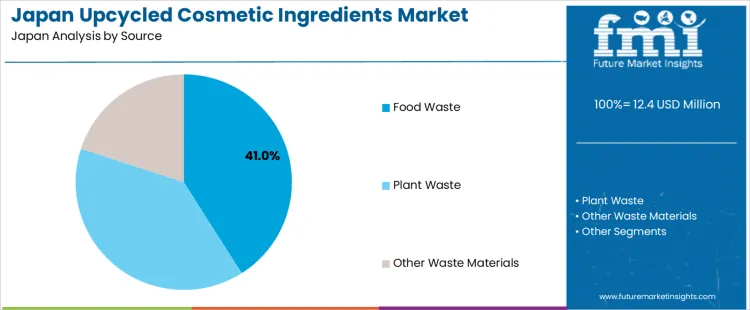
Food waste is the primary source for upcycled cosmetic ingredients in Japan, holding 41% of the market share. The use of food waste in cosmetics is driven by the growing focus on sustainability and the need to reduce waste in the beauty and personal care industries. Ingredients derived from food waste, such as fruit seeds, peels, and other byproducts, offer valuable antioxidants, vitamins, and nutrients that are beneficial for skincare. By repurposing food waste, companies can create eco-friendly, high-performance ingredients for cosmetic formulations, while also contributing to waste reduction. Although plant waste and other waste materials also serve as important sources, food waste remains the dominant source due to its abundance and the potential for creating a wide range of beneficial cosmetic ingredients.
Which Ingredient Type Drives Upcycled Cosmetic Ingredients Demand in Japan?
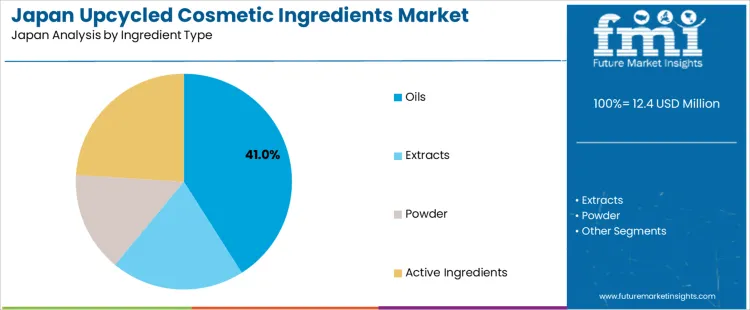
Oils are the most widely used ingredient type in the upcycled cosmetic ingredients market in Japan, accounting for 41% of the market share. Oils derived from upcycled food and plant waste are highly valued for their moisturizing, anti-aging, and nourishing properties. Common upcycled oils include those extracted from fruit seeds, nuts, and vegetable oils, which provide essential fatty acids and antioxidants beneficial for skin and hair care.
The demand for upcycled oils is driven by their natural composition, sustainability, and effectiveness in cosmetic formulations. Other ingredients, such as extracts, powder, and active ingredients derived from upcycled materials, are also used in cosmetics, but oils remain the most popular due to their versatility and widespread use in a variety of skincare, haircare, and beauty products. The trend towards using upcycled oils is expected to continue growing as consumers become more eco-conscious and demand sustainable beauty products.
What is the Demand for Upcycled Cosmetic Ingredients in Japan?
Demand for upcycled cosmetic ingredients in Japan is rising as consumers increasingly look for personal care and beauty products that combine efficacy with environmental responsibility. Upcycled ingredients, derived from food industry byproducts such as fruit peels, seeds, or other waste materials, are being incorporated into skin care, hair care, and body care products, offering natural actives while reducing waste. As awareness about sustainable beauty, clean formulations, and ethical sourcing grows among Japanese consumers, brands using upcycled ingredients are gaining traction. The broader shift toward clean beauty and consumer preference for natural, eco-conscious cosmetics is helping this segment gain a foothold in Japan’s large and evolving cosmetics market.
What are the Drivers of Demand for Upcycled Cosmetic Ingredients in Japan?
Several factors are fueling the growth in demand for upcycled cosmetic ingredients in Japan. Rising consumer concern over environmental impact and waste reduction has led to increased acceptance of circular economy-derived beauty products. Many buyers are more willing than before to choose cosmetics whose ingredients reuse materials that would otherwise be discarded. Growing interest in clean beauty and safe formulations free of harsh synthetic chemicals makes naturally derived upcycled extracts - often plant-based - attractive for skin-friendly products.
Japan’s natural and organic cosmetics market is growing rapidly, expanding the customer base for upcycled-ingredient products. Brands are responding with innovation. Improved extraction and stabilization technologies allow waste-derived ingredients to deliver functional benefits such as antioxidants, hydration, and gentle exfoliation, making upcycled ingredients a practical alternative to traditional cosmetics.
What are the Restraints on Demand for Upcycled Cosmetic Ingredients in Japan?
Despite growing interest, several factors constrain the widespread adoption of upcycled cosmetic ingredients in Japan. A major restraint is cost. Converting waste materials into stable, safe cosmetic-grade extracts can require specialized processing, which increases production costs and drives up retail prices. This can limit the appeal in price-sensitive segments. Another challenge is consumer skepticism about efficacy. Some consumers may doubt whether upcycled ingredients provide the same performance as conventional actives, limiting trust and demand.
Regulatory and quality assurance requirements for cosmetic ingredients can pose a barrier. Ensuring safety, consistency, and compliance for novel upcycled ingredients may be more complex. Additionally, while eco-friendly packaging has gained traction, the overall cost and supply chain complexity - sourcing byproducts and handling variable raw material availability - can deter smaller brands from adopting upcycled formulations.
What are the Key Trends Influencing Demand for Upcycled Cosmetic Ingredients in Japan?
Several key trends are supporting the rise of upcycled cosmetic ingredients in Japan. Consumers increasingly value ingredient transparency, ethical sourcing, and minimal environmental impact. This trend supports the acceptance of upcycled-based products as part of eco-conscious beauty routines. Demand for multifunctional products motivates brands to use upcycled botanicals, such as fruit and plant waste, which deliver natural bioactive compounds and combine efficacy with ethical sourcing.
Rise of digital beauty influencers and social media has created awareness about sustainable and upcycled beauty products, accelerating demand among younger, environmentally aware demographics. Growth in e-commerce and cross-border shopping enables niche and indie brands specializing in upcycled ingredients to reach consumers beyond major cities, expanding reach to rural or underserved areas. Innovation in ingredient processing and ingredient-sourcing collaborations strengthens supply chains for upcycled ingredients, improving consistency, safety, and cost-effectiveness over time.
What is the Regional Demand Outlook for Upcycled Cosmetic Ingredients in Japan?
The demand for upcycled cosmetic ingredients in Japan is projected to experience steady growth, with Kyushu & Okinawa leading the way at a projected CAGR of 6.3%. Kanto follows with a growth rate of 5.8%, while Kansai is expected to grow at 5.1%. Chubu is projected to grow at a rate of 4.5%, while Tohoku and Rest of Japan show more moderate growth, with CAGRs of 3.9% and 3.7%, respectively.
The rising focus on sustainability and the beauty industry’s shift towards more eco-friendly and ethical sourcing are key drivers of the demand for upcycled ingredients in Japan’s cosmetics market. As consumers become more environmentally conscious, the market for upcycled cosmetic ingredients is expected to see significant growth, particularly in regions with advanced healthcare infrastructure and a focus on green innovation.
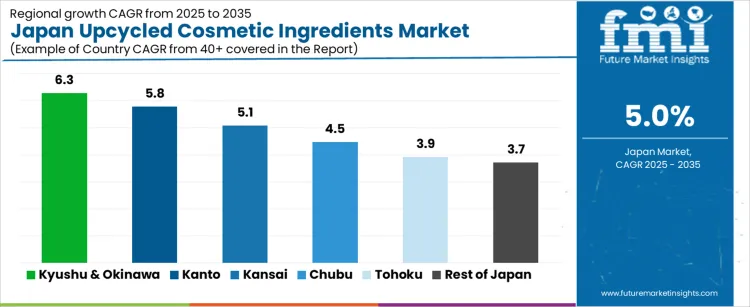
| Region | CAGR (2025-2035) |
|---|---|
| Kyushu & Okinawa | 6.3% |
| Kanto | 5.8% |
| Kansai | 5.1% |
| Chubu | 4.5% |
| Tohoku | 3.9% |
| Rest of Japan | 3.7% |
What is Driving the Growth of Upcycled Cosmetic Ingredients in Kyushu & Okinawa?
Kyushu & Okinawa is projected to experience the highest growth in the upcycled cosmetic ingredients market, with a projected CAGR of 6.3%. The region’s growing commitment to sustainability, combined with increasing awareness of the environmental impact of traditional cosmetic ingredient sourcing, is a key driver of this growth. Kyushu & Okinawa is home to several beauty companies that are increasingly focusing on eco-friendly production methods, including upcycling natural byproducts into ingredients for skincare and cosmetics.
Additionally, the region's emphasis on protecting local ecosystems and promoting sustainable agriculture aligns with the growing demand for upcycled ingredients in cosmetics. As consumers become more conscious of the environmental and ethical implications of their purchases, the demand for upcycled cosmetic ingredients in Kyushu & Okinawa is expected to continue rising. The region’s focus on local sourcing and sustainable beauty practices is expected to play a significant role in shaping market growth.
Why is the Upcycled Cosmetic Ingredients Market Expanding in Kanto?
In Kanto, the demand for upcycled cosmetic ingredients is projected to grow at a CAGR of 5.8%. As Japan's most populous and urbanized region, Kanto is a leader in the adoption of innovative and sustainable beauty solutions. With Tokyo at its center, Kanto is home to numerous beauty brands and research institutions that are driving the development of eco-friendly products. The region has become increasingly focused on sustainability, with more consumers opting for products that feature upcycled ingredients due to their reduced environmental impact.
Furthermore, Kanto’s strong purchasing power and the growing preference for ethical and sustainable brands are helping fuel the market for upcycled cosmetic ingredients. As the region continues to focus on improving its beauty industry through innovation and sustainability, demand for upcycled ingredients is expected to grow steadily. With the increasing availability of green beauty products, Kanto is likely to remain at the forefront of this market trend.
How is the Upcycled Cosmetic Ingredients Market Growing in Kansai?
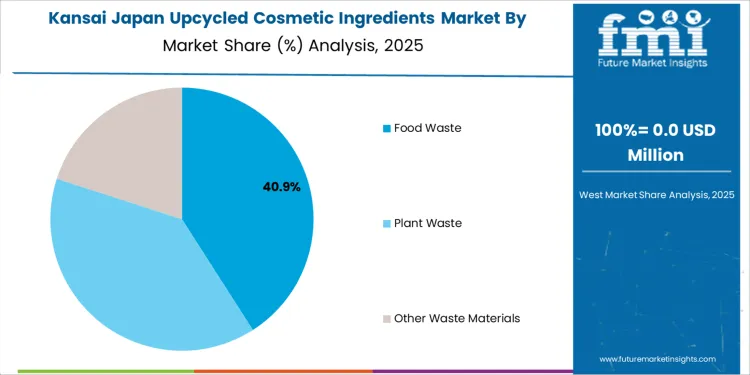
In Kansai, the upcycled cosmetic ingredients market is projected to grow at a CAGR of 5.1%. The region, which includes major cities like Osaka, Kyoto, and Kobe, has a robust healthcare and beauty infrastructure that is increasingly adopting sustainable practices in the production of cosmetic ingredients. Kansai's growing commitment to environmental sustainability, combined with rising awareness about the benefits of upcycled ingredients, is contributing to the market’s expansion.
Local beauty manufacturers are increasingly focusing on developing products using upcycled raw materials such as fruit seeds, plant fibers, and other agricultural byproducts. As consumers in Kansai become more eco-conscious, demand for such products is expected to increase. Additionally, Kansai's focus on sustainable agriculture and the protection of natural resources aligns with the growing trend of eco-friendly beauty solutions. As the beauty industry in Kansai continues to evolve, the market for upcycled ingredients is expected to grow steadily.
What is Contributing to the Growth of Upcycled Cosmetic Ingredients in Chubu?
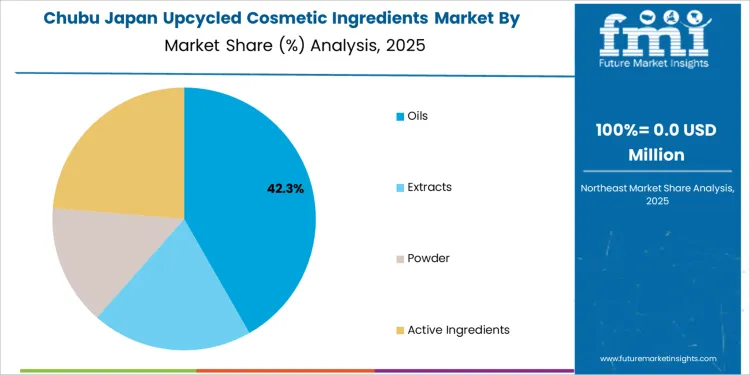
In Chubu, the upcycled cosmetic ingredients market is expected to grow at a CAGR of 4.5%. Chubu, with cities like Nagoya, is seeing an increasing focus on sustainability in the beauty sector. As consumer awareness about the environmental impact of traditional cosmetic production rises, there is a growing demand for eco-friendly alternatives, including upcycled ingredients. Chubu’s beauty industry, which is becoming more engaged in sustainable sourcing and production, is helping to drive the adoption of these ingredients.
Many cosmetic manufacturers in the region are turning to agricultural byproducts and other natural materials to create upcycled ingredients, responding to the increasing consumer preference for products that are both effective and environmentally friendly. As Chubu continues to focus on sustainability, its market for upcycled cosmetic ingredients is expected to grow, driven by both local demand and international trends in eco-conscious beauty.
What is Influencing the Growth of Upcycled Cosmetic Ingredients in Tohoku?
In Tohoku, the upcycled cosmetic ingredients market is projected to grow at a CAGR of 3.9%. While the growth rate in Tohoku is more moderate compared to other regions, the demand for upcycled cosmetic ingredients is increasing due to a growing awareness of sustainability and the region’s efforts to promote eco-friendly practices. Tohoku’s beauty industry is gradually adopting upcycled ingredients, as more consumers look for products that are made from renewable resources and have a smaller environmental footprint.
The region’s agriculture and natural resources, including byproducts from local farming, are being incorporated into beauty formulations, supporting the growth of the upcycled ingredient market. Additionally, Tohoku’s focus on improving access to sustainable beauty products and increasing awareness of the environmental benefits of upcycled ingredients is contributing to steady market growth.
What is Contributing to the Growth of Upcycled Cosmetic Ingredients in Rest of Japan?
In Rest of Japan, the upcycled cosmetic ingredients market is expected to grow at a more moderate rate of 3.7%. Although the demand is smaller compared to major metropolitan areas, there is still a growing interest in sustainable beauty products. Consumers in these regions are increasingly aware of the environmental impacts of cosmetic ingredients, driving the adoption of upcycled alternatives. As access to upcycled cosmetic products improves, particularly in rural areas, demand for these eco-friendly solutions is expected to rise.
Furthermore, Rest of Japan’s commitment to promoting sustainability in local industries is helping to expand the use of upcycled ingredients in beauty products. The steady growth of this market is fueled by the increasing desire for ethical and environmentally conscious solutions in beauty products, contributing to a growing shift in consumer preferences.
What is the Competitive Landscape for Demand for Upcycled Cosmetic Ingredients in Japan?
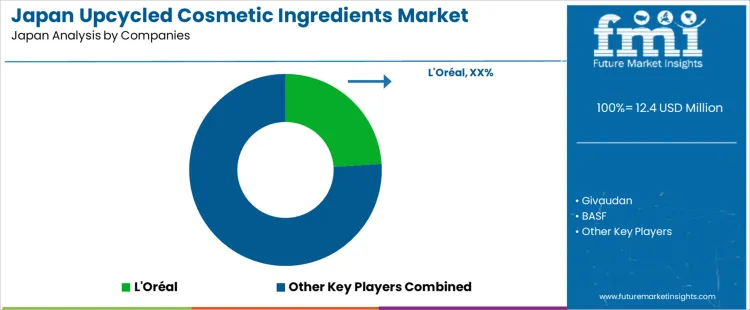
Demand for upcycled cosmetic ingredients in Japan is growing as consumers - especially younger, environmentally conscious segments - increasingly value sustainability, waste reduction, and "clean beauty." Interest in ingredients derived from food by-products, agricultural waste, or otherwise discarded natural resources is rising as eco-friendly and ethical consumption trends strengthen. Japanese cosmetic brands and formulators are responding by sourcing sustainable bio-actives, utilising waste-derived plant extracts, and promoting traceability and environmental responsibility. This shift is supported by rising consumer awareness about ecological impact, ingredient origin transparency, and demand for products that combine efficacy with ethical sourcing.
Key companies include L’Oréal, Givaudan, BASF, Symrise, and Croda International. Among these, L’Oréal appears as a market leader, while the others remain significant suppliers of environmentally conscious, upcycled or "green-label" cosmetic ingredients. Competition among these firms centers on sourcing credibility, supply-chain transparency, quality and safety of upcycled ingredients, regulatory compliance, and ability to meet both performance and eco-sustainability demands.
Suppliers differentiate by offering certified sustainable or upcycled ingredient lines, broad portfolios spanning skin-care, hair-care, and fragrance actives, and support for formulation with these ingredients. Firms that combine robust sustainability credentials, high-quality ingredient standards, and flexible supply to Japanese cosmetic brands are best positioned to capture the growth in demand for upcycled cosmetic ingredients.
Key Players of the Upcycled Cosmetic Ingredients Industry in Japan
- L'Oréal
- Givaudan
- BASF
- Symrise
- Croda International
Scope of the Report
| Items | Details |
|---|---|
| Quantitative Units | USD Million |
| Regions Covered | Japan |
| Source | Food Waste; Plant Waste; Other Waste Materials |
| Ingredient Type | Oils; Extracts; Powder; Active Ingredients / Actives |
| Application | Skincare; Haircare; Makeup; Others (body-care, etc.) |
| Key Companies Profiled | L'Oréal; Givaudan; BASF; Symrise; Croda International |
| Additional Attributes | Dollar sales by ingredient type reflect growing interest in upcycled oils and extracts derived from plant or food waste. Demand in Japan seems especially strong for upcycled plant-waste based ingredients, aligned with rising consumer preference for sustainable and "clean beauty." Skincare is likely the leading application, with haircare and makeup also growing. Market growth is driven by increasing awareness of environmental sustainability, circular-economy trends, and regulatory/consumer pressure for greener cosmetics. |
Key Segments in the Demand for Upcycled Cosmetic Ingredients in Japan
Source
- Food Waste
- Plant Waste
- Other Waste Materials
Ingredient Type
- Oils
- Extracts
- Powder
- Active Ingredients
Application
- Skincare
- Haircare
- Makeup
- Others
Region
- Kyushu & Okinawa
- Kanto
- Kansai
- Chubu
- Tohoku
- Rest of Japan
Frequently Asked Questions
How big is the demand for upcycled cosmetic ingredients in Japan in 2025?
The demand for upcycled cosmetic ingredients in Japan is estimated to be valued at USD 12.4 million in 2025.
What will be the size of upcycled cosmetic ingredients in Japan in 2035?
The market size for the upcycled cosmetic ingredients in Japan is projected to reach USD 20.3 million by 2035.
How much will be the demand for upcycled cosmetic ingredients in Japan growth between 2025 and 2035?
The demand for upcycled cosmetic ingredients in Japan is expected to grow at a 5.0% CAGR between 2025 and 2035.
What are the key product types in the upcycled cosmetic ingredients in Japan?
The key product types in upcycled cosmetic ingredients in Japan are food waste, plant waste and other waste materials.
Which ingredient type segment is expected to contribute significant share in the upcycled cosmetic ingredients in Japan in 2025?
In terms of ingredient type, oils segment is expected to command 41.0% share in the upcycled cosmetic ingredients in Japan in 2025.
Preview the report firsthand - request a free sample
Get SampleGet the brochure for pricing and purchase details.
Get PDFTable of Content
- Executive Summary
- Japan Market Outlook
- Demand-side Trends
- Supply-side Trends
- Technology Roadmap Analysis
- Analysis and Recommendations
- Market Overview
- Market Coverage / Taxonomy
- Market Definition / Scope / Limitations
- Market Background
- Market Dynamics
- Drivers
- Restraints
- Opportunity
- Trends
- Scenario Forecast
- Demand in Optimistic Scenario
- Demand in Likely Scenario
- Demand in Conservative Scenario
- Opportunity Map Analysis
- Product Life Cycle Analysis
- Supply Chain Analysis
- Investment Feasibility Matrix
- Value Chain Analysis
- PESTLE and Porter’s Analysis
- Regulatory Landscape
- Regional Parent Market Outlook
- Production and Consumption Statistics
- Import and Export Statistics
- Market Dynamics
- Japan Market Analysis 2020 to 2024 and Forecast, 2025 to 2035
- Historical Market Size Value (USD Million) Analysis, 2020 to 2024
- Current and Future Market Size Value (USD Million) Projections, 2025 to 2035
- Y-o-Y Growth Trend Analysis
- Absolute $ Opportunity Analysis
- Japan Market Pricing Analysis 2020 to 2024 and Forecast 2025 to 2035
- Japan Market Analysis 2020 to 2024 and Forecast 2025 to 2035, By Source
- Introduction / Key Findings
- Historical Market Size Value (USD Million) Analysis By Source , 2020 to 2024
- Current and Future Market Size Value (USD Million) Analysis and Forecast By Source , 2025 to 2035
- Food Waste
- Plant Waste
- Other Waste Materials
- Y-o-Y Growth Trend Analysis By Source , 2020 to 2024
- Absolute $ Opportunity Analysis By Source , 2025 to 2035
- Japan Market Analysis 2020 to 2024 and Forecast 2025 to 2035, By Ingredient Type
- Introduction / Key Findings
- Historical Market Size Value (USD Million) Analysis By Ingredient Type, 2020 to 2024
- Current and Future Market Size Value (USD Million) Analysis and Forecast By Ingredient Type, 2025 to 2035
- Oils
- Extracts
- Powder
- Active Ingredients
- Y-o-Y Growth Trend Analysis By Ingredient Type, 2020 to 2024
- Absolute $ Opportunity Analysis By Ingredient Type, 2025 to 2035
- Japan Market Analysis 2020 to 2024 and Forecast 2025 to 2035, By Application
- Introduction / Key Findings
- Historical Market Size Value (USD Million) Analysis By Application, 2020 to 2024
- Current and Future Market Size Value (USD Million) Analysis and Forecast By Application, 2025 to 2035
- Skincare
- Haircare
- Makeup
- Others
- Y-o-Y Growth Trend Analysis By Application, 2020 to 2024
- Absolute $ Opportunity Analysis By Application, 2025 to 2035
- Market Structure Analysis
- Competition Dashboard
- Competition Benchmarking
- Market Share Analysis of Top Players
- By Regional
- By Source
- By Ingredient Type
- By Application
- Competition Analysis
- Competition Deep Dive
- L'Oréal
- Overview
- Product Portfolio
- Profitability by Market Segments (Product/Age /Sales Channel/Region)
- Sales Footprint
- Strategy Overview
- Marketing Strategy
- Product Strategy
- Channel Strategy
- Givaudan
- BASF
- Symrise
- Croda International
- L'Oréal
- Competition Deep Dive
- Assumptions & Acronyms Used
- Research Methodology


