

- Industry Size (2026)
- USD 656.1 Mn
- Forecast (2036)
- USD 1108.8 Mn
- CAGR (2026 to 2036)
- 5.4%
Demand for Water Electrolysis Machine in Japan 2026 to 2036
Demand for water electrolysis machine in Japan is valued at USD 656.1 million in 2026 and is anticipated to reach USD 1,108.8 million by 2036, reflecting a CAGR of 5.4%. Demand expands in line with national hydrogen strategy objectives focused on decarbonization, energy security, and long-term transition toward low-emission industrial systems. Government-backed hydrogen roadmaps, pilot projects, and infrastructure investments support steady deployment across power, mobility, and industrial supply chains.
Green hydrogen production leads application usage because electrolysis enables low-carbon hydrogen generation when paired with renewable electricity sources. Industrial users prioritize electrolyzer systems capable of stable operation, high efficiency, and integration with solar, wind, and grid-balancing frameworks. Emphasis on domestic technology development and system reliability strengthens adoption across demonstration and early commercial-scale projects.
Kyushu & Okinawa, Kanto, Kansai, Chubu, and Tohoku represent key growth regions due to concentration of industrial hubs, renewable energy capacity, and hydrogen utilization initiatives. Toshiba Energy Systems & Solutions Corporation, Kawasaki Heavy Industries, IHI Corporation, Mitsubishi Heavy Industries, and Hitachi Zosen Corporation anchor competitive activity through engineering expertise, large-scale system integration, and alignment with Japan’s long-term hydrogen economy and energy transition policies.
Quick Stats for Demand for Water Electrolysis Machine in Japan
- Japan Water Electrolysis Machine Sales Value (2026): USD 656.1 million
- Japan Water Electrolysis Machine Forecast Value (2036): USD 1,108.8 million
- Japan Water Electrolysis Machine Forecast CAGR (2026 to 2036): 5.4%
- Leading Application in Japan: Green Hydrogen Production
- Key Growth Regions in Japan: Kyushu & Okinawa, Kanto, Kansai, Chubu, Tohoku
- Top Players in Japan: Toshiba Energy Systems & Solutions Corporation, Kawasaki Heavy Industries, IHI Corporation, Mitsubishi Heavy Industries, Hitachi Zosen Corporation
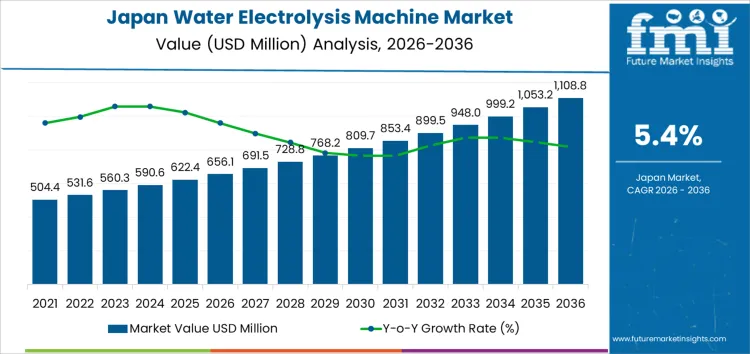
Japan Water Electrolysis Machine Key Takeaways
| Metric | Value |
|---|---|
| Japan Water Electrolysis Machine Sales Value (2026) | USD 656.1 million |
| Japan Water Electrolysis Machine Forecast Value (2036) | USD 1,108.8 million |
| Japan Water Electrolysis Machine Forecast CAGR (2026 to 2036) | 5.4% |
Why is the Demand for Water Electrolysis Machine in Japan Growing?
Demand for water electrolysis machines in Japan grows due to national energy transition priorities and industrial decarbonization targets. Hydrogen forms a central pillar within Japan’s long term energy strategy, which drives deployment of electrolyzers for domestic hydrogen production. Heavy industries, including chemicals, steel, and refining, adopt electrolysis systems to reduce dependence on fossil fuel derived hydrogen. Power utilities integrate electrolyzers with renewable energy assets to manage grid balancing and surplus electricity utilization. Expansion of fuel cell vehicle programs and hydrogen refueling infrastructure sustains equipment demand across regional projects.
Industrial gas suppliers invest in on site hydrogen generation to improve supply security and reduce transportation constraints. Research institutions and pilot facilities increase procurement for testing efficiency improvements and material durability under continuous operation. Government backed demonstration projects accelerate adoption across ports, industrial zones, and smart energy hubs. Technological advancements in alkaline, PEM, and solid oxide systems improve operational efficiency and scalability. Manufacturing localization initiatives support domestic production of electrolysis equipment, strengthening installation rates across public and private sector deployments within Japan.
How Are the Segments Classified in the Demand for Water Electrolysis Machines in Japan?
Demand for water electrolysis machines in Japan is shaped by national hydrogen strategy objectives, industrial decarbonization priorities, and energy security planning. Buyers assess system efficiency, operational durability, compatibility with domestic power infrastructure, and integration with downstream hydrogen usage. Adoption patterns reflect structured deployment across industrial hydrogen production, pilot-scale energy storage, and long-term power system transformation aligned with Japan’s technology-driven energy transition framework.
By Electrolyzer Type, Do Alkaline Electrolyzers Account for the Largest Share of Demand in Japan?
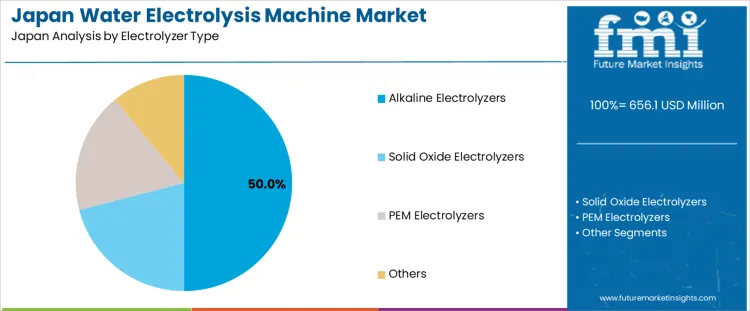
Alkaline electrolyzers hold 50.0%, making them the leading electrolyzer-type segment in Japan. These systems offer proven durability, cost efficiency, and stable performance under continuous operation conditions. Usage aligns with industrial hydrogen production facilities requiring predictable output and long operating lifetimes. Solid oxide electrolyzers support high-temperature integration with industrial heat sources and research-scale deployment. PEM electrolyzers address applications requiring dynamic load response and compact system design. Type distribution reflects preference for alkaline systems due to operational maturity and suitability for Japan’s industrial hydrogen infrastructure.
Key Points:
- Alkaline electrolyzers dominate due to durability and cost efficiency.
- Continuous operation supports industrial hydrogen production.
- Other technologies address specialized performance requirements.
By Application, Does Green Hydrogen Production Represent the Largest Share of Demand in Japan?
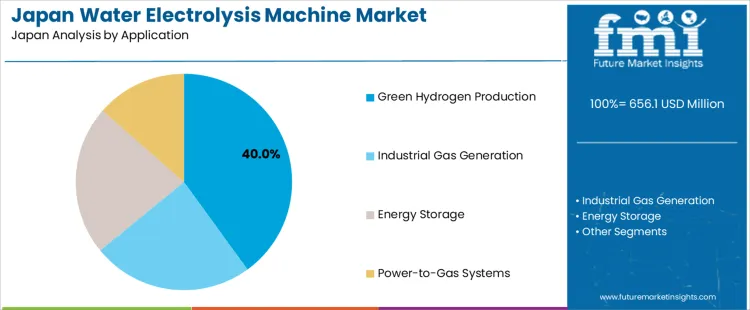
Green hydrogen production holds 40.0%, making it the leading application segment in Japan. Electrolysis systems are deployed to produce hydrogen using low-carbon electricity sources, supporting emissions reduction targets. Industrial gas generation applies electrolysis for controlled hydrogen supply in manufacturing processes. Energy storage applications use hydrogen for long-duration storage and grid balancing. Power-to-gas systems convert surplus electricity into hydrogen for energy system flexibility. Application distribution reflects strategic focus on green hydrogen as a cornerstone of Japan’s decarbonization pathway.
Key Points:
- Green hydrogen production leads due to policy-driven adoption.
- Electrolysis supports low-carbon industrial feedstocks.
- Storage and power-to-gas enable energy system flexibility.
By End-User, Does the Chemical Industry Account for the Largest Share of Demand in Japan?
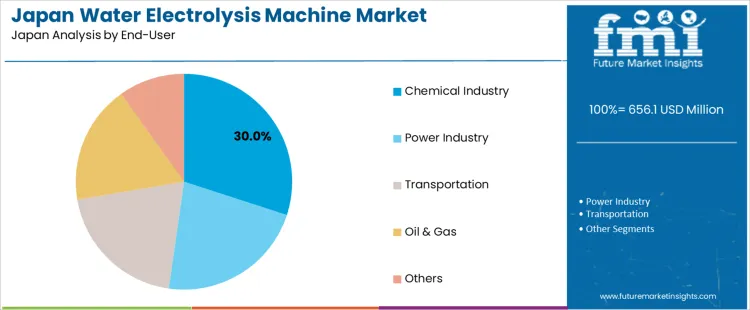
Chemical industry end users hold 30.0%, making them the leading end-user segment in Japan. Chemical manufacturers use hydrogen for ammonia, methanol, and specialty chemical synthesis, with electrolysis supporting lower-emission supply routes. Power industry entities deploy electrolysis for grid integration and renewable balancing initiatives. Transportation applications focus on hydrogen supply for fuel cell mobility programs. Oil and gas entities apply electrolysis selectively for transition-related projects. End-user distribution reflects concentration of hydrogen demand within Japan’s chemical manufacturing base.
Key Points:
- Chemical industry leads due to process hydrogen requirements.
- Electrolysis supports decarbonization of chemical production.
- Power and transport sectors represent structured emerging demand.
What are the Key Dynamics in the Water Electrolysis Machine Industry in Japan?
Demand increases as Japan advances national hydrogen strategy focused on energy security, industrial decarbonization, and long-term carbon neutrality. Water electrolysis machines support domestic hydrogen production aligned with government roadmaps and pilot commercialization. Adoption concentrates in industrial zones, port areas, and demonstration sites linked to fuel cells and mobility. Public funding, corporate consortia, and technology leadership priorities shape procurement across energy, chemicals, and manufacturing sectors.
How do national hydrogen policy and industrial decarbonization objectives drive demand in Japan?
Japan promotes hydrogen as a strategic energy carrier through national roadmaps targeting power generation, mobility, and industrial use. Electrolysis supports domestic hydrogen supply where imported hydrogen and ammonia face cost and logistics constraints. Steelmakers, chemical producers, and refineries evaluate electrolysis to reduce carbon intensity of existing hydrogen consumption. Utilities integrate electrolyzers with renewable power for grid balancing and demonstration projects. Automotive and fuel cell technology leaders support pilot deployment to strengthen supply chains. Government subsidies and METI-led programs reduce investment risk, sustaining steady demand for small to mid-scale electrolysis systems within Japan.
How do cost structure, power pricing, and infrastructure constraints influence demand stability?
High electricity prices in Japan affect operating economics of electrolysis compared with fossil-based hydrogen. Limited availability of low-cost renewable power restricts large-scale deployment. Capital costs for advanced electrolyzer technologies remain significant for private operators. Space constraints in industrial and urban sites complicate installation planning. Water availability and permitting vary by region, influencing site selection. Supply chains for stacks and catalysts remain specialized and capacity-limited. Safety standards and certification requirements add compliance complexity. Demand remains policy-supported and stable at pilot scale, while large-scale expansion depends on electricity cost reduction, infrastructure buildout, and sustained government backing within Japan.
How Is Demand for Water Electrolysis Machine in Japan Evolving by Region?
Demand for water electrolysis machines in Japan is rising due to national hydrogen strategy execution, industrial decarbonization, and pilot-scale green hydrogen deployment. Kyushu and Okinawa lead with a 6.8% CAGR, supported by renewable-linked hydrogen projects and port-based energy initiatives. Kanto follows at 6.2%, driven by research institutions, corporate decarbonization programs, and grid-balancing applications. Kansai records a 5.5% CAGR, shaped by industrial hydrogen substitution and energy transition projects. Chubu posts 4.8%, reflecting manufacturing-led adoption. Tohoku shows 4.2%, supported by regional energy projects. Rest of Japan records 4.0%, reflecting steady evaluation-stage adoption. Regional variation reflects renewable access, industrial structure, and policy alignment across Japan.
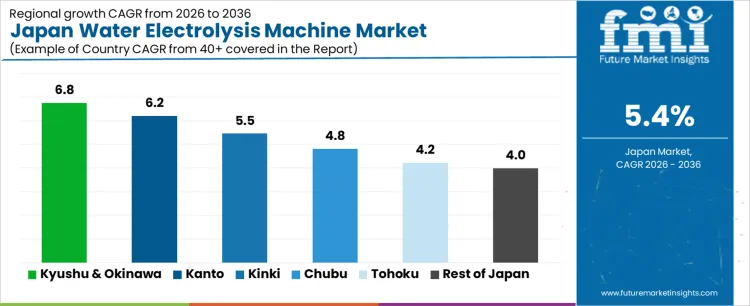
| Region | CAGR (2026-2036) |
|---|---|
| Kyushu & Okinawa | 6.8% |
| Kanto | 6.2% |
| Kansai | 5.5% |
| Chubu | 4.8% |
| Tohoku | 4.2% |
| Rest of Japan | 4.0% |
How is Kyushu and Okinawa driving demand for Water Electrolysis Machines in Japan?
Kyushu and Okinawa drive demand through renewable energy availability, port infrastructure, and hydrogen pilot projects. Region’s CAGR of 6.8% reflects deployment of water electrolysis machines linked to solar and wind power generation. Energy developers integrate electrolysis systems to manage renewable intermittency and produce low-carbon hydrogen for industrial and mobility use. Port-adjacent locations support hydrogen handling, storage trials, and export-oriented initiatives. Operators prioritize modular electrolysis units, operational flexibility, and high efficiency under variable load conditions. Demand remains project-led, supported by public funding, demonstration programs, and collaboration between utilities and industrial users.
- Renewable-linked green hydrogen pilot projects
- Port-based hydrogen handling and storage trials
- Modular and flexible electrolysis system demand
- Public funding and demonstration-driven adoption
How is Kanto driving demand for Water Electrolysis Machines in Japan?
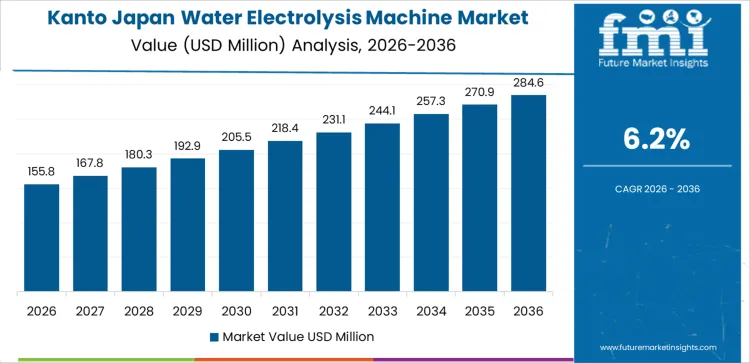
Kanto demand is shaped by concentration of research institutions, corporate headquarters, and policy-driven decarbonization initiatives. Region’s CAGR of 6.2% reflects use of water electrolysis machines in pilot plants, research facilities, and corporate sustainability programs. Utilities and technology firms evaluate electrolysis for grid-balancing, backup power, and low-carbon fuel development. Universities and research centers conduct performance testing, durability studies, and system optimization. Demand favors mid-scale systems with advanced control software and data integration capability. Growth aligns with research milestones, policy targets, and staged infrastructure planning rather than immediate large-scale deployment.
- Research and pilot-scale electrolysis installations
- Corporate decarbonization and sustainability programs
- Grid-balancing and backup power applications
- Data-driven system monitoring and control
How is Kansai driving demand for Water Electrolysis Machines in Japan?
Kansai demand reflects industrial hydrogen consumption and transition planning within manufacturing and chemical sectors. Region’s CAGR of 5.5% is supported by adoption of electrolysis machines for partial substitution of conventional hydrogen in industrial processes. Manufacturers assess electrolysis for on-site hydrogen generation to reduce carbon exposure and improve supply resilience. Demand emphasizes system reliability, continuous operation capability, and integration with existing hydrogen infrastructure. Projects focus on industrial clusters and long-term feasibility rather than rapid scale-up. Growth remains structured and evaluation-driven.
- Industrial hydrogen substitution initiatives
- On-site hydrogen generation projects
- Integration with existing infrastructure
- Reliability-focused system selection
How is Chubu driving demand for Water Electrolysis Machines in Japan?
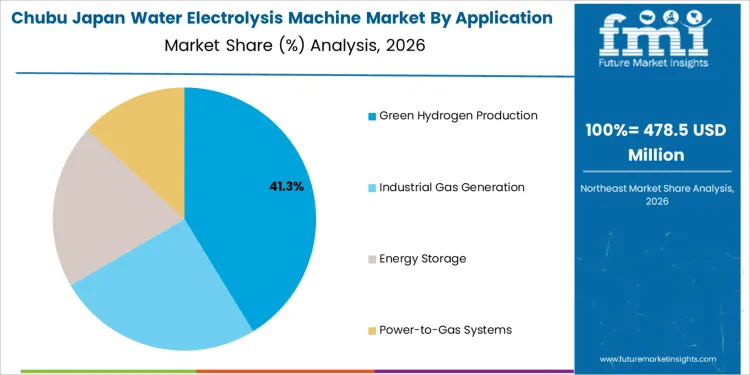
Chubu demand is anchored in manufacturing decarbonization and automotive supply chain initiatives. Region’s CAGR of 4.8% reflects use of water electrolysis machines in pilot projects supporting low-carbon manufacturing and sustainable fuel development. Automotive and machinery producers explore hydrogen for process heating and material treatment. Demand favors durable systems compatible with continuous industrial environments. Adoption progresses gradually, aligned with capital investment cycles and technology readiness assessments. Growth remains moderate and industry-led.
- Manufacturing decarbonization pilots
- Automotive and machinery sector interest
- Continuous-operation system requirements
- Gradual adoption linked to investment cycles
How is Tohoku driving demand for Water Electrolysis Machines in Japan?
Tohoku demand is influenced by regional renewable energy projects and energy self-sufficiency initiatives. Region’s CAGR of 4.2% reflects deployment of electrolysis machines in local hydrogen demonstration projects linked to wind and solar generation. Regional authorities support hydrogen uses for energy storage and community-scale applications. Demand favors small-to-mid scale systems suited to dispersed locations. Growth remains cautious, supported by regional development programs and energy resilience planning.
- Renewable-linked regional hydrogen projects
- Energy storage and community-scale use
- Small-to-mid scale electrolysis systems
- Public-sector supported deployment
How is Rest of Japan driving demand for Water Electrolysis Machines in Japan?
Rest of Japan shows steady demand driven by feasibility studies, industrial evaluation projects, and gradual policy adoption. Region’s CAGR of 4.0% reflects limited but increasing installation of electrolysis machines for testing, training, and early-stage deployment. Organizations prioritize cost evaluation, operational learning, and long-term planning. Demand remains exploratory and preparatory, aligned with future hydrogen infrastructure development rather than immediate capacity expansion.
- Feasibility and evaluation-stage installations
- Industrial testing and training use
- Cost and performance assessment focus
- Early-stage adoption without scale expansion
What is the competitive landscape of demand for water electrolysis machines in Japan?
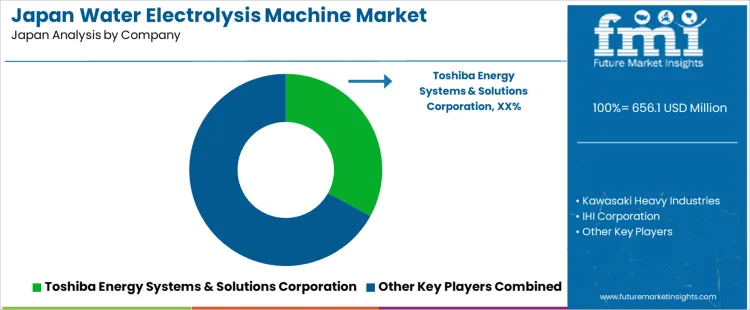
Demand for water electrolysis machines in Japan is driven by hydrogen strategy initiatives, industrial decarbonization targets, and expansion of hydrogen supply for fuel cell vehicles and energy storage. Applications span green hydrogen production, ammonia synthesis feedstock, metal processing, and industrial fuel substitution. Buyers evaluate electrolyzer efficiency, stack durability, operating pressure capability, and integration with renewable electricity sources. Procurement teams prioritize suppliers with domestic manufacturing or local partnerships, compliance with Japan’s industrial standards, and proven performance under continuous operation. Trend in the Japan market reflects government support for hydrogen infrastructure, rollout of hydrogen refueling stations, and collaboration between energy firms and technology providers to establish a hydrogen value chain.
Toshiba Energy Systems & Solutions Corporation holds a leading position in Japan through proton exchange membrane (PEM) and alkaline electrolysis systems tailored to domestic industrial and energy applications. Kawasaki Heavy Industries supports domestic hydrogen production with electrolysis technology developed for integration with renewable and power-to-gas systems. IHI Corporation participates with electrolyzer solutions aligned to large-scale industrial and energy transition projects. Mitsubishi Heavy Industries supplies electrolysis systems leveraging its engineering expertise and integration with broader hydrogen infrastructure. Hitachi Zosen Corporation contributes electrolyzer technology through localized manufacturing and project execution capability. Competitive positioning in Japan reflects technology maturity, domestic production footprint, ability to integrate with renewable energy systems, and support for government-backed hydrogen initiatives.
Key Players in Japan Water Electrolysis Machine Demand
- Toshiba Energy Systems & Solutions Corporation
- Kawasaki Heavy Industries
- IHI Corporation
- Mitsubishi Heavy Industries
- Hitachi Zosen Corporation
Scope of the Report
| Items | Values |
|---|---|
| Quantitative Units | USD million |
| Electrolyzer Type | Alkaline Electrolyzers; Solid Oxide Electrolyzers; PEM Electrolyzers; Others |
| Application | Green Hydrogen Production; Industrial Gas Generation; Energy Storage; Power-to-Gas Systems |
| End-User | Chemical Industry; Power Industry; Transportation; Oil & Gas; Others |
| Regions Covered | Kyushu & Okinawa; Kanto; Kansai; Chubu; Tohoku; Rest of Japan |
| Key Companies Profiled | Toshiba Energy Systems & Solutions Corporation; Kawasaki Heavy Industries; IHI Corporation; Mitsubishi Heavy Industries; Hitachi Zosen Corporation |
| Additional Attributes | Dollar sales by electrolyzer type and application; regional CAGR differences driven by hydrogen hub development in Kansai and Chubu; adoption trends for PEM and solid oxide systems; demand linked to national hydrogen strategy; technology efficiency improvements and project-based procurement shaping equipment deployment. |
Japan Water Electrolysis Machine Demand by Segments
By Electrolyzer Type:
- Alkaline Electrolyzers
- Solid Oxide Electrolyzers
- PEM Electrolyzers
- Others
By Application:
- Green Hydrogen Production
- Industrial Gas Generation
- Energy Storage
- Power-to-Gas Systems
By End-User:
- Chemical Industry
- Power Industry
- Transportation
- Oil & Gas
- Others
By Region:
- Kyushu & Okinawa
- Kanto
- Kansai
- Chubu
- Tohoku
- Rest of Japan
Frequently Asked Questions
How big is the demand for water electrolysis machine in Japan in 2026?
The demand for water electrolysis machine in Japan is estimated to be valued at USD 656.1 million in 2026.
What will be the size of water electrolysis machine in Japan in 2036?
The market size for the water electrolysis machine in Japan is projected to reach USD 1,108.8 million by 2036.
How much will be the demand for water electrolysis machine in Japan growth between 2026 and 2036?
The demand for water electrolysis machine in Japan is expected to grow at a 5.4% CAGR between 2026 and 2036.
What are the key product types in the water electrolysis machine in Japan?
The key product types in water electrolysis machine in Japan are alkaline electrolyzers, solid oxide electrolyzers, pem electrolyzers and others.
Which application segment is expected to contribute significant share in the water electrolysis machine in Japan in 2026?
In terms of application, green hydrogen production segment is expected to command 40.0% share in the water electrolysis machine in Japan in 2026.
Preview the report firsthand - request a free sample
Get SampleGet the brochure for pricing and purchase details.
Get PDFTable of Content
- Executive Summary
- Japan Market Outlook
- Demand-side Trends
- Supply-side Trends
- Technology Roadmap Analysis
- Analysis and Recommendations
- Market Overview
- Market Coverage / Taxonomy
- Market Definition / Scope / Limitations
- Market Background
- Market Dynamics
- Drivers
- Restraints
- Opportunity
- Trends
- Scenario Forecast
- Demand in Optimistic Scenario
- Demand in Likely Scenario
- Demand in Conservative Scenario
- Opportunity Map Analysis
- Product Life Cycle Analysis
- Supply Chain Analysis
- Investment Feasibility Matrix
- Value Chain Analysis
- PESTLE and Porter’s Analysis
- Regulatory Landscape
- Regional Parent Market Outlook
- Production and Consumption Statistics
- Import and Export Statistics
- Market Dynamics
- Japan Market Analysis 2021 to 2025 and Forecast, 2026 to 2036
- Historical Market Size Value (USD Million) Analysis, 2021 to 2025
- Current and Future Market Size Value (USD Million) Projections, 2026 to 2036
- Y-o-Y Growth Trend Analysis
- Absolute $ Opportunity Analysis
- Japan Market Pricing Analysis 2021 to 2025 and Forecast 2026 to 2036
- Japan Market Analysis 2021 to 2025 and Forecast 2026 to 2036, By Electrolyzer Type
- Introduction / Key Findings
- Historical Market Size Value (USD Million) Analysis By Electrolyzer Type , 2021 to 2025
- Current and Future Market Size Value (USD Million) Analysis and Forecast By Electrolyzer Type , 2026 to 2036
- Alkaline Electrolyzers
- Solid Oxide Electrolyzers
- PEM Electrolyzers
- Others
- Alkaline Electrolyzers
- Y-o-Y Growth Trend Analysis By Electrolyzer Type , 2021 to 2025
- Absolute $ Opportunity Analysis By Electrolyzer Type , 2026 to 2036
- Japan Market Analysis 2021 to 2025 and Forecast 2026 to 2036, By Application
- Introduction / Key Findings
- Historical Market Size Value (USD Million) Analysis By Application, 2021 to 2025
- Current and Future Market Size Value (USD Million) Analysis and Forecast By Application, 2026 to 2036
- Green Hydrogen Production
- Industrial Gas Generation
- Energy Storage
- Power-to-Gas Systems
- Green Hydrogen Production
- Y-o-Y Growth Trend Analysis By Application, 2021 to 2025
- Absolute $ Opportunity Analysis By Application, 2026 to 2036
- Japan Market Analysis 2021 to 2025 and Forecast 2026 to 2036, By End-User
- Introduction / Key Findings
- Historical Market Size Value (USD Million) Analysis By End-User, 2021 to 2025
- Current and Future Market Size Value (USD Million) Analysis and Forecast By End-User, 2026 to 2036
- Chemical Industry
- Power Industry
- Transportation
- Oil & Gas
- Others
- Chemical Industry
- Y-o-Y Growth Trend Analysis By End-User, 2021 to 2025
- Absolute $ Opportunity Analysis By End-User, 2026 to 2036
- Market Structure Analysis
- Competition Dashboard
- Competition Benchmarking
- Market Share Analysis of Top Players
- By Regional
- By Electrolyzer Type
- By Application
- By End-User
- Competition Analysis
- Competition Deep Dive
- Toshiba Energy Systems & Solutions Corporation
- Overview
- Product Portfolio
- Profitability by Market Segments (Product/Age /Sales Channel/Region)
- Sales Footprint
- Strategy Overview
- Marketing Strategy
- Product Strategy
- Channel Strategy
- Kawasaki Heavy Industries
- IHI Corporation
- Mitsubishi Heavy Industries
- Hitachi Zosen Corporation
- Toshiba Energy Systems & Solutions Corporation
- Competition Deep Dive
- Assumptions & Acronyms Used
- Research Methodology


