

- Industry Size (2026)
- USD 4.18 Bn
- Forecast (2036)
- USD 6.43 Bn
- CAGR (2026 to 2036)
- 4.4%
Mechanical Shaft Seal Market Size, Market Forecast and Outlook By FMI
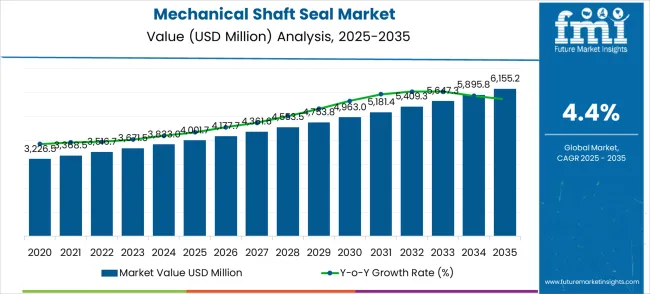
The mechanical shaft seal market was valued at USD 4 billion in 2025, projected to reach USD 4.18 billion in 2026, and is forecast to expand to USD 6.43 billion by 2036 at a 4.4% CAGR. Refinery turnaround cycles and petrochemical capacity additions in the Middle East and Asia are sustaining replacement demand for high-performance sealing systems. Emission control regulations in chemical processing and water treatment facilities mandate upgraded seal technology to meet fugitive emission thresholds. Aerospace and food-grade applications demand specialized material certifications that restrict supplier qualification and create procurement complexity.
Summary of Mechanical Shaft Seal Market
- Market Overview
- The mechanical shaft seal market is valued at USD 4 billion in 2025 and is projected to reach USD 6.43 billion by 2036.
- The industry is expected to grow at a 4.4% CAGR from 2026 to 2036, creating an incremental opportunity of USD 2.25 billion.
- Demand and Growth Drivers
- Demand is sustained by refinery turnaround cycles, petrochemical capacity additions, and water infrastructure upgrades across Asia and the Middle East.
- Tightening fugitive emission regulations in chemical processing are mandating seal upgrades from packing glands to mechanical face seals.
- Aerospace and food-grade material certification requirements create qualification barriers that concentrate demand among certified suppliers.
- Among key countries, China at 5.9%, India at 5.5%, Germany at 5.1%, Brazil at 4.6%, USA at 4.2%, UK at 3.7%, Japan at 3.3%.
- Product and Segment View
- The market includes mechanical shaft seals are precision-engineered sealing devices installed at rotating shaft penetration points in pumps, compressors, mixers, and turbines to prevent fluid leakage and contamination ingress.
- Applications span petrochemicals, automobile, aerospace, food and beverages, other.
- Multi-spring Type leads by spring type with 35.8% share in 2026.
- Petrochemicals leads by application with 38% share in 2026.
- Scope includes market scope includes multi-spring seals, single spring seals, cartridge seal assemblies, and specialty configurations for extreme service conditions.
- Geography and Competitive Outlook
- China and India are the fastest-growing markets, while Japan and UK represent mature demand bases.
- Competition is shaped by product specialization, distribution reach, and regulatory compliance capabilities.
- Key players include Parjet, SKF (AB SKF), John Crane (Smiths Group plc), Flowserve Corporation, EagleBurgmann, AESSEAL plc, A.W. Chesterton Company.
- Analyst Opinion at FMI
- Nikhil Kaitwade, Principal Consultant, opines: 'In my analysis, I have observed that the primary procurement constraint in rotating equipment sealing is not unit price but qualification lead time. Plant operators executing turnaround schedules on compressed timelines require pre-qualified seal cartridges that can be installed without extended commissioning. Seal manufacturers without stocked cartridge inventories for critical pump configurations risk losing replacement contracts to competitors with faster delivery capability.'
- Strategic Implications / Executive Takeaways
- Plant operators must pre-qualify cartridge seal assemblies for critical pump configurations to reduce turnaround schedule risk.
- Seal manufacturers should invest in regional stocking programmes to guarantee delivery windows that match compressed maintenance schedules.
- Engineering contractors must specify API 682 or ISO 21049 compliance in all new rotating equipment procurement packages.
Mechanical Shaft Seal Market Key Takeaways
| Metric | Details |
|---|---|
| Industry Size (2026) | USD 4.18 billion |
| Industry Value (2036) | USD 6.43 billion |
| CAGR (2026 to 2036) | 4.4% |
Source: Future Market Insights, 2026
All major economies reflect differentiated adoption trajectories. China leads at 5.9% CAGR, followed by India at 5.5%, Germany at 5.1%, Brazil at 4.6%, USA at 4.2%, UK at 3.7%, Japan at 3.3%.
Mechanical Shaft Seal Market Definition
Mechanical shaft seals are precision-engineered sealing devices installed at rotating shaft penetration points in pumps, compressors, mixers, and turbines to prevent fluid leakage and contamination ingress. The market encompasses single and multi-spring configurations, cartridge assemblies, and specialty designs for high-temperature, corrosive, and hygienic applications. Key end-use sectors include petrochemical refining, water and wastewater treatment, aerospace, food and beverage processing, and general industrial manufacturing.
Mechanical Shaft Seal Market Inclusions
Market scope includes multi-spring seals, single spring seals, cartridge seal assemblies, and specialty configurations for extreme service conditions. Coverage spans global and regional market sizes, forecast period 2026 to 2036, segment breakdowns by spring type and application sector.
Mechanical Shaft Seal Market Exclusions
The scope excludes static gaskets, O-ring seals without dynamic rotation, labyrinth non-contact seals, and hydraulic cylinder rod seals. Magnetic drive sealless pump systems that eliminate the need for mechanical seals are also excluded from the valuation.
Mechanical Shaft Seal Market Research Methodology
- Primary Research: Analysts engaged with procurement leads, technical engineers, and supply chain directors to map the decision gates triggering mechanical shaft seal upgrades and purchases.
- Desk Research: Data collection phases aggregated regulatory filings, industry standards documentation, trade association publications, and company disclosures across target geographies.
- Market-Sizing and Forecasting: Baseline values derive from a bottom-up aggregation of product shipments and revenue data, applying region-specific adoption curves to project future demand velocity.
- Data Validation and Update Cycle: Projections are tested against publicly reported expenditure guidance from leading industry participants and cross-referenced with procurement databases.
Why is the Mechanical Shaft Seal Market Growing?
Market expansion is being supported by the increasing global demand for reliable sealing solutions and the corresponding shift toward advanced seal technologies that can provide superior performance while meeting stringent specifications for leak prevention in critical applications. Modern manufacturing facilities and process industries are increasingly focused on incorporating high-performance mechanical seals to enhance operational reliability while satisfying demands for environmental compliance and proven performance in demanding operational environments. Mechanical shaft seals' proven ability to deliver superior leak prevention, operational longevity, and maintenance efficiency makes them essential components for industrial equipment and critical process applications.
The growing focus on environmental compliance and safety regulations is driving demand for high-quality sealing systems that can support distinctive performance characteristics and mission-critical applications across petrochemicals, automotive, and aerospace categories. Manufacturer preference for components that combine sealing excellence with proven reliability credentials is creating opportunities for innovative seal implementations in both traditional and emerging industrial applications. The rising influence of predictive maintenance technologies and operational optimisation is also contributing to increased adoption of intelligent sealing systems that can provide real-time performance monitoring and leak detection capabilities.
Opportunity Pathways - Mechanical Shaft Seal Market
The mechanical shaft seal market represents a critical component sector underpinning industrial reliability and environmental compliance across global manufacturing and process industries. With steady growth projected from USD 4.18 billion in 2026 to USD 6.13 billion by 2036 at a 4.4% CAGR, this market is driven by increasing industrial equipment modernisation, stringent environmental regulations, and growing demand for leak prevention solutions in critical applications.
The market's expansion reflects the essential role mechanical seals play in maintaining operational integrity across petrochemical, automotive, aerospace, and food processing industries. Geographic growth is particularly strong in Asia-Pacific markets, with China leading at 5.9% CAGR and India at 5.5% CAGR, driven by rapid industrialisation and chemical processing capacity expansion. The dominance of multi-spring type seals (35.8% market share) and petrochemical applications underscores the industry's preference for proven reliability and chemical resistance in demanding operational environments.
Key market dynamics favour solutions that can deliver superior leak prevention, extended service life, and compliance with increasingly stringent environmental regulations. Integration challenges with existing equipment and material compatibility requirements create opportunities for companies that can provide comprehensive sealing solutions with predictive maintenance capabilities.
- Pathway A - Smart Sealing & Predictive Maintenance Integration. Development of mechanical seals with integrated condition monitoring sensors, IoT connectivity, and predictive analytics capabilities can command premium pricing while reducing unplanned downtime. Focus on real-time leak detection and automated maintenance scheduling systems. Expected revenue pool: USD 800-1,100 million.
- Pathway B - Asia-Pacific Industrial Expansion. Massive growth opportunities in China (5.9% CAGR) and India (5.5% CAGR) through local manufacturing partnerships, compliance with regional industrial standards, and specialised solutions for emerging chemical processing facilities. Local production reduces costs and improves market penetration. Revenue opportunity: USD 900-1,200 million.
- Pathway C - Advanced Materials & Chemical Resistance. Development of seals using advanced polymers, ceramics, and composite materials that can withstand increasingly aggressive chemical environments and extreme operating conditions. Focus on specialised applications in petrochemicals, pharmaceuticals, and speciality chemicals. Pool: USD 600-800 million.
- Pathway D - Environmental Compliance & Zero-Leak Solutions. Specialised sealing systems designed to meet stringent environmental regulations and zero-emission requirements, particularly in chemical processing and oil & gas applications. Premium positioning through superior environmental performance. Revenue uplift: USD 500-700 million.
- Pathway E - Automotive & Aerospace Applications Growth. Tailored mechanical seals for electric vehicle systems, aerospace applications, and next-generation automotive technologies require specialised sealing solutions for unique operating conditions and performance requirements. Expected upside: USD 400-550 million.
- Pathway F - Modular & Retrofit Sealing Systems. Simplified replacement and upgrade systems designed for existing equipment modernisation with minimal downtime, addressing the challenge of integrating advanced sealing technologies into legacy industrial facilities. Innovation pool: USD 350-450 million.
- Pathway G - Digital Twin & Performance Optimisation. Integration of digital twin technology and performance modelling to optimise seal selection, predict failure modes, and enhance operational efficiency through data-driven sealing solutions that support industrial IoT initiatives. Strategic value: USD 300-400 million.
Segmental Analysis
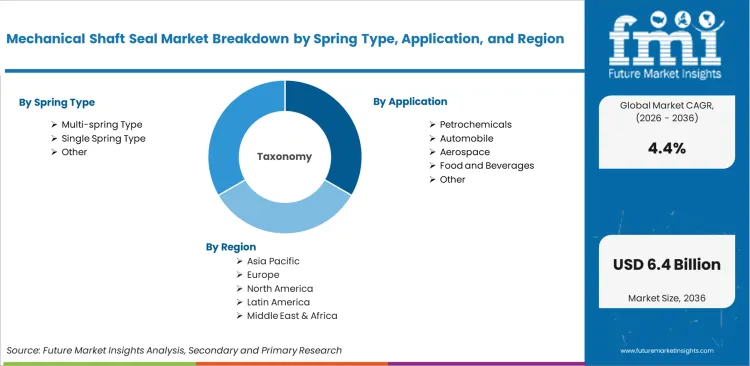
The market is segmented by spring type, application, and region. By Spring Type, the market is divided into multi-spring type, single spring type, and other Spring Types. Based on application, the market is categorised into petrochemicals, automobile, aerospace, food and beverages, and other applications. Regionally, the market is divided into North America, Europe, East Asia, South Asia & Pacific, Latin America, and the Middle East & Africa.
By Spring Type, Multi-spring Type Segment Accounts for 35.8% Market Share
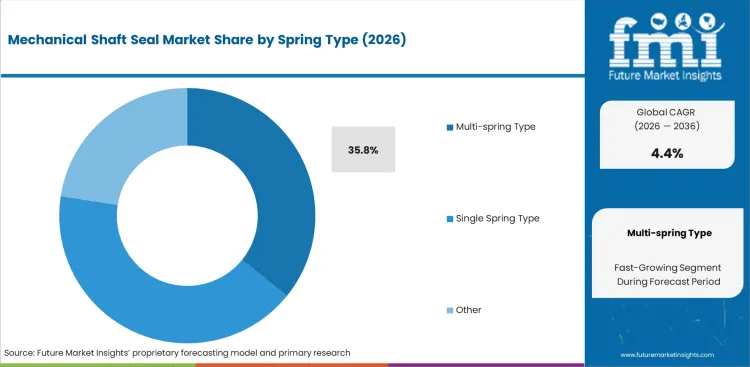
The multi-spring type segment is projected to account for 35.8% of the mechanical shaft seal market in 2026, reaffirming its position as the leading Spring Type category. Industrial manufacturers and equipment designers increasingly utilise multi-spring type seals for their superior load distribution, enhanced flexibility characteristics, and reliable sealing performance across diverse operating conditions and industrial applications. This seal configuration directly addresses industrial requirements for consistent sealing performance and efficient operation under varying pressure and temperature conditions.
This segment forms the foundation of modern mechanical sealing applications, as it represents the design with the greatest adaptability and established compatibility across multiple industrial systems. Manufacturer investments in spring design optimisation and seal face technology continue to strengthen adoption among industrial equipment producers. With process industries prioritising leak prevention reliability and consistent performance characteristics, multi-spring type seals align with both operational efficiency objectives and environmental compliance requirements, making them the central component of comprehensive mechanical sealing strategies.
By Application, Petrochemicals Segment Dominates Market Demand
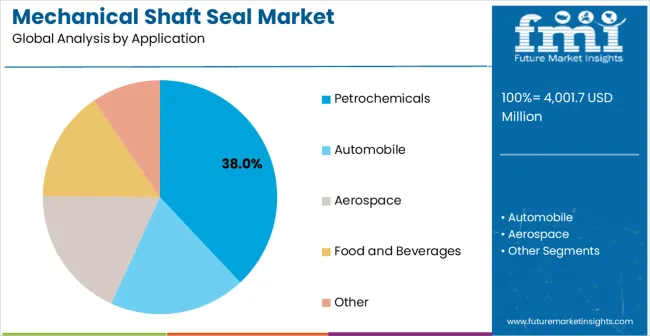
Petrochemical applications are expected to represent the dominant segment of mechanical shaft seal demand market share 38% in 2026, underscoring their critical role as essential components for chemical processing operations. Chemical processing facilities prefer advanced sealing systems for their leak prevention capabilities, chemical resistance properties, and ability to support both standard operations and specialised applications while offering proven effectiveness in corrosive and high-pressure environments. Positioned as essential components for petrochemical processing, mechanical seals offer both operational safety and environmental protection advantages.
The segment is supported by continuous growth in chemical processing capacity and the growing availability of specialised seal variants that enable equipment differentiation and operational effectiveness at the processing facility level. Chemical companies are investing in advanced sealing technologies to support process optimization and environmental compliance. As chemical processing continues to expand globally and manufacturers seek reliable sealing solutions, petrochemical applications will continue to dominate the market landscape while supporting operational excellence and environmental protection strategies.
What are the Drivers, Restraints, and Key Trends of the Mechanical Shaft Seal Market?
The mechanical shaft seal market is advancing steadily due to increasing industrial preference for reliable sealing solutions and growing demand for advanced seal technologies that focus on leak prevention across chemical processing and manufacturing applications. The market faces challenges, including material compatibility requirements due to chemical exposure, maintenance complexity from advanced seal designs, and competition from alternative sealing technologies. Innovation in smart sealing systems and predictive maintenance integration continues to influence market development and expansion patterns.
Expansion of Chemical Processing Applications
The growing adoption of mechanical shaft seals in advanced chemical processing facilities and specialised applications is enabling equipment manufacturers to develop systems that provide distinctive sealing capabilities while commanding premium positioning and enhanced safety characteristics. Chemical processing applications provide superior operational differentiation while allowing more sophisticated equipment development across various process categories and industrial segments. Manufacturers are increasingly recognising the competitive advantages of advanced sealing integration for chemical processing development and industrial safety penetration.
Integration of Smart Monitoring Technologies
Modern seal manufacturers are incorporating condition monitoring sensors, leak detection systems, and predictive maintenance capabilities to enhance seal performance, improve operational insights, and meet industrial demands for intelligent sealing solutions. These technologies enhance operational efficiency while enabling new applications, including predictive maintenance and smart manufacturing sealing systems. Advanced technology integration also allows suppliers to support premium market positioning and industrial trust building beyond traditional seal supply relationships.
Analysis of the Mechanical Shaft Seal Market by Key Country
.webp "Top Country Growth Comparison Mechanical Shaft Seal Market Cagr (2026 2036)")
| Country | CAGR (2026 to 2036) |
|---|---|
| China | 5.9% |
| India | 5.5% |
| Germany | 5.1% |
| Brazil | 4.6% |
| USA | 4.2% |
| UK | 3.7% |
| Japan | 3.3% |
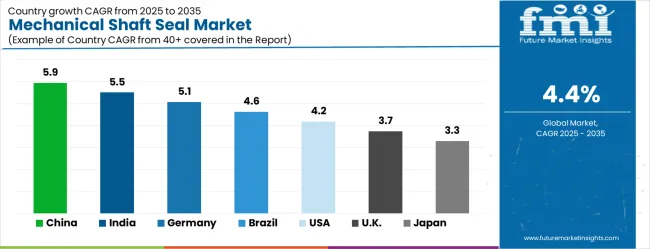
The mechanical shaft seal market is experiencing robust growth globally, with China leading at a 5.9% CAGR through 2036, driven by the expanding chemical processing industry, growing manufacturing sector development, and increasing industrial automation adoption across process industries. India follows at 5.5%, supported by rapid industrialisation, rising chemical manufacturing investments, and growing demand for sealing solutions in emerging industrial sectors. The USA shows growth at 4.2%, focusing on advanced manufacturing applications and chemical processing industry requirements. Germany records 5.1%, focusing on precision engineering excellence and industrial equipment manufacturing. Brazil demonstrates 4.6% growth, prioritising industrial modernisation and chemical processing development. The UK exhibits 3.7% growth, supported by an established chemical industry and advanced manufacturing capabilities. Japan shows 3.3% growth, focusing on precision manufacturing and technological innovation in sealing solutions.
The report covers an in-depth analysis of 40+ countries, top-performing countries are highlighted below.
China Leads Global Market Growth with Chemical Industry Expansion
Revenue from mechanical shaft seals in China is projected to exhibit exceptional growth with a CAGR of 5.9% through 2036, driven by the rapidly expanding chemical processing industry and increasing manufacturing sector modernisation across facilities seeking advanced sealing solutions. The country's growing chemical production capacity and strategic industrial development are creating substantial demand for high-performance seals in both traditional and advanced processing applications. Major seal manufacturers and industrial suppliers are establishing comprehensive production and distribution capabilities to serve both domestic industrial requirements and export markets.
- Rising chemical processing industry development and expanding manufacturing capabilities are driving demand for mechanical seals across equipment manufacturers, chemical facilities, and processing equipment producers throughout major Chinese industrial centres.
- Strong economic growth and increasing industrial investment toward advanced and reliable sealing solutions are supporting the rapid adoption of high-performance seal systems among manufacturers seeking to meet evolving operational requirements and environmental expectations.
India Demonstrates Strong Market Potential with Industrial Development Impact
Revenue from mechanical shaft seals in India is expanding at a CAGR of 5.5%, supported by rapid industrialisation, increasing chemical manufacturing investments, and growing focus on infrastructure development requiring reliable sealing solutions. The country's developing chemical processing sector and expanding manufacturing infrastructure are driving demand for quality sealing systems across both traditional and modern industrial applications. International sealing companies and domestic manufacturers are establishing comprehensive distribution and production capabilities to address growing market demand for reliable sealing components.
- Rising industrialisation and expanding chemical processing capabilities are creating opportunities for mechanical seal adoption across industrial establishments, chemical manufacturers, and processing facilities in major industrial regions throughout India.
- Growing government focus on manufacturing excellence and industrial safety is driving adoption of advanced sealing solutions among manufacturers seeking to meet environmental standards and competitive objectives for operational effectiveness.
USA Maintains Strong Position with Advanced Processing Focus
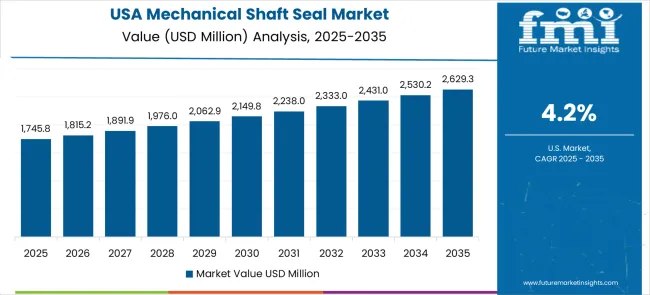
Revenue from mechanical shaft seals in the United States is projected to grow at a CAGR of 4.2% through 2036, driven by the country's advanced chemical processing capabilities, stringent environmental regulations, and continued focus on reliable sealing solutions for critical applications. The USA's sophisticated chemical industry and willingness to invest in high-performance sealing systems are creating substantial demand for both standard and specialised seal variants. Leading chemical companies and equipment suppliers are establishing comprehensive sourcing strategies to serve both processing operations and specialised industrial markets.
- Rising advanced chemical processing operations and environmental compliance requirements are driving demand for mechanical sealing systems across chemical contractors, processing facilities, and equipment producers seeking reliable performance and proven leak prevention effectiveness.
- Strong industrial expertise and regulatory compliance focus are supporting the adoption of specialised and high-performance sealing systems among chemical organisations and equipment manufacturers, prioritising component reliability and environmental protection.
Germany Strengthens Market with Engineering Excellence
Revenue from mechanical shaft seals in Germany is projected to grow at a CAGR of 5.1% through 2036, supported by the country's advanced chemical processing industry, precision engineering sector, and established tradition of engineering excellence requiring high-quality sealing components. German manufacturers and chemical processors consistently demand superior sealing systems that meet exacting quality standards for both domestic production and export markets. The country's position as a chemical technology leader continues to drive innovation in sealing applications and quality standards.
- Strong chemical processing and precision engineering industries are driving demand for advanced sealing systems across traditional chemical manufacturers, equipment producers, and industrial suppliers seeking to maintain Germany's reputation for engineering excellence.
- Growing export of German chemical products and increasing international industrial cooperation are supporting the adoption of high-quality sealing components among manufacturers seeking to differentiate their products in global markets.
Brazil Anchors Growth with Industrial Modernisation Leadership
Revenue from mechanical shaft seals in Brazil is projected to grow at a CAGR of 4.6% through 2036, supported by the country's industrial modernisation programs, expanding chemical processing capabilities, and focus on infrastructure development requiring reliable sealing solutions. Brazilian industrial facilities prioritise operational effectiveness, equipment reliability, and environmental compliance enhancement, making mechanical seals essential components for both domestic operations and regional industrial applications. The country's comprehensive industrial development programs and strategic focus support continued sealing market development.
- Advanced industrial modernisation capabilities and chemical processing development are driving demand for specialised sealing components across manufacturing facilities, chemical contractors, and equipment producers serving Brazilian and regional markets.
- Strong focus on environmental compliance and operational effectiveness is encouraging industrial organisations to adopt advanced sealing systems that support competitive positioning and meet Brazilian standards for industrial equipment.
UK Demonstrates Stable Growth with Chemical Industry Excellence
In the UK mechanical shaft seals are projected to grow at a CAGR of 3.7% through 2036, supported by the country's established chemical processing industry, expertise in precision engineering, and advanced manufacturing tradition requiring high-quality sealing components. British chemical organisations' focus on operational excellence and proven components creates steady demand for reliable sealing systems and specialised variants. The country's attention to component quality and environmental compliance drives consistent adoption across both traditional and specialised chemical processing applications.
- Established chemical processing industry and precision engineering expertise are driving steady demand for high-quality sealing systems across chemical contractors, equipment manufacturers, and processing companies seeking proven performance and superior quality.
- Strong industrial tradition and environmental compliance focus are supporting the adoption of specialised sealing components among industrial organisations seeking to meet British standards and operational preferences for reliable sealing solutions.
Japan Focuses on Precision Manufacturing and Innovation
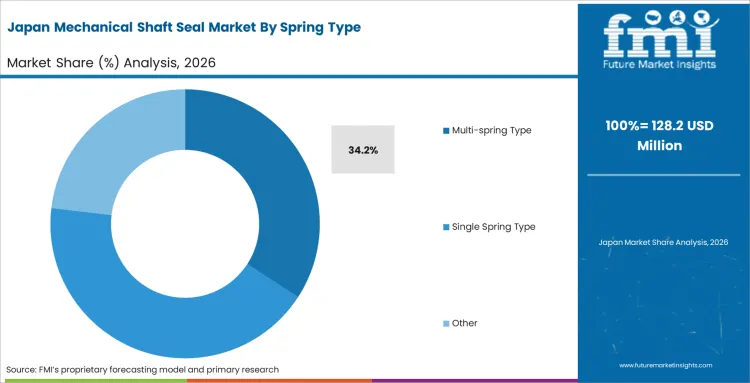
Revenue from mechanical shaft seals in Japan is projected to grow at a CAGR of 3.3% through 2036, supported by the country's advanced manufacturing capabilities, precision engineering expertise, and focus on developing high-quality sealing components. Japan's industrial sector continues to benefit from its reputation for producing superior precision products while working to address evolving processing requirements and develop advanced sealing technologies through continuous innovation.
- Advanced manufacturing capabilities and precision engineering expertise are driving the development of high-quality sealing systems that command premium positioning in specialised markets while supporting technological advancement and manufacturing excellence.
- Growing focus on manufacturing technology development and precision component production is supporting the adoption of advanced sealing systems among industrial organisations seeking to ensure operational effectiveness and technological superiority.
Europe Market Split by Country
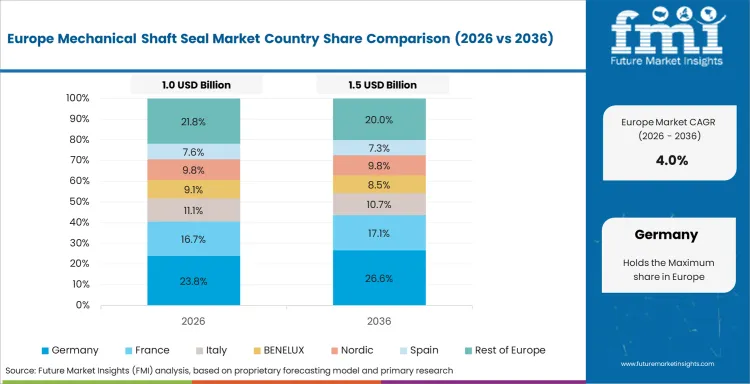
The mechanical shaft seal market in Europe is projected to grow from USD 884.0 million in 2026 to USD 1,359.2 million by 2036, registering a CAGR of 4.4% over the forecast period. Germany is expected to maintain its leadership position with a 29.7% market share in 2026, declining slightly to 29.2% by 2036, supported by its advanced chemical processing sector and precision engineering capabilities serving European and international markets.
The United Kingdom follows with a 19.4% share in 2026, projected to reach 19.1% by 2036, driven by established chemical industry expertise and advanced manufacturing capabilities. France holds a 17.2% share in 2026, expected to reach 17.6% by 2036, supported by growing chemical processing modernisation programs and industrial technology development. Italy commands a 14.3% share in 2026, projected to reach 14.7% by 2036, while Spain accounts for 10.1% in 2026, expected to reach 10.5% by 2036. The Netherlands maintains a 3.8% share in 2026, growing to 4.0% by 2036. The Rest of Europe region, including Nordic countries, Eastern Europe, Belgium, Switzerland, Austria, and other European nations, is anticipated to hold 5.5% in 2026, declining to 4.9% by 2036, attributed to mixed growth patterns with steady expansion in some Eastern European markets balanced by slower growth in smaller Western European countries implementing chemical processing modernisation programs.
Competitive Landscape of the Mechanical Shaft Seal Market
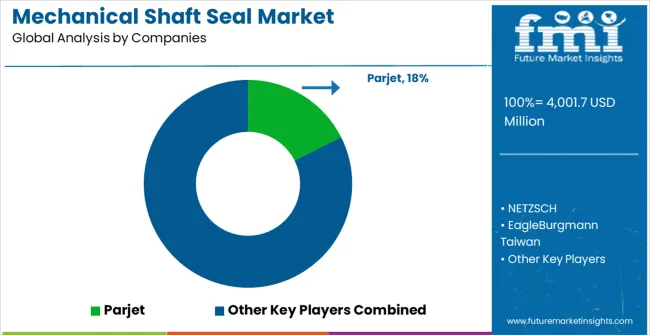
The mechanical shaft seal market consists of 10-14 major players, with the top five companies holding around 60-66% of global market share. Demand is driven by expanding applications in pumps, compressors, mixers, and rotating equipment used across oil & gas, chemical processing, water treatment, food & beverage, pharmaceuticals, and power generation. Competition centers on seal reliability, chemical compatibility, high-pressure tolerance, thermal stability, customization, and overall lifecycle performance, rather than price alone. Parjet leads the market with an 18% share, supported by its strong engineering capabilities, global service footprint, and comprehensive range of mechanical seals designed for demanding industrial environments.
Other leading companies such as John Crane (Smiths Group plc), Flowserve Corporation, EagleBurgmann, and AESSEAL plc maintain dominant positions through advanced sealing technologies, including cartridge seals, dry gas seals, and specialized high-temperature and corrosive-environment solutions. Their long-standing relationships with major process industries and global aftermarket support networks contribute significantly to their leadership.
Challengers including A.W. Chesterton Company, Garlock Sealing Technologies, and Trelleborg AB differentiate through robust material science innovations, polymer-based sealing solutions, and industry-specific designs tailored for pulp & paper, mining, and marine sectors.
Additional players such as Bal Seal Engineering and Flex-A-Seal strengthen the competitive landscape with precision-engineered custom seals, focusing on medical devices, semiconductor equipment, small pumps, and niche industrial applications, enhancing market diversity and supporting specialized sealing needs across global industries.
Key Players in the Mechanical Shaft Seal Market
- SKF (AB SKF)
- John Crane (Smiths Group plc)
- Flowserve Corporation
- EagleBurgmann
- AESSEAL plc
- A.W. Chesterton Company
- Garlock Sealing Technologies
- Trelleborg AB
- Bal Seal Engineering
- Flex-A-Seal
Scope of the Report
| Metric | Value |
|---|---|
| Quantitative Units | USD 4.18 billion to USD 6.43 billion, at a CAGR of 4.4% |
| Market Definition | Mechanical shaft seals are precision-engineered sealing devices installed at rotating shaft penetration points in pumps, compressors, mixers, and turbines to prevent fluid leakage and contamination ingress. The market encompasses single and multi-spring configurations, cartridge assemblies, and specialty designs for high-temperature, corrosive, and hygienic applications. |
| Spring Type Segmentation | Multi-spring Type, Single Spring Type, Other |
| Application Segmentation | Petrochemicals, Automobile, Aerospace, Food and Beverages, Other |
| Regions Covered | North America, Latin America, Europe, East Asia, South Asia, Oceania, Middle East & Africa |
| Countries Covered | China, India, Germany, Brazil, USA, UK, Japan, and 40 plus countries |
| Key Companies Profiled | Parjet, SKF (AB SKF), John Crane (Smiths Group plc), Flowserve Corporation, EagleBurgmann, AESSEAL plc, A.W. Chesterton Company, Garlock Sealing Technologies, Trelleborg AB, Bal Seal Engineering, Flex-A-Seal |
| Forecast Period | 2026 to 2036 |
| Approach | Forecasting models apply a bottom-up methodology starting with global installed base metrics for supply chain analysis and projecting the conversion rate to next-generation adoption. |
Mechanical Shaft Seal Market by Segments
Spring Type:
- Multi-spring Type
- Single Spring Type
- Other
Application:
- Petrochemicals
- Automobile
- Aerospace
- Food and Beverages
- Other
Region:
- North America
- United States
- Canada
- Mexico
- Europe
- Germany
- United Kingdom
- France
- Italy
- Spain
- Nordic
- BENELUX
- Rest of Europe
- East Asia
- China
- Japan
- South Korea
- South Asia & Pacific
- India
- ASEAN
- Australia & New Zealand
- Rest of South Asia & Pacific
- Latin America
- Brazil
- Chile
- Rest of Latin America
- Middle East & Africa
- Kingdom of Saudi Arabia
- Other GCC Countries
- Turkiye
- South Africa
- Other African Union
- Rest of Middle East & Africa
Bibliography
- 1. American Petroleum Institute. (2025). API 682: Pumps, shaft sealing systems for centrifugal and rotary pumps, fifth edition. API.
- 2. International Organization for Standardization. (2025). ISO 21049: Pumps, shaft sealing systems. ISO.
- 3. European Sealing Association. (2025). Fugitive emissions guidelines for rotating equipment. ESA.
- 4. United States Environmental Protection Agency. (2025). National emission standards for hazardous air pollutants: Equipment leaks. EPA.
- 5. Organisation for Economic Co-operation and Development. (2025). Industrial water use and treatment infrastructure outlook. OECD.
This bibliography is provided for reader reference. The full Future Market Insights report contains the complete reference list with primary research documentation.
Frequently Asked Questions
How large is the demand for Mechanical Shaft Seal in the global market in 2026?
Demand for mechanical shaft seal in the global market is estimated to be valued at USD 4.18 billion in 2026.
What will be the market size of Mechanical Shaft Seal in the global market by 2036?
Market size for mechanical shaft seal is projected to reach USD 6.43 billion by 2036.
What is the expected demand growth for Mechanical Shaft Seal in the global market between 2026 and 2036?
Demand for mechanical shaft seal is expected to grow at a CAGR of 4.4% between 2026 and 2036.
Which Spring Type is poised to lead global sales by 2026?
Multi-spring Type accounts for 35.8% share in 2026 within the spring type category.
How significant is the role of Petrochemicals in driving mechanical shaft seal adoption in 2026?
Petrochemicals represents 38% of segment share in the application category in 2026.
What is the China growth outlook in this report?
China is projected to grow at a CAGR of 5.9% during 2026 to 2036.
What is Mechanical Shaft Seal Market and what is it mainly used for?
Mechanical shaft seals are precision-engineered sealing devices installed at rotating shaft penetration points in pumps, compressors, mixers, and turbines to prevent fluid leakage and contamination ingress. The market encompasses single and multi-spring configurations, cartridge assemblies, and specialty designs for high-temperature, corrosive, and hygienic applications.
How does FMI build and validate the Mechanical Shaft Seal Market forecast?
Forecasting models apply a bottom-up methodology starting with global installed base metrics and cross-validate projections against quarterly enterprise revenue volumes and public procurement data.
Preview the report firsthand - request a free sample
Get SampleGet the brochure for pricing and purchase details.
Get PDFTable of Content
- Executive Summary
- Global Market Outlook
- Demand-side Trends
- Supply-side Trends
- Technology Roadmap Analysis
- Analysis and Recommendations
- Market Overview
- Market Coverage / Taxonomy
- Market Definition / Scope / Limitations
- Research Methodology
- Chapter Orientation
- Analytical Lens and Working Hypotheses
- Market Structure, Signals, and Trend Drivers
- Benchmarking and Cross-market Comparability
- Market Sizing, Forecasting, and Opportunity Mapping
- Research Design and Evidence Framework
- Desk Research Programme (Secondary Evidence)
- Company Annual and Sustainability Reports
- Peer-reviewed Journals and Academic Literature
- Corporate Websites, Product Literature, and Technical Notes
- Earnings Decks and Investor Briefings
- Statutory Filings and Regulatory Disclosures
- Technical White Papers and Standards Notes
- Trade Journals, Industry Magazines, and Analyst Briefs
- Conference Proceedings, Webinars, and Seminar Materials
- Government Statistics Portals and Public Data Releases
- Press Releases and Reputable Media Coverage
- Specialist Newsletters and Curated Briefings
- Sector Databases and Reference Repositories
- FMI Internal Proprietary Databases and Historical Market Datasets
- Subscription Datasets and Paid Sources
- Social Channels, Communities, and Digital Listening Inputs
- Additional Desk Sources
- Expert Input and Fieldwork (Primary Evidence)
- Primary Modes
- Qualitative Interviews and Expert Elicitation
- Quantitative Surveys and Structured Data Capture
- Blended Approach
- Why Primary Evidence is Used
- Field Techniques
- Interviews
- Surveys
- Focus Groups
- Observational and In-context Research
- Social and Community Interactions
- Stakeholder Universe Engaged
- C-suite Leaders
- Board Members
- Presidents and Vice Presidents
- R&D and Innovation Heads
- Technical Specialists
- Domain Subject-matter Experts
- Scientists
- Physicians and Other Healthcare Professionals
- Governance, Ethics, and Data Stewardship
- Research Ethics
- Data Integrity and Handling
- Primary Modes
- Tooling, Models, and Reference Databases
- Desk Research Programme (Secondary Evidence)
- Data Engineering and Model Build
- Data Acquisition and Ingestion
- Cleaning, Normalisation, and Verification
- Synthesis, Triangulation, and Analysis
- Quality Assurance and Audit Trail
- Market Background
- Market Dynamics
- Drivers
- Restraints
- Opportunity
- Trends
- Scenario Forecast
- Demand in Optimistic Scenario
- Demand in Likely Scenario
- Demand in Conservative Scenario
- Opportunity Map Analysis
- Product Life Cycle Analysis
- Supply Chain Analysis
- Investment Feasibility Matrix
- Value Chain Analysis
- PESTLE and Porter’s Analysis
- Regulatory Landscape
- Regional Parent Market Outlook
- Production and Consumption Statistics
- Import and Export Statistics
- Market Dynamics
- Global Market Analysis 2021 to 2025 and Forecast, 2026 to 2036
- Historical Market Size Value (USD Million) Analysis, 2021 to 2025
- Current and Future Market Size Value (USD Million) Projections, 2026 to 2036
- Y-o-Y Growth Trend Analysis
- Absolute $ Opportunity Analysis
- Global Market Pricing Analysis 2021 to 2025 and Forecast 2026 to 2036
- Global Market Analysis 2021 to 2025 and Forecast 2026 to 2036, By Spring Type
- Introduction / Key Findings
- Historical Market Size Value (USD Million) Analysis By Spring Type , 2021 to 2025
- Current and Future Market Size Value (USD Million) Analysis and Forecast By Spring Type , 2026 to 2036
- Multi-spring Type
- Single Spring Type
- Other
- Multi-spring Type
- Y-o-Y Growth Trend Analysis By Spring Type , 2021 to 2025
- Absolute $ Opportunity Analysis By Spring Type , 2026 to 2036
- Global Market Analysis 2021 to 2025 and Forecast 2026 to 2036, By Application
- Introduction / Key Findings
- Historical Market Size Value (USD Million) Analysis By Application, 2021 to 2025
- Current and Future Market Size Value (USD Million) Analysis and Forecast By Application, 2026 to 2036
- Petrochemicals
- Automobile
- Aerospace
- Food and Beverages
- Other
- Petrochemicals
- Y-o-Y Growth Trend Analysis By Application, 2021 to 2025
- Absolute $ Opportunity Analysis By Application, 2026 to 2036
- Global Market Analysis 2021 to 2025 and Forecast 2026 to 2036, By Region
- Introduction
- Historical Market Size Value (USD Million) Analysis By Region, 2021 to 2025
- Current Market Size Value (USD Million) Analysis and Forecast By Region, 2026 to 2036
- North America
- Latin America
- Western Europe
- Eastern Europe
- East Asia
- South Asia and Pacific
- Middle East & Africa
- Market Attractiveness Analysis By Region
- North America Market Analysis 2021 to 2025 and Forecast 2026 to 2036, By Country
- Historical Market Size Value (USD Million) Trend Analysis By Market Taxonomy, 2021 to 2025
- Market Size Value (USD Million) Forecast By Market Taxonomy, 2026 to 2036
- By Country
- USA
- Canada
- Mexico
- By Spring Type
- By Application
- By Country
- Market Attractiveness Analysis
- By Country
- By Spring Type
- By Application
- Key Takeaways
- Latin America Market Analysis 2021 to 2025 and Forecast 2026 to 2036, By Country
- Historical Market Size Value (USD Million) Trend Analysis By Market Taxonomy, 2021 to 2025
- Market Size Value (USD Million) Forecast By Market Taxonomy, 2026 to 2036
- By Country
- Brazil
- Chile
- Rest of Latin America
- By Spring Type
- By Application
- By Country
- Market Attractiveness Analysis
- By Country
- By Spring Type
- By Application
- Key Takeaways
- Western Europe Market Analysis 2021 to 2025 and Forecast 2026 to 2036, By Country
- Historical Market Size Value (USD Million) Trend Analysis By Market Taxonomy, 2021 to 2025
- Market Size Value (USD Million) Forecast By Market Taxonomy, 2026 to 2036
- By Country
- Germany
- UK
- Italy
- Spain
- France
- Nordic
- BENELUX
- Rest of Western Europe
- By Spring Type
- By Application
- By Country
- Market Attractiveness Analysis
- By Country
- By Spring Type
- By Application
- Key Takeaways
- Eastern Europe Market Analysis 2021 to 2025 and Forecast 2026 to 2036, By Country
- Historical Market Size Value (USD Million) Trend Analysis By Market Taxonomy, 2021 to 2025
- Market Size Value (USD Million) Forecast By Market Taxonomy, 2026 to 2036
- By Country
- Russia
- Poland
- Hungary
- Balkan & Baltic
- Rest of Eastern Europe
- By Spring Type
- By Application
- By Country
- Market Attractiveness Analysis
- By Country
- By Spring Type
- By Application
- Key Takeaways
- East Asia Market Analysis 2021 to 2025 and Forecast 2026 to 2036, By Country
- Historical Market Size Value (USD Million) Trend Analysis By Market Taxonomy, 2021 to 2025
- Market Size Value (USD Million) Forecast By Market Taxonomy, 2026 to 2036
- By Country
- China
- Japan
- South Korea
- By Spring Type
- By Application
- By Country
- Market Attractiveness Analysis
- By Country
- By Spring Type
- By Application
- Key Takeaways
- South Asia and Pacific Market Analysis 2021 to 2025 and Forecast 2026 to 2036, By Country
- Historical Market Size Value (USD Million) Trend Analysis By Market Taxonomy, 2021 to 2025
- Market Size Value (USD Million) Forecast By Market Taxonomy, 2026 to 2036
- By Country
- India
- ASEAN
- Australia & New Zealand
- Rest of South Asia and Pacific
- By Spring Type
- By Application
- By Country
- Market Attractiveness Analysis
- By Country
- By Spring Type
- By Application
- Key Takeaways
- Middle East & Africa Market Analysis 2021 to 2025 and Forecast 2026 to 2036, By Country
- Historical Market Size Value (USD Million) Trend Analysis By Market Taxonomy, 2021 to 2025
- Market Size Value (USD Million) Forecast By Market Taxonomy, 2026 to 2036
- By Country
- Kingdom of Saudi Arabia
- Other GCC Countries
- Turkiye
- South Africa
- Other African Union
- Rest of Middle East & Africa
- By Spring Type
- By Application
- By Country
- Market Attractiveness Analysis
- By Country
- By Spring Type
- By Application
- Key Takeaways
- Key Countries Market Analysis
- USA
- Pricing Analysis
- Market Share Analysis, 2025
- By Spring Type
- By Application
- Canada
- Pricing Analysis
- Market Share Analysis, 2025
- By Spring Type
- By Application
- Mexico
- Pricing Analysis
- Market Share Analysis, 2025
- By Spring Type
- By Application
- Brazil
- Pricing Analysis
- Market Share Analysis, 2025
- By Spring Type
- By Application
- Chile
- Pricing Analysis
- Market Share Analysis, 2025
- By Spring Type
- By Application
- Germany
- Pricing Analysis
- Market Share Analysis, 2025
- By Spring Type
- By Application
- UK
- Pricing Analysis
- Market Share Analysis, 2025
- By Spring Type
- By Application
- Italy
- Pricing Analysis
- Market Share Analysis, 2025
- By Spring Type
- By Application
- Spain
- Pricing Analysis
- Market Share Analysis, 2025
- By Spring Type
- By Application
- France
- Pricing Analysis
- Market Share Analysis, 2025
- By Spring Type
- By Application
- India
- Pricing Analysis
- Market Share Analysis, 2025
- By Spring Type
- By Application
- ASEAN
- Pricing Analysis
- Market Share Analysis, 2025
- By Spring Type
- By Application
- Australia & New Zealand
- Pricing Analysis
- Market Share Analysis, 2025
- By Spring Type
- By Application
- China
- Pricing Analysis
- Market Share Analysis, 2025
- By Spring Type
- By Application
- Japan
- Pricing Analysis
- Market Share Analysis, 2025
- By Spring Type
- By Application
- South Korea
- Pricing Analysis
- Market Share Analysis, 2025
- By Spring Type
- By Application
- Russia
- Pricing Analysis
- Market Share Analysis, 2025
- By Spring Type
- By Application
- Poland
- Pricing Analysis
- Market Share Analysis, 2025
- By Spring Type
- By Application
- Hungary
- Pricing Analysis
- Market Share Analysis, 2025
- By Spring Type
- By Application
- Kingdom of Saudi Arabia
- Pricing Analysis
- Market Share Analysis, 2025
- By Spring Type
- By Application
- Turkiye
- Pricing Analysis
- Market Share Analysis, 2025
- By Spring Type
- By Application
- South Africa
- Pricing Analysis
- Market Share Analysis, 2025
- By Spring Type
- By Application
- USA
- Market Structure Analysis
- Competition Dashboard
- Competition Benchmarking
- Market Share Analysis of Top Players
- By Regional
- By Spring Type
- By Application
- Competition Analysis
- Competition Deep Dive
- Parjet
- Overview
- Product Portfolio
- Profitability by Market Segments (Product/Age /Sales Channel/Region)
- Sales Footprint
- Strategy Overview
- Marketing Strategy
- Product Strategy
- Channel Strategy
- SKF (AB SKF)
- John Crane (Smiths Group plc)
- Flowserve Corporation
- EagleBurgmann
- AESSEAL plc
- A.W. Chesterton Company
- Garlock Sealing Technologies
- Trelleborg AB
- Bal Seal Engineering
- Flex-A-Seal
- Parjet
- Competition Deep Dive
- Assumptions & Acronyms Used


