

- Industry Size (2026)
- USD 372.0 Mn
- Forecast (2036)
- USD 904.0 Mn
- CAGR (2026 to 2036)
- 9.3%
Demand for Anti-biofilm Wound Dressing in USA 2026 to 2036
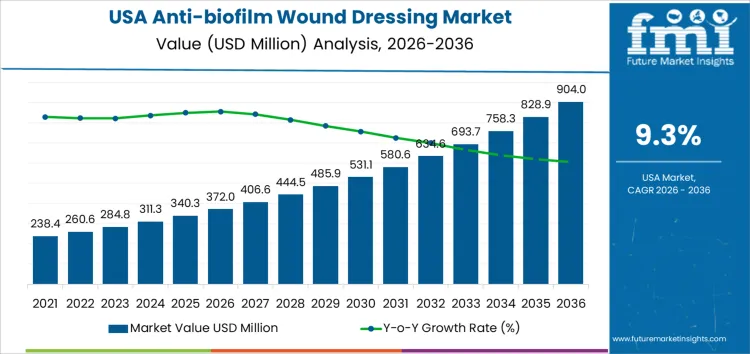
Demand for anti-biofilm wound dressing in USA is valued at USD 372.0 million in 2026 and is forecasted to reach USD 904.0 million by 2036, reflecting a CAGR of 9.3%. Demand increases due to rising prevalence of chronic wounds, diabetic ulcers, pressure injuries, and post-surgical infections requiring advanced infection control. Emphasis on faster healing outcomes, reduced hospital stays, and antimicrobial stewardship supports wider clinical adoption.
Quick Stats for Demand for Anti-biofilm Wound Dressing in USA
- USA Anti-biofilm Wound Dressing Sales Value (2026): USD 372.0 million
- USA Anti-biofilm Wound Dressing Forecast Value (2036): USD 904.0 million
- USA Anti-biofilm Wound Dressing Forecast CAGR (2026 to 2036): 9.3%
- Leading Mode of Mechanism in USA: Chemical-based Anti-biofilm Dressings
- Key Growth Regions in USA: West USA, South USA, Northeast USA, Midwest USA
- Top Players in USA: 3M Health Care; Smith & Nephew; Mölnlycke Health Care; ConvaTec; Coloplast Corp.
Chemical-based anti-biofilm dressings lead mechanism usage because these products actively disrupt biofilm formation and inhibit microbial colonization at wound sites. Clinicians rely on dressings incorporating silver, iodine, PHMB, and other antimicrobial agents to manage complex wounds resistant to conventional care. Consistent antimicrobial efficacy, ease of application, and compatibility with standard wound care protocols strengthen preference.
West USA, South USA, Northeast USA, and Midwest USA represent key growth regions supported by large hospital networks, long-term care facilities, and outpatient wound clinics. 3M Health Care, Smith & Nephew, Mölnlycke Health Care, ConvaTec, and Coloplast Corp. anchor competitive activity through clinically validated dressings, continuous material innovation, and distribution networks aligned with evolving wound care standards and infection management requirements across the United States.
USA Anti-biofilm Wound Dressing Key Takeaways
| Metric | Value |
|---|---|
| USA Anti-biofilm Wound Dressing Sales Value (2026) | USD 372.0 million |
| USA Anti-biofilm Wound Dressing Forecast Value (2036) | USD 904.0 million |
| USA Anti-biofilm Wound Dressing Forecast CAGR (2026 to 2036) | 9.3% |
Why is the Demand for Anti-biofilm Wound Dressing in USA Growing?
Demand for anti-biofilm wound dressing in the United States grows due to increasing prevalence of chronic wounds associated with diabetes, vascular disorders, and aging populations. Clinical settings face persistent challenges from biofilm formation, which interferes with healing and raises infection risk. Hospitals and outpatient wound care centers adopt advanced dressings to manage complex ulcers, pressure injuries, and post-surgical wounds requiring prolonged treatment. Rising incidence of diabetic foot ulcers increases use of dressings designed to disrupt microbial communities and support tissue recovery. Emphasis on infection control within healthcare facilities supports adoption of products that reduce reliance on systemic antibiotics.
Value based care models encourage wound management approaches that lower complication rates and shorten treatment duration. Growth in home healthcare services expands use of easy to apply dressings suitable for long term wound maintenance outside hospitals. Advancements in material science enable integration of antimicrobial agents, moisture balance, and sustained biofilm control within single dressings. Regulatory focus on patient safety supports standardized wound care protocols incorporating biofilm management. Increased clinician awareness of biofilm related delayed healing reinforces consistent use across acute and chronic care environments nationwide.
How Are the Segments Classified in the Demand for Anti-biofilm Wound Dressing in USA?
Demand for anti-biofilm wound dressings in USA is shaped by rising chronic wound prevalence, infection-control protocols, and emphasis on accelerated healing outcomes. Healthcare providers evaluate antimicrobial effectiveness, biofilm disruption capability, dressing durability, and patient safety. Adoption patterns reflect structured usage across acute and long-term care settings, supported by clinical guidelines addressing infection prevention, reduced healing time, and controlled wound environments.
Which Mechanism Type Leads Anti-biofilm Wound Dressing Demand in USA?
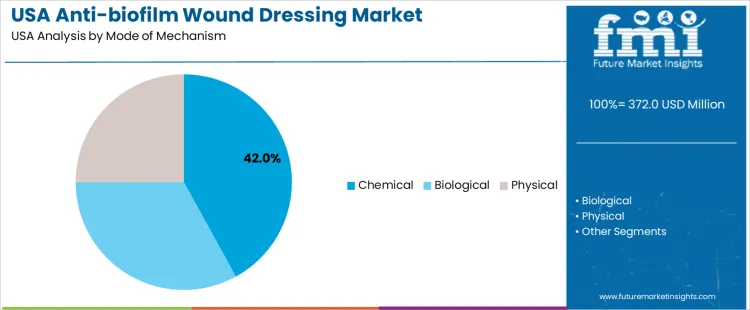
Chemical mechanisms hold 42.0%, leading demand for anti-biofilm wound dressings in USA. These dressings incorporate antimicrobial agents that actively disrupt biofilm formation and inhibit bacterial proliferation. Clinical usage supports management of infected and high-risk wounds requiring consistent antimicrobial action. Biological mechanisms hold 33.0%, utilizing enzymes or bioactive compounds to interfere with microbial adhesion and growth. Physical mechanisms hold 25.0%, relying on moisture control and structural barriers to limit biofilm development. Mechanism distribution reflects preference for direct antimicrobial effectiveness in clinical wound care.
Key Points
- Chemical mechanisms lead due to active antimicrobial action.
- Biological approaches support biofilm interference pathways.
- Physical mechanisms focus on barrier and moisture control.
Which Wound Category Drives Anti-biofilm Dressing Demand in USA?
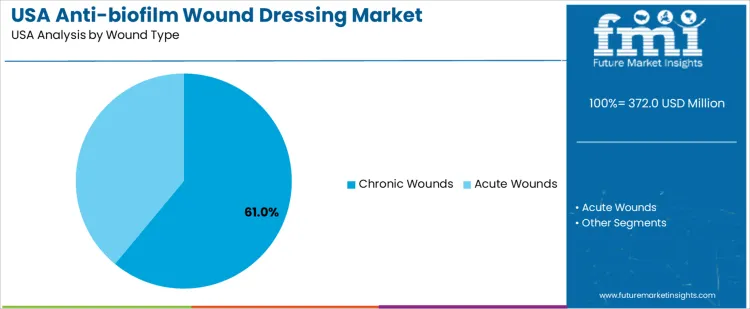
Chronic wounds hold 61.0%, driving anti-biofilm dressing demand in USA. These wounds require prolonged management due to delayed healing and higher infection risk. Anti-biofilm dressings support treatment of diabetic ulcers, pressure ulcers, and venous leg ulcers. Acute wounds hold 39.0%, including surgical and traumatic injuries requiring short-term infection control. Wound category distribution reflects higher clinical burden and treatment duration associated with chronic wound management.
Key Points
- Chronic wounds dominate due to prolonged healing timelines.
- Infection risk increases biofilm management needs.
- Acute wounds require shorter-duration intervention.
Which End-User Setting Accounts for the Largest Share of Anti-biofilm Wound Dressing Use in USA?
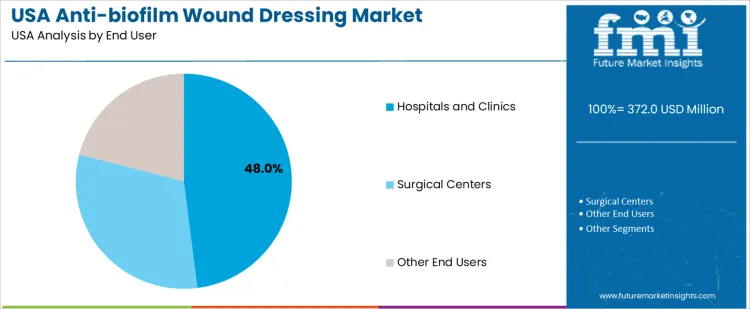
Hospitals and clinics hold 48.0%, accounting for the largest share in USA demand. These settings manage complex wounds requiring specialist oversight and advanced dressing protocols. Surgical centers hold 31.0%, supporting postoperative wound management and infection prevention. Other end users hold 21.0%, including home healthcare and long-term care facilities. End-user distribution reflects concentration of advanced wound care within clinical treatment environments.
Key Points
- Hospitals and clinics dominate due to complex wound cases.
- Surgical centers focus on postoperative infection prevention.
- Other settings manage extended and home-based care.
What are the Key Dynamics in the Anti-biofilm Wound Dressing Industry?
Demand increases as hospitals, outpatient clinics, and wound care specialists in USA implement advanced dressings to manage chronic and complex wounds prone to microbial biofilm formation. Anti-biofilm wound dressings support infection control, reduced healing time, and decreased need for systemic antibiotics. Adoption aligns with high prevalence of diabetic foot ulcers, pressure injuries, and surgical site challenges. Usage concentrates in acute care settings, long-term care facilities, and specialized wound care centers.
How do chronic wound prevalence and clinical practice patterns drive demand in USA?
USA experiences significant incidence of diabetes-associated wounds, vascular ulcers, and pressure injuries among aging and comorbid populations, increasing need for targeted wound care. Clinicians prioritize dressings that disrupt biofilm and support granulation to improve healing trajectories. Advanced materials incorporating antimicrobial agents, silver nanoparticles, and enzymatic biofilm disruptors gain preference in complex cases where standard dressings fail. Wound care teams at hospitals and outpatient clinics use structured assessment protocols to guide dressing selection. Payers, including Medicare and commercial insurers, recognize evidence-based outcomes linked to lower complication rates, which supports utilization of advanced dressings in targeted patient groups.
How do reimbursement policy, clinical evidence requirements, and cost considerations influence demand stability in USA?
Reimbursement policies under Medicare and private payers depend on documented medical necessity and supporting clinical evidence for advanced anti-biofilm dressings, affecting formulary placement. Clinicians require robust data on healing outcomes and cost-benefit to justify product choice under budget constraints. Price sensitivity in long-term care and outpatient settings influences selection between standard and advanced options. Training on biofilm pathology and dressing application affects adoption, particularly in smaller clinics with limited wound care specialization. Demand remains steady where anti-biofilm performance is clinically indicated, while expansion depends on payer coverage clarity, demonstration of improved patient outcomes, and integration into standardized wound management pathways within USA healthcare practice.
How Is Demand for Anti-biofilm Wound Dressing in the USA Evolving by Region?
Demand for anti-biofilm wound dressing in the USA is increasing due to chronic wound prevalence, infection control priorities, and adoption of advanced wound care protocols. West USA leads with a 10.7% CAGR, supported by outpatient wound centers and early technology uptake. South USA follows at 9.6%, driven by diabetes incidence, long-term care utilization, and community clinic expansion. Northeast USA records an 8.6% CAGR, shaped by hospital-based care pathways and evidence-driven procurement. Midwest USA posts 7.4%, reflecting standardized care models and cost-managed adoption. Regional variation reflects patient demographics, care settings, reimbursement practices, and integration of biofilm management into wound care standards across the USA.
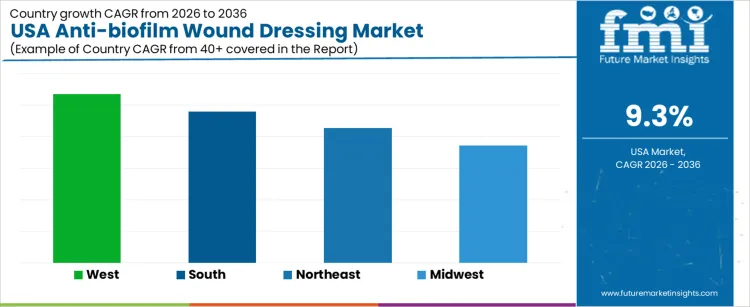
| Region | CAGR (2026 to 2036) |
|---|---|
| West USA | 10.7% |
| South USA | 9.6% |
| Northeast USA | 8.6% |
| Midwest USA | 7.4% |
What clinical practices are accelerating anti-biofilm dressing use in West USA?
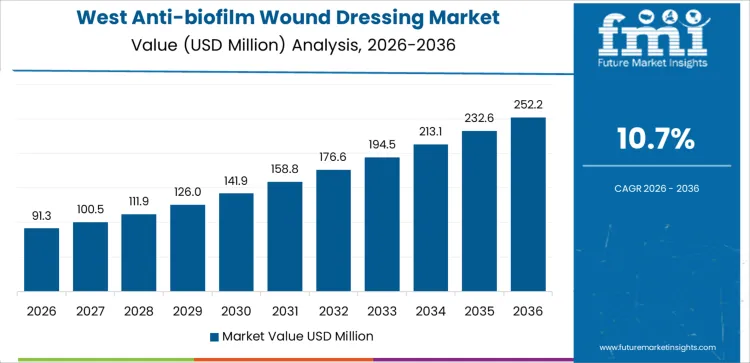
West USA drives demand through dense networks of wound care clinics, ambulatory surgery centers, and home health providers. Region’s CAGR of 10.7% reflects routine use of anti-biofilm dressings for diabetic foot ulcers, surgical wounds, and pressure injuries. Clinicians emphasize rapid biofilm disruption to improve healing timelines and reduce antibiotic dependence. Facilities adopt advanced dressings incorporating antimicrobial agents and moisture control. Procurement favors products supported by clinical evidence and real-world outcomes data. Integration with outpatient care pathways supports frequent dressing changes and monitoring. Growth remains outcomes-focused, aligned with protocol-driven wound management and early adoption of advanced materials.
- Extensive outpatient wound care networks
- Focus on biofilm disruption and healing speed
- Adoption of evidence-supported advanced dressings
- Integration with home health services
Why is South USA experiencing strong growth in anti-biofilm wound dressing demand?
South USA demand is shaped by high diabetes prevalence, aging populations, and expanded long-term care services. Region’s CAGR of 9.6% reflects increasing use of anti-biofilm dressings in chronic wound management across hospitals, nursing facilities, and community clinics. Clinicians prioritize infection prevention to reduce hospital readmissions. Warm climate influences wound complication risk, increasing treatment intensity. Health systems emphasize standardized protocols and staff training to improve outcomes. Demand favors cost-effective dressings compatible with frequent use. Growth remains volume-driven, supported by patient demographics and broader access to wound care services.
- High chronic wound patient population
- Long-term care and community clinic usage
- Emphasis on infection prevention protocols
- Cost-managed and standardized product adoption
How do hospital-led protocols influence demand in Northeast USA?
Northeast USA demand reflects hospital-centered care models, academic medicine influence, and evidence-based procurement. Region’s CAGR of 8.6% is supported by adoption of anti-biofilm dressings within standardized wound care pathways. Teaching hospitals integrate these products into multidisciplinary treatment plans involving surgery, infectious disease, and nursing teams. Procurement decisions emphasize clinical trial data, formulary alignment, and reimbursement compatibility. Usage extends to post-acute care through coordinated discharge planning. Growth aligns with protocol updates and quality improvement initiatives rather than rapid expansion of care sites.
- Hospital-based and academic care leadership
- Evidence-driven formulary inclusion
- Multidisciplinary wound management
- Coordinated post-acute care continuation
What explains measured adoption of anti-biofilm dressings in Midwest USA?
Midwest USA demand is anchored in integrated health systems, rural care access considerations, and cost-conscious purchasing. Region’s CAGR of 7.4% reflects steady use of anti-biofilm dressings for chronic and surgical wounds within standardized care models. Providers prioritize reliability, ease of use, and predictable supply. Adoption progresses through protocol revisions and staff training rather than rapid technology turnover. Home health and regional hospitals support consistent usage patterns. Growth remains disciplined and system-driven, aligned with maintaining care quality and managing treatment costs across diverse care settings.
- Integrated regional health systems
- Standardized and cost-controlled adoption
- Rural and home health care usage
- Steady protocol-led demand growth
What is the competitive landscape of demand for anti-biofilm wound dressings in the USA?
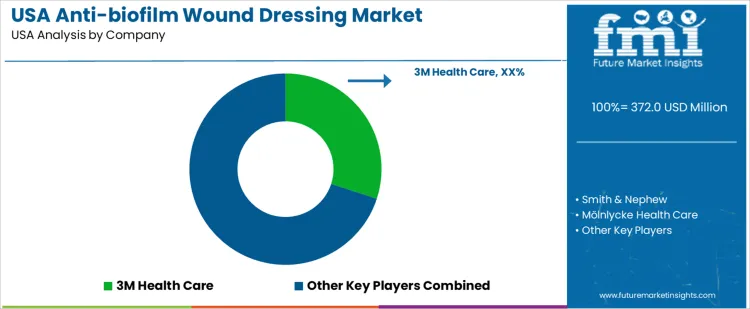
Demand for anti-biofilm wound dressings in the USA is driven by rising incidence of chronic wounds, surgical site infections, diabetic ulcers, and pressure injuries where biofilm formation impedes healing. Applications require dressings that combine microbial resistance, fluid handling, barrier properties, and support for granulation and re-epithelialization. Buyers evaluate antimicrobial effectiveness, moisture-balance performance, conformability to wound contours, and compatibility with standard wound care protocols. Procurement teams prioritize suppliers with FDA-cleared products, robust clinical evidence, and comprehensive educational support for clinicians in acute and outpatient care settings. Trend in the USA market reflects increased adoption of advanced wound care technologies, emphasis on reducing hospital readmissions, and holistic wound management practices integrating biofilm control.
3M Health Care maintains a strong presence in the USA with anti-biofilm and antimicrobial dressing technologies supported by clinical data and broad distribution through hospital and outpatient channels. Smith & Nephew participates with advanced wound care products designed to mitigate biofilm and promote healing in chronic wound cases. Mölnlycke Health Care USA supplies dressings with anti-microbial components adopted in surgical and acute care environments requiring high infection control standards. ConvaTec contributes with wound dressings formulated to manage bioburden and support moisture balance in complex wound care. Coloplast Corp. supports demand with antimicrobial and anti-odor dressings used in pressure injury and diabetic ulcer management. Competitive positioning in the USA reflects clinical evidence strength, regulatory compliance, product versatility across wound types, and availability through acute and community care procurement networks.
Key Players in USA Anti-biofilm Wound Dressing Demand
- 3M Health Care
- Smith & Nephew
- Mölnlycke Health Care
- ConvaTec
- Coloplast Corp.
Scope of the Report
| Items | Details |
|---|---|
| Quantitative Units | USD million |
| Mode of Mechanism | Chemical; Biological; Physical |
| Wound Type | Chronic Wounds; Acute Wounds |
| End User | Hospitals and Clinics; Surgical Centers; Other End Users |
| Regions Covered | West USA; South USA; Northeast USA; Midwest USA |
| Key Companies Profiled | 3M Health Care; Smith & Nephew; Mölnlycke Health Care; ConvaTec; Coloplast Corp. |
| Additional Attributes | Demand is influenced by rising chronic wound prevalence, hospital infection control protocols, and adoption of advanced antimicrobial dressings. Hospitals represent the primary consumption base due to high surgical volumes. Growth depends on reimbursement coverage, clinical evidence on biofilm disruption, and integration with standard wound care pathways. |
USA Anti-biofilm Wound Dressing Demand by Segments
Mode of Mechanism:
- Chemical
- Biological
- Physical
Wound Type:
- Chronic Wounds
- Acute Wounds
End User:
- Hospitals and Clinics
- Surgical Centers
- Other End Users
Region:
- West USA
- South USA
- Northeast USA
- Midwest USA
Bibliography
- American Society of Plastic Surgeons. (2023). Guidelines and clinical considerations for wound care and advanced dressings, including anti-biofilm technologies. ASPS Clinical Practice Publications.
- Wound Healing Society. (2023). Evidence-based recommendations for the management of chronic wounds and biofilm control. Wound Healing Society Consensus Documents.
- Centers for Medicare & Medicaid Services. (2023). Coverage policies and quality measures for wound care products and advanced dressings in the United States. CMS Regulatory and Policy Publications.
- Centers for Disease Control and Prevention. (2024). Healthcare Infection Control Practices Advisory Committee (HICPAC) guidelines on wound care and prevention of biofilm-associated infections. CDC Infection Control Guidance Documents.
Frequently Asked Questions
How big is the demand for anti-biofilm wound dressing in USA in 2026?
The demand for anti-biofilm wound dressing in USA is estimated to be valued at USD 372.0 million in 2026.
What will be the size of anti-biofilm wound dressing in USA in 2036?
The market size for the anti-biofilm wound dressing in USA is projected to reach USD 904.0 million by 2036.
How much will be the demand for anti-biofilm wound dressing in USA growth between 2026 and 2036?
The demand for anti-biofilm wound dressing in USA is expected to grow at a 9.3% CAGR between 2026 and 2036.
What are the key product types in the anti-biofilm wound dressing in USA?
The key product types in anti-biofilm wound dressing in USA are chemical, biological and physical.
Which wound type segment is expected to contribute significant share in the anti-biofilm wound dressing in USA in 2026?
In terms of wound type, chronic wounds segment is expected to command 61.0% share in the anti-biofilm wound dressing in USA in 2026.
Preview the report firsthand - request a free sample
Get SampleGet the brochure for pricing and purchase details.
Get PDFTable of Content
- Executive Summary
- USA Market Outlook
- Demand-side Trends
- Supply-side Trends
- Technology Roadmap Analysis
- Analysis and Recommendations
- Market Overview
- Market Coverage / Taxonomy
- Market Definition / Scope / Limitations
- Market Background
- Market Dynamics
- Drivers
- Restraints
- Opportunity
- Trends
- Scenario Forecast
- Demand in Optimistic Scenario
- Demand in Likely Scenario
- Demand in Conservative Scenario
- Opportunity Map Analysis
- Product Life Cycle Analysis
- Supply Chain Analysis
- Investment Feasibility Matrix
- Value Chain Analysis
- PESTLE and Porter’s Analysis
- Regulatory Landscape
- Regional Parent Market Outlook
- Production and Consumption Statistics
- Import and Export Statistics
- Market Dynamics
- USA Market Analysis 2021 to 2025 and Forecast, 2026 to 2036
- Historical Market Size Value (USD Million) Analysis, 2021 to 2025
- Current and Future Market Size Value (USD Million) Projections, 2026 to 2036
- Y-o-Y Growth Trend Analysis
- Absolute $ Opportunity Analysis
- USA Market Pricing Analysis 2021 to 2025 and Forecast 2026 to 2036
- USA Market Analysis 2021 to 2025 and Forecast 2026 to 2036, By Mode of Mechanism
- Introduction / Key Findings
- Historical Market Size Value (USD Million) Analysis By Mode of Mechanism , 2021 to 2025
- Current and Future Market Size Value (USD Million) Analysis and Forecast By Mode of Mechanism , 2026 to 2036
- Chemical
- Biological
- Physical
- Chemical
- Y-o-Y Growth Trend Analysis By Mode of Mechanism , 2021 to 2025
- Absolute $ Opportunity Analysis By Mode of Mechanism , 2026 to 2036
- USA Market Analysis 2021 to 2025 and Forecast 2026 to 2036, By Wound Type
- Introduction / Key Findings
- Historical Market Size Value (USD Million) Analysis By Wound Type, 2021 to 2025
- Current and Future Market Size Value (USD Million) Analysis and Forecast By Wound Type, 2026 to 2036
- Chronic Wounds
- Acute Wounds
- Chronic Wounds
- Y-o-Y Growth Trend Analysis By Wound Type, 2021 to 2025
- Absolute $ Opportunity Analysis By Wound Type, 2026 to 2036
- USA Market Analysis 2021 to 2025 and Forecast 2026 to 2036, By End User
- Introduction / Key Findings
- Historical Market Size Value (USD Million) Analysis By End User, 2021 to 2025
- Current and Future Market Size Value (USD Million) Analysis and Forecast By End User, 2026 to 2036
- Hospitals and Clinics
- Surgical Centers
- Other End Users
- Hospitals and Clinics
- Y-o-Y Growth Trend Analysis By End User, 2021 to 2025
- Absolute $ Opportunity Analysis By End User, 2026 to 2036
- Market Structure Analysis
- Competition Dashboard
- Competition Benchmarking
- Market Share Analysis of Top Players
- By Regional
- By Mode of Mechanism
- By Wound Type
- By End User
- Competition Analysis
- Competition Deep Dive
- 3M Health Care
- Overview
- Product Portfolio
- Profitability by Market Segments (Product/Age /Sales Channel/Region)
- Sales Footprint
- Strategy Overview
- Marketing Strategy
- Product Strategy
- Channel Strategy
- Smith & Nephew
- Mölnlycke Health Care
- ConvaTec
- Coloplast Corp.
- 3M Health Care
- Competition Deep Dive
- Assumptions & Acronyms Used
- Research Methodology


