

- Industry Size (2025)
- USD 8.6 Bn
- Forecast (2035)
- USD 14.3 Bn
- CAGR (2025 to 2035)
- 5.2%
Demand for Bed Linen in USA Forecast and Outlook 2025 to 2035
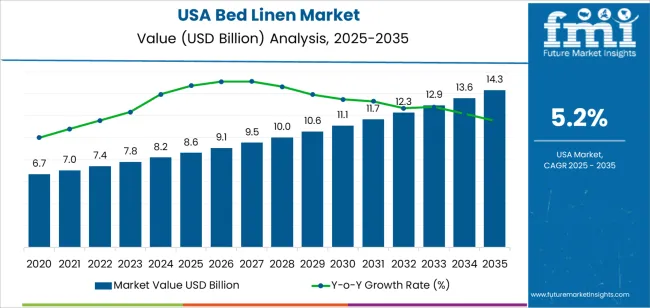
Bed linen demand in the USA is valued at USD 8.6 billion in 2025 and is projected to reach USD 14.3 billion by 2035 at a CAGR of 5.2%. Market expansion during the early forecast years is shaped by stable household formation, steady housing turnover, and replacement-driven purchasing rather than first-time ownership. Cotton holds the largest material share at 38% due to its durability and wash performance, while poly-cotton and polyester support value-oriented retail segments. Queen-size bedding accounts for 34% of sales, reflecting the dominance of mid-sized mattresses in primary bedrooms and rental housing. Floral patterns lead with 29% share, driven by mass retail demand, while geometric and striped designs maintain steady traction across mid-price collections.
From 2030 onward, value growth becomes more brand and channel structured than volume led. Demand rises from about USD 11.1 billion in 2030 toward USD 14.3 billion by 2035 as premiumization strengthens in online-native bedding brands and direct-to-consumer formats. King-size sets gain incremental share as larger bed formats expand in suburban housing. Sateen, linen, and satin materials grow faster in the premium segment as consumers prioritize texture, thread structure, and finish. Key suppliers active in the USA include Welspun Group, Tempur Sealy International, American Textile Company, Brooklinen, and Boll & Branch. Competitive positioning centers on fabric sourcing control, consistency across seasonal collections, private label programs for national retailers, and fast inventory rotation aligned with home furnishing refresh cycles.
Quick Stats of the Demand for Bed Linen in USA:
- Demand for Bed Linen in USA Value (2025): USD 8.6 billion
- Demand for Bed Linen in USA Forecast Value (2035): USD 14.3 billion
- Demand for Bed Linen in USA Forecast CAGR (2025 to 2035): 5.2%
- Demand for Bed Linen in USA Leading Material: Cotton (38%)
- Demand for Bed Linen in USA Key Growth Regions: West, South, Northeast, Midwest
- Demand for Bed Linen in USA Top Players: Welspun Group, Tempur Sealy International, American Textile Company, Brooklinen, Boll & Branch
What is the Demand Forecast for Bed Linen in USA through 2035?
Bed linen demand in USA follows household formation, housing turnover, and hospitality refurbishment cycles more closely than fashion-driven textile segments. Demand increases from USD 8.6 billion in 2025 to USD 9.1 billion by 2026 and USD 9.5 billion by 2027, reaching USD 10.6 billion by 2030 and adding USD 2.0 billion from the 2025 base. This phase reflects stable replacement purchasing driven by residential consumption, short-term rental turnover, and hotel renovation schedules rather than sharp lifestyle shifts. Product mix evolution toward higher thread counts, durable easy-care fabrics, and temperature-regulating weaves supports value growth while unit volumes remain structurally steady.
From 2030 to 2035, the market expands from USD 10.6 billion to USD 14.3 billion, adding USD 3.7 billion within five years. This back-weighted acceleration reflects diversification of buying channels through direct-to-consumer brands, subscription bedding models, and hospitality-grade linens entering residential retail. Value per set rises with demand for performance fabrics, allergen-resistant finishes, and coordinated bedroom collections. Growth is reinforced by higher bedding refresh frequency tied to remote work lifestyles and short-term accommodation inventory expansion, shifting the category from basic replacement purchasing toward lifestyle-driven spending progression.
Bed Linen Industry in USA Key Takeaways
| Metric | Value |
|---|---|
| Industry Value (2025) | USD 8.6 billion |
| Forecast Value (2035) | USD 14.3 billion |
| Forecast CAGR (2025 to 2035) | 5.2% |
How Is Demand for Bed Linen Evolving in the USA?
The demand for bed linen in the USA grew steadily as home ownership, remodeling activity, and consumer interest in interior comfort and aesthetics increased. As households invested in bedding, bed frames, and bedroom furniture, bed linen sheets, pillowcases, duvet covers became a standard home essential. Retail furniture stores, bedding specialty stores, and online retailers all expanded their selections, offering a range from budget basics to premium fabric sets. Lifestyle influences such as interior design trends, seasonal refreshes, and gifting occasions (e.g. weddings) contributed to regular demand cycles. Sales through discount retailers and mass merchandisers helped sustain a stable baseline demand across income levels.
Looking ahead, demand for bed linen in the USA will be shaped more by changing consumer preferences than by growth in household formation. Sustainability concerns, interest in natural or organic fabrics, and demand for linen blends may gain more traction among buyers seeking quality and durability. E-commerce will continue to influence demand through easy access to variety, size options, and reviews. At the same time, replacement cycles may lengthen if consumers shift toward investing in fewer but higher-quality bed linens. Competition from alternative bedding formats, such as blankets or multi-functional bedding, could limit growth in standard sheet sets.
How Are Material and Size Structuring the Demand for Bed Linen in USA?
The demand for bed linen in the USA is structured by material type and size preference. Cotton accounts for 38% of total demand, followed by poly cotton, polyester, microfibre, linen, sateen, and satin used across different price and comfort segments. By size, queen size represents 34.0% of total consumption, followed by single, double, and king sizes. Demand behavior is shaped by comfort expectations, fabric durability, washing performance, climate suitability, and mattress size standardization. These segments reflect how household preferences, hospitality requirements, and seasonal replacement cycles guide bed linen purchasing patterns across residential and institutional markets in the USA.
Why Does Cotton Lead the Bed Linen Material Demand in USA?
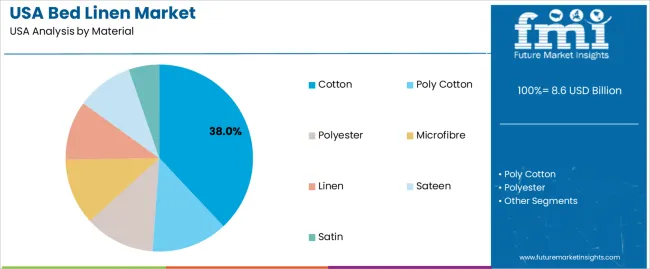
Cotton accounts for 38% of total bed linen demand in the USA due to its breathable structure, moisture absorption capability, and comfort across varied climate conditions. Cotton sheets regulate body temperature effectively, which supports year round USAge across households in both warmer and colder regions. Consumers favor cotton for its soft texture and reduced surface irritation, especially in direct skin contact applications such as fitted sheets and pillowcases. Hotels and healthcare facilities also rely on cotton due to its durability under frequent industrial washing and heat exposure.
Cotton also offers wide fabric count variation, which allows brands to serve economy, mid-range, and premium bedding categories using the same base fiber. Domestic and imported cotton supply remains stable across the USA textile supply chain. Stain resistance treatments and wrinkle control finishes have further improved cotton performance in hospitality settings. These comfort, durability, and supply reliability factors together sustain cotton as the dominant material segment in the USA bed linen demand structure.
Why Does Queen Size Dominate the Bed Linen Size Demand in USA?
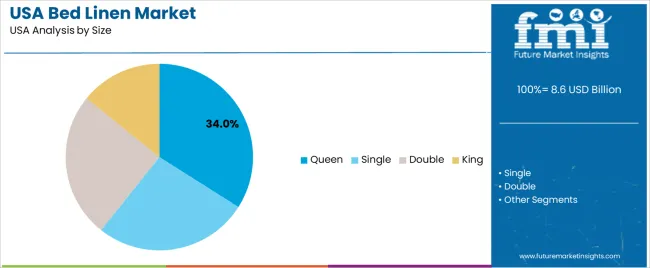
Queen size accounts for 34.0% of total bed linen demand in the USA due to its position as the most widely adopted mattress size in residential housing. Queen beds offer a balance between space efficiency and sleeping comfort, which suits both individual sleepers and couples across apartments, suburban homes, and rental properties. Furniture retailers and mattress manufacturers continue to prioritize queen size offerings, which directly drives associated linen demand across replacement and first purchase cycles.
Hospitality demand also supports queen size dominance across mid-scale hotels, serviced apartments, and guest accommodations. Inventory standardization around queen size simplifies linen management, laundry operations, and procurement planning for multi-unit operators. E-commerce platforms and retail chains also stock the widest assortment in queen dimensions due to higher turnover rates. These bedding adoption trends, hospitality USAge patterns, and retail stocking practices position queen size as the leading bed linen size category in the USA.
Why Does Bed Linen Remain a High-Frequency Replacement Category in USA Households?
Bed linen demand in the USA is shaped less by décor trends and more by routine wear, hygiene expectations, and lifestyle turnover. Frequent washing cycles, use of high-temperature dryers, and daily contact lead to faster fabric breakdown than in most other home textiles. Large household size variation, pet ownership, and allergy management also shorten replacement cycles. College housing, military residences, and short-term rentals generate recurring bulk demand tied to occupancy turnover. These daily-use realities anchor bed linen as a repeat-purchase household necessity rather than a long-life furnishing item.
How Do Hospitality, Rental Housing, and Short-Stay Platforms Influence Market Volume?
Hotels, vacation rentals, hospitals, and student housing account for a substantial share of commercial bed linen consumption in the USA. High guest turnover requires frequent laundering and faster replacement due to staining, shrinkage, and fiber fatigue. Short-stay rental platforms have expanded linen demand into private homes that now operate like micro-hospitality units. Property managers standardize purchases across multiple units, favoring consistent sizing and fabric performance. Healthcare facilities drive demand for institutional-grade sheets with strict durability and sanitation requirements. These non-residential use cases quietly generate constant background volume for the bed linen industry.
What Cost Pressures and Shopping Behavior Changes Are Reshaping Consumer Demand?
Bed linen purchasing in the USA is increasingly shaped by value comparison across big-box retail, direct-to-consumer brands, and online marketplaces. Consumers balance price against thread count, fabric claims, and durability promises. Rising utility costs make low-durability fabrics less attractive due to higher lifetime cost. Online reviews strongly influence perceived quality, shifting demand toward brands associated with wash resilience and consistent sizing. Private-label programs at major retailers also redirect demand away from legacy brands. These cost and behavior shifts reshape how households approach bed linen replacement decisions.
How Are Fabric Preferences, Climate Variation, and Lifestyle Aesthetics Redefining the Product Mix?
Bed linen demand in the USA reflects strong regional climate influence. Warmer southern regions favor lightweight cotton percale and moisture-managing blends, while northern states sustain demand for flannel and thermal weaves. Remote work and extended at-home time increase emphasis on comfort-driven textures rather than formal bedroom presentation. Neutral color palettes and layered bedding aesthetics dominate urban markets. Performance features such as wrinkle resistance, deep-pocket fit, and temperature regulation influence repeat buying more than decorative patterns. These preferences show bed linen shifting toward functional comfort customization rather than purely visual bedroom styling.
What is the Demand for Bed Linen in USA by Region?
| Region | CAGR (%) |
|---|---|
| West | 6.0% |
| South | 5.4% |
| Northeast | 4.8% |
| Midwest | 4.2% |
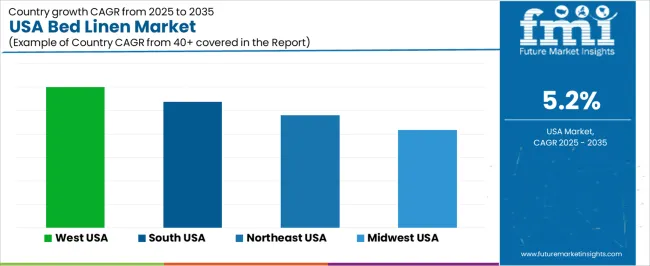
The demand for bed linen in the USA shows steady regional variation, with the West leading at a 6.0% CAGR. Growth in this region is supported by strong housing activity, high demand from hospitality and short term rental segments, and premium home furnishing consumption. The South follows at 5.4%, driven by population growth, rising residential construction, and steady demand from budget and mid-range hospitality properties. The Northeast records 4.8% growth, supported by replacement demand from urban households and institutional buyers such as hotels and healthcare facilities. The Midwest shows comparatively moderate growth at 4.2%, reflecting stable household demand, slower housing turnover, and more price sensitive consumer purchasing behavior.
What Is Driving Bed Linen Demand Growth in the West Region of USA?
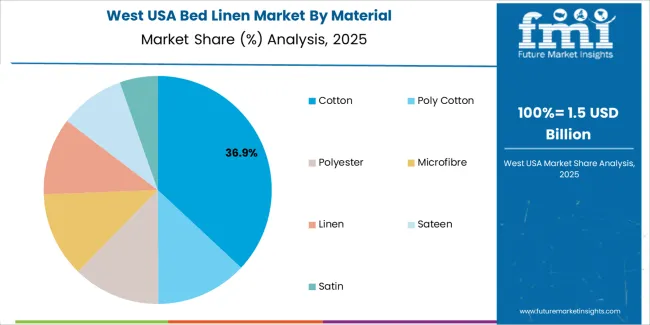
Expansion in the West reflects a CAGR of 6.0% through 2035 for bed linen demand, supported by strong residential renovation activity, premium home furnishing purchases, and steady hospitality sector upgrades. Urban apartment living increases demand for frequent linen replacement tied to short term rentals and multi family housing. Higher disposable income supports demand for branded and designer collections. Online direct to consumer platforms strengthen regional accessibility. Demand remains design and lifestyle driven, with steady replacement cycles across both residential buyers and commercial users such as hotels and serviced apartments.
- Residential renovation supports steady replacement demand
- Short term rentals increase high frequency linen turnover
- Premium collections gain stronger urban penetration
- Online retail platforms widen product accessibility
How Is the South Supporting Bed Linen Demand in USA?
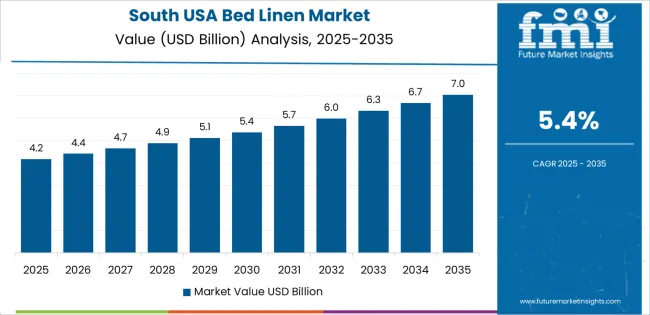
The South advances at a CAGR of 5.4% through 2035 for bed linen demand, driven by population growth, suburban housing expansion, and rising hospitality development. New home construction supports first fit linen purchases across family households. Warm climate conditions favor lightweight cotton and blended fabric products with higher seasonal turnover. Large format retail chains dominate sales volume through value oriented assortments. Demand remains volume driven rather than trend driven, with consistent purchasing linked to steady household formation and expanding regional lodging infrastructure.
- Suburban housing growth supports first fit purchases
- Lightweight fabric preference shapes product demand
- Value oriented retail chains dominate sales volume
- Hospitality expansion adds steady commercial linen demand
Why Is Bed Linen Demand Rising Steadily in the Northeast Region of USA?
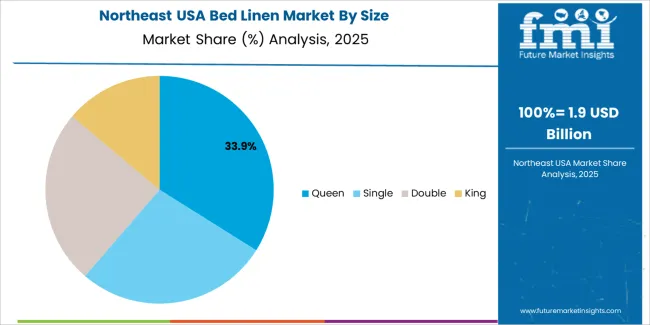
The Northeast records a CAGR of 4.8% through 2035 for bed linen demand, shaped by compact urban households, strong seasonal bedding demand, and stable hotel refurbishment activity. Cold winters support demand for thermal and layered bed linen categories. High proportion of rented housing increases replacement frequency across shared living spaces. Department stores and specialty home retailers remain important distribution channels. Demand remains replacement led rather than expansion driven, with consistent purchasing tied to household turnover and periodic hospitality renovations across dense metropolitan markets.
- Cold weather supports thermal bedding product demand
- Rented housing increases linen replacement frequency
- Specialty home retail anchors regional distribution
- Hotel refurbishments add steady institutional demand
What Is Influencing Bed Linen Demand in the Midwest Region of USA?
The Midwest expands at a CAGR of 4.2% through 2035 for bed linen demand, supported by stable household formation, family oriented communities, and steady brick and mortar retail presence. Practical purchasing behavior emphasizes durability, easy care fabrics, and value pricing. Seasonal changes drive moderate replacement cycles aligned with climate transitions. Independent retailers and regional chains dominate distribution. Demand remains necessity driven rather than fashion driven, with predictable purchasing patterns aligned with household budget planning and slower housing mobility across semi urban and rural communities.
- Practical fabric preferences dominate buying behavior
- Seasonal climate changes guide replacement timing
- Regional retail chains anchor local distribution
- Stable household formation sustains baseline demand
What Is Driving the Demand for Bed Linen in the USA and Who Are the Key Players Shaping the Market?
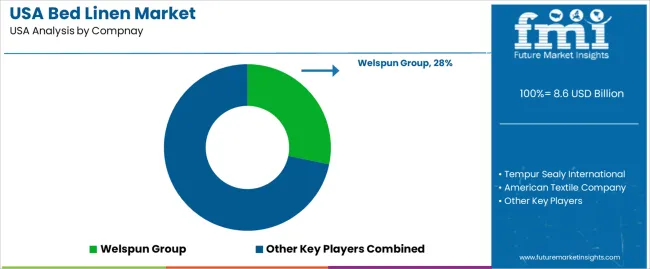
Demand for bed linen in the USA is growing as more households and rental properties seek comfort, quality sleep, and home style upgrades. Rising interest in sleep health and wellness encourages consumers to invest in higher quality sheets, pillowcases, and duvet covers that offer softness, durability, and improved hygiene. Growth in new housing, apartment turnover, and the hospitality sector (hotels, short term rentals) adds to demand for bedding replacements and upgrades. Consumers increasingly see bedroom décor and bedding as part of lifestyle and comfort, which supports demand for varied materials (cotton, blends), thread counts, and design styles. E commerce expansion and direct to consumer bedding brands also make quality linens more accessible nationwide.
Key players influencing the USA bed linen market include Welspun Group, Tempur Sealy International, American Textile Company, Brooklinen, and Boll & Branch. Welspun supplies large volumes of home textile products, often covering mid to value oriented segments. Tempur Sealy, known for mattresses and sleep related products, extends its footprint with complementary bedding lines. American Textile Company serves both retail and institutional segments including hotels and rental properties. Brooklinen and Boll & Branch focus on the direct to consumer niche, offering premium bedding with emphasis on material quality, comfort, and modern aesthetics. Together, these firms meet a range of customer needs from budget friendly basics to premium, design conscious bedding - shaping how bed linen demand evolves across the USA.
Key Players in Bed Linen Industry in the USA
- Welspun Group
- Tempur Sealy International
- American Textile Company
- Brooklinen
- Boll & Branch
Scope of the Report
| Items | Values |
|---|---|
| Quantitative Units (2025) | USD billion |
| Material | Cotton, Poly Cotton, Polyester, Microfibre, Linen, Sateen, Satin |
| Size | Queen, Single, Double, King |
| Pattern | Floral, Abstract, Geometric, Striped, Checkered, Modern, Paisley |
| Region | Northeast USA, West USA, Midwest USA, South USA |
| Countries Covered | USA |
| Key Companies Profiled | Welspun Group, Tempur Sealy International, American Textile Company, Brooklinen, Boll & Branch |
| Additional Attributes | Dollar by sales by material, Dollar by sales by size, Dollar by sales by pattern, Dollar by sales by region, Regional CAGR, Premiumization trends, Direct-to-consumer growth, Replacement cycle influence, Hospitality sector contribution, Lifestyle and design-driven purchasing |
Bed Linen Industry in the USA Segmentation
Material:
- Cotton
- Poly Cotton
- Polyester
- Microfibre
- Linen
- Sateen
- Satin
Size:
- Queen
- Single
- Double
- King
Pattern:
- Floral
- Abstract
- Geometric
- Striped
- Checkered
- Modern
- Paisley
Region:
- Northeast USA
- West USA
- Midwest USA
- South USA
Frequently Asked Questions
How big is the demand for bed linen in USA in 2025?
The demand for bed linen in USA is estimated to be valued at USD 8.6 billion in 2025.
What will be the size of bed linen in USA in 2035?
The market size for the bed linen in USA is projected to reach USD 14.3 billion by 2035.
How much will be the demand for bed linen in USA growth between 2025 and 2035?
The demand for bed linen in USA is expected to grow at a 5.2% CAGR between 2025 and 2035.
What are the key product types in the bed linen in USA?
The key product types in bed linen in USA are cotton, poly cotton, polyester, microfibre, linen, sateen and satin.
Which size segment is expected to contribute significant share in the bed linen in USA in 2025?
In terms of size, queen segment is expected to command 34.0% share in the bed linen in USA in 2025.
Preview the report firsthand - request a free sample
Get SampleGet the brochure for pricing and purchase details.
Get PDFTable of Content
- Executive Summary
- USA Market Outlook
- Demand-side Trends
- Supply-side Trends
- Technology Roadmap Analysis
- Analysis and Recommendations
- Market Overview
- Market Coverage / Taxonomy
- Market Definition / Scope / Limitations
- Market Background
- Market Dynamics
- Drivers
- Restraints
- Opportunity
- Trends
- Scenario Forecast
- Demand in Optimistic Scenario
- Demand in Likely Scenario
- Demand in Conservative Scenario
- Opportunity Map Analysis
- Product Life Cycle Analysis
- Supply Chain Analysis
- Investment Feasibility Matrix
- Value Chain Analysis
- PESTLE and Porter’s Analysis
- Regulatory Landscape
- Regional Parent Market Outlook
- Production and Consumption Statistics
- Import and Export Statistics
- Market Dynamics
- USA Market Analysis 2020 to 2024 and Forecast, 2025 to 2035
- Historical Market Size Value (USD Million) Analysis, 2020 to 2024
- Current and Future Market Size Value (USD Million) Projections, 2025 to 2035
- Y-o-Y Growth Trend Analysis
- Absolute $ Opportunity Analysis
- USA Market Pricing Analysis 2020 to 2024 and Forecast 2025 to 2035
- USA Market Analysis 2020 to 2024 and Forecast 2025 to 2035, By Material
- Introduction / Key Findings
- Historical Market Size Value (USD Million) Analysis By Material , 2020 to 2024
- Current and Future Market Size Value (USD Million) Analysis and Forecast By Material , 2025 to 2035
- Cotton
- Poly Cotton
- Polyester
- Microfibre
- Linen
- Sateen
- Satin
- Y-o-Y Growth Trend Analysis By Material , 2020 to 2024
- Absolute $ Opportunity Analysis By Material , 2025 to 2035
- USA Market Analysis 2020 to 2024 and Forecast 2025 to 2035, By Size
- Introduction / Key Findings
- Historical Market Size Value (USD Million) Analysis By Size, 2020 to 2024
- Current and Future Market Size Value (USD Million) Analysis and Forecast By Size, 2025 to 2035
- Queen
- Single
- Double
- King
- Y-o-Y Growth Trend Analysis By Size, 2020 to 2024
- Absolute $ Opportunity Analysis By Size, 2025 to 2035
- USA Market Analysis 2020 to 2024 and Forecast 2025 to 2035, By Pattern
- Introduction / Key Findings
- Historical Market Size Value (USD Million) Analysis By Pattern, 2020 to 2024
- Current and Future Market Size Value (USD Million) Analysis and Forecast By Pattern, 2025 to 2035
- Floral
- Abstract
- Geometric
- Striped
- Checkered
- Modern
- Paisley
- Y-o-Y Growth Trend Analysis By Pattern, 2020 to 2024
- Absolute $ Opportunity Analysis By Pattern, 2025 to 2035
- Market Structure Analysis
- Competition Dashboard
- Competition Benchmarking
- Market Share Analysis of Top Players
- By Regional
- By Material
- By Size
- By Pattern
- Competition Analysis
- Competition Deep Dive
- Welspun Group
- Overview
- Product Portfolio
- Profitability by Market Segments (Product/Age /Sales Channel/Region)
- Sales Footprint
- Strategy Overview
- Marketing Strategy
- Product Strategy
- Channel Strategy
- Tempur Sealy International
- American Textile Company
- Brooklinen
- Boll & Branch
- Welspun Group
- Competition Deep Dive
- Assumptions & Acronyms Used
- Research Methodology


