

- Industry Size (2025)
- USD 16.1 Bn
- Forecast (2035)
- USD 30.1 Bn
- CAGR (2025 to 2035)
- 6.5%
Demand for Kosher Foods in USA Forecast and Outlook 2025 to 2035
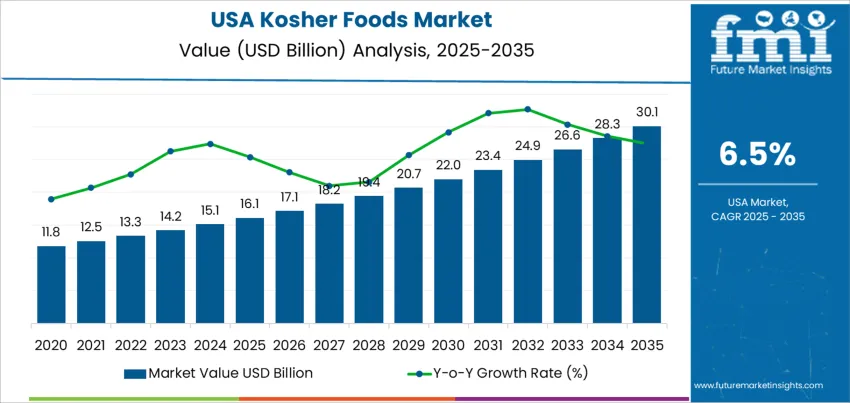
The demand for kosher foods in the USA is expected to grow from USD 16.1 billion in 2025 to USD 30.1 billion by 2035, driven by a compound annual growth rate (CAGR) of 6.5%. Kosher foods, which follow Jewish dietary laws, are gaining traction not only within the Jewish community but also among a wider consumer base that values ethical production, high-quality ingredients, and trusted certifications. As awareness of the health benefits of kosher certification, which often aligns with organic, non-GMO, and clean-label trends, grows, demand for kosher foods will continue to increase.
The increasing availability of kosher products in mainstream grocery stores, supermarkets, and online platforms is driving industry growth. As consumers increasingly seek products with trusted certifications and prioritize convenience, kosher foods are becoming more accessible. This is particularly true for categories like meat, dairy, snacks, and beverages, which now offer kosher alternatives. The growing focus on dietary inclusivity, eco-friendly sourcing, and ethical consumption is pushing kosher foods into the mainstream, attracting more health-conscious consumers.
The demand for kosher food options will continue to expand as the variety of products increases and the industry becomes more diverse. As awareness of kosher food benefits grows, more consumers will opt for kosher products, boosting industry expansion and increasing accessibility. The continued interest in wellness, sustainability, and ethical eating will further support the ongoing demand for kosher foods throughout the forecast period.
Quick Stats of the Demand for Kosher Foods in USA
- Demand for Kosher Foods in USA Value (2025): USD 16.1 billion
- Demand for Kosher Foods in USA Forecast Value (2035): USD 30.1 billion
- Demand for Kosher Foods in USA Forecast CAGR (2025-2035): 6.5%
- Demand for Kosher Foods in USA Leading Product Type: Kosher Meat
- Demand for Kosher Foods in USA Key Growth Regions: West USA, South USA, Northeast USA, Midwest USA
- Demand for Kosher Foods in USA Top Players: Archer Daniels Midland Company, Blommer Chocolate Company, BASF SE, Brooklyn Cookie Company LLC, Ice Chips Candy, LLC
What is the Growth Forecast for the Demand for Kosher Foods in USA through 2035?
From 2025 to 2030, the demand for kosher foods in the USA will grow from USD 16.1 billion to USD 22.0 billion, adding USD 5.9 billion in value. This period will experience significant growth driven by the increasing adoption of kosher products in mainstream retail outlets and the ongoing interest in high-quality, certified foods. The rising consumer focus on ethical consumption, along with growing awareness of the health benefits associated with kosher certification, will support the demand for these products. As more consumers prioritize convenience and seek trusted food options, kosher foods will become more accessible across various retail channels. The expanding variety of kosher offerings, particularly in areas like snacks, beverages, and packaged foods, will further drive industry expansion during this phase.
From 2030 to 2035, demand for kosher foods will continue to rise from USD 22.0 billion to USD 30.1 billion, contributing USD 8.1 billion in value. While the growth rate may stabilize slightly as the industry matures, demand will remain strong due to the continuous expansion of kosher food availability across supermarkets, restaurants, and online platforms. The focus on sustainability, dietary inclusivity, and the increasing preference for ethically sourced, healthier food options will support the steady growth of this industry. Innovations in product offerings and the increasing incorporation of kosher food into mainstream dining experiences will further fuel demand. The sustained interest in wellness and ethical eating practices will continue to drive the industry for kosher foods through 2035.
Demand for Kosher Foods in USA Key Takeaways
| Metric | Value |
|---|---|
| Demand for Kosher Foods in USA Value (2025) | USD 16.1 billion |
| Demand for Kosher Foods in USA Forecast Value (2035) | USD 30.1 billion |
| Demand for Kosher Foods in USA Forecast CAGR (2025-2035) | 6.5% |
Why is the Demand for Kosher Foods in USA Growing?
The demand for kosher foods in the USA is growing as consumers increasingly seek out products that meet specific dietary restrictions, health standards, and ethical sourcing practices. Kosher certification, which ensures food adheres to Jewish dietary laws, is recognized by a wide demographic, including Jewish communities and non-Jewish consumers who view kosher foods as cleaner, healthier, or higher quality. This broad appeal is driving the growth of kosher food sales across the country.
A major driver of this growth is the increasing popularity of kosher foods among consumers who are looking for assurance in the sourcing and processing of their food. Kosher food certification often goes hand-in-hand with higher standards of cleanliness, transparency, and ethical practices. As more consumers prioritize quality, sustainability, and traceability in their food choices, kosher products are gaining traction not just in the Jewish community, but among health-conscious and environmentally aware shoppers as well.
The growing availability of kosher-certified products across a wide range of food categories is contributing to the industry’s expansion. From packaged foods and snacks to fresh produce, dairy, and meat, kosher food options are becoming more accessible in supermarkets and online platforms. The rise of kosher restaurants and foodservice options is also helping drive awareness and consumption. As the demand for ethically sourced, high-quality foods continues to rise, the kosher food industry in the USA is expected to grow steadily through 2035.
What is the Segment-Wise Analysis of Demand for Kosher Foods in USA?
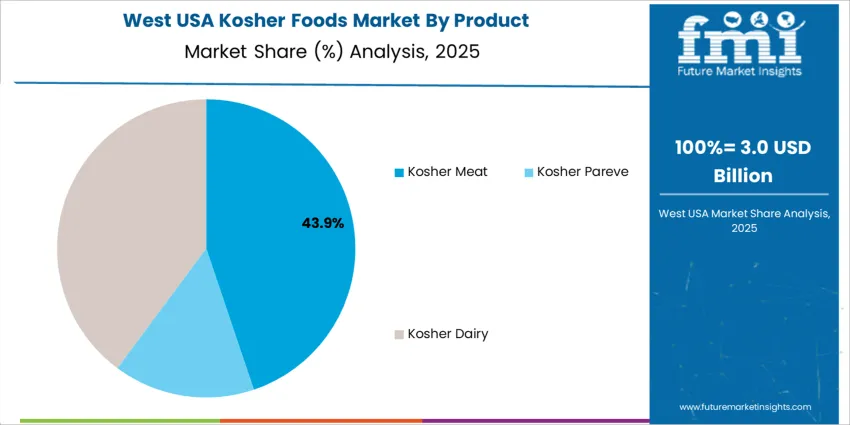
Demand for kosher foods in the USA is segmented by product type, distribution channel, and region. By product type, demand is divided into kosher meat, kosher pareve, and kosher dairy, with kosher meat leading at 46%. The demand is also segmented by distribution channel, including supermarkets/hypermarkets, convenience stores, online sales, and others, with supermarkets/hypermarkets accounting for 33%. Regionally, demand is spread across West USA, South USA, Northeast USA, and Midwest USA.
Why Does Kosher Meat Lead the Demand for Kosher Foods in USA?
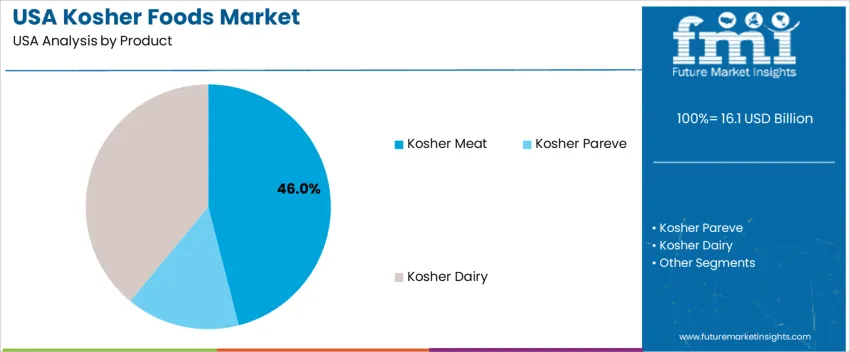
Kosher meat accounts for 46% of the demand for kosher foods in the USA, driven by its adherence to strict Jewish dietary laws and the growing trend toward ethically sourced meat. Kosher meat is slaughtered and prepared according to religious guidelines, ensuring its quality and certification for those who observe kosher practices. The rising demand for hormone-free and antibiotic-free options further fuels its popularity among health-conscious consumers. Kosher meat is often perceived as a premium product, known for its superior quality and preparation methods. As consumer awareness of food sourcing and ethical considerations increases, kosher meat has solidified its place as the dominant product in the kosher food industry, appealing to both religious and non-religious consumers alike.
Why Do Supermarkets/Hypermarkets Lead the Demand for Kosher Foods in USA?
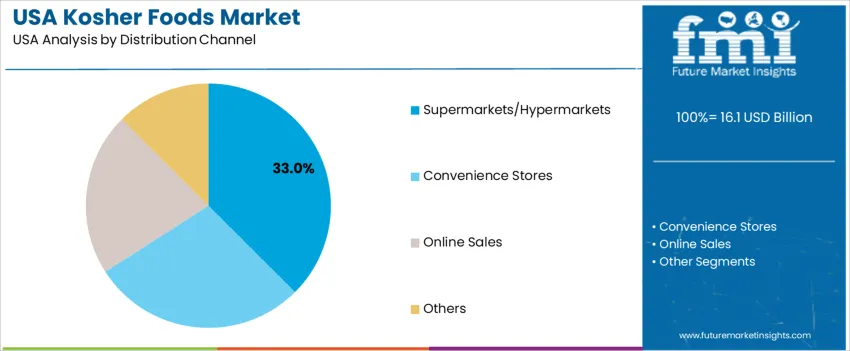
Supermarkets and hypermarkets account for 33% of the demand for kosher foods in the USA, driven by their wide availability and convenience. These retail outlets offer a comprehensive selection of kosher products, catering to the needs of consumers who value accessibility and variety in one place. Many supermarkets have dedicated kosher sections, making it easier for shoppers to find certified products. The ability to purchase kosher foods alongside everyday grocery items adds to the appeal, especially in areas with large Jewish populations. As kosher foods become more mainstream, supermarkets and hypermarkets remain the dominant distribution channels, providing consumers with convenient, reliable access to kosher options, ensuring that demand continues to grow in these retail settings.
What are the Key Trends, Drivers, and Restraints in Demand for Kosher Foods in the USA?
Demand for Kosher Foods in the USA is rising as consumers increasingly seek certified, high-quality, and safe food options. The Kosher certification serves as a mark of purity, safety, and quality assurance, appealing not only to those who observe religious dietary laws but also to health-conscious and quality-focused buyers. The variety of Kosher-certified products, including meat, poultry, dairy, snacks, bakery items, ready-to-eat foods, and plant-based alternatives, has expanded, making them more accessible through supermarkets, grocery chains, and online retailers. The higher costs associated with Kosher certification, stricter processing requirements, and premium pricing can limit adoption among price-sensitive consumers or reduce margins for producers.
Why is Demand for Kosher Foods Growing in the USA?
Demand for Kosher foods is growing beyond the Jewish population as consumers seek products that are certified for their quality, safety, and ingredient transparency. Kosher certification is increasingly seen as a mark of reliability, hygiene, and strict adherence to standards, which aligns with rising health awareness and concerns about additives and contaminants. The popularity of plant-based diets and clean-label foods has also driven demand for kosher-certified options, as consumers increasingly value ethical sourcing and dietary transparency. Even non-religious consumers are attracted to kosher foods for their perceived higher quality and the assurance that they meet strict health standards.
How are Technological & Industry Innovations Driving Kosher Food Demand in the USA?
Technological and industry innovations are boosting demand for kosher foods by expanding the range of certified products. Manufacturers are now offering a broader variety, including fresh and processed meat, dairy alternatives, plant-based substitutes, and ready-to-eat meals. Improvements in certification processes, traceability, and transparent labeling have built consumer trust, extending beyond religious circles. The growth of e-commerce and online grocery shopping has also made kosher foods more accessible, enabling consumers to purchase them easily from anywhere. Supermarkets and grocery chains have increased their selection of kosher-certified products, making it more mainstream and readily available.
What are the Key Challenges and Risks That Could Limit Kosher Food Demand in the USA?
Despite growth, several factors could limit the broader adoption of kosher foods. The certification and compliance requirements can increase production costs, often making kosher foods more expensive than conventional options, which may deter price-sensitive consumers. For manufacturers, meeting kosher standards in processing, sourcing, and certification adds operational complexity. Consumer awareness of the benefits of kosher certification is still growing, and educating the broader population remains necessary. As alternative dietary trends, such as veganism and organic eating, gain popularity, kosher certification alone may not be enough to meet all consumer expectations, especially for those seeking sustainability or environmental benefits.
What is the Regional Demand Outlook for Kosher Foods in USA?
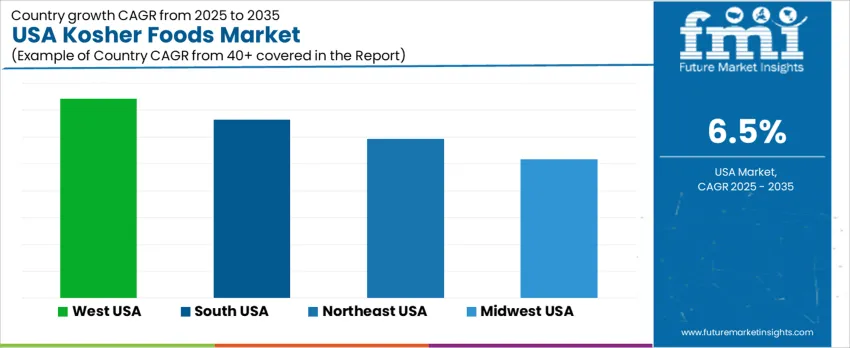
| Region | CAGR (%) |
|---|---|
| West USA | 4.2% |
| South USA | 3.7% |
| Northeast USA | 3.3% |
| Midwest USA | 2.9% |
Demand for single-serve wine in the USA is steadily growing, with West USA leading at a 4.2% CAGR, driven by the region’s convenience-driven, health-conscious consumers. South USA follows with a 3.7% CAGR, fueled by outdoor activities, social gatherings, and the increasing preference for portable wine options. Northeast USA shows a 3.3% CAGR, supported by urban demand for convenient, eco-friendly wine choices. Midwest USA experiences a 2.9% CAGR, with steady growth driven by increasing wine consumption and interest in convenience. As consumer interest in portion control and sustainability continues to rise, demand for single-serve wine will continue to increase across the USA.
How is Demand for Green Supplements Growing in West USA?
West USA leads the demand for green supplements, growing at a 4.6% CAGR. The region’s health-conscious population, particularly in cities like Los Angeles and San Francisco, is a major driver of this growth. As more consumers prioritize wellness and nutrition, green supplements, known for their rich content of vitamins, minerals, and antioxidants, are becoming an essential part of daily health routines. The rise in plant-based diets, along with the popularity of superfoods like spirulina, chlorella, and wheatgrass, further fuels the demand. West USA’s focus on sustainability and eco-friendly products supports the adoption of green supplements made from organic ingredients. As consumers seek convenient, natural ways to boost their health, the demand for green supplements in West USA will continue to grow steadily, supported by both consumer trends and the region’s commitment to wellness.
Why is Demand for Green Supplements Rising in South USA?
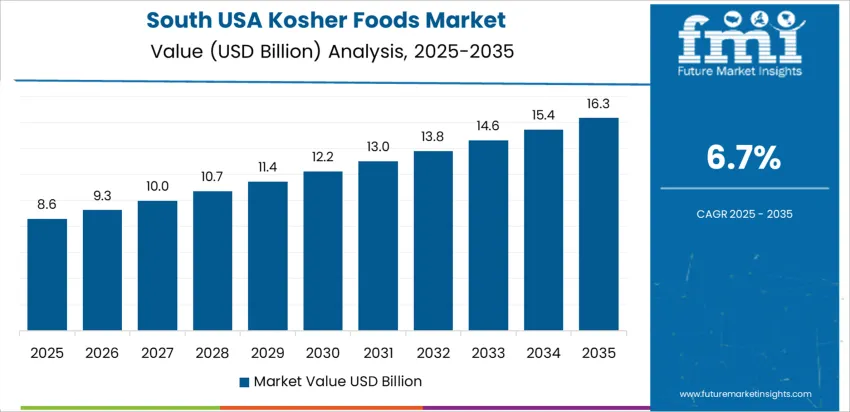
South USA is experiencing steady demand for green supplements, with a 4.1% CAGR. The region’s increasing focus on health, wellness, and preventive care is driving the rise in popularity of green supplements. With states like Texas and Florida showing strong demand, consumers are increasingly turning to these supplements for their potential health benefits, such as improved digestion, detoxification, and immune support. The growing interest in plant-based diets and natural products, including supergreens like spirulina and chlorella, contributes to the demand. South USA’s aging population is fueling the need for supplements that support overall well-being. As more retailers offer green supplements in stores and online, and as consumer awareness about the benefits of these products increases, demand for green supplements in South USA is expected to continue growing steadily, supported by the region’s evolving health trends.
How is Demand for Green Supplements Expanding in Northeast USA?
Northeast USA is seeing steady demand for green supplements, with a 3.7% CAGR. The region’s urban centers, such as New York and Boston, are home to a large health-conscious population that is increasingly adopting plant-based diets and wellness routines. As consumers seek natural ways to enhance their health and energy levels, green supplements like spirulina, barley grass, and wheatgrass are becoming popular choices. The growing focus on preventative healthcare and immune support, coupled with the region’s interest in organic and sustainably sourced products, is driving the demand for green supplements. As more consumers learn about the health benefits of these supplements, including detoxification and digestion improvement, demand continues to rise. As Northeast USA embraces cleaner, more natural products, the demand for green supplements will remain strong and steadily increase, reflecting broader consumer health trends.
Why is Demand for Green Supplements Growing in Midwest USA?
Midwest USA is experiencing moderate growth in demand for green supplements, with a 3.2% CAGR. As more consumers in the region become interested in health, wellness, and natural products, green supplements have gained traction for their potential health benefits. The Midwest’s focus on fitness and preventive care is contributing to the adoption of green supplements, particularly among individuals seeking to improve their energy levels, detoxify, and support their immune systems. The growing availability of green supplements in health food stores, supermarkets, and online platforms is making these products more accessible to a wider audience. The region’s interest in plant-based diets and natural remedies is further fueling demand. As consumers continue to prioritize health and nutrition, the demand for green supplements in Midwest USA is expected to grow steadily, driven by both health-conscious individuals and the increasing availability of these products.
What is the Competitive Landscape of Kosher Foods Demand in USA?
Demand for kosher foods in the USA has broadened beyond religious communities. Many consumers view kosher certification as a mark of quality, food-safety, and trust driving demand among health-conscious shoppers, those with dietary restrictions, and people valuing transparent sourcing. With growing interest in clean-label, ethical, and plant-based foods, kosher-certified products have gained acceptance as mainstream grocery items.
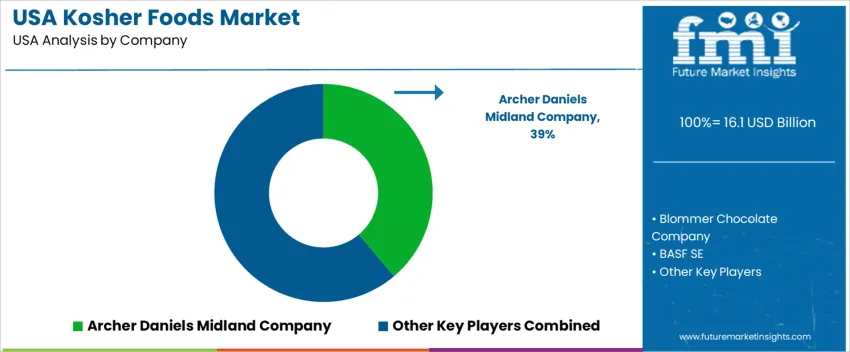
Key players in the U.S. kosher-food segment include Archer Daniels Midland Company, Blommer Chocolate Company, BASF SE, Brooklyn Cookie Company LLC, and Ice Chips Candy, LLC. Archer Daniels Midland Company holds a significant share of 38.8%, reflecting its strong presence in ingredient supply, food-processing, and certified-kosher product lines. Other companies serve niche or specialized categories from chocolate and confectionery (Blommer, Brooklyn Cookie Company) to snack-based offerings (Ice Chips), catering to varied consumer preferences while ensuring kosher certification and wide distribution.
Growth in kosher food demand is fueled by multiple factors: increasing consumer emphasis on food safety, quality, dietary transparency, and ethical sourcing. The kosher certification is seen by many as a guarantee of stricter processing standards, which appeals beyond religious consumers. Rising dietary restrictions, health awareness, and demand for plant-based or allergen-conscious foods have also expanded the appeal of kosher-certified products. As competition intensifies, suppliers differentiate through diverse product categories (snacks, confectionery, processed foods, ingredients), clean-label and allergen-friendly formulations, and broad retail and online distribution to reach both traditional kosher consumers and the wider health- and quality-conscious population.
Key Players in USA Kosher Foods Demand
- Archer Daniels Midland Company
- Blommer Chocolate Company
- BASF SE
- Brooklyn Cookie Company LLC
- Ice Chips Candy, LLC
Scope of Report
| Items | Values |
|---|---|
| Quantitative Units (2025) | USD billion |
| Product | Kosher Meat, Kosher Pareve, Kosher Dairy |
| Distribution Channel | Supermarkets/Hypermarkets, Convenience Stores, Online Sales, Others |
| Region | West USA, South USA, Northeast USA, Midwest USA |
| Countries Covered | USA |
| Key Companies Profiled | Archer Daniels Midland Company, Blommer Chocolate Company, BASF SE, Brooklyn Cookie Company LLC, Ice Chips Candy, LLC |
| Additional Attributes | Dollar sales by product type and distribution channel; regional trends in kosher food consumption; demand for kosher meat and dairy products; increasing preference for online shopping and convenience in kosher food purchases. |
USA Kosher Foods Demand by Key Segments
Product:
- Kosher Meat
- Kosher Pareve
- Kosher Dairy
Distribution Channel:
- Supermarkets/Hypermarkets
- Convenience Stores
- Online Sales
- Others
Region:
- West USA
- South USA
- Northeast USA
- Midwest USA
Frequently Asked Questions
How big is the demand for kosher foods in USA in 2025?
The demand for kosher foods in USA is estimated to be valued at USD 16.1 billion in 2025.
What will be the size of kosher foods in USA in 2035?
The market size for the kosher foods in USA is projected to reach USD 30.1 billion by 2035.
How much will be the demand for kosher foods in USA growth between 2025 and 2035?
The demand for kosher foods in USA is expected to grow at a 6.5% CAGR between 2025 and 2035.
What are the key product types in the kosher foods in USA?
The key product types in kosher foods in USA are kosher meat, kosher pareve and kosher dairy.
Which distribution channel segment is expected to contribute significant share in the kosher foods in USA in 2025?
In terms of distribution channel, supermarkets/hypermarkets segment is expected to command 33.0% share in the kosher foods in USA in 2025.
Preview the report firsthand - request a free sample
Get SampleGet the brochure for pricing and purchase details.
Get PDFTable of Content
- Executive Summary
- USA Market Outlook
- Demand-side Trends
- Supply-side Trends
- Technology Roadmap Analysis
- Analysis and Recommendations
- Market Overview
- Market Coverage / Taxonomy
- Market Definition / Scope / Limitations
- Market Background
- Market Dynamics
- Drivers
- Restraints
- Opportunity
- Trends
- Scenario Forecast
- Demand in Optimistic Scenario
- Demand in Likely Scenario
- Demand in Conservative Scenario
- Opportunity Map Analysis
- Product Life Cycle Analysis
- Supply Chain Analysis
- Investment Feasibility Matrix
- Value Chain Analysis
- PESTLE and Porter’s Analysis
- Regulatory Landscape
- Regional Parent Market Outlook
- Production and Consumption Statistics
- Import and Export Statistics
- Market Dynamics
- USA Market Analysis 2020 to 2024 and Forecast, 2025 to 2035
- Historical Market Size Value (USD Million) Analysis, 2020 to 2024
- Current and Future Market Size Value (USD Million) Projections, 2025 to 2035
- Y-o-Y Growth Trend Analysis
- Absolute $ Opportunity Analysis
- USA Market Pricing Analysis 2020 to 2024 and Forecast 2025 to 2035
- USA Market Analysis 2020 to 2024 and Forecast 2025 to 2035, By Product
- Introduction / Key Findings
- Historical Market Size Value (USD Million) Analysis By Product , 2020 to 2024
- Current and Future Market Size Value (USD Million) Analysis and Forecast By Product , 2025 to 2035
- Kosher Meat
- Kosher Pareve
- Kosher Dairy
- Y-o-Y Growth Trend Analysis By Product , 2020 to 2024
- Absolute $ Opportunity Analysis By Product , 2025 to 2035
- USA Market Analysis 2020 to 2024 and Forecast 2025 to 2035, By Distribution Channel
- Introduction / Key Findings
- Historical Market Size Value (USD Million) Analysis By Distribution Channel, 2020 to 2024
- Current and Future Market Size Value (USD Million) Analysis and Forecast By Distribution Channel, 2025 to 2035
- Supermarkets/Hypermarkets
- Convenience Stores
- Online Sales
- Others
- Y-o-Y Growth Trend Analysis By Distribution Channel, 2020 to 2024
- Absolute $ Opportunity Analysis By Distribution Channel, 2025 to 2035
- Market Structure Analysis
- Competition Dashboard
- Competition Benchmarking
- Market Share Analysis of Top Players
- By Regional
- By Product
- By Distribution Channel
- Competition Analysis
- Competition Deep Dive
- Archer Daniels Midland Company
- Overview
- Product Portfolio
- Profitability by Market Segments (Product/Age /Sales Channel/Region)
- Sales Footprint
- Strategy Overview
- Marketing Strategy
- Product Strategy
- Channel Strategy
- Blommer Chocolate Company
- BASF SE
- Brooklyn Cookie Company LLC
- Ice Chips Candy, LLC
- Archer Daniels Midland Company
- Competition Deep Dive
- Assumptions & Acronyms Used
- Research Methodology


