

- Industry Size (2026)
- USD 163.9 Mn
- Forecast (2036)
- USD 321 Mn
- CAGR (2026 to 2036)
- 6.3%
Demand for Polysorbate-80 in USA Forecast and Outlook 2026 to 2036
The demand for polysorbate-80 in the USA is expected to grow from USD 163.9 million in 2026 to USD 321 million in 2036, reflecting a 6.30% CAGR over the forecast period. Year-on-Year (YoY) growth analysis reveals steady and consistent increases in demand throughout the period. Starting at USD 120.9 million in 2026, the demand rises to USD 128.5 million in 2027, marking a 6.3% YoY increase. This trend of gradual growth continues, with the demand reaching USD 136.6 million in 2028, reflecting a 6.3% increase from the previous year. As industries increasingly adopt polysorbate-80 for its emulsifying and stabilizing properties in food, pharmaceuticals, and cosmetics, the demand continues to rise steadily.
Quick Stats of the Demand for Polysorbate-80 in USA
- Demand for Polysorbate-80 in USA Value (2026): USD 163.9 million
- Demand for Polysorbate-80 in USA Forecast Value (2036): USD 321 million
- Demand for Polysorbate-80 in USA Forecast CAGR (2026-2036): 6.3%
- Demand for Polysorbate-80 in USA Leading Source: Plant Based
- Demand for Polysorbate-80 in USA Key Growth Regions: West USA, South USA, Northeast USA, Midwest USA
- Demand for Polysorbate-80 in USA Top Players: Lonza Group Limited, Avril Group, BASF Corporation, Solenis, Reachin Chemical Co., Ltd.
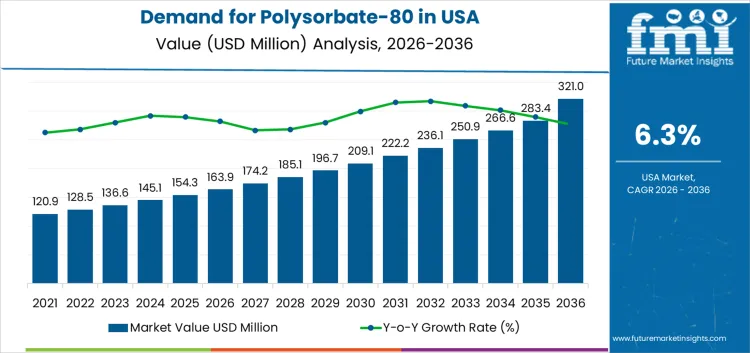
In the following years, the growth rate accelerates slightly, with demand reaching USD 145.1 million in 2029 and USD 154.3 million in 2030, reflecting 6.3% and 6.3% YoY increases, respectively. By 2031, the demand reaches USD 163.9 million, and this consistent upward trajectory continues, reaching USD 174.2 million in 2032 and USD 185.1 million in 2033. The demand growth is particularly driven by polysorbate-80’s expanding use in new product formulations and increasing consumer demand for clean-label and functional ingredients in food and health products. By 2035, demand is projected to reach USD 283.4 million, with a steady rise continuing until the forecasted USD 321 million in 2036. The strong growth trend is supported by increasing applications across various industries and growing consumer preferences for products that require effective emulsifiers.
Demand for Polysorbate-80 in USA Key Takeaways
| Metric | Value |
|---|---|
| Demand for Polysorbate-80 in USA Value (2026) | USD 163.9 million |
| Demand for Polysorbate-80 in USA Forecast Value (2036) | USD 321 million |
| Demand for Polysorbate-80 in USA Forecast CAGR (2026-2036) | 6.3% |
Why is the Demand for Polysorbate-80 in USA Growing?
The demand for polysorbate-80 in the USA is growing due to its widespread use as an emulsifier, stabilizer, and surfactant in various industries, including food, pharmaceuticals, cosmetics, and personal care. In the food industry, polysorbate-80 is commonly used to blend ingredients that do not naturally mix, such as oil and water, improving the texture and appearance of products like ice cream, salad dressings, and beverages. Its ability to enhance the solubility and stability of certain ingredients is driving its increasing use in processed food products, which are becoming more prevalent as consumer demand for convenience and ready-to-eat options continues to rise.
Key drivers for this growth include the increasing focus on product stability and quality in the food and beverage sector. As consumers demand cleaner labels and more natural ingredients, polysorbate-80 is being used as a versatile, effective ingredient in products that require emulsification without sacrificing texture or taste. The growing use of polysorbate-80 in pharmaceuticals, especially in injectable drugs and vaccines, is also contributing to its rising demand, as it helps improve the solubility and bioavailability of active ingredients.
The expanding personal care and cosmetic industries are further fueling the demand for polysorbate-80, as it is commonly used in products like lotions, creams, and shampoos to improve texture and ensure even distribution of ingredients. Despite challenges such as concerns about the safety of synthetic emulsifiers, the growing demand for high-performance, stable products across various sectors is expected to support continued growth in the demand for polysorbate-80 in the USA through 2036.
What is the Segment-Wise Analysis of Demand for Polysorbate-80 in USA?
Demand for polysorbate-80 in the USA is segmented by source, application, functionality, and region. By source, plant-based polysorbate-80 leads with 70% of the demand, followed by animal-based and synthetic sources. In terms of application, food & beverage accounts for 34% of the demand, with pharmaceuticals, nutraceuticals, cosmetics & personal care, and agrochemical industries contributing to the rest. Regarding functionality, polysorbate-80 is primarily used as an emulsifier, dispersant, solubilizer, surfactant, and stabilizer. Regionally, demand is distributed across West USA, South USA, Northeast USA, and Midwest USA.
How Does Plant-Based Source Lead the Demand for Polysorbate-80 in USA?
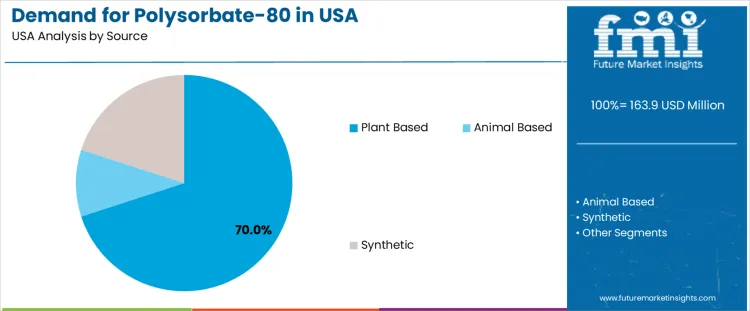
Plant-based polysorbate-80 accounts for 70% of the demand in the USA, driven by the growing consumer preference for natural and sustainable ingredients. As plant-based sources are perceived as more environmentally friendly and cleaner compared to synthetic or animal-based alternatives, they are highly sought after in a range of industries, particularly food & beverage, cosmetics, and nutraceuticals. Plant-based polysorbate-80 is used primarily as an emulsifier and surfactant, enhancing the texture and stability of products by improving the blending of oil and water-based ingredients. The demand for plant-based ingredients is increasingly important as consumers demand cleaner, more sustainable products, especially in health-conscious sectors. As natural, plant-derived ingredients continue to dominate the industry, the demand for plant-based polysorbate-80 is expected to grow, reinforcing its leading position in the polysorbate-80 industry.
How Does Food & Beverage Application Lead the Demand for Polysorbate-80 in USA?
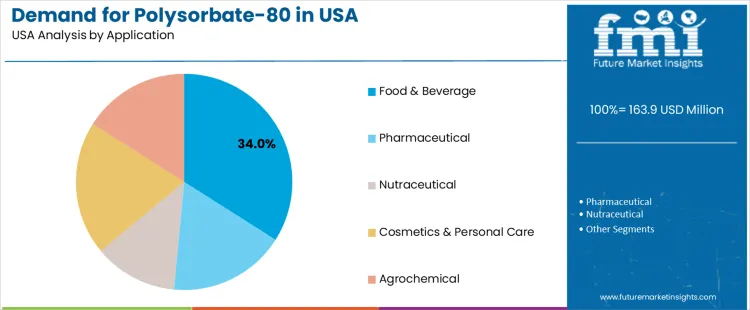
The food & beverage industry accounts for 34% of the demand for polysorbate-80 in the USA, driven by its essential role in food product formulations. Polysorbate-80 is commonly used as an emulsifier in food and beverage applications, where it helps mix ingredients that would otherwise separate, such as water and oil. Its ability to stabilize emulsions makes it a key ingredient in products like salad dressings, ice creams, and sauces. As the food industry increasingly focuses on improving texture, flavor, and shelf-life of products, polysorbate-80 remains a valuable tool for manufacturers. As consumer demand for functional foods and beverages rises, polysorbate-80's role in solubilizing active ingredients such as vitamins, minerals, and flavors is becoming more critical. The demand for polysorbate-80 in food & beverage products is expected to grow as the trend toward healthier and more convenient options continues.
What are the Key Trends, Drivers and Restraints in Demand for Polysorbate‑80 in USA?
Demand for polysorbate‑80 in the USA is rising as manufacturers across food, pharmaceutical, personal care, and industrial segments seek versatile emulsifiers and solubilizers. Trends include clean label formulations, multifunctional ingredient use, and increased application in plant‑based food products. Drivers include growth in packaged foods, cosmetic formulations, and injectable drug preparations that require reliable emulsification. Restraints include consumer scrutiny over synthetic additives, preference for natural alternatives, and regulatory scrutiny on food additives. Price volatility of raw materials can also impact cost structures and purchasing decisions in value‑sensitive applications.
Why is Demand for Polysorbate‑80 Growing in USA?
In food processing, polysorbate‑80 improves the stability and texture of desserts, baked goods, beverages, and confections. In pharmaceuticals, it serves as a solubilizer in injectable and oral formulations. Personal care and cosmetic products use it to ensure smooth blending of oils and active ingredients. Expansion of convenience foods, functional beverages, and advanced drug formulations fuels usage. As more brands emphasize formulation quality and product consistency, polysorbate‑80 remains a key ingredient for developers seeking performance without compromising stability.
How are Technological and Industry Innovations Driving Polysorbate‑80 Demand in USA?
Advances in food science help developers create cleaner tasting and more stable products using lower concentrations of emulsifiers. In pharmaceuticals, improved drug delivery systems and novel formulations rely on polysorbate‑80 for consistent solubilization of active ingredients. Cosmetic and personal care manufacturers use it in advanced emulsions, anti‑aging serums, and moisturizing products that require robust blending. Research into synergistic use with natural stabilizers broadens formulation flexibility. These innovations make polysorbate‑80 more attractive as a multifunctional ingredient that supports quality, stability, and performance across diverse product portfolios.
What are the Key Challenges and Risks That Could Limit Polysorbate‑80 Demand in USA?
Growing consumer preference for natural or plant‑derived ingredients can shift formulators toward alternatives perceived as more “clean label,” reducing reliance on synthetic emulsifiers. Regulatory scrutiny and labeling requirements in food and cosmetic sectors may increase compliance costs, especially if guidelines tighten around additive limits. Price fluctuations in raw materials impact production costs and may lead some manufacturers to explore lower‑cost alternatives. Misconceptions about safety in some consumer groups can affect perception and slow adoption in certain industry segments. Finally, competition from newer emulsifier technologies may capture interest in specialized applications.
What is the Regional Demand Outlook for Polysorbate-80 in USA?
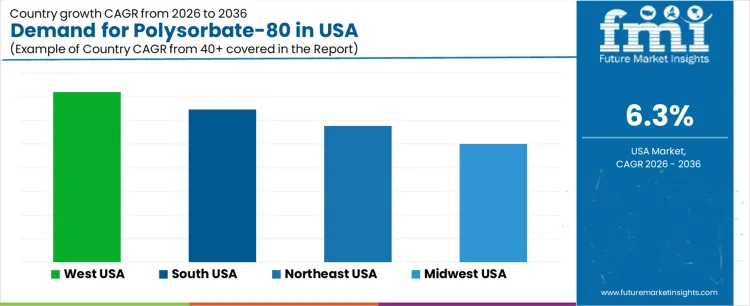
| Region | CAGR (%) |
|---|---|
| West USA | 7.2% |
| South USA | 6.5% |
| Northeast USA | 5.8% |
| Midwest USA | 5.0% |
Demand for polysorbate-80 in the USA is growing steadily, with West USA leading at a 7.2% CAGR, driven by its strong pharmaceutical, food, and cosmetics industries. South USA follows with a 6.5% CAGR, supported by the region’s expanding manufacturing base in pharmaceuticals, food, and personal care. Northeast USA shows a 5.8% CAGR, fueled by strong pharmaceutical and food sectors that rely on emulsification for product stability. Midwest USA experiences a 5.0% CAGR, with steady growth driven by food and pharmaceutical industries seeking reliable emulsifiers.
How is Demand for Polysorbate-80 Growing in West USA?
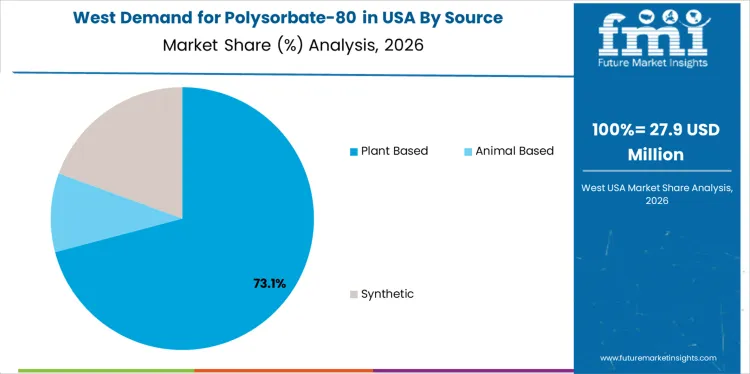
West USA leads the demand for polysorbate-80, growing at a 7.2% CAGR. The region’s significant presence in industries like pharmaceuticals, food and beverages, cosmetics, and personal care is driving the increasing demand for this emulsifier and surfactant. Polysorbate-80 is used extensively in formulations such as vaccines, creams, lotions, and food products to improve texture, stability, and consistency. States like California, Oregon, and Washington, with a high concentration of manufacturing and innovation, are seeing a surge in demand. West’s focus on sustainable and natural ingredients is encouraging manufacturers to use polysorbate-80 in products requiring high-quality emulsification and dispersion. The region’s growth in biotechnology, drug production, and clean-label food products ensures that the demand for polysorbate-80 will continue to rise, supported by both industrial applications and consumer preferences for well-formulated products.
Why is Demand for Polysorbate-80 Rising in South USA?
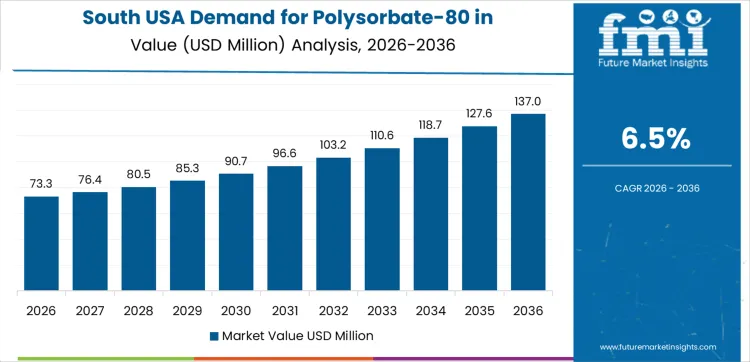
South USA is experiencing steady demand for polysorbate-80, with a 6.5% CAGR. The region’s expanding pharmaceutical, food, and cosmetics industries are the main contributors to this growth. States like Texas, Florida, and Georgia are home to large-scale manufacturing facilities that use polysorbate-80 in a variety of products, including drug formulations, food additives, and beauty products. The increasing demand for pharmaceutical products such as injectable vaccines and topicals, where polysorbate-80 is used as a stabilizer and emulsifier, is driving industry growth. South’s growing focus on health-conscious food products and the rise of functional foods that require emulsification support the increasing need for polysorbate-80. As the region continues to expand its manufacturing capabilities and meet consumer demand for clean-label, effective formulations, the need for polysorbate-80 will remain strong and continue to grow steadily.
How is Demand for Polysorbate-80 Expanding in Northeast USA?
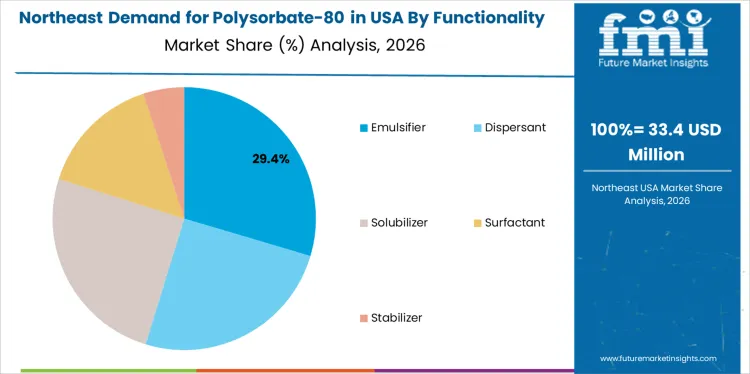
Northeast USA is seeing steady demand for polysorbate-80, with a 5.8% CAGR. The region’s strong pharmaceutical, cosmetic, and food industries are key drivers of this demand. States like New York, New Jersey, and Pennsylvania are home to leading pharmaceutical companies and personal care manufacturers that utilize polysorbate-80 in a wide range of products, from drug formulations to lotions and moisturizers. The growing demand for non-alcoholic beverages, as well as the increasing use of polysorbate-80 in food and beverage products to improve emulsification and shelf stability, is also contributing to the rise in demand. Northeast’s focus on high-quality and safe consumer products ensures the continued adoption of polysorbate-80 as a critical ingredient. As the region prioritizes both innovation in pharmaceuticals and expanding the natural product movement, demand for polysorbate-80 is expected to continue growing at a steady pace.
How is Demand for Polysorbate-80 Growing in Midwest USA?
Midwest USA is experiencing moderate demand for polysorbate-80, with a 5.0% CAGR. The region’s strong manufacturing base, particularly in the food processing and pharmaceutical sectors, is contributing to the steady growth of this emulsifier. States like Michigan, Illinois, and Ohio have large manufacturing hubs that use polysorbate-80 in applications ranging from food and beverage products to drug formulations. The increased focus on improving product shelf life, texture, and consistency in processed foods, as well as the rising demand for pharmaceutical formulations that require effective emulsification, is driving the adoption of polysorbate-80. The Midwest’s growing interest in plant-based and functional foods further contributes to the use of polysorbate-80 as an emulsifier in these product categories. As more industries in the Midwest adopt clean-label practices and focus on natural ingredient alternatives, demand for polysorbate-80 will continue to grow steadily.
What is the Competitive Landscape of Polysorbate-80 Demand in USA?
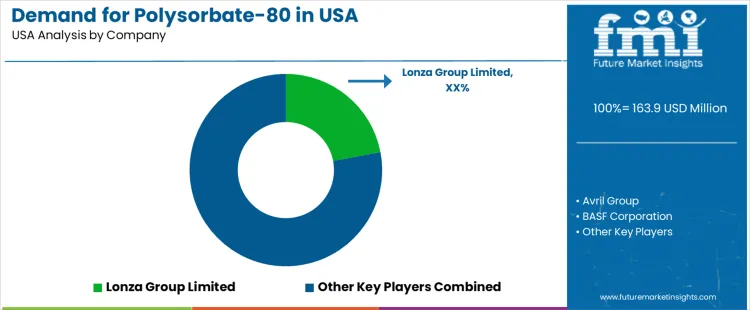
Demand for polysorbate-80 in the USA is growing across various industries, including pharmaceuticals, food and beverages, personal care, and cosmetics. This versatile surfactant and emulsifier is used in drug formulations, food processing, and cosmetic products for its ability to stabilize and solubilize ingredients. With an increasing focus on product formulations that enhance stability and improve texture, polysorbate-80 is in demand for applications such as vaccine formulations, injectable medications, and cosmetic creams. The rising trend for cleaner, more efficient formulations drives the industry as industries prioritize performance, safety, and sustainability.
Lonza Group Limited is a key player in the polysorbate-80 industry, providing high-quality emulsifiers used in the pharmaceutical and biotechnology sectors. The company focuses on offering solutions that meet stringent regulatory standards, particularly in drug manufacturing. Lonza’s expertise in manufacturing excipients, including polysorbate-80, has helped it maintain a strong position in the competitive landscape, especially as demand for biologics and vaccines continues to grow.
BASF Corporation is a global leader in chemicals, providing high-quality polysorbate-80 solutions for food, personal care, and pharmaceutical industries. Solenis specializes in water treatment and industrial chemicals, offering polysorbate-80 in various formulations for different sectors. Reachin Chemical Co., Ltd. focuses on providing cost-effective emulsifiers and surfactants, catering to growing demand in the food and pharmaceutical industries. As competition intensifies, these companies are increasingly innovating with formulations and focusing on eco-friendly production processes to meet the evolving demands of the industry in the USA.
Key Players in USA Polysorbate-80 Demand
- Lonza Group Limited
- Avril Group
- BASF Corporation
- Solenis
- Reachin Chemical Co., Ltd.
Scope of Report
| Items | Values |
|---|---|
| Quantitative Units (2026) | USD 163.9 million |
| Key Segments | Plant Based, Animal Based, Synthetic |
| Functionality | Emulsifier, Dispersant, Solubilizer, Surfactant, Stabilizer |
| Application | Food & Beverage, Pharmaceutical, Nutraceutical, Cosmetics & Personal Care, Agrochemical |
| Key Country | USA |
| Region | West USA, South USA, Northeast USA, Midwest USA |
| Key Players Profiled | Lonza Group Limited, Avril Group, BASF Corporation, Solenis, Reachin Chemical Co., Ltd. |
| Additional Attributes | Dollar sales by source, functionality, and application; regional CAGR and growth trends in Polysorbate-80 demand in the USA |
USA Polysorbate-80 Demand by Key Segments
Source:
- Plant Based
- Animal Based
- Synthetic
Functionality:
- Emulsifier
- Dispersant
- Solubilizer
- Surfactant
- Stabilizer
Application:
- Food & Beverage
- Pharmaceutical
- Nutraceutical
- Cosmetics & Personal Care
- Agrochemical
Region:
- West USA
- South USA
- Northeast USA
- Midwest USA
Frequently Asked Questions
How big is the demand for polysorbate-80 in USA in 2026?
The demand for polysorbate-80 in USA is estimated to be valued at USD 163.9 million in 2026.
What will be the size of polysorbate-80 in USA in 2036?
The market size for the polysorbate-80 in USA is projected to reach USD 321.0 million by 2036.
How much will be the demand for polysorbate-80 in USA growth between 2026 and 2036?
The demand for polysorbate-80 in USA is expected to grow at a 6.3% CAGR between 2026 and 2036.
What are the key product types in the polysorbate-80 in USA?
The key product types in polysorbate-80 in USA are plant based, animal based and synthetic.
Which functionality segment is expected to contribute significant share in the polysorbate-80 in USA in 2026?
In terms of functionality, emulsifier segment is expected to command 30.0% share in the polysorbate-80 in USA in 2026.
Preview the report firsthand - request a free sample
Get SampleGet the brochure for pricing and purchase details.
Get PDFTable of Content
- Executive Summary
- USA Market Outlook
- Demand-side Trends
- Supply-side Trends
- Technology Roadmap Analysis
- Analysis and Recommendations
- Market Overview
- Market Coverage / Taxonomy
- Market Definition / Scope / Limitations
- Market Background
- Market Dynamics
- Drivers
- Restraints
- Opportunity
- Trends
- Scenario Forecast
- Demand in Optimistic Scenario
- Demand in Likely Scenario
- Demand in Conservative Scenario
- Opportunity Map Analysis
- Product Life Cycle Analysis
- Supply Chain Analysis
- Investment Feasibility Matrix
- Value Chain Analysis
- PESTLE and Porter’s Analysis
- Regulatory Landscape
- Regional Parent Market Outlook
- Production and Consumption Statistics
- Import and Export Statistics
- Market Dynamics
- USA Market Analysis 2020 to 2024 and Forecast, 2025 to 2035
- Historical Market Size Value (USD Million) Analysis, 2020 to 2024
- Current and Future Market Size Value (USD Million) Projections, 2025 to 2035
- Y-o-Y Growth Trend Analysis
- Absolute $ Opportunity Analysis
- USA Market Pricing Analysis 2020 to 2024 and Forecast 2025 to 2035
- USA Market Analysis 2020 to 2024 and Forecast 2025 to 2035, By Source
- Introduction / Key Findings
- Historical Market Size Value (USD Million) Analysis By Source , 2020 to 2024
- Current and Future Market Size Value (USD Million) Analysis and Forecast By Source , 2025 to 2035
- Plant Based
- Animal Based
- Synthetic
- Y-o-Y Growth Trend Analysis By Source , 2020 to 2024
- Absolute $ Opportunity Analysis By Source , 2025 to 2035
- USA Market Analysis 2020 to 2024 and Forecast 2025 to 2035, By Functionality
- Introduction / Key Findings
- Historical Market Size Value (USD Million) Analysis By Functionality, 2020 to 2024
- Current and Future Market Size Value (USD Million) Analysis and Forecast By Functionality, 2025 to 2035
- Emulsifier
- Dispersant
- Solubilizer
- Surfactant
- Stabilizer
- Y-o-Y Growth Trend Analysis By Functionality, 2020 to 2024
- Absolute $ Opportunity Analysis By Functionality, 2025 to 2035
- USA Market Analysis 2020 to 2024 and Forecast 2025 to 2035, By Application
- Introduction / Key Findings
- Historical Market Size Value (USD Million) Analysis By Application, 2020 to 2024
- Current and Future Market Size Value (USD Million) Analysis and Forecast By Application, 2025 to 2035
- Food & Beverage
- Pharmaceutical
- Nutraceutical
- Cosmetics & Personal Care
- Agrochemical
- Y-o-Y Growth Trend Analysis By Application, 2020 to 2024
- Absolute $ Opportunity Analysis By Application, 2025 to 2035
- Market Structure Analysis
- Competition Dashboard
- Competition Benchmarking
- Market Share Analysis of Top Players
- By Regional
- By Source
- By Functionality
- By Application
- Competition Analysis
- Competition Deep Dive
- Lonza Group Limited
- Overview
- Product Portfolio
- Profitability by Market Segments (Product/Age /Sales Channel/Region)
- Sales Footprint
- Strategy Overview
- Marketing Strategy
- Product Strategy
- Channel Strategy
- Avril Group
- BASF Corporation
- Solenis
- Reachin Chemical Co., Ltd.
- Lonza Group Limited
- Competition Deep Dive
- Assumptions & Acronyms Used
- Research Methodology


