

- Industry Size (2025)
- USD 304.3 Mn
- Forecast (2035)
- USD 579.4 Mn
- CAGR (2025 to 2035)
- 6.7%
Demand for Short-chain Fructooligosaccharides in USA 2025 to 2035
The USA short-chain fructooligosaccharides demand is valued at USD 304.3 million in 2025 and is forecasted to reach USD 579.4 million by 2035, recording a CAGR of 6.7%. Demand reflects rising use of prebiotic ingredients in functional foods, digestive-health supplements, and specialized clinical nutrition. Formulations position short-chain fructooligosaccharides as non-digestible fibers that support microbiota balance and glycemic control. Increased incorporation into dairy alternatives, bakery, and nutraceutical products sustains product diversification. Powder format leads due to ease of blending with dry formulations, longer stability, and compatibility with mainstream manufacturing workflows. It remains preferred in both consumer-facing products and bulk ingredient supply for food processors. Liquid forms remain relevant in beverages and infant nutrition but represent a smaller volume share.
Growth is concentrated in the West, South, and Northeast due to higher adoption of functional foods, strong retail channels, and nutraceutical innovation clusters. Distribution emphasizes regulatory-aligned labeling, controlled moisture packaging, and purity standards for clean-label positioning. Alkem Labs, Baolingbao Biology, BENEO GmbH, Cargill Incorporated, and Cosucra are leading suppliers with portfolios that include customized prebiotic blends and varying degree-of-polymerization grades. Their strategies focus on clinical validation, integration into fortified food categories, and secure ingredient sourcing aligned with dietary-fiber regulations.
Quick Stats for USA Short-chain Fructooligosaccharides Demand
- USA Short-chain Fructooligosaccharides Sales Value (2025): USD 304.3 million
- USA Short-chain Fructooligosaccharides Forecast Value (2035): USD 579.4 million
- USA Short-chain Fructooligosaccharides Forecast CAGR (2025–2035): 6.7%
- Leading Form in USA Short-chain Fructooligosaccharides Demand: Powder
- Key Growth Regions in USA Short-chain Fructooligosaccharides Demand: West USA, South USA, Northeast USA
- Top Players in USA Short-chain Fructooligosaccharides Demand: Alkem Labs, Baolingbao Biology, BENEO GmbH, Cargill Incorporated, Cosucra
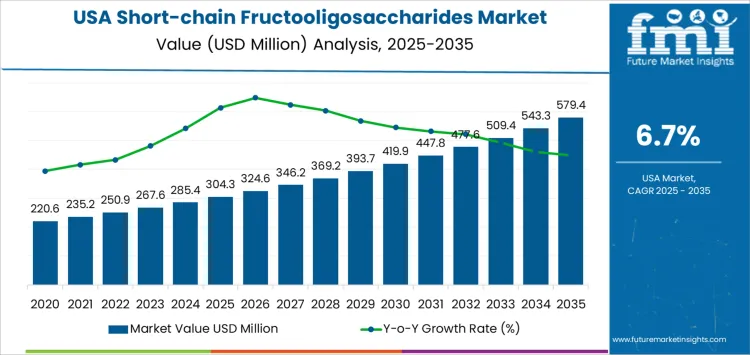
What is the Growth Forecast for Short-chain Fructooligosaccharides Industry in USA through 2035?
Demand for short-chain fructooligosaccharides in the United States shows moderate growth rate variability through the forecast timeline. The category benefits from expanding interest in prebiotic fibers that support digestive wellness, glycemic control, and microbiome health. Early years of the period display stronger expansion linked to rising incorporation in functional food, infant nutrition, and dietary supplements. Regulatory acceptance and clean-label positioning also support initial momentum.
Volatility becomes visible when growth depends on fluctuating consumer awareness of prebiotic benefits and cost competition with alternative fiber sources such as inulin and galacto-oligosaccharides. Supply constraints tied to fermentation inputs may cause intermittent pricing pressure, influencing year-to-year shifts. Toward the later years of the assessment, the category stabilizes as formulation adoption broadens beyond niche health products. That stabilization reduces extreme fluctuations while maintaining steady progress driven by manufacturer reformulation strategies focused on sugar reduction and gut health claims. The overall volatility index remains moderate, reflecting a balance between emerging-trend sensitivity and a gradually strengthening demand base in the United States.
USA Short-chain Fructooligosaccharides Key Takeaways
| Metric | Value |
|---|---|
| USA Short-chain Fructooligosaccharides Sales Value (2025) | USD 304.3 million |
| USA Short-chain Fructooligosaccharides Forecast Value (2035) | USD 579.4 million |
| USA Short-chain Fructooligosaccharides Forecast CAGR (2025-2035) | 6.7% |
Why is the Demand for Short-Chain Fructooligosaccharides in the USA Growing?
Demand for short-chain fructooligosaccharides in the USA is increasing because consumers focus on digestive wellness and seek dietary fibers with proven prebiotic benefits. scFOS supports the growth of beneficial gut bacteria and helps maintain regularity, which appeals to adults managing digestive discomfort and individuals interested in immune system health. Rising awareness of the link between gut balance and overall wellbeing strengthens USAge in daily nutrition. Food and beverage manufacturers incorporate scFOS into functional foods such as yogurts, dairy alternatives, nutrition bars and beverages to improve fiber content without adding strong taste or texture changes. scFOS offers low calorie sweetness and a low glycemic profile, which supports dietary preferences related to weight management and blood sugar control.
Supplement companies include scFOS in powders and capsules either as a standalone prebiotic or combined with probiotics to enhance formulation effectiveness. Constraints include the need for ongoing research to substantiate health claims in heavily regulated categories and higher cost compared with common fibers. Some consumers experience temporary gas or bloating during adoption, which may affect repeat use. Product developers also consider supply chain stability when planning large-scale incorporation.
Which Forms, Sources, and Applications Lead Demand for Short-Chain Fructooligosaccharides in the USA?
Demand for short-chain fructooligosaccharides (scFOS) in the United States is shaped by rising consumer focus on gut health, prebiotic fortification in food and beverage products, and clean-label digestive wellness solutions. Manufacturers prioritize scFOS for its tolerance benefits, low-calorie profile, and compatibility with sugar-reduction strategies. Growth aligns with functional nutrition trends, increased awareness of microbiome health, and broader incorporation of dietary fibers in mainstream and specialist products.
By Form, Powder Holds the Largest Share
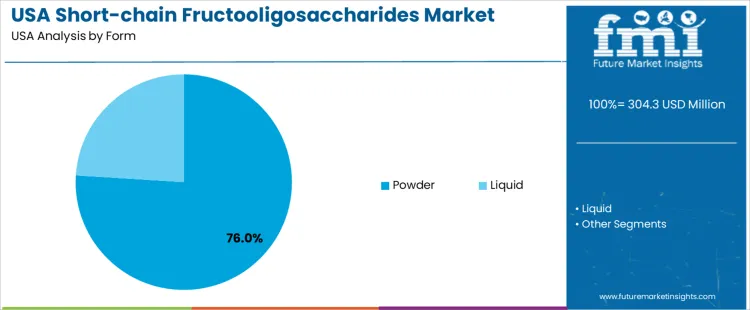
Powdered scFOS dominates at 76.0%, reflecting its superior stability, longer shelf life, and ease of integration into baked goods, dairy products, instant beverages, and supplement formats. It is preferred by USA formulators seeking bulk fiber enrichment and efficient transportation handling. Liquid scFOS accounts for 24.0%, primarily used in syrups, infant formula, and functional beverages where dispersion and sweetness enhancement are necessary. Format selection depends on processing feasibility, ingredient solubility, and the target product’s sensory profile.
Key Points:
- Powder dominates due to stability and broad processing compatibility
- Liquid supports smooth blending in beverages and liquid supplements
- Form choice aligns with product texture and distribution requirements
By Source, Inulin-Derived scFOS Leads Demand
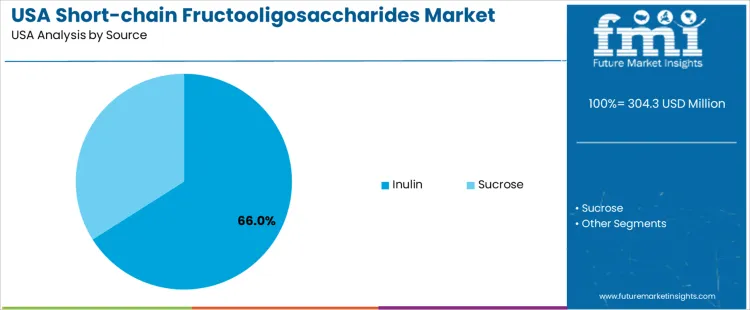
Inulin-derived scFOS holds 66.0%, supported by its natural origin, strong acceptance in digestive wellness claims, and wide use in functional foods. Sucrose-derived scFOS accounts for 34.0%, applied where cost control and high-purity production are priorities in USA manufacturing operations. Source preference follows supply reliability, labeling requirements, and brand messaging driven by natural ingredient positioning.
Key Points:
- Inulin supports consumer-aligned “plant-derived prebiotic” claims
- Sucrose-derived variants help meet pricing and volume requirements
- Ingredient origin influences nutrition positioning and sustainability claims
By Application, Food & Beverages Represent the Largest Share
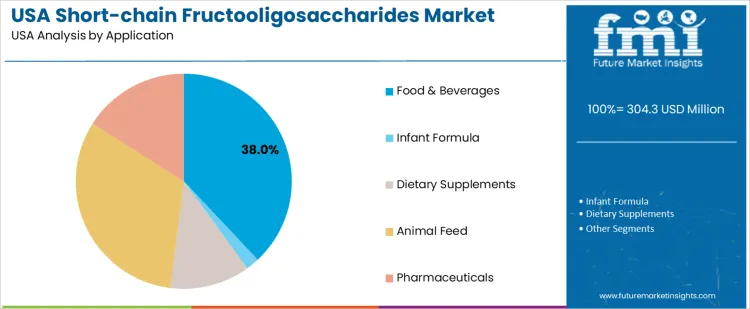
Food and beverages account for 38.0%, driven by fiber fortification in bakery, cereals, yogurt, and RTD nutrition drinks. Animal feed contributes 32.0%, supported by gut-health optimization in livestock and pet wellness trends. Pharmaceuticals hold 16.0%, focusing on constipation relief and immunity-supporting formulations. Dietary supplements represent 12.0%, including prebiotic powders, gummies, and capsules. Infant formula accounts for 2.0%, aligning with closer-to-breast-milk oligosaccharide profiles. Application distribution reflects a balanced mix of human and animal nutrition needs in the United States.
Key Points:
- F&B demand driven by microbiome-focused fiber-enriched foods
- Animal feed supports digestive performance and immune benefits
- Pharma and supplements meet targeted digestive health outcomes
What are the Drivers, Restraints, and Key Trends of the Demand for Short-Chain Fructooligosaccharides in the USA?
Growth of digestive health focus, increased interest in prebiotic ingredients and wider use in functional foods drive demand.
In the United States, consumers are increasingly prioritizing gut health due to awareness of microbiome benefits in immunity, metabolism and overall wellness. Short-chain fructooligosaccharides support growth of beneficial gut bacteria, leading manufacturers to incorporate them into yogurts, nutrition bars, powdered supplements and fiber-fortified beverages. Adults seeking improved digestive comfort and reduced reliance on pharmaceutical laxatives show growing preference for prebiotic fibers as a daily health aid. Retail expansion of digestive support products, including gummies and sachets, increases accessibility for a wide range of consumers who value plant-based and low-calorie ingredients.
Potential digestive discomfort, higher formulation cost and slow education on prebiotic benefits restrain demand.
Some individuals experience gas or bloating when increasing prebiotic fiber intake rapidly, which can discourage continued use if guidance on gradual introduction is not provided. Compared with standard sweeteners and bulking agents, short-chain fructooligosaccharides typically cost more and require careful formulation to maintain taste and texture in finished foods. Awareness of prebiotics remains lower than probiotics among USA consumers, especially in mainstream grocery shoppers who may not fully understand their role in digestive support. These adoption barriers limit accelerated penetration in cost-sensitive or general snacking categories.
Shift toward clean-label fiber fortification, increased demand in plant-based and low-sugar products and rising presence in personalized nutrition define key trends.
Manufacturers are reducing sugar content in foods and beverages by using short-chain fructooligosaccharides to provide mild sweetness with lower caloric contribution. Plant-based yogurts, dairy alternatives and protein shakes rely on prebiotic fibers to enhance texture and perceived nutritional value. Personalized nutrition platforms recommend prebiotic intake tailored to individual gut-health goals, encouraging subscription-based purchasing behaviors. Child-focused products with added fiber address parental interest in balanced digestion and overall wellness. These developments indicate consistent, health-driven demand for short-chain fructooligosaccharides across USA functional food, nutraceutical and wellness-oriented consumer segments.
Analysis of the Demand for Short-Chain Fructooligosaccharides (scFOS) in the USA by Region
Demand for short-chain fructooligosaccharides (scFOS) in the United States is increasing due to dietary-fiber enrichment in packaged foods, prebiotic supplementation in digestive-health products, and growing interest in sugar-reduction strategies. Manufactures integrate scFOS into bakery, dairy, beverages, and clinical nutrition formulas to support gut microbiome balance and functional labeling claims. Regional growth reflects ingredient-processing infrastructure, functional-food innovation hubs, and access to health-focused consumers in large metropolitan areas. West USA leads expansion at 7.6% CAGR, followed by South USA at 6.8%, Northeast USA at 6.1%, and Midwest USA at 5.3%, supported by nutrition-science adoption and continuous retail introduction of prebiotic-enhanced products.
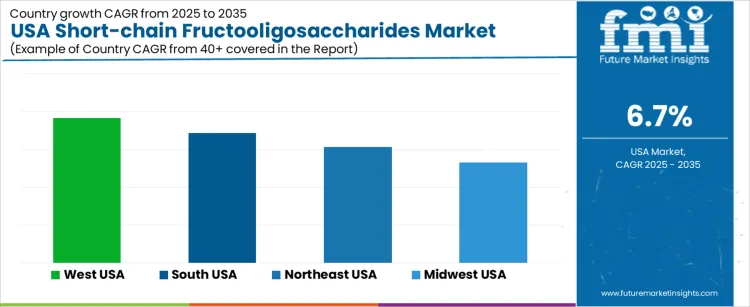
| Region | CAGR (2025-2035) |
|---|---|
| West USA | 7.6% |
| South USA | 6.8% |
| Northeast USA | 6.1% |
| Midwest USA | 5.3% |
How is the West USA driving demand for short-chain fructooligosaccharides?
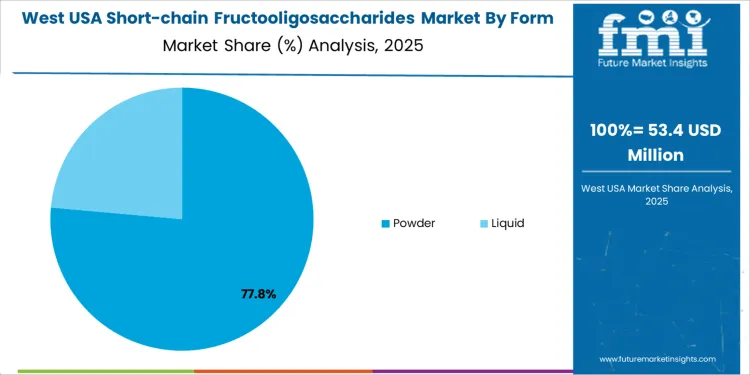
West USA grows 7.6% CAGR, supported by strong concentration of functional-food manufacturers and health-oriented consumer bases in California, Washington, and Oregon. Prebiotic fibers such as scFOS are included in beverages, protein bars, alternative-dairy products, and ready-to-drink nutritional shakes positioned for digestive wellness. Retailers place high-fiber and reduced-sugar formulations in premium aisles, encouraging product-development pipelines. R&D clusters monitor microbiome-response studies and collaborate with ingredient suppliers to validate stability in acidic or high-temperature processing. Distribution centers enable regional rollout of imported and domestically produced scFOS powder formats. Emerging start-ups integrate scFOS into personalized-nutrition kits, increasing industry engagement.
- Functional-food innovation in beverages and dairy alternatives
- High concentration of wellness-driven consumers in metros
- Ingredient-stability trials supporting formulation adoption
- Retail positioning favoring value-added nutrition features
How is the South USA shaping demand for short-chain fructooligosaccharides?
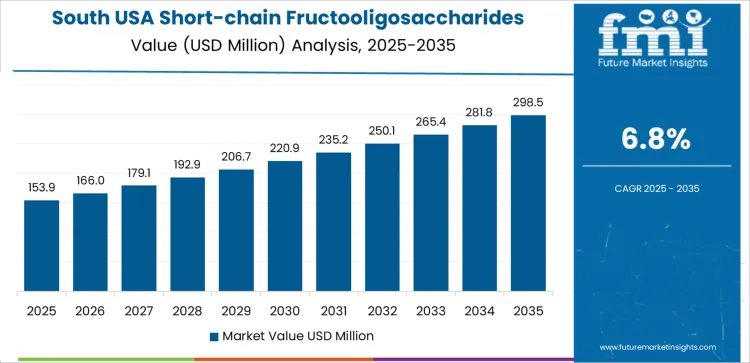
South USA shows 6.8% CAGR, reflecting rising prebiotic USAge across fortified beverages, yogurt drinks, and bakery categories within Texas, Florida, and Georgia. Large-scale food production facilities adopt scFOS to support caloric-reduction initiatives while maintaining texture and mouthfeel in reformulated products. Senior-focused nutrition programs expand utilization in digestive-support supplements distributed through pharmacies and care networks. Warehousing and transportation hubs facilitate inbound ingredient supply from ports along the Gulf Coast and East Coast. Consumer education campaigns raise awareness of fiber deficits and microbiome health, guiding incremental adoption.
- Regional manufacturing supporting cost-efficient scFOS integration
- Digestive-health supplements sustaining recurring procurement
- Warm-climate industries strengthening drinkable-nutrition demand
- Logistics infrastructure improving ingredient availability
How is the Northeast USA influencing procurement of short-chain fructooligosaccharides?
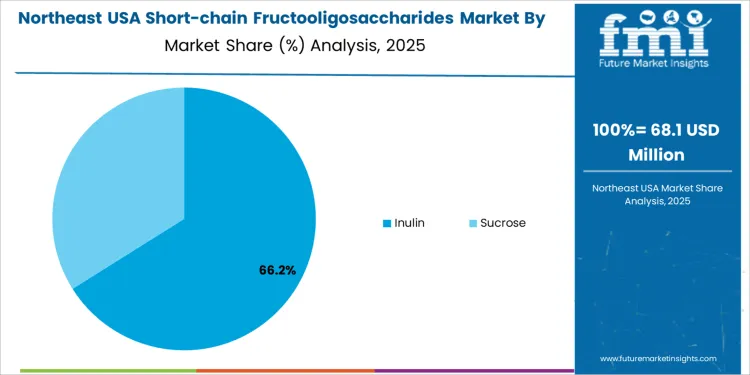
Northeast USA advances 6.1% CAGR, driven by strong retail presence of organic and functional food brands across New York, New Jersey, and Massachusetts. Dense populations rely on convenient, on-the-go nutrition formats enriched with prebiotic fibers to address digestive-wellness needs. Universities and life-science centers evaluate clinical benefits of microbiome-supportive ingredients, encouraging scientific alignment in product claims. Food manufacturers implement scFOS in reformulated bakery and beverage lines to meet sugar-reduction policies and clean-label expectations. Cold-chain logistics ensure distribution of dairy-based functional products across metro-focused retail pathways.
- Clean-label shifts accelerating fiber-enrichment strategies
- Scientific research validating prebiotic functionality
- On-the-go consumption aiding formulation diversification
- Retail pharmacies promoting digestive-wellness products
How is the Midwest USA contributing to scFOS demand growth?
Midwest USA maintains 5.3% CAGR, linked to food-processing clusters in Illinois, Ohio, and Wisconsin where bakery, cereal, and dairy manufacturers incorporate scFOS into mainstream nutrition. The region emphasizes cost-effective ingredient procurement and production consistency, integrating prebiotic fibers mainly in staple products rather than premium niches. Health-system recommendations for improved digestive behavior and reduced-sugar intake support demand in private-label and clinical-nutrition categories. Ingredient suppliers collaborate with established filling and extrusion facilities to ensure compatibility with existing high-volume operations. Retailers monitor consumer acceptance across family-household-driven purchasing patterns.
- Strong bakery and dairy processing footprint aiding use
- Private-label interest driving affordability considerations
- Healthcare influence supporting dietary-fiber adoption
- Manufacturing compatibility ensuring steady uptake
How is competitive strength allocated among the key companies supplying short-chain fructooligosaccharides in the United States, and what factors determine their share positions?
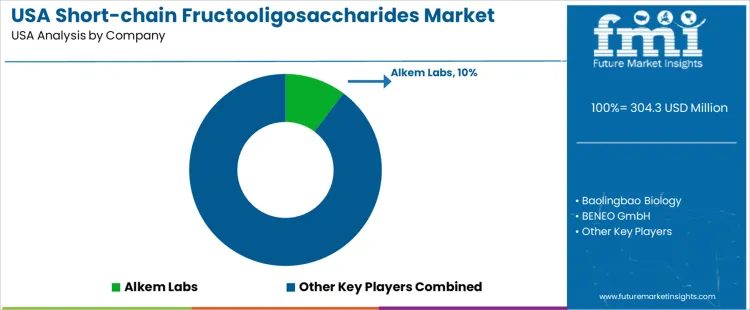
Competitive dynamics in the United States short-chain fructooligosaccharides space reflect an intersection of ingredient purity, digestion-related functional claims, and integration into mainstream nutrition products. Alkem Labs leads with 10.3%, anchored by consistent supply capabilities and active penetration in dietary supplements that target digestive balance and prebiotic support. Its footprint benefits from established partnerships with formulators and distributors serving pharmacy and specialty channels.
Baolingbao Biology leverages its cost-efficient production model, providing high-purity FOS inputs to private-label and food manufacturing partners. The company’s progress in clean-label ingredient production aligns with formulation trends in functional beverages and dairy alternatives. BENEO GmbH, with strong prebiotic research backing, secures business among brands emphasizing verified digestive benefits and measurable clinical support. Its technical documentation and formulation assistance strengthen customer retention.
Cargill Incorporated benefits from multi-category ingredient scale, strong relationships with major food companies, and product development tools that speed commercialization. Cosucra focuses on specialty wellness products and maintains competitiveness by promoting synergies between its FOS ingredients and plant-based formulations. Shelf-stable beverage applications, children’s functional foods, and preventive wellness supplements drive demand expansion. Companies prioritizing validated gut-health positioning and reliable logistics networks remain best placed to strengthen share in the United States.
Key Players in USA Short-chain Fructooligosaccharides Demand
- Alkem Labs
- Baolingbao Biology
- BENEO GmbH
- Cargill Incorporated
- Cosucra
Scope of the Report
| Items | Values |
|---|---|
| Quantitative Units | USD million |
| Form | Powder, Liquid |
| Source | Inulin, Sucrose |
| Application | Food & Beverages, Infant Formula, Dietary Supplements, Animal Feed, Pharmaceuticals |
| Regions Covered | West USA, South USA, Northeast USA, Midwest USA |
| Key Companies Profiled | Alkem Labs, Baolingbao Biology, BENEO GmbH, Cargill Incorporated, Cosucra |
| Additional Attributes | Dollar sales by form, source, and application segments; regional adoption trends across West, South, Northeast, and Midwest USA; increasing USAge in prebiotic functional foods and digestive health supplements; growing incorporation in infant nutrition formulations; product differentiation based on purity, sweetness level, and digestive tolerance; competitive landscape with ingredient suppliers expanding partnerships with food and nutraceutical brands. |
USA Short-chain Fructooligosaccharides Demand by Segments
Form:
- Powder
- Liquid
Source:
- Inulin
- Sucrose
Application:
- Food & Beverages
- Infant Formula
- Dietary Supplements
- Animal Feed
- Pharmaceuticals
Region:
- West USA
- South USA
- Northeast USA
- Midwest USA
Frequently Asked Questions
How big is the demand for short-chain fructooligosaccharides in USA in 2025?
The demand for short-chain fructooligosaccharides in USA is estimated to be valued at USD 304.3 million in 2025.
What will be the size of short-chain fructooligosaccharides in USA in 2035?
The market size for the short-chain fructooligosaccharides in USA is projected to reach USD 579.4 million by 2035.
How much will be the demand for short-chain fructooligosaccharides in USA growth between 2025 and 2035?
The demand for short-chain fructooligosaccharides in USA is expected to grow at a 6.7% CAGR between 2025 and 2035.
What are the key product types in the short-chain fructooligosaccharides in USA?
The key product types in short-chain fructooligosaccharides in USA are powder and liquid.
Which source segment is expected to contribute significant share in the short-chain fructooligosaccharides in USA in 2025?
In terms of source, inulin segment is expected to command 66.0% share in the short-chain fructooligosaccharides in USA in 2025.
Preview the report firsthand - request a free sample
Get SampleGet the brochure for pricing and purchase details.
Get PDFTable of Content
- Executive Summary
- USA Market Outlook
- Demand-side Trends
- Supply-side Trends
- Technology Roadmap Analysis
- Analysis and Recommendations
- Market Overview
- Market Coverage / Taxonomy
- Market Definition / Scope / Limitations
- Market Background
- Market Dynamics
- Drivers
- Restraints
- Opportunity
- Trends
- Scenario Forecast
- Demand in Optimistic Scenario
- Demand in Likely Scenario
- Demand in Conservative Scenario
- Opportunity Map Analysis
- Product Life Cycle Analysis
- Supply Chain Analysis
- Investment Feasibility Matrix
- Value Chain Analysis
- PESTLE and Porter’s Analysis
- Regulatory Landscape
- Regional Parent Market Outlook
- Production and Consumption Statistics
- Import and Export Statistics
- Market Dynamics
- USA Market Analysis 2020 to 2024 and Forecast, 2025 to 2035
- Historical Market Size Value (USD Million) Analysis, 2020 to 2024
- Current and Future Market Size Value (USD Million) Projections, 2025 to 2035
- Y-o-Y Growth Trend Analysis
- Absolute $ Opportunity Analysis
- USA Market Pricing Analysis 2020 to 2024 and Forecast 2025 to 2035
- USA Market Analysis 2020 to 2024 and Forecast 2025 to 2035, By Form
- Introduction / Key Findings
- Historical Market Size Value (USD Million) Analysis By Form , 2020 to 2024
- Current and Future Market Size Value (USD Million) Analysis and Forecast By Form , 2025 to 2035
- Powder
- Liquid
- Y-o-Y Growth Trend Analysis By Form , 2020 to 2024
- Absolute $ Opportunity Analysis By Form , 2025 to 2035
- USA Market Analysis 2020 to 2024 and Forecast 2025 to 2035, By Source
- Introduction / Key Findings
- Historical Market Size Value (USD Million) Analysis By Source, 2020 to 2024
- Current and Future Market Size Value (USD Million) Analysis and Forecast By Source, 2025 to 2035
- Inulin
- Sucrose
- Y-o-Y Growth Trend Analysis By Source, 2020 to 2024
- Absolute $ Opportunity Analysis By Source, 2025 to 2035
- USA Market Analysis 2020 to 2024 and Forecast 2025 to 2035, By Application
- Introduction / Key Findings
- Historical Market Size Value (USD Million) Analysis By Application, 2020 to 2024
- Current and Future Market Size Value (USD Million) Analysis and Forecast By Application, 2025 to 2035
- Food & Beverages
- Infant Formula
- Dietary Supplements
- Animal Feed
- Pharmaceuticals
- Y-o-Y Growth Trend Analysis By Application, 2020 to 2024
- Absolute $ Opportunity Analysis By Application, 2025 to 2035
- Market Structure Analysis
- Competition Dashboard
- Competition Benchmarking
- Market Share Analysis of Top Players
- By Regional
- By Form
- By Source
- By Application
- Competition Analysis
- Competition Deep Dive
- Alkem Labs
- Overview
- Product Portfolio
- Profitability by Market Segments (Product/Age /Sales Channel/Region)
- Sales Footprint
- Strategy Overview
- Marketing Strategy
- Product Strategy
- Channel Strategy
- Baolingbao Biology
- BENEO GmbH
- Cargill Incorporated
- Cosucra
- Alkem Labs
- Competition Deep Dive
- Assumptions & Acronyms Used
- Research Methodology


