

- Industry Size (2026)
- USD 163.7 Mn
- Forecast (2036)
- USD 282.9 Mn
- CAGR (2026 to 2036)
- 5.1%
Demand for Tannase in USA in Japan Forecast and Outlook 2026 to 2036
The demand for tannase in the USA is expected to grow steadily from USD 163.7 million in 2026 to USD 282.9 million in 2036, reflecting a 5.10% CAGR. This growth is driven by its increasing application in industries such as food and beverages, pharmaceuticals, and cosmetics. Tannase is primarily used for hydrolyzing tannins, enhancing flavor, and improving product quality. Starting at USD 127.5 million in 2026, the demand rises year over year, reaching USD 134.0 million in 2027 and USD 140.9 million in 2028. As industries increasingly adopt tannase for its biotechnological benefits, demand continues to climb, reaching USD 148.1 million in 2029 and USD 155.7 million in 2030.
Quick Stats of the Demand for Tannase in USA
- Demand for Tannase in USA Value (2026): USD 163.7 million
- Demand for Tannase in USA Forecast Value (2036): USD 282.9 million
- Demand for Tannase in USA Forecast CAGR (2026-2036): 5.1%
- Demand for Tannase in USA Leading Source: Microbial Sources (Bacteria, Fungi, Yeast)
- Demand for Tannase in USA Key Growth Regions: West USA, South USA, Northeast USA, Midwest USA
- Demand for Tannase in USA Top Players: DSM N.V, Novozymes, Creative Enzymes, GlpBio, Merck KGaA
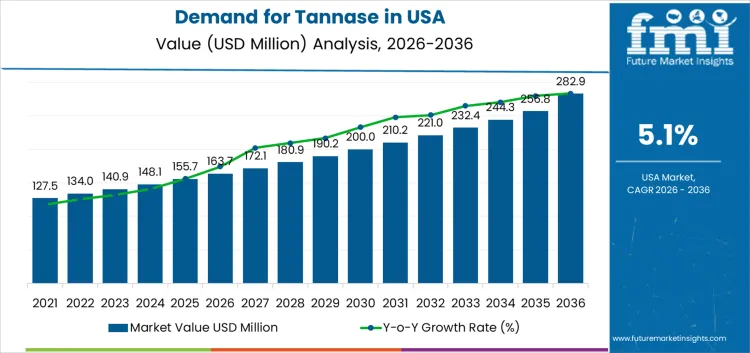
The upward trend continues in the following years, with the demand for tannase increasing to USD 163.7 million in 2031, USD 172.1 million in 2032, and USD 180.9 million in 2033. By 2034, the demand reaches USD 190.2 million, growing to USD 200.0 million in 2035 and USD 210.2 million in 2036. The steady rise in demand reflects the growing importance of sustainable and natural processes in various sectors, particularly as businesses focus on enhancing flavor, improving stability, and optimizing product quality. With its versatility in multiple industries and increasing adoption of biotechnology, tannase is expected to experience continued growth, driven by both established and emerging applications across diverse sectors.
Demand for Tannase in USA Key Takeaways
| Metric | Value |
|---|---|
| Demand for Tannase in USA Value (2026) | USD 163.7 million |
| Demand for Tannase in USA Forecast Value (2036) | USD 282.9 million |
| Demand for Tannase in USA Forecast CAGR (2026-2036) | 5.1% |
Why is the Demand for Tannase in USA Growing?
The demand for tannase in the USA is growing due to its increasing applications in the food, beverage, and pharmaceutical industries. Tannase, an enzyme that breaks down tannins (polyphenolic compounds found in plants), is used in processes like wine and fruit juice production, where it helps reduce astringency, enhance flavor, and improve the clarity of products. Tannase is also being used in the extraction of valuable compounds from plant materials, which is driving its demand in the growing natural product extraction industry. As the need for high-quality, flavorful, and clear beverages increases, the role of tannase in improving product quality is becoming more vital.
Key drivers for this growth include the rising consumer preference for premium, clean-label beverages like wine, tea, and fruit juices, where tannase can enhance taste and reduce bitterness. The expanding industry for plant-based products and natural food ingredients is also contributing to the use of tannase in processing various plant-based foods. The pharmaceutical industry’s growing interest in tannase for its potential health benefits, such as its role in reducing oxidative stress and supporting digestion, is further increasing demand for this enzyme.
Technological advancements in enzyme production and processing are making tannase more efficient and cost-effective, thus driving its adoption in various industrial applications. While challenges such as the relatively high cost of enzyme production and the need for specialized equipment may limit wider adoption, the growing demand for higher-quality food and beverage products, along with the increasing emphasis on natural ingredients, is expected to support continued growth in the demand for tannase in the USA through 2036.
What is the Segment-Wise Analysis of Demand for Tannase in USA?
Demand for tannase in the USA is segmented by source, end-user industry, and region. By source, microbial sources (bacteria, fungi, and yeast) lead with 65% of the demand, followed by plant sources. In terms of end-user industry, the food and beverage industry accounts for 39% of the demand, with pharmaceutical, cosmetics and personal care, agriculture and animal feed, and biotechnology and research institutions contributing to the remainder. Regionally, demand is distributed across West USA, South USA, Northeast USA, and Midwest USA.
How Do Microbial Sources Lead the Demand for Tannase in USA?
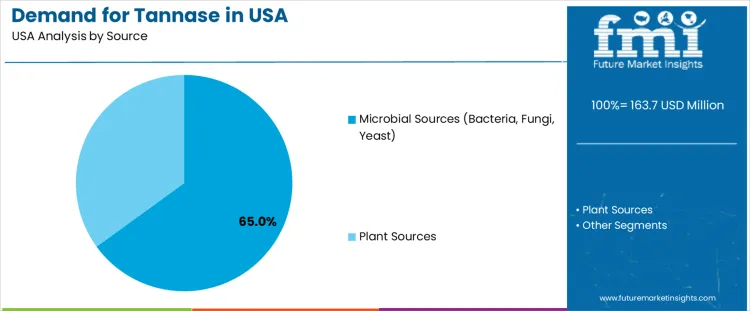
Microbial sources (bacteria, fungi, and yeast) account for 65% of the demand for tannase in the USA, driven by their efficiency, cost-effectiveness, and high yield in tannase production. Microbial tannase is preferred in industrial applications due to its ability to efficiently break down tannins in food and beverages, such as tea and wine, to improve taste and reduce bitterness. The growing use of microbial enzymes in the food and beverage industry for processes like juice clarification, wine production, and flavor enhancement continues to drive the demand for microbial tannase. Microbial sources are more scalable and flexible, offering significant advantages over plant-based alternatives, which makes them more popular in commercial and large-scale production. As demand for food products with reduced tannin content rises, microbial tannase will continue to be the preferred source, solidifying its position in the industry.
How Does Food and Beverage Industry End-User Lead the Demand for Tannase in USA?
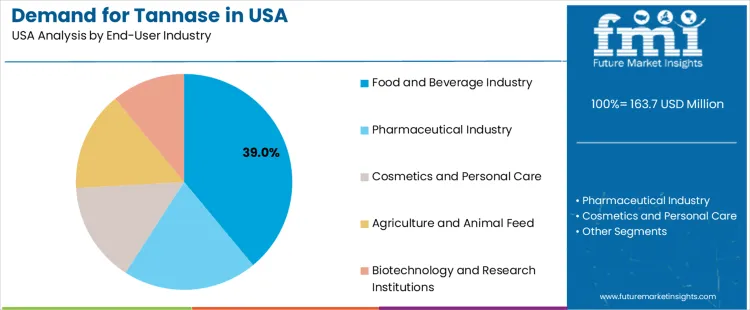
The food and beverage industry accounts for 39% of the demand for tannase in the USA, driven by its essential role in enhancing product quality, flavor, and consistency. Tannase is widely used in the food industry to degrade tannins in various products, including beverages like tea and wine, where tannins can cause bitterness and astringency. The growing consumer preference for smoother, less bitter beverages fuels the demand for tannase in the food and beverage sector. Tannase is used in fruit juice clarification and to improve the color and clarity of wines, further boosting its demand in this industry. As the food and beverage sector continues to innovate and cater to changing consumer preferences, the use of tannase for improving flavor profiles and processing efficiency will remain a significant driver of demand in the USA.
What are the Key Trends, Drivers and Restraints in Demand for Tannase in USA?
Demand for tannase in the USA is rising as beverage, food, pharmaceutical and personal care sectors seek enzyme solutions that improve product quality and process efficiency. Trends include cleaner label formulations, natural processing aids and enzyme use in ecofriendly leather processing. Drivers include growth in functional beverages, craft tea and coffee industrys, and consumer demand for smoother, less astringent tastes. Restraints include limited awareness among smaller producers, cost considerations compared with traditional processing methods, and availability of alternative enzymes, which can curb adoption in price sensitive applications.
Why is Demand for Tannase Growing in USA?
Demand for tannase in the USA is growing because manufacturers look for efficient ways to modify tannin content, improve flavor profiles and enhance product stability. In beverage processing, tannase reduces astringency in tea, cider, wine and fruit juices, leading to improved consumer acceptance. Food processors use it to refine plant‑based proteins and improve texture and digestibility. Growth in health oriented drinks and functional foods encourages natural enzyme use over chemical treatments. In pharmaceuticals, tannase is used in drug formulation and synthesis of gallic acid derivatives. As clean label and natural processing gain priority, tannase becomes a valuable tool for formulators seeking healthier products with appealing taste and consistent quality.
How are Technological and Industry Innovations Driving Tannase Demand in USA?
Technological advances are boosting demand for tannase in the USA by making the enzyme more efficient, specific and stable under diverse processing conditions. Improved fermentation methods produce higher activity tannase at lower cost, supporting broader use in beverage and food applications. Formulation innovations enable more precise control over tannin breakdown, enhancing flavor and clarity while preserving nutritional value. Integration of enzyme analytics and process optimization tools helps manufacturers tailor tannase use for specific products, reducing waste and improving yield. Research into synergistic enzyme blends expands application potential. These innovations make tannase easier to adopt in automated and scalable production environments, appealing to both large and emerging manufacturers seeking quality improvements.
What are the Key Challenges and Risks That Could Limit Tannase Demand in USA?
Some manufacturers remain hesitant due to upfront costs of enzyme integration and process changes, especially smaller or niche producers. Availability of alternative processing aids or traditional methods may reduce reliance on enzyme solutions in certain applications. Regulatory and labeling requirements for enzyme use vary by product category, adding complexity to compliance for manufacturers. Limited awareness of tannase benefits among food developers and beverage formulators may slow adoption outside core segments. Supply chain volatility for enzyme raw materials and production costs can affect pricing and overall competitiveness, influencing demand decisions.
What is the Regional Demand Outlook for Single Serve Wine in USA?
| Region | CAGR (%) |
|---|---|
| West USA | 5.9% |
| South USA | 5.3% |
| Northeast USA | 4.7% |
| Midwest USA | 4.1% |
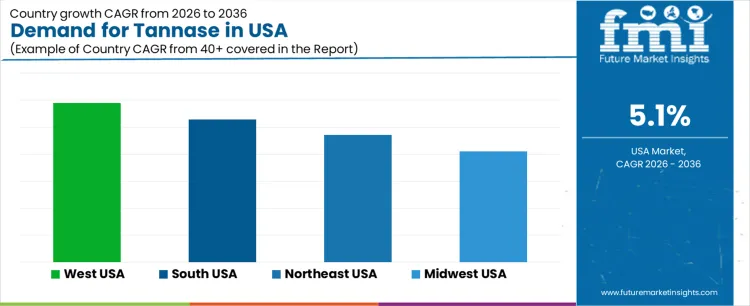
Demand for tannase in the USA is growing steadily, with West USA leading at a 5.9% CAGR, driven by its strong food and beverage industries and focus on natural ingredients. South USA follows with a 5.3% CAGR, supported by its large agricultural sector and growing beverage production. Northeast USA shows a 4.7% CAGR, fueled by its established food and beverage industries, particularly in wine, tea, and fruit juices. Midwest USA experiences a 4.1% CAGR, with moderate growth driven by its agricultural base and food processing sectors. As consumer demand for clean-label, functional, and high-quality food products increases, the demand for tannase will continue to rise across all regions.
How is Demand for Tannase Growing in West USA?
West USA leads the demand for tannase, growing at a 5.9% CAGR. The region’s strong focus on food and beverage innovation, coupled with its expanding nutraceutical and agriculture industries, is driving the adoption of tannase. States like California, Oregon, and Washington, with large agricultural sectors and vibrant food processing industries, are increasingly using tannase in applications such as the production of tea, wine, and fruit-based products. Tannase helps break down tannins, which can improve the flavor and quality of these products. West's focus on natural and clean-label ingredients is pushing demand for tannase as a safe and effective enzyme for food and beverage processing. As the region continues to innovate in food science and healthy living trends, the demand for tannase in the food and beverage sector will continue to grow, alongside the increasing popularity of functional foods and beverages.
Why is Demand for Tannase Rising in South USA?
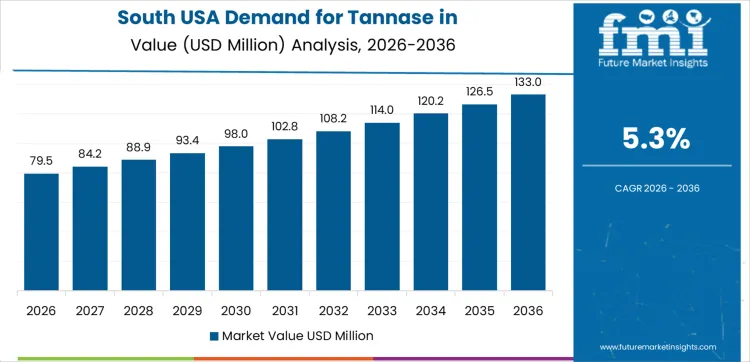
South USA is experiencing steady demand for tannase, with a 5.3% CAGR. The region’s large agricultural industry, particularly in states like Texas, Florida, and Georgia, is driving the adoption of tannase in food processing, especially in beverages like wine, fruit juices, and tea. Tannase plays a crucial role in improving the clarity and flavor of these products by breaking down tannins, which can cause bitterness and astringency. The South's expanding nutraceutical and food industries are also adopting tannase for its potential benefits in improving product quality and taste. As consumer demand for natural and clean-label food products increases, the use of tannase as an enzyme in food production will continue to rise. Demand for healthy, functional beverages increases, tannase will continue to be used to enhance flavor profiles and reduce undesirable characteristics in food and beverages.
How is Demand for Tannase Expanding in Northeast USA?
Northeast USA is seeing steady demand for tannase, with a 4.7% CAGR. The region’s well-established food and beverage industries, especially in states like New York, Pennsylvania, and New Jersey, are key drivers of this growth. Tannase is increasingly used in the production of beverages such as wine, tea, and fruit juices, where it helps reduce the bitterness and astringency caused by tannins. Demand for high-quality, clean-label, and functional foods increases, the adoption of tannase is growing. The region’s focus on improving food quality, enhancing flavor profiles, and creating healthier products is supporting this trend. As the Northeast continues to lead in food innovation, especially in beverages, demand for tannase will continue to rise, driven by the need for natural, effective solutions to improve product quality and consumer appeal.
How is Demand for Tannase Growing in Midwest USA?
Midwest USA is experiencing moderate demand for tannase, with a 4.1% CAGR. The region’s established agricultural and food processing industries, particularly in states like Michigan, Ohio, and Illinois, are driving this growth. Tannase is used to break down tannins in food and beverage products, improving flavor and clarity, especially in wine and tea production. The Midwest’s focus on enhancing the quality of agricultural products and food processing, combined with the increasing demand for functional and clean-label foods, is fueling the adoption of tannase. As more producers in the Midwest adopt innovative processing techniques and seek natural solutions for improving product taste and quality, the demand for tannase will continue to rise, particularly in the beverage industry. The region’s growing focus on healthy food trends and sustainable production methods will support the continued growth of tannase use in the coming years.
What is the Competitive Landscape of Tannase Demand in USA?
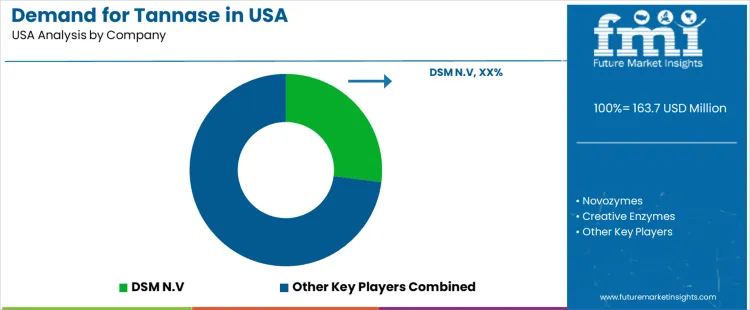
Demand for tannase in the USA is rising, particularly within industries such as food and beverages, pharmaceuticals, and cosmetics. Tannase, an enzyme used to break down tannins in various raw materials, plays a crucial role in enhancing the flavor profile of beverages like tea and wine, as well as improving the digestibility of certain foods. It is used in the pharmaceutical and cosmetic industries for its potential antioxidant and anti-inflammatory properties. As consumers continue to demand more functional and natural ingredients, the industry for tannase is expected to grow in response to these evolving trends.
DSM N.V. is a key player in the tannase industry, offering high-quality enzyme products that are widely used across various applications, including food, beverage, and biotechnology sectors. The company’s strategy focuses on providing innovative and sustainable enzyme solutions, helping to improve product formulations while meeting consumer demands for cleaner and more natural products. DSM’s extensive experience in the enzyme industry and strong commitment to R&D has positioned it as a leader in the tannase industry.
Other significant players in the industry include Creative Enzymes, GLP Bio, and Merck KGaA. Creative Enzymes specializes in providing customized enzyme solutions, including tannase, to industries looking to enhance their products’ quality and functionality. GLP Bio focuses on offering high-purity enzymes, catering to both food and industrial applications. Merck KGaA provides a broad range of enzyme products, including tannase, with a focus on innovation and quality to meet the diverse needs of their global customer base. As the demand for natural, functional ingredients continues to grow, these companies are working to innovate and deliver high-performance, sustainable tannase solutions to meet the evolving needs of various industries in the USA.
Key Players in USA Tannase Demand
- DSM N.V
- Novozymes
- Creative Enzymes
- GlpBio
- Merck KGaA
Scope of Report
| Items | Values |
|---|---|
| Quantitative Units (2026) | USD million |
| Key Segments | Microbial Sources (Bacteria, Fungi, Yeast), Plant Sources |
| End-User Industry | Food and Beverage Industry, Pharmaceutical Industry, Cosmetics and Personal Care, Agriculture and Animal Feed, Biotechnology and Research Institutions |
| Formulation Type | Liquid Tannase, Powdered Tannase |
| Key Country | USA |
| Region | West USA, South USA, Northeast USA, Midwest USA |
| Key Players Profiled | DSM N.V, Novozymes, Creative Enzymes, GlpBio, Merck KGaA |
| Additional Attributes | Dollar sales by source, end-user industry, and formulation type; regional CAGR and growth trends in Tannase demand in the USA |
USA Tannase Demand by Key Segments
Source :
- Microbial Sources (Bacteria, Fungi, Yeast)
- Plant Sources
End-User Industry :
- Food and Beverage Industry
- Pharmaceutical Industry
- Cosmetics and Personal Care
- Agriculture and Animal Feed
- Biotechnology and Research Institutions
Formulation Type :
- Liquid Tannase
- Powdered Tannase
Region :
- West USA
- South USA
- Northeast USA
- Midwest USA
Frequently Asked Questions
How big is the demand for tannase in USA in 2026?
The demand for tannase in USA is estimated to be valued at USD 163.7 million in 2026.
What will be the size of tannase in USA in 2036?
The market size for the tannase in USA is projected to reach USD 282.9 million by 2036.
How much will be the demand for tannase in USA growth between 2026 and 2036?
The demand for tannase in USA is expected to grow at a 5.1% CAGR between 2026 and 2036.
What are the key product types in the tannase in USA?
The key product types in tannase in USA are microbial sources (bacteria, fungi, yeast) and plant sources.
Which end-user industry segment is expected to contribute significant share in the tannase in USA in 2026?
In terms of end-user industry, food and beverage industry segment is expected to command 39.0% share in the tannase in USA in 2026.
Preview the report firsthand - request a free sample
Get SampleGet the brochure for pricing and purchase details.
Get PDFTable of Content
- Executive Summary
- USA Market Outlook
- Demand-side Trends
- Supply-side Trends
- Technology Roadmap Analysis
- Analysis and Recommendations
- Market Overview
- Market Coverage / Taxonomy
- Market Definition / Scope / Limitations
- Market Background
- Market Dynamics
- Drivers
- Restraints
- Opportunity
- Trends
- Scenario Forecast
- Demand in Optimistic Scenario
- Demand in Likely Scenario
- Demand in Conservative Scenario
- Opportunity Map Analysis
- Product Life Cycle Analysis
- Supply Chain Analysis
- Investment Feasibility Matrix
- Value Chain Analysis
- PESTLE and Porter’s Analysis
- Regulatory Landscape
- Regional Parent Market Outlook
- Production and Consumption Statistics
- Import and Export Statistics
- Market Dynamics
- USA Market Analysis 2020 to 2025 and Forecast, 2026 to 2036
- Historical Market Size Value (USD Million) Analysis, 2020 to 2025
- Current and Future Market Size Value (USD Million) Projections, 2026 to 2036
- Y-o-Y Growth Trend Analysis
- Absolute $ Opportunity Analysis
- USA Market Pricing Analysis 2020 to 2025 and Forecast 2026 to 2036
- USA Market Analysis 2020 to 2025 and Forecast 2026 to 2036, By Source
- Introduction / Key Findings
- Historical Market Size Value (USD Million) Analysis By Source, 2020 to 2025
- Current and Future Market Size Value (USD Million) Analysis and Forecast By Source, 2026 to 2036
- Microbial Sources (Bacteria, Fungi, Yeast)
- Plant Sources
- Y-o-Y Growth Trend Analysis By Source, 2020 to 2025
- Absolute $ Opportunity Analysis By Source, 2026 to 2036
- USA Market Analysis 2020 to 2025 and Forecast 2026 to 2036, By End-User Industry
- Introduction / Key Findings
- Historical Market Size Value (USD Million) Analysis By End-User Industry, 2020 to 2025
- Current and Future Market Size Value (USD Million) Analysis and Forecast By End-User Industry, 2026 to 2036
- Food and Beverage Industry
- Pharmaceutical Industry
- Cosmetics and Personal Care
- Agriculture and Animal Feed
- Biotechnology and Research Institutions
- Y-o-Y Growth Trend Analysis By End-User Industry, 2020 to 2025
- Absolute $ Opportunity Analysis By End-User Industry, 2026 to 2036
- USA Market Analysis 2020 to 2025 and Forecast 2026 to 2036, By Formulation Type
- Introduction / Key Findings
- Historical Market Size Value (USD Million) Analysis By Formulation Type, 2020 to 2025
- Current and Future Market Size Value (USD Million) Analysis and Forecast By Formulation Type, 2026 to 2036
- Liquid Tannase
- Powdered Tannase
- Y-o-Y Growth Trend Analysis By Formulation Type, 2020 to 2025
- Absolute $ Opportunity Analysis By Formulation Type, 2026 to 2036
- Market Structure Analysis
- Competition Dashboard
- Competition Benchmarking
- Market Share Analysis of Top Players
- By Regional
- By Source
- By End-User Industry
- By Formulation Type
- Competition Analysis
- Competition Deep Dive
- DSM N.V
- Overview
- Product Portfolio
- Profitability by Market Segments (Product/Age /Sales Channel/Region)
- Sales Footprint
- Strategy Overview
- Marketing Strategy
- Product Strategy
- Channel Strategy
- Novozymes
- Creative Enzymes
- GlpBio
- Merck KGaA
- DSM N.V
- Competition Deep Dive
- Assumptions & Acronyms Used
- Research Methodology


