

- Industry Size (2026)
- USD 2150.0 Mn
- Forecast (2036)
- USD 3637.8 Mn
- CAGR (2026 to 2036)
- 5.40%
Air Compressor Filters Market Forecast and Outlook 2026 to 2036
The air compressor filters market is like to be valued at USD 2,150.0 million in 2026, projected to reach USD 3,637.8 million by 2036, expanding at a CAGR of 5.4% during the forecast period. Market performance is shaped primarily by cost structure discipline and the ability to capture downstream value rather than by headline shipment growth. Material costs linked to advanced filter media, pleating density, and housing durability define baseline margins, while pricing power is retained by suppliers that demonstrate lower pressure drop and longer service intervals. Energy efficiency plays a decisive role in value capture, as compressed air losses translate directly into operating expenditure for end users.
Buyers show high risk aversion because filtration failure can lead to equipment damage, downtime, or compliance issues, reinforcing preference for OEM-specified and validated aftermarket filters. This behaviour creates vendor lock-in and elevates switching costs tied to compatibility and performance assurance. Between 2026 and 2036, margins concentrate with suppliers monetizing replacement cycles, energy savings, and reliability guarantees rather than competing on volume-led pricing.
Quick Stats for Air Compressor Filters Market
- Air Compressor Filters Market Value (2026): USD 2,150.0 Million
- Air Compressor Filters Market Forecast Value (2036): USD 3,637.8 Million
- Air Compressor Filters Market Forecast CAGR 2026 to 2036: 5.40%
- Leading Compressor Type in Air Compressor Filters Market: Rotary Screw
- Leading End Use in Air Compressor Filters Market: Manufacturing
- Key Growth Regions in Air Compressor Filters Market: Asia Pacific, North America, Middle East & Africa
- Top Key Players in Air Compressor Filters Market: Atlas Copco, Ingersoll Rand, Donaldson Company, Parker Hannifin, MANN+HUMMEL, Sullair (Hitachi), Kaeser Kompressoren, CompAir (Gardner Denver), FS-Curtis
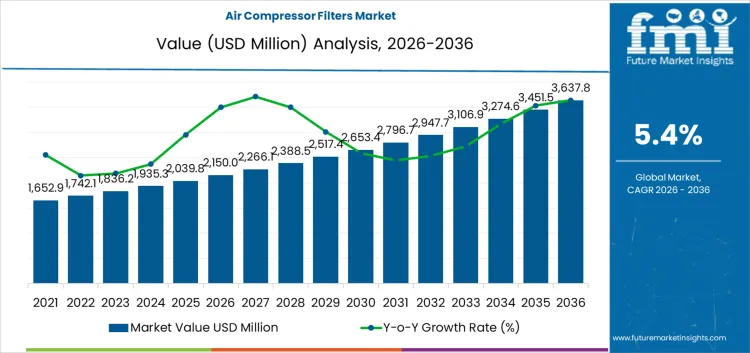
Air Compressor Filters Market Key Takeaways
| Metric | Value |
|---|---|
| Industry Value (2026) | USD 2,150.0 Million |
| Forecast Value (2036) | USD 3,637.8 Million |
| Forecast CAGR 2026 to 2036 | 5.40% |
How is the Global Air Compressor Filters Market Advancing?
The global air compressor filters market is advancing steadily, driven by rising demand for clean, reliable compressed air across industrial manufacturing, energy, food processing, pharmaceuticals, and electronics sectors. Air compressor filters are essential for removing contaminants such as oil aerosols, moisture, dust, and particulates, ensuring equipment protection, product quality, and compliance with industry standards.
A key driver supporting market growth is the increasing emphasis on operational efficiency and equipment lifespan in industrial facilities. Contaminated compressed air can lead to premature wear of pneumatic tools, corrosion of downstream equipment, and production downtime. As a result, end users are investing in high-efficiency intake, coalescing, particulate, and activated carbon filters to maintain consistent air quality and reduce maintenance costs.
Expansion of manufacturing activity and compressed air usage in emerging industrial regions is further contributing to market demand. Industries such as automotive assembly, metal fabrication, chemicals, and packaging rely heavily on compressed air systems, increasing the installed base of compressors and associated filtration components.
Technological advancements are strengthening market adoption. Improvements in filter media, pressure drop reduction, and modular filter designs are enhancing performance while lowering energy consumption. Additionally, growing adoption of preventive maintenance practices and replacement filter programs is supporting recurring demand. As industrial users continue to prioritize system reliability, product quality, and cost control, the air compressor filters market is expected to experience stable growth over the forecast period.
What is the Segment-Wise Overview of the Air Compressor Filters Market?
The air compressor filters market is shaped by dominant compressor technologies and industrial air quality requirements. Rotary screw compressors lead with a 56% share, as they are widely used in continuous-duty industrial operations that require reliable, clean compressed air. These systems generate high airflow volumes, increasing the need for efficient filtration to remove oil aerosols, moisture, and particulates. On the end-use side, manufacturing accounts for 34% of demand, driven by strict air purity requirements in production lines, automation systems, and pneumatic tools. These segments highlight a market focused on continuous-operation compressors and industrial environments where filtration performance directly impacts equipment reliability, product quality, and operational efficiency.
Why Do Rotary Screw Compressors Lead the Air Compressor Filters Market?
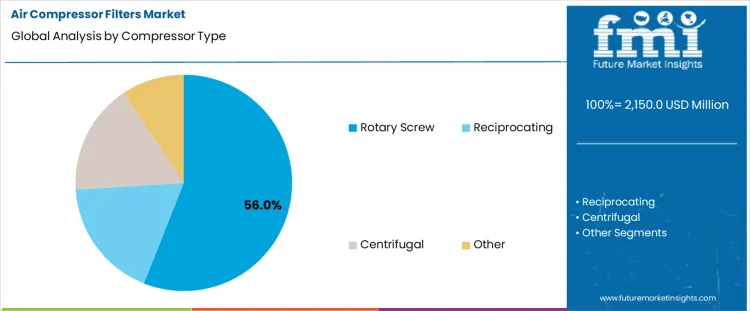
Rotary screw compressors account for 56% of demand in the air compressor filters market due to their extensive use in continuous and high-load industrial applications. These compressors operate for long hours and generate large volumes of compressed air, which increases exposure to oil mist, dust, and moisture contaminants. Effective filtration is essential to protect downstream equipment, maintain air quality, and prevent system wear. Rotary screw systems typically require multi-stage filtration, including intake, oil, and air-oil separator filters, driving higher filter consumption. Their adoption across manufacturing plants, processing facilities, and automated production lines further strengthens demand. As industries prioritize uptime, energy efficiency, and equipment longevity, rotary screw compressors continue to drive the highest requirement for advanced and reliable air filtration solutions.
How Does Manufacturing Drive Demand in the Air Compressor Filters Market?
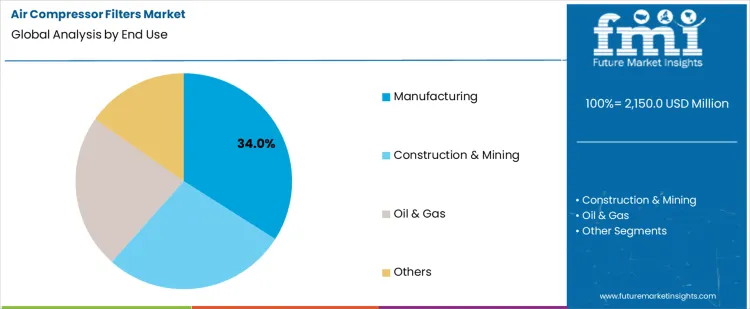
Manufacturing represents 34% of end-use demand, making it the largest application segment in the air compressor filters market. Manufacturing facilities rely heavily on compressed air for operating pneumatic machinery, robotics, material handling systems, and assembly tools. Contaminated air can lead to equipment malfunction, product defects, and unplanned downtime, making filtration a critical component of plant operations. Industries such as automotive, electronics, food processing, and general manufacturing require consistent air purity to meet quality and safety standards. Regular filter replacement is essential to maintain system efficiency and avoid pressure losses. As manufacturing operations become more automated and quality-sensitive, demand for high-performance air compressor filters continues to rise, reinforcing manufacturing as the primary end-use driver.
What Are the Key Dynamics for the Air Compressor Filters Market?
Air compressor filters remove contaminants such as dust, oil aerosols, moisture, and microorganisms from compressed air systems to protect downstream equipment and end-use processes. Key market dynamics include increasing reliance on compressed air in industries such as manufacturing, food processing, pharmaceuticals, electronics, and automotive production. Stricter quality standards for compressed air purity and rising equipment uptime requirements are reinforcing demand. Growth in industrial automation and continuous-operation production lines further increases the need for high-efficiency intake, oil, and line filters that ensure consistent pressure, reduce wear, and extend compressor service life.
Why is the Air Compressor Filters Market Growing?
The air compressor filters market is growing due to expanding industrial activity and increased awareness of the operational and financial risks associated with contaminated compressed air. Industries are recognizing that poor air quality leads to equipment damage, unplanned downtime, and compromised product quality. Regulatory and quality standards in sectors such as food and beverage, pharmaceuticals, and electronics manufacturing require controlled air purity levels, directly driving filter adoption. Growth in manufacturing capacity in emerging regions and modernization of aging compressor systems in developed markets also support demand. Rising energy costs encourage adoption of efficient filtration systems that reduce pressure drop and improve overall compressor efficiency, reinforcing sustained growth of the Air Compressor Filters Market.
How Are the Key Drivers Shaping the Air Compressor Filters Market?
Key drivers shaping the air compressor filters market include increasing industrial automation, expansion of compressed air-dependent production processes, and heightened focus on preventive maintenance strategies. Industries are investing in multi-stage filtration systems, including particulate, coalescing, and activated carbon filters, to meet specific application requirements. OEM recommendations and warranty conditions increasingly mandate the use of certified air compressor filters, strengthening replacement demand. Technological advancements such as high-efficiency filter media, extended service intervals, and real-time filter condition monitoring are improving performance and lifecycle value. The growing adoption of oil-free and high-pressure compressors further influences filter design requirements, driving innovatio.
What is the Growth Outlook for the Air Compressor Filters Market by Country?
| Country | CAGR (%) |
|---|---|
| India | 6.8% |
| Vietnam | 6.4% |
| Indonesia | 6.1% |
| Mexico | 5.7% |
| Saudi Arabia | 5.2% |
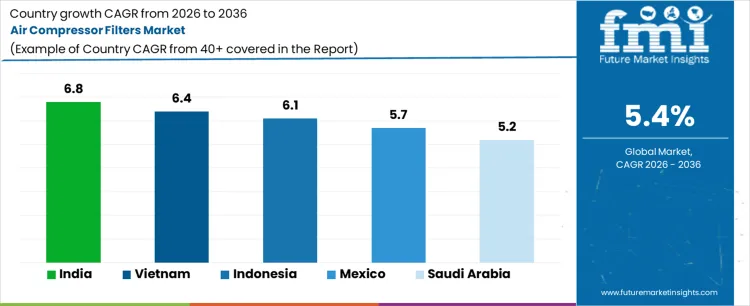
The air compressor filters market is expanding steadily as industries prioritize equipment reliability and air quality control. India leads with a 6.8% CAGR, supported by manufacturing expansion and preventive maintenance adoption. Vietnam follows at 6.4%, driven by export-oriented industrial growth and humidity-related filtration needs. Indonesia grows at 6.1%, supported by heavy industry and infrastructure activity. Mexico records 5.7% growth, reflecting stable demand from automotive and electronics manufacturing. Saudi Arabia expands at 5.2%, driven by dust-intensive industrial environments and infrastructure development. As compressed air systems remain essential across industries, demand for efficient and reliable filtration solutions is expected to remain consistent across these regions.
Why is the Air Compressor Filters Market Growing Steadily in India?
The air compressor filters market in India is growing at a CAGR of 6.8%, driven by expanding industrial activity and rising awareness of equipment efficiency and reliability. Growth in manufacturing sectors such as automotive, pharmaceuticals, food processing, and electronics is increasing usage of compressed air systems that require effective filtration. Dust-heavy operating environments and high ambient humidity levels create strong demand for intake, oil, and line filters to protect compressors and downstream equipment. Industrial users are focusing on reducing maintenance costs and avoiding unplanned downtime, which supports replacement demand for high-quality filter elements. Expansion of small and mid-sized manufacturing units across industrial corridors is also strengthening market uptake. Adoption of energy-efficient compressors is indirectly increasing demand for advanced filtration systems that maintain airflow quality. As industrial production continues to scale, demand for air compressor filters in India is expected to rise consistently.
What Factors Are Supporting Air Compressor Filters Market Expansion in Vietnam?
The air compressor filters market in Vietnam is expanding at a CAGR of 6.4%, supported by rapid industrialization and growth of export-oriented manufacturing. Expansion of electronics assembly, food processing, textiles, and industrial parks is driving higher deployment of compressed air systems. Manufacturers are prioritizing air quality control to meet export standards and protect sensitive production equipment. Humid climatic conditions increase moisture contamination risks, reinforcing demand for air dryers and filtration solutions. Industrial operators are also focusing on extending compressor service life and improving operational stability, which supports regular filter replacement cycles. Rising labor costs are pushing factories toward automation, further increasing reliance on compressed air systems. Local availability of replacement filters and growing awareness of preventive maintenance practices are strengthening adoption. As Vietnam continues to attract foreign manufacturing investment, demand for air compressor filters is expected to grow steadily.
What is Driving Demand for Air Compressor Filters in Indonesia?
The air compressor filters market in Indonesia is growing at a CAGR of 6.1%, driven by expansion of manufacturing, mining, and processing industries. Compressed air plays a critical role in cement plants, metal processing, food manufacturing, and packaging operations across the country. High dust levels and variable air quality increase the need for efficient intake and line filtration to prevent equipment damage. Industrial operators are increasingly focusing on reducing energy losses caused by clogged or inefficient filters. Growth of industrial estates and infrastructure projects is further increasing deployment of compressors and related filtration systems. Maintenance-driven demand remains strong as operators seek to avoid costly shutdowns. Adoption of standardized maintenance schedules across large facilities is improving replacement rates. As Indonesia strengthens its industrial base, demand for reliable air compressor filtration solutions is expected to increase steadily.
What is Influencing Air Compressor Filters Market Growth in Mexico?
The air compressor filters market in Mexico is expanding at a CAGR of 5.7%, supported by its role as a manufacturing hub for automotive, electronics, and industrial goods. Production facilities supplying export markets require consistent compressed air quality to meet quality and safety standards. Dusty operating environments and continuous production cycles increase the need for effective filtration systems. Manufacturers are focusing on improving equipment uptime and controlling maintenance expenses, which supports steady replacement demand. Growth of industrial clusters and supplier ecosystems near export corridors is also increasing compressor installations. Energy efficiency initiatives within factories are encouraging use of clean air systems that reduce pressure losses. Availability of aftermarket filter suppliers supports accessibility and competitive pricing. As Mexico continues to strengthen its manufacturing footprint, demand for air compressor filters is expected to grow at a stable pace.
Why is the Air Compressor Filters Market Developing Gradually in Saudi Arabia?
The air compressor filters market in Saudi Arabia is growing at a CAGR of 5.2%, driven by industrial expansion and harsh operating environments. Oil & gas facilities, petrochemical plants, construction sites, and industrial processing units rely heavily on compressed air systems. High dust levels and extreme temperatures increase filter loading, creating frequent replacement requirements. Industrial operators prioritize filtration to protect compressors and downstream pneumatic tools from contamination-related failures. Expansion of industrial zones and infrastructure projects is supporting new compressor installations. Focus on operational reliability and safety standards reinforces adoption of quality filtration systems. Preventive maintenance practices are increasingly emphasized to reduce downtime in continuous-process industries. As Saudi Arabia continues to expand its industrial and infrastructure base, demand for air compressor filters is expected to grow steadily.
How Are Companies Competing in the Air Compressor Filters Market?
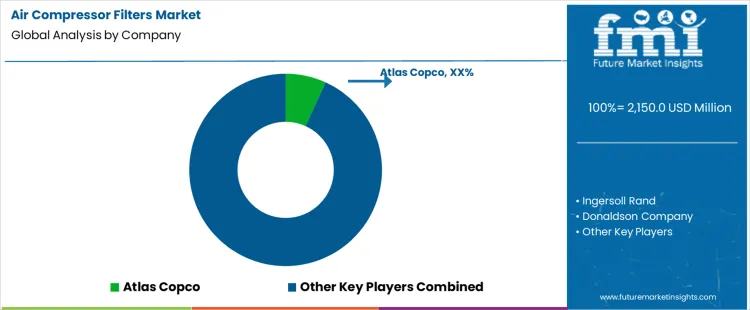
Competition in the air compressor filters market is driven by filtration efficiency, pressure drop management, service life, and the ability to protect downstream equipment across industrial, manufacturing, and process applications. Compressor filters play a critical role in removing oil aerosols, particulates, moisture, and contaminants that can damage pneumatic tools, compromise product quality, or increase maintenance costs. Companies compete on multi-stage filtration performance, media technology, compatibility with different compressor types, and ease of replacement. Differentiation increasingly centers on lowering total cost of ownership through longer filter life, energy efficiency, and consistent compressed air quality.
Atlas Copco, Ingersoll Rand, Kaeser Kompressoren, Sullair (Hitachi), CompAir (Gardner Denver), and FS-Curtis lead competition through integrated compressor and filtration portfolios. These companies bundle filters with compressors and air treatment systems, ensuring optimized performance and validated compatibility. Atlas Copco and Kaeser differentiate with high-efficiency coalescing and particulate filters designed to minimize pressure loss while meeting stringent air quality standards. Ingersoll Rand and Sullair leverage global service networks and OEM-certified consumables to maintain performance consistency over the compressor lifecycle.
Donaldson Company, Parker Hannifin, MANN+HUMMEL, and regional aftermarket brands compete through filtration specialization, media innovation, and cross-platform compatibility. Donaldson and MANN+HUMMEL differentiate with advanced filter media engineered for high dust-holding capacity and fine aerosol removal. Parker Hannifin competes through broad industrial filtration expertise and modular filter solutions adaptable across compressor brands. Regional aftermarket brands compete on cost and availability, offering replacement filters for installed bases. Across the market, competitive advantage is defined by filtration reliability, low pressure drop, long service intervals, and the ability to deliver consistent compressed air quality across diverse operating conditions.
Key Players in Air Compressor Filters Market
- Atlas Copco
- Ingersoll Rand
- Donaldson Company
- Parker Hannifin
- MANN+HUMMEL
- Sullair (Hitachi)
- Kaeser Kompressoren
- CompAir (Gardner Denver)
- FS-Curtis
- Regional Aftermarket Brands
Scope of Report
| Attributes | Description |
|---|---|
| Quantitative Unit (2026) | USD Million |
| Compressor Type | Rotary Screw, Reciprocating, Centrifugal, Other |
| End Use | Manufacturing, Construction & Mining, Oil & Gas, Others |
| Regions Covered | Asia Pacific, Europe, North America, Latin America, Middle East & Africa |
| Countries Covered | China, Japan, South Korea, India, Australia & New Zealand, ASEAN, Rest of Asia Pacific, Germany, United Kingdom, France, Italy, Spain, Nordic, BENELUX, Rest of Europe, United States, Canada, Mexico, Brazil, Chile, Rest of Latin America, Kingdom of Saudi Arabia, Other GCC Countries, Turkey, South Africa, Other African Union, Rest of Middle East & Africa |
| Key Companies Profiled | Atlas Copco, Ingersoll Rand, Donaldson Company, Parker Hannifin, MANN+HUMMEL, Sullair (Hitachi), Kaeser Kompressoren, CompAir (Gardner Denver), FS-Curtis, Regional Aftermarket Brands |
| Additional Attributes | Dollar sales by compressor type and end use; regional market size and forecast analysis; growth outlook across major regions; adoption trends for air compressor filtration solutions; assessment of air quality standards, maintenance cycles, and demand patterns across manufacturing, construction, mining, and oil & gas applications. |
Air Compressor Filters Market by Key Segments
Compressor Type
- Rotary Screw
- Reciprocating
- Centrifugal
- Other
End Use
- Manufacturing
- Construction & Mining
- Oil & Gas
- Others
Region
- Asia Pacific
- China
- Japan
- South Korea
- India
- Australia & New Zealand
- ASEAN
- Rest of Asia Pacific
- Europe
- Germany
- United Kingdom
- France
- Italy
- Spain
- Nordic
- BENELUX
- Rest of Europe
- North America
- United States
- Canada
- Mexico
- Latin America
- Brazil
- Chile
- Rest of Latin America
- Middle East & Africa
- Kingdom of Saudi Arabia
- Other GCC Countries
- Turkey
- South Africa
- Other African Union
- Rest of Middle East & Africa
Bibliography
- International Organization for Standardization. (2023). ISO 8573-1: Compressed air — Contaminants and purity classes. ISO.
- International Organization for Standardization. (2023). ISO 8573-2 to ISO 8573-9: Compressed air — Test methods for oil, particles, water, and microorganisms. ISO.
- Compressed Air and Gas Institute. (2023). Compressed Air System Best Practices Guide: Filtration, Drying, and Air Quality Control. CAGI.
- U.S. Department of Energy. (2023). Improving Compressed Air System Performance: A Sourcebook for Industry (Updated Edition). DOE. nd Safety in Industrial Facilities. OSHA.
- McKane, A., Williams, R., & Perry, W. (2023). Energy Savings Opportunities in Industrial Compressed Air Systems. Lawrence Berkeley National Laboratory.
Frequently Asked Questions
How big is the air compressor filters market in 2026?
The global air compressor filters market is estimated to be valued at USD 2,150.0 million in 2026.
What will be the size of air compressor filters market in 2036?
The market size for the air compressor filters market is projected to reach USD 3,637.8 million by 2036.
How much will be the air compressor filters market growth between 2026 and 2036?
The air compressor filters market is expected to grow at a 5.4% CAGR between 2026 and 2036.
What are the key product types in the air compressor filters market?
The key product types in air compressor filters market are rotary screw, reciprocating, centrifugal and other.
Which end use segment to contribute significant share in the air compressor filters market in 2026?
In terms of end use, manufacturing segment to command 34.0% share in the air compressor filters market in 2026.
Preview the report firsthand - request a free sample
Get SampleGet the brochure for pricing and purchase details.
Get PDFTable of Content
- Executive Summary
- Global Market Outlook
- Demand-side Trends
- Supply-side Trends
- Technology Roadmap Analysis
- Analysis and Recommendations
- Market Overview
- Market Coverage / Taxonomy
- Market Definition / Scope / Limitations
- Market Background
- Market Dynamics
- Drivers
- Restraints
- Opportunity
- Trends
- Scenario Forecast
- Demand in Optimistic Scenario
- Demand in Likely Scenario
- Demand in Conservative Scenario
- Opportunity Map Analysis
- Product Life Cycle Analysis
- Supply Chain Analysis
- Investment Feasibility Matrix
- Value Chain Analysis
- PESTLE and Porter’s Analysis
- Regulatory Landscape
- Regional Parent Market Outlook
- Production and Consumption Statistics
- Import and Export Statistics
- Market Dynamics
- Global Market Analysis 2021 to 2025 and Forecast, 2026 to 2036
- Historical Market Size Value (USD Million) Analysis, 2021 to 2025
- Current and Future Market Size Value (USD Million) Projections, 2026 to 2036
- Y-o-Y Growth Trend Analysis
- Absolute $ Opportunity Analysis
- Global Market Pricing Analysis 2021 to 2025 and Forecast 2026 to 2036
- Global Market Analysis 2021 to 2025 and Forecast 2026 to 2036, By Compressor Type
- Introduction / Key Findings
- Historical Market Size Value (USD Million) Analysis By Compressor Type, 2021 to 2025
- Current and Future Market Size Value (USD Million) Analysis and Forecast By Compressor Type, 2026 to 2036
- Rotary Screw
- Reciprocating
- Centrifugal
- Other
- Rotary Screw
- Y-o-Y Growth Trend Analysis By Compressor Type, 2021 to 2025
- Absolute $ Opportunity Analysis By Compressor Type, 2026 to 2036
- Global Market Analysis 2021 to 2025 and Forecast 2026 to 2036, By End Use
- Introduction / Key Findings
- Historical Market Size Value (USD Million) Analysis By End Use, 2021 to 2025
- Current and Future Market Size Value (USD Million) Analysis and Forecast By End Use, 2026 to 2036
- Manufacturing
- Construction & Mining
- Oil & Gas
- Others
- Manufacturing
- Y-o-Y Growth Trend Analysis By End Use, 2021 to 2025
- Absolute $ Opportunity Analysis By End Use, 2026 to 2036
- Global Market Analysis 2021 to 2025 and Forecast 2026 to 2036, By Region
- Introduction
- Historical Market Size Value (USD Million) Analysis By Region, 2021 to 2025
- Current Market Size Value (USD Million) Analysis and Forecast By Region, 2026 to 2036
- North America
- Latin America
- Western Europe
- Eastern Europe
- East Asia
- South Asia and Pacific
- Middle East & Africa
- Market Attractiveness Analysis By Region
- North America Market Analysis 2021 to 2025 and Forecast 2026 to 2036, By Country
- Historical Market Size Value (USD Million) Trend Analysis By Market Taxonomy, 2021 to 2025
- Market Size Value (USD Million) Forecast By Market Taxonomy, 2026 to 2036
- By Country
- USA
- Canada
- Mexico
- By Compressor Type
- By End Use
- By Country
- Market Attractiveness Analysis
- By Country
- By Compressor Type
- By End Use
- Key Takeaways
- Latin America Market Analysis 2021 to 2025 and Forecast 2026 to 2036, By Country
- Historical Market Size Value (USD Million) Trend Analysis By Market Taxonomy, 2021 to 2025
- Market Size Value (USD Million) Forecast By Market Taxonomy, 2026 to 2036
- By Country
- Brazil
- Chile
- Rest of Latin America
- By Compressor Type
- By End Use
- By Country
- Market Attractiveness Analysis
- By Country
- By Compressor Type
- By End Use
- Key Takeaways
- Western Europe Market Analysis 2021 to 2025 and Forecast 2026 to 2036, By Country
- Historical Market Size Value (USD Million) Trend Analysis By Market Taxonomy, 2021 to 2025
- Market Size Value (USD Million) Forecast By Market Taxonomy, 2026 to 2036
- By Country
- Germany
- UK
- Italy
- Spain
- France
- Nordic
- BENELUX
- Rest of Western Europe
- By Compressor Type
- By End Use
- By Country
- Market Attractiveness Analysis
- By Country
- By Compressor Type
- By End Use
- Key Takeaways
- Eastern Europe Market Analysis 2021 to 2025 and Forecast 2026 to 2036, By Country
- Historical Market Size Value (USD Million) Trend Analysis By Market Taxonomy, 2021 to 2025
- Market Size Value (USD Million) Forecast By Market Taxonomy, 2026 to 2036
- By Country
- Russia
- Poland
- Hungary
- Balkan & Baltic
- Rest of Eastern Europe
- By Compressor Type
- By End Use
- By Country
- Market Attractiveness Analysis
- By Country
- By Compressor Type
- By End Use
- Key Takeaways
- East Asia Market Analysis 2021 to 2025 and Forecast 2026 to 2036, By Country
- Historical Market Size Value (USD Million) Trend Analysis By Market Taxonomy, 2021 to 2025
- Market Size Value (USD Million) Forecast By Market Taxonomy, 2026 to 2036
- By Country
- China
- Japan
- South Korea
- By Compressor Type
- By End Use
- By Country
- Market Attractiveness Analysis
- By Country
- By Compressor Type
- By End Use
- Key Takeaways
- South Asia and Pacific Market Analysis 2021 to 2025 and Forecast 2026 to 2036, By Country
- Historical Market Size Value (USD Million) Trend Analysis By Market Taxonomy, 2021 to 2025
- Market Size Value (USD Million) Forecast By Market Taxonomy, 2026 to 2036
- By Country
- India
- ASEAN
- Australia & New Zealand
- Rest of South Asia and Pacific
- By Compressor Type
- By End Use
- By Country
- Market Attractiveness Analysis
- By Country
- By Compressor Type
- By End Use
- Key Takeaways
- Middle East & Africa Market Analysis 2021 to 2025 and Forecast 2026 to 2036, By Country
- Historical Market Size Value (USD Million) Trend Analysis By Market Taxonomy, 2021 to 2025
- Market Size Value (USD Million) Forecast By Market Taxonomy, 2026 to 2036
- By Country
- Kingdom of Saudi Arabia
- Other GCC Countries
- Turkiye
- South Africa
- Other African Union
- Rest of Middle East & Africa
- By Compressor Type
- By End Use
- By Country
- Market Attractiveness Analysis
- By Country
- By Compressor Type
- By End Use
- Key Takeaways
- Key Countries Market Analysis
- USA
- Pricing Analysis
- Market Share Analysis, 2025
- By Compressor Type
- By End Use
- Canada
- Pricing Analysis
- Market Share Analysis, 2025
- By Compressor Type
- By End Use
- Mexico
- Pricing Analysis
- Market Share Analysis, 2025
- By Compressor Type
- By End Use
- Brazil
- Pricing Analysis
- Market Share Analysis, 2025
- By Compressor Type
- By End Use
- Chile
- Pricing Analysis
- Market Share Analysis, 2025
- By Compressor Type
- By End Use
- Germany
- Pricing Analysis
- Market Share Analysis, 2025
- By Compressor Type
- By End Use
- UK
- Pricing Analysis
- Market Share Analysis, 2025
- By Compressor Type
- By End Use
- Italy
- Pricing Analysis
- Market Share Analysis, 2025
- By Compressor Type
- By End Use
- Spain
- Pricing Analysis
- Market Share Analysis, 2025
- By Compressor Type
- By End Use
- France
- Pricing Analysis
- Market Share Analysis, 2025
- By Compressor Type
- By End Use
- India
- Pricing Analysis
- Market Share Analysis, 2025
- By Compressor Type
- By End Use
- ASEAN
- Pricing Analysis
- Market Share Analysis, 2025
- By Compressor Type
- By End Use
- Australia & New Zealand
- Pricing Analysis
- Market Share Analysis, 2025
- By Compressor Type
- By End Use
- China
- Pricing Analysis
- Market Share Analysis, 2025
- By Compressor Type
- By End Use
- Japan
- Pricing Analysis
- Market Share Analysis, 2025
- By Compressor Type
- By End Use
- South Korea
- Pricing Analysis
- Market Share Analysis, 2025
- By Compressor Type
- By End Use
- Russia
- Pricing Analysis
- Market Share Analysis, 2025
- By Compressor Type
- By End Use
- Poland
- Pricing Analysis
- Market Share Analysis, 2025
- By Compressor Type
- By End Use
- Hungary
- Pricing Analysis
- Market Share Analysis, 2025
- By Compressor Type
- By End Use
- Kingdom of Saudi Arabia
- Pricing Analysis
- Market Share Analysis, 2025
- By Compressor Type
- By End Use
- Turkiye
- Pricing Analysis
- Market Share Analysis, 2025
- By Compressor Type
- By End Use
- South Africa
- Pricing Analysis
- Market Share Analysis, 2025
- By Compressor Type
- By End Use
- USA
- Market Structure Analysis
- Competition Dashboard
- Competition Benchmarking
- Market Share Analysis of Top Players
- By Regional
- By Compressor Type
- By End Use
- Competition Analysis
- Competition Deep Dive
- Atlas Copco
- Overview
- Product Portfolio
- Profitability by Market Segments (Product/Age /Sales Channel/Region)
- Sales Footprint
- Strategy Overview
- Marketing Strategy
- Product Strategy
- Channel Strategy
- Ingersoll Rand
- Donaldson Company
- Parker Hannifin
- MANN+HUMMEL
- Sullair (Hitachi)
- Kaeser Kompressoren
- CompAir (Gardner Denver)
- FS-Curtis
- Regional Aftermarket Brands
- Atlas Copco
- Competition Deep Dive
- Assumptions & Acronyms Used
- Research Methodology


