

- Market Size (2026)
- USD 193.8 Mn
- Forecast (2036)
- USD 337.4 Mn
- CAGR (2026 to 2036)
- 5.7%
Bio-Based Brake Fluid Formulation Components Market Size, Market Forecast and Outlook By FMI
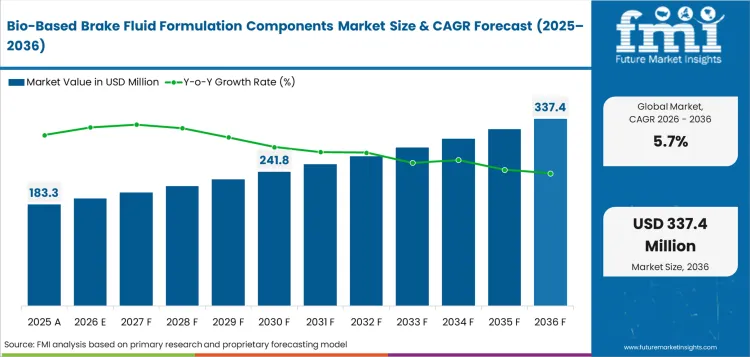
Bio-based brake fluid formulation components market size stood at USD 183.3 million in 2025. Industry revenue is anticipated to scale to USD 193.8 million in 2026 and forecast to rise to USD 337.4 million by 2036 at 5.7% CAGR. Passenger cars are projected to represent 58.2% share of end use in 2026. Service fill is expected to hold 52.4% share of vehicle channel in 2026.
Summary of Bio-Based Brake Fluid Formulation Components Market
- Demand and Growth Drivers
- Brake fluid rules keep performance thresholds fixed, so bio-based inputs must work as drop-in ingredients.
- Low viscosity DOT 4 demand creates interest in glycol ether blends suited for electronic brake control systems.
- Service fill channels create recurring demand as workshops replace fluid during scheduled maintenance.
- Product and Segment View
- Passenger cars are projected to account for 58.2% share in 2026 due to routine service keeping fluid replacement active.
- Service fill is expected to capture 52.4% share in 2026, led by aftermarket workshops handling replacement cycles.
- Glycol ethers are forecast to represent 41.7% share in 2026 since they control solvency and low temperature flow.
- Geography and Competitive Outlook
- China is projected at 7.2% CAGR by 2036, driven by vehicle output and new energy vehicle sales widening the service pool.
- India is expected to expand at 6.8% CAGR by 2036 as two-wheeler and passenger vehicle volumes rise.
- Companies such as BASF SE and Dow Inc. anchor supply through certified mass balance chemical routes for fluid raw materials.
- Analyst Opinion
- Nikhil Kaitwade, Principal Consultant for Industrial Automation at FMI, observes, “Brake fluid components require more than market claims to become bio-based. Formulators need the same boiling point window and low temperature flow, already trusted by workshops. Real gains will come from mass balance glycols and hazard label reduced additive systems that fit existing DOT 3, DOT 4 and DOT 5.1 routes. Suppliers able to document feedstock traceability and pass familiar brake fluid tests will be better placed than firms selling generic bio-solvent claims.”
- Bio-Based Brake Fluid Formulation Components Market Value Analysis
- Bio-based brake fluid formulation component value is moving from basic fluid blending inputs toward renewable glycol ether and ester chemistry.
- Manufacturer spending depends on brake fluid stability as vehicle platforms need heat resistance with lower fossil-based content.
- Supplier value is influenced by moisture control and corrosion performance since brake systems need dependable fluid behavior over service life.
- Aftermarket and original equipment channels create repeat demand as service intervals keep brake fluid replacement active across vehicle fleets.
Key Takeaways, Market Size, and Forecast
- The bio-based brake fluid formulation components market was valued at USD 183.3 million in 2025.
- Industry value is expected to reach USD 337.4 million by 2036 as low hazard brake fluid chemistry gains attention.
- From 2026 to 2036, the sector is poised to expand at 5.7% CAGR.
- Industry revenue is forecast to create incremental opportunity of USD 143.6 million from 2026 to 2036.
- Passenger cars are projected to account for 58.2% share of end use in 2026.
- Service fill is expected to represent 52.4% share of vehicle channel in 2026.
- China is anticipated to grow at 7.2% CAGR, followed by India at 6.8% CAGR by 2036.
Bio-based brake fluid suppliers are required to meet cold performance standards before renewable content earns approval. In April 2024, European Patent Office record EP4168518B1 described a low viscosity functional fluid with viscosity below 800 cSt at -40°C and ERBP of at least 255°C. ROWE’s February 2025 HIGHTEC Brake Fluid DOT 4 LV sheet listed 700 mm²/s viscosity at -40°C with 265°C ERBP and 170°C wet ERBP. Eurol’s March 2026 DOT 4 LV sheet stated that the fluid is recommended for ABS, ESP and ASR braking systems. The same sheet states that the fluid is not aggressive toward seals, brake hoses or sealing rings. ISCC PLUS documents revised in November 2025 strengthen traceability and mass balance expectations for bio-based feedstock claims. Qualification will favor suppliers able to prove low temperature flow, system compatibility and certified sourcing in one formulation package.
Bio-Based Brake Fluid Formulation Components Market Definition
Bio-based brake fluid formulation components are renewable, bio-circular or mass balance chemical inputs used to make hydraulic brake fluids. Scope covers bio glycols and glycol ethers. Borate esters and corrosion control packages are included as performance ingredients. Revenue includes ingredients sold to finished fluid blenders and packaged fluid producers. Scope focuses on components that support DOT 3, DOT 4 and DOT 5.1 performance under existing safety standards.
Bio-Based Brake Fluid Formulation Components Market Inclusions
Scope includes mass balance propylene glycol and renewable glycol ether streams. Scope covers bio-derived solvent carriers and ester modifiers used in brake fluid blends. Inhibitor packages are included if they protect metals and elastomer parts inside hydraulic systems. Low hazard DOT 4 ingredient systems and certified bio-based lubricants chemistry are counted if brake fluid performance is the target use.
Bio-Based Brake Fluid Formulation Components Market Exclusions
Scope excludes finished fossil brake fluids with no renewable or mass balance claim. Scope excludes automotive coolant unless the ingredient is sold for brake fluid use. Silicone DOT 5 fluids are excluded unless bio-based inputs form a verified part of the formulation. General hydraulic fluids and engine coolants are excluded unless the ingredient is sold for brake fluid use. General green solvent use is excluded if no brake fluid specification fit is documented.
Bio-Based Brake Fluid Formulation Components Market Research Methodology
- Primary Research: FMI analysts reviewed component selection with brake fluid blenders, additive suppliers and automotive service channel specialists.
- Desk Research: Official brake fluid standards and vehicle production data supported market checks across specialty chemicals sources.
- Market Sizing and Forecasting: Forecast values used a hybrid bottom-up model based on vehicle parc and component loading.
- Data Validation: Checks compared the 2026 value with the 2036 value and tested country rates against automotive output signals.
Why is the Bio-Based Brake Fluid Formulation Components Market Growing?
- Market growth is moving toward tested glycol ether and borate routes as brake fluid standards keep formulation choices tightly defined.
- Regulatory pressure keeps component approval strict as renewable inputs must prove heat stability and water tolerance before use.
- Service demand remains broad as hydraulic brake circuits continue to support replacement fluid needs across vehicle channels.
Brake fluid component growth will depend on proof that renewable glycols and ester additives can pass the same safety window as fossil inputs. SAE International revised J1704 in October 2025 for nonpetroleum brake fluids based on glycols and glycol ethers. Federal Motor Vehicle Safety Standard 116 requires DOT 4 fluids to meet 230°C dry and 155°C wet boiling points. Such thresholds make heat stability and water tolerance the main screening points for bio-based ingredients. Corrosion control stays important as the same rule set tests brake fluid behavior against metal parts. USA Energy Information Administration data showed electric vehicles accounted for 2.0% of registered light-duty vehicles in 2024. A broad hydraulic service pool will support gradual component substitution through DOT 4 and low viscosity blends.
Market Segmentation Analysis
- Glycol ethers are forecast to capture 41.7% share in 2026 since they define fluid solvency and cold flow behavior.
- DOT 4 is projected to account for 46.3% share in 2026 as passenger cars need higher boiling point performance.
- Service fill is expected to represent 52.4% share in 2026 through scheduled replacement across workshops.
- Mass balance is forecast to hold 48.6% share in 2026 due to suppliers able to offer lower carbon inputs with stable specs.
- Passenger cars are projected to account for 58.2% share in 2026, led by routine maintenance creates a broad replacement pool.
Segmentation is divided into five parent groups based on how chemical suppliers and brake fluid blenders specify components. Component type separates functional inputs used inside the fluid recipe. Fluid grade shows the safety standard target. Vehicle channel separates factory fill from service fill. Source route shows how renewable content is claimed. End use reflects the vehicle groups that create formulation demand.
Insights into Bio-Based Brake Fluid Formulation Components Market by Component Type
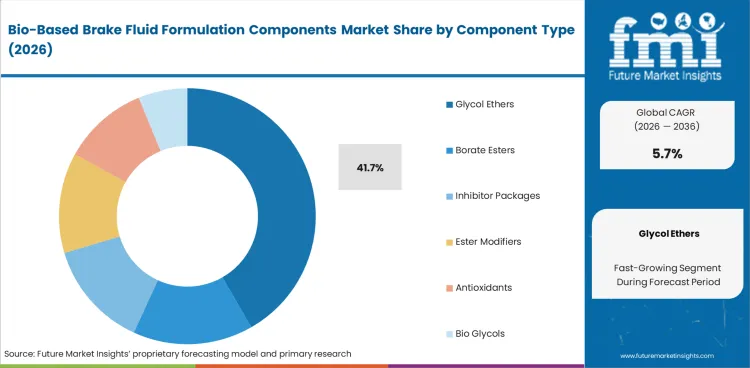
- Glycol ethers are projected to account for 41.7% share in 2026 due to such solvents carrying the main balance between boiling point and low temperature flow.
- Inhibitor packages are gaining attention led by visible sediment risk and metal corrosion tests making additive stability a direct approval factor for finished fluids.
Insights into Bio-Based Brake Fluid Formulation Components Market by Fluid Grade
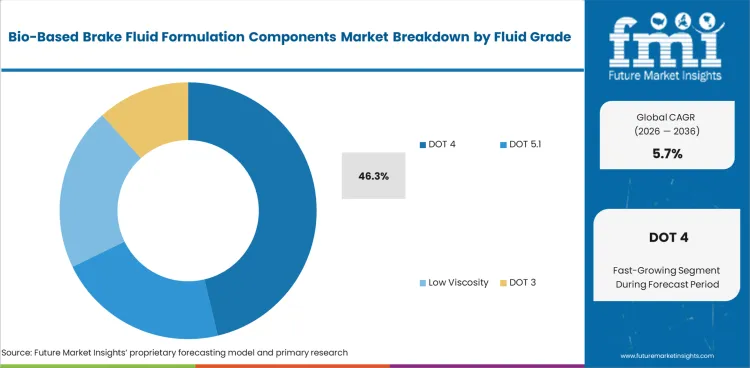
- DOT 4 is set to represent 46.3% share in 2026, influenced by passenger cars and light trucks needing higher boiling point margins than basic DOT 3 fluids.
- Low viscosity grades are rising in advanced brake control systems since electronic stability programs need faster fluid movement at low temperature.
Insights into Bio-Based Brake Fluid Formulation Components Market by Vehicle Channel
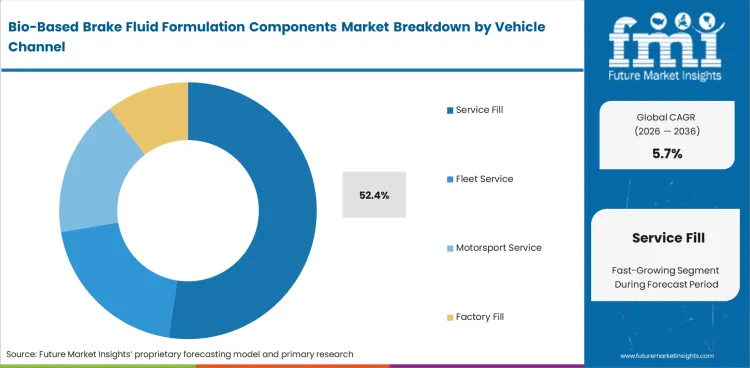
- Service fill is forecast to account for 52.4% share in 2026, driven by workshops replacing brake fluid after moisture uptake and service age reduce performance.
- Factory fill demand carries specification value as automakers need approved fluids that match seals and automotive brake valves before line approval.
Insights into Bio-Based Brake Fluid Formulation Components Market by Source Route
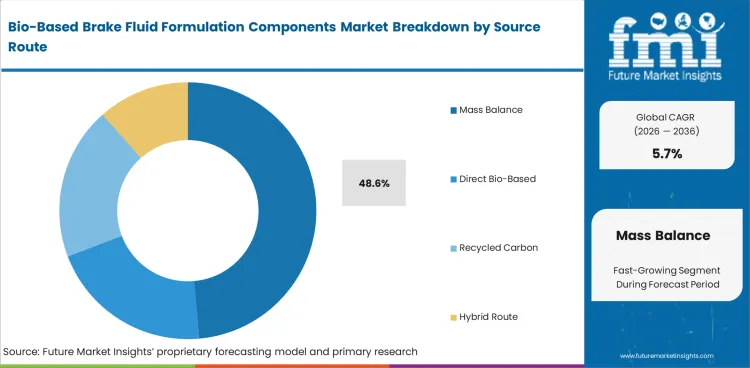
- Mass balance is projected to account for 48.6% share in 2026, led by certified feedstock allocation allowing suppliers to reduce carbon claims with no reformulation.
- Direct bio-based inputs such as global biobased propylene glycol support early premium blends in which traceable renewable origin is a selling point.
Insights into Bio-Based Brake Fluid Formulation Components Market by End Use
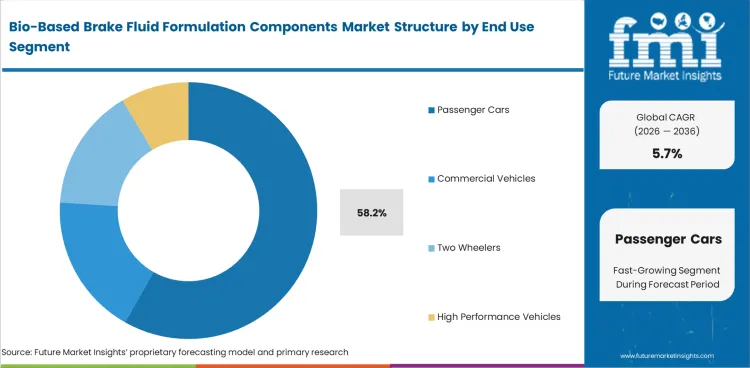
- Passenger cars are anticipated to represent 58.2% share in 2026 as large vehicle parc and regular fluid service keep volume concentrated in personal mobility.
- Commercial vehicles require durable fluid performance through higher load cycles and longer daily use making boiling point retention important for service planning.
Bio-Based Brake Fluid Formulation Components Market Drivers, Restraints and Opportunities
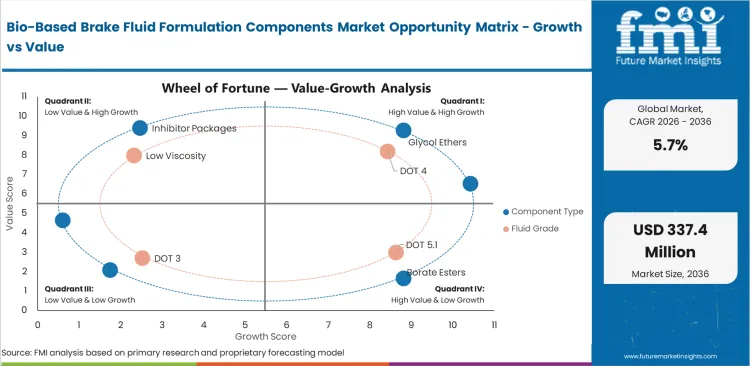
- Low viscosity DOT 4 LV transition is pushing demand toward solvent packages that keep brake response stable in cold operation.
- Bio-based adoption is restrained by seal behavior and corrosion control needs under existing brake fluid performance tests.
- Renewable glycol and ester inputs create opportunity if formulators can preserve DOT 4 LV behavior without system redesign.
Low viscosity DOT 4 LV gives component suppliers a clear growth route as brake systems rely on fast fluid movement inside electronic stability and antilock braking circuits. Kemetyl IADA’s January 2026 DOT 4 LV Class 6 technical sheet states the fluid is designed for ESP, ABS and ASR systems. The same sheet lists 750 cSt maximum viscosity at -40°C, a boiling point above 260°C and wet boiling point above 165°C. Such values show why bio-based glycols and ester modifiers must prove cold flow, seal neutrality and anti-corrosion behavior before wider blending use. Formulators that meet these thresholds can position renewable components as performance-fit inputs for DOT 4 LV fluids.
Regulatory Compliance and Operating Standards Analysis
Regulatory compliance will stay the first approval gate for bio-based brake fluid components as standards define chemistry before sustainability claims enter approval work. SAE International revised J1704 in October 2025 for nonpetroleum brake fluids based on glycols, glycol ethers and borates of glycol ethers. The same standard covers fluids used in passenger cars and trailers. Bio-based suppliers will need to prove compatibility with common brake system seals before wider use.
Technology Positioning Analysis
Technology positioning is moving toward low viscosity DOT 4 formulations that combine heat control with system protection for modern brake circuits. Daelim Enterprise launched DOT-4+ and DOT-4+LV brake fluids in October 2025, with claims around high-temperature stability and moisture resistance. The company said both products meet SAE J1704 and FMVSS 116. Competitive strength will depend on formulation depth and application fit for vehicles using advanced braking systems.
Analysis of Bio-Based Brake Fluid Formulation Components Market by Key Countries
.webp "Top Country Growth Comparison Bio Based Brake Fluid Formulation Components Market Cagr (2026 2036)")
| Country | CAGR |
|---|---|
| China | 7.2% |
| India | 6.8% |
| South Korea | 6.1% |
| Germany | 5.9% |
| Japan | 5.5% |
| United States | 5.2% |
| Brazil | 4.8% |
Source: Future Market Insights, 2026.
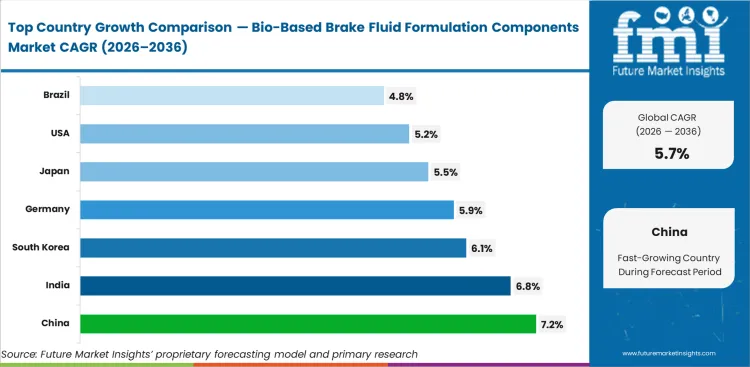
Bio-Based Brake Fluid Formulation Components Market CAGR Analysis by Country
- China is set to record 7.2% CAGR by 2036, led by vehicle output and new energy vehicle scale widening brake fluid service needs.
- India is expected to expand at 6.8% CAGR by 2036 due to passenger vehicles and two wheelers lifting service fluid volumes.
- South Korea is forecast to grow at 6.1% CAGR by 2036 through export led production keeping component approval needs active.
- Germany is expected to advance at 5.9% CAGR by 2036 with electric vehicle output influencing higher grade fluid requirements.
- Japan is projected to rise at 5.5% CAGR by 2036 as hybrid vehicles keep hydraulic brake systems central.
- United States is forecast at 5.2% CAGR by 2036, influenced by strict brake fluid rules supporting qualified component suppliers.
- Brazil is expected to post 4.8% CAGR by 2036 since vehicle production recovery and electrified models support gradual uptake.
Country performance stays close to the global rate as brake fluid chemistry changes slowly under safety rules. China and India track above the global pace due to scale and vehicle service growth. South Korea and Germany gain from export oriented vehicle production. Japan and the United States grow at measured rates as replacement demand is steady but tightly specified.
Demand Outlook for Bio-Based Brake Fluid Formulation Components in China
Demand in China is poised to record 7.2% CAGR by 2036, driven by vehicle output giving formulators a wide service pool. National data released in January 2026 showed 2025 auto production at 34.5 million units and sales at 34.4 million units. New energy vehicle sales reached 16.5 million units in the same year. High vehicle output gives brake fluid suppliers scale for DOT 4 and low viscosity blends.
- China’s vehicle output supports high component volume for service fill and factory fill programs.
- New energy vehicle scale keeps hydraulic brake fluid needs relevant inside electrified platforms.
- Local blending capacity favors suppliers with traceable mass balance feedstock and stable cold flow data.
Demand Analysis of Bio-Based Brake Fluid Formulation Components in India
Industry in India is set to rise at 6.8% CAGR by 2036 due to vehicle parc expansion influencing fluid replacement demand. Industry data for calendar 2025 showed total vehicle production of 33.2 million units across key categories. Passenger vehicle sales reached 4.5 million units during the same period. Two wheeler scale adds volume for DOT 3 and DOT 4 service fluids.
- Passenger car growth supports premium DOT 4 blending in urban service channels.
- Two-wheeler servicing keeps lower grade fluid packages relevant for cost sensitive repair shops.
- Local fluid packers can gain from bio-based claims if performance and price stay practical.
Sales Outlook for Bio-Based Brake Fluid Formulation Components in South Korea
Sales in South Korea are forecast to grow at 6.1% CAGR by 2036, led by vehicle exports keeping local component standards demanding. Korea’s industry ministry reported 2025 automobile exports of USD 72.0 billion and production of 4.1 million units. Eco-friendly vehicle sales reached 813,000 units in the domestic market. Export exposure pushes fluid suppliers toward documented specifications.
- Export programs favor ingredients satisfying overseas brake fluid rules without formula changes.
- Eco-friendly vehicle growth creates interest in low hazard components used in maintenance fluids.
- Domestic automakers can test mass balance chemistry through approved supplier networks.
Growth Outlook for Bio-Based Brake Fluid Formulation Components in Germany
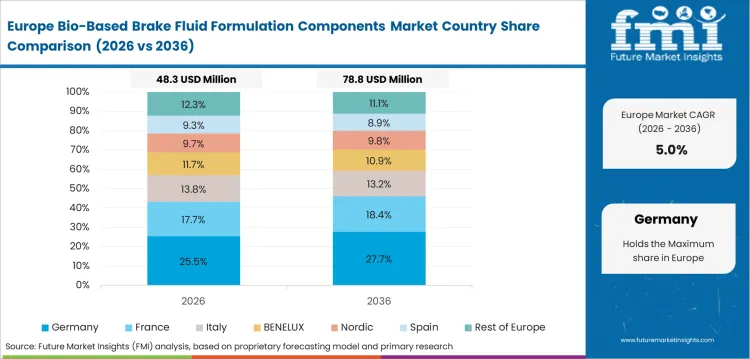
Sector in Germany is expected to advance at 5.9% CAGR by 2036, influenced by electric vehicle production increasing demand for advanced fluids. German automotive association data released in January 2026 showed 4.15 million domestic passenger cars produced in 2025. Electric car registrations reached 856,600 units in the same year. Fluid suppliers gain from low viscosity and high boiling point specifications.
- Electric car production supports fluid programs tied to regenerative braking and electronic control systems.
- German workshops favor documented products that meet familiar DOT and International Organization for Standardization classes.
- Certified mass balance feedstock fits automakers seeking lower product carbon footprints in existing chemistry.
Industry Outlook for Bio-Based Brake Fluid Formulation Components in Japan
The market in Japan is projected to scale at 5.5% CAGR by 2036, reflected by hybrid vehicles keeping hydraulic brake systems important. International Energy Agency analysis for 2026 noted electric car sales in Japan stayed just above 100,000 units in 2025. Conventional hybrid vehicles accounted for around one third of car sales. Hybrid strength supports brake fluid service instead of a rapid switch to new fluid architectures.
- Hybrid vehicle use keeps glycol-based brake fluid relevant across mainstream passenger cars.
- Long vehicle ownership supports replacement demand as fluid absorbs moisture over time.
- Japanese suppliers will screen bio-based claims against low moisture uptake and seal compatibility.
Demand Outlook for Bio-Based Brake Fluid Formulation Components in the United States
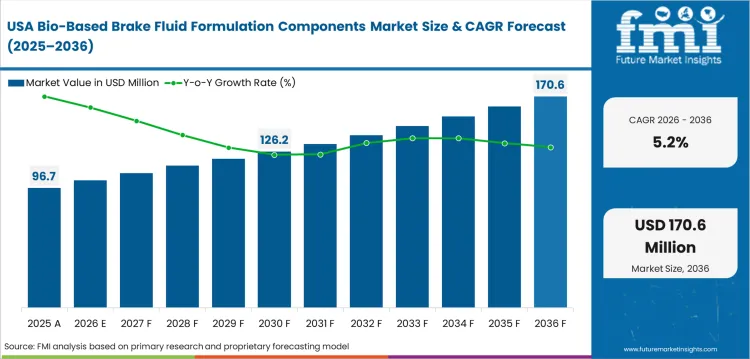
Demand in the United States is predicted to post 5.2% CAGR by 2036 as safety rules make component approval strict. Federal brake fluid rules were last updated in the electronic Code of Federal Regulations on May 18, 2026. DOT 4 fluids must meet at least 230 degrees celsius dry boiling point. Standards clarity favors suppliers with strong test data and stable additive packages.
- Federal performance rules make boiling point and low temperature viscosity non-negotiable for new ingredients.
- Workshops create recurring service fill demand as passenger cars and light trucks age.
- Recall scrutiny raises attention on filtration and additive stability in packaged fluid lots.
Sales Analysis of Bio-Based Brake Fluid Formulation Components in Brazil
Sales in Brazil are anticipated to garner 4.8% CAGR by 2036 since vehicle output recovery creates a gradual opening for bio-based fluids. International Energy Agency analysis reported electric car sales in Brazil rose 40 percent in 2025. Electrified adoption is moderate as compared to China or Europe but the service pool is broad. Component suppliers will likely enter through premium service fluids first.
- Vehicle production recovery gives local blenders a larger base for component substitution.
- Electrified model growth supports low viscosity fluid trials in higher value service channels.
- Cost sensitivity means mass balance components need clear performance proof before broad use.
Competitive Landscape and Strategic Positioning
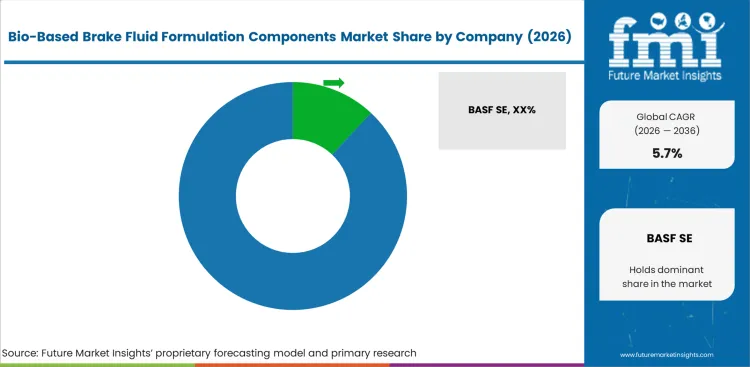
- Glycol and ether suppliers hold an advantage when renewable or mass balance feedstock is backed by stable impurity control.
- Additive suppliers compete on corrosion protection and elastomer fit, with low temperature performance shaping approval in brake fluid recipes.
- Bio-based ester suppliers gain value when traceable renewable content supports premium formulation claims.
Competition outlook in the sector is focused on suppliers combining renewable chemistry with proven brake fluid performance. BASF SE and Dow Inc. bring mass balance routes able to support future glycol and ether supply. Clariant AG stands out in low hazard DOT 4 formulation work. Emery Oleochemicals and CovationBio PDO add renewable ester and bio glycol options for adjacent functional fluid needs.
Smaller suppliers can secure selected formulation roles but approval barriers limit broader brake fluid participation. Automakers and fluid blenders will favor companies that provide test records and certification evidence in one support package. Lubricant additive specialists can gain ground by connecting corrosion control with renewable solvent systems. Companies with scale and clear documentation are best placed to secure repeat formulation programs.
Key Companies in the Bio-Based Brake Fluid Formulation Components Market
Competitive structure is differentiated by glycol and ether suppliers, formulation additive suppliers and bio-based component suppliers.
- Glycol and Ether Suppliers: BASF SE, Dow Inc. and Eastman Chemical Company supply core solvent or intermediate chemistry for brake fluid formulations.
- Formulation Additive Suppliers: Clariant AG and LANXESS AG support performance packages used for corrosion control and fluid stability.
- Bio-Based Component Suppliers: CovationBio PDO and Emery Oleochemicals supply renewable functional inputs relevant to fluid formulation work.
Competitive Benchmarking: Bio-Based Brake Fluid Formulation Components Market
| Company | Renewable Feedstock Access | Brake Fluid Formulation Fit | Standards Documentation Support | Geographic Footprint |
|---|---|---|---|---|
| BASF SE | High | Strong | Strong | Global |
| Dow Inc. | High | Medium | Strong | Global |
| Clariant AG | Medium | Strong | Strong | Europe and global |
| Eastman Chemical Company | Medium | Strong | Medium | North America and global |
| LANXESS AG | Medium | Medium | Strong | Europe and global |
| CovationBio PDO | High | Medium | Medium | North America and export |
| Emery Oleochemicals | High | Medium | Medium | Europe, Asia and North America |
Source: Future Market Insights competitive analysis 2026. Ratings reflect relative positioning based on renewable feedstock access and brake fluid formulation fit.
Key Developments in Bio-Based Brake Fluid Formulation Components Market
- In August 2025, TMD Friction’s Textar brand launched DOT 5.1 Ultimate brake fluid with improved corrosion protection and low viscosity performance.
- In January 2026, BG Products and Motorcraft expanded their partnership into Motorcraft DOT 4 LV High Performance Motor Vehicle Brake Fluid for Ford and Lincoln locations in the United States.
- In March 2026, LIQUI MOLY launched Brake Fluid 4 in 1 for workshop use, covering DOT 4, DOT 5.1, SL6 DOT 4 and DOT 5.1 LV specifications.
Key Players in the Bio-Based Brake Fluid Formulation Components Market
Glycol and Ether Suppliers
- Eastman Chemical Company
- BASF SE
- Dow Inc.
Formulation Additive and Brake Fluid Chemistry Suppliers
- Clariant AG
- LANXESS AG
Bio-Based and Renewable Functional Input Suppliers
- CovationBio PDO
- Emery Oleochemicals
Report Scope and Coverage
| Parameter | Details |
|---|---|
| Quantitative units | USD 193.8 million to USD 337.4 million, at 5.7% CAGR |
| Market definition | Renewable, bio-circular or mass balance inputs used to formulate hydraulic brake fluids |
| Component type | Bio glycols, glycol ethers, borate esters, inhibitor packages, ester modifiers, antioxidants |
| Fluid Grade | DOT 3, DOT 4, DOT 5.1, low viscosity |
| Vehicle channel | Factory fill, service fill, fleet service, motorsport service |
| Source route | Mass balance, direct bio-based, recycled carbon, hybrid route |
| End use | Passenger cars, commercial vehicles, two wheelers, high performance vehicles |
| Regions covered | North America, Latin America, Europe, East Asia, South Asia and Pacific, Middle East and Africa |
| Countries covered | China, India, South Korea, Germany, Japan, United States, Brazil, 30+ countries |
| Key companies profiled | BASF SE, Dow Inc., Clariant AG, Eastman Chemical Company, LANXESS AG, CovationBio PDO, Emery Oleochemicals |
| Forecast Period | 2026 to 2036 |
| Approach | Hybrid bottom-up and top-down methodology starting with vehicle service cycles and formulation component value |
Source: Future Market Insights, 2026.
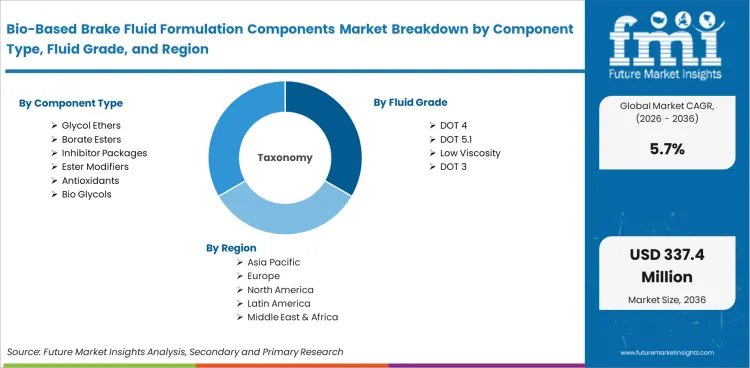
Bio-Based Brake Fluid Formulation Components Market Breakdown by Component Type, Fluid Grade, Vehicle Channel, Source Route, End Use and Region
By Component Type
- Bio Glycols
- Glycol Ethers
- Borate Esters
- Inhibitor Packages
- Ester Modifiers
- Antioxidants
By Fluid Grade
- DOT 3
- DOT 4
- DOT 5.1
- Low Viscosity
By Vehicle Channel
- Factory Fill
- Service Fill
- Fleet Service
- Motorsport Service
By Source Route
- Mass Balance
- Direct Bio-Based
- Recycled Carbon
- Hybrid Route
By End Use
- Passenger Cars
- Commercial Vehicles
- Two Wheelers
- High Performance Vehicles
By Region
- North America
- United States
- Canada
- Mexico
- Latin America
- Brazil
- Chile
- Rest of Latin America
- Europe
- Germany
- France
- United Kingdom
- Italy
- Spain
- Rest of Europe
- East Asia
- China
- Japan
- South Korea
- South Asia and Pacific
- India
- Australia
- Thailand
- Rest of South Asia and Pacific
- Middle East and Africa
- GCC Countries
- South Africa
- Rest of Middle East and Africa
Research Sources and Bibliography
- SAE International. (2025, October 23). J1704_202510: Motor vehicle brake fluid based upon glycols, glycol ethers, and the corresponding borates.
- Daelim Enterprise. (2025, October 21). Daelim Enterprise launches two high-performance brake fluids: “DOT-4+” and “DOT-4+LV”.
- LIQUI MOLY. (2026, March 24). One product, maximum compatibility: Less effort for the workshop.
- TMD Friction. (2025, August 11). Improved Textar brake fluid DOT5.1 Ultimate offers better braking performance.
- BG Products. (2026, January 15). BG Products and Motorcraft expand partnership into brake fluid.
- European Patent Office. (2024, April 24). Low viscosity functional fluid composition: EP4168518B1.
- ROWE. (2025, February 28). HIGHTEC Brake Fluid DOT 4 LV: Product information.
- Eurol B.V. (2026, March 11). Eurol Brake Fluid DOT 4 LV: Product data sheet.
- ISCC System GmbH. (2025, November 13). ISCC PLUS system structure and overview of ISCC PLUS documents: Version 1.2.
- Kemetyl IADA. (2026, January). Technical data sheet: DOT 4 LV Class 6.
- National Highway Traffic Safety Administration. (2026, May 19). 49 CFR § 571.116: Standard No. 116; motor vehicle brake fluids. Electronic Code of Federal Regulations.
- National Highway Traffic Safety Administration. (2026, April 23). Part 573 safety recall report 26E025.
- International Energy Agency. (2026). Trends in electric cars.
- Government of China. (2026, January 14). China’s auto output, sales reach new highs in 2025.
- Society of Indian Automobile Manufacturers. (2026, January 13). Auto industry performance of December 2025 and Q3 October to December 2025.
- Ministry of Trade, Industry and Resources. (2026, January 15). Automobile exports hit record high of $72 billion in 2025.
- German Association of the Automotive Industry. (2026, January 5). Passenger car production in 2025 slightly above previous year’s level.
- Dow Inc. (2025, March 17). Dow expands circular and bio-circular propylene glycol offering with ISCC PLUS certification for Map Ta Phut, Thailand facility.
- CovationBio PDO. (2024, April 30). Primient Covation LLC, operating its PDO business under the name CovationBio PDO, celebrates 20 years of scalable biobased solutions.
- Emery Oleochemicals. (2024, July 22). Emery Oleochemicals offers engineered solutions for electric vehicles.
- BASF SE. (2026, March 10). BASF introduces biomass balance polyether polyol product portfolio for the sleep products, automotive and CASE industries.
Bibliography uses government sources, official company evidence and non-commercial trade data relevant to market demand signals.
This Report Answers
- What is the current and forecast value of the bio-based brake fluid formulation components market?
- Which component type is projected to hold the leading share in 2026?
- Which fluid grade creates the clearest opportunity for bio-based input suppliers?
- Which countries are expected to record the faster growth during the forecast period?
- Which companies are active across glycol, additive and renewable component supply?
- How do brake fluid standards shape adoption of bio-based formulation components?
Frequently Asked Questions
What is the value of the Bio-Based Brake Fluid Formulation Components Market?
Bio-based brake fluid formulation components are valued at USD 193.8 million in 2026 and forecast to reach USD 337.4 million by 2036.
What CAGR is expected for the Bio-Based Brake Fluid Formulation Components Market?
Industry revenue is projected to expand at 5.7% CAGR from 2026 to 2036 as low hazard and mass balance inputs gain use.
Which component type is projected to lead the Bio-Based Brake Fluid Formulation Components Market?
Glycol ethers are projected to account for 41.7% share in 2026 as they support solvency, boiling point and cold flow needs.
Which vehicle channel is expected to lead the Bio-Based Brake Fluid Formulation Components Market?
Service fill is expected to represent 52.4% share in 2026 as workshops handle periodic replacement after moisture uptake lowers fluid performance.
Which country records the faster pace in the Bio-Based Brake Fluid Formulation Components Market?
China is projected to record 7.2% CAGR by 2036 as vehicle output and new energy vehicle scale widen service demand.
Who are key companies in the Bio-Based Brake Fluid Formulation Components Market?
BASF SE and Dow Inc. are some of the key suppliers. Clariant AG and Eastman Chemical Company compete here as well. LANXESS AG, CovationBio PDO and Emery Oleochemicals hold relevant positions.
Preview the report firsthand - request a free sample
Get SampleGet the brochure for pricing and purchase details.
Get PDFTable of Content
- Key Takeaways
- Market Size and CAGR
- Top Growth Driver
- Fastest Growing Segment
- Leading Region
- Key Companies
- Emerging Opportunities
- Executive Summary
- Global Market Outlook
- Demand-side Trends
- Supply-side Trends
- Technology Roadmap Analysis
- Analysis and Recommendations
- Analyst Perspective (What is happening? Why now? What should investors know?)
- Key Questions Answered
- How large is the market?
- What is the CAGR?
- What are key trends?
- Which region dominates?
- Who are the leaders?
- Market Overview
- Market Coverage / Taxonomy
- Market Definition / Scope / Limitations
- Research Methodology
- Chapter Orientation
- Analytical Lens and Working Hypotheses
- Market Structure, Signals, and Trend Drivers
- Benchmarking and Cross-market Comparability
- Market Sizing, Forecasting, and Opportunity Mapping
- Research Design and Evidence Framework
- Desk Research Programme (Secondary Evidence)
- Expert Input and Fieldwork (Primary Evidence)
- Tooling, Models, and Reference Databases
- Data Engineering and Model Build
- Quality Assurance and Audit Trail
- Market Background
- Market Dynamics (Drivers, Restraints, Opportunity, Trends)
- Scenario Forecast (Optimistic, Likely, Conservative)
- Impact Analysis
- AI Impact
- Sustainability Impact
- Regulatory Impact
- Technology Impact
- Consumer / Buyer Analysis
- Purchase Drivers
- Adoption Barriers
- Buyer Journey
- Opportunity Map Analysis
- Product Life Cycle Analysis
- Supply Chain Analysis
- Investment Feasibility Matrix
- Value Chain Analysis
- PESTLE and Porter's Analysis
- Regulatory Landscape
- Regional Parent Market Outlook
- Production and Consumption Statistics
- Import and Export Statistics
- Global Market Analysis and Forecast, 2021 to 2036
- Historical Market Size Value (USD Million) & Volume (Unit) Analysis, 2021 to 2025
- Current and Future Market Size Value (USD Million) & Volume (Unit) Projections, 2026 to 2036
- Y-o-Y Growth Trend Analysis
- Absolute $ Opportunity Analysis
- Global Market Pricing Analysis, 2021 to 2036
- Global Market Analysis and Forecast, By Component Type, 2021 to 2036
- Introduction / Key Findings
- Historical Market Size Value (USD Million) & Volume (Unit) Analysis By Component Type, 2021 to 2025
- Current and Future Market Size Value (USD Million) & Volume (Unit) Analysis and Forecast By Component Type, 2026 to 2036
- Glycol Ethers
- Bio Glycols
- Borate Esters
- Inhibitor Packages
- Ester Modifiers
- Antioxidants
- Glycol Ethers
- Y-o-Y Growth Trend Analysis By Component Type, 2021 to 2025
- Absolute $ Opportunity Analysis By Component Type, 2026 to 2036
- Global Market Analysis and Forecast, By Fluid Grade, 2021 to 2036
- Introduction / Key Findings
- Historical Market Size Value (USD Million) & Volume (Unit) Analysis By Fluid Grade, 2021 to 2025
- Current and Future Market Size Value (USD Million) & Volume (Unit) Analysis and Forecast By Fluid Grade, 2026 to 2036
- DOT 4
- DOT 3
- DOT 5.1
- Low Viscosity
- DOT 4
- Y-o-Y Growth Trend Analysis By Fluid Grade, 2021 to 2025
- Absolute $ Opportunity Analysis By Fluid Grade, 2026 to 2036
- Global Market Analysis and Forecast, By Vehicle Channel, 2021 to 2036
- Introduction / Key Findings
- Historical Market Size Value (USD Million) & Volume (Unit) Analysis By Vehicle Channel, 2021 to 2025
- Current and Future Market Size Value (USD Million) & Volume (Unit) Analysis and Forecast By Vehicle Channel, 2026 to 2036
- Service Fill
- Fleet Service
- Motorsport Service
- Factory Fill
- Service Fill
- Y-o-Y Growth Trend Analysis By Vehicle Channel, 2021 to 2025
- Absolute $ Opportunity Analysis By Vehicle Channel, 2026 to 2036
- Global Market Analysis and Forecast, By Source Route, 2021 to 2036
- Introduction / Key Findings
- Historical Market Size Value (USD Million) & Volume (Unit) Analysis By Source Route, 2021 to 2025
- Current and Future Market Size Value (USD Million) & Volume (Unit) Analysis and Forecast By Source Route, 2026 to 2036
- Mass Balance
- Direct Bio-Based
- Recycled Carbon
- Hybrid Route
- Mass Balance
- Y-o-Y Growth Trend Analysis By Source Route, 2021 to 2025
- Absolute $ Opportunity Analysis By Source Route, 2026 to 2036
- Global Market Analysis and Forecast, By End Use, 2021 to 2036
- Introduction / Key Findings
- Historical Market Size Value (USD Million) & Volume (Unit) Analysis By End Use, 2021 to 2025
- Current and Future Market Size Value (USD Million) & Volume (Unit) Analysis and Forecast By End Use, 2026 to 2036
- Passenger Cars
- Commercial Vehicles
- Two Wheelers
- High Performance Vehicles
- Passenger Cars
- Y-o-Y Growth Trend Analysis By End Use, 2021 to 2025
- Absolute $ Opportunity Analysis By End Use, 2026 to 2036
- Global Market Analysis and Forecast, By Region, 2021 to 2036
- Introduction
- Historical Market Size Value (USD Million) & Volume (Unit) Analysis By Region, 2021 to 2025
- Current Market Size Value (USD Million) & Volume (Unit) Analysis and Forecast By Region, 2026 to 2036
- North America
- Latin America
- Western Europe
- Eastern Europe
- East Asia
- South Asia and Pacific
- Middle East & Africa
- Market Attractiveness Analysis By Region
- North America Market Analysis and Forecast, By Country, 2021 to 2036
- Historical Market Size Value (USD Million) & Volume (Unit) Trend Analysis By Market Taxonomy, 2021 to 2025
- Market Size Value (USD Million) & Volume (Unit) Forecast By Market Taxonomy, 2026 to 2036
- By Country
- USA
- Canada
- Mexico
- By Component Type
- By Fluid Grade
- By Vehicle Channel
- By Source Route
- By End Use
- By Country
- Market Attractiveness Analysis
- By Country
- By Component Type
- By Fluid Grade
- By Vehicle Channel
- By Source Route
- By End Use
- Key Takeaways
- Latin America Market Analysis and Forecast, By Country
- Historical Market Size Value (USD Million) & Volume (Unit) Trend Analysis By Market Taxonomy, 2021 to 2025
- Market Size Value (USD Million) & Volume (Unit) Forecast By Market Taxonomy, 2026 to 2036
- By Country
- Brazil
- Chile
- Rest of Latin America
- By Component Type
- By Fluid Grade
- By Vehicle Channel
- By Source Route
- By End Use
- By Country
- Market Attractiveness Analysis
- By Country
- By Component Type
- By Fluid Grade
- By Vehicle Channel
- By Source Route
- By End Use
- Key Takeaways
- Western Europe Market Analysis and Forecast, By Country
- Historical Market Size Value (USD Million) & Volume (Unit) Trend Analysis By Market Taxonomy, 2021 to 2025
- Market Size Value (USD Million) & Volume (Unit) Forecast By Market Taxonomy, 2026 to 2036
- By Country
- Germany
- UK
- Italy
- Spain
- France
- Nordic
- BENELUX
- Rest of Western Europe
- By Component Type
- By Fluid Grade
- By Vehicle Channel
- By Source Route
- By End Use
- By Country
- Market Attractiveness Analysis
- By Country
- By Component Type
- By Fluid Grade
- By Vehicle Channel
- By Source Route
- By End Use
- Key Takeaways
- Eastern Europe Market Analysis and Forecast, By Country
- Historical Market Size Value (USD Million) & Volume (Unit) Trend Analysis By Market Taxonomy, 2021 to 2025
- Market Size Value (USD Million) & Volume (Unit) Forecast By Market Taxonomy, 2026 to 2036
- By Country
- Russia
- Poland
- Hungary
- Balkan & Baltic
- Rest of Eastern Europe
- By Component Type
- By Fluid Grade
- By Vehicle Channel
- By Source Route
- By End Use
- By Country
- Market Attractiveness Analysis
- By Country
- By Component Type
- By Fluid Grade
- By Vehicle Channel
- By Source Route
- By End Use
- Key Takeaways
- East Asia Market Analysis and Forecast, By Country
- Historical Market Size Value (USD Million) & Volume (Unit) Trend Analysis By Market Taxonomy, 2021 to 2025
- Market Size Value (USD Million) & Volume (Unit) Forecast By Market Taxonomy, 2026 to 2036
- By Country
- China
- Japan
- South Korea
- By Component Type
- By Fluid Grade
- By Vehicle Channel
- By Source Route
- By End Use
- By Country
- Market Attractiveness Analysis
- By Country
- By Component Type
- By Fluid Grade
- By Vehicle Channel
- By Source Route
- By End Use
- Key Takeaways
- South Asia and Pacific Market Analysis and Forecast, By Country
- Historical Market Size Value (USD Million) & Volume (Unit) Trend Analysis By Market Taxonomy, 2021 to 2025
- Market Size Value (USD Million) & Volume (Unit) Forecast By Market Taxonomy, 2026 to 2036
- By Country
- India
- ASEAN
- Australia & New Zealand
- Rest of South Asia and Pacific
- By Component Type
- By Fluid Grade
- By Vehicle Channel
- By Source Route
- By End Use
- By Country
- Market Attractiveness Analysis
- By Country
- By Component Type
- By Fluid Grade
- By Vehicle Channel
- By Source Route
- By End Use
- Key Takeaways
- Middle East & Africa Market Analysis and Forecast, By Country
- Historical Market Size Value (USD Million) & Volume (Unit) Trend Analysis By Market Taxonomy, 2021 to 2025
- Market Size Value (USD Million) & Volume (Unit) Forecast By Market Taxonomy, 2026 to 2036
- By Country
- Kingdom of Saudi Arabia
- Other GCC Countries
- Türkiye
- South Africa
- Other African Union
- Rest of Middle East & Africa
- By Component Type
- By Fluid Grade
- By Vehicle Channel
- By Source Route
- By End Use
- By Country
- Market Attractiveness Analysis
- By Country
- By Component Type
- By Fluid Grade
- By Vehicle Channel
- By Source Route
- By End Use
- Key Takeaways
- Key Countries Market Analysis
- USA
- Pricing Analysis
- Market Share Analysis, 2025
- By Component Type
- By Fluid Grade
- By Vehicle Channel
- By Source Route
- By End Use
- Canada
- Pricing Analysis
- Market Share Analysis, 2025
- By Component Type
- By Fluid Grade
- By Vehicle Channel
- By Source Route
- By End Use
- Mexico
- Pricing Analysis
- Market Share Analysis, 2025
- By Component Type
- By Fluid Grade
- By Vehicle Channel
- By Source Route
- By End Use
- Brazil
- Pricing Analysis
- Market Share Analysis, 2025
- By Component Type
- By Fluid Grade
- By Vehicle Channel
- By Source Route
- By End Use
- Chile
- Pricing Analysis
- Market Share Analysis, 2025
- By Component Type
- By Fluid Grade
- By Vehicle Channel
- By Source Route
- By End Use
- Germany
- Pricing Analysis
- Market Share Analysis, 2025
- By Component Type
- By Fluid Grade
- By Vehicle Channel
- By Source Route
- By End Use
- UK
- Pricing Analysis
- Market Share Analysis, 2025
- By Component Type
- By Fluid Grade
- By Vehicle Channel
- By Source Route
- By End Use
- Italy
- Pricing Analysis
- Market Share Analysis, 2025
- By Component Type
- By Fluid Grade
- By Vehicle Channel
- By Source Route
- By End Use
- Spain
- Pricing Analysis
- Market Share Analysis, 2025
- By Component Type
- By Fluid Grade
- By Vehicle Channel
- By Source Route
- By End Use
- France
- Pricing Analysis
- Market Share Analysis, 2025
- By Component Type
- By Fluid Grade
- By Vehicle Channel
- By Source Route
- By End Use
- India
- Pricing Analysis
- Market Share Analysis, 2025
- By Component Type
- By Fluid Grade
- By Vehicle Channel
- By Source Route
- By End Use
- ASEAN
- Pricing Analysis
- Market Share Analysis, 2025
- By Component Type
- By Fluid Grade
- By Vehicle Channel
- By Source Route
- By End Use
- Australia & New Zealand
- Pricing Analysis
- Market Share Analysis, 2025
- By Component Type
- By Fluid Grade
- By Vehicle Channel
- By Source Route
- By End Use
- China
- Pricing Analysis
- Market Share Analysis, 2025
- By Component Type
- By Fluid Grade
- By Vehicle Channel
- By Source Route
- By End Use
- Japan
- Pricing Analysis
- Market Share Analysis, 2025
- By Component Type
- By Fluid Grade
- By Vehicle Channel
- By Source Route
- By End Use
- South Korea
- Pricing Analysis
- Market Share Analysis, 2025
- By Component Type
- By Fluid Grade
- By Vehicle Channel
- By Source Route
- By End Use
- Russia
- Pricing Analysis
- Market Share Analysis, 2025
- By Component Type
- By Fluid Grade
- By Vehicle Channel
- By Source Route
- By End Use
- Poland
- Pricing Analysis
- Market Share Analysis, 2025
- By Component Type
- By Fluid Grade
- By Vehicle Channel
- By Source Route
- By End Use
- Hungary
- Pricing Analysis
- Market Share Analysis, 2025
- By Component Type
- By Fluid Grade
- By Vehicle Channel
- By Source Route
- By End Use
- Kingdom of Saudi Arabia
- Pricing Analysis
- Market Share Analysis, 2025
- By Component Type
- By Fluid Grade
- By Vehicle Channel
- By Source Route
- By End Use
- Türkiye
- Pricing Analysis
- Market Share Analysis, 2025
- By Component Type
- By Fluid Grade
- By Vehicle Channel
- By Source Route
- By End Use
- South Africa
- Pricing Analysis
- Market Share Analysis, 2025
- By Component Type
- By Fluid Grade
- By Vehicle Channel
- By Source Route
- By End Use
- USA
- Market Structure Analysis
- Competition Dashboard
- Competition Benchmarking
- Market Share Analysis of Top Players
- By Regional
- By Component Type
- By Fluid Grade
- By Vehicle Channel
- By Source Route
- By End Use
- Emerging Startups
- Innovation Benchmarking
- Competition Analysis
- Competition Deep Dive
- BASF SE
- Overview
- Product Portfolio
- Profitability by Market Segments (Product/Region/Sales Channel)
- Sales Footprint
- Strategy Overview
- Marketing Strategy
- Product Strategy
- Channel Strategy
- Dow Inc.
- Clariant AG
- Eastman Chemical Company
- LANXESS AG
- CovationBio PDO
- Emery Oleochemicals
- BASF SE
- Case Studies
- Success Stories
- Recent Developments
- Competition Deep Dive
- Assumptions & Acronyms Used


