

- Market Size (2026)
- USD 653.2 Mn
- Forecast (2036)
- USD 1273.0 Mn
- CAGR (2026 to 2036)
- 6.9%
Aero-Optimized Brake Cooling Deflector Components Market Size, Forecast, and Outlook By FMI
The aero-optimized brake cooling deflector components market size stood at USD 611.0 million in 2025 and is projected to cross USD 653.2 million in 2026. Industry revenue is anticipated to scale to USD 1,273.0 million by 2036 at 6.9% CAGR. By sales channel, OEM fitment is estimated to account for 78.4% share in 2026. Passenger cars are anticipated to represent 71.8% share of vehicle type in 2026.
Summary of the Aero-Optimized Brake Cooling Deflector Components Market
- Demand and Growth Drivers
- Vehicle programs are using wheel-end airflow parts to balance brake temperature and underbody drag during EV platform design.
- Automatic emergency braking rules are increasing attention on repeated stop performance under safety testing cycles.
- Battery-electric vehicle weight is pushing OEMs toward lighter deflectors that guide air without raising part count.
- Product and Segment View
- OEM fitment is projected to account for 78.4% share in 2026 through early validation at vehicle platform level.
- Passenger cars are anticipated to capture 71.8% share in 2026 as sedan and crossover programs carry most airflow parts.
- Thermoplastic components are projected to represent 46.9% share in 2026 due to weight control and repeatable molding cost.
- Geography and Competitive Outlook
- China is projected to record 8.4% CAGR by 2036 reflecting large EV production and local platform refresh cycles.
- India is expected to expand at 8.0% CAGR by 2036 through vehicle output and safety regulation raising supplier qualification needs.
- Röchling Automotive, OPmobility, FORVIA HELLA, and Magna define competition across molded aero and thermal parts.
- Analyst Opinion
- Nikhil Kaitwade, Principal Consultant for Industrial Automation at FMI, observes, “Aero-optimized brake cooling deflectors are becoming a sourcing point where safety validation and aerodynamic efficiency meet. Winners will be suppliers that deliver proven, repeatable brake cooling under emergency conditions. Sustained success hinges on molding accuracy and engineering support scaling across global platforms.”
- Aero-Optimized Brake Cooling Deflector Components Market Value Analysis
- Aero-optimized brake cooling deflector value is shifting from simple duct parts toward airflow parts built into bumper and underbody design.
- Manufacturer spending is tied to brake heat control as performance cars need cooling gains without hurting front-end aerodynamics.
- Suppliers are linking deflector quality with material strength and fit accuracy as motorsport rules shape duct placement.
- Demand is supported by performance vehicle makers and racing programs seeking repeatable brake cooling under high-load driving.
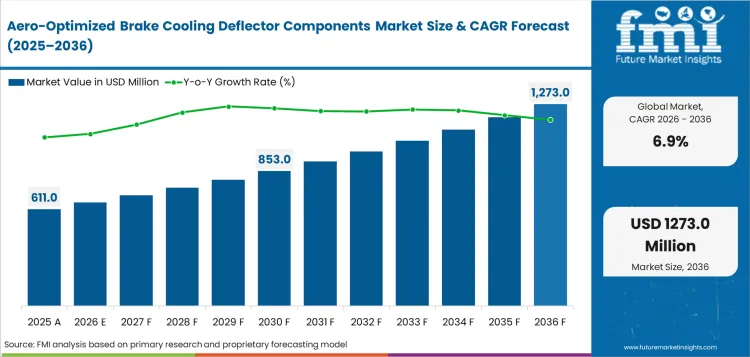
Key Takeaways, Market Size, and Forecast
- The aero-optimized brake cooling deflector components market was valued at USD 611.0 million in 2025.
- The aero-optimized brake cooling deflector components industry value is expected to reach USD 1,273.0 million by 2036.
- From 2026 to 2036, the sector is anticipated to expand at 6.9% CAGR.
- Industry revenue is forecast to create an incremental opportunity of USD 619.8 million from 2026 to 2036.
- OEM fitment is projected to account for 78.4% share of sales channel in 2026.
- Passenger cars are anticipated to account for 71.8% share of vehicle type in 2026.
- China is projected to remain the fastest-growing market with an 8.4% CAGR by 2036, with India close behind at 8.0% CAGR.
Brake cooling deflectors are moving from small airflow parts into important cooling and aero parts for performance cars. In May 2024, Porsche said 911 Carrera GTS uses six cooling air flaps on each side and adaptive front diffusers to cool brakes and reduce front lift. Supplier work now starts earlier in front bumper design and brake cooling checks. In August 2024, Toyota said 2025 GR Corolla bumper changes created space for improved brake ducts and air curtain design. Sports models now need deflector parts to cool brakes and manage airflow near tires. Motorsport rules are adding stricter design checks. In 2026, FIA rules limited brake caliper duct wrap to 20 mm and defined how brake ducts can sit around disc area. Suppliers with rule knowledge and material control are likely to gain preference in racing brake cooling programs.
Aero-Optimized Brake Cooling Deflector Components Market Definition
Aero-optimized brake cooling deflector components cover molded or formed parts that guide air toward brake rotors, calipers, or wheel-end cooling zones. Scope includes wheel deflectors, brake ducts, air guides, backing plates, and integrated shields used in light vehicles. Revenue includes OEM fitment, service replacement, and performance aftermarket parts. Pure decorative wheel covers are excluded unless braking airflow control is part of the product function.
Aero-Optimized Brake Cooling Deflector Components Market Inclusions
Scope includes passive deflectors, underbody air guides, wheel-well flow devices, and brake duct parts designed for cooling or drag reduction. Thermoplastic, aluminum, rubber blend, and composite formats are included. OEM and service channels are included if the part is sold for road vehicles. Racing vehicle parts are included only when commercial part sales are identifiable.
Aero-Optimized Brake Cooling Deflector Components Market Exclusions
Scope excludes brake pads, rotors, calipers, hydraulic hoses, and brake control electronics. Pure grille shutters and radiator ducting are excluded unless sold as a wheel-end brake cooling device. General wheel liners without directed brake airflow are outside scope. Software-only brake control tools are excluded from the component revenue view.
Aero-Optimized Brake Cooling Deflector Components Market Research Methodology
- Primary Research: FMI analysts reviewed brake system sourcing, wheel-end packaging, polymer part supply, and platform validation patterns across major vehicle regions.
- Desk Research: Official vehicle production, EV sales, safety rules, and supplier announcements supported country demand and competitive mapping.
- Market Sizing and Forecasting: Forecast values used vehicle output, airflow part fitment rates, material mix, and average selling price checks.
- Data Validation: Checks compared 2026 value with 2036 value, segment share balance, and country growth patterns against EV and safety regulation timing.
Why is the Aero-Optimized Brake Cooling Deflector Components Market Growing?
- EV adoption is increasing the need to manage heat near wheels, as regenerative braking reduces regular brake use in daily driving.
- Automatic emergency braking rules are raising the need for brake systems staying ready during repeated safety stops.
- Underbody airflow work is creating demand for shaped deflectors that can cool brakes and reduce wasted airflow.
Vehicle engineers are treating brake airflow as part of early platform design. IEA reported in May 2025, global electric car sales exceeded 17.0 million units in 2024 and reached over 20% of new car sales. EV growth supports more work around small parts protecting range and keeping brakes ready for emergency use. NHTSA finalized FMVSS No. 127 in April 2024 and said automatic emergency braking will be standard on passenger cars and light trucks by September 2029. Porsche also used adaptive front diffusers on the 911 to route air into the wheel arch for brake cooling. Deflector suppliers can gain importance by linking brake cooling with aero efficiency and safety validation.
Market Segmentation Analysis
- Wheel deflectors are projected to capture 35.6% share in 2026 due to molded shield formats combining brake airflow guidance with low unit cost.
- Passenger cars are anticipated to hold 71.8% share in 2026 since high-volume car and crossover platforms carry most OEM fitment demand.
- Thermoplastic components are forecast to account for 46.9% share in 2026 reflecting lighter weight and easier high-volume molding.
- OEM fitment is projected to represent 78.4% share in 2026, driven by airflow validation occurring before vehicle launch.
- Passive flow is expected to hold 64.7% share in 2026 through fixed deflectors suiting cost targets and avoiding actuator complexity.
Market segmentation is divided into five parent groups based on how airflow parts are designed, validated, and bought. Component type separates wheel deflectors from ducts and shields. Vehicle type shows how platform volume drives part demand. Material captures cost, weight, and heat resistance choices. Sales channel explains whether value is built into new vehicles or replacement demand. Cooling route separates fixed airflow parts from active and wheel-well designs.
Insights into Aero-Optimized Brake Cooling Deflector Components Market by Component Type
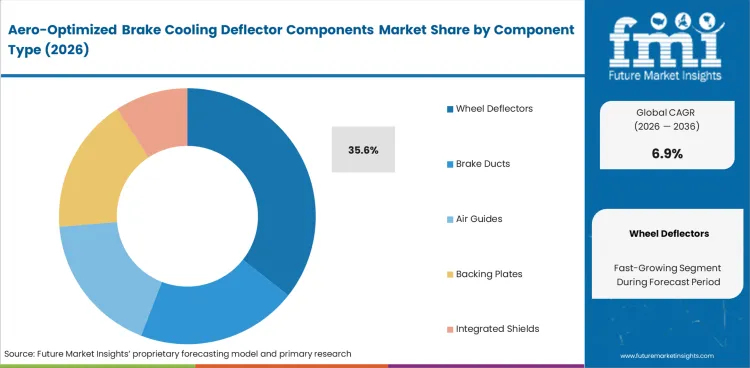
- Wheel deflectors are projected to account for 35.6% share in 2026 led by molded parts being tuned for brake cooling and wheel-well airflow within one compact package.
- Brake ducts retain a premium role as performance and heavy EV trims need more direct air delivery to rotors during high-load braking cycles.
Insights into Aero-Optimized Brake Cooling Deflector Components Market by Vehicle Type
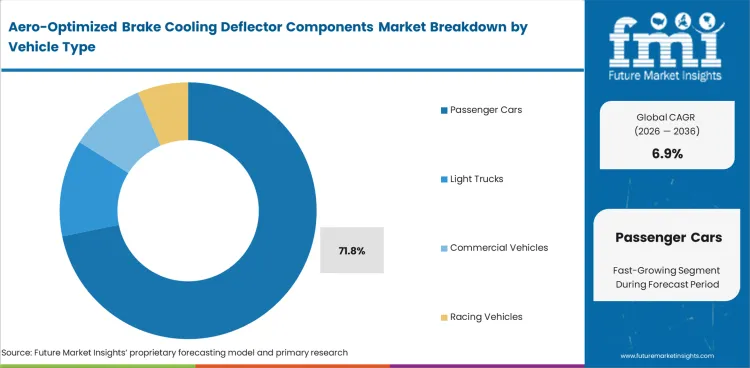
- Passenger cars are anticipated to account for 71.8% share in 2026 reflecting high-volume sedan and crossover platforms needing brake cooling without heavy duct systems.
- Light trucks are gaining importance since heavier electrified pickup and sport utility programs need airflow parts that handle mass and towing heat.
Insights into Aero-Optimized Brake Cooling Deflector Components Market by Material
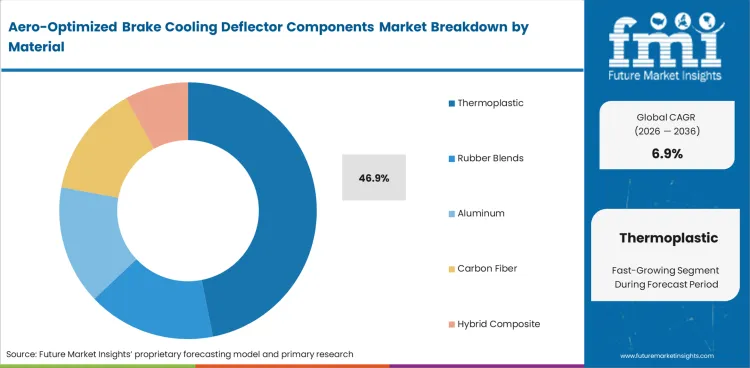
- Thermoplastic components are projected to account for 46.9% share in 2026, influenced by injection molding supporting low weight and high output consistency for OEM programs.
- Hybrid composite formats are expected to gain selective use led by premium EV and performance vehicles needing higher heat stability near brakes.
Insights into Aero-Optimized Brake Cooling Deflector Components Market by Sales Channel
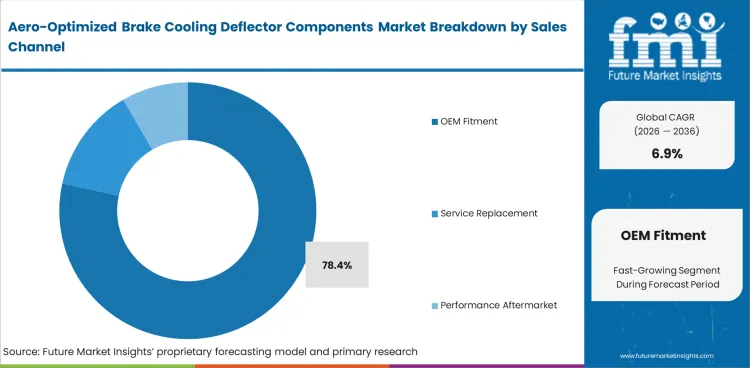
- OEM fitment is projected to account for 78.4% share in 2026 since brake cooling deflectors are required to be validated with platform aerodynamics before vehicle start of production.
- Performance aftermarket sales remain smaller but valuable led by track-oriented owners adding brake ducts for fade control and wheel-end cooling.
Insights into Aero-Optimized Brake Cooling Deflector Components Market by Cooling Route
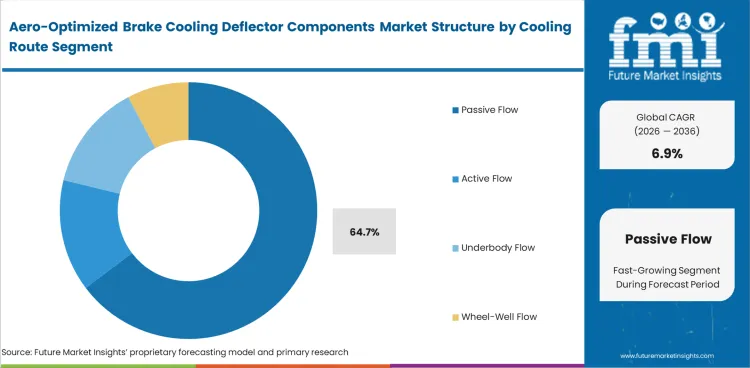
- Passive flow is expected to account for 64.7% share in 2026 as fixed deflectors meet most road-vehicle cooling needs without motors or control units.
- Active flow remains a higher-value niche due to premium vehicles using movable devices to trade cooling airflow against drag needs.
Aero-Optimized Brake Cooling Deflector Components Market Drivers, Restraints and Opportunities
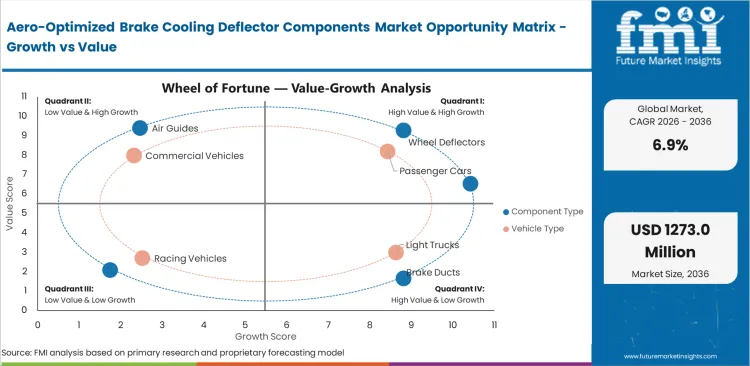
- Brake reserve validation is making directed airflow more important as safety-focused vehicle programs prepare for repeat stopping checks.
- Packaging limits can slow adoption as wheel wells already carry sensors and brake control hardware.
- Active aero opens opportunity as OEMs depend on brake cooling during hard braking and low drag during normal driving.
Brake cooling deflectors are gaining a clearer role as vehicle makers balance stopping safety with efficiency targets. EPA rules for model years 2027 to 2032 keep pressure on lower drag vehicle design. NHTSA’s April 2024 AEB rule requires automatic emergency braking on passenger cars and light trucks by September 2029. This rule raises brake reserve needs as safety systems must support repeat stopping. Packaging remains a limit since brake hardware and sensor areas compete for space near the wheel end. Active aero creates a stronger opportunity for suppliers being able to deliver cooling during hard braking and low drag during cruise.
Technology Adoption and Automation Penetration Analysis
Technology use matters for this industry only when linked to design validation and part accuracy. Global factory automation supports that shift, since the International Federation of Robotics reported in September 2025 that 542,000 industrial robots were installed in 2024 and 4.7 million units were in operation worldwide. Aero-optimized brake cooling deflector suppliers can use robotics and machine vision to improve repeatability in molded ducts and formed deflectors.
Application-wise Equipment Deployment Analysis
Application use is strongest in performance vehicles and motorsport programs, where brake ducts are required to manage extreme heat in tight package space. Cadillac stated in February 2026, a Formula 1 car can slow from 200-plus mph at over four times g force with brake discs exceeding 1,300°F during hard braking, showing brake cooling ducts matter for safety and thermal control.
Analysis of Aero-Optimized Brake Cooling Deflector Components Market by Key Countries
.webp "Top Country Growth Comparison Aero Optimized Brake Cooling Deflector Components Market Cagr (2026 2036)")
| Country | CAGR |
|---|---|
| China | 8.4% |
| India | 8.0% |
| Mexico | 7.5% |
| Germany | 6.8% |
| United States | 6.4% |
| Japan | 5.7% |
| South Korea | 5.6% |
Source: Future Market Insights, 2026.
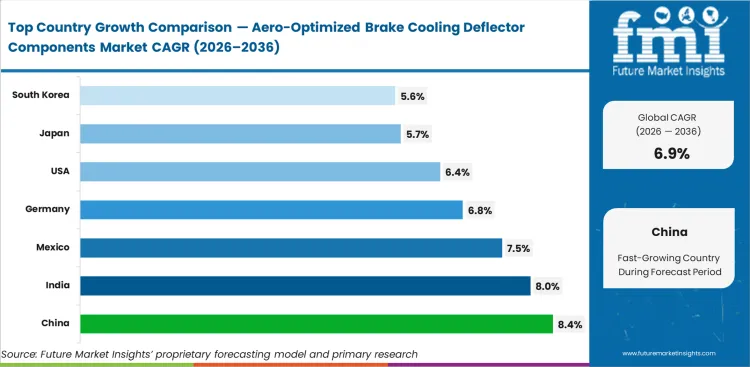
Aero-Optimized Brake Cooling Deflector Components Market CAGR Analysis by Country
- China is projected to record 8.4% CAGR by 2036, led by EV output scale giving OEMs more programs for airflow part integration.
- India is expected to expand at 8.0% CAGR by 2036 with vehicle output and safety upgrades raising platform-level part validation.
- Mexico is forecast to grow at 7.5% CAGR by 2036 through export assembly supporting localized molded component supply.
- Germany is expected to advance at 6.8% CAGR by 2036 reflecting premium vehicle programs using aero parts for range and braking balance.
- United States is projected to rise at 6.4% CAGR by 2036 as safety rules and light-truck electrification guide demand.
- Japan is expected to grow at a 5.7% CAGR by 2036, supported by advanced vehicle engineering and measured adoption across premium and hybrid segments.
- South Korea is expected to post 5.6% CAGR by 2036 since export-focused automakers need low-drag wheel-end packages.
Country performance differs by vehicle output, EV program depth, and platform export role. China and India track above the global line as new model volume leaves more room for airflow part integration. Mexico records stronger readiness because export assembly draws suppliers near North American programs. Japan and South Korea grow below the global pace as mature engineering systems already use refined wheel-end part designs.
Demand Outlook for Aero-Optimized Brake Cooling Deflector Components in China
Industry in China is projected to record 8.4% CAGR by 2036, driven by EV output scale and platform refresh activity promoting wider wheel-end airflow integration. International Energy Agency data issued in May 2025 recorded 12.4 million electric cars produced in China during 2024. Large platform volume gives suppliers more chances to standardize deflector shapes across several trims. Local OEMs can move faster on molded air guides because tooling and validation stay close to assembly plants.
- EV platform launches create a steady route for wheel deflectors that reduce drag and keep brake reserve capacity available.
- Local molding capacity supports cost control as automakers qualify airflow parts for compact and midsize vehicles.
- Export programs will favor suppliers able to meet regional durability rules without changing core part geometry.
Sales Analysis of Aero-Optimized Brake Cooling Deflector Components in India
Sales in India are expected to expand at 8.0% CAGR by 2036, led by vehicle output and safety rules increasing demand for validated wheel-end components. Society of Indian Automobile Manufacturers reported total vehicle production of 30,610,778 units during January to December 2024. High production volume increases the addressable platform pool for molded deflectors. Adoption will depend on cost targets as OEMs balance safety features with entry-level vehicle pricing.
- Local passenger vehicle programs can add passive deflectors first because fixed parts fit cost-sensitive trim planning.
- Safety feature upgrades create a route for brake cooling validation across higher-volume models rather than niche variants.
- Supplier success will depend on local tooling quality and the ability to hold tight shape tolerance at scale.
Growth Outlook for Aero-Optimized Brake Cooling Deflector Components in Mexico
Sector in Mexico is forecast to grow at 7.5% CAGR by 2036 due to export-oriented assembly raising demand for locally supplied polymer and airflow parts. International Energy Agency analysis released in May 2025 stated that Mexico produced 220,000 electric cars in 2024. Production doubled from the prior year and export programs are tied closely to United States vehicle demand. Brake deflector suppliers can benefit by serving validated platforms near final assembly lines.
- Export assembly supports local sourcing for molded airflow parts that must match North American vehicle specifications.
- Cross-border programs place strong value on fast engineering changes after road testing or safety validation feedback.
- Part makers with Mexico capacity can reduce freight risk for underbody and wheel-end components.
Demand Analysis of Aero-Optimized Brake Cooling Deflector Components in Germany
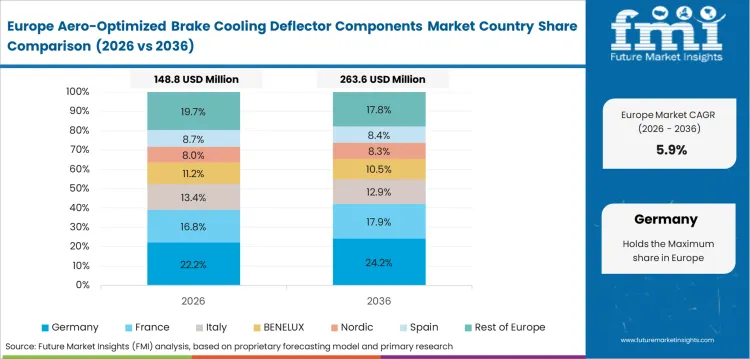
Demand in Germany is expected to advance at 6.8% CAGR by 2036, influenced by premium EV and performance programs keeping brake cooling tied to range work. International Energy Agency data published in May 2025 recorded 2.4 million electric cars produced in the European Union during 2024. German platform decisions influence many regional suppliers even when production is spread across Europe. Deflector demand is likely to favor higher heat resistance and acoustic control.
- Premium vehicle platforms need wheel-end parts that maintain brake cooling without adding noise at motorway speeds.
- Regulatory pressure on emissions keeps aero drag reduction close to underbody component sourcing decisions.
- Suppliers with simulation and test support can hold stronger positions as OEMs ask for proof before design freeze.
Opportunity Analysis of Aero-Optimized Brake Cooling Deflector Components in the United States
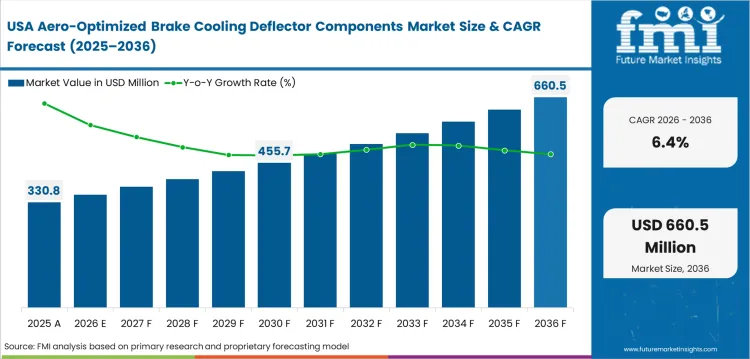
The market in United States is projected to rise at 6.4% CAGR by 2036, led by safety rules and EV light-truck programs influencing wheel-end thermal needs. National Highway Traffic Safety Administration finalized automatic emergency braking requirements in April 2024 for new passenger cars and light trucks by September 2029. Light trucks add mass and braking load compared with small cars. Brake cooling deflector suppliers need designs that fit larger wheel packages and remain efficient at highway speed.
- Light-truck electrification creates higher brake energy events during towing or emergency stopping.
- Automatic emergency braking validation raises the need for predictable cooling after repeated high-speed stops.
- Supplier programs must handle gravel impact and harsh-weather service because many vehicles run across mixed driving conditions.
Future Outlook for Aero-Optimized Brake Cooling Deflector Components in Japan
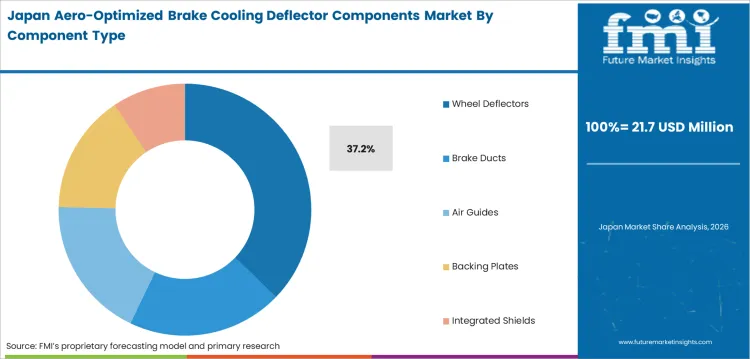
Sector expansion in Japan is forecast at 5.7% CAGR by 2036 as mature hybrid and EV engineering supports measured adoption of refined airflow parts. Japan Automobile Manufacturers Association reported 8.2 million four-wheel vehicles produced in Japan during 2024. Established design discipline keeps part changes careful and validation-heavy. Deflector growth will favor compact parts that reduce drag without disturbing quiet cabin performance.
- Hybrid and compact vehicle platforms can use passive deflectors to protect efficiency without adding electronic content.
- High supplier quality expectations make material consistency and long-term durability central to sourcing decisions.
- Premium electric models can use more advanced wheel-end airflow parts as range and brake feel become linked design goals.
Sales Outlook for Aero-Optimized Brake Cooling Deflector Components in South Korea
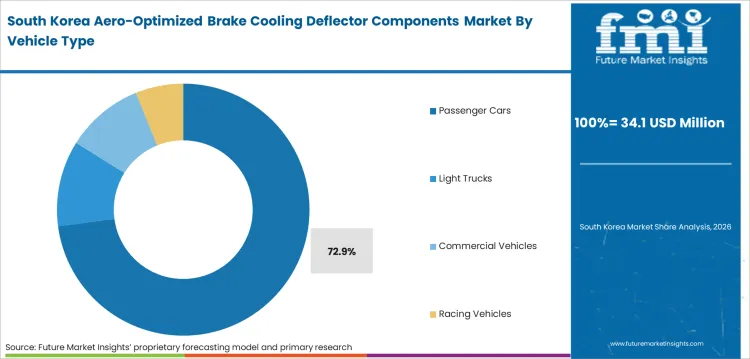
Sales in South Korea are expected to post 5.6% CAGR by 2036 since export-focused OEMs use low-drag components to support global platform targets. International Organization of Motor Vehicle Manufacturers data placed South Korea vehicle production at about 4.1 million units in 2024. Export programs require parts that meet several regional standards through one design. Brake cooling parts will gain where suppliers can combine compact packaging with reliable molding quality.
- Global platform planning favors airflow parts that can be carried across several models with limited geometry changes.
- EV exports encourage deflector designs that protect range under highway cycles and braking reserve under safety tests.
- Local supplier strength in molded modules supports steady part qualification for underbody and wheel-end assemblies.
Competitive Landscape and Strategic Positioning
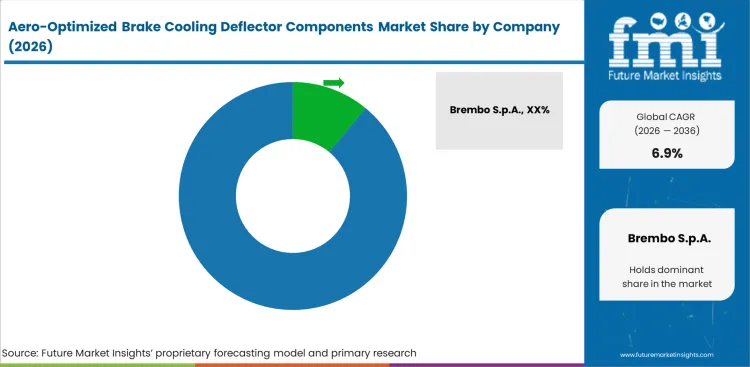
- Brake system suppliers hold an advantage when deflectors must align with calipers and electronic brake modules.
- Exterior and underbody module suppliers compete by combining airflow parts with wheel liners and splash shields.
- Material specialists gain value as OEMs seek lightweight parts that maintain their shape near hot brake hardware.
Competition in the aero-optimized brake cooling deflector components market is based on access to vehicle platforms and proof of part performance. Brembo and ZF have relevance as brake architecture becomes more electronic at wheel level. OPmobility, Magna, FORVIA HELLA and Röchling Automotive compete from nearby exterior and airflow module areas. Suppliers with automotive bumper component knowledge and underbody airflow experience can support wider front-end aero targets.
Smaller suppliers can serve replacement channels and performance programs with focused product design. OEM launch work remains harder because vehicle makers need parts proven against water exposure, stone impact and brake heat. Tooling accuracy and computer-aided airflow testing are important supplier selection points. Companies using closed-loop recycled polymers can gain attention if durability is proven in real vehicle conditions. Competitive advantage will favor suppliers combining brake fit knowledge and material strength in one offer.
Key Companies in the Aero-Optimized Brake Cooling Deflector Components Market
Competitive structure is assessed by grouping companies around braking systems, aero modules, and polymer part supply.
- Brake and Chassis Specialists: Brembo S.p.A. and ZF Friedrichshafen AG influence corner architecture as braking systems shift toward electronic control and wheel-specific performance.
- Aero and Exterior Module Suppliers: OPmobility, Magna International, and Röchling Automotive support molded airflow parts and exterior modules used near wheel-end zones.
- Thermal and Electronics Adjacent Suppliers: FORVIA HELLA and Continental AG support thermal control and vehicle systems shaping packaging constraints around the brake area.
Competitive Benchmarking: Aero-Optimized Brake Cooling Deflector Components Market
| Company | Brake Cooling Fit | Aero Module Depth | Thermal Validation Support | Geographic Footprint |
|---|---|---|---|---|
| Brembo S.p.A. | High | Medium | Strong | Global brake systems |
| ZF Friedrichshafen AG | High | Medium | Strong | Global chassis reach |
| OPmobility | Medium | Strong | Medium | Europe and global OEMs |
| Magna International | Medium | Strong | Medium | North America and Europe |
| FORVIA HELLA | Medium | Medium | Strong | Global thermal systems |
| Röchling Automotive | High | Strong | Medium | Global polymer modules |
| Continental AG | Medium | Medium | Strong | Global vehicle systems |
Source: Future Market Insights competitive analysis, 2026. Ratings reflect relative positioning based on brake cooling fit, aero module depth, and thermal validation support.
Key Developments in Aero-Optimized Brake Cooling Deflector Components Market
- In April 2024,USA safety regulators finalized automatic emergency braking requirements for new passenger cars and light trucks by September 2029.
- In January 2025, ZF said a global OEM deal would equip nearly 5.0 million light vehicles with electro-mechanical braking over the contract length, showing adjacent wheel-end brake architecture activity.
- In May 2026, Brembo said Sensify entered production for a leading global vehicle manufacturer and is fitted as standard on 100.0% of vehicles in the program, showing adjacent intelligent braking activity.
Key Players in the Aero-Optimized Brake Cooling Deflector Components Market
Major Global Players:
- Brembo S.p.A.
- ZF Friedrichshafen AG
- Magna International Inc.
- OPmobility SE
- FORVIA HELLA
Specialist and Regional Players:
- Röchling Automotive SE & Co. KG
- MAHLE GmbH
- Valeo SA
- Flex-N-Gate Corporation
- Marelli Holdings Co., Ltd.
- AP Racing Ltd.
- Alcon Components Ltd.
Market Report Scope
| Parameter | Details |
|---|---|
| Quantitative Units | USD 653.2 million to USD 1,273.0 million, at 6.9% CAGR |
| Market Definition | Molded or formed parts that guide air toward brake rotors, calipers or wheel-end cooling zones |
| Component Type | Wheel deflectors, brake ducts, air guides, backing plates, integrated shields |
| Vehicle Type | Passenger cars, light trucks, commercial vehicles, racing vehicles |
| Material | Thermoplastic, rubber blends, aluminum, carbon fiber, hybrid composite |
| Sales Channel | OEM fitment, service replacement, performance aftermarket |
| Cooling Route | Passive flow, active flow, underbody flow, wheel-well flow |
| Regions Covered | North America, Latin America, Western Europe, Eastern Europe, East Asia, South Asia and Pacific, Middle East and Africa |
| Countries Covered | United States, Germany, China, India, Mexico, Japan, South Korea and 30+ countries |
| Key Companies Profiled | Brembo S.p.A., ZF Friedrichshafen AG, Magna International Inc., OPmobility SE, FORVIA HELLA, Röchling Automotive SE & Co. KG |
| Forecast Period | 2026 to 2036 |
| Approach | Forecast values, EV platform checks, brake safety regulation review, OEM airflow evidence and segment share estimates |
Source: Future Market Insights, 2026.
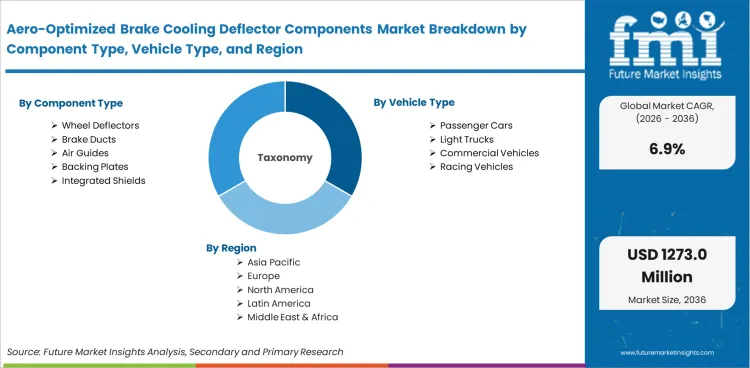
Aero-Optimized Brake Cooling Deflector Components Market Breakdown by Component Type, Vehicle Type, Material, Sales Channel, Cooling Route and Region.
By Component Type:
- Wheel Deflectors
- Brake Ducts
- Air Guides
- Backing Plates
- Integrated Shields
By Vehicle Type:
- Passenger Cars
- Light Trucks
- Commercial Vehicles
- Racing Vehicles
By Material:
- Thermoplastic
- Rubber Blends
- Aluminum
- Carbon Fiber
- Hybrid Composite
By Sales Channel:
- OEM Fitment
- Service Replacement
- Performance Aftermarket
By Cooling Route:
- Passive Flow
- Active Flow
- Underbody Flow
- Wheel-Well Flow
By Region:
- North America
- Latin America
- Western Europe
- Eastern Europe
- East Asia
- South Asia and Pacific
- Middle East and Africa
Research Sources and Bibliography
- Brembo Group. (2026, May 4). The new standard begins: SENSIFY™ by Brembo enters production.
- Cadillac. (2026, February 2). How the Cadillac Formula 1® Team makes a brake duct. General Motors News.
- Federation Internationale de l'Automobile. (2026, May 7). FIA 2026 F1 Regulations - Section C [Technical], Issue 18.
- FORVIA HELLA. (2024, July 11). Coolant Control Hub max: Customized and simplified thermal management for electric vehicles.
- International Energy Agency. (2025). Global EV Outlook 2025.
- International Federation of Robotics. (2025, September 25). Global robot demand in factories doubles over 10 years.
- International Organization of Motor Vehicle Manufacturers. (2025). Production statistics.
- National Highway Traffic Safety Administration. (2024, April 29). NHTSA finalizes key safety rule to reduce crashes and save lives.
- OPmobility. (2025, March 12). OPmobility adopts PLM from Siemens Xcelerator to optimize product design process. Siemens.
- Porsche AG. (2024). Exterior: Design and body. Porsche Newsroom.
- Society of Indian Automobile Manufacturers. (2025, January). Monthly performance: December 2024.
- Toyota Motor North America. (2024, August 1). The GR lineup heats up with new direct automatic transmission option on Toyota’s GR Corolla.
- United States Environmental Protection Agency. (2024, March 20). Biden-Harris Administration finalizes strongest-ever pollution standards for cars that position USA companies and workers to lead the clean vehicle future.
- ZF Friedrichshafen AG. (2025, January 6). ZF secures substantial brake-by-wire technology business for light vehicles.
Bibliography uses government sources, official company evidence and non-commercial trade data relevant to market demand signals.
This Report Answers
- How large is the aero-optimized brake cooling deflector components industry in 2026 and 2036?
- Which parent segments carry the leading shares in 2026?
- How do EV production and brake-by-wire programs affect brake cooling component demand?
- Which countries show stronger readiness for aero-optimized brake cooling deflector components?
- How do material choices affect part cost and vehicle range targets?
- Which suppliers are positioned across braking, aero modules, and polymer components?
Frequently Asked Questions
What is the aero-optimized brake cooling deflector components market size in 2026?
The aero-optimized brake cooling deflector components market size is expected to cross USD 653.2 million in 2026 with OEM fitment driving most early value.
What is the forecast value of the aero-optimized brake cooling deflector components market by 2036?
Industry value is forecast to reach USD 1,273.0 million by 2036 as EV platforms and safety rules support airflow part integration.
What CAGR is expected for the aero-optimized brake cooling deflector components market?
Sector is projected to expand at 6.9% CAGR from 2026 to 2036 across tracked global vehicle programs.
Which sales channel leads the aero-optimized brake cooling deflector components market?
OEM fitment is expected to hold 78.4% share in 2026 led by airflow validation occurring before vehicle launch.
Which vehicle type has the leading share in aero-optimized brake cooling deflector components demand?
Passenger cars are anticipated to account for 71.8% share in 2026 due to broad sedan and crossover platform use.
Which component type has strong adoption in the aero-optimized brake cooling deflector components market?
Wheel deflectors are set to capture 35.6% share in 2026 as molded formats suit cost and airflow needs.
Which country records faster growth in aero-optimized brake cooling deflector components demand?
China is forecast to record 8.4% CAGR by 2036 led by EV output scale supporting wider airflow integration.
Why are aero-optimized brake cooling deflector components gaining attention?
Automakers need brake cooling parts that protect stopping performance while reducing wheel-end drag in EV and safety-tested vehicle programs.
Which companies compete in the aero-optimized brake cooling deflector components market?
Brembo, ZF, OPmobility, Magna, FORVIA HELLA, Röchling Automotive, and Continental are relevant across braking and aero modules.
What restrains the aero-optimized brake cooling deflector components market?
Limited wheel-well space and cost control can slow adoption because ducts, sensors, and liners compete for the same package area.
Preview the report firsthand - request a free sample
Get SampleGet the brochure for pricing and purchase details.
Get PDFTable of Content
- Executive Summary
- Global Market Outlook
- Demand-side Trends
- Supply-side Trends
- Technology Roadmap Analysis
- Analysis and Recommendations
- Market Overview
- Market Coverage / Taxonomy
- Market Definition / Scope / Limitations
- Research Methodology
- Chapter Orientation
- Analytical Lens and Working Hypotheses
- Market Structure, Signals, and Trend Drivers
- Benchmarking and Cross-market Comparability
- Market Sizing, Forecasting, and Opportunity Mapping
- Research Design and Evidence Framework
- Desk Research Programme (Secondary Evidence)
- Company Annual and Sustainability Reports
- Peer-reviewed Journals and Academic Literature
- Corporate Websites, Product Literature, and Technical Notes
- Earnings Decks and Investor Briefings
- Statutory Filings and Regulatory Disclosures
- Technical White Papers and Standards Notes
- Trade Journals, Industry Magazines, and Analyst Briefs
- Conference Proceedings, Webinars, and Seminar Materials
- Government Statistics Portals and Public Data Releases
- Press Releases and Reputable Media Coverage
- Specialist Newsletters and Curated Briefings
- Sector Databases and Reference Repositories
- FMI Internal Proprietary Databases and Historical Market Datasets
- Subscription Datasets and Paid Sources
- Social Channels, Communities, and Digital Listening Inputs
- Additional Desk Sources
- Expert Input and Fieldwork (Primary Evidence)
- Primary Modes
- Qualitative Interviews and Expert Elicitation
- Quantitative Surveys and Structured Data Capture
- Blended Approach
- Why Primary Evidence is Used
- Field Techniques
- Interviews
- Surveys
- Focus Groups
- Observational and In-context Research
- Social and Community Interactions
- Stakeholder Universe Engaged
- C-suite Leaders
- Board Members
- Presidents and Vice Presidents
- R&D and Innovation Heads
- Technical Specialists
- Domain Subject-matter Experts
- Scientists
- Physicians and Other Healthcare Professionals
- Governance, Ethics, and Data Stewardship
- Research Ethics
- Data Integrity and Handling
- Primary Modes
- Tooling, Models, and Reference Databases
- Desk Research Programme (Secondary Evidence)
- Data Engineering and Model Build
- Data Acquisition and Ingestion
- Cleaning, Normalisation, and Verification
- Synthesis, Triangulation, and Analysis
- Quality Assurance and Audit Trail
- Market Background
- Market Dynamics
- Drivers
- Restraints
- Opportunity
- Trends
- Scenario Forecast
- Demand in Optimistic Scenario
- Demand in Likely Scenario
- Demand in Conservative Scenario
- Opportunity Map Analysis
- Product Life Cycle Analysis
- Supply Chain Analysis
- Investment Feasibility Matrix
- Value Chain Analysis
- PESTLE and Porter’s Analysis
- Regulatory Landscape
- Regional Parent Market Outlook
- Production and Consumption Statistics
- Import and Export Statistics
- Market Dynamics
- Global Market Analysis 2021 to 2025 and Forecast, 2026 to 2036
- Historical Market Size Value (USD Million) Analysis, 2021 to 2025
- Current and Future Market Size Value (USD Million) Projections, 2026 to 2036
- Y-o-Y Growth Trend Analysis
- Absolute $ Opportunity Analysis
- Global Market Pricing Analysis 2021 to 2025 and Forecast 2026 to 2036
- Global Market Analysis 2021 to 2025 and Forecast 2026 to 2036, By Component Type
- Introduction / Key Findings
- Historical Market Size Value (USD Million) Analysis By Component Type , 2021 to 2025
- Current and Future Market Size Value (USD Million) Analysis and Forecast By Component Type , 2026 to 2036
- Wheel Deflectors
- Brake Ducts
- Air Guides
- Backing Plates
- Integrated Shields
- Wheel Deflectors
- Y-o-Y Growth Trend Analysis By Component Type , 2021 to 2025
- Absolute $ Opportunity Analysis By Component Type , 2026 to 2036
- Global Market Analysis 2021 to 2025 and Forecast 2026 to 2036, By Vehicle Type
- Introduction / Key Findings
- Historical Market Size Value (USD Million) Analysis By Vehicle Type, 2021 to 2025
- Current and Future Market Size Value (USD Million) Analysis and Forecast By Vehicle Type, 2026 to 2036
- Passenger Cars
- Light Trucks
- Commercial Vehicles
- Racing Vehicles
- Passenger Cars
- Y-o-Y Growth Trend Analysis By Vehicle Type, 2021 to 2025
- Absolute $ Opportunity Analysis By Vehicle Type, 2026 to 2036
- Global Market Analysis 2021 to 2025 and Forecast 2026 to 2036, By Material
- Introduction / Key Findings
- Historical Market Size Value (USD Million) Analysis By Material, 2021 to 2025
- Current and Future Market Size Value (USD Million) Analysis and Forecast By Material, 2026 to 2036
- Thermoplastic
- Rubber Blends
- Aluminum
- Carbon Fiber
- Hybrid Composite
- Thermoplastic
- Y-o-Y Growth Trend Analysis By Material, 2021 to 2025
- Absolute $ Opportunity Analysis By Material, 2026 to 2036
- Global Market Analysis 2021 to 2025 and Forecast 2026 to 2036, By Sales Channel
- Introduction / Key Findings
- Historical Market Size Value (USD Million) Analysis By Sales Channel, 2021 to 2025
- Current and Future Market Size Value (USD Million) Analysis and Forecast By Sales Channel, 2026 to 2036
- OEM Fitment
- Service Replacement
- Performance Aftermarket
- OEM Fitment
- Y-o-Y Growth Trend Analysis By Sales Channel, 2021 to 2025
- Absolute $ Opportunity Analysis By Sales Channel, 2026 to 2036
- Global Market Analysis 2021 to 2025 and Forecast 2026 to 2036, By Cooling Route
- Introduction / Key Findings
- Historical Market Size Value (USD Million) Analysis By Cooling Route, 2021 to 2025
- Current and Future Market Size Value (USD Million) Analysis and Forecast By Cooling Route, 2026 to 2036
- Passive Flow
- Active Flow
- Underbody Flow
- Wheel-Well Flow
- Passive Flow
- Y-o-Y Growth Trend Analysis By Cooling Route, 2021 to 2025
- Absolute $ Opportunity Analysis By Cooling Route, 2026 to 2036
- Global Market Analysis 2021 to 2025 and Forecast 2026 to 2036, By Region
- Introduction
- Historical Market Size Value (USD Million) Analysis By Region, 2021 to 2025
- Current Market Size Value (USD Million) Analysis and Forecast By Region, 2026 to 2036
- North America
- Latin America
- Western Europe
- Eastern Europe
- East Asia
- South Asia and Pacific
- Middle East & Africa
- Market Attractiveness Analysis By Region
- North America Market Analysis 2021 to 2025 and Forecast 2026 to 2036, By Country
- Historical Market Size Value (USD Million) Trend Analysis By Market Taxonomy, 2021 to 2025
- Market Size Value (USD Million) Forecast By Market Taxonomy, 2026 to 2036
- By Country
- USA
- Canada
- Mexico
- By Component Type
- By Vehicle Type
- By Material
- By Sales Channel
- By Cooling Route
- By Country
- Market Attractiveness Analysis
- By Country
- By Component Type
- By Vehicle Type
- By Material
- By Sales Channel
- By Cooling Route
- Key Takeaways
- Latin America Market Analysis 2021 to 2025 and Forecast 2026 to 2036, By Country
- Historical Market Size Value (USD Million) Trend Analysis By Market Taxonomy, 2021 to 2025
- Market Size Value (USD Million) Forecast By Market Taxonomy, 2026 to 2036
- By Country
- Brazil
- Chile
- Rest of Latin America
- By Component Type
- By Vehicle Type
- By Material
- By Sales Channel
- By Cooling Route
- By Country
- Market Attractiveness Analysis
- By Country
- By Component Type
- By Vehicle Type
- By Material
- By Sales Channel
- By Cooling Route
- Key Takeaways
- Western Europe Market Analysis 2021 to 2025 and Forecast 2026 to 2036, By Country
- Historical Market Size Value (USD Million) Trend Analysis By Market Taxonomy, 2021 to 2025
- Market Size Value (USD Million) Forecast By Market Taxonomy, 2026 to 2036
- By Country
- Germany
- UK
- Italy
- Spain
- France
- Nordic
- BENELUX
- Rest of Western Europe
- By Component Type
- By Vehicle Type
- By Material
- By Sales Channel
- By Cooling Route
- By Country
- Market Attractiveness Analysis
- By Country
- By Component Type
- By Vehicle Type
- By Material
- By Sales Channel
- By Cooling Route
- Key Takeaways
- Eastern Europe Market Analysis 2021 to 2025 and Forecast 2026 to 2036, By Country
- Historical Market Size Value (USD Million) Trend Analysis By Market Taxonomy, 2021 to 2025
- Market Size Value (USD Million) Forecast By Market Taxonomy, 2026 to 2036
- By Country
- Russia
- Poland
- Hungary
- Balkan & Baltic
- Rest of Eastern Europe
- By Component Type
- By Vehicle Type
- By Material
- By Sales Channel
- By Cooling Route
- By Country
- Market Attractiveness Analysis
- By Country
- By Component Type
- By Vehicle Type
- By Material
- By Sales Channel
- By Cooling Route
- Key Takeaways
- East Asia Market Analysis 2021 to 2025 and Forecast 2026 to 2036, By Country
- Historical Market Size Value (USD Million) Trend Analysis By Market Taxonomy, 2021 to 2025
- Market Size Value (USD Million) Forecast By Market Taxonomy, 2026 to 2036
- By Country
- China
- Japan
- South Korea
- By Component Type
- By Vehicle Type
- By Material
- By Sales Channel
- By Cooling Route
- By Country
- Market Attractiveness Analysis
- By Country
- By Component Type
- By Vehicle Type
- By Material
- By Sales Channel
- By Cooling Route
- Key Takeaways
- South Asia and Pacific Market Analysis 2021 to 2025 and Forecast 2026 to 2036, By Country
- Historical Market Size Value (USD Million) Trend Analysis By Market Taxonomy, 2021 to 2025
- Market Size Value (USD Million) Forecast By Market Taxonomy, 2026 to 2036
- By Country
- India
- ASEAN
- Australia & New Zealand
- Rest of South Asia and Pacific
- By Component Type
- By Vehicle Type
- By Material
- By Sales Channel
- By Cooling Route
- By Country
- Market Attractiveness Analysis
- By Country
- By Component Type
- By Vehicle Type
- By Material
- By Sales Channel
- By Cooling Route
- Key Takeaways
- Middle East & Africa Market Analysis 2021 to 2025 and Forecast 2026 to 2036, By Country
- Historical Market Size Value (USD Million) Trend Analysis By Market Taxonomy, 2021 to 2025
- Market Size Value (USD Million) Forecast By Market Taxonomy, 2026 to 2036
- By Country
- Kingdom of Saudi Arabia
- Other GCC Countries
- Turkiye
- South Africa
- Other African Union
- Rest of Middle East & Africa
- By Component Type
- By Vehicle Type
- By Material
- By Sales Channel
- By Cooling Route
- By Country
- Market Attractiveness Analysis
- By Country
- By Component Type
- By Vehicle Type
- By Material
- By Sales Channel
- By Cooling Route
- Key Takeaways
- Key Countries Market Analysis
- USA
- Pricing Analysis
- Market Share Analysis, 2025
- By Component Type
- By Vehicle Type
- By Material
- By Sales Channel
- By Cooling Route
- Canada
- Pricing Analysis
- Market Share Analysis, 2025
- By Component Type
- By Vehicle Type
- By Material
- By Sales Channel
- By Cooling Route
- Mexico
- Pricing Analysis
- Market Share Analysis, 2025
- By Component Type
- By Vehicle Type
- By Material
- By Sales Channel
- By Cooling Route
- Brazil
- Pricing Analysis
- Market Share Analysis, 2025
- By Component Type
- By Vehicle Type
- By Material
- By Sales Channel
- By Cooling Route
- Chile
- Pricing Analysis
- Market Share Analysis, 2025
- By Component Type
- By Vehicle Type
- By Material
- By Sales Channel
- By Cooling Route
- Germany
- Pricing Analysis
- Market Share Analysis, 2025
- By Component Type
- By Vehicle Type
- By Material
- By Sales Channel
- By Cooling Route
- UK
- Pricing Analysis
- Market Share Analysis, 2025
- By Component Type
- By Vehicle Type
- By Material
- By Sales Channel
- By Cooling Route
- Italy
- Pricing Analysis
- Market Share Analysis, 2025
- By Component Type
- By Vehicle Type
- By Material
- By Sales Channel
- By Cooling Route
- Spain
- Pricing Analysis
- Market Share Analysis, 2025
- By Component Type
- By Vehicle Type
- By Material
- By Sales Channel
- By Cooling Route
- France
- Pricing Analysis
- Market Share Analysis, 2025
- By Component Type
- By Vehicle Type
- By Material
- By Sales Channel
- By Cooling Route
- India
- Pricing Analysis
- Market Share Analysis, 2025
- By Component Type
- By Vehicle Type
- By Material
- By Sales Channel
- By Cooling Route
- ASEAN
- Pricing Analysis
- Market Share Analysis, 2025
- By Component Type
- By Vehicle Type
- By Material
- By Sales Channel
- By Cooling Route
- Australia & New Zealand
- Pricing Analysis
- Market Share Analysis, 2025
- By Component Type
- By Vehicle Type
- By Material
- By Sales Channel
- By Cooling Route
- China
- Pricing Analysis
- Market Share Analysis, 2025
- By Component Type
- By Vehicle Type
- By Material
- By Sales Channel
- By Cooling Route
- Japan
- Pricing Analysis
- Market Share Analysis, 2025
- By Component Type
- By Vehicle Type
- By Material
- By Sales Channel
- By Cooling Route
- South Korea
- Pricing Analysis
- Market Share Analysis, 2025
- By Component Type
- By Vehicle Type
- By Material
- By Sales Channel
- By Cooling Route
- Russia
- Pricing Analysis
- Market Share Analysis, 2025
- By Component Type
- By Vehicle Type
- By Material
- By Sales Channel
- By Cooling Route
- Poland
- Pricing Analysis
- Market Share Analysis, 2025
- By Component Type
- By Vehicle Type
- By Material
- By Sales Channel
- By Cooling Route
- Hungary
- Pricing Analysis
- Market Share Analysis, 2025
- By Component Type
- By Vehicle Type
- By Material
- By Sales Channel
- By Cooling Route
- Kingdom of Saudi Arabia
- Pricing Analysis
- Market Share Analysis, 2025
- By Component Type
- By Vehicle Type
- By Material
- By Sales Channel
- By Cooling Route
- Turkiye
- Pricing Analysis
- Market Share Analysis, 2025
- By Component Type
- By Vehicle Type
- By Material
- By Sales Channel
- By Cooling Route
- South Africa
- Pricing Analysis
- Market Share Analysis, 2025
- By Component Type
- By Vehicle Type
- By Material
- By Sales Channel
- By Cooling Route
- USA
- Market Structure Analysis
- Competition Dashboard
- Competition Benchmarking
- Market Share Analysis of Top Players
- By Regional
- By Component Type
- By Vehicle Type
- By Material
- By Sales Channel
- By Cooling Route
- Competition Analysis
- Competition Deep Dive
- Brembo S.p.A.
- Overview
- Product Portfolio
- Profitability by Market Segments (Product/Age /Sales Channel/Region)
- Sales Footprint
- Strategy Overview
- Marketing Strategy
- Product Strategy
- Channel Strategy
- ZF Friedrichshafen AG
- OPmobility
- Magna International
- FORVIA HELLA
- Röchling Automotive
- Continental AG
- Brembo S.p.A.
- Competition Deep Dive
- Assumptions & Acronyms Used


