

- CAGR (2025 to 2035)
- 5.8%
Eco-Friendly Inks Market Size and Share Forecast Outlook (2025 to 2035)
Eco-friendly inks market- Various industries are opting for sustainability, regulatory compliance, and innovation in printing. The major applications of eco-friendly inks involve low VOC and sustainable packaging materials, publishing, and textiles.
The global market for eco-friendly inks is expected to reach more than USD 8.9 billion by 2035, growing at a compound annual growth rate of 5.8%. Companies are focusing on innovations in water-based, UV-cured, and bio-based inks to meet the growing demand for greener alternatives.
Eco-friendly inks are becoming a preferred choice across industries due to increasing awareness of environmental responsibility and stricter regulations on traditional inks.
| Attribute | Details |
|---|---|
| Projected Value by 2035 | USD 8.9 billion |
| CAGR during the period 2025 to 2035 | 5.8% |
SWOT Analysis of Important Players in the Eco-Friendly Inks Market
Summary
From the SWOT analysis, there is strength with strategies portrayed in the outlook of some successful and influential companies in the market for eco-friendly inks.
Companies like DIC Corporation, Flint Group, and Sun Chemical gain the momentum and drive through technological innovation, global distribution, and commitment to sustainability. Challenges are the high cost of production and regional competition that will require some diversification and cost-effective solutions.
DIC Corporation
DIC Corporation excels in producing advanced water-based and UV-cured inks. Its global network and R&D capabilities are significant strengths. However, the high cost of innovation may impact profit margins. Expanding into emerging markets presents a major growth opportunity.
Flint Group
Flint Group leads in the development of durable as well as eco-friendly inks for different applications, through its very strong relationship with customers and presence across the globe. Limited options in bio-based inks could slow growth, but investment into bio-inks creates an opportunity to breach new markets
Sun Chemical
Sun Chemical is a global leader in green and innovative ink solutions. Key strengths include strong supply chain as well as more sophisticated ink formulations. However, the challenge is the cost of producing environment-friendly inks, and demand for green printing is still relatively small but potentially big.
Global Market Share and Competitive Landscape in Sustainable Inks
| Category | Market Share (%) |
|---|---|
| Top 3 Players | 13% |
| Rest of Top 5 Players | 08% |
| Next 5 of Top 10 Players | 04% |
Type of Player & Industry Share
| Type of Player | Market Share (%) |
|---|---|
| Top 10 Players | 25% |
| Next 20 Players | 44% |
| Remaining Players | 26% |
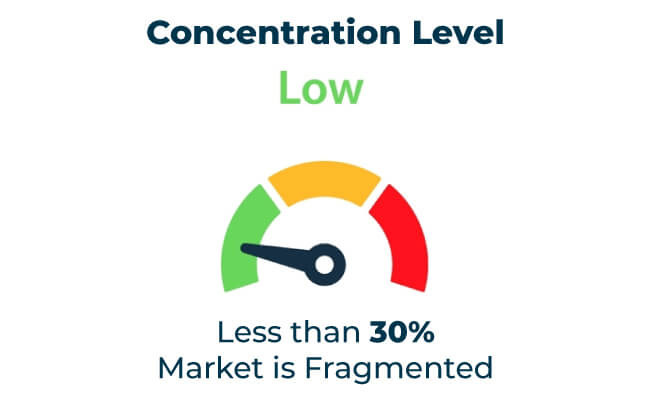
Market Concentration and Leading Suppliers in Eco-Friendly Inks
Year-on-Year Leaders
- DIC Corporation: Leading on advanced water-based and UV-cured ink solutions
- Flint Group: Best in its class in ecological printing technologies.
- Sun Chemical: Innovation with bio-based and sustainable ink formulations.
Emerging Technologies Driving Innovation in Eco-Conscious Ink Formulations
- Water-Based Inks: Minimum VOC emissions for environmental safety.
- UV-Cured Inks: High durability and fast drying times.
- Bio-Based Inks: From renewable resources for sustainable printing.
Sustainability Trends
- Recyclable Inks: Printed materials can be recycled without contamination.
- Low-VOC Formulations: Minimize air pollution and improve worker safety.
- Renewable Materials: Plant-based oils and natural pigments.
Consumer Trends
- Sustainability Preferences: Higher demand for sustainable and biodegradable inks.
- Performance Expectations: Demand for high-performance, high-quality, and highly versatile printing.
- Brand Alignment: Business demand for sustainability branding-compatible inks.
Regulatory Insights Governing Eco-Friendly Ink Production and Use
- North America: Implementation of VOC-restricted inks is gaining prominence due to regulations.
- Europe: Headed the move with strong environmental laws and initiatives like eco-labeling.
- Asia-Pacific: Industrialization is on the rise, and knowledge about green printing is spreading; hence, this region will increase demand.
Export Potential for Eco-Friendly Inks Across Global Print and Packaging Sectors
The growth prospects lie in emerging markets in Africa, Southeast Asia, and Latin America. With an increase in sustainable practices coupled with the demand for printed packaging, the prospects for eco-friendly inks in these regions are high. Exporters complying with regional regulations and providing competitive prices will have the upper hand in their business.
Challenges and Opportunities in Scaling Green Ink Adoption
Challenges
- Cost of Production: High formulate requirements of expensive investment.
- Awareness: Low among market sectors in certain regions.
- Raw Material Availability: Dependence on renewable resources can cause supply fluctuations.
Opportunities
- Green Certifications: Products that meet the eco-label standards attract environmentally conscious buyers.
- Technological Integration: Innovations in ink chemistry open new application areas.
- E-Commerce Growth: The growth in demand for sustainable packaging fuels growth.
Market Context for Eco-Friendly Inks in Commercial and Industrial Applications
In-House vs. Outsourced Production
- In-House Production: Better control over quality and innovation, thus suitable for large-scale manufacturers.
- Outsourced Production: Offers flexibility and reduced capital investment for smaller companies.
Regional Analysis of Eco-Friendly Inks Demand and Regulatory Support
Summary
The eco-friendly inks market reflects dynamic regional trends, driven by environmental policies, industrial growth, and sustainability initiatives. Companies tailoring solutions to regional demands can maximize growth.
| Region | North America |
|---|---|
| Market Share (%) | 35% |
| Key Drivers | Stricter environmental regulations and branding. |
| Region | Europe |
|---|---|
| Market Share (%) | 30% |
| Key Drivers | Leadership in eco-labeling and recycling. |
| Region | Asia-Pacific |
|---|---|
| Market Share (%) | 25% |
| Key Drivers | Industrial expansion and growing awareness. |
| Region | Other Regions |
|---|---|
| Market Share (%) | 10% |
| Key Drivers | Demand from emerging economies. |
End-User Segment Analysis
- Packaging Industry: Environmentally friendly ink for green attractive packaging.
- Publishing: using low-VOC inks on books and magazine covers.
- Textiles: Uses bio-based inks to create bright, eco-friendly designs.
Future Roadmap for Innovation and Growth in Eco-Ink Development
The eco-friendly inks market will grow with innovation in renewable materials, efficient production technologies, and worldwide market penetration. Firms that concentrate on innovation and compliance with sustainability objectives will fortify their competitive positions.
Market KPI Benchmarks for Measuring Performance in Sustainable Inks
- Regional Revenue Growth: Track adoption in high-growth regions like Asia-Pacific and Europe.
- Sustainability Metrics: Track the development of bio-based and low-VOC ink formulations.
- End-User Demand: Track sector-specific growth in packaging, publishing, and textiles.
Who Shaped the Year – Influential Contributors in Eco-Friendly Inks
- DIC Corporation: Develops water-based and UV-cured inks.
- Flint Group: Dominates with durable and eco-friendly printing solutions.
- Sun Chemical: Introduces bio-based inks for sustainable printing.
Tier-Wise Company Analysis Based on Reach and Technological Capability
| Tier | Key Companies |
|---|---|
| Tier 1 | DIC Corporation, Flint Group, Sun Chemical |
| Tier 2 | Siegwerk, Tokyo Printing Ink |
| Tier 3 | Marabu, Hubergroup |
Key Vendor Initiatives Advancing Sustainability and Compliance
- DIC Corporation: Increased water-based and UV-cured ink offerings.
- Flint Group: Invests in advanced bio-based ink formulations.
- Sun Chemical: Pursues market expansion and ecologically friendly innovations.
Conclusion on Strategic Outlook and Market Direction
Eco-friendly inks have tremendous growth potential with sustainability, innovation, and new global directives on regulation. Companies investing in advanced ink formulations and checking boxes for all green certifications will propel forward. The market will open more gates through strategic partnerships with digital integration.
Appendix – Methodology, Data Sources, and Assumptions
Key Definitions
- Eco-Friendly Inks: Inks that are formulated with the least environmental impact, using sustainable materials and low VOCs.
- UV-Cured Inks: Inks that are cured using ultraviolet light, providing quick drying and durability.
- Bio-Based Inks: Inks derived from renewable natural resources such as vegetable oils.
Methodology
This report combines primary research, secondary data, and expert insights. Findings are validated through interviews with industry professionals and end-users to ensure accuracy and reliability.
Market Definition
The eco-friendly inks market includes production and distribution for packaging, publishing, and textiles. The product is focused on reducing environmental impacts and enhancing functionality.
Segmentation of the Eco-Friendly Inks Market by Ink Type, Application, Printing Process, and End Use
By End-Use:
- Packaging Industry
- Publishing
- Textiles
By Region:
- North America
- Europe
- Asia-Pacific
- Other Regions
Frequently Asked Questions
What is driving the growth in the eco-friendly inks market?
Growth is being driven by increasing demand for sustainable printing solutions.
By 2035, what market size is expected?
The market will be more than USD 8.9 billion with a CAGR of 5.8%.
Who are the market leaders?
DIC Corporation, Flint Group, and Sun Chemical.
What are the challenges faced by the market?
High production costs and raw material availability are two major challenges.
What are the emerging opportunities?
Growth in bio-based inks and advanced printing technologies.
Preview the report firsthand - request a free sample
Get SampleGet the brochure for pricing and purchase details.
Get PDFTable of Content
- Executive Summary
- SWOT Analysis of Key Players
- Global Market Share & Industry Share
- Type of Player & Industry Share
- Market Concentration
- Year-on-Year Leaders
- Emerging Technologies
- Sustainability Trends
- Consumer Trends
- Regulatory Insights
- Export Opportunities
- Obstacles and Opportunities
- Market Context
- Regional Analysis
- End-User Industry Segments
- Future Roadmap
- Market KPI
- Who Shaped the Year
- Tier-Wise Company Analysis
- Key Vendor Initiatives
- Conclusion
- Appendix


