

- Industry Size (2026)
- USD 32.8 Mn
- Forecast (2036)
- USD 352.5 Mn
- CAGR (2026 to 2036)
- 26.80%
Exosome-Based Neurodegenerative Disease Therapeutics Market Size, Market Forecast and Outlook By FMI
The Exosome-Based Neurodegenerative Disease Therapeutics Market was valued at USD 25.9 million in 2025. The sector is poised to reach USD 32.8 million in 2026 at a CAGR of 26.80% during the forecast period. Continued investment is driving the market’s valuation upward to USD 352.5 million through 2036 as the consistent clinical failure of traditional small molecules to cross the blood-brain barrier without systemic toxicity forces neurology pipelines toward natural lipid-bilayer delivery mechanisms.
Biopharmaceutical companies targeting the central nervous system are shifting away from proprietary synthetic lipid nanoparticles toward licensed biological extracellular platforms. This pivot acknowledges that overcoming the blood-brain barrier requires leveraging inherent cellular transport rather than brute-force synthetic chemistry, a dynamic thoroughly covered in the exosome diagnostic and therapeutics space. Companies that delay this transition risk stranding advanced nucleic acid assets in preclinical purgatory. As developers integrate these mechanisms, the landscape increasingly resembles the early days of gene therapy in cns disorder development, where holding foundational delivery IP dictated the commercial winners long before clinical efficacy was proven.
Summary of Exosome-Based Neurodegenerative Disease Therapeutics Market
- Exosome-Based Neurodegenerative Disease Therapeutics Market Definition
- This market tracks the commercial progression of cell-derived lipid vesicles deployed specifically to transport therapeutic agents across the blood-brain barrier. It is defined by its reliance on biological cellular secretion systems rather than synthetic chemistry to achieve targeted neurological intervention.
- Demand Drivers in the Market
- The high failure rate of unencapsulated oligonucleotides in systemic circulation forces translational medicine directors to secure biological delivery vehicles that evade rapid hepatic clearance.
- Toxicity limitations of synthetic lipid nanoparticles in central nervous system applications obligate pharmacology teams to qualify natural extracellular alternatives for chronic administration protocols.
- The inability of systemic monoclonal antibodies to achieve therapeutic concentrations in brain parenchyma drives clinical strategists to adopt targeted vesicle platforms.
- Key Segments Analyzed in the FMI Report
- Alzheimer’s disease: Alzheimer’s disease is expected to garner 36.0% share in 2026, driven by the massive concentration of late-stage pipeline funding seeking viable delivery mechanisms for amyloid and tau-targeting genetic therapies.
- Mesenchymal stem cell-derived exosomes: Mesenchymal stem cell-derived exosomes are estimated to hold 49.0% share in 2026, as their established isolation protocols and inherent immunomodulatory properties offer the path of least regulatory resistance.
- miRNA / siRNA-loaded exosomes: miRNA / siRNA-loaded exosomes are poised to grab 31.0% share in 2026, reflecting the specific stability and protection requirements of fragile nucleic acid payloads during systemic transit.
- Intravenous delivery: Intravenous delivery is projected to account for 55.0% share in 2026, as clinical sponsors prioritize scalable, highly characterized systemic dosing regimens over complex surgical interventions.
- United Kingdom: 30.8% compound growth, supported by the MHRA’s specific adaptive pathways that accelerate advanced therapy medicinal products into early human trials faster than EMA equivalents.
- Analyst Opinion at FMI
- Sabyasachi Ghosh, Principal Analyst, Healthcare, at FMI, opines, "The general market assumption is that biopharma sponsors are investing in exosomes for their inherent regenerative biology. However, the operational reality is entirely different. Large pharmaceutical companies are licensing these platforms almost exclusively as stealth delivery chassis to rescue existing nucleic acid assets that previously failed clinical trials due to vector toxicity or clearance issues. They are buying a biological envelope, not a new mechanism of action."
- Strategic Implications / Executive Takeaways
- Contract manufacturing organizations must construct dedicated exosome purification suites to capture impending phase III production contracts ahead of the 2030 commercialization wave.
- Mid-tier biotechnology firms should secure broad foundational platform patents now to avoid severe royalty stacking once leading candidates reach commercial viability.
- Biopharma procurement directors face an immediate requirement to lock in clinical-grade mesenchymal stem cell supply chains that comply with tightening biological origin regulations.
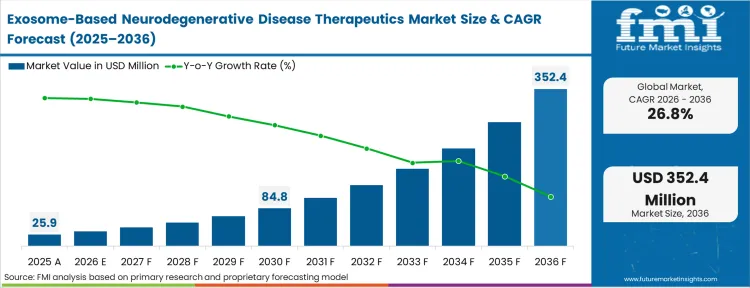
For growth to become self‑sustaining, the industry must first establish standardised isolation and characterisation metrics for clinical-grade production. Regulatory agencies and leading contract manufacturers are currently determining these baseline parameters to eliminate empirical batch-to-batch variations. Once this analytical foundation is codified, biopharma can confidently scale neurodegenerative disease pipelines, clearing the primary bottleneck of early-phase trial qualification and moving assets into late-stage evaluation.
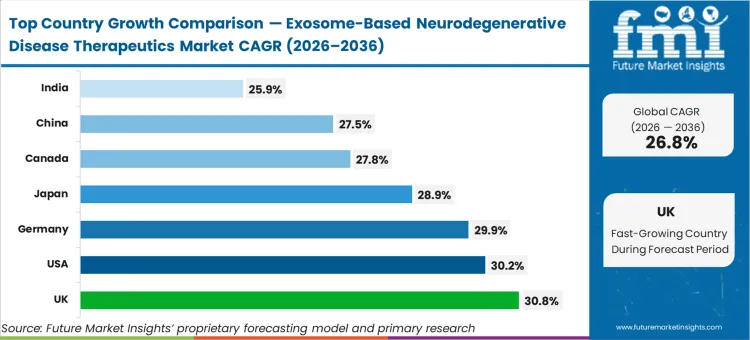
The United Kingdom leads the growth trajectory at 30.8%, followed closely by the United States at 30.2% and Germany at 29.9%. Japan tracks at 28.9%, while Canada and China are estimated to advance at 27.8% and 27.5%, respectively. India registers a 25.9% compound rate. This geographic variance reflects how quickly specific national regulators, particularly the MHRA in the UK, have established adaptive licensing pathways specifically tailored for advanced therapy medicinal products, distinct from standard biologic frameworks.
Exosome-Based Neurodegenerative Disease Therapeutics Market Key Takeaways
| Metric | Details |
|---|---|
| Industry Size (2026) | USD 32.8 Million |
| Industry Value (2036) | USD 352.5 Million |
| CAGR (2026–2036) | 26.80% |
Exosome-Based Neurodegenerative Disease Therapeutics Market Definition
The Exosome-Based Neurodegenerative Disease Therapeutics Market encompasses the development and commercialization of cell-derived extracellular vesicles engineered or utilized to deliver therapeutic payloads to the central nervous system. This boundary explicitly focuses on biological vesicle treatments aimed at halting or reversing neuronal degradation, functionally distinct from generic drug delivery systems or purely synthetic nanoparticle platforms.
Exosome-Based Neurodegenerative Disease Therapeutics Market Inclusions
Scope includes native and engineered exosomes derived from mesenchymal, neural, or immune cell lines, loaded with nucleic acids, proteins, or small molecules. It incorporates the alzheimers therapeutics applications that utilize these specifically sourced biological vesicles for targeted central nervous system delivery and localized cellular repair.
Exosome-Based Neurodegenerative Disease Therapeutics Market Exclusions
Standard synthetic lipid nanoparticles, viral vectors, and direct stem cell transplants are explicitly excluded. These modalities, while targeting similar neurological indications, operate on fundamentally different pharmacokinetic principles and require entirely separate manufacturing workflows, purification protocols, and regulatory compliance infrastructures.
Exosome-Based Neurodegenerative Disease Therapeutics Market Research Methodology
- Primary Research: FMI interviewed translational medicine directors, chief scientific officers at neuro-focused biotechnology firms, and lead investigators managing active advanced therapy medicinal product trials.
- Desk Research: Aggregation of active IND filings, clinical trial registry progression milestones, and patent grants related specifically to extracellular vesicle engineering and targeted central nervous system delivery.
- Market-Sizing and Forecasting: The baseline anchors to current research and development expenditure on active exosome neurology pipelines and verifiable projected milestone licensing payments.
- Data Validation and Update Cycle: Forecasts are cross-validated against the historical clinical adoption curves observed during the early commercialization phase of the cns treatment and therapy monoclonal antibody space.
Segmental Analysis
Exosome-Based Neurodegenerative Disease Therapeutics Market Analysis by Indication
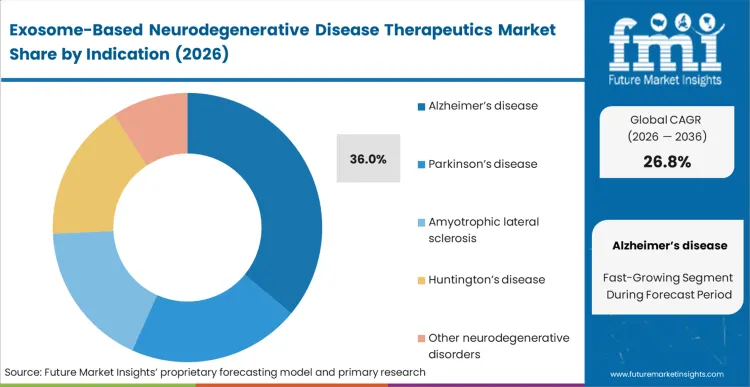
The exact decision clinical sponsors face right now is whether to deploy unproven delivery technology against established amyloid targets or risk entirely novel mechanisms. Alzheimer’s disease holds a dominant 36.0% share because the massive historical sunk costs in failed CNS trials compel sponsors to test new delivery vectors on known disease pathways first.
According to FMI's estimates, this concentration of capital creates a proving ground where exosome platforms must demonstrate safety at scale before expanding into orphan indications. Sponsors operating in the cell and gene therapy clinical trial space use Alzheimer's as the baseline for payload capacity and biodistribution metrics. Early validation here establishes the pharmacokinetics necessary to approach more aggressive pathologies. Firms that attempt to validate their platforms on obscure targets first struggle to secure the late-stage funding required for commercial scale-up.
- Primary sponsors: Well-capitalized pharmaceutical companies adopt these platforms to rescue stalled nucleic acid assets. This validates the fundamental safety profile required by regulatory bodies.
- Mid-tier biotechs: Following initial safety clearance, smaller firms adapt the validated delivery parameters for their proprietary payloads. They avoid the initial regulatory friction of proving the vector's safety from scratch.
- Orphan developers: Sponsors targeting rare neurological disease treatment arrive last, leveraging fully characterized exosome profiles to address highly specific patient populations that cannot support the cost of foundational vector development.
Exosome-Based Neurodegenerative Disease Therapeutics Market Analysis by Exosome source / platform
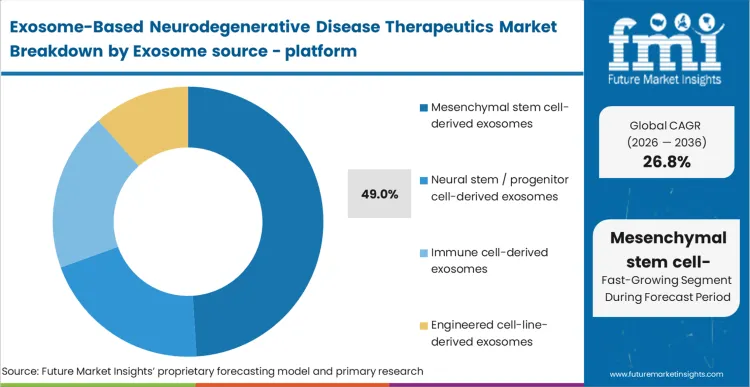
The reason mesenchymal stem cell-derived exosomes hold 49.0% of this market comes down to a single reality: isolation and culturing protocols for these specific cells are already regulatory-approved and globally scaled.
In FMI's view, manufacturing directors are not choosing this source for superior theoretical payload capacity; they choose it because the chemistry, manufacturing, and controls (CMC) documentation can be adapted from legacy stem cell therapies. The infrastructure to grow these cells in 3D bioreactors exists today, mitigating the massive capital expenditure required to establish new cell lines. Sourcing from non-standardized platforms forces developers to build dedicated purification cascades that often yield inconsistent vesicle counts. Attempting to navigate Phase II trials without a secure, scalable mesenchymal supply chain guarantees clinical delays.
- Production centers: Specialized contract manufacturers produce these vesicles using established stem cell master banks. They dictate the baseline pricing models for the entire clinical pipeline.
- Quality constraints: Yield variability between donor batches forces manufacturers to implement strict donor qualification standards. This creates a hidden cost in maintaining compliant donor registries.
- Commercial supply: Toward 2036, the reliance on primary donor tissue will decrease as immortalized mesenchymal lines achieve regulatory parity, fundamentally altering the cell and gene therapy manufacturing cost.
Exosome-Based Neurodegenerative Disease Therapeutics Market Analysis by Therapeutic cargo
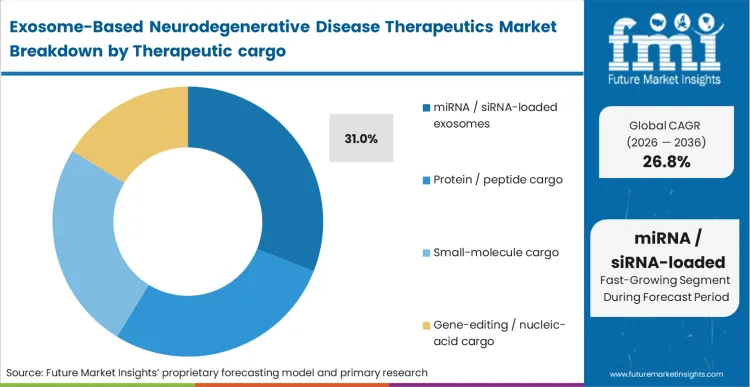
What legacy synthetic nanoparticles failed to deliver, stable transport of fragile genetic material, dictates the current investment landscape. The miRNA / siRNA-loaded exosomes sub-segment captures 31.0% share because these specific payloads require the lipid bilayer protection that exosomes naturally provide to survive systemic circulation.
As per FMI's projection, pharmacology teams evaluating platforms for parkinsons disease therapies prioritize vesicle systems that demonstrate high loading efficiency without disrupting the integrity of the genetic payload. The operational change involves moving from empirical co-incubation loading methods to active electroporation techniques that guarantee uniform therapeutic density. A miscalculation in loading efficiency results in sub-therapeutic dosing at the target tissue, rendering the entire clinical protocol invalid.
- Initial assessment: Translational teams evaluate platforms strictly on their ability to protect nucleic acids from rapid enzymatic degradation in human serum.
- Qualification metrics: The ability to achieve consistent loading percentages across multiple commercial-scale batches dictates whether a sponsor advances a platform into amyotrophic lateral sclerosis human trials.
- Expansion criteria: Sponsors renew licensing agreements only when the platform proves it can accommodate larger, next-generation payloads without compromising its ability to cross the blood-brain barrier.
Exosome-Based Neurodegenerative Disease Therapeutics Market Analysis by Route of administration
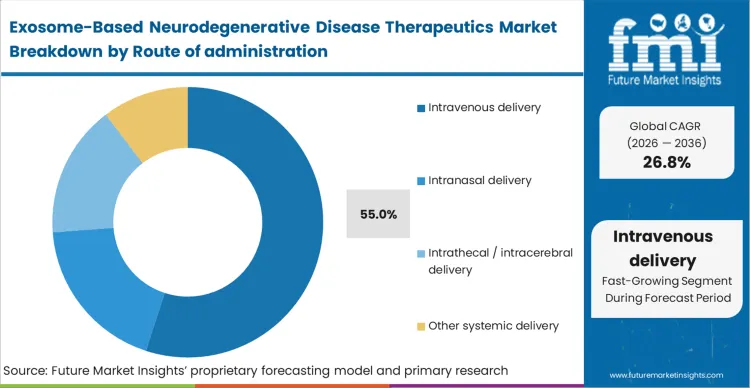
The commercial consequence of requiring specialised neurosurgical intervention severely limits patient addressability, compelling the need for systemic approaches. Intravenous delivery leads with 55.0% share because it leverages the natural homing capabilities of exosomes to cross the blood-brain barrier without the clinical friction of intrathecal ports.
Based on FMI's assessment, outpatient infusion centers can administer these therapies using standard infrastructure, drastically reducing the total cost of care. The pharmacokinetic advantage relies entirely on surface engineering that directs the intravenously administered vesicles specifically to neurological targets, bypassing peripheral tissue sinks. Failing to achieve high targeting efficiency via this route forces developers back to invasive administration methods, severely compressing the peak revenue potential of the asset.
- Baseline efficacy: Standard intravenous formulations achieve sufficient biodistribution for broad cortical targets, satisfying early-phase clinical requirements using existing cell therapy systems.
- Peripheral loss: A significant portion of the dose is cleared by the hepatic system before reaching the brain. Developers must engineer specific surface tropisms to offset this unavoidable systemic loss.
- Approval standards: Regulators demand rigorous biodistribution mapping to ensure that off-target accumulation in peripheral organs does not induce secondary toxicities over chronic dosing regimens.
Exosome-Based Neurodegenerative Disease Therapeutics Market Drivers, Restraints, and Opportunities
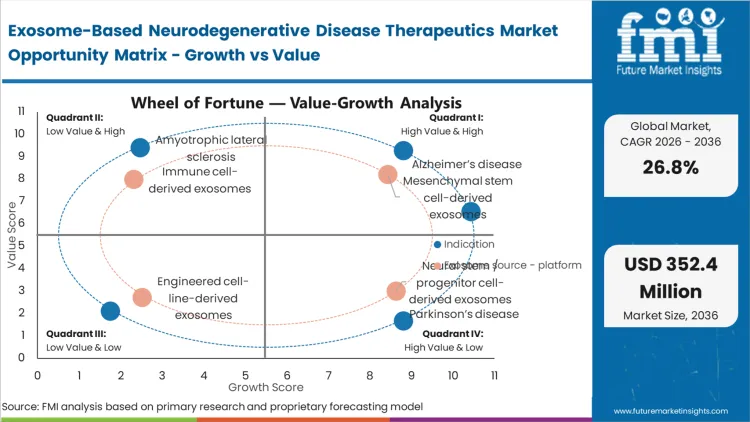
The high incidence of adverse immune responses to synthetic lipid nanoparticles compels translational medicine directors to qualify natural biological vectors for chronic central nervous system indications. In neurodegenerative diseases, the pressure is especially intense because patients often need ongoing treatments for many years, not just a one‑time cure. Directors cannot advance legacy cell therapy manufacturing frameworks that trigger neutralizing antibodies upon secondary administration. The commercial stakes are absolute: assets that provoke an immune response during Phase II dosing escalation are systematically abandoned, forcing companies to secure exosome-based licensing agreements to salvage their proprietary payloads.
The primary operational friction slowing immediate commercialization is the severe lack of standardized, scalable purification technologies capable of separating therapeutic exosomes from host-cell proteins and non-therapeutic vesicles. This is a fundamental downstream processing bottleneck, not a theoretical biological limitation. Current ultracentrifugation and size-exclusion chromatography methods fail to yield the purity and volume required for late-stage multi-center trials. While tangential flow filtration offers a partial scaling solution, the lack of universally accepted characterization assays means sponsors spend excessive time validating their batches to regulators rather than advancing their clinical protocols.
Opportunities in the Exosome-Based Neurodegenerative Disease Therapeutics Market
- Surface engineering IP: The ability to append specific CNS-targeting peptides to the exosome exterior enables biotechs to license their platform to multiple non-competing sponsors. Developers holding clear patents on these targeting mechanisms capture the highest upfront milestone payments.
- Immortalized cell lines: Regulatory openness to engineered master cell banks allows contract manufacturers to bypass variable primary donor sourcing. Firms that validate these continuous neurotrophins production lines secure long-term commercial supply agreements.
- Analytical assay development: The absence of standardized characterization tools creates a massive gap for specialized diagnostic firms. Vendors who establish the industry-standard assay for exosome quantification and purity become embedded directly into their clients' FDA submissions.
Regional Analysis
Based on the regional analysis, the Exosome-Based Neurodegenerative Disease Therapeutics Market is segmented into North America, Europe, Asia Pacific, and other regions across 40 plus countries.
.webp "Top Country Growth Comparison Exosome Based Neurodegenerative Disease Therapeutics Market Cagr (2026 2036)")
| Country | CAGR (2026 to 2036) |
|---|---|
| United Kingdom | 30.8% |
| United States | 30.2% |
| Germany | 29.9% |
| Japan | 28.9% |
| Canada | 27.8% |
| China | 27.5% |
| India | 25.9% |
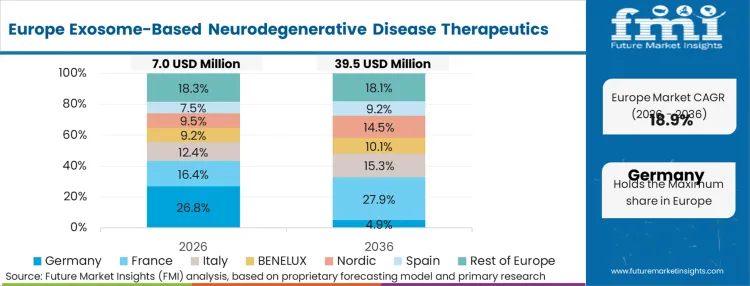
Europe Exosome-Based Neurodegenerative Disease Therapeutics Market Analysis
The regulatory environment in Europe specifically shapes adoption through targeted pathways designed for advanced therapy medicinal products that do not fit traditional biologic frameworks. Rather than forcing exosome platforms through standard pharmacokinetic evaluations designed for small molecules, regulators like the MHRA and EMA are establishing bespoke analytical requirements. This clarity allows translational teams to design their preclinical programs with precise knowledge of what downstream processing data will be demanded. FMI analysts opine that this alignment accelerates the transition from academic spinouts into commercially viable clinical sponsors. It establishes a distinct operational rhythm where quality-by-design principles are embedded into the purification process from day one, rather than retrofitted ahead of Phase II.
- United Kingdom: The UK market is forecast to register a CAGR of 30.8%. The MHRA’s Innovative Licensing and Access Pathway (ILAP) provides specific regulatory acceleration for highly complex biologicals that target severe neurological deficits. Translational teams navigating the UK system achieve clinical trial authorization significantly faster than their continental peers by engaging regulators during the preclinical design phase. This cadence establishes the UK as the primary global launchpad for first-in-human exosome trials.
- Germany: Germany's strict federal guidelines on cell and tissue procurement force biomanufacturers to establish highly transparent, fully localized donor networks for mesenchymal platforms. This constraint elevates the baseline cost of early-phase material but yields exceptionally clean CMC documentation that effortlessly passes subsequent European audits. Demand for these therapies in Germany is estimated to expand at a CAGR of 29.9%. Facilities that master this localized procurement framework capture premium contract manufacturing agreements from foreign sponsors seeking European market entry.
FMI's report includes detailed analysis of France, Italy, and the Nordics. These adjacent markets are aggressively harmonizing their clinical trial requirements to ensure they can participate in the multi-center efficacy trials that will originate from the UK and Germany.
North America Exosome-Based Neurodegenerative Disease Therapeutics Market Analysis
The physical and digital infrastructure condition in North America heavily dictates the speed of commercialization, specifically regarding specialized cold-chain logistics and highly centralized contract development and manufacturing organizations (CDMOs). Sponsors in this region are not building proprietary manufacturing suites; they are relying entirely on a concentrated network of specialized facilities capable of executing complex ultracentrifugation and tangential flow filtration at clinical scale. As per FMI's projection, this infrastructure concentration forces developers to lock in manufacturing slots years in advance. The operational reality is that access to dedicated bioprocessing capacity, rather than access to capital, serves as the ultimate governor on pipeline progression across the continent.
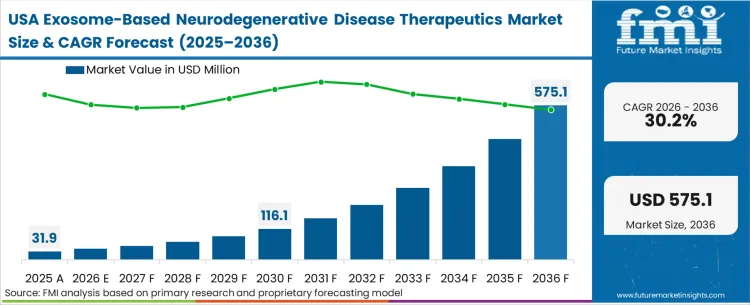
- United States: The Exosome-Based Neurodegenerative Disease Therapeutics Market in the US is set to achieve a CAGR of 30.2%. The FDA's Center for Biologics Evaluation and Research (CBER) treats exosome platforms with rigorous scrutiny regarding batch-to-batch consistency, forcing sponsors to invest heavily in automated in-line analytical monitoring. Operations heads managing these pipelines must divert significant capital toward assay development long before demonstrating human efficacy. This stringent analytical requirement positions US-developed platforms as the global standard for purity, giving them an advantage when out-licensing to international partners.
- Canada: Canada's concentrated academic research clusters in Toronto and Vancouver generate foundational platform intellectual property, but the domestic ecosystem lacks the late-stage commercial bioprocessing capacity to scale them. Clinical directors routinely out-license their engineered vesicle technologies to US-based CDMOs for clinical production. Canada is expected to see its sector grow at a compound annual rate of 27.8%. The reality on the ground is an industry that functions as a high-value intellectual property incubator rather than an end-to-end commercial manufacturing hub.
FMI's report includes broader North American partnership metrics and cross-border licensing data. The pattern reveals a total reliance on US-based analytical testing firms to validate Canadian-originating vesicle platforms.
Asia Pacific Exosome-Based Neurodegenerative Disease Therapeutics Market Analysis
Cost structures and aggressive government funding initiatives define the adoption pattern across the Asia Pacific region, separating it from Western regulatory-led dynamics. State-sponsored investments in regenerative medicine infrastructure allow regional biotechs to subsidize the exorbitant costs of downstream processing and donor cell culturing. In FMI's view, this economics-led environment enables companies to run massive parallel preclinical programs testing various cellular sources, a capital-intensive strategy that Western venture models rarely support. The focus here is on achieving rapid domestic approvals through accelerated pathways, leveraging localized clinical data to establish market dominance before Western platforms can navigate the region's diverse import regulations.
- Japan: Japan's PMDA allows conditional, time-limited approval for regenerative therapies based on early-phase safety data, fundamentally altering the commercial timeline for exosome sponsors. Procurement teams can begin generating domestic revenue while the pivotal efficacy trials are still ongoing. A CAGR of 28.9% is expected for the market in Japan over the forecast period. This framework clears the financial bottleneck of late-stage clinical funding, allowing companies to self-finance their final regulatory submissions.
- China: Broad state investment in synthetic biology and blood based biomarker for alzheimers disease diagnostics infrastructure provides China's industry is projected to witness growth at a CAGR of 27.5%. Chinese developers with unprecedented access to scalable bioreactor capacity. The operational mandate is to push immortalized cell-line platforms that bypass the donor variability issues plaguing Western mesenchymal approaches. The trajectory points toward China becoming the primary exporter of highly standardized, commoditized exosome delivery chassis by the early 2030s.
- India: FMI estimates the market in India to expand at an annual growth rate of 25.9%. India's rapidly modernizing contract research ecosystem is absorbing the preclinical testing and toxicity evaluation overflow from Western sponsors. Local operators possess the highly specialized animal models required to prove blood-brain barrier penetration without the associated premium costs of European facilities. Facilities that demonstrate reliable biodistribution mapping capabilities rapidly capture exclusive testing contracts from top-tier global pharmaceutical firms.
FMI's report includes evaluation of South Korea and Australia. These nations are acting as critical clinical trial bridges, offering Western-compliant data integrity while operating within the broader Asian economic cost.
Competitive Aligners for Market Players
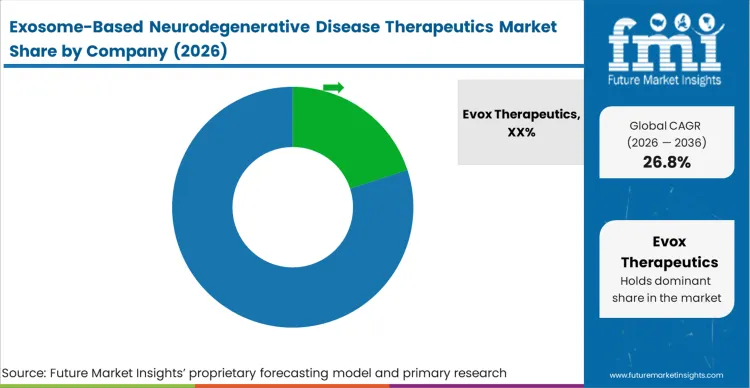
The competitive situation of this market is exceptionally concentrated because the barrier to entry is not identifying a therapeutic payload, but possessing the proprietary intellectual property required to load it into a vesicle and scale the purification. Buyers in this context, large pharmaceutical sponsors distinguish qualified vendors based entirely on their demonstrated chemistry, manufacturing, and controls (CMC) documentation. Companies like Evox Therapeutics and Coya Therapeutics do not compete on theoretical biology; they compete on their ability to prove that batch 100 will perform identically to batch 1. A firm with a mediocre targeting peptide but a flawless, scalable manufacturing process will consistently beat a firm with superior biology but empirical, unscalable isolation methods.
Incumbents holding foundational patents on specific electroporation loading techniques or surface-display engineering, such as ArunA Bio and ILIAS Biologics, maintain a distinct advantage. Their advantage persists because regulatory bodies treat the exosome vector and its manufacturing process as intrinsically linked; changing the loading method requires restarting the safety evaluation. To replicate this position, a challenger must build a fundamentally novel mechanism for embedding genetic material into the lipid bilayer without triggering intellectual property tripwires or degrading the vesicle. They must engineer a completely orthogonal engineered cell therapy platform that achieves high-density loading at commercial scale.
Large biopharma buyers inherently resist this vendor lock-in by aggressively pursuing internal development of synthetic alternatives while simultaneously licensing biological platforms as a hedge. The tension lies between pharmaceutical companies demanding complete technology transfer and biotechnology firms guarding their proprietary manufacturing cell lines as their sole source of enterprise value. As the decade progresses toward 2036, the market will naturally stratify: a few dominant players will provide commoditized, empty vesicle chassis for broad delivery, while specialized firms will maintain high-margin monopolies over highly engineered vectors designed exclusively for complex brain tumor treatment and targeted neuronal repair.
Key Players in Exosome-Based Neurodegenerative Disease Therapeutics Market
- Evox Therapeutics
- ArunA Bio
- Coya Therapeutics
- ILIAS Biologics
- NurExone Biologic
- ReNeuron Group
- Vesalic Limited
Scope of the Report
| Metric | Value |
|---|---|
| Quantitative Units | USD 32.8 Million to USD 352.5 Million, at a CAGR of 26.80% |
| Market Definition | This market tracks the commercial progression of cell-derived lipid vesicles deployed specifically to transport therapeutic agents across the blood-brain barrier. It focuses entirely on biological cellular secretion systems rather than synthetic chemistry to achieve targeted neurological intervention. |
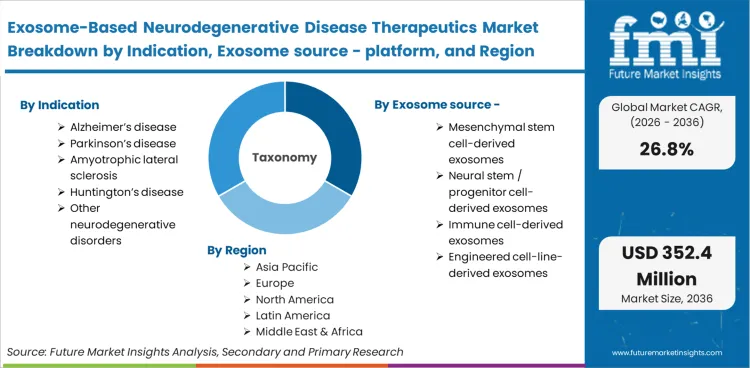
| Indication Segmentation | Alzheimer’s disease, Parkinson’s disease, Amyotrophic lateral sclerosis, Huntington’s disease, Other neurodegenerative disorders |
| Exosome source / platform Segmentation | Mesenchymal stem cell-derived exosomes, Neural stem / progenitor cell-derived exosomes, Immune cell-derived exosomes, Engineered cell-line-derived exosomes |
| Therapeutic cargo Segmentation | miRNA / siRNA-loaded exosomes, Protein / peptide cargo, Small-molecule cargo, Gene-editing / nucleic-acid cargo |
| Route of administration Segmentation | Intravenous delivery, Intranasal delivery, Intrathecal / intracerebral delivery, Other systemic delivery |
| Regions Covered | North America, Europe, Asia Pacific, Latin America, Middle East, Africa, Oceania |
| Countries Covered | United Kingdom, United States, Germany, Japan, Canada, China, India, and 40 plus countries |
| Key Companies Profiled | Evox Therapeutics, ArunA Bio, Coya Therapeutics, ILIAS Biologics, NurExone Biologic, ReNeuron Group, Vesalic Limited |
| Forecast Period | 2026 to 2036 |
| Approach | FMI interviewed translational medicine directors and chief scientific officers at neuro-focused biotechs. The baseline anchors to current R&D expenditure on active exosome CNS pipelines and projected milestone licensing payments. Forecasts were cross-validated against historical adoption curves of early CNS monoclonal antibodies. |
Exosome-Based Neurodegenerative Disease Therapeutics Market Analysis by Segments
Indication:
- Alzheimer’s disease
- Parkinson’s disease
- Amyotrophic lateral sclerosis
- Huntington’s disease
- Other neurodegenerative disorders
Exosome source / platform:
- Mesenchymal stem cell-derived exosomes
- Neural stem / progenitor cell-derived exosomes
- Immune cell-derived exosomes
- Engineered cell-line-derived exosomes
Therapeutic cargo:
- miRNA / siRNA-loaded exosomes
- Protein / peptide cargo
- Small-molecule cargo
- Gene-editing / nucleic-acid cargo
Route of administration:
- Intravenous delivery
- Intranasal delivery
- Intrathecal / intracerebral delivery
- Other systemic delivery
Region:
- North America
- United States
- Canada
- Europe
- United Kingdom
- Germany
- Asia Pacific
- Japan
- China
- India
Bibliography
- Alzheimer’s Association. (2025). 2025 Alzheimer’s disease facts and figures. Alzheimer’s & Dementia, 21(5).
- ClinicalTrials.gov. (2025). Patients with ALS and other motor disorders will be treated with mesenchymal cell exosome solution (NCT07105371). U.S. National Library of Medicine.
- Hu, N., Chen, L., Hu, G., & Ma, R. (2025). Advancements in extracellular vesicle therapy for neurodegenerative diseases. Exploration of Neuroprotective Therapy, 5, 1004104.
- Lee, C.-J., Jang, S. H., Lim, J., Park, H., Ahn, S.-H., Park, S. Y., Seo, H., Song, S.-J., Shin, J.-A., Choi, C., Gee, H. Y., & Choi, Y.-H. (2025). Exosome-based targeted delivery of NF-κB ameliorates age-related neuroinflammation in the aged mouse brain. Experimental & Molecular Medicine, 57(1), 235–248.
- Saikia, B., & Dhanushkodi, A. (2024). Engineered exosome therapeutics for neurodegenerative diseases. Life Sciences, 356, 123019.
- Shah, S., Mansour, H. M., Aguilar, T. M., & Lucke-Wold, B. (2024). Mesenchymal Stem Cell-Derived Exosomes as a Neuroregeneration Treatment for Alzheimer’s Disease. Biomedicines, 12(9), 2113.
- Sun, M., Qin, F., Bu, Q., Zhao, Y., Yang, X., Zhang, D., & Cen, X. (2025). Exosome-Based Therapeutics: A Natural Solution to Overcoming the Blood-Brain Barrier in Neurodegenerative Diseases. MedComm, 6(9), e70386.
- An, W., Jin, Z., & Li, Y. (2026). Dual role of exosomes in neurodegenerative diseases: A molecular bridge between neuroinflammation and transmission of pathological proteins. Frontiers in Neurology, 16, 1708655.
This bibliography is provided for reader reference. The full FMI report contains the complete reference list with primary source documentation.
This Report Addresses
- Market intelligence to support strategic decision making across mesenchymal and engineered cell-line-derived exosome platforms
- Market size estimation and 10-year revenue forecasts from 2026 to 2036, supported by active IND filing aggregation and licensing milestone tracking
- Growth opportunity mapping across specific therapeutic cargos with emphasis on the standardization of analytical characterization assays
- Segment and regional revenue forecasts covering Alzheimer's and Parkinson's pipelines across the MHRA's adaptive licensing environment
- Competition strategy assessment including electroporation loading IP, surface-display engineering, and downstream purification scalability
- Technology development tracking including automated in-line analytical monitoring and specific targeting peptide formulations discussed in this article
- Market access analysis covering conditional regenerative therapy approvals in Japan and strict cell procurement guidelines in Germany
- Market report delivery in PDF, Excel, PPT, and interactive dashboard formats for executive strategy, biopharma pipeline planning, and operational benchmarking use
Frequently Asked Questions
How large is the Exosome-Based Neurodegenerative Disease Therapeutics Market in 2026?
The industry is expected to reach USD 32.8 million in 2026. This initial valuation reflects early-stage licensing milestones and contract manufacturing expenditures rather than mass commercial product sales, signaling a market entirely in its clinical development phase.
What will it be valued at by 2036?
The valuation advances to USD 352.5 million through 2036. This cumulative buildup indicates the expected timeline for current Phase I/II neurological assets to secure final regulatory clearance and initiate broad commercial dosing.
What CAGR is projected?
The sector advances at a 26.80% compound annual growth rate. This rate is strictly constrained by the time required to build specialized bioprocessing infrastructure and validate clinical-grade purification cascades, rather than theoretical biological demand.
Which Indication segment leads?
Alzheimer’s disease captures a dominant 36.0% share. Biopharma sponsors are unwilling to risk unproven delivery vectors on obscure orphan targets, forcing them to validate exosome safety profiles on established amyloid and tau pathways where historical clinical endpoints are well understood.
Which Exosome source / platform segment leads?
Mesenchymal stem cell-derived exosomes hold 49.0% of the platform market. Manufacturing directors choose this source because the culturing protocols and master cell bank regulatory frameworks are already fully established from legacy regenerative medicine pipelines.
Which Therapeutic cargo segment leads?
miRNA / siRNA-loaded exosomes represent 31.0% of active payloads. These specific genetic materials are acutely vulnerable to enzymatic degradation in human serum, absolutely requiring the protective lipid bilayer of an exosome to survive transit to the brain.
What drives rapid growth?
Translational medicine teams are compelled to abandon synthetic lipid nanoparticles due to their adverse immune profiles during chronic administration. The operational requirement for a biologically tolerated, repeated-dosing vector forces capital directly into natural extracellular platforms.
What is the primary restraint?
The fundamental downstream processing bottleneck of scalable purification limits commercialization. Current ultracentrifugation techniques cannot yield the volume or purity required for multi-center Phase III trials without exorbitant batch validation costs.
Which country grows fastest?
The United Kingdom outpaces the United States, 30.8% to 30.2%. The difference lies in the MHRA's highly adaptive Innovative Licensing and Access Pathway, which allows UK-based sponsors to transition from preclinical models to human trials significantly faster than the rigid sequential processes mandated elsewhere.
Why do biopharma companies outsource exosome production instead of building internal capacity?
The capital expenditure required to establish continuous tangential flow filtration suites specifically for exosomes is difficult to justify for a single pipeline asset. Sponsors rely on centralized contract manufacturers to absorb this infrastructure risk until their asset clears Phase II efficacy endpoints.
What makes intravenous delivery the preferred route of administration?
It bypasses the requirement for specialized neurosurgical intervention, drastically lowering the clinical friction of patient enrollment. Developers engineer specific surface tropisms to ensure these intravenously administered vesicles cross the blood-brain barrier rather than accumulating in the liver.
How does the Japanese regulatory framework alter the commercial timeline?
Japan's PMDA permits conditional approval for regenerative therapies based entirely on early-phase safety data. This allows biotechs to generate domestic revenue while conducting pivotal efficacy trials, completely removing the late-stage funding bottleneck that strangles Western developers.
What operational metric determines if a sponsor renews a platform licensing agreement?
Sponsors measure the loading efficiency consistency across multiple commercial-scale batches. If the platform requires constant empirical adjustments to achieve therapeutic payload density, the sponsor will abandon the partnership before entering Phase III.
Why are engineered cell-line exosomes gaining traction against primary donor sources?
Relying on primary mesenchymal donors introduces unavoidable biological variability into the manufacturing process. Immortalized cell lines offer a highly standardized, regulatory-compliant master bank that drastically reduces the hidden costs of ongoing donor qualification.
What role does analytical assay development play in this market?
Regulators demand rigorous proof that the therapeutic exosome is separate from host-cell debris. Vendors who develop the industry-standard assays for exact vesicle quantification become indispensable, as their tools are embedded directly into the sponsor's FDA submissions.
Why do synthetic lipid nanoparticles fail in chronic neurological applications?
Synthetic vectors often trigger neutralizing antibodies upon secondary or tertiary administration. Because neurodegenerative diseases require lifelong therapeutic intervention, this immune response renders the synthetic delivery vehicle useless after the initial dose.
How do German cell procurement guidelines impact early-phase developers?
Germany demands highly transparent, localized donor networks for any biological material used in clinical applications. While this increases upfront procurement costs, it yields pristine manufacturing documentation that effortlessly clears subsequent European clinical audits.
What intellectual property creates the strongest competitive moat?
Patents covering active electroporation loading techniques provide an absolute advantage. Companies holding these patents control the fundamental method of getting the therapeutic payload into the vesicle without destroying its integrity.
How does Canada's market dynamic differ from the United States?
Canada functions as a high-value intellectual property incubator rather than an end-to-end commercial hub. Academic clusters in Toronto generate foundational engineering patents, but the lack of domestic late-stage bioprocessing capacity forces clinical directors to out-license manufacturing to US operators.
What is the commercial consequence of failing to achieve high brain-targeting efficiency?
If the engineered surface peptides fail to direct the exosome specifically to the central nervous system, a massive percentage of the dose is lost to peripheral organs. This forces developers to exponentially increase the administered dose, ruining the cost-of-goods economics of the therapy.
How are large pharmaceutical companies hedging their delivery vector bets?
They maintain internal R&D programs focused on next-generation synthetic nanoparticles while simultaneously signing exclusive licensing deals with exosome biotechs. This ensures they have a biological fallback option if their synthetic CNS pipelines hit unforeseen toxicity walls in Phase I.
Preview the report firsthand - request a free sample
Get SampleGet the brochure for pricing and purchase details.
Get PDFTable of Content
- Executive Summary
- Global Market Outlook
- Demand-side Trends
- Supply-side Trends
- Technology Roadmap Analysis
- Analysis and Recommendations
- Market Overview
- Market Coverage / Taxonomy
- Market Definition / Scope / Limitations
- Research Methodology
- Chapter Orientation
- Analytical Lens and Working Hypotheses
- Market Structure, Signals, and Trend Drivers
- Benchmarking and Cross-market Comparability
- Market Sizing, Forecasting, and Opportunity Mapping
- Research Design and Evidence Framework
- Desk Research Programme (Secondary Evidence)
- Company Annual and Sustainability Reports
- Peer-reviewed Journals and Academic Literature
- Corporate Websites, Product Literature, and Technical Notes
- Earnings Decks and Investor Briefings
- Statutory Filings and Regulatory Disclosures
- Technical White Papers and Standards Notes
- Trade Journals, Industry Magazines, and Analyst Briefs
- Conference Proceedings, Webinars, and Seminar Materials
- Government Statistics Portals and Public Data Releases
- Press Releases and Reputable Media Coverage
- Specialist Newsletters and Curated Briefings
- Sector Databases and Reference Repositories
- FMI Internal Proprietary Databases and Historical Market Datasets
- Subscription Datasets and Paid Sources
- Social Channels, Communities, and Digital Listening Inputs
- Additional Desk Sources
- Expert Input and Fieldwork (Primary Evidence)
- Primary Modes
- Qualitative Interviews and Expert Elicitation
- Quantitative Surveys and Structured Data Capture
- Blended Approach
- Why Primary Evidence is Used
- Field Techniques
- Interviews
- Surveys
- Focus Groups
- Observational and In-context Research
- Social and Community Interactions
- Stakeholder Universe Engaged
- C-suite Leaders
- Board Members
- Presidents and Vice Presidents
- R&D and Innovation Heads
- Technical Specialists
- Domain Subject-matter Experts
- Scientists
- Physicians and Other Healthcare Professionals
- Governance, Ethics, and Data Stewardship
- Research Ethics
- Data Integrity and Handling
- Primary Modes
- Tooling, Models, and Reference Databases
- Desk Research Programme (Secondary Evidence)
- Data Engineering and Model Build
- Data Acquisition and Ingestion
- Cleaning, Normalisation, and Verification
- Synthesis, Triangulation, and Analysis
- Quality Assurance and Audit Trail
- Market Background
- Market Dynamics
- Drivers
- Restraints
- Opportunity
- Trends
- Scenario Forecast
- Demand in Optimistic Scenario
- Demand in Likely Scenario
- Demand in Conservative Scenario
- Opportunity Map Analysis
- Product Life Cycle Analysis
- Supply Chain Analysis
- Investment Feasibility Matrix
- Value Chain Analysis
- PESTLE and Porter’s Analysis
- Regulatory Landscape
- Regional Parent Market Outlook
- Production and Consumption Statistics
- Import and Export Statistics
- Market Dynamics
- Global Market Analysis 2021 to 2025 and Forecast, 2026 to 2036
- Historical Market Size Value (USD Million) Analysis, 2021 to 2025
- Current and Future Market Size Value (USD Million) Projections, 2026 to 2036
- Y-o-Y Growth Trend Analysis
- Absolute $ Opportunity Analysis
- Global Market Pricing Analysis 2021 to 2025 and Forecast 2026 to 2036
- Global Market Analysis 2021 to 2025 and Forecast 2026 to 2036, By Indication
- Introduction / Key Findings
- Historical Market Size Value (USD Million) Analysis By Indication , 2021 to 2025
- Current and Future Market Size Value (USD Million) Analysis and Forecast By Indication , 2026 to 2036
- Alzheimer’s disease
- Parkinson’s disease
- Amyotrophic lateral sclerosis
- Huntington’s disease
- Other neurodegenerative disorders
- Alzheimer’s disease
- Y-o-Y Growth Trend Analysis By Indication , 2021 to 2025
- Absolute $ Opportunity Analysis By Indication , 2026 to 2036
- Global Market Analysis 2021 to 2025 and Forecast 2026 to 2036, By Exosome source / platform
- Introduction / Key Findings
- Historical Market Size Value (USD Million) Analysis By Exosome source / platform, 2021 to 2025
- Current and Future Market Size Value (USD Million) Analysis and Forecast By Exosome source / platform, 2026 to 2036
- Mesenchymal stem cell-derived exosomes
- Neural stem / progenitor cell-derived exosomes
- Immune cell-derived exosomes
- Engineered cell-line-derived exosomes
- Mesenchymal stem cell-derived exosomes
- Y-o-Y Growth Trend Analysis By Exosome source / platform, 2021 to 2025
- Absolute $ Opportunity Analysis By Exosome source / platform, 2026 to 2036
- Global Market Analysis 2021 to 2025 and Forecast 2026 to 2036, By Therapeutic cargo
- Introduction / Key Findings
- Historical Market Size Value (USD Million) Analysis By Therapeutic cargo, 2021 to 2025
- Current and Future Market Size Value (USD Million) Analysis and Forecast By Therapeutic cargo, 2026 to 2036
- miRNA / siRNA-loaded exosomes
- Protein / peptide cargo
- Small-molecule cargo
- Gene-editing / nucleic-acid cargo
- miRNA / siRNA-loaded exosomes
- Y-o-Y Growth Trend Analysis By Therapeutic cargo, 2021 to 2025
- Absolute $ Opportunity Analysis By Therapeutic cargo, 2026 to 2036
- Global Market Analysis 2021 to 2025 and Forecast 2026 to 2036, By Route of administration
- Introduction / Key Findings
- Historical Market Size Value (USD Million) Analysis By Route of administration, 2021 to 2025
- Current and Future Market Size Value (USD Million) Analysis and Forecast By Route of administration, 2026 to 2036
- Intravenous delivery
- Intranasal delivery
- Intrathecal / intracerebral delivery
- Other systemic delivery
- Intravenous delivery
- Y-o-Y Growth Trend Analysis By Route of administration, 2021 to 2025
- Absolute $ Opportunity Analysis By Route of administration, 2026 to 2036
- Global Market Analysis 2021 to 2025 and Forecast 2026 to 2036, By Region
- Introduction
- Historical Market Size Value (USD Million) Analysis By Region, 2021 to 2025
- Current Market Size Value (USD Million) Analysis and Forecast By Region, 2026 to 2036
- North America
- Latin America
- Western Europe
- Eastern Europe
- East Asia
- South Asia and Pacific
- Middle East & Africa
- Market Attractiveness Analysis By Region
- North America Market Analysis 2021 to 2025 and Forecast 2026 to 2036, By Country
- Historical Market Size Value (USD Million) Trend Analysis By Market Taxonomy, 2021 to 2025
- Market Size Value (USD Million) Forecast By Market Taxonomy, 2026 to 2036
- By Country
- USA
- Canada
- Mexico
- By Indication
- By Exosome source / platform
- By Therapeutic cargo
- By Route of administration
- By Country
- Market Attractiveness Analysis
- By Country
- By Indication
- By Exosome source / platform
- By Therapeutic cargo
- By Route of administration
- Key Takeaways
- Latin America Market Analysis 2021 to 2025 and Forecast 2026 to 2036, By Country
- Historical Market Size Value (USD Million) Trend Analysis By Market Taxonomy, 2021 to 2025
- Market Size Value (USD Million) Forecast By Market Taxonomy, 2026 to 2036
- By Country
- Brazil
- Chile
- Rest of Latin America
- By Indication
- By Exosome source / platform
- By Therapeutic cargo
- By Route of administration
- By Country
- Market Attractiveness Analysis
- By Country
- By Indication
- By Exosome source / platform
- By Therapeutic cargo
- By Route of administration
- Key Takeaways
- Western Europe Market Analysis 2021 to 2025 and Forecast 2026 to 2036, By Country
- Historical Market Size Value (USD Million) Trend Analysis By Market Taxonomy, 2021 to 2025
- Market Size Value (USD Million) Forecast By Market Taxonomy, 2026 to 2036
- By Country
- Germany
- UK
- Italy
- Spain
- France
- Nordic
- BENELUX
- Rest of Western Europe
- By Indication
- By Exosome source / platform
- By Therapeutic cargo
- By Route of administration
- By Country
- Market Attractiveness Analysis
- By Country
- By Indication
- By Exosome source / platform
- By Therapeutic cargo
- By Route of administration
- Key Takeaways
- Eastern Europe Market Analysis 2021 to 2025 and Forecast 2026 to 2036, By Country
- Historical Market Size Value (USD Million) Trend Analysis By Market Taxonomy, 2021 to 2025
- Market Size Value (USD Million) Forecast By Market Taxonomy, 2026 to 2036
- By Country
- Russia
- Poland
- Hungary
- Balkan & Baltic
- Rest of Eastern Europe
- By Indication
- By Exosome source / platform
- By Therapeutic cargo
- By Route of administration
- By Country
- Market Attractiveness Analysis
- By Country
- By Indication
- By Exosome source / platform
- By Therapeutic cargo
- By Route of administration
- Key Takeaways
- East Asia Market Analysis 2021 to 2025 and Forecast 2026 to 2036, By Country
- Historical Market Size Value (USD Million) Trend Analysis By Market Taxonomy, 2021 to 2025
- Market Size Value (USD Million) Forecast By Market Taxonomy, 2026 to 2036
- By Country
- China
- Japan
- South Korea
- By Indication
- By Exosome source / platform
- By Therapeutic cargo
- By Route of administration
- By Country
- Market Attractiveness Analysis
- By Country
- By Indication
- By Exosome source / platform
- By Therapeutic cargo
- By Route of administration
- Key Takeaways
- South Asia and Pacific Market Analysis 2021 to 2025 and Forecast 2026 to 2036, By Country
- Historical Market Size Value (USD Million) Trend Analysis By Market Taxonomy, 2021 to 2025
- Market Size Value (USD Million) Forecast By Market Taxonomy, 2026 to 2036
- By Country
- India
- ASEAN
- Australia & New Zealand
- Rest of South Asia and Pacific
- By Indication
- By Exosome source / platform
- By Therapeutic cargo
- By Route of administration
- By Country
- Market Attractiveness Analysis
- By Country
- By Indication
- By Exosome source / platform
- By Therapeutic cargo
- By Route of administration
- Key Takeaways
- Middle East & Africa Market Analysis 2021 to 2025 and Forecast 2026 to 2036, By Country
- Historical Market Size Value (USD Million) Trend Analysis By Market Taxonomy, 2021 to 2025
- Market Size Value (USD Million) Forecast By Market Taxonomy, 2026 to 2036
- By Country
- Kingdom of Saudi Arabia
- Other GCC Countries
- Turkiye
- South Africa
- Other African Union
- Rest of Middle East & Africa
- By Indication
- By Exosome source / platform
- By Therapeutic cargo
- By Route of administration
- By Country
- Market Attractiveness Analysis
- By Country
- By Indication
- By Exosome source / platform
- By Therapeutic cargo
- By Route of administration
- Key Takeaways
- Key Countries Market Analysis
- USA
- Pricing Analysis
- Market Share Analysis, 2025
- By Indication
- By Exosome source / platform
- By Therapeutic cargo
- By Route of administration
- Canada
- Pricing Analysis
- Market Share Analysis, 2025
- By Indication
- By Exosome source / platform
- By Therapeutic cargo
- By Route of administration
- Mexico
- Pricing Analysis
- Market Share Analysis, 2025
- By Indication
- By Exosome source / platform
- By Therapeutic cargo
- By Route of administration
- Brazil
- Pricing Analysis
- Market Share Analysis, 2025
- By Indication
- By Exosome source / platform
- By Therapeutic cargo
- By Route of administration
- Chile
- Pricing Analysis
- Market Share Analysis, 2025
- By Indication
- By Exosome source / platform
- By Therapeutic cargo
- By Route of administration
- Germany
- Pricing Analysis
- Market Share Analysis, 2025
- By Indication
- By Exosome source / platform
- By Therapeutic cargo
- By Route of administration
- UK
- Pricing Analysis
- Market Share Analysis, 2025
- By Indication
- By Exosome source / platform
- By Therapeutic cargo
- By Route of administration
- Italy
- Pricing Analysis
- Market Share Analysis, 2025
- By Indication
- By Exosome source / platform
- By Therapeutic cargo
- By Route of administration
- Spain
- Pricing Analysis
- Market Share Analysis, 2025
- By Indication
- By Exosome source / platform
- By Therapeutic cargo
- By Route of administration
- France
- Pricing Analysis
- Market Share Analysis, 2025
- By Indication
- By Exosome source / platform
- By Therapeutic cargo
- By Route of administration
- India
- Pricing Analysis
- Market Share Analysis, 2025
- By Indication
- By Exosome source / platform
- By Therapeutic cargo
- By Route of administration
- ASEAN
- Pricing Analysis
- Market Share Analysis, 2025
- By Indication
- By Exosome source / platform
- By Therapeutic cargo
- By Route of administration
- Australia & New Zealand
- Pricing Analysis
- Market Share Analysis, 2025
- By Indication
- By Exosome source / platform
- By Therapeutic cargo
- By Route of administration
- China
- Pricing Analysis
- Market Share Analysis, 2025
- By Indication
- By Exosome source / platform
- By Therapeutic cargo
- By Route of administration
- Japan
- Pricing Analysis
- Market Share Analysis, 2025
- By Indication
- By Exosome source / platform
- By Therapeutic cargo
- By Route of administration
- South Korea
- Pricing Analysis
- Market Share Analysis, 2025
- By Indication
- By Exosome source / platform
- By Therapeutic cargo
- By Route of administration
- Russia
- Pricing Analysis
- Market Share Analysis, 2025
- By Indication
- By Exosome source / platform
- By Therapeutic cargo
- By Route of administration
- Poland
- Pricing Analysis
- Market Share Analysis, 2025
- By Indication
- By Exosome source / platform
- By Therapeutic cargo
- By Route of administration
- Hungary
- Pricing Analysis
- Market Share Analysis, 2025
- By Indication
- By Exosome source / platform
- By Therapeutic cargo
- By Route of administration
- Kingdom of Saudi Arabia
- Pricing Analysis
- Market Share Analysis, 2025
- By Indication
- By Exosome source / platform
- By Therapeutic cargo
- By Route of administration
- Turkiye
- Pricing Analysis
- Market Share Analysis, 2025
- By Indication
- By Exosome source / platform
- By Therapeutic cargo
- By Route of administration
- South Africa
- Pricing Analysis
- Market Share Analysis, 2025
- By Indication
- By Exosome source / platform
- By Therapeutic cargo
- By Route of administration
- USA
- Market Structure Analysis
- Competition Dashboard
- Competition Benchmarking
- Market Share Analysis of Top Players
- By Regional
- By Indication
- By Exosome source / platform
- By Therapeutic cargo
- By Route of administration
- Competition Analysis
- Competition Deep Dive
- Evox Therapeutics
- Overview
- Product Portfolio
- Profitability by Market Segments (Product/Age /Sales Channel/Region)
- Sales Footprint
- Strategy Overview
- Marketing Strategy
- Product Strategy
- Channel Strategy
- ArunA Bio
- Coya Therapeutics
- ILIAS Biologics
- NurExone Biologic
- ReNeuron Group
- Vesalic Limited
- Evox Therapeutics
- Competition Deep Dive
- Assumptions & Acronyms Used


