

- Industry Size (2026)
- USD 1180 Mn
- Forecast (2036)
- USD 3620 Mn
- CAGR (2026 to 2036)
- 11.9%
Faith-Based Product Packaging Market Forecast and Outlook 2026 to 2036
Faith-based product packaging market revenue is projected to total USD 1,180 million in 2026, increasing to USD 3,620 million by 2036, at a CAGR of 11.9%. FMI analysis indicates the market is undergoing a fundamental shift from utilitarian brown boxes to thematically designed, experience-driven packaging that respects religious iconography while meeting modern retail and gifting standards. From 2026 to 2027, demand will be defined by the expansion of large-format religious retail chains and the burgeoning online sale of ceremonial items, necessitating packaging that protects, presents, and communicates brand and spiritual identity.
Growth is anchored in the sustained economic power of religious consumerism and the formalization of its supply chains. From pilgrimage souvenirs to high-end religious art, the act of purchase is often an integral part of spiritual practice and community identity. This transforms packaging from a cost to a value-adding component that enhances the devotional experience, justifies premium pricing, and ensures the item arrives in a condition worthy of its purpose. This cultural-commercial dynamic directly stimulates investment in specialized design and production.
WestRock Company has continued to strengthen its structural design and premium paperboard carton capabilities during 2024–2025, supporting delicate and presentation-sensitive products across specialty retail categories. Public disclosures highlight advanced carton engineering, decorative finishes (including foiling and embossing), and protection for fragile contents—capabilities that are applicable to faith-adjacent retail items requiring durability and dignified presentation, without indicating a dedicated religious-sector program.
Technical innovation in premium paperboard is increasingly focused on combining sustainability with print fidelity. Graphic Packaging International has publicly emphasized expanding the use of high recycled-content paperboard while maintaining bright white grades and surface properties needed for high-quality graphics. These developments support customers seeking environmentally responsible packaging that still delivers fine detail and visual clarity, attributes relevant to illustrated and decorative products, including religious publications and gift items.
In India, scale and cultural specificity drive packaging demand for ceremonial foods and souvenirs. ITC Packaging & Printing supplies high-volume corrugated and paperboard solutions used across food, gifting, and institutional distribution channels. The division’s strengths include robust pack designs for crowded retail environments, high-speed production, and advanced printing, capabilities that align with the requirements of temple offerings and pilgrimage markets, where durability, volume, and culturally resonant graphics are essential.
European suppliers continue to emphasize distribution efficiency and shelf readiness for fragmented retail networks. Smurfit Kappa Group leverages its design and innovation centers to develop optimized, shelf-ready and storage-efficient packaging systems for small and mid-scale distributors. These solutions prioritize easy handling, protection during extended storage, and effective in-store presentation, characteristics that fit the operational realities of community-based and mission-driven retail environments, including church and monastery shops.
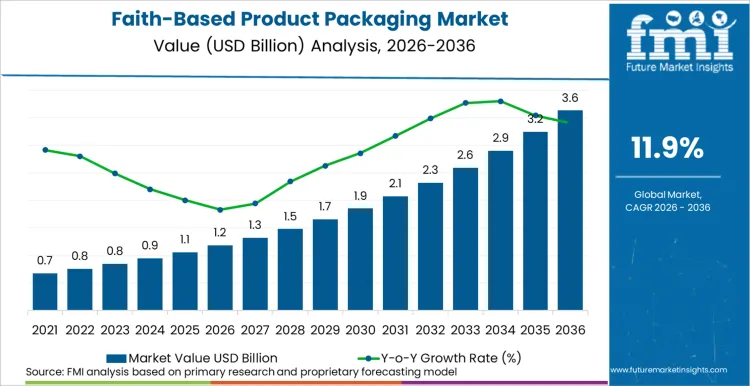
Summary of Faith-Based Product Packaging Market
- The faith-based product packaging market comprises specialized packaging solutions for products sold within religious, spiritual, and ceremonial contexts. This includes packaging for items such as religious texts, devotional objects, ceremonial wear, sacred art, pilgrimage souvenirs, and holiday-specific goods, designed to reflect cultural and theological symbolism while ensuring product protection and enhancing giftability.
- The defined scope follows FMI taxonomy, covering primary and secondary packaging where design, material, and structure are tailored to the sensitivities and commercial channels of faith-based commerce. It excludes generic transport packaging and mass-market gift wrap not specifically designed for religious products.
- The market is projected to grow at a CAGR of 11.9% from 2026 to 2036, expanding from USD 1,180 million in 2026 to USD 3,620 million by 2036, based on FMI proprietary modeling incorporating religious demographic trends, retail sales data from faith-based channels, gifting cultural analyses, and primary interviews with religious goods manufacturers and retailers.
- The sector is transitioning from generic to culturally intelligent design, with solutions segmenting by tradition, price point, and retail environment—from robust, high-volume packaging for pilgrimage sites to luxurious, custom rigid boxes for high-end religious art and jewelry.
- Competition is concentrated among integrated paperboard producers and specialized converters, with differentiation driven by design authenticity, cost-effectiveness for high-volume/low-margin segments, and the ability to manage complex, symbol-sensitive print jobs.
- India records the fastest growth at 14.6% CAGR through 2036, driven by its massive pilgrimage economy and formalizing religious retail sector, while North America remains the largest value market, shaped by its mature, high-value religious retail store network and consumer expectations for premium presentation.
Faith-Based Product Packaging Market Key Takeaways
| Metrics | Values |
|---|---|
| Expected Value (2026E) | USD 1,180 million |
| Projected Value (2036F) | USD 3,620 million |
| CAGR (2026-2036) | 11.9% |
Source: Future Market Insights (FMI) analysis, based on proprietary forecasting model and primary research
Why is the Faith-Based Product Packaging Market Growing?
The professionalization and retail expansion of faith-based commerce is a primary driver. Large chains and robust e-commerce platforms are supplementing independent religious bookstores. This retail formalization demands standardized, barcode-friendly, shelf-ready packaging that can compete visually in a mixed retail environment, moving beyond the simple plastic bags or plain boxes historically used by small-scale religious suppliers.
The enduring significance of religious gifting, for holidays, sacraments, weddings, and pilgrimages, sustains demand for presentation-grade packaging. The package is the first layer of the gift experience and is expected to reflect the importance of the occasion and the sanctity of the item within. This drives continuous investment in formats like rigid boxes, gift boxes, and drawer boxes that signal value and care, turning packaging into an essential element of the devotional gift economy.
The global rise of religious tourism and pilgrimage is fueling a high-volume segment for durable, culturally resonant souvenir packaging. Millions of pilgrims annually purchase artifacts, blessed items, and local crafts. Packaging for these items must be robust for travel, symbolically appropriate, and often designed for low-cost, high-volume production, creating a distinct and growing segment within the market, particularly in South Asia and the Middle East.
How is the Faith-Based Product Packaging Market Segmented?
The primary retail channel, the packaging format that best serves the product and occasion, and the dominant substrate, segments the market. The Religious Retail Stores segment leads with a 42% share, representing the core of organized, commercial faith-based commerce where visual merchandising is key. Folding cartons hold the largest format share (34%) due to their optimal balance of cost, printable surface area for religious art and text, structural protection, and suitability for efficient shelf display.
How is the Dominance of Paperboard Sustained across Diverse Faith Traditions?
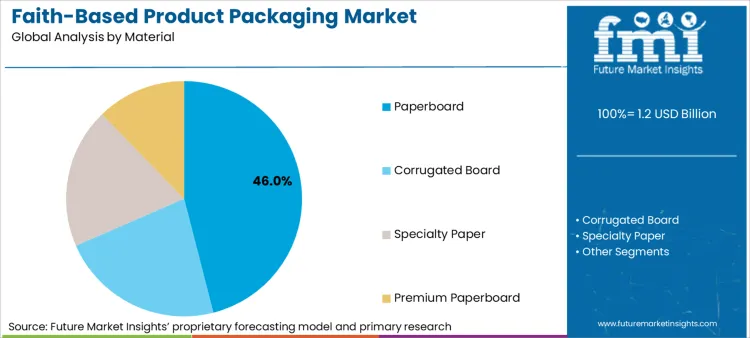
Paperboard accounts for a leading 46% material share, serving as the versatile and symbolic foundation for most faith-based packaging. Its dominance is rooted in its exceptional print fidelity, which is essential for reproducing detailed iconography, sacred texts, and symbolic patterns accurately. It can be engineered into a wide range of structures, from simple folding cartons for mass-produced rosaries to luxurious rigid boxes for a gold-plated crucifix.
Its perceived naturalness and potential for sustainable sourcing align with the values of many religious consumers, making it a culturally and commercially appropriate choice across Christianity, Islam, Hinduism, Buddhism, and other traditions.
Which Commercialization and Consumer Expectation Factors are Concentrating Value in Religious Retail Stores?
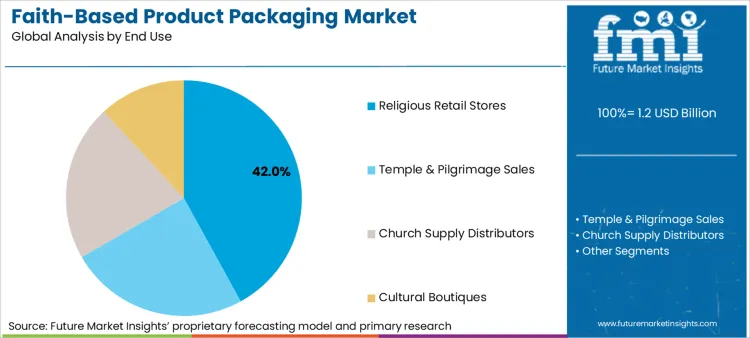
The Religious Retail Stores segment commands a 42% share because it represents the most commercialized and consumer-facing channel. These stores, whether physical or online, operate in a competitive landscape where packaging directly influences purchase decisions.
Consumers in these environments expect a retail experience that mirrors secular shopping in terms of quality and presentation, while remaining authentically faith-appropriate. This forces suppliers to invest in high-quality design, consistent branding, and durable construction to meet the expectations of both the retailer and the discerning faithful consumer, supporting higher-value packaging solutions.
What Role does Market Maturity and Premium Gifting Culture Play in North America's Leadership? North America holds a dominant 34% regional share, sustained by its mature network of large-scale religious retailers such as Catholic Goods stores, and Christian bookstores and a deeply ingrained culture of premium gifting for religious holidays and life events.
The market is characterized by higher per-unit spending on faith-based items, which justifies investment in superior packaging. North American consumers expect sophisticated design and robust packaging for online delivery, driving demand for solutions that are both aesthetically refined and highly functional for e-commerce fulfillment, creating a high-value market segment.
What Drivers, Restraints, Opportunities, and Trends Prevail in the Market?
Market expansion is supported by the growing demand for sustainable and ethically sourced packaging from faith-based institutions and consumers. Churches, temples, and religious NGOs are increasingly adopting creation-care policies, mandating packaging with recycled content, compostability, or FSC certification. Suppliers that can provide verifiable sustainable credentials without compromising on aesthetic or protective quality are gaining significant competitive advantage.
While demand is robust, a key restraint is the extreme sensitivity to iconographic and textual accuracy. A misprinted symbol, wrong color, or inaccurate sacred text on packaging can cause deep offense and lead to costly recalls and reputational damage. This places a heavy burden on design, proofing, and quality control processes, increasing complexity and cost, and limiting the pool of suppliers with the necessary cultural and religious literacy.
Technical innovation is defined by digital printing enabling hyper-customization and short runs. The ability to cost-effectively produce small batches of packaging for specific churches, temples, pilgrimage sites, or regional festivals allows for greater localization and personalization. This trend empowers smaller religious organizations and specialty boutiques to have professionally packaged products without the minimum order quantities of traditional offset printing.
The emergence of "experience-unboxing" for premium religious items represents a disruptive opportunity. Inspired by secular luxury, high-end religious brands are incorporating layered unboxing experiences with custom inserts, informational booklets, and sealed compartments that reveal the item ritualistically. This transforms the act of opening into a devotional moment itself, adding immense perceived value and creating a new high-margin niche.
Analysis of Faith-Based Product Packaging Market by Key Countries
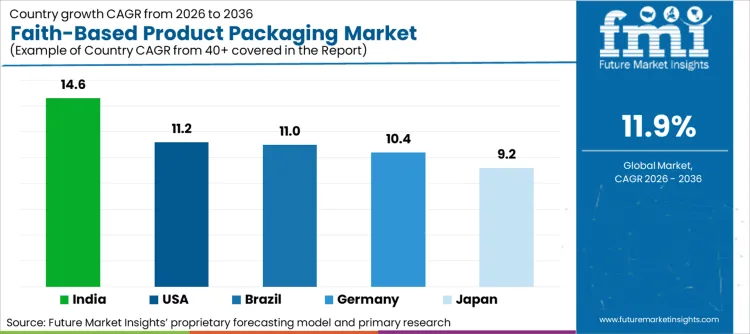
| Country | CAGR (2026–2036) |
|---|---|
| USA | 11.2% |
| India | 14.6% |
| Germany | 10.4% |
| Japan | 9.2% |
| Brazil | 11.0% |
Source: Future Market Insights analysis, supported by a proprietary forecasting model and primary research
How do Organized Retail and Lifecycle Gifting Define USA’s Faith-based Product Packaging Market?
USA, growing at an 11.2% CAGR, is defined by its sophisticated retail landscape and the centrality of religious gifting for life milestones. Large chains and online giants dominate distribution, requiring packaging that is optimized for national logistics, efficient shelf space, and direct-to-consumer shipping.
A culture of elaborate gifting for First Communions, Confirmations, Bar/Bat Mitzvahs, and religious weddings creates sustained demand for premium presentation formats like rigid boxes and gift sets. US packaging must therefore be commercially robust, visually competitive, and tailored for both retail and celebratory contexts.
How is India's Pilgrimage Economy and Ritual Commerce Driving Unparalleled Scale?
India exhibits the highest CAGR at 14.6%, fueled by the sheer scale of its pilgrimage economy and the daily ritual consumption within temples. Packaging demand is bifurcated: vast volumes of low-cost, durable corrugated and paperboard for prasadam, votive offerings, and mass-produced souvenirs at pilgrimage sites; and a growing segment of higher-quality folding cartons for branded religious goods sold in urban specialty stores.
The market is less about premium gifting and more about volume, cultural specificity, and functionality for transport in crowded conditions, favoring suppliers who can master cost-effective scale.
What Role does Liturgical Precision and Institutional Procurement Play in Germany?
Germany’s 10.4% CAGR is underpinned by a focus on liturgical precision and centralized institutional procurement. Packaging for church supplies, from communion wine to clerical vestments, is often procured through large diocesan or denominational distributors.
The requirements emphasize durability for long storage cycles, understated dignity appropriate for sacred objects, and precise labeling in multiple languages for Europe-wide distribution. German packaging tends to be highly functional, engineered for protection, and respectful, with less emphasis on flashy retail appeal compared to the US market.
How are Japan's Aesthetics of Presentation and Omiyage Culture Influencing Design?
Japan’s market, growing at a 9.2% CAGR, is uniquely shaped by the exquisite aesthetics of presentation and the deep-rooted omiyage (souvenir gift) culture. Packaging for items from Shinto shrines or Buddhist temples is expected to be an art form in itself, minimalist, elegant, and employing premium papers and precise construction techniques like intricate drawer boxes.
The act of giving a temple souvenir is as important as the item, making the package a critical component of social ritual. Japanese suppliers excel in high-precision, beautifully crafted packaging that conveys respect and refinement.
Which Religious Syncretism and Community-Based Commerce Shape Brazil's Market?
Brazil’s market expansion at an 11.0% CAGR is influenced by its vibrant religious syncretism and community-focused commerce. Packaging must cater to a blend of Catholic, Evangelical, and Afro-Brazilian traditions, often featuring bold, colorful, and emotionally resonant imagery.
A significant portion of sales occurs through community churches, street fairs, and small family-run shops rather than large retail chains. This favors packaging that is eye-catching, emotionally engaging, and cost-effective for small-batch production, supporting a dynamic market for creatively designed, locally produced folding cartons and rigid boxes.
What is the Competition Outlook for Faith-Based Product Packaging?
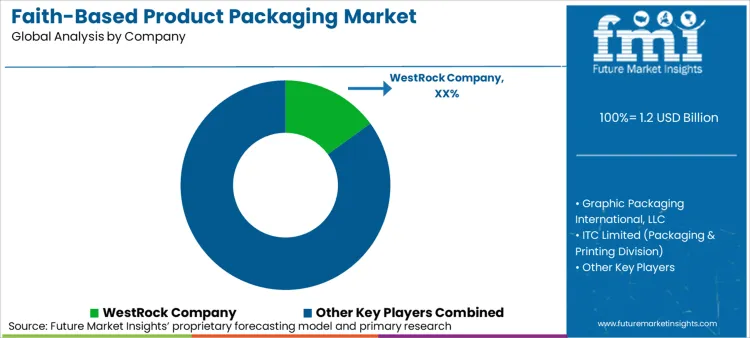
Competitive intensity is increasing as large packaging corporations recognize the stability and growth of this niche market. The landscape features competition between national paperboard giants (like WestRock, Graphic Packaging) with broad capabilities and regional specialists with deep cultural and religious market expertise. Success increasingly depends on having in-house design teams that can navigate religious symbolism sensitively and offer a range of solutions from budget to luxury.
The observable strategic direction is the development of dedicated "faith-based" business units or design studios within larger packaging companies. These units focus on building libraries of approved religious symbols, understanding seasonal demand cycles for different faiths, and cultivating relationships with major religious goods manufacturers and distributors. This specialized approach builds trust and creates barriers to entry for generalist competitors.
Strategic leadership is pivoting towards providing integrated packaging + content solutions. Forward-thinking suppliers are not just selling boxes but offering to source or print instructional booklets, prayer cards, or authenticity certificates that can be included inside the package. This turnkey service simplifies the supply chain for religious goods makers and enhances the value of the final product, deepening client relationships.
Key Developments
- Graphic Packaging International continued expanding its premium paperboard carton capabilities during 2024–2025, supporting specialty publishing, gifting, and commemorative products that require enhanced durability, decorative finishes, and shelf presentation. These capabilities are increasingly used for limited-edition books and keepsake items, where reinforced structures and high-quality print effects extend product lifespan and perceived value.
- TCPL Packaging has remained active in scaling food-grade and specialty packaging capacity in India to serve high-volume, culturally significant food distribution segments. Public disclosures emphasize investments in hygiene, tamper evidence, and high-speed converting lines—capabilities relevant to large-scale religious and ceremonial food offerings-without attributing expansions to specific pilgrimage locations.
- Smurfit Kappa Group continued deploying its European design and innovation network in 2024–2025 to support small and mid-sized producers with cost-efficient, branded paper-based packaging. These services are commonly applied to artisanal and heritage products, enabling mission-driven and community-based organizations to commercialize specialty goods while maintaining sustainability and brand identity
Key Players Profiled
- WestRock Company
- Graphic Packaging International, LLC
- ITC Limited (Packaging & Printing Division)
- TCPL Packaging Limited
- Smurfit Kappa Group plc
- DS Smith Plc
- Rengo Co., Ltd.
- Toppan Printing Co., Ltd.
- Klabin S.A.
- Mayr-Melnhof Karton AG
Market Definition
The faith-based product packaging market comprises the design, production, and supply of packaging solutions specifically for products created for and sold within religious, spiritual, and ceremonial contexts. This includes primary packaging that houses the product and secondary packaging for presentation and gifting, where design elements (imagery, color, texture, structure) are intentionally aligned with the symbolism, traditions, and values of a specific faith or spiritual practice.
The market scope covers packaging for commercially distributed faith-based goods. It excludes packaging for non-commercial, internal church/sacramental use only (e.g., unconsecrated communion wafer liners) and generic packaging that is subsequently used for religious products without specialized design or adaptation.
Scope of Report
| Items | Values |
|---|---|
| Quantitative Units | USD 1,180 million |
| End Use | Religious Retail Stores, Temple & Pilgrimage Sales, Church Supply Distributors, Cultural Boutiques, Others |
| Packaging Format | Folding Cartons, Rigid Boxes, Gift Boxes, Drawer Boxes, Others |
| Material | Paperboard, Corrugated Board, Specialty Paper, Premium Paperboard, Others |
| Regions Covered | North America, South Asia, Europe, Japan, Latin America, Middle East & Africa |
| Countries | USA, India, Germany, Japan, Brazil and 40+ countries |
| Key Companies | WestRock, Graphic Packaging, ITC Packaging, TCPL Packaging, Smurfit Kappa, DS Smith, Rengo, Toppan, Klabin, Mayr-Melnhof |
Source: Future Market Insights (FMI) analysis, based on proprietary forecasting model and primary research
Faith-Based Product Packaging Market Key Segments
By End Use
- Religious Retail Stores
- Temple & Pilgrimage Sales
- Church Supply Distributors
- Cultural Boutiques
- Others
By Packaging Format
- Folding Cartons
- Rigid Boxes
- Gift Boxes
- Drawer Boxes
- Others
By Material
- Paperboard
- Corrugated Board
- Specialty Paper
- Premium Paperboard
- Others
By Region
- North America
- South Asia
- Europe
- Japan
- Latin America
- Middle East & Africa
Frequently Asked Questions
How big is the faith-based product packaging market in 2026?
The global faith-based product packaging market is estimated to be valued at USD 1.2 billion in 2026.
What will be the size of faith-based product packaging market in 2036?
The market size for the faith-based product packaging market is projected to reach USD 3.6 billion by 2036.
How much will be the faith-based product packaging market growth between 2026 and 2036?
The faith-based product packaging market is expected to grow at a 11.9% CAGR between 2026 and 2036.
What are the key product types in the faith-based product packaging market?
The key product types in faith-based product packaging market are paperboard, corrugated board, specialty paper and premium paperboard.
Which end use segment to contribute significant share in the faith-based product packaging market in 2026?
In terms of end use, religious retail stores segment to command 42.0% share in the faith-based product packaging market in 2026.
Preview the report firsthand - request a free sample
Get SampleGet the brochure for pricing and purchase details.
Get PDFTable of Content
- Executive Summary
- Global Market Outlook
- Demand-side Trends
- Supply-side Trends
- Technology Roadmap Analysis
- Analysis and Recommendations
- Market Overview
- Market Coverage / Taxonomy
- Market Definition / Scope / Limitations
- Research Methodology
- Chapter Orientation
- Analytical Lens and Working Hypotheses
- Market Structure, Signals, and Trend Drivers
- Benchmarking and Cross-market Comparability
- Market Sizing, Forecasting, and Opportunity Mapping
- Research Design and Evidence Framework
- Desk Research Programme (Secondary Evidence)
- Company Annual and Sustainability Reports
- Peer-reviewed Journals and Academic Literature
- Corporate Websites, Product Literature, and Technical Notes
- Earnings Decks and Investor Briefings
- Statutory Filings and Regulatory Disclosures
- Technical White Papers and Standards Notes
- Trade Journals, Industry Magazines, and Analyst Briefs
- Conference Proceedings, Webinars, and Seminar Materials
- Government Statistics Portals and Public Data Releases
- Press Releases and Reputable Media Coverage
- Specialist Newsletters and Curated Briefings
- Sector Databases and Reference Repositories
- FMI Internal Proprietary Databases and Historical Market Datasets
- Subscription Datasets and Paid Sources
- Social Channels, Communities, and Digital Listening Inputs
- Additional Desk Sources
- Expert Input and Fieldwork (Primary Evidence)
- Primary Modes
- Qualitative Interviews and Expert Elicitation
- Quantitative Surveys and Structured Data Capture
- Blended Approach
- Why Primary Evidence is Used
- Field Techniques
- Interviews
- Surveys
- Focus Groups
- Observational and In-context Research
- Social and Community Interactions
- Stakeholder Universe Engaged
- C-suite Leaders
- Board Members
- Presidents and Vice Presidents
- R&D and Innovation Heads
- Technical Specialists
- Domain Subject-matter Experts
- Scientists
- Physicians and Other Healthcare Professionals
- Governance, Ethics, and Data Stewardship
- Research Ethics
- Data Integrity and Handling
- Primary Modes
- Tooling, Models, and Reference Databases
- Desk Research Programme (Secondary Evidence)
- Data Engineering and Model Build
- Data Acquisition and Ingestion
- Cleaning, Normalisation, and Verification
- Synthesis, Triangulation, and Analysis
- Quality Assurance and Audit Trail
- Market Background
- Market Dynamics
- Drivers
- Restraints
- Opportunity
- Trends
- Scenario Forecast
- Demand in Optimistic Scenario
- Demand in Likely Scenario
- Demand in Conservative Scenario
- Opportunity Map Analysis
- Product Life Cycle Analysis
- Supply Chain Analysis
- Investment Feasibility Matrix
- Value Chain Analysis
- PESTLE and Porter’s Analysis
- Regulatory Landscape
- Regional Parent Market Outlook
- Production and Consumption Statistics
- Import and Export Statistics
- Market Dynamics
- Global Market Analysis 2021 to 2025 and Forecast, 2026 to 2036
- Historical Market Size Value (USD Million) Analysis, 2021 to 2025
- Current and Future Market Size Value (USD Million) Projections, 2026 to 2036
- Y-o-Y Growth Trend Analysis
- Absolute $ Opportunity Analysis
- Global Market Pricing Analysis 2021 to 2025 and Forecast 2026 to 2036
- Global Market Analysis 2021 to 2025 and Forecast 2026 to 2036, By Material
- Introduction / Key Findings
- Historical Market Size Value (USD Million) Analysis By Material , 2021 to 2025
- Current and Future Market Size Value (USD Million) Analysis and Forecast By Material , 2026 to 2036
- Paperboard
- Corrugated Board
- Specialty Paper
- Premium Paperboard
- Paperboard
- Y-o-Y Growth Trend Analysis By Material , 2021 to 2025
- Absolute $ Opportunity Analysis By Material , 2026 to 2036
- Global Market Analysis 2021 to 2025 and Forecast 2026 to 2036, By End Use
- Introduction / Key Findings
- Historical Market Size Value (USD Million) Analysis By End Use, 2021 to 2025
- Current and Future Market Size Value (USD Million) Analysis and Forecast By End Use, 2026 to 2036
- Religious Retail Stores
- Temple & Pilgrimage Sales
- Church Supply Distributors
- Cultural Boutiques
- Religious Retail Stores
- Y-o-Y Growth Trend Analysis By End Use, 2021 to 2025
- Absolute $ Opportunity Analysis By End Use, 2026 to 2036
- Global Market Analysis 2021 to 2025 and Forecast 2026 to 2036, By Region
- Introduction
- Historical Market Size Value (USD Million) Analysis By Region, 2021 to 2025
- Current Market Size Value (USD Million) Analysis and Forecast By Region, 2026 to 2036
- North America
- Latin America
- Western Europe
- Eastern Europe
- East Asia
- South Asia and Pacific
- Middle East & Africa
- Market Attractiveness Analysis By Region
- North America Market Analysis 2021 to 2025 and Forecast 2026 to 2036, By Country
- Historical Market Size Value (USD Million) Trend Analysis By Market Taxonomy, 2021 to 2025
- Market Size Value (USD Million) Forecast By Market Taxonomy, 2026 to 2036
- By Country
- USA
- Canada
- Mexico
- By Material
- By End Use
- By Country
- Market Attractiveness Analysis
- By Country
- By Material
- By End Use
- Key Takeaways
- Latin America Market Analysis 2021 to 2025 and Forecast 2026 to 2036, By Country
- Historical Market Size Value (USD Million) Trend Analysis By Market Taxonomy, 2021 to 2025
- Market Size Value (USD Million) Forecast By Market Taxonomy, 2026 to 2036
- By Country
- Brazil
- Chile
- Rest of Latin America
- By Material
- By End Use
- By Country
- Market Attractiveness Analysis
- By Country
- By Material
- By End Use
- Key Takeaways
- Western Europe Market Analysis 2021 to 2025 and Forecast 2026 to 2036, By Country
- Historical Market Size Value (USD Million) Trend Analysis By Market Taxonomy, 2021 to 2025
- Market Size Value (USD Million) Forecast By Market Taxonomy, 2026 to 2036
- By Country
- Germany
- UK
- Italy
- Spain
- France
- Nordic
- BENELUX
- Rest of Western Europe
- By Material
- By End Use
- By Country
- Market Attractiveness Analysis
- By Country
- By Material
- By End Use
- Key Takeaways
- Eastern Europe Market Analysis 2021 to 2025 and Forecast 2026 to 2036, By Country
- Historical Market Size Value (USD Million) Trend Analysis By Market Taxonomy, 2021 to 2025
- Market Size Value (USD Million) Forecast By Market Taxonomy, 2026 to 2036
- By Country
- Russia
- Poland
- Hungary
- Balkan & Baltic
- Rest of Eastern Europe
- By Material
- By End Use
- By Country
- Market Attractiveness Analysis
- By Country
- By Material
- By End Use
- Key Takeaways
- East Asia Market Analysis 2021 to 2025 and Forecast 2026 to 2036, By Country
- Historical Market Size Value (USD Million) Trend Analysis By Market Taxonomy, 2021 to 2025
- Market Size Value (USD Million) Forecast By Market Taxonomy, 2026 to 2036
- By Country
- China
- Japan
- South Korea
- By Material
- By End Use
- By Country
- Market Attractiveness Analysis
- By Country
- By Material
- By End Use
- Key Takeaways
- South Asia and Pacific Market Analysis 2021 to 2025 and Forecast 2026 to 2036, By Country
- Historical Market Size Value (USD Million) Trend Analysis By Market Taxonomy, 2021 to 2025
- Market Size Value (USD Million) Forecast By Market Taxonomy, 2026 to 2036
- By Country
- India
- ASEAN
- Australia & New Zealand
- Rest of South Asia and Pacific
- By Material
- By End Use
- By Country
- Market Attractiveness Analysis
- By Country
- By Material
- By End Use
- Key Takeaways
- Middle East & Africa Market Analysis 2021 to 2025 and Forecast 2026 to 2036, By Country
- Historical Market Size Value (USD Million) Trend Analysis By Market Taxonomy, 2021 to 2025
- Market Size Value (USD Million) Forecast By Market Taxonomy, 2026 to 2036
- By Country
- Kingdom of Saudi Arabia
- Other GCC Countries
- Turkiye
- South Africa
- Other African Union
- Rest of Middle East & Africa
- By Material
- By End Use
- By Country
- Market Attractiveness Analysis
- By Country
- By Material
- By End Use
- Key Takeaways
- Key Countries Market Analysis
- USA
- Pricing Analysis
- Market Share Analysis, 2025
- By Material
- By End Use
- Canada
- Pricing Analysis
- Market Share Analysis, 2025
- By Material
- By End Use
- Mexico
- Pricing Analysis
- Market Share Analysis, 2025
- By Material
- By End Use
- Brazil
- Pricing Analysis
- Market Share Analysis, 2025
- By Material
- By End Use
- Chile
- Pricing Analysis
- Market Share Analysis, 2025
- By Material
- By End Use
- Germany
- Pricing Analysis
- Market Share Analysis, 2025
- By Material
- By End Use
- UK
- Pricing Analysis
- Market Share Analysis, 2025
- By Material
- By End Use
- Italy
- Pricing Analysis
- Market Share Analysis, 2025
- By Material
- By End Use
- Spain
- Pricing Analysis
- Market Share Analysis, 2025
- By Material
- By End Use
- France
- Pricing Analysis
- Market Share Analysis, 2025
- By Material
- By End Use
- India
- Pricing Analysis
- Market Share Analysis, 2025
- By Material
- By End Use
- ASEAN
- Pricing Analysis
- Market Share Analysis, 2025
- By Material
- By End Use
- Australia & New Zealand
- Pricing Analysis
- Market Share Analysis, 2025
- By Material
- By End Use
- China
- Pricing Analysis
- Market Share Analysis, 2025
- By Material
- By End Use
- Japan
- Pricing Analysis
- Market Share Analysis, 2025
- By Material
- By End Use
- South Korea
- Pricing Analysis
- Market Share Analysis, 2025
- By Material
- By End Use
- Russia
- Pricing Analysis
- Market Share Analysis, 2025
- By Material
- By End Use
- Poland
- Pricing Analysis
- Market Share Analysis, 2025
- By Material
- By End Use
- Hungary
- Pricing Analysis
- Market Share Analysis, 2025
- By Material
- By End Use
- Kingdom of Saudi Arabia
- Pricing Analysis
- Market Share Analysis, 2025
- By Material
- By End Use
- Turkiye
- Pricing Analysis
- Market Share Analysis, 2025
- By Material
- By End Use
- South Africa
- Pricing Analysis
- Market Share Analysis, 2025
- By Material
- By End Use
- USA
- Market Structure Analysis
- Competition Dashboard
- Competition Benchmarking
- Market Share Analysis of Top Players
- By Regional
- By Material
- By End Use
- Competition Analysis
- Competition Deep Dive
- WestRock Company
- Overview
- Product Portfolio
- Profitability by Market Segments (Product/Age /Sales Channel/Region)
- Sales Footprint
- Strategy Overview
- Marketing Strategy
- Product Strategy
- Channel Strategy
- Graphic Packaging International, LLC
- ITC Limited (Packaging & Printing Division)
- TCPL Packaging Limited
- Smurfit Kappa Group plc
- WestRock Company
- Competition Deep Dive
- Assumptions & Acronyms Used


