

- Industry Size (2026)
- USD 6.6 Bn
- Forecast (2036)
- USD 12 Bn
- CAGR (2026 to 2036)
- 6.2%
Hygroscopic Building Material Market Forecast and Outlook 2026 to 2036
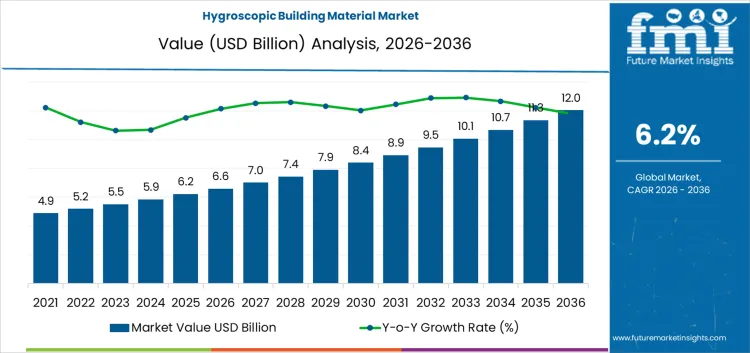
The hygroscopic building material market is projected to grow from USD 6.6 billion in 2026 to USD 12 billion by 2036, reflecting a compound annual growth rate (CAGR) of 6.2%. Hygroscopic building materials, which absorb and release moisture to regulate humidity levels in buildings, are gaining traction due to their energy-saving properties and benefits in improving indoor air quality. As the focus on sustainable and energy-efficient construction increases, the demand for these materials in both residential and commercial buildings is expected to rise. Additionally, growing concerns about indoor climate control and energy efficiency are further driving market expansion.
The market is expected to experience consistent growth, with values rising from USD 6.6 billion in 2026 to USD 7 billion in 2027, followed by USD 7.4 billion in 2028. In 2029, the market will grow to USD 7.8 billion, continuing to rise to USD 8.2 billion in 2030. By 2036, the market is projected to reach USD 12 billion, driven by increased adoption of hygroscopic building materials in sustainable and energy-efficient building projects.
Quick Stats for the Hygroscopic Building Material Market
- Hygroscopic Building Material Market Value (2026): USD 6.6 billion
- Hygroscopic Building Material Market Forecast Value (2036): USD 12 billion
- Hygroscopic Building Material Market Global Forecast CAGR 2026 to 2036: 6.2%
- Hygroscopic Building Material Market Leading Segment: Residential Building (49%)
- Key Growth Regions in Hygroscopic Building Material Market: India
- Top Players in Hygroscopic Building Material Market: BASF SE, Saint-Gobain, Knauf Insulation, Owens Corning, Guardian Building Products, LafargeHolcim Ltd., Armacell International, Kingspan Group, Rockwool International, URSA (Grupo Industrial Uralita)
What is the Growth Momentum Analysis for the Hygroscopic Building Material Market through 2036?
The growth momentum analysis of the hygroscopic building material market shows a steady but strong increase in demand over the forecast period, with the market gradually accelerating as awareness of energy efficiency and sustainability grows. In the early years (2026 to 2028), the market will experience moderate growth, increasing from USD 6.6 billion in 2026 to USD 7.4 billion in 2028. This phase will be driven by growing interest in energy-efficient building materials, as well as the increasing popularity of green and sustainable building practices.
From 2028 to 2032, the growth momentum will begin to accelerate as more construction projects incorporate hygroscopic materials to meet energy efficiency standards and regulatory requirements. The market will rise from USD 7.8 billion in 2029 to USD 9.1 billion by 2032. This acceleration will be supported by the rising global focus on sustainability and the adoption of energy-saving technologies in building construction.
Between 2032 and 2036, the market will continue to grow at a steady pace, reaching USD 12 billion by 2036. The later stages of growth will be driven by widespread adoption of energy-efficient and environmentally friendly building materials, with hygroscopic materials becoming a standard choice in the construction industry. The overall growth momentum analysis reflects the market's long-term expansion driven by sustainability trends and technological advancements in building material design.
Hygroscopic Building Material Market Key Takeaways
| Metric | Value |
|---|---|
| Industry Sales Value (2026) | USD 6.6 billion |
| Industry Forecast Value (2036) | USD 12 billion |
| Industry Forecast CAGR 2026 to 2036 | 6.2% |
What Is Driving the Hygroscopic Building Material Market?
Historically, the hygroscopic building material market developed as builders and designers sought improved indoor comfort and moisture regulation beyond what conventional non-porous materials could deliver. Traditional materials such as concrete, gypsum board, and vinyl-based finishes offered structural integrity and surface aesthetics but limited capacity to moderate humidity or buffer moisture swings within occupied spaces. Early interest in hygroscopic materials such as wood-based panels, clay plasters, and mineral-based board stemmed from passive moisture control strategies in traditional and vernacular architecture, where natural materials helped stabilize indoor air conditions.
As industrialized construction expanded in the mid-20th century, focus shifted toward uniform, engineered materials that prioritized cost and ease of installation over environmental responsiveness. It was only with growing awareness of indoor air quality, mold risks, and occupant comfort that architects and specifiers began revisiting hygroscopic materials for applications such as breathable wall assemblies, vapor-regulating insulation, and humidity-buffering interior finishes. In this period, product development clarified performance expectations for capillary action, sorption capacity, and compatibility with mechanical systems, anchoring the material class within broader building science frameworks.
Future demand for the hygroscopic building material market is expected to be shaped by heightened emphasis on healthy buildings, climate-adaptive design, and performance-based specifications that value indoor environmental quality alongside energy efficiency. Growth factors will include integration of hygroscopic materials with airtight, high-performance building envelopes where mechanical systems must work less to maintain stable humidity and thermal conditions. Rising interest in biophilic design, occupant wellbeing metrics, and certifications that recognize indoor air quality performance will further drive specification of moisture-buffering plasters, wood fiber insulations, and engineered sorptive boards.
Advances in material science are also expanding performance through engineered porosity and hybrid composites that balance hygroscopicity with durability and fire resistance. Sustainability narratives tied to reduced HVAC load, lower humidity-related material degradation, and avoidance of chemical dehumidification bolster market appeal across residential, commercial, and institutional projects. Barriers include higher upfront cost relative to some conventional alternatives, limited familiarity among some design and construction professionals, and the need to align material choice with localized climate conditions. Long-term market expansion will depend on demonstrated performance outcomes in diverse climates, integration with digital building performance modeling, and alignment with regulatory frameworks that reward moisture-resilient, health-oriented building assemblies.
What are the Key Segments in the Hygroscopic Building Material Market?
The Hygroscopic Building Material market is segmented by application and end-use sector. Application segments include wall insulation, roof & floor insulation, plaster & finishing, moisture control panels, and others, with wall insulation holding the largest market share at 41%. End-use sectors include residential buildings, commercial buildings, industrial buildings, and institutional & public structures, with residential buildings representing the largest share at 49%. The market is driven by the growing demand for energy-efficient and sustainable building materials that regulate humidity and enhance thermal insulation, contributing to the overall comfort and energy performance of buildings.
What is Driving Growth in the Wall Insulation Application Segment?
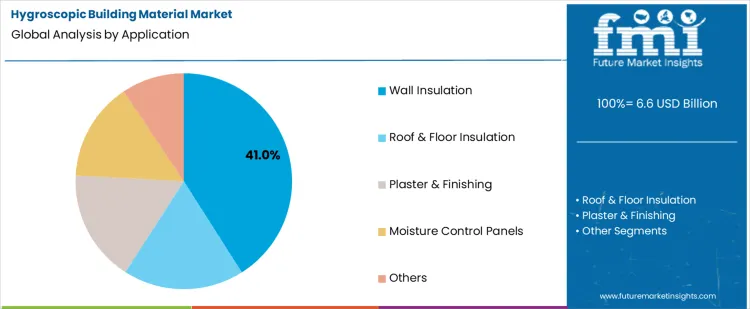
Wall insulation is the leading application segment in the Hygroscopic Building Material market, accounting for 41% of the market share. This growth is primarily driven by the increasing demand for energy-efficient construction materials that help reduce heating and cooling costs in buildings. Wall insulation materials with hygroscopic properties, which absorb and release moisture, help maintain consistent indoor humidity levels, improving both thermal comfort and indoor air quality.
These materials are particularly beneficial in regions with varying climatic conditions, where they help prevent excessive moisture buildup, reduce condensation, and prevent damage to building structures. With the growing emphasis on sustainable construction practices and reducing energy consumption, the demand for hygroscopic wall insulation materials is rising. The increasing adoption of green building standards and energy-efficient designs, particularly in residential and commercial construction, is further fueling the growth of the wall insulation segment.
What is Driving the Demand for Residential Buildings in the End-Use Sector Segment?
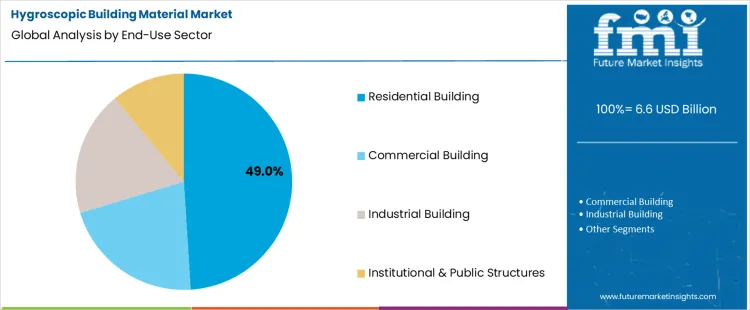
Residential buildings represent the largest end-use sector in the Hygroscopic Building Material market, holding 49% of the market share. This growth is driven by the increasing demand for energy-efficient, comfortable, and sustainable homes. Hygroscopic building materials, such as moisture-regulating wall insulation and floor systems, are increasingly used in residential construction to enhance the thermal performance and moisture control of homes. These materials help improve indoor air quality by maintaining optimal humidity levels, reducing mold growth, and preventing structural damage caused by excess moisture.
As the demand for energy-efficient and environmentally friendly homes grows, particularly in regions with extreme climates, the adoption of hygroscopic building materials in residential construction is expected to rise. Additionally, the increasing awareness of the environmental impact of buildings and the push for green building certifications, such as LEED and BREEAM, is driving the demand for sustainable building materials in residential projects. As homeowners and builders prioritize long-term energy savings, comfort, and sustainability, the residential sector is likely to remain the dominant driver in the market.
What are the Key Dynamics in the Hygroscopic Building Material Market?
The hygroscopic building material market is growing as the demand for environmentally friendly, energy-efficient construction solutions rises. Hygroscopic building materials are designed to absorb and release moisture from the air, helping to regulate indoor humidity levels and improve thermal comfort in buildings. These materials, such as wood, clay, and certain types of insulation, can enhance the energy efficiency of buildings by reducing the need for mechanical heating and cooling systems. The market is driven by the increasing focus on sustainable construction practices, the growing demand for energy-efficient buildings, and the rising awareness of indoor air quality and occupant well-being. Additionally, regulations that promote green building standards and eco-friendly construction materials are fueling the adoption of hygroscopic building materials.
What are the Key Drivers of Growth in the Hygroscopic Building Material Market?
The primary drivers of growth in the hygroscopic building material market include the increasing demand for sustainable and energy-efficient building solutions. Hygroscopic materials help regulate indoor climate by absorbing excess moisture during humid conditions and releasing it when the air is dry, contributing to energy savings and improved comfort. The growing trend of green building certifications, such as LEED (Leadership in Energy and Environmental Design) and BREEAM (Building Research Establishment Environmental Assessment Method), is another key driver, as hygroscopic materials can help meet sustainability and energy efficiency criteria. Additionally, rising consumer awareness of the environmental impact of construction and the need for healthier indoor environments is pushing the demand for these materials. The ongoing development of smart cities and eco-friendly infrastructure is further accelerating the use of hygroscopic building materials in modern construction projects. Moreover, advancements in material technology and the development of new, more efficient hygroscopic materials are also driving the market.
What are the Key Restraints in the Hygroscopic Building Material Market?
Despite its growth potential, the hygroscopic building material market faces several challenges. One major restraint is the relatively higher cost of these materials compared to traditional building materials, such as concrete or synthetic insulation. The initial expense of purchasing and installing hygroscopic materials can be a barrier for some builders, especially in cost-sensitive markets. Another challenge is the limited availability of these materials in certain regions, as the production and supply of hygroscopic materials are not as widespread as conventional building materials. Additionally, the performance of some hygroscopic materials can be affected by extreme weather conditions or high moisture levels, potentially reducing their effectiveness in specific climates. Another restraint is the lack of awareness and technical knowledge about the benefits and application of hygroscopic materials among contractors and builders, which can slow down their adoption in mainstream construction projects. Furthermore, the need for ongoing maintenance and periodic monitoring to ensure the optimal performance of hygroscopic materials may deter some consumers from opting for them.
What are the Key Trends in the Hygroscopic Building Material Market?
Several key trends are shaping the hygroscopic building material market. One major trend is the increasing focus on smart buildings and sustainable construction, where the integration of hygroscopic materials helps regulate indoor humidity and reduce the need for artificial climate control, aligning with the growing demand for energy-efficient buildings. Another trend is the development of innovative and improved hygroscopic materials, such as advanced insulation products and moisture-regulating wall systems, which enhance performance and expand their applications in various building types. The adoption of green building certifications and eco-friendly construction standards is also on the rise, driving the demand for materials that improve indoor air quality and reduce environmental impact. Additionally, there is growing interest in the use of locally sourced and natural hygroscopic materials, such as clay, straw, and wood, which contribute to the sustainability of construction projects and reduce the carbon footprint. Finally, the increasing use of hygroscopic materials in residential, commercial, and industrial buildings is enhancing their visibility and acceptance, driving further growth in the market.
What is the Country-Wise Analysis of the Hygroscopic Building Material Market?
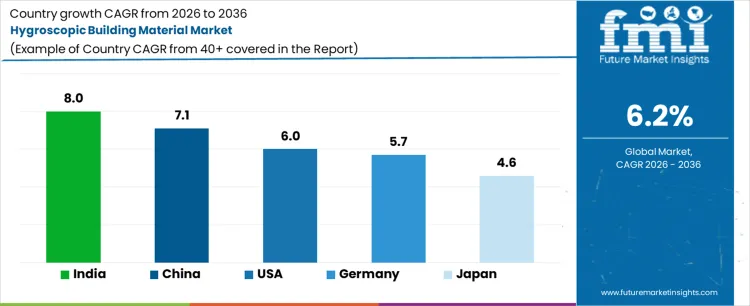
The hygroscopic building material market is growing as the demand for energy-efficient, sustainable, and moisture-regulating materials in the construction industry rises. Hygroscopic building materials, which can absorb and release moisture, help improve indoor air quality and energy efficiency by maintaining optimal humidity levels. These materials are increasingly used in green building projects, where sustainability and environmental performance are key priorities. The market is driven by factors such as stricter building regulations, growing consumer awareness of energy-efficient construction, and advancements in material technology. Countries like the USA, China, India, Germany, and Japan are witnessing growth in this market due to the increasing demand for eco-friendly construction materials and energy-efficient building solutions.
| Country | CAGR (%) |
|---|---|
| USA | 6% |
| China | 7.1% |
| India | 8% |
| Germany | 5.7% |
| Japan | 4.6% |
What is Driving the Growth of the Hygroscopic Building Material Market in India?
India’s hygroscopic building material market is growing at a CAGR of 8%, the highest among the countries analyzed. The growth is largely driven by India’s expanding construction sector, which is increasingly focusing on sustainability and energy-efficient building practices. The government’s initiatives to promote green building standards, such as the adoption of energy-efficient construction materials and eco-friendly building solutions, are contributing to the demand for hygroscopic materials. As urbanization continues to accelerate and awareness of indoor air quality and energy efficiency rises, the demand for materials that can regulate humidity and improve energy performance is expected to continue to grow. India’s growing focus on sustainable and resilient construction is expected to drive further adoption of hygroscopic building materials.
How is the Hygroscopic Building Material Market Performing in China?
The hygroscopic building material market in China is growing at a CAGR of 7.1%. China’s booming construction industry and rapid urbanization are driving the demand for sustainable and energy-efficient building solutions. Hygroscopic building materials, which help regulate moisture and improve indoor air quality, are becoming increasingly popular as part of green building initiatives. The Chinese government’s focus on environmental sustainability and energy efficiency in the construction sector is supporting the adoption of these materials. As the demand for eco-friendly and energy-efficient buildings increases, the market for hygroscopic building materials in China is expected to continue expanding, driven by both government regulations and consumer demand for sustainable construction solutions.
What Factors are Shaping the Hygroscopic Building Material Market in the USA?
The hygroscopic building material market in the USA is growing at a CAGR of 6%. The market growth is driven by the increasing demand for sustainable building practices and energy-efficient construction materials. Hygroscopic materials, which can regulate moisture levels, are becoming increasingly popular in green building projects, as they help reduce energy consumption and improve indoor comfort. The USA’s focus on energy-efficient homes and commercial buildings, along with stricter building codes and regulations that emphasize sustainability, is contributing to the growth of this market. As the demand for eco-friendly, high-performance building materials continues to rise, the hygroscopic building material market in the USA is expected to grow steadily.
How is the Hygroscopic Building Material Market Evolving in Germany?
Germany’s hygroscopic building material market is growing at a CAGR of 5.7%. Germany has long been a leader in sustainable construction practices, and the growing demand for green buildings is driving the adoption of hygroscopic materials. The country’s stringent building regulations, which promote energy efficiency and sustainability, are encouraging the use of building materials that can regulate moisture and improve indoor air quality. As Germany continues to focus on energy-efficient and eco-friendly building solutions, the demand for hygroscopic materials is expected to grow. The country’s commitment to reducing carbon emissions and improving the energy performance of buildings is expected to continue supporting the market for hygroscopic building materials.
What is Contributing to the Growth of the Hygroscopic Building Material Market in Japan?
The hygroscopic building material market in Japan is growing at a CAGR of 4.6%. Japan’s construction sector is increasingly focused on energy-efficient, sustainable building practices, and hygroscopic materials are gaining traction for their ability to regulate moisture and improve indoor air quality. The country’s commitment to sustainability and reducing energy consumption in buildings is driving the adoption of these materials. Additionally, Japan’s focus on disaster-resistant buildings, especially in earthquake-prone areas, is further contributing to the demand for high-performance building materials that offer better environmental and energy benefits. As Japan continues to invest in green building technologies, the demand for hygroscopic building materials is expected to grow, albeit at a slower pace compared to other regions.
What is the Competitive Landscape for the Hygroscopic Building Material Market?
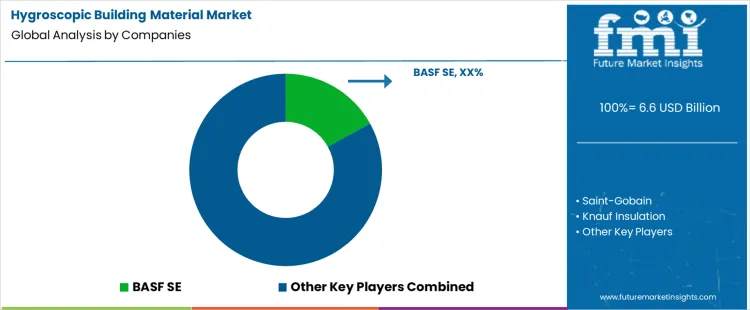
The hygroscopic building material market is expanding as the demand for energy-efficient, sustainable, and moisture-regulating construction materials increases. BASF SE leads the market, offering advanced hygroscopic materials that help maintain indoor air quality by absorbing and releasing moisture, improving thermal comfort and energy efficiency. BASF’s innovation in moisture control and building insulation technologies solidifies its position as a market leader. Saint-Gobain is another key player, providing high-performance hygroscopic materials designed for thermal insulation and moisture regulation, focusing on energy efficiency and environmental sustainability.
Knauf Insulation competes by offering effective insulation solutions that include hygroscopic properties, helping maintain comfortable indoor climates while improving building energy performance. Owens Corning is a significant competitor, providing advanced building materials with moisture control properties, focusing on sustainable and energy-efficient insulation solutions. Guardian Building Products offers a range of hygroscopic building materials, emphasizing moisture management and insulation, which are integral to modern, energy-efficient construction practices.
LafargeHolcim Ltd. contributes with high-quality building materials that incorporate moisture-regulating technologies, aiming to enhance sustainability and energy efficiency in the construction sector. Armacell International specializes in advanced insulation materials, including hygroscopic solutions that provide effective moisture control and temperature regulation. Kingspan Group is a leader in sustainable building materials, offering hygroscopic insulation products that combine superior thermal performance with moisture regulation to enhance building efficiency.
Rockwool International competes by providing hygroscopic stone wool insulation, which is known for its ability to regulate moisture while offering excellent thermal and acoustic properties. URSA (Grupo Industrial Uralita) provides moisture-regulating insulation materials, focusing on energy efficiency and sustainable building practices in the construction market.
To stay competitive, companies in the hygroscopic building material market focus on innovation, sustainability, and energy efficiency. BASF SE continues to lead by advancing its hygroscopic materials with new technologies that improve moisture regulation and building performance while reducing environmental impact. Saint-Gobain is expanding its product range to offer more sustainable and energy-efficient building materials, enhancing moisture regulation and thermal comfort. Knauf Insulation focuses on developing high-performance hygroscopic materials that integrate seamlessly with modern insulation systems to optimize energy usage and moisture control.
Owens Corning is innovating by incorporating more sustainable materials into its building solutions, improving both moisture regulation and energy efficiency. Guardian Building Products is expanding its portfolio by offering advanced hygroscopic insulation solutions that cater to both residential and commercial construction projects. LafargeHolcim Ltd. is integrating more sustainable practices into its production of hygroscopic building materials, ensuring that they meet the growing demand for energy-efficient and moisture-regulating solutions.
Armacell International continues to lead in providing innovative insulation products that focus on energy efficiency, moisture regulation, and indoor air quality. Kingspan Group is investing in new technologies to improve the moisture-regulating performance of its insulation products, contributing to more sustainable and energy-efficient buildings. Rockwool International continues to innovate with its hygroscopic stone wool products, focusing on providing effective moisture management while maintaining high thermal and acoustic performance.
URSA (Grupo Industrial Uralita) is enhancing its offerings by focusing on the integration of hygroscopic materials into modern construction practices for greater energy efficiency. These strategies ensure that these companies remain leaders in the growing hygroscopic building material market, which is driven by the increasing demand for sustainable, energy-efficient, and moisture-regulating construction solutions.
Key Players of the Hygroscopic Building Material Market
- BASF SE
- Saint-Gobain
- Knauf Insulation
- Owens Corning
- Guardian Building Products
- LafargeHolcim Ltd.
- Armacell International
- Kingspan Group
- Rockwool International
- URSA (Grupo Industrial Uralita)
Scope of the Report
| Items | Values |
|---|---|
| Quantitative Units (2026) | USD Billion |
| Material Type | Perlite, Vermiculite, Expanded Clay, Others |
| Application | Wall Insulation, Roof & Floor Insulation, Plaster & Finishing, Moisture Control Panels, Others |
| End-Use Sector | Residential Building, Commercial Building, Industrial Building, Institutional & Public Structures |
| Companies | BASF SE, Saint-Gobain, Knauf Insulation, Owens Corning, Guardian Building Products, LafargeHolcim Ltd., Armacell International, Kingspan Group, Rockwool International, URSA (Grupo Industrial Uralita) |
| Regions Covered | North America, Latin America, Western Europe, Eastern Europe, South Asia and Pacific, East Asia, Middle East & Africa |
| Countries Covered | United States, Canada, Mexico, Brazil, Argentina, Germany, France, United Kingdom, Italy, Spain, Netherlands, China, India, Japan, South Korea, ANZ, GCC Countries, South Africa |
| Additional Attributes | Dollar by sales by material type, application, end-use sector, and region. Includes market trends towards moisture regulation performance, cost-effectiveness, regulatory compliance, and the role of hygroscopic materials in improving indoor comfort and building durability. |
Hygroscopic Building Material Market Segmentation
By Material Type:
- Perlite
- Vermiculite
- Expanded Clay
- Others
By Application
- Wall Insulation
- Roof & Floor Insulation
- Plaster & Finishing
- Moisture Control Panels
- Others
By End-Use Sector
- Residential Building
- Commercial Building
- Industrial Building
- Institutional & Public Structures
- Other
By Region
- Asia Pacific
- China
- Japan
- India
- Australia & New Zealand
- ASEAN
- Rest of Asia Pacific
- Europe
- Germany
- United Kingdom
- France
- Italy
- Spain
- Nordic
- BENELUX
- Rest of Europe
- North America
- United States
- Canada
- Mexico
- Latin America
- Brazil
- Argentina
- Rest of Latin America
- Middle East & Africa
- Kingdom of Saudi Arabia
- Other GCC Countries
- South Africa
- Rest of Middle East & Africa
Bibliography
- United States Department of Energy. (2023). Building energy codes program: Enhancing efficiency and health performance in buildings. USA DOE.
- International Organization for Standardization. (2024). ISO 18517: Moisture control in buildings - Hygroscopic materials and their role in indoor environment quality. ISO.
- World Green Building Council. (2023). Global status report for buildings and construction 2023: Towards zero-emission, efficient, and healthy buildings. WGBC.
- European Commission. (2023). Energy performance of buildings directive (EPBD) recast: Assessment of indoor air quality and material performance. Publications Office of the European Union.
- Zhang, Y., & Li, J. (2024). Performance and application of hygroscopic building materials for moisture regulation and indoor air quality control. Journal of Building Engineering
Frequently Asked Questions
How big is the hygroscopic building material market in 2026?
The global hygroscopic building material market is estimated to be valued at USD 6.6 billion in 2026.
What will be the size of hygroscopic building material market in 2036?
The market size for the hygroscopic building material market is projected to reach USD 12.0 billion by 2036.
How much will be the hygroscopic building material market growth between 2026 and 2036?
The hygroscopic building material market is expected to grow at a 6.2% CAGR between 2026 and 2036.
What are the key product types in the hygroscopic building material market?
The key product types in hygroscopic building material market are perlite, vermiculite, expanded clay and others.
Which application segment to contribute significant share in the hygroscopic building material market in 2026?
In terms of application, wall insulation segment to command 41.0% share in the hygroscopic building material market in 2026.
Preview the report firsthand - request a free sample
Get SampleGet the brochure for pricing and purchase details.
Get PDFTable of Content
- Executive Summary
- Global Market Outlook
- Demand-side Trends
- Supply-side Trends
- Technology Roadmap Analysis
- Analysis and Recommendations
- Market Overview
- Market Coverage / Taxonomy
- Market Definition / Scope / Limitations
- Market Background
- Market Dynamics
- Drivers
- Restraints
- Opportunity
- Trends
- Scenario Forecast
- Demand in Optimistic Scenario
- Demand in Likely Scenario
- Demand in Conservative Scenario
- Opportunity Map Analysis
- Product Life Cycle Analysis
- Supply Chain Analysis
- Investment Feasibility Matrix
- Value Chain Analysis
- PESTLE and Porter’s Analysis
- Regulatory Landscape
- Regional Parent Market Outlook
- Production and Consumption Statistics
- Import and Export Statistics
- Market Dynamics
- Global Market Analysis 2021 to 2025 and Forecast, 2026 to 2036
- Historical Market Size Value (USD Million) Analysis, 2021 to 2025
- Current and Future Market Size Value (USD Million) Projections, 2026 to 2036
- Y-o-Y Growth Trend Analysis
- Absolute $ Opportunity Analysis
- Global Market Pricing Analysis 2021 to 2025 and Forecast 2026 to 2036
- Global Market Analysis 2021 to 2025 and Forecast 2026 to 2036, By Material Type
- Introduction / Key Findings
- Historical Market Size Value (USD Million) Analysis By Material Type, 2021 to 2025
- Current and Future Market Size Value (USD Million) Analysis and Forecast By Material Type, 2026 to 2036
- Perlite
- Vermiculite
- Expanded Clay
- Others
- Perlite
- Y-o-Y Growth Trend Analysis By Material Type, 2021 to 2025
- Absolute $ Opportunity Analysis By Material Type, 2026 to 2036
- Global Market Analysis 2021 to 2025 and Forecast 2026 to 2036, By Application
- Introduction / Key Findings
- Historical Market Size Value (USD Million) Analysis By Application, 2021 to 2025
- Current and Future Market Size Value (USD Million) Analysis and Forecast By Application, 2026 to 2036
- Wall Insulation
- Roof & Floor Insulation
- Plaster & Finishing
- Moisture Control Panels
- Others
- Wall Insulation
- Y-o-Y Growth Trend Analysis By Application, 2021 to 2025
- Absolute $ Opportunity Analysis By Application, 2026 to 2036
- Global Market Analysis 2021 to 2025 and Forecast 2026 to 2036, By End-Use Sector
- Introduction / Key Findings
- Historical Market Size Value (USD Million) Analysis By End-Use Sector, 2021 to 2025
- Current and Future Market Size Value (USD Million) Analysis and Forecast By End-Use Sector, 2026 to 2036
- Residential Building
- Commercial Building
- Industrial Building
- Institutional & Public Structures
- Residential Building
- Y-o-Y Growth Trend Analysis By End-Use Sector, 2021 to 2025
- Absolute $ Opportunity Analysis By End-Use Sector, 2026 to 2036
- Global Market Analysis 2021 to 2025 and Forecast 2026 to 2036, By Region
- Introduction
- Historical Market Size Value (USD Million) Analysis By Region, 2021 to 2025
- Current Market Size Value (USD Million) Analysis and Forecast By Region, 2026 to 2036
- North America
- Latin America
- Western Europe
- Eastern Europe
- East Asia
- South Asia and Pacific
- Middle East & Africa
- Market Attractiveness Analysis By Region
- North America Market Analysis 2021 to 2025 and Forecast 2026 to 2036, By Country
- Historical Market Size Value (USD Million) Trend Analysis By Market Taxonomy, 2021 to 2025
- Market Size Value (USD Million) Forecast By Market Taxonomy, 2026 to 2036
- By Country
- USA
- Canada
- Mexico
- By Material Type
- By Application
- By End-Use Sector
- By Country
- Market Attractiveness Analysis
- By Country
- By Material Type
- By Application
- By End-Use Sector
- Key Takeaways
- Latin America Market Analysis 2021 to 2025 and Forecast 2026 to 2036, By Country
- Historical Market Size Value (USD Million) Trend Analysis By Market Taxonomy, 2021 to 2025
- Market Size Value (USD Million) Forecast By Market Taxonomy, 2026 to 2036
- By Country
- Brazil
- Chile
- Rest of Latin America
- By Material Type
- By Application
- By End-Use Sector
- By Country
- Market Attractiveness Analysis
- By Country
- By Material Type
- By Application
- By End-Use Sector
- Key Takeaways
- Western Europe Market Analysis 2021 to 2025 and Forecast 2026 to 2036, By Country
- Historical Market Size Value (USD Million) Trend Analysis By Market Taxonomy, 2021 to 2025
- Market Size Value (USD Million) Forecast By Market Taxonomy, 2026 to 2036
- By Country
- Germany
- UK
- Italy
- Spain
- France
- Nordic
- BENELUX
- Rest of Western Europe
- By Material Type
- By Application
- By End-Use Sector
- By Country
- Market Attractiveness Analysis
- By Country
- By Material Type
- By Application
- By End-Use Sector
- Key Takeaways
- Eastern Europe Market Analysis 2021 to 2025 and Forecast 2026 to 2036, By Country
- Historical Market Size Value (USD Million) Trend Analysis By Market Taxonomy, 2021 to 2025
- Market Size Value (USD Million) Forecast By Market Taxonomy, 2026 to 2036
- By Country
- Russia
- Poland
- Hungary
- Balkan & Baltic
- Rest of Eastern Europe
- By Material Type
- By Application
- By End-Use Sector
- By Country
- Market Attractiveness Analysis
- By Country
- By Material Type
- By Application
- By End-Use Sector
- Key Takeaways
- East Asia Market Analysis 2021 to 2025 and Forecast 2026 to 2036, By Country
- Historical Market Size Value (USD Million) Trend Analysis By Market Taxonomy, 2021 to 2025
- Market Size Value (USD Million) Forecast By Market Taxonomy, 2026 to 2036
- By Country
- China
- Japan
- South Korea
- By Material Type
- By Application
- By End-Use Sector
- By Country
- Market Attractiveness Analysis
- By Country
- By Material Type
- By Application
- By End-Use Sector
- Key Takeaways
- South Asia and Pacific Market Analysis 2021 to 2025 and Forecast 2026 to 2036, By Country
- Historical Market Size Value (USD Million) Trend Analysis By Market Taxonomy, 2021 to 2025
- Market Size Value (USD Million) Forecast By Market Taxonomy, 2026 to 2036
- By Country
- India
- ASEAN
- Australia & New Zealand
- Rest of South Asia and Pacific
- By Material Type
- By Application
- By End-Use Sector
- By Country
- Market Attractiveness Analysis
- By Country
- By Material Type
- By Application
- By End-Use Sector
- Key Takeaways
- Middle East & Africa Market Analysis 2021 to 2025 and Forecast 2026 to 2036, By Country
- Historical Market Size Value (USD Million) Trend Analysis By Market Taxonomy, 2021 to 2025
- Market Size Value (USD Million) Forecast By Market Taxonomy, 2026 to 2036
- By Country
- Kingdom of Saudi Arabia
- Other GCC Countries
- Turkiye
- South Africa
- Other African Union
- Rest of Middle East & Africa
- By Material Type
- By Application
- By End-Use Sector
- By Country
- Market Attractiveness Analysis
- By Country
- By Material Type
- By Application
- By End-Use Sector
- Key Takeaways
- Key Countries Market Analysis
- USA
- Pricing Analysis
- Market Share Analysis, 2025
- By Material Type
- By Application
- By End-Use Sector
- Canada
- Pricing Analysis
- Market Share Analysis, 2025
- By Material Type
- By Application
- By End-Use Sector
- Mexico
- Pricing Analysis
- Market Share Analysis, 2025
- By Material Type
- By Application
- By End-Use Sector
- Brazil
- Pricing Analysis
- Market Share Analysis, 2025
- By Material Type
- By Application
- By End-Use Sector
- Chile
- Pricing Analysis
- Market Share Analysis, 2025
- By Material Type
- By Application
- By End-Use Sector
- Germany
- Pricing Analysis
- Market Share Analysis, 2025
- By Material Type
- By Application
- By End-Use Sector
- UK
- Pricing Analysis
- Market Share Analysis, 2025
- By Material Type
- By Application
- By End-Use Sector
- Italy
- Pricing Analysis
- Market Share Analysis, 2025
- By Material Type
- By Application
- By End-Use Sector
- Spain
- Pricing Analysis
- Market Share Analysis, 2025
- By Material Type
- By Application
- By End-Use Sector
- France
- Pricing Analysis
- Market Share Analysis, 2025
- By Material Type
- By Application
- By End-Use Sector
- India
- Pricing Analysis
- Market Share Analysis, 2025
- By Material Type
- By Application
- By End-Use Sector
- ASEAN
- Pricing Analysis
- Market Share Analysis, 2025
- By Material Type
- By Application
- By End-Use Sector
- Australia & New Zealand
- Pricing Analysis
- Market Share Analysis, 2025
- By Material Type
- By Application
- By End-Use Sector
- China
- Pricing Analysis
- Market Share Analysis, 2025
- By Material Type
- By Application
- By End-Use Sector
- Japan
- Pricing Analysis
- Market Share Analysis, 2025
- By Material Type
- By Application
- By End-Use Sector
- South Korea
- Pricing Analysis
- Market Share Analysis, 2025
- By Material Type
- By Application
- By End-Use Sector
- Russia
- Pricing Analysis
- Market Share Analysis, 2025
- By Material Type
- By Application
- By End-Use Sector
- Poland
- Pricing Analysis
- Market Share Analysis, 2025
- By Material Type
- By Application
- By End-Use Sector
- Hungary
- Pricing Analysis
- Market Share Analysis, 2025
- By Material Type
- By Application
- By End-Use Sector
- Kingdom of Saudi Arabia
- Pricing Analysis
- Market Share Analysis, 2025
- By Material Type
- By Application
- By End-Use Sector
- Turkiye
- Pricing Analysis
- Market Share Analysis, 2025
- By Material Type
- By Application
- By End-Use Sector
- South Africa
- Pricing Analysis
- Market Share Analysis, 2025
- By Material Type
- By Application
- By End-Use Sector
- USA
- Market Structure Analysis
- Competition Dashboard
- Competition Benchmarking
- Market Share Analysis of Top Players
- By Regional
- By Material Type
- By Application
- By End-Use Sector
- Competition Analysis
- Competition Deep Dive
- BASF SE
- Overview
- Product Portfolio
- Profitability by Market Segments (Product/Age /Sales Channel/Region)
- Sales Footprint
- Strategy Overview
- Marketing Strategy
- Product Strategy
- Channel Strategy
- Saint-Gobain
- Knauf Insulation
- Owens Corning
- Guardian Building Products
- LafargeHolcim Ltd.
- Armacell International
- Kingspan Group
- Rockwool International
- URSA (Grupo Industrial Uralita)
- BASF SE
- Competition Deep Dive
- Assumptions & Acronyms Used
- Research Methodology


