

- Industry Size (2025)
- USD 2.5 Bn
- Forecast (2035)
- USD 11.8 Bn
- CAGR (2025 to 2035)
- 17.0%
Hyperlocal Returns Pick-Up and Consolidation Services Market Forecast and Outlook 2026 to 2036
The hyperlocal returns pick-up and consolidation services market is valued at USD 2.5 billion in 2026 and is projected to reach USD 11.8 billion by 2036, reflecting a CAGR of 17.0%. Demand rises as e-commerce growth generates higher return volumes and retailers prioritize faster, more convenient return pathways to improve customer satisfaction. Consolidation-based returns models reduce reverse logistics costs and streamline processing for high-density urban areas. China, India, USA, and Japan emerge as core growth regions given their strong digital retail penetration and large metropolitan populations. Happy Returns by PayPal, ReverseLogix, Returnmates, Narvar, and ZigZag Global shape competitive dynamics through scalable reverse logistics networks, API integrations with major retailers, and data-driven optimization tools that enhance returns visibility and lifecycle efficiency.
On-demand returns pick-up leads service adoption because doorstep collection offers immediate convenience while reducing consumer friction in the returns process. Platforms integrate real-time scheduling, label-free workflows, and smart routing to minimize operational time and improve route density. Consolidation hubs support efficient sorting, bulk transport, and faster reintegration of merchandise into resale channels.
Quick Stats for Hyperlocal Returns Pick-Up and Consolidation Services Market
- Market Value (2026): USD 2.5 billion
- Market Forecast Value (2036): USD 11.8 billion
- Forecast CAGR (2026-2036): 17.0%
- Leading Service Type in Global Demand: On-demand returns pick-up
- Key Growth Regions in Global Demand: China, India, USA, Japan
- Top Players in Global Demand: Happy Returns by PayPal, ReverseLogix, Returnmates, Narvar, ZigZag Global
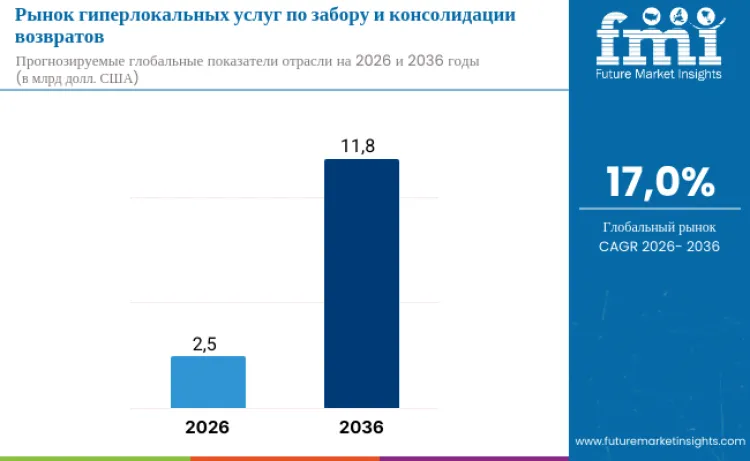
Hyperlocal Returns Pick-Up and Consolidation Services Market Key Takeaways
| Metric | Value |
|---|---|
| Market Value (2026) | USD 2.5 billion |
| Market Forecast Value (2036) | USD 11.8 billion |
| Forecast CAGR (2026-2036) | 17.0% |
How Are the Segments Classified in the Hyperlocal Returns Pick-Up and Consolidation Services Market?
Demand for hyperlocal returns pick-up and consolidation services is shaped by rapid-growth e-commerce, high return rates in urban zones, and the need to reduce reverse-logistics cost through localized consolidation. Buyers evaluate fleet responsiveness, routing efficiency, and suitability for handling fashion, electronics, grocery, and general merchandise returns. Adoption patterns reflect consumer preference for doorstep convenience, retailer need for faster restocking, and operational models supporting neighborhood-level aggregation.
Which Service Type Accounts for the Largest Share of Global Demand?
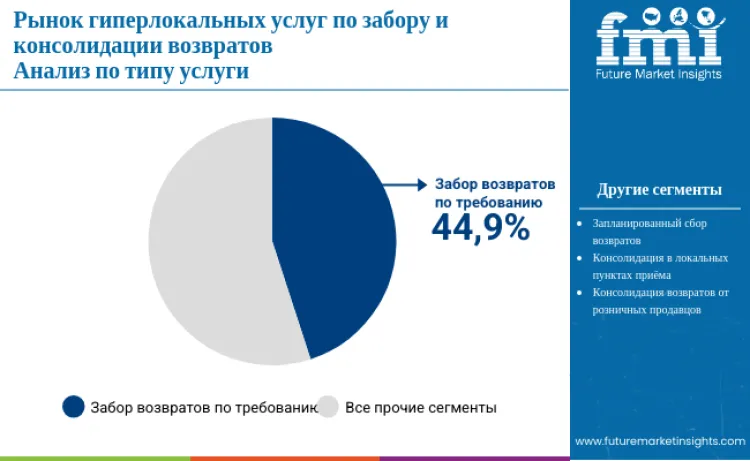
On-demand returns pick-up holds 44.9%, making it the leading service-type segment globally. This model supports instant or near-real-time return initiation and rapid retrieval from consumer locations, reducing friction in high-return categories. Scheduled returns collection supports predictable pick-up windows and route planning for retailers and logistics providers. Neighborhood drop-off point consolidation enables aggregated return flows at kiosks or microhubs. Bulk retailer returns consolidation supports high-volume processing from stores or distribution centers. Service-type distribution reflects convenience expectations, return frequency, and routing-efficiency goals.
Key Points:
- On-demand pick-up supports convenience-driven return behavior.
- Scheduled collection aids predictable route planning.
- Neighborhood drop-off points support consolidated reverse flows.
- Bulk consolidation serves high-volume retailer operations.
Which Returns Category Represents the Largest Share of Global Demand?
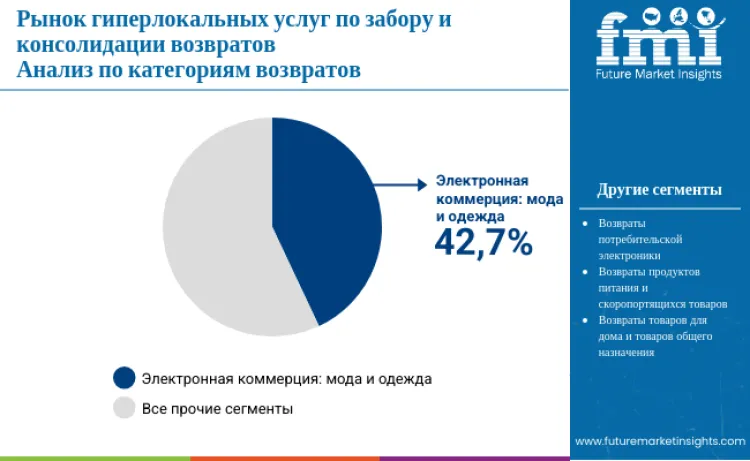
E-commerce fashion and apparel returns hold 42.7%, making them the largest returns category globally. High return rates driven by size variability, try-before-buy behavior, and rapid seasonal turnover create significant reverse-logistics volume. Consumer electronics returns require careful handling, diagnostic triage, and secure routing. Grocery and perishables returns involve constrained time windows and controlled handling requirements. Household goods and general merchandise returns support broader retail categories with varied packaging and inspection needs. Category distribution reflects item-specific return rates, handling constraints, and restocking urgency.
Key Points:
- Fashion returns dominate due to high repeat and size-related returns.
- Electronics require secure, diagnostic-oriented handling.
- Grocery returns involve time-sensitive workflows.
- Household goods reflect broad-category return variability.
Which Fleet Type Accounts for the Largest Share of Global Demand?
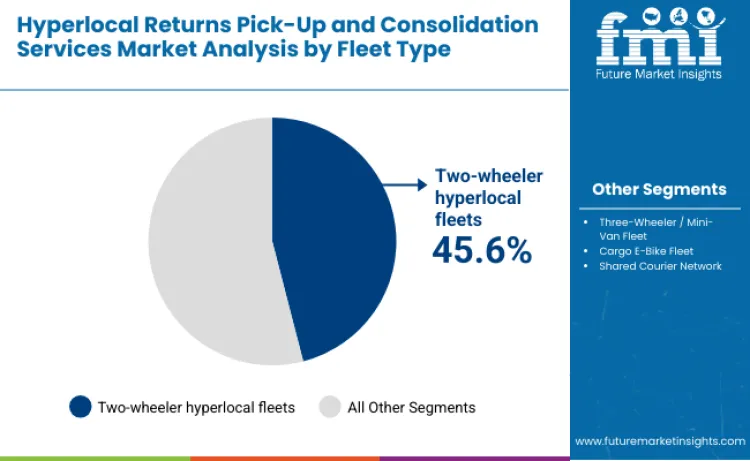
Two-wheeler hyperlocal fleets hold 45.6%, making them the leading fleet-type segment globally. Two-wheelers support rapid navigation through dense urban areas, low operating cost, and high-frequency pick-up cycles. Three-wheeler or mini-van fleets support medium-volume returns requiring greater cargo capacity. Cargo e-bike fleets support sustainable hyperlocal operations with moderate payload requirements. Shared courier networks leverage decentralized gig-based fleets for flexible, surge-responsive return capacity. Fleet distribution reflects payload mix, urban-mobility constraints, and operational cost structure.
Key Points:
- Two-wheelers support fast urban maneuvering and high-frequency pick-ups.
- Three-wheelers enable larger consolidated loads.
- Cargo e-bikes support sustainable, short-range operations.
- Shared courier networks provide surge-flexible capacity.
What are the Key Dynamics in the Hyperlocal Returns Pick-Up and Consolidation Services Market?
Global demand rises as e-commerce growth increases return volumes requiring fast, low friction collection and consolidated transport from neighborhood zones. Retailers adopt hyperlocal models to lower reverse logistics costs, reduce parcel fragmentation, and improve customer convenience. Platforms coordinate rider dispatch, route planning, and return verification. Microhubs and partner stores support short distance consolidation, enabling efficient handoff to carrier networks while reducing congestion linked to doorstep return flows.
How are rising return volumes and convenience expectations shaping adoption of hyperlocal pick-up models?
E-commerce growth produces high return rates across apparel, footwear, and consumer goods categories, creating need for flexible pickup solutions. Retailers integrate hyperlocal pick-up slots that allow consumers to schedule doorstep collection within short time windows. Operators deploy riders to manage dense neighborhood clusters, reducing carrier workloads at peak times. Microhubs and partner shops act as aggregation points where returns are consolidated before line haul transfer. Platforms support verification workflows such as barcode scans and condition checks. Consumers value reduced packaging steps and simplified pickup processes. Retailers use hyperlocal returns to stabilize return timelines and enhance post purchase experience.
How do cost structures, operational alignment, and infrastructure variability influence scalability?
Reverse logistics costs remain sensitive to rider compensation, fuel or charging needs, and microhub leasing. Retailers require integration between return portals, warehouse systems, and carrier networks to maintain accurate disposition tracking. Courier availability fluctuates across regions, affecting consistency of scheduled pickups. Neighborhood level density varies, influencing route efficiency for consolidation tasks. Partner store participation depends on space availability and staff capacity. Packaging differences complicate standardization during aggregation. Municipal rules governing curb access and loading influence pickup timing. Operators require reliable data systems to coordinate multi node consolidation without increasing handling errors or dwell times.
How is Demand for Hyperlocal Returns Pick-Up and Consolidation Services Market Evolving Across Key Countries?
Demand for the hyperlocal returns pick-up and consolidation services market is rising due to increased e-commerce order volumes, growing emphasis on reverse-logistics efficiency, and strong consumer interest in convenient returns pathways. China records a CAGR of 18.2% supported by dense retail ecosystems and rapid logistics digitization. India shows a 17.6% CAGR driven by high return rates in urban commerce and strong platform penetration. USA posts a 16.4% CAGR supported by large-scale retail networks and growing same-day returns demand. Japan holds a 15.3% CAGR linked with structured logistics operations. UK records a 14.8% CAGR supported by urban freight strategies and retailer consolidation programs.
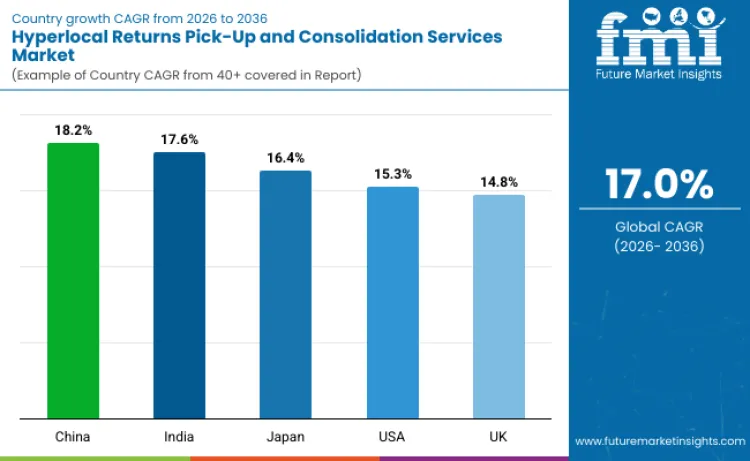
| Country | CAGR (%) |
|---|---|
| China | 18.2% |
| India | 17.6% |
| Japan | 16.4% |
| USA | 15.3% |
| UK | 14.8% |
How is China driving demand for Hyperlocal Returns Pick-Up and Consolidation Services?
China drives demand due to high e-commerce return volumes, strong digital-logistics infrastructure, and widespread use of app-based service coordination. The country’s CAGR of 18.2% reflects significant adoption of hyperlocal pick-up networks that handle same-day and next-day returns. Logistics providers integrate consolidation workflows to reduce transportation costs and improve route efficiency. Retail marketplaces implement automated return authorization systems linked with hyperlocal couriers. Dense residential clusters support frequent pick-up activities. Consolidation hubs manage large return flows enabling efficient re-sorting and reintegration into stock. Consumer preference for fast, frictionless returns reinforces continuous service demand.
- High e-commerce returns supporting pick-up activity
- Automated return authorization systems
- Consolidation hubs improving cost efficiency
- Strong consumer adoption of app-based return services
How is India driving demand for Hyperlocal Returns Pick-Up and Consolidation Services?
India supports rising demand due to high urban delivery density, strong mobile-commerce expansion, and increasing consumer reliance on convenient reverse-logistics options. The country’s CAGR of 17.6% reflects growing use of hyperlocal pick-up services across fashion, electronics, and household goods. Logistics operators use consolidation workflows to minimize vehicle trips and improve load planning. Retailers integrate return scheduling into mobile apps to streamline user experience. Hyperlocal networks manage same-day pick-up across dense metro areas where return volumes fluctuate sharply. Digital logistics platforms support verification and routing for large gig-based courier fleets.
- High mobile-commerce penetration
- Hyperlocal couriers managing fluctuating return volumes
- Retail integration of return scheduling
- Consolidation processes reducing transport inefficiencies
How is the USA driving demand for Hyperlocal Returns Pick-Up and Consolidation Services?
The USA drives demand through strong e-commerce penetration, rising expectation for convenient returns, and increased use of technology-enabled reverse-logistics systems. The country’s CAGR of 16.4% reflects steady adoption of hyperlocal pick-up networks supporting scheduled and on-demand returns. Retailers employ consolidation centers to reduce cost per return and accelerate restocking. Logistics providers integrate routing and verification tools to support timely pick-up performance. Suburban and urban zones rely on hyperlocal services to reduce customer travel. Growth in rapid-delivery models reinforces need for equally fast reverse flows.
- High consumer expectation for frictionless returns
- Retail consolidation centers supporting operational efficiency
- Routing platforms enabling timely pick-up
- Broad adoption across suburban and urban areas
How is Japan driving demand for Hyperlocal Returns Pick-Up and Consolidation Services?
Japan drives demand due to structured logistics systems, strong emphasis on service reliability, and rising e-commerce participation. The country’s CAGR of 15.3% reflects controlled adoption of hyperlocal pick-up services supporting timely and predictable returns. Consolidation nodes located near dense commercial districts help reduce last-mile inefficiencies. Retailers use automated return-management systems to coordinate courier scheduling. Logistics firms rely on route-optimization tools to maintain punctual collection. Consumers value secure, predictable returns supported by standardized workflows.
- Structured logistics networks ensuring reliable operations
- Consolidation nodes reducing last-mile inefficiencies
- Automated return-management workflows
- Strong consumer preference for predictable return services
How is the UK driving demand for Hyperlocal Returns Pick-Up and Consolidation Services?
The UK supports demand through strong online-retail participation, urban-access constraints, and rising interest in sustainable reverse-logistics models. The country’s CAGR of 14.8% reflects adoption of hyperlocal pick-up networks reducing customer travel and improving returns convenience. Retailers deploy consolidation hubs to process returns more efficiently and manage stock reintegration. Urban freight policies encourage low-impact courier operations supporting consolidated pick-up routes. Logistics platforms use real-time routing to optimize return scheduling across dense city centers. Consumer preference for convenient, low-effort returns continues to support platform growth.
- High online-retail activity driving return volumes
- Consolidation hubs supporting efficient stock processing
- Urban policies encouraging low-impact return logistics
- Routing platforms optimizing pick-up windows
What is the competitive landscape of demand for hyperlocal returns pick-up and consolidation services globally?
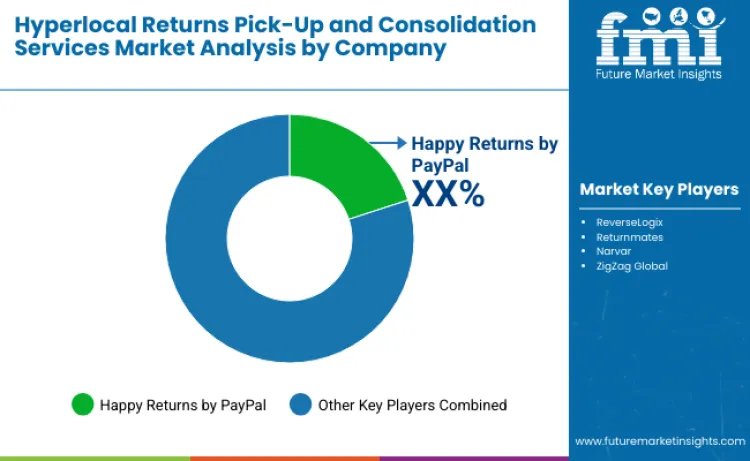
Happy Returns by PayPal holds significant share. Position strengthens through staffed return bars, box-free processing, and consolidation hubs linked to major ecommerce platforms. ReverseLogix participates with dedicated reverse-logistics software used by retailers coordinating pick-ups and first-mile consolidation. Returnmates contributes hyperlocal courier networks in selected urban areas supporting scheduled doorstep return collection. Narvar maintains visibility through branded returns portals and pick-up integrations adopted by global retailers. ZigZag Global supports demand with return consolidation networks and multi-carrier routing partnerships across Europe, North America, and Asia. Competitive positioning globally reflects integration depth, regional pick-up density, operational accuracy, and capacity to streamline reverse-logistics costs for retailers. Demand for hyperlocal returns pick-up and consolidation services grows as ecommerce operators address high return volumes, fast processing expectations, and cost pressure across last-mile and reverse-logistics workflows. Requirements center on rapid household collection, dynamic routing, parcel identification, and consolidated transfer to regional hubs. Buyers evaluate platform interoperability, courier availability, scanning accuracy, and integration with retailer return portals. Procurement teams prioritize service reliability, geographic coverage, and data transparency supporting inventory reconciliation and refund timelines. Trend in the global market reflects increased interest in neighborhood-scale consolidation, carrier-agnostic workflows, and reduced reliance on traditional parcel drop-off locations.
Key Players in the Hyperlocal Returns Pick-Up and Consolidation Services Market
- Happy Returns by PayPal
- ReverseLogix
- Returnmates
- Narvar
- ZigZag Global
Scope of the Report
| Items | Values |
|---|---|
| Quantitative Units | USD billion |
| Service Type | On-Demand Returns Pick-Up, Scheduled Returns Collection, Neighborhood Drop-Off Point Consolidation, Bulk Retailer Returns Consolidation |
| Returns Category | E-commerce Fashion & Apparel Returns, Consumer Electronics Returns, Grocery & Perishables Returns, Household Goods & General Merchandise Returns |
| Fleet Type | Two-Wheeler Hyperlocal Fleet, Three-Wheeler / Mini-Van Fleet, Cargo E-Bike Fleet, Shared Courier Network |
| End-User | E-commerce Marketplaces, Retail & D2C Brands, Third-Party Logistics Providers, Convenience Stores & Local Aggregators |
| Regions Covered | Asia Pacific, Europe, North America, Latin America, Middle East & Africa |
| Countries Covered | India, China, USA, Germany, South Korea, Japan, Italy, and 40+ countries |
| Key Companies Profiled | Happy Returns by PayPal, ReverseLogix, Returnmates, Narvar, ZigZag Global |
| Additional Attributes | Dollar sales by service type, returns category, and fleet type; regional adoption differences driven by e-commerce density, return rates, and hyperlocal delivery infrastructure; influence of urban consolidation models and microhub-based return flows; integration with AI-driven routing, digital return authorization engines, and reverse logistics automation; competitive landscape of returns orchestration platforms; expansion of sustainability-focused consolidation, reusable packaging loops, and carbon-reduction programs across enterprise return ecosystems. |
Hyperlocal Returns Pick-Up and Consolidation Services Market by Segment
By Service Type:
- On-Demand Returns Pick-Up
- Scheduled Returns Collection
- Neighborhood Drop-Off Point Consolidation
- Bulk Retailer Returns Consolidation
By Returns Category:
- E-commerce Fashion & Apparel Returns
- Consumer Electronics Returns
- Grocery & Perishables Returns
- Household Goods & General Merchandise Returns
By Fleet Type:
- Two-Wheeler Hyperlocal Fleet
- Three-Wheeler / Mini-Van Fleet
- Cargo E-Bike Fleet
- Shared Courier Network
By End-User:
- E-commerce Marketplaces
- Retail & D2C Brands
- Third-Party Logistics Providers
- Convenience Stores & Local Aggregators
Region:
- Asia Pacific
- China
- Japan
- South Korea
- India
- Australia & New Zealand
- ASEAN
- Rest of Asia Pacific
- Europe
- Germany
- United Kingdom
- France
- Italy
- Spain
- Nordic
- BENELUX
- Rest of Europe
- North America
- United States
- Canada
- Mexico
- Latin America
- Brazil
- Chile
- Rest of Latin America
- Middle East & Africa
- Kingdom of Saudi Arabia
- Other GCC Countries
- Turkey
- South Africa
- Other African Union
- Rest of Middle East & Africa
Frequently Asked Questions
What is the size of the hyperlocal returns pick-up and consolidation services market in 2026?
The market is valued at USD 2.5 billion in 2026 due to increasing consumer demand for convenient doorstep return services.
What will be the industry size by 2036?
Industry value will reach USD 11.8 billion by 2036 as retailers expand localized returns networks and integrate consolidated pick-up models.
What is the CAGR for 2026 to 2036?
The hyperlocal returns pick-up and consolidation services market expand at a 17.0% CAGR during the forecast period.
Which service-type segment leads in 2026?
On-demand returns pick-up holds 44.9% share due to preference for flexible, rapid collection options.
Which returns-category segment holds the highest share?
E-commerce fashion and apparel returns lead with 42.7% share, reflecting high return rates associated with size and fit variability.
Preview the report firsthand - request a free sample
Get SampleGet the brochure for pricing and purchase details.
Get PDFTable of Content
- Executive Summary
- Market Overview
- Global Market Value, 2020-2026
- Global Market Forecast, 2026-2036
- Market Dynamics
- Drivers
- Restraints
- Opportunities
- Regulatory & Standards Landscape
- Technology & Hyperlocal Returns Orchestration Innovation Outlook
- Market Segmentation Analysis
- By Service Type
- On-Demand Returns Pick-Up
- Scheduled Returns Collection
- Neighborhood Drop-Off Point Consolidation
- Bulk Retailer Returns Consolidation
- By Returns Category
- E-commerce Fashion & Apparel Returns
- Consumer Electronics Returns
- Grocery & Perishables Returns
- Household Goods & General Merchandise Returns
- By Fleet Type
- Two-Wheeler Hyperlocal Fleet
- Three-Wheeler / Mini-Van Fleet
- Cargo E-Bike Fleet
- Shared Courier Network
- By End-User
- E-commerce Marketplaces
- Retail & D2C Brands
- Third-Party Logistics Providers
- Convenience Stores & Local Aggregators
- By Service Type
- Regional Outlook
- Asia Pacific
- Europe
- North America
- Latin America
- Middle East & Africa
- Country-Level Outlook
- China
- India
- USA
- Japan
- United Kingdom
- Germany
- South Korea
- Italy
- Australia & New Zealand
- ASEAN
- Brazil
- Chile
- Turkey
- South Africa
- Other GCC Countries
- Rest of Europe
- Rest of Latin America
- Rest of Middle East & Africa
- Competitive Landscape
- Market Structure Overview
- Company Positioning
- Strategic Initiatives
- Key Player Profiles
- Scope of the Report
- Research Methodology
- Assumptions & Acronyms


