

- Industry Size (2025)
- USD 3.3 Mn
- Forecast (2035)
- USD 4.2 Mn
- CAGR (2025 to 2035)
- 2.5%
Demand for Basil Extract in Japan Forecast and Outlook 2025 to 2035
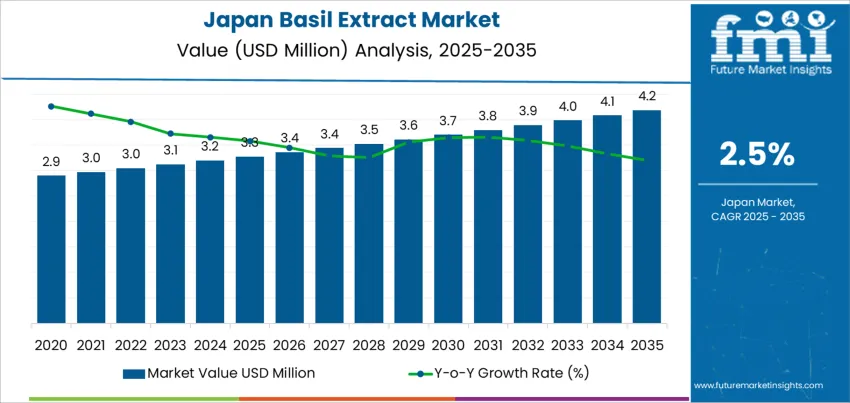
The demand for basil extract in Japan is projected to grow from USD 3.3 million in 2025 to USD 4.2 million by 2035, reflecting a compound annual growth rate (CAGR) of 2.5%. Basil extract is used across various sectors, including the food and beverage industry, cosmetics, and pharmaceuticals, owing to its antioxidant, anti-inflammatory, and antimicrobial properties. As consumer preferences shift toward natural, plant-based ingredients, the demand for basil extract is expected to rise steadily in Japan, particularly in health-conscious products and wellness applications.
The market will see gradual growth over the forecast period. Starting at USD 3.3 million in 2025, the demand for basil extract will increase slightly year-over-year, reaching USD 3.4 million in 2026 and maintaining a steady rise throughout the following years. By 2029, demand will reach USD 3.9 million, and by 2035, it is forecasted to reach USD 4.2 million. This reflects the ongoing but modest growth in the adoption of basil extract in various products, driven by rising interest in natural ingredients and wellness trends.
Quick Stats of the Demand for Basil Extract in Japan
- Demand for Basil Extract in Japan Value (2025): USD 3.3 million
- Demand for Basil Extract in Japan Forecast Value (2035): USD 4.2 million
- Demand for Basil Extract in Japan Forecast CAGR (2025 to 2035): 2.5%
- Demand for Basil Extract in Japan Key Application: 47% Pharmaceutical
- Demand for Basil Extract in Japan Key Growth Regions: Kyushu & Okinawa, Kanto, Kinki, Chubu, Tohoku, Rest of Japan
- Demand for Basil Extract in Japan Key Players: Martin Bauer Group, Penta Manufacturing Company, Kefiplant, Amoretti, FLAVEX Naturextrakte GmbH
What is the Growth Forecast for the Basil Extract Industry in Japan through 2035?
The basil extract market in Japan is expected to experience steady growth over the next decade. Starting at USD 3.3 million in 2025, the market will increase to USD 3.4 million in 2026 and remain relatively stable with incremental growth. By 2027, the demand for basil extract will reach USD 3.5 million, followed by USD 3.6 million in 2028 and USD 3.7 million in 2029. The market will continue to grow, reaching USD 4.0 million by 2033 and USD 4.2 million by 2035.
The 5-year growth block analysis highlights gradual but consistent growth, with an increase of around USD 0.4 million over each five-year period. This growth is driven by the increasing popularity of basil extract in health products, functional foods, and cosmetics. Although the rate of growth remains modest, it reflects a steady adoption of basil extract in multiple sectors, driven by ongoing consumer demand for natural, plant-based ingredients in Japan.
Key Takeaways of Basil Extract Industry in Japan
| Metric | Value |
|---|---|
| Industry Sales Value (2025) | USD 3.3 million |
| Industry Forecast Value (2035) | USD 4.2 million |
| Industry Forecast CAGR (2025 to 2035) | 2.5% |
Why is the Demand for Basil Extract in Japan Growing?
Demand for basil extract in Japan is rising as consumers and manufacturers increasingly turn toward natural, plant based ingredients in food, personal care, and health products. Basil extract, derived from species such as sweet basil or holy basil, contains compounds like flavonoids, polyphenols, and essential oils that offer antioxidant, antimicrobial, and aromatic properties. These characteristics align with growing consumer interest in clean label foods, herbal supplements, and natural cosmetics. Food and beverage producers in Japan are increasingly using basil extract for flavoring, aroma enhancement, and as a perceived healthier alternative to synthetic flavorings. At the same time manufacturers of skincare, hygiene, and cosmetic products incorporate basil extract for its potential skin soothing and preservative properties. As demand grows for botanical and natural ingredients, basil extract becomes more attractive for a variety of applications in food, wellness, and personal care sectors.
Broader global trends support this movement and influence the Japanese market as well. The global basil extract market has been expanding at a compound annual growth rate around 5 6 percent. As more companies, including those supplying to Japan, expand production capacity and improve extraction methods for higher quality and purity, supply becomes more stable and accessible. This improves confidence among Japanese formulators in using basil extract in dietary supplements, herbal teas, functional beverages, cosmetics, and natural personal care products. Growing awareness of wellness, preventive healthcare, and sustainable or plant derived ingredients also contributes to wider adoption of basil extract. As these trends converge in Japan’s food, beverage, health and personal care industries, demand for basil extract is likely to grow steadily over coming years.
What Is the Current State of the Demand for Basil Extract in Japan in Terms of Application and Type?
The demand for basil extract in Japan is primarily driven by application and type. The leading application is pharmaceutical, accounting for 47% of the market share, while powder is the dominant form, capturing 44% of the demand. Basil extract, known for its medicinal and antioxidant properties, is used in a variety of applications ranging from health supplements to personal care products. The growing focus on wellness and natural remedies continues to drive demand for basil extract in Japan, particularly in the pharmaceutical and personal care industries.
How Is the Pharmaceutical Industry Leading the Application Demand for Basil Extract in Japan?
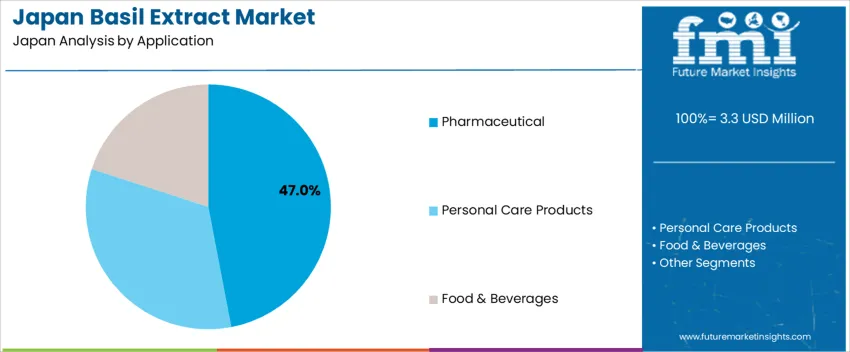
The pharmaceutical industry is the leading application for basil extract in Japan, holding 47% of the market share. Basil extract is widely used in the pharmaceutical sector for its potential health benefits, including its anti-inflammatory, antimicrobial, and antioxidant properties. It is commonly incorporated into supplements and natural remedies aimed at promoting overall health, improving immunity, and reducing stress. The increasing popularity of herbal and plant-based medicine in Japan has contributed significantly to the rising demand for basil extract in this sector.
The demand for basil extract in the pharmaceutical industry is driven by consumer preference for natural health solutions and the growing trend of using plant extracts for their therapeutic benefits. As awareness about the potential health benefits of basil extract increases, its use in supplements and wellness products continues to expand. With a focus on alternative medicine and wellness in Japan, the pharmaceutical industry is expected to remain the largest consumer of basil extract, continuing its strong demand in the coming years.
How Is Powder Leading the Type Demand for Basil Extract in Japan?
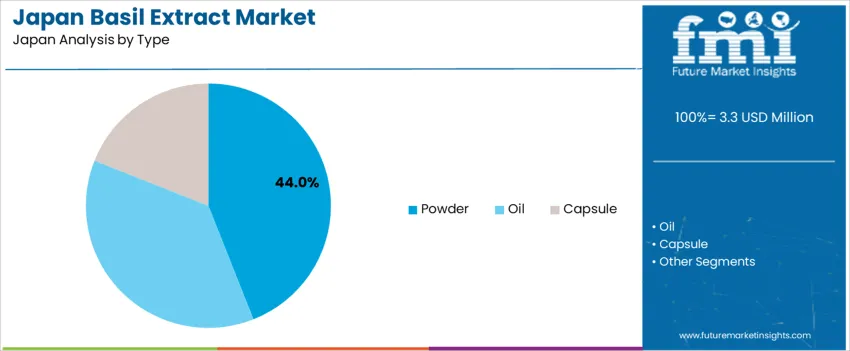
Powder is the leading form for basil extract in Japan, capturing 44% of the market share. The powdered form of basil extract is widely preferred due to its versatility and ease of use in a variety of applications. It is commonly used in dietary supplements, herbal remedies, and functional foods, offering convenience for both manufacturers and consumers. The powder form is also favored for its longer shelf life and easier incorporation into capsules, tablets, and other consumable products.
The demand for powdered basil extract is driven by its practicality and effectiveness. It can be easily measured and combined with other ingredients to create potent formulations for health products. Additionally, powdered extracts are often preferred for use in the personal care and food and beverage industries due to their ability to blend seamlessly with other ingredients. As the demand for natural, plant-based ingredients continues to rise in Japan, the popularity of powdered basil extract is expected to grow, making it the dominant form in the market.
What is the Summary of Demand for Basil Extract in Japan?
Demand for basil extract in Japan appears to be rising, driven by growing interest in natural ingredients for food, beverages, cosmetics, and wellness products. Use of basil extract as a flavoring or aromatic ingredient in culinary applications and as a botanical component in personal care and health oriented formulations supports market uptake. As Japanese consumers increasingly seek products with herbal extracts, antioxidant or wellness benefits, and “clean label” ingredient lists, basil extract finds broader acceptance. The expanding botanical extracts market globally and in Asia suggests that demand in Japan may continue to grow steadily, especially in segments such as functional foods, dietary supplements, beverages, and natural cosmetics.
What are the Drivers of Demand for Basil Extract in Japan?
Several factors drive the demand for basil extract in Japan. First, consumer preference for natural and plant derived ingredients in food, beverages, and personal care products encourages manufacturers to adopt basil extract as a flavoring, aroma, or functional additive. Basil extract offers aromatic and herbal flavor notes that suit culinary uses such as sauces, dressings, beverages and processed food products. Second, increased health and wellness awareness among consumers leads to demand for herbal extracts believed to offer antioxidant, calming or general wellness properties; basil extract fits within that trend toward herbal supplements, nutraceuticals and botanical ingredients. Third, growth in sectors such as functional foods, dietary supplements, herbal products, natural cosmetics and wellness oriented goods supports uptake of basil extract across multiple end use segments. Finally, diversification of applications - from beverages and foods to cosmetics and nutraceuticals - expands the overall addressable market for basil extract in Japan, encouraging suppliers and manufacturers to include it in product formulations.
What are the Restraints on Demand for Basil Extract in Japan?
Despite favorable drivers, several restraints may limit demand for basil extract in Japan. Supply side factors such as variability in raw herb availability, quality control and import dependence could create inconsistency in supply, making manufacturers wary of relying heavily on basil extract. Cost considerations may also restrain demand: botanical extracts tend to be more expensive than synthetic flavorings or additives, which may reduce their use in cost sensitive processed foods or mass market products. Regulatory or compliance requirements for food safety, labeling, and ingredient approval may add complexity and restrict adoption in certain categories. Consumer taste preferences may limit uptake: not all food or beverage products may suit basil’s flavor profile, restricting its use to niche or specialized items. Finally, competition from other botanical or herbal extracts - which may offer similar flavor or wellness attributes - could reduce demand for basil extract specifically, limiting its share in the broader herbal extract market.
What are the Key Trends Influencing Demand for Basil Extract in Japan?
Key trends that influence basil extract demand in Japan include growing interest in natural, plant based ingredients across food, beverage, health and beauty segments. This trend supports increased use of herbal extracts in processed foods, functional beverages, supplements, natural cosmetics and wellness products. Another trend is expansion of “clean label” product development where manufacturers emphasize transparent, recognizable ingredient lists; basil extract fits this demand for natural flavoring and botanical components. A third trend is diversification of basil extract applications - beyond culinary uses to include nutraceuticals, herbal supplements, skincare, and aromatherapy - broadening the product’s end use base. Increased global demand for herbal extracts and rising export/import flows within Asia may also support availability and influence adoption in Japan. Finally, rising consumer awareness of health, wellness, and natural products may lead to greater willingness to pay a premium for products incorporating herbal extracts such as basil.
What is the Regional Demand Outlook for Basil Extract in Japan?
The demand for basil extract in Japan is steadily growing across regions, with Kyushu & Okinawa leading at a CAGR of 3.1%. Kanto follows with a CAGR of 2.8%, driven by its strong food and beverage, as well as wellness markets. The Kinki region shows moderate growth at 2.5%, while Chubu, Tohoku, and the Rest of Japan exhibit slower growth, with respective CAGRs of 2.2%, 1.9%, and 1.8%. These regional differences reflect varying consumer preferences, industry applications, and the adoption of natural ingredients in food, health, and cosmetic products.
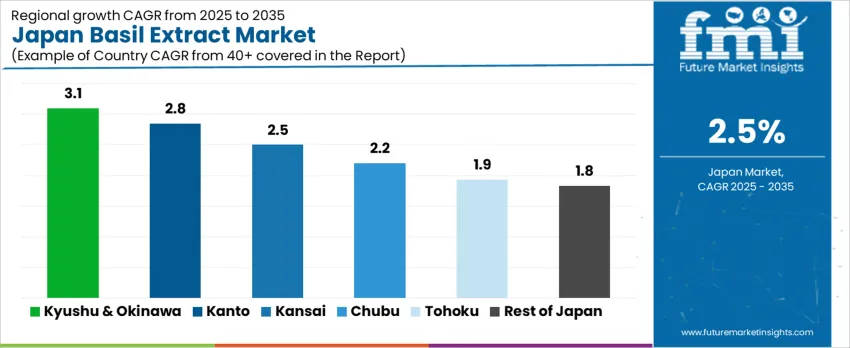
| Region | CAGR (%) |
|---|---|
| Kyushu & Okinawa | 3.1 |
| Kanto | 2.8 |
| Kinki | 2.5 |
| Chubu | 2.2 |
| Tohoku | 1.9 |
| Rest of Japan | 1.8 |
What factors are driving the demand for basil extract in Kyushu & Okinawa?
The demand for basil extract in Kyushu & Okinawa is projected to grow at a CAGR of 3.1%, driven by the region’s focus on health and wellness. Kyushu & Okinawa are known for their rich culinary traditions, with a growing emphasis on using natural and functional ingredients in food and beverages. Basil extract, prized for its antioxidant properties and its ability to enhance flavor, is becoming increasingly popular in these markets. As health-conscious consumers in the region seek natural alternatives to artificial additives, basil extract is gaining traction in both culinary and wellness products. Additionally, Kyushu & Okinawa’s strong tourism industry has created a demand for local, herbal, and functional ingredients, further driving the adoption of basil extract.
Why is the demand for basil extract increasing in Kanto?
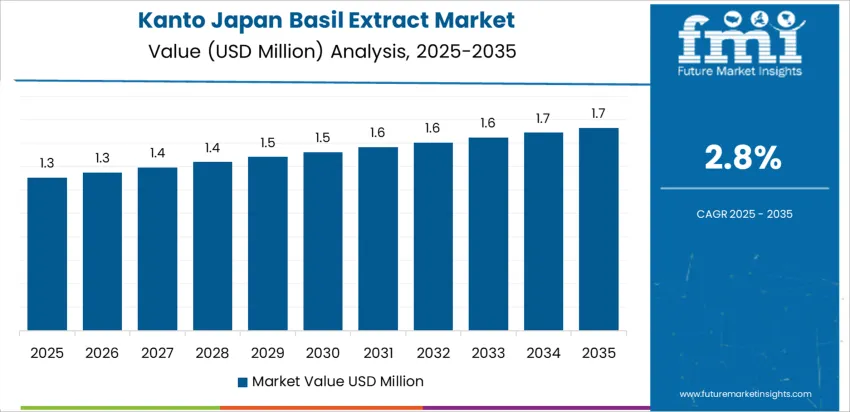
In Kanto, the demand for basil extract is expected to grow at a CAGR of 2.8%, supported by the region’s large population and diverse food and beverage industry. Kanto, home to Tokyo and surrounding areas, is a major center for the food and beverage industry, where basil extract is used in various products such as sauces, dressings, beverages, and functional foods. The increasing popularity of plant-based and natural ingredients, driven by consumer demand for healthier and cleaner products, is contributing to the growing use of basil extract. Additionally, the region’s focus on wellness and holistic health products is driving demand for natural extracts with antioxidant and anti-inflammatory properties. As the food and wellness sectors in Kanto continue to evolve, demand for basil extract is expected to remain strong.
What influences the demand for basil extract in Kinki?
The demand for basil extract in Kinki is projected to grow at a CAGR of 2.5%, driven by the region’s strong presence in food manufacturing and wellness industries. Kinki, which includes Osaka and Kyoto, has a long history of culinary innovation and a growing market for natural and functional food ingredients. Basil extract, valued for its aromatic properties and health benefits, is gaining popularity in the region’s food and beverage products. Additionally, Kinki’s increasing focus on natural cosmetics and health supplements is contributing to the rise in demand for basil extract in personal care products. While the growth rate in Kinki is moderate, the region’s well-established food and wellness sectors ensure steady adoption of basil extract in various applications.
How is the demand for basil extract growing in Chubu?
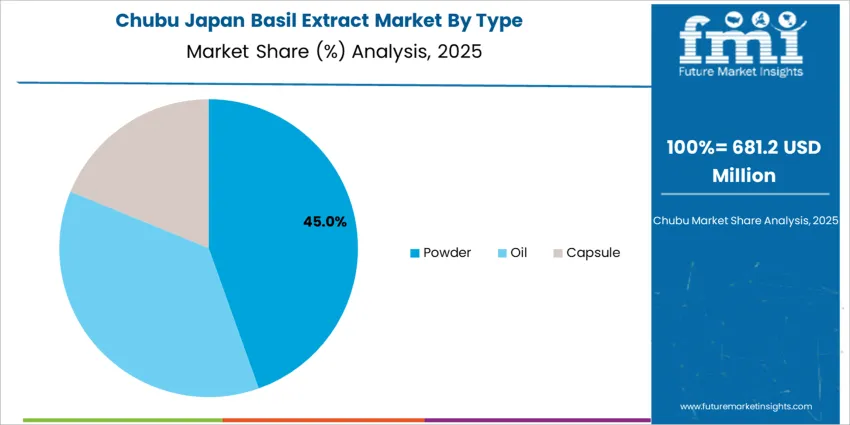
The demand for basil extract in Chubu is expected to grow at a CAGR of 2.2%, supported by the region’s manufacturing base and growing interest in health-conscious food and beverage products. Chubu, home to Nagoya and surrounding areas, has a significant food industry where basil extract is used to enhance the flavor and nutritional profile of food products. As consumers increasingly prioritize natural ingredients and herbal extracts, the demand for basil extract is rising in this region. The growing awareness of the health benefits associated with basil extract, such as its antioxidant and anti-inflammatory properties, is driving adoption in both food and wellness products. Although the growth rate in Chubu is slower than in Kyushu & Okinawa and Kanto, the demand for basil extract is expected to continue growing steadily as the region adopts more health-conscious trends.
What factors are influencing the demand for basil extract in Tohoku?
In Tohoku, the demand for basil extract is projected to grow at a CAGR of 1.9%, reflecting slower adoption compared to other regions. Tohoku has a smaller industrial base and fewer large-scale food and beverage companies, which limits the immediate demand for basil extract. However, the region’s increasing interest in natural ingredients and wellness products is contributing to the gradual rise in basil extract usage. Tohoku’s agricultural sector, which is expanding to include more organic and functional food products, may also drive demand for herbal ingredients like basil extract. While growth in Tohoku is slower, the region’s growing focus on natural and sustainable products ensures that the demand for basil extract will continue to rise steadily, albeit at a slower pace.
How is the demand for basil extract evolving in the Rest of Japan?
In the Rest of Japan, the demand for basil extract is expected to grow at a CAGR of 1.8%, reflecting gradual adoption in less industrialized areas. The Rest of Japan includes smaller cities and rural areas where consumer awareness of natural and functional ingredients is increasing, but adoption is slower compared to more urbanized regions. Basil extract is being incorporated into local food products, herbal supplements, and wellness items, as consumers look for natural alternatives to artificial additives. Although growth is moderate, the continued emphasis on health, wellness, and organic ingredients ensures that demand for basil extract will grow steadily across the Rest of Japan, particularly in local markets and rural areas where natural food products are gaining popularity.
How Are Companies Competing in the Basil Extract Industry in Japan?
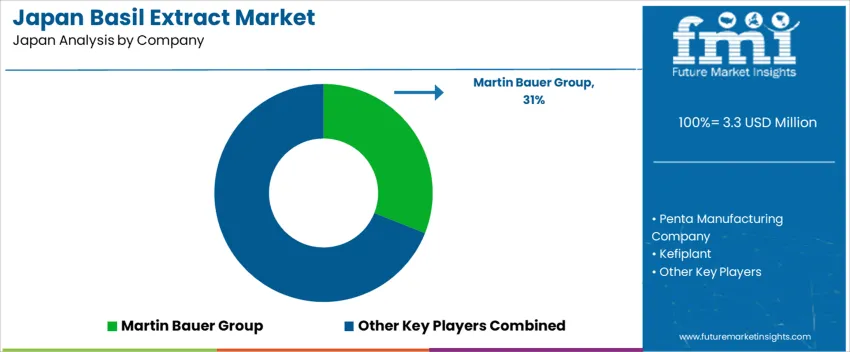
Demand for basil extract in Japan is rising as food, beverage, supplement, and personal care manufacturers seek natural flavoring, aroma and botanical ingredient alternatives. Leading firms in this industry include Martin Bauer Group (holding about 31 % market share), Penta Manufacturing Company, Kefiplant, Amoretti, and FLAVEX Naturextrakte GmbH. These companies supply basil extracts - including essential oils, dry extracts, and standardized botanical preparations - to manufacturers of sauces, teas, functional drinks, cosmetics, and health products. Interest in clean label and herbal ingredients, along with demand for new flavor profiles, supports growth in this sector.
Competition among suppliers centers on extract quality, standardization, and regulatory compliance. Producers emphasize high purity, consistent active compound content, and traceability of raw materials. Many Japanese buyers require certifications such as food grade or cosmetic grade quality, batch traceability, and compliance with local safety standards. Another important competitive factor is flexibility - suppliers offering different extract forms (oil, powder, concentrate) and customization for aroma intensity or solubility appeal to a wider client base. Supply chain reliability and ability to scale volumes also matter as demand expands beyond niche herbal products into mainstream food and personal care applications. By offering high quality, standardized, and versatile basil extracts, these companies seek to meet evolving demand and expand their presence in the Japanese basil extract market.
Key Players of the Basil Extract Industry in Japan
- Martin Bauer Group
- Penta Manufacturing Company
- Kefiplant
- Amoretti
- FLAVEX Naturextrakte GmbH
Scope of the Report
| Items | Details |
|---|---|
| Quantitative Units | USD Million |
| Regions Covered | Japan |
| Application | Pharmaceutical, Personal Care Products, Food & Beverages |
| Type | Powder, Oil, Capsule |
| Key Companies Profiled | Martin Bauer Group, Penta Manufacturing Company, Kefiplant, Amoretti, FLAVEX Naturextrakte GmbH |
| Additional Attributes | The market analysis includes dollar sales by application, type, and company categories. It also covers regional demand trends in Japan, driven by the increasing use of basil extract in pharmaceuticals, personal care products, and the food and beverage industry. The competitive landscape highlights key manufacturers focusing on innovations in basil extract formulations, particularly for their antioxidant, anti-inflammatory, and aromatic properties. Trends in the growing demand for natural ingredients in health and wellness products are explored, along with advancements in extraction techniques for enhanced purity and potency of basil extracts. |
Key Segments of the Demand for Basil Extract in Japan
Application:
- Pharmaceutical
- Personal Care Products
- Food & Beverages
Type:
- Powder
- Oil
- Capsule
Region:
- Kyushu & Okinawa
- Kanto
- Kinki
- Chubu
- Tohoku
- Rest of Japan
Bibliography
- Japan Food Additives Association. (2023). Guidance on food additive use including botanical extracts in foods. JFAA Technical Publications.
- International Organization of the Flavor Industry. (2023). Good manufacturing practice for flavorings and botanical extracts used in food products. IOFI Guidance Documents.
- Food and Agriculture Organization of the United Nations and World Health Organization. (2023). Codex standards and guidelines relevant to botanical extracts and natural flavors. Codex Alimentarius Publications.
Frequently Asked Questions
How big is the demand for basil extract in Japan in 2025?
The demand for basil extract in Japan is estimated to be valued at USD 3.3 million in 2025.
What will be the size of basil extract in Japan in 2035?
The market size for the basil extract in Japan is projected to reach USD 4.2 million by 2035.
How much will be the demand for basil extract in Japan growth between 2025 and 2035?
The demand for basil extract in Japan is expected to grow at a 2.5% CAGR between 2025 and 2035.
What are the key product types in the basil extract in Japan?
The key product types in basil extract in Japan are pharmaceutical, personal care products and food & beverages.
Which type segment is expected to contribute significant share in the basil extract in Japan in 2025?
In terms of type, powder segment is expected to command 44.0% share in the basil extract in Japan in 2025.
Preview the report firsthand - request a free sample
Get SampleGet the brochure for pricing and purchase details.
Get PDFTable of Content
- Executive Summary
- Japan Market Outlook
- Demand-side Trends
- Supply-side Trends
- Technology Roadmap Analysis
- Analysis and Recommendations
- Market Overview
- Market Coverage / Taxonomy
- Market Definition / Scope / Limitations
- Market Background
- Market Dynamics
- Drivers
- Restraints
- Opportunity
- Trends
- Scenario Forecast
- Demand in Optimistic Scenario
- Demand in Likely Scenario
- Demand in Conservative Scenario
- Opportunity Map Analysis
- Product Life Cycle Analysis
- Supply Chain Analysis
- Investment Feasibility Matrix
- Value Chain Analysis
- PESTLE and Porter’s Analysis
- Regulatory Landscape
- Regional Parent Market Outlook
- Production and Consumption Statistics
- Import and Export Statistics
- Market Dynamics
- Japan Market Analysis 2020 to 2024 and Forecast, 2025 to 2035
- Historical Market Size Value (USD Million) Analysis, 2020 to 2024
- Current and Future Market Size Value (USD Million) Projections, 2025 to 2035
- Y-o-Y Growth Trend Analysis
- Absolute $ Opportunity Analysis
- Japan Market Pricing Analysis 2020 to 2024 and Forecast 2025 to 2035
- Japan Market Analysis 2020 to 2024 and Forecast 2025 to 2035, By Application
- Introduction / Key Findings
- Historical Market Size Value (USD Million) Analysis By Application , 2020 to 2024
- Current and Future Market Size Value (USD Million) Analysis and Forecast By Application , 2025 to 2035
- Pharmaceutical
- Personal Care Products
- Food & Beverages
- Y-o-Y Growth Trend Analysis By Application , 2020 to 2024
- Absolute $ Opportunity Analysis By Application , 2025 to 2035
- Japan Market Analysis 2020 to 2024 and Forecast 2025 to 2035, By Type
- Introduction / Key Findings
- Historical Market Size Value (USD Million) Analysis By Type, 2020 to 2024
- Current and Future Market Size Value (USD Million) Analysis and Forecast By Type, 2025 to 2035
- Powder
- Oil
- Capsule
- Y-o-Y Growth Trend Analysis By Type, 2020 to 2024
- Absolute $ Opportunity Analysis By Type, 2025 to 2035
- Market Structure Analysis
- Competition Dashboard
- Competition Benchmarking
- Market Share Analysis of Top Players
- By Regional
- By Application
- By Type
- Competition Analysis
- Competition Deep Dive
- Martin Bauer Group
- Overview
- Product Portfolio
- Profitability by Market Segments (Product/Age /Sales Channel/Region)
- Sales Footprint
- Strategy Overview
- Marketing Strategy
- Product Strategy
- Channel Strategy
- Penta Manufacturing Company
- Kefiplant
- Amoretti
- FLAVEX Naturextrakte GmbH
- Martin Bauer Group
- Competition Deep Dive
- Assumptions & Acronyms Used
- Research Methodology


