

- Industry Size (2026)
- USD 22.99 Mn
- Forecast (2036)
- USD 31.20 Mn
- CAGR (2026 to 2036)
- 3.10%
Demand for Basil Extract in USA Market Size, Market Forecast and Outlook By FMI
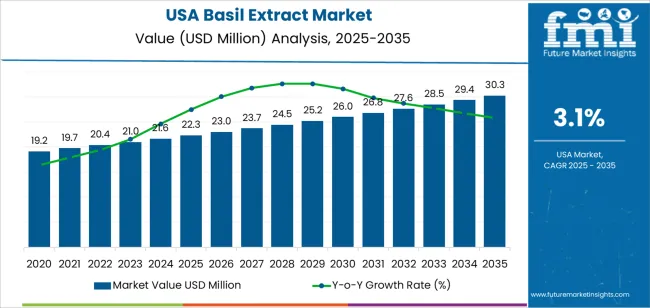
The demand for basil extract in usa market was valued at USD 22.30 million in 2025, projected to reach USD 22.99 million in 2026, and is forecast to expand to USD 31.20 million by 2036 at a 3.10% CAGR. As per FMI, this trajectory creates an incremental opportunity of USD 8.21 million over the forecast period. Basil extract is gaining traction across pharmaceutical, personal care, and food applications in the USA market as formulators seek botanical ingredients with documented adaptogenic and anti-inflammatory properties. The ingredient's dual functionality as both a bioactive compound and a natural flavoring agent positions it at the intersection of the nutraceutical and clean-label food trends.
Summary of Demand for Basil Extract in USA Market
- Market Snapshot
- The demand for basil extract in usa market is valued at USD 22.30 million in 2025 and is projected to reach USD 31.20 million by 2036.
- The industry is expected to grow at a 3.10% CAGR from 2026 to 2036, creating an incremental opportunity of USD 8.21 million.
- The market is a steady-growth, multi-application botanical extract category where pharmaceutical standardization, personal care formulation adoption, and clinical research validation define competitive positioning.
- Demand and Growth Drivers
- Clinical research validation from NIH and academic institutions is supporting the inclusion of standardized basil extract in dietary supplement formulations.
- Personal care formulators are adopting basil essential oil as a natural fragrance and skin-conditioning ingredient in response to clean-beauty consumer demand.
- Growing consumer acceptance of adaptogenic and anti-inflammatory botanicals is expanding the addressable market for basil extract across supplement and functional food categories.
- Among regions, West USA leads at 3.6% CAGR, followed by South USA at 3.2%, Northeast USA at 2.9%, Midwest USA at 2.5%.
- Product and Segment View
- The market covers basil extract ingredients in powder, oil, and capsule formats derived from Ocimum basilicum for pharmaceutical, personal care, and food and beverage applications in the United States.
- Powder leads by Type with 44.0% share in 2026.
- Pharmaceutical leads by Application with 47.0% share in 2026.
- The scope includes standardized basil extract ingredients in all commercial formats, excluding fresh basil herb, dried basil leaf for culinary use, and basil-flavored finished consumer products.
- Geography and Competitive Outlook
- West USA and South USA are the fastest-growing regions driven by natural products company concentration and personal care manufacturing expansion, while Northeast and Midwest reflect steady adoption from established supplement and food manufacturing bases.
- Competition is shaped by botanical extract standardization capability, pharmaceutical-grade quality certifications, and multi-application technical support across pharmaceutical, personal care, and food formulation, with key players including Martin Bauer Group, Penta Manufacturing Company, Kefiplant, Amoretti, FLAVEX Naturextrakte GmbH.
- Analyst Opinion at FMI
- Nandini Roy Choudhury, Principal Consultant for Food & Beverage analysts observe that: 'In my analysis, I have observed that the commercial ceiling for basil extract in U.S. markets is being constrained not by consumer demand but by the standardization gap between pharmaceutical-grade and food-grade specifications. Supplement manufacturers requiring consistent eugenol and rosmarinic acid concentrations face batch variability from suppliers who process for flavor applications rather than bioactive potency. Procurement managers sourcing basil extract for dietary supplement lines must verify that suppliers maintain pharmaceutical-grade analytical testing protocols, as food-grade quality certificates do not guarantee the bioactive consistency that regulatory bodies increasingly expect for structure-function claims.'
- Strategic Implications / Executive Takeaways
- Botanical extract suppliers must invest in pharmaceutical-grade analytical testing infrastructure to meet the bioactive consistency requirements of the growing dietary supplement application segment.
- Supplement brand formulators should establish dual-qualification sourcing protocols that verify both food-grade safety and pharmaceutical-grade bioactive potency in basil extract supply agreements.
- Personal care ingredient procurement managers must evaluate basil essential oil suppliers on fragrance stability and skin-compatibility testing, not solely on aromatic profile matching.
Demand for Basil Extract in USA Market Key Takeaways
| Metric | Details |
|---|---|
| Industry Size (2026) | USD 22.99 million |
| Industry Value (2036) | USD 31.20 million |
| CAGR (2026 to 2036) | 3.10% |
Source: Future Market Insights, 2026
FMI analysts observe that basil extract demand in the United States is being shaped by a convergence of clinical research validation and consumer interest in adaptogenic botanicals. The National Institutes of Health published updated monograph data on Ocimum basilicum bioactive compounds in 2024, documenting anti-inflammatory and antioxidant pathways that support use in dietary supplement formulations. Concurrently, the personal care sector has increased adoption of basil essential oil as a natural fragrance and skin-conditioning agent, with the Personal Care Products Council reporting measurable growth in botanical ingredient declarations on product labels during 2024. As per FMI, the pharmaceutical application segment is anchored by growing consumer acceptance of standardized botanical extracts in supplement capsule and tablet formats.
All major regions reflect differentiated adoption trajectories. West USA sets a 3.6% CAGR pace, South USA sets a 3.2% CAGR pace, Northeast USA sets a 2.9% CAGR pace, Midwest USA sets a 2.5% CAGR pace. West USA leads at 3.6% CAGR, driven by California's concentration of natural products companies and supplement manufacturers. South USA follows at 3.2%, supported by expanding personal care manufacturing in the Southeast. Midwest reflects more measured 2.5% growth due to lower specialty ingredient manufacturing density.
Demand for Basil Extract in USA Market Definition
Demand for basil extract in the USA covers the procurement of concentrated basil-derived ingredients by pharmaceutical, personal care, and food manufacturers. The category includes standardized extracts from Ocimum basilicum processed into powder, oil, and capsule formats for use as bioactive compounds, natural fragrances, and flavoring agents.
Demand for Basil Extract in USA Market Inclusions
Market scope includes basil extract ingredients in powder, oil, and capsule formats for pharmaceutical, personal care, and food and beverage applications in the United States. Both conventional and organic-certified grades are covered.
Demand for Basil Extract in USA Market Exclusions
Fresh basil herb, dried basil leaf sold for direct culinary use, basil-flavored finished consumer products, and basil seed products are excluded from the defined scope.
Demand for Basil Extract in USA Market Research Methodology
- Primary Research: Analysts engaged with botanical extract manufacturers, supplement brand formulators, and personal care ingredient procurement managers to map the specification requirements and volume allocation decisions shaping basil extract demand.
- Desk Research: Data collection aggregated National Institutes of Health botanical monograph publications, Personal Care Products Council ingredient usage reports, and USDA organic botanical production statistics.
- Market-Sizing and Forecasting: Baseline values derive from a bottom-up aggregation of botanical extract supply contracts and end-use application-specific consumption data, applying segment-level adoption curves to project future demand velocity.
- Data Validation and Update Cycle: Projections are tested against publicly reported botanical ingredient division revenues from major extract suppliers and cross-referenced with FDA dietary supplement registration data.
Why is the Demand for Basil Extract in USA Growing?
The demand for basil extract in the USA is growing due to its wide range of applications in the food and beverage, cosmetics, and health supplement industries. Basil extract, derived from the leaves of the basil plant, is valued for its antioxidant, antimicrobial, and anti-inflammatory properties, making it a sought-after ingredient in natural and functional products. As consumers continue to seek healthier, plant-based alternatives, the demand for basil extract is rising in both culinary and wellness industries.
A key driver behind the growth of basil extract is the increasing preference for natural ingredients in food and beverage products. Basil extract is used in a variety of applications, from flavoring sauces and beverages to providing functional health benefits in teas, dietary supplements, and other wellness products. As the demand for clean-label, natural, and organic products rises, basil extract is gaining popularity as a versatile, plant-based ingredient that can meet these consumer needs.
The rising trend of wellness and self-care is contributing to the demand for basil extract in the health and beauty sectors. Its antioxidant and anti-inflammatory properties make it a valuable ingredient in skincare products, helping to improve skin health and reduce signs of aging. As consumers increasingly prioritize natural and holistic wellness, the demand for basil extract in the USA is expected to grow steadily through 2035, driven by its versatility in both food and personal care applications.
What is the Segment-Wise Analysis of Demand for Basil Extract in the USA?
Demand for basil extract in the USA is segmented by type, application, and region. By type, demand is divided into powder, oil, and capsule, with powder holding the largest share at 44%. The demand is also segmented by application, including pharmaceutical, personal care products, and food & beverages, with pharmaceuticals leading the demand. Regionally, demand is divided into West USA, South USA, Northeast USA, and Midwest USA, with specific regions contributing to the growing use of basil extract in various industries.
Why Does Powder Lead the Type Demand for Basil Extract?
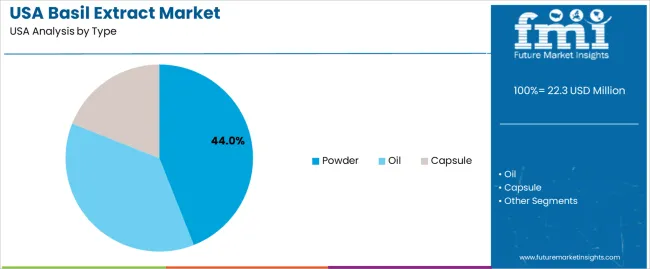
Powdered basil extract accounts for 44% of the demand for basil extract in the USA. Its popularity is driven by its versatility and ease of use across a wide range of applications. In powdered form, basil extract can be seamlessly incorporated into various pharmaceutical products, dietary supplements, and functional food items. This form offers convenience in storage, measurement, and long shelf life, making it an attractive option for manufacturers and consumers alike. Powdered basil extract is known for its medicinal properties, including stress relief, digestive support, and antioxidant benefits, which further contribute to its demand in the wellness industry. As consumers increasingly seek natural health solutions, the demand for powdered basil extract is expected to remain strong, especially in the growing supplement and natural product sectors.
How Does Pharmaceuticals Lead the Application Demand for Basil Extract?
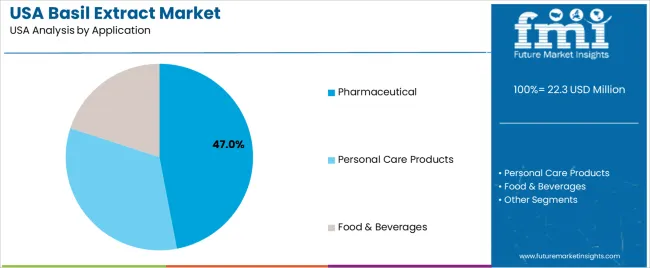
Pharmaceuticals account for 47% of the demand for basil extract in the USA. Basil extract is highly valued for its wide array of health benefits, making it a key ingredient in the pharmaceutical industry. Its natural compounds, including antioxidants and anti-inflammatory agents, are widely used in treatments for stress relief, digestive health, and immune support. As the demand for plant-based health solutions continues to rise, basil extract is becoming increasingly popular in the production of natural remedies and supplements. Its potential therapeutic benefits align well with the growing trend of holistic health and wellness. The increasing consumer preference for herbal and natural alternatives further drives the demand for basil extract in the pharmaceutical sector, solidifying its dominant role in the industry.
What Are the Key Trends, Drivers, and Restraints in Demand for Basil Extract in USA?
Demand for basil extract in USA is rising as multiple sectors food & beverage, nutraceuticals, and personal care/cosmetics increasingly favor botanical and plant‑based ingredients over synthetic additives. The industry for herbal and botanical extracts is growing rapidly, driven by increasing consumer interest in natural, clean‑label products that offer health and wellness benefits. Basil extract’s versatility used as a natural flavoring in foods, a functional ingredient in supplements, and a bioactive component in cosmetics helps expand its addressable industry. Constraints include volatility in supply and raw material quality (herbal sourcing depends on agriculture), the need for standardization (active‑compound consistency), and competition from other botanical extracts or synthetic alternatives
Why is Demand for Basil Extract Growing in USA?
In USA, demand for basil extract is growing because consumers are increasingly health‑ and wellness‑conscious, seeking natural ingredients in food, supplements, and personal care. Basil extract is valued for its antioxidant, anti‑inflammatory, and antimicrobial properties, which make it suitable for use in dietary supplements, herbal wellness products, and functional foods. Shifting consumer lifestyles and greater interest in clean‑label and plant‑based solutions are boosting use of botanical extracts as alternatives to synthetic flavorings, preservatives, or additives. This growing preference for “natural wellness” and preventive health fuels formulation of basil‑extract based products across food, beverage, nutraceutical and cosmetic categories.
How are Technological and Industry Innovations Driving Growth of Basil Extract in USA?
Recent advances in extraction technologies (improved solvent extraction, distillation, purification) and quality‑control processes make basil extract more reliable, consistent and scalable for large‑scale production. This helps meet the standards required in nutraceuticals, food & beverage flavoring, and cosmetics. Manufacturers are also offering basil extract in multiple forms liquid, powder, encapsulated supplements which broadens application across consumer packaged goods, dietary supplements, functional beverages, and personal‑care products. Liquid forms and standardized extracts make formulation easier for food manufacturers or supplement brands, helping drive broader adoption.
What are the Key Challenges Limiting Wider Adoption of Basil Extract in USA?
Despite growing demand, several challenges limit wider adoption of basil extract in USA. First, variability and volatility in raw‑material supply since basil cultivation depends on climate, soil and agro‑conditions can lead to inconsistent quality or supply disruptions. Second, the need for standardization and quality assurance means producers must ensure consistent levels of bioactive compounds (e.g. flavonoids, essential oils), which adds complexity and cost for extract manufacturers. Third, competition from other botanical extracts, synthetic flavorings or alternative natural ingredients may constrain growth, especially if cost or formulation ease matters more than “natural” positioning. Regulatory compliance and permissible health‑claims for botanical extracts especially in dietary supplements or therapeutic uses can be cumbersome, which may discourage some manufacturers from scaling up basil‑extract USAge in certain product categories.
What is the Regional Demand Outlook for Basil Extract in USA?
.webp "Top Country Growth Comparison Usa Basil Extract Market Cagr (2026 2036)")
| Region | CAGR (%) |
|---|---|
| West USA | 3.6% |
| South USA | 3.2% |
| Northeast USA | 2.9% |
| Midwest USA | 2.5% |
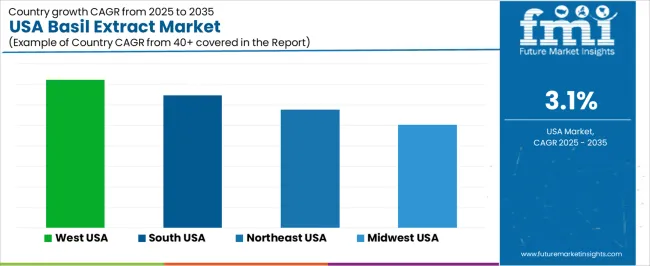
Demand for basil extract in the USA is growing steadily, with West USA leading at a 3.6% CAGR, driven by the region’s strong food, beverage, and wellness industries, which increasingly favor natural, plant-based ingredients. South USA follows with a 3.2% CAGR, supported by the region’s food industry, where basil extract is popular for flavoring and its health benefits. Northeast USA shows a 2.9% CAGR, fueled by growing interest in herbal products and natural ingredients in food, supplements, and skincare. Midwest USA experiences a 2.5% CAGR, driven by the rising demand for basil extract in food products and its growing use in health-conscious and plant-based formulations. As consumer preferences shift towards clean-label, organic, and functional foods, the demand for basil extract is expected to continue rising across all regions.
How is Demand for Basil Extract Growing in West USA?
West USA is seeing the highest demand for Basil extract, growing at a 3.6% CAGR. The region’s strong food and beverage industry, including a growing trend in natural and herbal ingredients, is a key driver of this growth. Basil extract is widely used in culinary applications, health supplements, and personal care products for its antioxidants and anti-inflammatory properties. West USA, particularly in California, has a well-established wellness industry that increasingly favors plant-based and natural ingredients, driving the popularity of basil extract in a variety of health and beauty products. The demand is further supported by the growing consumer interest in organic and herbal products, which are becoming more prevalent in the region’s industry. As West USA continues to embrace clean-label and functional foods, the use of basil extract in food products, supplements, and personal care formulations is expected to grow steadily, contributing to the region’s leading position in the industry.
Why is Demand for Basil Extract Rising in South USA?
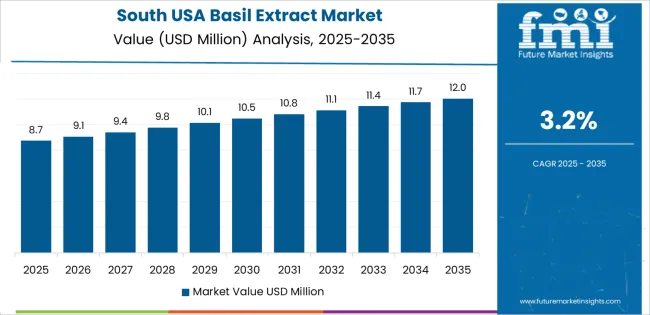
South USA is experiencing steady demand for Basil extract, with a 3.2% CAGR, primarily driven by the region’s thriving food industry. Basil extract is increasingly used in cooking, flavoring, and seasoning, particularly in the preparation of sauces, soups, and dressings. With the region’s emphasis on bold flavors and natural, fresh ingredients, basil extract is becoming a popular choice in both commercial and home kitchens. The demand for basil extract in health and wellness products is growing as consumers in South USA embrace more herbal and plant-based alternatives for their nutritional benefits. The region’s growing health-conscious population, along with increasing consumer demand for organic and natural products, is further supporting the adoption of basil extract in dietary supplements, skincare products, and functional foods. As wellness trends continue to rise and natural ingredients become more prominent in food and personal care formulations, the demand for basil extract in South USA is expected to continue growing steadily.
How is Demand for Basil Extract Expanding in Northeast USA?
Northeast USA is witnessing moderate growth in demand for Basil extract, with a 2.9% CAGR. The region’s growing health and wellness industry, particularly in metropolitan areas like New York and Boston, is driving this demand. As consumers seek natural and functional ingredients in food, supplements, and skincare products, basil extract is gaining traction for its antioxidant and anti-inflammatory properties. The region’s strong interest in herbal and plant-based products supports the increasing incorporation of basil extract in functional foods, teas, and cosmetics. The Northeast’s focus on organic and sustainable products is contributing to the rise in popularity of basil extract, as it aligns with consumer preferences for natural, clean-label ingredients. As the demand for plant-based health solutions grows in the Northeast, the use of basil extract in various industries, including food, beverage, and personal care, is expected to increase, maintaining steady growth in the region’s industry.
What is Driving Demand for Basil Extract in Midwest USA?
Midwest USA is experiencing steady demand for Basil extract, growing at a 2.5% CAGR. The region’s food industry, particularly in the manufacturing of sauces, condiments, and seasonings, is a major driver of this demand. Basil extract is valued for its unique flavor and health benefits, making it a popular ingredient in cooking and food products. The rise in health-conscious consumers and the growing trend of plant-based and organic foods are contributing to the demand for basil extract in dietary supplements and functional foods. As the wellness movement continues to gain traction in the Midwest, the demand for natural ingredients like basil extract in personal care products is also increasing. With a growing emphasis on sustainable and clean-label products, basil extract is expected to see steady growth in the region’s food, health, and beauty industries. As these trends continue to evolve, the demand for basil extract in Midwest USA is projected to rise gradually.
What is the Competitive Landscape of Basil Extract Demand in USA?
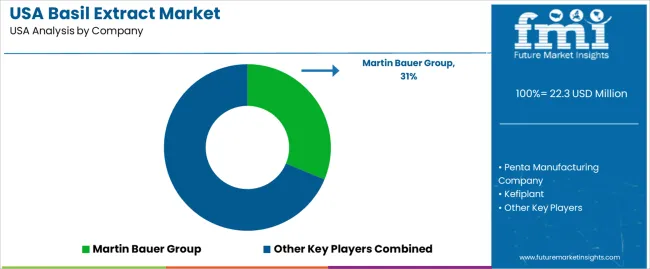
The demand for basil extract in the USA is increasing due to its versatile applications in the food, beverage, cosmetics, and pharmaceutical industries. Basil extract, known for its aromatic properties, is widely used as a natural flavoring agent in food and beverages, as well as for its potential health benefits, such as anti-inflammatory and antioxidant properties. The growing consumer interest in natural and organic ingredients, along with the increasing trend of health-conscious eating, is fueling the demand for basil extract. The extract is gaining popularity in wellness products due to its therapeutic qualities.
Key players in the basil extract industry in the USA include Martin Bauer Group, Penta Manufacturing Company, Kefiplant, Amoretti, and FLAVEX Naturextrakte GmbH. Martin Bauer Group leads with an industry share of 31.3%, offering high-quality basil extract that is widely used in both food and health products. Penta Manufacturing Company specializes in providing basil extract and other botanical extracts for the food, beverage, and nutraceutical sectors. Kefiplant offers natural basil extract for functional food and beverage applications, while Amoretti provides premium basil extracts used in culinary applications, such as flavoring oils and sauces. FLAVEX Naturextrakte GmbH focuses on offering natural extracts, including basil, for use in beverages, cosmetics, and personal care products.
Competition in the basil extract industry is driven by the rising consumer demand for natural, organic, and health-focused ingredients. Companies compete by offering high-quality, sustainably sourced extracts that meet the growing demand for clean-label products. The ability to deliver consistent, high-potency basil extracts, as well as offer customization for specific product applications, is a key factor in the competitive landscape. Durability and traceability are also important drivers, as consumers and businesses alike are increasingly prioritizing eco-friendly and ethically sourced ingredients.
Key Players in USA Basil Extract Demand
- Martin Bauer Group
- Penta Manufacturing Company
- Kefiplant
- Amoretti
- FLAVEX Naturextrakte GmbH
Scope of the Report
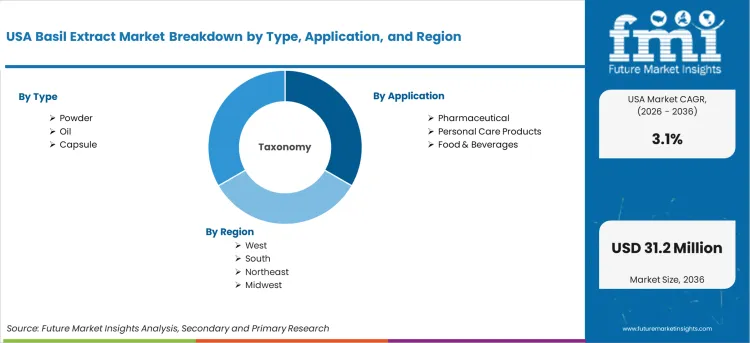
| Metric | Value |
|---|---|
| Quantitative Units | USD 22.99 million to USD 31.20 million, at a CAGR of 3.10% |
| Market Definition | Demand for basil extract in the USA covers concentrated Ocimum basilicum extracts in powder, oil, and capsule formats for pharmaceutical, personal care, and food and beverage manufacturing. |
| Type Segmentation | Powder, Oil, Capsule |
| Application Segmentation | Pharmaceutical, Personal Care Products, Food & Beverages |
| Regions Covered | West USA, South USA, Northeast USA, Midwest USA |
| Key Companies Profiled | Martin Bauer Group, Penta Manufacturing Company, Kefiplant, Amoretti, FLAVEX Naturextrakte GmbH |
| Forecast Period | 2026 to 2036 |
| Approach | Forecasting models apply a bottom-up methodology starting with botanical extract supply contract volumes and end-use application consumption data, projecting the adoption rate across pharmaceutical, personal care, and food segments in U.S. regions. |
USA Basil Extract Demand by Key Segments
Type:
- Powder
- Oil
- Capsule
Application:
- Pharmaceutical
- Personal Care Products
- Food & Beverages
Region:
- West USA
- South USA
- Northeast USA
- Midwest USA
Bibliography
- National Institutes of Health. (2024). Ocimum Basilicum Botanical Monograph Update. NIH National Center for Complementary and Integrative Health.
- Personal Care Products Council. (2025). Botanical Ingredient Usage Report in USA Personal Care. PCPC.
- Food and Drug Administration. (2024). Dietary Supplement Current Good Manufacturing Practice Guidelines. FDA.
- United States Pharmacopeia. (2024). USP Monograph: Basil Extract Standardization Specifications. USP.
- United States Department of Agriculture. (2025). Organic Botanical Production Statistics. USDA National Organic Program.
This bibliography is provided for reader reference. The full Future Market Insights report contains the complete reference list with primary research documentation.
Frequently Asked Questions
How large is the demand for basil extract in USA in 2026?
Demand for basil extract in the USA is estimated to be valued at USD 22.99 million in 2026.
What will be the market size of basil extract in USA by 2036?
Market size for basil extract in the USA is projected to reach USD 31.20 million by 2036.
What is the expected demand growth between 2026 and 2036?
Demand for basil extract in the USA is expected to grow at a CAGR of 3.10% between 2026 and 2036.
Which Type segment leads in 2026?
Powder accounts for 44.0% share in 2026, driven by the processing convenience and dosing precision that powder format delivers for both supplement capsule filling and food formulation applications.
Which Application segment leads?
Pharmaceutical holds 47.0% share in 2026 as dietary supplement manufacturers increasingly formulate standardized basil extract into capsule and tablet products for anti-inflammatory and adaptogenic health claims.
Which region is growing fastest?
West USA leads at 3.6% CAGR through 2036, supported by California's concentration of natural products companies and supplement manufacturers.
What is included in this report?
The market covers basil extract ingredients in powder, oil, and capsule formats for pharmaceutical, personal care, and food and beverage applications in the United States.
What is excluded?
Fresh basil herb, dried culinary basil leaf, basil-flavored finished products, and basil seed products are excluded.
Preview the report firsthand - request a free sample
Get SampleGet the brochure for pricing and purchase details.
Get PDFTable of Content
- Executive Summary
- USA Market Outlook
- Demand-side Trends
- Supply-side Trends
- Technology Roadmap Analysis
- Analysis and Recommendations
- Market Overview
- Market Coverage / Taxonomy
- Market Definition / Scope / Limitations
- Research Methodology
- Chapter Orientation
- Analytical Lens and Working Hypotheses
- Market Structure, Signals, and Trend Drivers
- Benchmarking and Cross-market Comparability
- Market Sizing, Forecasting, and Opportunity Mapping
- Research Design and Evidence Framework
- Desk Research Programme (Secondary Evidence)
- Company Annual and Sustainability Reports
- Peer-reviewed Journals and Academic Literature
- Corporate Websites, Product Literature, and Technical Notes
- Earnings Decks and Investor Briefings
- Statutory Filings and Regulatory Disclosures
- Technical White Papers and Standards Notes
- Trade Journals, Industry Magazines, and Analyst Briefs
- Conference Proceedings, Webinars, and Seminar Materials
- Government Statistics Portals and Public Data Releases
- Press Releases and Reputable Media Coverage
- Specialist Newsletters and Curated Briefings
- Sector Databases and Reference Repositories
- FMI Internal Proprietary Databases and Historical Market Datasets
- Subscription Datasets and Paid Sources
- Social Channels, Communities, and Digital Listening Inputs
- Additional Desk Sources
- Expert Input and Fieldwork (Primary Evidence)
- Primary Modes
- Qualitative Interviews and Expert Elicitation
- Quantitative Surveys and Structured Data Capture
- Blended Approach
- Why Primary Evidence is Used
- Field Techniques
- Interviews
- Surveys
- Focus Groups
- Observational and In-context Research
- Social and Community Interactions
- Stakeholder Universe Engaged
- C-suite Leaders
- Board Members
- Presidents and Vice Presidents
- R&D and Innovation Heads
- Technical Specialists
- Domain Subject-matter Experts
- Scientists
- Physicians and Other Healthcare Professionals
- Governance, Ethics, and Data Stewardship
- Research Ethics
- Data Integrity and Handling
- Primary Modes
- Tooling, Models, and Reference Databases
- Desk Research Programme (Secondary Evidence)
- Data Engineering and Model Build
- Data Acquisition and Ingestion
- Cleaning, Normalisation, and Verification
- Synthesis, Triangulation, and Analysis
- Quality Assurance and Audit Trail
- Market Background
- Market Dynamics
- Drivers
- Restraints
- Opportunity
- Trends
- Scenario Forecast
- Demand in Optimistic Scenario
- Demand in Likely Scenario
- Demand in Conservative Scenario
- Opportunity Map Analysis
- Product Life Cycle Analysis
- Supply Chain Analysis
- Investment Feasibility Matrix
- Value Chain Analysis
- PESTLE and Porter’s Analysis
- Regulatory Landscape
- Regional Parent Market Outlook
- Production and Consumption Statistics
- Import and Export Statistics
- Market Dynamics
- USA Market Analysis 2021 to 2025 and Forecast, 2026 to 2036
- Historical Market Size Value (USD Million) Analysis, 2021 to 2025
- Current and Future Market Size Value (USD Million) Projections, 2026 to 2036
- Y-o-Y Growth Trend Analysis
- Absolute $ Opportunity Analysis
- USA Market Pricing Analysis 2021 to 2025 and Forecast 2026 to 2036
- USA Market Analysis 2021 to 2025 and Forecast 2026 to 2036, By Type
- Introduction / Key Findings
- Historical Market Size Value (USD Million) Analysis By Type , 2021 to 2025
- Current and Future Market Size Value (USD Million) Analysis and Forecast By Type , 2026 to 2036
- Powder
- Oil
- Capsule
- Powder
- Y-o-Y Growth Trend Analysis By Type , 2021 to 2025
- Absolute $ Opportunity Analysis By Type , 2026 to 2036
- USA Market Analysis 2021 to 2025 and Forecast 2026 to 2036, By Application
- Introduction / Key Findings
- Historical Market Size Value (USD Million) Analysis By Application, 2021 to 2025
- Current and Future Market Size Value (USD Million) Analysis and Forecast By Application, 2026 to 2036
- Pharmaceutical
- Personal Care Products
- Food & Beverages
- Pharmaceutical
- Y-o-Y Growth Trend Analysis By Application, 2021 to 2025
- Absolute $ Opportunity Analysis By Application, 2026 to 2036
- USA Market Analysis 2021 to 2025 and Forecast 2026 to 2036, By Region
- Introduction
- Historical Market Size Value (USD Million) Analysis By Region, 2021 to 2025
- Current Market Size Value (USD Million) Analysis and Forecast By Region, 2026 to 2036
- West
- South
- Northeast
- Midwest
- Market Attractiveness Analysis By Region
- West Market Analysis 2021 to 2025 and Forecast 2026 to 2036, By Country
- Historical Market Size Value (USD Million) Trend Analysis By Market Taxonomy, 2021 to 2025
- Market Size Value (USD Million) Forecast By Market Taxonomy, 2026 to 2036
- By Country
- By Type
- By Application
- By Country
- Market Attractiveness Analysis
- By Country
- By Type
- By Application
- Key Takeaways
- South Market Analysis 2021 to 2025 and Forecast 2026 to 2036, By Country
- Historical Market Size Value (USD Million) Trend Analysis By Market Taxonomy, 2021 to 2025
- Market Size Value (USD Million) Forecast By Market Taxonomy, 2026 to 2036
- By Country
- By Type
- By Application
- By Country
- Market Attractiveness Analysis
- By Country
- By Type
- By Application
- Key Takeaways
- Northeast Market Analysis 2021 to 2025 and Forecast 2026 to 2036, By Country
- Historical Market Size Value (USD Million) Trend Analysis By Market Taxonomy, 2021 to 2025
- Market Size Value (USD Million) Forecast By Market Taxonomy, 2026 to 2036
- By Country
- By Type
- By Application
- By Country
- Market Attractiveness Analysis
- By Country
- By Type
- By Application
- Key Takeaways
- Midwest Market Analysis 2021 to 2025 and Forecast 2026 to 2036, By Country
- Historical Market Size Value (USD Million) Trend Analysis By Market Taxonomy, 2021 to 2025
- Market Size Value (USD Million) Forecast By Market Taxonomy, 2026 to 2036
- By Country
- By Type
- By Application
- By Country
- Market Attractiveness Analysis
- By Country
- By Type
- By Application
- Key Takeaways
- Key Countries Market Analysis
- USA
- Pricing Analysis
- Market Share Analysis, 2025
- By Type
- By Application
- Canada
- Pricing Analysis
- Market Share Analysis, 2025
- By Type
- By Application
- Mexico
- Pricing Analysis
- Market Share Analysis, 2025
- By Type
- By Application
- Brazil
- Pricing Analysis
- Market Share Analysis, 2025
- By Type
- By Application
- Chile
- Pricing Analysis
- Market Share Analysis, 2025
- By Type
- By Application
- Germany
- Pricing Analysis
- Market Share Analysis, 2025
- By Type
- By Application
- UK
- Pricing Analysis
- Market Share Analysis, 2025
- By Type
- By Application
- Italy
- Pricing Analysis
- Market Share Analysis, 2025
- By Type
- By Application
- Spain
- Pricing Analysis
- Market Share Analysis, 2025
- By Type
- By Application
- France
- Pricing Analysis
- Market Share Analysis, 2025
- By Type
- By Application
- India
- Pricing Analysis
- Market Share Analysis, 2025
- By Type
- By Application
- ASEAN
- Pricing Analysis
- Market Share Analysis, 2025
- By Type
- By Application
- Australia & New Zealand
- Pricing Analysis
- Market Share Analysis, 2025
- By Type
- By Application
- China
- Pricing Analysis
- Market Share Analysis, 2025
- By Type
- By Application
- Japan
- Pricing Analysis
- Market Share Analysis, 2025
- By Type
- By Application
- South Korea
- Pricing Analysis
- Market Share Analysis, 2025
- By Type
- By Application
- Russia
- Pricing Analysis
- Market Share Analysis, 2025
- By Type
- By Application
- Poland
- Pricing Analysis
- Market Share Analysis, 2025
- By Type
- By Application
- Hungary
- Pricing Analysis
- Market Share Analysis, 2025
- By Type
- By Application
- Kingdom of Saudi Arabia
- Pricing Analysis
- Market Share Analysis, 2025
- By Type
- By Application
- Turkiye
- Pricing Analysis
- Market Share Analysis, 2025
- By Type
- By Application
- South Africa
- Pricing Analysis
- Market Share Analysis, 2025
- By Type
- By Application
- USA
- Market Structure Analysis
- Competition Dashboard
- Competition Benchmarking
- Market Share Analysis of Top Players
- By Regional
- By Type
- By Application
- Competition Analysis
- Competition Deep Dive
- Martin Bauer Group
- Overview
- Product Portfolio
- Profitability by Market Segments (Product/Age /Sales Channel/Region)
- Sales Footprint
- Strategy Overview
- Marketing Strategy
- Product Strategy
- Channel Strategy
- Penta Manufacturing Company
- Kefiplant
- Amoretti
- FLAVEX Naturextrakte GmbH
- Martin Bauer Group
- Competition Deep Dive
- Assumptions & Acronyms Used


