

- Industry Size (2025)
- USD 302.0 Mn
- Forecast (2035)
- USD 403.0 Mn
- CAGR (2025 to 2035)
- 2.9%
Demand for Beverage Emulsion in Japan Forecast and Outlook 2025 to 2035
The demand for beverage emulsion in Japan is expected to grow from USD 302.0 million in 2025 to USD 403.0 million by 2035, reflecting a compound annual growth rate (CAGR) of 2.9%. Beverage emulsions, used to improve texture, flavor, and stability in beverages, are increasingly sought after in the food and beverage industry. As consumers continue to prioritize taste, quality, and innovation in their beverage choices, demand for emulsions, particularly in smoothies, juices, and functional drinks, is expected to rise steadily.
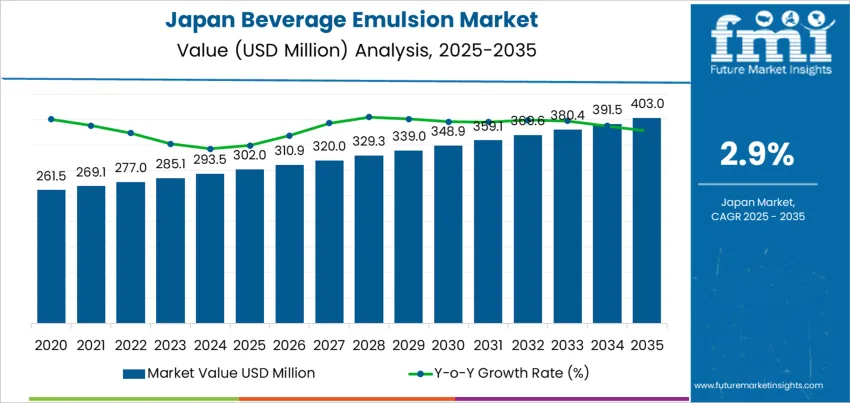
The market will see consistent growth over the forecast period, with demand increasing from USD 302.0 million in 2025 to USD 310.9 million in 2026. By 2027, the demand will reach USD 320.0 million, continuing upward to USD 329.3 million in 2028, USD 339.0 million in 2029, and USD 348.9 million by 2030. By 2035, the demand for beverage emulsion is forecasted to reach USD 403.0 million, reflecting stable growth driven by the expansion of functional beverages and the continuing trend toward innovative product formulations in the beverage industry.
Quick Stats of the Demand for Beverage Emulsion in Japan
- Demand for Beverage Emulsion in Japan Value (2025): USD 302.0 million
- Demand for Beverage Emulsion in Japan Forecast Value (2035): USD 403.0 million
- Demand for Beverage Emulsion in Japan Forecast CAGR (2025 to 2035): 2.9%
- Demand for Beverage Emulsion in Japan Key Application: 63% Non-Alcoholic
- Demand for Beverage Emulsion in Japan Key Growth Regions: Kyushu & Okinawa, Kanto, Kansai, Chubu, Tohoku, Rest of Japan
- Demand for Beverage Emulsion in Japan Key Players: Cargill, Inc., Kerry Group plc, ADM (Archer Daniels Midland Company), Ingredion Incorporated, Tate & Lyle PLC
What is the Growth Forecast for the Beverage Emulsion Industry in Japan through 2035?
The beverage emulsion market in Japan is expected to experience steady growth over the next decade. Starting at USD 302.0 million in 2025, the market will grow to USD 310.9 million in 2026, USD 320.0 million in 2027, and USD 329.3 million in 2028. By 2029, demand will rise to USD 339.0 million, with further expansion to USD 348.9 million by 2030. By 2035, the market is projected to reach USD 403.0 million, driven by the increasing demand for flavor-enhanced and functional beverages, as well as the growing focus on improving the sensory experience of drinks.
The growth momentum analysis indicates steady and gradual growth in demand for beverage emulsions throughout the forecast period. Early years (2025–2029) will see a consistent increase in demand, with growth rates remaining stable. The momentum will pick up slightly toward the latter half of the forecast period (2029–2035) as the beverage market continues to evolve, with an increasing focus on health-conscious, functional, and customized beverages. The steady rise in demand for innovative beverage formulations, including enhanced flavors and nutritional benefits, will contribute to a stable, predictable growth pattern.
Key Takeaways of Beverage Emulsion Industry in Japan
| Metric | Value |
|---|---|
| Industry Sales Value (2025) | USD 302 million |
| Industry Forecast Value (2035) | USD 403 million |
| Industry Forecast CAGR (2025 to 2035) | 2.9% |
Why is the Demand for Beverage Emulsions in Japan Growing?
Demand for beverage emulsions in Japan is rising as beverage manufacturers respond to changing consumer preferences for convenience, variety, and quality in ready to drink (RTD) and functional drinks. Producers increasingly rely on emulsions to ensure stable dispersion of flavors, colors, and nutrients in beverages such as teas, coffees, health drinks, juices, dairy based drinks, and carbonated beverages. Emulsions help maintain consistent taste and appearance even after processing, packaging, and storage. As demand for shelf stable, ready to drink products grows, beverage emulsions become more important in ensuring product stability, flavor retention, mouthfeel, and visual appeal. The growth in non alcoholic drinks and functional beverages underpins rising use of flavor and cloud emulsions in Japan.
The shift toward “clean label” and natural ingredient formulations also supports the uptake of modern beverage emulsion technologies. Many Japanese consumers prefer products with minimal synthetic additives, natural flavors, and stable emulsifier systems derived from plant based or food grade materials. This trend encourages beverage formulators to adopt stable, high quality emulsions that meet regulatory and consumer demands for safety, transparency, and shelf life. Advances in emulsion and stabilizer technologies, including gum , starch , or pectin based systems, enable manufacturers to develop beverages that remain stable without compromising perceived naturalness. As beverage consumption patterns continue to evolve toward convenience, functionality, and health orientation, demand for beverage emulsions in Japan is likely to grow steadily over coming years.
What Is the Current State of the Demand for Beverage Emulsion in Japan in Terms of Source and Application?
The demand for beverage emulsion in Japan is primarily driven by source and application. The leading source is xanthan gum, accounting for 34% of the market share, while non-alcoholic beverages dominate the application sector, capturing 63% of the demand. Beverage emulsions are used to stabilize and enhance the quality of drinks by ensuring the uniform dispersion of ingredients, particularly in beverages that require consistency in texture and appearance. As the demand for functional beverages continues to rise, so does the demand for emulsions in Japan, particularly in non-alcoholic drink formulations.
How Is Xanthan Gum Leading the Source Demand for Beverage Emulsion in Japan?
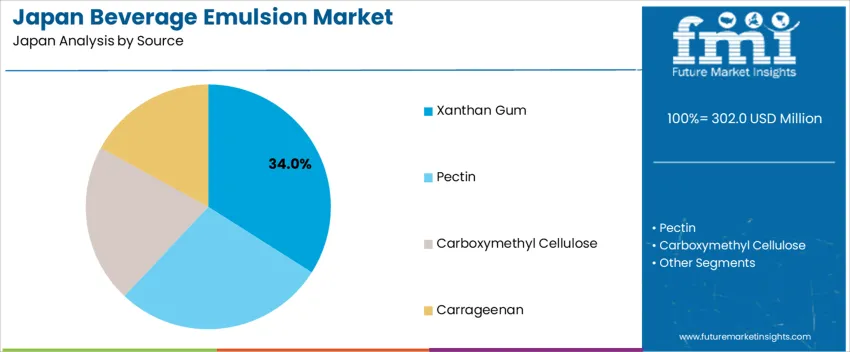
Xanthan gum leads the source demand for beverage emulsion in Japan, holding 34% of the market share. Xanthan gum is a natural polysaccharide used widely as a thickening and stabilizing agent in various food and beverage applications. In beverage emulsions, xanthan gum helps to maintain consistency, improve texture, and prevent separation of ingredients, ensuring the quality of beverages, particularly in beverages like fruit juices, soft drinks, and smoothies.
The demand for xanthan gum is driven by its effectiveness in improving the stability of beverage emulsions, its ability to function as a natural ingredient, and its compatibility with a wide range of beverage formulations. Xanthan gum is also favored for its ease of use and ability to work under a variety of conditions, which makes it an ideal choice for manufacturers looking to improve the texture and mouthfeel of beverages. As the Japanese beverage industry continues to innovate with new flavors and functional drinks, xanthan gum is expected to remain the leading source for emulsions in this sector.
How Is Non-Alcoholic Beverages Leading the Application Demand for Beverage Emulsion in Japan?
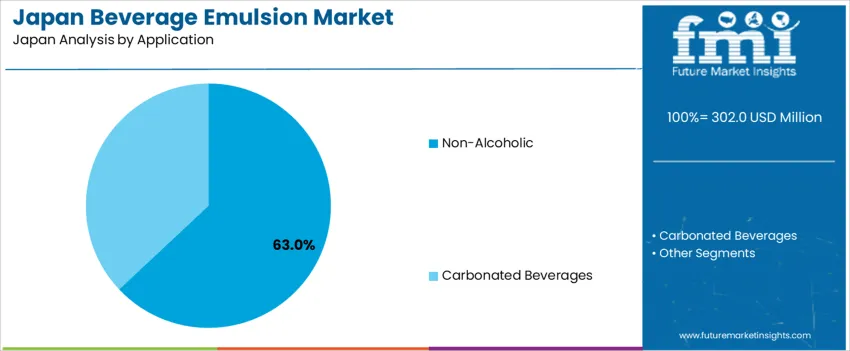
Non-alcoholic beverages are the leading application for beverage emulsions in Japan, accounting for 63% of the demand. Emulsions are widely used in non-alcoholic drinks, such as juices, energy drinks, soft drinks, and functional beverages, to ensure smooth texture, consistent flavor distribution, and the stable mixing of water and oil-based ingredients. Non-alcoholic beverages, which are growing in popularity due to health-conscious consumer trends, often rely on emulsions to maintain a desirable mouthfeel and prevent separation.
The demand for beverage emulsions in non-alcoholic beverages is driven by the increasing popularity of healthy and functional drinks in Japan. As consumers seek beverages with added benefits, such as vitamins, minerals, and other functional ingredients, the need for effective emulsions grows to maintain product consistency and improve sensory experiences. With the continued focus on convenience, taste, and functionality in the non-alcoholic beverage market, the demand for beverage emulsions in this sector is expected to remain strong in Japan.
What is the Summary of Demand for Beverage Emulsions in Japan?
Demand for beverage emulsions in Japan is rising as consumers increasingly favour beverages with richer flavor, stable texture, and added functional value. Beverage emulsions are used in non alcoholic drinks, plant based milks, fortified juices, flavored waters, and ready to drink beverages to deliver consistent taste, stable suspension of oils or nutrients, and attractive mouth feel. The shift toward healthier, low sugar, and “clean label” drinks, along with demand for premium and functional beverages such as fortified juices, dairy alternatives, and beverages with added vitamins or botanicals, supports growth of emulsions. As manufacturers aim for high quality, stable shelf life and appealing sensory attributes in beverages, use of emulsions becomes more common across Japan’s beverage industry.
What are the Drivers of Demand for Beverage Emulsions in Japan?
One major driver is consumer demand for functional and fortified beverages. As Japanese consumers show growing interest in health, wellness and nutrition, beverages enriched with vitamins, plant based ingredients, or added nutrients require stable emulsion systems to disperse water insoluble components uniformly. Another driver is rising popularity of non alcoholic drinks, including flavored waters, plant based milks, ready to drink teas/ coffees, and juice blends. These beverages often use emulsions to ensure consistent flavor, clarity, texture, and stability over shelf life. Growth in demand for clean label and natural ingredient beverages pushes producers to adopt emulsifiers based on natural gums, pectin or other non synthetic sources for emulsions. The expansion of urban lifestyles, convenience driven consumption, and ready to drink format popularity also fuel demand for emulsions that make beverage formulation easier and stable. Lastly, ongoing innovation in beverage formulation and manufacturing - including advanced emulsification and stabilization techniques - supports broader use of emulsions across various types of drinks.
What are the Restraints on Demand for Beverage Emulsions in Japan?
One restraint is the regulatory and compliance burden associated with food additive approval, labeling, and safety standards. Beverage emulsions often involve emulsifiers, stabilizers and formulation aids which must meet strict food safety and ingredient listing requirements; this can slow adoption or increase development cost. Another restraint arises from consumer preference for minimal processing and additive free beverages; some consumers may avoid drinks with emulsifiers or perceive emulsions as unnatural, which may limit market segments. Cost pressures can also limit uptake: emulsions (especially clean label or natural ingredient based ones) can raise raw material and formulation costs, making beverages more expensive which may reduce demand in price sensitive market segments. Technical challenges such as ensuring long term stability, preventing separation or sedimentation, and maintaining flavor or color quality in complex beverage matrices may deter some manufacturers from using emulsions. Finally, competition from alternative formulation approaches (e.g. simple dilution, use of soluble ingredients only, or non emulsified formulations) can restrain demand for emulsions in products where stability or sensory demands are modest.
What are the Key Trends Influencing Demand for Beverage Emulsions in Japan?
A key trend is the shift toward functional, fortified, and wellness oriented beverages. As demand for drinks with vitamins, plant based milks, dietary supplements in liquid form, and low sugar drinks continues, emulsions are increasingly used to incorporate non water soluble nutrients, oils or botanical extracts in stable, palatable beverages. Another trend is adoption of clean label and natural ingredient emulsifiers such as plant gums, pectin or other natural stabilizers to appeal to health and ingredient conscious consumers. Rising popularity of ready to drink formats, convenience beverages, and RTD teas/coffees means stable, shelf stable emulsions are preferred for consistent quality. Innovation in emulsification technology - including nano emulsions or advanced stabilization methods - supports improved sensory profile, shelf life, and nutrient bioavailability, making emulsions more attractive for premium and functional beverages. Finally, increased experimentation with plant based or alternative milk beverages, flavored waters, and novel beverage types supports broader use of emulsions as formulation tools to deliver desired taste, texture, and appearance.
What is the Regional Demand Outlook for Beverage Emulsion in Japan?
Demand for beverage emulsion in Japan shows gradual but consistent growth across regions. The highest growth is seen in Kyushu & Okinawa (CAGR 3.7 %), followed by Kanto at 3.4 %. The Kansai (Kinki) region’s forecasted CAGR is 3.0 %, while Chubu, Tohoku, and the Rest of Japan show more modest growth at 2.6 %, 2.3 %, and 2.2 % respectively. These differences reflect variation in beverage consumption trends, demand for flavored and functional drinks, and regional manufacturing and distribution infrastructure for beverage based products.
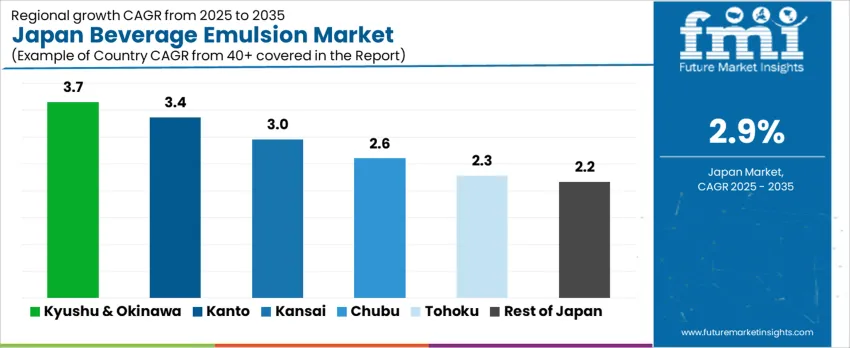
| Region | CAGR (%) |
|---|---|
| Kyushu & Okinawa | 3.7 |
| Kanto | 3.4 |
| Kansai (Kinki) | 3.0 |
| Chubu | 2.6 |
| Tohoku | 2.3 |
| Rest of Japan | 2.2 |
What drives demand for beverage emulsion in Kyushu & Okinawa?
In Kyushu & Okinawa the demand for beverage emulsion is projected to grow at a CAGR of 3.7 %. Beverage emulsions enable incorporation of oil based flavor oils, colorants, or functional lipophilic ingredients into water based drinks. Given growing interest in fruit juices, flavored waters, and functional beverages, manufacturers in this region may rely on emulsions to deliver stable, attractive, and consistent products. The demand may also reflect rising use of ready to drink (RTD) and non alcoholic beverages with enhanced sensory qualities and extended shelf life. As beverage producers seek stable emulsions that maintain flavor and appearance through distribution and storage, adoption of beverage emulsion technology will likely support growth.
Why is demand rising in Kanto?
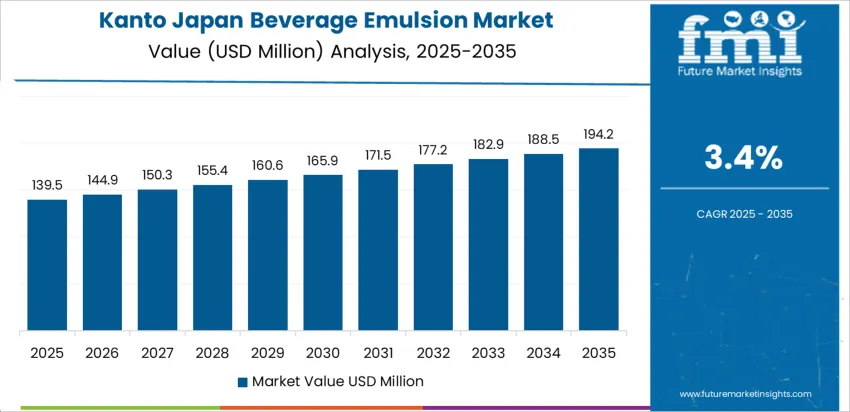
In Kanto demand is forecast at a CAGR of 3.4 %. The region’s dense population and large beverage market encourage innovation in flavored drinks, functional beverages, and drinks with added ingredients such as fat soluble vitamins or botanical extracts. Beverage emulsions allow manufacturers to integrate water insoluble flavor oils and nutrients into aqueous drinks without separation, offering consistent taste, appearance, and stability. As consumers increasingly seek variety-such as flavored teas, fruit based drinks, and health oriented beverages-the use of emulsions helps beverage makers meet these demands. The scale of the market and robust distribution infrastructure support gradual but sustained adoption of beverage emulsions.
What influences demand in Kansai (Kinki)?
In Kansai the demand for beverage emulsion is estimated at a CAGR of 3.0 %. The region hosts a mix of urban and industrial areas and a mature food and beverage sector. Producers in Kansai may use beverage emulsions to develop flavored beverages, functional drinks, or specialty beverages requiring stable dispersion of oils or lipophilic compounds. As competition intensifies and consumers seek novel taste profiles and drink formats, beverage emulsions offer a practical way to introduce flavor complexity and maintain product stability. This stability is important both for shelf life and consistent quality across batches. While growth is more modest compared with the leading regions, steady demand reflects gradual modernization and product innovation within the local beverage sector.
How is demand evolving in Chubu?
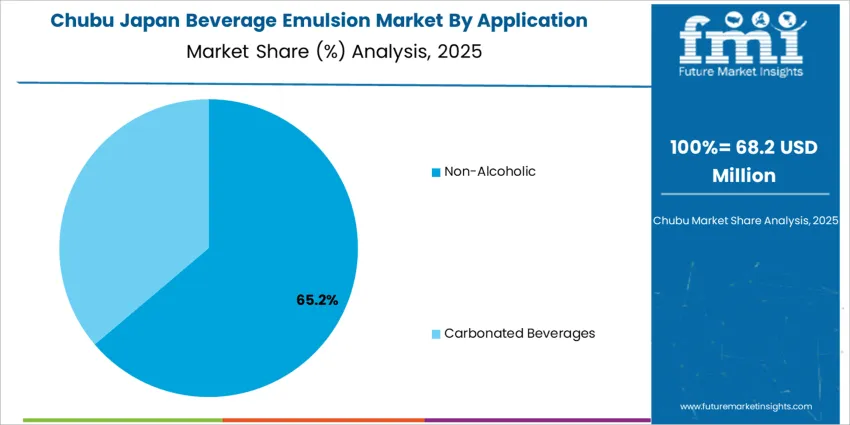
In Chubu, demand for beverage emulsion is projected to grow at a CAGR of 2.6 %. The region’s beverage industry, including production of juices, teas, and ready to-drink beverages, may adopt emulsions to integrate flavor oils or health promoting fat soluble compounds. Given that beverage emulsions help combine water and oil phases into a stable drinkable mixture, they support development of diversified beverage products that meet consumer expectations for taste, appearance, and convenience. Regional manufacturers may also respond to growing demand for clean label and functional drinks, using emulsifiers derived from natural hydrocolloids and gums to stabilize beverages. The relatively lower growth rate suggests a more conservative pace of innovation compared with more urbanized or trend sensitive regions.
What factors contribute to demand growth in Tohoku?
In Tohoku the demand for beverage emulsion is forecast at 2.3 % per year. Although the region is less densely populated than major urban centres, beverage producers targeting local and regional markets may gradually adopt emulsions to improve drink quality, especially in flavored teas, juices, or health oriented drinks. As consumer awareness of beverage quality, flavor consistency, and shelf stability increases, even smaller manufacturers may find value in using emulsions. Nevertheless, slower growth likely reflects lower market volume, more conservative consumer tastes, and relatively limited product innovation compared with larger markets.
How is demand expected to evolve in the Rest of Japan?
In the Rest of Japan, demand for beverage emulsion is projected to grow at a CAGR of 2.2 %. This region covers less urbanized areas and smaller markets where beverage consumption growth is slower. Nonetheless, as beverage manufacturers-including regional and local producers-seek to offer flavored drinks, functional beverages or value added products, beverage emulsions provide a cost effective means to deliver stable and appealing drinks. Increasing rural demand for ready to drink products, coupled with growing interest in flavor variety and functional drinks, may gradually raise adoption of emulsions in these areas. However, the pace of growth remains modest compared with urban and industrialised regions.
How Are Companies Competing in the Beverage Emulsion Industry in Japan?
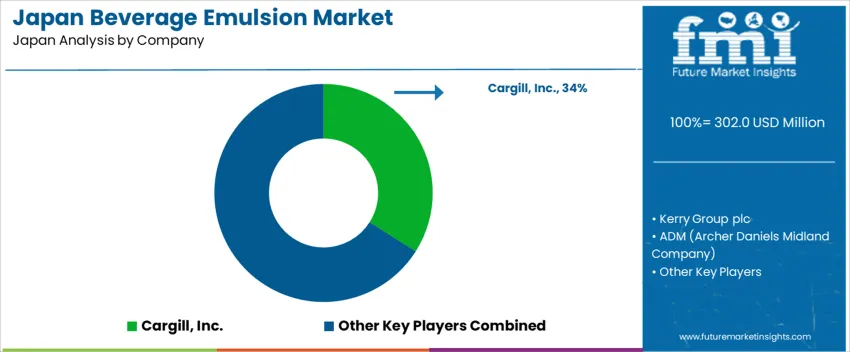
Demand for beverage emulsions in Japan is rising as producers of soft drinks, ready-to-drink teas, non-dairy milks, functional drinks, and flavored beverages increasingly adopt emulsified formulations. Major suppliers in this market include Cargill, Inc. (with about 34% share among leading providers), Kerry Group plc, ADM (Archer Daniels Midland Company), Ingredion Incorporated, and Tate & Lyle PLC. These firms provide emulsion systems that help stabilize oil-based flavor, color, or nutritive compounds in water-based beverages, ensuring consistent taste, appearance, and shelf-life under varied storage and distribution conditions.
Competition centers on formulation performance, ingredient sourcing, and regulatory compliance. Suppliers strive to deliver emulsions that offer strong stability, clean taste, and compatibility with different beverage types - including low-sugar, plant-based, or functional drinks. Natural and plant-derived emulsifiers or stabilizers have become more attractive as consumer preference rises for cleaner labels and fewer synthetic additives.
Another dimension of competition lies in application flexibility and technical support. Companies that offer customized emulsion packages for flavor, color, or cloudy appearance, and support for formulation challenges tend to win clients. Reliable supply chains and consistent quality are valued by Japanese beverage manufacturers seeking to maintain product consistency across batches and market segments. In a competitive beverage market with evolving consumer tastes, firms that deliver stable, clean-label, and adaptable emulsion solutions are best positioned to grow their share of Japan’s beverage emulsion demand.
Key Players of the Beverage Emulsion Industry in Japan
- Cargill, Inc.
- Kerry Group plc
- ADM (Archer Daniels Midland Company)
- Ingredion Incorporated
- Tate & Lyle PLC
Scope of the Report
| Items | Details |
|---|---|
| Quantitative Units | USD Million |
| Regions Covered | Japan |
| Source | Xanthan Gum, Pectin, Carboxymethyl Cellulose, Carrageenan |
| Application | Non-Alcoholic, Carbonated Beverages |
| Emulsion Type | Flavor Emulsion, Cloud Emulsion, Color Emulsion |
| Key Companies Profiled | Cargill, Inc., Kerry Group plc, ADM (Archer Daniels Midland Company), Ingredion Incorporated, Tate & Lyle PLC |
| Additional Attributes | The demand for beverage emulsions in Japan is driven by the growing consumption of both non-alcoholic and carbonated beverages, with emulsions playing a key role in improving texture, flavor, and appearance. Xanthan gum, pectin, and carboxymethyl cellulose are some of the key sources used in beverage emulsions for their stabilizing properties. Flavor, cloud, and color emulsions are commonly used to enhance the overall sensory experience of beverages. The market is influenced by consumer preferences for innovative and visually appealing products. Major companies like Cargill, Kerry Group, and ADM are leading the market with their range of emulsion products, offering solutions that cater to the unique demands of the Japanese beverage industry. As the market grows, companies are expected to focus on innovations in emulsion formulations, particularly for healthier and more natural beverages. |
Key Segments of Demand for Beverage Emulsion in Japan
Source:
- Xanthan Gum
- Pectin
- Carboxymethyl Cellulose
- Carrageenan
Application:
- Non-Alcoholic Beverages
- Carbonated Beverages
Emulsion Type:
- Flavor Emulsion
- Cloud Emulsion
- Color Emulsion
Region:
- Kyushu & Okinawa
- Kanto
- Kansai
- Chubu
- Tohoku
- Rest of Japan
Bibliography
- Food and Agriculture Organization of the United Nations and World Health Organization. (2023). Codex standards and guidelines relevant to emulsifiers, stabilizers, and beverage formulations. Codex Alimentarius Commission Publications.
- International Organization of the Flavor Industry. (2023). Good manufacturing practices for beverage emulsions and flavor delivery systems. IOFI Technical Guidance Documents.
- Japan Food Additives Association. (2023). Standards and use guidance for emulsifiers and formulation aids in beverage applications. JFAA Technical Publications.
- Japan Soft Drink Association. (2023). Industry insights on beverage emulsion usage and formulation trends in Japan. JSD Association Reports.
Frequently Asked Questions
How big is the demand for beverage emulsion in Japan in 2025?
The demand for beverage emulsion in Japan is estimated to be valued at USD 302.0 million in 2025.
What will be the size of beverage emulsion in Japan in 2035?
The market size for the beverage emulsion in Japan is projected to reach USD 403.0 million by 2035.
How much will be the demand for beverage emulsion in Japan growth between 2025 and 2035?
The demand for beverage emulsion in Japan is expected to grow at a 2.9% CAGR between 2025 and 2035.
What are the key product types in the beverage emulsion in Japan?
The key product types in beverage emulsion in Japan are xanthan gum, pectin, carboxymethyl cellulose and carrageenan.
Which application segment is expected to contribute significant share in the beverage emulsion in Japan in 2025?
In terms of application, non-alcoholic segment is expected to command 63.0% share in the beverage emulsion in Japan in 2025.
Preview the report firsthand - request a free sample
Get SampleGet the brochure for pricing and purchase details.
Get PDFTable of Content
- Executive Summary
- Japan Market Outlook
- Demand-side Trends
- Supply-side Trends
- Technology Roadmap Analysis
- Analysis and Recommendations
- Market Overview
- Market Coverage / Taxonomy
- Market Definition / Scope / Limitations
- Market Background
- Market Dynamics
- Drivers
- Restraints
- Opportunity
- Trends
- Scenario Forecast
- Demand in Optimistic Scenario
- Demand in Likely Scenario
- Demand in Conservative Scenario
- Opportunity Map Analysis
- Product Life Cycle Analysis
- Supply Chain Analysis
- Investment Feasibility Matrix
- Value Chain Analysis
- PESTLE and Porter’s Analysis
- Regulatory Landscape
- Regional Parent Market Outlook
- Production and Consumption Statistics
- Import and Export Statistics
- Market Dynamics
- Japan Market Analysis 2020 to 2024 and Forecast, 2025 to 2035
- Historical Market Size Value (USD Million) Analysis, 2020 to 2024
- Current and Future Market Size Value (USD Million) Projections, 2025 to 2035
- Y-o-Y Growth Trend Analysis
- Absolute $ Opportunity Analysis
- Japan Market Pricing Analysis 2020 to 2024 and Forecast 2025 to 2035
- Japan Market Analysis 2020 to 2024 and Forecast 2025 to 2035, By Source
- Introduction / Key Findings
- Historical Market Size Value (USD Million) Analysis By Source , 2020 to 2024
- Current and Future Market Size Value (USD Million) Analysis and Forecast By Source , 2025 to 2035
- Xanthan Gum
- Pectin
- Carboxymethyl Cellulose
- Carrageenan
- Y-o-Y Growth Trend Analysis By Source , 2020 to 2024
- Absolute $ Opportunity Analysis By Source , 2025 to 2035
- Japan Market Analysis 2020 to 2024 and Forecast 2025 to 2035, By Application
- Introduction / Key Findings
- Historical Market Size Value (USD Million) Analysis By Application, 2020 to 2024
- Current and Future Market Size Value (USD Million) Analysis and Forecast By Application, 2025 to 2035
- Non-Alcoholic
- Carbonated Beverages
- Y-o-Y Growth Trend Analysis By Application, 2020 to 2024
- Absolute $ Opportunity Analysis By Application, 2025 to 2035
- Japan Market Analysis 2020 to 2024 and Forecast 2025 to 2035, By Emulsion Type
- Introduction / Key Findings
- Historical Market Size Value (USD Million) Analysis By Emulsion Type, 2020 to 2024
- Current and Future Market Size Value (USD Million) Analysis and Forecast By Emulsion Type, 2025 to 2035
- Flavor Emulsion
- Cloud Emulsion
- Color Emulsion
- Y-o-Y Growth Trend Analysis By Emulsion Type, 2020 to 2024
- Absolute $ Opportunity Analysis By Emulsion Type, 2025 to 2035
- Market Structure Analysis
- Competition Dashboard
- Competition Benchmarking
- Market Share Analysis of Top Players
- By Regional
- By Source
- By Application
- By Emulsion Type
- Competition Analysis
- Competition Deep Dive
- Cargill, Inc.
- Overview
- Product Portfolio
- Profitability by Market Segments (Product/Age /Sales Channel/Region)
- Sales Footprint
- Strategy Overview
- Marketing Strategy
- Product Strategy
- Channel Strategy
- Kerry Group plc
- ADM (Archer Daniels Midland Company)
- Ingredion Incorporated
- Tate & Lyle PLC
- Cargill, Inc.
- Competition Deep Dive
- Assumptions & Acronyms Used
- Research Methodology


