

- Industry Size (2025)
- USD 11.5 Bn
- Forecast (2035)
- USD 16.8 Bn
- CAGR (2025 to 2035)
- 3.8%
Demand for Caffeinated Beverage in Japan Forecast and Outlook 2025 to 2035
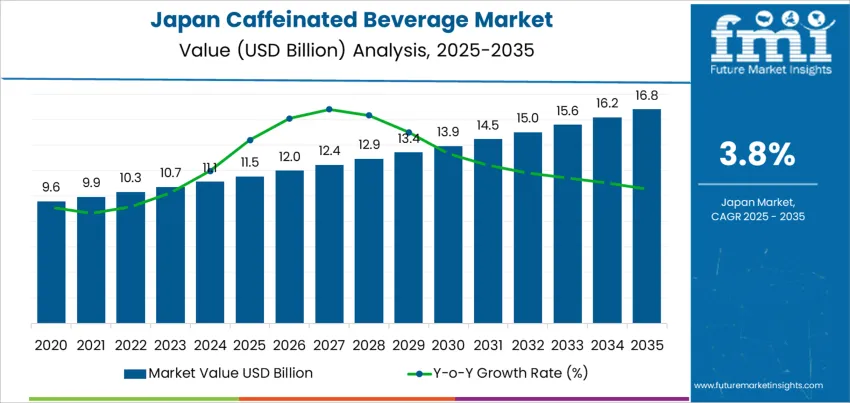
The demand for caffeinated beverages in Japan is expected to grow from USD 11.5 billion in 2025 to USD 16.8 billion by 2035, reflecting a CAGR of 3.8%. This growth is driven primarily by the growing preference for convenient, ready-to-drink coffee, energy drinks, and functional beverages. Japan’s strong coffee culture, combined with growing consumer interest in functional drinks with added benefits such as vitamins, minerals, and antioxidants, will continue to support the demand for caffeinated beverages. The rise in on-the-go consumption, especially in urban areas where busy lifestyles prevail, is also a significant factor fueling this demand. With Japan among the world’s largest coffee consumers, the sector is poised to benefit from the growing popularity of both traditional coffee and newer, energy-boosting drinks.
Innovations in beverage formulations will play a crucial role in expanding the sector. Beverage manufacturers are focusing on offering products that cater to health-conscious consumers by incorporating ingredients such as organic coffee, natural sweeteners, and functional additives that promote well-being. The growing demand for beverages that combine both refreshment and health benefits will drive innovation in product development, including low-sugar, low-calorie, and organic options. The ability to customize beverages with functional ingredients will further propel the demand, as consumers increasingly seek personalized nutrition.
Quick Stats of the Demand for Caffeinated Beverage in Japan
- Demand for Caffeinated Beverage in Japan Value (2025): USD 11.5 billion
- Demand for Caffeinated Beverage in Japan Forecast Value (2035): USD 16.8 billion
- Demand for Caffeinated Beverage in Japan Forecast CAGR (2025-2035): 3.8%
- Demand for Caffeinated Beverage in Japan Leading Product Type: Carbonated Soft Drinks
- Demand for Caffeinated Beverage in Japan Key Growth Regions: Kyushu & Okinawa, Kanto, Kansai, Chubu, Tohoku, Rest of Japan
- Demand for Caffeinated Beverage in Japan Top Players: Dr Pepper Snapple Group, Monster Energy Company, Nestlé, PepsiCo, Red Bull
What is the Growth Forecast for the Demand for Caffeinated Beverage in Japan through 2035?
From 2025 to 2030, the demand for caffeinated beverages in Japan will grow from USD 11.5 billion to USD 13.9 billion, adding USD 2.4 billion in value. This phase will make a significant contribution to overall growth, driven by the growing consumer preference for convenience and functional beverages. Rising health consciousness, alongside increasing interest in energy drinks and ready-to-drink coffee, will fuel this growth. As consumers increasingly seek beverages with added functional benefits, including vitamins, minerals, and natural ingredients, product innovation will become a key driver. Manufacturers will focus on offering healthier options, with natural and organic ingredients becoming more prominent, encouraging greater adoption of caffeinated beverages during this period.
From 2030 to 2035, the industry will grow from USD 13.9 billion to USD 16.8 billion, contributing USD 2.9 billion in value. While growth continues, it will slow down as the sector matures, particularly in urban areas where industry saturation is more pronounced. Despite this, sustained consumer interest in convenient, health-conscious options will maintain steady demand. As innovation shifts toward optimizing taste, packaging, and functionality, the industry will continue to evolve. This period will see a shift from rapid expansion to more incremental growth, with companies focusing on refining existing products and meeting the preferences of a more mature consumer base.
Demand for Caffeinated Beverage in Japan Key Takeaways
| Metric | Value |
|---|---|
| Demand for Caffeinated Beverage in Japan Value (2025) | USD 11.5 billion |
| Demand for Caffeinated Beverage in Japan Forecast Value (2035) | USD 16.8 billion |
| Demand for Caffeinated Beverage in Japan Forecast CAGR (2025-2035) | 3.8% |
Why is the Demand for Caffeinated Beverage in Japan Growing?
The demand for caffeinated beverages in Japan is growing as coffee, energy drinks, and other caffeinated products become an integral part of daily life. These beverages provide an energy boost and support alertness, making them increasingly popular among busy professionals, students, and individuals with active lifestyles. The wide range of available options, from ready-to-drink coffee and tea to energy drinks, offers consumers convenient and accessible ways to stay energized throughout the day. As demand for quick, on-the-go solutions rises, the popularity of caffeinated beverages continues to grow.
A major driver of this trend is the focus on convenience and energy-boosting products. As Japan's workforce becomes more fast-paced and demanding, many individuals rely on caffeinated beverages to maintain productivity and stay alert. Ready-to-drink coffee and functional drinks, which combine caffeine with other nutrients like vitamins or electrolytes, are particularly popular in urban areas where time constraints and high performance are prioritized.
Innovations in the caffeinated beverage industry are contributing to this growth. New products like organic coffee, cold brews, and personalized energy drinks are attracting a broader consumer base. The expanding variety of offerings, including healthier options that cater to evolving tastes, is helping to meet the changing preferences of Japanese consumers. As the beverage industry evolves and brands continue to diversify their product portfolios, the demand for caffeinated beverages in Japan is expected to increase steadily through 2035.
What is the Segment-Wise Analysis of Demand for Caffeinated Beverages in Japan?
Demand for caffeinated beverages in Japan is segmented by product type, sales channel, flavor, and region. By product type, demand is divided into carbonated soft drinks, energy drinks, ready-to-drink (RTD) tea, coffee, and others, with carbonated soft drinks leading at 43%. The demand is also segmented by sales channel, including grocery stores, convenience stores, modern trade, specialty stores, and other retail stores, with grocery stores leading at 40.2%. In terms of flavor, demand is split between natural and synthetic flavors. Regionally, demand is spread across Kyushu & Okinawa, Kanto, Kansai, Chubu, Tohoku, and the rest of Japan.
Why Do Carbonated Soft Drinks Lead the Demand for Caffeinated Beverages in Japan?
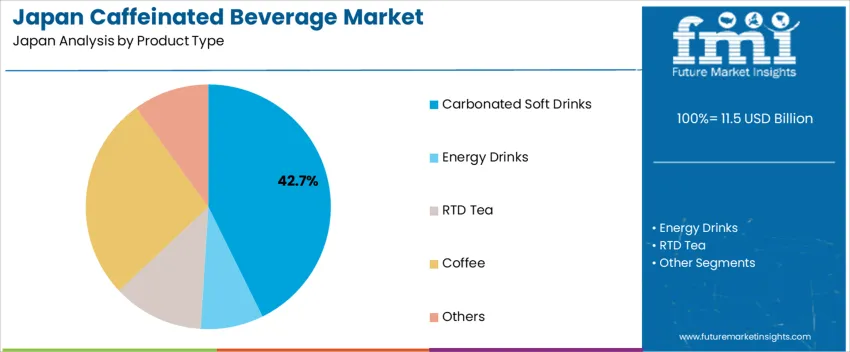
Carbonated soft drinks account for 43% of the demand for caffeinated beverages in Japan, driven by their long-standing popularity and widespread consumption across various demographics. These drinks are widely enjoyed for their refreshing taste and effervescence, making them a favorite among consumers seeking both hydration and a caffeine boost. Carbonated soft drinks also benefit from extensive marketing and brand recognition, making them a dominant choice in the beverage industry. Their versatility in offering various flavor options, from cola to citrus, has contributed to their sustained dominance in the industry. The availability of low-calorie or sugar-free versions appeals to health-conscious consumers. As demand for convenience and variety continues to rise in Japan, carbonated soft drinks remain a popular option for consumers looking for both a caffeine kick and a satisfying beverage experience.
Why Do Grocery Stores Lead the Demand for Caffeinated Beverages in Japan?
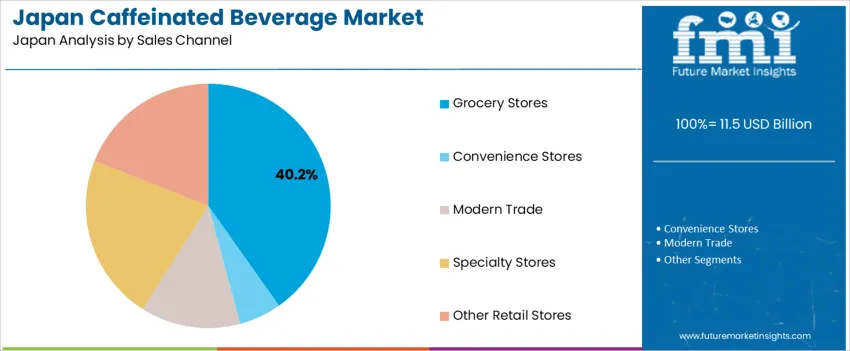
Grocery stores account for 40.2% of the demand for caffeinated beverages in Japan, driven by their convenience, wide selection, and accessibility. Grocery stores provide consumers with a broad range of caffeinated beverage options, from carbonated soft drinks to energy drinks, coffee, and ready-to-drink tea, all in one place. This variety allows consumers to easily find their preferred beverage while shopping for other groceries, making it a convenient choice. The consistent availability of caffeinated drinks in large quantities, coupled with competitive pricing and frequent promotional offers, further boosts demand at grocery stores. The strong presence of grocery stores in both urban and rural areas ensures that caffeinated beverages are easily accessible to a broad consumer base. As Japanese consumers continue to prioritize convenience, grocery stores will remain a leading distribution channel for caffeinated beverages.
What are the Key Trends, Drivers, and Restraints in Demand for Caffeinated Beverages in Japan?
Ready to drink (RTD) coffee, canned tea, energy drinks, and functional caffeinated beverages are increasingly popular because they combine portability, instant caffeine boost, and often added functional ingredients such as vitamins or antioxidants. The growing coffee culture, especially among younger and working age demographics, supports rising consumption of canned or bottled coffee and tea. On the restraining side, increasing health awareness among some consumers, including concerns over excess caffeine intake, may limit consumption growth. Price sensitivity for premium RTD products and competition from non caffeinated drinks or traditional teas also act as restraints.
Why is Demand for Caffeinated Beverages Growing in Japan?
Demand is growing because modern Japan’s fast paced lifestyle creates a strong appetite for convenience and instant refreshment. As urbanisation and long working hours continue, many people rely on ready made caffeinated drinks to get quick energy or mental alertness without needing to brew a drink themselves. The deepening café culture and expansion of vending machine distribution also make caffeinated beverages easily available across cities. Younger consumers and office workers tend to prefer coffee, energy drinks, and RTD products over traditional tea or homemade brews. The appeal of functional beverages that promise both refreshment and potential health benefits helps drive demand among health conscious but busy individuals.
How are Technological & Industry Innovations Driving Caffeinated Beverage Demand in Japan?
Technological and industry developments are helping caffeinated beverages become more attractive and accessible. Advances in processing, packaging, and distribution mean RTD coffee, tea, and energy drinks now maintain quality and freshness similar to brewed drinks, allowing mass production and long shelf life. Producers are also innovating with functional caffeinated drinks, blending caffeine with vitamins, antioxidants, or other beneficial compounds to appeal to health conscious consumers seeking more than just energy. Convenience of packaging (cans, bottles, on the go formats) and widespread availability via convenience stores, vending machines, superindustrys and online retail make these drinks highly accessible. These innovations help caffeinated beverages to reach a broader base beyond traditional coffee drinkers.
What are the Key Challenges and Risks That Could Limit Caffeinated Beverage Demand in Japan?
Despite strong demand, several challenges could slow further growth of caffeinated beverages. Health concerns over excessive caffeine intake may push some consumers toward tea, low caffeine alternatives or non caffeinated drinks. Rising competition from non caffeinated functional beverages, bottled water, and traditional tea threatens to erode growth. Price increases, especially for premium RTD and functional drinks, could deter price sensitive consumers. As the population ages, demand patterns may shift away from high caffeine drinks toward milder beverages. Finally, over saturation in some segments, especially RTD coffee or energy drinks, may limit long term growth if innovation does not keep pace with consumer preferences.
What is the Regional Demand Outlook for Caffeinated Beverages in Japan?
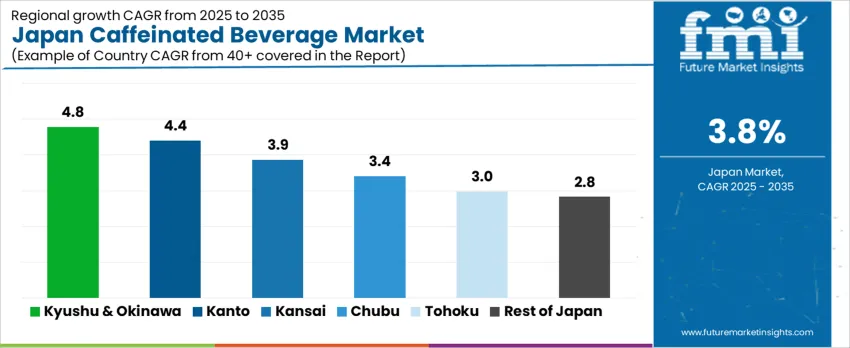
| Region | CAGR (%) |
|---|---|
| Kyushu & Okinawa | 4.8% |
| Kanto | 4.4% |
| Kinki | 3.9% |
| Chubu | 3.4% |
| Tohoku | 3.0% |
| Rest of Japan | 2.8% |
Demand for caffeinated beverages in Japan is growing steadily across all regions, with Kyushu & Okinawa leading at a 4.8% CAGR, driven by increasing consumer preference for energy-boosting drinks. Kanto follows with a 4.4% CAGR, fueled by the region’s large urban population and busy lifestyles. Kinki shows a 3.9% CAGR, supported by its diverse consumer base and strong coffee culture. Chubu experiences a 3.4% CAGR, with demand rising in both urban and rural areas, especially in the beverage and food service sectors. Tohoku and the Rest of Japan see moderate growth at 3.0% and 2.8%, respectively, reflecting a steady adoption of caffeinated beverages across both urban and more remote areas.
How is Demand for Caffeinated Beverages Growing in Kyushu & Okinawa?
Kyushu & Okinawa leads the demand for caffeinated beverages, growing at a 4.8% CAGR. The region’s increasing focus on convenience and energy-boosting products is driving the popularity of caffeinated beverages. With a growing urban population, especially in Okinawa, there is rising demand for ready-to-drink coffee and energy drinks that cater to the fast-paced lifestyles of both locals and tourists. Okinawa’s tourism industry plays a significant role in increasing the consumption of caffeinated beverages, as tourists seek quick and convenient refreshments. The region’s emphasis on modernizing its foodservice and beverage sectors further boosts the demand for these products. As health-conscious consumers in Kyushu & Okinawa continue to seek alternatives to traditional sugary drinks, caffeinated beverages are increasingly seen as a convenient and energizing option, driving steady growth in this segment.
Why is Demand for Caffeinated Beverages Rising in Kanto?
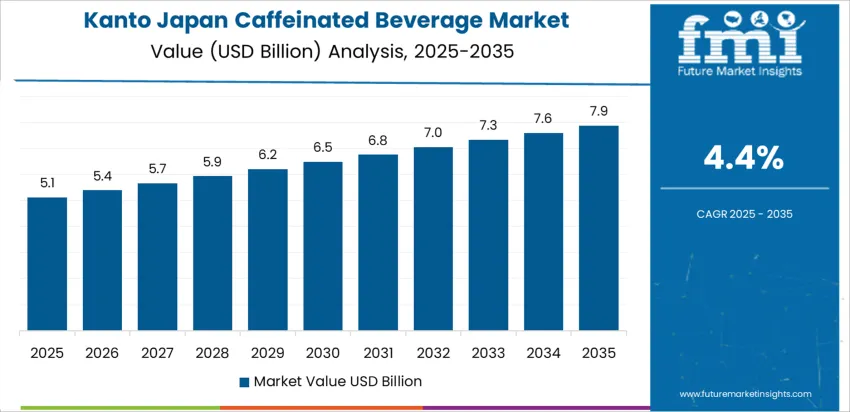
Kanto is experiencing strong demand for caffeinated beverages, with a 4.4% CAGR. The region’s large urban population, particularly in Tokyo, is a key factor driving this growth. Busy lifestyles and long working hours in Kanto have led to increased demand for beverages that provide a quick energy boost, with coffee and energy drinks being the top choices. As consumers in Kanto seek convenience, ready-to-drink caffeinated beverages have become increasingly popular. Furthermore, Kanto’s robust coffee culture, with cafes and vending machines serving coffee and energy drinks, contributes significantly to the demand. The growing trend toward healthier, functional beverages also boosts demand, as consumers opt for products that offer not only energy but also potential health benefits. As these trends continue, Kanto’s demand for caffeinated beverages is expected to grow steadily, driven by both busy professionals and consumers seeking convenient energy solutions.
How is Demand for Caffeinated Beverages Expanding in Kinki?
Kinki shows steady demand for caffeinated beverages, with a 3.9% CAGR. Known for its rich coffee culture, particularly in Osaka, the region has a strong demand for caffeinated drinks, especially coffee, among both residents and visitors. As coffee shops, convenience stores, and vending machines serve as main sources for caffeinated beverages, there is a growing preference for ready-to-drink products that align with busy lifestyles. The region’s diverse consumer base, which includes both traditional and younger consumers, contributes to a sustained interest in caffeinated beverages. As health-conscious behaviors rise, Kinki is seeing a shift towards functional caffeinated drinks that offer added benefits like antioxidants and energy-boosting properties. The region’s increasing focus on convenience and quick access to energizing beverages further drives demand, ensuring steady growth in the consumption of caffeinated beverages in Kinki.
Why is Demand for Caffeinated Beverages Growing in Chubu?
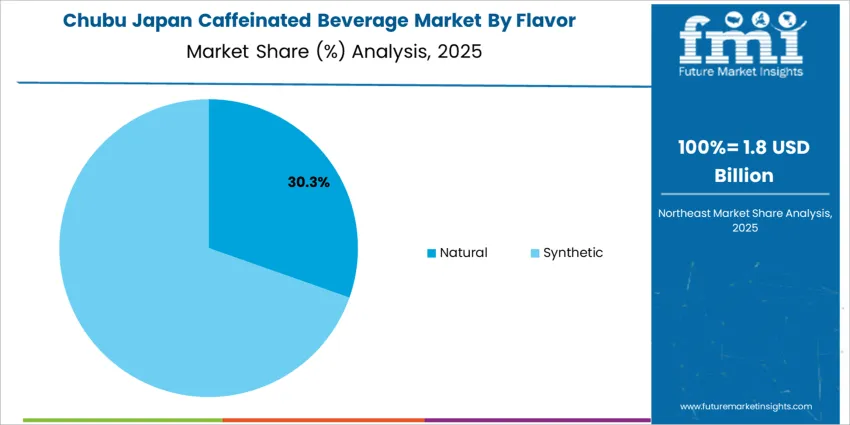
Chubu is experiencing steady demand for caffeinated beverages, growing at a 3.4% CAGR. The region’s diverse population, from urban centers like Nagoya to more rural areas, contributes to the increasing popularity of caffeinated drinks. As consumer demand for convenience and energy-boosting products grows, ready-to-drink coffee and energy beverages are becoming more common. In Chubu, the foodservice sector, particularly in urban areas, plays a key role in driving demand, as coffee shops, vending machines, and convenience stores continue to expand their offerings of caffeinated beverages. The region’s strong manufacturing and industrial sectors also drive the consumption of caffeinated drinks, especially among workers seeking quick energy boosts. As Chubu’s food and beverage industrys continue to grow and evolve, demand for caffeinated beverages is expected to maintain steady growth, driven by changing consumer preferences and an emphasis on convenience and functionality.
How is Demand for Caffeinated Beverages Expanding in Tohoku?
Tohoku is seeing moderate demand for caffeinated beverages, with a 3.0% CAGR. While the region’s consumption is smaller compared to urban centers, there is steady growth in demand as the population increasingly embraces ready-to-drink coffee and energy drinks. As Tohoku’s foodservice industry modernizes, particularly in tourist areas, there is rising availability of caffeinated beverages in cafes, restaurants, and vending machines. Local consumers are also becoming more familiar with the convenience of these drinks, especially as busy lifestyles and long working hours’ increase. The region’s growing focus on health and wellness has led to a gradual shift toward functional beverages, with consumers opting for caffeinated drinks that provide both energy and health benefits. As Tohoku continues to modernize and consumers embrace convenience-driven products, demand for caffeinated beverages is expected to grow steadily in the region.
Why is Demand for Caffeinated Beverages Steady in the Rest of Japan?
The Rest of Japan is experiencing steady demand for caffeinated beverages, with a 2.8% CAGR. Although demand is lower than in urban regions, there is a gradual increase in the consumption of caffeinated drinks in rural areas and smaller cities. As consumer lifestyles evolve, many in the Rest of Japan are turning to caffeinated beverages for convenience and energy. Vending machines, convenience stores, and local cafés are becoming more common sources for caffeinated drinks in these regions. The growing trend toward healthier alternatives to sugary beverages is contributing to the rise in demand for caffeinated drinks that offer functional benefits, such as energy boosts. As local foodservice sectors modernize and the focus on health increases, the demand for caffeinated beverages in the Rest of Japan is expected to continue rising steadily, reflecting broader national trends toward convenience and functional beverages.
What is Driving the Demand for Caffeinated Beverages in Japan and Who Are the Key Players Shaping the Industry?
The demand for caffeinated beverages in Japan is growing, driven by the increasing popularity of energy drinks, coffee, and ready-to-drink teas among busy, health-conscious consumers. Japan’s fast-paced lifestyle, particularly in urban areas, has contributed to a greater reliance on caffeinated beverages for quick energy boosts and mental alertness. As consumers seek convenience and functional drinks, the industry for caffeinated beverages has expanded, with a focus on premium, health-conscious options such as low-sugar, low-calorie, or plant-based drinks. Japan’s strong coffee culture and rising demand for energy drinks are further fueling the industry for caffeinated products.
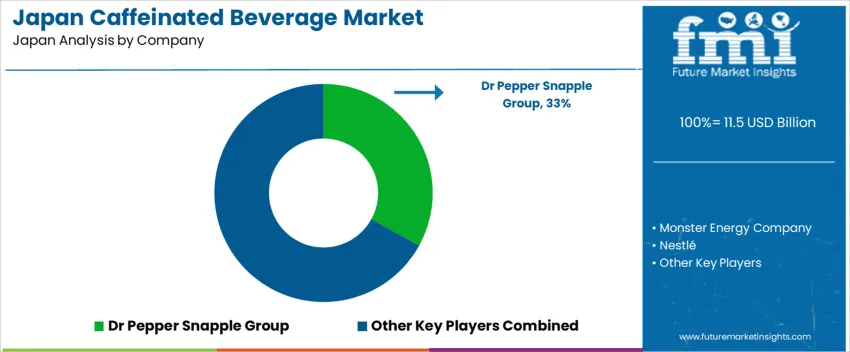
Key players shaping the caffeinated beverage industry in Japan include Dr Pepper Snapple Group, Monster Energy Company, Nestlé, PepsiCo, and Red Bull. Dr Pepper Snapple Group leads the industry with a significant share of 33.0%, offering a wide range of caffeinated beverages such as energy drinks, sodas, and ready-to-drink coffee products. These companies focus on creating beverages that cater to the evolving preferences of Japanese consumers, emphasizing taste, convenience, and health benefits. They also innovate to meet the demand for beverages with functional ingredients that support energy, focus, and well-being.
The growth of the caffeinated beverage industry in Japan is also supported by the country’s increasing interest in wellness and personalized nutrition. As consumers become more selective about the ingredients in their beverages, the demand for functional caffeinated drinks with added vitamins, minerals, and other health benefits is expected to rise. With continuous innovation in flavors, formulations, and packaging, the industry for caffeinated beverages in Japan is poised for sustained growth, catering to both traditional coffee drinkers and new consumers seeking energy-boosting options.
Key Players in Japan Small Satellites Demand
- Dr Pepper Snapple Group
- Monster Energy Company
- Nestlé
- PepsiCo
- Red Bull
Scope of Report
| Items | Values |
|---|---|
| Quantitative Units (2025) | USD billion |
| Product Type | Carbonated Soft Drinks, Energy Drinks, RTD Tea, Coffee, Others |
| Flavor | Natural, Synthetic |
| Sales Channel | Grocery Stores, Convenience Stores, Modern Trade, Specialty Stores, Other Retail Stores |
| Regions Covered | Kyushu & Okinawa, Kanto, Kansai, Chubu, Tohoku, Rest of Japan |
| Countries Covered | Japan |
| Key Companies Profiled | Dr Pepper Snapple Group, Monster Energy Company, Nestlé, PepsiCo, Red Bull |
| Additional Attributes | Dollar sales by product type and flavor; regional CAGR and growth trends; increasing demand for energy drinks; rise in popularity of ready-to-drink (RTD) tea and coffee beverages. |
Japan Small Satellites Demand by Key Segments
Product Type
- Carbonated Soft Drinks
- Energy Drinks
- RTD Tea
- Coffee
- Others
Flavor
- Natural
- Synthetic
Sales Channel
- Grocery Stores
- Convenience Stores
- Modern Trade
- Specialty Stores
- Other Retail Stores
Region
- Kyushu & Okinawa
- Kanto
- Kansai
- Chubu
- Tohoku
- Rest of Japan
Frequently Asked Questions
How big is the demand for caffeinated beverage in Japan in 2025?
The demand for caffeinated beverage in Japan is estimated to be valued at USD 11.5 billion in 2025.
What will be the size of caffeinated beverage in Japan in 2035?
The market size for the caffeinated beverage in Japan is projected to reach USD 16.8 billion by 2035.
How much will be the demand for caffeinated beverage in Japan growth between 2025 and 2035?
The demand for caffeinated beverage in Japan is expected to grow at a 3.8% CAGR between 2025 and 2035.
What are the key product types in the caffeinated beverage in Japan?
The key product types in caffeinated beverage in Japan are carbonated soft drinks, energy drinks, rtd tea, coffee and others.
Which flavor segment is expected to contribute significant share in the caffeinated beverage in Japan in 2025?
In terms of flavor, natural segment is expected to command 30.7% share in the caffeinated beverage in Japan in 2025.
Preview the report firsthand - request a free sample
Get SampleGet the brochure for pricing and purchase details.
Get PDFTable of Content
- Executive Summary
- Japan Market Outlook
- Demand-side Trends
- Supply-side Trends
- Technology Roadmap Analysis
- Analysis and Recommendations
- Market Overview
- Market Coverage / Taxonomy
- Market Definition / Scope / Limitations
- Market Background
- Market Dynamics
- Drivers
- Restraints
- Opportunity
- Trends
- Scenario Forecast
- Demand in Optimistic Scenario
- Demand in Likely Scenario
- Demand in Conservative Scenario
- Opportunity Map Analysis
- Product Life Cycle Analysis
- Supply Chain Analysis
- Investment Feasibility Matrix
- Value Chain Analysis
- PESTLE and Porter’s Analysis
- Regulatory Landscape
- Regional Parent Market Outlook
- Production and Consumption Statistics
- Import and Export Statistics
- Market Dynamics
- Japan Market Analysis 2020 to 2024 and Forecast, 2025 to 2035
- Historical Market Size Value (USD Million) Analysis, 2020 to 2024
- Current and Future Market Size Value (USD Million) Projections, 2025 to 2035
- Y-o-Y Growth Trend Analysis
- Absolute $ Opportunity Analysis
- Japan Market Pricing Analysis 2020 to 2024 and Forecast 2025 to 2035
- Japan Market Analysis 2020 to 2024 and Forecast 2025 to 2035, By Product Type
- Introduction / Key Findings
- Historical Market Size Value (USD Million) Analysis By Product Type , 2020 to 2024
- Current and Future Market Size Value (USD Million) Analysis and Forecast By Product Type , 2025 to 2035
- Carbonated Soft Drinks
- Energy Drinks
- RTD Tea
- Coffee
- Others
- Y-o-Y Growth Trend Analysis By Product Type , 2020 to 2024
- Absolute $ Opportunity Analysis By Product Type , 2025 to 2035
- Japan Market Analysis 2020 to 2024 and Forecast 2025 to 2035, By Flavor
- Introduction / Key Findings
- Historical Market Size Value (USD Million) Analysis By Flavor, 2020 to 2024
- Current and Future Market Size Value (USD Million) Analysis and Forecast By Flavor, 2025 to 2035
- Natural
- Synthetic
- Y-o-Y Growth Trend Analysis By Flavor, 2020 to 2024
- Absolute $ Opportunity Analysis By Flavor, 2025 to 2035
- Japan Market Analysis 2020 to 2024 and Forecast 2025 to 2035, By Sales Channel
- Introduction / Key Findings
- Historical Market Size Value (USD Million) Analysis By Sales Channel, 2020 to 2024
- Current and Future Market Size Value (USD Million) Analysis and Forecast By Sales Channel, 2025 to 2035
- Grocery Stores
- Convenience Stores
- Modern Trade
- Specialty Stores
- Other Retail Stores
- Y-o-Y Growth Trend Analysis By Sales Channel, 2020 to 2024
- Absolute $ Opportunity Analysis By Sales Channel, 2025 to 2035
- Market Structure Analysis
- Competition Dashboard
- Competition Benchmarking
- Market Share Analysis of Top Players
- By Regional
- By Product Type
- By Flavor
- By Sales Channel
- Competition Analysis
- Competition Deep Dive
- Dr Pepper Snapple Group
- Overview
- Product Portfolio
- Profitability by Market Segments (Product/Age /Sales Channel/Region)
- Sales Footprint
- Strategy Overview
- Marketing Strategy
- Product Strategy
- Channel Strategy
- Monster Energy Company
- Nestlé
- PepsiCo
- Red Bull
- Dr Pepper Snapple Group
- Competition Deep Dive
- Assumptions & Acronyms Used
- Research Methodology


