

- Industry Size (2025)
- USD 88.9 Bn
- Forecast (2035)
- USD 142.6 Bn
- CAGR (2025 to 2035)
- 4.8%
Demand for Caffeinated Beverage in USA 2025 to 2035
The USA caffeinated beverage demand is valued at USD 88.9 billion in 2025 and is forecasted to reach USD 142.6 billion by 2035, recording a CAGR of 4.8%. Consumption remains aligned with convenience trends, on-the-go USAge, and established purchasing routines across retail and foodservice channels. Caffeine-based formulations serve functional roles in alertness support and lifestyle-linked refreshment across diverse age groups. Carbonation formats, energy blends, and coffee-derived beverages continue to anchor volume and revenue.
Carbonated soft drinks form the largest share due to broad consumer familiarity, strong brand portfolios, and extensive distribution across quick-service outlets, grocery, and vending points. Energy beverages and ready-to-drink coffees account for incremental growth because of positioning around performance and focus attributes. Reformulation priorities address sugar reduction, artificial-ingredient avoidance, and balanced calorie load.
Demand is strongest in the West, South, and Northeast where consumption intensity, demographic concentration, and channel penetration are high. Regional distribution networks emphasize cold-chain efficiency and high-frequency restocking for convenience retail. Procurement and category management concentrate on flavor rotation, portion sizing, and premium-tier differentiation. Dr Pepper Snapple Group, Monster Energy Company, Nestlé, PepsiCo, and Red Bull remain leading suppliers with deep product portfolios and visibility in high-velocity retail locations. Their development efforts involve enhanced functional variants, packaging optimization, and tailored SKU strategies for multipack and single-serve channels.
Quick Stats for USA Caffeinated Beverage Demand
- USA Caffeinated Beverage Sales Value (2025): USD 88.9 billion
- USA Caffeinated Beverage Forecast Value (2035): USD 142.6 billion
- USA Caffeinated Beverage Forecast CAGR (2025–2035): 4.8%
- Leading Type in USA Caffeinated Beverage Demand: Carbonated Soft Drinks
- Key Growth Regions in USA Caffeinated Beverage Demand: West USA, South USA, Northeast USA
- Top Players in USA Caffeinated Beverage Demand: Dr Pepper Snapple Group, Monster Energy Company, Nestlé, PepsiCo, Red Bull
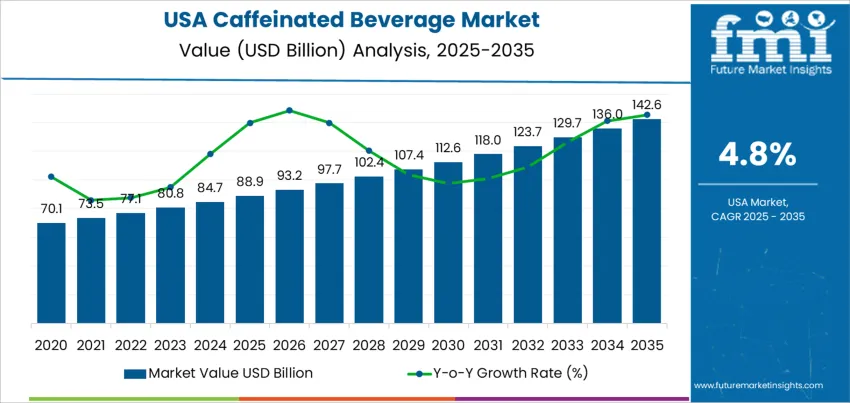
What is the Growth Forecast for Caffeinated Beverage Industry in USA through 2035?
Demand for caffeinated beverages in the United States shows a contrasted trajectory when comparing early and late phases of the 2025 to 2035 period. Growth over the first five years benefits from continued popularity of ready-to-drink coffee, energy beverages, and functional caffeinated formulations targeting alertness, sports performance, and cognitive support. Product diversification and premium pricing in cold brew, plant-based caffeine sources, and clean-label energy formats reinforce above-average expansion during the initial half of the timeline.
As the decade progresses, the momentum becomes more measured. Saturation in carbonated energy drinks, dietary guidance discouraging high sugar intake, and increasing moderation trends among young adults begin to influence purchasing patterns. Late-period growth therefore shifts toward healthier reformulations using natural caffeine, reduced sugar, and added nutritional benefits. Innovations in nootropic beverages and personalized energy solutions help maintain demand but do not fully replicate earlier acceleration. The overall pattern demonstrates faster expansion in the early years and steadier, sustainability-driven growth in later years, resulting in moderate long-term performance.
USA Caffeinated Beverage Key Takeaways
| Metric | Value |
|---|---|
| USA Caffeinated Beverage Sales Value (2025) | USD 88.9 billion |
| USA Caffeinated Beverage Forecast Value (2035) | USD 142.6 billion |
| USA Caffeinated Beverage Forecast CAGR (2025-2035) | 4.8% |
Why is the Demand for Caffeinated Beverages in the USA Growing?
Demand for caffeinated beverages in the USA continues to grow as consumers seek quick energy boosts, mental alertness and convenient hydration in busy lifestyles. Coffee, energy drinks, caffeinated teas and ready-to-drink (RTD) beverages remain popular among working adults, students and anyone needing sustained focus during long work or study hours. RTD formats and single-serve coffee products offer ease of consumption at home, in offices and on the go. Innovation in flavor variety, functional additives (such as vitamins or electrolytes) and sugar-free or low-calorie formulations expands appeal. Beverage companies launch hybrid drinks that combine caffeine with natural extracts, plant-based ingredients or hydration support to attract health-conscious consumers. Retailers and convenience stores prominently display chilled caffeinated drinks for impulse purchases during commuting hours.
The growth of hybrid work arrangements and commuting patterns supports higher demand for portable caffeinated options. Athletic and pre-workout supplements add caffeinated beverage options aimed at fitness enthusiasts seeking energy and endurance. Constraints include increasing public awareness of potential side effects from excessive caffeine intake, leading some consumers to limit consumption or switch to decaffeinated alternatives. Regulatory pressure on labeling and sugar content influences formulation strategies. Competition from non-caffeinated wellness drinks and plant-based beverages also moderates growth in certain segments.
Which Product Types, Flavors, and Sales Channels Lead Demand for Caffeinated Beverages in the USA?
Demand for caffeinated beverages in the United States is driven by lifestyle convenience, increasing functional drink consumption, and strong consumer dependence on caffeine for alertness and performance. Beverage manufacturers focus on diversified formulations, sugar-control options, and energy-boosting claims suited for busy working adults and students. Growth is supported by expanding retail availability, premium coffee trends, and rising RTD (ready-to-drink) formats tailored for on-the-go use.
By Product Type, Carbonated Soft Drinks Hold the Largest Share
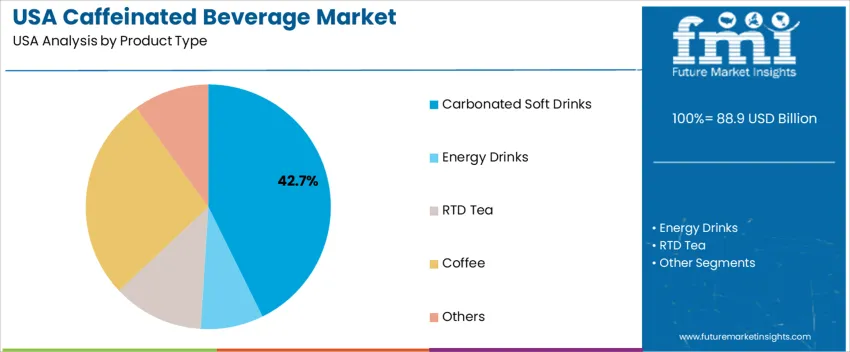
Carbonated soft drinks capture 42.7%, reflecting their widespread availability, strong brand loyalty, and habitual consumption patterns. Coffee represents 27.0%, supported by expansion in cold brew, ready-to-drink coffee, and café chains nationwide. RTD Tea accounts for 12.0%, driven by consumer demand for perceived healthier caffeinated alternatives. Energy drinks hold 8.3%, maintaining a niche but rapidly evolving performance-focused buyer base. Other caffeinated beverages contribute 10.0%, including sports tonics and innovative hybrids targeting wellness-focused consumption. U.S. product trends increasingly incorporate sugar-free options, natural caffeine sources such as green coffee and guarana, and functional ingredients like B-vitamins and antioxidants.
Key Points:
- CSDs dominate due to accessibility and repeat consumption
- Coffee-driven growth aligns with premiumization and RTD formats
- RTD tea benefits from health-centric positioning
By Flavor, Synthetic Flavors Lead Demand
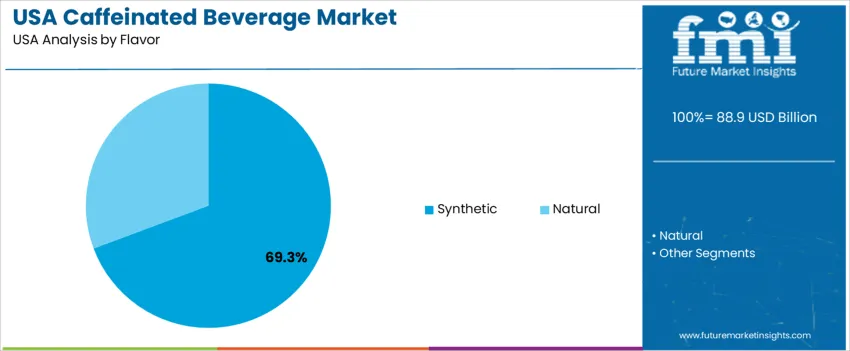
Synthetic flavor profiles represent 69.3%, driven by their stability, cost efficiency, and easy scalability in mass beverage manufacturing. These formats support consistent taste across carbonated soft drinks and performance beverages. Natural flavors account for 30.7%, increasing with clean-label preferences, organic teas, and coffees using plant-derived flavor enhancers. U.S. product development focuses on transparency in ingredient sourcing and reductions in artificial additives, accelerating uptake of fruit-derived and botanical sweetness in select premium ranges.
Key Points:
- Synthetic flavors support cost-optimized, large-scale production
- Natural flavors gain traction with health-aligned formulations
- Clean-label reformulations influence future product pipelines
By Sales Channel, Grocery Stores Hold the Largest Share
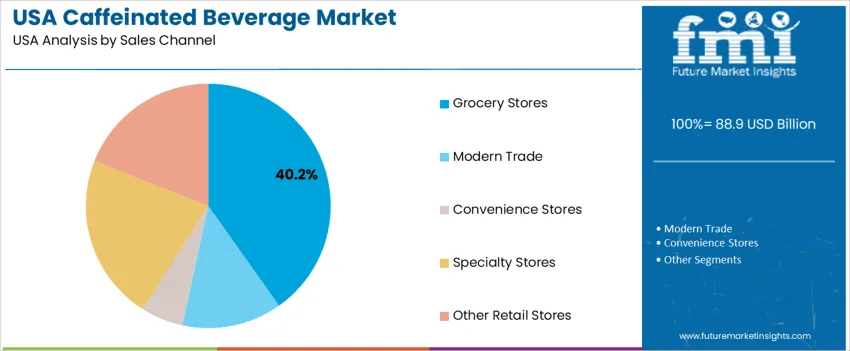
Grocery stores represent 40.2%, supported by high household purchase frequency and wide distribution of mainstream brands. Specialty stores account for 22.0%, benefiting from premium coffee, cold-brew innovations, and health-oriented beverages. Other retail stores hold 19.0%, covering multipurpose outlets and club stores. Modern trade contributes 13.2%, while convenience stores make up 5.6%, linked to impulse purchasing and energy drink single-serve formats. Channel share reflects consistent replenishment behavior and diversified product placement supporting both planned and spontaneous purchases.
Key Points:
- Grocery outlets drive routine beverage consumption
- Specialty stores boost premium and functional product exposure
- Impulse-focused formats sustain convenience channel traction
What are the Drivers, Restraints, and Key Trends of the Demand for Caffeinated Beverages in the USA?
Growth of energy-seeking consumer behavior, strong coffee and soft drink consumption culture and increasing preference for convenient stimulation options drive demand.
In the United States, caffeinated beverages remain widely consumed by working adults, students and commuters seeking alertness, productivity and mood support. Coffee continues to lead daily consumption across retail cafés, workplace vending and home brewing, while ready-to-drink energy beverages attract young adults engaged in gaming, fitness and shift-work routines. Convenience stores and online delivery services offer wide access to caffeinated options, supporting frequent purchases of bottled coffee, energy drinks and flavored caffeinated waters. Brands compete through new flavors, functional additions and packaging tailored for portability, which sustains high domestic consumption volumes throughout the year.
Health concerns related to sugar content and excessive caffeine intake, along with competition from caffeine-free hydration solutions restrain demand.
Public awareness of dental health, weight gain and cardiovascular risks linked to high-sugar energy or cola beverages slows growth in specific consumer groups. Some adults reduce caffeine intake to improve sleep quality or manage anxiety, limiting repeat purchases of high-caffeine formats. Growing interest in natural hydration encourages adoption of water, herbal infusions and non-caffeinated wellness drinks, especially among older adults and parents purchasing for children. These behavioral shifts create pressure for reformulation and may reduce industry potential where consumption moderation becomes a priority.
Shift toward low-sugar and clean label caffeine sources, increased demand for functional beverages with vitamins or electrolytes and rising consumption of ready-to-drink coffee and tea define key trends.
Manufacturers introduce zero-sugar or reduced-sugar alternatives to appeal to health-conscious shoppers. New product lines combine caffeine with electrolytes, amino acids or antioxidants to support fitness recovery and mental focus. Ready-to-drink coffees, cold brews and canned teas grow in popularity among consumers who want café-style beverages with convenience and consistent flavor. Plant-based formulations using natural caffeine sources such as green tea and guarana attract buyers who prefer recognizable ingredients. These developments indicate steady demand for caffeinated beverages across the United States, shaped by wellness priorities and lifestyle-driven convenience.
Analysis of the Demand for Caffeinated Beverages in the USA by Region
Demand for caffeinated beverages in the United States continues to expand as consumers seek functional stimulation, flavor innovation, and convenience across retail and food-service channels. Growth is supported by ready-to-drink coffee launches, cold-brew formats, and energy-drink positioning toward active and working-age populations. Health-focused formulations including reduced sugar and clean-label caffeine sources contribute to diversified product ranges in mainstream and specialty outlets. West USA leads with 5.6% CAGR, followed by South USA at 5.0%, Northeast USA at 4.5%, and Midwest USA at 3.9%, reflecting differences in lifestyle habits, distribution networks, and consumption-intensity patterns across regions.
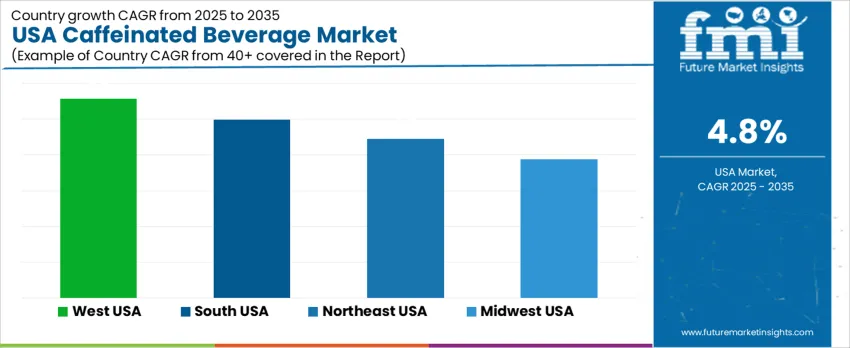
| Region | CAGR (2025-2035) |
|---|---|
| West USA | 5.6% |
| South USA | 5.0% |
| Northeast USA | 4.5% |
| Midwest USA | 3.9% |
How is the West USA driving demand for caffeinated beverages?
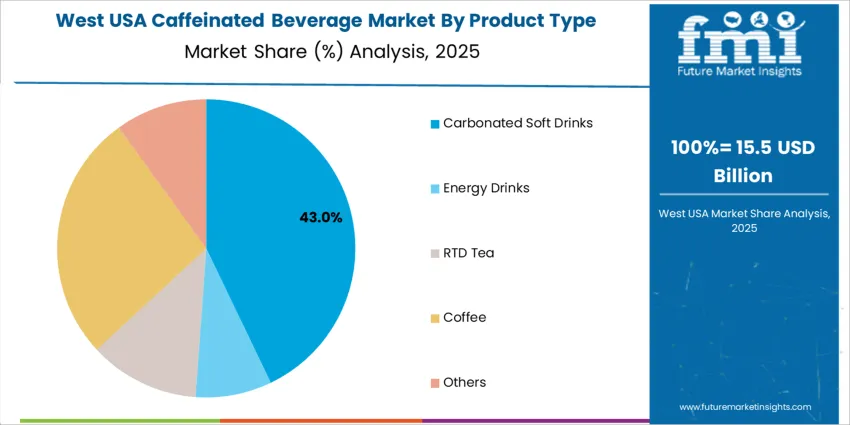
West USA grows at 5.6% CAGR, driven by strong premium beverage culture across California, Washington, Oregon, and Colorado. Cold-brew coffee, energy drinks, and functional blends with natural caffeine see widespread acceptance through convenience stores, cafés, and digital grocery channels. Urban consumers adopt performance-enhancing beverages tailored to fitness-oriented lifestyles and extended work schedules. Local roasters and craft beverage innovators experiment with unique flavorings, plant-based ingredients, and sustainability-certified sourcing, increasing product turnover and encouraging trial. Beverage consumption intensity remains high in outdoor-focused communities supporting on-the-go caffeine formats. Retailers emphasize single-serve bottles and cans for portability, supported by efficient supply chains.
- Craft-coffee innovation supporting rapid SKU rotation
- Functional formulations appealing to wellness-focused consumers
- Convenience-channel expansion reinforcing everyday consumption
- Premiumization driving strong per-capita purchasing behavior
How is the South USA shaping demand for caffeinated beverages?
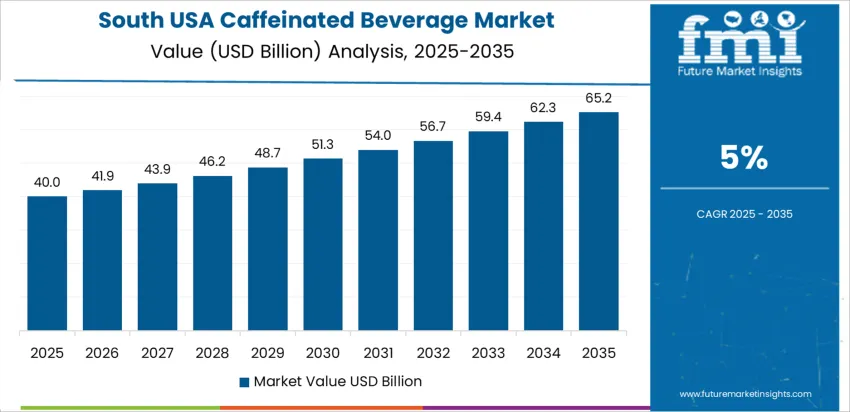
South USA posts 5.0% CAGR, supported by strong demand for sweetened energy drinks, flavored iced coffee, and ready-to-drink tea alternatives across Texas, Florida, Georgia, and North Carolina. Warmer climates sustain year-round demand for chilled caffeinated beverages, boosting high-volume retail throughput. College-town populations and commuter lifestyles contribute to habitual consumption of portable caffeine products. Regional bottlers maintain extensive distribution networks serving supermarkets, gas-station chains, and mass retailers, improving accessibility and competitive pricing. Brand promotions linked to sports culture support retention in energy-drink categories.
- Warm-weather states encouraging continuous chilled beverage demand
- High-traffic convenience channels enabling rapid sales velocity
- Youth and student consumption strengthening category growth
- Competitive pricing models broadening household adoption
How is the Northeast USA influencing purchasing models?
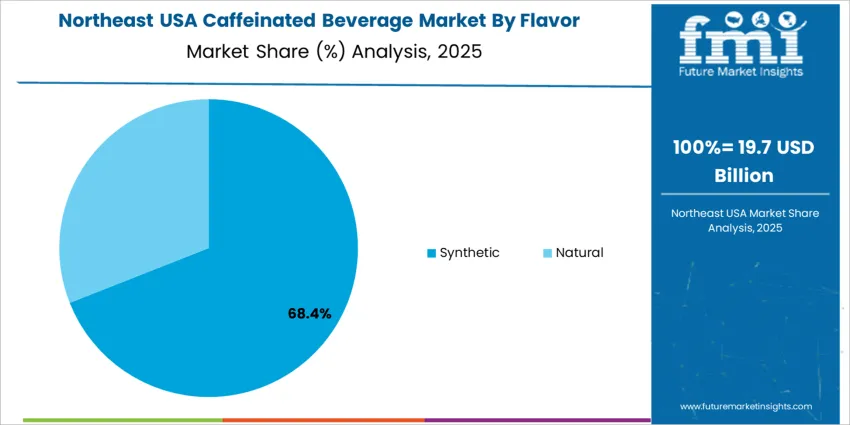
The Northeast USA records 4.5% CAGR, shaped by urban convenience-driven beverage buying in New York, New Jersey, and Massachusetts. Office-work populations rely on caffeine products during commuting and hybrid working arrangements, supporting predictable USAge patterns. Specialty cafés and branded coffee chains hold strong influence, maintaining primary distribution of premium caffeinated beverages. Ready-to-drink functional blends gain traction among consumers who seek rapid consumption without brewing. Regulatory focus on sugar content leads to reformulation strategies, including reduced-calorie options. Dense retail environments enable high frequency of small-format purchases, particularly in transit hubs.
- Transit-linked channels enabling frequent single-serve purchases
- Specialty coffee culture driving premium consumption
- Health-balanced reformulations influencing shopper preferences
- Convenience and speed guiding category decision-making
How is the Midwest USA supporting stable adoption?
The Midwest USA shows 3.9% CAGR, driven by steady demand for mainstream carbonated energy beverages and traditional brewed-coffee alternatives across Illinois, Ohio, Michigan, and Wisconsin. Household-centered purchasing behavior favors multipack value formats available through big-box retail chains. Workforces in manufacturing and logistics industries maintain regular caffeine intake for long shifts, supporting robust baseline consumption. The rise of private-label offerings increases affordability and accessibility. Seasonal weather variance creates peaks in hot-beverage purchases during colder months, stabilizing annual consumption cycles.
- Value-focused purchases promoting multi-serve and private-label sales
- Workforce caffeine use maintaining predictable baseline demand
- Cold-season hot-beverage surges balancing yearly sales distribution
- Strong national-retail presence enabling distribution continuity
How is competitive power distributed among leading participants in the United States caffeinated beverage segment, and which strategies determine current leadership positions?
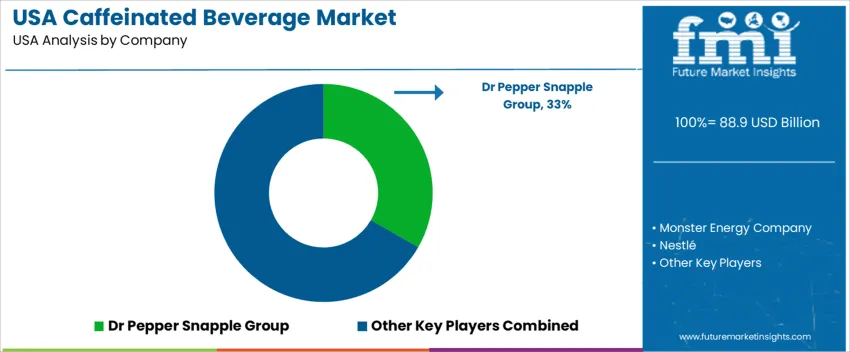
Competitive positioning in the United States caffeinated beverage space reflects a continuous contest for consumer visibility, functional differentiation, and control of retail and food-service channels. Dr Pepper Snapple Group leads with 33.3%, supported by established cola and flavored caffeine beverages that maintain habitual purchasing patterns. Its portfolio breadth enables strong pricing flexibility in grocery and convenience formats.
Monster Energy Company reinforces its position through branding aligned with gaming, action sports, and youth culture. Exclusive tie-ups with distributors help maximize cooler placement and impulse purchases. Nestlé utilizes its coffee expertise, with expansions across ready-to-drink formats and single-serve caffeine innovations, stimulating demand in workplaces and on-the-go consumption. PepsiCo secures network advantage through cross-category retail negotiations that pair caffeinated sodas with energy drinks under a unified supply relationship. Red Bull retains loyal users in functional energy occasions and sustains a competitive edge through premium pricing supported by focused marketing.
Innovation patterns show stronger momentum toward natural caffeine sources, sugar reduction, and shelf-stable cold coffee that meets shifting consumer routines. Competitive rivalry advances through flavor diversity, packaging agility, and brand equity reinforcement. Players that align product portfolios to wellness-oriented caffeine usage are positioned to sustain share in the United States.
Key Players in USA Caffeinated Beverage Demand
- Dr Pepper Snapple Group
- Monster Energy Company
- Nestlé
- PepsiCo
- Red Bull
Scope of the Report
| Items | Values |
|---|---|
| Quantitative Units | USD billion |
| Product Type | Carbonated Soft Drinks, Energy Drinks, RTD Tea, Coffee, Others |
| Flavor | Synthetic, Natural |
| Sales Channel | Grocery Stores, Modern Trade, Convenience Stores, Specialty Stores, Other Retail Stores |
| Regions Covered | West USA, South USA, Northeast USA, Midwest USA |
| Key Companies Profiled | Dr Pepper Snapple Group, Monster Energy Company, Nestlé, PepsiCo, Red Bull |
| Additional Attributes | Dollar sales by product type, flavor profile, and sales channel categories; adoption trends across West, South, Northeast, and Midwest USA; competition between functional/energy beverages and traditional caffeinated drinks; increased demand from youth demographics and on-the-go consumption; innovation in natural caffeine sources and sugar-reduced product launches; growth in modern trade and convenience channels driven by impulse purchases. |
USA Caffeinated Beverage Demand by Segments
Product Type:
- Carbonated Soft Drinks
- Energy Drinks
- RTD Tea
- Coffee
- Others
Flavor:
- Synthetic
- Natural
Sales Channel:
- Grocery Stores
- Modern Trade
- Convenience Stores
- Specialty Stores
- Other Retail Stores
Region:
- West USA
- South USA
- Northeast USA
- Midwest USA
Frequently Asked Questions
How big is the demand for caffeinated beverage in USA in 2025?
The demand for caffeinated beverage in USA is estimated to be valued at USD 88.9 billion in 2025.
What will be the size of caffeinated beverage in USA in 2035?
The market size for the caffeinated beverage in USA is projected to reach USD 142.6 billion by 2035.
How much will be the demand for caffeinated beverage in USA growth between 2025 and 2035?
The demand for caffeinated beverage in USA is expected to grow at a 4.8% CAGR between 2025 and 2035.
What are the key product types in the caffeinated beverage in USA?
The key product types in caffeinated beverage in USA are carbonated soft drinks, energy drinks, rtd tea, coffee and others.
Which flavor segment is expected to contribute significant share in the caffeinated beverage in USA in 2025?
In terms of flavor, synthetic segment is expected to command 69.3% share in the caffeinated beverage in USA in 2025.
Preview the report firsthand - request a free sample
Get SampleGet the brochure for pricing and purchase details.
Get PDFTable of Content
- Executive Summary
- USA Market Outlook
- Demand-side Trends
- Supply-side Trends
- Technology Roadmap Analysis
- Analysis and Recommendations
- Market Overview
- Market Coverage / Taxonomy
- Market Definition / Scope / Limitations
- Market Background
- Market Dynamics
- Drivers
- Restraints
- Opportunity
- Trends
- Scenario Forecast
- Demand in Optimistic Scenario
- Demand in Likely Scenario
- Demand in Conservative Scenario
- Opportunity Map Analysis
- Product Life Cycle Analysis
- Supply Chain Analysis
- Investment Feasibility Matrix
- Value Chain Analysis
- PESTLE and Porter’s Analysis
- Regulatory Landscape
- Regional Parent Market Outlook
- Production and Consumption Statistics
- Import and Export Statistics
- Market Dynamics
- USA Market Analysis 2020 to 2024 and Forecast, 2025 to 2035
- Historical Market Size Value (USD Million) Analysis, 2020 to 2024
- Current and Future Market Size Value (USD Million) Projections, 2025 to 2035
- Y-o-Y Growth Trend Analysis
- Absolute $ Opportunity Analysis
- USA Market Pricing Analysis 2020 to 2024 and Forecast 2025 to 2035
- USA Market Analysis 2020 to 2024 and Forecast 2025 to 2035, By Product Type
- Introduction / Key Findings
- Historical Market Size Value (USD Million) Analysis By Product Type , 2020 to 2024
- Current and Future Market Size Value (USD Million) Analysis and Forecast By Product Type , 2025 to 2035
- Carbonated Soft Drinks
- Energy Drinks
- RTD Tea
- Coffee
- Others
- Y-o-Y Growth Trend Analysis By Product Type , 2020 to 2024
- Absolute $ Opportunity Analysis By Product Type , 2025 to 2035
- USA Market Analysis 2020 to 2024 and Forecast 2025 to 2035, By Flavor
- Introduction / Key Findings
- Historical Market Size Value (USD Million) Analysis By Flavor, 2020 to 2024
- Current and Future Market Size Value (USD Million) Analysis and Forecast By Flavor, 2025 to 2035
- Synthetic
- Natural
- Y-o-Y Growth Trend Analysis By Flavor, 2020 to 2024
- Absolute $ Opportunity Analysis By Flavor, 2025 to 2035
- USA Market Analysis 2020 to 2024 and Forecast 2025 to 2035, By Sales Channel
- Introduction / Key Findings
- Historical Market Size Value (USD Million) Analysis By Sales Channel, 2020 to 2024
- Current and Future Market Size Value (USD Million) Analysis and Forecast By Sales Channel, 2025 to 2035
- Grocery Stores
- Modern Trade
- Convenience Stores
- Specialty Stores
- Other Retail Stores
- Y-o-Y Growth Trend Analysis By Sales Channel, 2020 to 2024
- Absolute $ Opportunity Analysis By Sales Channel, 2025 to 2035
- Market Structure Analysis
- Competition Dashboard
- Competition Benchmarking
- Market Share Analysis of Top Players
- By Regional
- By Product Type
- By Flavor
- By Sales Channel
- Competition Analysis
- Competition Deep Dive
- Dr Pepper Snapple Group
- Overview
- Product Portfolio
- Profitability by Market Segments (Product/Age /Sales Channel/Region)
- Sales Footprint
- Strategy Overview
- Marketing Strategy
- Product Strategy
- Channel Strategy
- Monster Energy Company
- Nestlé
- PepsiCo
- Red Bull
- Dr Pepper Snapple Group
- Competition Deep Dive
- Assumptions & Acronyms Used
- Research Methodology


