

- Industry Size (2025)
- USD 8.3 Mn
- Forecast (2035)
- USD 16.0 Mn
- CAGR (2025 to 2035)
- 6.8%
Demand for Decaffeinated Coffee in USA 2025 to 2035
The USA decaffeinated coffee demand is valued at USD 8.3 million in 2025 and is forecasted to reach USD 16.0 million by 2035, reflecting a CAGR of 6.8%. Demand is supported by consumers seeking reduced-caffeine beverage options due to anxiety concerns, sleep issues, and lifestyle preferences. Roasters expand decaf offerings with improved extraction techniques that retain aroma compounds and reduce bitterness. Organic decaffeinated coffee leads due to stronger alignment with health-focused consumption and clean-label expectations. Producers emphasize chemical-free extraction methods, including water-based processing and natural solvent alternatives. Flavor retention, bean sourcing traceability, and specialty-grade positioning guide premium product launches.
Demand is strongest in the West, South, and Northeast. These regions show higher specialty café penetration and a larger share of consumers purchasing artisanal whole-bean and single-origin formats. Retail channels include grocery aisles, e-commerce subscriptions, and direct-from-roaster supply. Foodservice chains also extend decaf beverage menus to support broader caffeine-sensitive audiences. Key suppliers include Swiss Water Decaffeinated Coffee Inc., Don Pablo Coffee, Lifeboost Coffee LLC, Jo Coffee, and Volcanica Coffee Company. Their priorities include consistent sensory performance, sustainable sourcing agreements with producing countries, and nitrogen-sealed packaging to maintain roast freshness.
Quick Stats for USA Decaffeinated Coffee Demand
- USA Decaffeinated Coffee Sales Value (2025): USD 8.3 million
- USA Decaffeinated Coffee Forecast Value (2035): USD 16.0 million
- USA Decaffeinated Coffee Forecast CAGR (2025–2035): 6.8%
- Leading Nature in USA Decaffeinated Coffee Demand: Organic
- Key Growth Regions in USA Decaffeinated Coffee Demand: West USA, South USA, Northeast USA
- Top Players in USA Decaffeinated Coffee Demand: Swiss Water Decaffeinated Coffee Inc., Don Pablo Coffee, Lifeboost Coffee LLC, Jo Coffee, Volcanica Coffee Company
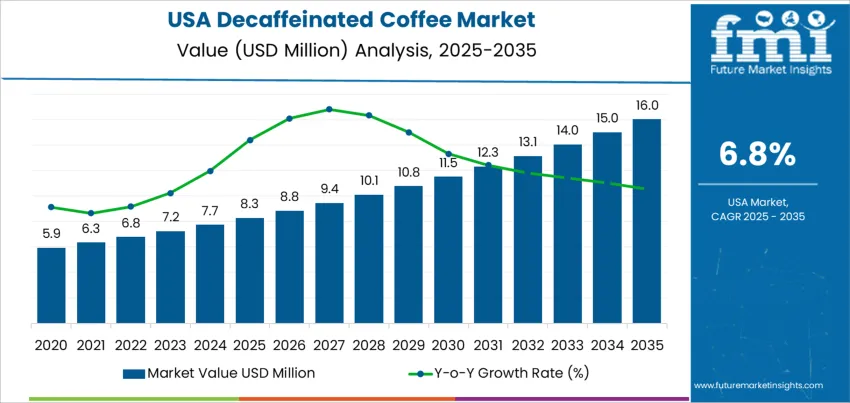
What is the Growth Forecast for Decaffeinated Coffee Industry in USA through 2035?
Demand for decaffeinated coffee in the United States is driven by health-aligned behavioral shifts and expanding product diversity. Growth contribution primarily comes from consumers who reduce caffeine intake due to sleep concerns, anxiety sensitivity, and cardiovascular wellness awareness. Adoption rises as coffee drinkers continue to value café-style experiences without caffeine-related effects. Retailers expand availability across ground, whole-bean, and ready-to-drink formats, which strengthens category accessibility. Premiumization contributes a growing share as specialty roasters introduce decaffeinated variants featuring origin transparency and improved extraction methods that preserve flavor quality.
Foodservice channels provide moderate contribution through broader menu inclusion at major coffee chains. Marketing that promotes natural decaffeination processes supports perception improvement and gradually attracts younger consumer segments. The category still faces limited novelty compared with caffeinated offerings, restraining its proportional contribution in total coffee spending. Convenience store and e-commerce presence supports incremental gains. Overall growth is delivered by health-motivated replacement rather than incremental consumption, creating a steady but measured contribution pattern within the USA coffee landscape.
USA Decaffeinated Coffee Key Takeaways
| Metric | Value |
|---|---|
| USA Decaffeinated Coffee Sales Value (2025) | USD 8.3 million |
| USA Decaffeinated Coffee Forecast Value (2035) | USD 16.0 million |
| USA Decaffeinated Coffee Forecast CAGR (2025-2035) | 6.8% |
Why is the Demand for Decaffeinated Coffee in the USA Growing?
Demand for decaffeinated coffee in the USA is increasing because an expanding segment of adult consumers seek to reduce caffeine intake while still enjoying coffee’s taste and ritual. Health-conscious individuals, pregnant women and people with caffeine sensitivity turn to decaf options, which supports stable purchases in retail and foodservice sectors. Coffee shops and cafes respond by offering decaf espresso and drip brews alongside regular blends, ensuring inclusivity for all customers.
Convenience and ready-to-drink formats strengthen growth. Single-serve pods, canned cold brews and instant decaf coffees appeal to busy consumers and frequent travelers seeking caffeine-free alternatives on the go. Retailers expand shelf placement as decaf coffee gains acceptance for every day and evening consumption. Sustainability and clean label trends also influence demand. Some decaf products use water-processing or CO₂-based decaffeination methods that appeal to customers seeking low-chemical and environmentally friendly options. Constraints include persistent perception among some consumers that decaf lacks the full flavor profile of caffeinated coffee. Specialty coffee enthusiasts may favour full-strength beans, which limits growth in premium segments. Price premiums for naturally processed decaf beans may also deter budget-conscious buyers.
Which Nature, Roast Types, and End-Use Segments Lead Demand for Decaffeinated Coffee in the United States?
Demand for decaffeinated coffee in the United States is shaped by evolving wellness priorities, caffeine sensitivity, and adoption of low-stimulant coffee as a lifestyle choice. Consumers increasingly value controlled caffeine intake without compromising flavor, aroma, or premium bean quality. Growth reflects expanding café culture, home-brewing equipment use, and expanded specialty coffee portfolios across leading brands. Retail and foodservice channels both support consistent consumption throughout daily beverage routines.
By Nature, Organic Decaf Coffee Holds the Largest Share
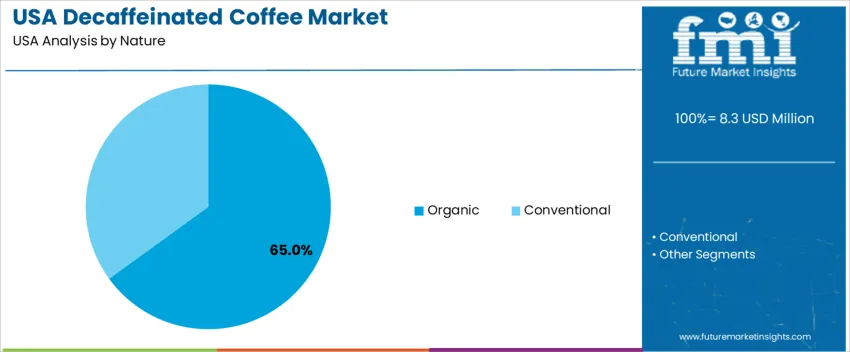
Organic decaffeinated coffee accounts for 65.0%, driven by strong preference for clean-label sourcing, chemical-free decaffeination methods such as CO₂ or Swiss-water processing, and sustainability-driven purchasing behavior. Conventional decaf holds 35.0%, retained by cost-competitive offerings and availability in mainstream grocery and foodservice procurement. USA consumers expect flavor retention, reduced bitterness, and traceable supply chains in organic variants, influencing product expansion through single-origin and responsibly farmed beans. Organic adoption is reinforced by wellness-led beverage choices and premium retail positioning.
Key Points:
- Organic dominates due to chemical-free decaffeination and label trust
- Conventional remains essential for value-driven bulk and chain supply
- Sustainability narratives enhance purchase justification for premium SKUs
By Roast Type, Regular and Dark Roasted Segments Lead Demand
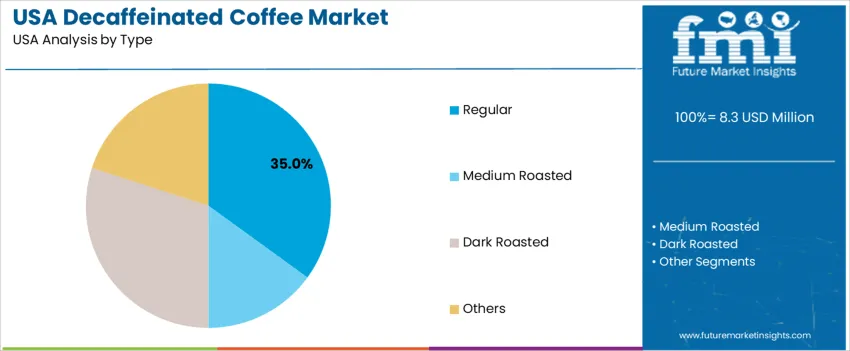
Regular roast holds 35.0%, reflecting mass-market availability and suitability for everyday brewing formats including drip and pod systems. Dark roast accounts for 30.0%, supported by consumers seeking richer aroma and bold flavor to offset taste concerns historically linked to decaffeination. Other roast styles represent 20.0%, including flavored and specialty blends aligned with café-style preferences. Medium roast holds 15.0%, appealing to balanced-profile drinkers but with wider competition from traditional and intense roast options. Roast selection in the United States aligns with flavor familiarity, brewing convenience, and aromatic performance comparable to caffeinated coffee.
Key Points:
- Regular roast remains the core household staple
- Dark roast growth counters flavor loss concerns in decaf processing
- Specialty roasts support café expansion and product differentiation
By End Use, Retail and Household Consumption Leads Demand
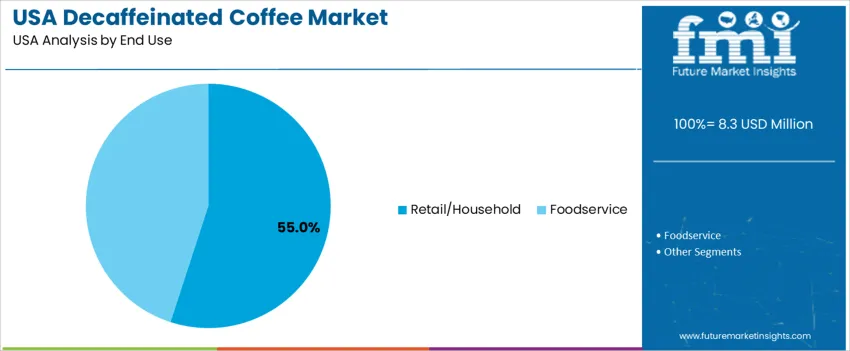
Retail and household use accounts for 55.0%, driven by widespread in-home brewing using pods, instant packs, ground coffee, and whole beans. Foodservice consumption holds 45.0%, supported by cafés, restaurants, and institutional beverage programs adding low-caffeine menu variants to serve diverse dietary needs. Households prioritize flexible storage formats and routine daily consumption patterns, while foodservice channels emphasize consistency and cup quality. End-use segmentation reflects strong dual-channel penetration across USA consumption behaviors.
Key Points:
- Household brewing drives routine replenishment cycles
- Foodservice channels expand offerings for low-caffeine drinkers
- Both segments emphasize taste stability and premium sourcing
What are the Drivers, Restraints, and Key Trends of the Demand for Decaffeinated Coffee in the USA?
Rising health awareness, growth in specialty coffee culture and increasing demand for night-time or sensitivity-friendly beverage options are driving demand.
In the United States, consumers are increasingly choosing decaffeinated coffee to reduce caffeine intake for health, sleep quality, or medical reasons. Specialty coffee shops and roasters offer high-quality decaf blends that match the flavor profiles of regular coffee without the stimulant effect, appealing to adults seeking flexibility in when they enjoy coffee. Demand from pregnant women, older adults with cardiovascular or sleep concerns and individuals’ sensitive to caffeine supports consistent consumption across demographic groups. Subscription-based delivery and growing availability of decaf options in supermarkets and convenience outlets further expand industry reach.
Perceived flavor compromises, limited awareness of high-quality decaf processes and competition from tea and alternative beverages restrain demand.
Some consumers perceive decaf coffee as less flavorful or rich compared with caffeinated coffee, which discourages switching for taste-focused coffee drinkers. Not all decaf processing methods preserve aroma and body, and transparency around sourcing and decaffeination processes remains inconsistent. Tea, herbal blends and caffeine-free beverages offer alternative choices in the same industry segment, creating competition for decaf products. These factors limit rapid expansion among consumers who prioritize flavor or caffeine effects.
Shift toward specialty-grade decaf, increased use of natural decaffeination methods and rising demand in ready-to-drink formats define key trends.
Roasters are offering decaf coffees processed using methods such as Swiss Water or CO₂ extraction that better preserve flavor, supporting premium positioning in the decaf segment. Ready-to-drink decaf cold brews and canned coffees grow in popularity among consumers seeking convenience and caffeine-free hydration on the go. Single-serve pod systems compatible with home brewing machines expand decaf access in workplace and apartment settings. Enhanced labeling and marketing emphasize origin, roast profile and decaf method transparency to reduce consumer skepticism. These developments indicate stable, quality-driven demand growth for decaffeinated coffee across the United States beverage industry.
Analysis of the Demand for Decaffeinated Coffee in the USA by Region
Demand for decaffeinated coffee in the United States is rising as consumers reduce caffeine intake while maintaining coffee-drinking frequency. Growth reflects health-conscious behavior, increased decaf availability in cafés and retail chains, and premium options using chemical-free extraction techniques. Ready-to-drink beverages and single-serve capsules help broaden USAge beyond traditional grounds and beans. Growth rates vary as cultural habits and specialty-coffee penetration differ by region. West USA leads at 7.9% CAGR, followed by South USA at 7.0%, Northeast USA at 6.3%, and Midwest USA at 5.5%. Retail expansion, sustainability compliance, and consistent flavor development are critical factors shaping decaf adoption.
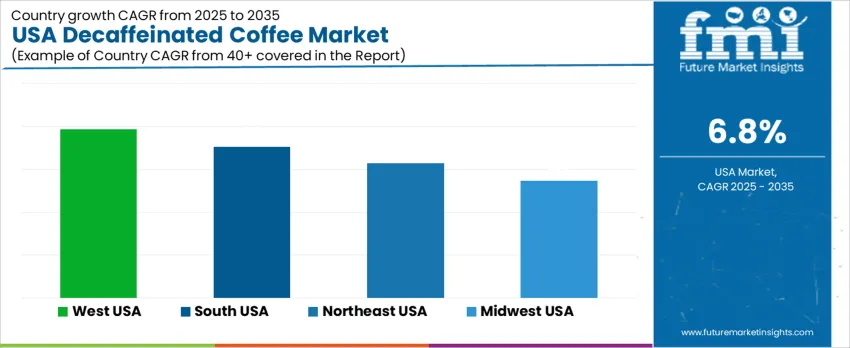
| Region | CAGR (2025-2035) |
|---|---|
| West USA | 7.9% |
| South USA | 7.0% |
| Northeast USA | 6.3% |
| Midwest USA | 5.5% |
How is the West USA driving demand for decaffeinated coffee?
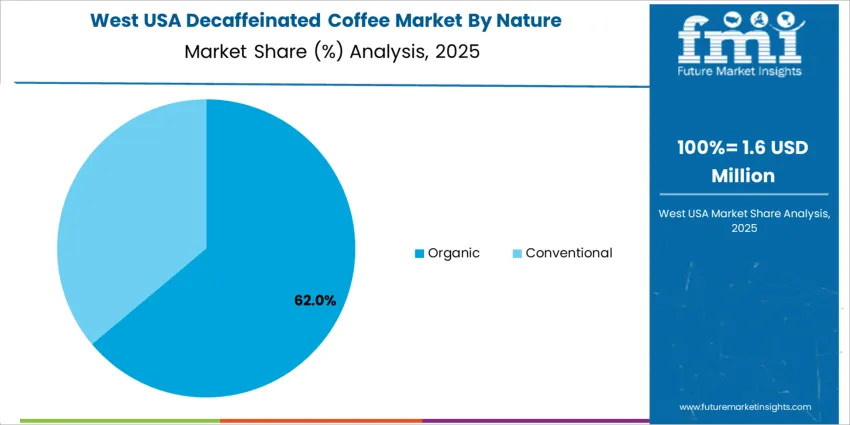
The West USA demonstrates 7.9% CAGR, supported by strong specialty-coffee culture across California, Washington, and Oregon. Coffee chains with extensive decaf menus increase product variety, including cold brew and plant-based RTD options, enhancing premium positioning. Health and wellness consumers adopt decaf to balance daily caffeine intake while retaining sensory attributes similar to conventional brews. Retailers prioritize organic and Swiss-Water-Process decaf formats to meet clean-label requirements. Distribution efficiencies through West Coast ports enable diverse bean sourcing, including Latin American and Asia-Pacific origins. Increased home-brewing equipment ownership encourages trial of seasonal decaf flavors and single-origin blends.
- Specialty cafés promoting high-quality decaf offerings
- Strong RTD and single-serve retail presence
- Clean-label certifications supporting shopper decision-making
- Global sourcing capacity improving blend availability
How is the South USA shaping decaffeinated-coffee adoption?
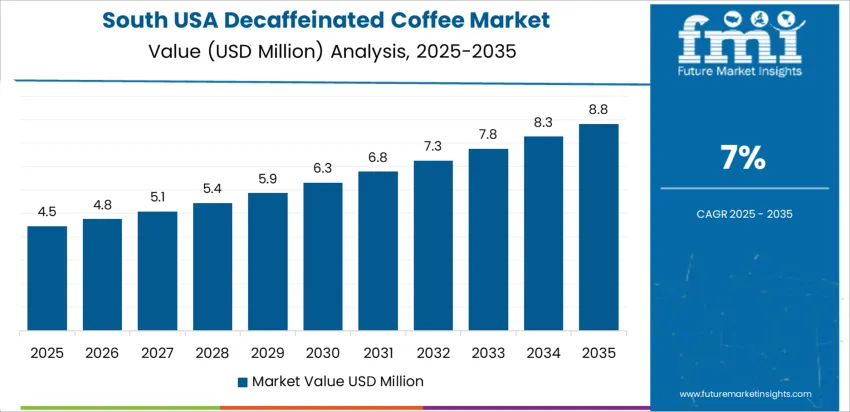
The South USA grows at 7.0% CAGR, influenced by population expansion, climate-driven beverage consumption, and expanding retail shelf space for coffee variants. Large grocery chains promote value-pack decaf grounds and pods for home USAge. Convenience-store networks integrate decaf options within hot beverage dispensers to support commuter consumption. Foodservice operators rely on standardized decaf SKUs to ensure taste consistency during off-peak hours. Health-conscious seniors transition to decaf to manage caffeine sensitivity while maintaining established routines. Procurement priorities emphasize cost-performance balance, stable roasting profiles, and reliable aroma retention during storage.
- Value-driven family purchasing influencing SKU preferences
- C-store networks broadening on-the-go decaf access
- Aging-population needs increasing low-caffeine consumption
- Storage stability and flavor retention guiding buying choices
How is the Northeast USA influencing product differentiation?
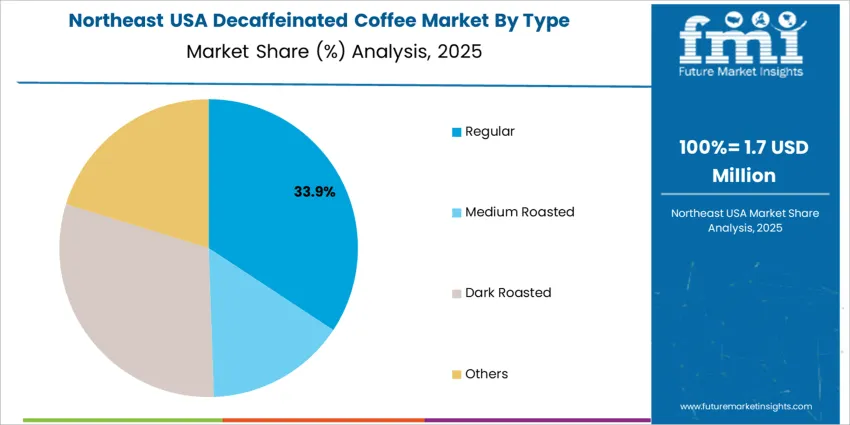
The Northeast USA expands at 6.3% CAGR, driven by strong adoption in metropolitan regions such as New York and Boston, where boutique cafés and roasters promote premium decaf options. Urban professionals purchase decaf beverages during late-day consumption occasions to avoid sleep disruption. Import distributors ensure availability of specialty beans processed with CO₂ extraction, reducing chemical-related perception barriers. Retailers emphasize recyclable and compostable packaging formats aligning with sustainability expectations. Category growth benefits from subscription-based e-commerce deliveries designed for limited-storage households.
- Urban café culture supporting premium positioning
- Sustainability priorities shaping packaging procurement
- Late-day consumption influencing SKU diversity
- E-commerce subscriptions improving replenishment consistency
How is the Midwest USA supporting steady category performance?
The Midwest USA records 5.5% CAGR, reflecting practical consumer behavior in Illinois, Michigan, and Ohio where home-brewed coffee is favored over specialty-shop consumption. Club stores and mass merchants drive volume sales of budget decaf grounds and canned coffee beverages. Foodservice channels maintain standardized choices for workplace dining venues and healthcare facilities. Retailers evaluate product durability through extended shelf-life tests, ensuring flavor maintenance in ambient conditions. Adoption grows gradually as younger consumers shift toward moderated caffeine intake without abandoning traditional breakfast routines.
- Mass-retail distribution driving steady case volumes
- Workplace and institutional dining sustaining baseline orders
- Extended shelf-life performance influencing SKU acceptance
- Gradual shift in caffeine moderation habits supporting demand
What does the competitive structure for decaffeinated-coffee demand in the United States show?
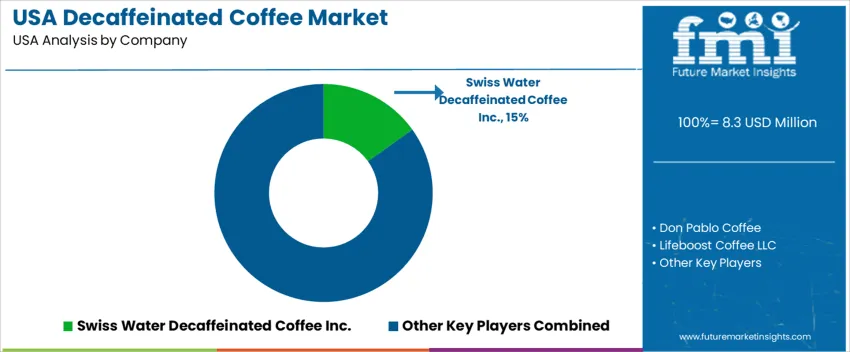
Decaffeinated-coffee demand in the United States reflects stable consumption across retail and direct-to-consumer channels. Growth is linked to increased interest in reduced-caffeine lifestyles, late-day beverage consumption, and improved sensory quality from modern decaffeination methods. Buyers evaluate flavor preservation, bean-origin consistency, and transparency around processing. Operators supplying premium coffee formats expect controlled roasting outcomes that minimize bitterness associated with caffeine removal.
Swiss Water Decaffeinated Coffee Inc. holds about 15.1% share. Its position reflects adoption of chemical-free decaffeination that aligns with clean-label preferences in premium grocery and subscription channels. Don Pablo Coffee competes with dark-roast and origin-specific options designed for at-home preparation and e-commerce distribution. Lifeboost Coffee focuses on low-acidity beans positioned for digestive comfort and quality differentiation. JO Coffee supports independent cafes and small-batch roasters with consistent decaf beans aligned with mainstream flavor expectations.
Volcanica Coffee Company addresses niche specialty consumption where single-origin sourcing and freshness standards influence purchasing behavior. Competitive strength depends on bean sourcing traceability, flavor integrity maintained after roasting, and packaging that protects sensory quality over extended shelf life. Demand remains supported by health-conscious consumers seeking balanced coffee flavor without caffeine exposure.
Key Players in USA Decaffeinated Coffee Demand
- Swiss Water Decaffeinated Coffee Inc.
- Don Pablo Coffee
- Lifeboost Coffee LLC
- Jo Coffee
- Volcanica Coffee Company
Scope of the Report
| Items | Values |
|---|---|
| Quantitative Units | USD million |
| Nature | Organic, Conventional |
| Type | Regular, Medium Roasted, Dark Roasted, Others |
| End Use | Retail/Household, Foodservice |
| Distribution Channel | Business to Consumers, Business to Business |
| Regions Covered | West USA, South USA, Northeast USA, Midwest USA |
| Key Companies Profiled | Swiss Water Decaffeinated Coffee Inc., Don Pablo Coffee, Lifeboost Coffee LLC, Jo Coffee, Volcanica Coffee Company |
| Additional Attributes | Dollar sales by nature, roast type, and end-use segment; regional consumption shifts in West, South, Northeast, and Midwest USA; premiumization of organic decaffeinated beans; increased adoption in foodservice for specialty beverages; supply chain trends for solvent-free decaffeination and clean-label claims; e-commerce driven subscription retail models in decaffeinated coffee. |
USA Decaffeinated Coffee Demand by Segments
Nature:
- Organic
- Conventional
Type:
- Regular
- Medium Roasted
- Dark Roasted
- Others
End Use:
- Retail/Household
- Foodservice
Distribution Channel:
- Business to Consumers
- Business to Business
Region:
- West USA
- South USA
- Northeast USA
- Midwest USA
Frequently Asked Questions
How big is the demand for decaffeinated coffee in USA in 2025?
The demand for decaffeinated coffee in USA is estimated to be valued at USD 8.3 million in 2025.
What will be the size of decaffeinated coffee in USA in 2035?
The market size for the decaffeinated coffee in USA is projected to reach USD 16.0 million by 2035.
How much will be the demand for decaffeinated coffee in USA growth between 2025 and 2035?
The demand for decaffeinated coffee in USA is expected to grow at a 6.8% CAGR between 2025 and 2035.
What are the key product types in the decaffeinated coffee in USA?
The key product types in decaffeinated coffee in USA are organic and conventional.
Which type segment is expected to contribute significant share in the decaffeinated coffee in USA in 2025?
In terms of type, regular segment is expected to command 35.0% share in the decaffeinated coffee in USA in 2025.
Preview the report firsthand - request a free sample
Get SampleGet the brochure for pricing and purchase details.
Get PDFTable of Content
- Executive Summary
- USA Market Outlook
- Demand-side Trends
- Supply-side Trends
- Technology Roadmap Analysis
- Analysis and Recommendations
- Market Overview
- Market Coverage / Taxonomy
- Market Definition / Scope / Limitations
- Market Background
- Market Dynamics
- Drivers
- Restraints
- Opportunity
- Trends
- Scenario Forecast
- Demand in Optimistic Scenario
- Demand in Likely Scenario
- Demand in Conservative Scenario
- Opportunity Map Analysis
- Product Life Cycle Analysis
- Supply Chain Analysis
- Investment Feasibility Matrix
- Value Chain Analysis
- PESTLE and Porter’s Analysis
- Regulatory Landscape
- Regional Parent Market Outlook
- Production and Consumption Statistics
- Import and Export Statistics
- Market Dynamics
- USA Market Analysis 2020 to 2024 and Forecast, 2025 to 2035
- Historical Market Size Value (USD Million) Analysis, 2020 to 2024
- Current and Future Market Size Value (USD Million) Projections, 2025 to 2035
- Y-o-Y Growth Trend Analysis
- Absolute $ Opportunity Analysis
- USA Market Pricing Analysis 2020 to 2024 and Forecast 2025 to 2035
- USA Market Analysis 2020 to 2024 and Forecast 2025 to 2035, By Nature
- Introduction / Key Findings
- Historical Market Size Value (USD Million) Analysis By Nature , 2020 to 2024
- Current and Future Market Size Value (USD Million) Analysis and Forecast By Nature , 2025 to 2035
- Organic
- Conventional
- Y-o-Y Growth Trend Analysis By Nature , 2020 to 2024
- Absolute $ Opportunity Analysis By Nature , 2025 to 2035
- USA Market Analysis 2020 to 2024 and Forecast 2025 to 2035, By Type
- Introduction / Key Findings
- Historical Market Size Value (USD Million) Analysis By Type, 2020 to 2024
- Current and Future Market Size Value (USD Million) Analysis and Forecast By Type, 2025 to 2035
- Regular
- Medium Roasted
- Dark Roasted
- Others
- Y-o-Y Growth Trend Analysis By Type, 2020 to 2024
- Absolute $ Opportunity Analysis By Type, 2025 to 2035
- USA Market Analysis 2020 to 2024 and Forecast 2025 to 2035, By End Use
- Introduction / Key Findings
- Historical Market Size Value (USD Million) Analysis By End Use, 2020 to 2024
- Current and Future Market Size Value (USD Million) Analysis and Forecast By End Use, 2025 to 2035
- Retail/Household
- Foodservice
- Y-o-Y Growth Trend Analysis By End Use, 2020 to 2024
- Absolute $ Opportunity Analysis By End Use, 2025 to 2035
- USA Market Analysis 2020 to 2024 and Forecast 2025 to 2035, By Distribution Channel
- Introduction / Key Findings
- Historical Market Size Value (USD Million) Analysis By Distribution Channel, 2020 to 2024
- Current and Future Market Size Value (USD Million) Analysis and Forecast By Distribution Channel, 2025 to 2035
- Business to Consumers
- Business to Business
- Y-o-Y Growth Trend Analysis By Distribution Channel, 2020 to 2024
- Absolute $ Opportunity Analysis By Distribution Channel, 2025 to 2035
- Market Structure Analysis
- Competition Dashboard
- Competition Benchmarking
- Market Share Analysis of Top Players
- By Regional
- By Nature
- By Type
- By End Use
- By Distribution Channel
- Competition Analysis
- Competition Deep Dive
- Swiss Water Decaffeinated Coffee Inc.
- Overview
- Product Portfolio
- Profitability by Market Segments (Product/Age /Sales Channel/Region)
- Sales Footprint
- Strategy Overview
- Marketing Strategy
- Product Strategy
- Channel Strategy
- Don Pablo Coffee
- Lifeboost Coffee LLC
- Jo Coffee
- Volcanica Coffee Company
- Swiss Water Decaffeinated Coffee Inc.
- Competition Deep Dive
- Assumptions & Acronyms Used
- Research Methodology


